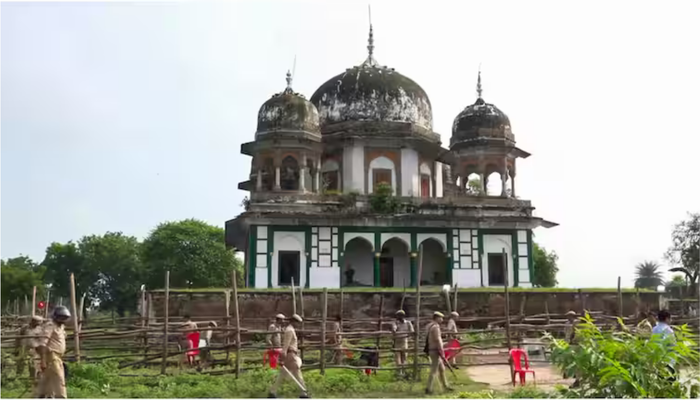
Following an incident of vandalism of a tomb located in Abu Nagar, Rediya locality of Sadar tehsil in the Fatehpur district in Uttar Pradesh last week, Commissioner Prayagraj, Vijay Vishwas Pant and IG Range Prayagraj, Ajay Mishra, have submitted a detailed report about the disputed structure to the administration. The 80-page report was prepared by the officers in six days after the incident.
The report provides the details of the government records of the land (Khasra number 753), in which the structure is referred to as Maqbara Mangi and is recognised as a national property. It also discloses all the details relating to the registry, ownership of the land, how it came to be recognised as the national property and its registration with the Uttar Pradesh Sunni Central Waqf Board.
Along with the details of the land on which the disputed structure is built, details of plot number 1159, adjacent to the tomb, have also been given in the report. As per reports, among the 23 landholders of plot number 1159, Thakurji Virajman Mandir is registered at number 6. The report is said to have highlighted several lapses of the then government and administration. The government has not been made a party in the case. The administration had also sought a report on the alleged police inaction in stopping the Hindu organisations from vandalising the structure.
Meanwhile, security has been ramped up in the area around the disputed structure, as the Math Mandir Sanrakshan Sangharsh Samiti announced on Saturday (16th August) that it would hold a ‘kirtan’ (devotional singing) at the site. Prohibitory orders have been implemented in the area as locals have been asked not to step out of their homes without a valid reason.
Background of the case
Some members of a Hindu organisation vandalised the tomb on 11th August by some members of a Hindu organisation. Members of the Math Mandir Sanrakshan Sangharsh Samiti and some BJP activists said that the tomb was built over an ancient Hindu temple belonging to Thakurji (Lord Krishna) and Lord Shiva. They said that the lotus patterns and trident motifs inside the building were proof that the structure was an ancient Hindu temple.
The situation emerged after the Math Mandir Sanrakshan Sangharsh Samiti sent a letter to the administration on 7th August seeking permission to “clean and beautify” the structure, saying that it is an ancient Hindu temple. After the permission was denied, a group of members of the organisation breached the police barricades on 11th August and entered the premises. They hoisted saffron flags, performed Hindu rituals, and vandalised graves in the premises.
The damaged portion of the structure was repaired, and security forces were deployed. Media access to the site had also been restricted. The police have registered three FIRs in connection with the incident. Around 140 suspects have reportedly been identified by the police from video footage, but no arrests have been made so far.
District Magistrate Ravindra Singh and Superintendent of Police Anoop Singh went to inspect the site on Saturday to review the security arrangements. Over 300 police personnel, two platoons of the Provincial Armed Constabulary, and Special Task Force teams have been deployed within a one-kilometre radius. The area is also being watched closely through aerial surveillance.
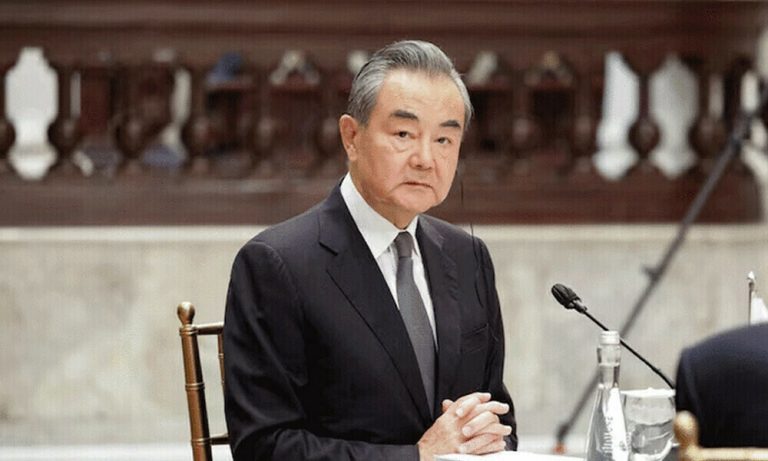
Chinese Foreign Minister Wang Yi is set to arrive in India on Monday for an official visit. During his three-day visit, Wang Yi will meet Prime Minister Narendra Modi on 19th August, Tuesday, according to the Ministry of External Affairs (MEA).
Wang Yi’s itinerary includes the 24th round of Special Representatives’ talks on the India-China boundary question with National Security Adviser Ajit Doval. The discussions will focus on maintaining stability along the Line of Actual Control (LAC) and addressing broader bilateral issues. Additionally, Wang will hold a bilateral meeting with External Affairs Minister S. Jaishankar on Monday to further dialogue on strengthening ties.
His meeting with NSA Ajit Doval is scheduled for Tuesday morning. At 5:30 PM on Tuesday, he will meet PM Modi at his official residence at 7, Lok Kalyan Marg, according to a schedule released by the Ministry of External Affairs.
Yesterday MEA issued a statement saying, “At the invitation of National Security Advisor Shri Ajit Doval, Member of the Politburo of the Communist Party of China and Chinese Foreign Minister H.E. Mr. Wang Yi will visit India on 18-19 August 2025. During his visit, he will hold the 24th round of the Special Representatives’ (SR) Talks on the India-China boundary question with India’s SR, NSA Shri Doval. EAM Dr. S. Jaishankar will hold a bilateral meeting with Mr. Wang Yi.”
While meeting with PM Modi was not mentioned in the original press release, it has been reported now.
Xu Feihong, Chinese Ambassador to India, confirmed the visit on X. He posted, “From August 18 to 20, Member of the Political Bureau of the CPC Central Committee, Minister of Foreign Affairs and China’s Special Representative on the China-India boundary question Wang Yi will visit India and hold the 24th Round of Talks Between the Special Representatives of China and India on the Boundary Question at the invitation of the Indian side.”
This visit marks a key step in ongoing efforts to stabilize India-China relations ahead of PM Modi’s anticipated trip to China for the Shanghai Cooperation Organisation (SCO) Summit in Tianjin from August 31 to September 1.
The visit follows a thaw in India-China relations, marked by the resumption of the Kailash Mansarovar Yatra, tourist visas for Chinese nationals, and progress on disengagement at friction points along the LAC in eastern Ladakh, including Depsang and Demchok, after the 2020 Galwan clash. The agenda also includes exploring enhanced economic cooperation, such as resuming direct flights and restoring supplies of rare earth magnets, fertilizers, and pharmaceutical products from China.
Wang’s visit comes amid complex geopolitical dynamics, including strained India-U.S. trade ties following tariffs imposed by U.S. President Donald Trump.
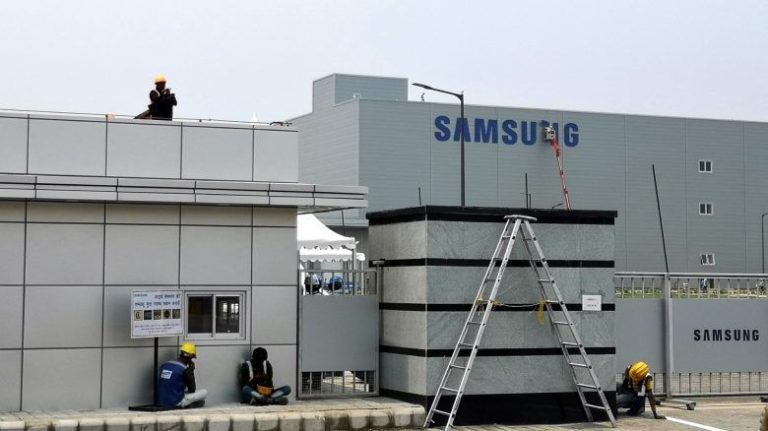
South Korean electronics giant Samsung has started laptop production at its Greater Noida factory in India, marking a significant expansion of its manufacturing portfolio in the country. This development, reported by PTI, aligns with India’s push to become a global hub for electronics manufacturing under the ‘Make in India’ initiative.
“Samsung has expanded its manufacturing portfolio. It has started manufacturing laptops in India at its Greater Noida factory. It has plans to start manufacturing more devices in the country,” a source told PTI.
Samsung’s Greater Noida facility, established in 1996, has long been a cornerstone of the company’s operations in India. The plant, one of the first global electronics manufacturing facilities set up in the country, already produces feature phones, smartphones, wearables, and tablets. The addition of laptops to this lineup underscores Samsung’s commitment to diversifying its production capabilities in India.
The move follows earlier announcements by Samsung Electronics President and Head of Mobile eXperience (MX) Business, TM Roh, who in January 2024 indicated that preparations for laptop manufacturing were underway at the Noida plant. The facility has a production capacity of over 120 million smartphone units annually and is Samsung’s second-largest mobile manufacturing unit globally, trailing only its operations in South Korea. The company is also the second-largest exporter of phones from India, following Apple.
Union Electronics and IT Minister Ashwini Vaishnaw yesterday highlighted Samsung’s growing presence in India, stating, “Samsung continues to expand manufacturing of its advanced technology devices in Bharat, driven by talent and innovation.” Vaishnaw recently met with Samsung Southwest Asia President and CEO JB Park and Corporate Vice President SP Chun, emphasizing the company’s role in fostering innovation and job creation in India. Notably, Samsung’s research unit in the country employs over 7,000 engineers, further solidifying its investment in India’s tech ecosystem. This expansion comes at a time when India is actively encouraging domestic hardware production through tax incentives, financial support, and import restrictions.
In August 2023, the union government briefly imposed a ban on laptop imports, which was later replaced with a streamlined import registration system to promote local manufacturing. While competitors like Acer, HP, Lenovo, and Asus have leveraged the government’s Production Linked Incentive (PLI) scheme for IT hardware, Samsung has opted not to participate, choosing instead to independently scale its operations.
Samsung’s decision to manufacture laptops locally is expected to reduce reliance on imports from its China and Vietnam plants, potentially lowering costs for consumers through savings on import duties. Currently, Samsung holds a strong position in India’s smartphone market, ranking second in both value and volume share, according to Counterpoint Research.
It also commands a 15% share of the tablet PC market, as per CyberMedia Research. However, the company has yet to establish a significant presence in India’s laptop market.
The Greater Noida factory’s laptop production line is reportedly capable of producing 60,000 to 70,000 units annually. This move positions Samsung alongside other global players like MSI, which recently began laptop manufacturing in Chennai.
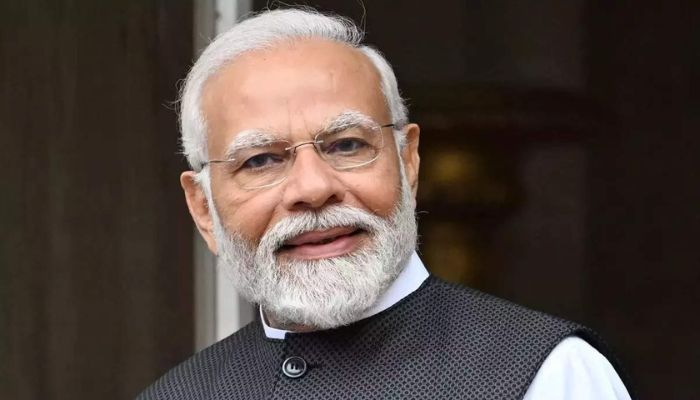
Prime Minister Narendra Modi on Sunday reiterated that the next phase of Goods and Services Tax (GST) reforms will be rolled out before Diwali, promising what he called “double benefits” for citizens across the country.
Major tax slabs set for overhaul
According to sources, the Centre has proposed scrapping the existing 12 per cent and 28 per cent GST slabs. Almost 99 per cent of items in the 12 per cent bracket are expected to shift to 5 per cent, while nearly 90 per cent of goods in the 28 per cent slab are likely to move down to 18 per cent. The changes, if approved, are expected to make everyday items more affordable for households and ease the burden on small businesses.
Framework shared with states
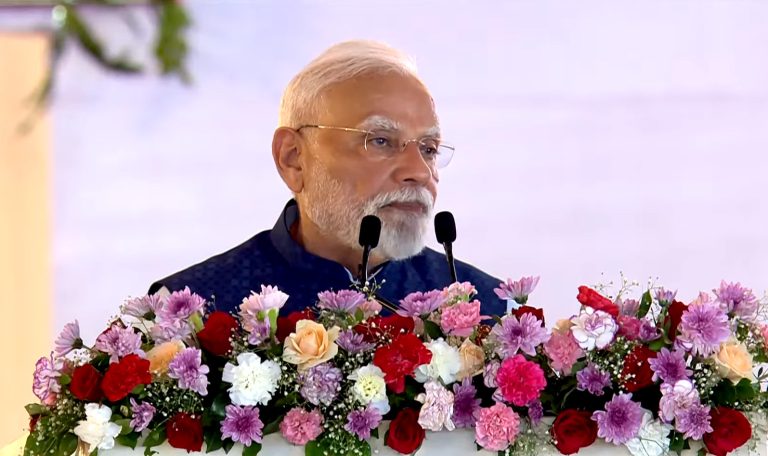
Speaking at the inauguration of two National Highway projects worth nearly Rs 11,000 crore in New Delhi, the Prime Minister said the complete framework of reforms had been shared with all states. He expressed hope for swift cooperation, emphasising that the initiative would make life and business simpler. “We are coming with the next generation of GST reforms, this will be a gift for you this Diwali,” he said, urging quick completion of the process.
Impact on common man and MSMEs
PM Modi stressed that the reforms were designed to directly benefit the poor, middle class and small entrepreneurs. Everyday items would become cheaper, he said, while micro, small and medium enterprises (MSMEs) would receive a “huge boost” in easing their business operations. “Taxes needed by the common man will be reduced substantially, and a lot of facilities will be increased,” he said, underlining the government’s aim to deliver tangible relief.
Decision expected in coming weeks
The proposal will be studied by the Group of Ministers, with the GST Council expected to meet between September and October to consider its adoption. If cleared, the reforms would mark a major simplification of India’s indirect tax system, aligning with the government’s pitch for inclusive growth and economic revival.
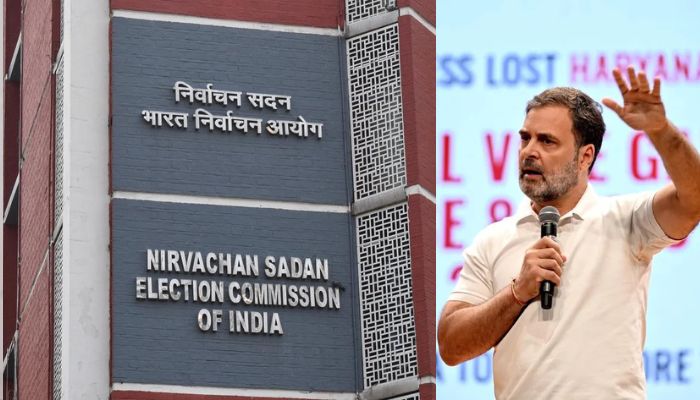
On Saturday, 16th August, the Election Commission of India (ECI) issued a press release after several Opposition leaders’ allegations of large-scale voter fraud during the 2024 Lok Sabha elections. The poll body clarified that the correct time to raise concerns about electoral rolls is during the “Claims and Objections” period, which is held before every election.
In its press release, the Election Commission said that some political parties and individuals are now raising issues about errors in electoral rolls, even though these lists had been shared with them well in advance.
Election Commission of India says, "Recently, some Political Parties and individuals are raising issues about errors in the Electoral Rolls, including those prepared in the past. The appropriate time to raise any issue with the Electoral Rolls would have been during the Claims… pic.twitter.com/0Q2e9brBES
The Commission explained that once the draft electoral rolls are published, both digital and physical copies are given to all political parties. A full month is then provided to check the list and file objections.
The poll panel added that this one-month window is meant for correcting errors. If any genuine mistakes were reported, then they could have been fixed before the final rolls were published. After final publication, the updated lists are again shared with all recognised political parties and made available on the ECI website.
Transparency in voter list preparation
The Election Commission stressed that transparency has always been the “hallmark” of electoral roll preparation. According to the poll body, political parties and their booth-level agents (BLAs) are also expected to check the lists during the given time, but many failed to do so.
“ECI continues to welcome scrutiny of Electoral Rolls by Political Parties and any Elector,” the statement said, adding that timely feedback would help in removing errors and keeping the lists accurate.
Opposition’s allegations of vote theft
The Opposition, especially the Congress party, has strongly criticised the Commission over manipulation of voter lists. Congress leader Rahul Gandhi has accused the ECI of allowing “vote theft” in states like Maharashtra, Karnataka and Haryana.
In a press conference on 7th August, Rahul Gandhi claimed that in Karnataka’s Mahadevapura constituency alone, more than one lakh votes were “stolen” through duplicate entries, fake addresses and multiple registrations at the same location. He also pointed out that the data he presented was from the Election Commission itself, and questioned why the poll body had not denied it.
“This is Election Commission data. Why don’t you say it’s wrong? Because you know the truth. You know that we know what you have done across the country,” Gandhi had said.
ECI asks for proof
In response, the Election Commission has asked Rahul Gandhi to provide the names of voters he believes were wrongly added or removed. It has also asked for a signed declaration to support his allegations.
The poll body maintained that raising such issues after the elections is not the right approach and insisted that the system in place already gives parties enough time to check and report errors in the voter lists.
Prime Minister Narendra Modi on Sunday alleged that “those who dance with the Constitution on their heads” had “trampled” the Constitution and “betraying” the sentiments of BR Ambedkar by retaining oppressive laws for decades before he came and started repealing them.
Addressing a government event to inaugurate two national highway projects in Delhi, the Prime Minister said that previous governments had treated safai karamcharis like slaves. “I am telling you the truth of how those who dance with the Constitution on their heads trampled the Constitution and betrayed Babasaheb Ambedkar. You will be shocked,” PM Modi said.
The Prime Minister raised questions on the Opposition’s claims of working for social justice and alleged that Delhi Municipal Corporation Act, 1957, had a provision of sending sanitation workers to jail for a month if they did not show up for work without prior information.
“Today I am going to tell you that truth. In Delhi, there was a dangerous law in the Delhi Municipal Corporation Act. There was a clause that if a safai mitra (sanitation worker) skipped work without informing beforehand, he or she could be jailed for a month. Think about it, what did they think of safai karmacharis? You will put them in jail for a small mistake? They now talk big about social justice. They made and kept such laws. It is Modi who is removing these laws and repealing them,” the Prime Minister said.
“It is Modi who is tirelessly finding and abolishing such unjust laws and this campaign continues relentlessly,” he added.
Lashing out at the previous Congress government in Haryana, PM Modi alleged that every job appointment was influenced from corruption in the state.
“There was a time in Haryana, during the Congress governments, when it was difficult to get even a single appointment without spending money or using influence. But in Haryana, the BJP government has given lakhs of youth government jobs with complete transparency. Under the leadership of Nayab Singh Saini ji, this process is continuing…”
Additionally, PM Modi said that to make India stronger we must take inspiration from Lord Krishna and to make India self-reliant, we must follow the path of Mahatma Gandhi. The country celebrated the festival of Janmashtami yesterday.
“To make India stronger, we must take inspiration from Chakradhari Mohan (Shri Krishna). To make India self-reliant, we must follow the path of Charkhadhari Mohan (Mahatma Gandhi). We need to make Vocal for Local mantra of our life, and it’s not difficult for us to achieve this. We must make Vocal for Local our life’s mantra. This task is not difficult for us; whenever we have made a resolution, we have always achieved it,” PM Modi said.
PM Modi inaugurated two major National Highway projects, the Delhi section of the Dwarka Expressway and the Urban Extension Road-II (UER-II). The projects are worth a combined cost of nearly Rs 11,000 crore.
The 10.1 km long Delhi section of Dwarka Expressway has been developed at a cost of around Rs. 5,360 crore. The section will also provide Multi-modal connectivity to Yashobhoomi, DMRC Blue line and Orange line, upcoming Bijwasan railway station and Dwarka cluster Bus Depot. Prime Minister inaugurated the Alipur to Dichaon Kalan stretch of Urban Extension Road-II (UER-II) along with new links to Bahadurgarh and Sonipat, built at a cost of around Rs 5,580 crore. It will ease traffic on Delhi’s Inner and Outer Ring Roads and busy points like Mukarba Chowk, Dhaula Kuan, and NH-09. The new spurs will give direct access to Bahadurgarh and Sonipat, improve industrial connectivity, cut city traffic, and speed up goods movement in the National Capital Region.
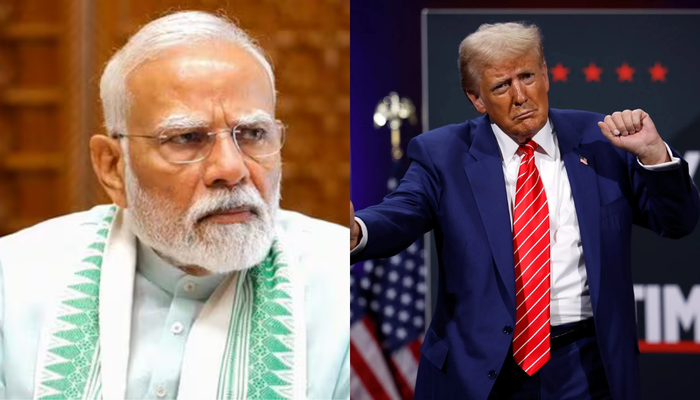
After a failed meeting with the Russian President Vladimir Putin in Alaska on 15th August to resolve Russia-Ukraine war, US President Donald Trump is back to taking undue credit for brokering a ceasefire between India and Pakistan.
Speaking to Fox News’ Sean Hannity, following his meeting with Putin, Trump reiterated his claim that he mediated a ceasefire between India and Pakistan during their military conflict. “Take a look at India and Pakistan. They were shooting down airplanes already. And that would have been maybe nuclear. I would have said it was going to go nuclear. And I was able to get it done,” Trump bragged.
When Hannity asked why he was getting involved in all these conflicts across the world, Trump justified his interference, saying that his main objective was to save lives. “Number one, to save lives in all cases, because wars are wars. When you see what would have happened with Cambodia as an example, now, I’m not involved, but I was involved in negotiating a trade deal. And I said, You guys are going to be fighting Thailand, Cambodia, so many different,” Trump rambled.
Trump also claimed that he played a key role in ending conflicts between Thailand and Cambodia, Iran and Israel, Rwanda and the Democratic Republic of Congo, Serbia and Kosovo, and Egypt and Ethiopia, saying this justified a Nobel Peace Prize for him. Apparently, Trump is trying to portray himself as some sort of global peacemaker to lay claim to the Nobel Peace Prize.
The self-bragging style of the US President is not new to the world. He has a reputation for being a loudmouth who exaggerates things and makes sweeping statements, none of which suits the high office he holds. Upholding his reputation, he recently described his meeting with the Russian President as “extremely productive” even though he could not get Russia to agree to a ceasefire with Ukraine, which was supposedly the main objective of the meeting.
India has unequivocally denied the US role in the ceasefire with Pakistan
Ever since a ceasefire understanding was reached between India and Pakistan at the request of the latter, following India’s Operation Sindoor in May this year, Trump has been going on with his boastful tirade about brokering peace between the two countries. The US President did not stop repeating his false claim, despite the Indian government’s clear statement that the ceasefire understanding between the two countries was a bilateral act.
A ceasefire understanding was reached between India and Pakistan on May 10, 2025, after India inflicted heavy damages on Pakistan in the aftermath of the April 22 Pahalgam terror attack, in which Pakistan-backed terrorists killed 26 Hindu tourists after identifying their religion. India launched a retaliatory military action after the terror attack and destroyed the terror launchpads located inside Pakistan and the PoJK. India’s military action against terrorists rattled Pakistan, and it launched drone and missile attacks on India, which led to a military conflict between India and Pakistan. After suffering heavy losses due to India’s strong military response, Pakistan requested a ceasefire.
However, right after a ceasefire was reached bilaterally between India and Pakistan, the US President jumped in to take the credit for it. In an unstatesmanlike manner, Trump made an official statement taking the credit for the ceasefire, even before an official statement could be made by the Indian government.
Trump took a U-turn on his false statement about brokering a ceasefire between India and Pakistan after Indian Prime Minister Narendra Modi clearly told him in a phone call that he had no role to play in the ceasefire. He admitted that the two countries agreed to the ceasefire bilaterally. However, later on, Trump again went back to reiterating his lie that he mediated the ceasefire, displaying his desperation to boost his contendership for the Nobel Peace Prize.
This became evident after Pakistan’s Field Marshal Asim Munir nominated Trump for the Nobel Peace Prize following a luncheon with the US President in June this year. Whether Trump will be able to get the Nobel Peace Prize after all his desperate attempts to be seen as a global peacemaker remains to be seen, but looking at his trade and foreign policy in his second term, he seems to be emerging as a global bully.
The Uttarakhand Cabinet has cleared the way for a landmark piece of legislation that will alter the framework for minority education in the state. The Uttarakhand Minority Educational Institutions Bill, 2025, is set to be tabled in the Assembly session beginning on 19th August, and is being described as the first of its kind in the country.
Extending recognition beyond one community
So far, the status of minority educational institutions in Uttarakhand has been limited exclusively to the Muslim community. The proposed Bill seeks to extend the same benefits to other recognised minorities, including Sikhs, Christians, Jains, Buddhists and Parsis. Once passed, this will also open the door for teaching Gurmukhi and Pali in state-recognised minority schools.
The new framework will replace earlier provisions. The Uttarakhand Madrasa Education Board Act, 2016, and the 2019 rules governing recognition of Arabic and Persian madrasas will be repealed from 1st July 2026.
Establishing a new authority
A key feature of the Bill is the creation of the “Uttarakhand State Authority for Minority Education.” This body will be responsible for granting recognition to minority institutions. Recognition will be mandatory, and schools set up by any of the minority communities will need approval from the Authority to operate under minority status.
The Authority is also tasked with ensuring quality education and fair student assessments, in line with the standards of the Uttarakhand Board of School Education.
Safeguarding rights with accountability
The government has underlined that the Act does not curtail the right of minorities to establish and manage their own institutions. Instead, it places conditions to ensure accountability. Schools must be legally registered under the Societies Act, Trust Act or Companies Act, and their land, assets and accounts must be in the institution’s name.
Recognition may be withdrawn in cases of financial mismanagement, lack of transparency, or activities deemed harmful to religious and social harmony.
A first for the country
With these provisions, Uttarakhand becomes the first state to introduce a law aimed at regulating minority educational institutions through a uniform and transparent process. The Bill not only expands the benefits previously restricted to one community but also sets a precedent by balancing institutional autonomy with quality benchmarks and state oversight.
The government has projected the move as one that strengthens educational diversity while upholding constitutional rights of minorities, and ensures that excellence and transparency remain central to the sector.
On Friday (15th August), The Wire published an article by a Bangladeshi writer Ahmede Hussain that attempts to reframe the Pakistan Movement.
According to this narrative, the demand for Pakistan was not rooted in religious separatism but was supposedly a “class struggle” of peasants and oppressed groups against zamindars and colonial exploitation.
The piece further claims that Islam in Bengal functioned as a vehicle for equality, and therefore, the Partition of India should be seen less as a communal project and more as a pursuit of social justice.
Screengrab of the article in The Wire
At first glance, this framing may look like a sophisticated attempt to add nuance to history. But on closer inspection, it is a deeply flawed exercise in whitewashing. What masquerades as intellectual reinterpretation is an ideological project: to erase Hindu suffering and justify Islamic bigotry under the fashionable language of Marxism and “social justice.”
The dangerous outcome of such narratives is that they rehabilitate the very justifications once used to legitimise massacres like the Moplah riots of 1921, Direct Action Day, and the Noakhali genocide.
The Pakistan movement: Religion, not class, was the driving force
The Wire article insists that the Pakistan Movement in East Bengal was essentially a peasant uprising, where Islam merely served as a symbol of unity against class oppression. This framing deliberately downplays the explicitly religious character of the demand for Pakistan.
The reality is starkly different. Muhammad Ali Jinnah’s “Two-Nation Theory” was not a manifesto of class revolution; it was an unambiguous declaration that Hindus and Muslims could not live together as one nation.
The Muslim League did not mobilise the poor under the red flag of socialism but under the green banner of Islam. Its speeches, resolutions, and campaigns were saturated with religious appeals, not with the vocabulary of economic redistribution.
If the problem had truly been zamindari oppression, the natural solution would have been land reforms or socialist policies, not the carving out of an Islamic state. That the result was Pakistan, an explicitly religious homeland for Muslims, demolishes the myth that this was ever about class struggle. It was communal mobilisation, pure and simple.
Erasing the blood of Partition: Direct Action Day and Noakhali
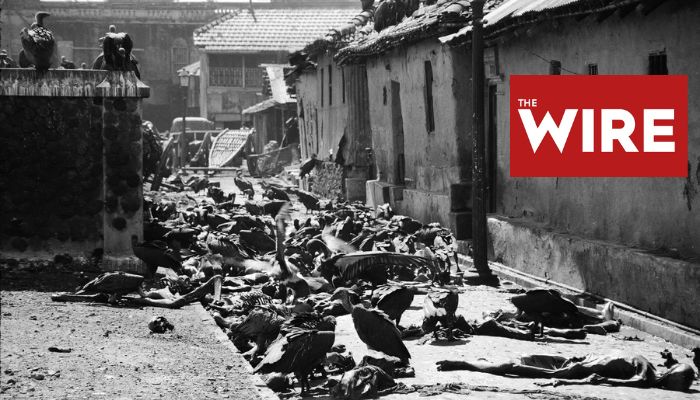
A glaring omission in this revisionist framing is the deliberate forgetting of the horrific communal violence that preceded Partition. On Direct Action Day, 16th August, 1946, Jinnah called for a massive demonstration of Muslim strength. What followed in Calcutta was not a peasant uprising but an orchestrated massacre. For three days, the city turned into a slaughterhouse.
The scale of brutality defied human comprehension. Conservative estimates put the death toll at 4,000, though many sources suggest figures closer to 10,000. Over 100,000 Hindus were rendered homeless within three days. The violence was characterised by unprecedented sadism. Hindu women were gang-raped in front of their families before being murdered, children were butchered, and bodies were mutilated beyond recognition.
Eye-witness Philip Talbot described the horrific scenes-“bodies grotesquely bloated in the tropical heat, slashed bodies, bodies bludgeoned to death, bodies piled on push carts, bodies caught in drains, bodies stacked high in vacant lots”.
This was not a cry for land reforms; it was a naked display of Islamist terror designed to frighten Hindus into submission. The targets were not merely communal, but they were civilizational targets. Hindu temples were desecrated and destroyed, religious symbols defiled, and sacred texts burned. The attackers deliberately sought to erase the Hindu presence from Calcutta, considering the city as the future capital of East Pakistan.
Just two months later, on 10th October, 1946, the Noakhali genocide in East Bengal unfolded with chilling precision. More than 5,000 Hindus, mostly men and boys, were killed, and many times that number were forcibly converted to Islam. Hindus were forced to eat beef and recite the Islamic verses (kalma).
Thousands of Hindu women were raped, many in front of their children and husbands, and taken into captivity to be used as sex slaves. The systematic and gruesome attacks on the Hindu minority led to a sharp decline in their population.
What is shocking is that the Noakhali Hindu Genocide is referred to as “riots” whereas all indicators show that it was a full-fledged Genocide
The Moplah massacre: A century of whitewashing
On 25th September 1921, a horrifying massacre took place in Tuvvur, a village in Malappuram, Kerala. What began in August as part of the Khilafat movement, a campaign linked to the Ottoman Caliphate in Turkey and supported by Mahatma Gandhi, turned into brutal violence against Hindus.
In Tuvvur alone, 50 Hindus were killed and their bodies were dumped into a well. Over the next four months, before the killings could be stopped, more than 2,500 Hindus were slaughtered, often by beheading. Their bodies were thrown into wells simply because they refused to convert to Islam.
Around one lakh Hindus had to leave their homes and villages, becoming refugees overnight. Thousands of families were forced to convert under the threat of death. Even EMS Namboothiripad, who later became Kerala’s first Chief Minister, had to flee from his ancestral home to save his life.
Yet, successive governments and intellectuals deliberately renamed this horror as a “class struggle” or even a “freedom struggle.” Gandhi, Annie Besant, and Ambedkar documented the atrocities, yet the narrative of “agrarian revolt” persisted in academic and political circles. To this day, the Kerala government glorifies the perpetrators by listing them as “freedom fighters.”
The Indian Council of Historical Research (ICHR) has clarified that the Moplah uprising was no freedom struggle but a jihadist attempt to establish an Islamic caliphate. Still, the habit of cloaking Islamic violence in Marxist vocabulary persists.
Moplah Massacre was not a peasant revolt
The true meaning of Suhadah (martyr) was recaptioned in Islam, when their cause of war was purely religion, and in that name brutally killed, raped and robbed enormous non-Islamic people. According to them, Islamic martyrs, who die during this so-called rebellion, cross the heaven’s gate on horses caparisoned with precious stones, welcomed by ‘Houries’ (Virgin angels) and other fantasies. For an illiterate Eranadan Moplah, these promises of after life were more welcoming than the mundane earthly life he lived.
The Freedom movements in India demanded every man and women to join hands towards a common cause. It was Mahatma Gandhi’s idea to combine the Khilafat movement with the Swaraj movement, thinking this will initiate the Muslims who were staying away to participate in our struggle for freedom. Little he knew about the fates of Hindus, when thousands were sacrificed and killed in the name of Islam. The Indian freedom fighters dreamt about a free country, but the Khilafatites, dreamt about a free Islamic country.
This was the beginning of 1921 Mappila Jihad. “Nara-e-Takbir, Allahu Akbar”, these slogans did not resonate with nationalist vigour or peasantry strength. Neither did they carry the Swaraj Flag (designed by Pingali Venkayya) nor the Khilafat flag (two intersecting circles). Instead, the rioters marched with the black ‘Banner of Eagle’ also known as rāyat al-`uqāb, the historical flag flown by Muhammad in Islamic tradition, an eschatological symbol in Shi’a Islam, heralding the arrival of the Mahdi, and a symbol used in Islamism and Jihadism.
They attacked using iron rods. The police bayonets were no match to their rising numbers. Nine mobs were killed in the police firing. When the crowd withdrew, the British captured Kunjikhadar, Secretary of Thanur Khilafat Committee and 40 other Mappilas.
The wheels of the British administration were immobile for a while, and the fundamentalists were up in arms. They raided and plundered police stations, treasuries, courts, and other government offices. These religious disturbances soon spread to the nearby areas of Malappuram like wildfire.
Social justice as a weapon against Sanatanis
The pattern is unmistakable. Whenever Hindus are victims of Islamic violence, the atrocity is rebranded through the vocabulary of “social justice.” When Hindus are massacred, the explanation shifts: it was not jihad, it was “class struggle.” It was not communal violence; it was “anti-colonial resistance.” The victims are erased, and the perpetrators are recast as revolutionaries.
This is a cynical exploitation of social justice language. Instead of genuinely addressing caste inequalities or peasant exploitation, the terms are weaponised to justify Islamic aggression. The Moplahs were excused because their Hindu victims were landlords.
The Pakistan Movement is reframed because Hindus were “upper-caste oppressors.” But the truth is that thousands of poor Hindu peasants, artisans, and Dalits were among those slaughtered or forcibly converted. Their suffering is erased under the alibi of a “larger struggle.”
This is not just distortion; it is a second violence. The victims lose not only their lives and homes but also the dignity of their memory.
The betrayal of partition: No social justice in Pakistan
Even if one entertains the argument that the Partition was a social revolution, the outcome exposes the lie. Did Pakistan deliver equality for the oppressed?
The answer is a resounding no. Pakistan quickly evolved into a feudal-military state dominated by elites. Land reforms failed, peasants remained impoverished, and minorities, particularly Hindus, were persecuted more than ever. Far from liberation, Pakistan became a nightmare for both its minorities and its poor.
Thus, the claim that the Pakistan Movement was about social justice collapses not only in its origins but also in its consequences.
The danger of such historical revisionism is not confined to the past. By whitewashing Islamic violence under the garb of social justice, media platforms like The Wire enable the same ideological justifications that continue to put Hindu communities at risk.
The religious hatred that fuels the violence is erased. The message is clear: Hindu lives do not matter on their terms; they only matter if their deaths can be repurposed into someone else’s narrative of struggle.
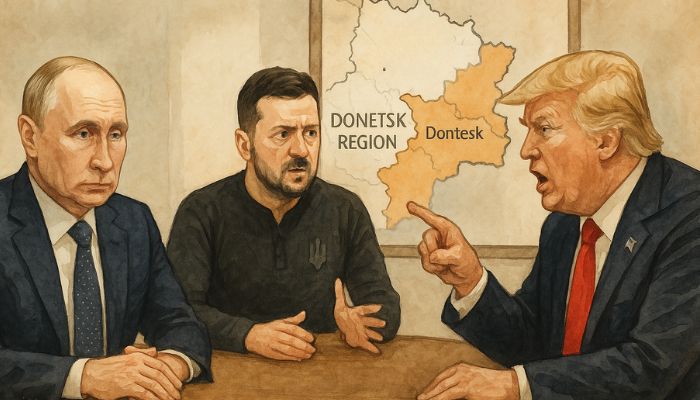
On 15th August (local time) Russian President Vladimir Putin reportedly told United States President Donald Trump that Moscow would end its war only if Ukraine surrendered the eastern Donetsk region. According to a Financial Times report, Putin made the demand during his meeting with the former US president in Alaska. He suggested that ceding Donetsk would allow Russia to freeze the frontline, particularly in the southern Kherson and Zaporizhzhia regions. Notably, Russian troops have already brought most parts of the territory under their control.
Trump relays message to Zelensky and Europe
A day later, the message was conveyed to Ukrainian President Volodymyr Zelensky and European leaders during a joint call by Trump. He pushed for a full peace agreement rather than a limited ceasefire. Following the discussion with leaders including German Chancellor Friedrich Merz and French President Emmanuel Macron, Trump wrote on the social media platform Truth Social, “The best way to end the horrific war between Russia and Ukraine is to go directly to a Peace Agreement, which would end the war, and not a mere Ceasefire Agreement, which often times do not hold up.” He added that if progress was made, a further meeting with Putin would be scheduled.
Why Donetsk is central to the conflict
Donetsk has been the centre point of the conflict between Russia and Ukraine since 2014. Russia already controls around 70% of the region. Ukraine, on the other hand, maintains a heavily fortified western belt of cities critical to its eastern defences. Complete control of Donetsk would be the most significant prize for Russia since the full-scale war between Russia and Ukraine began. It would cement its fastest territorial gains since late 2023. On the contrary, losing Donetsk would compromise the stability of the entire eastern front for Kyiv.
Zelensky stands firm
Media reports quoted unnamed sources close to President Zelensky saying that he has refused to concede Donetsk. However, he is reportedly prepared to discuss broader territorial matters with Trump when the two leaders meet in Washington on 18th August. Reports also suggested he could consider a three-way meeting involving Putin. However, the Kremlin has categorically denied any such arrangement, saying it was never on the table in Anchorage, Alaska.
European unease grows
Trump’s earlier hints at possible land swaps have unsettled European capitals. Many leaders were reassured when Trump warned Putin of “severe consequences” if Moscow refused to halt the war. However, the Alaska talks delivered no results on a ceasefire. Instead, they provided Putin with an opportunity to project himself on the world stage. The meeting was marked by a red-carpet reception and light-hearted exchanges with Trump before the formal discussions began between the two leaders.
Why Putin wants all of Donetsk
Putin’s demand for complete control over Donetsk revealed a desire to achieve diplomatically what Russian forces have been struggling to accomplish militarily. Ukraine has established a 31-mile-long fortress belt of cities and defences in Donetsk since 2014. Russian troops have repeatedly encountered strong resistance along that fortress line. According to the Institute for the Study of War, breaking through could take several years under current conditions.
In the prolonged battle for the region, Russia has committed significant equipment and manpower over the past 17 months. Despite the challenges, Russia has gradually advanced closer to the city. If Russia secures Donetsk through negotiations, it would be positioned to threaten Kharkiv and Dnipropetrovsk next. That would force Ukraine to hastily build new, but weaker, defensive lines. Controlling Donetsk would strengthen Russia’s strategic position in the region, raising concerns among Western leaders.
Putin-Trump Alaska talks failed
The Alaska summit ended without any breakthrough on the Russia-Ukraine war, despite Trump claiming it was “extremely productive.” His threats of sanctions contrasted with the red-carpet welcome accorded to Putin, while the absence of Ukraine from the talks drew sharp criticism. The meeting, expected to produce at least a ceasefire roadmap, instead highlighted the gulf between appearances and outcomes, with Trump shifting the responsibility for peace squarely onto Zelensky and European nations.