Home Blog Page 2468

You are indulging in arm-twisting: Supreme Court slams Kerala State Waqf Board

0

On Thursday, February 2, the Supreme Court slammed the Kerala State Waqf Board for engaging in ‘arm-twisting’ while hearing a case on the retrospective operability of section 52A of the Waqf Act, 1995, which carries penal consequences on anyone ‘encroaching’ on Waqf land.

As per a report by LawBeat, the case was being heard by a bench of Justices S. Ravindra Bhat and Dipankar Datta. In the case, Kerala High Court had earlier refused to terminate criminal proceedings against the petitioner firm even though the tenancy on the waqf land had expired in 2005 and the eviction order had been suspended. Even though the amendment making ‘encroachers’ criminals had come into effect only in 2013, the Kerala High Court had refused to dismiss the criminal proceedings against the petitioner.

Senior Advocate Besant R, appearing for the petitioner(s) explained that the Waqf board’s conduct was convoluted and retrospective in nature.

The State Waqf Board was strongly criticized by the bench at today’s hearing for using coercion and using the ‘draconian’ law against the petitioner(s) in question.

“This is draconian! I am aghast! Absolutely aghast! If the Constitution of India were written today, Article 21 (right to life) would not find itself in it,” Justice S. Ravindra Bhat said while pointing out that people who have not even committed a crime cannot be subjected to legal action. The tenancy had been declared unlawful in 2005, he noted, but the matter was left open until the amendment mandating criminal prosecution took effect, at which point the Kerala State Waqf Board used the ‘draconian’ act against the petitioner(s).

During the hearing, the state Waqf board insisted that they are not a private group and derive their power from legislation. They also said that they are only performing ‘public service.’

At this point, the bench said, “I understand you have lacs and lacs of acres of land but you cannot prosecute persons like this. There are civil remedies and this is nothing but arm-twisting.”

At the conclusion of the hearing, the Waqf Board’s attorney notified the court that a 2013 provision mandating criminal prosecution had now been repealed by a 2015 amendment. Taking notice of this, Justice S. Ravindra Bhat said, “So for those two years, they were offenders!”

The petition, submitted through their attorney Senthin Jagadeesan, argues that the Kerala High Court should have used its inherent authority to prevent abuse of the legal system and halted the proceedings under section 52A of the Waqf act, given that the state board’s eviction decision had already been stayed by the court and that the issue of whether the petitioner is an ‘encroacher’ is still under appeal. The Court has reserved its judgment in the case.

AAP used Delhi liquor scam money for its election campaign in Goa: Enforcement Directorate

On Thursday, February 2, the Enforcement Directorate said that the Aam Aadmi Party (AAP) used money made from the Delhi Liquor Scam for its election campaign in Goa. The assembly elections were held in Goa last year, wherein AAP had to be content with just two seats.

In the chargesheet submitted in the case, the ED stated, “Investigation of the trail of this kickback so far has revealed that a portion of these funds was used in the election campaign of the AAP.”

The ED claims that over Rs 70 lakh in cash was paid to the volunteers who made up the AAP’s survey teams. The investigation agency claimed that Vijay Nair, the party’s communications coordinator, told several people involved in the campaign-related activity to take the payments in cash.

Furthermore, ED has said that Vijay Nair received kickbacks of Rs 100 crore on behalf of the Aam Aadmi Party from a ‘South Group’ that included Aurobindo Pharma director P Sarath Chandra Reddy, YSR Congress Party’s MP Magunta Sreenivasulu Reddy, and his son Raghav Magunta.

Abhishek Boinpally, a businessman from Hyderabad, allegedly conspired with Dinesh Arora, an aide to Delhi’s deputy chief minister Manish Sisodia, to facilitate the transfer of the said funds.

According to an NDTV report, the investigation agency also said that Vijay Nair, the communications coordinator of AAP, set up a FaceTime video call from his phone between Sameer Mahendru, the head of Indospirits, and Arvind Kejriwal.

Moreover, Enforcement Directorate added that Kejriwal allegedly told Sameer Mahendru to trust Vijay Nair.

“Vijay is my boy, you should trust him and carry on with him,” Kejriwal allegedly told Mahendru.

Reacting to the development, CM Kejriwal termed the chargesheet as ‘complete fiction’ alleging that the ED operates to topple governments and to buy and sell MLAs.

In the Delhi liquor scam, according to the chief secretary’s report, cartelization and monopolies were taking place in the liquor trade under the new liquor policy. It was also alleged that there was an illegal distribution of liquor licenses to companies that had violated the terms and conditions of the New Excise Policy 2021-22.

Acting on the Chief Secretary’s report, Delhi Lieutenant Governor VK Saxena ordered a CBI probe in July, and days after that, the Delhi govt announced the decision to scrap the new liquor policy and revert to the old one.

The Wire pretends to ‘criticise’ BBC documentary but casts aspersions on Godhra carnage, here are the answers to questions raised

Leftist propaganda website The Wire published an article by Revati Laul on 31st January 2023. The article is based on BBC’s recently banned controversial documentary on PM Narendra Modi – ‘India: The Modi Question’. Pretending to criticize the BBC propaganda documentary, this article casts aspersions on Godhra carnage. However, the questions raised in this article published by The Wire only show that the leftist propaganda, as usual, relies on baseless accusations when the answers to the posed questions are available on basic internet search,

About the Godhra Carnage, the root cause of the subsequent Gujarat riots in 2002, The Wire article mentions, “First, the 59 karsevaks were travelling ticketless in the train that caught fire. There were many that had bought tickets and got out alive. What did they see? Why are their accounts buried? If indeed Muslims had set the bogey on fire, there should be no fear in calling them out. Why the silence?”

It adds, “Further discomfort could have been brought by sharp-focusing on the train bogey that burnt. One investigation into the burning was carried out by the BJP-led government of the day and the other, a few years later, by the opposition leader Lalu Yadav when he was railway minister. Both are therefore seen as partisan. Could not the BBC play a non-partisan role here and throw up some basic questions that could really open up a can of worms? Here are some questions that come to mind. Why was the chain pulled and the train stopped before the designated station? Was a Muslim girl molested? What happened to these stories and why have they vanished from our midst?”

It is shocking that when Indian courts have convicted several people for the Godhra carnage, Wire is suggesting that it was biased and BBC is playing a ‘non-partisan’ role.

The answers to the questions raised on the train stopping at signal Falia cabin A and the coach S-6 catching the fire are concluded in the report by the commission of inquiry consisting of Justice GT Nanavati and Justice Akshay H Mehta. The questions about the chain pulling were raised by Jan Sangharsh Manch – a so-called civil rights organization by the late Mukul Sinha. Their submission claimed that the chain pulling from 4 different coaches took place at Godhra and the train stopped because the chain pulling problem was not set right and not because some mob was pelting stones at the train.

However, the accounts of the guard of the train, the driver, and the assistant driver of the train differ from this. They have maintained that while chains were pulled from four coaches, the problem was solved by releasing the brakes and after that, the train left the Godhra station. At signal Falia that is cabin A, the chain was pulled again and before it could be set right, a mob from outside the train started pelting stones on the train, and then they set the coaches on fire. The same record is also noted in the train driver’s log book and it was held authentic by the commission. This also disproves the theory that Karsevaks abusing some vendors on the platform was the reason for the violence as the train coach caught fire outside the station.

The commission report states that there are two versions of why the chains were pulled to stop the train. One version says that passengers had pulled the chains because the train had started to leave the station leaving some passengers who had got down from the train. The other version says that the chains were pulled under conspiracy to attack the karsevaks in the train.

The commission says in its report, “From which coaches the alarm chain was pulled, would not have been a material issue but for the fact that a point has been raised for our consideration by the Jan Sangharsh Manch and some other parties that Sabarmati Express train was not stopped near ‘A’ cabin by some persons pulling the alarm chain in pursuance of the conspiracy alleged by the State, but it had stopped there because it could not go further as a result of continuous application of the brake, as chain pulling from coach no.90238 or some other coach was not set right before the train had started from the station. The reason suggested for not set right the chain pulling from that coach is that by the timing chain pulling from two coaches was set right, pelting of stones on the train had again started and therefore, that work was left incomplete and the assistant driver who was doing that work had immediately rushed back to the engine. This fact has been suggested by Jan Sangharsh Manch as the reason for the assistant driver to leave the work of resetting the chain incomplete. The version based upon the evidence of the railway staff is that chain pulling from all four coaches was set right and after confirmation of completion of that work, the driver was told to proceed ahead.”

Justice Nanavati-Mehta Committee report [pdf] talks about how the Godhra carnage took place. Right after the Godhra platform and boundary, there is a road and a locality named ‘Signal Falia.’ “It extends up to the culvert and goes further towards A cabin. It is a locality mainly inhabited by Ghanchi Muslims,” the report mentions. When the train arrived, a lot of unauthorized vendors, mainly Ghanchi Muslims, would come on the platform and sell snacks, cold drinks, bidis, etc.

The report further states that the train arrived at the platform at 7:43 AM as it was running about 5 hours late, and there was a halt of about 5 minutes. The train started to leave Godhra at 7.55 AM, and by that time a mob had started collecting near the station on the signal Falia side. The mob started running along with the train and throwing stones at it, forcing the TTE and passengers to close the doors and windows on that side, the report states.

However, the chain was pulled again, forcing the train to stop near A cabin. By this time, the engine and some coaches of the train had crossed the cabin but the other coaches were still in the station. After this, the mob started to attack the train with stones, and the size of the mob also swelled. The Assistant Station Master who was at cabin A came out to see what was happening, but went back after seeing the mob, informed the staff at the station about what was happening and called for help.

The mob targeted the S6 coach specifically. The report states, “Its windows were broken and through those open windows, stones, burning rags and some inflammable liquid contained in pouches and bulbs were thrown inside the coach.” The report says that as a result, the seats had caught fire and the coach was filled with smoke, reducing visibility and causing breathing problems. After that, the mob opened the door connecting S6 with S7 by cutting the vestibule, entered the coach and threw petrol inside the coach. This caused a big fire which spread rapidly leaving no time for the passengers to escape.

When police arrived at the station, they had to resort to firing to stop the attack. But there was a second attack at 11 AM, when the mob attacked the train, passengers and even the police. “The impact of the incident was so much and widespread that it had led to communal riots in Godhra immediately and throughout Gujarat within a short time,” the report mentons.

In its evidence portion, the report cites media reports from February 28, 2002, the day after the carnage, where leading mainstream media had reported that a mob had set Hindus on fire. They mentioned how Hindus were returning from karseva and how the mob set the train coaches on fire with petrol. The report states for that a long time it was accepted that the train was attacked by a Muslim mob, and this version was not questioned. There was no suggestion that coach S6 caught fire due to some other reason and it was not torched by the mob, and such claims started to appear much later.

Further, the report has given detailed testimonials of witnesses, including Railway staff and policemen, which make it clear that the train was attacked and set on fire by the mob.

In the guise of criticizing the documentary, The Wire article ends up only casting such aspersions which have no solid proof. It also ignores the report by the commission. It also disregards the fact that all such speculations have been dismissed by the Indian courts including the Supreme Court.

The Wire article further suggests to BBC what could be the proper way to depict particular scenes so that Narendra Modi and his supporters could not take an advantage of playing the victim by pointing fingers at this documentary. The Wire article also says that BBC lacked in basic Google searches but the fact remains that Revati Laul, who calls the propaganda website The Wire to be one of the last standing independent press spaces, has not searched anything about the carnage that claimed the lives of 59 innocent Hindus before making blatant aspersions based on some plea filed by the late Mukul Sinha and his organization.

It is notable that there were a number of actors playing their role in changing the outlook of the horrifying incident that sparked the riots. It has been over 20 years since the train carrying Karsewaks from Ayodhya was burnt in Godhra, Gujarat, by a Muslim mob. 59 Hindus were burnt alive, including women and children. The propagandists tried their level best to paint the incident differently to save the murderous Muslim mob from facing any action. Mukul Sinha and Nirjhari Sinha were among the frontline propaganda peddlers who spread the lies.

The trial court which heard the Godhra carnage case ruled that the incident was a planned conspiracy, and 31 persons were convicted for the same. The court had acquitted 63 others due to a lack of evidence. The convicted persons were convicted of murder and conspiracy charges, and 11 of them were awarded the death penalty. The Gujarat High Court also accepted that it was a planned conspiracy, however, the court commuted the death sentences to life sentences.

MEA condemns Khalistani attack on Indians in Australia, urges authorities to disallow territory for anti-India activities

On Thursday, the Indian Ministry of External Affairs strongly condemned the attack on the Indian community by the extremist Khalistani groups in Melbourne, Australia, and urged the local authorities to launch an investigation into the case and punish the perpetrators.

“We have been repeatedly taking up with Australian authorities and sharing our concerns about actions by such elements including those by proscribed terrorist organizations. We have also conveyed our firm rejection of the so-called Khalistani referendum and the politically motivated exercises by the extremist elements,” said MEA official spokesperson Arindam Bagchi.

The spokesperson also said that India has asked the Australian authorities to ensure the safety and security of the Indian community and their properties located in the Melbourne part of the country. “We have asked to ensure the safety and security of the Indian community and their properties. Also, we have urged the authorities to not allow their territory for such activities that are detrimental to the national interest of India,” Bagchi added.

According to the MEA, a few Australian leaders have also commented on the issue condemning the violence and the attack on the Indians in Australia by the extremists. “We’ll continue to take up the issue with the Australian authorities,” he reiterated.

On January 29, several videos went viral over the internet showing Indian Australians being attacked by Khalistanis with swords while carrying the Indian Tricolor. The Indians were attacked while they were protesting at the Federation Square in Melbourne against the rising pro-Khalistan activities in the country. It was reported earlier that the Indians had pre-notified the Victoria Police about the protest they had planned against the Khalistanis.

It is notable that the Khalistani terrorist outfit ‘Sikhs For Justice’, which has been banned by the Indian government, had announced that a referendum on Khalistan will take place on January 29 at Federation Square. Amid this, Sarah L Gates, Director of Hindu Human Rights Australasia shared the video of a group of Khalistan supporters chasing an Indian youth who was carrying the Indian national flag.

Later, Australian Hindu Media informed that a sword-yielding Khalistani was arrested by the police at Federation Square during the Khalistan event. The Indian community residing in Australia and their properties have been facing extremist attacks since the last month, all of which were organized by locals who support the Khalistani propaganda.

On January 17, Khalistani supporters vandalised the historic Shri Shiva Vishnu Temple in Carrum Downs in Melbourne. During the vandalisation, the miscreants wrote anti-Hindu and anti-India slogans on the walls near the temple.

On January 12, BAPS Swaminarayan Mandir, a Hindu temple in Melbourne, Australia, was trashed by Khalistan supporters and damaged by painting anti-India graffiti on it. According to the reports, the walls of Melbourne’s iconic Swaminarayan temple in Mill Park’s northern suburbs were spray-painted with ‘Hindustan Murdabad’ slogans.

Considering the attacks, the Australian Hindu Association Inc had written to the Minister of Police in Victoria seeking an investigation into Hinduphobic crimes committed by Khalistani-elements in the Australian state. In the letter addressed to Anthony Carbines, Minister of Police of Victoria state, the organization had expressed concerns of Australian Hindus about the organized attacks on Hindu Temples. The letter also had mentioned voting was scheduled at Federation Square on January 29 by Sikhs For justice for Referendum 2020. It was added that the Government of India has already banned SFJ under UAPA in 2019.

‘Why are you still out’: Netizens question The Wire’s Arfa Khanum after she pulls out ‘Muslim journalist’ card following Siddique Kappan’s release

The ultra-leftist propaganda outlet The Wire’s editor, Arfa Khanum Sherwani, has been called out on social media by netizens for playing the ‘Muslim journalist’ card while tweeting about PFI ‘journalist’ Siddique Kappan’s bail orders.

Today (February 2), Kerala-based Siddique Kappan was released from the Lucknow prison after being behind bars for 2 years as the Lucknow Sessions Court approved his bail plea on Wednesday, February 1.

While welcoming the release of Siddique Kappan, Arfa used the opportunity to play her victim card as a ‘Muslim’, claiming that Kappan was falsely accused only because he is a ‘Muslim journalist’.

“Journalist Siddique Kappan finally leaves UP Jail after over two years. He was imprisoned for a crime he never committed. His only crime was that we was a journalist and a Muslim,” Arfa tweeted.

No sooner did Arfa Khanum Sherwani deploy the overused Muslim victimhood card, Netizens were quick to reprimand The Wire journalist. Twitter user @singpuri questioned why she was still not imprisoned and receiving preferential treatment if the current government of India cherry-picks and targets Muslim journalists.

“I then wonder why the government of India gives you such special treatment? Why haven’t you been arrested as yet? What makes you stand out?, the tweet read.

One Twitter user, @Spoof Junkey, also mocked Arfa for her remark. He wondered why, if Muslim journalists were being targeted, she had been spared.

“Wonder why yourself, Rana and Saba are roaming freely then given your criteria for arrests,” tweeted @AlpaKanya, taking a dig at other controversial Muslim ‘journalists’ like Rana Ayyub and Saba Naqvi.

Retired Supreme Court judge Markandey Katju, also chastised Arfa for overusing the ‘Muslim victim’ card. “Muslim, Muslim, Muslim. Ur constant refrain is Muslim. Don’t u realise such constant talk is further polarizing society, & benefiting the ruling party? But in ur obsession perhaps u cudnt care less,” tweeted the ex-SC judge.

PFI ‘journalist’ Siddique Kappan, facing charges under UAPA and PMLA, gets bail after 2 years in prison

Meanwhile, on Wednesday, the Lucknow Sessions Court approved bail orders releasing Kerala-based ‘journalist’ Siddique Kappan from the Lucknow prison. Kappan, who was detained in October 2020 under the Prevention of Money Laundering Act (PMLA) by the Enforcement Directorate (ED), was released from the Lucknow jail on Thursday morning.

Siddique Kappan was arrested by the UP Police on October 5, 2020, when he was proceeding to ‘cover’ the Hathras case where a 19-year-old Dalit woman had died. He was arrested along with three other persons, under stringent sections of UAPA and sedition charges for attempting to create a caste conflict in the state amidst the Hathras case controversy.

Apart from Kappan, Siddiqui of Nagla in Muzaffarnagar, Masood Ahmed of Jarwal in Bahraich district, and Alam of Kotwali area in Rampur district were arrested. All the four arrested four had connections with the radical organization Popular Front of India (PFI) and were planning to cause caste-based unrest in the state, the police had stated.

The government in the Supreme Court had stated that Siddique Kappan was an office-bearer of the now-banned Islamist organization Popular Front of India(PFI) and was on his way to Hathras pretending to be a newspaper journalist from a Kerala-based outlet called ‘Tejas’ that was closed in 2018.

7 posts of Supreme Court judges, 333 posts of HC judges vacant: Law Minister Rijiju informs in Parliament

Law and Justice Minister Kiren Rijiju on Thursday while responding to the queries made by Member of Parliament John Brittas in Parliament stated that as of January 30, against the sanctioned strength of 34 Judges, 27 Judges are working in the Supreme Court, leaving 7 vacancies.

Supreme Court Collegium (SCC) has recently made 7 recommendations to fill up all the vacancies of Judges in the Supreme Court. Rijiju also informed the Parliament that as on January 30, against the sanctioned strength of 1108 judges in various High Courts,775 judges are working and 333 posts of Judges are vacant in the High Courts.

“142 proposals recommended by the High Court Collegiums are at various stages of processing. Out of these 142, 4 proposals are pending with the Supreme Court Collegium and 138 are under various stages of processing in the Government,” he added.

As on January 30, recommendations in respect of 236 vacancies (191 existing and 45 anticipated vacancies during the next 06 months) are yet to be received from High Court Collegiums, which are in breach of six months advance timeline for making recommendations for anticipated vacancies, said the Law and Justice Minister.

The Supreme Court Collegium on Tuesday recommended Allahabad High Court Chief Justice, Justice Rajesh Bindal, and Gujarat High Court Chief Justice, Justice Aravind Kumar for elevation as Judges of the top court.

The SC Collegium comprising Chief Justice of India (CJI) Dhananjaya Y Chandrachud along with justices Sanjay Kishan Kaul, KM Joseph, MR Shah, Ajay Rastogi and Sanjiv Khanna made the recommendation.

The Collegium said that they have found both of the judges to be more deserving and suitable in all respects for being appointed as Judges of the Supreme Court of India after carefully evaluating the merit, integrity and competence of eligible Chief Justices and senior puisne Judges of the High Courts and also accommodating a plurality of considerations.

While recommending the above names the Collegium has taken into consideration the various aspects including the seniority of Chief Justices and senior puisne Judges in their respective parent High Courts as well as the overall seniority of the High Court Judges among others.

Other aspects that were considered were the merit, performance and integrity of the judges, the need to ensure diversity and inclusion in the Supreme Court by the representation of High Courts which are not represented or are inadequately represented, in the Supreme Court, appointing persons from marginalized and backward segments of society, gender diversity and representation of minorities.

The Supreme Court of India has a sanctioned strength of thirty-four Judges and is presently functioning with twenty-seven Judges. Thus, there are seven clear vacancies, the collegium observed.

On 13 December 2022, the Collegium recommended five names for appointment as Judges of the Supreme Court, namely Justice Pankaj Mithal, Justice Sanjay Karol, Justice PV Sanjay Kumar, Justice Ahsanuddin Amanullah, and Justice Manoj Misra. Their appointment is yet to be notified by the Government.

(This news report is published from a syndicated feed. Except for the headline, the content has not been written or edited by OpIndia staff)

Agra Police arrest Haider Ali, Amir, and Furkan Ali for duping Swiss national at the Taj Mahal

0

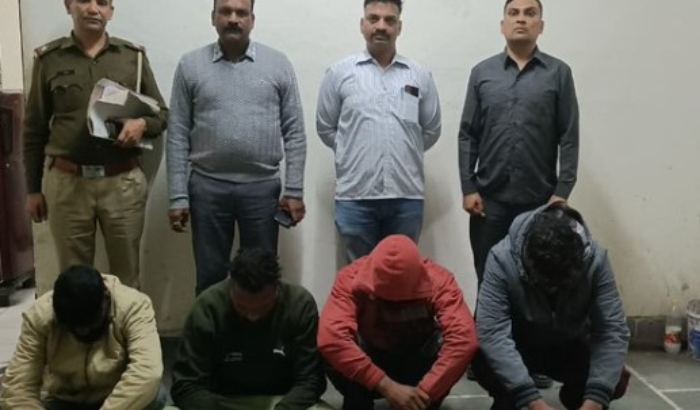
On January 31, Agra Police arrested three persons identified as Haider Ali, Amir, and Furkan Ali for duping a Swiss national at the Taj Mahal. As per reports, Haider Ali owns an emporium at the east gate of the Taj Mahal, Amir is the salesman at his shop and Furkan Ali is a tourist guide. They allegedly sold artifacts to the Swiss national at an inflated cost.

The police said in a statement that they sold a box and a marble chess set for Rs 37,500 to Isabel, a citizen of Switzerland, of Switzerland who visited the Taj Mahal on January 29. Assistant Commissioner of Police at Taj Security, Syed Areeb Ahmed said, “During her visit to the Taj Mahal on Sunday, Isabel came in touch with Furkan Ali who persuaded her to shop at a marble and textile emporium located at the eastern gate of the monument. The salesperson, Amir, calculated the price of the selected items as Rs 80,000. After bargaining with the owner, Haider, the items were sold for Rs 37,500.”

She made the payment using her credit card. The items were supposed to be delivered to her address free of charge. While returning to her hotel, she visited another emporium where Isabel found the same artifacts being sold for Rs 4,900. ACP added that Isabel filed a complaint against them at the police station following which an FIR was registered under Section 420 of the Indian Penal Code (IPC). “They have been arrested and video recording of the CCTV camera installed at the shop has been recovered,” he added.

Remembering the famous Natwarlal who sold the Taj Mahal

Conmen around the Taj Mahal have been duping tourists for decades. However, one name stands out as he literally “sold” the monument several times. Mithilesh Kumar Srivastava alias Natwarlal is the most notorious conman in India. He was born in the village Bangra of district Siwan, Bihar, in 1912. Master of disguise, Natwarlal was famous for changing his appearance and duping people of crores of rupees. He was a master in forging the signatures of famous personalities as well.

From Dhirubhai Ambani to Tatas and Birlas, Narwarlal had a high-profile list of victims. His most famous cons included the sale of the Taj Mahal, the Red Fort, the Rashtrapati Bhawan, and the Parliament building along with the 545 sitting members. He conned people into donating money while posing as a social worker. Several shopkeepers were duped of lakhs of rupees as he paid them with fake cheques and demand drafts.

Natwarlal had over 100 cases filed against them in eight states. He was sentenced to 113 years in prison. Interestingly, he managed to escape jail eight times in his life. When he was 84 years old and wheelchair-bound, Natwarlal was arrested for the last time. At that age, he managed to fool the police into transporting him to AIIMS hospital from Kanpur Jial.

While his brother claimed he was cremated in 1996, Natwarlal’s lawyers claimed he died on July 25, 2009.

Islamnagar to be known as Jagdishpur once again after 308 years, read how Mughal general Dost Mohammad Khan had changed the name

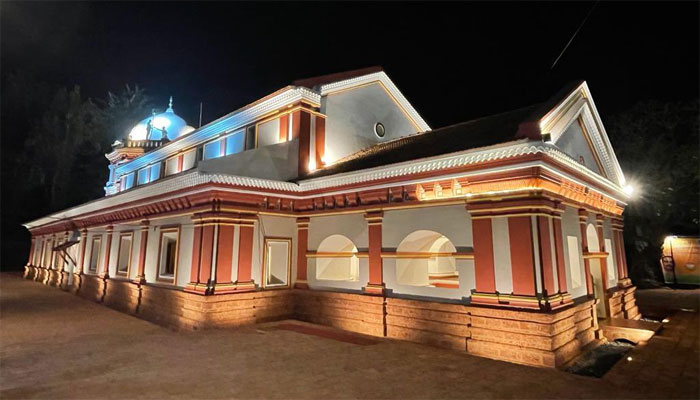
The serene village of Islamnagar in Madhya Pradesh, which has historical significance, is located 14 kilometres from Bhopal. The local fort, built in the 17th century, attracts visitors from all over the world. The name of this historic village has been changed to Jagdishpur, its original name, following approval from the central government. The process to change the name back to the original name took 30 years due to administrative delays.

On Wednesday, a notification was published in the Madhya Pradesh Gazette by the state’s revenue department notifying the change of name of the village from Islamnagar to Jagdishpur. According to it, the state administration changed the name of the village of Islamnagar in the Bhopal district to Jagdishpur after receiving a written letter from the Ministry of Home Affairs of the Central Government stating that it had no objections. On September 15, 2022, the Central Government released the aforementioned letter. In accordance with the directive of the Madhya Pradesh State Government, this notification has been issued by Additional Secretary Chandrasekhar Walimbe.

The state government has issued a notification to change the name of Islamnagar to Jagdishpur on February 1.

The tale of the transformation of Jagdishpur to Islamnagar is very bloody. Islamnagar was given that name 308 years ago by Dost Muhammad Khan, a deserter from Aurangzeb’s army.

Story of Islamnagar

Dost Mohammad’s life was full of cruelty towards others and killing even those who supported him and gave him shelter. He hailed from Tirah in the Afghan province of Khyber. From there, he came to Jalalabad in Uttar Pradesh around 1696. In Jalalabad, Dost Mohammad killed his benefactor Amir Jalal Khan’s son-in-law over a minor dispute and escaped from there. He first fled to Karnal and later to Delhi, where, he enlisted in the Mughal army.

During the Mughal-Maratha wars, Dost Mohammad arrived in Malwa in 1703. There, he killed Mohammad Farooq, the king of Vidisha, over a minor dispute. Following this, he was able to find shelter at Mangalgarh and began residing in the palace there with the King and Queen. After the King passed away, Dost Mohammad pillaged Mangalgarh as well and travelled to Berasia with all the loot. Keeping with his character, he took Berasia in possession, after deceiving local ruler Taj Mohammad.

The bloody capture of Jagdishpur

Stones and sculptures from a temple built during the Parmar era, in the 11th century, have been discovered in Jagdishpur. It’s probable that this location had a temple during the Parmar era. This region was one among the fifty-two strongholds of the Gond monarch Sangram Shah of Gadha-Mandla Jabalpur, after the Paramars, which accounts for the presence of a Gond palace. The fort remained under the control of the Deora Rajputs after the Gond reign.

Dost Mohammad Khan had made an unsuccessful attempt to conquer Jagdishpur in 1715. He turned to a conspiracy, in line with his nature, after failing to strike the Rajputs. To a dinner on the Bes River’s banks, he sent an invitation to Rajput ruler Deora Chauhan. The ropes of the tent were cut, and all of the Rajput guests, including Chauhan, were beheaded (halal), during the meal. According to legend, so much blood was spilled that the river’s water turned crimson, and as a result, the river came to be known as Halali. Dost Muhammad thus tricked his way into capturing Jagdishpur, which was then renamed Islamnagar.

This area has hosted numerous film shoots

Bollywood has ties to this village as well. Numerous short and large-scale films have been filmed here owing to the fort. ‘Durgamati,’ starring Bhumi Pednekar, is one among them. The actress is pictured seated in front of the main gate of the Gond Mahal, on the movie’s poster.

The story of a state Indian Administrative Service (IAS) officer who is falsely accused by a federal investigation team in order to humiliate and slander him before attempting to implicate him in a wider plot is the premise for the Bollywood film Durgamati. The IAS officer is released from custody and brought for questioning to a desolated mansion by the investigating agency. The fort was used to film this scene. The movie’s poster was created at Jagdishpur’s entrance.

The queen resided in the fort, encircled by a defence wall

A defence wall encloses the Islam Nagar fort on all sides. Tourists must purchase a ticket from the counter created by the MP government, for 10 rupees per person, in order to view it. The Rani Mahal comes first. Here, was once the home of a queen in antiquity. The Chaman Mahal is close by. Beautiful gardens have been constructed between the two palaces. A river, whose water has turned black owing to pollution, is located behind the fort. The tombs of Dost Mohammad Khan’s sons, Yar Mohammad Khan and Hayat Mohammad Khan, are located behind Chaman Mahal.

Even today, the welcome board still features Jagdishpur

This village is close to Bhopal and is situated on the left side of the road that connects Berasia and Vidisha via Sukhi Sewania. On one of the two large signs that are on the street, which features an image of the MLA, it states, ‘Welcome to Jagdishpur.’ The distance to the place is indicated on the second board, which belongs to the Tourism Development Corporation. Two kilometres away from the village, a fort from the 17th century, that serves as the location of this settlement can be observed. It is currently managed by the Department of Archaeology.

Village people want the name change, no tensions over it

The name change is also being discussed in the village. Manohar Jain, a retired employee of the Forest Department, who owns a grocery store, said, that Jagdishpur is its real name. Everyone in the village longs to assume its original identity. Another member of the village, Amir stated, that the correct old name should be restored.

The village’s name change application has been pending with the government for 30 years. A proposal to change the name was approved by the Gram Panchayat, according to a government letter that Tehsildar mentioned in his report on August 19, 1993. The phrase ‘Changing the name of the village is accepted by the people’ was specifically written in the letter. People want a name change as soon as possible. There won’t be any conflict in the village if this is implemented.

Vishnu Khatri, a Berasia MLA, stated that, we sent a proposal in 2008 as well. State officials concurred, but the UPA administration at the time declined to provide the NOC (No Objection Certificate). 2014 saw another request for NOC from the federal government. In July 2021, Survey of India eventually released its NOC, and in September of the previous year, the Ministry of Home Affairs did the same. The state government has now been asked to publish a gazette notification of Islamnagar’s new name, Jagdishpur, so that it can be entered in the records of all other departments, including the revenue, postal, and telegraph offices.

Adani Group canceled its 20,000 crore FPO, but what is an FPO: Here are the details

On February 1, Adani Group announced the withdrawal of its fully subscribed FPO. Calling it a morally correct step, Gautam Adani said in a statement that the board took the decision considering the volatility of the market. The money that got locked in the subscribers’ accounts will be released soon via escrow. In the statement, there were several technical terms that a layman may not be familiar with. Let’s understand these terms to make it easier to learn about what has been happening in the market.

What is FPO and how it works?

In an FPO (Follow-on public offering), a publicly traded business can issue additional shares of stock to gain further funding. An underwriting firm is usually involved with setting the price and guaranteeing that there is adequate demand for the new shares. Such offerings are typically done to enlarge operations, make acquisitions, or repay debt. Through these offerings, investors become part owners of the company and may reap advantages from possible future growth possibilities.

A Follow-on Public Offering (FPO) can either be dilutive or non-dilutive. Dilutive FPOs generally result in a decrease in the ownership percentage of existing shareholders. Since the new shares issued in the offering add to the total number of outstanding shares, this spreads out the value among more individual shares. On the other hand, non-dilutive FPOs commonly take the form of convertible bonds or preferred stock issuance that allows investors to convert their investments into common stock at a later date. While dilutive FPOs are simpler for companies to use when raising capital, non-dilutive offerings can be beneficial for avoiding dilution and providing greater returns over time.

The process of a Follow-on Public Offering starts with the initial preparation that involves the company hiring an investment bank to act as an underwriter and develop the offering price and number of shares to be sold. Following that, a registration statement including pertinent information is submitted to the Securities and Exchange Board. Afterward, a roadshow is conducted by the company and underwriter to present financials, business plans, and growth prospects to potential investors. Following this, it is up to the underwriter to set the final offering price based on demand from investors and allocate shares accordingly. Finally, the closing and settlement consist of issuing shares and receiving proceeds from the offering. With this money, companies may finance operations, pay off debt or invest in growth opportunities. The success of each FPO depends on market conditions, financial performance/growth prospects, and terms of the offering.

What is an FPO subscription?

The Follow-on Public Offering (FPO) offers investors the chance to purchase shares in a company that has already gone public. Typically, such shares will be sold at a discount to the prevailing market price. To subscribe, an application form must be completed and payment provided. After this, the allotment process begins, deciding how many shares each investor can receive based on the total number available and applications made. When done, those shares are credited to the subscriber’s account and they become shareholders in the enterprise.

Why funds are locked in the FPO subscription account?

A Follow-on Public Offering (FPO) requires investors to pay for the shares in advance. As a result, the money is locked in the FPO subscription account. The reason for this is to ensure that the company has enough funds to operate. These funds usually remain in an escrow account till the FPO is completed. In this way, while the company may access funds when required, the investors have a sense of security that their money is safe. The escrow account ensures that funds are only released after the FPO is completed or canceled.

What is escrow and how it works?

Escrow is a third-party service used in transactions to hold funds or assets until certain conditions are met. Until all parties involved in the transaction have fulfilled their obligations, escrow provides a secure and neutral holding place for valuable items.

Using an escrow service during a transaction involves the buyer and seller agreeing to use this third party to hold funds or assets until all terms are met. They will provide information to the escrow company and agree on the conditions of the deal. The buyer then deposits their money into the account, which is verified by the assurer, and then the seller delivers their goods or services.

Upon confirmation from the buyer that they have received what they expected, both parties are deemed to have completed their obligations, at which time the funds are then released to the vendor. Once this occurs, the process is finalized and considered finished. Escrow can serve as a secure means of protection for buyers and sellers in many exchanges including real estate purchases, online auctions, and other high-value transactions.

How are escrow services used for a refund in case of a canceled FPO?

When an FPO is canceled, the company can use escrow to refund the subscription amount to the investors who have already paid for the shares. In such cases, the escrow company will hold the funds until the time FPO is completed or canceled.

Using escrow for a refund of the subscription ensures that the investors are protected in the transaction. The escrow companies act as intermediaries and hold the funds until the time funds are returned to the investors.

‘Scan the QR code to watch’: Posters of BBC documentary pasted on walls of Aligarh Muslim University, administration scrambles to remove them

After JNU, the controversy over the documentary made by the BBC on PM Modi has now reached the Aligarh Muslim University. Posters of the documentary have been put up at many places in the university. A QR code of the documentary has also been displayed on these posters, saying that the banned documentary can be watched by scanning it. The university administration has also removed these posters from many places.

Many academic campuses across the country have witnessed controversy regarding this documentary. This documentary made on the Gujarat riots has been banned by the government. But despite this, efforts are being made by the students in the universities to show it. ‘Student’ politicians in Jawaharlal Nehru University (JNU) and Delhi University (DU) have already created controversy over the screening of the documentary. Now, this dispute has reached Aligarh Muslim University.

An attempt was made to deliver the BBC documentary through QR codes to the mobile phones of most of the students on campus. Posters having the QR code of the documentary were pasted at many places on campus. The documentary would open directly after scanning this QR code. It is pertinent to note that due to the ban on the documentary for the last several days, the university administration was fully alert. The security staffers were given relevant guidelines. But in the meantime, no one on the campus has any information about when and how these posters were pasted. As soon as the information was received, posters were removed from many places, as per reports.

On Thursday, 26th January 2023, the controversial BBC Documentary “India: The Modi Question” was screened at Jadavpur University in Kolkata and the University of Hyderabad by the Students Federation of India’s (SFI) members. The screening came after failing to do so at Delhi’s Jawaharlal Nehru University and Jamia Millia Islamia University. Now, an attempt of spreading the QR code of the documentary to students through posters has come to light at Aligarh Muslim University.