Home Blog Page 2509

2022 Gorakhnath Temple attack: NIA Court awards death penalty to Ahmad Murtaza Abbasi, who had links to ISIS

0

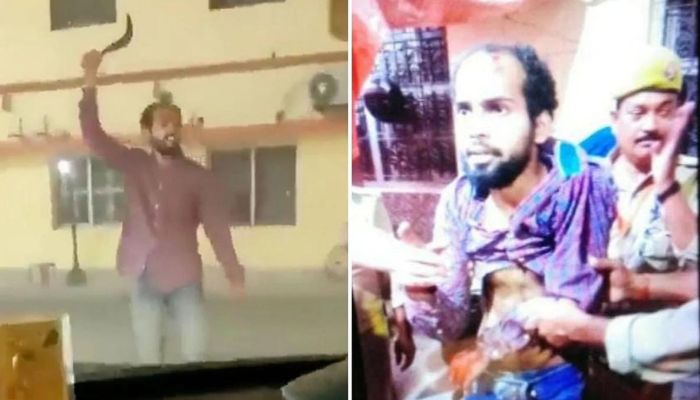
On Monday (January 30), a special National Investigation Agency (NIA) court awarded the death penalty to Ahmad Murtaza Abbasi, for the attack on the Gorakhnath temple in Gorakhpur in April last year.

The NIA and Uttar Pradesh Anti-Terrorism Squad (ATS) completed the investigation of the case within 9 months. Ahmad Murtaza Abbasi was found guilty under the provisions of the Unlawful Activities (Prevention) Act and convicted for waging a war against the nation.

Abbasi now has the option to appeal the decision in higher courts. In India, the provision of the death penalty is reserved for the ‘rarest of rare’ cases that shake the conscience of society. It has been exercised only 8 times in 21st-century India.

On April 3 last year, Ahmad Murtaza Abbasi attacked police personnel outside Gorakhnath Temple, Gorakhpur. The incident took place a day before CM Yogi Adityanath was scheduled to visit the temple. Abbasi severely injured two Police personnel with a sharp weapon.

It is pertinent to note that Uttar Pradesh Chief Minister Yogi Adityanath is the head priest (Mahant) of Gorakhnath Temple and has his personal accommodation on the temple premises. At the time of the attack, CM Yogi was not at the temple.

Days after the Gorakhpur temple attack, where Ahmad Murtaza Abbasi forcibly tried to enter the premises of the temple and attacked two cops with sharp weapons, one Maulana Ilyasi told the police that the accused was under the influence of black magic.

Maulana Ilyasi is a teacher in the same Madarsa that Ahmad Murtaza Abbasi attended. Ahmad Murtaza Abbasi’s father had claimed that he was mentally unstable – a claim that the doctors refuted.

Murtaza Abbasi’s interrogation revealed that he was attempting to develop a jihadi app called ‘Jarima’ at the behest of Islamic terror groups. In Arabic, the word ‘Jarima’ means ‘oppression.’

Abbasi used to exchange messages via the Pir2Pir app before creating this Arabic-language jihadi app, which is widely used by Islamic radicals. He was also planning to join the terrorist organization ISIS.

‘Why support Adani Group just because ‘liberals’ are attacking it?’ The question has right-wing divided on Twitter

Unlike the Left and the Congress ecosystem, driven primarily by ideological considerations and herd mentality, the Right has always prioritised rationality, factual accuracy, and evidence in forming informed opinions on matters of public importance.

Therefore, when a controversy erupted after Hindenburg Research published a report raising serious questions about the Adani Group, the initial reaction from right-wing users on Twitter had been divided, with one section demanding the Group to come clean on the allegations while the other highlighting how the conglomerate’s financials appear to have no obvious red flags. 

It all started earlier this month after Hindenburg Research published a report accusing the Adani Group of stock manipulation and accounting fraud. Hinderburg, a short seller that relies on the trading strategy based on the expectation that the price of the security will fall, claimed that Gautam Adani, the founder and chairman of the Adani Group, has a net worth of approximately $120 billion, mainly due to an 819% average stock price growth in the group’s seven most significant publicly traded companies over the last three years. Predictably, the Adani share prices were pummelled in the days since the release of the report.

The grave allegations were contested promptly by the Adani Group, which trashed the Hindenburg Research report as a ‘malicious combination of selective misinformation and stale, baseless and discredited allegations’. Days later, it released a 413-page rebuttal to the Hindenburg Research report.

Congress and Left ecosystem go in overdrive to attack Adani Group over allegations by Hindenburg

While social media users are discussing the merits of the allegations against the Adani Group, a political question has arisen, given the people at the forefront of the controversy. 

The Congress party jumped on the bandwagon to attack the Adani Group and, by extension, the Modi government, given the party’s wild allegations against the Modi government of favouring a ‘few rich people’. Senior Congress leader Rahul Gandhi has repeatedly been trotting out ‘Adani and Ambani’ jibes to attack the current dispensation even as Congress-ruled state governments have generously indulged the businessmen. 

Veteran Congress leader Jairam Ramesh, who is facing allegations of having links with China, issued a statement over the controversy, co-opting Hinderburg Research’s report to attack the Modi government.

Similarly, Congress supporters, self-proclaimed neutral journalists, alleged ‘fact-checkers’, and leftist trolls too have jumped into the fray, using allegations against the Adani Group to train their guns against the central government and hoping that their far-fetched efforts to implicate the Modi regime would reward their preferred political parties with electoral rewards in the near future.

Right-wing divided over the Adani vs Hindenburg saga

However, as Congress and the Left ecosystem went into overdrive to attack the Adani Group without providing an objective analysis of the Hindenburg Research report, many belonging to the centre of right on the political spectrum raised questions over the motives of the short-seller, which led some to wonder why should right-wing supporters appear defending Adani.

But most voices on the ‘right’ have only questioned motives and raised red flags about the larger global left narrative that appears to undercut the rise of India and undermine the legitimacy of its democratically elected government. Those voices have not given a clean chit to the Adani Group and have merely shone the light on the agenda pushed by the global Left.

Ashutosh Muglikar, a Corporate Legal Consultant, weighed in on his opinion on the controversy. Muglikar said he does not give much credence to the Hindenburg report, adding that the investment research firm has relied on stale issues legally settled in the court to attack the Adani Group. The Twitter user also raised questions on the timing, alleging that it was specifically timed to extract a big pound of flesh and advised his followers to ignore the report.

Another Twitter user highlighted how Hindenburg had indulged in similar activities in the past to make money.

By contrast, some people on Twitter, not necessarily belonging to the right wing, did not support the Adani Group and have asked people to stay away from defending the Business conglomerate.

Yet another Twitter user said that just because a person relates with the right-wing ideology, he or she should not blindly support Adani and allow the conglomerate to come clean over the allegations.

A Twitter user opined that Modi supporters should not blindly support Adani and let the investigative agencies do their job. If the companies are sound financially, the user argued, they will survive the turmoil.

Then there were some independent users with no evident political inclination who raised the alarm over the implications of an ‘expose’ carried out by a foreign entity on a company involved in building infrastructure in India.

Without getting into the merits of the Hindenburg report, Lt Gen DS Hooda tweeted that the allegations touched off a dramatic drop in stock prices of a company dealing with critical infrastructure in India.

However, others have felt that Adani was just a business group, which has faced investigations and had been fined back in India itself, the latest being only last year under the Modi government and hence, the right-wing voices should stay out of it. 

It is difficult to pass judgment at the moment on who is right and who is wrong in this Adani vs Hinderburg saga. Unless competent authorities carry out rigorous scrutiny into the allegations by the investment research firm and examine the financials of the Adani Group companies, it is practically impossible to arrive at an informed decision. The right wing perhaps realises the nuances of the matter and has therefore been divided over the controversy. The Congress and the Left ecosystem, in their visceral hatred for Modi, are trying to drag the issue into the political realm and desperately hoping to use it to cause a dent in the electoral supremacy of the Modi government ahead of a busy election year and the all-important general elections in 2024.

Pakistan: 28 killed, 150 injured as suicide bomber blows himself up inside Peshawar Police Lines mosque

0

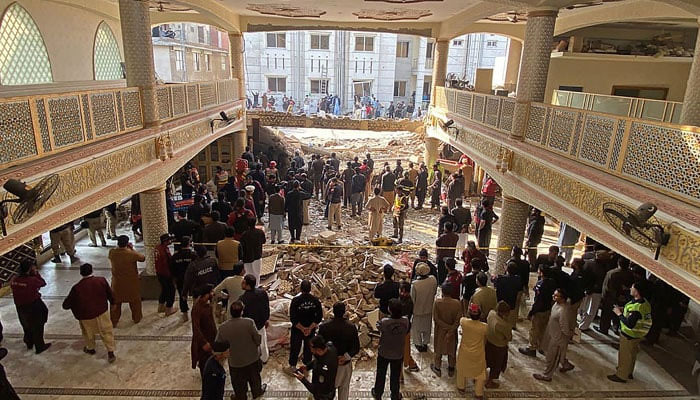
On January 30 (local time), a blast took place inside the Peshawar Police Lines mosque resulting in the death of 28 people. Around 150 were reportedly injured in the blast. Rescue operations were underway by the time this report was published. As per reports, the blast took place at around 1:40 PM during Zuhr’s prayers.

Geo News reported that a suicide bomber was present in the front row during the prayers. He detonated the suicide device and as a result, the roof of the mosque collapsed. An eyewitness was quoted by Geo TV saying that it was a powerful blast and smoke was everywhere after the blast. The eyewitness lost consciousness due to the blast and when he gained back consciousness, he saw the roof had collapsed. He said, “There were at least 120 people in the mosque when the incident took place. It was a suicide blast because the bomber was inside the mosque’s inner courtyard. The Zohr prayers had just started when it happened. There were mostly policemen among the injured.”

It is notable that to reach the mosque, the bomber must have crossed two checkpoints. Peshawar’s Cantt area where the mosque was located is a highly sensitive area and a large number of law enforcement and FC personnel are always present in the area. The officers of KP’s Counter Terrorism Department and police investigation department are located inside the Cantt. At any given time, there are over 1,000 police officials present in the police headquarters inside the Cantt.

Speaking to the media, Peshawar Commissioner Riaz Mehsood confirmed casualties at the mosque. A senior police official was quoted by the Pakistani daily Dawn saying, “An emergency has been imposed at hospitals across the city and injured persons are being provided the best medical facilities.”

As per the spokesperson of Lady Reading Hospital, Mohammad Asim, several injured who were brought to the hospital were in critical condition. Muhammad Ijaz Khan, Capital City Police Officer, told the media that the roof of the mosque collapsed due to the blast. Several police personnel got stuck under the rubble and rescue operations were underway to pull them out. He said, “The smell of explosives has been detected but it is too early to say anything substantial.” Reportedly those who were standing in the front rows were most affected by the collapsed roof.

At the time of the blast, there were around 300-400 police officials present in the mosque. CCPO Khan called it a “possible security lapse”. The dead bodies and injured personnel were moved to Lady Reading Hospital.

Emergency was imposed in the area following the blast.

High alert in Islamabad

Following the blast, Islamabad is on high alert. The entry and exit points of the capital city have been secured and security agencies are continuously monitoring the situation. Dawn reported that snipers have been placed at the “important points and buildings” in the city.

Farah traps Dushyant Chaudhary in a love affair and forces him to convert to Islam; unable to withstand pressure to convert, Dushyant commits suicide

0

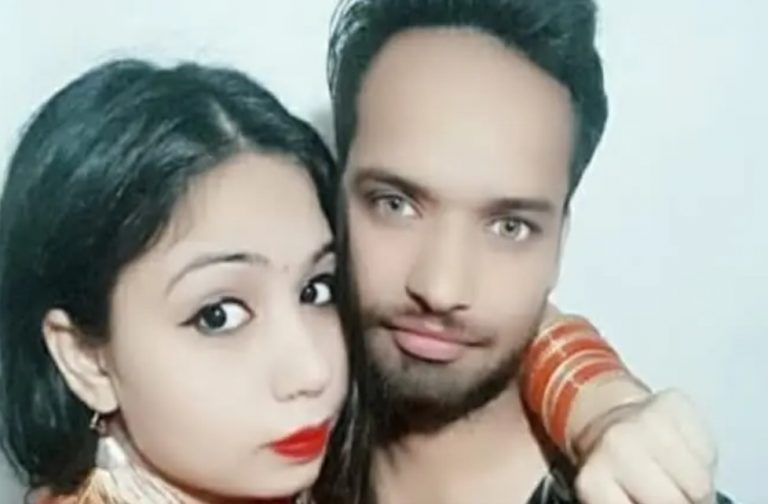
On Sunday, January 29, a disturbing case of love jihad emerged from Meerut, Uttar Pradesh. Dushyant Chaudhary, a Hindu man, was pushed towards suicide after his wife Farah and in-laws forced him to convert to Islam. The incident happened in the Chitrakoot colony in Meerut’s Nauchandi locality.

The deceased’s cousin, Johnny lodged a complaint against his brother’s wife Farah, and three of her family members at the Nauchandi PS on Sunday. He alleged that they were, for the last three years, pressurising and threatening Dushyant to embrace Islam. Not able to withstand the pressure any further, Dushyant ended his life by hanging himself from a ceiling fan at his house on Saturday (January 28) night.

Based on the complaint, Meerut’s Nauchandi police have begun investigating the matter.

Giving details about the case, Station House Officer, Nauchandi, Upendra Singh Yadav said that Chaudhary went to his room to sleep on Saturday night. When he did not come out of his room till late on Sunday morning, his mother, Shiksha Devi, went to wake him up and found his body hanging from the ceiling fan.

Meanwhile, Dushyant’s cousin brother Johnny said in his complaint that Farah had trapped Dushyant in an affair and married him three years ago. Since the marriage happened without the consent of Dushyant’s family members, the two decided to live separately.

Dushyant wanted to bring Farah home and frequently tried to persuade her to return home with him. Meanwhile, Farah and her family insisted that he should first accept Islam. Dushyant, accompanied by Farah’s family members, also visited Deoband, according to Johnny, who added that Farah’s family often harassed him to convert to Islam.

On the day Dushyant ended his life, that day too, he spoke to Farah for 40 minutes trying to convince her to come back to him but when he was unable to convince her, he decided to end his life.

Johnny stated that Farah and her family were putting a lot of mental pressure on his brother, who took extreme steps because he couldn’t endure the stress any longer.

Can India be considered a superpower if it can’t slay the demon? How we can deal with the existential threat of radical Islam

In a previous opinion, I discussed how the stars have aligned for India to take decisive action directed at Islamist radicalism. Here, I focus on specific yet far-reaching steps to permanently defang the Islamists.

Does India deserve to be considered a major power if it cannot slay the demon? To be clear, this threat is existential – meaning, if not taken down now, it will retard economic growth first and, over time, plunge the country into violent chaos, just like Pakistan.

Let us identify the dominant power centres behind decades of radicalisation. The first is the Darul Uloom Islamic seminary situated in Deoband. It has, by far, graduated most clerics who command thousands of Indian mosques.

That these clerics have spread radicalism and violent extremism — including in Kashmir — should not be a surprise. After all, Darul Uloom’s academic curriculum consists of the following passage: “The destruction of the sword is incurred by infidels, although they are not the first aggressors.”

Typically, Deobandi clerics have prevented Muslims from embracing modern education and encouraged Muslim women to have more children. Moreover, these clerics are the visionaries behind the violent outfits Darul Khada, the SIMI (Student Islamic Movement of India) before, and now, the PFI (Popular Front of India).

The second is Jamiat Ulema-e-Hind – an influential council of senior clerics. Jamiat is at the forefront of defending or overturning Muslims accused or convicted of terrorist activities. Yet its leader, Mehmood Madani, made the following proclamation in 2016: “Death penalty or life sentences should be given to those who hurt a person’s religious values or disrespect a religious leader.”

Due to the opposition from clerics with immense street power, moderating the minority is nearly impossible. With the minority highly susceptible to radicalisation, by some accounts, India is poised to plunge into mayhem.

Indian National Security Advisor’s recent appeal to religious leaders that “You have bigger responsibilities to shoulder” vis-à-vis radicalism betrays the lack of a plan to change the status quo.

Out-of-the-box solutions are needed. 

Could it be that the religion of Islam, through its holy books, is not behind violent extremism, but clerical narratives or ideologies are? If so, this threat can be tackled.

As discussed in my recent research, when the Muslim community in Kosovo was part of the communist Yugoslavia, its people hardly knew what Jihad was and was moderate. The reason is simple: the clerics there emphasised moderation.

The implication is that India can justifiably claim that it is not attacking Islam when taking steps to neutralise radical agendas, the sponsoring clerics, and their supporters.

Albert Einstein purportedly said, “insanity is doing the same thing over and over and expecting different results.” Indeed, Islamists have mastered the art of exploiting Indian democracy to advance their nefarious agendas. To think that under democracy, India can somehow turn the tables on radicals is insanity. In contrast, the steps outlined below are designed to turn the enemy’s strengths into fatal weaknesses.

First, the state must take emergency, legal steps to take away radical clerics’ ability to assemble and launch violent mobs from thousands of mosques. Subsequently, given the magnitude of the threat, the government must work on drafting (mostly) men and women to the tune of fifteen crores to operate in local areas through the newly-formed Religious Freedom Force (RFF), assisted by the Indian army. After all, the Hindu majority has the most at stake, given the reality of the 1947 partition and its marginalisation in every Muslim-majority region of South Asia.

Second, radical Islam’s noted power centres should be dismantled to prevent a regroup and this must be done with the extensive deployment of law enforcement agencies. No action is suggested against minorities living amongst the majority community. However, because clerics likely command mosques in such communities, there is little choice but to shut the ones down that have a track record of preaching radicalism. Such steps have been taken extensively in the west, specifically, in Europe. France, for example, shut down a mosque because the radical Imam of the mosque was defending Jihad. The reason cited by the authorities was that the Imam was inciting hatred and violence. Such steps should be replicated in India.

The third step is bringing religious freedom to the thousands of minority ghettos in danger of becoming a swamp that generates jihadists. Most Hindus and Sikhs who lived in Pakistan at the time of the partition had to flee to India, while many were forced to convert or put to death. As a result, Pakistan is nearly devoid of Hindus and Sikhs. This genocidal context suggests that there is little choice except to ensure that these ghettos become multi-cultural and symbols of Hindus being visibly present in these areas so as to ensure that the Muslims in these areas don’t feel like Sharia is the order of the day in those ghettos. Spearheaded by the local men belonging to RFF, the process needs to finish quickly, as any drawn-out endeavour will likely fail.

Arguably, these actions are not directed at Islam but only at a violent ideology’s sponsors and backers who oppress in the name of religion and wage a no-holds-barred war on non-Muslims. Not least, the propaganda that singles out clerics for duping their flock by falsely promoting Sharia as “God’s law” is needed to drive a wedge between the two.

Muthuswamy is a US-based physicist and a scholar of radicalism.

‘UN Security Council needs to be reformed’: UNGA President Csaba Korosi praises India’s call for peace in Ukraine

0

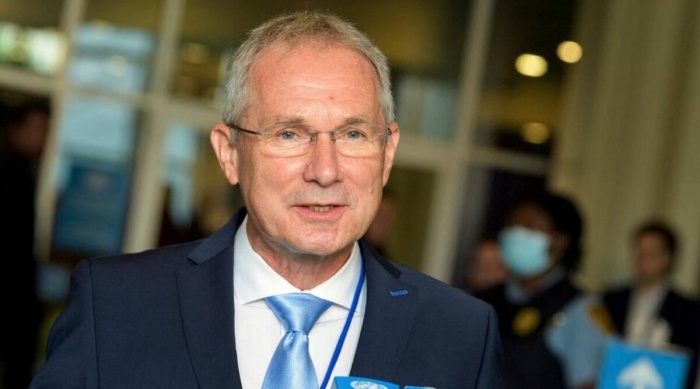
United Nations General Assembly (UNGA) President Csaba Korosi, who is on a visit to Delhi, said on Monday that the UN Security Council needs to be reformed. Korosi stressed the need for reform in the council’s size, composition, and regulations.

The Hungarian diplomat who assumed his role as President of the UN General Assembly (UNGA) in September 2022, arrived in India on Sunday on a three-day visit at the invitation of External Affairs Minister S Jaishankar.

“It is quite obvious that the Security Council needs to be reformed. Its size, its composition, its methods, its regulations need to be reformed. For 13 years the negotiating process has been going on,” Korosi said while delivering the 40th Sapru House Lecture on ‘Solution through Solidarity, Sustainability and Science at the UN’ in New Delhi.

Korosi said that the balance of power in the world is changing. “It is an Oslo understanding that countries and leaders of the world are demanding that the Security Council should be reformed,” he said.

He said extraordinary powers have been placed on the Security Council. “What if one of the permanent members has power and is the one who is attacking its neighbour,” Korosi asked.

He said that since the beginning of the war in Ukraine, the Security Council has not been able to take any concrete decision.

The UNGA president said UN sanctions could only be issued and imposed by the security council. “The more the council is divided, the more are the chances that on certain issues of sanctions or other big challenges, there will be no agreement and no decisions in the security council,” Korosi said.

He said that India is particularly interested in counter-terrorism and he is happy that in the last few months, there has been progress in the field.

Korosi said that he hopes India’s G20 leadership will help take the world closer to finding some solutions as only cooperation can save the world from the worst.

“G20 was created in a time of a major crisis. It was a financial meltdown and the G20 was created to launch action. It is up to the members of the G20, to run this platform to lead the world,” Korosi said.

Korosi on Monday also lauded India’s calls for peace in Ukraine and across the world.

“We are approaching the first anniversary of the war in Ukraine that caused suffering and displacement. A war that has unleashed an energy and food crisis across the globe. I commend India for your calls for peace in Ukraine and across the world,” Korosi said.

(This news report is published from a syndicated feed. Except for the headline, the content has not been written or edited by OpIndia staff)

As Rahul Gandhi’s Bharat Jodo Yatra comes to an end, here are 11 incidents that show BJY was in fact ‘Bharat Todo Yatra’

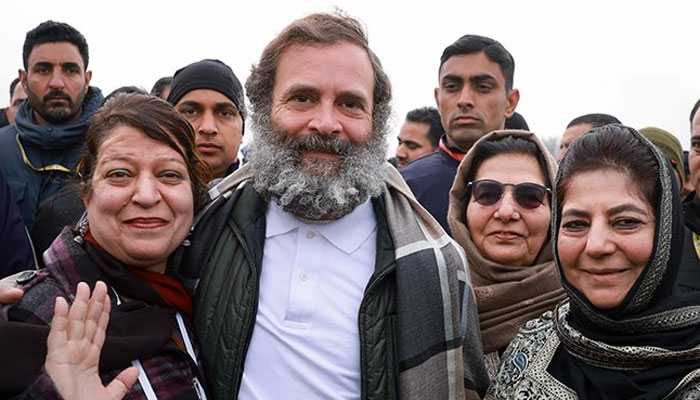
On January 30, Rahul Gandhi concluded his Bharat Jodo Yatra (BJY) in Jammu & Kashmir. Though he propagated to spread ‘love’, ‘peace’ and ‘harmony’ through BJY, there have been several instances since its inception that showed the darker side of the event. Congress leader started his journey on September 7 from Kanyakumari, Tamil Nadu, and finished it on January 30 in Jammu and Kashmir. On January 29, he was joined by PDP leader and former Chief Minister of Jammu and Kashmir Mehbooba Mufti, who is famous for her rants against the Indian establishment. Her anger towards the abrogation of Article 370 from the valley is well known.

During his Bharat Jodo Yatra, there have been numerous instances that raised questions over the intentions of the Congress leader and the party behind the adventure of over 3,500 KM. Here are eleven times the dark side of BJY came to the fore.

The promoters of the linguistic divide, and regionalism joined in

In Tamil Nadu, Chief Minister MK Stalin was present on day 1. He presented Rahul Gandhi with a Khadi Tricolour. Interestingly, on the very first day of the journey that was supposed to connect Indians, Gandhi was joined by leaders of a party that has always propagated to widen the linguistic divide and regionalism.

Fight against the Indian system rather than any political party

On September 9, Rahul Gandhi made a shocking statement and said he was fighting against the Indian system rather than any political party. He said, “We’re not fighting anymore a political party. It is now between the structure of the Indian state & opposition.” The Wayanad MP had earlier confessed that his party is attacking India’s whole infrastructure, alleging that the Centre had taken control of all democratic institutions in the country.

The anti-Hindu Christian priest’s meeting with Gandhi

On September 9, Gandhi met George Poonaiah, an anti-Hindu pastor who is known for insulting Hindu deities. Gandhi was seen learning about Jesus Christ from the pastor. He was heard asking him, “But, He is not God? Or is he God? Jesus is also God?”

A man in the background was heard explaining how the connection between Jesus Christ and God using the different states of water. “It is Like water, which is in 3 states – solid, liquid, and gaseous form,” he said. The man then proceeded to explain that Jesus Christ is God and also the son of God. “So, Jesus Christ is a form of God?” inquired Rahul Gandhi.

At that point, Father George Ponnaiah intervened and claimed that Jesus is the ‘real God’, unlike ‘Sakthi and other Hindu gods. The rabid Hindu hater said, “He (Jesus Christ) is a real God, revealed as a human person. Not like Sakthi and all.”

Gandhi, who claims to be a Janeudhari Brahmin, had no problem whatsoever and remained a mute spectator while the Christian pastor continued to insult Hindu deities and called them fake and imaginary to promote the idea of Jesus.

Congress leader who had slaughtered cow in public joined Yatra

The next clear case of the divisive nature of the Yatra came to the fore when a Congress leader who made headlines for slaughtering a cow in public in Kerala joined Gandhi. On September 26, 2022, Gandhi met Indian Youth Congress (IYC) leader Rijil Chandram Makkutty who had slaughtered a cow in broad daylight in 2017 to mock Hindu sentiments. Makkutty posted about the meeting on his official Facebook page. He had met Gandhi in Pattambi town in the Palakkad district of Kerala as part of Rahul Gandhi’s ‘Bharat Jodo Yatra.’

Notably, in 2017, in defiance of the centre’s move to enforce a ban on cow slaughter, Rijil Makkutty along with his aides dragged a calf and brutally slaughtered it. At that time, Gandhi tried to do some damage control and tweeted against the incident. However, the reaction from the senior leader of the party did not have any effect on Rajil’s involvement in the party and he continued to appear with Congress leaders.

Gandhi tried to cause a rift between Maharashtra and Gujarat

On November 9, 2022, Gandhi tried to create differences between the states of Maharashtra and Gujarat by falsely claiming that the projects meant for the former were being moved in the favour of the latter. He claimed that the projects including Tata-Airbus military aircraft partnership and the Vendanta-Foxconn semiconductor plant were “stolen” from Maharashtra and handed over to Gujarat to earn brownie points for the assembly elections that were scheduled in Gujarat.

Involvement of andolanjeevi Yogendra Yadav in the Yatra

Interestingly, Yogendra Yadav, who is famous for his anarchist ‘protests’ and statements against the democratic process of elections, joined Bharat Jodo Yatra and remained a prominent part of the journey till the end. He was also seen at Lal Chowk on January 26.

Controversial ‘saved by Re 1’ lawyer Prashant Bhushan at Yatra

Advocate Prashant Bhushan, who is famous for getting legal protection to anti-national elements including terrorists and illegal Rohingya immigrants, joined Yatra on November 9. In a video, Gandhi was seen asking Bhushan about billionaire Gautam Adani’s wealth. Bhushan claimed it was because of Government’s patronage. Notably, Bhushan fought against the capital punishment awarded to terrorist Yakub Menon in 2017 and got a late-night hearing against his execution.

Controversial ‘activist’ Medha Patkar at Bharat Jodo Yatra

The next person who shocked the sane public of India was Medha Patkar, the infamous ‘activist’ who claim to fame is organising protests against critical infrastructure projects including Sardar Sarovar Dam. Patkar caused decades of delay in the project and forced the people of remote areas of Gujarat and nearby states to live in water scarcity. A case was filed against Patkar in a cheating case in July last year. She and her associates were charged with misappropriation of funds that they collected in the guise of teaching tribal kids. According to the FIR, Medha Patkar raised more than Rs 13 crore through the ‘Narmada Navnirman Abhiyan’ foundation. She has been accused of inciting anti-government sentiment by soliciting donations for education.

Anti-Sikh riots accused Jagdish Tytler at the Yatra

Furthermore, none other than Jagdish Tytler, one of the accused of the anti-Sikh riots of 1984, was also seen at the Yatra.

The hate against Pujaris

On January 8, Gandhi ranted against Pooja (the Hindu form of worship) while trying to promote himself as a Tapasvi (ascetic). Rahul Gandhi made the contentious remarks during the Haryana leg of his ‘Bharat Jodo Yatra’. While speaking to the media in Samana near Kurukshetra, Rahul Gandhi claimed that BJP is a party of ‘Pooja’ while Congress is a party of ‘Tapasya.‘

Upon realising that he may have upset his Hindu voters by taking potshots at their religious practice, Rahul Gandhi tried to undo the damage but ended up causing more harm to his party. “There are two types of Pooja – the normal one and the one done by RSS. RSS wants people to forcibly worship them(do their Pooja). The response to such a form of worship can only be tapasya. BJP says that there should be no respect for tapasya but only for those who do our pooja,” Rahul said.

Gandhi racked up “outsider” rhetoric in J&K amidst the deadly attacks on non-locals by terrorists

While speaking during the last leg of his Yatra at Jammu and Kashmir, Gandhi lashed out at the ‘non-locals’ in the valley. He said, “Earlier, locals of Jammu used to do business here. Locals of Jammu & Kashmir used to run Jammu & Kashmir. Today ‘outsiders’ are running it. Our rights, and our voice, are not heard by the administration.” The Congress leader further said, “Entire trade in Jammu & Kashmir is being done by outsiders. The people of Jammu & Kashmir are just watching them. Secondly, unemployment is highest in Jammu & Kashmir in entire India.” Thereby implying that locals are losing out to outsiders when it comes to jobs and trade.

Apart from these incidents Rahul Gandhi also attacked Veer Savarkar during the Yatra. On November 17, he reiterated that Veer Savarkar helped the British government and wrote mercy petitions “out of fear”. Rahul Gandhi accused the Indian freedom fighter of betraying the likes of Jawaharlal Nehru, Sardar Patel, and Mahatma Gandhi in the Akola district of Maharashtra. He alleged, “Veer Savarkar, in a letter written to the British, said – Sir, I beg to remain your most obedient servant” & signed on it. Savarkar helped the British. He betrayed leaders like Mahatma Gandhi, Jawaharlal Nehru & Sardar Patel by signing the letter out of fear.”

Furthermore, he met up with 2G scam-accused DMK MP Kanimozhi, and Abhay Thipsay, the man who defended Nirav Modi in the UK court. The Congress scion was also close to onboarding 1984 anti-Sikh riot accused Jagdish Tytler in his ‘Bharat Jodo Yatra.’ He also gave a platform to Islamists to peddle false victimhood. During the course of this yatra, his party cadre was found manhandling and soliciting money from a poor vegetable vendor in Kollam. 

Dilip Kumar’s old video, where he talks about boldly shutting down Indira Gandhi’s criticism of ‘poor films’ in Bollywood, goes viral

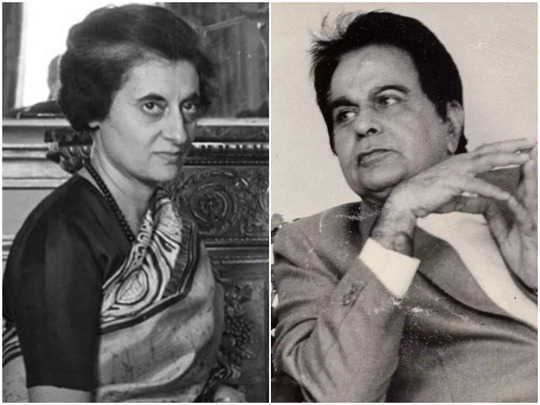
A video featuring late Bollywood icon Dilip Kumar is making the rounds on social media these days. In this video, Dilip Kumar is reminiscing about a meeting he had with the then Prime Minister of India Jawaharlal Nehru, and his daughter Indira Gandhi.

Recounting the incident, one of the biggest superstars of the Indian film industry said that Indira Gandhi him why the Indian films made in that era were not as good as their western counterparts. After about 10-15 minutes of such complaints by Indira Gandhi, Dilip Kumar said that he told Indira that when nothing else in India is comparable to the west, then how can films be different from the society where they are made?

Remembering the incident, Dilip Kumar said, “Once I was having breakfast with Jawaharlal Nehru. At that time, Indira Gandhi intervened in our discussion and said, I was in Paris, I went to Moscow, I have watched the plays and films, I have listened to a symphonic orchestra too. How beautiful are all of them! Why are your Indian films not like that? Why is the Indian cinema lagging so behind?”

Dilip Kumar said, “In those days we used to do shows to raise funds for various social causes because common people would think of us differently. We had to establish our connection with the people, so we used to do those shows. We developed our socio-civic identity, consciousness, and credibility. We were keen to establish how we are rooted in our culture. So, I felt that the daughter of our then Prime Minister was overstepping her limits by raising such questions on Indian cinema. Total condemnation of a medium in this way is not justified.”

The Bollywood thespian further said, “She (Indira Gandhi) said, what kind of industry is this? And she said that Indian films lack ‘Indianness’. She went on talking like this for 12-15 minutes. At last, I felt that if I reply now, it won’t be an insult.”

Dilip Kumar then described how he responded to Indira Gandhi and told her the reason why she thought the way she did.

Dilip Kumar said, “I told her that you are complaining for the last 15 minutes and it is true to a large extent, but whatever you have said for the last 12-15 minutes, not a single word of that was from an Indian language. You were continuously talking in English. Today, we are developing our roads, irrigation, education, hospitals, and all. We don’t have water to drink in spite of a dedicated man at the helm of affairs, we have poor education. Yes, our films are poor. But we don’t just have a film industry that is poor. We have an educational system that is poor. Our roads are poor. We have an agriculture that is poor. And if I put this to you, ma’am, we have governance that has a lot many things that are poor.”

Dilip Kumar added, “I first thought that Jawaharlal Nehru would be upset with my remarks, but after a few moments of silence, he said that had he been in my place, he would not be so polite.”

Dilip Kumar further emphasized the importance of ‘Indianness’ in Indian literature and said, “We can import engineering technology and other know-how. But we cannot import culture. We cannot import literature. We should develop it from our own soil.”

This speech by the late actor explains why the films made in the first few decades after Indian independence, during the Congress rule, highlighted poverty. The prime reason behind this, as told by Dilip Kumar, is that poverty encompassed every sector of life in India in those days. This stands in sharp contrast to the modern-day “new India” where infrastructure and industries are getting special attention from the government.

Schemes like ‘Jan Dhan Yojana’, ‘Ujjwala scheme’, Swachh Bharat Mission, toilets for everyone, and ‘Jal Jivan Yojana’ are there to ensure every Indian gets the basic necessities in life, something that they were deprived of till now.

The impact of such schemes on an average Indian’s life is absolutely huge, and with Indians enjoying a better quality of life, we can see their impact on Indian cinema as well. The movies made today don’t rely on the 50s and 60s trope of poor villagers against an evil landlord. The hero today can be anyone, filmmakers don’t have to deliberately show him poor to relate to the masses because as the masses have risen, so has the stature of an average Bollywood hero.

As out-on-bail AltNews co-founder Mohammed Zubair attacks NDTV over Adani, netizens remind him of his own convenient silence

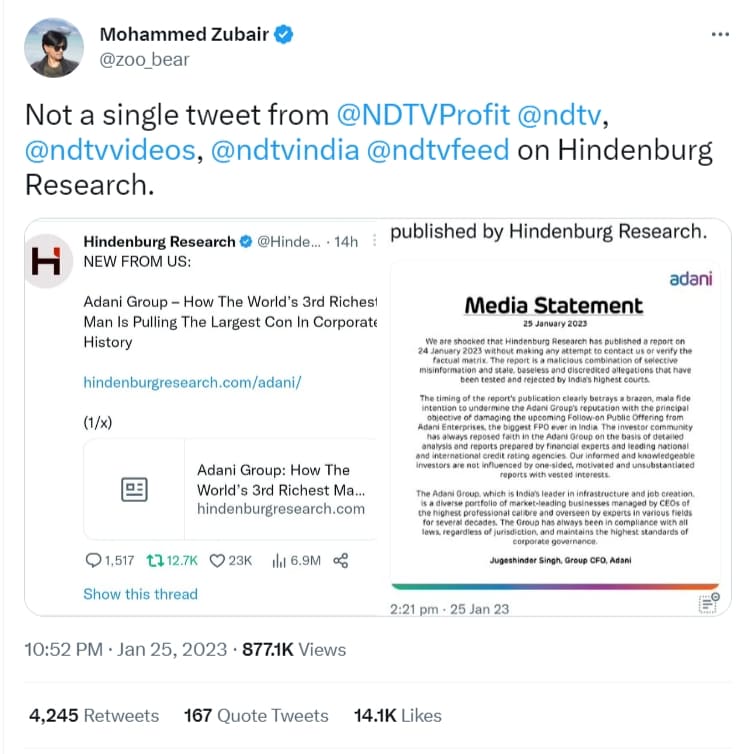
On Wednesday (January 25), Alt News co-founder Mohammed Zubair took potshots at NDTV for supposedly not tweeting about the allegations levelled by US-based investment firm, Hindenburg Research, against India’s Adani Group.

Given that the Indian conglomerate acquired a majority stake in the news channel in December last year, the dubious fact checker tried to suggest that NDTV would not provide coverage to criticism directed at Gautam Adani.

In a tweet, Mohammed Zubair wrote, “Not a single tweet from @NDTVProfit @ndtv, @ndtvvideos, @ndtvindia @ndtvfeed on Hindenburg Research.” While it is true that NDTV did not tweet about the report initially, it covered the news story on Friday (January 27).

Screengrab of the tweet by Mohammed Zubair

While pointing out his hypocrisy, a Twitter user (@Vasooli_) reminded Mohammed Zubair how he never tweeted about a dubious report by Time Magazine about him and his Alt News founder Pratik Sinha being in the race for Noble Peace Prize.

It is notable here that the so-called fact-checker was inundated with congratulatory messages after a media report suggested that he has been ‘shortlisted’ for the Nobel Peace Prize. However, he never ‘fact-checked’ those claims and messages. In reality, Zubair and Pratik Sinha were never ‘nominated’.

OpIndia had already dismissed the claim, pointing out how there is no such thing as an official list from which the Nobel Peace Prize is awarded, and that the names cited by TIME Magazine were simply speculations made by a media organisation whose ideology is anchored in the global left.

“How many tweets by you to protest beheadings, killings, STSJ threats, hate speech and violence by your fellow faithful? Guess you don’t because if you start condemning you’ll have time for nothing else!” inquired another user.

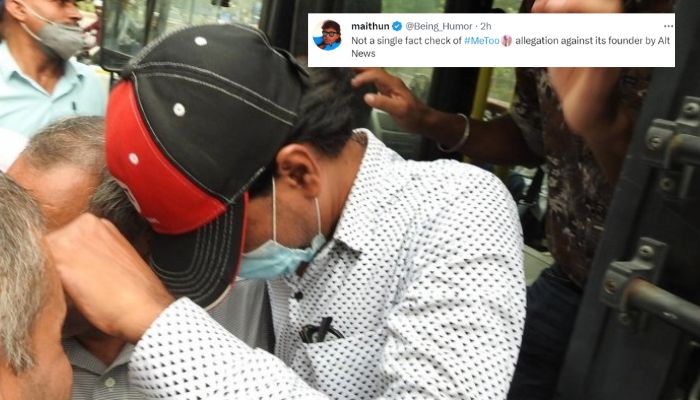
Popular Twitter user, Maithun, pointed out how he never tweeted about the sexual harassment allegations against Alt News founder Pratik Sinha.

“All are not a fraud like you, ” wrote one Nirmal Kumar Senapati.

Another user (@SanketikGandhi) wrote, “The fact checker cannot even differentiate between accusations and solid proofs. Especially the tactics in Global Business to malign another’s business to get those projects for his own company. Oh! I get it, Zoobear is like those false accusations.”

It must be mentioned that the dubious fact checker has been out on bail since July last year, after former NDTV journalist and his ‘close friend’ Sreenivasan Jain posted a surety bond of ₹50000.

The Hindenberg Research report controversy surrounding the Adani Group

On January 24 this year, the US-based investment research firm published a 32,000-word report, accusing the Adani Group of stock manipulation and use of tax havens.

The Adani Group trashed the Hindenburg Research report as a “malicious combination of selective misinformation and stale, baseless and discredited allegations”.

So far, the Indian conglomerate suffered a loss of $66 billion in stock markets. Gautam Adani also slided down to the 9th position in the list of the world’s richest individuals. The Adani Group also came under attack from the Indian National Congress, which accused the Indian conglomerate of crony capitalism.

On Sunday (January 29), it slammed Hindenburg Research with a 413-page report, dismissing allegations levelled by the latter. The Adani group pointed out how the US-based investment research firm sought to benefit from its damning report.

“This is rife with conflict of interest and intended only to create a false market in securities to enable Hindenburg, an admitted short seller, to book massive financial gain through wrongful means at the cost of countless investors,” it emphasised.

Hindenburg Research, in the meanwhile, issued a statement saying, “Fraud cannot be obfuscated by nationalism or a bloated response that ignores every key allegation we raised.”

Shadow unit of UK army secretly spied on citizens who criticised Govt’s Covid lockdown policies: Report

0

During the Coronavirus pandemic, the United Kingdom’s Ministry of Defence extensively monitored the social media accounts of prominent personalities who were critical of the government’s Covid-19 measures, a source told the Daily Mail newspaper on Saturday. The claim contradicts the government’s repeated denials of any such surveillance.

Documents, substantiating the claims made by the source in the 77th Brigade, obtained and shared exclusively with the media outlet by the civil liberties group Big Brother Watch, disclosed the work of “government’s 5 anti-fake news”. It included the work of the Counter Disinformation Unit, based in the Department for Digital, Culture, Media, and Sport, and the Rapid Response Unit, based in the Cabinet Office.

“The investigation is based on scores of Freedom of Information requests, and the co-operation of dozens of people in public life who submitted Subject Access Requests to the government to demand copies of their data held by the so-called disinformation units,” the civil liberties group tweeted sharing details of the findings.

According to a source who worked for the military’s covert 77th Brigade during the pandemic, the unit compiled dossiers on individuals with a substantial social media following who questioned the Covid lockdowns and mandates issued by the British government. The dossier featured names like ex-Minister David Davis, who questioned the modeling behind alarming death toll predictions, as well as journalists Peter Hitchens and Toby Young. Their dissenting opinions were subsequently conveyed to 10 Downing Street.

The unit was entrusted with combating “disinformation” and “harmful narratives… from purported experts,” using artificial intelligence to scan social media for keywords like ‘ventilators’ that would have been of interest. Unwanted narratives were suppressed or eliminated, while government narratives were propagated.

The information was subsequently used to orchestrate the government’s responses to criticisms of policies such as the stay-at-home order when police were given the power to impose fines on people stepping out of their homes.

It also enabled Ministers to pressure social media platforms to remove posts disagreeing with the government’s stance and promote Government-approved content.

In response to the allegations, a government spokesman said, “Online disinformation is a serious threat to the UK, which is why during the pandemic we brought together expertise from across Government to monitor disinformation about Covid.”

“These units used publicly available data, including material shared on social media platforms, to assess UK disinformation trends and narratives. They did not target individuals or take any action that could impact anyone’s ability to discuss and debate issues freely”, the source said.

Silkie Carlo, the director of Big Brother Watch, a civil liberties advocacy group, meanwhile, told the Mail on Sunday, “Contrary to their stated aims, these Government truth units are secretive and harmful to our democracy. The Counter Disinformation Unit should be suspended immediately and subject to a full investigation.”