Home Blog Page 2638

Strikes by lawyers one of the reasons why courts are burdened with pending cases, Salman Khurshid seeks solution

0

‘Hadtaal-pe-Hadtaal’ by lawyers, across the courts of India, is one of the three primary causes of ‘Tareekh-pe-Tareekh’ in five crore pending cases clogging the justice system. Senior Advocate, Salman Khurshid, along with moderator Manoj Raghuvanshi, laboured through a grilling online RoundTable discussion on ‘Khul Ke’ last Sunday, in a determined bid to find a solution to the vexed issue of lawyer strikes.  

Although the Supreme Court has repeatedly pronounced that lawyers cannot go on strike, these pronouncements have not been successful in preventing these ‘hadtaals’ which have become a widespread bane for crores of innocent Indians suffering delay (meaning denial) for justice. Exactly ten days before this RoundTable conversation, lawyers had struck work in Gujarat, Telangana and Uttarakhand.

It was pointed out to Salman Khurshid that several courts spread across three districts of what is now Uttarakhand had resorted to a 35-year long strike by lawyers on every working Saturday. Also that the Uttarakhand High Court had dubbed these strikes illegal.

When the matter was brought before the Supreme Court, it had commented very strongly, noting that the strikes were held on “flimsy” grounds, ranging from an earthquake in Nepal, a bomb blast at a school in Pakistan, to amending the constitution of Sri Lanka. The Supreme Court had decried it as a “joke”, and ratified the High Court’s decision that the strikes were illegal.

Salman Khurshid regretted that sometimes the strikes turn violent, in which members of the bar who want to work are “roughed up”.  

The lawyer disclosed in the RoundTable discussion that it has been recommended many times by the Court that the Bar Association should have a Grievance Committee which should examine and approve every proposal of the Bar Associations to conduct a strike, but these Grievance Committees need to be “independent’, and not consist of “yes-men” who will blindly approve every request for a strike.  

The eminent advocate wondered if these strikes happened because some of “our colleagues” don’t want to work, and just “look for excuses”.  Salman Khurshid revealed that “no system” has been made to ensure that these strikes don’t happen.  

Although the High Courts and Supreme Court have sent some lawyers to jail for “contempt”, but when it involves hundreds or thousands of lawyers, the judges find it hard to deal with the situation, Khurshid explained. The courts can’t “send 5,000 lawyers to jail for contempt”, emphasised the Panellist. 

Salman Khurshid clarified that there is “legal culture” with which the lawyers can show their protest by wearing a “black band”, or start work an hour “late”, but the effort should be to not let the “critical cases” get affected. 

In the RoundTable discussion, Salman Khurshid reiterated the words of the Chief Justice of India, D. Y. Chandrachud, that the real victims of these strikes are neither the judges, nor the lawyers, but the innocent “clients” who are very often extremely poor. In fact, the renowned lawyer added, that in addition to the innocent people, even the “system of justice becomes a victim”.  

Salman Khurshid found merit in one particular suggestion during the Khul Ke RoundTable discussion on how to resolve the tangle of strikes. The difficulty of the Supreme Court in not being able to hold hundreds or thousands of lawyers responsible can be solved by just narrowing down the responsibility to two individuals: the bar functionary who signs the proposal for a strike and the reader or “peshkar” of the District Judge who “receives” the proposal. Salman agreed, but immediately added a rider that things are not always black and white. Sometimes there are “grey” areas.

Salman Khurshid concluded the online RoundTable discussion by suggesting that all these “issues” raised in the programme ‘Tareekh-pe-Tareekh’ should be thoroughly “examined” by a committee consisting of old judges, new judges, lawyers and also “you people” (meaning the Khul Ke viewers), and a solution should be found.

Agnipath Scheme, The Kashmir Files, Nupur Sharma – topics that Indians searched the most in 2022 on Google

On Wednesday, the search engine giant Google released a list of what Indians searched for the most in the year 2022. The list was released by Google in nine categories which included entertainment, stars, movies, recipes, and ‘what is’ and ‘how-to’ questions as well. Notably, the central government’s four-year recruiting program ‘Agnipath Scheme’ for the armed forces, which had sparked widespread protests, has climbed to the forefront of India’s most Googled phrases in the ‘what is’ category.

According to the Google trends list, Indians searched the most for the ‘What is Agnipath Scheme’ in the year 2022. The Agninpath scheme, also known as the Agnipath Yojana, is a central government initiative in which young soldiers known as ‘Agniveers’ are recruited to the Indian Army, Air Force, and Navy for four years, with just 25 percent of the total qualifying for permanent jobs. The scheme was launched by the government to encourage the youth to take part in the armed forces.

Thousands of individuals across the country demonstrated after the central government implemented the Agnipath Scheme, demanding that some clauses of the scheme be reversed. Protests were staged in states such as Bihar, Jharkhand, Uttar Pradesh, Punjab, Himachal Pradesh, and Haryana, among others. However, the central government made no changes to the scheme, which was introduced on June 14, 2022.

Indians searched most about Agnipath Scheme around June 14, when the scheme was launched

Apart from the Agnipath Scheme, Indians also seem to have searched for Article 370, North Atlantic Treaty Organization (NATO), Non-Fungible Token (NFT), and Popular Front of India (PFI) in the ‘What is’ category. India probably searched for NATO during the Russia-Ukraine war and for PFI after the Indian government imposed a ban on the organization and its affiliates for five years citing its terror links and subversive activities across the country. The ban on the PFI on September 28, came after two rounds of searches by the NIA in a multi-agency investigation against the organization for sponsoring terror operations in the nation.

Interestingly, the Google trends list also revealed that Indians tried to attain a lot of information about Vivek Ranjan Agnihotri’s film named ‘The Kashmir Files’ which received huge critical and popular acclaim in India. The film stood at the third position in the top searched Movies category after Brahmastra and KGF: Chapter 2.

Released on March 11 this year, The Kashmir Files proved to be one of the biggest hits of the year when regular Bollywood movies were falling flat at the box office one after the other. Starring Anupam Kher, Darshan Pathak, Mithun Chakraborty, and Pallavi Joshi in the lead roles the Vivek Agnihotri directorial earned around Rs 337.23 crore, making it the first Hindi film to cross the Rs 300 crore club during the coronavirus pandemic.

The Kashmir Files is based on the Kashmiri Hindu genocide perpetrated in the valley in the late 1980s, and 1990s where Islamist terrorists backed by Pakistan unleashed terror upon Kashmiri Hindus leaving lakhs homeless and dead. The film depicts incidents inspired by real life where Kashmiri Hindus were targeted because of their religious identity and were brutally raped, murdered, and driven out of their homes.

In general searches, the Indian Premier League topped the chart, which is not a surprise in cricket-crazy India. CoWIN was the second-most searched term, the portal for Covid-19 vaccine. Rest 3 in the top 5 were all related to sports, FIFA World Cup, Asia Cup, and ICC T20 World Cup.

The Covid-19 vaccine also topped the how-to search category, as most people Googled to know how to Download the vaccination certificate in this category. Similarly, ‘Covid vaccine near me’ was the most searched term in the near me category, which returns the results in Google Maps.

Further, the most searched personalities by Indians in 2022 are former BJP Spokesperson Nupur Sharma, India’s President Droupadi Murmu, Britain’s newly elected Prime Minister Rishi Sunak, Lalit Modi, Sushmita Sen, Maharashtra’s Chief Minister Eknath Shinde and American actress Amber Heard. The searches have a lot to do with the series of events that changed the lives of these ‘most searched personalities’ drastically.

Nupur Sharma was searched most in June this year after she uttered alleged blasphemous remarks

Former BJP Spokesperson Nupur Sharma was suspended by the party in June this year after she was accused by the Islamists of uttering alleged blasphemous remarks against Prophet Mohammed. She received death threats from several Islamic countries who also criticized her for her alleged blasphemous remarks. Her remarks in a live TV debate were selectively chosen and made viral by Alt News co-founder Mohammed Zubair who also accused her of ‘insulting’ the Prophet.

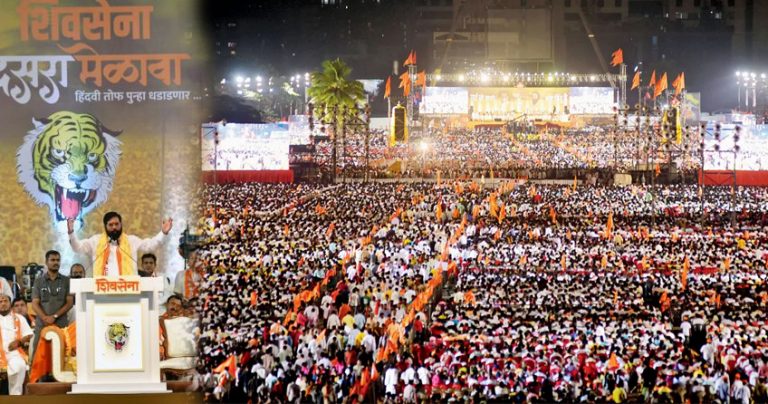
Maharashtra’s Chief Minister Eknath Shinde also made it to the list after he rebelled against the former state government led by Uddhav Thackeray and joined hands with BJP to form a new government in the state. Shinde back in June had stated that former CM Uddhav Thackeray had gone far away from Hindutva and the principles of former Shiv Sena supremo Balasaheb Thackeray. Shinde took oath as Maharashtra’s new CM on June 30 this year.

CM Eknath Shinde was most searched in June and July this year

Notably, Murmu and Sunak were searched most by Indians probably after they were elected as India’s President and Britain’s new Prime Minister respectively. Reports meanwhile mentioned that actress Sushmita Sen and businessman Lalit Modi made it to the top of the Google search list despite staying away from mainstream cinema for quite some time. The two created a virtual storm after Modi revealed that he was in a relationship with the actress. The actress was then accused of being a ‘gold digger’.

On the news events front, the Indians happened to search the most about the death of legendary singer Lata Mangeshkar, Sidhu Moosewala, Queen Elizabeth, Bappi Lahri, KK, and Shane Warne. People also searched about the Har Ghar Tiranga campaign and Russia Ukraine War.

Meanwhile, the food-loving Indians googled the recipes of Paneer Pasanda followed by Modak, Malai Kofta, Pizza Margherita, Pancakes, Paneer Bhurji and Anarase. Two cocktail drinks ‘Pornstar Martini’ and ‘Sex on the beach’ also made it to the ‘Year in Search 2022’ Google list. While ‘Sex on the beach’ was in the recipe searched category, ‘Pornstar Martini’ was in the how-to category as people wanted to know how to drink it.

Congress President Mallikarjun Kharge credits Rahul Gandhi’s ‘Bharat Jodo Yatra’ for the party win in Himachal Pradesh

0

As Congress was poised to form government in Himachal Pradesh according to the results and trends of the counting of votes, party president Mallikarjun Kharge on Thursday said Rahul Gandhi’s Bharat Jodo Yatra has contributed in party’s performance in the hill state.

“We have won the Himachal elections. I want to thank the people, our workers and leaders as due to their efforts this result has come. I want to thank Priyanka Gandhi. Rahul Gandhi’s Bharat Jodo Yatra also helped us with this. Sonia Gandhi’s blessings are also with us,” Kharge told reporters.

“Our observers and in-charge secretaries are going there (Himachal Pradesh) and they will decide when to meet Governor and call a meeting of (Congress MLAs),” said the Congress chief.

On Gujarat results, he said the party accepts defeat and congratulates those who won. “In a democracy, victory and defeat are not permanent. We will continue to fight for the people. We will introspect and keep fighting for people,” he added.

In Himachal Pradesh, Congress is slated to win 39 of 68 seats. According to Election Commission, Congress has won 31 seats and is leading in eight. Further, Bharatiya Janata Party (BJP) has won 17 seats while leading in nine seats. Independents have won three seats and AAP failed to open its account in the state. The halfway mark in the 68-seat Himachal Assembly is 35.

The BJP is poised to break all records of electoral performance in Gujarat, the home state of Prime Minister Narendra Modi and Home Minister Amit Shah, and is set to get the highest number of seats won by a political party in the state’s history. Further in Gujarat, BJP has won 102 seats and leads in 54 seats. Congress won eight seats and leads in nine seats. Aam Aadmi Party has won four seats and is leading in one seat. Samajwadi Party (SP) won one seat. The halfway mark to form government in Gujarat is 92.

(This news report is published from a syndicated feed. Except for the headline, the content has not been written or edited by OpIndia staff)

By-polls results: Samajwadi Party loses Rampur while retaining Mainpuri Lok Sabha seat, here is who won in CG, Odisha, Rajasthan

Results of the by-elections held for 6 assembly seats in 5 states and the Mainpuri Lok Sabha seat in Uttar Pradesh are out. While the Bharatiya Janata Party and the Indian National Congress secured 2 assembly seats each, Rashtriya Lok Dal and Biju Janata Dal managed to win 1 seat each in various states.

Samajwadi Party candidate Dimple Yadav won the Mainpuri Lok Sabha seat which was vacant after Mulayam Singh Yadav’s demise earlier this year.

Assembly by-elections in Chhattisgarh, Odisha and Rajasthan

Kedar Prasad Gupta of the Bharatiya Janata Party won the Kurhani assembly seat of Bihar. He received 76648 votes and defeated Janata Dal (United) candidate Manoj Kushwaha by 3649 votes. Mukesh Sahni’s Vikassheel Insaan Party’s candidate Neelabh Kumar is at number three.

In Chhattisgarh, the by-election for the Bhanupratappur assembly seat was held. Congress candidate Savitri Manoj Mandavi won this seat. She got 65327 votes. She defeated the BJP candidate Bramhanand Netam who got 44229 votes. The victory margin was 21171.

In Odisha, the Padampur assembly constituency underwent a by-election. Biju Janata Dal candidate Barsha Singh Bariha secured 104183 votes here which accounts for more than 57% of the votes. She defeated Pradeep Purohit of the BJP who got 68887 votes amounting to more than 37% of the total votes.

By-polls were conducted for the Sardarshahar assembly seat of Rajasthan where Congress candidate Anil Kumar Sharma defeated the BJP candidate Ashok Kumar in a straight fight. While Sharma got 91357 votes, Ashok Kumar received 64505 votes. So, Anil Kumar Sharma won by a margin of 26852 votes.

By-elections in UP

By-elections were held on two seats in Uttar Pradesh. The Rampur assembly seat was more discussed in the news because it is the stronghold of the Samajwadi Party’s controversial leader Azam Khan. BJP candidate Akash Saxena defeated Samajwadi Party candidate Mohammed Asim Raja. Akash Saxena got 66382 votes which make up a whopping 58.48% of the total votes cast. Asim Raja of SP had to be content with 45063 votes.

Khatauli was the other assembly seat in Uttar Pradesh where the by-elections took place. Madan Bhaiya of Rashtriya Lok Dal emerged as the winning candidate for this seat. He received 86478 votes which are 52.96% of the total votes cast. He defeated Rajkumari of the BJP by 16979 votes.

Mainpuri Lok Sabha constituency by-polls

Mainpuri Lok Sabha constituency has traditionally been a strong fortress of the Samajwadi Party. Party’s founder Mulayam Singh Yadav would often prefer this constituency. The by-polls were held here after his demise. Samajwadi Party fielded the late leader’s daughter-in-law Dimple Yadav in this seat. There was a clear-cut sympathy wave in support of the SP candidate. She got 617625 votes. In terms of percentage, she secured 64.08% votes. She defeated BJP candidate Raghuraj Singh Shakya by a margin of 288461 votes.

Gujarat Election: Congress candidate Bharat Solanki attempts suicide at the counting centre after alleging EVM tampering

As the BJP is set to register a landslide victory in Gujarat, the opposition’s frustration has become apparent. In Gandhidham in the state, Congress candidate Bharat Solanki tried to commit suicide at the counting centre. Solanki tied his neck with a scarf (Gamchha) after alleging that the Electronic Voting Machines (EVMs) have been tampered with. 

The Congress leader claimed that the EVMs were not properly sealed and were not signed. Solanki began a dharna demanding that the counting be stopped. When no action was taken on his demands by the election officials, Solanki tried to commit suicide. However, he was stopped by people present there.  

Maltiben Kishorebhai Maheshwari of the BJP defeated Congress candidate Bharat Solanki in the Gandhidham Assembly constituency by 37,831 votes. Meanwhile, the Aam Aadmi Party received 14827 votes after the counting was completed.

Interestingly, Bharat Bhai Solanki had recently claimed that the Congress party will win 125 seats and form government in the state.

It is worth noting that the BJP has held the Gandhidham seat for over a decade. Malti Maheshwari of the BJP defeated Congress candidate Kishor Pingol by a huge margin of 20,270 votes in the 2017 assembly elections. The BJP received 52.6 percent of the vote share, while the Congress received 39.3 percent. The BJP also won here in 2012. Gujarat’s Gandhidham seat was reserved for the SC category following delimitation in 2008. Gandhidham has a total of 3,15,272 registered voters of which the majority are from Scheduled Castes. 

Meanwhile, the BJP is expected to win 156 seats as per current trends and results already declared. Congress, on the other hand, is set tow win only 17 seats. The Aam Aadmi Party, which had claimed to form the government, leads in only five seats.

Gujarat’s new chief minister will be sworn in on December 12 at 2 p.m., said state BJP President CR Paatil, after the party won the Assembly elections by a record margin.

The ceremony will be attended by Prime Minister Narendra Modi and Union Home Minister Amit Shah. Bhupendra Patel will take the oath of office as Gujarat’s chief minister for the second time. On September 12, 2021, he was elected for the first time as the BJP legislative party leader.

“The Gujarat Chief Minister will take the oath at 2 p.m. on December 12th.” “Prime Minister Modi and Union Home Minister Amit Shah will attend the oath ceremony,” CR Paatil said at a joint press conference with Chief Minister Bhupendra Patel.

Taking to Twitter Gujarat BJP President CR Paatil also thanked the people of Gujarat for making the BJP win the election.

“Thank you to the youth of Gujarat – who cast their ballots on a bright future, women, elders, and leaders of various communities who believed in the development policy in the interest of Gujarat. Bharatiya Janata Party will always uphold the tradition of its original rites of “public service through power”. Thank you all!” Paatil tweeted in Gujarati.

Gujarat elections: Muslim voters dance on posters of Asaduddin Owaisi after defeating the AIMIM candidate in Ahmedabad’s Jamalpur

Muslim constituents in Ahmedabad’s Jamalpur constituency, a Muslim-majority constituency, took to the streets to celebrate the loss of AIMIM candidate Sabir Kabirwala in the recently concluded Gujarat elections. They danced on the posters of AIMIM chief Asaduddin Owaisi after Congress’ Imran Khedawala won the election from the Ahmedabad neighbourhood.

Videos from the Jamalpur constituency showed a large number of locals, predominantly Muslims, dancing on the posters of AIMIM chief Asaduddin Owaisi after the election results.

It is worth noting that Jamalpur is the same constituency where AIMIM chief Asaduddin Owaisi had urged Muslim residents to throw their weight behind his party’s candidate in the Gujarat assembly elections.

The All India Majlis-e-Ittehadul Muslimeen (AIMIM), headed by MP Asaduddin Owaisi, had fielded candidates across 14 seats in the assembly elections. Of these, 12 candidates were Muslims.

But, the people rejected his pleas and voted in favour of Congress and BJP candidates. Congress’ Imran Khedawala polled a 46 per cent vote share, emerging victorious in Jamalpur, followed by BJP’s Bhushan Bhatt, who bagged a 35 per cent vote share. Sabir Kabirwala from AIMIM came a distant third as he failed in dazzling voters and polled just over 12 per cent.

Gujarat and Himachal Pradesh state assembly election results counting started early this morning, giving BJP a historical mandate in Gujarat as it is currently leading in over 157 seats, including winning 93 as per the official ECI website. In 1985, Congress’ Madhavsinh Solanki led the party to victory with 149 seats, one of the biggest victories seen in Gujarat state elections.

Congress calls its newly elected MLAs in Himachal Pradesh to Chandigarh as soon as possible

As Congress is set to win the assembly elections in Himachal Pradesh, the party has asked all of its winning MLAs to travel to Chandigarh in Punjab to avoid the probability of poaching. The party has instructed the winning MLAs to leave for Chandigarh once they have received their certifications from the Election Commission officials.

According to the reports, the party wants its MLAs to be in one place for a meeting to discuss their future course of action. The instructions also come amid allegations about poaching as the BJP and Congress slug it out in the state.

Reportedly the party has booked a five star hotel in Mohali for the newly elected MLAs, and they have been asked to reach Chandigarh as soon as possible. In Chandigarh, Chhattisgarh CM Bhupesh Baghel and former Haryana CM Bhupinder Singh Hooda will hold a meeting with the MLAs to decide the future course of action, including selecting the leader of the legislative party.

Earlier in the day, it was reported that the Congress party was planning to move its winning candidates from Himachal to Rajasthan, which is ruled by the party. It was reported that Chhattisgarh Chief Minister Bhupesh Baghel and senior leader Bhupinder Singh Hooda have been given the task of shifting MLAs to Rajasthan to pre-empt ‘Operation Lotus’ by BJP. However, now the party has asked its winning candidates in Himachal to move to Chandigarh instead. As the party is set to win a comfortable majority, it does not fear poaching by BJP, and therefore there is no immediate plan to shift the MLAs to Congress-ruled Rajasthan or Chattishgarh.

The Congress party has already won 15 seats and is leading with 24 seats, totalling 39, and is set to comfortably cross the halfway mark in the 68-member house. Meanwhile, the BJP is leading in 26 seats of which the party has already won 13. Independent candidates are leading in 3 seats and might play a critical role in the establishment of a government if the difference between Congress and BJP narrows down from the current position.

The Congress managed to overcome the BJP in the contest already after two hours of tallying. A breakdown of the total votes suggests that Congress has captured 43.9 percent of the vote share, compared to the BJP’s 43 percent.

Reports mention that the winning candidates have been asked to relocate to Chandigarh while senior party leaders Rajiv Shukla and Bhupesh Baghel are on their way to the hill state. The party fears so-called poaching attempts by the BJP after the results are declared, and it does not want to take any chances. 

To note, Chief Minister Jai Ram Thakur has won the Seraj seat in Mandi by a margin of 37,007 votes in the first round of results. Thakur received 33,256 votes (76.97 percent) of the votes, while his rival Chet Ram of Congress received 8,956 votes (20.73 percent). While all exit polls predicted a close fight between Congress and BJP, the results of all exit polls handed the advantage to the saffron party and projected BJP’s return to power in Himachal Pradesh.

However, Chief Minister Jairam Thakur acknowledged the party’s defeat in the state saying that he respected the people’s decision. He claimed that he would be going to the governor’s office soon to hand in his resignation.

Chinese hackers stole over 20 million dollars of the US government’s Covid relief benefits, says report

0

China-based hackers stole at least USD 20 million in US Covid relief benefits, including unemployment insurance funds and Small Business Administration loans, NBC news reported citing the country’s Secret Service.

Hackers linked to the Chinese government are from a Chengdu-based group known as APT41. The report said other federal investigations of pandemic fraud also seem to point back to foreign state-affiliated hackers. “It would be crazy to think this group didn’t target all 50 states,” Roy Dotson, national pandemic fraud recovery coordinator for the Secret Service, told NBC.

The US Secret Service declined to confirm the scope of other investigations. 

They said there are over 1,000 ongoing investigations involving transnational and domestic criminal actors defrauding public benefits programs, and APT41 is “a notable player,” according to NBC news. In recent months, the US has witnessed a rise in espionage cases emanating from China. 

Last month, in three separate cases, the US government charged 13 individuals, including members of China’s security and intelligence apparatus and their agents, for alleged efforts to unlawfully exert influence in the United States for the benefit of their government.

“As these cases demonstrate, the government of China sought to interfere with the rights and freedoms of individuals in the United States and to undermine our judicial system that protects those rights. They did not succeed,” said U.S. Attorney General Merrick B. Garland, as quoted in the Justice Department press statement. 

“The Justice Department will not tolerate attempts by any foreign power to undermine the Rule of Law upon which our democracy is based. We will continue to fiercely protect the rights guaranteed to everyone in our country. And we will defend the integrity of our institutions,” Garland added. 

Seven Chinese nationals were charged – two of whom were arrested on October 20 in New York – with participating in a scheme to cause the forced repatriation of a PRC national residing in the United States.
The defendants are accused of conducting surveillance of and engaging in a campaign to harass and coerce a U.S. resident to return to Beijing as part of an international extralegal repatriation effort known as “Operation Fox Hunt.”

(This news report is published from a syndicated feed. Except for the headline, the content has not been written or edited by OpIndia staff)

Gujaratis get hate and abuse from ‘liberal voices’ as Gujarat gives a historic majority to BJP in the assembly elections

0

BJP is on track for a historic victory in the Gujarat elections, crossing the 150 mark in the 182-member Assembly in Gujarat. As the trends confirm BJP’s inevitable triumph, the alleged ‘liberal voices’ descended on the microblogging site Twitter to pour vitriol on Gujaratis for exercising their democratic right to vote.

Mona Ambegaonkar, a Congress apologist and certified Modi hater, who also happens to be an actress, couldn’t accept that the BJP has been democratically elected to establish a government in the state yet again. While trying to insult the intelligence of the voters, Mona asserted that the Gujaratis do not respect women which is why they opted to bring BJP back to power in the state. “Gujaratis voted for Rapist Supporters and enablers. Don’t they have daughters?” Tweeted the actress.

With the BJP’s inevitable march to power in Gujarat, ombudsperson of the ultra-leftist news portal The Wire, headed by US citizen Siddharth Varadarajan, Pamela Philipose went on a deranged rant against Gujaratis. The ‘journalist’ chastised Gujaratis for voting for the BJP in a series of Tweets.

“Dear Gujarat, rapists and murderers may be garlanded, anaemia levels may remain high, the poorest may be swept away in vanity beautification, but the BJP and its government is immutable,” tweeted Pamela Philipose.

Her frustration as the BJP eyed a huge victory in the state was so intense that she sent out numerous angry tweets directed at the people of Gujarat. “Dear Gujarat…Morbi bridge may collapse, floods may ruin towns, rivers may run toxic, land may get grabbed by mafia elements, but the BJP and is safe and well,” she wrote in another tweet.

The disgruntled ‘journalist’ further Tweeted, “Dear Gujarat…At least the BJP here will not have to launch Operation Lotus in order to come to power.”

In yet another tweet she cursed the Gujaratis for choosing BJP. “Dear Gujarat…you have proved yet again that electoral democracy does not have a chance against Money, Media and Muscle power,” tweeted The Wire employee.

To condemn Gujaratis for voting for the saffron party, Twitter user Amit Schandillia cherry-picked a few disasters that occurred in BJP-ruled states while disregarding many more that occur in non-BJP-ruled states.

In another tweet, he accused the BJP of exploiting the Morbi tragedy in order to acquire votes. “Morbi voted BJP because a BJP leader jumped into the river to save victims of a tragedy… …created by BJP. Makes perfect sense,” wrote the Twitter user in his subsequent Tweet.

Another Twitter user, @deepsealioness, who couldn’t endure the fact that the BJP was on its way to a landslide victory in the state, went on to declare that ‘Gujaratis are the worst Indians.’

Twitter user @Muttaqee was so depressed that the emerging patterns gave the BJP a comfortable lead to form a government in the state of Gujarat yet again that he went so far as to label Gujaratis as ‘Islamophobic.’

“Islamophobic Hate of Majority Hindu Gujratis and Genocidal Pogrom credentials of 2002 recalled by Tadipar continue to Propel BJP to power once again! AAP did the Job of Vote Katua to reduce opposition to rubble,” read the Tweet.

The aforementioned Twitter user was responding to another like-minded member of the anti-BJP brigade, Shameela, who also asserted that the hate for Muslims amongst Gujaratis has won BJP votes in Gujarat for the last 25 years. She went on to further spew hate on Home Minister and BJP senior leader Amit Shah saying that he encashed the 2002 Gujarat riots to garner votes.

While the regular anti-Modi, anti-BJP brigade continues to have a meltdown on Twitter, the BJP is set to get the biggest majority ever in the history of Gujarat.

The BJP, if it manages to win more than 149 seats in the state, will not only thrash its own record but also break the record of the highest number of seats in the Gujarat Assembly elections by the Madhav Singh Solanki government which had won 149 seats in 1985.

AAP on track to lose deposit in all 67 seats it contested in Himachal Pradesh

0

On December 8, counting for Himachal Pradesh and Gujarat state assembly elections took place. Aam Aadmi Party (AAP) contested in both states and announced that it would form governments. However, the results are going completely against the party’s hopes. In Himachal, the party contested 67 seats and is currently on track to lose the deposit on almost all of them. A candidate must secure at least one-sixth or 16.7 per cent of the total valid votes cast in a constituency to save the deposit.

AAP Vote share as at 2 PM on December 8. Source: results.eci.gov.in/

AAP candidates are losing to NOTA at 24 seats. The party managed to secure above 1,000 votes at only 14 seats. On 52 seats, AAP could not secure even one per cent vote share, which speaks volumes about the party’s position in the state. So far, AAP has performed worst in Garget and Barsar, where it managed to get only 139 and 148 votes. As per ECI website, AAP has managed to secure only 1.1 per cent of votes in the state.

Source: results.eci.gov.in/

What does it mean by ‘losing deposit’?

As per the Representation of People Act, 1951, it is mandatory for every candidate contesting in an Assembly of Parliamentary election to deposit a certain amount as a security deposit with the Election Commission. In the case of Parliamentary elections (Lok Sabha Elections), the amount is Rs 25,000. In the Assembly election (Vidhan Sabha Elections), the amount is Rs 10,000.

The security deposit is made with the Election Commission and ensures only serious candidates file the nomination to contest the elections. As per the regulations, there are several steps the Election Commission takes to ensure free and fair elections at every stage in the country. The security deposit is one such step.

To ‘save deposit’, a candidate must get more than one-sixth of the total number of valid votes cast in the constituency. If he or she fails to do so, the candidate will lose the deposit, and the Election Commission will not return the amount. For example, if there are 1,00,000 valid votes cast in a constituency, a candidate must secure 16,666 votes to save his or her deposit.