Home Blog Page 2682

Suffered from psychological disorder, committed crime in fit of rage, says Jaipur police on nephew who killed his aunt and chopped her body in Shraddha-like murder

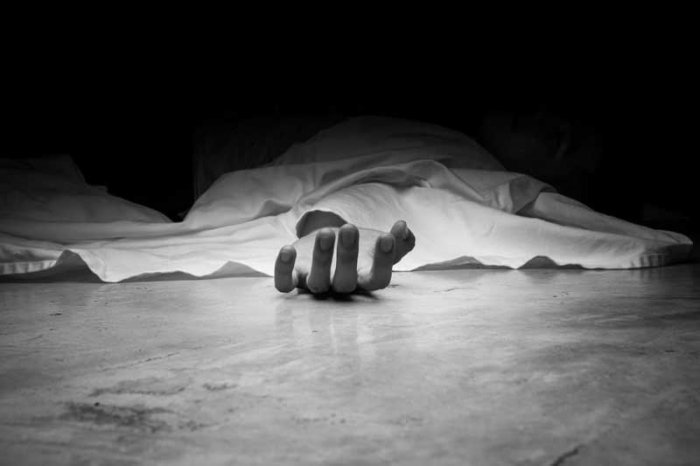
Pertinent details have come to the fore following the ongoing police investigation into the sensational killing of an elderly woman in Rajasthan’s Jaipur. 

“The accused, Anuj Sharma, is suspected to have been suffering from a psychological disorder, and committed the crime in a fit of rage,” Vidhyanagar Police said on Sunday. “This kind of heinous offence can be perpetrated only by a psychopath. The way the dead body has been chopped and thrown at a place, this can be done only by a vicious person,” said the SHO. 

According to the police, they are looking for the knife which the accused used to chop the victim’s body at first. 

The incident has shaken the residents of the locality and now they are installing CCTV cameras for their safety. As per reports, the residents of the Lalpuria apartment of Vidyadhar Nagar area, where the heinous crime took place are installing CCTV cameras in the apartment block. 

“I have been living here for the past 27 years. The incident which has occurred here is very unfortunate. I have not known the deceased personally beyond casual greetings,” said Dr Shalu Pav, a local resident Lalpuria Apartment. “We are installing CCTV cameras all over the block for the security purpose,” she further added. 

According to Vidhyanagar Police, the accused has been identified as Anuj Sharma, alias Achintya Govind Das, who allegedly killed his aunt by hitting her with a hammer on the head because of her controlling behaviour towards him. 

The accused Anuj Sharma has been arrested for allegedly killing his aunt and chopping her into ten pieces, in ‘Shraddha murder’ like manner, and then disposing them of in forest areas near Delhi-Jaipur highway, as per police. 

As of now according to police sources, eight body pieces of the deceased, Saroj Sharma (60) have been recovered and the accused has been sent to the police remand till December 20. 

Officials said that the accused, Anuj Sharma, has done B Tech from a private college and worked at a private firm for eight years. But after a few years, he quit his job and joined a religious institution. 

Vidyadhar Nagar SHO Virendra Kulin stated that the police are questioning the members of the religious institution and gathering information on the accused. 

The accused initially tried to miss lead the police. 

“Accused Anuj Sharma had lodged a missing report at Vidyadhar Nagar police station on December 11 about his aunt. Later, during the police interrogation, some blood stains were found in the house and on questioning, the accused said that it was caused by a nosebleed due to the cold weather,” said DCP North Parish Deshmukh. 

“Initially we had been treating this as a missing report case until we found a CCTV video in which the accused was seen dragging a heavy suitcase on the afternoon of December 11,” the Police stated. 

According to the police, Anuj was financially dependent on Saroj Sharma. 

“During the interrogation, Anuj revealed that his aunt used to dominate him since childhood, which he did not like. On December 11, the accused asked her permission to go to Delhi for an event, to which she refused. Anuj could not control his anger and hit her on the head with a hammer leading to her death,” Deshmukh added. 

Deshmukh further informed that Anuj later chopped the body into pieces with a marble cutter which he had bought from a local market. After which he stuffed the body parts in a suitcase and a bucket and dumped them in the forest area located on the highway. 

“Only the victim and the alleged murderer were present in the flat at the time of the incident,” said Deshmukh. 
Further investigation into the case is underway.

(This news report is published from a syndicated feed. Except for the headline, the content has not been written or edited by OpIndia staff)

CJI DY Chandrachud repeats the story about Nangali and the ‘breast tax’, the veracity of which is disputed: Here is what he missed

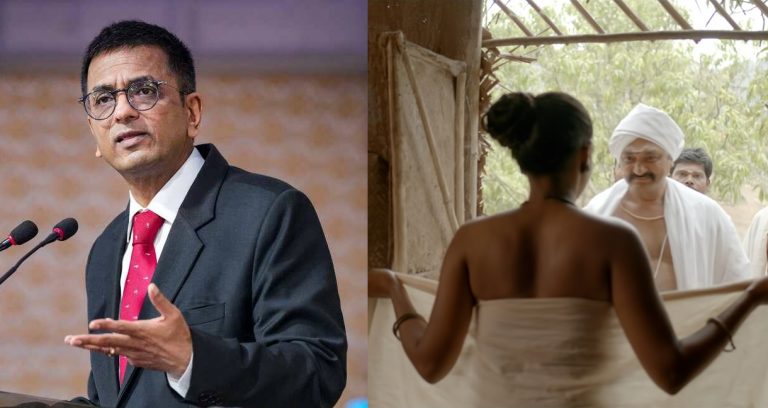
On December 17, Chief Justice of India, Dhananjaya Yashwant Chandrachud (CJI DY Chandrachud), delivered the Ashok Desai Memorial lecture. The Bombay Bar Association organised the event in the memories of the late Advocate Ashok H Desai, the Attorney General of India, from 1996 to 1998. During his lecture, CJI referred to the ‘breast tax’ story from Kerala.

Referring to the story of Nangeli, a lower caste woman who, as per the story, cut off her breast to oppose the breast tax, he said, “It was a cry of anguish against social stratification. When Dr BR Ambedkar dressed in a three-piece suit, he reclaimed his community’s status in society.”

According to this legend, the ‘breast tax’ was imposed on women from lower castes in Kerala to prevent them from covering their breasts. It says that lower caste women who covered their breasts were forced to pay a tax, and it depended on the size of the breasts. The folklore goes on to narrate the story of Nangeli, saying that she had cut her breasts and offered them in place of the tax to the king, protesting against the tax. The folklore also talks about the ‘moustache tax’ imposed on lower caste men who wanted to sport moustaches.

While Twitter handles that report such events live pointed out the mention of the ‘breast tax’ from his speech, it was surprisingly missing from all the news reports. We checked India Today, Hindustan Times, The Hindu and Deccan Herald but no one mentioned the ‘breast tax’ story. Even Live Law and Bar & Bench decided not to include the mention in the reports on the website while their tweets were still available till the time report was published. Missing an important point from CJI’s lecture was strategic. NDTV did mention ‘breast tax’ in its report but did not go into the details.

While there are some travel accounts that allegedly talk about the Breast Tax being real and the story of Nangeli too having veracity, there are other versions that dispute the authenticity of these claims. We will delve into the contrarian view in this article, where we analyse the version that puts forth arguments saying that the Breast Tax and Nangeli folklore is not what the popular account suggests.

Is the story of Nangeli real?

The simplest possible answer is possibly – no. According to several arguments made by historians, the story of Nangeli is a fiction based on folklore that had no names whatsoever. It is possible that the CJI mentioned this story without taking into account the contrarian view because renowned publications like BBC and The Hindu mentioned the story.

In 2018, OpIndia published a detailed report on the origin of the story of Naegeli. Recently, our Hindi team did an explanatory video on the matter after Drishti IAS’s UPSC instructor Vikas Divyakriti’s video narrating the story went viral. The story, which is based on less-known folklore, talks about upper-caste Nairs and Nambithiri Brahmins in Kerala who did not allow women of the lower castes to cover their breasts. As the story goes, a ‘breast tax’ was imposed on them based on the ‘size of their breasts’. In such an exploitative society, the story goes, rose Nangeli, an Ezhava woman, protested the unfair tax system by chopping her breasts off, attaining martyrdom. To add more punch to the story, the author made his husband jump into the pyre.

While it is true that lower caste people were taxed by the rulers in Kerala, it had nothing to do with breasts or moustaches. As the land tax was low at that time, the kings had introduced various kinds of other taxes to collect revenue, and one such tax was separate taxes for men and women. The tax to be paid by men was called talakkaram or head tax, and the tax to be paid by women was called mulakkaram or breast tax, only to differentiate it from the tax for men. The head tax was also called the moustache tax, in line with how the breast tax was named. The tax had nothing to do with actual breasts and moustaches, it was just the words used mean men and women. The rate of tax was different for men and women, therefore they were named this way.

While it is possible that a women named Naegeli had protested against this tax, this tax was possibly not for covering breasts.

Kerala’s sartorial history

Women’s attire in 19th-century Kerala was based on the tropical climate. It is a widely observed pattern that the traditional attire of a people is directly dependent on the climate of the land. Owing to the humid heat all through the year, a piece of cotton cloth draped around the middle with another (optional) hung over the shoulder as an afterthought has largely been the traditional attire of the people of Kerala, regardless of gender or caste.

A 17th-Century Dutch visitor William Van Nieuhoff writes about the attire of Ashwathi Thirunal Umayamma Rani, then queen of Travancore. He said, “I was introduced into her majesty’s presence. She had a guard of above 700 Nair soldiers about her, all clad after the Malabar fashion; the queen’s attire being no more than a piece of callicoe wrapt around her middle, the upper part of her body appearing for the most part naked, with a piece of callicoe hanging carelessly round her shoulders.”

He sketched the queen and her attendants in his work (Voyages and travels to the East Indies; 1653-1670), where it is quite clear that the queen and her attendants wore little to no cloth to cover their breasts.

If the 17th Century seems a bit dated for our debate, let’s look at a few pieces of evidence from the 19th and early 20th centuries, the very era in our fable is supposed to have taken place. The story implies that nakedness was a humiliation imposed by the upper caste on the lower caste women, with the intention of depriving them of modesty and the luxury of wearing a second piece of cloth. This accusation hardly holds water when you realise that women of Nambuthiri families and affluent Nair families themselves saw no need for a breast-covering garment, either as a sign of luxury or ‘modesty’.

In fact, not just Kerala, covering the body above the waist was not a norm in the entire Indian subcontinent. Both men and women didn’t wear anything on their upper bodies, apart from jewellery. It is evident in all paintings and carvings and statues from that era. For both men and women, covering the upper body was not seen as a necessity, and no issue of modesty or shame was associated with it. It was not just limited to lower castes, even upper caste people and even people of royal families followed the same system of attire, they only covered their lower bodies. Higher-class people sometimes wore a shawl on their shoulders, but it was just a status symbol and not associated with any modesty or moral values.

The concept of women requiring to cover their upper body was actually introduced by the Muslim rulers and European colonists in India. While the Islamists had brought the Sharia rules of modesty with them, the British came with their Victorian rules on the subject. After the Muslims had introduced upper body covering in the country, the Europeans introduced stitched blouses for women. It is after this that women covering their breasts started to be considered essential practice.

Even today, there is a tradition of not wearing stitched clothes in many temples in India. While the rules have been relaxed for women over time, priests in many temples don’t wear stitched clothes even now.

Who came up with the story?

It was first published in The Pioneer, and the author was C Radhakrishnan in 2007. In a video statement that was added to OpIndia Hindi’s video, he clearly mentioned that he cooked up the story based on folklore. There was no documented evidence of the story. However, the story was repeatedly picked up by media houses and even research papers as a “true story”. It is understandable that anyone gets confused and takes it as a historical fact in India, as we have a tendency not to look for sources. It is the reason the left-liberal section of academia was able to distort Indian history and teach it in our schools and colleges.

In 2009, blogger Michael Davitt published the tale on the Devian Art website. In 2013, The Hindu published a long story on Nangeli and the ‘breast tax’ and called it a “fading story” from history. In the same year, it also found mention in a 2013 book ‘Oru desathinte kadha, kayarinteyum’ by advocate and politician D Sugathan. The book title should not be confused with the 1971 Oru Desathinte Katha by Pottekkat SK.

In February 2016, Vegabomb published the story. But the real damage was done by the British media house BBC when it picked up the story in July 2016. BBC featured paintings created by Chithrakaran T Murali, who still believes that the story of Nangeli is true. According to him, he read about it four years before making the paintings and then spent time in Cherthala, the place where Nangeli was believed to have lived.

A number of obvious actors, including Feminism India, a portal famous for anti-Hindu rants, picked the story and published it in September 2016. In February 2017, The Hindu again picked up the story. In March 2017, India Times’s Vijay Singh wrote a story on Nangeli on Women’s day. Again in 2017, artist Orijit Sen created a comic strip based on the story. In September 2017, Scroll published a story based on Orijit’s comic strip that was covered by Guftgu. The News Minute also covered it based on Orijit’s strip. The reference to the article by Feminism India was used in a research paper titled ‘Conversations on Caste Discrimination in South India’ in 2018. In 2021, Homegrown published and claimed Nangeli brought “casteism” to its knees.

Despite being debunked numerous times by OpIndia here and here, WION News, Rani Sajitha for UpWord and Chakshu Media, Wing Commander Sathyan for Gusty Indians and others, the story is not only thriving but is referred to by publications and even the judiciary in India and abroad.


We love football, we will be divided and that’s the fun: KL Rahul on FIFA WC final

0

Defending champions France will lock horns against two-time champions Argentina for the coveted FIFA World Cup 2022 crown. The world is divided in supporting both teams and so is the Indian cricket team.

After wrapping up the fifth and final day of the first Test in Chattogram on Sunday the Indian team will relax and enjoy the World Cup final played between the two giants. 

“I don’t know who is really an Argentina or a France supporter so we will just enjoy the game today. We will all watch the game together and we will have a good meal and watch the game and like I said five days of time is really very tiring. So, just enjoy tonight’s game and it’s a final of a World Cup,” said India’s stand-in Test captain KL Rahul in the post-match press conference.

Indian cricket team loves football and they play the sport to warm up ahead of their net practice sessions as well as a warm-up before the start of a match.

“We all love football and most of you must have seen we are already playing football. I don’t know most of the guys on the team whichever team we were supporting are all out already. So, there were few Brazil fans there were few England fans,” said KL Rahul.

The Indian players were engrossed in the ODI series followed by the first Test match which just got over in Bangladesh today and therefore, could not follow the FIFA World Cup closely now after winning the first Test match they are going to be relaxed and enjoy the final between two giants Argentina and France.

“Even back in the rooms FIFA was big early on and now boys are relaxed a little bit and there are other priorities. So, it will be interesting to watch the game today so we will be divided a little bit and that’s what it makes sports watching fun right, it will be fun,” told KL Rahul.

Indian cricketers love playing and watching the beautiful game and tonight will be the day they will be watching the FIFA World Cup 2022 final like any other football fan.

(This news report is published from a syndicated feed. Except for the headline, the content has not been written or edited by OpIndia staff)

Gujarat: Asif pretends to be Ashok to trap a Hindu girl and then rapes her, complaint filed

0

A 20-year-old Hindu girl (name withheld) has filed a police complaint against a man named Asif Mammad Makrani for luring her using a fake name and then raping her in the Morbi district of Gujarat.

As per reports, the accused assumed the identity of a Hindu man and entrapped the victim using his forged identity of ‘Ashok Babubhai.’ A complaint was subsequently filed by the girl with the Morbi City A Division Police Station.

Asif Mammad Makrani was booked under Indian Penal Code (IPC) Sections 363 (punishment for kidnapping), 376(2N), 376(3) (punishment for rape) 506(2) (punishment for criminal intimidation), and relevant sections of the Prevention of Child Sexual Offences (POCSO) Act.

Reportedly, the accused had introduced himself to the victim as a Hindu man Ashok. After luring her into his sinister plan, Asif took the girl to the Indiranagar area of Morbi and raped her multiple times.

It was only later that she came to know about the religious identity of the accused. Asif had intimidated the victim into silence and threatened to kill her family members. He also forced her to sign on a blank piece of paper.

The girl, tired of continued threats and harassment, then visited the Morbi City A Division Police Station and filed a complaint against the accused.

Earlier in August this year, a young girl in Deesa in Gujarat was also lured into marriage by a Muslim named Ejaz Sheikh who reportedly converted the girl and her mother. The distressed father of the girl tried to commit suicide as a ransom of Rs 25 lakh was also demanded by the accused in the matter.

As the incident came to light, there was anger among the people on this issue in the entire Deesa city. Hindu organizations organized a protest rally but the police lathi-charged them.

No vandalism, only poles removed, clarifies Mahant at temple in Palitana, Gujarat, here is what we know

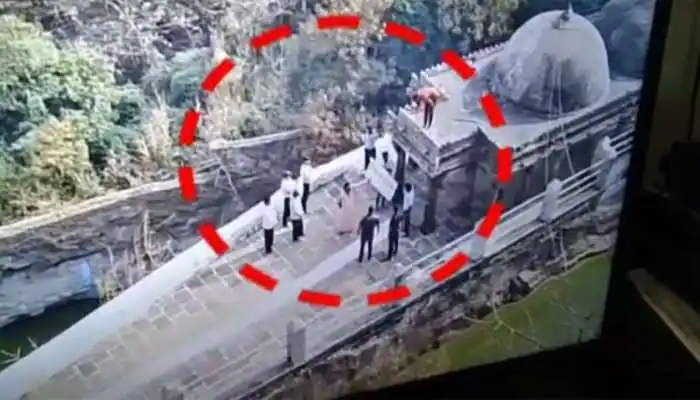
On 16 December, 2022, differences between two communities, Sheth Anandji Kalyanji Trust and Nilkanth Mahadev Seva Samiti escalated after the board on Shetrunjay hill and the iron poles were damaged and incident caught on camera. Subsequently, Samast Jain Shwetambar Moortipujak Tapagaj Mahasangh carried out a rally in Palitana and submit a memorandum to the Deputy Collector.

What is the Palitana Mandir controversy about

As per reports, the dispute arose after the pole near temple which had CCTV camera on it was moved. Since a long time here were protests for a Shiv Temple on the holy hill. Mahants from across the country had participated and asked for government’s intervention. However, some miscreants had damaged the poles which had CCTV cameras at Surajkund. This had enraged the people of Jain community. On the other hand, the Shiv temple trust is saying that the Sheth Anandji Kalyanji Trust has put up poles in their premises and alleged illegal encroachment.

On the videos that have gone viral on social media, the Shiv Mandir mahant has clarified that no vandalism took place, only the iron poles with CCTV cameras that were set up were removed.

Home Minister Harsh Sanghvi promises strict action

State Home Minister Harsh Sanghvi took to social media to inform that the government has taken cognisance of the incident and inquiry has been initiated.

Sanghvi said that he has held a meeting with top officials with regards to the case and they have been instructed to carry out strict investigation.

PM Modi’s comments on the Russia-Ukraine conflict could well have averted a global nuclear disaster: CIA Chief

Prime Minister Narendra Modi’s views on the use of nuclear weapons had an impact on the Russians and could well have averted a global disaster in the context of the Ukraine war, Director of the Central Intelligence Agency (CIA) Bill Burns said, according to PBS.

“I think it’s also been very useful that Xi Jinping and Prime Minister Modi in India have also raised their concerns about the use of nuclear weapons as well. I think that’s also having an impact on the Russians,” Bill Burns said in an interview with PBS. “I think the saber-rattling is meant to intimidate. We don’t see any clear evidence today of plans to use tactical nuclear weapons,” he added.

CIA Chief Bill Burns’s remarks come as Russian President Vladimir Putin on December 3 admitted that the conflict is “going to take a while.” He also warned of the “increasing” threat of nuclear war.

In his address at the meeting of Russia’s Human Rights Council at the Kremlin, Putin said that Russia will fight by “all available means” at its disposal, according to CNN. Putin said that he considered Moscow’s nuclear arsenal as a ‘deterrent rather than a provocation.’

“As for the idea that Russia wouldn’t use such weapons first under any circumstances, then it means we wouldn’t be able to be the second to use them either – because the possibility to do so in case of an attack on our territory would be very limited,” CNN quoted Putin as saying.

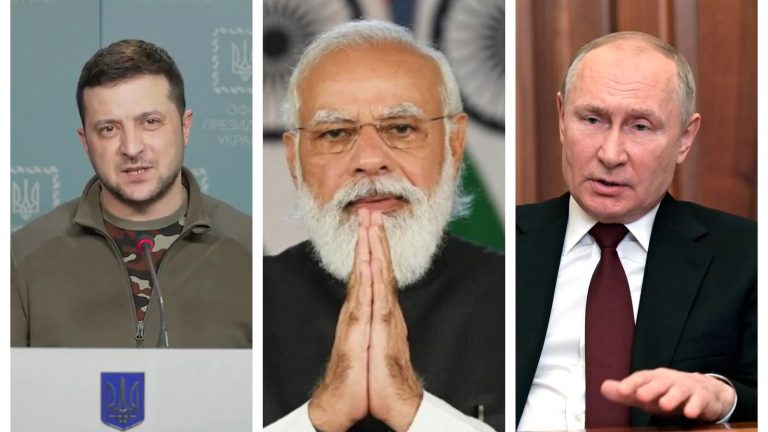
Notably, India has been calling for dialogue and diplomacy since the war began between Russia and Ukraine. In a telephonic conversation with Russian President Vladimir Putin on December 16, Prime Minister Narendra Modi reiterated his call for dialogue and diplomacy as the “only way forward” in the context of the ongoing war between Russia and Ukraine, according to the statement released by PMO.

During the telephonic conversation, Putin gave a fundamental assessment of Russia’s line in the Ukrainian direction. The talks between the two leaders come after their face-to-face meeting on the sidelines of the Shanghai Cooperation Organisation (SCO) in Samarkand in September.

“At the request of Narendra Modi, Vladimir Putin gave fundamental assessments of Russia’s line on the Ukrainian direction,” according to the statement released by Kremlin.

During the meeting in Samarkand, PM Modi had said, “today’s era is not of war.” Meanwhile, Russian President Putin had said, “I know about your position on the Ukraine conflict. I know about your concerns. We want all of this to end as soon as possible.”

“Today’s era is not of war and I have spoken to you about it on the call. Today we will get the opportunity to talk about how we can progress on the path of peace. India and Russia have stayed together with each other for several decades. We spoke several times on the phone about India-Russia bilateral relations and various issues. We should find ways to address the problems of food, fuel security and fertilizers,” PM Modi had said.

Earlier in October, Prime Minister Narendra Modi spoke to Ukrainian President Volodymyr Zelenskyy. During the telephonic conversation, PM Modi underscored that endangering nuclear facilities could have catastrophic consequences on public health and the environment.

“Prime Minister emphasized the importance India attaches to the safety and security of nuclear installations, including in Ukraine. He underlined that endangerment of nuclear facilities could have far-reaching and catastrophic consequences for public health and the environment,” according to the press release issued by Prime Minister’s office.

(This news report is published from a syndicated feed. Except for the headline, the content has not been written or edited by OpIndia staff)

We showed red card to all hurdles of development, from ‘Look East’ and ‘Act East’ now policy is ‘Act Fast and First for Northeast’: PM Modi in Shillong

Prime Minister Narendra Modi addressed a meeting of the North Eastern Council (NEC) in Shillong on Sunday. The meeting was held to mark the golden jubilee celebration of the North Eastern Council, which was formally inaugurated in 1972.

Apart from the prime minister, home minister Amit Shah, union minister G Kishan Reddy (culture, tourism and development of north-eastern region), and chief ministers of the north-eastern states were present at the event.

Hailing the contribution of NEC in the development of the North East region, Prime Minister Modi said that this golden jubilee celebration of the NEC coincides with the ongoing Azadi ka Amrit Mahotsav. Underscoring that he often refers to the 8 states of the region as Asht Lakshmi, he said the government should work on 8 foundation pillars for its development, which are Peace, Power, Tourism, 5G connectivity, Culture, Natural farming, Sports, and Potential.

Prime Minister Modi said that the Northeast is our gateway to South-East Asia and can become a centre for the development of the entire region. And, to realise this potential of the region, work is going on various projects like the Indian-Myanmar-Thailand trilateral highway and the Agartala-Akhaura rail project.

The PM said that for his government, northeast and border areas are not the last corner of the country but the gateways of defence and prosperity. He added that this also ensures national security and trade with other nations also takes place from these places.

The Prime Minister announced a new scheme in this regard for the region, the Vibrant Border Village Scheme. Under this scheme, villages in the border areas will be developed with better facilities.

Referring to how earlier Congress government had said that not developing border areas was a ‘strategy’ saying that developed infrastructure in the border will help the enemy, PM Modi said that due this thinking, border areas of the northeast remained undeveloped and connectivity in the border areas was not developed. But today, the government is building new roads, new tunnels, new bridges, new railway lines, new airstrips at a rapid speed. He said that the border villages which were deserted earlier, now govt is working towards making them vibrant.

The Prime Minister highlighted that the government has gone beyond the conversion of the ‘Look East’ policy to ‘Act East’, and now its policy is ‘Act Fast for Northeast’ and ‘Act First for Northeast.’ Highlighting the success of peace initiatives in the region, he said that many peace agreements with insurgent groups in the region have been signed, inter-state boundary agreements have been done and there has been a marked reduction in instances of extremism. We are stressing on building corridors of development in Northeast, not border of conflicts, he said.

Talking about the importance given to the region by the government, PM Modi said, “When we changed the priorities of the Central government, its positive impact is visible across the country. This year, the Centre is spending Rs 7 Lakh crore just for infrastructure. 8 years back, this was less than even Rs 2 Lakh crore. 7 decades after independence, we reached only up to Rs 2 Lakh crore”.

“In football, when someone plays foul and against the spirit of sportsmanship, they are given a red card. In the same way, in the northeast in last 8 years, we have shown red card to all hurdles like underdevelopment, corruption, political favouritism, and unrest,” PM Modi said using football language.

Discussing India’s commitment towards net zero, Prime Minister said the Northeast can become a powerhouse of hydropower. This will make the states of the region power surplus, help in the expansion of industries and generate a large number of jobs, he said.

Discussing the tourism potential of the region, PM Modi said that both culture and nature of the region are attracting tourists from across the world. He added that tourism circuits are being identified and developed in the region. He also discussed sending students from 100 universities to the Northeast, which will help bring people from different regions closer. These students can then ​​become ambassadors of the region.

Talking about boosting connectivity in the region, Prime Minister Modi said that iconic bridge projects which were pending for several decades have now been completed. In the last 8 years, the number of airports in the region have jumped from 9 to 16, and the number of flights has increased from about 900 before 2014 to around 1900. Many Northeastern states have come to the Railway map for the first time and efforts are being done to expand the waterways also. The length of national highways has increased by 50% since 2014 in the region.

PM Modi said that with the launch of the PM-DevINE (Prime Minister’s Development Initiative for North East Region) scheme, the infrastructure projects in the Northeast have gained more momentum. He added that the government is also working on improving digital connectivity in the Northeast by increasing the optical fibre network.

Taking a jibe at earlier governments, he said for a long time, the parties that were in power had thought of Divide for Northeast, and his government came with the intention of DevINE.

Talking about the development of Aatmanirbhar 5G infrastructure, he said that 5G will help further the development of the startup ecosystem, and service sector among others in the region. He said that the government is committed to making the Northeast not only a centre of economic growth, but also of cultural growth.

Speaking about the agricultural potential of the region, Prime Minister underlined the scope of natural farming, in which the Northeast can play a leading role. He said that through Krishi UDAN, farmers of the region are able to send their products across the country and different parts of the world as well. He urged the Northeastern states to participate in the ongoing National Mission on Edible Oils – Oil Palm. He also spoke about how drones can help farmers overcome geographical challenges and help their produce reach the market.

Discussing the contribution of the region to the field of sports, he said that the government is working towards providing support to sportspersons of the region through the development of India’s first sports university in Northeast. Also, more than 200 Khelo India Centres have been approved in the 8 states in the region, and many athletes of the region are getting benefits under the TOPS scheme.

Prime Minister also discussed India’s G20 Presidency and said that its meetings would witness people from all over the world coming to the Northeast. This will be an apt opportunity to showcase the nature, culture and potential of the region, he said.

PM Modi is also launching a large number of development projects in Meghalaya and Tripura.

Tesla or 50k dollars: The ‘hero’ American Left is defending had offered a ransom bargain to stop stalking, harassing, and doxing Musk

On Wednesday (December 14), Elon Musk suspended the Twitter account ‘ElonJet’, run by a 20-year-old college student named Jack Sweeney.

Jack had been infamous for using publicly available data to track and post about the real-time location of the billionaire’s private jet. He alleged that the objective was to ‘raise awareness about carbon footprints,’ a claim endorsed by the American left ecosystem.

The matter reached its zenith when the 2-year-old son of Musk named ‘X’ was stalked and hounded by a ‘crazy stalker’ assuming it in Musk based on this ‘publicly available information’. A furious Elon Musk vowed to take action against the college student.

“Legal action is being taken against Sweeney & organizations who supported harm to my family,” he announced. The new Twitter owner has also permanently suspended the Twitter handle ‘Elon Jet’.

In a tweet, Elon Musk said, “Any account doxxing real-time location info of anyone will be suspended, as it is a physical safety violation. This includes posting links to sites with real-time location info.”

Meanwhile, a 10-month-old interview of Jack Sweeney with leftist news outlet CNN has gone viral on social media. In the video clip, the ‘climate crusader’ had made hefty demands to stop doxxing the billionaire.

“What is your current demand, relative to Musk? What will it make for you to go away and stop this?” he was asked. Jack Sweeney had revealed, “At least a Tesla or $50000.”

Prior to divulging his ‘extortion plans’, the college student had denied trying to coerce the billionaire into giving him money. In a longer version of the interview (posted on February 12, 2022), he was seen claiming to be a fan of Elon Musk.

“Fair to say though that never was the goal to track him and get him to pay you money?” the CNN news anchor asked. “Yeah, I mean I was a fan. Never wanna like try to get money out of him,” Jack Sweeney said before backtracking on his claims in the same interview.

As per a report by Protocol, Elon Musk had earlier expressed security concern over tracking of his live location by the Twitter handle ‘ElonJet’, run by Jack Sweeney.

“Can you take this down? It is a security risk…I don’t love the idea of being shot by a nutcase,” Musk confided in him in a Twitter DM last year. The billionaire had even offered a generous sum of $5000 and asked the ‘climate crusader’ to stop doxxing him.

“Any chance to up that to $50k? It would be great support in college and would possibly allow me to get a car maybe even a Model 3,” Jack Sweeney had demanded.

Screengrab of the news report by Business Insider

Later, in an interview with Business Insider, the college student claimed, “I’ve done a lot of work on this and $5,000 is not enough.” While the left-liberal ecosystem had hailed Jack Sweeney for his ‘work’, it has now become clear that the climate crusader was ready to bail out for a Tesla.

Sachin Pilot vs Ashok Gehlot heats up again as Rahul Gandhi’s ‘Bharat Jodo Yatra’ moves forward in Rajasthan

Completing its 100 days, Rahul Gandhi’s Bharat Jodo Yatra reached Dausa in Rajasthan on Sunday. The infighting of the two factions in Rajasthan Congress, one that of CM Ashok Gehlot supporters and the other of Sachin Pilot supporters have often been in news.

On Sunday, both Ashok Gehlot and Sachin Pilot joined Rahul Gandhi as the foot march began, however, suddenly, some people carrying party flags started raising slogans such as “Sachin Pilot Zindabad (Long live Sachin Pilot), Hamara CM kaisa ho Sachin Pilot jaisa ho  (How should be our chief minister? Like Sachin Pilot.) The video of the same was tweeted by ANI.

Dausa holds special significance as it happens to be the bastion of Sachin Pilot and an erstwhile Parliamentary constituency. Pilot’s father and Congress veteran Rajesh Pilot was elected as MP from Dausa five times.

It is pertinent to mention that the Congress party’s Bharat Jodo Yatra has been in controversies since its start in September. Be it Rahul Gandhi’s meeting with Hinduphobic pastor George Ponnaiah who insulted Hindu deities and Bharat Mata, or claims of pro-Pakistan slogans being raised in a Congress rally in Madhya Pradesh’s Khargone. 

Ashok Gehlot and Sachin Pilot have time and again targeted each other.  Recently, CM Gehlot stirred the hornet’s nest in an interview with NDTV’s Sreenivasan Jain calling Pilot “Gaddar” (traitor). 

When asked if the Congress High Command desired to make Pilot CM, Gehlot responded, “How are they going to make him? A man with less than ten MLAs. Who revolted, and was labeled a traitor. He betrayed the party and is thus a traitor. How are people supposed to accept him?”. Gehlot had said, “A Gaddar cannot be Chief Minister.” 

After the comments of Ashok Gehlot created a storm, Sachin Pilot responded to it by calling the allegations baseless. “Ashok Gehlot called me ‘Nikamma” (incompetent), ‘traitor’ and made lots of allegations. These allegations are completely unnecessary. “

The conflict reemerged during the voting for the Congress party’s president on September 23, when it was revealed that Ashok Gehlot would be running for the position. Even if elected as party president, Gehlot had stated that he would like to remain chief minister of Rajasthan. Rahul Gandhi, however, asserted that a person elected as a party president cannot also serve as CM. Gehlot, a well-known Gandhi family loyalist, had a good possibility of being chosen as the party’s president, which, should that happen, would necessitate his resignation from the position of the chief minister, thus paving the way for Sachin Pilot to take over as Rajasthan CM.

The MLAs who supported Gehlot became irritated as soon as rumours about Sachin’s name surfaced. On September 25, a Congress Legislature Party meeting was scheduled, the second in a week. However, at the last minute, around 90+ MLAs threatened the leadership with resignation if Pilot’s name was confirmed. They wanted Gehlot to remain the state’s chief minister.

After visiting Sonia Gandhi on September 29, Rajasthan Chief Minister Ashok Gehlot admitted moral responsibility for the state’s political crisis and withdrew his nomination from the Congress presidential election.

The divide between the Gehlot and Pilot factions stirred a storm first in July 2020 when rebel Congress politician Sachin Pilot was ousted by the Congress party from his position as deputy chief minister and state Congress chief. The Congress party accused Pilot of plotting to topple the government with the BJP.

A month-long gripping drama ensued, during which Ashok Gehlot revealed that the two had not spoken in the previous 1.5 years. The conflict intensified when the chief minister of Rajasthan attacked the rebel leader, referring to him as “Nikamma and Nakaara (useless).” The spectacle finally came to a close with Sachin Pilot returning to his familiar ground and yielding to Ashok Gehlot.

Bihar hooch tragedy: People burnt the bodies of the deceased without postmortem, claims reports

0

Days after dozens of people died due to the consumption of spurious alcohol in Bihar, it has come to light that the family members of the deceased conducted the final rites without a postmortem.

As per a report by ABP News, the Head of the Mehrauli Gram Panchayat Ajit Singh informed that the cremation of three deceased men was done by flouting standard medical procedures.

He added that it was an open secret that bootleg alcohol was being sold in the village. Singh pointed out that no action was taken despite multiple complaints to the district administration.

Ajit Singh further alleged that a vendor by the name of Shailendra Rai had hoarded large quantities of bootleg alcohol for a wedding ceremony in his neighbourhood.

He added that Rai died by consuming the bootleg alcohol and the mass distribution of the spurious alcohol was thus averted. “It would have led to a disaster,” Singh told ABP News.

Similarly, the husband of the Head of the Gangauli Gram Panchayat, Paramatma Manjhi, informed that the kin of those, who died by consuming spurious alcohol, also conducted their last rites out of fear of police action.

He added that the Bihar government’s refusal to compensate the families of the deceased also motivated them to cremate the dead bodies in a hurry.

8 more people die in Bihar due to the consumption of spurious liquor

On Saturday (December 17), officials shared the news that 8 more people have died in Bihar due to the consumption of spurious alcohol.

As per reports, 6 people died in the Bhagwanpur division of the Siwan district. While 5 people died on Friday (December 16), one of the victims died a day earlier on Thursday (December 15).

Reportedly, two other men died in the Teghra division of the Begusarai district of Bihar on Friday (December 16). According to Deputy SP Chandramohan Prasad, the victims died due to the consumption of ‘some poisonous chemical.’

Bihar Hooch tragedy: Death toll from toxic liquor reaches 70

The death toll in Bihar’s Chhapra hooch tragedy has soared to 70, with 11 more people succumbing after consuming spurious liquor in the Saran district. 

Masrakh Station House Officer (SHO) Ritesh Mishra and Constable Vikesh Tiwari were suspended immediately after the Tuesday night tragedy on the recommendation of Marhaura Sub-Divisional Police Officer, Yogendra Kumar.

Most of the deaths occurred over Wednesday and Thursday, creating an uproar both at the state and national level as the sale and consumption of alcohol has been banned in Bihar by the Nitish Kumar government since April 2016.