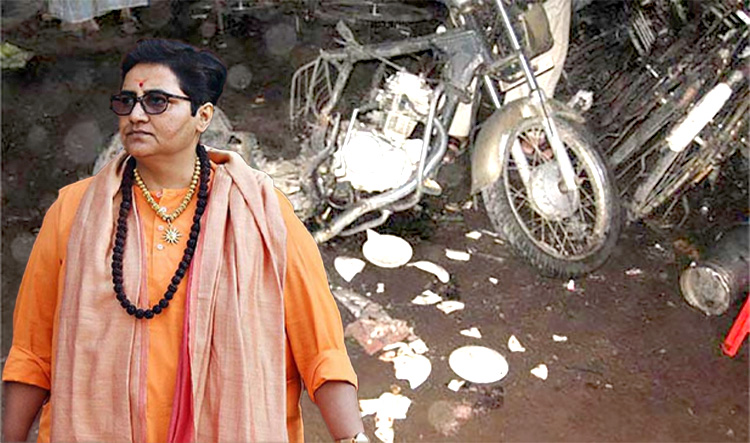
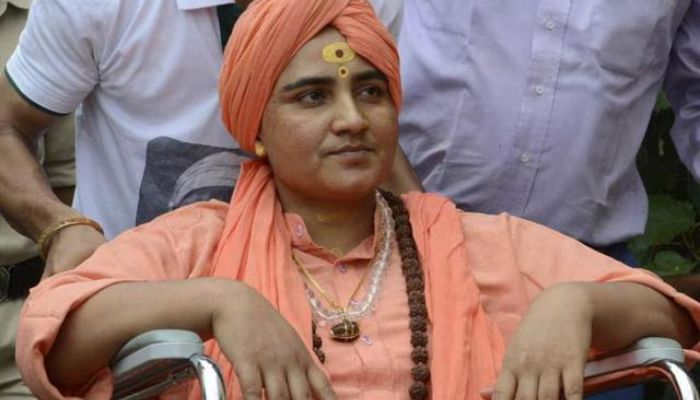
On Thursday, July 31, an NIA Court in Mumbai acquitted all accused in the Malegaon blast case, including Sadhvi Pragya and Lieutenant Colonel Purohit. In the verdict, the court said there is no evidence to establish that the bike, allegedly used in the 2008 Malegaon blast that claimed six lives, belongs to former BJP MP Pragya Thakur.
The judge noted that while the prosecution had proved that the blast happened but it failed to establish that the explosive was fitted on the LML Freedom motorcycle allegedly belonging to Ms Thakur. The court also ruled that prosecution could not prove that the motorcycle belonged to the Sadhvi. The court said what was known from the beginning, that Sadhvi Pragya and others accused in the case were framed by the then Congress government using fabricated evidence.
“The motorbike’s chassis number was wiped out, and the engine number is in doubt. There is no evidence to show Sadhvi Pragya Thakur is the owner and no evidence to show she had the vehicle,” the judge said, acquitting her after what has been one of the longest terror trials in the country.
The court observed that the blast site was not properly barricaded, leading to contamination of the crime scene, which undermined evidence collection.
Notably, the prosecution had alleged that the bomb was fitted on a gold-coloured LML Freedom motorcycle registered under Sadhvi Pragya’s name. A witness had identified the ruins of the vehicle and said he saw it at the blast site on the day of the blast. According to a chargesheet, Sadhvi Pragya had provided the motorbike for the blast to her close associate Ramji Kalsangra.
Interestingly, initial news reports immediately after the blast had said that the bomb was hidden under the seat of a Hero Honda Passion motorcycle. But when the chargesheet was filed, it somehow became an LML Freedom motorcycle allegedly owned by Sadhvi Pragya Thakur.
The recent verdict marks the end of a 17-year-long legal journey involving Pragya Thakur, the daughter of an Ayurvedic healer from Madhya Pradesh, who rose to national attention after being accused of involvement in terror attacks, allegedly as retaliation for earlier incidents like the 2006 Mumbai train bombings.
In her late 30s at the time, Thakur became a controversial figure associated with what came to be known as “Hindu terror,” a term that gained prominence following the 2008 Malegaon blasts. She was accused of recruiting individuals for the attack, while another accused, ex-Army officer Prasad Purohit, was alleged to have supplied the explosives. Both have now been acquitted, along with five others.
Present in court when the verdict was pronounced, Thakur addressed the judge, expressing that from the beginning, she had maintained that any investigation must be based on solid evidence. “I was summoned, arrested, and tortured. It destroyed my life. I was leading a spiritual life when I was wrongly accused. No one stood by us. I survived only because I am a Sanyasi,” she said, adding that there was a deliberate attempt to tarnish the image of saffron. “Today, saffron and Hindutva have triumphed, and those truly guilty will face divine justice,” she said.
Speaking to NDTV, Thakur’s sister Upma Singh said they always believed in the legal system and maintained Pragya’s innocence from the start.
The accusation and the Blast
The prosecution had alleged that the explosions on September 29, 2008, were caused using a bomb fitted onto a motorcycle. The Mumbai Anti-Terrorism Squad (ATS) discovered that the LML Freedom bike involved had a fake registration number, and the chassis and engine numbers had been tampered with. Forensic analysis managed to restore the engine number, tracing the bike’s registration back to Pragya Thakur, leading to her arrest on October 23, 2008.
Thakur has long claimed she was tortured while in police custody. In 2014, the National Human Rights Commission launched an investigation into her allegations but concluded there was no evidence to support her claims.
In 2019, Thakur stirred controversy by suggesting that former Mumbai ATS chief Hemant Karkare, who was killed during the 26/11 terror attacks, died because of a “curse” she had placed on him. She claimed Karkare was determined to implicate her despite a lack of evidence. “I told him he would be destroyed, and a month later, he was killed by terrorists,” she had said. Following public outrage, she retracted her statement, acknowledged Karkare’s sacrifice, and referred to him as a martyr.
On 31st July, an NIA Court acquitted all accused in the Malegaon blast case, including Sadhvi Pragya and Lieutenant Colonel Purohit. This marks the second case in less than two weeks where the Anti-Terrorism Squad (ATS) of Maharashtra Police’s investigation during the UPA era fell flat in court. Earlier, on 22nd July, all 12 accused in the 7/11 Mumbai Blast case were acquitted, raising serious doubts over the investigative capabilities of the then ATS teams.
In the 7/11 case, the accused walked free because the ATS failed to prove their guilt in the Mumbai High Court. Notably, 5 out of 12 were sentenced to death and the remainder were sentenced to life imprisonment in the case by the lower court. Despite the presence of evidence including material used to build bombs, jihadi literature, etc., the investigating agency heavily relied on confessions recorded under MCOCA, which were found to be insufficient by the High Court as there was no supporting evidence. Furthermore, important evidence such as CDRs was destroyed by the investigating agency citing procedure. Had it been preserved, the agencies could have established the movement of the accused at the place of the blasts.
In the Malegaon blast case, a “Hindu terrorism” narrative was built and Sadhvi Pragya, Col Purohit and others were made scapegoats. ATS, as well as the National Investigation Agency that took over the investigation in 2011, failed to provide any substantial evidence against the accused in court, leading to the acquittal. In this case, the real perpetrators are still unknown, as the narrative was attempted to be built around so-called “Hindu terrorism”.
Almost two decades of legal battles have fallen flat and the families of the victims continue to seek justice.
Mumbai train blasts 2006: What happened, and how ATS messed up the case
On 11th July 2006, Mumbai’s Western Line suburban train system was ravaged by seven near-simultaneous pressure cooker bomb explosions between 6:24 PM and 6:35 PM. A total of 187 people lost their lives and over 800 were injured during the evening rush hour. The initial investigation quickly attributed the attack to a conspiracy involving Pakistan-based terrorist organisation Lashkar-e-Taiba and SIMI operatives.
The terrorists from Pakistan allegedly infiltrated India via Nepal and Bangladesh. Within weeks, the ATS arrested 13 men accused of orchestrating the terrorist attack. During the investigation, MCOCA provisions were imposed alongside IPC sections. In 2015, a special MCOCA court convicted 12 of those arrested. Five were sentenced to death and the rest received life imprisonment.
The verdict leaned heavily on confessional statements purportedly made by the accused. Eyewitness identifications were conducted months after the blasts and there was some unverifiable circumstantial testimony. The lack of a forensic trail, call-data records, travel logs and irrefutable material evidence connecting the accused to the bombs made the case weak in the High Court.
Despite loud assertions of dismantling a Pakistan-based terror ring, the ATS’s prosecution rested on shaky ground, constructing the narrative through associative inference rather than substantive proof. The court also raised serious doubts about the authenticity and voluntariness of these confessions by highlighting an unusual pattern.
Several confessions shared identical content, including the sequence of names and descriptions of events. The Bench noted it was “shocked” by the extent of similarity and even suggested that portions appeared to have been “copied”. The court observed that it was “beyond the realm of reasonable imagination” that such identical narration would occur naturally.
The verdict has been challenged in the Supreme Court. Though the apex court has stayed the High Court judgment, it clearly stated that the accused do not need to surrender as they were already released following High Court verdict. The High Court judgment came 19 years after the blasts and it is unclear how many more years it would take for the apex court to give verdict in the case.
The Malegaon 2008 acquittals: From explosive allegations to evidentiary collapse
Nearly 17 years after the deadly blast that shook Malegaon, a special NIA court in Mumbai acquitted all seven accused in the 2008 Malegaon bomb blast case. The explosion occurred on 29th September 2008 using an improvised explosive device strapped to a motorcycle, detonated near a mosque. Six people were killed and at least 100 were injured. Now, following the acquittal of the seven accused, the question is, who was really behind the bomb blast?
Among the accused were high-profile names such as former BJP MP Sadhvi Pragya Singh Thakur, Lt Col Prasad Purohit, Major (retd) Ramesh Upadhyay, Ajay Rahirkar, Sudhakar Dwivedi, Sudhakar Chaturvedi and Sameer Kulkarni. All of these seven walked free after years of incarceration and legal battle.
The judgment decisively dismantled the prosecution’s case. The court ruled that no cogent material was presented against any of the accused. Specifically, the court noted that the ATS failed to produce any evidence that the motorcycle used in the blast belonged to Pragya Thakur. The judge observed that she had become a Sadhvi at least two years prior to the blast and the prosecution failed to establish her link to the plot.
In a scathing rebuke of the case handling, the court remarked that “no material was brought on record” to show that explosives were ever stored at Col Purohit’s residence. It added that even basic investigative procedures were ignored: the sketch of the alleged storage room was never drawn, and the forensic samples were found to be contaminated. The court further rejected the ATS’s narrative around Abhinav Bharat, a right-wing organisation allegedly founded by Thakur and Purohit, saying there was no evidence that the group used its funds for terror activities.
The case has long been surrounded by political and procedural controversies. Initial investigations were conducted by the ATS under the late Hemant Karkare. A chargesheet was filed in January 2009 that claimed a broad conspiracy aimed at targeting the Muslim community. The ATS had invoked MCOCA against all 12 original accused and claimed that “conspiracy meetings” had taken place in Bhopal, Indore and other locations. It argued that Thakur had provided the motorcycle and Purohit had supplied RDX to avenge attacks on Hindus.
The case was handed over to the National Investigation Agency (NIA) in 2011. A supplementary chargesheet was filed by the NIA in 2016 in which the agency withdrew all charges against Sadhvi Pragya. The agency told the court that there was no crucial evidence linking her to the attack. Furthermore, the NIA accused the ATS of “torturing witnesses” into making statements against her.
Despite the clean chit by the NIA, the special court initially refused to discharge Pragya citing ATS-collected materials that could not be ignored. Special Public Prosecutor Rohini Salian accused the NIA of going soft on Thakur. Salian was later removed from the case.
The judgment acquitting all accused exposed the deep fissures within India’s counter-terror apparatus. From the ATS’s controversial investigation and the NIA’s contradictory findings to prosecutorial reshuffles and public allegations of bias, the Malegaon 2008 case became emblematic of what happens when terror investigations are compromised.
How Congress fuelled the ‘Saffron Terror’ narrative
The acuittals in Malegaon blast have once again cast a harsh light on the political invention of the “Saffron Terror” theory. It was an idea vigorously championed by Congress leaders during the UPA regime. One of the most prominent voiced behind this narrative was Digvijay Singh who repeatedly described the RSS as a “bomb-making factory”. He blamed RSS for spreading terrorism in the country.
In 2008 and the years that followed, he sought to link the RSS and affiliated Hindu organisations to series of blasts including Malegaon, Ajmer Sharif, and even the Samjhauta Express.
This narrative was more than political posturing. In 2010, Home Minister P Chidambaram formally referred to “saffron terror” in an address to intelligence officers, while in 2013, Sushilkumar Shinde escalated the rhetoric by alleging that the RSS and BJP were running “terror training camps.” These statements, made from high offices of power, triggered a political firestorm and deepened communal divisions.
The narrative went global when WikiLeaks revealed that Rahul Gandhi, in a 2009 conversation with then US Ambassador Timothy Roemer, described “radical Hindu groups” as a greater threat than Islamist outfits like Lashkar-e-Taiba. Former NSA MK Narayanan also reportedly discussed “Hindu extremist groups” with then FBI Director Robert Mueller the same year.
While the Congress party often tried to distance itself from such remarks, the damage was done. Years later, as courts acquit the very people accused under these theories, the so-called “saffron terror” campaign now appears to have been a politically motivated detour, one that derailed investigations, weakened national unity, and undermined faith in the justice system.
What was lost – National security and credibility
The collapse of the two cases has shattered public trust. While in one case the conviction was overturned due to lack of evidence, in the other case innocent Hindu leaders, Army officials and a Sadhvi were dragged into a cooked-up case.
With these two judgments, broader institutional damage has been pronounced. It is evident that the ATS’s methodology repeatedly failed judicial norms and forced the courts to stage interventions over planted evidence, confessions obtained under duress, and coerced witness statements.
The losses are multifaceted. Victims’ families will continue to wait for justice, as one case remains in legal limbo and in the other, the real culprits are walking free. Closure has been denied. Public faith in an agency once heralded for dismantling terror networks is now deeply eroded. The ATS, once a symbol of counter-terror effectiveness, now appears compromised by politics, communal framing, and procedural shortcuts.
After 17 years, on Wednesday, 31st July, a special Mumbai court has acquitted former BJP MP Sadhvi Pragya Singh Thakur in the 2008 Malegaon blast case due to a lack of evidence. The court stated that there was no evidence to prove that the LML Freedom motorcycle, which was reportedly used in the explosion that killed six and injured more than a hundred, belonged to her. The court further mentioned that the chassis number of the bike had been interfered with, and the doubtful engine number remained.
But more than a court fight, this was a personal ordeal of agony for Pragya Thakur, one marked by years of brutal physical and mental suffering in jail. While the case was one of India’s longest terror trials, it also occasioned grave concern at the treatment of suspects in custody, particularly when basic human rights and dignity are overlooked.
“They beat me from day one without even asking a question”
Sadhvi Pragya was arrested in 2008 by the Maharashtra Anti-Terrorism Squad (ATS) concerning the Malegaon blast. Then, a woman in her late 30s, she was a simple, spiritual seeker. What happened next, in her account, was a nightmare no woman should ever have to face.
They detained me in illegal custody for 13 days,” she had remembered during a public speech in 2019. “On the first day, without asking me a question, they began to beat me with a wide belt. They shot abusive language at me, threatened to hang me upside down and strip me nude. I was tortured day and night for several days.
Pragya cried during the recital of her ordeal in public, not to gain sympathy, she insisted, but so that no woman should have to endure what she had. She testified to having been denied sleep, beaten until her arms and legs puffed up, and forced to submerge her puffed limbs into warm salty water so the beatings could resume.
Pain dismissed, charges overlooked
What made it more challenging for her, she informed, was the silence surrounding her ordeal. Human rights organisations, feminist groups, and political analysts loud on custodial torture and women’s rights kept mum. Although she continued to report physical abuses and humiliation, there was hardly any public outcry or institutional reaction.
The National Human Rights Commission of India in 2014 carried out an investigation into her charges but ruled that there wasn’t sufficient evidence to prove her claims. But Pragya maintains that the trauma was genuine, both physical and psychological.
“They used to make me listen to lewd CDs inside the custody. They didn’t give me sleep for nights. They wanted to shatter my mind so that I would falsely admit and incriminate top RSS leaders,” she claimed. Various narco tests, polygraph tests, and brain mapping tests were performed upon her during this time, but none resulted in a breakthrough.
Public image and political storm
While she was in prison, Pragya Thakur’s name was splashed on media as the “face of Hindu terror” and the title served to isolate her even more. She was ridiculed, judged, and labeled a terrorist before the trial was even initiated. Her religious background and saffron attire were mocked and were used to brand her a ‘Hindu terrorist’.
When she entered politics as a BJP candidate in the 2019 Lok Sabha elections from Bhopal, her past again became a matter of heated political debate. Critics questioned the BJP’s decision to field an “accused terrorist”. What they didn’t mention was that she had never been convicted, and was still awaiting trial. The line between “accused” and “guilty” seemed to blur in public perception.
“Bhagwa has won. Hindutva has won.”
When the court, after several delays, gave out the verdict on Thursday, 31st July, 2025, Pragya Thakur was present inside the courtroom along with co-accused who were also acquitted. Referring to the judge, she stated, “I have consistently maintained that people must be probed only when there is a legitimate reason. I was arrested without reason, tortured, and discredited. I led a monk’s life, but I was turned into an accused and abandoned. Now Bhagwa has triumphed. Hindutva has triumphed. And God will punish the guilty.”
Nine years under custody and a combined 17 years of ordeal later, the court may have finally had its say, but so has she, with a voice tempered by unimaginable suffering and unshakeable faith.
The recent tariff move by US President Donald Trump has reignited global attention on the deepening tensions between Washington and Moscow. Trump announced that India would be subjected to a 25% tariff on its imports to the United States, along with additional unspecified penalty citing New Delhi’s continued purchase of energy and arms from Russia. Although the specific percentage of the additional penalty has not yet been disclosed, the announcement signals a growing impatience from the US over India’s trade relations with Russia. This measure has sparked concerns over potential diplomatic strains and economic impacts on bilateral relations.
US imports of Russian goods
While Trump is imposing penalty on India for buying Russian products, the United States itself continues to import Russian goods worth billions of dollars, despite imposing various sanctions on Russia and Russian companies. US imported fertilizers worth US$1.3 Billion from Russia during the year 2024, according to the United Nations COMTRADE database on international trade. It was $1.95 Billion in 2023 and $1.62 Billion in 2024. Therefore, while imports have come down, it is still substantial. In fact, about 50% of the fertilizers used in the US come from Russia.
Import of non-ferrous metals such as palladium and aluminium were valued at $876.5 million for the period January to November in 2024. Inorganic chemicals made up $683 million, followed by power-generating machinery at $79 million and cork and wood manufacturers at approximately $64 million.
Other commodities included nuclear reactors and machinery worth $80.81 million, prepared animal feed, iron and steel, and oil seeds, although these contributed smaller shares to the overall imports.
Donald Trump has announced he will penalise India for doing business with Russia.
This is the value goods America itself imported from Russia between Jan to November last year. pic.twitter.com/6oIrbVRXj6
Despite Trump opposing Russia, its reliance heavily on Russia indicates something else. Trump’s actions and statements, including his latest tariff threats and the shortening of the compliance timeline, highlight a clear shift in his approach towards Putin. His criticisms indicate disappointment in the Russian leader’s unwillingness to cooperate. After returning to the office, Trump had vowed to end the war in Ukraine swiftly. However, those efforts have not materialized.
Trump’s threat to impose secondary sanctions is already taking shape. On Tuesday, July 29, he warned that unless Russia shows signs of progress toward ending the war within the next 10 to 12 days, the US would begin implementing 100% tariffs on countries continuing to trade with Russia. This marks a drastic acceleration from his earlier 50-day deadline, which was set to expire on September 2. The new deadline now falls on August 8. “We’re going to put on tariffs and stuff, and I don’t know if it’s going to affect Russia, because he wants to, obviously, probably keep the war going,” Trump stated. His remarks reflect scepticism about Putin’s intentions and signal that the US may take even more aggressive steps if the war continues.
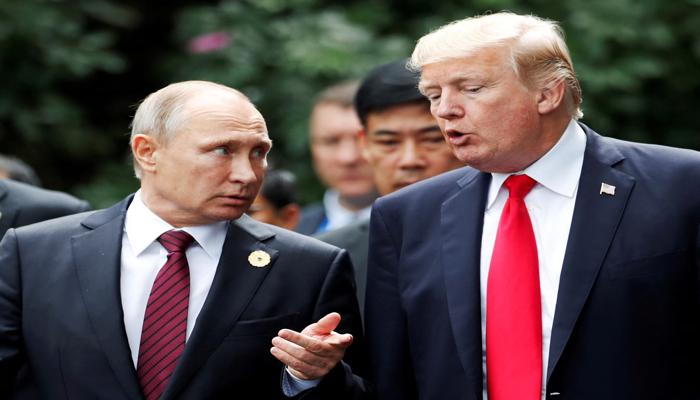
Trump’s stance on Russia has undergone a significant transformation. Once describing Russian President Vladimir V. Putin as “savvy” and “a genius” for launching the invasion of Ukraine, Trump now appears to be distancing himself from any peace negotiations. He stated that it would be up to Russia and Ukraine to end the war, despite having shown enthusiasm earlier in his second term about negotiating a ceasefire. Trump’s body language and recent rhetoric reflect mounting frustration with Putin, who has failed to respond positively to diplomatic overtures. On Monday, Trump voiced his displeasure, saying, “I’m not so interested in talking anymore. He talks. We have such nice conversations, such respectful and nice conversations, and then people die the following night with a missile going into a town.”
Tariff warning on China
China, the largest buyer of Russian oil, has also been warned. Treasury Secretary Scott Bessent, during a press conference in Stockholm, stated that China could face heavy tariffs if it continues its purchases of Russian oil. The pressure campaign appears to be part of a broader strategy to squeeze Moscow’s economic lifelines and force a change in course. Trump had earlier announced that Russia would face 100% tariffs if it failed to agree to a truce. His advisers have clarified that these penalties would likely take the form of secondary levies, affecting countries that import Russian oil and other critical commodities. Such measures are intended to create a ripple effect, discouraging global trade with Russia and tightening the grip of Western sanctions.
Market reactions have been swift. Oil prices surged above $69 following Trump’s reiteration of tariff threats. West Texas Intermediate (WTI) oil posted its largest gain since June, when Israel conducted airstrikes on Iran. Bullish options on Brent crude overtook bearish ones for the first time in two weeks, reflecting increased investor concern over geopolitical instability and potential disruptions in the energy supply chain.
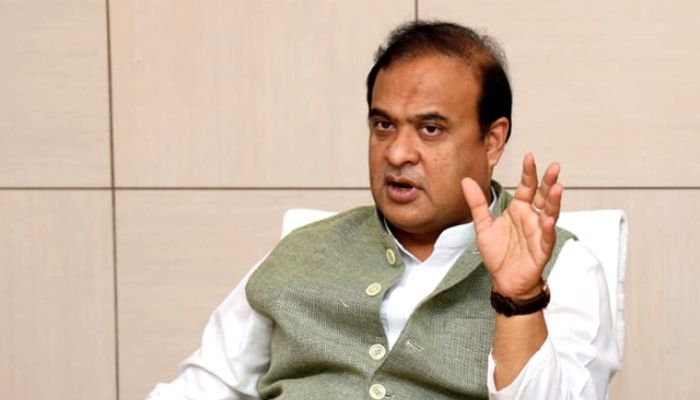
On Thursday, July 31, Assam Chief Minister Himanta Biswa Sarma shared that his government has reclaimed over 182 square kilometers of land from encroachers. CM Sarma stated that these Muslim encroaches demand an exclusive ‘Miya Land’.
Addressing a press conference, CM Sarma said, “The Assam government has reclaimed 182 square kilometers of land from encroachers. Now these same infiltrators are demanding a separate ‘Miya Land’ state. Their dream will surely come true – but not in India, but in Bangladesh or Afghanistan. And I will definitely assist them in reaching there.”
असम सरकार ने अतिक्रमणकारियों से 182 वर्ग किलोमीटर भूमि वापस ली है। अब यही घुसपैठिए एक अलग 'Miya Land' राज्य की मांग कर रहे हैं।
उनका यह सपना जरूर पूरा होगा – लेकिन भारत में नहीं, बल्कि बांग्लादेश या अफ़ग़ानिस्तान में। और वहाँ तक पहुँचने में मैं उनकी सहायता ज़रूर करूँगा। pic.twitter.com/HAbiJvIIdB
He further announced that a survey will be conducted in Guwahati to identify illegal settlers and encroachers and remove them from the area.
“In the hills of Guwahati, we conducted a survey to identify the encroachers settled there and to remove them from Guwahati. This survey will not have any impact on the indigenous people of Assam,” CM Sarma said.
गुवाहाटी के पहाड़ों में हमने एक सर्वेक्षण किया था, ताकि वहां बैठे अतिक्रमणकारियों की पहचान कर सके और उन्हें गुवाहाटी से बाहर निकाल पाए।
Notably, under Chief Minister Himanta Biswa Sarma’s leadership, Assam is at the forefront of detecting, detaining and deporting illegal immigrants.
Currently, a massive eviction drive is being carried out by the Assam government against illegal infiltration. A part of it involves clearing 11,000 bighas (approximately 3,600 acres) of land in the Rengma Reserve forest at Uriamghat, bordering Nagaland.
Earlier this month, the chief minister informed that around 29 lakh bighas (nearly 10 lakh acres) of land in Assam is reported to be occupied by “Bangladeshi infiltrators and doubtful citizens.” In 2021, a campaign was initiated to reclaim the property but they encountered international pressure to cease these actions. This project commenced in 2021, and to date, roughly 77,420 bighas of land (25,500 acres) have been cleared of encroachments.
Earlier, on 12th July in Assam, an eviction operation took place in the Paikan Reserve Forest located in the Goalpara district. 140 hectares (equivalent to 1038 to 1040 bighas) of forest land had been unlawfully taken over, predominantly by illegal Muslim immigrants.
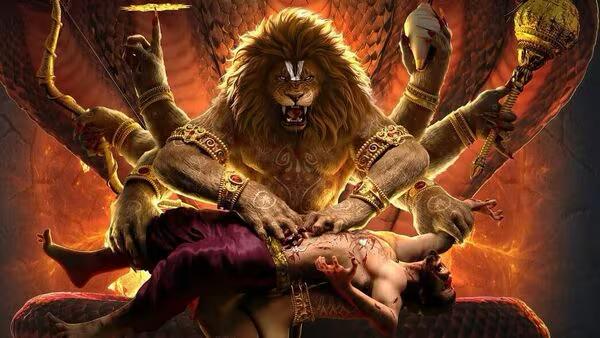
It was on Monday morning, by happenchance, that I learnt about a low-budget, animated film called Mahavatar Narsimha‘s release, with barely any noise or marketing. Upon checking, the reviews online were overwhelmingly positive, to my surprise. I continued to be sceptical. My fears about the film were many, but mainly that it was going to be tacky and shallow. How were they going to drag a film on Prahlada for two hours, where all it would take is two lines of storytelling, devout son of a demon king is tortured by his father for his bhakti, until Lord Vishnu saves him and destroys the demon. But what is the worst that could happen, I also asked myself. The worst possible outcome was that it would be another Adipurush, but were we not immune to such disappointments? As eager filmgoers, we would eventually dust it off and move on, like always. So I decided to take the bait.
I reached theatres in the evening and found people thronging the auditorium where this particular film was playing. Crowds for an animated film, that too on a Monday evening? It was another surprise, but I wasn’t going to get my hopes high yet.
Soon it was show time. The audience settled in and the film began to play. As the asura mother Diti sashayed onto the screen, seducing her husband Kashyapa, in the very first scene, my fears were starting to solidify. What had I signed up for and dragged my kid along too? But in the next minutes, as soon as the rest of the scene and dialogues unfolded, and the screenplay caught up, my fears were allayed. And just like that, without realizing it, in the middle of the theatre I had been lifted off by an unexpected bhakti storm, one that I had not seen coming.
It is now more than 48 hours since I watched the film, and the effect is yet to wear off. I am constantly consuming content about it on the internet, periodically checking its box office performance and playing the song list on loop. What it is about the film, that it refuses to disappear from my mind space?
I am not sure I have all the answers. But I will attempt to decode the phenomenon called Mahavatar Narasimha and try to summarize its success and effects on film goers, in seven points below.
Unmissable Bhakti-bhava: The film makers had their mind, intellect and hearts in the right place when attempting this yajña (in the director’s own words) They did not see it as a mere cash grab opportunity, by riding on the Sanatana resurgence the country is witnessing. Instead, they see it as a tapas meant to take the lore of our Gods to various corners of the country and the world. In one of the interviews, the director mentions that while kids or global audience not familiar with these tales might initially see the avatar as yet another superhero, and not necessarily with bhakti, their curiosity about these characters will lead them into further research and eventually into devotion. With this kind of bhava, it is clear that this was not just a mere film making attempt on their part, but more of a long-enduring yajña. Action done with the right attitude if nothing else is a sure shot way to success.
Impeccable research: The film has been years in the making and the quality of the research shows. The filmmakers apparently read up on puranas, familiarized themselves with various folklores and even visited the various Narasimha kshetras across the country to get a comprehensive understanding of the subject they were handling. In fact, it blew my mind when I learnt that in the scene where Lord Narasimha washes blood off his hands in a pond, the flora and fauna we see on screen was made to reflect the actuals plants and creatures that one would get to see in the same kshetra even today. Needless to mention, the immense respect they had for the content they were dealing with, shows on screen as well.
Hard work and solid filmmaking: While the animation did feel inconsistent and not quite close to international standards at times, it was clearly not due to lack of effort (maybe perhaps due to lack of budget or experience) because every other department excelled. Be it storytelling, screenplay, voice acting, visual effects, music or direction, the film has it all going very strongly for it. The space battles or Bhudevi’s introduction all had exemplary visual appeal (even if some of them seem inspired from non-Indian shows and films) It is clear that the makers did not rely on just the devotion factor to take them across. They have taken their craft very, very seriously and sincerely. Even the Varahavatar, that had less screen time than the main avatar, got its share of spotlight and fantastic action.
Character portrayals: Except Hiranyakashipu and Hiranyaksha, there was no all-out villain in the film despite the asura clan dominating the scenes. Be it the boys in the gurukula or Guru Shukracharya or even the asuras assigned to kill Prahlada, the characters were all portrayed with nuance and depth. No one was textbook evil. Each person in the asura clan or even Diti and Kashyapa had reasons for doing what they did. The attention to such detailing in characterization was impressive.
Tears and goosebumps moments galore: Throughout the film, both as a film goer and as a devotee, one gets to experience many such moments. Asuras joining in the bhajan with Prahlada, Lord Narasimha’s eyes suddenly softening and moistening at the sight of his devotee with his rage vanishing, Lord Vishnu cradling little Prahlada on his lap and calling Himself his dasa, the Hiranya brothers’ training scenes or them bringing upon destruction of cities (a clear allusion to the suffering and pain our civilization too underwent in the last millennium at the hands of foreign invaders) or Varahamurthy seeking out and battling Hiranyaksha— so many, many memorable moments stand out.
Climax: The spectacular climax, backed up by the superb action choreography, music, and the special attention to animation quality (unlike the inconsistency in rest of the film) simply propels the film out of the exosphere, into a different orbit altogether. I am not detailing it out too much, for the fear of spoiling the viewing experience.
Finally, and most importantly, the Spiritual messaging: On careful observation, it is clear that this is not just another average religious film. The universal messages of unflinching devotion and compassion apart, in the scenes where characters discuss about the imperishable nature of atman or about the nature of ego, the film knows its spiritual subject matter well. Even the much-discussed violent parts are not out of place. In the Hindu pantheon, it is important to understand that not all our Gods are pacifists nor are they all peaceful at all times. While true devotees like Prahalada and Sudama got their share of infinite love from the Lord, characters like Kartavirya Arjuna and Hiranyakashipu too got their grizzly ends from the same Lord. Our dharma always insists that each soul’s journey generates its own karmic consequences and hence there is no once-size fits all in Hinduism. Hence there is no Narasimha Swami or Parashurama without the accompanying rightful violence either. The makers seem to know this and what the rest of the most profound philosophies of Sanatana Dharma are. They manage to competently convey them through film.
Having said that, the film itself is not without its flaws. But the positives are so overwhelmingly in its favor, that the little drawbacks get blown away in comparison. My belief is that like it happened with the Kantara climax, there is a certain inexplicable energy that the film operates in, especially in its climax, which manages to induce a certain response in a large number of viewers as well. Hence the swelling of bhakti in theatres that we see in various clips and grudging applause from a large section of industry and critics, on its success.
All this simply tells us one thing. That there are changes happening in our country, in our collective consciousness as Sanatani-s. This film’s success is proof that the change is growing and is here to stay. Our Gods are rising and roaring, both literally and metaphorically.
United States President Donald Trump has announced a 25 percent tariff and an additional penalty on India for buying Russian crude oil and military equipment. On 31st July, he also penalized six Indian companies and claimed they were involved in Iranian petrochemical trade which contravened his Executive Order 13846.
“The Iranian regime continues to fuel conflict in the Middle East to fund its destabilising activities. Today, the United States is taking action to stem the flow of revenue that the regime uses to support terrorism abroad, as well as to oppress its own people,” White House declared.
Any property owned by these firms or controlled by Unites States individuals is blocked as a result of the sanctions. Furthermore, a business or entity that owns 50% or more of another barred person or company is blocked by the sanction.
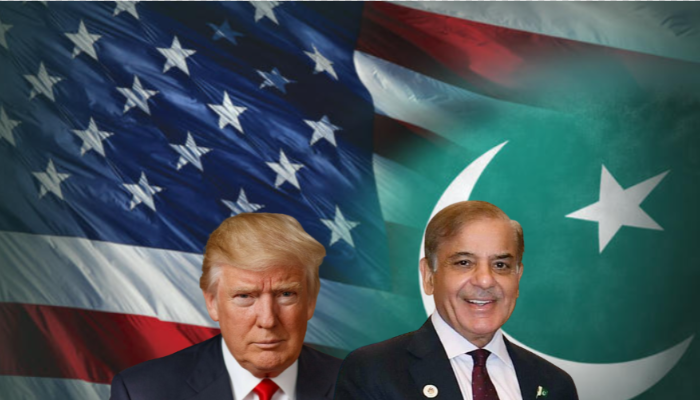
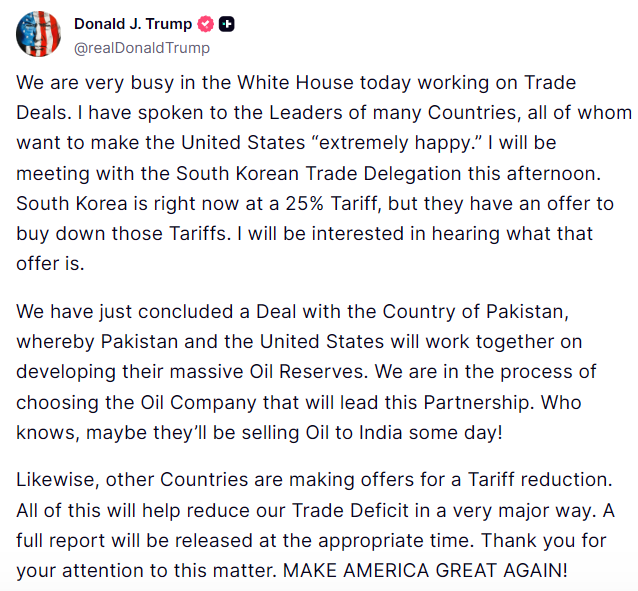
On the other hand, the United States and Pakistan have reached an agreement wherein Washington will assist Islamabad in developing its oil reserves and decrease tariffs for the latter. “We are in the process of choosing the Oil Company that will lead this Partnership. Who knows, maybe they’ll be selling oil to India some day,” he gleefully added on Truth Social.
It is clear that the Trump administration,
which refers to India as its ally on certain days and then behaves in a completely contrary manner on others, is frustrated with the Modi government. But what could be the reason? Notably, India has repeatedly refused to follow their lead on international conflicts, particularly the Russia-Ukraine conflict and adopts an independent foreign policy that caters to its own interests.
Now, the US which was once the sole superpower in the world and dictated terms to every nation according to its fancies and desires, cannot tolerate this insubordination. They are unable to comprehend the concept of sharing power and authority on a global stage with others in a multipolar world, of which India is a crucial participant.
Therefore, the “Big Bully,” under the leadership of a megalomaniac, is feeling uneasy and is trying to intimidate New Delhi into compliance. However, the latter’s defiance must come across as a tight slap in the face.
Trump’s new found love for Islamabad
Predictably, not every country has the spine to stand up to the US and India’s neighbour, the terror-ridden center otherwise referred to as Pakistan, has a prolonged history of aligning with American interests in the region for foreign funds.
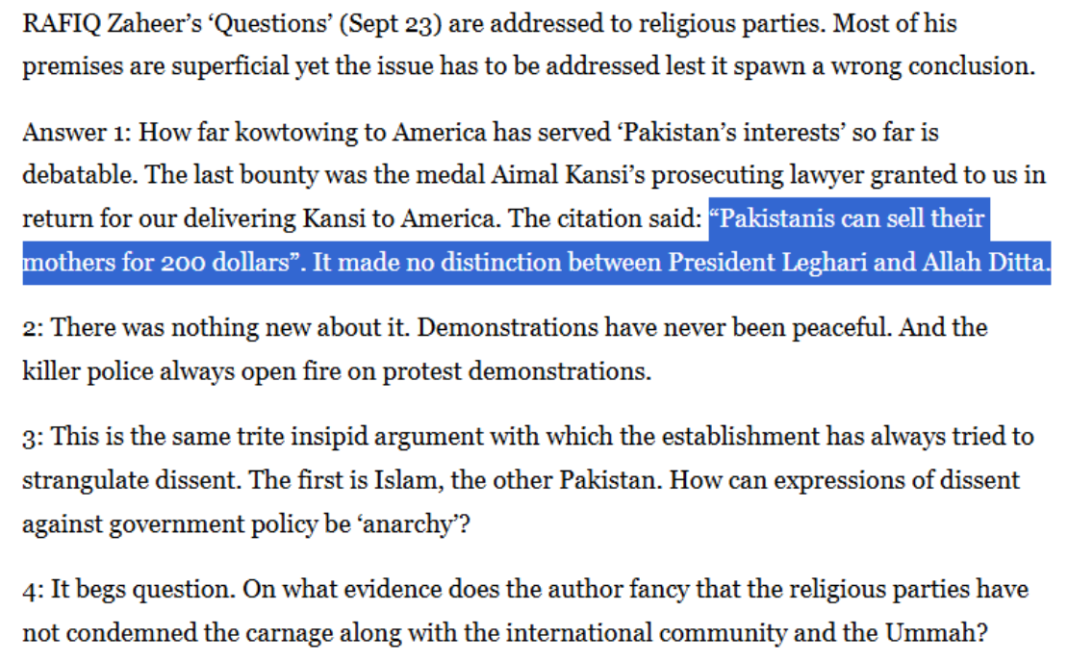
During the trial of Aimal Kansi (Pakistani terrorist) a US attorney aptly remarked, “Pakistanis can even sell their mothers for a few dollars,” in 2011 and the nation has consistently met the expectations of their American overlords. A fact that has been acknowledged and labeled as “dirty work for the US and the West” by Pakistan.
Image via Dawn
Nonetheless, this does not imply that they have not deceived their masters under the guise of providing assistance in the “War on Terror,” while simultaneously harboring their enemies, including Osama bin Laden, in Pakistan after receiving billions of dollars from Washington.
The reason for this is that the relationship between the Islamic Republic and terrorism resembles that of a mother and child, perpetually connected by an unsevered umbilical cord. Ironically, the same was noted by none other than Trump who now appears to have developed a unique fondness for the country in his heart.
“We have been paying Pakistan billions and billions of dollars at the same time they are housing the very terrorists that we are fighting. It is time for Pakistan to demonstrate its commitment to civilisation, order, and to peace,” he highlighted in August 2017.
He threatened to cut off billions of dollars in aid to Pakistan in 2018 and added that the US has provided the nation with over $33 billion over the past 15 years, calling it a “safe haven to the terrorists” US forces “hunt in Afghanistan.” The outraged president charged, “They have given us nothing but lies and deceit, thinking of our leaders as fools.”
The United States has foolishly given Pakistan more than 33 billion dollars in aid over the last 15 years, and they have given us nothing but lies & deceit, thinking of our leaders as fools. They give safe haven to the terrorists we hunt in Afghanistan, with little help. No more!
Trump, who is not known for his consistent stance on issues and stable policies, has unexpectedly discovered a new ally in Pakistan. Their deteriorating relations were intriguingly revitalized after “Operation Sindoor” amid which New Delhi dismissed Trump’s bogus assertions of mediation while Islamabad welcomed them.
Popular Indian journalist Shiv Aroor observed the same and wrote that India might have executed something (a significant plan or stratgy) that is privy only to President Donald Trump, Prime Minister Narendra Modi, Air Chief AP Singh, Director General Air Operations (DGAO) AK Bharti and a fighter pilot. “Nothing else explains Trump’s mood changing this absurdly after the operation, ” he outlined.
I don’t know why I’m reading this as proof that India did something between May 7-10 that only Trump, Modi, Air Chief AP Singh, DGAO Bharti & a fighter pilot know about.
While Trump, like all his predecessors, is attempting to establish a convenient relationship with the terrorist state, its top leaders and officials have repeatedly admitted that jihad and terrorism are not only fostered but also celebrated and encouraged within their territory.
From the glorification of notorious terrorists such as Jalaluddin Haqqani, Osama bin Laden and Ayman al-Zawahiri to the revelation of how Kashmiri youth were trained in terrorist camps there and the housing of major terrorist organizations, Pakistanis have openly admitted to their heinous crimes before the world. President Parvez Musharraf’s interviews with Pakistan’s media are proof of it.
Moreover, the national assembly of the country is known to designate terrorists as shaheeds (martyrs) and congratulate the nation for terror attacks in India. “For Pakistanis across the globe, it was an embarrassing moment when the Americans came and killed Osama bin Laden at Abottabad, martyred him,” Prime Minister Imran Khan Niazi lamented in 2011 while addressing the house.
Former Minister of Information and Broadcasting of Pakistan Fawad Chaudhry declared, “Humne Hindustan ko ghus ke mara hai wahaan pe. Pulwama main jo humari kamyabi hai, woh Imran Khan ki leadership mein is Qaum ki kamyabi hai (We entered India and killed. Our success in Pulwama, under the leadership of Imran Khan, is a victory of our community),” in their national assembly in 2020.
He then boasted, “Uske hissedar aap aur hum sab hai (all of us are party to it).” Pakistan’s Air Chief Marshall commented, “If Pakistan’s land, skies, or waters are threatened, there will be no compromise. We tried to convey this with our tactical brilliance in Pulwama (terror attack) and now we’ve shown our strategic skills too,” in a press coneference during “Operation Sindoor.”
More importantly, there exists a substantial amount of incriminating evidence indicating Islamabad’s involvement in various terrorist attacks, including the 2008 Mumbai attacks, 2019 Pulwama terror attack and the recent Pahalgam terror assault where Hindu tourists were shot-dead after identifying their religion, among several other.
However, the country merely pays lip service and accuses India of failing to provide “sufficient evidence” to protect its proxies from accountability. The Islamic Republic’s hand in glove association with terrorism was the reason it was placed on the Financial Action Task Force (FATF) list before eventual removal in 2022.
US and Pakistan: A toxic love story
The relationship between Pakistan and the United States is primarily founded on convenience as a bankrupt nation which depends on others for financial doll outs is effectively acting as a mercenary or, more accurately, a servant in return for dollars.
Hilariously, this could be the only occasion where Washington is interested in a country’s oil without delivering US-style democracy as it understands that the latter is already a vassal state. Additionally, the odds of the US locating more wanted terrorists in Pakistan are far greater than the likelihood of finding oil reserves there.
Trump was unable to “Make America Great Again,” yet he is certainly assisting Pakistan in making a fool of the nation for the umpteenth time by succumbing to the latter’s ploy.
On the flip side, this offers a perfect opportunity for Pakistan which has previously siphoned off billions from the US while shielding terrorists, whom, as Trump accurately stated, American forces were trying to find in Afghanistan.
The two nations resemble toxic partners who, in an ideal scenario, should stay away from each other, however, their toxicity acts as a binding force that draws them together and pollutes everything around them.
However, it is not just about their self-serving connections as it also involves India which has apparently angered Trump by refusing to submit to his demands. He aims to irate New Delhi with his proximity to Pakistan and could even utilize Islamabad as a bargaining chip. Certainly, there could be numerous others layers to this that others might not be aware of.
The hypocrisy is also strikingly evident as Trump wants to penalize India for its connections with Russia, yet he remains unconcerned about Pakistan and China’s profound ties.
It is important to note that Trump has previously commended President Vladimir Putin and has shown a strong interest in improving relations with Moscow. Contrarily, he has maintained a highly anti-Beijing stance and recently engaged in a significant tariff dispute with them.
Conclusion
The ultimate conclusion drawn from these developments is that there are no reliable friends or allies in global diplomacy, specifically not the United States. As Henry Kissinger, former US Secretary of State rightly stated, “It may be dangerous to be America’s enemy, but to be America’s friend is fatal.”
Furthermore, the United States and Pakistan share more similarities than differences. Both nations exploit others and each other for their own selfish interests. Perhaps this is the reason they consistently find themselves in the same camp despite various circumstances. Meanhwile, Trump’s constant mention of India in conversations about Pakistan indicates his desperation.
However, India stands as a strong, independent and thriving nation that has charted its own course in global diplomacy and refuses to follow anyone else. The same has annoyed Washington leading to Trump’s astonishing praises, invitations and softness towards Pakistan. As expected, Pakistan being the shrewd and nefarious nation that it is, has been masterfully playing to its US audience.
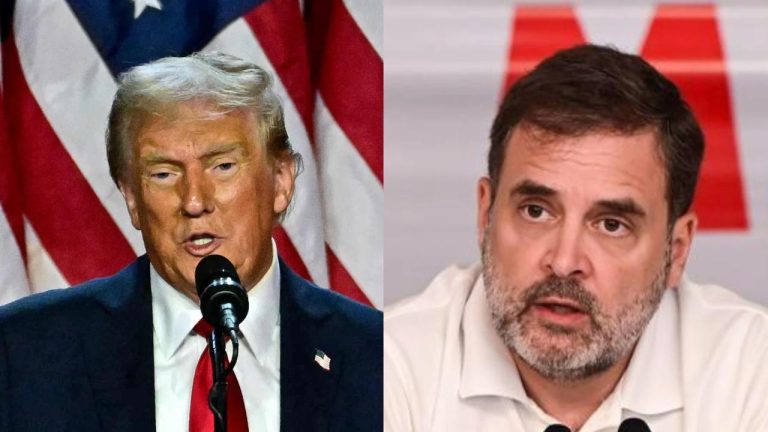
Congress MP Rahul Gandhi triggered a fresh political firestorm on Thursday by endorsing US President Donald Trump’s harsh criticism of India’s economy. Days after provoking Prime Minister Narendra Modi in Lok Sabha to publicly refute Trump’s claim of brokering an India-Pakistan ceasefire during Operation Sindoor, Gandhi said he was “glad” the US President had “stated a fact” by calling the Indian economy “dead.”
“Yes, he is right. Everybody knows this except the Prime Minister and the Finance Minister. The Indian economy is dead. I’m glad President Trump has stated a fact… BJP has finished the economy to help Adani,” Gandhi told reporters.
"INDIA IS A DEAD ECONOMY, I AGREE WITH TRUMP." – RAHUL GANDHI SAYS WITH A SMILE. pic.twitter.com/vOt6wZzZWc
However, Gandhi’s endorsement of Trump’s statement has drawn sharp criticism, especially as President Trump has been openly venting frustration on social media following India’s refusal to yield to US pressure on trade, tariffs, and oil imports from Russia. Far from “doing exactly what Trump says,” as Rahul Gandhi claimed, PM Modi’s administration has maintained a firm and independent stand, prompting Trump to lash out and impose a 25% tariff on all Indian imports, what many experts are calling a “tariff tantrum.”
Rahul Gandhi’s theatrics in Lok Sabha exposed by his endorsement of Trump’s ‘dead economy’ remark for India
However, earlier this week, when Rahul Gandhi stood up in the Lok Sabha to speak on Operation Sindoor, one expected at least some semblance of national unity following a successful and widely applauded military response to the Pahalgam terror attack. Instead, what unfolded was a brazen, meandering tirade, an attack not just on PM Modi, but on the very doctrine of Indian sovereignty, deterrence, and diplomatic stability.
One of the most revealing moments in Rahul Gandhi’s speech was when he dared PM Modi to call former U.S. President Donald Trump a “liar” on the floor of Parliament. This was not just political rhetoric; it was a trap. Gandhi was baiting Modi to react emotionally, to rupture the fragile but functional Indo-US equilibrium that the Modi government has sustained with patience and foresight.
While Prime Minister Modi displayed astute political maturity by refusing to fall into Rahul Gandhi’s provocation in Parliament, US President Donald Trump’s subsequent outbursts on social media, first imposing steep tariffs on India and then mocking its economy, have done more than just expose the hollowness of his claims about brokering a ceasefire between India and Pakistan. They have also revealed the uncomfortable truth about where the loyalties of India’s Leader of Opposition truly lie. Gandhi’s public endorsement of Trump’s derogatory remarks, even as the US President attempts to strong-arm India using trade as a pressure tactic, has raised serious questions about whose interests he really represents.
India pegged to be the fastest growing country in the world in 2025: Morgan Stanley
In contrast to Gandhi’s grim portrayal, global financial assessments paint a far more resilient picture of India’s economy. According to the latest report by Morgan Stanley’s Global Investment Committee, India is expected to remain the fastest-growing economy in its global coverage. The report forecasts India’s real GDP growth at 5.9% in 2025 and 6.4% in 2026, far ahead of the US (1.0%) and China (4.0%).
“India remains the fastest growing economy in our coverage,” the committee noted, highlighting the country’s robust domestic demand, structural reforms, and investment momentum. In fact, while the global economy is projected to slow down, from 3.5% in 2024 to just 2.5% in 2025, India is expected to outperform significantly.
The report also emphasizes that while Indian equities may appear expensive by historical standards, they continue to attract strong institutional and retail investment flows. Morgan Stanley maintains an overweight stance on India, along with Singapore and the UAE.
Meanwhile, even within the Congress party, not everyone is onboard with Rahul Gandhi’s statements. Hours after Trump announced 25 pc tariff strikes against India, senior Congress leader Jairam Ramesh slammed the American bullying tactics, calling it a “blackmail” aimed at extracting concessions in trade negotiations.
Rahul Gandhi’s repeated attempts to undermine India’s economic performance not only ignore global assessments but also align too closely with the narrative of a foreign leader actively penalizing India for asserting its strategic autonomy.
A fading political scion aligns with a foreign bully
Rahul Gandhi’s public endorsement of Donald Trump’s derogatory remark about India’s economy marks a striking pivot in the political posturing of a dynast long out of touch with electoral reality. Having faced a relentless string of defeats since 2014, nationally, in states, and even in local elections, the Congress MP appears to be grasping at straws, desperate to stay politically relevant, even if that means aligning with forces that are determined to undermine India’s sovereignty.
That this desperation has led him to side with Donald Trump, a leader globally known for transactional diplomacy, browbeating allies, and insulting entire nations is striking. Trump’s tactic of slapping tariffs and throwing tantrums has been used to pressure multiple countries, from Canada and Germany to China and Mexico. For Gandhi to cheer Trump’s insults and amplify them domestically, even as the Modi government defies such pressure with strategic restraint, raises questions not just about judgment but also about allegiance. This is not opposition politics; it borders on diplomatic sabotage.
More than just political theatre, Gandhi’s embrace of Trump’s rhetoric reveals a deeper malaise in the Congress ecosystem, a readiness to compromise national interest in the pursuit of short-term political point-scoring. While PM Modi has refused to take Trump’s bait and continues to uphold India’s sovereignty with quiet firmness, Gandhi’s conduct stands in sharp contrast: provoking instability in Parliament, undermining military and diplomatic achievements like Operation Sindoor, and now giving legitimacy to a foreign leader’s bullying tactics and insulting remarks on economy. In doing so, Rahul Gandhi has not just misread the national mood, he has exposed the lengths to which a desperate dynast will go to stay afloat.
On Wednesday, 30th July, the United States Department of State announced sanctions on 20 entities for engaging in trade with Iran’s petroleum and petrochemical sector. Among those sanctioned are six Indian companies accused of importing large volumes of Iranian-origin petrochemicals. The US claims these transactions violate its domestic law, Executive Order 13846, which prohibits dealings with Iran’s oil sector as part of its maximum pressure campaign on Tehran.
The American government stated that the revenue generated from such trades allegedly helps Iran fund terrorism, fuel conflict in the Middle East, and oppress its people. According to a State Department spokesperson, the purpose of these sanctions is “not to punish, but to bring about a positive behaviour change” from the Iranian regime. But as the sanctions list grows, the deeper question is not just about oil or Iran. It’s about sovereignty, energy security, and increasing double standards in international geopolitics.
The Indian companies sanctioned
Among the six Indian companies targeted, Alchemical Solutions Private Limited tops the list, accused of importing petrochemical products worth over $84 million from Iran in 2024.
Global Industrial Chemicals Limited followed suit with over $51 million in imports, while Jupiter Dye Chem Private Limited reportedly purchased toluene and other Iranian-origin products worth $49 million. Ramniklal S Gosalia And Company, Persistent Petrochem, and Kanchan Polymers were also sanctioned, with varying degrees of trade involvement.
These firms have been designated under section 3(a)(iii) of Executive Order 13846, which penalises those who “knowingly engage” in significant transactions related to Iran’s petrochemical products.
As a result, all property and financial interests of these companies under US jurisdiction are now frozen. In practical terms, these firms cannot do business involving US dollars, banking systems, or partnerships with American entities. Any transaction by US persons with these companies is now forbidden unless specifically authorised.
Implications of sanctions
“All transactions by US persons or within (or transiting) the United States that involve any property or interests in property of designated or otherwise blocked persons are prohibited unless authorised by a general or specific license issued by OFAC or exempt. These prohibitions include the making of any contribution or provision of funds, goods, or services by, to, or for the benefit of any blocked person and the receipt of any contribution or provision of funds, goods, or services from any such person,” the Department said.
The US Department of State clarified that the goal of sanctions is “not to punish, but to bring about a positive behaviour change.”
For countries like India, these sanctions create a geopolitical dilemma. On one hand, the US is a strategic partner. On the other hand, India has longstanding energy and cultural ties with Iran. With domestic oil needs soaring and inflation-sensitive economies to manage, it is not easy to stop buying affordable oil simply because Washington says so.
US sanctions Indian firms for Iranian oil, but what about India’s needs?
India meets over 85% of its crude oil requirements through imports. It has not enough domestic reserves which can fulfil the energy requirements of 140 crore individuals. Therefore, the government is looking for cheap oil wherever it can be had, irrespective of geopolitics. Iran, a traditional friend of India, has been an important energy partner in the past. The Chabahar Port project, jointly developed by India and Iran, is a strategic trade connection that the US itself previously exempted from sanctions.
So, when the US sanctions Indian companies for buying Iranian oil, it’s not just penalising a few traders, it’s attempting to control India’s sovereign right to choose its energy sources. This is not just about rules; it’s about coercion.
India has stated categorically many a time: we will purchase oil from whoever sells it at the best price. Ever since the Russia-Ukraine war broke out in 2022, India began importing more oil from Russia at lower prices. The Western world, particularly the US and EU, criticised this action, accusing India of fueling the Russian war machine. But India has had to insist all along that it purchases oil to power the Indian economy, not for wars.
Western sanctions and their hypocrisy: The Nayara case
This brings us to the latest example of Western double standards, the EU’s sanctions on Nayara Energy. On 18th July, 2025, the European Union imposed its 18th round of sanctions on Russia. Among the new measures was a restriction on Nayara Energy’s Vadinar refinery in Gujarat. The EU alleged the firm, which has Russian company Rosneft as a 49% stakeholder, was refining and shipping Russian-origin crude oil.
Alongside this, the EU also sanctioned India’s shipping registry, meaning Indian-flagged vessels could now be targeted if they were found carrying Russian oil. This has been termed unfair.
The EU has not completely banned Russian oil; it has simply placed a price cap 15% below market prices, which still means that Russia can make profits. In addition, the EU itself still imports Russian energy, such as liquefied natural gas (LNG), in massive amounts. Spain and Belgium are among the largest importers, while Germany now buys Russian LNG through its ports after stopping direct pipeline imports.
India under pressure while Europe buys more
Here lies the contradiction: Europe imports Russian gas and oil, but sanctions India for refining or transporting it. India, which paid only around $50 billion for Russian oil in 2022, faces moral lectures and trade restrictions, while the EU itself paid over $120 billion to Russia that same year for fossil fuels.
Even the United States, while leading the sanctions campaign, continues to import select Russian commodities, especially uranium for its nuclear power sector. While Western leaders deliver speeches about international rules-based orders, they quietly make exceptions for themselves and apply the harshest restrictions on countries like India that are just looking out for their citizens.
India pushes back: Sovereignty comes first
India has not taken these lessons lightly. “Securing the energy needs of our people is understandably an overriding priority for us. In this endeavour, we are guided by what is there on offer in the markets, as also by the prevailing global circumstances,” MEA spokesperson Randhir Jaiswal said.
Recently, the Ministry of External Affairs released a stern warning against double standards and said India is keeping a close eye on the U.S. plan to tax nations that continue to purchase Russian oil with a 500% tariff.
Union Petroleum Minister Hardeep Puri also stated that India would deal with sanctions when they are passed, pointing out that India has diversified its supply sources, buying oil from about 40 countries now, as opposed to 27 in the past.
Strategic autonomy in the Energy sector
India’s growing reliance on discounted Russian oil is not about ideology; it’s about survival. Since the Ukraine war began, Russia has become one of India’s top oil suppliers, offering massive discounts. Indian refineries have adjusted their operations to process this grade of crude and supply both domestic and international markets.
But the bigger issue is not just energy. It’s about strategic autonomy. India’s defence systems are still heavily reliant on Russian equipment, up to 70% by some estimates. And while countries like Turkey, a NATO member, were sanctioned lightly for purchasing the S-400 missile system from Russia, India has been subjected to greater scrutiny despite having far more pressing regional security concerns.
Sanctions: A tool for global control?
One major question: are sanctions really about punishing wrongdoing, or are they instruments of global control? An American bill in Congress is now pushing for a 500% tariff on countries that continue to buy Russian oil. India isn’t named, but it’s clearly in the crosshairs. NATO officials, too, have hinted that countries like India and China must either pressure Russia or face economic consequences.
India has pushed back hard. When visiting Washington recently, Jaishankar informed U.S. officials that the energy security of India cannot be sacrificed. The country’s concerns have been expressed forcefully to those initiating the sanctions, he said.
Not an oil Issue, but a fairness issue
At the end of the day, this isn’t just about Iranian oil or Russian energy. It’s about fairness. If Spain and Germany can import Russian LNG, why can’t India? If the US can continue buying uranium from Russia, why can’t India secure cheaper crude?
India does not support war. It has donated humanitarian aid to Ukraine, and it has addressed both President Zelensky and President Putin, calling for peace. But that doesn’t imply it won’t continue doing what is best for its citizens.
This is not an issue of oil. It’s a matter of principle, equity, and sovereignty. If the West wishes to dominate the world, it first needs to set an example. It must stop preaching rules that it does not follow. Only then will the world believe in a truly fair and balanced international order.
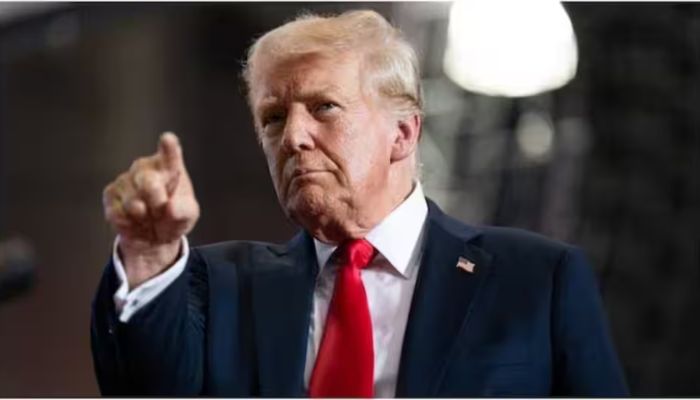
In what could be called the USA’s yet another move to damage its close ties with India, President Donald Trump announced that India would pay a 25% tariff and a ‘penalty’ for buying Russian oil. Trump also expressed his frustration over India being a top buyer of Russian military equipment and energy.
Taking to Truth Social, Donald Trump posted, “Remember, while India is our friend, we have, over the years, done relatively little business with them because their Tariffs are far too high, among the highest in the World, and they have the most strenuous and obnoxious non-monetary Trade Barriers of any Country. Also, they have always bought a vast majority of their military equipment from Russia, and are Russia’s largest buyer of ENERGY, along with China, at a time when everyone wants Russia to STOP THE KILLING IN UKRAINE – ALL THINGS NOT GOOD! INDIA WILL THEREFORE BE PAYING A TARIFF OF 25%, PLUS A PENALTY FOR THE ABOVE, STARTING ON AUGUST 1st. THANK YOU FOR YOUR ATTENTION TO THIS MATTER. MAGA!”
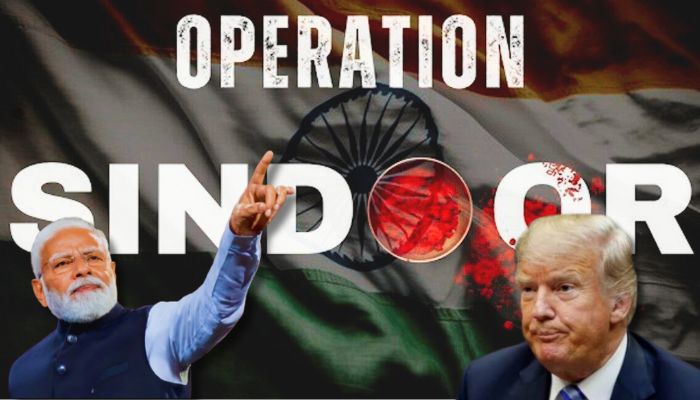
Trump’s move against India comes at a time when the two countries are negotiating a major trade deal. A deal that Trump has repeatedly claimed to have been the reason why India halted Operation Sindoor in May in the aftermath of Pakistan-backed jihadist terror attack in Pahalgam in April this year.
Ironically, Trump never forgets to call India and Prime Minister Narendra Modi his and the USA’s ‘friend’ every time he hyphenates India, the world’s fourth-largest economy and the failed state of Pakistan, which literally breathes on an IMF loan ventilator. Trump makes tall claims of using trade deals as leverage to stop the India-Pakistan conflict; however, the loudmouth US President has failed to strike a deal with India till now.
It must be recalled that after four days of India’s total dominance against Pakistan, with destruction of numerous Pakistan jihadist terror camps, elimination of several terrorists, and significant damage to 11 Pakistani airbases, Pakistan requested India for a ceasefire through military channels. While India has maintained that this was a bilateral decision taken after Pakistan’s DGMO requested his Indian counterpart to stop the conflict, with no third-party mediation, Trump has persistently, almost 30 times, had boasted ‘I stopped the India-Pakistan war with trade’.
President Trump publicly made these claims at the NATO meeting, a US-Saudi investment forum, press interactions and multiple times on Truth Social. Besides, Trump recycles his ‘I stopped the India-Pakistan war’ rhetoric every time a military conflict arises between two countries in any part of the world. And yet, the wannabe Nobel Peace Prize winner has not been able to turn his trade deal prospect into a reality; rather, his continuous anti-India rhetoric inadvertently confirms that the US President has been lying all this while about stopping the war, let alone leveraging the prospect of a trade deal with India. Clearly, either Donald Trump is outright delusional or his staff is feeding him lies.
As of 31st July 2025, no trade deal has been finalised between India and the US. Forget the trade deal, the US President is trying to ‘punish’ India for buying Russian oil, energy and weaponry, while Russia is engaged in a war with NATO and US-backed Ukraine by slapping tariffs and penalties.
The timing of the announcement shows that while the US wants this move to be seen as its stern action against India for its massive trade engagement with Russia, it is actually a testament to India’s refusal to surrender to Washington’s coercive tactics. Negotiations were ongoing, and a waiver could have been on the cards had India agreed to allow unrestricted access to U.S. agricultural products and dilute its protective framework for domestic industries. India, however, upholding its interests, did not.
It seems like Trump, being a businessman himself, thinks that the United States is a massive firm and he is the CEO of the company. However delusional the idea may be, Trump’s rhetoric against the BRICS, status of dollar, and supposed activities of several countries against ‘US interests’, suggests that he expects the whole world function as vassals or employees of the US. He may think everyone works for American interests, bolster the US economy and in return, he would placate the other countries by handing them small rewards just as an owner throws bones to his dog. However, Trump needs to wake up and smell the coffee. This is a multi-polar world where sovereign nations make decisions based on the interests of their country and people, not as per the whims of a bully.
Recently, the External Affairs Minister S Jaishankar informed the Parliament that Prime Minister Narendra Modi didn’t have a conversation with US President Donald Trump between April 22 (the Pahalgam attack) and June 17 (the ceasefire), and at no stage was there any link between trade and the Indo-Pak conflict. Even PM Modi had told the Lok Sabha that no foreign leader had asked India to halt Operation Sindoor. India paused the military action against Pakistan because Pakistani military begged India.
Not to forget, the Indian government has stated that Operation Sindoor is still ongoing, meanwhile, India has also carried out Operation Mahadev to eliminate the perpetrators of Pahalgam, two of whom were confirmed Pakistani Islamic terrorists. Thus, no trade, no talks and no unhinged rants by any foreign leader can deter India from its fight against terrorism, particularly, the Pakistan-sponsored cross-border Jihad.
Probably, India’s loud and clear statement that no foreign leader, not even the self-declared ‘ceasefire specialist’, mediated ceasefire between India and Pakistan, has irked Trump, reflecting in his sudden tariff and ‘penalty’ imposition against his ‘friend’ India. Trump’s rhetoric and actions against a key ally like India remind one of the famous quote often attributed to Henry Kissinger: “It may be dangerous to be America’s enemy, but to be America’s friend is fatal.”
The fact that India has repeatedly denied the role of any foreign leader and any trade deal offer for halting Operation Sindoor, and Trump’s intransigence about having brokered Indo-Pak ceasefire, suggests that either Trump has grown delusional in his desperation for a Nobel Peace prize or is being fed lies by his staff. Whatever the case may be, the tariff tirade may be a momentary blow to India, but it actually harms the US more in the long term.
Trump’s communication style is characterised by hyperbole, self-aggrandisement as if the world owes him a debt, and a knack for claiming credit for events he had little to do with. While Trump boasts of being a decisive peacemaker in the Indo-Pak conflict and leveraging the prospect of a trade deal, if trade alone could stop wars, his trade offers would have ended the Russia-Ukraine conflict. Despite Trump’s earlier claims of ending the Russia-Ukraine conflict within hours, the two countries continue to fight, rendering Trump’s ‘trade stops wars’ assertion as real as his poll promise of releasing the Epstein Files.
President Trump’s delusion and hypocrisy stretch beyond measures when he makes the audacious attempt at ‘punishing’ India with tariffs and penalties for trade ties with Russia, while the US itself continues to do trade with the country.
While the US may have cut its Russian crude oil imports from Russia due to sanctions, it continues to trade with Russia in various sectors, with top US imports of Russian goods being fertilisers, non-ferrous metals like palladium and aluminium, totaling $876.5 million in imports in 2024 and inorganic chemicals contributing over $683 million to 2024 import totals. Reports say that in 2024 alone, the United States imported $3.27 billion worth of goods from Russia.
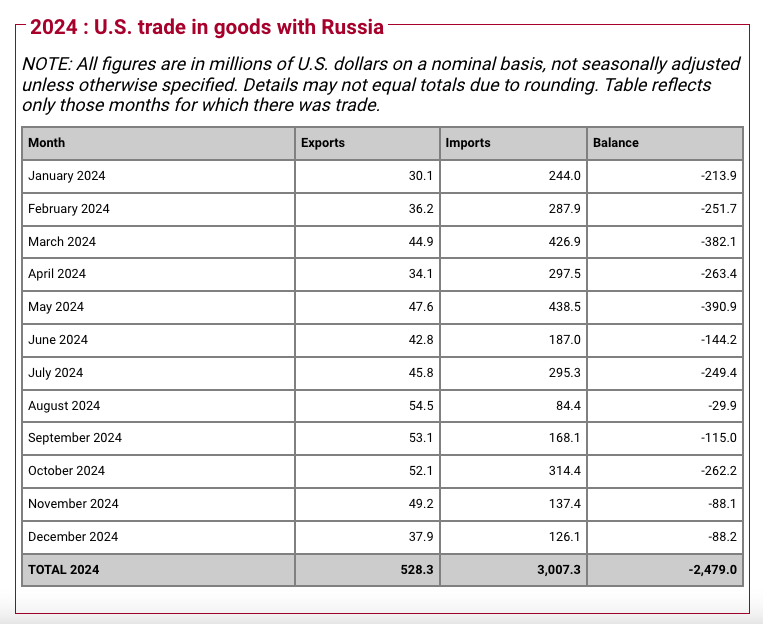
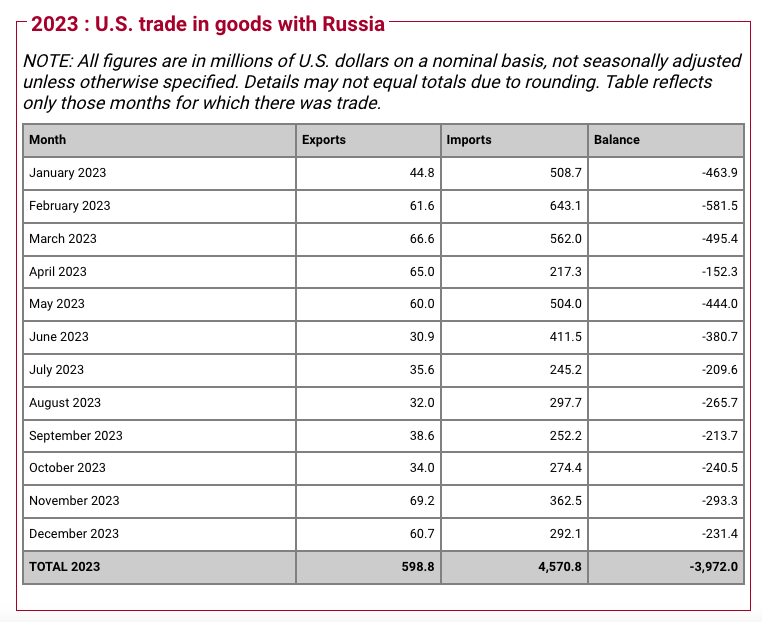
The US government’s own data indicates that U.S. exports in goods to Russia fell to $528.3 million in 2024, while imports were worth an amount phenomenally higher. In the year 2023, the U.S. exports to Russia stood at around $598.8 million. Despite Russia enjoying a massive surplus and being involved in war with Ukraine, there was never really a hiatus in the Russia-US trade.
Amusing, isn’t it? President Trump wants to ‘punish’ other countries for having trade ties with Russia, while his own country continues to trade with Russia, even as President Putin does not heed Trump’s ‘end the war with Ukraine and let’s do trade’ offers. If the US itself prioritises its domestic requirements and interests and imports Russian goods, why must India not do the same? Russia has been India’s traditional, loyal and reliable defence and trade partner. It’s not that India does not have any defence ties with America; however, if Trump expects India to choose subservience over its strategic autonomy and sovereignty, then that’s not going to happen.
Even if we assume that in the coming months, the US and India will end up signing a trade deal, which would be possible only when India’s interests are not undermined, the value of Trump’s 25% tariff and ‘penalty’ would be reduced to a joke. For now, these tariffs, a lack of trade deal and his rhetoric calling India, the world’s third-largest economy, a “dead economy” suggest that India has shattered Trump’s delusion of not only having brokered peace between India and Pakistan, but also that trade alone can end wars.