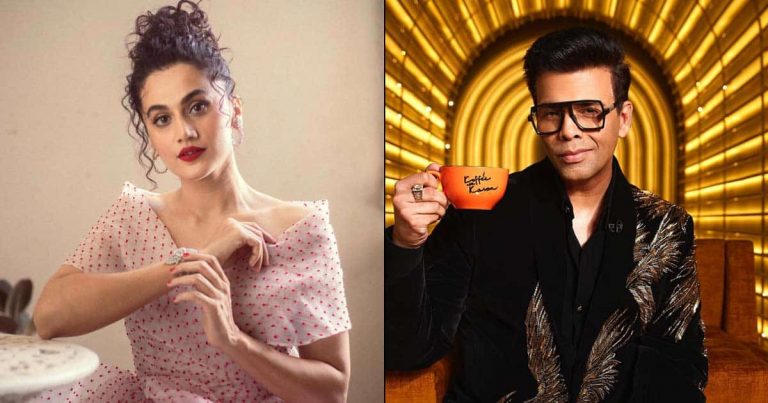
Recently, actress Taapsee Pannu revealed why she has not yet been invited to the hyped talk show “Koffee With Karan,” which is hosted by moviemaker Karan Johar.
Answering a question from the media persons as to why she never gets invited on Karan’s chat show Taapsee Pannu said that her sex life is not interesting enough to be invited to the show.
Notably, the ‘Thappad’ actress was promoting her upcoming thriller film ‘Dobaaraa’ with the director of the film Anurag Kashyap. Karan Johar was in the adjacent room promoting his chat show. Taking note of that, the media probed Taapsee about the reason why she hasn’t been invited to Karan’s show yet.
In response to the question, the actor said, “My sex life is not interesting enough to be invited on Koffee with Karan.
Karan Johar, who has been hosting the controversial chat show ‘Koffee with Karan’ since 2004, has run into controversies several times. Johar has been at the centre of the nepotism controversy since it first began.
In addition, Karan Johar has received a lot of flak for asking extremely intrusive questions about celebrity guests’ sex lives on his show ‘Koffee With Karan’. Recently, the director-producer was trolled after he quizzed the South Indian superstar Vijay Deverakanda, who featured with Ananya Panday in the second last episode of ‘Koffee with Karan 7’, about when he last had sex and whether he would be interested in a threesome.
Prior to this, Karan Johar was slammed for posing similar questions to other celebrity guests like Aamir Khan and Jhanvi Kapoor who had appeared on his show.
Karan Johar, Hardik Pandya, KL Rahul found ‘innocent’ by court in 2018 case over remarks against women on Koffee With Karan show
It may be recalled that recently, the Jodhpur Court on Tuesday granted relief to cricketers Hardik Pandya and KL Rahul and film director Karan Johar, in a case that was registered against the trio, for some offensive remarks made by the cricketer duo on the talk show “Koffee with Karan,” hosted by Karan Johar in 2018.
Back in the year 2018, an episode featuring KL Rahul and Hardik Pandya aired on the sixth season of the talk show ‘Koffee with Karan’ hosted by Karan Johar where the two cricketers freely talked about hooking up with girls, being open with their families about sex, and hitting on girls in nightclubs, among other things.
Immediately after the episode aired, online outrage began against the duo’s comments with Pandya, in particular, getting severe criticism. Netizens criticised the duo as they considered the remarks made against women during the show as highly sexiest, and misogynist. Karan Johar was also castigated for encouraging such misogyny on his show.
On August 8, the Supreme Court of India directed states’ police not to take any coercive action against Times Now anchor Navika Kumar in any FIR or complaint filed or to be filed in future against her in the Nupur Sharma controversy. Notably, multiple FIRs were filed against Kumar for the TV debate that was telecasted on May 26 on Times Now.
BREAKING: #SupremeCourt protects tv anchor @navikakumar. Directs that no coercive steps to be taken against her in FIR/Complaints already filed and FIRs/Complaints to be filed in the future pertaining to the May 26 telecast which resulted in #NupurSharmaControversy
A two-judge bench comprising Justice Krishna Murari and Justice Hima Kohli heard the plea submitted by Senior Advocate Mukul Rohatgi on behalf of Times Network Group Editor Navika Kumar to quash the FIRs registered against her in different states. During the hearing, advocate Rohatgi pointed out that Navika did not say anything against Prophet Mohammad, and she was just hosting the debate.
Rohatgi: the lady who said something is facing flak from several FIRs. Now i have not said anything but now i face five or six FIRs in Kolkata alone. In TT Antony case says if there is one offence and several FIRs then only the first FIR has to be probed. here first FIR is delhi
He further added multiple FIRs were filed against Nupur Sharma, and she is facing flak over the controversial remarks she made against Prophet Mohammed during the debate after being provoked by Taslim Ahmed Rehmani. The debate was about an ongoing case on the disputed structure at Gyanvapi in Varanasi.
When the court asked why West Bengal was interested in the case, Senior Advocate Menaka Guruswamy appearing for the state, informed the court that the first FIR against Kumar was registered in Kolkata.
Rohatgi: what is the extra interest of state of west bengal here
Supreme Court issued notice to the state of West Bengal and others in the matter and sought a reply in two weeks. The court said till further orders, no coercive action must be taken against Kumar in previous or any new complaints or FIRs pertaining to the matter.
Nupur Sharma controversy
On May 26, former BJP spokesperson Nupur Sharma made comments on Prophet Mohammed during a debate on Times Now. Sharma was provoked by another panellist Rehmani who allegedly kept abusing Hindu Gods. Following the debate, Alt News’ co-founder Mohammed Zubair cleverly shared on social media what Nupur said but did not reveal what led to the remarks passed by her.
He systematically propagated against Nupur, and it led to international condemnation of the central government. BJP suspended Sharma following the uproar on June 5. Sharma issued an apology for the remarks, but by then, she had already started getting death and rape threats. She was provided security and currently staying at an undisclosed location.
The matter has taken several turns and twists since the video was shared by Zubair on Twitter. Those who supported Nupur have received death threats. Tailor Kanhaiya Lal from Udaipur, businessman Umesh Kohle from Amravati and many others were brutally killed by Islamists for supporting Nupur, while several others were beaten up. There have also been largescale riots in various parts of the country following the dog-whistling by Mohammad Zubair.
After blaming Nupur Sharma for what had happened in the country after the debate, the Supreme Court initially did not provide any relief to her but later ordered no coercive action against her. The relief was provided to her just a day before Muhammed Zubair was given bail over multiple FIRs registered against him for hurting religious sentiments.
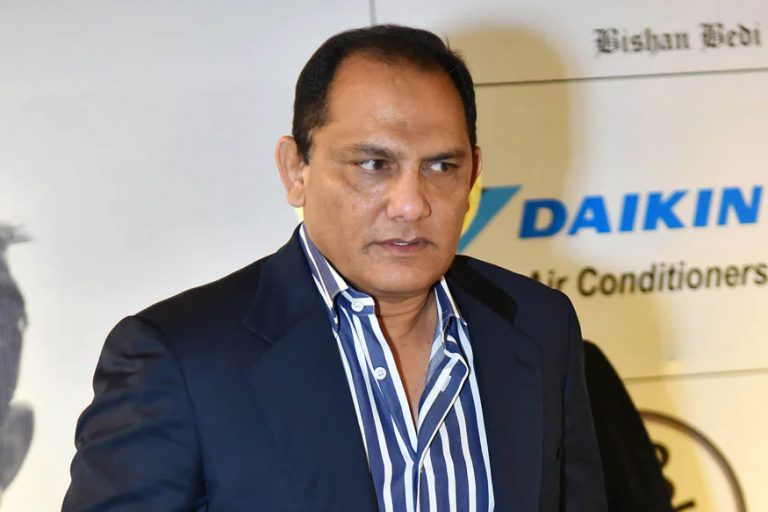
Former Indian captain and Congress politician Mohammed Azharuddin was at the center of a social media storm earlier today after his remarks on the Indian women’s team’s batting performance. India lost by 9 runs to Australia in the final of the Commonwealth Games in Birmingham and ended with a silver medal in the cricket event of the games.
Chasing 162 for the gold medal, India fell just short despite an outstanding half-century by captain Harmanpreet Kaur. After the match, Azharuddin took to Twitter and said, “Rubbish batting by the Indian team. No common sense. Gave away a winning game on a platter.”
Rubbish batting by the Indian team. No common sense. Gave away a winning game on a platter. #INDvsAUS#WomensCricket#CWG22
Despite losing their openers cheaply, India battled back into the game with a 96 runs partnership for the 3rd wicket between skipper Harmanpreet and Jemimah Rodriguez. However, once Jemimah was bowled by Schutt, Australia fought back well to close out the game with regular wickets. Azhar was clearly irked by this as he took his time out to criticise the batting performance.
However, these remarks by Azharuddin didn’t go down well with the social media users as they reminded Azhar of his own record in knockout games against Australia.
One Twitter user asked Azhar in response, “Excuse me sir, but how many world cup finals, okay semifinals, okay ANY knockout games did your team win against the Aussies in your day?”
Excuse me sir, but how many world cup finals, okay semifinals, okay ANY knockout games did your team win against the Aussies in your day? And for your information, this team has WON a silver medal at the CWG! Show them some freaking respect, if you’re capable of that, of course!
Another Twitter user reminded Azhar of the match-fixing allegations against him and said, “Don’t make people remind you of your not so cricketing acts on cricket field, Azhar.”
Don’t make people remind you of your not so cricketing acts on cricket field, Azhar.
The women cricketers played like bijli on the ground. We can respect defeat in clean matches. pic.twitter.com/2u7xVQwr0Z
Match-fixing allegations against Mohammed Azharuddin
Azharuddin was accused of match-fixing in the 2000 match-fixing scandal that saw the fall of Hansie Cronje. CBI report said that Cronje met bookies through Azharuddin and Azhar was subsequently banned from cricket by the BCCI and the ICC.
In 2012, when Azhar was 49 years old, the ban was revoked by the Andhra Pradesh High Court citing lack of evidence. Azhar is heading the Hyderabad Cricket Association since 2019.
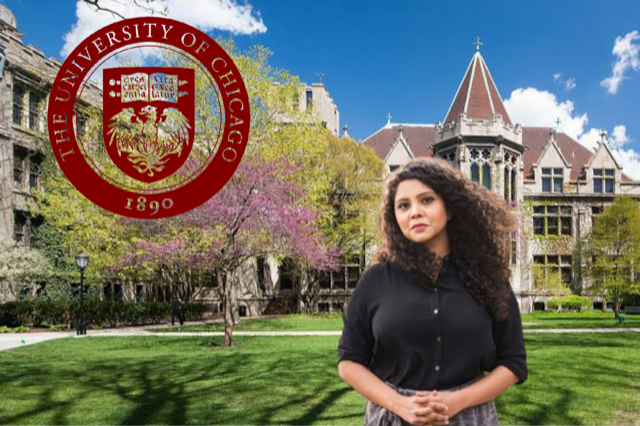
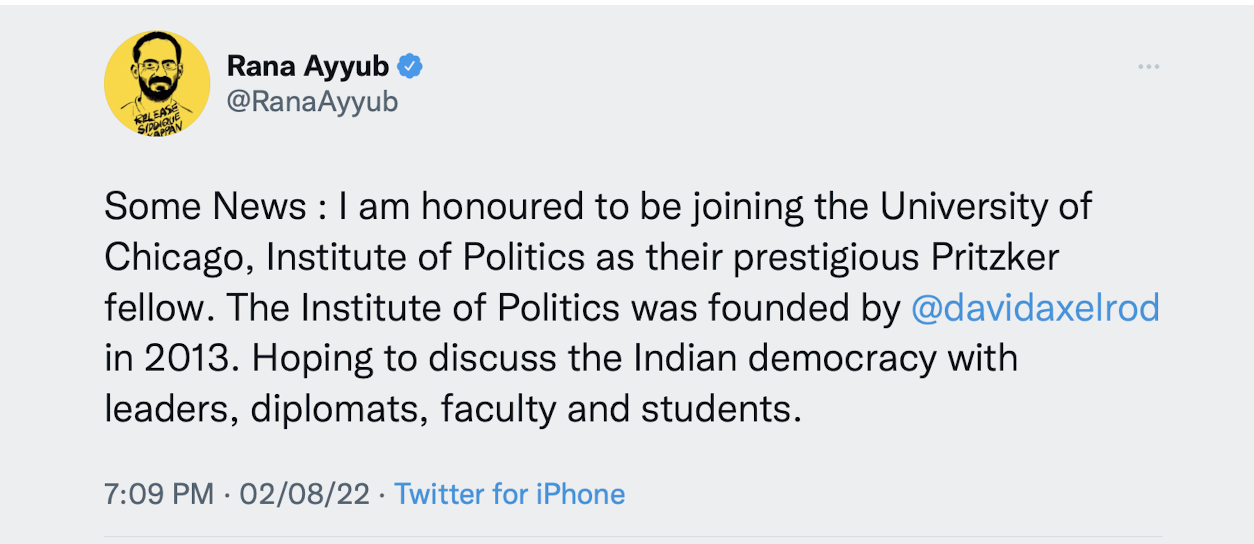
Rana Ayyub, a donation fraud accused and long known for her tendency to whitewash Islamist crimes, last week took to Twitter to announce her fellowship with the University of Chicago. In a tweet, she made public her association with the University, adding that she would be discussing Indian democracy with leaders, diplomats, faculty and students.
“Some News: I am honoured to be joining the University of Chicago, Institute of Politics as their prestigious Pritzker fellow. The Institute of Politics was founded by @davidaxelrod in 2013. Hoping to discuss the Indian democracy with leaders, diplomats, faculty and students,” Ayyub tweeted on 2 August 2022.
Source: Twitter
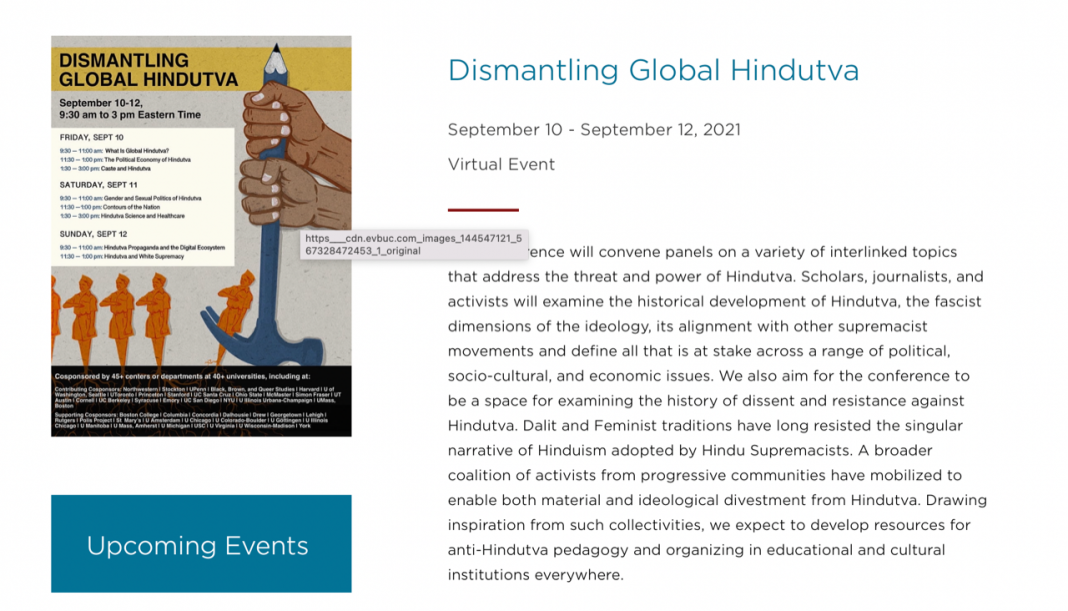
The University of Chicago was one of the institutes that participated in ‘Dismantling the Global Hindutva’ conference
However, this association should not come as a surprise, given the Hinduphobic inclinations of the University of Chicago, one of the participants in the ‘Dismantling the Global Hindutva’ conference, Nazi-Esque propaganda blitzkrieg organised by the Global Left last year that sought to whitewash the genocide of Hindus and paint them as aggressors instead.
Source: The University of Chicago
Ms Ayyub’s convictions and preconceived notions about Hindutva and callous disregard for the Hindu lives firmly align with that of the University of Chicago, as manifested in the latter’s participation in a contentious conference where the so-called Genocide scholars said Hinduphobia or the negative sentiments or actions against practitioners of Hinduism is not an actual phenomenon but just a distraction aimed at covering up the perceived Hindutva aggression.
A 3-day conference cosponsored by 60+ Departments or Centers from 45+ Universities most from the USA took place on the 10th, 11th and 12th of September last year. The event titled “Dismantling Global Hindutva” saw participation from several Hindumisic elements like Audrey Truschke, Naxal sympathiser Anand Patwardhan and Nandini Sunder, Quint journalist Neha Dixit and many others, underscoring the nefarious objectives of the conference.
How Rana Ayyub has been shielding and supporting Islamists responsible for the killings of Hindus
While the Hindumisic elements globally have tried to equate Hindus to Nazis, the Nazi-Esque propaganda was yet another attempt to ossify denial of the ongoing genocide of Hindus at the hands of Islamists and instead blame the victims for causing ‘provocation’, something which was evident during the Nupur Sharma controversy recently, when the Left-liberal cabal went into overdrive to pin the blame of the chaos and disorder on the feet of the former BJP spokesperson and painting Alt News co-founder Mohammed Zubair, who dog-whistled Islamists against her as a victim.
Zubair’s dog-whistling evoked country-wide protests against Nupur Sharma, with Islamists running amok, indulging in rioting, and shouting ‘sar tan se juda slogans’ against her. At least three Hindus, including Kanhaiya Lal and Umesh Kolhe, fell victim to the orgy of violence unleashed by Zubair as they went about killing and using violence against Hindus who voiced support for Nupur Sharma.
Rana Ayyub did not condemn the killing of Kanhaiya Lal or Umesh Kolhe, for that would have meant denouncing the Islamist ideology that underpinned their brutal murders committed in the name of blasphemy. Notably, Rana Ayyub had also refrained from condemning the horrifying murder of Hindu Samaj leader Kamlesh Tiwari, killed by Islamists in broad daylight at his Lucknow residence in 2019, for his comments on Prophet Muhammad half a decade ago. Apparently, Rana Ayyub has been a firm supporter of Mohammed Zubair, as evident from her numerous tweets supporting the controversial “fact-checker” who touts himself as a champion of exposing “hate speech” while himself posting disparaging and insulting social media posts on Hindu Gods and Hindu Goddesses.
In Rana Ayyub, the University of Chicago has found a perfect partner in peddling anti-Hindu propaganda
Pertinently, Ms Ayyub has been a staunch opponent of Hindutva, often leaning on unfounded claims and fake news to reinforce her propaganda against Hindus and organisations who dare stand up for them. In 2015, Ayyub, in her unmatched zeal to slander RSS and Hindutva organisations, filed a story blaming RSS activists and ‘Hindutva terrorists’ for the Ranaghat nun rape case.
In 2015, eight men plundered a Catholic church in Ranaghat, West Bengal, and gang-raped a nun. Ecstatic at the prospect that she could lay the blame for the terrible crime on her favourite punching bag, the RSS and “Hindu terrorists,” Rana Ayyub wrote a comprehensive account of the occurrence for DailyO, alleging how RSS activists had sexually abused a Christian nun in Bengal.
As it turned out, the accused were Bangladeshis and not RSS activists, as alleged by Ms Ayyub. However, the ‘journalist’ did not show the courtesy of admitting to her folly and continued spreading Hinduphobic propaganda unabated. Since then, Ms Ayyub’s efforts at demonising the Hindu activists and supporters have only increased.
There were several other instances when Rana Ayyub had been caught red-handed disseminating lies and falsehoods. Most notably, the Supreme Court of India had memorably brought down the edifice of lies built by Rana Ayyub after it made scathing observations on her book ‘Gujarat Files’, which she claimed was an ‘anatomy of a cover-up’ of Gujarat riots.
The court had trashed her book, saying it was based on conjectures, surmises, and suppositions, only proving that Ayyub’s relationship with the truth is complicated, to say the least, while her bond with radical Islamism seems all-pervasive.
One of the innuendoes in Ayyub’s book was that then Gujarat CM Narendra Modi had planned ex-Gujarat Home Minister Haren Pandya’s murder who was shot dead on March 26, 2003, in Ahmedabad during a morning walk.
A trial court found 12 Muslim men guilty of Haren Pandya’s murder, including the main accused Asghar Ali. According to the CBI investigation, the murder was carried out on the orders of a Muslim cleric Mufti Sufiyan to avenge the Gujarat riots.
Therefore, in Rana Ayyub, the University of Chicago found a worthy collaborator who would continue with its efforts of downplaying atrocities committed against Hindus and palm off the smokescreen of the “threat posed by Hindutva” to shield rabid Islamists and their violent crimes against non-Muslims.
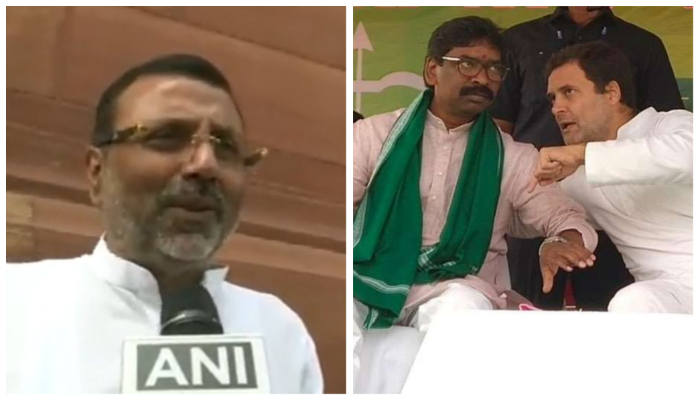
Nishikant Dubey, a member of the BJP, has accused the Hemant Soren-led JMM-Congress coalition in Jharkhand of abusing the state’s educational system to pursue appeasement politics. Speaking to the media, the BJP leader raised concerns over the state moving towards ‘Islamisation’ under the Hemant Soren government.
Dubey said that the JMM-Congress administration in the state of Jharkhand’s primary goal is to win votes and in its desperation to do so it will not even hesitate to solicit the help of Pakistan, China, or Bangladesh.
#WATCH | Jharkhand being changed to Islamic state… This is a conspiracy, NIA should be called to investigate. Congress & JMM in it together… They’ll take anyone’s help to win, be it Pakistan, China: BJP MP Nishikant Dubey on many Jharkhand schools having Fridays as week off pic.twitter.com/uaLDiqd1gT
Dubey was concerned that Hemant Soren’s leadership was ignoring the “very serious” problems associated with hundreds of state-run schools in Jharkhand switching to Urdu schools and demanded that the National Investigation Agency conduct an investigation into it.
The BJP leader further alleged that the state administration has inadvertently consented to hundreds of government schools in Jharkhand moving towards Islamification by issuing an order, in the wake of the recent uproar, to remove the word ‘Urdu’ from the schools that have not been notified as Urdu Schools.
He informed the media that on August 2, BJP MLA Anant Ojha had raised the issue of the Islamisation of education in Jharkhand in the Parliament. He had alleged that “Urdu was added at the local level” in 407 schools across the state, while the weekly holiday was changed from Sunday to Friday in 509 schools. The Jharkhand government had agreed to the same and a day prior on August 1, issued an order to remove the word ‘Urdu’ from the schools that have not been notified as Urdu Schools.
लोकसभा में कल मेरे द्वारा झारखंड के इस्लामीकरण,सरकारी स्कूलों में उर्दू विद्यालय जोड़ना व रविवार की जगह शुक्रवार की छुट्टी का यह आधा अधूरा सच है जो झारखंड सरकार ने स्वीकार किया है @NIA_India@PIBHomeAffairs को इसके विदेशी आका व झारखंड में रहने वाले देशद्रोहियों की जॉंच करनी चाहिए https://t.co/Js5lNHjmMD
Notably, the BJP MP from Jharkhand’s Godda Lok Sabha constituency had also raised the same issue during Zero Hour in Lok Sabha on Friday. He had asked the Union Government to not release funds to these schools under the Centre’s Sarva Shiksha Abhiyan.
“All of a sudden, at least 1,800 schools included the word Urdu in their names across Jharkhand…. Now a report of a committee set up by the Jharkhand government has come (which stated) that Sunday is not a weekly holiday in these schools,” the BJP MP said.
Calling it “a very serious matter”, Dubey alleged that the “country is moving towards Islamisation and Jharkhand has shown the way.” “It is my humble request to the Centre that an NIA probe is ordered and funding of the schools which have included Urdu in their names and changed the weekly holiday to Friday be withheld,” he said.
He further said that a message should be sent out that “this country runs under one law and that such things will not be tolerated at any cost”.
Islamification of state-run schools in Jharkhand
It may be recalled that OpIndia had reported in detail how the state-run schools in places like Jamtara, Lohardaga, Garhwa and Dumka, the hometown of Chief Minister Hemant Soren, have made several modifications in state-run schools in response to the whims of the local Muslim population in the areas.
In July this year, a class 4 student was brutally thrashed by Mohammad Abul Kalam, the headmaster of a government school in Giridih, Jharkhand, for writing ‘Jai Shri Ram’ on the classroom’s blackboard.
Recently, it was reported how Sharia and Islamic practices were being imposed on the students of a state-run school in Jharkhand’s Garhwa district, with children forbidden from praying with their hands folded. Then reports emerged on how state-run schools in areas like Jamtara and Dumka, which is the hometown of Chief Minister Hemant Soren, were being converted into Urdu schools, and the weekly offs changed from Sunday to Friday (Jumma).
In April, a ruckus ensued in the Government Jagannathpur Polytechnic college in Jharkhand after students chanted ‘Jai Shri Ram’ and Bharat Mata Ki Jai slogans while celebrating ‘Nav Samvatsar’, the first day of Hindu New Year.
State Govt orders removal of the word ‘Urdu’ from the schools that have not been notified as Urdu Schools
Notably, owing to the uproar stirred by media reports about the Islamification of state-run schools, the Jharkhand authorities on August 1, issued an order to remove the word ‘Urdu’ from the schools that have not been notified as Urdu Schools. The Directorate of Primary Education under the Department of School Education and Literacy issued directives that stated that the department received information that some schools have added the word ‘Urdu’ and started observing weekly offs on Friday instead of Sunday. It further noted that those schools also changed the schedule of mid-day meals accordingly and changed the pre-prayer methods.
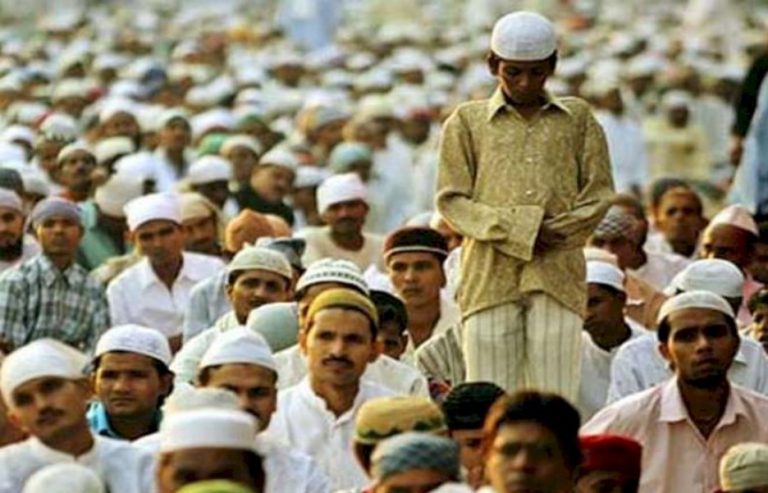
In what could potentially expose a hidden wound within the Muslim community, BJP has gone hammer and tongs demanding the redressal of historical oppression of the Pasmanda Muslims by the Ashraf Muslims. The BJP OBC Morcha, at the Pasmanda Muslim Sneh Milan Evam Samman Samaroh, demanded a 50% reservation for the Pasmanda Muslim community in Muslim institutions like Aligarh Muslim University, Jamia Millia Islamia etc. This is a continuation of the outreach program by BJP, launched to expand its base among Pasmanda Muslims.
Speaking at the Pasmanda Muslim Sneh Milan Evam Samman Samaroh in New Delhi, Laxman said, “I draw your attention to the centuries-old injustice and exploitation of the Pasmanda Muslims within the community. The Pasmandas are socially, economically and politically weak. Their condition has not improved even after 75 years of Independence. The issue of Pasmandas has been drowned under the noise of Hindu-Muslim drums. The Pasmanda Muslims should have the benefit of 50% reservation in AMU, JMI and JH.”
BJP has launched a program to reach out to Pasmanda Muslims, who are “lower caste” Muslims, historically oppressed by the “upper caste” Ashraf Muslims. Earlier in July, Prime Minister Narendra Modi had given a clarion call to unite Pasmandas. In the National Executive meeting that concluded in Hyderabad earlier in July, PM Modi had asked BJP workers to reach out to the downtrodden and oppressed Pasmanda Muslim community.
Earlier, the former Chairman of the National Minorities Commission, Atif Rasheed, who is the chief of the BJP Minority Morcha, had written to the Vice-Chancellors of AMU, JMI and JH, requesting a reservation for Pasmanda Muslims in the universities. The new comment by the BJP OBC Morcha comes in the light of these Muslim Universities not responding to these letters so far. In a letter dated June 15, Rasheed wrote, “We wrote to the three V-Cs of the minority institutions asking them to reserve 50% within the Muslim quota for Pasmanda Muslims. It should not upset anybody or change equations within the universities as we are only asking for a quota within the quota already in practice.”
The letter by Atif Rasheed was not just limited to central universities. He had written to several political leaders and other institutions that are Muslim-controlled. “We wrote to every Minister of the Central government and also to around 250 MPs. The OBC Morcha chief K. Laxman responded and supported us. He has raised the question in Parliament”, he had said. Reportedly, letters were written to 5,200 Muslim educational institutes with minority status across the country to provide 50% reservation for Pasmanda Muslims.
The churn in the Muslim society with Islamists and Ashrafs up in arms against BJP outreach to Pasmanda Muslims
The Muslim community with fissures like Shia-Sunni also existing, is up in arms against the call by BJP to end discrimination against Pasmanda Muslims. After the call by PM Modi, while some Muslim organisations came forward to publicly postulate, there are some who have been silently aggrieved. As reported by The Hindu, a senior leader of Jamaat-e-Islami said, on the condition of anonymity, that BJP is reaching out to Pasmanda Muslims to create a divide in the Islamic community, essentially, refusing the acknowledge the caste problem inherent in Islam and the ill-treatment to Pasmanda Muslims by the Ashrafs.
“There is nothing called caste in Islam. The government cannot be serious about uplifting poor Muslims. A majority of lynching victims have been men from the supposedly Pasmanda community but nobody has been given justice. The demand for reservation for Pasmanda Muslims is to create a Mandal-like situation for the community”, said the Jamaat-e-Islami source to The Hindu.
Atif Rasheed has, however, rejected the claims that this move could be a ploy to divide the Muslim community. He has said that the Pasmanda Muslims constitute 80% of the Muslim community in India, however, the 20% Ashraf community take most of the benefits that accrue to the community. “Whenever a Pasmanda talks of his rights, the same question of division of the community is put up in front of him. We are not dividing followers of Islam. Rather we want to get rid of the caste system that has seeped into the Muslim community in India”, he said.
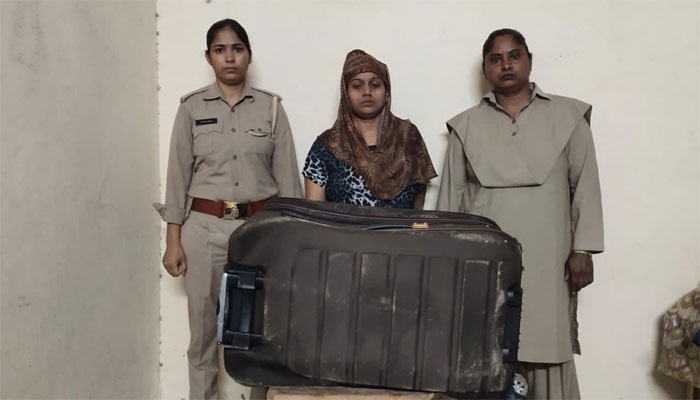
Ghaziabad Police has arrested a woman identified as Preeti Sharma for allegedly killing her live-in partner identified as a barber Firoz. Police said Sharma killed Firoz by slitting his throat with a razor. She was arrested by the Police while attempting to dispose of the body that she had stuffed in a trolley bag. She was planning to leave the dead body-stuffed suitcase on a train.
Ghaziabad Update : फिरोज की हत्या करने वाली प्रेमिका प्रीति ने लाश को सूटकेस में डाला। वह गाजियाबाद रेलवे स्टेशन पर किसी भी ट्रेन में इस सूटकेस को रखने जा रही थी, तभी पुलिस ने पकड लिया। pic.twitter.com/Gjj3NhtZOz
— Sachin Gupta | सचिन गुप्ता (@sachingupta787) August 8, 2022
Police said in a statement that Sharma was previously married to one Deepak Yadav but got separated around four years back. After that, she started living in a live-in relationship with Firoz in her flat located in Tulsi Niketan. Sharma was pressurising Firoz to get married, but he was reportedly not ready. The couple had frequent arguments over the issue.
On August 7, the argument between the couple went out of hand, and as it escalated, Preeti attacked Firoz with a razor and slit his throat. Preeti hid the dead body in the flat for the night. On Sunday morning, she went to Seelampur in Delhi to buy a big trolley bag. She tied the dead body of Firoz with a thin plastic rope and stuffed it in the trolley bag.
Police added that around 2 PM on Sunday, she took the bag towards Ghaziabad Railway Station with an alleged plan to dispose of the bag on a train. However, the Police patrolling close to Tulsi Niketan spotted her and questioned her over suspicion. When they opened the bag, there was a dead body inside. Bhuvnesh Kumar, Tola Mor Police Station in-charge, said the woman was arrested, and further investigation is underway.
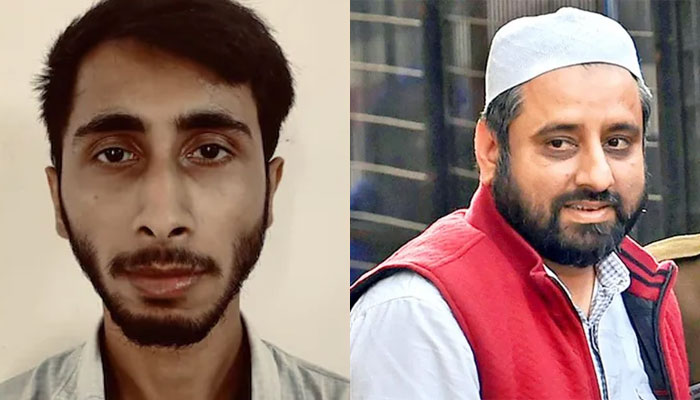
On August 7, Aam Aadmi Party (AAP) MLA Amanatullah Khan came to the rescue of terror and accused Mohsin Ahmed, a Jamia Millia Islamia student who was arrested by National Investigation Agency (NIA) for links to the terrorist outfit ISIS.
In a tweet, Khan declared him innocent and said, “The arrest of Jamia student Mohsin by the NIA is completely wrong and unconstitutional. BJP and RSS have found a new way to malign and harass Muslims in the name of ISIS, Mohsin is innocent and has no relation with any anti-social element. Mohsin should be released soon.”
AAP MLA Amanatullah Khan came out in support of terror-accused Mohsin Ahmed (Source: Twitter)
The arrest of Mohsin Ahmed
NIA arrested Jamia student Mohsin Ahmed from Johabai Extension in Batla House, Delhi, on Sunday, August 7. The investigation agency had found during the investigation that he was collecting funds for ISIS. He was also an active member of the terrorist organization Islamic State of Iraq and Syria, also known as the Islamic State of Iraq and the Levant or simply the Islamic State.
Mohsin is originally from Patna, Bihar. He is a first-year engineering student. Ahmed was arrested by the central agency for allegedly running on-ground and online campaigns for ISIS. He was collecting funds not only from India but from foreign entities as well. Mohsin was found to be using cryptocurrencies for his activities. Further investigation into the matter is underway.
BJP reacted to Khan’s support for Mohsin
On Monday, August 8, Bharatiya Janata Party leader Kapil Mishra reacted to Khan’s support for Mohsin. He said, “AAP had declared Tahir Hussain innocent, and now they are saying that ISIS terrorist is innocent. Why is Kejriwal’s gang saving terrorists who came to Delhi to blast bombs and killed the people of Delhi? Amanatullah Khan is saying all this at the behest of Kejriwal.”
AAP कल तक ताहिर हुसैन को बेकसूर बता रही थी , आज ISIS के आतंकवादी को बेकसूर बता रही हैं
दिल्ली में बम ब्लास्ट करने, दिल्ली के लोगों को मारने के लिए आये आतंकवादियों को केजरीवाल का गैंग क्यों बचा रहा हैं ?
अमानतुल्ला खान केजरीवाल के इशारे पर ये सब बोल रहा हैं
From Tahir Hussain to Satyendra Jain, everyone is ‘innocent’ of AAP
Aam Aadmi Party has a history of declaring people innocent without letting agencies complete their investigations. Following the Delhi Riots of 2020, AAP leaders and followers came to the rescue of riot-accused Tahir Hussain and declared him innocent based on doctored videos published by Hussain himself. Currently, he is lodged in jail, facing serious charges against him.
Recently, after ED arrested AAP leader Satyendra Jain, AAP Chief came on camera and declared him innocent. Kejriwal claimed he had checked “all the documents” and the case against Jain was a fake. Whenever anyone who is linked to AAP gets in trouble with the investigation agencies, AAP leaders cry foul.
The Yogi Adityanath government in Uttar Pradesh Monday initiated a bulldozer action against Shrikant Tyagi, who was recently booked for verbally insulting and assaulting a woman in Noida. Two days earlier, the Uttar Pradesh police had reached his residence and seized his cars, after the video went viral wherein Tyagi was seen abusing the woman over the common area encroachment in the Grand Omaxe sector 93B Noida. The police have also launched a manhunt to nab Tyagi, who is on run ever since the video went viral.
#WATCH | Uttar Pradesh: Noida administration demolishes the illegal construction at the residence of #ShrikantTyagi, at Grand Omaxe in Noida’s Sector 93.
Tyagi, in a viral video, was seen abusing and assaulting a woman here in the residential society. pic.twitter.com/YirMljembh
Today, the Noida authorities reached Grand Omaxe society in Noida Sector 93B with three bulldozers to remove the illegal encroachments done by Shrikant Tyagi. According to reports, the officials first inspected the illegal constructions done by Tyagi before initiating the demolition exercise.
After inspecting the authority officials asked its men to demolish the illegal constriction carried out by Shrikant Tyagi.
Initially, hammers and shovels were used to destroy the illegally constructed structures. Later, a bulldozer was rolled in to raze the remaining illegal constructions carried out by Shrikant Tyagi in the residential society.
The residents of Grand Omaxe society whole-heartedly welcomed the bulldozer action by the Noida Authority and chanted slogans praising Uttar Pradesh Chief Minister Yogi Adityanath.
Meanwhile, the Uttar Pradesh police have launched a manhunt to nab Shrikant Tyagi was has been absconding after he was booked for outraging the modesty of a woman.
Reports claimed that Shrikant’s last known location was discovered in Rishikesh on Sunday. He turned his phone on and off more than a dozen times. As per reports, Shrikant was also seen on CCTV at a location in Haridwar. Currently, 7 teams of Noida Police are present around Rishikesh and Haridwar to track Tyagi.
In a video that had gone viral over social media Shrikant Tyagi was seen abusing a woman over the common area encroachment in the Grand Omaxe sector 93B Noida. Reports mention that Tyagi had illegally grown eight palm trees over two years in the common complex area. He had plans to plant the hedges in August. However, some of the society members including the woman approached Tyagi. The matter went on escalating between the duo until other society members tried to control Tyagi from allegedly attacking the woman.
Shrikant Tyagi- the National Executive Member Kisan Morcha & National Co-Coordinator – Yuva Kisan Samiti allegedly caught on camera for threatening a woman resident of Grand Omaxe sector 93B #Noida. pic.twitter.com/QTwAgK94dd
Tyagi in the video abused the woman, pushed her, and also made attempts to assassinate her character. The woman while unfolding the incident said that Tyagi was trying to encroach on the land that belongs to the society by plating trees and bushes in one particular area. “He abused me, used bad words for me and my family. He threatened me that if I try to remove the plants that he has planted, he’ll touch me”. Following the incident, the society members uprooted all the plants that he had planted with the intention to encroach on the society’s land.
The Society Board Members have also lodged a complaint against Tyagi at Noida Phase 2 police station. The Board said that Tyagi was furious after the board decided to transplant the palm trees and hedges to the appropriate area following the complaints from other society members. Reportedly, Tyagi has been sent a legal notice by the Noida authorities to remove the illegal construction led by him in the common area of Grand Omaxe. The authorities have given him 15 days of time. Tyagi had claimed he was a BJP leader but the party has denied any association with him.
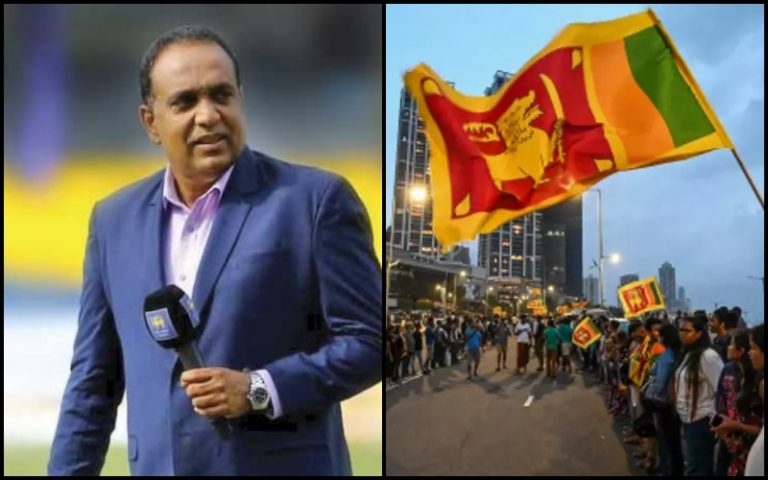
Sri Lanka has been going through the worst crisis, with the disastrous economic policies of the Rajapaksa regime pushing the country and its people into a grim situation. Amidst the crisis, Roshan Abeysinghe, the Managing Director of RF Asia (Pvt) Ltd in Sri Lanka sat down for an exclusive interview with OpIndia this week. His company deals with hair products and other cosmetics. He is also a Director of Crusador Sports and Leisure Tours. Abeysinghe is also a leading and one the most popular Sri Lankan cricket commentator not only within Sri Lanka but also worldwide.
Talking to OpIndia, Abeysinghe spoke on a spectrum of subjects post the crisis in Sri Lanka. He spoke about a host of subjects ranging from dynasty politics and how it became normalised in Sri Lanka to China’s role in the island nation and India’s as a neighbour. “India has played the honest neighbour’s role in assisting Sri Lanka. Indian credit lines and credit have been most welcoming and without which Sri Lanka could have been bankrupt much earlier”, said Abeysinghe. Speaking about how dependence on China could have contributed to the crisis in Sri Lanka, Abeysinghe said, “China was the easiest to obtain loans from in comparison to some of the agencies and countries that would insist on more stringent evaluation of projects”. He further said that the funds from China have been invested in projects with low return on investment and that hurt Sri Lanka’s economy massively since it affected the nation’s ability to repay the loans.
With the economic and political crisis brewing in Sri Lanka, it becomes imperative to understand the roots of that crisis, Sri Lanka’s view of India and its role in stabilising the neighbourhood and more. Following is the interview with the veteran cricketer, with questions and answers, produced verbatim.
OpIndia: Sri Lanka has been in the throes of an economic and political crisis. As a Sri Lankan, what is your understanding of the situation?
Roshan Abeysinghe: If you mean the economic situation then it is not something that has happened overnight but over a period of time. I would put it down to ill-sighted political decisions and policies of successive governments that have been keener on staying in power rather than making tough decisions such as improving productivity and exports. Sri Lanka has been plagued by loans that have been utilized mostly on unproductive projects and misappropriation of funds at all levels including Government employees too.
Besides, political parties that were outside the government also derailed many projects through strikes, etc., which prevented the government of the day from making productive the poorly or unutilized assets of the country. Hence in a nutshell it has been caused by Governments and Politicians from all walks of life, especially in the last 25 years.
OpIndia: The crisis in Sri Lanka is largely being credited to Rajapaksa. Could you explain his hold on Sri Lankan politics and why he was not opposed earlier?
Roshan Abeysinghe: Sri Lankan politics have been dominated mainly by two parties. i.e the United National Party and the Sri Lanka Freedom Party. The UNP was controlled initially by the Senanayake family and after which the family dynasty broke up with the succession of leaders i.e J.R.Jayawardane, R.Premadasa, and Ranil Wickramasinghe. The Sri Lanka Freedom Party or the SLFP kept evolving by changing symbols and names, firstly under the family of the Bandaranayake and then after 2005 with the Rajapakses.
Such Dynasties provided a rich political heritage existed and became acceptable to the Sri Lankan voter. Besides President Mahinda Rajapakse ended the 30-year war in Sri Lanka which propelled him to a status of a King. Though in 2015 he lost the race to President Sirisena very much against the odds the infighting between President Sirisena and PM Wickramasinghe and the then government plus lack of proper productivity coupled with the Easter bombings allowed the Rajapakse family to come back as the saviours of the nation through the Presidential election of 2019 until the current disaster struck the Nation.
OpIndia: Sri Lanka’s dependency on China has increased exponentially through the years, especially in the economic front. Do you think that contributed to the crisis?
Roshan Abeysinghe: China was the easiest to obtain loans from in comparison to some of the agencies and countries that would insist on more stringent evaluation of projects. However, the overall debt percentage is just 10% regarding the dues to China. The Chinese funds however have been invested in projects where the ROI has been poor which I am sure is hurting the repayment. This was one reason that prompted the then government in 2015 to lease out the Port in Hambantota on a long lease to offset and convert the loans to equity.
OpIndia: How do you see India’s role in the current situation in Sri Lanka?
Roshan Abeysinghe: India has played the honest neighbour’s role in assisting Sri Lanka. Indian credit lines and credit have been most welcoming and without which Sri Lanka could have been bankrupt much earlier. Hence the country is indebted to India for expecting the least when helping the country. And even at present the assistance has been very well received by Sri Lanka.
OpIndia: Is Ranil Wickremesinghe the only option Sri Lankans have to get out of this mess or do you think there are many other leaders who are capable right now?
Roshan Abeysinghe: He is not the only option but in most people’s eyes he is the best of the worst options we have considering his long experience and also due to his acceptance in the world over most other potential leaders in the country. However, being called a protector of the former Rajapakse regime has dented much of the faith the public has had in him in the past. Besides his election has to be nothing short of a miracle as he was in Parliament through only a bonus seat after his party was routed and to become PM and now the President has to be one of the fairytales of the century.
Having said that it is my belief that most of the country is willing to give him the opportunity to get the country out of this current mess. This could be a turning point in his political career which can also determine the future of this beautiful nation.
OpIndia: What do you think is the way forward for Sri Lanka?
Roshan Abeysinghe: The only solution is to have the entire political machinery working together as one government and also for the public to start dropping the demands for handouts. It is time outside the political sphere that Sri Lanka also looks at a meaner and leaner state service and look at all state enterprises that are loss-making to be made profitable or self-sufficient. At present Sri Lanka should have the largest ratio of state sector employees to the population as well as running highly unproductive state enterprises that doesn’t serve the national cause.
Sri Lankan airlines which is considered a flagship is one of the biggest loss-makers along with the petroleum, transport sector, and the electricity sector. This is more to do with bad governance and domination of trade unions than anything else. Also, a clear plan is needed to eradicate poverty in Sri Lanka through a phased-out program to ensure that the said segments’ dependency on the government is reduced to a large extent. These are some of the obvious solutions amongst many others available.
OpIndia: As a known and celebrated personality of Sri Lanka, what advice will you give to your fellow citizen to fight this situation?
Roshan Abeysinghe: Be resilient and disciplined with what you do. Start this yourself by being self-sufficient in whatever way one can be by using the available garden space. Also, stop the colossal wastage of resources such as water and electricity that costs the government big bucks and love the country. Take pride in being a Sri Lankan.