Home Blog Page 3120

Zee News editor-in-chief recalls SIT quizzing him in 2002 Gujarat riot case, says Congress was desperate to implicate CM Modi: Details of court judgement

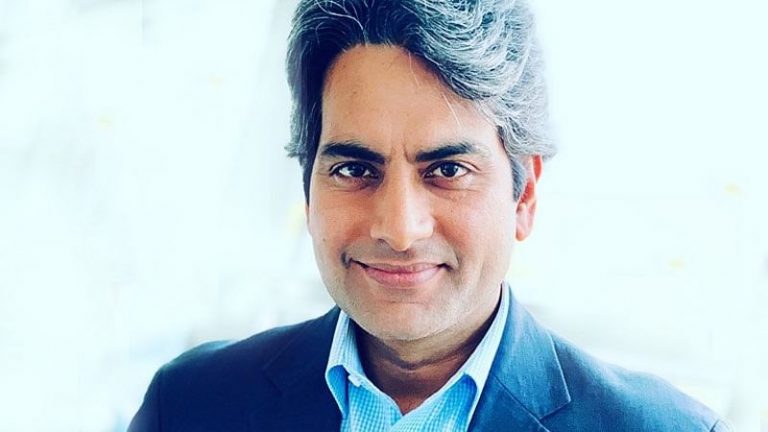
A day after the Supreme Court upheld SIT’s clean chit to then Gujarat Chief Minister Narendra Modi in the 2002 Gujarat riots, Zee News editor-in-chief Sudhir Chaudhary has expressed his happiness that truth had prevailed while castigating SIT for compelling him to misquote Modi under pressure from the then Congress government.

The journalist took to Twitter on June 25 to share a copy of the SC judgement that dedicated 2 pages to Zee News editor-in-chief Sudhir Chaudhary’s interview with PM Modi who was the CM of Gujarat at the time. He recalled how SIT formed to probe the Gujarat riots had quizzed him twice for his interview with then Gujarat CM Narendra Modi.

Chaudhary made some very serious allegations against the SIT and the then UPA administration at the centre, claiming that when it was questioning him, the SIT tried to coerce him into misquoting Modi since the UPA administration was desperate to implicate the latter. “They wanted me to say what he didn’t say. UPA Govt wanted this IV badly to implicate Modi,” said the senior journalist adding that he is “happy truth prevailed in Supreme Court’s order.”

Chaudhary also shared the SC judgement’s copy wherein Zee News Editor-in-Chief Sudhir Chaudhary’s interview with PM Modi, who was then Chief Minister of Gujarat was mentioned.

Observing the outcome of additional research, the SC order mentioned that a request was sent to Zee TV during the investigation to provide a copy of the CD of an interview with Modi at the time. This interview was conducted by Chaudhary, who was a correspondent at the network at the time, on March 1, 2002.

The order stated that after the then Gujarat CM Modi’s press conference, Chaudhary reportedly asked for a quick 10-minute interview.

“After going through the Editor’s Guild Fact-Finding Mission report dated 03.05.2002, Shree Chaudhary had stated that the same was only a few excerpts from the said interview and the original CD of the said interview was not before him,” the judgement said.

“As per his recollection, he had questioned Shri Narendra Modi about the Chamanpura massacre (Gulberg Society case), in which former Congress MP Late Ahesan (Ehsan) Jafri had been killed with many others to which the Chief Minister had replied that the mob had reacted on account on private firing done by Late Ahesan (Ehsan) Jafri, Ex-MP. After refreshing his memory from the Editor’s Guild report, Shri Sudhir Chaudhary has stated that the Chief Minister was of the view that he neither wanted action nor reaction,” it added.
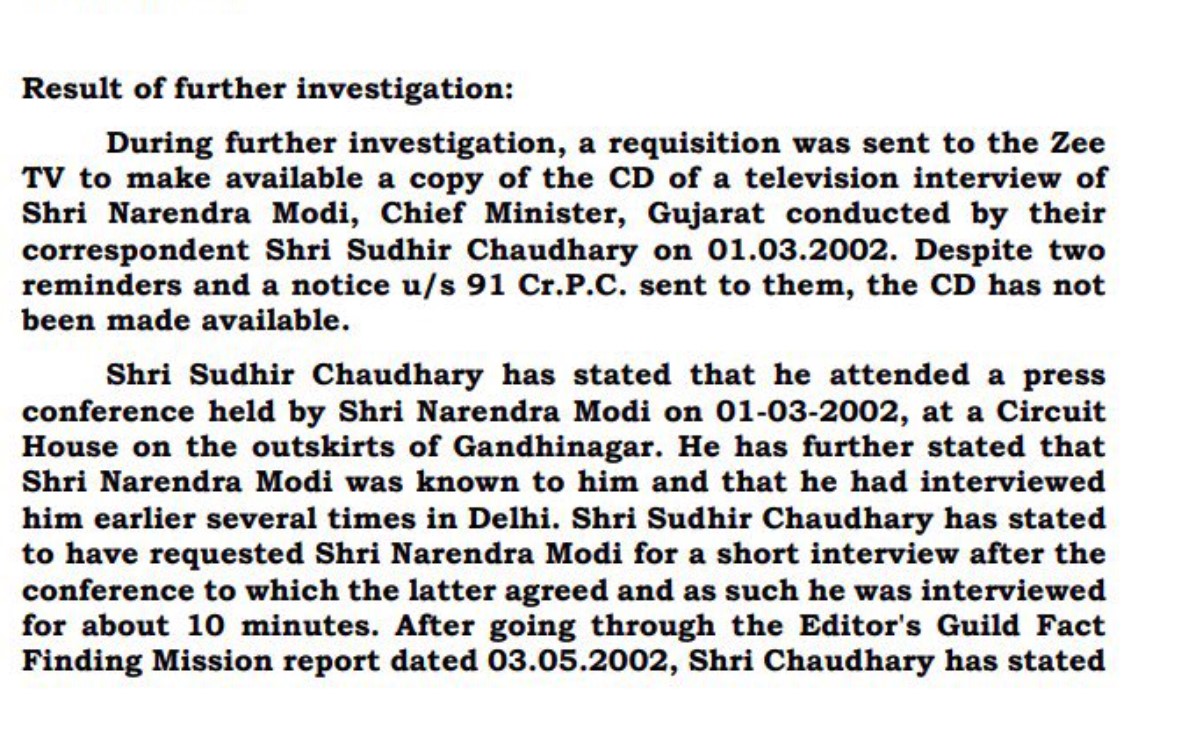
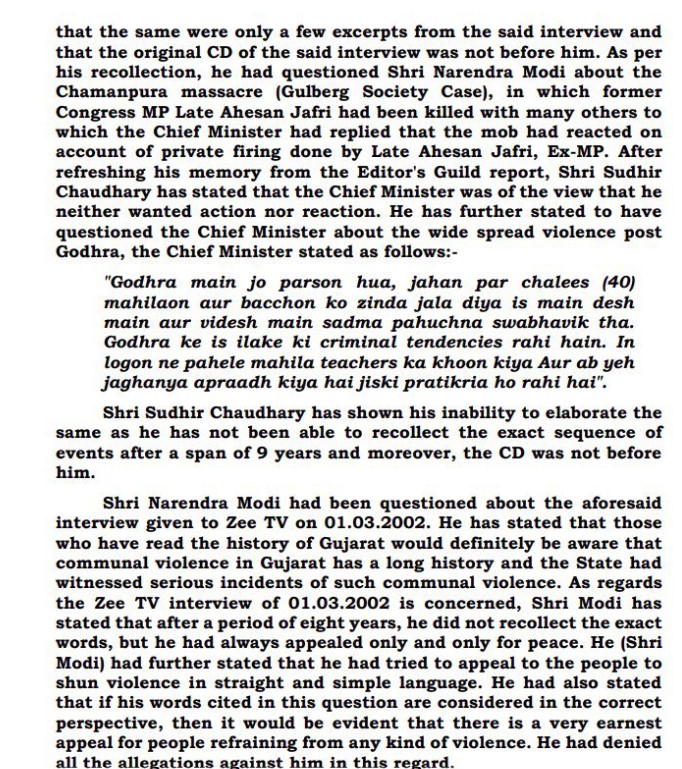
SC judgement mentions Zee News editor-in-chief Sudhir Chaudhary’s 2002 interview with Modi 

The judgement further stated that Chaudhary further claimed that he had asked the CM about the widespread violence that followed the Godhra incident. In response, the CM had said, “Godhra main jo parson (day before yesterday) hua, jahan par chalees (40) mahilaon aur bacchon ko zinda jala diya is main desh main aur videsh main sadma pahunchna swabhavik tha. Godhra ke is ilake ki criminal tendencies rahi hain. In logo ne pahele mahila teachers ka khoon kiya aur ab yeh jaghanya apraadh kiya hai jiski pratikria ho rahi hai.”

The top court judgement further said that Sudhir Chaudhary was unable to recollect the exact sequence of events after a span of 9 years, and moreover, the CD was not available to him.

“Shri Narendra Modi had been questioned about the aforesaid interview given to Zee TV on 01.03.2002. He has stated that those who have read the history of Gujarat would definitely be aware that communal violence in Gujarat has a long history and the State had witnessed serious incidents of such communal violence. As regards the Zee TV interview of 01.03.2002 is concerned, Shri Modi has stated that after a period of eight years, he did not recollect the exact words, but he had always appealed only and only for peace. He (Shri Modi) further stated that he had tried to appeal to the people to shun violence in straight and simple language. He had also stated that if his words cited in this question are considered in the correct perspective, then it would be evident that there is a very earnest appeal for people to refrain from any kind of violence. He had denied all the allegations against him in this regard,” it added.

It may be recalled that on June 24, the Supreme Court upheld SIT’s clean chit to then Gujarat Chief Minister Narendra Modi in the 2002 Gujarat riots. The SC was hearing a plea filed by Zakia Jafri, widow of former Congress MP Ehsan Jafri, who was killed during the violence at Gulbarg Society in Ahmedabad on February 28, 2002, challenging the clean chit given by the SIT to PM Modi and 62 others for their alleged role in the violence.

While delivering its verdict, the apex court said that the “appeal is devoid of merits”. A bench headed by Justice A M Khanwilkar refused to order a probe into allegations of a “larger conspiracy” behind the Gujarat riots.

While dismissing a plea challenging the clean given to PM Narendra Modi by SIT in the 2002 Gujarat riots, the Supreme Court also said that the Tehelka tapes are of no avail. The petitioner had heavily relied on the tapes to alleged that Modi was involved in the riots. The court also said that claims made by people like Sanjeev Bhatt and Haren Pandya were only to seasonalise and politicise the issue.

Dismissing the petition, the apex court said that doubting the wisdom of the court would be a travesty of justice, because the entire investigation was completed by the SIT under the supervision and monitoring of the court.

Meanwhile, OpIndia had written a detailed report busting popular myths the left-liberal cabal conjured up to implicate PM Modi and HM Amit Shah in the 2002 Gujarat riots case.
Another ‘blasphemy’ arrest: 28-year-old arrested from Thane in Maharashtra for allegedly ‘insulting’ Prophet Mohammad

On Friday 24th June 2022, Nikesh Raju Pashte (age 28) of Sangampada, in the Thane district of Maharashtra, was detained for posting allegedly insulting remarks on Prophet Mohammad on social media. The arrested accused is a ‘mathadi’ worker (a wholesale market porter) from Sangampada in the district’s Bhiwandi town.

An official in the Nizampura police station said, “A plumber complained to the police about the objectionable and provocative post on the Prophet made in a WhatsApp group. Based on the complaint, the police registered the offense and arrested the accused. The complainant said that the post could trigger tension between two communities.”

An offense was recorded against the accused under Indian Penal Code (IPC) sections 153(A) (promoting enmity between different communities), 295(A) (deliberate and malicious conduct, designed to outrage religious sentiments of any class by insulting its religion or religious beliefs), and 499 (defamation).

It is notable that the Bharatiya Janata Party suspended national spokesman Nupur Sharma and dismissed Delhi BJP media chief Jindal on June 5 after their alleged disparaging statements about the Prophet sparked controversy in India and the Gulf countries. Violent protests were carried out by Islamists in various cities in India after this incident. Public properties were vandalized and stones were pelted at the security personnel who were trying to control the situation. The rioters spread this violence, especially after the Friday Namaz on June 3 and June 10.

This is not the first arrest in Bhiwandi for allegedly insulting social media posts against the Prophet Muhammad. On Sunday (June 12), a young Muslim boy named Saad Ashfaq Ansari was arrested by the Bhiwandi police in Maharashtra for supporting ex-BJP spokesperson Nupur Sharma and questioning the nature of the relationship between the Prophet Muhammad and his wife Ayesha. Before getting arrested, he was assaulted and abused by a Muslim mob for his stand in the ongoing blasphemy row and for supporting Nupur Sharma.

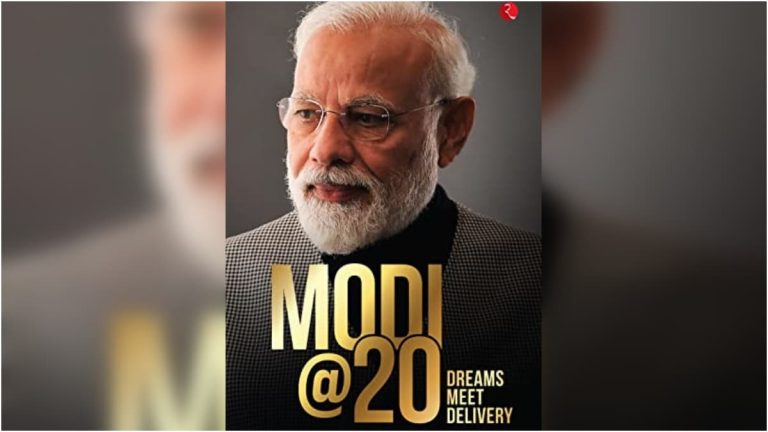
‘Modi@20 Dreams Meet Delivery’: A book about the journey of Narendra Modi and how he became a phenomenon

It is a tough task when one wants to acknowledge and capture the works of a great leader, whose 20 glorious years of governance, first as a chief minister and then as the prime minister, have empowered the country and its people to look beyond a ‘New India’. An India which is not only a global economic and social powerhouse, but also a beacon of hope and unity, leading with the principles of ‘Vasudaiva Kutumbakam’.

Today, we are on a transformative path, and it is needless to say that it has been carefully laid by Prime Minister Shri Narendra Modi on the tenets of inclusivity, empowerment, transparency, reforms, wellbeing, and democracy.

‘Modi@20, Dreams Meet Delivery’ is a guide to his journey in which he has impacted citizens from every walk of life and has worked tirelessly to what we now know as a resurgent India.

Carefully compiled with chapters by subject-matter experts, eminent professionals and personalities, and intellectuals, the book has governance as its fulcrum. 

And, interestingly, it’s five main sections too represent the pillars of governance – People First, Politics of Unity and Development, Jan Dhan: An Economy for Everyone, A New Paradigm in Governance and Vasudaiva Kutumbakam: India and the World.

It is a fact that India today stands tall globally among other nations with pride and head held high. During my days as a youth, I do not recall any instance where I could say India stands tall in the global arena. 

To add, during the 90s and the 2000s, the country was hit by one scandal after another, frustrating citizens with the complete lack of good governance. 

From those days to now, it is like a fresh breath of air the country had never experienced! Clearly, the future generations will need to understand India’s political landscape and history in the pre-Modi and post-Modi eras. The two are as distinct as black and white. 

PM Narendra Modi has ushered winds of sweeping changes across the country that have touched the lives of every Indian – be it urban or rural for the better.

Naysayers and critics will always be quick to drub this book as propaganda and the easiest thing to do for a party in power. But it is high time such people had a rethink and read the book in totality to understand the depth and diversity of information and how anecdotal the book is. 

Releasing the book, our Vice President Venkaiah Naidu said emphatically that even those who are the detractors of our Prime Minister agree that he is a “phenomenon.”

From scoffing and ridiculing the ‘Modi Model of development’ two decades ago, experts, analysts, and even some of his detractors view it with awe and appreciation. We have transformed from an eternally developing nation to a nation on the path of development and inclusivity. As our External Affairs Minister Shri S Jaishankar puts it in the book, “One of the shifts that PM Modi brought into Indian foreign policy is its focus on leveraging external relationships for domestic development.” 

Such achievements and accolades that one receives are not chance coincidences. It is to the credit of our leader, who has consistently masterminded and tirelessly executed the plan. 

‘Modi@20, Dreams Meet Delivery’ is a must-read for everyone to understand the thought and strategy behind our country’s transformation. It helps to put things in perspective. The book is not one person’s narrative. It is an anthology that has drawn the best minds to come together and share their views, anecdotes, and factual analysis. Read to know your country today. Read to understand and appreciate your Prime Minister better. 

(The article has been authored by Dr Ashwathnarayan C.N. He is the Minister for Higher Education; IT & BT, Science & Technology; Skill Development, Entrepreneurship & Livelihood, Government of Karnataka).

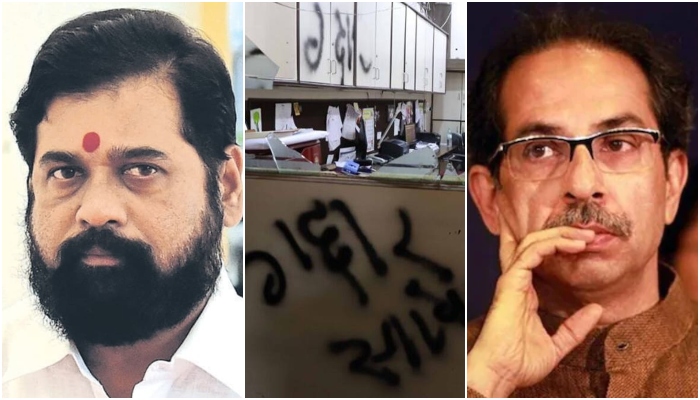
Restrictions under section 144 imposed in Mumbai and Thane after Shiv Sena workers vandalise offices of rebel leaders

Amid the continuing political crisis in the state of Maharashtra, the Mumbai Police on Saturday imposed section 144 of the CrPC in the city till July 10. Also, the Thane District Administration has imposed restrictions under section 144 of the CrPC in the district, which is the stronghold of rebel Shiv Sena leader Eknath Shinde. With this, the administration has also imposed a ban on any kind of political procession till June 30.

According to the reports, the Mumbai Police has issued orders to avoid any kind of public gathering in the city. Similarly in Thane, which is the fortress of the rebel Shiv Sena leader Eknath Shinde, the administration has also banned the carrying of sticks, or any kind of arms, and also burning of posters and effigies.

“To maintain law and order situation in Thane, the District Collector and District Magistrate, Thane, issues prohibition order of 24 hours till June 30th. Along with the ban on carrying of sticks or arms, shouting slogans or playing songs on the speaker will also not be allowed”, the order read.

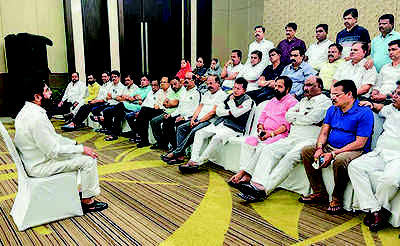
This is hours after a national executive meeting of the Shiv Sena, supported by NCP and Congress passed a resolution reposing faith in the leadership of Thackeray. Reportedly, Uddhav Thackeray has been given powers to take action against rebels those who have allegedly betrayed the Shiv Sena.

Reports mention that notices have been sent to 16 rebel MLAs and Deputy Speaker Narhari Zirwal has asked them to appear in person in a matter of a petition filed by the Sena seeking their disqualification. Also, the MVA government has withdrawn the security cover provided at the residences of 16 rebel legislators, including Eknath Shinde.

Shinde who is in Guwahati at present called the action a ‘political vendetta’ and wrote to Chief Minister Uddhav Thackeray and Home Minister Dilip Walse Patil. In the letter that was signed by 16 MLAs, Shinde stated that the ruling Maha Vikas Aghadi alliance will be responsible if any harm is caused to their family members.

However, Maharashtra Home Minister Dilip Walse Patil refused to accept the claims made by Shinde regarding the protection. “There have been on orders issues either by the CM or the Home Ministry to withdraw the security of any MLA. Allegations being leveled to this effect are mischievous and false,” Patil said on June 25.

It is important to note that Shiv Sena workers have been executing severe protests in the state of Maharashtra against the rebel Shiv Sena leaders. They vandalized the offices of Shiv Sena leaders like Mangesh Kudalkar, Dilip Lande, and Sada Sarvankar who are in Guwahati. Also, today Shiv Sena workers in Pune ransacked the office of Sena legislator Tanaji Sawant, who is among the rebel MLAs currently camping in Guwahati.

The Mumbai Police who has imposed section 144 of the CrPC in the city has also issued a high alert and has asked all police stations to ensure security at all political offices in the city. Officer-level police personnel has also been directed to visit every political office to ensure the safety of all politicians.

Director of Islamic outfit, who now denies asking Muslims to join Agneepath, called Yakub hanging ‘inhuman’: Here are his other communal views

On Friday (June 24), it was reported that an Islamic organisation named ‘Association of Muslim Professionals’ (AMP) has reportedly appealed to the Muslim youth to join the armed forces under the newly launched ‘Agnipath’ scheme.

“We support the Central government’s Agnipath scheme also like other ones. Our message will be passed on to eligible Muslim youths by noted clerics and Imams of the mosques in various cities. A special appeal will be made for this by them in the Friday prayers,” it was quoted as saying.

Columnist and lawyer, Divya Kumar Soti, was the first to point out the divisive and radical mindset harboured by the President of the organisation, Aamir Edresy.

Besides Edresy, other members of the Association of Muslim Professionals are also seen casting aspersions on the integrity of security forces.

Divya Kumar Soti tweeted, “Here, the General Administrative Head of Association of Muslim Professionals (AMP) is insinuating Government hand in Pulwama terrorist attack and is accusing our security forces of habitually killing Muslims during any communal violence. Imagine people with this mindset in Army.”

The columnist also pointed out how over 300 mosques in Kanpur, where Islamists unleashed mayhem under the pretext of blasphemy, had appealed to the Muslim youth to become Agniveers.

Peddling radical Islamist ideas

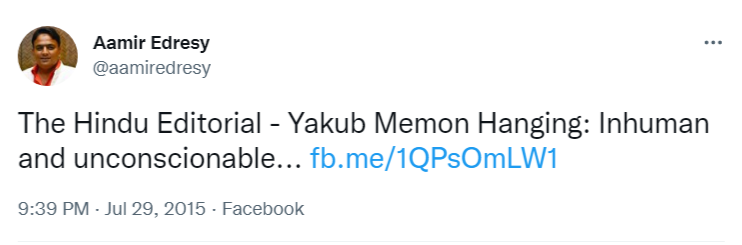
The Director of the Association of Muslim Professionals, Aamir Edresy had been a vocal proponent of Islamist ideas. In 2015, he was seen endorsing an article by leftist propaganda new outlet, The Hindu, which termed the hanging of terrorist Yakum Memon as ‘inhuman’ and ‘unconscionable.’

It is a well-known strategy of Islamists to downplay the atrocities and heinous crimes committed by their co-religionists and stir public sympathy for them at the same time.

Screengrab of the tweet by Aamir Edresy

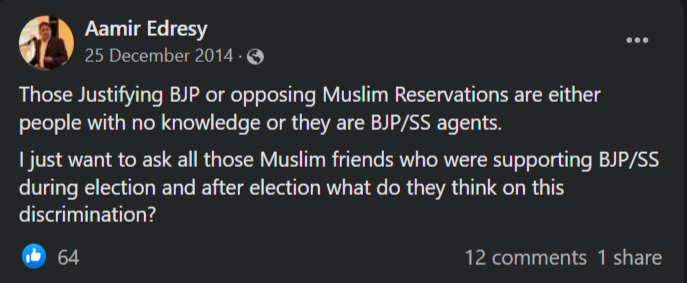
A year prior, he was seen batting for a religion-based reservation in India. Aamir Edresy had dubbed those opposed to such divisive ideas as ‘BJP and Shiv Sena agents.’

While appealing for reservation for Muslims, he sought the opinion of his co-religionists who voted for the BJP during elections.

Screengrab of the Facebook post of Aamir Edresy

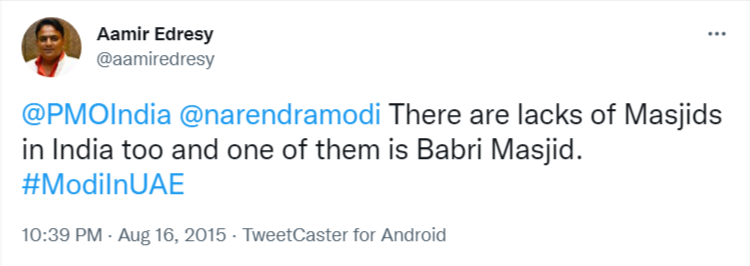
Following the visit of Prime Minister Narendra Modi to the United Arab Emirates (UAE) in August 2015, the Gulf nation allotted land for the construction of the first Hindu temple. Dismayed by the development, Aamir Edresy had raked up the dispute surrounding the Babri Masjid.

“There are a lack of Masjids in India too and one of them is Babri Masjid,” he had tweeted. As per estimates, India is home to about 3 lakh mosques. Instead of questioning the lack of temples in the UAE, Edresy raked up the issue of the demolished Babri Masjid to draw false equivalences.

Screengrab of the tweet by Aamir Edresy

Following the controversy over the wearing of ‘Hijab in classrooms‘ in Karnataka, the director of the Association of Muslim Professionals cast aspersions about the existence of a larger conspiracy behind it.

“All of us know that in last many years, the Girls Education graph has increased significantly in the Muslim Community & that is creating an issue in the minds of few. Last 30 Years overall Educationally the Muslim Community has progressed a lot and that is also an issue for them,” he wrote.

He subtly accused the Hindus of depriving Muslim children of education. “They don’t want us to get educated, they don’t want us to progress…Let us not keep this issue limited to #Hijab. Let us create an Educational Revolution. Let us create Educational Institutions all across India. In all Cities, all Districts, all Villages & in all Mohallas,” he insinuated.

Mobilising protestors during CAA and holding the State to ransom

After the Indian government passed the Citizenship Amendment Act (Act) to fast-track the citizenship of religious minorities illegally staying in India, Islamists from across the country took to the streets to hold the State to ransom.

The likes of Shaheen Bagh ‘sheroes’ set up road blockades and brought life to a standstill. With complete disregard for the inconvenience caused to local residents and daily commuters, they held the State hostage under the pretext of saving the Constitution of India.

Aamir Edresy was among the Muslim ‘intellectuals’ who glamorised the idea of mobs taking to the streets. He claimed that history would be a testimony to the struggle that they exhibited by squatting in the middle of the road.

Such glamourisation of unruly behaviour meant that more Islamists were prodded and encouraged to be a part of the historic movement at Shaheen Bagh. Aamir Edresy was also at the forefront of mobilising protestors by sharing information about protest venues and timings through his Twitter account.

After the so-called ‘peaceful protests’ culminated in the deadly anti-Hindu riots of Delhi, the likes of Aamir Edresy watched in silence. Coinciding with the visit of Donald Trump to India, Islamists rampaged through the National Capital in February 2020.

There were no words of condemnation from his ilk. Instead, the narrative was spun overnight to suggest a Muslim pogrom.

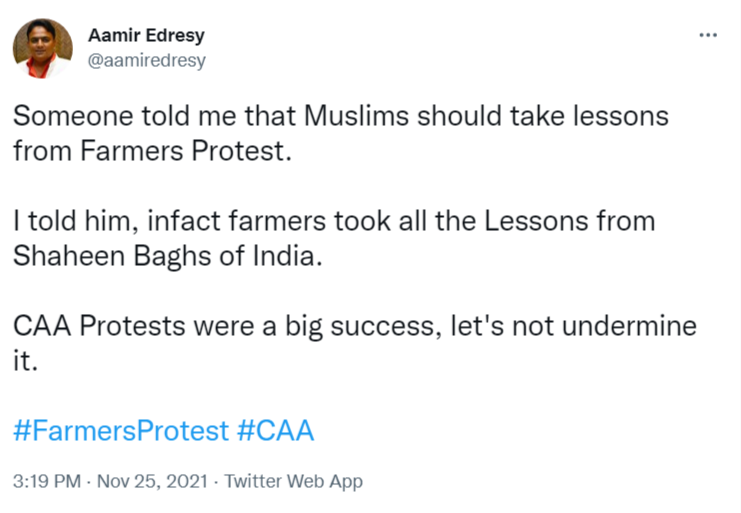
Nevertheless, Aamir Edresy was active again at the time of anti-farm law protests. He suggested that the farmer protestors must seek inspiration from the Muslims of Shaheen Bagh. “CAA protests were a big success, let’s not undermine it,” he gloated in a tweet on November 2021.

Screengrab of the tweet by Aamir Edresy

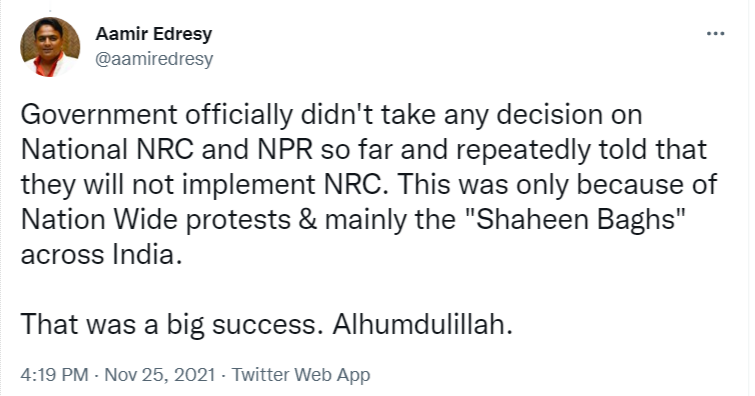
On the same day, the President of the Association of Muslim Professionals pointed out how mass mobilisation coupled with street power can make the Centre bend to your demands.

“Government officially didn’t take any decision on National NRC and NPR so far and repeatedly told that they will not implement NRC. This was only because of nationwide protests and mainly the ‘Shaheen Baghs” across India. This was a big success. Alhumdulillah,” he said.

Screengrab of the tweet by Aamir Edresy

Despite being well aware as to how the Shaheen Bagh protests turned out, Aamir Edresy had no qualms about the violence, vandalism and the loss of lives. Instead for him, it was a successful experiment that forced the government to crawl.

Fan of the Congress party

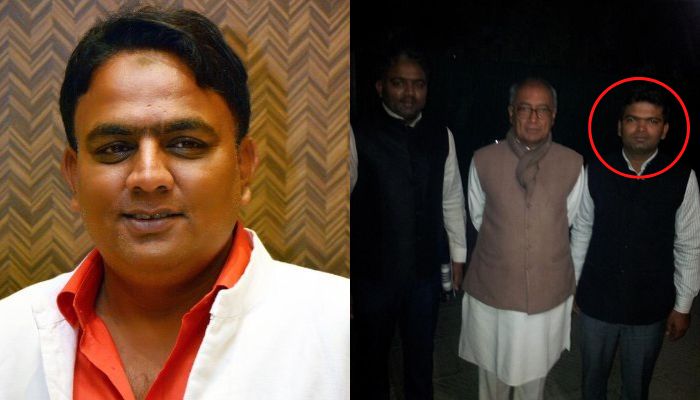
Aamir Edresy was seen endorsing the Congress party on social media. In December 2014, he was spotted alongside Congress leader Digvijay Singh, infamously known for launching a book that blamed RSS for orchestrating the 2008 Mumbai attacks.

“With Senior Congress Leader and AICC General Secretary Mr Digvijay Singh in Delhi after a good meeting,” he wrote on Facebook

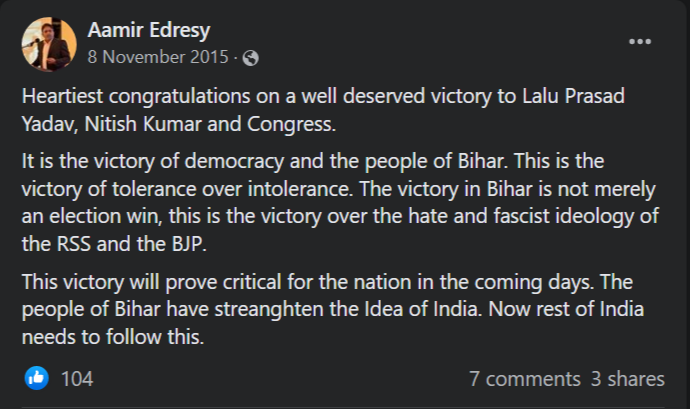
In November 2015, Edresy was seen cheering the victory of Mahagatbandhan, comprising of JDU, RJD and Congress, in the Bihar elections.

“It is the victory of democracy and the people of Bihar. This is the victory of tolerance over intolerance. The victory in Bihar is not merely an election win, this is the victory over the hate and fascist ideology of the RSS and the BJP,” he had posted on Facebook.

Screengrab of the Facebook post by Aamir Edresy

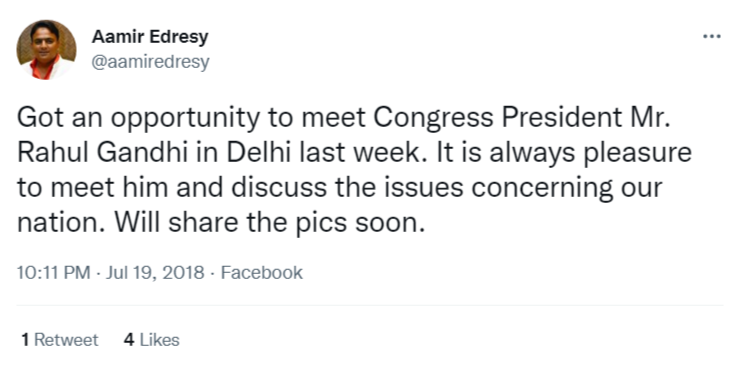
In a tweet in 2018, he revealed about his meeting with Congress scion Rahul Gandhi in Delhi and his discussions concerning the nation. “It is always (a) pleasure to meet him and discuss the issues concerning our nation. Will share the pics soon,” his tweet read.

Screengrab of the tweet by Aamir Edresy

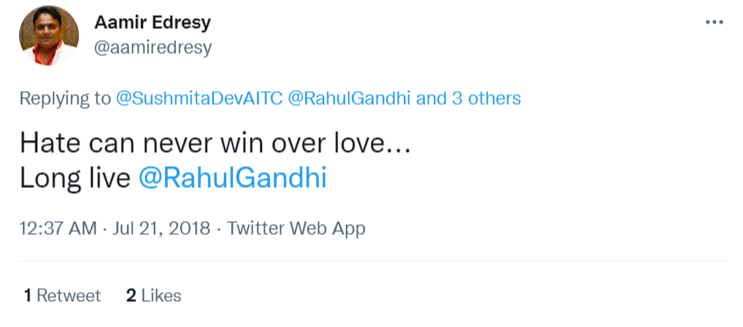
“Hate can never win over love…Long live Rahul Gandhi”, Aamir Edresy was seen batting for the Congress leader.

Screengrab of the tweet by Aamir Edresy

After the news that the Association of Indian Muslim Professionals has extended support to the Agnipath scheme spread like wildfire, the organisation distanced itself from the government initiative.

In a Facebook post, it wrote, “There are some news reports doing the rounds in the Media that Association of Muslim Professionals (AMP) is in favour of the AGNIVEER scheme and one of our Chapter Member has been quoted for the same.”

“Kindly note that the statements doing rounds in the media is in the personal capacity of our member and not the official version of the organization,” it added.


The Facebook post concluded, “AMP is still studying the scheme & its feasibility and will come out with a statement once we have a suitable viewpoint or when it is necessary. Until then we request AMP Members & Volunteers to refrain from making any undue statements and cause any confusion.”

Despite the clarification, concerned citizens are worried about the future of the Indian armed forces if Islamists, supported by the likes of the Association of Professional Muslims, make it to the esteemed institution.

Given that the Director of the organisation espouses Islamist ideas, and mobilises large-scale street protests that later culminate into violence, the induction of youth supported by this outfit can thus be detrimental to the internal security of the country.

Can someone steal money from your Paytm account by scanning FASTag on your car? Know the truth of claims made in a viral video

The PIB fact check has clarified that the FASTag stickers attached to vehicles to collect tolls can not be used to fraudulently steal money from money keep in online wallets. The Fact Checking section of the Press Information Bureau was responding to a video where such a claim was being made. The video, posted on Facebook by a page named BakLol Video has gone viral with around 2.7 lakh views so far.

In the video, a man claims that kids that clean the windshields of vehicles at traffic signals are wearing smart watches that scan the FASTag sticker, and when it is scanned, money kept in Paytm for paying road tolls is automatically deducted.

In the video, a boy is seen cleaning the windshield of a car, who has a digital watch on his wrist. The boy flips his wrist a few times, showing the face of watch with red LCD display. After cleaning the windshield, the boy starts to go away, without asking for money. The man calls him back, saying why he was going without taking money.

The visibly frightened boy asks for the money. The man asked him why he was not taking money, and why he is wearing the watch and asks to see it. Hearing this, the boy runs away, the co-passenger in the car chases him, but can’t catch him and returns to the car.

After that, the man driving the car explains his co-passenger what had happened. He claimed that these boys are cleaning car windshields with watches that have scanners. Every time the tag is scanned using the watch, a predetermined amount is deducted from the FASTag account in Paytm, he claims.

He also said that some people have given such watches to street kids, beggars etc, and probably the kids don’t know what is done with the watches. He claimed that he had faced such an incident before, and advices people to careful about this ‘new scam’.

However, claims made in the viral video are fake, and FASTag stickers can’t be scanned such way to deduct money from account of users. As PIB Factcheck informed, each toll plaza has a unique code, which is mapped with a specific bank account and a geo-code. All these information is mapped on the National Electronic Toll Collection (NEPC) program.

The NEPC system enables the customer to make the electronic payment of toll at any NETC-enabled toll plaza on the road without stopping at the toll, as the tag is read using RFID technology and the toll amount is automatically deducted.

Apart from the Geo code mapped to each toll plaza, the IP are also whitelisted by banks and NPCI (National Payments Corporation of India). These means, only the authorised merchants like toll and parking plazas can collect money using the FASTag system. Apart from this, for the transaction to go through, the system needs the toll plaza ID.

The NPCI is linked with the banks with secure network, which can’t be breached. Therefore, by scanning the tag, it is not possible to steal money from the account of an user, as claimed by the video.

Moreover, after a toll is paid using FASTag, the customer receives a message on the registered phone number. Therefore, if there is any ‘stealing’, they will be alerted immediately and will be able to take preventing measures.

Therefore, the claims made in the video are incorrect, and it looks like the video was staged to make the fake claim.

Iran: Teenage girls arrested for not wearing hijab during skateboarding event

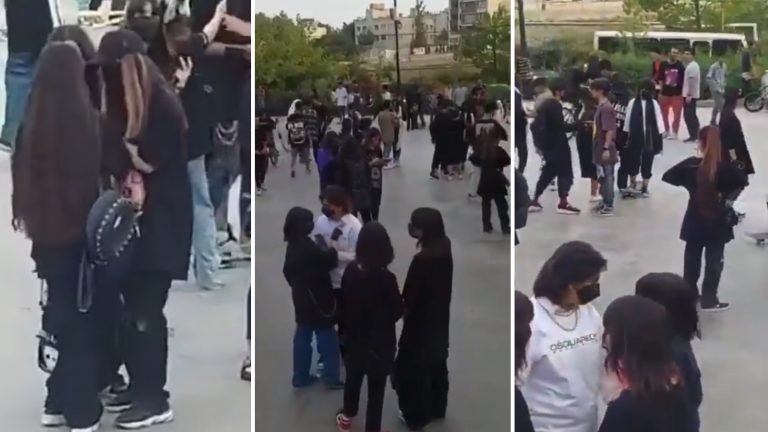
Iranian officials have reportedly arrested a number of juvenile girls and others for not wearing hijabs during a skateboarding event in Shiraz, a city in southern Iran.

A video purportedly depicting Tuesday’s ‘Go Skateboarding Day’ celebration on Chamran Boulevard in Shiraz went viral on social media in Iran, infuriating orthodox religious conservatives in a country where all women and young girls are required to wear a hijab.

According to Shiraz police commander Faraj Shojaee, as quoted by state news agency IRNA, a number of girls “removed their hijab at the end of the sports event without observing the religious considerations and legal norms.” “With the coordination of the judiciary, a number of perpetrators and people related to this gathering were identified and arrested on Thursday,” he said.

“Holding any mixed sports or non-sports gathering without observing the religious and legal norms is prohibited… and the organisers will be dealt with according to the law,” Shojaee further added.

It is worth noting that under Islamic law, which has been in effect in Iran since the 1979 revolution, women are required to wear a hijab, which covers the head and neck thus hiding the hair. While Iranian women struggle to be liberated and break free from the confines of headscarves, the hijab is exploited to forward the Islamic agenda over the world.

The hijab has been a major source of controversy in India in recent months. The Karnataka hijab controversy caused enough uproar and violence in the country for authorities to intervene and the judiciary to provide certain directives.

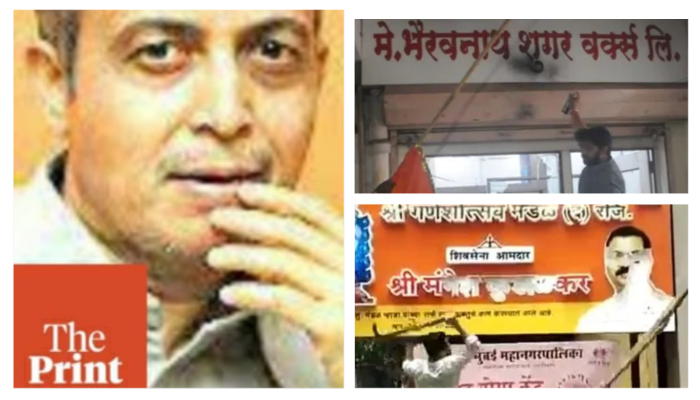
As Shiv Sainiks go on a rampage vandalising offices of rebel MLAs, here is how a sympathetic ‘journalist’ working for ThePrint defends their violence

Going by their reputation, the Shiv Sainiks have begun using street and muscle power to intimidate MLAs who have defected from the Uddhav Thackeray camp to support the ‘rebel’ Eknath Shinde group. The Uddhav Thackeray supporters have been vandalising offices and defacing posters of the ‘rebel’ MLAs for the past two days as they run riot across the streets of Maharashtra.

However, rather than denouncing this thuggish behaviour, a ‘journalist’ affiliated with the leftist propaganda news website ‘The Print’ went on to publicly sympathise with the Shiv Sena goons.

According to ANI, Shiv Sena goons today (June 25) vandalised the office of the party’s MLA Tanaji Sawant in the Balaji Nagar area of Katraj, Pune. Sawant is one of the dissenting MLAs from the state who is currently camping in Guwahati, Assam, along with other MLAs who have sided with Eknath Shinde.

In the video shared by the news agency ANI, Shiv Sena goons can be seen charging Tanaji Swant’s office while brandishing rods, batons, and the party’s saffron flag. They vandalise the walls outside the office with graffiti and breaking the window panes. The Shiv Saniks then barge into the office and vandalise it, shouting slogans against Sawant. They then bring out a poster of the party founder Balasaheb Thackeray that was kept in the MLA’s office and wave it in the air, raising slogans in support of Uddhav Thackeray.

Justifying the act, Sanjay More, Shiv Sena’s Pune head threatened the other dissenting MLAs, “Our party worker vandalised Tanaji Sawant’s office. All traitors and rebel MLAs who have troubled our chief Uddhav Thackeray will face this type of action. Their office will also be attacked… No one will be spared.”

Yesterday (June 24) too, Shiv Sena goons vandalized the board outside the office of Mangesh Kudalkar, who is one of the rebel MLAs of Shiv Sena currently in Assam. Shiv Sainiks in Nashik were also seen throwing eggs and black ink on the posters displaying rebel leader Eknath Shinde. A few more Shiv Sainiks gathered in the Chuna Bhatti area of Mumbai and raised slogans against Mangesh Kudalkar.

Dilip Lande, another Shiv Sena MLA representing the Chandivali constituency in Mumbai also faced the ire of Shiv Sainiks. In Chandivali, they destroyed banners and posters of MLA Dilip Lande. Somnath Sangle, a former corporator of Shiv Sena took some Shiv Sainiks with him to Sakinaka to vandalize Dilip Lande’s banners put up in that area.

While the Shiv Sainiks continue to resort to hooliganism and vandalism to intimidate the MLAs, Hemant Desai, a senior ‘journalist’ working for The Print openly expressed his sympathy for these goons on a debate program hosted by India TV.

In a snippet of the program shared on Twitter by popular user Amit Thadani, The Print ‘journalist’ is heard saying that the Shiv Sainiks have been left with no other option but to resort to violence. Hemant Desai is heard saying that he doubts that the Shiv Sena workers have resorted to hooliganism in multiple places. He said that as far as his knowledge goes Shiv Sainiks have resorted to vandalism only in Kurla.

Desai continued, “The latest hooliganism as compared to their former stance is insignificant. The level of the uproar that the Shiv Sainiks resorted to earlier was considerably more extreme.”

“There have been fewer instances of hooliganism under Uddhav Ji’s leadership, and the Shiv Sena is far more moderate than it once was”, The Print writer expressed his sincerest sympathy with the Shiv Sena supremo and his henchmen, adding that although Aditya Thackeray is likewise opposed to violence, they currently have little choice but to take a slightly aggressive attitude.

Shiv Sena MP Sanjay Raut threatens rebel MLAs with violence

Notably, until yesterday, Rajya Sabha MP and Uddhav Thackeray loyalist Sanjay Raut was issuing implicit threats of violence to the party MLAs who have joined Eknath Shinde’s rebel camp.

Speaking to ANI on Friday, Sena’s Rajya Sabha member Raut said, “The (Eknath Shinde) faction that’s challenging us must realise that Shiv Sena workers are yet to come on the roads. Such battles are fought either through law or on the roads. If need be then our workers would come on the roads.”

Similarly on Thursday, while speaking to NDTV, Sanjay Raut had directly threatened the rebel MLAs with street violence. When questioned about whether or not Uddhav Thackeray will stay as the chief minister, he stated, “Let all the MLAs come to the floor of the House. We will see then. These MLAs who have left will ultimately have to come back to Maharashtra. They will find it difficult to return and move around in Maharashtra.”

Meanwhile, rebel Shiv Sena MLA Eknath Shinde informed that he has the support of 50 MLAs, which is enough to oust the Maha Vikas Aghadi government from power.

He made the revelations during an exclusive telephonic conversation with TV9 Marathi. Shinde confirmed that about 40 of the MLAs are from Shiv Sena. It implies that the rebel leader has the numbers to bypass disciplinary action under the anti-defection law.

Apart from the Shiv Sena MLAs, about 60 Members of the Legislative Council (MLCs) from Maharashtra are also set to join Eknath Shinde’s rebel camp.

Maharashtra political crisis: Eknath Shinde forms a new group named “Shiv Sena Balasaheb’

The Eknath Shinde camp of Shiv Sena form a new group and named it ‘Shiv Sena Balasaheb’. On 25th June 2022, rebel Shiv Sena MLA Deepak Kesarkar while speaking to ANI informed about this new development. The rebel MLAs are staying at Hotel Radisson Blu in Guwahati.

MLA Deepak Kesarkar said that the earlier application given by the group to the deputy speaker of the assembly was just to recognize Eknath Shinde as the leader of the Shiv Sena legislature party. While speaking to India Today, Deepak Kesarkar said, “We are still in Shiv Sena. We will be having our own separate group named Shiv Sena Balasaheb. We will have our leader, whip, office and everything else just like a party has. We are calling it Shiv Sena Balasaheb because we are sticking to the thoughts and ideology of the founder of the party.”

According to rules if two-thirds of the total MLA of a party form a group, the MLAs don’t lose their membership and they are recognized as the party. We are trying to assert that thing. We have tried a lot to explain the things to Uddhav Thackeray but we don’t know why he chose to keep the things pending.”

Deepak Kesarkar also said that the decision to support BJP, to make a government with BJP, or to go into the new elections will be taken only as per the directions given by Eknath Shinde. Deepak Kesarkar also said that the chief minister should take strict action on the Shiv Sena goons vandalizing the offices of the rebel MLAs.

Kesarkar said that there are so many MLAs in Maharashtra who are elected because people like them and not the party name alone is to be credited for their win. Shiv Sena rebel MLAs are holding a meeting today and they will declare their next steps after the meeting. On 25th June 2022, the rebel MLAs also wrote to Uddhav Thackeray and asked him to restore the security of their families which was suddenly removed.

As Amit Shah blames ideologically aligned journalists for making the 2002 Gujarat riots worse, here is how they impacted the entire media narrative

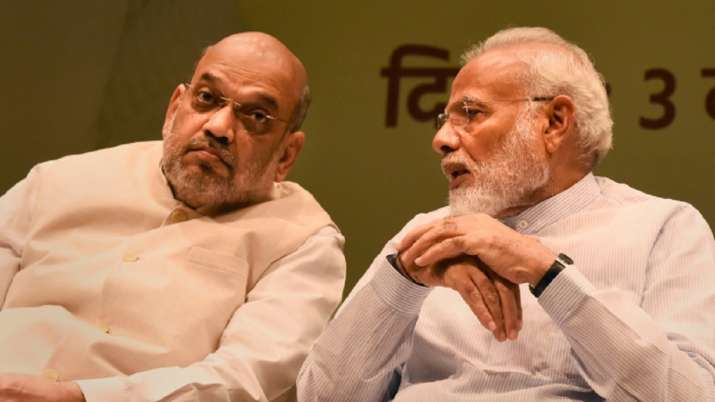
(The following is an extract from the book ‘Sanghi Who Never Went To A Shakha’, and is being republished here in the wake of the recent interview by Amit Shah to ANI. In his interview, Amit Shah said that the riots and circumstances were exacerbated by the efforts of a nexus, which included opposition political parties, politically driven media reporters and journalists, and certain non-governmental organisations. 

Amit Shah stated that all the allegations against the government of Gujarat were fake and fabricated. He said that the sting operation by Tehelka was also fake and ideologically motivated. “All the sting operations were fabricated. The court has itself observed that efforts were made to put a bad tag on the state government. It was we who agreed to constitute the SIT. Why there was no SIT after the 1984 riots in Delhi?” Shah remarked fiercely when asked about the BJP’s denial of the SIT.

Interestingly, all the lies that Amit Shah busted in his interview were peddled by the media and he, in his interview, also mentioned that the riots were made worse by the media. The following excerpt from the book only confirms how the media functions. This experience of the author of the book as a young journalist goes on to confirm how the Lutyens media tried its best, historically, to peddle lies and propaganda to defame Modi and Shah).

Following is the excerpt from the book reprinted here:

The horrific attack on the train at Godhra took place in the morning that day, at around 8 AM. At that time, I was on my way to catch a DTC bus from Ber Sarai to Jhandewalan, where Aaj Tak had their office. By the time I reached, it was already making headlines. The initial news reports didn’t term it as a terror attack or even an incident of violence. Information was still trickling in. I too assumed that it could have been an accident, maybe the pantry car of the train caught fire.

Within an hour, as reporters from Gujarat started sending more information, everyone in the newsroom knew that it was not an accident. As the reporters talked to the authorities and other people who were travelling on the same train, it became clear that the fire was set by a mob. Curious to know the details of what had happened, I filled a paper cup with tea from the vending machine in the office and stood near the desk where a bunch of copy editors typed away information that would be either made into news reports (‘package’ as they were called) or read out by the news anchor, while visuals played on-screen (‘voice-over’).

Copy editors received information from what was known as the ‘input desk’, which in turn got raw information and reports from reporters in the field or from news agencies. I saw one input guy standing next to one such copy editor while the news of the Godhra incident played on the TV sets in the newsroom. Assuming that they will have the latest information, I sneaked up to them and stood there to overhear their conversation as I pretended to watch the news being played on the nearest TV set.

Pata chala kaun kiya?’ (‘Do we now know who did it?’), asked the copy editor to the input guy, who immediately replied ‘Musalmaan sab aur kaun?’ (‘The Muslims did it, who else?’) in a hushed but disgusted tone.

After a brief pause, the copy editor said, ‘Ab yeh toh nahi likh sakte na.’ (‘Now, we can’t really write this.’)

I furtively tried to have a look at the input guy. He didn’t say anything after this. Anger was discernible on his face and so was the disgust. His eyes met mine and I immediately averted them, lest he thought I was trying to spy. He then walked away, leaving some fax or photocopies at the desk of the copy editor, presumably the raw reports sent by the reporters from the ground. I too walked back to my desk, silently.

This conversation of barely ten seconds, which would include some uncomfortable pauses too, revealed so much in retrospect. The mainstream can write headlines like ‘Frenzied Hindu mob brings down sixteenth-century mosque’ and ‘Dabang Rajputon ne Dalit dulhe ko ghodi se utaara’ (when some men from the Rajput community force a Dalit groom to alight from the horse during a wedding procession), mentioning the religion or caste of the perpetrator of a reported crime in some cases, but it feels greatly uncomfortable about mentioning the religion when the perpetrator of the crime is a Muslim — this when religion was clearly the main element in the crime committed at Godhra.

‘Muslim mob sets a train carrying Hindu pilgrims on fire’ is not seen as a legitimate or ‘responsible’ headline, even though it is factual. It is a template that Indian journalists have religiously internalized over decades. Any attempt to break away from this template is seen as losing your ‘moral compass’.

Highlighting and shouting about caste is seen as fighting for justice, while hiding and keeping mum about religion is seen as indulging in responsible behaviour, except of course when the religion of the perpetrator is Hindu and the victim a Muslim. In which case, the same journalists shout with double the intensity and even exaggerate the incident with made-up claims about ‘beef’ and ‘Jai Shri Ram’ slogans.

This unwritten rule or the moral compass of the Indian mainstream media ensures that we grow up with a strongly ingrained belief that a Hindu cannot be a victim of any injustice or hate crime, unless he belongs to the so-called lower castes (and in that case the perpetrator has to be a Hindu too). The Hindu–Muslim relationship in this country has been presented as that of the oppressor-oppressed, where Hindus by default are the oppressors.

This induces an element of guilt in an average Hindu, who tries to go an extra mile to appease and accommodate Muslims, including and invariably the ones with an Islamist mindset. That’s what we saw when thousands of Hindus came out in the streets to oppose the CAA, standing shoulder to shoulder with those who idolized Jinnah and the leader of the Moplah massacre.

I can literally give hundreds of examples from just the past few years where the Indian mainstream media has indulged in such glaring double standards, and this is in the era of social media where people have other means to know the ugly truth. You can imagine how skewed the reporting and beliefs would have been almost two decades earlier. This is the ‘truth’ that was fed to unsuspecting consumers by the media, and when people started speaking up and show showing the other side, the media talking heads invented the term ‘post truth’.

For now, I’ll go back to 27 February 2002 and that moment in the newsroom. The conversation between the copy editor and the input guy, which lasted barely 10 seconds, showed that most journalists knew within an hour that the Godhra incident was not an accident but an organized act of violence. They knew that it was veritably a terror attack by an Islamist mob against helpless, unarmed Hindus. Yet, around two and half years after the carnage, when the Congress returned to power in the Centre, cobbling up a post-poll alliance, and when it announced the formation of a commission to declare the carnage an ‘accident’, hardly any journalist protested saying it was a mockery of justice.

What that short conversation also showed was how a journalist, even if he wanted to speak the ugly truth, would have to surrender to the moral compass. Since he won’t be able to control the narrative, he would be left to control his anger and disgust, failing which he will be branded a Sanghi and unprofessional and whose career path would be cut short.

(The book ‘Sanghi Who Never Went To A Shakha’, authored by Rahul Roushan, was published by Rupa Publications and released on 10 March 2021. The link to buy the book is here.)