

Home Blog Page 3249

Biomass burning is behind Delhi’s poor air quality during winter, effect of Diwali fireworks does not last even a day: Finds IIT Delhi study

After the Supreme Court observed Diwali firecrackers as a temporary issue and held stubble burning a major responsible factor for poor air quality in Delhi, a latest research by the Indian Institute of Technology Delhi (IIT Delhi) has confirmed the same in its conclusions. Research performed by various scholars in different departments of IIT Delhi examined samples taken from different places in Delhi during the Diwali season and measured the proportions of various particulate matters in the air. The study revealed that biomass burning contributes the most to the air pollution of the national capital, and the pollutants from Diwali firecrackers don’t even remain in the air for a day. According to the research, biomass burning during winter includes stubble burning and burning of firewood etc for heat.

The title of the study is ‘Chemical speciation and source apportionment of ambient PM2.5 in New Delhi before, during, and after the Diwali fireworks.’ It has been published in Science Direct in Volume 13 Issue 6 (June 2022) of the Atmospheric Pollution Research journal of Elsevier BV. The authors and contributors of this research paper are from various departments of IIT Delhi. Chirag Manchanda and Mayank Kumar are from the Department of Mechanical Engineering. Vikram Singh and Mohammed Faisal are from the Department of Chemical Engineering. Naba Hazarika from the Department of Applied Mechanics has also participated in the research. Vipul Lalchandani, Ashutosh Shukla, and Sachchidanand Tripathi are the researchers from the Department of Civil Engineering who gave their inputs in this research study. Besides, the Geoscience Division of the Physical Research Laboratory of Ahmedabad is also an important part of the research team.

This study sheds light on the pollution sources impacting the ambient air quality in the capital before, during, and after Diwali. The researchers presented source apportionment results for highly time-resolved elemental and organic fractions of PM2.5 (Particulate Matter). The study was based in the National Capital Territory (NCT) Delhi and spans over 12 days from 20th October 2019 to 31st October 2019, with the Diwali festival on 27th October 2019. To account for the immediate effect of the firecracker burning, a six-day interval around the Diwali fireworks event was focused on. It was divided into three phases. Pre-Diwali (PD) (25th October 2019 24:00 IST – 27th October 2019 18:00 IST), During Diwali (DD) (27th October 2019 18:00 IST – 28th October 2019 6:00 IST), and Following Diwali (FD) (28th October 2019 6:00 IST – 31st October 2019 24:00 IST).

Samples were collected from two locations in Delhi during this period, The Indian Institute of Tropical Meteorology campus in central Delhi, and Indian Institute of Technology campus in south Delhi. The study used various instruments like Xact 625i Ambient Metal Monitor, multi-channel Aethalometer, High-Resolution Time-of-Flight Aerosol Mass Spectrometer to take precise measurements of pollutants in the air.

The study also took account of the established fact that though the emissions from the firecrackers contain carcinogenic factors, the health risks associated with the emitted species are primarily based on prolonged exposures at ambient pollutant levels. And in the case of firework events like Diwali, the duration of exposure is much shorter.

Other than firecrackers emissions, factors like vehicular pollution, industrial emission, coal combustion, dust particles, etc. are also taken into scope of consideration of this research and an attempt is made to ascertain how much does every one of them contributes to the sharp dip in the air quality of Delhi during that period of the year.

What researchers have found places biomass burning as the key contributor to the pollution. The conclusion of the research says, “The fireworks impact is most prominent at sampling sites only during the firecracker burning period that is the DD period. The coal combustion and dust-related sources mainly remained unaffected from the PD to the FD phase.” So it is evident that the effect of the pollutants from the firecrackers is there for a very limited time. “This study highlights that biomass burning emissions rather than the fireworks drive the poor air quality in the days following Diwali,” says the report in its abstract.

About the pollutants originating from biomass burning, the research paper concludes, “The biomass burning-related emissions rise steeply in the FD phase, and the average values increase by more than twice as compared to the PD phase. In terms of the source apportionment of the organic fraction, the primary organic emissions display a distinct rise in concentrations in the DD phase.”

The pollutants from firecrackers are different from those from biomass burning, therefore it is possible to identify the source of the pollutants. The study says that firecrackers mainly generate metallic elements, high levels of black carbon, and gaseous pollutants like carbon monoxide, along with oxides of sulphur and nitrogen. The study found that while the concentration of these elements peaked at around midnight on Diwali, their level plummeted to around one-third by the following day. The study also observed a rapid drop in Firecracker related PM2.5 level by 6 am the next day.

On the other hand, level of pollutants resulted from biomass burning remained high during the entire study period. In fact, the study says that biomass burning-related emissions rise steeply after Diwali, and the average values increase by more than twice as compared to the period before Diwali.

Chirag Manchanda, the lead author of this study, said, “The impact of the fireworks plummets within around 12 hours following Diwali.” Prof Vikram Singh, Department of Chemical Engineering, IIT Delhi, who was one of the investigators, said, “Both stubble burning and increased heating requirements of the region in winters drive the biomass burning activity.”

Prof Mayank Kumar, Department of Mechanical Engineering, IIT Delhi, said, “The result of this study provides crucial insights into a topic of long-standing debate and concern between air quality experts and policymakers committed to alleviating the extreme air pollution events in the capital of Delhi following Diwali.”

It is notable that on the occasion of the Diwali festival in the year 2021, the Kejriwal government in Delhi had issued a complete ban on firecrackers in the name of pollution control. While the Delhi Police initiated a crackdown on the sale and distribution of firecrackers this festive season after the Kejriwal-led government imposed a complete ban on the sale and bursting of all forms of firecrackers till January 1, 2022, the firecracker sellers had slammed the Delhi government’s reckless decision saying: “If Diwali will not be celebrated in India then do we expect it to be celebrated in Pakistan?”

The Supreme Court while hearing the firecracker ban case observed that the issue of firecrackers is a temporary issue and that the main matter is related to stubble burning. Now the research performed by IIT Delhi has bolstered the court observation with scientific evidence.
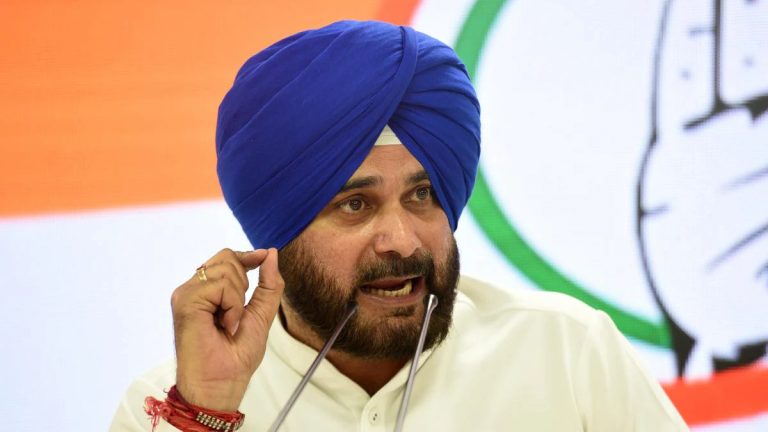
Punjab: Medical board recommends 7-meal diet chart for jailed Congress leader Navjot Singh Sidhu, jail official terms it ‘seven-star hotel menu’

Congress leader Navjot Singh Sidhu, who is sentenced by the court to rigorous imprisonment for one year in a 1988 road rage case involving the death of a person, is currently in the Patiala jail. While the one year jail term will not be easy for the cricketer turned politician, he will not have to consume regular jail, thanks to recommendation of a medical board. Navjot Singh Sidhu has been prescribed a diet chart for his health condition, which has been termed a “seven-star hotel menu” by a jails department official.

Navjot Singh Sidhu had sought permission for a special diet to be made available to him from home owing to his health complications. As per the orders of the court of Justice Amit Malhan, a board of doctors was formed at Rajindra Hospital in Patiala to examine Sidhu and submit a report.

Sidhu taken to Rajindra Hospital in Patiala on Monday for medical examination after his counsel moved an application demanding special diet for him. After his examination in the hospital, a three-member medical board comprising Dietician Dr. Ramanjit Kaur, Dr. Ashish Kumar Bhagat (a professor in the medicine department), and Dr. Saurabh Sharma (assistant professor in the cardiology department) prescribed Sidhu a diet chart. Astonishingly, the chart comprises seven meals in a day. The doctors have cited the reasons for his health as the same.

Many social media users mocked this diet chart and termed it torturous. But the jail officials, in fact, have termed it a meal of some seven-star hotel menu. According to a report by The Indian Express, an official of the jail department termed it as a “seven-star hotel menu” meal. The official said, “The officials who had been serving along with me have never had an avocado, one of the fruits recommended in the diet chart. The diet schedule is unheard of and unprecedented.”

Other items in the diet include a cup of Rosemary tea in the morning, a Chamomile tea at bedtime, ample fruits and juices in between along with a single mixed-grain flour Roti. As the medial board was constituted on the order of the court, the jail will have to comply with the recommendations of the board. The court asked the jail superintendent to consider the the medical board report. The court said, “since medical opinion has been given by the team of board of doctors, Superintendent, Central Jail, Patiala is to consider report of the Board of Doctors for providing medicines/special blood thinner diet under Punjab Jail Manual.”

The seven star diet plan

Following is the detailed information on this diet that is provided to a person sentenced to rigorous imprisonment.

Early in the morning, Sidhu gets half a glass of white petha juice or a glass of coconut water along with the above-mentioned cup of Rosemary tea.

For the breakfast, the cricketer turned politician gets according to his diet plan, one cup of lactose-free milk; one tablespoon of flax, sunflower, melon, or chia seeds; 5 to 6 almonds, one walnut, and two pecan nuts.

The mid-morning intake of the Congress leader is stuffed with fruits and vegetable juices of various kinds. It includes one glass of beetroot or Ghia (bottle gourd) or cucumber or mausami (sweet lemon) or Tulsi & Mint leaves or amla (gooseberry) or celery leaves or fresh Haldi (turmeric) or carrot or aloe vera juice. Sidhu can alternatively have one fruit from among watermelon, melon, kiwi, strawberry, guava, apple, and wood apple. He can also opt for sprouted black chana (25 gm) plus green gram dal (25gm) plus kheera (cucumber)/tomato/half lemon/avocado.

This is not even half of the prescribed diet. Sidhu is also advised to take a specific lunch after having all this. His lunch may contain a roti of 30 grams of mixed-grain flour. The ingredients are sorghum, singhara, and ragi flour taken in equal proportions. This roti is to be served with one bowl each of seasonal green vegetables and of cucumber and Ghia raita or one bowl of beetroot raita, a green salad bowl of cucumber, tomato, kakri, lettuce leaves, and half lemon) and one glass of lassi.

In the evening, Sidhu is prescribed to take a cup of 100 ml tea with low-fat milk and no sugar and 25 gm of paneer slice or 25 gm Tofu with half lemon. After this, in the dinner, Navjot Singh Sidhu will be having a bowl of mixed vegetable and dal soup/black chana soup with a 200 gm bowl sprinkled with black pepper powder and consisting of sauteed vegetables (carrot, beans, broccoli, mushroom, bell pepper). Before going to bed, he will get a cup of Chamomile tea and one tablespoon of Psyllium husk with half a glass of warm water.

While there is no detail yet revealed about what kind of work Sidhu will be performing as a part of his rigorous imprisonment, his recommended diet plan is in the public domain. Sidhu is advised to drink 10 to 12 glasses of water per day. He is advised to avoid processed food, and saturated fats (desi ghee, butter, white butter). Instead, the use of olive oil, rice bran oil, mustard oil or cold-pressed mustard, or sunflower oil is recommended. Besides, sprinkling salt on any of the salad foods is prohibited, though a small quantity of iodized salt is permitted. Navjot Singh Sidhu is also advised to do 30 to 45 minutes of exercise every day.

What did the expert doctors find in the medical examinations?

28-year-old Sidhu was examined by a panel of expert doctors who registered their observations and Sidhu’s medical history in the report. According to them, Navjot Singh Sidhu has a history of Pulmonary Embolism in 2009 requiring hospitalization. However, records of that are not available. He also has a history of lower limb DVT (deep vein thrombosis) in 2016 while on warfarin (poor compliance). According to reports, it is currently asymptomatic. The diagnosis of this panel said that Sidhu also has a pulmonary embolism and left leg DVT (old); Hyperhomocysteinimia (a condition where there is greater than 15 micromol/L of homocysteine [a type of amino acid the human body uses to make proteins in the blood]); nonalcoholic steatohepatitis (NASH); and obesity.

Among other tests, the doppler of the left leg showed evidence of recanalized thrombus while fibroscan showed significant fat in the liver with the suggestion of cirrhosis. It is also reported that the reliability of the report is poor due to technical reasons.

What are the court directions?

While noting its observation, the court has cited rule 814 of chapter 32 of the Punjab Jail Manual. The court observed, “Since medical opinion has been given by the team of board of doctors, Superintendent, Central Jail, Patiala is to consider the report of the Board of Doctors for providing medicines/special blood thinner diet under Punjab Jail Manual.”

Punjab’s Jail department’s stand on Sidhu’s diet

Varinder Kumar is the Additional Director General of Police (Jails) of Punjab. He said, “In special conditions, where an inmate is having health complications, the special diet is allowed as per the medical advice. We will go by the provisions in that regard as per the Jail Manual.”

It is notable that Navjot Singh Sidhu was sentenced to a year of rigorous imprisonment and on Friday 20th May 2022 he surrendered in the 34-year-old case. He had moved the application about his diet to the court of the chief judicial magistrate on the same day.

Election Commission deletes 87 political parties from its list for bogus donation, tax fraud, violating norms etc, 2000+ others given time to comply

In an action initiated for enforcement of the due compliance by the Registered Unrecognized Political Parties (RUPPs), the Election Commission of India deleted 87 such parties. More than 2000 other such parties are listed for stricter actions. A press note regarding the same is published on Wednesday 25th May 2022.

In this press note, the ECI said, “The Commission has noted with serious concern that out of total 2796 RUPPs, a large number are neither taking part in the electoral process nor adhering to the one or several of the above requirements which are not only violative of statutory requirements but also defeat the purpose of the clean electoral ecosystem. In view of the foregoing, the Commission, in the discharge of its mandate of ensuring just, free, fair & transparent electoral process hereby directs corrective measures.”

In the first and the most important measure, the ECI said, “There are 87 RUPPs, whose address of communication, was statutorily required as registration requirement under section 29A(4). Any change in address was required to be communicated to the ECI under section 29A(9), to which they have not complied. These RUPPs have been found to be non-existent after a physical verification carried out by the respective Chief Electoral Officers. The names of such non-existent RUPPs shall be deleted from the list of registers of unrecognized registered political parties. 87 such RUPPs, in absence of ensuring remedial measures listed above, render themselves liable to be not entitled to have benefits under the Symbols Order, 1968, including allocation of a common symbol.”

The ECI press note further said, “Three RUPPs which have been reported, prima facie to be involved in serious financial impropriety such as incriminating documents related to bogus donation receipts, formation of shell entities, bogus and non-genuine purchases, facilitating accommodation entries, etc., shall be proceeded against under the extant legal/regulatory regime including entitlement to avail the benefits of Symbols Order, 1968.”

The ECI gave a clarification on its action against more RUPPs. It said next in the press note, “2056 RUPPs, which have failed to furnish Annual Audited Account of the concerned financial year, are indicative of gaps in vital financial information including bank account, PAN, authorized signatories pertaining to those RUPPs, statement of assets and liabilities, contributions received, details of donors, expenditure, etc. Therefore, CEOs shall put the list of such RUPPS on their respective websites and afford an opportunity for such RUPPs to comply with extant legal and regulatory regimes within 30 days. Non-compliance may make such RUPPs not entitled to have benefits under the Symbols Order, 1968, including allocation of a common symbol.”

About the parties failing to furnish the election expenditure, the ECI press note said, “100 RUPPs, which have failed to furnish Election Expenditure Statements after the contest of election(s), have violated the directions of Election Commission. They may approach the concerned Chief Electoral Officer with full facts within 30 days of the issue of this direction for remedial action, if any, to avoid any consequential action.”

All the Chief Electoral Officers are instructed to put this order on their websites for compliance and for affording an opportunity to anyone aggrieved by this action. It is notable that there are 2796 Registered Unrecognized Political Parties (RUPP) as of September 2021. This number is an increase of over 300% since 2001. The ECI has cited sections 29A and 29C of the Representation of People Act 1951.

The Political Party, [for being registered, as a condition precedent prescribed by ECI under its power under section 29 A (6)] needs to undertake to include in its constitution that it must contest an election conducted by the Election Commission within 5 years of its registration. Section 29A(9) mandates every political party to communicate any change in its name, head office, office bearers, address, or PAN number to the Commission without delay. 

Section 29Cof RP Act 1951requires a RUPP to furnish a contribution report as prescribed in Form 24 A under Rule 85 B of Conduct of Election Rules 1961. Such contributions received by RUPPs are also 100%exempted from Income Tax as an incentive to the parties for strengthening the electoral democracy. Also, upon participation in an election, Political Parties are required to furnish their election expenditure statement within 75 days, in case of Assembly elections, and within 90 days, in case of Lok Sabha elections.

Terrorist Yasin Malik will spend the rest of his life in jail: NIA court gives him 2 life sentences and more

On May 25, Kashmiri separatist Yasin Malik was sentenced to life imprisonment by the Special NIA court for terror funding activities in Jammu and Kashmir. The court convicted him under UAPA on May 19. He had pleaded guilty earlier in the case, admitting that he had been associated with terror funding activities in Jammu and Kashmir on May 10. NIA had sought the death penalty for Malik.

Malik was reportedly awarded two life imprisonment sentences, besides 10 years of rigorous imprisonment for 10 offences and a Rs 10 lakhs financial penalty. However, all the punishments were ordered to run concurrently.

Earlier, Malik had told the court he did not wish to challenge the charges against him. Malik has been in jail since 2019 as a part of the crackdown against the anti-India and secessionist elements in the Valley in the aftermath of the Pulwama attack. He was later remanded to the NIA custody and was shifted to Delhi’s Tihar jail from Jammu’s Kot Balwal jail.

Malik is also accused of kidnapping former Union Home Minister Mufti Mohammed Saeed’s daughter Rubiya Saeed in 1989 and killing 5 IAF personnel in early 1990. He is also allegedly involved in the killing of Justice Neelkanth Ganju, the judge who had ordered the death sentence for JKLF terrorist Maqbool Bhatt, and the murder of the former director of Doordarshan Kendra in Srinagar, Lassa Kaul.

Notably, the Court has formally framed charges against other Kashmiri separatist leaders accused in the case including Farooq Ahmed Dar alias Bitta Karate, Shabbir Shah, Masarat Alam, Md Yusuf Shah, Aftab Ahmad Shah, Altaf Ahmad Shah, Nayeem Khan, Md Akbar Khanday, Raja Mehrajuddin Kalwal, Bashir Ahmad Bhat, Zahoor Ahmad Shah Watali, Shabir Ahmad Shah, Abdul Rashid Sheikh and Naval Kishore Kapoor.

Pakistanis shed tears for terrorist Yasin Malik, seek UN intervention and call India ‘fascist’ as NIA demands the death penalty

On Wednesday, following the National Investigative Agency’s demand for the death penalty for Yasin Malik who has been found guilty in a terror funding case, several Pakistan Ministers and politicians have extended their support to the terrorist seeking his release from custody.

Naaz Baloch, a member of the National Assembly of Pakistan stated that Malik was convicted by the Modi-led government on false charges and that it was a gross violation of human rights.

“The UN should take immediate notice of gross human rights violations by the fascist Modi Govt! Convicting the brave Son of Kashmir Yasin Malik on false charges is a crime against humanity. His peaceful struggle for the right of self-determination is exemplary”, she tweeted demanding the release of terrorist Malik.

Screenshot from Twitter

Kashmiri separatist terrorist Yasin Malik was found guilty in a terror funding case on May 19. On May 10, he pleaded guilty to all charges, including those under the stringent Unlawful Activities and Prevention Act (UAPA), before a Delhi Court in a case related to terrorism and secessionist activities in Jammu and Kashmir that convulsed the Valley in 2017. He also admitted that he was involved in terrorist activities, had also hatched criminal conspiracies, and that the sedition clauses against him were also correct. While convicting Malik, the NIA court had stated that the quantum of punishment in the case would be decided on May 25.

The Social media platform today therefore could be seen flooding with support messages for Malik from Pakistan. Other than Naaz Baloch, Mushaal Hussein Mullick, chairperson of ‘The Peace and Culture organization’ and wife of Yasin Malik said that India was scared of the ‘lion-like’ Yasin Malik. “The world has seen barbarism, it has seen injustice, but the level of injustice that is being done to Yasin Malik crosses every line”, she tweeted also adding to the #ReleaseYasinMalik campaign.

Screenshot from Twitter

Meanwhile, Pakistan-based journalist and author Hamid Mir also condemned the decision taken by the NIA court. He claimed that the charges leveled against Malik were fabricated and that he was innocent. He in his Twitter statement called for the United Nations to look into the matter and take appropriate action.

Screenshot from Twitter

This is a day after the Senate of Pakistan passed a resolution condemning the ‘illegal detention’ of Yasin Malik by the Indian government. The House expressing solidarity with Yasin Malik said that India was not providing basic human rights to him. The resolution moved by Syed Yusuf Raza Gilani, asked the world community and human rights organizations to pressurize the Indian government not to infringe on the basic human rights of Yasin Malik.

Screenshot from Twitter

Also, on May 24 recently ousted PM Imran Khan refused to call Yasin Malik a terrorist and said that he is a great fighter for the independence of Kashmir. “He can never be called a terrorist. I strongly condemn the punishment meted out to him by India and call on the world to take action against it”, he added.

Screenshot from Twitter

Pakistani actor Shaan Shahid raised his voice for Free Kashmir and called Malik a ‘warrior’ for his motherland. “The powers of the world are quiet yet the screams of injustice can be heard by all. Yasin Malik, you are a hero. May Allah be with you. You cannot be silenced as your words of freedom will echo forever. We stand with you”, he tweeted.

Screenshot from Twitter

Not only did the Pakistan leaders extend support to the terrorist and cold-blooded murderer, but several young people from the country hit the streets on Tuesday to protest against the Government of India. Islamists from the United Kingdom were also seen gathering in front of the Indian Embassy and demanding the release of terrorist Yasin Malik.

Here are a few more messages from Pakistani netizens that showcase support for the Islamic terrorist Yasin Malik who has been found guilty in a terror funding case.

Earlier, former Pakistan cricketer Shahid Afridi had come out in support of the terror convict, seeking UN intervention in the matter. Characterizing Malik as a ‘freedom fighter’ of ‘Kashmir’s struggle’, Afridi painted Malik as a victim of ‘fabricated charges’ even though he had pleaded guilty to all charges levelled against him.

“India’s continued attempts to silence critical voices against its blatant human rights abuses are futile. Fabricated charges against #YasinMalik will not put a hold on #Kashmir‘s struggle for freedom. Urging the #UN to take notice of unfair & illegal trails against Kashmir leaders,” Afridi had tweeted.

Yasin Malik pleaded guilty to all terror charges

On May 10, Yasin Malik pleaded guilty to all charges, including those under the stringent Unlawful Activities Prevention Act (UAPA), before a Delhi Court in a case related to terrorism and secessionist activities in Jammu and Kashmir that convulsed the Valley in 2017. He had admitted that he was involved in terrorist activities, had also hatched criminal conspiracies, and that the sedition clauses against him were also correct.

He told the court that he did not wish to challenge the charges against himself under Sections 16 (terrorist activity), 17 (raising funds for terrorist activities), 18 (conspiring to commit terrorist activity), 18 (conspiring to commit a terrorist act), and 20 (being a member of a terrorist group or organization) of the UAPA and sections 120-B (criminal conspiracy) and 124-A (sedition) of the Indian Penal Code.

Under the sections under which a case is registered against Yasin, he can get a maximum punishment of lifelong imprisonment. He has been active in Kashmir politics. He is one of the key instigators and secessionist leaders in the Kashmir valley. Malik is in jail since 2019 as a part of the crackdown against the anti-India and secessionist elements in the Valley in the aftermath of the Pulwama attack. He was later remanded to the NIA custody and was shifted to Delhi’s Tihar jail from Jammu’s Kot Balwal jail.

He is the chief of the Jammu and Kashmir Liberation Front (JKLF), an outfit that was banned shortly after the Pulwama terror attack. Malik is also accused of kidnapping former Union Home Minister Mufti Mohammed Saeed’s daughter Rubiya Saeed in 1989 and of killing 5 IAF personnel in early 1990. He is also allegedly involved in the killing of Justice Neelkanth Ganju, the judge who had ordered the death sentence for JKLF terrorist Maqbool Bhatt, and the murder of the former director of Doordarshan Kendra in Srinagar, Lassa Kaul.

Fact-check: Is the Indian flag at Wagah border visible from Lahore as claimed in a viral message

A photograph of an Indian Flag hoisted at the Attari-Wagah border has gone viral on social media platforms claiming that it is visible from Lahore, i.e. around 20 KM from the border. The image has been in circulation for years since the flag was installed in 2017. Harsha Kakar, Retired Major General shared the image on May 24, which has text claiming that it is India’s tallest flag on Wagah border and it is visible from Lahore’s market. He mentioned that it was received on WhatsApp.

Source: Twitter

Fazal Afghan from Afghanistan shared the image and wrote, “Pakis are so lucky they can see this beautiful flag from their city.”

Source: Twitter
Source: Twitter

In 2019 and 2020, it was shared by different Facebook pages.

Source: Facebook
Source: Facebook

The flag was supposed to be visible from Pakistan

With a budget of Rs 3.5 crore, the Punjab government in India had installed the tallest National Flag on the Attari border. Weighing 55 tons, the flag was 120 feet in length and 80 feet in breadth. Then-Punjab Minister Anil Joshi had inaugurated the flag in 2017. The aim was to install a tall flag in such a way that it was visible from Lahore.

Strong winds damaged the flag

The installation did not go as planned, and the flag was damaged multiple times within a month. Apparently, the authorities did not factor in the strong winds at the border region that repeatedly damaged the flag. As per the Flag Code of Conduct, it is a crime to hoist a damaged National Flag. Thus, a smaller size flag was hoisted in its place. The flag is indeed visible from the Pakistan side, but it is said to be not visible from Lahore.

The photograph makes it clear that it was taken from a place near the flag, and not from a place 20 km away. Due to the curvature of the earth, we generally can’t see beyond 5 km even on a completely flat surface. While the area between Lahore and the border is relatively flat, the Wagah border lies beyond the horizon for viewers from Lahore. Moreover, even if it is visible due to its height, the flag will appear as a tiny dot, not was what is seen in the photograph.

Retired Commander OP Singh while replying to Maj Gen Kakar said the flag is visible from up to 10 KM from Pakistan’s side on a clear day.

Source: Twitter

Another interesting point to note is that if people in Lahore can see the Indian flag at the Wagah border, they will also see a similar Pakistani flag also. Because, a few weeks after the Indian flag was installed, Pakistan also hoisted a tall flag on its side of the border. Both flags can be seen flying high at the border, located less than 500 meters from each other. But they are not visible from the nearest city Lahore.

Source: Tribune

Verdict: In 2017 then-Congress led Punjab government installed a tall Indian flag with an aim to make it visible from Lahore, but things did not pan out as planned. After the flag was damaged by winds, a new shorter flag was hoisted in its place. The flag is visible from the Pakistan side but not from Lahore.

“Not everything is misleading like your birthdate”: Indian cricketer Amit Mishra takes a dig at Shahid Afridi for supporting terrorist Yasin Malik

Indian leg-spinner Amit Mishra took a brutal dig at controversial former Pakistan cricket team captain Shahid Afridi over his recent statements supporting the terror convict.

Hours after former Pakistani cricketer Shahid Afridi had posted a tweet showing his support for the convicted terrorist Yasin Malik and seeking UN intervention in the matter, Indian cricketer Amit Mishra reminded Afridi that Yasin Malik himself had been pleaded guilty in the court and asked him to verify before jumping in support of the terrorist.

The former leg spinner mocked Shahid Afridi, saying that not everything was misleading about the latter’s birthdate, referring to the controversies related to Afridi’s date of birth on official documents.

Amit Mishra Shahid Afridi
Source: Twitter

Earlier, Shahid Afridi, in a tweet, had characterised terrorist outfit Jammu and Kashmir Liberation Front (JKLF) chief Malik as a “freedom fighter” of “Kashmir’s struggle”. He had also tried painting Malik as a victim of “fabricated charges” despite the terrorist pleading guilty to all charges levelled against him.

“India’s continued attempts to silence critical voices against its blatant human rights abuses are futile. Fabricated charges against #YasinMalik will not put a hold to # Kashmir’s struggle to freedom. Urging the #UN to take notice of unfair & illegal trails against Kashmir leaders,” Afridi tweeted.

Amit Mishra Shahid Afridi
Source: Twitter

Afridi’s tweet came ahead of the Delhi Court hearing later today, which is going to decide the quantum of punishment to be awarded to Yasin Malik, who had earlier pleaded guilty to all the charges, including those under the stringent Unlawful Activities Prevention Act (UAPA), in a terror funding case.

Well, this is not the first time that Amit Mishra is giving befitting replies to cricketers for wading into controversies unnecessarily.

In April, former cricketer Irfan Khan had tried peddling false propaganda on Twitter over communal incidents, especially after Muslim mobs had attacked Hindus at several places across the country.

He had put out a tweet saying, “my country, my beautiful country, has the potential to be the greatest country on earth. BUT….,” as he expressed doubts over India’s future.

In response, Amit Mishra had put out a sly tweet that read, “My country, my beautiful country has the potential to be the greatest country on earth…..only if some people realise that our constitution is the first book to be followed.”

Mishra’s tweet appeared to be sly at a certain group of people who believe that a religious book is over and above India’s constitution.

Yasin Malik convicted in terror funding case

Kashmiri separatist terrorist Yasin Malik was found guilty in a terror funding case. On 10th May 2022, Yasin Malik pleaded guilty to all charges, including those under the stringent Unlawful Activities and Prevention Act (UAPA), before a Delhi Court in a case related to terrorism and secessionist activities in Jammu and Kashmir that convulsed the Valley in 2017. Yasin Malik had admitted that he was involved in terrorist activities, had also hatched criminal conspiracies, and that the sedition clauses against him were also correct.

Yasin Malik told the court that he did not wish to challenge the charges against himself under Sections 16 (terrorist activity), 17 (raising funds for terrorist activities), 18 (conspiring to commit terrorist activity), 18 (conspiring to commit a terrorist act), and 20 (being a member of a terrorist group or organisation) of the UAPA and sections 120-B (criminal conspiracy) and 124-A (sedition) of the Indian Penal Code.

Under the sections under which a case is registered against Yasin, he can get a maximum punishment of lifelong imprisonment. Yasin Malik has been active in Kashmir politics. He is one of the key instigators and secessionist leaders in the Kashmir valley.

Malik has been in jail since 2019 as a part of the crackdown against the anti-India and secessionist elements in the Valley in the aftermath of the Pulwama attack. He was later remanded to the NIA custody and was shifted to Delhi’s Tihar jail from Jammu’s Kot Balwal jail.

Karnataka: VHP performs ‘Tambula Prashne’ at Malali temple, plans to perform ‘Ashtamangala Prashne’ next, sec 144 imposed

Days after a temple-like structure was found underneath an old mosque on the outskirts of Mangaluru in Karnataka, the Vishwa Hindu Parishad (VHP) and the members of the Bajrang Dal performed the ‘Tambula Prashne’ ritual at Sri Ramanjaneya Bhajana Mandira Thenkulipadi in Ganjimutt on Wednesday.

The ritual was performed to find a solution to the controversy over a temple-like structure that was discovered during the renovation work of the mosque.

According to the reports, Hindu organizations held the ritual to establish divinity on the spot as per astrology. Tambula Prashne is performed to find out through astrology whether some kind of divine forces are present or not. When Tambula Prashne comes positive, then is performed the ritual of ‘Ashtamangala Prashne’. The VHP after the Tambula Prashne ritual today has plans to conduct the ‘Ashtamangala Prashne’ ritual also.

Following the ritual that was carried out from 8:30 am to 11 am, the Commissioner of Police imposed section 144 of the Criminal Procedure Code (CrPC) within a 500-meter radius of the Jumma Masjid in Malali of Thenkulipadi village. Police personnel have also been deployed in the area to maintain peace and harmony.

“Situation is peaceful. Hindu organizations held a ritual today that started at 8.30 am and continued till 11 am. Force has been deployed wherever necessary. Villagers also have ensured that no untoward incident will happen and both the parties have agreed to fight it in court”, confirmed Mangaluru Police Commissioner NS Kumar on May 25.

Meanwhile, BJP MLA Bharath Shetty has demanded an ASI investigation on the spot. Earlier he had said that the issue of the disputed site at Malali was not a political issue but a social one. “It’s not about polarisation but rediscovering history. We are not claiming anything. We are hoping to reclaim the truth. Let the competent authority conduct survey. Let the reality be known to the World”, he had tweeted.

“The truth deserves to be known as it cannot be suppressed nor distorted. Let the Archeological Department conduct a survey, it doesn’t violate the Places of Worship Act of 1991”, he had added on May 23. The presence of a Hindu temple-like structure inside the masjid has now raised curiosity among the people residing in the area whether a temple existed in the place before the present mosque was constructed. With locals suggesting that there is every possibility that a Hindu temple existed at the site, VHP leaders have appealed to the district administration to look into the matter and take appropriate decisions regarding the old mosque and its renovation.

While media projects Telangana CM KCR as a conquering hero after his ‘national tour’, here is the truth of the overhyped Delhi visit

The first indication and excitement of a “national tour” of Telangana Chief Minister K. Chandrashekhar Rao (KCR) came from NDTV’s local editor. Many analysts brushed it aside for two reasons – One, NDTV is often excited when it comes to KCR & his family. And two, KCR has done “national tours” before. You might be thinking that “national tour” means that he will tour multiple states one after the other and meet his political friends there. You are mistaken.

KCR’s “national tours” are always staggered; often to the same states because he only meets leaders from non-BJP parties; and often with the same issue – formation of an alternative front to BJP and Congress. To this end, “Desh ka Neta KCR” posters keep propping up in different parts of the country, often by someone called “Telangana Sai”! Also, we are often not told the duration of the “tour”. We know when KCR will leave but at that point of time we will not know when he will go back or what his full agenda is.

The last time he was in Delhi, the Telugu media was abuzz with how he is going to camp in Delhi till he “bends the neck” of the central government and make them procure paddy directly from the farmers in Telangana. While his ministers were trying to “bend the neck” of the central government, he also got an operation done on his tooth (people back home wondered why in Delhi when Hyderabad has world class medical facilities too!) and didn’t appear in public for a couple of days. He then sat on a dharna against the central government and the only “leader” who visited him that day was Rakesh Tikait, who has been expelled from Bharatiya Kisan Union for playing politics! None of his other friends from all those parties he keeps seeking support from, bothered to even turn up at this dharna.

The first stop in this leg of the “national tour” was again Delhi. He met Akhilesh Yadav in Delhi. The TRS cadre told us that this is the most significant meeting ever because KCR is meeting the leader who was responsible for reducing the seats of BJP in UP. If you didn’t know better, you would actually think that BJP lost in UP because of Akhilesh Yadav! And then came the most intriguing picture of all time – KCR met with Prannoy Roy and Radhika Roy.

KCR with Prannoy Roy and Radhika Roy in Delhi

While the entire excitement of NDTV made a lot of sense now, it was really baffling as to why a sitting Chief Minister of a state would go to Delhi and meet the owner of a news channel whose viewership has been on perpetual decline? Just about a month ago, NDTV ran a 30-minute program on “Telangana – A phoenix rises” without telling the viewer that the Telangana government paid for the program. The choice of the phrase – “In partnership” – is also intriguing. NDTV isn’t telling you that they are paid for it, but they actually partnered and worked with the Telangana government to prepare this program!

Many wondered back then also as to why KCR is investing money into NDTV; many are wondering now why KCR is investing time into NDTV too! The only logical explanation available so far is that these sudden overtures to NDTV are happening after KCR’s multiple meetings with his “best friend” Prashanth Kishor (PK)!

KCR next met Arvind Kejriwal and as expected they went to a school and a clinic to see “Delhi model” of governance. And then they all left and went to Punjab. Here is where KCR stumped everyone yet again and is also facing a lot of flak back in Telangana. The tour to Punjab was limited to one program – distributing of cheques of Rs. 3,00,000/- to each of the families of the alleged 700 farmers who died during the alleged farmer agitation. KCR instigated the farmers of Punjab to continue agitating

.

Farmers of Telangana haven’t heeded to his call for protests when the farm laws were introduced. He did a U-turn and supported the farm laws, in a series of tweets from the Telangana CMO handle. KCR seems to have lost a grip on the needs of the farmers of Telangana but isn’t hesitating to go to Punjab and instigate farmers there for more agitations!  It was baffling to folks back in Telangana as to why KCR is distributing cheques in a different state when there are enough issues related to farmers that are bothering his state itself.

After reading all of this, you would assume that this was perhaps a 1 day or a 2 day tour. Turns out that his was a four-day tour. The English media started projecting his return as that of a conquering hero when all he did was to meet Akhilesh Yadav and Prannoy Roy in Delhi; met Kejriwal and his team in Delhi and then went to Punjab – 4 meetings in 4 days, that’s it!

KCR is now back in Hyderabad and scheduled to meet H.D.Deve Gowda and his son H.D.Kumaraswamy tomorrow (May 26th). The date May 26th is important because this is the same date on which the Prime Minister of India is coming to Hyderabad to participate in ISB’s 20th anniversary celebrations. KCR has stopped receiving the PM and meeting him when he comes to Telangana. Last time, he said two people in his house got COVID and so he didn’t come. This time, he will simply say he is not in Hyderabad. For an astute politician like KCR, it is really surprising how he cannot see that the people of Telangana can easily understand which meeting is more important – meeting H.D.Deve Gowda or meeting the Prime Minister of India.

KCR thunders at the Congress but doesn’t hesitate a bit to go and meet parties that are in alliance with the Congress. He once said the nation has to get rid of both BJP and Congress. He slowly modified his ambitions to saying that the present danger to the country is BJP and so he is fighting against BJP only! We haven’t heard a single concrete proposal as a result of all the tours he has done so far in his 2nd tenure. Will we ever hear anything, time only will tell!

The awkward silence of Rahul Gandhi at Cambridge University and the uncomfortable truth it tells us about the Congress Prince

Congress leader Rahul Gandhi’s recent interviews at Cambridge University have set social media on fire. A gaffe, followed by a long and awkward silence by the Congress leader Rahul Gandhi during a recent interview in the United Kingdom, is now being used by social media users and political opponents to mock the former Congress president.

A video had gone viral on the social media platforms where Rahul Gandhi seemed to be lost and unable to articulate his views when the interviewer posed a question to the Gandhi-scion.

The video pertains to Rahul Gandhi’s recent controversial speech at an event titled ‘India at 75’ at Corpus Christi College at the Cambridge University hosted by a Congress party sympathiser Shruti Kapila. During his recent visit to Cambridge University for a talk show, Rahul Gandhi was asked to share his views on the collective violence that India faced as a country post-1970.

It is notable here that Shruti Kapila has long been pro-Congress and had suggested earlier that Rahul Gandhi should only do scripted interviews for ‘maximum impact’.

The interviewer asked Rahul Gandhi what he thought about the violence, especially to share how he viewed the faultlines that exist in the country that often end up creating chaos. The interviewer had Rahul about his views on violence and non-violence in the context of Indian society, especially how he viewed it in terms of his own life after his father, former PM Rajiv Gandhi’s assassination.

However, Rahul Gandhi was seen wondering what to answer as there was a pin drop silence inside the auditorium. The short clip of his theatrics has gone viral on the internet, resulting in social media users and his political opponents mocking him for his long awkward silence. Many advised Rahul Gandhi to do proper homework before talking to the press.

Essentially, Kapila asked Rahul Gandhi how he saw so much violence in the 1970s, especially the pre-Modi era India and tried to draw a relationship with non-violence, which has been the supposed principle of Congress since Gandhi. Though the question posed by Shruti Kapila was not easy, one expected Rahul Gandhi to provide an insight into what he thought about social issues such as violence.

However, Rahul Gandhi was seen as clueless and pushed himself into a corner with a long awkward silence. Rather than asking the interviewer to rephrase the question to be more precise or maybe directly ask what she intended to know, Rahul Gandhi ended up displaying his lack of ability to comprehend complex issues. He made it worse by making it personal by dragging his father’s assassination to cover this embarrassing situation.

“I think… I mean, the word that comes to mind is forgiveness. It is not precisely accurate,” Rahul Gandhi said before going silent again.

The interviewer sensed that she has asked a question Rahul was finding it difficult to respond to. “I didn’t mean to stump you… it’s a very obvious question,” Kapila said.

“You didn’t stump me,” Rahul responded. In response, Shruti Kapila said, “No one has asked you, I am surprised”.

“No, no… they have asked,” he replied, adding that “I am trying to go deeper in the answer” amidst laughter from the audience.

As he found himself in a tough position, Rahul Gandhi cleverly turned the question personal as he made it all about himself and his family. Though the question was on a larger issue of continuing hostilities between the communities, Rahul Gandhi avoided it by shifting it to his story by bringing his father’s tragic assassination into it.

Responding to the question, Rahul Gandhi said that the assassination of his father and former prime minister Rajiv Gandhi was the “single biggest learning experience” of his life while claiming that he cannot get away from the fact that the event also made him learn things that he would have never learnt otherwise.

“The single biggest learning experience of my life was my father’s death. There is no bigger experience than that,” said Rahul Gandhi.

“Now, I can look at it and say the person or the force that killed my father caused me tremendous pain, that’s correct, as a son I lost my father, and that’s very painful. But then I can’t get away from the fact that the same event also made me learn things that I would never ever have learnt otherwise. So, as long as you are ready to learn, it doesn’t matter how nasty or evil people are,” the Congress leader said.

The Gandhi-scion also dragged Prime Minister Modi into this conversation totally out of context, to add, “If I turn around and (Prime Minister) Mr (Narendra) Modi attacks me, and I say oh my god he’s so vicious, he’s attacking me. That’s one way of looking at it, and the other way of looking at it great, I could learn something from him, give me some more.”

Instead of addressing the larger issues, Rahul Gandhi first finds himself in a tough position not able to credibly articulate his position. However, after ending up in an embarrassing situation, Rahul Gandhi made the issue about himself and his family rather than addressing the critical issues of how India witnessed hostilities during the Congress era.

Earlier, in the same interview, Gandhi-scion Rahul Gandhi yet again courted controversy by challenging India’s national unity by referring it to as a “union of states” and not a nation.

In what seems to be a scripted interview with Kapila, Rahul Gandhi shared several ideas that included his idea on India as a nation while casting aspersions on India’s electoral system and democratic credentials, including expressing doubts about the independent functioning judiciary of the country.

Rahul Gandhi had also again brought up the issue of sub-nationalism to compare it with the other democracies. Interestingly, the Gandhi-scion compared India to confederations such as European Union and not to the federal democratic setup as the United States. As per Gandhi, India’s political formation is much like a loosely-connected supranational European Union, where multinational political unions together negotiated power as an arrangement.
