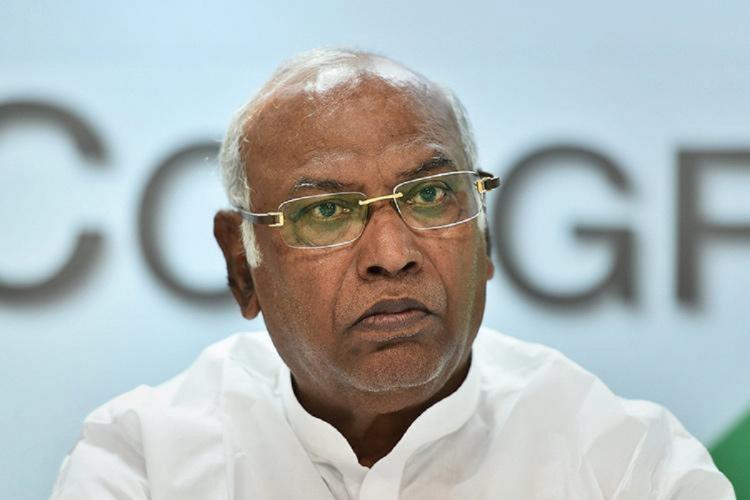
The Enforcement Directorate (ED) is questioning senior Congress leader Mallikarjun Kharge in connection with the money laundering probe linked to the National Herald case on Monday, April 11, 2022. According to sources, the senior Congress leader was summoned to appear before the law enforcement agency today.
ED questioning senior Congress leader Mallikarjun Kharge in money laundering probe linked to National Herald case: Officials. https://t.co/BFKlNaoGRx
According to officials, his statement will be recorded under the Prevention of Money Laundering Act (PMLA) because the agency wants to understand some issues in the investigation.
It is pertinent to note here that in 2020, the Enforcement Directorate had attached one of the most prime properties in Mumbai’s Bandra under the Prevention of Money Laundering Act (PMLA). The said property, with market value to the tune of hundreds of crores of rupees, was illegally allotted to Associated Journals Limited (AJL).
The Bandra plot came under the spotlight after Sonia Gandhi and Rahul Gandhi were dragged to court in Delhi after Subramaniam Swamy filed a case accusing them of misappropriating the National Herald’s properties. The aforesaid property in Bandra was provided to National Herald in 1983 at concessional rates to publish the newspaper.
Similarly, the Enforcement Directorate (ED) had earlier in December 2018 attached property worth Rs 30 crores in Mohali allotted by former Haryana Chief Minister Bhupinder Singh Hooda in the case of Associated Journals & National Herald Case. The Supreme Court in 2918 upheld the Income Tax Department’s decision to re-open their tax assessment for the financial year 2011-2012 in connection with the National Herald Case.
National Herald Scam
The National Herald scam is one of the most notable legal cases in Indian history, as the Gandhis are directly accused. The Mother-Son duo of Congress President Rahul Gandhi and his mother Sonia, along with their aides – Oscar Fernandez, Motilal Vohra and Sam Pithroda are alleged to have been involved in massive ‘cheating and breach of trust’ in the acquisition of Associated Journals Ltd (AJL) by Young Indian Pvt Ltd (YIL). Assets worth crores of rupees had been allegedly transferred for purposes other than originally intended for a paltry sum. Sonia Gandhi and Rahul Gandhi got unconditional bail in December 2015.
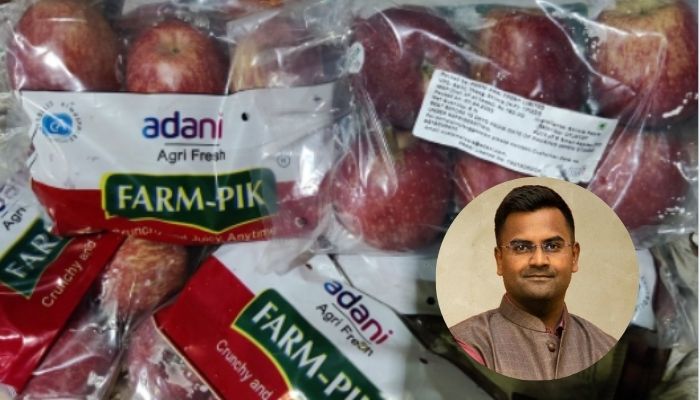
On Monday morning, National Convenor of Congress Social Media department, Saral Patel decided to take a jibe at Adani Group’s agri-business. Patel was trying to suggest that the presence of large business groups in agri-businesses is hurting farmers and small businesses, and Narendra Modi is to blame for that. However, after getting schooled by netizens, Patel quietly deleted the tweet as he realized that this propaganda is not working.
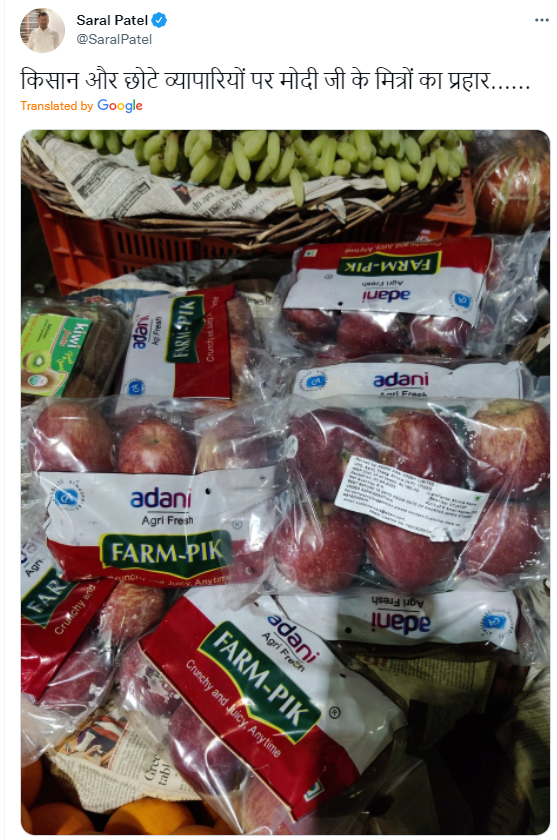
Saral Patel tweeted an image of apples packaged under Adani’s ‘Farm-Pik’ venture with the caption, “The attack of Modiji’s friends on farmers and small businessmen.”
Image tweeted by Saral Patel on Twitter, which was deleted later
Soon after Patel tweeted the photo, he received a lot of flack with people pointing out that the existence of Adani’s agri-business dates as far back as 2004, almost a decade before Narendra Modi came to power. Netizens educated Patel that Adani Agri Fresh Ltd (AAFL) procures apples from farmers of Himachal Pradesh and markets the produce under its brand name ‘Farm Pik’. The Adani group has also set up cold storage units in Mehandli, Rewali and Sainj areas in the Shimla district, benefitting the local farmers.
The History of Adani’s ‘Farm Pik’
It was in 2004 when the Adani Group first ventured into agri-business with Adani Agri Fresh Limited. Under its brand name Farm Pik, the company has been procuring apples from as many as 15,000 farmers in Himachal Pradesh. Not restricted to apples, Farm Pik also sells freshly procured Pears, Kiwis, Oranges, Grapes, and many other fruits. Apart from importing apples from Canada, USA, Europe and other countries, Farm Pik’s India market is concentrated within the Shimla and Kinnaur districts of Himachal Pradesh.
The company procures apples from small and marginalized farmers spread over 700 villages in the state. In 2020, it made news after the farmers claimed private partners like the Adani Group had helped to elevate their income by eliminating the margins of the middlemen. An apple farmer who sold his produce to Farm Pik in an interview with the ANI said, “Earlier we had to go to Delhi. Now we sell apples directly to the procurement center here. I gave them 12,000 crates of apples last year and around 10,000 crates this year.” Farmers have earlier said that with the entry of private players in the business, there is the ease of procurement while production capacity has also increased.
I gave them 12,000 crates of apples last yr & around 10,000 crates this yr. Payment is made directly into our bank account. Earlier, we used to spend a lot on paying grading officials, labourers, on commission etc. Now we save a lot & earn good money: Layak Ram, an apple grower https://t.co/DHjbumg0Zcpic.twitter.com/7UTr1ckdJI
However, this is not the first time that Congress has tried to mislead people about the agri-business of the Adani Group. Farm Pik is often at the receiving end of such propaganda where opposition insinuates that PM Modi is promoting these businesses at the expense of the farmers.
However, the truth is that the success of Adani’s Farm Pik dates back to the time when the UPA government was in power in the center. Such companies benefit the farmers massively as they get good prices locally and also a guaranteed buyer every year. Probably, Patel realized this too later – as he ate a humble pie while deleting his tweet.
The public health care system in Maharashtra has many loopholes, which were primarily exposed during the Covid pandemic. The health infrastructure of the state crumbled entirely during the first 2 waves of Covid-19, with critical patients wandering from hospital to hospital for a bed, people gasping for oxygen and crematoriums running out of wood to cremate the deceased victims.
Despite the fact that the Covid-19 pandemic situation has significantly improved in recent months, the state government’s hospital and health care facilities have remained unchanged. In the last couple of years, several hospitals across Maharashtra reported incidents of mishaps, leading to deaths of patients and hospital staff, underscoring the precarious state of health infrastructure in the state.
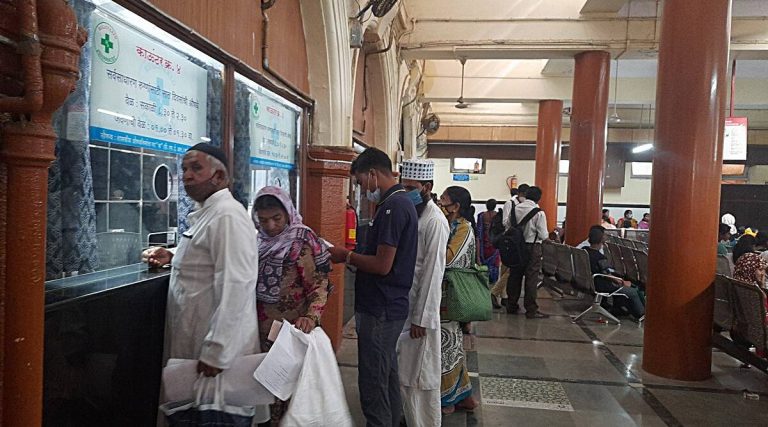
According to a report by The Indian Express, the state’s public health department revealed the footfall of patients in the OPD and emergency sections of government hospitals across Maharashtra dropped by nearly 70 per cent following the outbreak of the Covid-19 pandemic in early 2020. With the pandemic curve flattening, these hospitals are now overrun with non-Covid patients, and Maharashtra’s state-run hospitals are struggling to keep up. According to the report, the majority of them have run out of even basic, life-saving medications.
To further illustrate, the report uses the case of a patient named Kaliprasad Ramlakhan. After being bitten by a dog, the 36-year-old patient was rushed to Mumbai’s Sir Jamshetji Jeejeebhoy (JJ) Hospital, the largest state-run hospital in Maharashtra, on March 25. Since it lacked even basic medicines such as TT injections and antibiotics such as Amoxicillin, his brother was forced to go to a nearby private chemist shop and procure the medicines.
“There were no medicines in the hospital. It refused to give me even a rabies injection from their stocks, although they obliged when I pleaded,” said Ramlakhan, who was running a high fever and had to wait outside the hospital.
Pertinently, JJ Hospital in Mumbai is getting over 30 dog bite cases daily for treatment.
Kaliprasad Ramlakhan’s case is not the only such case. When The Indian Express team reached JJ hospital’s OPD ward, they saw many patients and their relatives pleading before the hospital staff at the drug counters for medicines. “We have been given targets for a daily allotment of medicines. We can’t surpass it to help the patients as we are accountable,” said a hospital staff.
The report quoted Dr Pallavi Saple, Dean, JJ hospital as saying, “Currently, we are procuring the medicines at the local level to handle the shortage. We have given the list of required medicines to Haffkine. We are hopeful that we will get the medicines within the next 15 days.”
Notably, while patients continue to suffer, state and hospital officials are busy blaming one another. According to a Free Press Journal report from last month, hospital officials stated that they provided the list of medicines to the Directorate of Education and Medical Research (DMER), Government of Maharashtra, but received no response. Meanwhile, when the issue of medicine shortages at JJ hospital was brought up in the Assembly, Medical Education Minister Amit Deshmukh blamed the deans and medical college superintendents for the delay in placing their requisition for medicines, which caused the crisis.
“They need to place their requisition for medicine procurement to the government in advance… They need to be more efficient so that there is no time lag in procedures. It is about reforming the whole structure,” Deshmukh said.
Many hospital deans refuted such charges and pointed fingers at Haffkine for “their failure to meet the requirement of bulk medicine purchase, leading to the shortfall”.
When contacted, Dr Madhavi Khode Chaware, Medical Director, Haffkine Bio-Pharma, said technical issues were behind the delay.
However, the problem is not exclusive to only JJ hospital. The Indian Express report further stated how many such state-run hospitals are refusing to treat even diabetic and hypertensive patients. Hasan Mehdi, a 57-year-old unemployed man from Dogri who is a chronic diabetic patient, is being forced to shell out Rs 2,000 per month for medicines due to the unavailability of medicines for diabetes and hypertension in such hospitals. “I have to ask my relatives for financial assistance for my medication,” he explained.
The plight of patients in rural districts such as Latur, Amravati, and Dhule, who rely on government hospitals for free treatment and medicines, is even more distressing, the report stated. Amir Ali Siddiqui, 39, a Dhule worker, recently suffered severe burns on his hand while making roti. At the Shri BhausahebHire Government Medical College (SBHGMC), Dhule, all he could get was paracetamol. “I had to spend Rs 650 to buy medicines from outside (Amoxicillin, Pantoprazole, and Polyvitamin tablets),” he lamented.
These state-run hospitals, on the other hand, have stated that the issue of medicine shortages has already been raised with the appropriate departments, but no concrete steps have been taken to resolve the issue.
The Maharashtra Association of Resident Doctors’ unit in Yavatmal’s government medical college said it has already submitted a list of 34 vital medicines that have gone off the shelves to the Shri Vasantrao Naik GMC’s Dean on March 22.
The resident doctors said they “are facing many difficulties while treating patients” in the hospital, despite the fact that there have been shortages of “emergency and essential” drugs for months.
Due to limited drug supplies, hospitals have asked their doctors to ‘rationalise’ the use of medications, putting them in a moral bind. “For us, all patients are equal. It is ethically wrong for us to rationalise the use of medicines when a patient is in a need. But due to the situation, we are being forced to provide the limited medicine only to emergency patients and ask others to buy it from outside,” said a resident doctor at the Yavatmal GMC.
Many drug vendors, on the other hand, claimed they “boycotted” the bidding process because they owed nearly Rs 220 crore for supplying drugs and non-surgical equipment to the 18 government hospitals.
The All Food And Drug License Holder’s Foundation (AFDLHF)’s president Abhay Pandey said the vendors were yet to get their 2019-20 dues of Rs 90 crore and 2020-21 dues of Rs 30 crore from Haffkine. The Directorate of Medical Education and Research (DMER) also owed around Rs 100 crore to the suppliers. “We are still compiling the pending dues of the ongoing financial year,” Pandey said.
It is appalling that though the Maha Vikas Agadi government led by Uddhav Thackeray in the state claims to have budgeted Rs 2,077 crore for medicine procurement in 2021-22, the state’s health capabilities are in such disarray that people are being denied access to basic medicines and treatment.
Maharashtra heath system crumbled during Covid-19 pandemic
It is imperative to note here that the medical situation in Maharashtra, during the pandemic, was even worse. With the advent of the second wave of the pandemic, Maharashtra ran out of hospital beds too soon. In a heart-wrenching incident, Sagar Kishore Naharshetivar who had been on the move for days in search of a hospital bed for his father said, “Give him a hospital bed, or just kill him with an injection.”
In another video that surfaced on social media, a severely ill man is said to have died in the car itself while his family ferried him from one hospital to another in search of a hospital bed.
A woman COVID-19 patient in Satara district, Maharashtra, was seen waiting in an autorickshaw with an oxygen cylinder hooked on to her to enable breathing.
COVID-19 patients at Osmanabad district hospital in Maharashtra were given oxygen on their chairs as the hospital appeared to have run out of beds.
A 38-year-old critical COVID patient succumbed to the infection while protesting outside the Nashik Municipal Corporation in April. Babasaheb Kole had reached the corporation office with his oxygen mask on after he was refused admission by multiple hospitals in Nashik.
In September 2021, OpIndia reported how out of the total 4,43,960 COVID-19 related deaths recorded in India then, over 30% were recorded from Maharashtra.
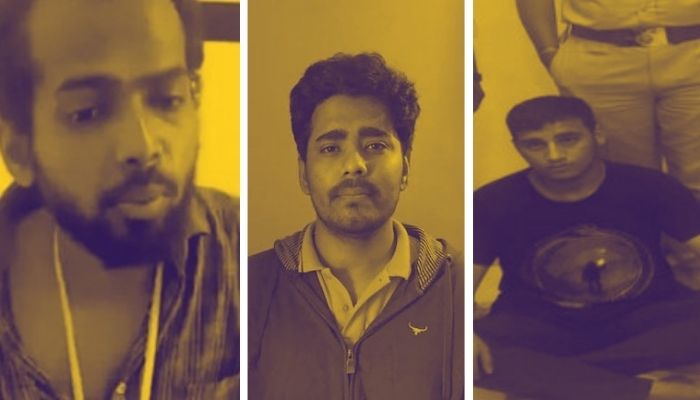
A strange dichotomy has been observed while castigating abusers over civility on social media. Earlier this year, The ‘Bulli Bai’ app created havoc when many pictures of Muslim women were misused and uploaded by a group of youngsters. The gross objectification of women who belonged to ‘the minority community’ made waves even in the international press. In an ardent investigation that followed up, two youth – Aumkareshwar Thakur and Niraj Bishnoi were arrested on charges of promoting enmity between religious groups and online targeting.
More so than the swift investigation that followed, it was the online outrage that focused on targeting women based on religious lines. While it is true that the religious bigotry of the accused prompted them to take misogynistic treatment against women, it was the prior factor that was made the focal point of the discussions. The question being asked today is, will the same standards be applied in cases where the Hindu community is the victim? Be it writing off claims of grooming Jihad to not acknowledging obvious religious angles in rape cases, honour killings that fan in the interiors of India, there’s a pattern in humanising or vilifying perpetrators based on their religious or political inclination.
The Hindu threats of violence are exaggerated, while the obvious Islamist angle in many cases is either brushed under the carpet or the case is not acknowledged altogether. If this is not possible, narrative factories in full accordance with their ‘secular Idea of India’ often engage in victim-blaming or whitewashing the Islamist offender.
Unapologetic Hinduphobia on Instagram Live
Recently, Nadeem – a youth from Bikaner, Rajasthan who went on an Instagram Live with his friend Sabnam, was seen making crass comments on Hindu women to be identified, raped and killed. While Sabnam was grinning at Nadeem’s comments and praising his sense of humour, Nadeem declared that he saw three Hindus being killed in front of him, and now no Hindu dares to come into his area. He further said if he had an AK47, he would kill Hindus himself.
I’m tagged hugely on a insta video where a boy- REHAN & girl- SABNAM are found saying ‘Hindu Men should be k*lled & Hindu Girls R∆pEd’. How safe our men & women are? Direct Violation of IPC 153A? They’re from Bikaner & Guwahati. @GuwahatiPol@Bikaner_Police pls take app.Actions pic.twitter.com/CTME5htFaQ
While Nadeem has been arrested, a statement from Bikaner Police underlined how misogynistic commentary powered by religious lines is forgiven when the perpetrator is not Hindu. The investigation report, as published by the Police on Twitter says, “Young boys who make thoughtless religious/communal remarks while being motivated end up disturbing the law and order of the society. These people put their families in challenging situations while their innocent r intentional actions create a rift between the communal groups.”
In a fair world, Both Nadeem and Aumkareshwar would be accused of the same things. While the latter faced a media trial, Nadeem was given the benefit of doubt for being ‘innocent” by the state itself. These are not two random cases that are being juxtaposed against each other here, but a classic case of selective outrage for communally-driven prejudice against women.
The ‘IIT-engineer’ that rocked the Gorakhnath temple
After Ahmad Murtaza Abbasi, a chemical engineer attacked police personnel to enter the premises of the Gorakhnath temple, Samajwadi Party was quick to subdue his Jihadist intentions. The Police probe found links between Abbasi and ISIS, with him confessing his displeasure over CAA and NRC agitations. But it was Samajwadi Party Chief Akhilesh Yadav to furthered the ‘bipolar issue’ Abbasi was dealing with, which was first peddled by his father and dismissed by the doctor who examined him. “His father said he has a psychiatric problem, dealing with a bipolar issue, I feel we need to pay heed to that as well,” he said in a press conference while accusing the BJP of exaggerating the issue.
Uttar Pradesh | His father said he has a psychiatric problem, dealing with bipolar issue, I feel we need to pay heed to that as well (for probe)…BJP is a party that exaggerates: SP chief Akhilesh Yadav on Gorakhnath Temple accused Murtaza pic.twitter.com/P2N0UQLlPs
It was now for Maulana Ilyasi, a teacher in the same Madarsa that Ahmad Murtaza Abbasi had attended to register a statement before the police to reiterate the same claims. Ilyasi said that Abbasi’s father approached him in 2016 and expressed concern that someone had done black magic on Murtaza. The attempts of ‘victimizing’ the accused are brazen, in the case of the Gorakhnath temple attack.
Both the above cases are a notification that while actual threats of violence fanned by Islamism will be diluted, instances will be highlighted when the accused are Hindus, whereas, in most crimes, the intent is not religious for Hindus but it is for Islamists, as evidenced by documented cases. Misogyny and hate speech against a particular religion went hand-in-hand in the Instagram hate video and Bulli Bai cases. Yet, direct rape threats and isolation of Hindus were not pondered over by many sections of the mainstream media and ‘intellectual’ circles. To create a narrative of ‘atrocities against Muslims in India’, certain cases will be handpicked and Hindu victims in greater numbers will be brushed off from the larger picture.
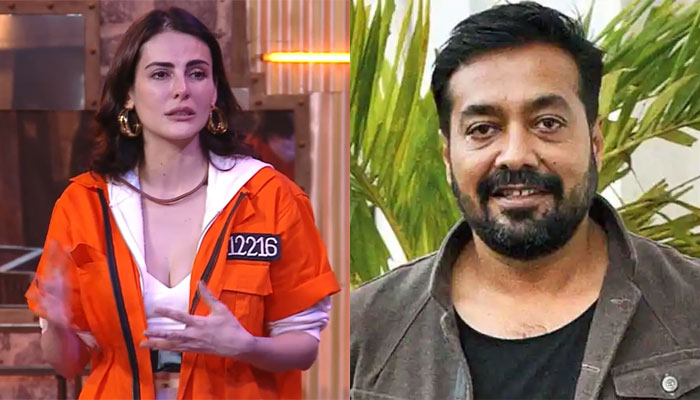
In the April 10 episode of the reality show Lock Upp, actress Mandana Karimi confessed to having an abortion in order to save herself from eviction. In her confession, she said when she was struggling with separation and divorce from her ex, she got into a relationship with a famous director. This was the time when she could not trust men in general, but that person projected himself as someone who could be his friend.
She said, “In the outside world, he talks about women’s rights. He talks about how women have to be independent, how women have to take their power into their own hands, and he is someone who is an idol to many people, the young generation who want to become a filmmaker or even just a normal teenager.” Karimi added her relationship went on for a year and a half. She kept it secret as she was not yet divorced and did not want anyone to know about it.
During the lockdown, they became closer and started living together. They became close, and it reached a point where he started saying that he loved her and wanted to be with her. She said, “He told me he wanted to move out of India with me. We should plan a family, and we did plan a pregnancy. But when it actually happened, he completely backed off.”
Karimi said he did not tell her directly. She said, “One day, he said we should go and meet my best friends as they were like parents to me. When we went there, he suddenly started saying he was not emotionally ready to become a father again and that I should have a divorce. He had this whole thing planned how my best friends could convince me to have an abortion. I was really upset, and I said sorry to my friend that he wasted your time because she thought we were in a conversation to have a nursery and hospital etc. The next thing I know, he was asking me to have an abortion where everything was planned.”
She added, “He told me he did not think at the age of 33 I could become pregnant so easily. He told me he thought I would understand. He has a public case against him. I have to make a decision. I come from a broken home. I cannot just have a child just because I was pregnant. I had to be strong. I did have an abortion, but then it just destroyed so much for me.”
When Karimi and that person came back home, his scriptwriter came, and she was sitting alone in the bedroom. She said, “While sitting alone and staring at the walls, I thought how anyone could be like this?”
Kangana Ranaut, the host of the show, appreciated her courage and said she should have kept the baby. Karimi replied, “No… because he was a coward. He stepped back when everything was planned and on track. I cannot let someone come into this world who would think, okay, this is my mother, and my father is a successful person, but why are they not together?”
Netizens speculate the person could be Anurag Kashyap
After the episode was aired, netizens discussed about the possible father of the aborted child. Many speculated it could be Anurag Kashyap.
Twitter user HudHudDabangg while replying to social media influencer Chetana’s post, said it was Anurag Kashyap.
Twitter user Prabhat_36 shared 2020 reports where Karimi had thanked Kashyap for helping her in a tough time and speculated it could be him who she had a relationship with.
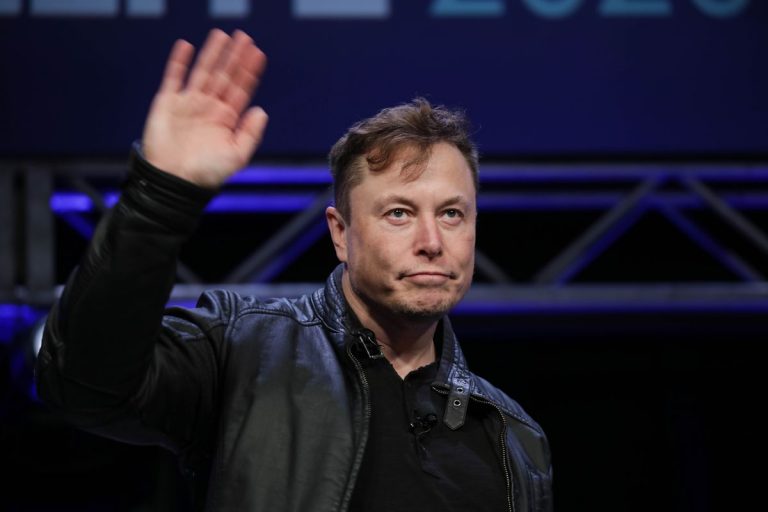
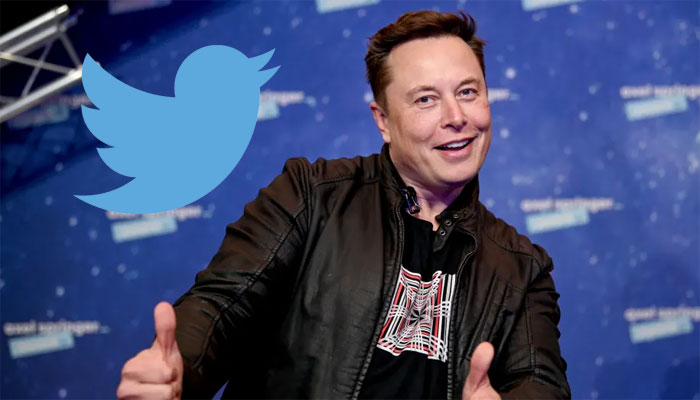
Elon Musk was supposed to join Twitter’s board of directors on April 9, however, on April 11, Twitter’s CEO, Parag Agrawal, confirmed that Elon Musk will not be joining the company’s board of directors. Since Elon purchased a 9.2 per cent passive ownership in Twitter, this has reopened the floodgates of conjecture. Parag shared this information in a tweet.
Elon has decided not to join our board. I sent a brief note to the company, sharing with you all here. pic.twitter.com/lfrXACavvk
Interestingly, Variety reported that Musk is prohibited from owning more than 14.9 per cent of Twitter shares while serving as a director on the board. As a result, Elon joining the board would exclude him from seeking to take over the company for at least the next two years.
As a result, facts provided by Variety, one may surmise that Elon is not joining the board as a director for a solid reason. Elon’s net worth is estimated to be around $300 billion. As a result, there is a chance that Elon may want to take over Twitter as a whole in the near future, many have speculated.
Elon Musk is the largest shareholder
Elon Musk recently startled the world by purchasing a 9.2 per cent stake, the largest among shareholders, in the microblogging site Twitter Inc. Interestingly, Musk’s Twitter investment was made public barely a week after he conducted a Twitter poll in which he questioned if the social media giant was strictly sticking to free speech ideals. Musk has often hinted at how he intends to change Twitter, from prohibiting advertising to lowering its price.
It is worth noting that Musk has frequently been critical of Twitter and has made no apologies for this in his tweets. Musk uploaded a mysterious meme in December last year when Twitter announced that Parag Agrawal succeeded Jack Dorsey as CEO, depicting Agrawal as Soviet tyrant Joseph Stalin and Dorsey as Soviet secret police chief Nikolai Yezhov being dragged into the river.
In pre-market trading, Twitter’s stocks soared roughly 28 per cent after a 13G filing indicated Elon Musk has purchased a 9.2 per cent passive investment in the social media company. According to a statement filed with the US Securities and Exchange Commission, Musk purchased approximately 73.5 million shares.
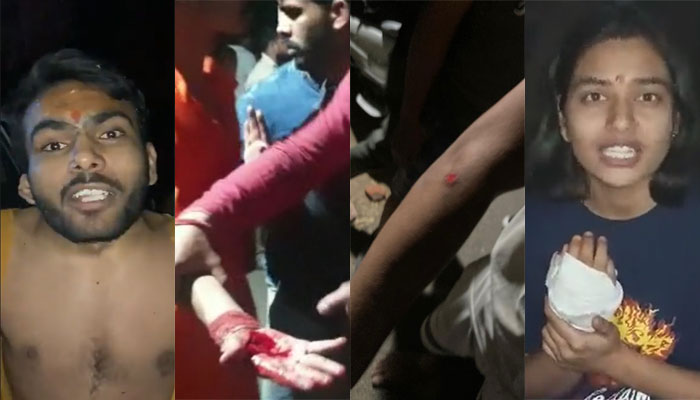
On April 10, the members of Left student organizations at Jawahar Lal University allegedly attacked the residents of Kaveri Hostel who were celebrating Ram Navami. According to Left organizations, the members of Akhil Bharatiya Vidyarthi Parishad (ABVP), the student wing of the Rashtriya Swayamsevak Sangh, had a scuffle with the mess manager as non-vegetarian food was being served on the day of Ram Navami.
On the contrary, ABVP accused Left student organizations and the National Students Union of India (NSUI) of stopping them from doing Hawan and Puja on Ram Navami. Speaking to OpIndia, ABVP JNU President Rohit Kumar said there was no agitation from their side. Everything was going on peacefully, and Hindu students were doing Hawan in the designated place, and Muslim students had Iftar inside the mess. “They are projecting everything wrong to target us,” he added.
Rohit said around seven days prior to Ram Navami, they had announced that there would be celebrations at Kaveri Hostel. “They did not like it. They started threatening us and tried to intimidate us so that we cancel the program, but we did not. They said they would throw bones at Hawan and would not let us do anything. They also issued a fake letter by the warden asking us not to perform any Puja, but it was debunked by the dean. We against issued a poster two days prior to the program to inform everyone about the Hawan and festivities,” he said.
Furthermore, there were celebrations at four different locations inside the JNU campus, but the maximum crowd was gathered at Kaveri Hostel. He said, “At around 3 PM, when we were about to start Hawan, a group of Left-backed students came and started protesting. There were members of ISCKON and many other students with us who had come to celebrate Ram Navami. Because of their protest, it was delayed for two hours. They kept saying they could not let Ram Navami be celebrated in the hostel as it was a secular place. We told them if it is a secular place, then Iftar should not happen, and the money spent on it should be used for students’ welfare.”
The festivities finished in a tense environment, but no physical altercation happened during that period. Rohit said, “The video they are promoting as we were stopping the vendor from delivering meat is misleading. It was from the time when we protested against them for interrupting the festivities.” After the festivities, a large group of people who allegedly were not Kaveri’s residents came to meet the warden. Rohit said, “That was the time when the scuffle took place. Several ABVP members were injured, and seven of them sustained severe injuries. We rushed them to the hospital and got MLCs early in the morning.” A complaint from ABVP is yet to be filed in the matter.
An FIR has been registered by Delhi Police against ABVP students based on the complaint of JNUSU, SFI, DSF and AISA under Sections 323, 341, 509, 506 and 34 of the Indian Penal Code (IPC). ABVP would be filing complaint today.
Delhi Police registered FIR on the complaint of JNUSU, SFI,DSF and AISA against unknown ABVP students U/s -323/341/509/506/34 IPC.ABVP Students will also be giving in complaints against unknown students of JNUSU, SFI, DSF and AISA.
A JNU student Divya said in a video statement that she had a fast on Sunday and was there to perform Ram Navmi Puja. Suddenly some left-wing students came and attacked them. “I do not even know what they attacked us,” she said.
JNU छात्रा दिव्या को कांच की बोतल तोड़कर मारा गया क्योंकि रामनवमी पर हवन में शामिल होने आओ थी। AISA, SFI के गुंडे कार्यकर्ताओं द्वारा एबीवीपी छात्रा कार्यकर्ताओं को भद्दी भद्दी गालियां दी गई।#LeftViolenceInJNU#LeftAgainstRampic.twitter.com/x473m4YM8J
A Divyang student at JNU said that left-wing students did not spare him despite requesting them repeatedly. He said, “I requested them not to beat me, but they did not listen.” He was returning home after attending Puja at Kaveri Hostel when he was attacked.
Also today, a ‘divyang’ student of JNU, who was returning home after attending #RamNavami celebrations with his classmates, was beaten by the leftists on the JNU campus and his clothes torn.
— Priti Gandhi – प्रीति गांधी (@MrsGandhi) April 10, 2022
ABVP led a protest march
After the incident, ABVP students led a protest march against the left-backed students and demanded strict action against those who attacked them.
आज की वामपंथी हिंसा के विरुद्ध एबीवीपी का जेएनयू परिसर में मार्च। लेफ्ट के नक्सली कार्यकर्ताओं द्वारा चारो तरफ से हमले सहने एवं कई कार्यकर्ताओं के लहूलुहान होने के बाद भी परिषद हमारा हौसला नहीं टूटेगा। pic.twitter.com/pp8qgAxEN5
A group of left-wing students were caught on camera pelting stones at ABVP members. SFI leader Harendra Sheshma was seen among them throwing stones actively.
University clarified everyone free to eat, preach and wear anything
The University has clarified in a statement that the students at JNU are free to eat, preach and wear as per their choice. JNU Rector Ajay Dubey said the University had issued immediate notice to avoid any confusion in the matter.
Left-backed students accused ABVP of ruckus
The students of Left student organizations, including AISA and others, have accused ABVP of creating a ruckus on Sunday. Former JNUSU president Sai Balaji said ABVP members stopped the cook at the mess from cooking non-veg food and shooed away the vendor. He further added his group reached the mess as soon as they got the information and gave a written complaint to the dean and the warden for the same.
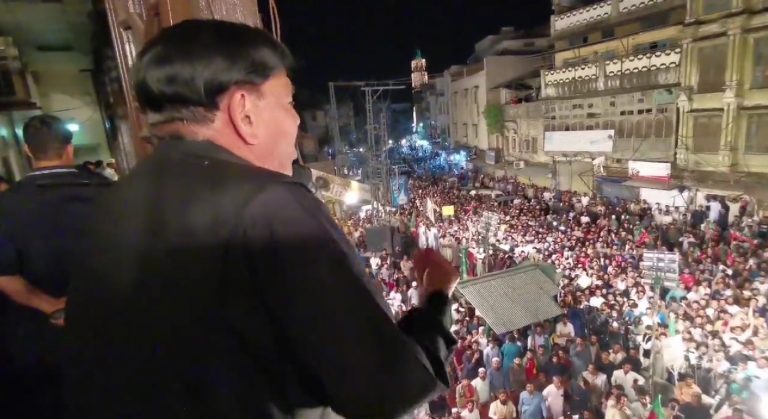
In the midst of Pakistan’s social, economic, and political upheaval, slogans such as “Chowkidar Chor Hai” were raised in a rally in Punjab addressed by Pakistan Tehreek-e-Insaf (PTI) leader Sheikh Rashid Ahmed.
The masses referred to the Pakistan Army as “Chowkidar” and dubbed them “thieves” for “stealing” Imran Khan’s mandate throughout the event. Rashid Ahmed was seen in the brief video attempting to dissuade people from raising anti-army shouts.
“Chowkidar Chor Hai,” a phrase originated by Indian Congress leader Rahul Gandhi to criticise Prime Minister Narendra Modi during the last general election, has now found its way to Pakistan. Thousands of PTI supporters descended on Lal Haveli in Pakistan’s Punjab province for the massive gathering, which Rashid Ahmed was seen addressing from a building’s terrace.
In an appeal to the gathering, Rashid said, “Don’t raise slogans… we will fight with peace.” “If you want to save your country then don’t make a decision in the dark of night but in daylight,” he further added.
Sheikh Rashid also urged all the supporters to be prepared to take the Jail Bharo march from Lal Haveli on a regular basis. “I will start it from Karachi myself,” he claimed, adding that he would “inform all Sindhis that the opposition leaders are thieves, docents, and robbers.”
Fall of Imran Khan government
Imran Khan lost the no-confidence motion in the National Assembly only minutes after midnight on April 9, bringing an end to a high political drama that had lasted several weeks and practically lasted till the last minute.
The trust vote was supposed to take place on April 3, but in an unexpected move, deputy speaker Qasim Suri cancelled the proposal, refusing to put it to a vote. Imran Khan then proposed dissolving the national legislature and holding new elections, which the president agreed to. However, the opposition filed a petition with the Supreme Court, which found that the deputy speaker’s actions were unconstitutional. On Thursday, the court reinstated the National Assembly and ordered a trust vote by Saturday.
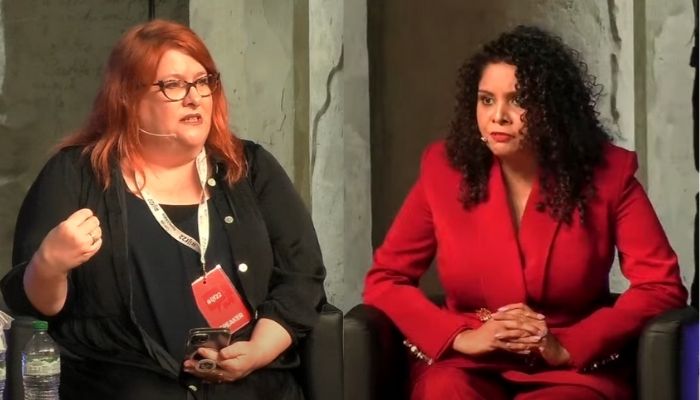
Donation fraud accused Rana Ayyub was invited as a Speaker at the 16th edition of the International Journalism Festival (IJF), which was held at Perugia in Italy between April 6 and April 10 this year. The theme of the discussion was, “When the State attacks: journalism under fire in the world’s biggest democracy.”
The session, which was held on Friday (April 8), was divided into two parts: an address by Rana Ayyub to the audience members, followed by a discussion on the theme with the International Center for Journalists (ICFJ) Director Julie Posetti.
Throughout the session, Rana Ayyub made several misleading statements and twisted the truth to suit her personal agenda.
Reiterating debunked claims of Amit Shah’s involvement in the Sohrabuddin case
At about 5 minutes into the event, Ayyub had claimed, “After a couple of initial forays in Television, I joined this publication called Tehelka where my investigation had then sent the then serving Home Minister of State Amit Shah behind bars for extrajudicial murder of Muslims.”
Amit Shah was indeed arrested on July 25, 2010, in connection to the encounter of notorious criminal Sohrabuddin Sheikh and his wife Kausar Bi. He was charged with murder, extortion, kidnapping and 5 other sections of the Indian Penal Code.
However, within a month of Shah’s arrest, the then Gujarat police chief Geeta Johri had revealed that she was being pressured by the Special Director of CBI Balwinder Singh to implicate politicians including the then State Home Minister in the Sohrabuddin case.
It must be mentioned that the CBI was then under the control of the rival Congress party. Nonetheless, in December 2014, Amit Shah was acquitted of all charges. The Court had found no evidence that could remotely suggest that Shah ordered the cops to execute extrajudicial killing.
On December 21, 2018, a Special CBI Court had even acquitted all 22 accused, who were falsely implicated in the Sohrabuddin case. The court had held that the CBI (under the then Congress government) had a ‘premeditated theory and script’ to implicate political leaders rather than trying to find the truth.
It had also observed that the witnesses’ statements, which were used to allege a ‘fake’ encounter, were wrongly recorded by the central agency. While Rana Ayyub had gloated about sending Amit Shah to jail, she failed to inform the audience that he had been exonerated by the Judiciary 7 years ago.
Inability to find a publisher and the ‘truth’ of Gujarat Files
Rana Ayyub went on claim that her employer ‘Tehelka’ refused to publish her ‘coverage’ of the Gujarat riots, citing ‘political pressure.’ “I was only 26 then. It was a lot for a journalist to take who put her life in jeopardy and for her investigation to not be published,” she alleged.
Ayyub further added, “I went to every journalism organisation, back in the day, and they refused to publish. And then, I went to publishers saying can you publish the transcript of the tape of my sting operation. And they said, it is too risky a book.”
The alleged journalist also claimed to have pawned her mother’s gold to self-publish her book. Her claims do not hold much credence, given that the Congress party remained in power between 2004 to 2014 and was actively trying to frame Narendra Modi and Amit Shah.
Ayyub’s book would have been the perfect ammunition for the grand old party. It is thus hard to fathom that the Congress party created such a hostile atmosphere for Rana Ayyub that she could not even find a publisher on her own.
While the alleged journalist maintains that the contents of her book were not published by Tehelka due to political pressure, former Managing Director and founder of the organisation Shoma Chaudhury had settled the controversy in 2016 itself.
Besides @julieposetti u need to check what India’s top court felt about this book,. This is from SC order and I’m deliberating quoting a publication that is opposed to current Govt to share this news as a proof of SC ruling https://t.co/4sOS0aj5hmpic.twitter.com/cpsuQ8b7it
In a tweet, she had clarified, “Rana Ayyub’s a courageous reporter but her story wasn’t published in Tehelka coz it didn’t meet editorial standards not ‘political pressure.”
Interestingly, Rana Ayyub published her book titled, “Gujarat Files: Anatomy of a Cover Up” in 2016 i.e.during the 1st tenure of Narendra Modi as the Prime Minister of India. This brings into question the claim that if CM Modi desperately wanted to ‘hide’ the truth, then why would he allow the publication of Ayyub’s book after becoming the PM?
The said book, which the alleged journalist claims to be the ‘ultimate truth’ about the Gujarat riots, has been junked by none other than the Supreme Court of India.
The Court had observed, “The book by Rana Ayyub is of no utility. It is based upon surmises, conjectures, and suppositions, and has no evidentiary value. The opinion of a person is not in the realm of evidence.” OpIndia, in a comprehensive report, had earlier debunked each and every lie that Ayyub chose to write in her ‘fictional book’ on the 2002 riots.
Fake news about detention of journalists at Hindu rally
At about 14 minutes into the session, Rana Ayyub further claimed, “Young journalists, four days ago, at a Hindu rally were out there to cover the hate speech against Muslims. They were beaten badly, called jihadists and the cops filed a case against the journalists.”
Earlier this month, the Delhi police had debunked the fake news surrounding the supposed detention of journalists at Hindu Mahapanchayat. The Quint reporter, Meghnad Bose, had originally claimed that he and ‘four other Muslim journalists’ were taken into custody by the Delhi police. He had also alleged that they were ‘assaulted’ by a Hindu mob at the event in Delhi.
Dear @julieposetti again I implore u to check this tweet of the police officer of the area, she is alluding to in this part- check this thread and I will let u decide if what she is trying to project is indeed true? https://t.co/PCc86PrPshpic.twitter.com/7hbVmGlRoY
Deputy Commissioner of Police, North-West Delhi, had clarified “Some of the reporters, willingly, on their own free will, to evade the crowd which was getting agitated by their presence, sat in PCR Van stationed at the venue and opted to proceed to Police Station for security reasons.”
“No one was detained. Due police protection was provided,” she had added. According to DCP North-West Delhi, the allegations of ‘assault’ as claimed by Bose were when Hindu activists objected to the presence of the journalists, in what happened to be an overtly ‘Hindu’ function.
Moreover, the DCP stated that police protection was provided to the journalists when they willingly climbed the police van for protection. While no journalists were detained by the police during the event, the DCP said that due necessary action shall be initiated against those spreading misinformation.
Gujarat riots, PM Modi and false impression of CAA
The 2002 Gujarat riots turned out to be a ‘good fodder’ for a section of the media, which left no stone unturned to project Narendra Modi as the ‘butcher of Gujarat.’ For a decade-spanning between 2002 and 2012, several journalists rose to prominence by demonising the then CM of Gujarat.
In 2012, a Special Investigation Team (SIT) led by the Supreme Court of India found no evidence of complicity of Narendra Modi in the Gujarat riots. Despite this, those who made a career out of the deadly riots continue to repeat the lies in the hopes of turning them into ‘post-truth’. As such, it was expected that Rana Ayyub would evoke the 2002 riots and PM Modi’s supposed role to gain sympathy on an international stage.
About 18 minutes into the event, Ayyub claimed, “I remember when he (Modi) was positioned as a Prime Ministerial candidate of India, a lot of well-meaning journalists said that we should give him a chance. I don’t understand how you give chance to somebody who has committed and enabled mass murder. How is that even a yardstick?”
Shahrukh Pathan intimidated a cop during the Delhi riots over CAA
At about 20 minutes, Ayyub raked up the issue of the Citizenship Amendment Act and alleged that the humanitarian law discriminated between Hindus and Muslims as citizens of India. She also claimed that the ‘fascist regime’ of PM Modi jailed students, and activists and framed them in terror cases.
This was despite knowing that CAA did not take away the citizenship of Indian Muslims but only fast-tracked the citizenship of persecuted religious minorities from neighbouring Islamic countries, currently living in India without any legal status. She also invoked the ‘pregnancy’ of riot accused Safoora Zargar to stir a wave of sympathy in her favour. CAA does not concern existing Indian citizens, irrespective of their religion and CAA does not stop anyone, let alone Muslims from applying for Indian citizenship in the usual process. CAA was only a one-time remedy for religiously persecuted minorities already living in India as refugees.
Ayyub however failed to mention that Zargar was arrested in April 2020 under the Unlawful Activities Prevention Act (UAPA) for her involvement in the Anti-Hindu Delhi riots. The Delhi Police had also claimed that she was part of the conspiracy to “destroy, destabilize and disintegrate the Government of India in order to compel to withdraw the Citizenship Amendment Act (CAA) and the alleged National Register of Citizens”.
This false sense of victimhood and deliberate distortion of the CAA in public discourse fanned the violent protests, which eventually culminated in the Delhi anti-Hindu riots. The carnage lasted for over 3 days and claimed the lives of over 50 people.
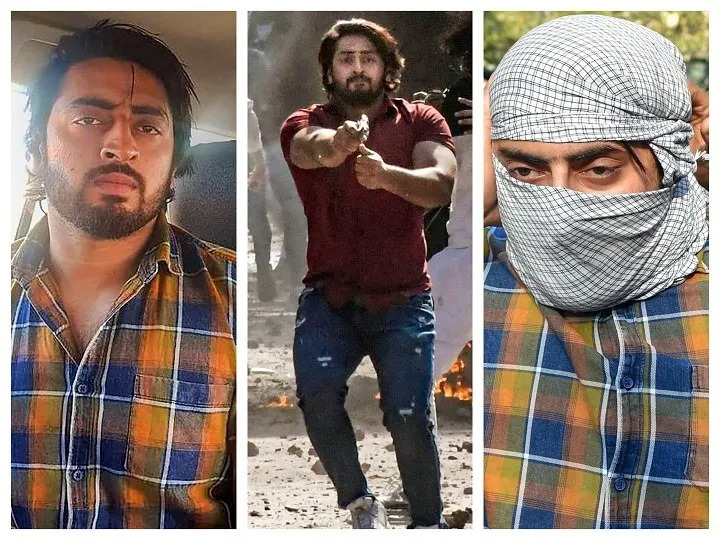
A section of media, of which Rana Ayyub is a part, went hammer and tongs alleging that the Delhi riots were an ‘anti-Muslim pogrom‘ and tried to paint the Modi government as Nazis and the Muslims as Jews. This was despite the images of Islamist mobs, pelting stones and brandishing guns (such as Shahrukh Pathan), to hold the State to ransom. Roughly half the victims in the riots were Hindus and multiple reports had shown that certain Muslim groups had prepared for the riots, collected stones, petrol bombs and acid to attack neighbouring Hindus.
Half-truths about Gauri Lankesh and Siddique Kappan
Rana Ayyub saw to it that she made references to the incarceration of Siddique Kappan and the killing of Gauri Lankesh to paint a disturbing image of India on a global platform.
At about 21 minutes into the session, Ayyub alleged that her ‘friend’ Gauri Lankesh, who had translated ‘Gujarat Files’ into Kannada, was gunned down by right-wing fundamentalists. At the very next moment, the alleged journalist contradicted herself by saying that none knows who killed Gauri Lankesh to date.
She also hailed ‘journalist’ Siddique Kappan, who was arrested on October 5, 2020, while trying to enter Hathras with a fake ID. In its affidavit to the Supreme court, the Uttar Pradesh government informed that Kappan was using the garb of journalism to create a caste divide and law & order disturbance in the State.
Kappan was associated with the radical Islamist outfit Popular Front of India (PFI) and a banned terrorist organisation named Students Islamic Movement of India (SIMI). The Uttar Pradesh government had submitted a copy of a front-page story by Kappan in Thejas, dating back to November 30, 2011, wherein he claimed that Al-Qaeda terrorist Osama bin Laden was a ‘martyr’.
The government revealed that Siddique Kappan was the mastermind of several other riots, who in collusion with Thejas Editors, wanted to create religious unrest in the State of Kerala. The Enforcement Directorate (ED) has filed a charge sheet against Siddique Kappan in a money laundering case.
Repetition of baseless allegations of rape in Hathras case
Ayyub also alleged that the 19-year-old ‘lower caste’ victim in the Hathras case was raped, although both forensic and medical reports dismissed allegations of sexual assault. The Hathras incident took place on September 14, 2020, after which the victim was admitted to Safdurjung hospital in Delhi. She succumbed to her injuries on September 29.
The victim’s brother had also not mentioned rape in the complaint registered on the day of the incident. The rape allegations surfaced much later on September 22, 2020, when the police recorded the statement of the victim. The Hathras case sparked massive political debates in the country, especially after media reports twisted facts and started claiming that the victim had been brutalised.
It is notable here that the initial statements of the victim, the family’s FIR and statements had all alleged a strangulation attempt. However, later, the family added the charges of rape and eventually gang rape to their list of allegations. Since the victim was a Dalit, political parties had tried to exploit the caste violence angle.
The entire timeline of the case, media misreports, political spins and controversies, and the government’s actions can be read here. Building on this warped narrative, the left-liberal propagandists masquerading as journalists tried to keep the matter boiling, apparently to earn political dividends in the Uttar Pradesh assembly elections.
Rana Ayyub downplays charges of embezzlement of Covid-19 funds
During her conversation with Julie Posetti, Rana Ayyub alleged that the allegations of misuse of Covid-19 funds for personal gains arose after she criticised the supposed mismanagement of Covid-19 by Prime Minister Narendra Modi during the second wave.
She insinuated that ₹10-12 crore is a small sum of money that did not merit public scrutiny. “Now there is a case of money laundering against me. I will give you a small example. The other day when I was trying to get a court verdict to come here to speak. Just look at the lawlessness. The Judge said that this is just a small amount. Even if it was 10 or 12 crores, why does it merit coming here?”, Ayyub had remarked.
“You know what news channels were saying: Judge accuses Rana Ayyub of money laundering 10-12 crores”, she further continued. At that point, the host interjected, “Just for the context, we are talking about 20,000 Dollars essentially.”
Instead of bothering to correct Julie Posetti, Rana Ayyub chose to play along with that. While being aware that the audience members were not well-versed with the dollar to rupee exchange rates, she responded with ‘exact.’
Ayyub thereby gave the impression to the audience that ₹10-12 crores equalled a mere USD 20,000, a supposedly ‘small amount’ for which a journalist of her stature should not be questioned. In reality, 12 crores in Indian rupees amounts to nearly 1.6 million US dollars.
Ayyub had collected money in the name of Covid relief, kept it in personal accounts
On February 10 this year, OpIndia had reported that ED seized Rs 1.77 crore in Ayyub’s and her family’s accounts under the Prevention of Money Laundering Act. A few days after the expose, Ayyub alleged in a statement that she was being framed for her “journalism” and she did not misuse the money.
However, all her claims were debunked by a Twitter user Hawk Eye who was the first to share details of alleged charity fraud last year. The ED has, in its attachment order, said, “Rana Ayyub has cheated the general Public Donors in a pre-planned manner and with the intention to cheat the general public donors.”
The order emphasised that the ‘scam’ started from the time she received the funds, which she did not use for Covid-19 relief work. She instead made a fixed deposit of ₹50 lakhs and transferred the amount to the savings account of her father, and sister through net banking. You can read the details about the allegations of misuse of Covid-19 funds by clicking on the link here. ED had also stated that the bills Ayyub had provided to show relief work do not add up.
On March 29, Rana Ayyub was stopped by Indian Immigration officials from boarding a flight to London due to the pending money laundering case against her. On April 4, she was granted permission to travel abroad by the Delhi High Court with the pre-requirement that she divulges details of her travel, contacts and her place of stay.
Presenting a distorted version of Aakar Patel case
At about 39 minutes into the session, Julie Posetti claimed that the Indian government was escalating restrictions on the ability of Indian journalists to connect to the international community. Rana Ayyub nodded in affirmation and raked up the case of Aakar Patel to bolster her claims, although nothing can be further from the truth.
On April 6 this year, Aakar Patel was stopped from boarding a flight to the USA at the Bengaluru airport. The former Amnesty India chief had tweeted that he was put on an exit control list.
He added that a CBI officer informed him that he was on a Look Out Circular because of the case against Amnesty International India regarding the FCRA violations. He was later granted temporary relief by the Rouse Avenue Court in Delhi. And the CBI has stated that they would challenge the court order.
immigration says CBI has put me on the list why @PMOIndia
The Special CBI court in Delhi’s Rouse Avenue Court stayed the order issued by the Additional Chief Metropolitan Magistrate of the same court, where CBI was instructed to withdraw the Look Out Circular against Patel immediately.
In February last year, the Enforcement Directorate had attached movable properties of Amnesty International India worth Rs 17.66 crore in a money laundering case. ED had found that after the cancellation of the FCRA license by the Indian government, Amnesty International India Foundation Trust and other Amnesty entities adopted ‘new methods’ to receive money from abroad.
Conclusion
During the hour-long session, Rana Ayyub weaved an emotional tale around her controversial career as a journalist. To bolster her unfounded claims, she resorted to half-truths, conjectures and surmises.
While being fully aware that the predominantly Western audience at the 16th edition of the International Journalism Festival knew nothing about the internal affairs of India, the alleged journalist used the platform to peddle misinformation and false claims.
The international platform served as a perfect opportunity to reiterate the tale of ‘perpetual victimhood’, as evident from the deliberate reference to her being Muslim. Coupled with the ‘ignorance’ of the moderator and the lack of ‘journalistic’ accountability of Ayyub, the world was exposed to even more lies about India than before.
On April 11, Parag Agrawal, Chief Executive Officer (CEO) of Twitter, announced that Elon Musk would not be joining Twitter’s board of directors. He said in a statement that after numerous discussions with the other board members and Elon himself, they had offered him a seat on the board. Parag had announced on April 5 that Elon would be appointed to the Board contingent on a background check and formal acceptance.
Elon has decided not to join our board. I sent a brief note to the company, sharing with you all here. pic.twitter.com/lfrXACavvk
Elon was supposed to join on April 9, but on the same morning, he informed Twitter management that he would not be joining. Parag said, “I believe this is for the best. We have and will always value input from our shareholders, whether they are on our Board or not. Elon is our biggest shareholder, and we will remain open to his input.”
He further added that there would be distractions ahead, but the company’s priorities and goals would not change. He said, “The decisions we make and how we execute are in our hands, no one else’s. Let’s tune out the noise and stay focused on the work and what we’re building.”
Full statement by Twitter CEO Parag Agrawal
Team,
Elon Musk has decided not to join our board. Here’s what I can share about what happened.
The Board and I had many discussions about Elon joining the board and with Elon directly. We were excited to collaborate and clear about the risks. We also believed that having Elon as a fiduciary of the company, where he, like all board members, has to act in the best interests of the company and all our shareholders, was the best path forward. The board offered him a seat.
We announced on Tuesday that Elon would be appointed to the Board contingent on a background check and formal acceptance. Elon’s appointment to the board was to become officially effective 4/9, but Elon shared that same morning that he will no longer be joining the board. I believe this is for the best. We have and will always value input from our shareholders, whether they are on our Board or not. Elon is our biggest shareholder, and we will remain open to his input.
There will be distractions ahead, but our goals and priorities remain unchanged. The decisions we make and how we execute them is in our hands, no one else’s. Let’s tune out the noise, and stay focused on the work and what we’re building.
Elon Musk became the largest shareholder on Twitter
On April 4, it was reported that Elon Musk had boughta 9.2 per cent passive stake in Twitter. The share price of the company shot up by 28% after the news broke. Musk bought nearly 73.5 million shares, a document filed with the US Securities and Exchange Commission showed. In the last week, Musk had come up with multiple polls regarding Twitter policies. He also ridiculed Twitter’s free speech policy.
He has also slightly gone slightly unhinged on Twitter, suggesting whacky changes in Twitter experience while mocking the site.