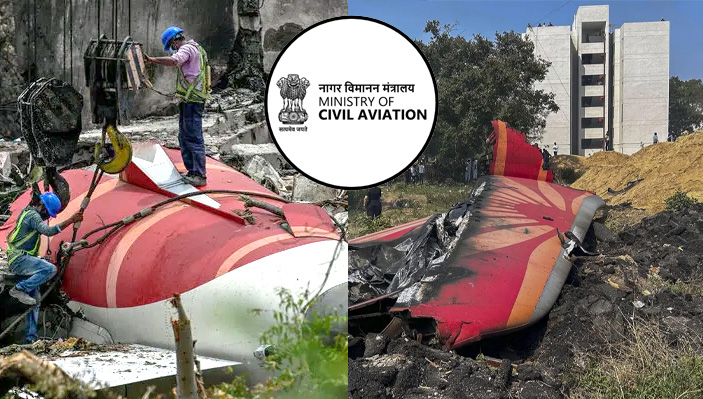
Minister of Civil Aviation Ram Mohan Naidu Kinjarapu on Thursday chaired a detailed video conference with all Airport Directors across the country to discuss aviation safety after the Air India crash in Ahmedabad. In the meeting, it was decided that the practice of periodical review with the airlines on operational matters will be institutionalised for better monitoring and coordination.
The ministry of Civil Aviation also issued updates on the AAIB investigation into the crash. It stated that Aircraft Accident Investigation Bureau (AAIB) has commenced a formal inquiry into the Air India flight crash near Ahmedabad. A multi-disciplinary team from AAIB has commenced investigation from 12 June 2025. The investigation has been ordered by DG, AAIB. NTSB and OEM teams have arrived to assist AAIB as per ICAO protocols.
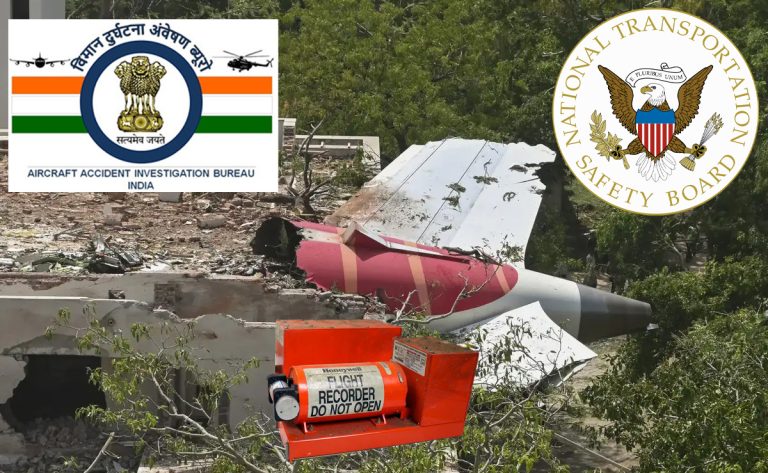
Notably, it has been disclosed that the Boeing 787 aircraft had two sets of black boxes. One combined unit of the Digital Flight Data Recorder (DFDR) and Cockpit Voice Recorder (CVR) was recovered from the crash site on 13 June 2025. The second unit was recovered on 16 June.
The ministry refuted media reports that the black box is being sent to US for analysis. The reports had claimed that the AAIB lab does not have specialised tool to extract data from fire-damaged black box, and that is why it is being sent to NTSB lab in Washington DC. But the ministry said that not such decision has been taken yet.
The decision regarding the location for decoding the flight recorders will be taken by the AAIB after due assessment of all technical, safety, and security considerations, the ministry said. The ministry urged all stakeholders to refrain from speculation on such sensitive matters and to allow the investigative process to proceed with the seriousness and professionalism it warrants.
The statement added that the AAIB investigation is progressing steadily with all necessary support from local authorities and agencies. Key recovery work, including site documentation and evidence collection, has been completed, and further analysis is now underway.
The Ministry said that it remains committed to full transparency relating to the ongoing investigation and will follow all mandated protocols and norms, in the larger interest of highest standards of Passenger Safety and convenience.
The Civil Aviation Minister emphasized the importance of working together as a cohesive and responsive team to uphold passenger trust and bring operational stability which has been cornerstone of Indian aviation over the years.
Instructions to airports and airlines
The minister also instructed to review ground-level preparedness and passenger support mechanisms in the light of rescheduling of flights happening due to multiple reasons, including enhanced checks after the accident, weather changes, closing of certain airspaces due to geopolitical tensions etc.
The following key directives were issued:
Close liaison with airlines was emphasized to ensure passenger issues are addressed swiftly and on the spot.
Availability of food, drinking water, and adequate seating facilities at terminals must be ensured, particularly during flight delays or congestion.
Sufficient personnel must be deployed at key touchpoints to manage passenger grievances proactively.
Airport Directors were requested to extend all possible assistance to airlines facing operational disruptions, including gate reassignments and logistical support.
To maintain a safe and secure airport environment, Airport Directors were directed to reinforce wildlife hazard management, including the deterrence of birds and stray animals.
The Minister of Civil Aviation also held a high-level meeting with the Chairman & Managing Director of Air India. They discussed three critical aspects, Maintaining operational continuity, supporting transparent and accountable communication with the public, and Passengers’ safety and convenience.
The meeting noted that due to the evolving situation in the Middle East, enhanced safety checks, and a ban on night flying in Europe, Air India is facing reduced aircraft availability. As a result, they will temporarily scale down operations, restructure flights, and announce changes through the media. Affected passengers will be rebooked or offered full refunds.
In line with our commitment to Prioritising Passenger Safety & Operational Stability, I held a nationwide VC with all Airport Directors. Directed stronger coordination with airlines, assured supply of essentials at terminals & quick response teams for passenger support during…
Air India was urged to strengthen their ground-level coordination at airports, improve communication with passengers regarding cancellations/delays, and ensure that customer service teams are sensitized and equipped to handle increased passenger concerns with empathy and clarity.
Meetings were also held with the senior managements of Spice Jet, Indigo and Akasa on 18th and 19th June. The minister reviewed the fleet performance, safety oversight, passengers experience & convenience and the airline communication strategy.
Karnataka Cabinet on Thursday approved an increase in the reservation quota for minority communities under various housing schemes from 10 per cent to 15 per cent.
Karnataka Minister HK Patil stated that this move does not require any new rules to be drafted.
“The reservation for all minority communities will be increased. There are Christians, Jains, Buddhists,” the Minister said.
Meanwhile, responding to the decision, BJP IT Cell chief Amit Malviya issued a scathing statement on social media, calling the decision “brazen,” “blatantly illegal,” and “unconstitutional”.
He said that for short-term political gains, “Congress is determined to sow the seeds of division, polarise communities, and rip apart the social fabric of Karnataka.”
This is brazen. Blatantly illegal and unconstitutional.
There can be no reservation on the basis of religion — the Constitution is unambiguous on this.
Yet, the Congress government in Karnataka is hell-bent on pushing religious quotas to appease its vote bank. This isn’t… https://t.co/QoiVXz0FKy
“This is brazen. Blatantly illegal and unconstitutional. There can be no reservation on the basis of religion — the Constitution is unambiguous on this. Yet, the Congress government in Karnataka is hell-bent on pushing religious quotas to appease its vote bank. This isn’t governance, it’s dangerous social engineering. Congress is determined to sow the seeds of division, polarise communities, and rip apart the social fabric of Karnataka — all for short-term political gain. Karnataka deserves better,” he said.
The move will apply to all housing schemes implemented by the Urban and Rural Development Departments across the state.
(This news report is published from a syndicated feed. Except for the headline, the content has not been written or edited by OpIndia staff)
The black box of the ill-fated flight-787 of Air India that crashed in Ahmedabad over week ago is reportedly set to be sent to the US for data extraction. The black box was recovered by the authorities from the roof of a hostel building which was hit by the plane a day after the accident. Reports claim that the device suffered serious external damage due to fire that erupted after the crash, making it impossible for the data to be retrieved in India.
However, the government of India has denied the deport, saying that no decision has been taken yet on sending the black boxes to US. The Boeing 787 had two sets of black boxes, both of which have been recovered.
As per a report by Economic Times, the black box or the Digital Flight Data Recorder (DFDR) will be sent to the Washington laboratory of the US’s National Transport Safety Board (NTSB) for analysis. The NTSB will share the details of the analysis with India’s Aircraft Accident Investigation Bureau (AAIB) as under the international rules, the state where a place accident takes place has the responsibility of investigation.
As per reports, The NTSB will carry the black box to their lab in the US under the supervision of Indian officials in compliance with the protocols. The British Air Accident Investigation team will also accompany them as 53 British nationals were onboard the flight-787. The data extraction process could take from days to months depending on the extent of damage to the recorder.
What is a Black Box
A black box is an orange-coloured metal box having two units- the Cockpit Voice Recorder (CVR) and the Flight Data Recorder (FDR). It is placed in the tail of the aircraft for least impact. It is crucial for reconstructing an aircraft’s final moments before an accident.
The CVR records up to 25 hours of cockpit conversations, noise, radio calls with the Air Traffic Control (ATC). However, since the Boeing-787 was delivered in 2014, it is likely to have a two-hour recording capacity as the mandate for the 25-hour long CVR storage was introduced in 2021. In newer aircraft models, it also records audible alerts. The CVR contains crucial cockpit recording such as pilot conversations, and any warning messages from the electronic systems.
On the other hand, the FDR records details relating to multiple detailed parameters such as timing, altitude and speed. In modern jets, the FDR can record thousands of parameters at the same time and loop for 25 hours.
Concerns being raised on the transparency of the data extraction process
The Air India flight-787 was a Boeing Dreamliner manufactured by the US-based aviation company Boeing. The American corporation has a poor safety track record and a dubious history. Its aircraft, which are said to suffer from some manufacturing flaws, have been involved in several flight accidents. Boeing’s Dreamliner has also been under the scanner due to quality issues. The company’s 737 MAX aircraft was involved in two fatal crashes in 2018 and 2019 which resulted in the death of 346 people. As a result, the 737 MAX fleet was grounded worldwide for more than 20 months.
The company has been accused of influencing investigations against it and the whistleblowers who exposed the shortcomings in the company’s aircraft have either committed suicide or have mysteriously passed away. With the contentious past of the American company, concerns are being raised about the transparency and the reliability of the data that will be extracted from the black box of Boeing-787 in the US.
Journalist Barkha Dutt said that the block box should be sent to a neutral country for investigation, not the country where the manufacturer of the jet is based. Not just Boeing, even GE is an American company, an important factor given that the most likely cause of the crash was dual engine failure.
Journalist Kushan Mitra opine that instead of NTSB, British AAIB or French BEA would have been a better neutral in this case. He said that while there no doubt on the NTSB, involvement of American companies Boeing and GE in the case can’t be overlooked.
वाह @DGCAIndia! अब @BoeingAirplanes के क्रैश का ब्लैकबॉक्स भी बोईंग के ही देश में खुलेगा! कितनी विचित्र बात है कि भारत के पास आग लगने के कारण हुई क्षति से डेटा निकालने की तकनीक ही नहीं है। मतलब, केवल पानी में क्रैश होने या ऐसे ही मन करे तो ब्लैक बॉक्स देखने की तकनीक है हमारे पास।… pic.twitter.com/uh9uqYNxpB
People are also questioning as to why India, which has a huge aviation industry, has not so far developed any laboratories capable of extracting data from damaged black boxes which form a key component in the investigation of flight accidents.
The practice of sending black boxes to US or Europe for analysis
However, it is to be noted that the black boxes in US are analysed by US federal agency NTSB, not Boeing or GE. There is no evidence that the aviation companies can influence the results of the testing done at NTSB lab.
Moreover, this is not the first time black box will be sent to US for analysis, if that happens. Actually, this is a standard practice for many countries. This is because, analysing black boxes, especially those badly damaged, require specialised tools, and not all country posses those tools. Therefore, most countries send the black boxes to US, France or UK, where such specialised equipment exist.
Earlier this year, in January, a Boeing 737-800, operated by Jeju Air, was involved in a devastating crash at South Korea’s Muan International Airport while attempting a landing. All 181 people onboard the place, except two, lost their lives in the crash. The aircraft belly-landed reportedly after being hit by a bird. The black box of the flight was damaged in the crash due to which its FDR was sent to the US for data extraction.
As accidents of commercial jetliners are rare, many countries prefer to send them US or Europe for analysis, instead of investing on their own equipment.
In India, there was not even a specialised agency to investigate air accidents, and DGCA used to do it. The Aircraft Accident Investigation Bureau (AAIB) was established in 2012. The agency has investigated only one accident involving a commercial jet, the Air India Express crash in 2020 that killed 21 people at Calicut airport.
A Digital Flight Data Recorder and Cockpit Voice Recorder (DFDR & CVR) Laboratory under the AAIB at the at Udaan Bhawan in Delhi has been set up, which was inaugurated in April this year. The facility, commonly known as “Black Box Lab”, was established with the support of the Hindustan Aeronautics Limited. The plan is to establish advanced DFDR and CVR laboratories and equip them to analyse retrieved flight data from aircraft.
While this facility capable of reading data of the black boxes, it reportedly faced hurdles with the Boeing 787 Dreamliner recorders as they are badly damaged by fire. As per reports, AAIB laboratory tried to extract the data but could not, as some advanced tools are needed for such heavily damaged recorders, which AAIB does not have at present.
An AAIB team will be present at the NTSB lab in the US when the data is extracted from the data recorder. After that, the data will be handed over to AAIB to proceed with the investigation.
Therefore, despite the concerns, it is expected that data integrity will be maintained while extracting the data from the decices. However, as India’s aviation market grows, it is expected that the govt will invest in acquring the advanced technology needed to investigate aircraft accidents and incidents, so that the AAIB does not have to depend on foreign labs.
As Ireland struggles with the horrific legacy of its mother and baby homes crisis, preliminary work to identify the remains of nearly 800 infants is set to begin at the site in Tuam, County Galway. The remains of the 796 kids are reportedly underneath the Bon Secours Mother and Baby Home, which was shut down decades back and now sits amidst a contemporary apartment building.
A religious order of Catholic nuns ran Bon Secours, also referred locally as The Home, as a maternity home for single mothers and their offspring. Pregnant unmarried women used to be interned for a year and were made to perform unpaid labor after giving birth there. They were separated from their infants who, frequently without the permission of the families, would be fostered by the nuns until they were adopted.
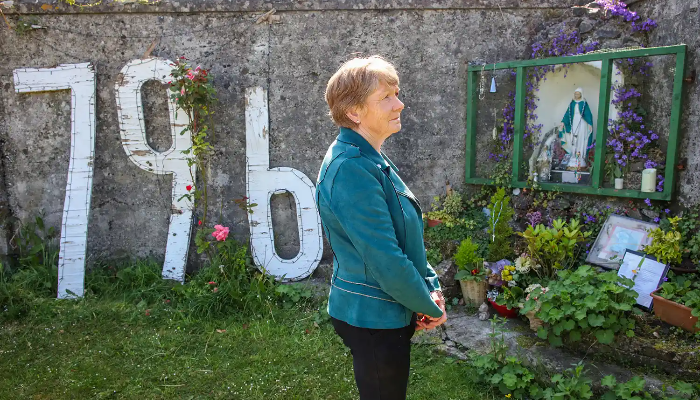
Local historian Catherine Corless, who initially raised concerns about the institution’s sinister history under the Bon Secours order, discovered the names of 796 newborns who are believed to have been interred there between 1925 and 1961. There were no burial records.
Corless stated that it is believed that many of the infants who died at the Tuam institution were thrown into “the pit,” an old sewage tank while only two were buried in a nearby cemetery, according to her research. According to investigators, “significant quantities of human remains” were uncovered in underground chambers at the Tuam site in County Galway in 2016.
“I’m feeling very relieved. It’s been a long, long journey. Not knowing what’s going to happen, if it’s just going to fall apart or if it’s really going to happen,” she expressed in an interview to Sky News. Due to her efforts, an Irish commission was established to look into the so-called mother and baby homes, where young women and girls were sent for decades to give birth instead of at home or in a hospital.
The ugly face of such Catholic institutions
The facilities, which were administered by religious organizations with governmental approval and ignored destitution, misogyny, stigma and high infant death rates, acted as adoption agency and orphanages for a large portion of the 20th century. The country was taken aback by the 2014 findings, which garnered international attention.
It revealed the sinister side of an Ireland in the middle of the 20th century that was strongly influenced by Catholicism and its harsh views on illegitimate children and the mothers who gave birth to them. They were frequently sent to mother and baby homes before being split from their newborns.
Ten years later, a group of detectives under the direction of Daniel MacSweeney are starting a potentially two-year forensic excavation. The purpose is to ascertain as many of the remains as possible via DNA testing and to provide a dignified reburial for each.
Bon Secours represented merely one part within a broader network of oppression in Ireland, the full scope of which has only come to light in recent years. Mothers at Bon Secours who had additional children out of wedlock, deemed as having “reoffended,” would find themselves sent to Magdalene laundries, notorious Irish institutions for alleged “fallen women,” operated by Catholic orders and discreetly backed by the state.
The phrase “fallen women” was originally used primarily to refer to sex workers, but the Magdalene laundries would eventually take in “seduced” women, rape and incest victims along with female orphans or children who had been abused or abandoned by their families. It was not until the 1990s that the last Magdalene laundromats closed.
Shocking number of child deaths
An investigation into Ireland’s mother and baby homes unveiled an “appalling level of infant mortality” and concluded that about 9,000 children had passed away in the 18 facilities under investigation. The commission report was followed in 2021 by an official state apology from the government. A compensation plan was established in 2022 and 814 survivors have received payments totaling $32.7 million thus far.
“We had a completely warped attitude to sexuality and intimacy, and young mothers and their sons and daughters were forced to pay a terrible price for that dysfunction,” Taoiseach (Ireland’s prime minister or head of the government) Michael Martin conveyed at the time. The children were “buried in a disrespectful and unacceptable way,” and the Sisters of Bon Secours, who had operated the Tuam home, offered their “profound apologies” and monetary compensation.
The Office of the Director of Authorized Intervention (ODAIT), an independent office created under the Irish Institutional Burials Act 2022, isin charge of supervising the excavation activity at the location. Its goal is to “recover and forensically analyse, and to memorialise and bury with respect and dignity, human remains recovered from the site.”
In the upcoming weeks, the institution’s survivors and family members will have the chance to observe the perimeter of the “forensically controlled site” and witness the construction. Only employees performing the work will be able to access the entire property, including the memorial garden, and there will be round-the-clock security surveillance.
The excavation site at Tuam, which is currently in the center of a housing subdivision, has hoarding around it. After four weeks of preparatory work, a full-scale excavation is scheduled to start on 14th July. The location was formerly a workhouse and it is speculated that victims of the Great Famine of the 19th century are also buried there, which could complicate the search for the remains of the babies.
“It’s an incredibly complex challenge because of the size of the site and the fact that we are dealing with infant remains that we know, at least in the case of the memorial gardens (on the site), are co-mingled,” stated MacSweeney. “The final timetable will depend on many variables, some of which may only become fully clear as the work progresses,” he added.
Irish society has been characterized as being darkly stained by the existence of mother and baby institutions. Enda Kenny, the taoiseach at the time, called the revelations on Tuam “a chamber of horrors” in 2017.
“No nuns broke into our homes to kidnap our children. We gave them up to what we convinced ourselves was the nuns’ care. We gave them up maybe to spare them the savagery of gossip, the wink and the elbow language of delight in which the holier-than-thous were particularly fluent. We gave them up because of our perverse, in fact, morbid relationship with what is called respectability,” he pointed out while addressing the country’s parliament.
Desparate efforts to conceal the reality
Corless was described as obsessive and delusional, as she spent years meticulously examining death certificates and church records from the former Bon Secours Mother and Baby Home and she disclosed her alarming report in May 2014 through the Irish Mail. Prematurity, convulsions, whooping cough, tuberculosis, meningitis and diphtheria were among the most frequently identified causes of death, according to official death records that she cited. Malnutrition was cited for a relatively small percentage of deaths.
After her tenacious persistence and heavy public scrutiny, a government-ordered test excavation in 2017 proved her suspicions that the children’s bodies had been put in what had been a septic tank beneath the property. The children’s bodies had been put in what had been a septic tank beneath the house. Unmarried pregnant women were sent to give birth in secret at the Bon Secours home, one of many similar institutions in Ireland.
Many were compelled to work for no pay and their kids frequently succumbed to malnourishment, illness or neglect. The survivors were often adopted, unlawfully. The bones found in Tuam were eventually confirmed by forensic investigation to belong to infants and toddlers between the ages of three and about 35 weeks gestation.
At first, the Catholic Church, as well as politicians and even the general public, were skeptical of the fears voiced by Corless. She and her family faced harassment while some press headlines questioned the number of bodies involved and international publications such as Reuters and The Guardian mocked her painstaking documentation, referring to her as an “amateur historian.”
Her efforts, however, eventually generated awareness around the world, which resulted in a state investigation and a formal apology from the government.
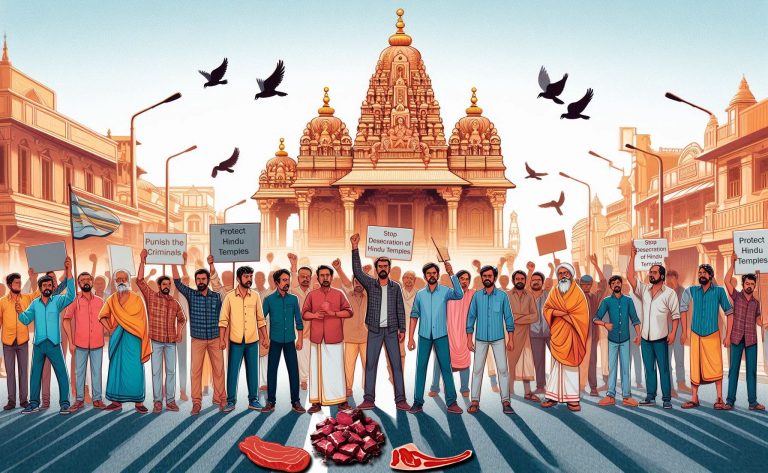
In recent times, there has been a significant increase in cases of cow meat or remains being thrown in or near Hindu temples by Islamists. The frequency of such incidents and involvement of Islamists hints that cow slaughter and throwing of cow meat outside Hindu temples is being deliberately carried out to insult Hindus, who consider cows sacred and to incite communal unrest.
While such incidents are reported throughout the year in some part of the country or the other, the cases of deliberate throwing of cow remains near temples increase during Islamic festivals, especially Bakrid.
This pattern of throwing meat pieces in front of temples, suggest that a co-ordinated campaign orchestrated by Islamists to desecrate sacred Hindu places is at play. Here is a compilation of such cases in the recent past.
Assam: Cow head dumped outside Hindu temple in Muslim-dominated Dhubri
On Bakrid this year, a cow head was found near a Hanuman temple in Assam’s Dhubri, a Muslim-dominated area. The incident sparked outrage among the local Hindu community. On 13th June 2025, Assam Chief Minister Himanta Biswa Sarma informed that the severed head of a cow was found at a local Hanuman Mandir on the following day of Bakri Eid.
“Hindus and Muslims met, and a Peace Committee was formed to resolve the matter. But again on the next day, another cow head was dumped in the Hindu temple,” the Assam CM added.
Himanta Biswa Sarma informed that the extremists resorted to stone pelting and put up 3 posters of ‘Nabin Bangla’ in Dhubri, an organisation which wants to annex the entire district to Bangladesh.
“There is a communal group active in Dhubri. We have given shoot-at-sight orders to the police,” he emphasised. The Assam Chief Minister made it clear that desecration of Hindu places of worship would not be tolerated in the BJP-ruled State.
He also issued a shoot-at-sight order and said that a Islamist group from neighbouring Bangladesh was involved in these incidents. In this case, 38 people were arrested.
Assam: Cow slaughtered by Muslims near Shiv temple in Badarpur
On the day of the Eid-al-Adha festival, tension erupted in Assam’s Sribhumi district after a cow was slaughtered near a Hindu temple located in a Hindu majority area. The incident took place near Deorail and South Bhanga Mashli of Badarpur town, leading to arrest of five people.
The Hindus in the region were enraged after finding that a cow was slaughtered by some Muslims as sacrifice for the Eid al-Adha. Reportedly, the region has only 3 Muslim families, and the rest all are Hindus. And these Muslim families went ahead to slaughter a cow in the area, that too near the Shiv Temple of the village.
Assam: Hazrat Ali and 4 others dumped severed head of cow near Kali Mandir in Lakhipur
In another incident of temple desecration by Muslims, communal tension broke out in Lakhipur town in the Goalpara district of Assam after extremists dumped the severed head of a cow near a Hindu temple. On learning about the matter, the Lakhipur police reached the crime scene and took away the severed head of the cow. The area was cordoned off to prevent further act of sacrilege.
On Sunday (15th June), Assam Chief Minister Himanta Biswa Sarma informed that Bodir Ali, Hazarat Ali, Tara Mia, Shajamal Mia and Jahangir Alom were arrested in connected to the case.
Assam: 7 Muslim men arrested after cow skulls recovered near a prayer hall in Lakhimpur
On 18th June 2025, Assam CM Himanta Biswa Sarma informed that 7 Muslim men identified as Monsur Ali, Md. Rejjak Ali, Saha Ali, Diluar Hussain, Dildar Hussain, Abu Kalam Ali and Jahidul Islam, have been arrested after multiple cattle skulls were recovered by the police near a Namghar (prayer hall).
Taking to X, CM Sarma said, “In a swift and coordinated response, Lakhimpur Police have apprehended 7 individuals in connection with the recovery of 3 cattle skulls found approximately 30 meters from Siring Chuk Namghar, along the roadside. The arrested persons are: 1.Monsur Ali (60) – Rangchali Debera Doloni, PS North Lakhimpur 2.Md. Rejjak Ali (29) – Rangchali Debera Doloni, PS North Lakhimpur 3.Saha Ali (48) – Deobil Christian, PS Panigaon 4.Diluar Hussain (25) – Deobil Christian, PS Panigaon 5.Dildar Hussain (30) – Deobil Christian, PS Panigaon 6.Abu Kalam Ali (33) – Chukulibhoria, PS North Lakhimpur 7.Jahidul Islam (22) – Chukulibhoria, PS North Lakhimpur. During a search at Monsur Ali’s residence, 3 additional cattle skulls were recovered and seized. Investigation is ongoing, including technical analysis.”
In a swift and coordinated response, Lakhimpur Police have apprehended 7 individuals in connection with the recovery of 3 cattle skulls found approximately 30 meters from Siring Chuk Namghar, along the roadside.
The arrested persons are: 1.Monsur Ali (60) – Rangchali Debera…
Uttar Pradesh: Severed cow head thrown outside ancient Hanuman temple in Lucknow
In March 2025, some unknown people threw the severed head of a cow (calf) outside the ancient Hanuman temple in Lucknow, the capital of Uttar Pradesh. This incident took place in the Madeyganj police station area. Local Hindus staged protest and also raised slogans against the police administration as they said that this is not the first incident. This is the third time in the last two years that such an incident has taken place around the temple. People said that a cow was attacked with a knife in April 2024 and meat was thrown a year and a half ago, but the police did not take any strict action.
UP: Severed head of cow found outside Hindu homes after Mahakumbh Mela
In the Dariyabad locality of Uttar Pradesh’s Prayagraj, the remains of a cow were found in March this year. The severed head of a cow was found outside the residence of a Hindu businessman named Gopal Agarwal. Similarly, the leg of the cow was discovered outside the house of another Hindu resident named Deepak Kapoor.
According to police officer Sanjay Dwivedi, the incident was carried out with the intent to create communal disharmony. According to complainant Gopal Agarwal, it was the third incident of cow mutilation in the past 5 months. He informed that on two occasion, remains of dead cow were discovered outside his house but the police did not take any action.
UP: Meat thrown near Hanuman Temple in Amethi
In Amethi, Uttar Pradesh, some miscreants threw piece of meat near the ancient Hanuman Temple. On Friday (6th June 2025) morning, when the devotees reached the temple for darshan, they became angry after seeing the meat lying there.
The incident took place outside the ancient Hanuman Temple located in Sheetalganj Punnpur village of Sangrampur area. As local Hindu activists protested, police station in-charge Brijesh Singh reached the temple with the police team. The crowd gathered near the temple was pacified and the piece of meat was removed from the temple area and buried under the soil. The police assured action in this matter.
2024
Madhya Pradesh: Cow’s head thrown into Jagannath Mahadev Mandir in Ratlam
In June 2024, a severed head of a cow was found in the premises of Lord Jagannath temple in the Jaora town of Madhya Pradesh’s Ratlam district. The cow head was thrown inside the temple by two Muslim, who came on their motocycles, threw cow head and fled the spot. In this case, National Security Act (NSA) was invoked against Salman Mevati, Shakir Qureshi, Noshad Qureshi, and Shahrukh Sattar. The local administration also demolished the illegal portions of the houses belonging to the accused.
Delhi: Severed head of a calf found near Kali Mandir in Sangam Vihar
In June 2024, a severed head of a calf was found near the Gupta Colony in Delhi’s Sangam Vihar area ahead of Bakrid. The incident sparked massive outrage and local Hindu organisations alleged involvement of Islamists. In this matter, the police registered a case and launched an investigation.
Rajasthan: Pieces of meat thrown by scooty riding youths outside Shiva temple in Jaipur
Tension erupted in Rajasthan’s Jaipur on 18 June 2024, after some unidentified miscreants came on a bike and threw meat in front of a Shiv Temple located in the Chanakya Marg area in Subhash Chowk before fleeing. The incident happened at around 4.30 pm and was caught on the CCTV cameras placed in the area.
A video of this incident also surfaced, in which large pieces of meat are seen lying in front of the temple. This incident is said to have happened on the day of Ganga Ekadashi, an auspicious day for the Hindus. As soon as the information about the incident spread, Hindus in the locality reached the area and protested. The angry protestors then reached the Subhash Chowk police station to complain about this matter.
Delhi: Islamists hurled meat pieces at Hindus on Navratri
In October 2024, a group of worshipers carrying the holy Jyoti from Jhandewala Devi Mandir faced an attack when Islamists desecrated their religious procession by throwing meat pieces on the sacred ‘Jyoti’ in the Tees Hazari area. The incident sparked outrage among local Hindus, who alleged that such attacks are carried out with intention of hurting Hindu sentiments.
2023
UP: Calf carcass found near Hanuman temple in Sonbhadra
A cow calf’s body was discovered close to a Hanuman temple on the evening of 28th July 2023 in Sonbhadra’s Robertsganj neighbourhood in Uttar Pradesh. People were furious when they noticed the cattle’s remains behind the temple and they quickly called the local police to look into the matter. A massive protest was organised by local Hindu organisations and the police initiated action in this matter.
UP: Sack full of meat found near temple in Shahjahanpur
In July 2023, a sack containing meat remains was found near a temple in Uttar Pradesh’s Shahjahanpur area. On getting the information, the Shahjahanpur Police formed three teams to probe the matter, officials said on Saturday. Subsequently, a case was registered against unidentified individuals.
2022
UP: Meat pieces thrown inside a temple, idol vandalised in Kannauj
On 16th July 2022, riots erupted in the Rasoolabad village of the Talagram area of Kannauj in Uttar Pradesh after meat pieces were thrown inside a Hindu temple. After the incident of throwing a piece of meat in the temple, members of the Hindu organizations were enraged and blocked the road in the village.
An anti-Hindu element threw a piece of meat at night in the Shiva temple outside Rasoolabad village in the Kannauj district. In the morning, when the priest arrived to perform the daily puja, he informed the villagers that there was a piece of meat lying inside the temple. As soon as the matter came to light, CO Shiv Pratap Singh and SHO Harishyam Singh rushed to the spot and ensured the cleaning of the temple.
UP: Pieces of meat thrown inside temple compound in Shamli district
In September 2022, unidentified persons threw pieces of meat in the compound of a temple in Sikka village of the Shamli district in Uttar Pradesh, sparking tensions in the region. The incident came to light at around 5 am on Friday morning when a woman entered the temple to offer prayers. Dollops of meat were hurled at 11 places around Bhumiya Kheda in Sikka village in what appeared as a deliberate attempt to vitiate communal harmony in the region.
The incident came in the wake of an annual festival that included Havan Yagya and other assorted religious rituals organised in the temple.
2022
Jharkhand: Meat thrown inside Kalibari Durga Temple in Phulbaria
In February 2022, a group of unidentified miscreants threw an objectionable thing suspected to be meat inside the Kalibari Durga Temple located in Phulbaria of Rajmahal police station area in Sahibganj district of Jharkhand, raising tensions in the region.
2021
Delhi: 4 cows were slaughtered in Kalindi Kunj and their remains were thrown near the temple
Back in 2021, a case of cow slaughter and throwing away was reported from Kalindi Kunj area of Delhi. At least 4 cows were slaughtered and thrown away. Locals told OpIndia then, that those who slaughtered the cows threw one near Sheetla Mata Mandir Pocket-1. They threw the remains of the second cow near the temple located near the park in D Block and the rest of the remains near a drain. However, the locals found an ID card near the discarded cow remains. According to the recovered ID card, her name is Isanul Hoda and her father’s name is Abdul Jalil.
2019
Jharkhand: Pieces of meat thrown near Shiv temple
Back in December 2019, several pieces of prohibited meat were thrown near a Hindu temple at Karamdaha on the border of Dhanbad and Jamtara district of Jharkhand to incite religious sentiments of Hindus. This incident happened near Dukhiya Mahadev temple. Police have termed it the handiwork of some mischievous elements. An FIR has been registered against unknown people in this case. Hearing the news of meat in the temple, which was presumed to be beef, the angry locals blocked the road for about 6 hours. After that, the police reached the spot and pacified the anguished crowd.
Conclusion
While these cases reported in recent years should be enough to raise an alarm about a growing trend of slaughtering cows and throwing its remains inside or near Hindu temples, this has been ongoing for many years. This compilation must have missed several cases, in fact, several such incidents go unreported or uncovered. Islamists and others driven by sheer hatred for Hindus and their religious beliefs are deliberately doing this to hurt Hindu sentiments and incite riots.
Throwing cow remains inside Hindu temples is a direct attack on Hindu faith. While cases of Islamists raping cows, cow smuggling, secretly stuffing cow meat in samosas sold at eateries, etc to mock and hurt Hindu sentiments, are reported in some part of the country quite often, however, the pattern of slaughtering cows and then throwing the remains inside or near Hindu temples around Islamic festivals suggests that Islamists are deliberately desecrating Hindu temples to offend Hindus, intimidate Hindus, assert their religious dominance and unleash violence if Hindus confront them. The recent Dhubri case in Assam suggests that throwing cow remains near temples is a part of organised instigation.
While Islamists and other anti-Hindu elements draw joy from mocking and hurting sentiments of Hindus, the Islamo-leftist cabal’s continuous attempts at defending cow slaughter and ‘cow is food’ cries, as well as political backing of ‘secular’ parties further emboldens the anti-Hindu elements to slaughter cows and desecrate Hindu temples.
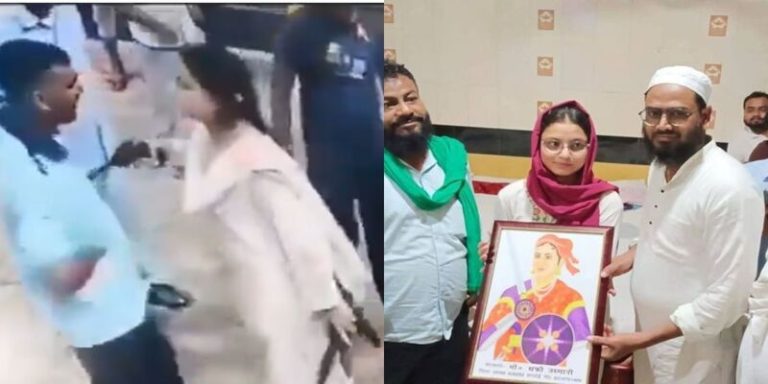
Congress has honoured the Muslim woman who pointed a gun at a salesman at a CNG station in Hardoi, Uttar Pradesh in response to alleged misbehaviour with her father. The incident that happened on Sunday night (15th June), came to light after a CCTV footage of the incident went viral on social media.
In the viral CCTV footage, the woman named Ariba can be seen pointing a gun at the CNG station employee, Rajneesh Kumar, following an altercation between her father and the Kumar. The police later seized the licensed revolver and launhed an investigation.
But for the Congress party, pointing gun at a place with highly inflamable material is an act of bravery, and have decided to reward the woman for the criminal act. According to Dainik Bhaskar, Congress district president, Vikram Pandey arrived at Ariba’s residence on Tuesday with his team to honour her for her act of ‘bravery’.
Pandey gifted Ariba a portrait of Rani Laxmibai and said that she brought to life Congress leader Priyanka Gandhi’s slogan of ‘Ladki hoon, Lad sakti hoon’ (I am a girl, I can fight). Praising Ariba for showing ‘courage’, Pandey said that daughters should stand up to protect their self-respect. He promised his party’s support to the famliy and said that Congress MP Imran Pratapgarhi would contact the family and if needed, the incident will be raised in the Parliament.
AIMIM leaders also met Ariba and honoured her. Local leaders of AIMIM visited Ariba’s house, and they also gifted her a portrait of Ranni Laxmibai.
An case has been registered by the police against Ariba and her parents under the Arms Act on the complaint of Rajneesh Kumar. The police have seized the licensed gun and 25 live cartridges.
WHAT WAS THE INCIDENT
According to police, the incident happened at a CNG pump on Sandi Road in the Bilgram police station area. Ariba’s family arrived at the station to get their car refuelled. Before refuelling their car, station’s employee Rajneesh Kumar,asked the family to come out the car as a safety measure.
But the family refused. This led to an argument between Kumar and Ariba’s father Ehsaan Khan, a Samajwadi Party leader. The family then came out of the vehicle and continued arguing with the staff of the fuel pump. As seen in the video, after some time, Ariba went back to the vehicle, picked a pistol, and pointed it toward the CNG station employee.
At one point, she pressed the gun on his chest, and a slight movement of finger could have killed him. Ariba threatened to shoot Kumar saying, “I’ll shoot you so many times that your family won’t be able to recognise you,” Rajneesh Kumar said.
Kumar, in his complaint, stated that Ehsaan Khan, his wife Husnabano and his daughter Ariba pushed and physically assaulted him.
Bilgram Circle Officer, Ravi Prakash Singh said that an FIR has been registered and the police have questioned the accused persons. An investigation is going on in the case.
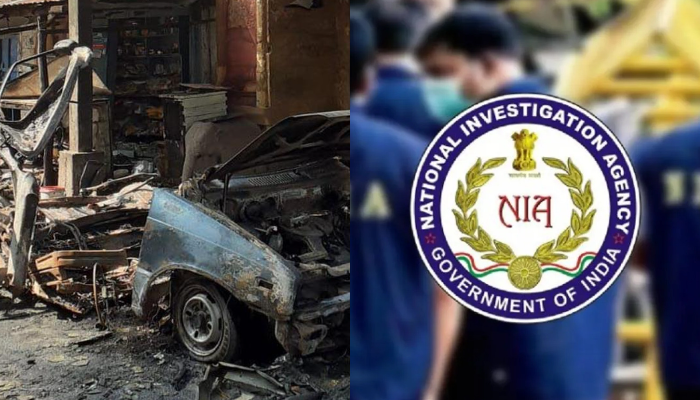
The National Investigation Agency (NIA) has arrested four more accused in the Tamil Nadu radicalisation and recruitment case, an offshoot of the Coimbatore car bomb blast case, according to an official statement. The NIA has arrested a total of eight people in this case so far.
As per the release, the accused persons are identified as Ahmed Ali, Jawahar Sathik, Raja Abdullah aka MAC Raja, and Sheik Dawood. The four accused had been radicalised by Jameel Basha, the founder of Madras Arabic College, who, along with his associates, was involved in recruiting gullible youth and subtly infusing Salafi-Jihadi ideology into them in the guise of imparting Arabic language classes in Tamil Nadu.
4 More Accused Arrested by NIA in TN Radicalisation and Recruitment Case Involving Kovai Arabic College pic.twitter.com/fEkSZFAKQe
NIA had earlier arrested and charged Jameel Basha and his associates Irshath, Syed Abdur Rahman and Mohammed Hussain, who were using the classrooms and social platform to carry out their anti-national radicalisation and recruitment activities. NIA investigations have revealed that the accused had promoted Khilafat ideology and martyrdom through jihad, advocating violence and armed struggle to establish an Islamic state after removing the democratically elected government.
The radicalisation and recruitment activities had led to the Coimbatore car bomb blast in October 2022, in which the suicide bomber Jamesha Mubeen carried out a vehicle-borne IED attack in front of an ancient temple in Coimbatore. NIA is continuing with its investigation in the TN ISIS Radicalisation and Recruitment Case, as part of its efforts to check radical terror activities against the nation.
Coimbatore blast case
Coimbatore, a highly industrialised city in the State of Tamil Nadu, was rocked by a blast on 23rd October 2022. On 22nd October, an engineering graduate named Jamesha Mubin was caught on CCTV, loading a large object (LPG cylinder) wrapped in white bag onto his Maruti 800 car. It was around 11:25 pm. Mubin was accompanied by 3 other men, namely, Mohammad Riyaz, Feroz Ismail and Mohammad Navaz Ismail.
The car carrying Jamesha Mubin exploded mid-journey in the Ukkadam area of Coimbatore. It was 4 am in the morning. The incident took place adjacent to the Kottai Easwaran Temple. When the matter came to light, a contingent of police and forensic experts was dispatched to the site of the explosion.
A total of 6 teams were formed, as part of the probe. ADGP P Thamarai Kannan reviewed the situation at ground zero. Preliminary investigation revealed that one of the two commercial cylinders onboard the car had exploded while the other remained intact. As per reports, the remains of Mubin’s body were unrecognisable.
Initially, it was believed to be a simple accident, that the LPG cylinder exploded due to some reason. But many people didn’t believe this, including BJP leader K Annamalai. Later police confirmed that it was part of a terror act and it was not a regular accident. Jamesha Mubin was motivated by the Islamic State and engaged in preparing for jihad. Reportedly, he was on a suicide mission to destroy a large area including a Hindu temple using his car bomb.
However, the sinister plan failed and it ended up killing him. Initially thought to be a regular accident, it has now emerged that the Coimbatore cylinder blast was a jihadi terror attack gone wrong. Police believe that Mubin learnt about explosives from the Internet and he had no training in making bombs, which resulted in the failure of the mission.
The handwritten entries (in Tamil), recovered from his residence, involved references to Muslims as “second-class citizens,” the Citizenship (Amendment) Act, the hijab dispute in Karnataka, and a flow diagram with the names of Gods from various religions. 18 jihadis had already been arrested in the case.
Radicalisation carried out in Arabic college
The NIA last year informed that they have filed a chargesheet against 4 men for radicalising youths and recruiting them for terrorist outfit ISIS. The accused have been identified as Jameel Basha, Mohammed Hussain, Irshath and Syed Abdur Rahman, a statement issued by the NIA said. The accused have been charged under the relevant sections of the IPC and UA (P) Act.
The NIA, during the investigation into the explosion that was triggered outside an ancient temple in Coimbatore, had established that the majority of the accused arrested in the case were engaged in the recruitment of gullible youth to the ISIS fold for the commission of unlawful and terrorist activities.
The religious indoctrination was carried out by the accused at an Arabic language centre called Madras Arabic College (at Coimbatore), later renamed as Kovai Arabic College, the statement said.
Jameel Basha was the patron and chief mentor, who had guided his alumni to establish Arabic language centres at the district level, it said. The centre at Coimbatore was set up by Mohammed Hussain and Irshath.
According to NIA’s statement, Jameel Basha’s live or recorded speeches were played for the students at these centres. Social media platforms were also utilized to radicalize young people. The IED planted in a car exploded outside the Coimbatore temple “as part of the violent jehad espoused by the accused”, the agency said.
The investigation agency further stated that accused Jamesha Mubeen, who died, was radicalized by accused Syed Abdur Rahman and swore allegiance to Darul-e-Islam, or ISIS. He carried out the IED blast as part of the terrorist group’s anti-India campaign.
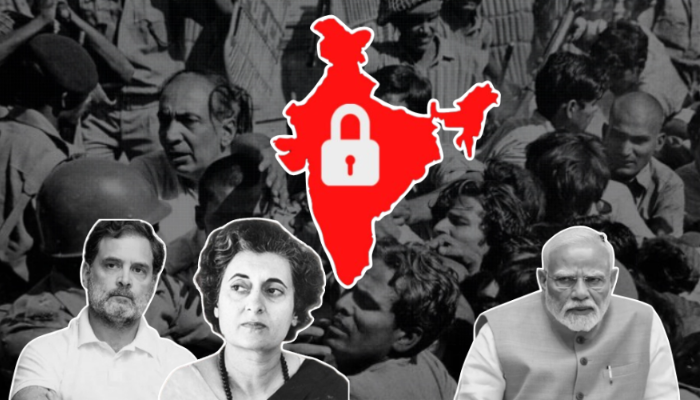
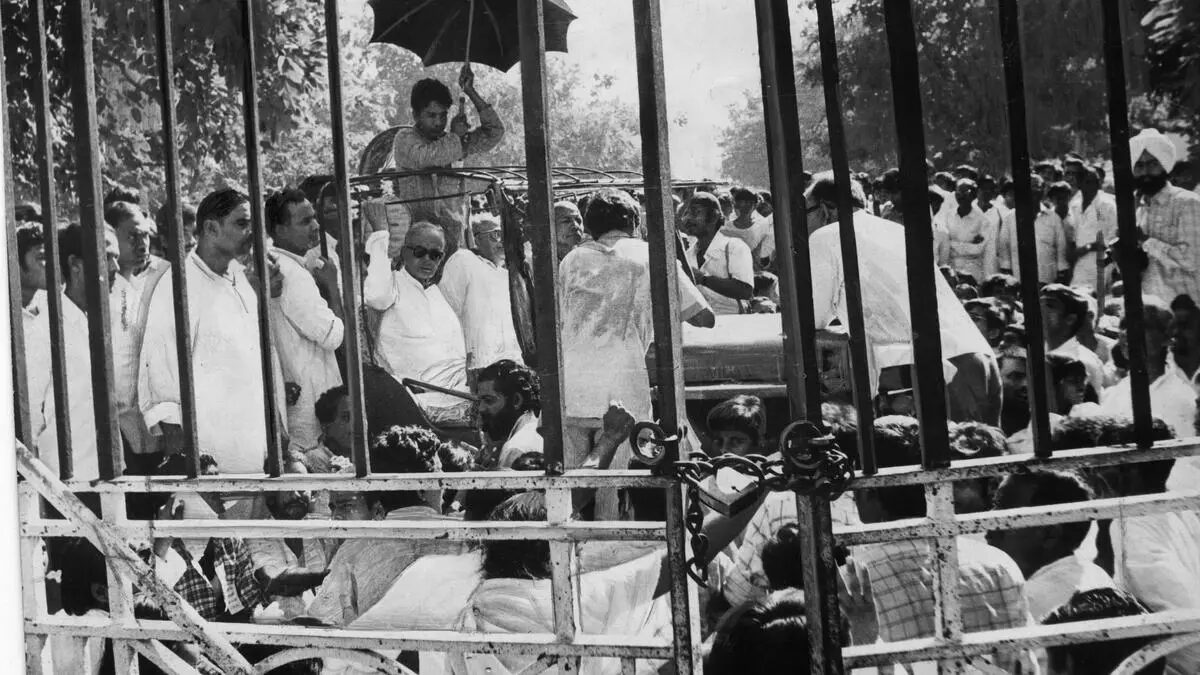
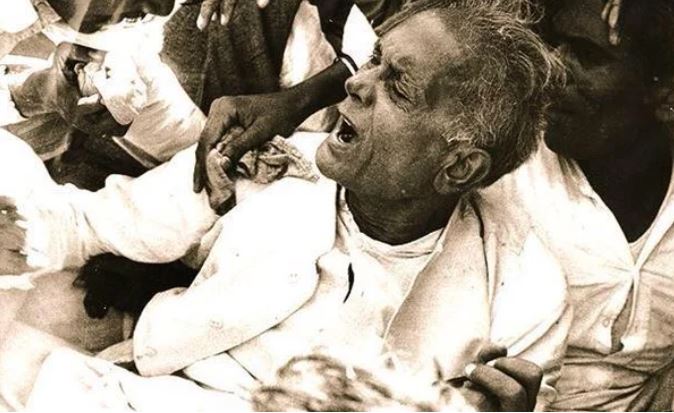
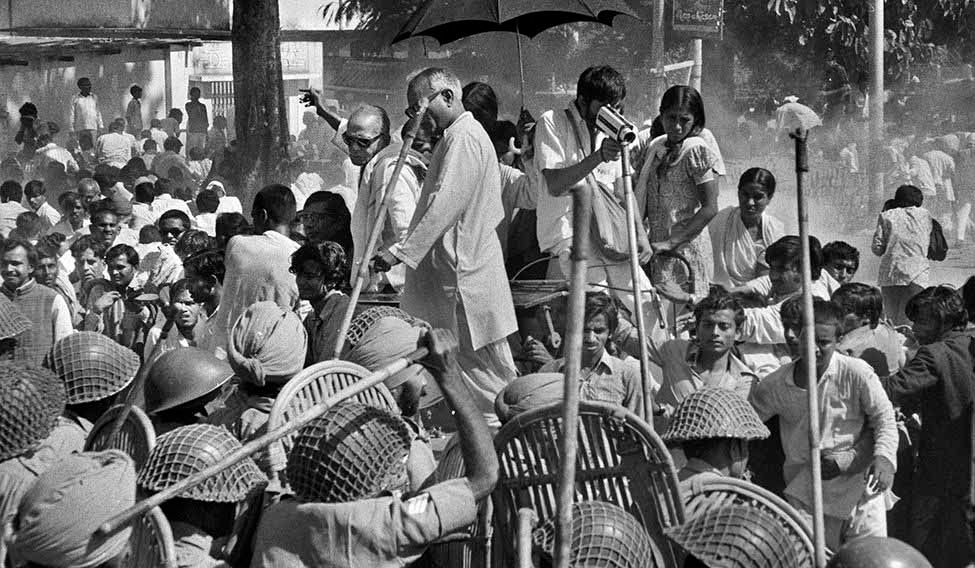
50 years ago, on 12th June 1975, Justice Jagmohan Lal Sinha from the Allahabad High Court delivered an extraordinary verdict that altered the trajectory of Indian politics and history for generations to follow. Prime Minister Indira Gandhi’s membership in Parliament was revoked and she was prohibited from holding political office for six years.
She was found guilty of fraud during the general elections in 1971 after a case was filed by Raj Narain, who had been defeated by her. However, she refused to give up her Raebareli seat. A disgraced Indira subsequently persuaded President Fakhruddin Ali Ahmed to declare an internal emergency, thirteen days later, in accordance with Article 352 of the constitution.
President Fakhruddin Ali Ahmed (Source: Manorama Online)
A national emergency (NE) was announced on 25th June 1975 that lasted until March 1977. She enforced a period of blatant authoritarianism as a result, imprisoning her political rivals, suppressing the media, violating human rights, brutalising students, disregarding fundamental rights, torturing and murdering citizens in cold blood and even mangling the Constitution.
No aspect of the emergency was devoid of shock, however, her unprecedented assault on defenseless students is especially reprehensible. The government apparatus of a self-proclaimed strong leader, who was even referred to as the “Iron Lady” by her party members and sycophants, was unleashed to target young boys and girls whose primary goal at that point in their lives should have been to pursue education and create a future for themselves.
However, they found themselves obligated to counter a regime that brought about a dark chapter in India’s history, leading to harsh curbs on individual and institutional freedoms including severe media censorships.
It has been the history of the Congress party and especially of the Gandhi family to brutally suppress voices of dissent. Artists and students have always suffered when they raised their voice against the Gandhis and the Congress. Yet, Indira Gandhi’s grandson, Rahul Gandhi, pretends to be a well-wisher of students, merely to use them as a tool to gain power. In reality, Rahul Gandhi is no different from his grandmother who tortured and even killed students during the Emergency. The dictatorial streak never ended.
He never has, so far, addressed the issue of the suppression of students under the reign of his grandmother either. He clearly does not possess any genuine concerns for the students and utilizes them as a means to further his political agenda and attack the saffron party.
Interestingly, he does not only speak to students in India, but also abroad, to raise awareness about the “wrong” policies of the government, yet, his party’s own record is never referenced in these events as he desparately tries to paint Congress as pro-students and BJP as their adversary. From raking up the bogey of saffronization to fueling language politics, the Gandhi scion has executed all measures to incite the students while remaining silent about the atrocities of the emergency during which they were truly oppressed.
Rahul Gandhi calls NEP 2020, a weapon to communalise
Rahul Gandhi claimed that the National Education Policy 2020 was implemented by the center without seeking input from teachers and students, in 2021. He added that it was being used as a tool to spread a specific ideology and communalize Indian society. “An education system is for our students and it is run by our teachers. If we are going to have any policy made for the education system, then, it has to come from a conversation with students and professors. Unfortunately, this was not done.”
Rahul was talking to college professors at Saint Xavier’s College in Tirunelveli of Tamil Nadu before the assembly elections in the state. “There is too much power is being centralised in one institution (in the NEP). This is going to damage the education system. The positive side is that it is reasonably flexible on many counts but is a weapon to communalise, to push a particular ideology into Indian society,” he charged.
The parliamentarian added, “I don’t believe that education should be only for financially strong people. When we come to power, we are going to push for scholarships in education.” He claimed, “You don’t want to necessarily remove religion from the discourse. You want all religions to be part of it. As long as ideas are competing without hatred and anger, there is no problem. The problem is when you tell someone that you cannot open your mouth because you are from a certain religion,” in response to a query.
“The Government of India says that they represent Hinduism but a lot of the ideas they espouse have nothing to do with the religion. Nowhere does it say insult, kill people,” he proclaimed, as part of his habitual practice of only insulting the majority religion and its adherents under the guise of slamming BJP and the centre.
“One organisation is trying to destroy the Indian education system, and that organisation is the RSS. If our education system falls into their hands, the country will be destroyed and employment will be finished,” the Congress functionary announced as he tried to instigate the students by invoking the fabricated fear of RSS at Jantar Mantar during a protest arranged by National Students Union of India (NSUI) in March of this year.
The protest was directed at the University Grants Commission (UGC) draft rules, the National Education Policy (NEP) 2020 and the alleged paper leaks. He claimed that public universities are about to come under the same kind of control as the RSS, which is appointing its “nominated candidates” as vice chancellors in universities across the country.
“A few days ago, the Prime Minister spoke about the Kumbh Mela. It is good that he spoke about the Kumbh, but I wanted him to speak about employment. Your government has made the youth of this country unemployed and you should speak about that too,” he added.
He delivered additional rhetoric regarding RSS and the industrialists Adani and Ambani before concluding his speech by expressing solidarity with the students and assured, “We are all united and we will fight together.”
Rahul Gandhi and his political coalition’s tendency to invoke RSS and Hindutva ideology to criticize the BJP, regardless of the truth, is neither novel nor original. The Modi government has consistently clarified that the entire policy, including the three-language formula, will only be enacted with the approval of students and their teachers, however, he never allows facts to interfere with his propaganda.
Furthermore, aside from the propaganda deeply embedded in hatred, he lacks any proof to substantiate his ridiculous claims against the RSS.
Rahul Gandhi tries to provoke students over NEET exam
The Raebareli MP argued last year that the medical undergraduate entrance exam was “designed to suit rich students” and was more of a “commercial exam” than a “professional one,” in the lower house.
He insisted, “NEET students spend years and years preparing for their exams. Their family supports them financially and emotionally, and the truth is that NEET students today do not believe in the exam because they are convinced that the exam is designed for rich people, not meritorious people. I have met several NEET students. Every single one of them tells me that the exam is designed to create a quota for rich people and to create a passage for them into the system and is designed not to help poor students.”
He had earlier issued a video in which he addressed candidates for the National Eligibility-cum-Entrance Test (NEET) as well as other competitive exams and accused the centre of avoiding a discussion on paper leak in the parliament. “The idea behind the discussion was to get a resolution to this issue. It is unfortunate the government didn’t want it. It seemed to me the direction was directly from the Prime Minister,” he stated.
Rahul further charged, “It is sad the Prime Minister of India, who should be leading the discussion and should be telling us about his opinion and what he is going to do, simply doesn’t want a debate. We don’t want to fight the government, we want to place our views on the table.”
“I tried to raise it in Parliament, of course I was not allowed to speak. It is clear there is a systemic problem and there is a huge amount of corruption and we simply cannot continue like this,” he alleged while reiterating that there was a paper leak and everyone knew about it.
He had previously attacked PM Modi and declared that even before the latter took power for a fresh term, the “irregularities” in the NEET-UG medical entrance examination had crushed the hopes of over 24 lakh students. “We had pledged in our manifesto to give students ‘freedom from paper leak’ by making a law.
The Congressman enphasised, “Six students from a single exam centre topped the exam with maximum marks, while many got such marks which are technically not possible, but the government is continuously denying the possibility of paper leak.”
“Today, I assure all the students of the country that I will become your voice in the Parliament and strongly raise the issues related to your future,” he conveyed and added that the youth have expressed faith in the I.N.D.I. Alliance which will not let their voice be suppressed.
नरेंद्र मोदी ने अभी शपथ भी नहीं ली है और NEET परीक्षा में हुई धांधली ने 24 लाख से अधिक स्टूडेंट्स और उनके परिवारों को तोड़ दिया है।
एक ही एग्जाम सेंटर से 6 छात्र मैक्सिमम मार्क्स के साथ टॉप कर जाते हैं, कितनों को ऐसे मार्क्स मिलते हैं जो टेक्निकली संभव ही नहीं है, लेकिन सरकार…
Notably, the National Testing Agency denied any anomalies and maintained that some of the factors contributing to the improved scores were the modifications made to the NCERT textbooks and the grace marks for students who were late for the exam.
The issue of paper leaks indeed is a harsh reality that requires firm action, however, rather than addressing the problem, Rahul appears more interested in exploiting it for political gain which clearly demonstrates his real intentions behind raising these matter.
Rahul Gandhi’s unannounced visit to DUSU sparks row
The former Congress supremo frequently engages with students from different educational institutions to present his party as a supporter of their interests, while criticizing the BJP government’s actions as detrimental to students. Nevertheless, a similar incident recently triggered significant backlash in the national capital.
Student representatives protested and university administrators voiced strong objections to his unplanned trip to the Delhi University Students Union (DUSU) office and interactions with students, last month. He spent more than an hour at the DUSU office, which was surrounded by security guards during that period, according to a statement from the university.
Unsurprisingly, he extended his infamous caste politics to the varsity, which appears to be the only cornerstone of his party’s political strategy after suffering repeated defeats at the hands of PM Modi and the BJP.
Rahul reportedly urged students from the Scheduled Castes (SC), Scheduled Tribes (ST), and Other Backward Classes (OBC) to actively participate in building a fair and inclusive educational environment by taking inspiration from Dr BR Ambedkar’s teachings to “educate, agitate, and organise.”
Ronak Khatri, NSUI leader and DUSU president conveyed, “The students raised concerns over caste-based discrimination, lack of representation of marginalised communities in faculty positions and their exclusion from jobs in top companies.”
However, the visit was denounced by the institution, which also noted that it was the second time he had visited without warning. The university’s proctor Rajni Abbi Rajni Abbi issued a notice and highlighted, “The DUSU secretary was not allowed to enter her office and was not let in by National Students Union of India (NSUI) students. There were some students inside the DUSU secretary’s room who were locked and were subjected to harassment by the NSUI members. Strict action will be taken against students involved in this.”
Rahul pretendts to be devoted to student issues, especially for those from the lower levels of society and he never passes up a chance to express the same by attacking the government. Nevertheless, he often fails to live up to his own words, as clearly illustrated by the DUSU incident. His concern for students is limited to their potential benefit to him politically, otherwise, he shows no regard for their harassment by his party members.
He even wrote to PM Modi on 10th June to discuss the dire living conditions in the residential dormitories for students from underprivileged families and the delays in the distribution of post-matric scholarships for them, after he went to a university hostel in poll-bound Bihar.
“I request you to resolve two critical issues which hinder education opportunities for the 90% of students who are from marginalized communities. Firstly, the conditions in residential hostels for students from Dalit, ST (scheduled tribe), EBC (extremely backward classes), OBC (other backward classes) and minority communities are deplorable,” he stated.
The shadow of the Bihar election is prominently visible in his comments. He is a shrewd politician who knows how to capitalize on any opportunity to create an impression on the voters. It is simply that people are able to see through him and he is unable to deceive them to secure votes for his party’s rise to power.
The grim era of Emergency: How students were treated under Congress rule
The aforementioned instances are just a few among several and illustrate Rahul Gandhi’s attempts to politicize matters concerning education and students while attributing blame to the BJP for political gain. However, he fails to acknowledge the egregiously anti-student actions of his own party during the emergency, which have been inscribed in the dark annals of history.
The Maintenance of Internal Security Act (MISA) was widely abused. Ironically, the former Chief Minister of Bihar and ex-union minister, Lalu Prasad Yadav, who is currently a part of Congress-led I.N.D.I. Alliance, named his eldest daughter after the act to commemorate the hardships he experienced during that period.
Kasu Brahmananda Reddy (centre), the home minister who signed a letter seeking the president’s assent for imposing internal emergency. (Source: Manorama Online)
People were detained for no other reason than outright victimization, false accusations and vague suspicions. The controls and gags immediately became unacceptable to young people including students. Their leaders were arrested and imprisoned with the exception of those who supported the grand old party.
Consequently, the youth rose up against the tyranny of Indira’s government and their protest was met with ruthless crackdown. Many students fell victim to the violence inflicted in the name of crimes that were never validated, leaving their families in despair as they mourned the uncertain fate of their children.
On 1st March 1976, P. Rajan, a student at Calicut Regional Engineering College, was arrested by the police for an unproven offense. He was later found to be dead “while in unlawful police custody at the Kakkayam police camp on 2nd March 1976, as a result of continuous police torture with iron and wooden rollers.”
The returns filed in the form of affidavits by the respondents, including the former chief minister, K Karunakaran, acknowledged this before a division bench of the Kerala High Court, consisting of Justice P. Subramanian Poti and Justice V. Khalid, during the hearing of the habeas corpus petition submitted by the father of the victim, TV Eachara Warrier.
His corpse was disposed of and has yet to be found. It was the lengthy and solitary battle of Eachara that uncovered the truth regarding his disappearance. Rajawardhan, a sudent leader, was brutally thrashed until he passed out and vomited blood. He did not, however, receive any medical care from the authorities.
“Aeroplane ” assault on students
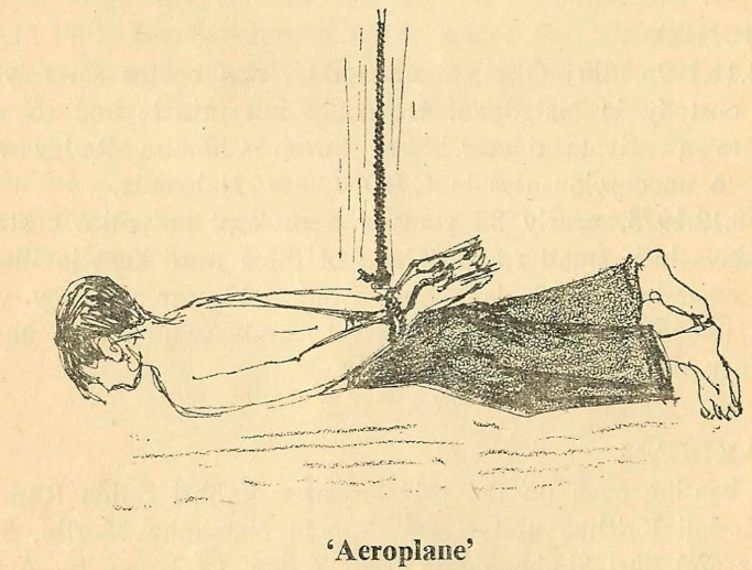
According to multiple accounts, the “aeroplane” was the police’s “favorite” method of torture in Karnataka. The victim was bound by securing their hands behind their body with a rope and then hauled many feet above the ground while the rope was pulled toward the ceiling using a pulley. The person hung midair as their hands were tied behind their back.
Young Belgaum college students were hanged from the ceiling via this method and tortured to the third degree. They were rendered unconscious by the intense pain. Puttu Swamy, Padmanabh Harihar and Shrikant Desai, three student leaders in Hubli were assaulted and underwent same torture. Student leader Ravi was detained, battered, kicked and suspended as an “aeroplane” in Mysore as well.
On 12th November 1975, Udaya Shankar, a student from Canara College, was taken by the police without a warrant, in Mangalore. He was thrashed, caned and kicked until his body was left with red and blue marks. He was also denied food. These acts of cruelty occurred in the presence of Superintendent of Police. Udaya was later tormented employing the “aeroplane” technique three times.
Another student, Shrikant from Bangalore was also attacked and subjected to “aeroplane” torture. Student leader, Sesha, was covered entirely with poisonous caterpillars. Shimoga (Shivamogga) students were lathicharged.
Delhi University Union Secretary Hemant Kumar Vishnoi was captured while having a picnic in the Buddha Gardens of Delhi with other students. They beat him and hung him upside down. His bare soles were covered with burning candles and his nose and rectum were covered in chili powder. However, he refused to “confess” to a fictitious conspiracy against Indira Gandhi in spite of the cruelty. All of this occurred despite the fact that he had no charges against him. The agony caused his entire body to swell.
Another Delhi University student, Mahavir Singh, suffered torture and abuse to the point where his skin began to react to even the clothes he wore. Another pupil of the institution, named Shiv Kumar Sharma was made to breathe in chili powder. Rods, shoes and rifle butts were also used to pound him. Ashwini Kumar, a student leader, was forced to lie down at the police station while a constable in ammunition boots danced on his chest.
Furthermore, more than 200 Delhi University teachers were taken into custody on 26th June 1975 alone.
On 23rd June 1976, Jawaharlal Nehru University student Jasbir Singh was apprehended and he detailed the abuse he suffered in his statement. He described how, from 6 pm till midnight, he was brought into a police station room and thrashed with clubs, boots and slippers. The following day, two chairs were attached to a pole and his wrists and feet were chained to it as he was left hanging between them.
He began to spew blood as he was swung on it and shoved side to side. Police repeatedly threatened him that his body would be tossed into the Yamuna River, where no one would ever know he had died. The pain and misery dragged on for days.
The corrupt Congress administration’s brutality on a student
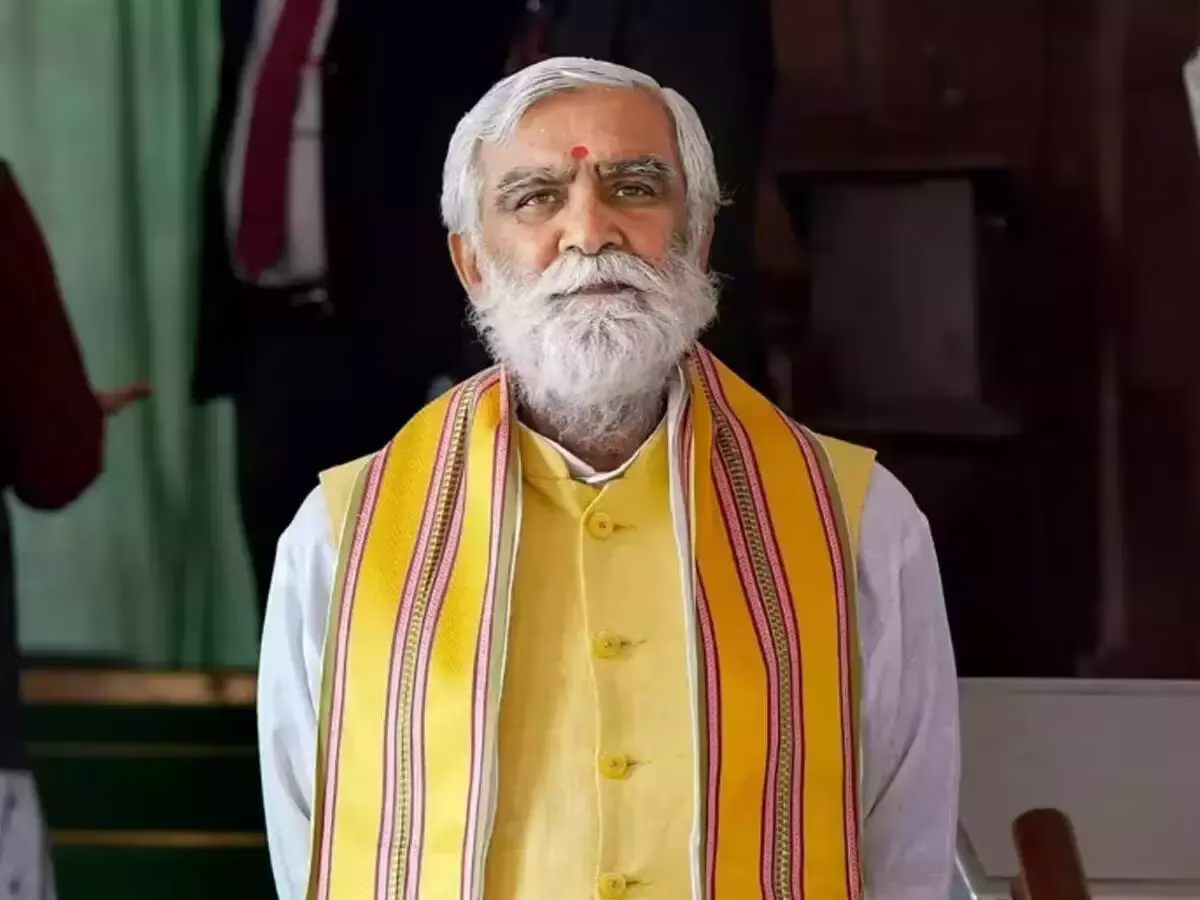
A year before to the declaration of Emergency, Ashwini Kumar Choubey, who is currently a Union Minister, was introduced to state terror. The Abdul Ghafoor administration in Bihar targeted him because, as the head of the Rashtriya Swayamsevak Sangh (RSS) unit at Patna University, he actively supported freedom fighter Jayaprakash Narayan’s movement against corruption and misrule.
Ashwini Kumar Choubey (Source: Zee News)
Aside from his dedication as an activist, Choubey gained recognition for exposing Ghafoor and the then-finance minister Daroga Rai’s involvement in scams pertaining to sugar mills. Predictably, the government persecuted him in retaliation. “Congress goondas and the police had planned to finish me,” he unveiled.
He was arrested by the police on 12th June 1974, charged with DIR (Defence of India) act and taken to the Phulwarisharif Jail outside of Patna. The night was one of unspeakable horror. Choubey was propped upon a massive hot iron pan used to make chapatis, beaten with lathis and tortured with blazing iron rods.
The police also attempted to employ spikes to blind him. Afterwards, he was “disposed of” and wrapped in a sack. At the moment, other activists broke into the jail. Choubey awoke in the hospital four days after the occurrence, suffering from serious burns and kidney damage. Afterward, he was arrested again and charged under MISA.
With repeated calls for a public curfew, morchas and dharnas demanding the ousting of the government, JP’s campaign had gained traction by the time the Emergency was declared. The state arrested, imprisoned and tortured leaders across the nation in retaliation. Unfortunately, it Choubey’s time on 12th July 1975 when he was taken to Arrah Jail after being apprehended while attempting to enter Patna Science College secretly to take his B.Sc. Hons. (Bachelor of Science with Honours) examinations.
His incarceration was a recurrence of his previous imprisonment experiences. He was transported from Arrah Jail to Buxar Jail, where he was not given food or water during the trip. He was tortured and placed in a cell near the mentally challenged section of Buxar Jail. The cell was stinky, gloomy and mosquito-infested. Choubey was close to death after five months under these conditions.
Eventually, he was transferred to Patna Medical College, where he spent the following 11 months in a hospital under police control until the emergency ended.
Congress govt’s atrocities on students during JP movement
The Gujarat Congress government was overthrown by the Nav Nirman movement, which also witnessed the arrest of 326 students as the cops resorted to tear gas and lathicharge. Afterward, political student organizations including Akhil Bharatiya Vidyarthi Parishad (ABVP) of the Jana Sangh, Samajwadi Yuvajan Sabha (SYS) from the Samajwadi Party and Lok Dal joined the Jayaprakash Narayan (JP) movement.
Jayaprakash Narayan Movement (Source:The Hindu)
All India Students Federation (AISF) of the (Communist Party of India) CPI also became a part of it. A countrywide strike was called by opposition groups in 1973. Due to their involvement in the movement, eight students were killed on 17th August 1973, when police targeted agitators in Bhopal, the capital of Madhya Pradesh. Additionally, the Raina Enquiry Commission confirmed that the Madhya Pradesh Congress government’s actions were excessive and it had not handled the matter appropriately.
Student leaders from throughout the state were invited to a convention hosted by the Patna University Students Union on 18th February 1974. They organized the demonstration under the name Bihar Chhatra Sangharsh Samiti (BCSS). Lalu Prasad Yadav was selected as the president, Sushil Kumar Modi, Narendra Singh, Bashistha Narain Singh, Chandradeo Prasad Verma, Mohammad Shahabuddin and Ram Vilas Paswan were among its prominent youth leaders. Their requests included meals in dorms and education.
Jayaprakash Narayan during the Emergency. (Source: KnowLaw)
The Bihar Assembly was gheraoed by students on their call on 18th March 1974, a significant moment in the Jayaprakash Narayan movement. Three students were killed after police opened fire when clashes broke out. All around Bihar, protests broke out calling for Ghafoor to be ousted from his position. Jayaprakash Narayan intensified the demonstrations, demanding democratic reforms and integrity in public life, when eight more students were slain by police shooting on 12th April.
Horrors of Emergency
After the glory of the 1971 victory over Pakistan faded, the brutality of Indira’s regime was witnessed by all during the Emergency.
Approximately one million people, including members of opposition political parties, journalists, academics, activists and community members were arrested under MISA and held without charge or trial for up to 18 months. The act infringed upon fundamental human rights and freedoms guaranteed to the people by the Indian Constitution.
The Emergency (Source: KnowLaw)
During the 21-month emergency, 1,40,000 people nationwide were arrested without charge or trial, according to reports provided by Amnesty International. No one was spared from the wrath of the Congress government including socialist stalwarts Madhu Dandavate and Shyam Nandan Mishra, former deputy prime minister LK Advania nd former prime minister Atal Bihari Vajpayee.
A staggering 6.2 million men in India underwent sterilisation within a single year, a figure that is “15 times greater than the number of individuals sterilised by the Nazis.” A plane was even hijacked and later the action was shamelessly defended in the Parliament.
Her grandson too frequently transforms every student issue into a political campaign against the BJP, accusing the government of targeting students and suppressing their voices. However, much like his grandmother, Rahul Gandhi too has a dictatorial streak who views students as a tool for politics and a means to achieve power. For example, in 2011, a student was arrested merely for mocking Rahul Gandhi. In the same breath, Rahul Gandhi himself supported “students” like Umar Khalid after seditious statements like “Bharat Tere Tukde” were chanted in JNU. It is pertinent to remember that Umar Khalid then went on to mastermind the Delhi 2020 anti-Hindu Riots in which Congress workers were also involved, including a close aide of Rahul Gandhi himself. Essentially, just like his grandmother, Rahul Gandhi uses students, arresting and persecuting them when it suits his politics and supporting the worse elements who pose as students when it suits his politics.
The unfounded allegations he directs at the present government account for not even 1% of the anguish and suffering they experienced during the Emergency and even before that, when they were subjected to the most severe punishments and had to sacrifice their lives just for speaking out against the corrupt practices of Congress, in a democracy.
The democracy which the Congress claims to bestow upon the nation and frequently vocalizes is in jeopardy since they are not in power. The fact remains that the only time Indian democracy has been sincerely threatened was during Indira’s leadership in the Emergency.
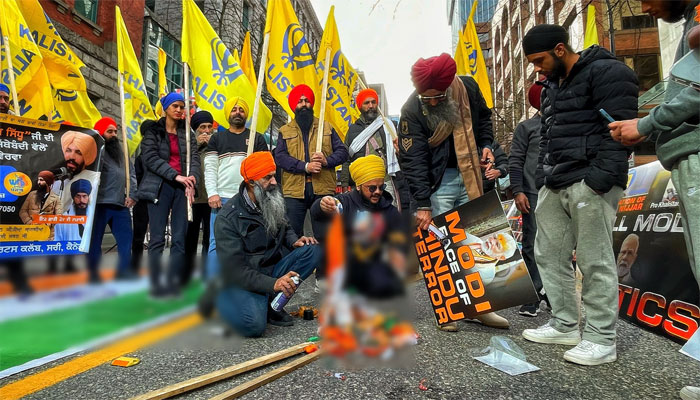
For the first time ever, Canada’s premier intelligence agency, Canadian Security Intelligence Service (CSIS) officially acknowledged that Khalistani extremists are using Canadian soil to promote, fundraise, and plan violence in India.
CSIS released its annual report on Wednesday, outlining some key concerns and threats to Canada’s national security.
Canada intelligence agency CSIS report categorically states, “Khalistani extremists continue to use Canada as a base for the promotion, fundraising or planning of violence primarily in India.”
India has been raising concerns about Khalistani extremists operating from Canadian soil for years, but Canada had largely turned a blind eye to the issue.
The CSIS report confirmed that Canada has become a safe haven for anti-India elements, validating India’s concerns that have been raised for years.
This comes a day after Prime Minister Narendra Modi and his Canadian counterpart Mark Carney “agreed to take calibrated steps to restore stability to the relationship” and decided to restore High Commissioners to each other’s capitals.
At the G7 Leaders’ Summit in Kananaskis, Alberta, Canadian Prime Minister Mark Carney held talks with Prime Minister Narendra Modi and both leaders agreed to designate new high commissioners, with a view to returning to regular services to citizens and businesses in both countries, according to a press release from the Prime Minister of Canada.
The Politically Motivated Violent Extremism (PMVE) threat in Canada has manifested primarily through Canada-based Khalistani extremists (CBKEs) seeking to create an independent nation state called Khalistan, largely within Punjab in India.
The report noted that since the mid-1980s, the PMVE threat in Canada has manifested primarily through CBKEs.
“A small group of individuals are considered Khalistani extremists because they continue to use Canada as a base for the promotion, fundraising or planning of violence primarily in India. In particular, real and perceived Khalistani extremism emerging from Canada continues to drive Indian foreign interference activities in Canada,” the report reads.
This revelation, part of CSIS’s latest annual report, has reignited concerns about foreign interference and extremist activity within Canada, particularly in the context of its sensitive diplomatic relationship with India.
Canada’s own intelligence security has confirmed what New Delhi has long maintained — Canada has become a safe haven for anti-India elements.
The report called for sustained vigilance against both external influence campaigns and domestic extremist financing networks
“These activities attempt to steer Canada’s positions into alignment with India’s interests on key issues, particularly with respect to how the Indian government perceives Canada-based supporters of an independent homeland that they call Khalistan,” added the report.
Tensions escalated further when former Canadian Prime Minister Justin Trudeau claimed that his government had “credible allegations” of India’s involvement in the killing of Khalistani terrorist Hardeep Singh Nijjar in Canada in 2023.
India has strongly denied the allegations, terming them “absurd” and “motivated,” and has accused Canada of giving space to extremist and anti-India elements.
In the aftermath, India recalled six diplomats from Canada after they were declared “persons of interest” by Canadian authorities investigating Nijjar’s killing. Nijjar was shot dead outside a gurdwara in Surrey, British Columbia, on June 18, 2023.
“Links between the Government of India and the Nijjar murder signals a significant escalation in India’s repression efforts against the Khalistan movement and a clear intent to target individuals in North America, Wednesday’s report read.
“Real and perceived Khalistani extremism emerging from Canada continues to drive Indian foreign interference activities in Canada, the report added.
Canadian Prime Minister Mark Carney faced criticism for inviting Indian Prime Minister Narendra Modi to the G7 summit, with some Sikh advocates and his own MPs expressing disapproval. However, Carney defended his decision, citing India’s significance in global affairs.
Carney emphasized India’s status as the world’s fourth-largest economy and most populous country, making it a crucial player in addressing global challenges.
(This news report is published from a syndicated feed. Except for the headline, the content has not been written or edited by OpIndia staff)
In a major step in developing an indigenous fifth generation fighter aircraft, the Aeronautical Development Agency has issued an invitation for ‘Expression of Interest’ from companies around the world for the development of Advanced Medium Combat Aircraft. This comes just 3 weeks after the defence ministry approved APCA Programme Execution Model through partnership with public and private industry.
As per the notification issued by ADA, “the Objective of this EOI is to short list Indian Companies (owned & controlled by resident Indian citizens) who are technically capable for the Development, building of Prototypes, supporting Flight Test and Certification of AMCA. The applicant may be a Single Company, Joint Venture or a Consortium of companies, compliant with all applicable Indian Laws & Regulations. It should also demonstrate experience and competence to execute projects of comparable technical complexity and scale.”
ADA states that the applicant companies should have the “capability to absorb the design of AMCA and have adequate experience in the field of Development & Engineering, Manufacturing, Integration, Fabrication, Testing, Quality Management, Customer Support etc. with a manufacturing facility or strategic tieups with another Supplier with up a manufacturing facility for series production.”
The ADA states that “all participating entities will be assessed based on the eligibility criteria and the evaluation matrix provided in the EOI document.”
Aeronautical Development Agency (ADA) invites Expression of Interest (EOl) for Development of the indigenous fifth generation fighter jet Advanced Medium Combat Aircraft (AMCA) with the objective to short list Indian Companies (owned & controlled by resident Indian citizens) who… pic.twitter.com/AvHeCYdHuD
The duration of the contract for Development, Prototyping, Flight Test and Certification of AMCA shall not exceed eight years from the effective date of contract. A pre-Expression of Interest meeting will be held in the 1st week of July 2025 for clarifications. The deadline for submissions is 16 August 2025.
As per the current roadmap of the fifth generation stealth fighter, the first prototype is expected to take flight by 2029. Full development should be completed up by 2034, with production likely to begin a year later. As per DRDO, HAL will complete manufacturing the current orders for Tejas Mark-1 and Tejas Mark-2 jets.
The shortlisted entity will need to set up a dedicated manufacturing facility to support eventual mass production of the AMCA. Several major companies are expected to submit bids, including Tata Advanced Systems, Larsen & Toubro, Adani Defence and Aerospace, and the Mahindra Group. HAL will also be a contender, but it will have to compete with private entities, and its participation in eventual production is not guaranteed.
Like Tejas LCA, AMCA is also being developed in two phases. The Mark-1 version will be powered by American GE F-414 engine, which will also power Tejas Mark-2. AMCA Mark-2 is planned to be powered by an indigenous engine, and will be a sixth-generation aircraft.