Home Blog Page 4242

As TMC MP Nusrat Jahan declares her marriage invalid, questions arise whether she lied to the parliament on her marital status

Actress-turned-politician Nusrat Jahan on Wednesday released a statement on the speculation of her separation from husband Nikhil Jain. In a detailed statement, the Bengali actress claimed that there is no need to divorce her ‘husband’ as their wedding in Turkey was not valid both in Turkey and India. She also revealed that she has separated from her husband Nikhil Jain a long back.

Saying that her marriage was not carried under any law, the actress said she does not need a divorce from him as the marriage is invalid in India. As it was an interfaith marriage, it needed to be registered in India under the Special Marriage Act. But the couple did not get their marriage registered under the Special Marriage Act, hence their marriage did not have any legal backing in the country, the actress claimed.

“Being on foreign land, as per Turkish Marriage Regulation, the ceremony is invalid. Moreover, since it was an interfaith marriage, it requires validation under Special Marriage Act in India, which did not happen. As per the court of law, it is not a Marriage, but a relationship or a live-in relationship,” the actress said on Wednesday.

Hence, according to the actress, the question of divorce does not arise. “Our separation happened long back, but I did not speak about it as I intended to keep my private life to myself. Thus, my actions must not be questioned based on ‘separation’, by the media or anybody I am not related to. The alleged marriage is not legal, valid and tenable; and thus, was not a marriage at all in the eye of law,” a portion of her media statement read.

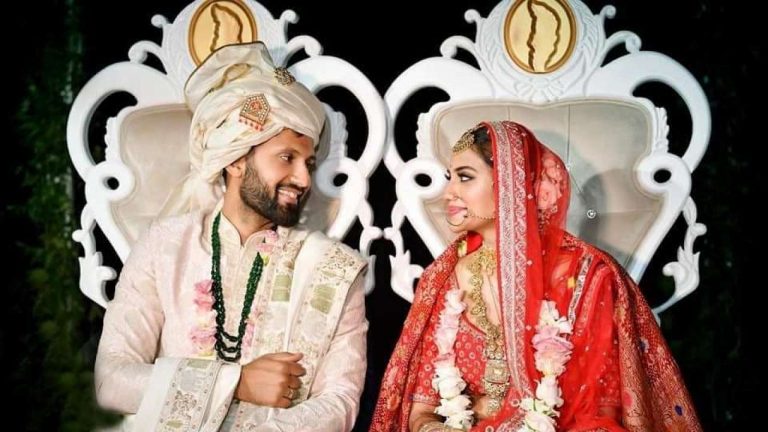
The couple had got married in 2019 in the Turkish town of Bodrum after Nusrat Jahan made her political debut by winning the 2019 Lok Sabha Elections.

What the laws say

Nusrat Jahan said that her wedding with Nikhil Jain in Turkey was not valid both in Turkey and India. Lets see what the relevant laws in the two countries say.

Due to the availability of picturesque locations like beaches, mountains, resorts etc that make a perfect wedding album, a large number of people go to Turkey to solemnise their weddings. According to the Turkish Marriage Legislation and regulations, a Turkish national and a foreigner, or two foreigners with different nationalities, or two foreigners with the same nationalities can get married in the country. However, such weddings must be conducted by Turkish marriage authorities, the Marriage Offices run by local municipalities. In the case of two foreigners of the same nationality, like in the case of Nusrat Jahan and Nikhil Jain, the same also can be conducted by their own Country’s Embassy or Consulate.

The Turkish laws specifically mention that religious marriages are not recognised by law, there has to be civil marriage with appropriate authorities.

While the reports and photographs of the famous wedding suggest that they had a wedding as per religious rituals, there was not report of them getting the marriage registered either with Turkish authorities or with the Indian Embassy. Therefore, it seems Nusrat Jahan is correct that her wedding is not valid in Turkey.

Now coming to the law in India, the Special Marriage Act can be used by couples of different religions to get married without one of them converting to the religion of the other. This act allows people to conduct civil marriage without religious rituals. It is clear that Nusrat Jahan and Nikhil Jain didn’t register their wedding in India under the Special Marriage Act. Neither of them also converted their religions to get married under religious rituals as per Hindu Marriage Act or Muslim Marriage Act. Therefore, it can be said that thy didn’t marry in India at all, and their wedding in Turkey was not valid.

However, this creates another issue, if their wedding was not valid, was Nusrat Jahan, a member of the parliament, violating laws by misrepresentation her marital status.

Lok Sabha records say she is married

The details of Nusrat Jahan on the Lok Sabha website says that her marital status is married. It says her husband’s name is Nikhil Jain, and the date of marriage is recorded as 19 Jun 2019.

Now that the TMC MP has said her marriage was not valid, and which seems to be correct, it means she had provided wrong details about herself in Lok Sabha. It is notable that while taking oath as the MP, she has used the name Nusrat Jahan Ruhi Jain, but the surname ‘Jain’ is missing from her details on the Lok Sabha website.

Netizens question her oath

As Nusrat Jahan began to distance herself from her marriage citing legal technicalities, social media users began to question the authenticity of her statements saying that the actress had openly flaunted her marriage all along and added that she cannot now claim that she was just in a relationship with Nikhil Jain.

Netizens reminded the actress about how she had taken her oath in the Parliament as “Nusrat Jahan Ruhi Jain”. After her victory in the 2019 Lok Sabha polls, the newly-elected Lok Sabha had taken her oath in the name of “Nusrat Jahan Ruhi Jain”. This clearly means that in her oath, she had said that she had married Nikhil Jain, which was not a valid wedding.

Citing the same, social media users have begun to ask whether she lied on the floor of the house.

Tech entrepreneur Arvind Gupta wondered if she had taken the oath under a wrong name.

Another social media user noted that Nusrat Jahan had appeared with Nikhil Jain by adorning Sindhoor on her forehead in front of goddess Durga after her marriage. However, she now claims that Nikhil Jain was not her husband, said another user confronting the actor-turned-politician whether she was insulting Bengali people by uttering such lies.

Shubangi Sharma asked Nusrat Jahan whether the marriage with Nikhil Jain was just another ploy to seek political mileage in the state and questioned whether it was a project carried out by political strategist Prashant Kishor to woo Hindu voters in Bengal.

It is pertinent to note that Prashant Kishor was the advisor for Mamata Banerjee-led Trinamool Congress in the run-up to the 2021 Assembly elections.

Another social media user asked whether Nusrat Jahan’s marriage with Nikhil Jain was just another drama to get Hindu votes in the elections.

With Nusrat Jahan citing Indian laws to claim that she was ‘legally’ never married to Nikhil Jain, instead, she was just in relationship akin to ‘live-in’, the actress-turned-politician has now opened a pandora’s box in terms of interpretation of marriage laws in the country.
Former India Today journalist justifies rape culture of ‘liberals’, says rape jokes are okay because man cracking them is gay

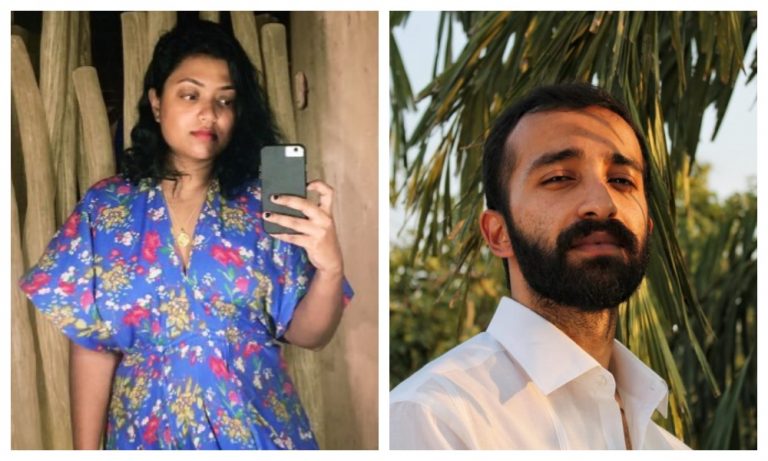
Former India Today journalist Aishwarya Subramanyam on Wednesday justified the rape culture of the ‘woke liberals’ after a Clubhouse conversation normalising rape culture went viral on social media.

Subramanyam’s justification

Subramanyam was part of the Clubhouse conversation along with other social media influencers like Kusha Kapila where ‘hate sex’ with Sanghis was being justified and ‘Sanghis’s were dehumanised.

Apparently, Kadamboor’s fantasising rapes on ‘Sanghis’ is okay because he’s gay and he was joking about ‘Sanghi men’ and not women.

The level of wokeness is too damn high.

Approximately 8,000 people were listening to a conversation where one Neeraj Kadamboor was flaunting how he sometimes fantasises about ‘Sanghis’ and would like to have ‘hate sex’ with them.

‘Hate sex’ is sexual intercourse with someone you don’t like. It is on a very thin line of sexual abuse as hate sex is often forceful and more often than not without consent.

Soon, more people joined in in defending Kadamboor because he is gay and calling out his rape jokes is ‘targeted harassment’.

Aishwarya accusing those calling out Kadamboor of ‘targeted harassment’

Since as a ‘queer man’, Kadamboor was fantasising about raping ‘Sanghi types’, it is okay since it was about men and not women. Those raising objection to such thought process were accused of ‘targeted harassment’.

In multiple tweets, the former India Today journalist continues to defend Kadamboor for his rape jokes because he’s gay and people from gay community need to be ‘protected’.

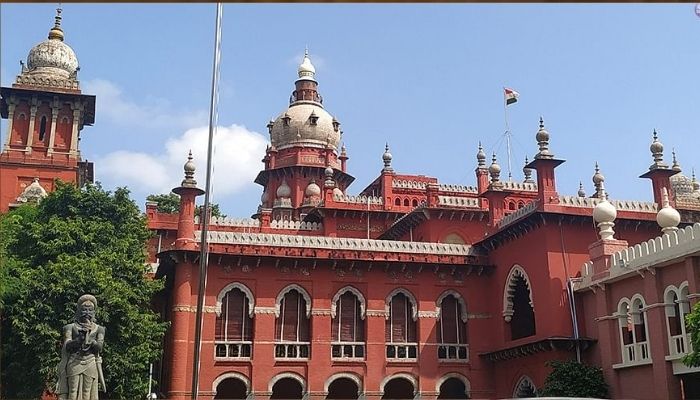
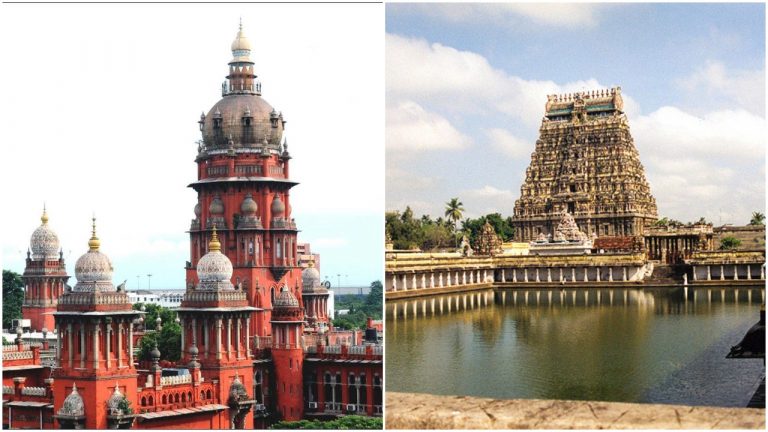
Madras High court directs Tamil Nadu government to protect Hindu temples, issues directions: Details

In a 224-page judgment, the Madras High Court on Monday (June 7) issued a set of 75 directions to the Tamil Nadu government for the maintenance and protection of historical monuments and ancient temples. The suo motu case was initiated by the then Chief Justice Sanjay Kishan based on a reader’s letter called ‘The Silent Burial’ published in The Hindu newspaper.

The matter came up before a 2-Judge Bench of Justices PD Audikesavalu and R Mahadevan. The Court noted, “the custodians of grand and antique temples and ancient monuments are least bothered and the conservation of our valuable heritage is deteriorating not due to any natural calamity or catastrophe, but due to reckless administration and maintenance under the guise of renovation.”

The Bench slammed the Hindu Religious and Charitable Endowments and the Archaeology Department for its failure in safeguarding antique idols, and temples. The Madras High Court observed that 2000-year-old temples in the state are in ruins, which has facilitated miscreants to ‘lay their hands on the idols.’ The Court’s directions can bring about legislative reform Hindu Religious and Charitable Endowments Act (HR&CE Act).

Temple lands must remain under the temple authorities, directs Court

The 2-Judge Bench ruled, “The State Government or the Commissioner of the HR&CE department, who are the Trustee/administrator of the temple lands, shall not alienate or give away the lands contrary to the wish of the donor. The lands shall always remain with the temples. The ‘public purpose theory’ shall not be invoked in cases of temple lands over which the interest of the community people of the religious denomination generally rests.”

The Madras High Court directed government officials to compile a list of encroachments over temple lands and recover them immediately from encroachers and defaulters. The Court had set aside a time period of 6 weeks for preparing the list and uploading the details on the website. It noted that the authorities must take necessary steps for the recovery of rent arrears, prevent illegal construction and encroachment of temple lands. The Court warned that appropriate action would be taken against the HR&CE Department officials for failing to remove encroachments within 8 weeks.

Temple funds must first be used for maintenance of temples : HC

The Madras High Court emphasised that temple funds must first be used in the maintenance of temples, conducting festivals, and making payment to the staff. “In case of surplus funds, the same shall be utilized for attending the repair and maintenance of other temples in the state as specified under the HR&CE Act and the Rules framed there under and for propaganda of the tenets of all or any of the religious institutions under the HR&CE Act,” the Court added.

Court directs authorities to form a Special Tribunal for temple disputes

The Judges issued directions to the HR&CE Department for auditing the temple assets. They noted that the Department might permit stakeholders of various religious denominations to participate in meetings conducted by the auditing Committees. The Madras High Court ruled that a Special Tribunal under the HR&CE Act must be constituted to deal with disputes over temple lands, tradition, culture, lease, rent arrears, and illegal encroachment. It added that the tribunal must be formed under the District Judge as Chairman with 2 or more members of retired Subordinate Judicial Officers. The Court has called for the setting up of a High-level committee to review and amend the HR&CE Act once in 3 years.

Courts directs formation of a Heritage Commission to oversee renovation/altercation work

“There is dire need to manage and conserve our ancient cultural heritage and monuments employing better-advanced technology in protecting, preserving and conserving the same”, the Madras High Court emphasised. It directed that the website of the Hindu Religious and Charitable Endowments Department must include details of idols of historical importance, number of stolen idols, the number of idols retrieved, and the status of probe in theft cases.

The Court added that a 17-member Heritage Commission must be constituted within a period of 2 months and no renovation/alteration of idols, temples and other sculptures can be done without its approval. “The Heritage Commission shall identify all the structures, monuments, temples, antiques with historical/archaeological importance within the state of Tamil Nadu, formulate a list with age of such monuments by categorising them within their period group, issue appropriate notification, render periodical advice to the State, supervise the restoration, repair works etc., and maintain the same,” the Bench concluded.

Govt cannot use temple land for any purposes other than religious functions, says Madras HC

In a significant observation, the Madras High Court in November last year had said that the state government could not use temple land for any purpose other than for holding religious functions. The Madras High Court, responding to grievances raised by devotees regarding the alienation of temple land of two temples in Tamil Nadu, emphasised that temple land could be utilised only for the beneficial purposes of the temple.

The High Court also observed that temples in Tamil Nadu were not only a source of identification of the ancient culture but also a testimony of pride and knowledge of the talent in the fields of arts, science and sculpture. The court had also directed the Hindu Religious and Charitable Endowments Department to identify and protect all temple lands from encroachers with an officer in charge filing periodical reports.

Madhya Pradesh Congress Twitter account abuses Jitin Prasada upon his exit from party, keeps it classy as always

Madhya Pradesh Congress’ Twitter account is back to its old tricks as party leader Jitin Prasada exited and joined the BJP earlier today.

MP Congress tweet

In a now-deleted tweet, MP Congress tweeted that Congress is happy with exit of Jitin Prasada as this is a ‘practice of throwing garbage into the dustbin’.

MP Congress, however, has since deleted the tweet.

This distasteful tweet does not quite come as a surprise since MP Congress is known to have a meltdown every time one of their leaders leaves the party.

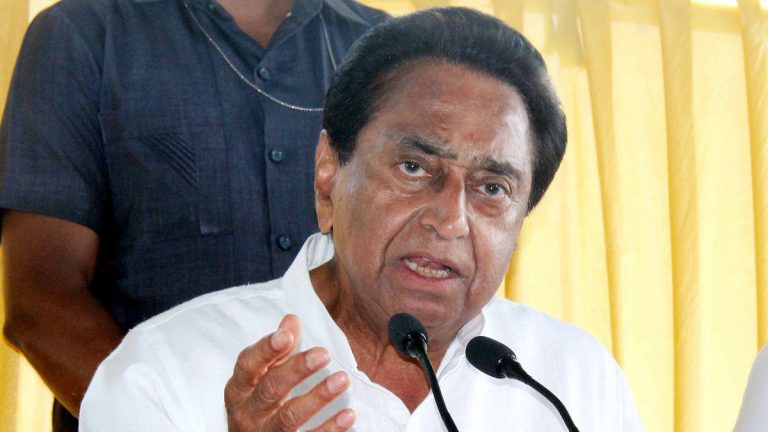
In March 2020, when Jyotiraditya Scindia quit the party to join the BJP, thereby bringing down Kamal Nath led Congress government in the state, MP Congress Twitter account had a full-blown meltdown. In fact, at that time, MP Congress had nudged Scindia to be a ‘supporter’ and not a ‘slave’. In fact, even three days later after he politely quit the party to join the BJP, MP Congress account continued to whine.

That is not all, Madhya Pradesh Congress’ Twitter account likes to regularly goof up too. From logic-defying tweets to embarrassing faux pas, MP Congress account continues to be the garbage it talks about.

“It is a war, and to win if we have to use Vibhishan, we must,” Narendra Modi’s 1996 interview explains why BJP accepts leaders from rival parties

On June 9, Congress leader Jitin Prasada joined BJP, which sparked the never-ending debate on the trend of leaders changing their political parties. Since PM Narendra Modi started his tenure in 2014, many leaders from Congress and other political parties have joined the Party. In some cases, leaders in other parties are underutilized and when they shift their base, their true potential is revealed. One of the perfect examples of such leaders is Himanta Biswa Sarma, who recently became Chief Minister of Assam. Sarma had joined BJP in 2015. Notably, it is not a new trend for the leaders to leave their political parties and join or form a new one.

With Prasada joining BJP, a video of a 1996 interview of PM Narendra Modi has started to make rounds on social media. The clip was a part of an interview conducted during the 1996 Lok Sabha elections after voting was over in Haryana. During the interview, the reporter had asked PM Modi about his views on Narayan Rane, Naresh Agarwal etc., joining BJP.

PM Modi, who was a prominent BJP leader at that time, replied that BJP had to fight a war and to win such wars, we have to take help from Vibhishans. He said, “In the beginning, Karyakartas get miffed about such leaders joining the Party. However, the Karyakartas in our Party understand that we have to fight a long war. We have to take help from Vibhishan sometimes, and we did it.”

He had further added, “It was a war and as a part of the strategy, we wanted to give a message to the citizens of India that the Congress party is breaking up and getting defeated. Congress leaders are running away from the Party. We succeed in spreading the message. In war, we have to show some decisive moves, and it was one of them. It was part of our strategy.”

25 years after the said interview, it is evident that the strategy has worked perfectly for BJP as it emerged as the single largest Party in two Lok Sabha elections in a row. Notably, five years after the interview, in 2001, Narendra Modi became the 14th Chief Minister of Gujarat. He won three assembly elections in a row before becoming the 14th Prime Minister of India in 2014.

The

Unit 731: The horrors of biological warfare experiments that the world forgot

The tales of World War II are replete with innumerable accounts of horror, atrocity and the absolute worst of human depravity. Among the kill count of tens of millions, there are stories that often go neglected. While Germany’s Holocaust against the Jews is well documented, there are stories of atrocity that have gone largely undiscussed. One of the lesser-known tales is that of Unit 731.

Unit 731 was the name of the Imperial Japanese Army’s covert biological and chemical warfare division. In the 1930s through the second China-Japan war and till the end of World War II, Unit 731 carried out horrific human experiments on the countless prisoners and villagers at Harbin, Northeastern China. The Unit was officially known as the Epidemic Prevention and Water Purification Department of the Kwantung Army.

As per reports, Japan’s biological warfare program was started in the 1930s, after biological warfare was banned in the Geneva Convention in 1925. The Kwantung Army, which had at that time controlled large swathes of China, made the headquarters near the Pingfang district in Harbin and evicted around 8 villages to make their facilities. One of the main reasons for selecting Harbin was that ‘test subjects’ were readily available. The Unit 731 was led by General Shiro Ishii, a combat medical officer of formidable reputation.

Unit 731 members, image from 2017 NHK Documentary

“Wooden logs”

In the records of Unit 731, the test subjects were usually criminals, poor locals who signed consent forms for a small payment and Russian, Korean or Mongolian captives. One account, published in New York Times, narrates an experiment where a Russian mother and daughter were placed inside a thick glass chamber and had poisonous gas released inside. The mother sprawled herself over the child, as doctors outside gathered to record and study their convulsions, and time taken to die. Another account by a former Japanese medical worker named Takeo Wano narrates that a ‘western man’ was cut vertically in two pieces, and was ‘pickled in a six-foot glass jar of formaldehyde.

The test subjects were not named, there were just called Marutas, ‘wooden logs’ in Japanese.

Pathogen testing, studying ‘plagues’ on live human specimen

One of the most dangerous aspects of Unit 731 was the testing of biological warfare weapons, on live populations. Doctors under Shiro Ishii infected prisoners with live pathogens and studied how the diseases spread. To study infections, they sent infected persons among healthy prisoners. Some ‘logs’ got infected with multiple pathogens, to find out the cross-reactions of different diseases. Rats carrying the bubonic plague were let loose among cages of prisoners.

To study the spread of sexually transmitted diseases, Unit 731 doctors forced subjects to rape and impregnate female prisoners. Some women were forcefully impregnated to study disease progression during pregnancy and foetal transmission. Foetus, newborns were test subjects too.

Unit 731 experimenting on prisoners, image via SCMP

Vivisections

One of the most harrowing tales of the atrocities of Unit 731 was the accounts of vivisection, cutting open live prisoners, often without anaesthesia. In an NYT report, a former Unit 731 member, under the condition of anonymity, has described how they used to cut open prisoners while they screamed. The purpose of vivisection was to study the spread of pathogens into the internal organs of test subjects, while they were alive.

The intention was to develop ‘plague bombs’, using humans to spread diseases among Japan’s enemies. They experimented with plagues, anthrax and cholera.

vivisections being carried out, source celestialkitsune.com

Field trials

Unit 731 also dropped ‘plague bombs’ over nearby Chinese villages and towns, to see how many and how effectively they can kill populations. They were trying to see whether they could start major outbreaks, and as reports suggest, they could. There is no accurate estimate as to how many people the Unit killed, some say around 3000, but Chinese accounts say the number may be far greater, as there were numerous outbreaks in villages due to the ‘field trials’. Poisonous gas was already in use by Japanese forces against Chinese soldiers and Unit 731 often tested the potency of gases among prisoners.

Test subjects were also taken to a ‘test grounds’ called Anda, where subjects were bombarded with weapons to study the efficacy. Even aeroplanes were used to spray pathogens over villages, to see how many can be killed. Plague outbreaks were reported in Ningbo and Changde at that time. It was later found out that the outbreaks were Unit 731 experiments, where they had released disease vectors into populations.

In 1942, Unit 731 infected water bodies in Zhejiang province with cholera and typhoid cultures, but they soon stopped because the outbreaks went out of control, killing over 1700 Japanese soldiers along with the intended Chinese targets.

The ultimate goal of the extensive field trials was to use the ‘plague bombs’ to start disease outbreaks in enemy countries, particularly the USA.

Not a rogue unit

Unit 731 was by no means a rogue unit containing some ‘mad scientists’ who carried out horrible human experiments. The works of the Unit was sanctioned by the Japanese government and it had wide authority, carrying our experiments in several locations and publishing detailed reports. Many Japanese scientists and researchers also argued that ultimately the Unit’s experiments were intended to find scientific cures and enable their forces against biological deterrents.

Though the then Japanese Emperor Hirohito had never openly acknowledged Unit 731, his brother, Prince Mikasa had once toured the headquarters at Harbin, China. As per the NYT report, he had written in his memoirs that he was shown films on how Chinese prisoners were made to march in plains of Manchuria for poison gas experiments.

Ultimate goal: Starting epidemics in the USA

There are accounts of Japanese generals experimenting with balloons loaded with bombs and sending them with a prevailing wind to land on coastal US states. Though the US government had not released reports during the WWII, there were reports of bomb balloons killing six people in Oregon.

The bomb balloons were reportedly precursors, of balloons that would have eventually carried plague bombs. Many Japanese generals were pushing for such an attack, but as per reports, it was a former PM named Hideki Tojo, who fiercely argued against a biological warfare against USA in mid-1944.

The NYT report states that when USA was preparing to attack the island of Saipan, Japanese army had sent a submarine loaded with biological weapons, but the submarine was sunk in the pacific.

As Japan was almost at the verge of losing, a desperate plan was made to attack California, code-named ‘Cherry Blossoms At Night. Suicide pilots were to carry plague bombs in Japanese submarines that were equipped to carry planes (I-400 class submarines of Japan could carry 3 Aichi M6A Seiran planes). However, the operation was never carried out. Reasons remain unclear.

The aftermath: USA silenced the atrocities of Unit 731, bought the data and let the scientists go

Despite the despicable crimes against humanity, the main scientific and operational brains behind Unit 731 were never punished or even faced a trial.

When USA dropped nuclear bombs on Hiroshima and Nagasaki, making it clear that the war was over, Unit 731 used dynamites to destroy its headquarters in China. However, the work, the research and the scientists of Unit 731 were found to be too valuable for the USA. Just like Operation Paperclip, where notorious Nazi war criminals were secretly smuggled to the USA and were given facilities to carry out their work, Unit 731 scientists bought their freedom in exchange for the scientific data on an extensive and effective biological warfare program.

Shiro Ishii lived a comfortable life in Tokyo till old age. His faithful associates raised in ranks and were placed in important positions. So many years later, while China remembers its countless victims with a museum at Harbin, Japan’s acknowledgement has been reluctant. In later decades of the 20th century, many former unit 731 workers had come out to narrate their experiences and the discussions were opened. Books have been written about the Unit and its works. Russian media outlet RT had made a documentary movie, called ‘Death Factory’, detailing Unit 731’s atrocities.

As per reports, in 1945, US general Douglas McArthur had received intelligence about the Unit’s work from secret documents. He reported granted Ishii and his associates immunity from prosecution, in exchange for their scientific documents.

Many members of Unit 731 were arrested by the Soviet Red Army and were tried at the Khabarovsk War Crime Trials.

In 2017, Japanese national broadcaster NHK had released a documentary detailing the atrocities of Unit 731. It had caused a huge uproar in Japan at that time.

However, the atrocities and the countless tales of suffering of the victims are lost forever. They are now fleeting shadows of forgotten complicity, rendered to the obscure pages of history among a million others.

‘What happened to 47,000 acres of temple land?’, Madras HC asks Tamil Nadu govt to submit the status of missing temple land records

On Tuesday, the Madras High Court asked the Tamil Nadu government to explain the status of 47,000 acres of temple land that has gone missing from government records in the state.

According to the reports, a division bench of Madras High Court comprising Justice N Kirubakaran and Justice TV Thamilselvi was hearing a petition seeking to find out the whereabouts of the land belonging to Arulmigu Avinashiappar and Arulmigu Subramaniasamy temples in Sulur.

During the hearing, the High Court observed that the policy note for 1984-85 stated that there were records for 5.25 lakh acres of land belonging to Hindu temples in the state, whereas the note for 2019-20 referred only to the availability of 4.78 lakh acres. The Court observed that it prima facie appeared that the 47,000 acres of temple land were missing when compared to the figures provided in the two policy notes 35 years apart.

The Madras High Court also directed the Tamil Nadu government to take notice on behalf of the Hindu Religious and Charitable Endowments Department and ordered them to respond by July 5. The court ordered the government to file a counter-affidavit with specific details and survey numbers of the lands mentioned in the policy note for 1984-85 and those mentioned in the latest policy note to know which lands have been excluded from the government records.

The judges also pointed out that it should not be difficult for the HR&CE department to submit the information in court since it was expected to be in possession of all those details.

The Madras High Court passed the interim orders after the petitioners insisted on retrieving the missing lands and restoring their possession to the temples they belong to. The income derived from them could be used to maintain the institutions besides performing prayers and rituals, the petitioners said.

In their plea, the petitioner had sought to remove the encroachment and restore the land to the temples. The plea also claimed that the encroachment has been prevailing since 2010.

The ‘rape culture’ of liberals – How ‘woke’ influencers are openly asking to target ‘Sanghi’ women

On June 9, an audio of Clubhouse conversation between the alleged social media’ influencers’ started to make rounds on Twitter where the speaker normalised ‘hate sex’ with ‘sanghis’ because women are ‘hot’. In the undated conversation, that happened on the Clubhouse app in a room titled “sex with your ex” on the topic “Do you only date hot people”, one speaker identified as Neeraj Kadamboor (Instagram ID kadamboorneeraj) made a derogatory remark on women who are opposed to his political ideology. Squineon, the Twitter user who shared the audio, called it ‘sex jihad’ demanded strict action against the members of the room.

Janice, who was one of the moderators of the room, asked Neeraj if he only dates hot people. He said, “I do all kind of people, but on dating apps, I do sometimes thirst for these very hot Sanghi types. Just for fun.” Many people laughed at his statement. Another speaker identified on Clubhouse as Varshita said, “Sanghis are not hot,” to which Neeraj replied, “They look hot but…” He was again interrupted by another speaker and moderator identified as Aishwarya on Clubhouse who sarcastically said, “It’s Sanghis, so you know Neeraj…”

Neeraj continued to justify his “thirst for hot Sanghi women” on dating apps and said, “You know just for like the opposite of paper bag sex if I could cover the…” and he was interrupted again. Another speaker in the room said, “It is like hate sex,” and everyone laughed.

Reaction on social media

The audio went viral on the social media platform and attracted flak from the netizens.

One of the social media influencers present in the chat was Kusha Kapila, who chose not to speak up against the problematic statements on women.

What is paper bag sex?

It is an urban slang used to define the act of covering the face (with a paper bag) of the girl during intercourse as an attempt to preserve the attraction. It is often used in a sense to tell the person (in most of the cases, a girl) that she has a nice figure, but her face is not attractive.

What is hate sex?

Hate sex can be defined as an intercourse session with someone you dislike or hate. Instead of venting out your emotions, the person has intense sex. In simple words, a physical relationship between two people where there is no emotional connection between the two and one of the partners hates the other who is completely unaware of it. Such experiences are known to leave a permanent scar on the victim causing major trust issues in life. In many cases, such instances lead to rape, murder and acid attacks.

If ‘hate sex’ is opposite of ‘paper bag sex’, then it is actually a classic example of hate crime.

Pakistan: Journalist Hamid Mir apologises after lambasting army and ISI over attacks on media personnel

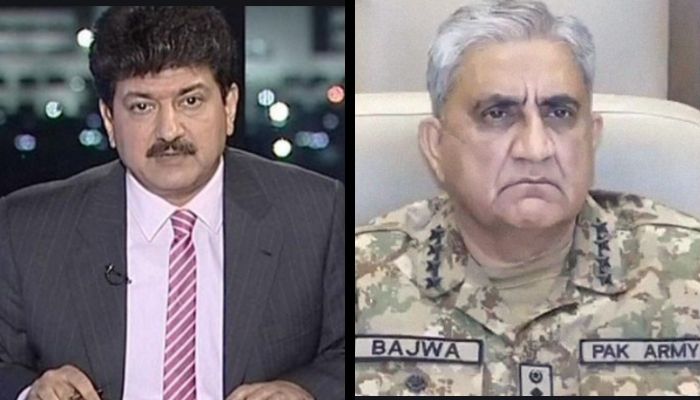
Days after Pakistani journalist Hamid Mir was taken off air for his critical remarks against the ISI and the military establishment, he has tendered an apology. The journalist issued a statement offering his apology on Tuesday (June 8). He had made the controversial comments on March 28 after a fellow journalist named Asad Ali Toor was brutally assaulted.

In a joint statement issued by Hamid Mir, the Rawalpindi Union of journalists (RIUJ) and the National Press Club, it said that the veteran journalist did not intend to defame the army and held the institution and its ‘sacrifices’ in high regard. Mir had emphasised covering army operations from LoC (Line of Control) to Siachen. In his apology note, he talked about being ‘carried away’ after hearing stories about attacks on other journalists.

Statement of apology by Hamid Mir in Urdu (Image Credits: Twitter/Irshad Bhatti)

The veteran journalist apologised if his speech hurt the feelings of any individual. Mir said that he neither named any person in his contentious speech nor had any differences with the Pakistani army. On Wednesday (June 9), he clarified in a tweet, “Statement was given to a joint committee of 3 journalists bodies defending me everywhere. I never gave this statement to Geo management because I never used their platform. Still demanding to arrest culprits involved in attacks against journalists.”

It must be mentioned that on June 4, a committee was formed to end the ‘confusion’ created after Mir’s fiery speech on May 28. It comprised of ex-PFUJ president Afzal Butt, NPC president Shakeel Anjum and RIUJ president Amir Sajjad Syed.

Sacked from Geo News, petition seeking sedition charges filed against Hamid Mir

On May 28, the former Geo News journalist had attended a gathering of Pakistani journalists for showing solidarity with fellow journalist Asad Ali Toor. The latter was attacked at his residence in Islamabad by three unidentified assailants on May 25 at 11 o’clock in the morning. Toor was then reportedly dragged to his bedroom and then brutally assaulted and gagged. According to the journalist, the assailants identified themselves as members of the Inter-Services Intelligence (ISI). 

An agitated Hamid Mir had condemned the attack on Asad Ali Toor and threatened to reveal the secrets of the military establishment.  “If you are a man of courage, then, publicly acknowledge that you ambushed the house of Asad Ali Toor. But you are such shameless and cowardly that you cannot accept it. Instead, you claim that he was beaten by the brother of one girl. We are up against a cowardly enemy which believes that we don’t know them. We know who you’re,” he emphasised. Hamid Mir further stated that the establishment is miffed at the media for not giving in to their demands of establishing diplomatic relations with Israel and India.

Following his comments, he was taken off air by Geo News. The channel had said that the veteran journalist has been sent on leave for some time and that he will not be hosting his popular program. On June 4, a petition was filed before the Lahore High Court, seeking sedition charges against him, by one Sardar Farrukh Mushtaq. The petitioner alleged that the statement made by Hamid Mir on May 28 contained ‘serious derogatory remarks’ and allegations against the ‘discipline institution of Pakistan.’ Furthermore, he alleged that Mir’s behaviour amounted to contempt of society and the institutions.

Rapper MC Kode found from Madhya Pradesh, had gone ‘missing’ after posting cryptic message last week

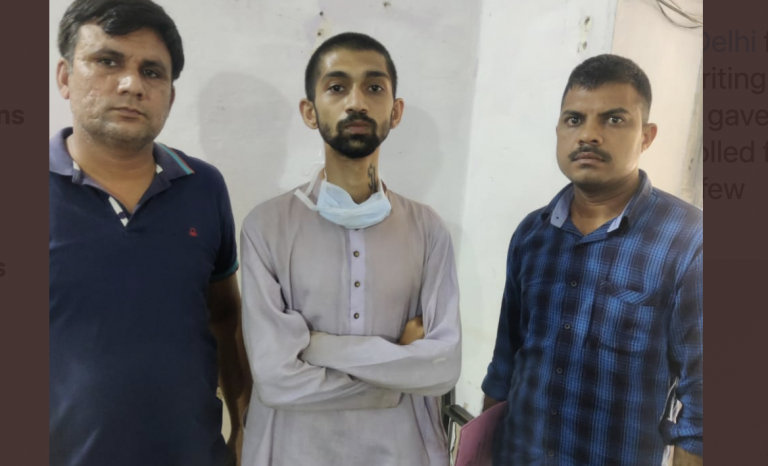
Rapper MC Kode had been found from Madhya Pradesh, after having gone missing earlier this month from Delhi. He had written a cryptic message on Instagram before going missing.

On June 3, Kode had gone missing after putting up a cryptic message on Instagram.

MC Kode’s message

Many of his fans speculated it was a suicide note and had called for a search and rescue operation for him. Few days later, his mother had filed a missing person report in Delhi’s Mehrauli Police station.

A week prior to his disappearance, his videos insulting Hinduism and holy scriptures of Hinduism during a ‘rapping’ battle had gone viral on social media. Netizens had demanded action against him for his provocative raps.

Aditya Tiwari, who has MC Kode as his stage name, is a rap artist based out of New Delhi. For years, he has been hosting, participating, and judging rap battles across many states, including Mumbai, Gujarat, Guwahati, Jaipur, Uttar Pradesh & Haryana.