Home Blog Page 428

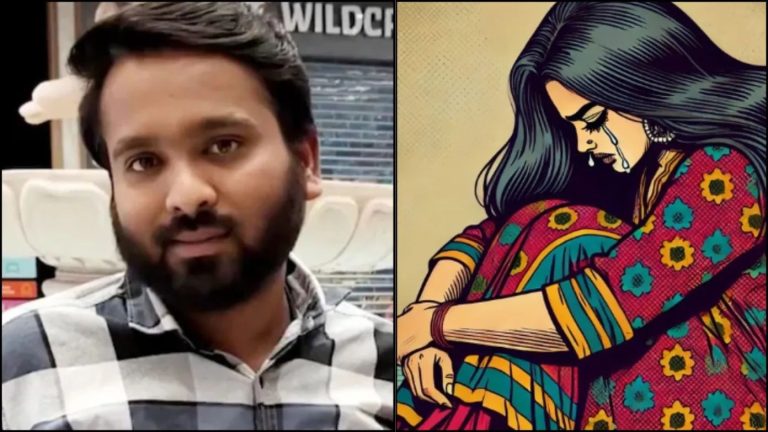
Woman accuses Pastor Bajinder Singh of raping her and blackmailing her with the rape video, alleges he runs a religious conversion racket

Legal troubles are mounting up for Christian evangelist Pastor Bajinder Singh as several women who once worked under him in his “Ministry” have come out with their stories of sexual exploitation by him.

One of the victims interviewed by Republic TV narrated her horrifying ordeal, levelling serious allegations against the pastor. She alleged Pastor Bajinder raped her after sedating her and recorded the video of the act. He later blackmailed her using the video and raped her on multiple occasions. The victim said that she came in touch with Pastor Bajinder Singh during 2016-17 when she was going through a tough time as her husband had become a drug addict. She said that she went to visit his church for the first time after hearing about his miraculous healing powers, hoping that her husband would be cured of his addiction. “I came in touch with him for the first time during 2016-17. I was facing a lot of troubles at home. I was told by someone to visit him, saying that miracles happen there,” the victim told the Republic.

Pastor Bajinder invited the victim to his ‘personal meetings’

She said that she looked up his Facebook to know more about him and was left with a very good impression of him and his miracles through which he seemed to heal all kinds of diseases. “I started visiting his church at Sector 23, Bal Bhavan. He (Pastor Bajinder Singh) took my phone number through his volunteers. His volunteers called me and told me about his ‘personal’ meetings. They said that ‘Prophet Ji’ also holds ‘personal’ meetings under different categories like Diamond meeting, Gold meeting and so on,” the victim said. Subsequently, Pastor Bajinder started calling her to his ‘personal meetings’ regularly.

She further alleged that he lured her by promising to make her the head of his “UK Ministry” and send her to the UK. Recalling the first time the pastor sexually exploited her, the victim said that on that day he called her for a meeting and when she reached there he sedated her and raped her. “I don’t remember anything as I was sedated. But looking at the pain in my body, I could tell that something wrong had been done to me,” said the victim, breaking down as she told her story. He later allegedly raped her on multiple occasions and threated to circulate her obscene video if she did not give in. The victim alleged that on one occasion, Pastor Bajinder brutally beat her up for refusing to meet him.

Pastor Bajinder is running a religious conversion racket

The victim further accused Pastor Bajinder of running a religious conversion racket funded through Hawala channels. She said that he lured people by offering them “spiritual packages” of different categories, like Silver, Gold and Diamond,d in which he offered people exclusive access to him in exchange for huge amounts of money. “The so-called miracles and healings he performs are nothing but staged dramas,” she alleged. She also accused Bajinder of doing black magic. She alleged that he used to force her to collect skulls from cremation grounds.

She urged the authorities to take strict action against Bajinder, who, according to her, exploited several women like her. “There are many women who have suffered at his hands, but they’re too afraid to come forward. Don’t fall for his lies in the name of faith. Even the Bible cannot shield his crimes,” she said.

Victim fears for her and her family’s safety

Another victim, the CCTV footage of whose physical assault by Pastor Bajinder had gone viral, has expressed fear for her and her family’s safety. The victim, who resigned immediately from Pastor Bajinder’s Ministry after her physical assault that happened on 13th February, alleged that Pastor Bajinder had threatened to kill her husband and child.

Speaking to the media, the victim exposed how anyone who dares speak against Bajinder is treated by him and his supporters. She said that Bajinder uses all kinds of tactics to silence the voices who call out his exploitation. She alleged that fake sexual harassment cases are filed against men who speak out against him. She revealed that the sexual exploitation of women working in his Ministry is quite common. The victim has filed a case against Pastor Bajinder.

The Mohali Police has initiated an investigation against Pastor Bajinder Singh on the victim’s complaint. On Monday (24th March), the police recorded the statements of the victim. “A total of four pastors from Kurali and nearby areas lodged their complaints with us. They worked under Bajinder for the past many years and now wished to work independently, which led to the dispute. The woman pastor in her complaint alleged that she was repeatedly slapped after being humiliated by Bajinder in his office, and the other victim also voiced the same,” the police said.

On 28th February, a 22-year-old woman had filed a case of sexual harassment, criminal intimidation and stalking against Bajindr Singh.

USCIRF’s religious freedom report found 4 “Hindu victims”—2 conspired to target Hindus during the Delhi Riots, 1 with ties to ISI and an Urban Naxal

The United States Commission on International Religious Freedom (USCIRF) recently released another dubious report—an annual ritual of sorts to defame India by accusing it of undermining the interests of its religious minorities.

In its latest report, released on Tuesday (March 25), the panel claimed minorities in India are facing deteriorating treatment and recommended sanctions against India’s spy agency R&AW over alleged involvement in assassination bids of Khalistani separatists. 

“In 2024, religious freedom conditions in India continued to deteriorate as attacks and discrimination against religious minorities continued to rise,” the U.S. Commission said in the report.

In its annual report published on March 25, the commission recommended that India be classified as a “country of particular concern” (CPC) due to religious freedom violations, a decision that could potentially impact diplomatic relations between the two countries.

It also accused Prime Minister Narendra Modi and the Bharatiya Janata Party (BJP) of promoting hateful rhetoric during the 2024 election campaign.

The report was strongly rejected by India, which accused the panel of undermining the country’s reputation as a stronghold of democracy and called for USCIRF to be designated as an “entity of concern.”

MEA spokesperson Randhir Jaiswal stated in the press release that they had reviewed the recently published 2025 Annual Report of the US Commission on International Religious Freedom (USCIRF), which, once again, follows a pattern of presenting biased and politically driven evaluations.

In an official statement, Jaiswal criticized USCIRF for consistently distorting isolated incidents and attempting to cast doubt on India’s diverse and thriving multicultural society, suggesting that this reflects a deliberate agenda rather than a sincere concern for religious freedom.

“Attempts to undermine India’s reputation as a stronghold of democracy and tolerance will not succeed. It is USCIRF itself that should be designated as an entity of concern,” he asserted.

He emphasised that India, home to 1.4 billion people practicing all major religions, embodies a pluralistic framework. However, he added that there are no expectations for USCIRF to recognise this reality or acknowledge the peaceful coexistence of India’s diverse communities.

OpIndia reviewed the USCIRF document to identify discrepancies in its report. As anticipated, the analysis revealed the inclusion of questionable individuals in the panel’s “victim list,” which contributed to the commission’s prejudicial assessment of religious freedom in India and exposed it for relying on discredited and partisan sources for its report on India.

The list, interestingly, allows reviewers to classify victims according to their faith. On selecting “Hindu”, four names come up—Gautam Navlakha, Shoma Sen, Devangana Kalita, and Natasha Narwal. The inclusion of these names should raise significant doubts about the authenticity of this report.

Gautam Navlakha

For instance, Gautam Navlakha, who is designated as a Hindu victim by USCIRF, has been charge-sheeted by the premier investigation agency NIA for his links with Pakistan’s notorious intelligence agency ISI, and he had sought mercy for ISI agent Ghulam Nabi Fai, who is convicted in the United States for terror funding.

The NIA charge-sheet also mentions that Navlakha was introduced to the Pakistani ISI General Syed Ghulam Nabi Fai on the instructions of Inter-Services Intelligence (ISI) and was in touch with the ISI agent over phone and email.

Navlakha had reportedly visited the United States thrice in the period between 2010-2011 and written to a US district court judge seeking clemency for Fai, who was arrested by the FBI in 2011 on the charges of accepting funds to the tune of several million from the ISI and the Pakistan government.

Citing the US court order from 2012, the NIA charge-sheet read: “Ghulam Nabi Fai was arrested by the FBI in July 2011 for accepting funds from ISI and the Pakistan Government, but failed to report the origin of those funds, as required by US law. It is established that, accused Gautam Navlakha had written a letter to the Hon’ble Judge of the US court trying Ghulam Fai’s case for clemency. Accused Gautam Navlakha has also submitted letters to the Hon’ble US court on behalf of Fai.”

Shoma Sen

Another name that crops up in “Hindu victims” is urban naxal Shoma Sen, who was arrested in connection with the Bhima Koregaon violence. The Bhima Koregaon case pertains to an event named ‘Elgar Parishad’ organised at Shaniwar Wada in Bhima Koregaon village of Maharashtra on December 31, 2017. 

Violence broke out on the following day (1st January 2018) at the village where lakhs of Dalits had gathered to celebrate the 200th anniversary of the Battle of Bhima Koregaon. The battle was won by the British Army against the Peshwas in 1818. On 8th 8 January 2018, Pune Police lodged an FIR, and the probe revealed that the event was organised by urban Naxals. 

Shoma Sen was arrested by the Pune Police on 8th June 2018 for her involvement in the Bhima Koregaon violence. She was charged under the Unlawful Activities (Prevention) Act for her links to Maoist groups. Sen was eventually suspended from her position as the Head of the English Department at the Rashtrasant Tukadoji Maharaj Nagpur University (RTMNU). She has also been a part of the controversial organisation, Committee for Protection of Democratic Rights (CPDR).

It may be recalled that a letter was unearthed by Pune Police in 2018 suggesting plans to assassinate Prime Minister Modi in a “Rajiv Gandhi type incident” by “targeting road shows.” Sen’s name also came up in connection with the assassination plot.

Several Naxal ideologues and urban Naxals were arrested including Stan SwamyHany Babu, Sudha Bharadwaj, Rona Wilson, Surendra Gadling, Mahesh Raut, Arun Ferreira, Vernon Gonsalves, Varavara Rao and Gautam Navlakha in connection to the Bhima Koregaon case.

Devangana Kalita

Yet another shady victim in the USCIRF list is Pinjra Tod activist Devangana Kalita, who was booked under stringent provisions of the UAPA law for anti-Hindu riots in Delhi in 2020. Kalita was arrested in May 2020 after being slapped with four cases related to fanning riots in Northeast Delhi and a violent outbreak in December 2023. 

It is worth noting that in 2020, some citizens of Seelampur, Jafrabad, and Trans-Yamuna had accused Pinjra Tod and other elite civil society groups of inciting riots in the national capital.

Pinjra Tod claims to be an autonomous collective of women students fighting for a just, accessible, non-discriminatory University and affordable accommodation and has been involved in numerous protests and campaigns of a far-left nature.

Natasha Narwal

The USCIRF also characterises another Pinjra Tod activist, Natasha Narwal, as one of the “Hindu victims” included in its religious freedom report. Ironically, like Devangana Kalita, Narwal too was arrested for her alleged role in stoking anti-Hindu riots in Delhi in 2020, which led to 53 deaths and loss of crores to public property.

Intriguingly, Natasha Narwal had also contributed to the far-left propaganda portal The Wire, which had often platformed Hinduphobic individuals and advanced anti-Hindu tropes. Harbouring deep-seated hatred and Hinduphobia, Natasha Narwal had also written for NewsLaundry during the release of the movie ‘Padman’.

Teesta Setalvad

Another controversial individual that warrants mentioning is Teesta Setalvad, who is clubbed under “unspecified” faith in the USCIRF report. Far from being a “victim”, Setalvad has been accused of tutoring witnesses in the Gujarat Riots 2002, and an NIA court slammed her NGO for fuelling communal tensions.

Teesta Setalvad was arrested by the Gujarat ATS in June 2022 in a case of forgery, influencing witnesses, and the investigation of the Gujarat riots in 2002 that occurred in the aftermath of the Godhra Train burning incident, when 59 Hindus were burned to death after a Muslim mob set ablaze a Sabarmati Express bogey carrying passengers from Ayodhya. Teesta Setalvad is accused of coaching witnesses and making ridiculous accusations in several cases related to the Gujarat riots in 2002.

Earlier this year, a National Investigation Agency (NIA) court criticized the NGO run by Teesta Setalvad, along with six other organizations, for their alleged involvement in communal cases. The court had called for an investigation into their funding sources and underlying motives. This development was linked to the Chandan Gupta murder case, where the court highlighted concerns regarding the roles these NGOs may have played in exacerbating communal tensions.

Sambhaji Maharaj was killed by Aurangzeb per Manusmriti: Congress leader Husain Dalwai’s controversial remarks spark row

Senior Congress leader and former Rakya Sabha MP Husain Dalwai has ignited major controversy as he declared that the horrific murder of Maratha warrior Chhatrapati Sambhaji Maharaj by the Mughal despot Aurangzeb was in accordance with the Manusmriti.”Manusmriti is praised even today, but what does it state about women and Dalits? These things should be clarified but I don’t want to discuss it further because I am a Muslim and people will object,” he claimed while reiterating his earlier comment.

However, when he was asked about his statement, he alleged, “Who ordered the killing of Chhatrapati Sambhaji Maharaj? Aurangzaeb. However, the manner in which he was executed is written in the Manusmriti. I am not the only one of this opinion. Many others, including historians, have expressed the same, and that is what I conveyed. Now, you look into what they said. If it is wrong, then so be it. Aurangzeb not only killed Sambhaji but also assassinated his own brother Dara Shikoh. He was of course cruel. That is not even a question.”

“Chief Minister Devendra Fadnavis should read Aurangzeb’s history. The way he killed Sambhaji Maharaj was an act of cruelty. However, he did the same to his own brother. He killed Sambhaji Maharaj in a similar manner as he killed Dara Shikoh. However, scholars who adhered to Manusmriti’s teachings dictated Sambhaji’s manner of execution once it was ordered, and he was killed in accordance with those directives. Will this be accepted by Devendra Fadnavis. Ignoring the facts won’t work,” Dalwai previously asked during a visit to Nagpur in the aftermath of anti-Hindu violence there.

However, he later tried to justify his statement and point out that Chhatrapati Shivaji Maharaj and Chhatrapati Sambhaji Maharaj built the nation and insisted that Muslims in Maharashtra could never disrespect them.

“Husain Dalwai and others like him are the offspring of Aurangzeb. They have nothing to do with us. If they love Aurangzeb so much, they should take his tomb with them. They have no right to interfere in Manusmriti or in the affairs of other communities. They lack morality. By making such statements, they are deliberately trying to create hatred between different communities,” Shiv Sena minister Sanjay Shirsat slammed the Congress veteran’s remarks.

Nagpur witnessed widespread violence over the demand to have Aurangzeb’s grave removed, during which police, including female personnel, were attacked, and stones were thrown at them by Muslim mobs while Hindus were targeted with petrol bombs and other weapons amid bogus rumors of Quran burning and desecration which led to curfew in the area. Many people, including cops, were injured, and vehicles were vandalised.

If you want to feed Sevaiyan, you will have to eat Holi’s Gujiya also: Sambhal CO Anuj Chaudhary during peace committee meeting; police refuse permission for Namaz on roads

On 26th March, the Circle Officer of Uttar Pradesh’s Sambhal, Anuj Chaudhary, said that the police’s aim is to preserve peace in the area. During a peace committee meeting, the officer said that if Muslims want to feed Sevaiyan to Hindus, they should be willing to eat Gujiya on Holi.

“Our aim is that the peace and order of the place where we live should not be disturbed. So, everyone has faith in us… If you want to serve Eid’s Seviyan (Vermicelli), then you will have to eat Holi’s Gujia too,” the Sambhal CO said.

He added that the problem starts when one side accepts the other side’s offering and then the other side refuses to reciprocate. “Both sides should eat gujiya. But here it gets messed up. When one side is not eating and the other side is eating, then brotherhood ends here,” Chaudhary said.

This comes days after Chaudhary urged Hindus and Muslims to maintain peace during Holi, which was on Friday (14th March) this year. He advised people from the Muslim community to avoid stepping out for one day on the occasion of Holi if they want to avoid the colours and festivities. He also urged Hindus not to throw colours at people against their wishes.

Considering the coincidence between Holi and Jumma Namaz, CO Chaudhary advised Muslims not to come out of their homes to offer Jumma Namaz on 14th March to avoid any unpleasant situation due to Holi. “Jumma comes 52 times a year, while Holi comes only once a year. If any person from the Muslim community thinks that his religion will be corrupted due to Holi colours, he should avoid stepping out of his house on Holi. And if he still wants to come out then he should have a big heart not to be offended by the colours of Holi,” the CO said to the media.

Chaudhary’s appeal for peace, however, did not sit well with the Samajwadi Party as its leader Ram Gopal Yadav threatened the Sambhal CO, saying that if his party comes to power in Uttar Pradesh, CO Chaudhary would be jailed.

The Samajwadi Party leader also accused CO Anuj Chaudhary of inciting violence in Sambhal last year, handing a clean chit to the Islamist rioters.

Namaz not allowed on roads and roofs

The administration had called the meeting of the Peace Committee in view of Eid, Navratri and Ramnavami, keeping in mind the sensitive atmosphere in Sambhal. Prominent people from both the communities attended the meeting. 

CO Anuj Chaudhary also clarified in the meeting that there is strong evidence against those who have been arrested so far in the case of violence in Sambhal. He said that the aim of the police is only to maintain law and order, not to take action against any particular community.

During the meeting, some people from the Muslim community reportedly sought permission to offer namaz on the roofs of the houses, which the administration flatly refused. ASP Shrishchandra said that there will be no permission to offer Alvida Juma and Eid namaz on the streets and on the roofs of houses. Namaz can be offered only inside the Idgah site and mosques, no one will be allowed to offer namaz by going against the rules, the police clarified.

The administration also said that namaz would be offered in the traditional way, and no new tradition would be allowed to be adopted. SDM Vandana Mishra said that the use of loudspeakers for Namaz will not be permitted. She reiterated that no namaz will be permitted on roads and roofs.

Police officials have warned that if anyone offers namaz on the road, his passport and driving license can be confiscated. SP City has made it clear that strict action will be taken against those who violate the rules. Additional security forces have been deployed in sensitive areas, and the help of CCTV, drones and local intelligence is being taken to make the security system foolproof.

Delhi government takes strict action against private schools for forcing purchase of books, uniforms and other materials from “specific private vendors”

The Delhi government has taken strict action against private schools, issuing orders to stop them from forcing students to buy books, uniforms, and other educational materials from specific vendors.

Responding to complaints from parents, the government emphasized that private unaided schools, which operate on a no-profit, no-loss basis, must allow parents to choose where to buy these items without financial pressure.

“It has been observed through newspapers/complaints from parents and other organisations that in various private unaided recognised schools of Delhi, students are being compelled to purchase educational materials such as books, guides, ties, belts, notebooks, uniform and bags from specific private vendors. This raises concerns, as students should have the freedom to choose their educational supplies. Additionally, in some cases, schools impose compulsory purchases, putting financial pressure on students’ families,” the Directorate of Education said in the letter.

“Considering these issues, it has been decided that schools must refrain from enforcing the purchase of specific educational materials from particular vendors. Instead, students should be free to buy these materials from their preferred sources at fair market prices. This directive aims to prevent commercial exploitation and ensure fair competition,” it said.

Schools violating these orders could face action under the BNS (Ban on Commercialization of Education) Act. To address grievances, the government has also provided a helpline (9818154069) and email ([email protected]) for parents to report complaints.

“Non-compliance with the above shall be viewed seriously and attract actions against the defaulter schools under Sector 24 of DSEA&R, 1973. Further, appropriate action under BNS and BNSS against such malpractice will also be taken up as applicable,” the letter said.

Meanwhile, Delhi Chief Minister Rekha Gupta on Tuesday presented the Budget 2025-26 for the national capital. She stated that this year, the Delhi government’s Budget is Rs 1 lakh crores.

Addressing the assembly, CM Gupta stated that the Delhi government has allocated Rs 5,100 crores for the Mahila Samridhi Yojana. She also proposed Rs. 28,000 crores for capital expenditure in the national capital. To develop infrastructure for better connectivity with the NCR region, Rs 1000 crores was allocated.

The Chief Minister said, “Soon people will get the benefit of Ayushman Yojana, Ayushman Arogya Mandir. Along with the five lakh from the Center, the Delhi government will give a top-up of five lakh to the people of Delhi under Ayushman, Rs 2144 crores are being allocated for this. We had announced a reward of Rs 2500 for the women of Delhi. A provision of Rs 5,100 crores has been made to implement it under Mahila Samridhi Yojana,” the Chief Minister stated in the assembly.

“For women’s safety, more than 50,000 cameras will be installed. Rs 3843 crores are allocated for road and bridge infrastructure. Rs 696 crores have been allocated to provide basic facilities in slums and JJ colonies,” she added.


(This news report is published from a syndicated feed. Except for the headline, the content has not been written or edited by OpIndia staff)

What is delimitation and why is DMK opposing it even though the central government hasn’t announced it yet

After the charges of alleged “Hindi imposition” in Tamil Nadu and its campaign against the National Education Policy (NEP) 2020, the Dravida Munnetra Kazhagam (DMK) has raised concerns about the potential implementation of “delimitation” across the nation. The delimitation of constituencies for the Lok Sabha and State Legislative Assemblies is set to take place according to the first census conducted after 2026, as the 2021 census faced postponement initially because of the COVID-19 pandemic and subsequently due to delays attributed to the central government.

The Chief Minister of Tamil Nadu, MK Stalin, however, has reignited the debate by encouraging newly married couples to begin their families promptly, suggesting that this will help secure Tamil Nadu’s position in the upcoming process. “Earlier, we used to say, take your time and have a baby. But now the situation has changed and we should say it now. Now I would not say don’t hurry. There is a situation that only if we have a large population, we can have more MPs. This situation has emerged because we succeeded in effective population control. Get children immediately, but give them beautiful Tamil names,” he recently conveyed during the wedding of a DMK district secretary in Nagapattinam.

The remarks followed Union Home Minister Amit Shah’s statement regarding the impending delimitation process, which will redraw the boundaries of parliamentary and assembly constituencies on the basis of the most recent demographic data. Stalin previously claimed that Tamil Nadu would lose up to eight of its 39 Lok Sabha constituencies, which would leave the state with just 31 seats. He even referred to the process as a “sword hanging over the head of South India” inducing fear of reduced representation and rights for Tamil Nadu.

What is delimitation, and what is its constitutional commitment

Delimitation is the procedure used to determine the number of seats and the boundaries of each state’s territorial constituencies for the Legislative and Lok Sabha assemblies. The “Delimitation Commission,” formed by a parliamentary act, is responsible for carrying out the task. In essence, delimitation is inherently connected to the size of the population. States that have larger populations are allocated more representatives in parliament than those with smaller populations.

Consequently, it has a considerable impact on the representation of states in Parliament and is instrumental in the formation of the government and the distribution of power. It also entails figuring out which seats in these houses should be set aside for Scheduled Tribes (ST) and Scheduled Castes (SC).

The constitutional commitment to a equitable representation of citizens in elected bodies and to a fair and representative electoral system is embodied in the delimitation of constituencies. The number of Indians represented by an MP or MLA remains approximately constant by adjusting the number of constituencies in Parliament and state assemblies based on the most recent demographic statistics (Article 81 premise of one citizen, one vote, one value).

“Upon the completion of each census, the allocation of seats in the house of the people to the states and the division of each state into territorial constituencies shall be readjusted by such authority and in such manner as Parliament may by law determine” per Article 82 (Readjustment after each census). According to Article 170(3), the “total number of seats in the Legislative Assembly of each state and the division of each state into territorial constituencies” would be recalculated “upon the completion of each census.”

Now, the delimitation of constituencies will come after the postponed 2021 census, which is now anticipated to get underway this year. The boundaries of current constituencies were frozen by the Constitution (Eighty-fourth Amendment Act, 2001) until “the first census taken after the year 2026.”

History of delimitation

The Delimitation Commission Act of 1952 established the first delimitation commission to delineate the borders of state assembly and Lok Sabha constituencies subsequent to the 1951 census. The acts of 1952, 1962, 1972 and 2002 authorized four delimitation commissions in 1952, 1963, 1973 and 2002. The President assisted by the Election Commission, conducted the first delimitation exercise in 1950–51. Delimitation commissions established under the succedding succeeding acts have since redrawn the boundaries three times.

According to the Indian Constitution, the number of members in the Lok Sabha should be distributed based on each state’s populace to make the ratio of seats to population as nearly equal as practicable for all areas. It is meant to make sure that regardless of the state in which a person resides, their vote carries the same weight. On the other hand, this clause allowed states with little interest in population control to gain more seats in Parliament.

The Constitution was therefore amended to prevent these outcomes. The 42nd Amendment Act of 1976 prohibited the states from receiving seats in the Lok Sabha and from dividing each state into territorial constituencies until 2000. The government was given the authority to revise and rationalize the territorial constituencies in the states based on the 1991 census population data by the 84th Amendment Act of 2002.

The 87th Amendment Act of 2003 permitted constituencies to be delimited employing the 2001 census rather than the 1991 census. Nonetheless, this could be accomplished without changing the number of Lok Sabha seats allocated to each state.

Growth of Lok Sabha seats over time. (Source: Business Standard)

The 2001 census was used to redraw several electoral boundaries in the last delimitation. However, since the delimitation in 1972, the number of seats in state assemblies, the number of members in the Lok Sabha, and the number of seats assigned to each state have not altered. The number of Lok Sabha seats was set at 543 based on the 1971 census, suggesting that each MP represented about a million Indians. (Prior to the 1951 and 1961 censuses, the number of lower house seats was set at 494 and 522, respectively.)

The number of Lok Sabha seats remained unchanged till 2000, as during a vigorous family planning program in 1976, the Emergency government used the 42nd Amendment Act to halt delimitation for 25 years to prevent states with faster population growth from benefiting from it. Additionally, the same was extended until at least 2026 by the Atal Bihari Vajpayee government in 2002 via the 84th Amendment Act.

State-wise Lok Sabha seats. (Source: vajiramandravi/Instagram)

Despite the 2001 adjustments to constituency boundaries and SC/ST reservations, the 543 Lok Sabha seats and 250 Rajya Sabha seats continue to be founded on the 1971 census. 129 of the 543 Lok Sabha seats are now held by southern states. Telangana has 17 seats, Andhra Pradesh has 25 seats, Kerala has 20 seats, Karnataka has 28 seats, and Tamil Nadu has 39 seats, which account for 24% of representation in the lower house.

Significance of delimitation

Delimitation, which modifies the number of seats in the Lok Sabha and state Legislative Assemblies in accordance with population fluctuations, guarantees equal representation. The democratic ideal of “one citizen-one vote-one value,” which is also enshrined in the Constitution, is uphled by the exercise. Delimitation seeks to provide a fair distribution of seats among various regions by redrawing the borders of territorial constituencies while taking population changes over time into account. This prevents some regions from being overrepresented or underrepresented.

It guarantees sufficient political representation for underrepresented groups by deciding how reserved seats for Scheduled Castes (SC) and Scheduled Tribes (ST) are distributed in line with constitutional rules. Delimitation affects the distribution of political power among states, which has an effect on federal principles. It is vital to find a middle ground between population representation and federal factors to ensure cohesion among different areas.

The next delimitation process is anticipated to be guided by the 2031 census, which will change the number of parliamentary seats granted to states and redraw boundaries. However, since the 2021 census has been postponed, delimitation discussions have already started in preparation for the 2026 deadline. Without necessarily altering the overall number of parliamentary seats, delimitation could lead to more, fewer or modified constituencies. However, estimates indicate that the number of Lok Sabha seats could rise from 543 to 753 if current population trends persist.

Union Home Minister Amit Shah declared that the center would carry out two major initiatives following the 2024 Lok Sabha elections: the delimitation process and the national census. India’s population is predicted to grow to 1.42 billion people by 2026. Tamil Nadu might witness a rise from 39 to 41 seats, Telangana from 17 to 20, Karnataka from 28 to 36 and Andhra Pradesh from 25 to 28. Kerala, whose population is growing at the slowest rate, would lose a seat, going from 20 to 19.

How the process of delimitation works

A delimitation commission, consisting of the Chief Election Commissioner or his equivalent, the State Election Commissioners and a retired Supreme Court judge, is appointed by the President. Furthermore, each state or Union Territory going through delimitation has an associate (or co-opted) member appointed to it. These members are MLAs chosen by the speaker of the relevant Legislative Assembly and current Members of Parliament selected by the Speaker of the Lok Sabha.

Although they offer suggestions and counsel, associate members are not able to make decisions or cast votes on matters where it is required. There is no legal challenge to the commission’s updated borders and it functions independently of the government.

Delimitation is primarily based on census data. The most important source of information for restructuring electoral boundaries that takes socioeconomic realities, population density and geographic proximity into consideration is census data.

The details specifically aid in identifying areas with sizable populations of Scheduled Castes (SC) and Scheduled Tribes (ST), ensuring that seats are reserved proportionately to their share. Dalit populations are dispersed, hence, the number of SC seats is dictated by the concentration of this community members as well as how these seats are split throughout the state’s several parts.

The delimitation commission publishes its recommendations after drawing prospective borders and solicits input from the public, political parties and other stakeholders. The delimitation plan is completed after the required changes have been implemented. The commission’s instructions become effective in the following election after they are released in the official gazette.

DMK’s opposition to delimitation and BJP’s rebuttal

On 5th March, Stalin invited 40 political parties that were registered with the Election Commission to an all-party meeting to address the ramifications of delimitation. He encouraged opposition leaders to set aside their political disagreements for the benefit of Tamil Nadu’s future, stressing that cooperation across party lines was necessary. With party Lok Sabha MP Kanimozhi declaring that they were ready to fight to the end, the DMK has restated its adamant opposition to what it described as a “unfair delimitation process” on numerous occasions.

“Chief Minister MK Stalin has made it very clear that we are not against delimitation. We are against unfair delimitation. We do not want states like Tamil Nadu, Kerala, Karnataka, Telangana and Punjab, which have controlled their population growth, to suffer. Some states have reduced their population growth to 12-14 per cent, while in others, it has increased by 27 per cent.” she stated after the first fair delimitation joint action committee meeting.

She added, “Since delimitation is currently based only on population, it would mean that states that have done well will be punished, and those that haven’t will be rewarded. Our representation in Parliament will be reduced, and we will be unfairly disadvantaged.” She further claimed, “Not just DMK, but all the leaders who participated in the programme, whom our Chief Minister invited, have voiced their concerns. The representation of southern states and Punjab will decline significantly. Politics is a numbers game. When our numbers go down, why would anyone give us importance?” 

“We are already being forced to accept policies like the three-language policy and are seeing unfair devolution of funds. If our representation is further reduced, our voice will become immaterial,” she alleged. Meanwhile, the comments have been disregarded by the BJP, with Tamil Nadu party head K Annamalai referring to the meeting as a “delusional fear” and Union Finance Minister Nirmala Sitharaman calling it a diversionary ploy. More importantly, Amit Shah already promised that delimitation will not result in the loss of any parliamentary seats for the southern states, including Tamil Nadu.

“Today a meeting will be held to ensure the South does not suffer on account of delimitation. The public in Tamil Nadu is disturbed. This is why the Tamil Nadu CM (Stalin) and his son (Udhayanidhi) are trying to distract the public. Stalin, the Modi government has made it clear in Lok Sabha that after delimitation, on pro rata basis, not a single seat will be reduced in any southern state and I want to reassure the public of South India that PM Modi has kept your interest in mind to make sure that not even one seat is reduced pro rata. Whatever increase is there, southern states will get a fair share, there is no reason to doubt this,” he highlighted during inauguration of party offices in Coimbatore, Tiruvannamalai and Ramanathapuram.

He also charged Stalin with “lying to the Tamil people” and inflaming the situation to “draw attention” away from the purported shortcomings of his administration. He remarked, “You (Stalin) are lying to Tamil people and misleading them with false claims about delimitation. I demand your reply, why are you making these false claims?” Shah also outlined the history of corruption, governance, and law and order under the Stalin government.

He declared that the DMK is one party with a master’s degree in corruption and accused its leaders of sand mining, money laundering and involvement in frauds like the 2G scam. “Tamil Nadu’s law and order standards are becoming low compared to other states,” he mentioned throwing light on the state’s current situation.

AIADMK exposes DMK stance on delimitation

Stalin recently headed the Joint Action Committee (JAC) meeting, which met in Chennai and passed a resolution condemning any delimitation process that was opaque and excluded key players. It also demanded that the present delimitation freeze be renewed for another 25 years. The primary opposition party in Tamil Nadu, the All India Anna Dravida Munnetra Kazhagam (AIADMK) denounced the parliamentary delimitation meeting as a fabricated theater intended to conceal the party’s shortcomings. AIADMK spokesperson Kovai Sathyan fiercely opposed the event which was attended by Telangana CM A Revanth Reddy and Kerala CM Pinarayi Vijayan.

He also noted the discrepancy between the invitation letter and the party’s official statement on delimitation, drawing attention to Stalin’s contradictory position. “The invitation letter sent out by Stalin states he was not against delimitation, but that the exercise will curtail Tamil Nadu’s number of MPs. On the other hand, inside Tamil Nadu, in every nook and corner DMK is trying to say it loud that delimitation exercise itself is wrong. So which one is true? Stalin doesn’t want delimitation, or if delimitation happens, what is the solution,” he asked.

“We from AIADMK propose that the proportion of 7.18 per cent that Tamil Nadu has right now with respect to MPs should not change which was intentionally omitted by DMK in its resolution that was passed in the all-party meeting called earlier,” he pointed out and added that the party is using the delimitation controversy to hide their governance failures.

“So it clearly leaves an impression to everyone in Tamil Nadu that the DMK is desperate to stick on to a narrative of delimitation which they want to carry forward to the 2026 assembly elections by hiding all their incompetencies and failures of this government which is stinking deep in corruption,” he charged.

Conclusion

Similar to DMK’s position on NEP 2020 and the three-language policy, its present objection appears to prioritize political advantage over genuine concerns, particularly in the absence of any official draft statement regarding the delimitation process. While party leaders may express differing opinions, this seems to be yet another tactic to exacerbate the north-south divide in the nation by asserting that southern states propel the country’s advancement, while northern states will receive greater parliamentary representation and authority.

The party has consistently argued that the BJP seeks delimitation to strengthen its influence in Parliament, particularly through the northern states of India. Nevertheless, the reality is that the latter has a stronger foothold in the southern states even than the Congress, as evidenced by its greater number of Lok Sabha and Rajya Sabha members from that region. This point has also been reaffirmed by the saffron party’s national president JP Nadda.

Additionally, the Prime Minister has made it clear that he wants to make his party a major force in Tamil politics, regardless of how many parliamentary or assembly seats the BJP now possesses in the state. He has been continuously working toward this goal by promoting Tamil culture, organizing the Kashi Tamil Sangamam, translating the Tirukkural into various languages and taking part in festivities such as Puthandu (Tamil New Year) and Pongal.

Given the facts, it is improbable that the Indian government will undertake any measures that might upset Tamil sentiments or allow the DMK to accuse the centre of being bias against the state. The strategy to characterize the BJP as anti-Tamil falls flat in light of the ground realities. Consequently, the DMK’s fearmongering regarding delimitation appears unfounded and comes across as a political strategy aimed at maintaining a dispute with the central government over non-existent issues to enhance its relevance within the state.

The same strategy has been evident in the demonstrations concerning NEP 2020 and the three-language policy, despite being called out and multiple clarifications by the centre, its ministers and BJP leaders.

Hamas out, Hamas terrorists: Thousands in Gaza join widespread protests against the terror group, call for an end to war and demand exit of Al Jazeera

Protests in the Gaza Strip have drawn thousands of Palestinians who are demanding an end to the war with Israel and chanting anti-Hamas slogans. It has been characterized as the biggest demonstration against the terrorist organization within the region since the 7th October 2023 attacks on Israel.

A week after the Jewish state resumed heavy bombing on Gaza for not returning the hostages, following nearly two months of a truce, thousands of people, largely men, were seen chanting “Hamas out,” “Hamas terrorists,” “The people want to overthrow Hamas” and “Yes to peace, no to the ongoing war,” among other slogans in Beit Lahia, according to videos and images posted on social media on 25th March.

Locals were seen on camera protesting for an end to the dispute and Hamas rule. Some of them were holding placards that read, “Stop war” and “Children in Palestine want to live.” Others held banners bearing the words “We want to live in peace” and “Stop the war.” The demonstrations occurred in front of the Indonesian hospital in the northern Gaza Strip. The people also declared their desire for peace and a normal existence during the event.

The Gazans are making three major points: that the Hamas is a terrorist group, Gazans want peace, and they want to live a normal life. It is clear that the ordinary Palestinians are fed up with non-stop war and violence and want an immediate end to it. The protesters say that if Hamas relinquishing power can ensure peace and end of war, then the terror group should do it. Notably, Israel has made it clear that as long as Hamas remains in power in Gaza, it will not stop military offensive against the group.

At least one call to participate in the demonstration was making the rounds on Telegram. “Our voices must reach all the spies who sold our blood,” the protest organizers stated in a social media post that called for nine anti-Hamas protests throughout Gaza on 26th March. “Let them hear your voice, let them know that Gaza is not silent, and that there is a people who will not accept to be eradicated,” it added.

The development took place the day after Islamic Jihad terrorists fired rockets at Israel, leading to the evacuation of a sizable portion of Beit Lahia and inciting local outrage.

Meanwhile, in a strong appeal for a popular revolt (intifada) against Hamas, the Assembly of Southern Gaza Clans charged that the organization was exploiting Palestinian lives as a prop to further its own limited and self-serving agenda. “Enough is enough, a popular uprising against injustice. No more playing with our lives, our children’s future, or disregarding our suffering. Gaza is not anyone’s hostage. Gaza will be liberated by the will of its people,” it declared.

“I don’t know who organised the protest. I took part to send a message on behalf of the people: Enough with the war,” a man conveyed while disclosing that he spotted “members of the Hamas security forces in civilian clothing breaking up the protest.” Another voiced that “people are tired” and asked, “If Hamas leaving power in Gaza is the solution, why doesn’t Hamas give up power to protect the people?”

“We refuse to die for anyone, for any party’s agenda or the interests of foreign states. Hamas must step down and listen to the voice of the grieving, the voice that rises from beneath the rubble, it is the most truthful voice,” a Beit Lahia resident named Mohammed Diab stated. Protesters also chanted, “down with Hamas rule, down with the Muslim Brotherhood rule.”

Dozens of protesters burned tires and chanted, “We want to eat,” during a second anti-war and anti-Hamas rally in northern Gaza’s Jabalia refugee camp just hours after the previous one. Other agitations arose around Gaza as word of the demonstrations spread, including one in Khan Younis, a major city in the south, when demonstrators were captured on camera shouting “down with Hamas” and demanding an end to the conflict.

“Their rule has destroyed us, killed us as well as ruined our lives, and all of us here in Beit Lahia stand firmly to end Hamas’s rule,” a frustrated protestor reportedly expressed on camera. In Gaza, protests are rather infrequent, particularly when directed against Hamas, which has firmly established itself in the strip since driving out the Palestinian Authority almost twenty years ago. Large-scale protests against Hamas authority have been virtually nonexistent in Gaza, despite an increase in public declarations by individuals opposing the group’s rule since the war began.

No just Hamas, but the demonstrators also chanted slogans against pro-Hamas media group Al Jazeera and demanded its exit from Gaza along with Hamas. Notably, Israel has banned the Qatar-funded media group for its open support of the Hamas terrorist group.

“Excuse me, but what exactly is Hamas betting on? They’re betting on our blood, blood that the whole world sees as just numbers. Even Hamas counts us as numbers. Step down and let us tend to our wounds,” remarked Mohammed Al-Najjar from Gaza on Facebook. Pro-Hamas Al-Jazeera, an infamous Islamist media outlet supported by Qatar also had to face the wrath of the populace who shouted, “Al Jazeera get out.”

According to some Gazans, the demonstrations can expand to other areas of the war-torn region, where the people are worn out and traumatized from a year and a half of fighting. Interestingly, although Hamas did not formally respond to the rallies, certain Gazan media outlets, including those connected to the terror group, released images and footage of the events under the heading of “demonstration for stopping the war” without bringing up the demands for the terror group’s dismantling.

In January 2024, Palestinians in Deir al-Balah and Khan Younis staged the last known demonstration against Hamas in the strip, seeking a resolution to the conflict, the cessation of the terror group’s control over Gaza and the release of Israeli hostages. Anti-Hamas demonstrations were also comparatively uncommon prior to the war and the terror organization frequently put an end to them brutally.

After winning Palestinian elections and forcefully overthrowing competitors, Hamas has been the only political force in Gaza since 2007. Since the start of the war, there has been an increase in open criticism of Hamas in Gaza, both online and on the streets. Long before the war, there was opposition to Hamas, but most of it was kept under wraps out of concern for retaliation.

Beyond Greenland: It is the Arctic Ocean that the USA wants to control, because Russia dominates there now

On 25th March 2025, US Vice President JD Vance made a surprise announcement that he and his wife, Usha Vance, would visit Greenland on 28th March. The US Second Lady was to attend Greenland’s iconic Vannaata Qimussersu dogsled race. However, the White House announced a change in plan, and now JD Vance and Usha Vance will visit the Pituffik Space Base in the semi-autonomous territory of Denmark on Friday. Vance will receive a briefing on Arctic security issues and engage with US service members.

The Pituffik Space Base, which is operated by the US Space Force’s 821st Space Base Group, is the northernmost installation of the US Department of Defence. The base plays a critical role in missile warning, missile defence, and space surveillance missions.

Taking to X, JD Vance informed about his Greenland visit plans and said in a video message, “I decided that I didn’t want her to have all that fun by herself, so I’m going to join her… I’m going to visit some of our guardians in the Space Force on the northwest coast of Greenland, and also just check out what’s going on with the security there of Greenland.”

A statement issued by JD Vance’s office highlights the significance of the Greenland visit and tracks the historical context of the Second World War. It recalled that the US had established dozens of military bases there to defend the North Atlantic from Nazis, with additional resources added to counter the then Soviet Union during the Cold War.

“The strategic partnership between the United States and Greenland has long played a vital role in our national and economic security. During World War Two, the United States established over a dozen military bases in Greenland to defend the North Atlantic from Nazi incursion. During the Cold War, additional resources were committed to counter Soviet missile threats,” the statement reads.

Vance further criticized the supposed historical neglect of Greenland by both the United States and by the leaders of Denmark. “In the decades since, inaction from Danish leaders and previous US administrations has allowed adversaries to advance their priorities in Greenland and the Arctic,” while affirming, “President Trump is rightly changing course.”

The US Vice President and the Second Lady are set to visit Greenland, especially at a time of shifting global alliances and President Trump’s open declaration of interest in taking over Greenland, the Panama Canal and even inducting Canada as the US’s 51st state. While Russia and the United States appear to be reaching a common ground in the context of the former’s ongoing conflict with Ukraine, it is pertinent to understand why Greenland matters and how any change in its independence might affect US-Russia’s seemingly improving ties.

Is Trump’s Greenland dream inching closer to becoming reality?

JD Vance’s upcoming visit to Greenland has sparked speculations that the United States is serious in its pursuit of controlling the strategically important island, especially given President Donald Trump’s ambition of bringing Greenland under US control. Even during his first tenure as US President, Trump had shown interest in controlling Greenland, given its strategic and economic potential. In December 2024, Trump expressed his desire to gain control of Greenland. In a post on Truth Social, Trump asserted that it was an “absolute necessity.”

In his post on Truth Social, Trump announced that Ken Howery would serve as the ambassador to the Kingdom of Denmark. Howery, who is a co-founder of PayPal and a venture capital fund among other companies, served as ambassador to Sweden during Trump’s first term as President. In the post, Trump further added, “For purposes of National Security and Freedom throughout the World, the United States of America feels that the ownership and control of Greenland is an absolute necessity.”

Earlier in March 2025, Trump reiterated his desire to control Greenland during his Congressional speech. This week as well, President Trump told the media, “I think Greenland is going to be something that maybe is in our future.”

Greenland: Nature’s treasury of vast minerals and strategic significance

Greenland, the world’s third largest island, carries immense economic, strategic as well as geopolitical significance owing to its unique location and resources. Since it is positioned between the Atlantic and Arctic Oceans, Greenland falls along the key maritime and aerial routes. These routes connect North America with Europe. Given its proximity to the Arctic Circle, it is an important player in the rapidly changing Arctic region where melting ice due to climate change has unlocked both challenges and opportunities.

As ice sheets recede, Greenland’s vast deposits of rare earth minerals, gas, oil and other resources are becoming increasingly more accessible, further adding to the island’s consequences. In addition to the natural resources, Greenland’s location enhances its military significance, especially for missile defense, space surveillance as well as monitoring naval activities in the Arctic and the North Atlantic.

The United States has sustained its presence in Greenland through the Pituffik Space Base, which was formerly called the Thule Air Base. The US has been using this installation for space monitoring, ballistic missile early warning, and defence operations. The Pituffik Space Base signifies Greenland’s role in the Greenland-Iceland-UK gap or simply the GIUK Gap.

Notably, the GIUK gap is a naval chokepoint which was historically used to monitor Soviet and now Russian submarine movements in the Atlantic. Its significance, however, is not confined to being a conventional chokepoint; rather, it is a strategic transit route.

Why US wants to control Greenland?

Until the ice began receding due to climate change, the Arctic historically served as a natural shield for Russia against naval threats; however, as nature takes a different turn undermining Russia’s natural defence, America views this as a great opportunity to take over Greenland and expand its presence over the GIUK gap.

The United States under President Trump has prioritized national security and its desire to reaffirm the country’s global influence. In this direction, Greenland’s unparalleled oversight of the North Atlantic and Arctic could be pivotal for the US to monitor and counter Russian, Chinese and even North Korean activities in the region. In addition, with Greenland under its control, the United States would be able to bolster its dominance in the Arctic shipping routes and help the US project power into the High North.

Another major draw for the United States is Greenland’s untapped natural reserves of rare earth minerals (RREs), which are essential for advanced technologies, defence systems and renewable energy. Greenland has an abundance of neodymium, dysprosium, and other REEs, which are crucial for green technology manufacturing. The Kvanefjeld (or Kuannersuit) in southern Greenland is known for its rare earth oxides and uranium deposits. The Motzfeldt Sø and Kringlerne deposits in the Gardar Province are also rich in rare earth elements.

Kvanefjeld (or Kuannersuit) in southern Greenland (Image source: Ej Atlas)

Thus, securing these diverse resources all in one place would help the US curb its dependence on China, which dominates the global supply of RREs. It must be recalled that in 2024, the United States lobbied with Tanbreez Mining, the Australian mining firm and a RREs deposits developer of Greenland, not to sell a massive RREs project to the potential Chinese buyers. Clearly, the US does not want China and other of its adversaries to set a footing in Greenland.

Countering Russia and China becomes even more paramount for the United States since the former two are expanding their Arctic presence. The US sees Russia’s military buildup and China’s economic ambitions through its Polar Silk Road Initiative as a threat to its interests.

Russian dominance in the Arctic Ocean

It is pertinent to mention that Russia has a fleet of 40 icebreakers, including nuclear icebreakers, deployed in the Arctic. By the year 2019, the Kremlin had established 14 airfields, six military bases, refurbished 16 Soviet-era deep-water ports, and 10 border posts in the Arctic, with its Northern Fleet boasting an estimated 120 ships, including 40 icebreakers.

Russian icebreaker Ivan Papanin (Image source: AsiaTimes)

Interestingly, Russia also controls the Northern Sea Route (NSR), a shipping lane along its Arctic coast. This has over the years become viable for longer periods as the ice sheets continue to recede. Russia sees NSR as a national asset and charges fees for transit and rakes in huge profits from the same. Russia’s Arctic dominance has also helped it circumvent the West’s sanctions after it entered into a full-fledged war with Ukraine. Reports say that in the last three years, the Kremlin has made $800 billion from Arctic resource extraction.

Russia has also allowed China to construct five docks along Russia’s Arctic coastline, further exacerbating the US’s worries. Interestingly, while Russia and China have strengthened their Arctic game, the US lags behind with having just two ocean-going icebreakers.

Greenland’s Strategic Position in the Arctic (Image source: National Snow and Ice Data Center; National Geospatial-Intelligence Agency)

It is also projected that NSR could surpass the Suez Canal’s economic profits by 25% as it extends its operational season by three to six months by 2100. Similarly, the Russia-controlled Northwest Passage (NWP) may also witness extension of operational season from two to four months, further adding to the vast revenue for the Kremlin.

From modernizing its Arctic military infrastructure, reopening Cold-War-era bases as well as deploying advanced missile systems, submarines and aircraft, Russia has done it all to maintain its dominance in the Arctic region. In fact, in its Northern Fleet, based on the Kola Peninsula, Russia has deployed nuclear-powered ballistic missile submarines (SSBNs) like the Delfin-class (NATO: Delta IV) and Borei-class submarine as well as facilities to store nuclear warheads.

After years of nonchalance, the United States has finally noticed the disparity in its military presence in the Arctic compared to Russia and China’s robust capabilities, as President Trump in January this year emphasized the ineluctable imperative to float new projects including the deployment of 40 huge ocean icebreakers to match up to the Russian fleet.

It is pertinent to mention that Russia’s approach to aggressively militarize the Arctic goes back to the early 2000s, as what Mikhail Gorbachev described in 1987, a “peace and cooperation” zone, progressed to become a zone of distrust, clashing ambitions and display of military might. In the 2000s, Russia started seeing a NATO presence in the Arctic as a threat to its security and sovereignty, as well as to reclaim its lost superpower glory after the USSR’s collapse.

The Trump administration views Greenland as a solid base in maintaining its edge in the warming Arctic, even if it comes at the cost of facing backlash and straining ties with Denmark, which is both Greenland’s colonial power and a NATO ally.  

The status of Greenland

Notably, Greenland has a population of about 57,000. The mineral-rich country was a Danish colony till 1953. 

While in recent years, Greenland has obtained internal autonomy from the Kingdom of Denmark through the 2009 Act on Greenland Self-Government and continues to witness a demand for complete independence, the US has its eyes set on the coveted island. Russia, too, has criticized the US’s approach of ensuring its national security at the expense of the interests of other countries, saying that it may “result in further deterioration of the situation in the Arctic.”

Greenland is part of the Overseas Countries and Territories of the European Union. It is also covered under NATO’s security guarantees. However, the people of Greenland wish to be an independent nation and don’t want to remain a colony of Denmark.

In January this year, Greenland’s outgoing Prime Minister Múte Egede expressed willingness to hold a conversation with US President Donald Trump, however, he clarified that he has no intention of ceding the Greenlandic territory to the United States of America. 

“We don’t want to be Danes. We don’t want to be Americans. We want to be Greenlandic, of course. It’s the Greenlandic people who decide their future. We have a desire for independence, a desire to be the master of our own house…this is something everyone should respect,” Egede said in January this year.

The leaders of Greenland and Denmark have time and again reiterated that Greenland will not be sold to any country, even though the US is intensifying its pursuit.

While the US Vice President’s upcoming Greenland visit has received backing from its MAGA support base which is in favour of US taking over Greenland, Panama Canal and even inducting Canada as a 51st US state, JD Vance is also receiving backlash from many Greenlanders and the Danish people.   

It is evident that the US wants to secure trade routes in the Arctic, build a robust icebreaker fleet, without which it can neither effectively operate in nor protect the emerging sea lanes. Besides, the US also wants to counter Russia’s fortified Arctic bases and submarine presence, especially given the concerns over the Kremlin turning the NSR into a full-fledged militarized corridor.  Not to forget, with growing distrust toward the Suez Canal due to terrorist attacks and other reasons, NSR has emerged as a key alternative route, which many South Asia countries, including India, want to rely more on for sending their goods to Europe.

The concerns about the Sino-Russian bloc controlling Arctic trade and resources while also dominating the region militarily have made the United States desperate to control Greenland, however, VP Vance’s upcoming visit to the island is being seen by many as a power play rather than about cultural exchanges or a normal visit to strengthen ties.

US delegation’s unsolicited Greenland visit irks Greenlander and Danish leadership

This unsolicited visit by the high-profile US delegation to Greenland has irked the Danish Prime Minister Mette Frederiksen, who called it an exertion of “unacceptable pressure” on the mineral-rich island. “I have to say that it is unacceptable pressure being placed on Greenland and Denmark in this situation. And it is pressure that we will resist,” Frederiksen said.

Both the Danish and Greenlandic leaders view the US’s unsolicited visit to Greenland as the Trump administration’s pressure tactics at a time when the government coalition talks are on and municipal elections are to be held in Greenland in the coming days. While President Trump remains adamant about bringing Greenland under US control, the polls show that a majority, 85% of Greenlanders, do not want their homeland to be a part of the United States.

Although it remains to be seen if Greenland, by negotiation or coercion, joins the US or not, if the latter manages to take over the coveted island, the US could expand Pituffik Space Base, build more icebreakers, and expand its dominance in the Arctic routes as well as bolster its global influence. It, however, would come at the cost of straining ties with Denmark and escalating tensions with China and Russia, which would further trigger responses from the Kremlin, including a further militarization of NSR and the GIUK gap alongside deepening ties with China. Besides, if the Greenlanders remain hostile towards the US, it would be a diplomatic stalemate, and the USA’s Arctic strategy would end up becoming weak and nearly ineffective.

The escalation of US-Russia tensions in the Arctic region might lead to global trade disruption and accelerate environmental damage. However, if these countries manage to arrive at a mutually beneficial agreement with keeping Greenland’s interests in account, the new arrangement could also benefit global trade.

Greenland, with its vast tapestry of minerals and other natural resources and strategically significant location, is at the center of this unfolding geopolitical drama. While the Trump administration wants to establish its influence, its outcome depends on how it balances Greenland’s autonomy, Russia’s interests, and the Arctic’s metamorphosis into an international trade and security frontier.

Families of Hamas hostages sue anti-Israel groups in the USA, claim Columbia University’s Students for Justice in Palestine had prior knowledge of the Oct 7 attack

A lawsuit filed in USA by some families of victims of 7 October Hamas terror attack claims that several US-based anti-Israel groups had prior knowledge of the attack. The lawsuit has been filed seeking damages from the pro-Hamas groups and activists operating in the USA.

Six relatives of victims kept hostage by Hamas have filed the suit against detained Columbia University protest leader Mahmoud Khalil and several student groups for allegedly “aiding and abetting Hamas’ continuing acts of international terrorism.” In the most shocking claim, the suit reveals that Columbia University’s Students for Justice in Palestine had prior knowledge of the terror attack by Hamas.

The claim is based on an Instagram post by Columbia SJP, posted just before the Hamas terror attack on Israel, which states “We are back”. The lawsuit states, “. Three minutes before Hamas began its attack on October 7, Columbia SJP posted on Instagram “We are back!!” and announced its first meeting of the semester would be announced and that viewers should “Say tuned.” Before the post, Columbia SJP’s account had been dormant for months.

While the suit states that the Instagram post was made just 3 minutes before the attack, later it has been revealed that it was 4 hours before the attack. The confusion occurred due to different time zones.

The petitioners accuse Columbia SJP of being part of American propaganda arm of Hamas, adding that it is US-based in-house public relations firm of Hamas, “which has changed forms several times to evade criminal and civil liability.”

“Columbia SJP was the leading organizer of pro-Hamas disruptions, encampments, and riots on Columbia’s campus, including virulent antisemitic protests that harassed and physically intimidated Jewish students and faculty, glorified Hamas, engaged in dangerous premeditated unlawful acts, and significantly impaired Columbia University’s ability to provide educational services to its students,” the suit states.

While the group was suspended by the university in November 2023, the lawsuit says that it continues to operate covertly.

The lawsuit also mentions a “toolkit” disseminated by National Students for Justice in Palestine on October 8, 2023, and signing of the Towfan Al-Aqsa Statement to conclude that the groups named in the suit had prior knowledge of the attack.

The suit also names other groups as respondents such as Mahmoud Khalil of Columbia University Apartheid Divest, Nerdeen Kiswani of Within Our Lifetime-United For Palestine, Maryam Alwan of the Columbia SJP and Cameron Jones of the Columbia-Barnard Jewish Voice for Peace.

US Annual Threat Assessment report declares terrorist group Lashkar-e-Tayyiba as a “concern” for the US, calls it ‘anti-India’

The Annual Threat Assessment report (ATA) released by the United States has declared Lashkar-e-Tayyiba (LeT), a designated terrorist organisation by India, as a “concern” for the US, considering the terrorist group’s historical links with terrorist Al-Qaeda, which was behind the 9/11 terrorist attacks.

“In South Asia, Tehrik-e-Taliban (TTP) operations in recent years have focused exclusively on targeting the Government of Pakistan, probably to avoid drawing more counterterrorism pressure. However, TTP’s capabilities, historical ties to al-Qa‘ida, and previous support to operations targeting the United States keep us concerned about the potential future threat. Anti-India groups, including Lashkar-e-Tayyiba, similarly concern us in part because of their historical links with al-Qa‘ida”, the report read.

The 2025 Annual Threat Assessment (ATA) report, released this month, has been prepared by the Department of National Intelligence (DNI), headed by Tulsi Gabbard. It “reflects the collective insights of the Intelligence Community (IC)” regarding global threats to the US national security and provides intelligence inputs for dealing with these threats. “The 2025 Annual Threat Assessment (ATA) is the Intelligence Community’s (IC) official, coordinated evaluation of an array of threats to U.S. citizens, the Homeland, and U.S. interests in the world. A diverse set of foreign actors is targeting U.S. health and safety, critical infrastructure, industries, wealth, and government. State adversaries and their proxies are also trying to weaken and displace U.S. economic and military power in their regions and across the globe,” forward to the report said.

Al-Qa‘ida exploited anti-Israel sentiment in Gaza to encourage attacks on Israel and the US

The report claimed that al-Qa‘ida has been targeting the US and US citizens globally and that it encouraged attacks against Israel and the US by exploiting anti-Israel sentiment over Gaza. “Al-Qa‘ida maintains its intent to target the United States and U.S. citizens across its global affiliates. Its leaders, some of whom remain in Iran, have tried to exploit anti-Israeli sentiment over the war in Gaza to unite Muslims and encourage attacks against Israel and the United States. Al-Qa‘ida’s media apparatus issued statements from leaders and the group’s affiliates supporting HAMAS and encouraging attacks against Israeli and U.S. targets,” the report stated.

Russia, China, Iran and North Korea pose a challenge to US interests

It further claimed that countries like Russia, China, Iran and North Korea have been using asymmetric and conventional hard power tactics to challenge the US interests. “Russia, China, Iran and North Korea- individually and collectively challenging U.S. interests in the world by attacking or threatening others in their regions, with both asymmetric and conventional hard power tactics, and promoting alternative systems to compete with the United States, primarily in trade, finance, and security,” claimed the report.