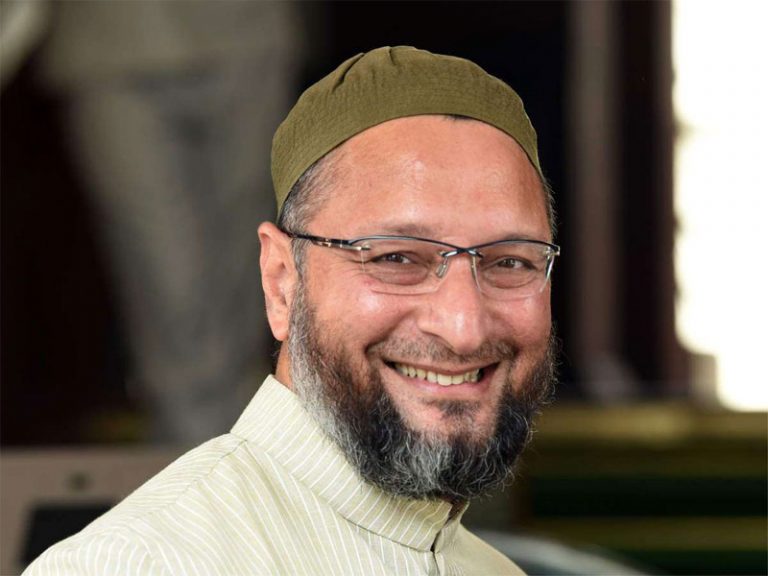
It looks like All India Majlis-e-Ittehadul Muslimeen (AIMIM) Chief Asaduddin Owaisi loves to compare himself to a beautiful woman surrounded by men. Home Minister Amit Shah had recently said that there is an alliance between AIMIM and TRS. In an interview with ABP News, while reacting to HM Shah’s comments, the AIMIM chief said he feels like Laila surrounded by Majnus.
Owaisi on ABP News
‘I feel like Laila,’ said Owaisi
Dekhiye mera haal aisa hai na ke main Laila hun aur mere hazaron Majnu hain. Bihar mein Congress ne keh diya ke main BJP ki B-Team hun. Ab yahan Congress keh rahi hai ke Owaisi nahi hai to humko vote de do. Ab BJP kuch aur keh rahi hai. Mujhe koi fikr nahi hai. Main ek laila hun aur mere chahne wale itne hain ki har koi chahta hai ki mujhe mudda bana kar vote hasil kiya jaye.”
It translates to:
See, my situation is like I am Laila, and there are thousands of Majnu around me. In Bihar, Congress claimed that I am BJP’s B-Team. Now Congress is saying if not Owaisi, vote for them. BJP is saying something else. I don’t care. I am Laila, and there are so many people in love with me that everyone wants to make me a subject and get votes on my name.
Taking a potshot by the comments made by Congress and BJP leaders, Owaisi asserted they are using his name to create political rhetoric and seek votes. He added that while his party is seeking votes on issues that Hyderabad faces, like water supply, drainage, and other civic issues, parties like BJP and Congress are using his names to create controversy. He accused BJP of not helping the residents of Hyderabad when the city was suffering from floods.
Owaisi previously compared himself to ‘Raziya’
During an interview with Aaj Tak. AIMIM Chief Owaisi said that his situation is like “Fas Gai Raziya Gundo Mein.” After winning five seats, he said that he felt like being stuck among goons as BJP calls him anti-national, and Mahagathbandhan is blaming his party for ‘cutting votes’.
Owaisi’s beef biriyani jibe
Asaduddin Owaisi is best known for making provocative statements, especially during the elections. On November 25, he had made ‘beef biryani’ sly on BJP leaders. He said, “It seems like BJP is confused and frustrated. If they are coming to Hyderabad they should have biryani at Alhamdulillah to get their minds straight.” BJP’s Raja Singh had responded to Owaisi’s beef biriyani sly with an offer of pork biriyani.
GHMC elections
The Greater Hyderabad Municipal Corporation (GHMC) elections are scheduled for December 1. The results will be announced on December 4. Ballot papers will be used in the elections. Several high-profile BJP leaders are campaigning for the candidates in the GHMC elections, including Amit Shah, Tejasvi Surya, MPs Arvind Dharmapuri and G Kishan Reddy among others.
Scott Morrison, Prime Minister of Australia, is asking the Chinese Government to delete a tweet attacking the Australian Defence Force deployed in Afghanistan, saying that it is fake. The PM was referring to a tweet posted the Spokesperson of Chinese Foreign Ministry, Lijian Zhao, who had shared a fake image on his official Twitter account which allegedly showed an Australian soldier slitting the throat of an Afghan child.
“Shocked by murder of Afghan civilians and prisoners by Australian soldiers. We strongly condemn such acts, and call for holding them accountable,” Zhao tweeted. The image showed a soldier in combat uniform beheading a child.
Shocked by murder of Afghan civilians & prisoners by Australian soldiers. We strongly condemn such acts, &call for holding them accountable. pic.twitter.com/GYOaucoL5D
According to the Australian government, the image is fake, and said that it is a digitally morphed photo.
Australian PM Scott Morrison demands apology from China
Reacting to the fake image, Australian PM Scott Morrison demanded an apology from the Chinese government and asked them to delete the “repugnant” image attacking the Australian Defence Forces. Mr Morrison added that the Australian government has formally requested the Chinese government to delete the post and contacted Twitter to have the post removed.
“It is utterly outrageous and cannot be justified on any basis whatsoever, the Chinese government should be really ashamed of this,” Morrison said. “Australia’s seeking an apology from the Chinese Government for this outrageous post,” he added.
The Australian PM also acknowledged the spiralling tensions between the two countries but stated that this is not how it should be dealt with.
The Australian Foreign Minister Marise Payne stated that this was the most “egregious” example of social media disinformation she had witnessed in her career and that there was no justification for the tweet posted by the Chinese government. “The Australian Government has called in the Chinese ambassador and sought an apology from the ambassador in relation to this tweet,” she said.
The spat over the fake image between China and Australia comes in the backdrop of increasing animosity between the two countries. Earlier this year, as the coronavirus outbreak that first emerged in the central Chinese city of Wuhan, galloped the world, Australia spearheaded the nations that demanded an impartial inquiry into the origins of the contagion.
A fierce pushback had followed since then from Beijing and its pugnacious diplomats, who have tried to fend off the demands into the investigation of the origins of the coronavirus outbreak by making outrageously misleading claims about the source of infection, intimidating economic punishments and indulging in psychological warfare to coerce and manipulate its detractors.
Ever since Australia demanded an impartial investigation into the origins of the coronavirus which first emerged in the central Chinese city of Wuhan, it has come under the attack from China. From overt economic threats to psychological warfare, Beijing has employed every trick in its playbook to attack Australia. China has also been quietly reducing its imports from Australia, inflicting economic punishments for its defiance to hold Beijing accountable for the coronavirus outbreak.
China’s attack comes in the wake of Australian forces’ war crimes inquiry
The fake image from the Chinese Foreign Ministry came on the heels of a recently published four-year military inquiry report of the Australian forces that brought to light the pervasive culture of the special forces deployed in Afghanistan following the 9/11 attacks in the United States.
The independent inquiry commissioned by the Australian government painted a grim picture of how some of the Australian Armed Forces indulged in wanton violence, killing innocents and prisoners and methodically covering it up.
India too a victim of Chinese propaganda and misinformation
Australia is not the only victim of China’s state sponsored propaganda war. India has also been at the receiving end of the Chinese propaganda machinery. Recently, as WHO geared up to investigate the origins of the coronavirus, Beijing made an absurd and preposterous claim, stating that India was the source of coronavirus pandemic.
In a desperate attempt to shift the blame of coronavirus, Chinese ‘researchers’ from Chinese Academy of Sciences claimed that the pandemic originated in India in summer of 2019.
While Delhi struggles to cope with deteriorating air quality and raging coronavirus pandemic, ruling party Aam Aadmi Party has decided to shift focus to Hyderabad municipal corporation polls. AAP is fielding wives of AAP members, some of whom have contested assembly elections and lost, for these elections. However, since the burqa clad women are hardly recognisable, AAP has decided to put images of their husbands prominently. In a true show of patriarchy, the women’s identity is reduced to being a wife of party member.
Meanwhile, one of the campaign posters of AAP candidate Asra Fatima has gone viral on social media.
As one can see, it takes a bit of an effort to find out that the candidate contesting the elections is one Asra Fatima. It is overshadowed by a big picture of her husband, Mohammad Majid. Majid’s picture is even bigger than party chief Arvind Kejriwal’s. Mohammad Majid had contested 2018 Telangana Assembly elections on AAP ticket. As per his affidavit then, his spouse was a ‘housewife’. Two years later, she is contesting elections.
However, Asra’s campaign poster has gone viral for hilarious reasons. While some could not find her name in the poster, there were quite a few who could not even find her image in the poster. Many thought she is actually a bottle of cola.
Me too feel same , I trying to finding why men name is Fatima ,why AAP using Coco cola ????
Many had too many highly amusing questions related to the poster.
Some other quiz questions: * How many people are in this picture? * What is Mohd Majid holding in his hand? * What is the spelling for Pressure Cooker? * There are two white caps in the picture. What is it that you find below the second white cap? * What does secret ballot mean?
Many also pointed out how this is also a trend in Kerala as well where wives are propped up as candidates and pictures of husbands are more prominently displayed.
And others pointed out how the wife is perhaps the proxy candidate for the husband.
Mohd Majid is the proxy candidate, his wife will remain behind the curtain, even if she wins. Where are woke liberals who want to smash patriarchy ? https://t.co/2cDmgkH6uX
Earlier this year in Delhi Assembly elections, AAP dropped Jitender Singh Tomar and fielded his wife Preeti Tomar in his place. Tomar was disqualified for giving false declarations during 2015 Delhi Assembly polls.
In the same Hyderabad elections, AAP has also fielded one Farheen Begum. Along with the burqa-clad picture of Begum, her husband’s picture appears prominently on the campaign poster.
#AapkaGhmcCorporator Farheen, represented by @MohdAbd66728587, a social worker is in the battle from Rahmath Nagar division, ward number 102, with serial number 9 on the ballot paper & election symbol Letter Box. Post your votes for her. She'd set up Oxygen Testing Centers 4 you. pic.twitter.com/uo2q7qrqGP
In a significant development, a newborn child of a Coronavirus infected mother in Singapore was found to have antibodies against the Coronavirus pandemic, reportedThe Straits Times.
The infant named Aldrin was born on November 7 at National University Hospital (NUH) to 31-year-old Celine Ng-Chan, who had contracted the deadly infection on the 10th week of her pregnancy. However, at the time of birth, the child was not only free of Coronavirus but had also developed antibodies against it. “It’s very interesting. His paediatrician said my Covid-19 antibodies are gone but Aldrin has Covid-19 antibodies. My doctor suspects I have transferred my Covid-19 antibodies to him during my pregnancy,” Celine stated.
She stated that she was not worried about her son as the transmission of the disease from the mother to the foetus was low. Celine had also learnt about another couple Natasha and Pele Ling who had given birth to a healthy child with Coronavirus antibodies. She emphasised, “My pregnancy and birth was smooth sailing despite being diagnosed with Covid-19 in my first trimester, which is the most unstable stage of the pregnancy. I’m very blessed to have Aldrin and he came out very healthy. I feel relieved my Covid-19 journey is finally over now.”
Woman contracted Coronavirus after family trip to Europe
She informed that she had contracted the disease along with her mother and 2-year-old daughter Aldrina, following a family trip to Europe in March. Although her husband and father remained unaffected, her 58-year-old mother Madam Choy Wai Chee had become critical. She was kept on life support for 29 days but successfully overcame the disease. Celine and her daughter were mildly affected by Coronavirus and were discharged after 2.5 weeks in the hospital.
Medical research finds transmission of Coronavirus to infants from infected mothers uncommon
Citing guidelines published by the Royal College of Obstetricians and Gynaecologists in the UK, Associate Professor Tan Hak Koon emphasised that the transmission of Coronavirus infection to the foetus from an infected mother is ‘uncommon.’ As per current medical evidence, a newborn child does not catch Coronavirus from an infected mother through breast/bottle feeding, mode of delivery or through sharing of the same room post-delivery.
A spokesperson at National University Hospital (NUH) informed that babies, who were born to infected mothers, were tested comprehensively. He added that all mother-infant pairs have tested negative for Coronavirus so far. It is however unknown as to how many pregnant women have been diagnosed with the deadly Coronavirus in Singapore.
Sitara Parveen, a young Muslim girl hailing from a small town in Bihar, who recently floored the judges of the singing reality show Indian Idol by her electrifying voice, has opened up about the challenges she faced and the societal pressure she had to confront to pursue her passion.
During the recent episode of the singing reality show, Sitara Parveen revealed how the Muslim conservative society she belongs to, ridiculed and discouraged her for following her dreams. She said that she has been learning singing since the age of five but her journey has been very difficult.
Women in our society are looked down upon if they try to excel in any field: Indian Idol contestant Sitara Parveen
Being born into a family with a humble background, she did not have the financial means to follow her passion and to add salt to her injuries, her society did not approve of her learning to sing. Sitara said that women in her society are looked down upon if they try to excel in any field. She was ridiculed by her society for singing. Her parents and brother even faced opposition from their own family members for encouraging Sitara to take up singing, revealed the Indian Idol contestant.
Sitara said that they even kept her visit to Indian Idol 12 audition rounds a secret as everyone in her society would have opposed it. She furthered that to avoid bringing shame to her family, she also keeps her singing lessons a secret and learns for a limited time period.
Muslim actresses who quit the entertainment industry for ‘Islam’
We have reported earlier how Muslim actresses like Sana Khan and ‘Dangal’ fame actress Zaira Wasim have quit Bollywood for Islam. In an Instagram post last month, Sana Khan had revealed that she had decided to quit the entertainment industry as her Faith and her profession were at loggerheads with each other.
However, Sana Khan is not the only Muslim actress to have left the film fraternity to serve ‘Islam’ and abide by the rules of Allah. Last year, ‘Dangal’ and ‘Secret Superstar’ actress Zaira Wasim too had announced her retirement from movies in a letter posted on Instagram. In the six-page letter, she said, “Bollywood took me away from Islam” and cites the interference on her religious practices as the reason for this decision. Ironically, Zaira Wasim’s role in the movie Secret Superstar was of that of a talented teenage singer who faces oppression from her conservative father.
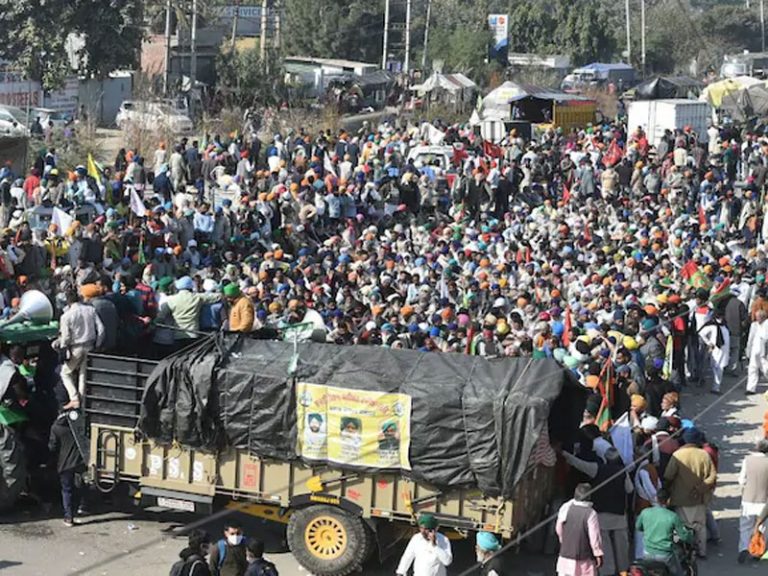
On September 22, the Parliament passed three agriculture laws named Farmer’s Produce Trade and Commerce (Promotion and Facilitation) Bill, 2020, The Farmer (Empowerment and Protection) Agreement of Price Assurance and Farm Services Bill, 2020, and The Essential Commodities (Amendment) Bill, 2020. The bills were introduced in the Parliament to replace the ordinances passed by the cabinet in the first week of June this year. From day one, the farmers in northern states, specifically in Punjab, are agitating against the new laws. They have blocked railway tracks demanding that the government must revoke the new laws.
The ‘Rail Roko’ protests by the farmers have caused a shortage of commodities, especially coal, in the state, forcing the Congress-led Punjab to buy electricity from other states at a higher price. These laws have led to the departure of Shiromani Akali Dal (SAD) from NDA, followed by the resignation of Harsimrat Kaur Badal from the post of Union Minister. The separation of the two-decades-old allies BJP and SAD has resulted in an announcement by the BJP that it will contest all 117 seats in the next assembly elections in Punjab.
The misinformation about MSP
The government of India has a provision of Minimum Selling Price (MSP) that defines the minimum price at which the government procures the agricultural produce. Since the bills were passed, opposition parties along with certain media houses and personalities resorted to spreading misinformation regarding the same. They claimed that with these new laws, the government of India is trying to go away with the MSP.
Punjab is among the top producers of wheat and paddy, the two main crops among several others that the government of India procures from the farmers under MSP. The misconception that the government will fade out MSP with these two laws has caused a stir in the Congress-led state. Captain Amrinder Singh-led Congress government in Punjab is supporting the farmers from Punjab while fuelling the misinformation about the laws. The state has already tabled a resolution to oppose center’s agriculture laws.
Attempts by the government to clear the air
As the misinformation started to grow, the government immediately came into action. Several Union Ministers and Prime Minister Narendra Modi came forward to tell the farmers that MSP is not going anywhere.
Prime Minister Narendra Modi, on several occasions, refuted the claims made by the opposition. On September 20, after Congress leader Rahul Gandhi accused that the government is fading out MSP, PM Modi said that the arrangement of MSP would continue. “I have said it before, I’m saying it again. MSP system will continue. Government will continue to procure agriculture produce. We are here to serve our farmers. We will do everything possible to support them and ensure a better life for their coming generations,” PM Modi said in a tweet.
In the September 27 episode of Mann Ki Baat, he shared the benefits of Agriculture reforms and how it will help farmers increase income. On September 29, during his address at the inauguration ceremony of Namami Gange projects in Uttarakhand, he said people are misleading the farmers about MSP. “There will not only be MSP in the country but also the freedom for farmers to sell their produce anywhere,” he said.
On September 23, Agriculture Minister Narendra Singh Tomar gave an interview to ANI in which he said that the government would continue to procure products from the farmers. When he was asked that there are concerns that corporate will exploit farmers, he said that bills passed give MSP guarantee at the time of sowing a crop. Also, as per the law, the contract between the corporate and the farmer will only be for the product and not for the land. This is another misconception being spread about the laws that the farmers’ land will be at stake.
On September 23, while answering the questions on MSP, Textile Minister Smriti Irani said that the government is committed to implementing the Swaminathan Commission Report. By the time bills were passed, the MSP was already announced for 2020-21 in the parliament.
Threats to hold Delhi at ransom
There are videos of farmer union leaders floating on social media where they threaten to hold Delhi at ransom. The President of Bharat Kisan Union (Krantikari) had said that they would block the five entry points to Delhi and continue their ‘protest’. “We’ve decided that we’ll never go to Burari Park as we got proof that it’s an open jail. Delhi Police told Uttarakhand Farmer Association President that they’ll take them to Jantar Mantar but instead locked them at Burari Park”, said Surjeet S Phul, President, BKU Krantikari (Punjab).
In fact, protesting ‘farmers’ have now claimed that they are carrying ration worth four months with them to Delhi. The Aam Aadmi Party led Delhi government has also extended support to the agitating ‘farmers’ in a bid to score a few brownie points.
Why isn’t central govt holding talks with farmers
Amid all the drama that has erupted in Delhi, people have started questioning the government’s intentions. Some are alleging that the government is not interested in listening to the farmers, while others say that the government is suppressing the farmers’ voice. Many also claim that the Central government has not made any effort to reach out to the farmers. However, in reality, the government of India has been trying to have a conversation with the farmers since the beginning.
On October 7, several farmers’ unions rejected the invitation to hold a meeting on October 8 by a secretary-rank officer of the Union Agriculture Department. They said that an officer has no position to tell them if the laws are beneficial for them or not.
On October 7, the farmers rejected Government’s invite to hold meeting over the laws
On October 12, the Center again invited the farmers’ unions to talk hold a meeting on October 14 at the ministry in Delhi. The offer was also rejected by the farmers stating they will only speak to a Union Minister.
The farmers again rejected the offer to hold meeting on October 14 saying they want a Union Minister to hold the meeting
On November 10, the Center obliged their request and asked the farmers to come and meet Agriculture Minister and Railway Minister on November 13. The offer was again rejected by the Kisan Mazdoor Sangharsh Committee (KMSC), stating they want an invitation for farmers from pan India as the protests are not subjected to Punjab alone.
On November 10, Union Ministers Narendra Singh Tomar and Piyush Goyal asked Punjab farmers’ unions to come for a meeting
This is when the Punjab farmers were indulging in blocking railway lines in Punjab.
The offer was rejected as the Punjab farmers’ union said the government only invited them and not farmers from other states
The government of India again gave time to the farmers’ bodies to have a conversation with the government on December 3, but the farmers started to march to Delhi much before the set date.
They are demanding that the government talks to them before December 3. Despite the blackmail, Home Minister Amit Shah had said that the government is ready to talk to the farmers, but they have to move to the allotted space at Burari ground. However, the farmers rejected the offer claiming that they have confirmed information that Burari ground is an open jail.
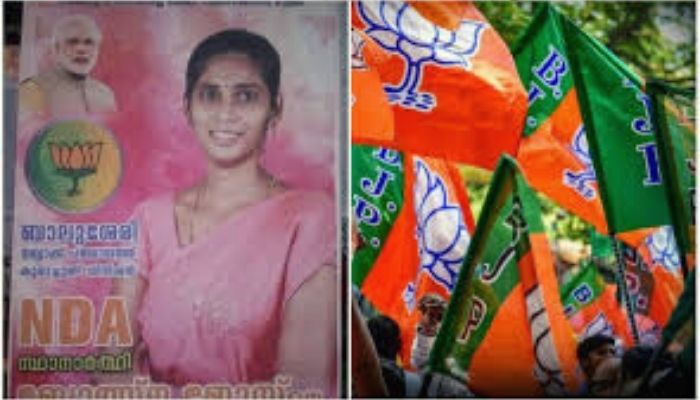
Jyotsna Jose, who was brutally assaulted by a Communist Party of India (Marxist) goon 2 years ago, has been offered a BJP ticket to contest from Balussery Panchayat in the upcoming local body elections.
According to National General Secretary of BJP BL Santosh, Jyotsna Jose is contesting from Balussery Panchayat as a BJP candidate to end the ‘brutal, inhuman communist regime’ in Kerala.
She is Smt Jyotsna Jose . Kicked by a CPM Goon on stomach when she was pregnant . Lost her 4 1/2 months baby . Today she is a @BJP4Keralam candidate from Balussery Panchayath determined to end brutal , inhuman communist regime. pic.twitter.com/MAXMbIlMRc
Kerala woman had to abort child after being kicked by a CPI (M) goon
In February 2018, Jyotsna Jose was attacked by a CPI (M) leader named Thamby, leading to the loss of her child. She was 4.5 months pregnant at that time but had to undergo a forced termination of pregnancy after Thamby kicked her on the stomach. It was later reported that the Kodenchery police had arrested 7 people, including neighbours of the woman, in connection to the incident. Jyotsna had earlier complained of police inaction in the case. “I called the police but they said they don’t have a vehicle to come”, she was heard as saying.
The goons had come to assault her husband over a land dispute. They barged into the house and assaulted the family, including their 5-year-old son. The incident took place at night when one Saithalavi, the mediator in the land dispute, led the mob of 8 people into the house. Reportedly, the woman was tied up by the mother of one of the accused. She narrated that two men had attacked her and it was Thamby who kicked her on the stomach. When she was rushed to the hospital, the doctors informed that there was a blood clot on her placenta, leading to the loss of the child.
Screengrab of the article in India Today
Jyotsna’s husband had stated, “I have registered complaints in two stations with their names. The police had arrested only one culprit. Those men threatened me in public that they will kill me. Now, CPM leaders are asking me to exclude Thamby from my complaint and they will arrange the arrest of others. But I am firm on my decision, I will go forward till I get justice.”
Kerala local body elections
The local body elections in Kerala are scheduled to take place in three phases, on December 8, 10 and 14. The counting of votes will take place on December 16.
Every week brings new cases of social media suppression of conservative voices – the shutting down of the popular True Indology account last week by Twitter was the latest. Similarly, the OTT platforms and Bollywood continue what seems to be some kind of sick competition to figure out who can insult Hindus the most. Netflix’s latest nauseating offering masquerading as art shows a Muslim boy and Hindu girl indulging in bedroom activities in a temple instead.
Neither is of course an isolated case. But what’s taking place is more complicated and where it’s heading is a lot more dangerous than even experts currently imagine.
To fully understand the trajectory, it is important to take a quick stock of where things started and where they are. Social media platforms started with the happy idea of connecting people. Facebook was the first truly global social media platform and from a business perspective, the more users there are, the better. Facebook and others like it are in the business of data – collecting lots of it and selling lots of it. The consumer is THE product. While there are legitimate privacy concerns with that business model, there isn’t anything particularly nefarious in the design. I call this Phase I of social media and it lasted roughly until 2016.
It was the US Presidential Election and the Brexit votes that year that signalled the start of Phase II – the weaponization of data. Data analytics techniques were applied in both of these elections to micro-target users with ads designed to persuade. While these techniques were applied in earlier elections, it was their use in these two voting exercises, and more importantly the outcomes to these voting exercises that set the alarm bells off, especially among the liberal intelligentsia and media.
What has happened since 2016 is that left-wing voices have figured out that just like the real world, whoever shouts loudest and claims victimhood wins. While there are too many examples of this to go through, an easy one to understand is the anti-CAA campaign that took place over social media with fatal spillover effects into the real world in the form of the Delhi riots.
In parallel the social media and OTT platforms continue to gain mindshare as traditional forms of media such as TV, radio and books continue to suffer. So do all other forms of leisure activities, e.g. playing sports, board games, or general interests such as painting or playing a musical instrument. Our free time is largely in front of a small screen (Insta, Facebook, Twitter) or large screen (Netflix, Prime). Individuals and companies realize that ‘being on’ social media is not just a marketing strategy, it is THE marketing strategy and the way to reach your audience.
The Walled Garden
Fast forward to today and we are entering the third Phase – the walled garden. Now that most people, especially young people are on one or more of these platforms or consume video content through the streaming services, the platforms can start to dictate terms to the producers (in the case of platforms) and the consumer (individuals or businesses). What goes unseen is the powers that be that pull the puppet strings behind these platforms through direct funding from leftist purses or the ‘useful idiots’ in the form of employees who push for a more ‘progressive’ agenda. It is these two sets of people that can dictate who gets to play in the sandbox and who is kicked out for not conforming. And getting ‘cancelled’ or ostracized on social media may seem harmless, but as these technologies weave themselves tighter into our day to day lives, the impacts of such cancellations can be far-reaching. Think future employers running social media screening for a ‘cultural fit’, or insurance companies charging different premiums or denying coverage based on the same.
We will soon enter a new stage – bubbles of voices and viewpoints. As ‘traditional’ social media continues to restrict voices that don’t match its dictates, alternates that promise a return to social media as it was, unfiltered and non-judgemental will emerge. You will have competing ecosystems come up, for example, the Twitter competitor, Parler is known for largely not censoring content and thus has conservatives flocking to it. These platforms will coalesce into bubbles of sameness and may take away from the original point of social media which is to connect and not necessarily with only those that share your point of view.
What is to be done, especially in the Indian context? While I have focused on social media in this piece, the easier areas to tackle are the OTT platforms. The solution is for government and non-government organizations to support Indic based content and platforms. With the low bar of entry for new artists (anyone with a smartphone and computer can become a film director today), there is a wealth of talent looking to be discovered, and a whole host of (non-Hindu phobic) stories waiting to be told.
What can the government do?
Regarding the social media platforms, a heavy government hand is needed. There are enough reasons to ban or severely curtail Facebook, Instagram and Twitter including data privacy concerns, and the authorities need to bite the bullet and proceed with these bans. The bans should only occur after the Government tips the scales by promoting a select set of swadeshi apps already available or in the works. There can be crowdsourcing efforts sponsored to suggest features and changes to existing apps to address usability or viability options. Once there is a list decided, a carrot and stick approach can be used to get cricketers, actors and actresses, and other prominent citizens to use these platforms. A marketing campaign can be built around being Atmanirbhar in the digital world.
PM Modi recently announced that this is the age of data. We also saw the recent news that the number of internet users doubled to 75 cr in the past 5 years. This is a critical time as millions of Indians continue to come online and it will be harder to make a change once habits have formed. We cannot let digital colonizers take over the virtual Indian landscape.
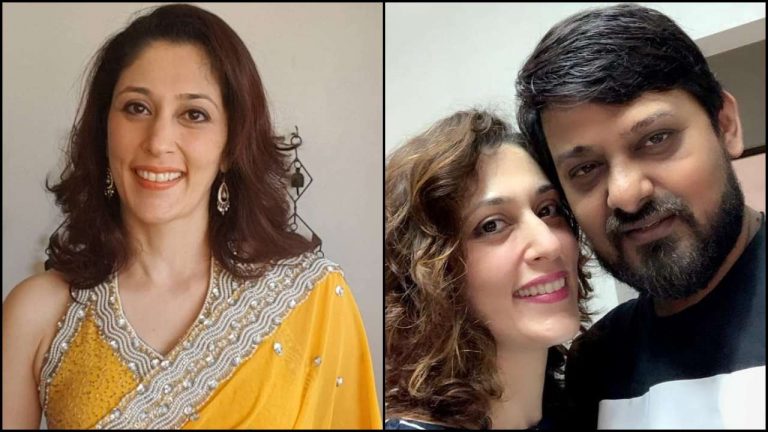
A day after the wife of late music director Wajid Khan took to Twitter to narrate her ordeal in an inter-faith marriage, she has now spoken in details about the ill-treatment meted out to her by her in-laws and husband for not converting to Islam. Kamalrukh Khan, a Parsi by faith, had married her college sweetheart Wajid Khan after 10 years of courtship.
In an exclusive interview with Times of India, Kamalrukh recounted her reluctance to convert to the religion of her husband. She has added that while Wajid was aware of her reluctance to convert and went ahead with the marriage nevertheless, his family was opposed to the marriage and has been vocal about it. “…Over a period of time, his family, especially his mother, started pressurising him to make me convert and over the years, especially after the birth of my kids, the endeavours to try and convert me reached epic proportions, to a level where the rift in my relationship with Wajid widened, “she narrated.
Her marriage with Wajid Khan eventually turned sour, owing to the consistent expectation to change her Faith. Although he was initially accepting of her decision, the pressure of his mother and family prevailed over him. Kamalrukh Khan stated, “Things got worse after marriage; almost everything that I did, including my motherhood, was linked to my religion; not being Muslim meant that my children were already estranged as Wajid wouldn’t be home. He was torn and confused- his family forced their orthodoxy on him and me and when I didn’t budge (about conversion), I was made an outcast of sorts. He became an absentee father and husband.”
Family of Wajid Khan labelled their children illegitimate, asked him to remarry
“Wajid’s family kept insisting that our children were illegitimate since we had not married as per Muslim law (Nikaah, which if I was to do, would mean me converting to Islam). For them, the Special Marriages Act didn’t mean anything,” she recounted. The family members of Wajid Khan were so intolerant of her decision that they made a hue and cry, every time she would celebrate any Parsi festivals. “They also stopped coming to any of our Parsi family functions and his mother would openly tell Wajid, in my presence, to re-marry, which he obviously did not agree to do,” she stated.
Wajid Khan had filed for divorce because she did not convert
Kamalrukh Khan recounted how Wajid Khan had filed for divorce in 2014, a move that left her devastated. She said, “The constant interference from his mother and other members of the family coupled with the constant pressure to convert took a toll on the health of our relationship. He moved out after a fight when Arshi was about 2.5 – 3 years. He came back again after three years. We had Hrehaan. And again due to the same pressure ensuing, he left again in 2014 and filed for divorce.”
Kamalrukh Khan reveals about her decision to go public
While speaking about her decision to go public about her ordeal, she narrated how Wajid’s family is hellbent on denying the right to inheritance to their children. Kamalrukh Khan lamented, “Life has brought me to a point where I need to fight for my children’s due inheritance as his family has usurped his assets post Wajid’s death. I am both father and mother to them, and in practical matters, always have been…I have to pay for their education and our upkeep.”
She added, “I work as a clinical hypnotherapist and our primary source of earning has been Wajid’s marital support. If that too is being snatched away (by those who haven’t bothered to keep in touch with me or my children for the past 7-8 years), on such unfair grounds, I need to fight back on every front.” She further stated, “My reasons for speaking out is tied to an inherent sense of justice. No woman should have to face what I have faced during these 17 years of marriage.”
Pointing towards the grim reality of forced conversions, Kamalrukh Khan emphasised, “If an educated, independent woman like me can go through this just because she married for love and did not convert, a lot worse can happen to others that are less empowered.”
Anti-conversion law should be nationalized, opined wife of late Wajid Khan
Earlier, she had opined that the anti-conversion law introduced by UP govt should be nationalized so as to reduce the “struggle for women like me who are fighting the toxicity of religion in inter-faith marriages”. She summed up her lengthy post by writing: “Religion should be a cause for celebration of differences not separation of families. All religions are the path to the divine. Live and let live should be the only religion we all practice”.
Wajid Khan, a Bollywood music composer from the successful duo Sajid-Wajid, had passed away in Mumbai this year in July. He had kidney issues and had contracted coronavirus infection.
A ‘young’ and ‘vibrant’ man is face of the farmers’ protest against the three new farm laws that they think will take away their land. Indian ‘liberals’ are swooning over his ‘this is a revolution’ monologue. They romanticise the idea of ‘revolution’ to bring down a democratically elected government. Every turbaned man is Bhagat Singh incarnate for them. Except, they forget that Bhagat Singh stood up against imperial British rule and not democratic government.
Interestingly, the actor and now-leader Deep Sidhu seems blank about the laws. To be honest, I am not even bothered by his ignorance. However, I have a problem with the way he whitewashes the terrorist acts of Khalistan.
The infamous “Abohar Goli Kaand” of 1990
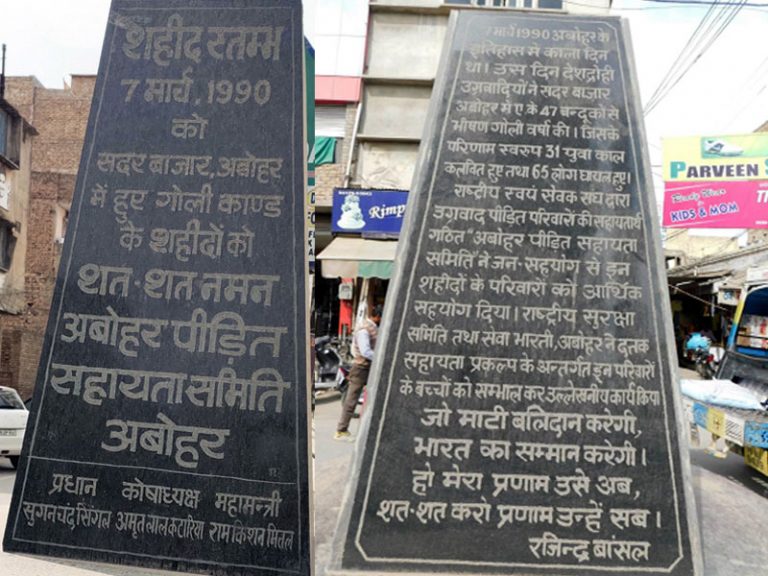
1990… I was six years old. On March 7 evening, my parents were spending some quality time with a family friend at their home in the residential area of Civil Hospital in Abohar, Punjab. They had planned to go to the Sadar Market (famous as Street Number 12 Market). Abohar is a small town in Fazilka district near the India-Pakistan border.
As my sister and I were playing with the other kids, my parents canceled the plan to go to the market and decided to go back home instead. As we were preparing to leave for home, we heard loud gunshots. In a few minutes, the unprepared Civil Hospital was overwhelmed with dead bodies and injured people. I was too young to remember what had happened. However, over the years, the story has been told and retold to me by my parents and grandparents and some books, especially ‘Itihas Ke Jharokhe Se Abohar’ which detail the incident that scarred my childhood.
The bloodied evening that ruined 33 families
On March 7, 1990, at 6:30 PM, people heard loud blasts coming from the end of the street. The unexpected shoppers and shopkeepers thought some children are bursting firecrackers. Only a few seconds later, people were seen running from the end of the street. As they came closer, what they were shouting became clearer. “Bhajjo goliyan maar rahe (Run they are shooting people)”, “bande maar te, bande maar te (they killed them), “aapni jaan bachao bajjo (run and save your life),” people screamed as they ran to save their lives.
Excerpt about the incident from ‘Itihas Ke Jharokhe Se Abohar’ by Late Mathura Das Hiteshi
Within the next few seconds, more than ten Khalistan Commando Force (KCF) terrorists emerged from all sides of the market, shooting people in every direction. KCF is a banned terrorist organisation operating in Punjab and receives immense support from Sikhs in Canada. Amongst many other killings, KCF is responsible for assassination of Punjab CM Beant Singh in 1995 and General Arun Vaidya who led Operation Blue Star in 1986.
People tried to run from the market, but the congested road was not helpful at all. Shopkeepers started closing their shops as quickly as possible, and the customers hid inside the shops. Those who were selling goods on carts ran to save lives, but many were killed.
After the bloodbath, the terrorists ran towards Fazilka road and vanished in the web of houses. It is believed that some of them hid in a house for hours as police had started looking for them. They threatened the house-owner and stayed there till late at night. Those who managed to escape ran towards Fazilka and believed to have vanished in the farms.
Police gates were shut for more than 40 minutes
One of the most depressing parts of the story is that the gates of the only police station in Abohar were shut the moment police learned about the incident. People ran towards the police station, which was not too far from the Sadar market, to get help, but they were welcomed with closed doors with no answer from the police. After 40 minutes of the incident, police officers came out of the station and started looking for the terrorists who were already long gone.
The sad state of Civil Hospital
Though the Civil Hospital of Abohar served several adjoining villages, the administration was not prepared for such a tragedy. When people realized the terrorists had fled from the scene, they started opening shutters and tried to help the injured. As there was no ambulance service available, the injured were taken to the hospital on carts. The bodies and injured started to pile up in the hospital with limited staff. The hospital was overwhelmed within minutes. Unfortunately, the stock of medicines, surgical instruments, and even bandages was not enough to accommodate all injured.
The attack was not over yet
After an hour of the incident, people were seen lining up in the hospital to donate blood. Those who were in the market were trying to help as many people as possible. Thirty more minutes passed by, and then people realized it was not over yet. Two bomb blasts further shook the town. More people died, more lost limbs, and sustained severe injuries. While 22 were killed on the spot, around ten more died due to injuries or the aftermath of the incident. As per official records, as many as 45 were injured.
Excerpt about the incident from ‘Itihas Ke Jharokhe Se Abohar’ by Late Mathura Das Hiteshi
“I had no choice,” said one of the terrorists
There are countless stories of the incident that were never documented. Amongst those who lost their lives was a young woman who hid in the same shop where she was shopping as soon as she learned about the terrorists. One of the terrorists entered that shop, and before he could start shooting people, she recognised him.
“Tu? (is that you?)”, she asked, shocked. For a brief moment, the terrorist seemed surprised to find someone known to him there. Except, after the brief moment passed, he said, “I had no choice,” and started shooting. The woman died on the spot.
The man who bled out to death
Another story that haunts me is of 45-year-old Gobind Narang, who used to sell readymade garments on a cart. He was shot but escaped and hid in a shop. The shopkeeper, who did not know someone is hiding in the shop, pulled down the shutter and did not come back from his home. Gobind bled out to death in his shop due to lack of medical attention.
These are just amongst the countless stories of horror from that incident and others where Khalistani Sikh terrorists unleashed violence upon Hindus with covert and overt support from influential Sikhs in Canada and UK.
Only RSS and BJP leaders rushed to help
There were many organizations in Abohar at that time. Some were affiliated with political parties as well. However, according to records, only BJP leaders and RSS workers rushed out of their homes to help the injured. The rest of the leaders decided to stay safe and never came out of their homes. When my Nanaji first told me about the incident, he mentioned that some people went to their leaders’ homes, but no one came out to help.
The aftermath
The lack of preparations and coward act of the police was enough to make people angry. The next few days saw protests against the administration and police. On March 10, a large group of protesters marched towards the police station. They burnt down a police motorcycle and pelted stones on the police personnel. Then-District Magistrate Rakesh Singh was trying to calm down the crowd, but they pelted stones on his car.
Excerpt about the incident from ‘Itihas Ke Jharokhe Se Abohar’ by Late Mathura Das Hiteshi
Without any warning, the police opened fire towards the crowd. 18-year-old Naveen Kumar and 20-year-old Rajendra Kumar were shot dead. As per the rules, police had to fire warning shots, but the rules were ignored. Abohar lost two more young souls.
March 12, 1993 – The day of revenge
DSP Surjit Singh Grewal was posted in Abohar on October 17, 1992. On the first day, he announced that he would bring the terrorist, Chanan Singh, who planned the attack, to justice. As a part of the plan, Grewal helped Gurmukh Singh, son-in-law of Chanan Singh, to settle down again. He made personal connections with Gurmukh and made sure no one doubts his plans.
DSP Grewal (Image source: ‘Itihas Ke Jharokhe Se Abohar’ by Late Mathura Das Hiteshi)
Chanan started to visit Gurmukh after learning that Grewal was on their side. However, he was very careful during his visits. Grewal got solid intel that Chanan was coming to attend Gurmukh’s daughter’s marriage and son’s Shagun ceremony. Grewal formed a team and asked them to dress as daily wage workers. He posed as Daljit Singh alias Bittu, head of the Sikh Student Federation.
On reaching the location, Grewal introduced himself as Bittu to Angrej Singh, son of Gurmukh. Angrej Singh believed him and took him to the house where Chanan was staying. 55-year-old Chanan, who was sitting on cots, realized that was not Bittu and started shooting at Grewal. Fortunately, Grewal was wearing a bulletproof jacket. Within seconds, Chanan’s dead body scrambled with Grewal’s bullets was lying in the pool of blood. Though the revenge gave little relief to the people of Abohar, the wounds of March 7 will never fade away completely.
Late Mathura Das Hiteshi – The man who narrated the story
A significant part of the story was only possible because of the detailed narration of the incident in Late Mathura Das Hiteshi’s book “Itihas Ke Jharokhe se Abohar.”
Late Mathura Das Hiteshi
A freedom fighter, Hiteshi got the surname, which literally means “the one who thinks best for everyone,” for his social work. During his tenure as a bank manager of Punjab National Bank and later as chairman of Improvement Trust, he had made sure to help as many people as humanly possible.