Earlier this month, the French President Emmanuel Macron took the stage at city hall in the Paris suburb of Les Mureaux to deliver one of the most consequential speeches of his career. A series of policy pledges to tackle what he calls Islamic separatism.
Incidentally, the day that Macron chose for this announcement was Oct 2. It is not clear whether the French President meant this deliberately as a tribute to Mahatma Gandhi. However, two things are clear. First, the speech involves a level of plain speaking that is quite unusual for a head of state. Second, the speech completely changes the way France (and potentially the rest of Europe and even the West) looks at Islam.
The following is a collection of some of the upshots from the speech, translated loosely into English. We shall not go into details of his policy announcements, which are very specific to domestic governance in France. Rather, we will look at the introduction to the speech, where Macron explains what he has set out to do and why. The full text of the nearly hour long speech, in French, is available from the French Government website [pdf].
“Who has put the Republic in danger?”
The French President lays it out thus:
“There are two objectives for why I am speaking to you today. The first is to define the reality of our problems without any taboos. Who is it today, in our society, that has put our Republic in danger and our ability to coexist? The second is to share with you the decisions made by the government on how to tackle the situation. These decisions are the result of careful consideration of nearly 3 years.”
“The problem is not secularism”
The President laid this out firmly:
“The problem is not secularism. I have said many times that secularism in France means the freedom to believe or not to believe and to worship however you want, subject to public order. Secularism means the neutrality of the state and does not mean that religion must be erased from the public sphere. Secularism is the glue that holds France together.”
In France, they take secularism (in French: laïcité) with overwhelming seriousness. The state maintains the strictest possible distance from religion, bans all religious symbols in government buildings including public schools and forbids public servants from wearing them.
A bit of historical context is needed here. The French Revolution saw religious authorities as part of the complex that supported the tyranny of the king. The 1789 revolution was followed with the Declaration of the Rights of Man. It explicitly rejected religion as the basis of government and laid the foundation for modern secular law. At the time, the US had just finished fighting the revolutionary war, in which France had been their ally against British colonial rule. The Declaration inspired the Bill of Rights in the US Constitution and was also the basis of the UN’s declaration of universal human rights in the 20th century.
“Islamic separatism aims to form a counter-society“
The President describes his opponent thus:
“It is Islamic separatism that we have to attack. Islamic separatism is a conscious effort, a politico-religious one. It repeatedly breaks with the values of the Republic and aims to form a counter-society. This takes the form of taking kids out of school, developing sports and cultural communities that become an excuse for teaching principles that do not conform to the laws of the Republic. This indoctrination negates our principles such as equality of men and women and the dignity of the human being.“
A “counter-society” that does not respect the dignity of the individual. Ouch!
“First it forms a parallel society, but its ultimate aim is to take over“
The President explains further:
“The problem is this ideology which believes that its laws are superior to those of the Republic. I have often said that people are free to believe or not to believe, but every citizen, with or without religious belief, must absolutely respect the laws of the Republic. And let us name it and tackle it : it is in Islamic separatism that we find a desire and a methodical organization to destroy the laws of the Republic and create in its place a parallel system, based on different values and a different organization of society. At first, this is only a parallel society, but the ultimate aim is to take control of everything.“
I warned you. This level of plain speaking is unusual for a modern head of state.
“Islam is in crisis all over the world“
The President gave his personal view
“A lot has been written, said and analyzed in this regard, about what our country is facing right now. I have the humility to admit that I am no specialist, but let me tell you in a few words what I think. Islam is a religion which is in crisis all over the world. This is not just happening in France, this hardening of attitudes is happening all over the world, including in countries where Islam is the majority religion. Just see the example of our friend Tunisia, how different it was thirty years ago. And Tunisia is one of the most educated and developed in that part of the world….“
And with this, President Macron went on to lay out his ideas for tackling the problem as he saw it. For instance, requiring that all kids must attend public school, instead of possible indoctrination via “home schooling.” Closing down places of worship that are suspected of spreading radicalization. A national effort to shut down establishments that have practices that violate core French values, such as gender equality, for example by having different times for men and women to use a swimming pool. He would also crack the whip on elected officials, who might “compromise” on these values in certain neighborhoods, due to pressure from the local public.
While Macron’s speech did not receive the kind of attention you would expect, possibly due to English being the language of global discourse, the usual suspects did cry out.
Al Jazeera upset with Macron’s speech
And then, two weeks later, came the public beheading of a school teacher Samuel Paty in a suburb of Paris. It touched something within the already alarmed French public and set off a public reaction that has become a mass movement. For days now, crowds have thronged public squares across France, holding up placards, banners and in mourning. This one reads : “I defend liberty against barbarism.“
Support for Samuel Paty
No leaders. Just people. Gathering to sing La Marseillaise, the French national anthem. Below are the powerful lyrics of the song.
A two-day national symposium on ‘Memories of 22 October 1947’ is being organised in Kashmir by the National Museum Institute in collaboration with the Union Territory Government of Jammu and Kashmir on October 22 and October 23, 2020, to mark the violence and atrocity faced by residents following the invasion of Jammu and Kashmir by Pakistan’s Pashtun tribal militias, aided by the Pakistani military.
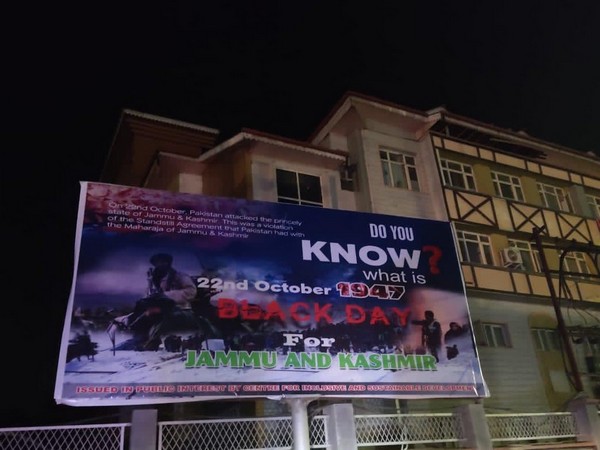
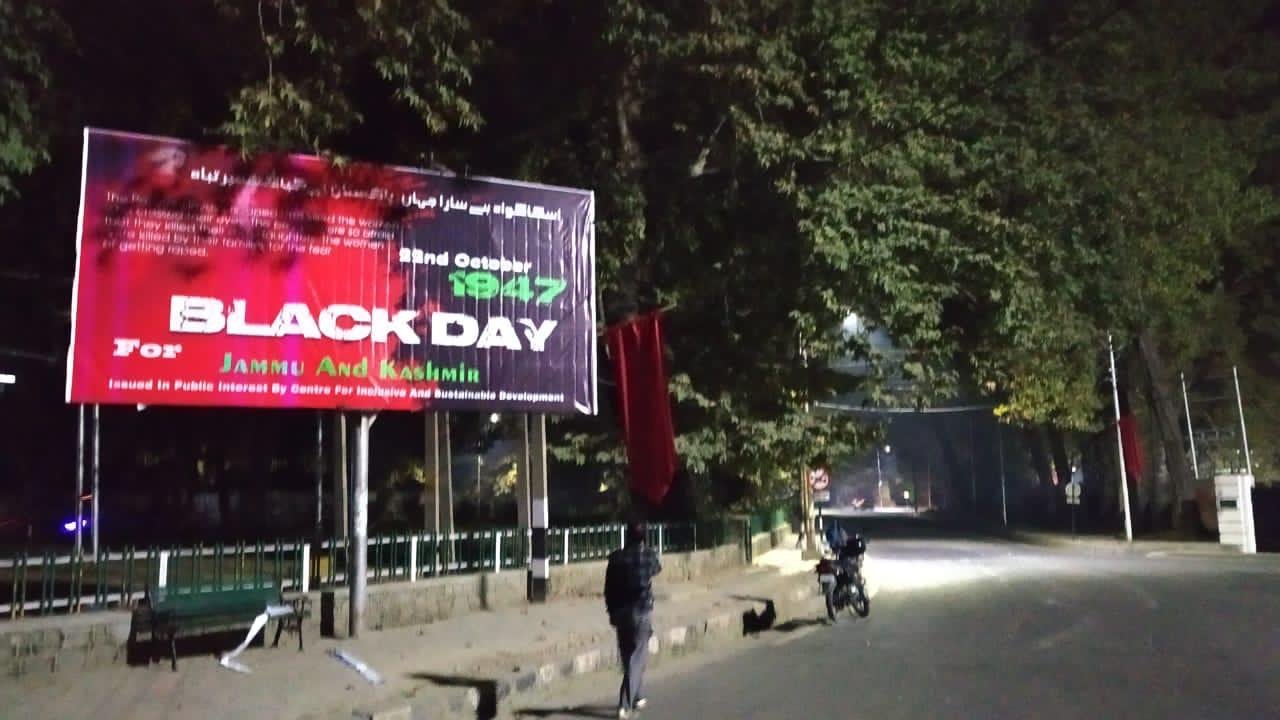
Ahead of the national symposium, billboards have been put up at several places in Srinagar to inform people about the exhibition and create awareness among them about the horrors meted upon their ancestors by the invading Pakistani intruders on October 22, 1947(Black Day).
Billboard informing J&K residents about invasion of Kashmir by Pakistani militias on October 22, 1947(Black Day)
“A museum or an exhibition will become one of the platforms to document, reconstruct and to bring alive the historic narrative of October 22, 1947. Remembering the violence and atrocity of the invaders and the valour displayed in overcoming this challenge will be a tribute to the people who laid down their lives in the first battle of independent India. The said exhibition or memorial will be the first of its kind in this direction,” the official statement by the organisers as quoted by ANI said.
The official statement also added that it is important to present such a historic narrative to the people in order to have a dialogue with them. It sought to clear hazy sense of history some people in Kashmir had, especially with regards to Pakistan’s claim on the territory. The statement said that people should be aware of the challenges faced by the nation just months after securing independence.
Billboard informing J&K residents about invasion of Kashmir by Pakistani militias on October 22, 1947(Black Day)
“Pakistan invaded Jammu and Kashmir on October 22, 1947, and brought in its wake horrifying mass plunder and vandalism. Thousands of men, women and children were mercilessly slaughtered by the intruders. Four days later, on October 26, 1947, Maharaja Hari Singh signed the Instrument of Accession, merging his state with India. Following the accession of the state to India, Indian troops were airlifted to Srinagar, the state capital to repel the tribal invasion,” the statement noted.
Pakistan Army launched ‘Operation Gulmarg’ to snatch Jammu and Kashmir
Soon after the partition, the Pakistani leadership, both civilian and military, was desperate and determined to expand its territorial area. Several attempts were made by Pakistani leaders, including Mohammad Ali Jinnah to convince Maharaja Hari Singh of Kashmir to accede to Pakistan. However, Singh had remained adamant on his demand to have an independent princely state.
Soon after the independence, the Pakistani Army prepared a plan called ‘Operation Gulmarg‘ and put it into action. According to the plan, 20 Lashkars (tribal militias), each consisting of 1000 Pashtun tribals, were to recruited from various Pashtun tribes, and armed at the brigade headquarters at Bannu, Wanna, Peshawar, Kohat, Thall and Nowshera by the first week of September. The armed Lashkars were expected to reach their launching point in Abbottabad on October 18, and subsequently cross into Jammu and Kashmir on October 22, 1947. The primary objective of the Operation was to capture Srinagar by October 26, 1947.
The 20 Lashkars were to be divided into a group of 2—10 militia tribes were expected to attack the Kashmir Valley through Muzaffarabad and the remaining ten were expected to join the rebels in Poonch, Rawalkot and Bhimber from where they were to advance to Jammu.
Simultaneously, Maj. Gen. Akbar Khan, who was entrusted with the operation, devised a plan to make the Kashmir rebellion appear like a revolt waged by the people of Jammu and Kashmir against their non-Muslim rulers. The aim here was to take the cover of civilian unrest for the impending military action. Through a concerted attempt, rebellion against Maharaja Hari Singh was ginned up and rebels were encouraged to take up arms against the Hindu ruler.
As a prelude to this plan, Pakistan stopped the supply of essential goods like petrol, oil, food, sugar, salt etc. to Jammu and Kashmir, effectively blockading the state and thereby actively stoking rebellion against Maharaja Hari Singh.
Pakistani Pashtun tribal militias and Pakistani Army regulars invade Jammu and Kashmir
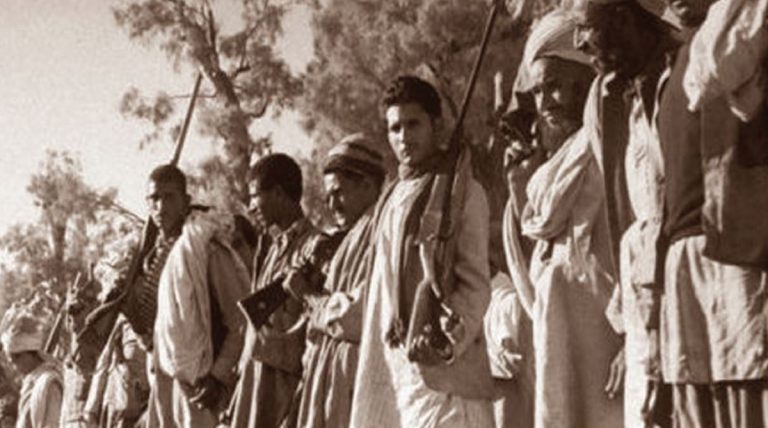
The weeks of planning and illicit manoeuvrings under Operation Gulmarg culminated into the invasion of Jammu and Kashmir which marked the commencement of the events that led to the first Indo-Pak war. In the wee hours of October 22, 1947, scores of Pakistani Pashtun tribal militias, in connivance with the Pakistani state and army surreptitiously crossed the border from Garhi Habibullah into Jammu and Kashmir and attacked the town of Muzaffarabad.
Several accounts claim that the tribal raiders, raised by the Pakistani Army, were aided by the traitors of the 4 KI guarding the outposts at Lohar Gali and Ramkot. Many Muslim forces tasked with protecting the sovereignty of Jammu and Kashmir mutinied and colluded with the rampaging Pashtun tribesmen to defeat the forces deployed by Maharaja Hari Singh.
These rebels provided crucial information to the armed raiders about the troop deployment and position and helped them prevail over them. Even before the sleeping residents of Muzaffarabad could realise, the town was already under the control of invading Pashtun militias. Documented accounts state that hundreds of women were raped and abducted, houses looted and men slaughtered on the streets.
After wreaking havoc in Muzaffarabad, the Pashtuns marched towards the prosperous town of Baramulla, even though the path to Srinagar was clear. Here too, the Pashtuns killed innumerable men and women, looted houses and then set them on fire. Out of 14,000 population at the time, less than two thousand had remained. Most of them were either killed in the Pashtun onslaught or fled the village for safer places.
The ‘Lashkars’ wreaked havoc, killed, raped and looted Hindus and Muslims alike
The invading tribal groups had no regard for anyone. They ran riot, leaving chaos, destruction and killings in their wake. They even raped nuns, who were performing their duties at St. Joseph Hospital and schools in Baramulla. Even doctors, paramedics, and nurses tending to the sick and incapacitated were not spared. They were, too, subjected to a brutal assault by the invading tribesmen.
As Pashtun tribesmen and Pakistani regular army soldiers were busy looting Kashmiris in Baramulla, defiling their women and vandalising the properties, Maharaja Hari Singh sought an intervention from India to stop the devastation, which was contingent upon his signing of Instrument of Accession.
After Maharaja Hari Singh signed the Instrument of Accession to India on October 26, 1947, the Indian Armed forces were airlifted to the Kashmir Valley the next day. The Army launched an aggressive offence against the rampaging Pashtuns and stopped their march towards Srinagar. In the subsequent months, the Indian Army purged the state of the Pashtun tribesmen and Pakistani regulars and forced them to retreat to what is present-day Pakistan Occupied Kashmir.
For years, Pakistan perpetuated the myth that tribal raiders were liberators who had come to Kashmir to fulfil their religious obligation of jihad and avenge the deaths of Muslims killed in the communal riots in Jammu. However, in reality, the tribesmen were not carrying out any religious war or jihad. They were there to brazenly trample upon the sovereignty of Jammu and Kashmir, rape and dishonour the women, plunder and pillage Kashmiri, regardless of their religion.
They were aided, provided and instigated by the regulars in the Pakistani army. Whose motive, to this day, remains to add the region of Jammu and Kashmir to the territory of Pakistan and push India’s northern border further down.
Days after the barbaric beheading of teacher Samuel Paty on the streets of Paris by a terrorist for showing the cartoons of Prophet Mohammad to his students, support continues to pour in for the deceased teacher.
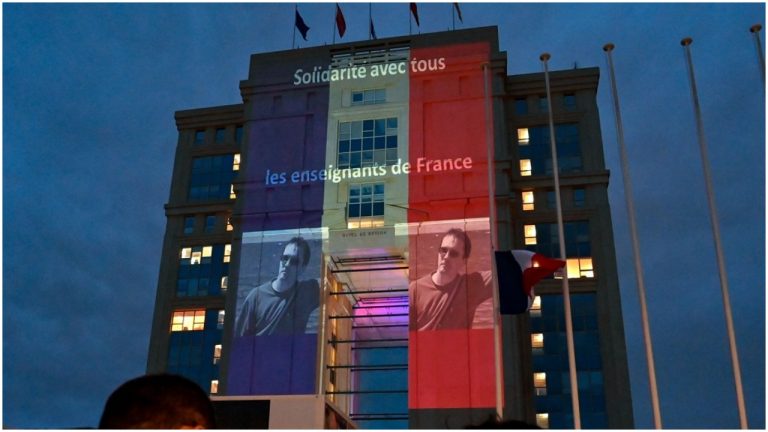
The people of France, defying threats to their life, on Wednesday assembled near a government building in Montpellier to condemn the killing of Samuel Paty. Amidst heavy security, the locals projected huge images of Charlie Hebdo cartoons and the images of Samuel Paty on a local government building as a symbolic tribute to the deceased teacher.
Charlie Hebdo cartoons, including one of Mohammed, projected onto Montpellier government building. pic.twitter.com/pnhU0EXTsc
Reportedly, the images were projected onto two town halls in the Occitanie region — Montpellier and Toulouse for over four hours on Wednesday evening. Carole Delga, the mayor said that the decision to project the image was to state “there must be no weakness in the face of the enemies of democracy, facing those who transform religion into a weapon of war… those who intend to destroy the Republic.”
Paty, a history teacher in the greater Paris area, was murdered by a Muslim immigrant terrorist on Friday after he had shown his students cartoons of the Prophet of Islam from Charlie Hebdo during a class debate on freedom of expression. A Muslim youth had stabbed a 47-year-old teacher in his throat while shouting “Allahu Akbar”.
French President pays his tribute
Earlier on Wednesday, French President Emmanuel Macron too paid his respects to the deceased teacher who was beheaded near Paris last week.
At the memorial service at The Sorbonne, French President Emmanuel Macron vowed that France ‘will not give up cartoons’. He also added that Paty was killed by ‘cowards’ for representing the secular, democratic values of the French Republic.
Taking to Twitter, Macron also shared an image of Paty to express his solidarity with the terror-victim.
The cartoons of Prophet Mohammed have been used by Islamic terrorists as a justification to carry out several attacks especially in Europe. In 2015, Islamic terrorist had attacked offices of Charlie Hebdo after the satirical newspaper had published cartoons that depicted Muhammad, which is strictly prohibited in Islam.
Offended by Charlie Hebdo’s actions, two Islamic terrorists had attacked the office of Hebdo in 2015 and had killed 12 people. The terrorists had stated that the attack was an act of revenge for depicting the Prophet Muhammad.
The attack on Paty was the latest attack over the Charlie Hebdo cartoons, who was beheaded for showing those cartoons to his students.
The Friday’s terror attack on Paris has now prompted a strong response from the French government, including banning of radical Islamic organisations that expressed support to the terrorist. The French government has taken steps to dissolve radical Islamist organisations in the country.
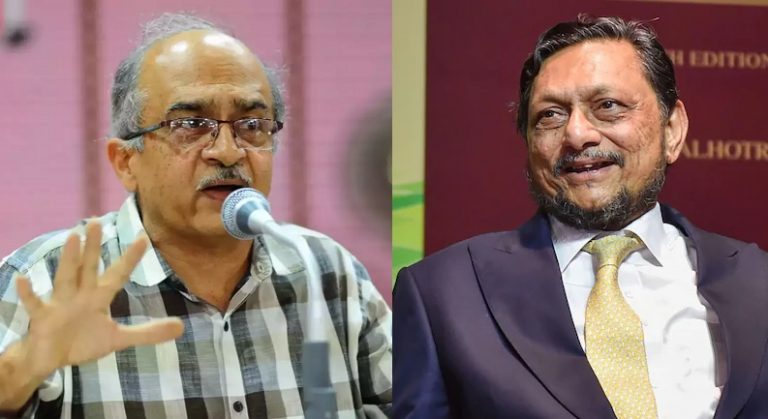
Just a couple of months after activist-lawyer Prashant Bhushan was convicted of contempt of court by the supreme court of India for his tweets, he has again posted a tweet that may invite fresh contempt charges against him. He has again targeted chief justice of India SA Bobde, accusing him of being partial towards the Shivraj Singh Chauhan govt in Madhya Pradesh. But like always, his accusations are based on lies.
On Wednesday, Prashan Bhushan posted a tweet the CJI has availed a special chopper provided by the Madhya Pradesh for a visit to Kanha National Park & then to his home town in Nagpur. Then he added that the CJI was visiting the state when an important case of disqualification of defecting MLAs of MP is pending before him. He said that survival of MP govt depends on this case, directly accusing the CJI of taking favours from the BJP govt in the state in return of a favourable judgement in that case.
Prashant Bhushan posted a copy of order by the state protocol officer of Madhya Pradesh to make necessary arrangements for the travel of the CJI by helicopter in the state from 17 October to 20 October. The order states that the CJI will be considered as a state guest.
The CJI avails a special chopper provided by the MP Govt (authorised by the CM) for a visit to Kanha National Park& then to his home town in Nagpur, while an important case of disqualification of defecting MLAs of MP is pending before him. Survival of MP govt depends on this case pic.twitter.com/XWkYVjHkvH
Apart from the obvious contempt of court in the tweet posted by Bhushan, it is also based on lies. He accused that MP govt has provided a special chopper to the CJI, and tried to paint this as a favour done to CJI Bobde. That accusation is completely baseless, because the CJI is one of the top VVIPs in the country, and he is eligible for travel arrangements made by states whenever he visits any state.
According to the protocol of govt of India, any visit, official or unofficial, by the President, Vice-President, Prime Minister, Chief Justice of India, Governors of other states and several other such VVIPs are considered as state visits. This means, whenever they visit the states, even on unofficial visits, their visits are considered as state visits and it is the responsibility of the respective state govts to arrange their travel and other logistics.
Therefore, by treating the CJI as a state guest, the Madhya Pradesh government is not giving any undue favour, they are just following the standard protocol. According to the state guest rules 2011 of Madhya Pradesh, Chief Justice of India is listed in the list-A of state guests, which means that the CJI will be provided security, accommodation, catering, transport etc facilities by the state govt as per the rules.
The allegation made by Prashant Bhushan that the CJI is visiting MP while important matters are pending before him is also baseless, because CJI Bobde is visiting his home state during holidays. According to the holiday calendar published by the Supreme Court of India, the court will remain closed from 19th October to 24th October due to Dussehra holidays. 17th was Saturday and 18th was Sunday, which means the CJI’s visit fell within weekends and official holidays, and no matter pending before the court is going to be affected by this visit.
Therefore, while the MP govt is providing transport facility to CJI Bobde as per existing norms and protocol, Prashan Bhushan needlessly linked the same with the MLA disqualification case to attack him again.
Siwas is a district in western Bihar connected to the UP border. Once, it was popular because of India’s first President, Dr. Rajendra Prasad, who was born in Jiradei, Siwan. His wisdom, role in the Independence movement, and post as the first President made the district a prominent place. However, today, Siwan is notoriously famous because of the crime, gang wars, muscle power, and dominance of criminals in politics.
It is a well-known fact that money and muscle power plays a vital role in Bihar elections. As the state elections are not too far, the impact of money and muscle power is becoming more evident in the state. As parties are distributing tickets, the Bahubalis are marking their presence along with their supporters. There are two notorious Bahubalis who are popular in the district and have become the centre of discussion. On one side, it is Mohammad Shahabuddin alias ‘Chote Sarkar’ of Siwan. On the other side, there is Ajay Singh, whose wife Kavita Singh defeated Shahabuddin’s wife in the Lok Sabha elections. Kavita is currently serving as an MP of Siwan.
Lalu Prasad’s ‘Jungle Raj’ and Shahabuddin’s status in the region
If someone writes the story of how Bihar was ruined and stayed backward, there will be a long chapter on the role of Lalu Prasad Yadav’s ‘Jungle Raj’. During his tenure, the fear of Shahabuddin was at the peak in the state. Shahabuddin, along with his henchmen, was considered to be above the law. They openly did whatever they liked, and no one ever dared to touch them. No one in the Siwan region ever dared to go against him.
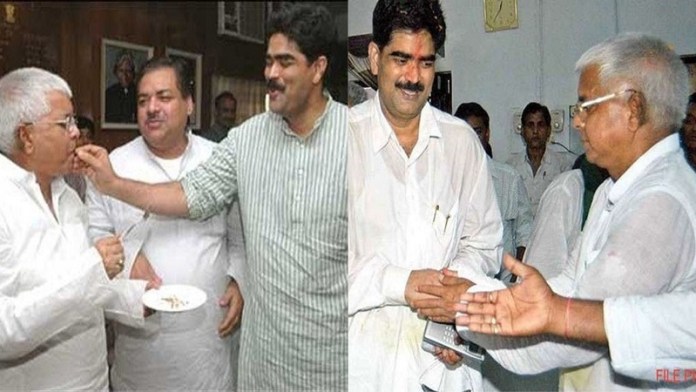
Shahabuddin was fearless because of the backing he got from Lalu Yadav, and in return, he made sure Lalu got votes in the elections. While for Shahabuddin Lalu Yadav was everything, Lalu considered Shahabuddin to be the foundation of his political career. During that time, kidnapping, extortion, and murder of businessmen were widespread. As Lalu provided full support and cover to Shahabuddin, he made life impossible not only for the residents of Siwan but Bihar as a whole. People used to shiver with fear on hearing his name.
In the 1980s, politics in Siwan was ruled by criminals. Shahabuddin was named in several crimes in the 1980s, after which he entered politics and became MLA twice and MP four times. That was when his name made headlines in every notable crime in Siwan, including the infamous acid attack and murder of Chandrashekhar. Shahabuddin, the ‘Chote Sarkar’ of Siwan, ruled every hospital, school, bank and office in the district.
First case against Shahabuddin in 1986 when he was 19
Shahabuddin has been accused of several crimes, including murder, kidnapping, extortion, pose possessing deadly weapons and rioting. His name started to appear in criminal cases at the age of 19. The case was registered at a police station in Siwan.
Before he joined politics, Shahabuddin was popular as Bahubali. As per the records, the FIR was registered at the Hussainganj police station in Siwan district in 1986. Because of his criminal background, people started to avoid taking his name out of fear. During the time he contested elections, no one dared to put up the flags of opposite contestants in the Siwan city.
His fear had gripped the region to a level where people started to avoid spending money on them. All members of the family would not get jobs. Traders stopped buying new vehicles. Showing any sign of prosperity meant that they had to pay extortion money in the form of ‘tax’ to Shahabuddin. If anyone refused to pay him, death was inevitable. People even started to put up his posters at their homes to show solidarity to him.
As time passed by, he became the most wanted criminal of Siwan. He has 56 cases more than his age registered against him. He has been convicted in six of these cases. Currently, he is facing life imprisonment for kidnapping and murder of Communist Party of India (Marxist–Leninist) Liberation party worker Chhotalal Gupta.
In 2003, he was arrested for the kidnapping of a CPI-ML party worker in 1999. However, he started living in Siwan District Hospital with an excuse of health issues. He prepared for 2004 elections from the hospital in which he managed to defeat the Janata Dal (United) candidate by more than three lakh votes.
After the election results came out, his supporters killed eight JDU party workers and beat many activists. They also attacked Omprakash Yadav, the JD(U) candidate, but he narrowly escaped, but many of his supporters were killed. After the incident, 34 cases were registered against Mohammad Shahabuddin in several police stations in Bihar.
Lal Yadav’s support and political debut
There is no shortage of criminals who joined politics in India. Shahabuddin also chose to become a politician. He first came into the limelight in the political arena when he became a member of the youth unit of Janata Dal under the patronage of Lalu Prasad Yadav. As soon as he joined a member of Janata Dal, his true colors started to reveal. In 1990 he got an assembly ticket and won.
His journey to Lok Sabha in 1996
In 1995, he again won the elections. Based on his growing strength, the party decided to give him a Lok Sabha ticket in 1996. He also won the election and became a Member of the Parliament. When Lalu Decided to form Rashtriya Janata Dal in 1997, Shahabuddin got a high position in the party. With his help, RJD increased its status and reached Bihar quickly. In return, Shahabuddin’s hold on the state became stronger.
The police force became a mute spectator
A report of the ‘People’s Union’ for Civil Liberties in the states in 2001 revealed that the RJD government was patronizing Shahabuddin. He was getting protection and support from the government during the legal proceedings. The report also suggested that despite of the criminal activities of Shahabuddin, police stood as a mute spectator. There was no action or FIR on him out of his fear.
Police officers got abused and slapped
Shahabuddin got so intoxicated with power that he started targeting the police officers. There were reports that he and his goons assaulted several police officers. In one such case, he even fired shots at police officers. In a recent case, Vikas Dubey killed eight police officers in Uttar Pradesh that shook the country but during Shahabuddin’s time, such cases were common. He had killed several police officers, and no actions were taken against him.
In March 2001, a police team led by SP BS Meera arrived at RJD local president Manoj Kumar Pappu with a warrant against him. Shahabuddin slapped the arresting officer Sanjeev Kumar. In that encounter, eight people were killed, including two police officers.
The incident shook the Bihar Police. They took immediate action and called the State Task Force and Uttar Pradesh Police for support. Their teams surrounded the village and house of Mohammad Shahabuddin and attacked him. Several rounds were fired from both sides resulting in many deaths, including police officers. Police vehicles were set on fire. However, after the encounter, Shahabuddin managed to escape and fled to Nepal.
It is believed that he regularly treated the police officers in a very derogatory manner that irked the department resulting in the said operation. However, Shahabuddin’s dominance in the state showed its color within a day, and all the senior officers in the district, including Meena, were transferred by the then-Rabri Devi government.
Though Shahabuddin was not arrested in operation, but the police revered a cache of weapons, including AK-47, from his house during the raid. Shahabuddin vowed to kill the SP as revenge and said that he would chase him even if he had to go to Rajasthan, SP’s home state.
Shot SP SK Singhal in 1996, sentenced to 10 years
Recently, IPS officer SK Singhal took charge of DGP Bihar after DGP Gupteshwar Pandey took Voluntary Retirement (CRS) from his post. He is the same IPS officer of 1998 rank who was attacked by Shahabuddin in Kathan 24 years ago. On the day of Lok Sabha elections in 1996, Shahabuddin fired shots on then-SP SK Singhal, who came to arrest him for creating menace at a polling booth. Shahabuddin himself fired several shots on Singhal, and he had to escape from the scene to save his life.
Singhal did not take the case lightly and used his position and law to teach a lesson to Shahabuddin, who was contesting the election to become a Union Minister at that time. As a result, he was sentenced to ten years in jail. He was also convicted in the Acid Attack case in which he was awarded life imprisonment. As of now, he is in jail since 2005.
DP Ojha gathered evidence against Shahabuddin in 2003
For a long time, Shahabuddin received political patronage from RJD President Lalu Yadav. However, in 2003, DP Ojha became DGP of the state, and he started to collect evidence against Shahabuddin. He reopened several cases against him.
Those cases were also reviewed that were handled by CID. A warrant was issued against Shahabuddin in the case of kidnapping and murder of activist Munna Chaudhary, after which he had to surrender in court. As soon as he surrendered, the state politics started to play its role, and seeing the matter getting out of hand; the state government removed DP Ojha from the post of DGP.
Shahabuddin’s relations with ISI and recovery of Pakistan-made weapons from his home
DP Ojha, then-DGP of Bihar, in a 100-page report about Shahabuddin, established his link to ISI. The report became a hot topic of discussion across the country. In April 2005, Siwan’s then-SP Ratan Sanjay and DM CK Anil raided Shahabuddin’s house in Pratappur. They recovered several Pakistan-made weapons, including AK-47, which were used only in the military.
They also recovered night vision goggles and laser-guided guns. The weapons had stamps of Pakistan Ordinance Factory. After the incident, the tension prevailed in the district for several months. During that period, the task force remained active to control the situation. Shahabuddin was well connected to not only Kashmir terrorist organizations but also with ISI and Dawood Ibrahim.
Accused of killing JNU student union president
In March 1997, Chandrasekhar, then-president of Jawaharlal Nehru University Students Union, was holding a ‘Nukkad Sabha’ in Siwan. He was shot dead, and a close aide of Shahabuddin, Rustam Mian, was convicted for the murder.
The court of Shahabuddin
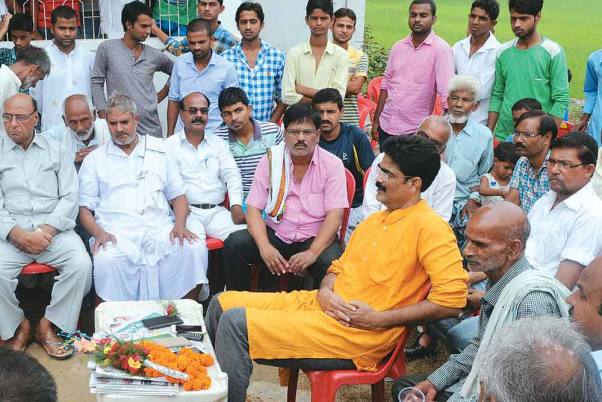
Shahabuddin’s influence on society was increasing quickly. With the rise in political protection, his influence in the Siwan region became prominently visible. His court was one of the highlights during the period when he was at his peak. He was running a parallel government in Siwan district until the early 2000s.
Image: Outlook India
He used to give decisions, just like a court. Due to his fear, people were forced to accept whatever he says. From settlement in land dispute to the fees of doctors was decided by Shahabuddin. In 2004, just eight months before the Lok Sabha elections, he was arrested in the case of 1999 kidnapping and alleged murder of a CPI-ML worker.
The one who got beaten up by Shahabuddin publicly defeated him twice
Shahabuddin was sentenced to life imprisonment in 2007 for kidnapping and murder. After he got convicted in a criminal case, the Election Commission banned him from contesting elections. Thus, he could not contest the 2009 Lok Sabha elections. RJD gave a ticket to his wife, Heena Shahab, in 2009 and 2014. However, she got defeated by independent candidate Om Prakash Yadav by 60,000 votes.
Later in 2014, Om Prakash Yadav contested elections from the BJP ticket and again defeated Heena by more than one lakh voted. This was the same Om Prakash who was once beaten publicly by Shahabuddin. Heena Shahab is currently a national executive member of RJD.
Killed two brothers with acid
In 2004, two brothers were killed by acid bath in Pratappur village. They were sons of Chanda Babu. The incident revealed the nexus between the criminals and police as the police asked the family of Chanda Babu to go somewhere else rather than taking action against the killers.
Three sons of the same family were murdered for 10-12 feet piece of land. In the first week of August 2004, some anti-social elements tried to capture a shop in an under-construction house that belonged to Chanda Babu, resident of Gaushala Road, Siwan. During that time, two brothers were brutally murdered by pouring acid on them.
The third brother, who was an eyewitness of the murder of two brothers, was killed before he could register his statement in the court. The case shook the nation, and the role of the police was heavily criticized. The case went to a special court, and Shahabuddin was awarded life imprisonment. It was only after the formation of a government under Nitish Kumar that Shahabuddin was jailed.
The Patna High Court also upheld the life sentence in the murder of two brothers. The judgment was challenged in the Supreme Court, where the decision of the High Court was upheld. This is not the only case that made him popular as a notorious criminal. There were several cases registered against him. However, many people did not file any complaint out of fear.
Murder of a journalist, murder of a communist leader, slapping a police officer, firing on the police force, hoarding Pakistani weapons at home, threatening jailer and judge, money extortion, kidnapping and several other cases are the ‘gems’ of his long career as a criminal. He used to have his courts and political patronization made him one of the most dangerous criminals in Bihar.
There are stories of his posh lifestyle in jail that are also popular. It was because of Nitish Kumar that he was sentenced to jail. However, when Nitish formed a government with Lalu in 2015, he was granted bail. After coming out from jail in 2016, a convoy of 1300 vehicles accompanied him to Siwan.
He openly called Lalu Yadav as his leader and said that Nitish is a ‘leader of circumstances’. His wife continues to contest the election after he went to jail. Shahabuddin will be one of the major issues in the upcoming elections.
How close Shahabuddin is to Lalu Yadav becomes evident by the fact that RJD made his wife Heena Shahab their candidate in 2019 elections, too though she never won any election. During a meeting, Lalu Yadav admitted that he had a telephonic conversation with him during his stay in Siwan.
Punishment in these 8 cases
Sentenced to life imprisonment in 2007 in Chhotalal kidnapping case
Sentenced to 10 years in 2008 for possessing foreign pistols
In 1996 SP SK Singhal was shot dead, sentenced to 10 years
Male office was attacked in 1998, sentenced to two years
Sentenced to 3 years in the kidnapping case of government servant Rajnarayan in 2011
Stolen bike recovered, sentenced to 3 years
Got one year sentence for threatening a police officer at Jiradei station
Life sentence for Siwan acid attack
Even the Nitish Kumar administration is not free of Bahubalis. Several leaders of Janata Dal (United) were Bahubalis, but they did not get political protection to that extent. Nitish always allowed the law to work at its own pace and refused to interfere in any investigation involving his party MLAs. As a result, several high profile Bahubali leaders like Sunil Pandey and Anant Singh left his party.
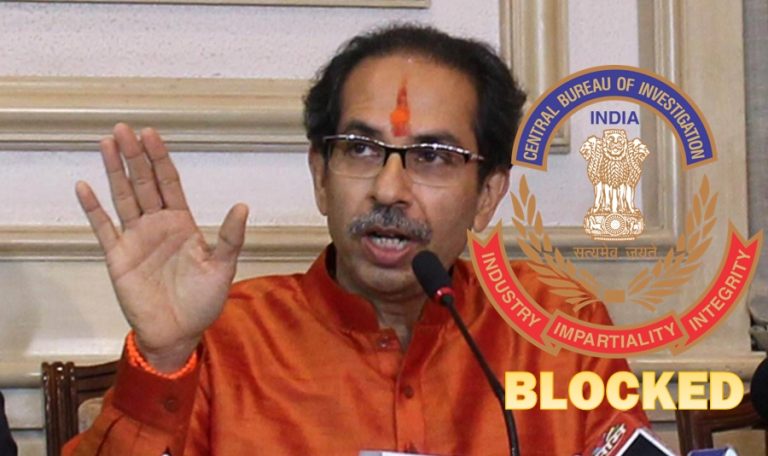
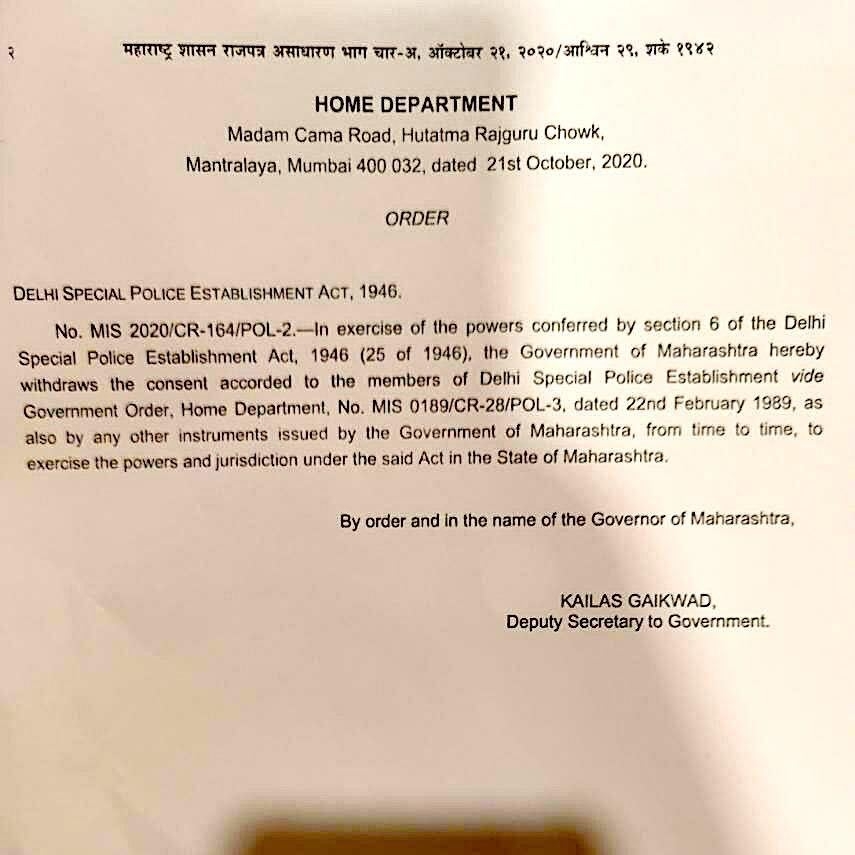
At a time when the Central Bureau of Investigation (CBI) is probing several high-profile cases in Maharashtra, the Uddhav Thackeray govt in the state has taken a decision to block the central agency to investigate any case in the state.
The Maharashtra government on Wednesday passed an order withdrawing its consent for the CBI to probe cases in the state. As per law, the central investigative agency needs the permission of states if it wants to probe any case in the states. To avoid requiring permission for each case, states have issued blanket consent for such probes by CBI. Now, the Uddhav Thackeray has withdrawn this case. This means, now CBI will have to seek the permission of the state govt before initiating any investigation in any case.
The move came a day after CBI had registered a case in the TRP scam case, where the Mumbai police is trying to implicate Republic TV and shield India Today. In the high-profile fight between Mumbai police commissioner Param Bir Singh and Republic Editor-in-Chief Arnab Goswami, the police officer had said that Republic was one of the accused in the case of bribing viewers with BARC Bar-o-meters installed to watch the channel, to increase viewership data. But soon Republic TV had accessed the FIR filed in the case, and the complaint based on which the FIR was registered, and both the documents had revealed that it was India Today which was named in them, not Republic TV as accused by the commissioner.
CBI had filed the case in TRP case after the UP government sought a CBI inquiry into the matter since it is a matter that spans across states. This came after the lawyer of Mumbai Police told Bombay High Court that Republic TV was not named in the FIR, contradicting the police version.
CBI is also probing the Sushant Singh Rajput death case, after the Supreme Court of India handed over the caser to CBI on the recommendation of Bihar police. There are demands to hand over other cases, like the Palghar sadhu lynching case, and the Disha Salian death case, to CBI, alleging cover-up by Maharashtra police.
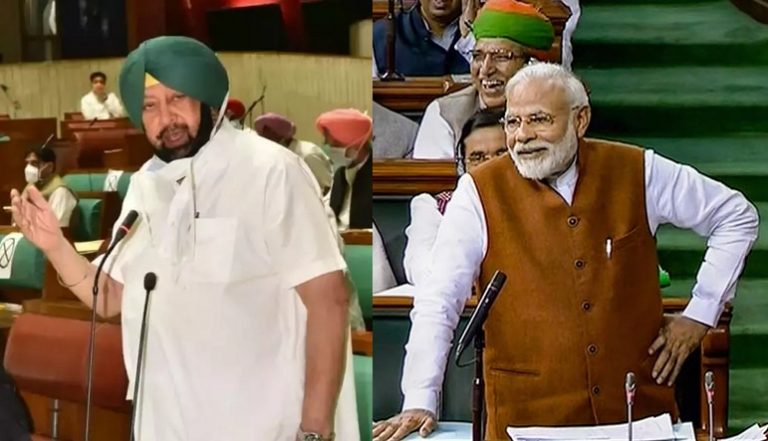
The Punjab Government has recently passed 4 laws related to agriculture, namely the Essential Commodities Bill, Farmer Produce Trade and Commerce Bill, Farmers Agreement on Price Assurance and Farm Services Bill, and the Code of Civil Procedure Bill. This article explains provisions of the Essential Commodities (EC) Bill passed by Punjab that has a blatant disregard for Parliamentary norms and how it is meant to fool gullible farmers.
Problems with statement of Objects and Reasons (SOR) of the EC Bill of Punjab:
The SOR of the EC Bill of Punjab itself has several shortcomings. Some of them are listed below:
Powers of state govt
On a plain reading of the Bill it seems that the CM Amrinder Singh has not read the provisions of the Union Government’s EC Act. The Central EC Act does not affect or hinder action taken by any State Government against hoarding & black marketing of agricultural produce which is mentioned in SOR of EC Bill of Punjab. It may be mentioned that the states derive powers delegated to them vide order dated 9.6.1978 which have not been withdrawn at present. Thus, they continue to be in force. In fact, to the contrary the Central EC Act will have a positive impact on the livelihood of farmers, as it seeks to facilitate investment in the agricultural sector.
Contravention of the Constitution of India
The SOR of EC Bill of Punjab mentions that ‘‘production, supply and distribution of goods’ is also a state subject under entry 27 of List II read with, Entry 33 of List III of Seventh Schedule of The Constitution of India.” But this is an incorrect claim made by the Punjab govt, because the Constitution of India clearly states in entry 27 of list II- ‘Production, supply and distribution of goods subject to the provisions of entry 33 of List III.’ Thus a plain reading of the Constitution makes it clear that it lies in the domain of Concurrent List and the central law will have an overriding effect on items under the State List. It may be noted that list II pertains to the state list, while the list III includes subjects in the concurrent list. Subjects in the union list are mentioned under list I.
The entry 33 of the list III, which has been used by the union govt to pass the recent farm laws, says:
33. Trade and commerce in, and the production, supply and distribution of— (a) the products of any industry where the control of such industry by the Union is declared by Parliament by law to be expedient in the public interest, and imported goods of the same kind as such products; (b) foodstuffs, including edible oilseeds and oils; (c) cattle fodder, including oilcakes and other concentrates; (d) raw cotton, whether ginned or unginned, and cotton seed; and (e) raw jute. This makes it clear that trade, production, supply and distribution of agricultural products come under concurrent list, and therefore, central laws take precedence over state laws in this matter.
This makes it clear that trade, production, supply and distribution of agricultural products come under concurrent list, and therefore, central laws take precedence over state laws in this matter.
Impinges upon the role of the Centre
It is mentioned in the SOR of the Punjab act that the onus lies upon the State Government to protect consumers from hoarding and black-marketing of agricultural produce including vegetables and fruits etc. It may be pointed out that the Central Essential Commodities Act takes care of all sections of the society by ensuring adequate availability of Essential Commodities at fair prices. Likewise, states can continue to submit their proposals under the Essential Commodities Act for the concurrence of the Central Government.
Problems with Specific Provisions of the Act
Tries to add a proviso to Section 3(1A) EC Act which brings back opacity and discretion in decision making
By adding a provision to Section 3(1A) EC Act Punjab Vidhan Sabha has passed a Bill not only in contravention of Central law but seeks to bring back ambiguity and opacity. The law enacted by the Parliament provides that the stock limits may be imposed if the prices breach a predefined trigger (50% for non-perishable commodities and 100% for perishable commodities). In the amendment proposed by the Punjab Assembly, price rise has not been defined and it would add to the uncertainties which the Parliament sought to remove while amending the EC Act. Under the EC Act of Punjab there are no stock limits and will continue with discretionary decision making rather than bring in transparency and accountability.
Section 3 tries to amend the EC Act unilaterally
Despite knowing fully well that the Act falls in the Concurrent list, the State Government led by Capt. Amrinder Singh has tried to unilaterally amend a Central Act. This goes against all parliamentary norms and procedures and shows the Congress Party’s Knowledge and respect for our Constitution.
Most provisions redundant or less than the value of paper they are written on
Many provisions of the EC Bill of Punjab are redundant. Like under Section 5, as per the constitutional mechanism, a Central Act or a State Government cannot restrict an Act of Parliament but this is exactly what the EC Bill of Punjab tries to do. If one goes for legal opinion it may be seen that the value of the whole Bill is less than the value of paper it is written on and is merely a political stunt.
Breakdown of federal structure & larger conspiracy in sight
With two more states namely Chhattisgarh & Rajasthan in the fray for conducting special assembly sessions possibly around the same theme, it seems that there is a deeper conspiracy by congress ruled state Governments to undermine the federal structure of India. This is not only in contravention of the Constitution but also inimical to the interests of all Indians including all farmers. On the top of such moves, the CM of Punjab has met the Governor and handed him a letter stating that ‘the central Acts have been rejected for being against the interests of farmers, landless workers’. Nothing can be further from the truth.
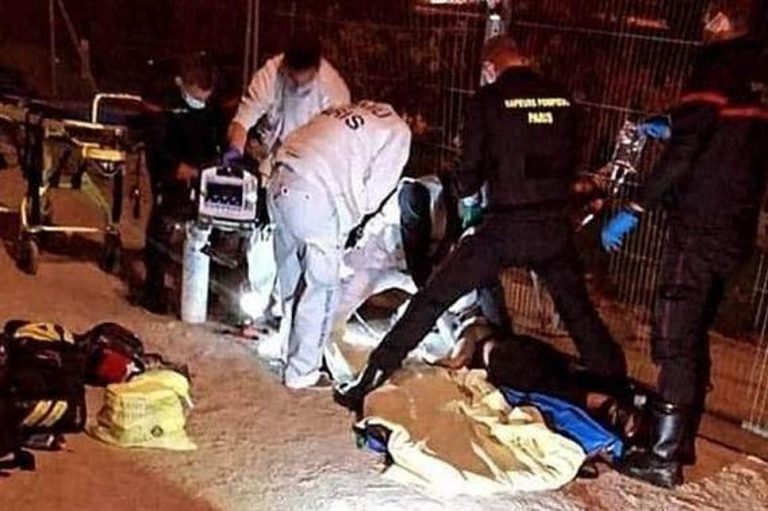
In a suspected racist attack amidst the outrage over the beheading of the Paris teacher, two Muslim women were stabbed repeatedly under the Eiffel Tower on Sunday night by two white women who called them “dirty Arabs”.
The French police have arrested the suspects, who are described as being white women of “European descent” and now face attempted murder charges, according to city prosecutors. The police claim that an argument about dogs allegedly devolved into violence and racist insults.
Two women of European appearance attacked Muslim women after they asked them to leash their dogs
According to one of the victims, the attackers had taken out a knife after refusing to leash her dogs and attacked her on the skull, arms and ribs. The victims have been identified as French women from Algerian background named as Kenza and Amel.
“We were out for a walk. At the ground level of Eiffel Tower, there is a small dark park. We were strolling in the park when two dogs came towards us,” Kenza told Liberation newspaper while adding, ” the children got scared of the dogs, prompting my cousin, Amel, to ask the two women to leash their dogs.”
After they refused, one of them slashed her knife at Kenza, injuring her and then attacked her cousin.
As per reports, one of the victims was stabbed six times and endured a punctured lung. The other victim had her hand severely injured and required surgery.
Witnesses of the macabre incident claimed that they heard shouts of “dirty Arabs” and “go back to your own country” by the assailants. Two local shop owners reportedly intervened and held one of the attackers down until the police arrived at the spot. The second suspect was arrested later.
The gruesome beheading of Paris teacher by an Islamist terrorist
The Sunday’s attack came days after the murder of Samuel Paty, who was beheaded by an Islamist terrorist in the Paris suburb of Conflans-Sainte-Honorine for showcasing cartoons of Prophet Mohammed to his students at College du Bois d’Aulne. Samuel Paty, a history teacher, showed the cartoons to his students on October 9 during a civics class on freedom of speech.
The gruesome attack was executed by a Muslim teenager of Russian origin, Abdoullakh Abouyezidovitch A. He stabbed the 47-year-old teacher in his throat, right outside the school, while shouting “Allahu Akbar”. He was later shot dead during an encounter with the police. French President Emanuel Macron had condemned the barbaric attack and had dubbed it as ‘Islamist terrorist attack.’
Over the past few months, there have been a great many numbers of gold smuggling cases reported by the customs officials from various parts of the country. The cases have brought to fore the rampancy of gold smuggling and novel methods that the smugglers are employing to hide gold on them, in a bid to avoid detection at the airport.
In a large number of the smuggling cases that are caught by the customs officials, the illicit gold is hidden in the rectum of the passengers travelling from abroad.
Increased number of cases where gold is hidden in the rectum
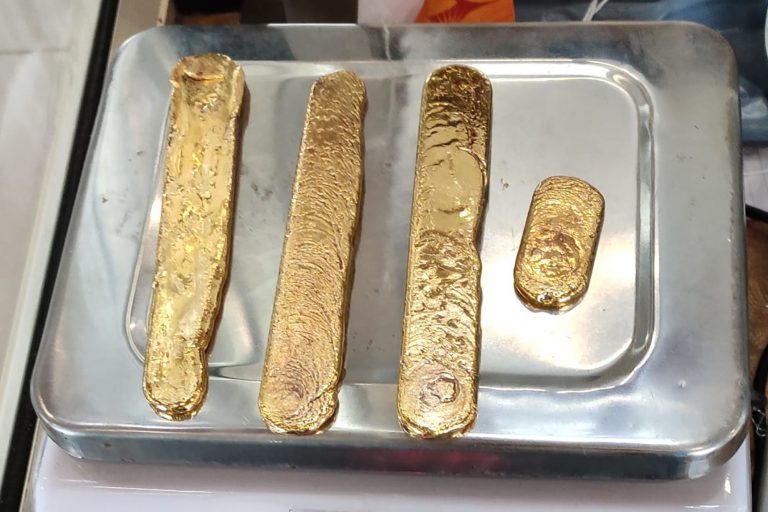
Recently, Customs officials in Chennai recovered 864 grams of gold paste, valued at Rs 45.4 lakhs, from four passengers travelling from Dubai. The passengers had hidden the gold paste in the form of bundles in their rectum.
Tamil Nadu: Customs officials recovered 864 grams of gold paste, valued at Rs 45.4 lakhs, from four passengers arriving from Dubai at Chennai Airport last night. The passengers had concealed the gold paste in the form of bundles, in their rectum. pic.twitter.com/1do5eAY0zm
Similarly, the Customs team of Calicut had seized 481 gms of compound gold from a passenger arrived from Dubai. In this case, too, the compound gold was hidden in the rectum of the passenger in four capsule-shaped objects.
CPD Calicut team seized 481gms of compound gold from a passenger arrived from Dubai by Air India Express flight IX1346. The compound gold was concealed in the rectum of the passenger in four capsule shaped objects.@cbic_india@cgstcustvmpic.twitter.com/Se6Wq7yvKo
— Commissionerate of Customs (Preventive), Cochin (@ccphqrskochi) October 21, 2020
A few days back, the Air Intelligence Unit of Kannur airport recovered 972 gms of compound gold concealed in his rectum.
AIU Kannur seized gold in compound form (972 gm extracted) from a passenger who arrived from Dubai by flight G8 4013. The gold was concealed in the rectum.@cbic_india@cgstcustvmpic.twitter.com/jYJsxxslDm
— Commissionerate of Customs (Preventive), Cochin (@ccphqrskochi) October 13, 2020
Earlier this month, the CPD Calicut team seized 660 gms of compound gold from a passenger who had arrived from Sharjah. The passenger had hidden the compound gold inside the rectum.
CPD Calicut seized 660gm gold in compund form from a passenger who arrived from Sharjah by flight G9 454. The gold was concealed inside the rectum. The pax has been arrested and further investigation is in progress.@cbic_india @cgstcustvmpic.twitter.com/uySAEx54sh
— Commissionerate of Customs (Preventive), Cochin (@ccphqrskochi) October 7, 2020
The increased number of incidents where the customs officials have found passengers hiding the smuggled gold inside the rectum has piqued the curiosity of some social media users, who have wondered about the methods employed by the officers to retrieve the gold.
How is gold concealed inside the rectum removed by Customs Officials?
Responding to the curiosity surrounding the ways used by customs officials to remove gold hidden inside the rectum, one of the Twitter users, Dr Kiran Kumar Karlapu, who goes by Twitter handle @scarysouthpaw and claims to be a “Customs Guy” asserted that either the passengers voluntarily eject the packets carrying concealed gold in the toilets after much convincing by the officers or the customs officials obtain permission from the court and get the suspected passengers x-rayed before government-appointed doctor extract the hidden gold.
Sometimes, the passenger is made to eat a lot of bananas and drink a lot of coffee so the “pressure is built up”??
The Twitter user also added that sometimes the passenger is made to eat a lot of bananas and drink lots of coffee to build the “pressure” for him to eject the hidden gold.
Funny explanations that passengers provide after being caught with gold in their rectum
Dr Karlapu also shared some funny explanations that the passengers provided after getting caught with illicit gold in their rectum. He asserted that one of the passengers caught told him that he was sleeping in the night when someone unknown put the gold in his backside.
The funniest explanations i have heard during questioning smugglers with gold in the rectum
1. “Sir. I was sleeping in the night. I dont know who put the gold ins my backside”
2. “Sir. Friend requested a lot. So i could not say no to him.”
Self-proclaimed ‘journalist’ Prashant Kanojia has been granted bail by the Allahabad High Court on Wednesday. Kanojia was arrested by the Uttar Pradesh for posting fake and morphed images on social media platforms.
Jagisha Arora, who is the wife of Kanojia, took to Twitter to say that he has been granted bail by the High Court. “My faith in the judiciary and Babasaheb’s constitution is restored. I want to thank all the people who joined in this fight,” she tweeted.
प्रशांत को हाई कोर्ट से जमानत मिल गई है. मेरा न्यायपालिका और बाबा साहेब के संविधान पर विश्वास रंग लाया. मैं सभी लोगों का शुक्रिया अदा करना चाहती हूं जो मेरी लड़ाई में मेरे साथी बने. सबको शुक्रिया.@PJkanojia लव यू pic.twitter.com/pDAj9vVnQC
The Hazratganj police had arrested habitual fake news peddler Prashant Kanojia from his residence after he had morphed an image and had shared it on his social media post in an attempt to spread fake news and incite hatred among people.
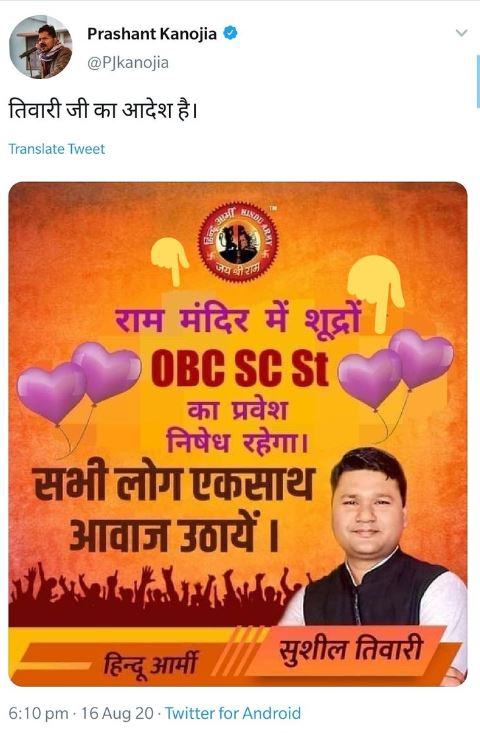
The Hazratganj police arrested far-left troll Kanojia based on the complaint by a person Dinesh Kumar Shukla on August 17, 2020, for the morphed post that was posted by Prashant Kanojia on Twitter on August 16.
The controversial troll, who masquerades as a ‘journalist’, had posted a morphed image on Twitter to insinuate that the ST/SC and backward class people will not be allowed inside the Ram Mandir.
Morphed image shared by Kanojia, courtesy: @Lala_The_Don via Twitter
Kanojia was booked under Section-154 of the CrPC, 1973 and IPC sections 153-A (Promoting enmity between different groups on grounds of religion, race, place of birth, residence, language, etc., and doing acts prejudicial to maintenance of harmony), 153-B (wantonly giving provocation with intent to cause riot), 420 (cheating), 465 (Punishment for forgery), 468 (Forgery for purpose of cheating), 500 (Punishment for defamation), 505(1)(b) (likely to cause, fear or alarm to the public), 505(2) (offence committed in any place of worship or in any assembly engaged in the performance of religious worship) and 66 (imposed for non-payment of fine).
However, this is not the first time that the far-left ‘journalist’ has been arrested. Last year, Kanojia was arrested by the Uttar Pradesh government for posting derogatory tweets about Hindu Gods and fake allegations on UP CM Yogi Adityanath.
The accused Prashant Kanoja known in social media for habitually spreading fake news, rabid anti-Hindu hate especially against Dalits by making atrocious statements. Prashant Kanoja has a history of making vile comments against Dalits and Hindu saints. He had even referred to Dalits as ‘animals with no brains’ in the past.