Home Blog Page 4984

NCPCR directive on Child Care Institutions – A welcome decision

The National Commission for Protection of Child Rights (NCPCR), a statutory body that functions under the Union Women & Child Development, Government of India, has recently sent a directive to the District authorities in the 8 states that hold 72% of the minors in child care institutions. This directive has asked for an action plan for the restitution of these children to their homes.

This is the culmination of a process that began in May 2017, when the Union Ministry realized that the engagement of the child care institutions (CCIs) in managing vulnerable children has been less than perfect. There was no clear data in mapping these CCIs to locations, funding sources and management or an assessment of standards in these institutions. A study was commissioned and a Committee put in charge of this study submitted their report in September 2018.

This study, in turn, was an effect of The Juvenile Justice (Care And Protection of Children) Act, 2015, often simply referred to as the Juvenile Justice Act.

In this article, we will look at

  • The principles and regulations laid out in the Juvenile Justice Act
  • The findings of the Committee and the Mapping Exercise
  • The implications of the NCPCR directive
  • Possible ways forward for restitution of children and ways to monitor their welfare better.

Juvenile Justice Act – A Short Overview

The Act focuses on the welfare of two categories of minors

  1. Children in Need of Care and Protection – children that have lost parents, been adopted, have been abused, runaways, with special needs and so on.
  2. Children in Conflict with Law – A category of minors formerly known as juvenile deliquents, or otherwise minors that are involved in infarctions of law.

The nature of regulations is very different in these two categories, since CNCP needs protection while CCL needs protection as well as reform in order to function harmoniously in society.

While setting forth principles for how children of both categories are to be treated, the Act also includes a very important principle:

“Principle of institutionalisation as a measure of last resort: A child shall be placed in institutional care as a step of last resort after making a reasonable inquiry.”

The Act also defines the roles for different bodies and roles

  1. A Child Welfare Committee – to be constituted by the State Government for each district in the State. This will work in coordination with the District Child Protection Unit
  2. Childline Services – A quasi-Government service to keep track of children at risk.

The situation with respect to a CNCP child is to be handled thus:

  • The CWC is to satisfy itself that the child in question is indeed in need of care and protection
  • Explore means of restitution of the child to natural parents, a guardian or other family members.
  • If no family or guardians can be traced, or if placing the child with these individuals may not be in the best interest of the child, i.e., where parents, family members of guardian is found to be of unsound mental ability, in need of care themselves, found to have criminal backgrounds, has a history of substance abuse and/or addictions or have found to have abused the child or other children in the past, then
    • Place the child in an institution (Childrens’ home/Fit Facility/Specialized Adoption Agency) so that the child can be put up for adoption.
    • Place the child with designated individuals – Fit Person – for long term care. Such Fit Persons are identified by the State Child Protection Board or District Child Welfare Committee based on credentials.
    • Place the child in foster care – these are families who have come forward to take care of children other than their own, and who are supported by payment for their support.
  • In case the family is traced, but found physically and financially incapable of supporting the child, place the child under a sponsorship program – this can be a Government funded program or a privately funded program that provides a payment to the parent(s) or extended family of the child to supplement their income.
  • Place the child for an extended period in an institution only if the child is found to require medical attention, psychiatric and psychological support such as need-based counselling, occupational therapy and behaviour modification therapy.

It is quite clear from this reading of the Act that the primary purpose of the Act is to ensure that children grow up in a family home environment, in individual care, and are to be placed in institutional care only as a temporary measure or if they have a physiological or psychological condition that warrants it.

The Act itself is available for reading at the Ministry’s website.

Report of Committee and National Mapping Exercise

The Committee found 9589 Homes in all, of which the 66% are Children Homes. 91% of all Children Homes were being run by NGOs. Further, of the 336 Special Adoption Agencies, 80% were run by NGOs. Between Tamil Nadu (1647), Maharashtra (1284) and Kerala (1242), these three States account for 43.5% of all homes. On the other hand, there are States and Union Territories without a single Observation Home or a Special Adoption Agency, which leaves no means of placing children in a family environment.

In these Homes, the following is the break up of children that are resident

  • 7422 children in conflict with law
  • 370227 Children in Need of Care and Protection of whom
    • 5,931 orphan, abandoned, surrendered children below the age of 0-6 years – these children can be prioritized for adoption
    • 50267 orphan, abandoned and surrendered children in the age-group of 7-18 years – these children are beyond the age of adoption and must be placed in foster care.
    • 1575 victims of child abuse and 189 victims of child pornography – these children need specialized care top help them recover from physiological and psychological difficulties.
  • This leaves a total of more than 3 lakh children who are children from single parent homes, runaways and so on. We can safely assume that a vast majority of these children need restitution to the homes of parents and guardians.

While these numbers show a gross picture, the Committee has also engaged in a wide survey of conditions on the ground. Their findings have shown that many of these Homes suffer form a serious lack of security, sufficient means of protecting children, educational and recreational facilities. The Committee’s Report also paints a picture of very poor financial reporting and auditing standards. Possibilities of misconduct and financial misappropriation on the part of the Home management is very high. For instance, it is quite possible that a Home receives funding from the Government, while resorting to domestic CSR and foreign FCRA funds as well.

While analysing the Homes on record, the Committee also has shared this disturbing situation where many of the Homes are not even registered under the Juvenile Justice Act, despite the Act having been in force for 3 years, at the time of submission of the report.
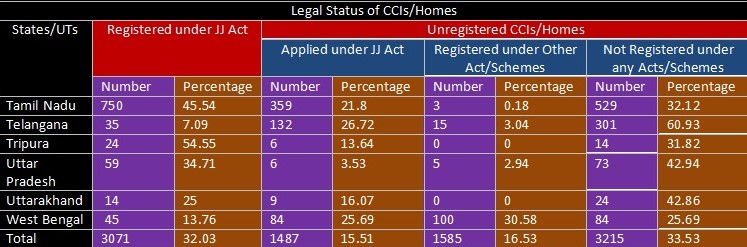
When we look at the number of children, Tamil Nadu shows the most cause for concern among all States and Union Territories, with 87866 CCL and CCNP children in 1647 Homes. This gives an occupancy rate of roughly 50 children per Home. Across India, the average is 39 children accommodated per Home.

In 2018, Kerala’s Homes announced their inability to comply with norms. In February 2019, 597 Kerala NGOs went to court to try and block the new regulation to register themselves under the Juvenile Justice Act and to subject themselves to audit. In 2020, a scam was discovered recently in a State Government audit. 307 Homes received 12.53 crores from the State Government, claiming to have as many as 16720 children, but in reality were housing only 1333 children.

The highest number was in Malappuram district, which received funds for 55 Homes, claiming to house 6296 children, but in reality only had 133 children in the homes. It is now obvious what the reasons for this reluctance were. More than 1.2 lakh children are in Homes because they are from single-parent homes whose domestic circumstances makes them unable to provide safety and opportunities at home.

Another 1.8 lakh children are children whose parents or guardians are unfit or incapacitated to provide for them. According to a 2005 NHRC Report on Missing Children, 44,000 children run away from home every year, of whom 11000 remained untraced. 3800 children were found to be missing/runaway children resident in Children Homes in the survey. These three categories are children awaiting restitution to a foster home or to be re-united with their parents under sponsorship.

Overall, 3173 children in Homes have been rescued from Trafficking for domestic work and commercial sex work. More than 1 lakh children were found to have been living in Children Homes for more than a year, of whom nearly 60000 were staying for 3 years or more. This indicates failure in the Homes as well as Child Care authorities in identifying and reuniting them with their parents or in providing foster care.

These are only some facts which the author has picked from the exhaustive report. But the picture emerges in which children that must be placed in foster homes or re-united with their parents for a sponsorship, spend long periods of time in Childrens Homes. The highest number of Children’s Homes are in the States of Tamil Nadu, Kerala, Maharashtra. These are states where family sizes have reduced drastically in the last few decades along with increasing prosperity and availability of State funded education and social services.

Naturally, we would expect the need for such Homes to reduce. In order not to lose Government, CSR and foreign funds, these institutions have, on occasion, engaged in trafficking of children from lesser developed States, such as Arunachal Pradesh in this case. States such as Odisha have engaged in a special operation, Operation Muskan, to trace children who had been thus trafficked and placed in CCIs in Kerala. Kerala’s State Government authorities have traced out and repatriated 500 children, majority from Jharkand, Assam, Bihar and other States, who have been trafficked thus.

The modus operandi was made obvious in this case from Tamil Nadu. Bihari children studying at a Veda Pathashala in Srirangam were investigated by Childline authorities. They also gave the impression in the press that these children were being trafficked. We investigated through private sources with the Pathashala in question. These children were returning home for the holidays.

Most of the parents of these children could not afford to travel to Chennai and hence sent a few representatives to Chennai. The others collected their wards at Patna Railway Station. Upon their arrival at Patna, Childline Patna subsequently confirmed with the people who had come to Patna station to take charge of their wards and sent word to Childline Chennai Central.

Conclusions

World over, it is a common belief that children placed in child care institutions are much more vulnerable to various forms of physical and psychological troubles. However, the situation in India is that these child care homes are a source of income from individual donors, CSR funds from corporates and foreign aid from large institutional donors abroad.

Vested interests are using CCIs as a means of earning money and to gain control of large numbers of the young. The action taken by the NCPCR is a welcome step. We welcome this move and would insist that the directive be followed up through rigorous monitoring until State Governments complete the restitution of these children.

The article has been co-authored by expert on FCRA and foreign funded NGOs @by2kaafi.
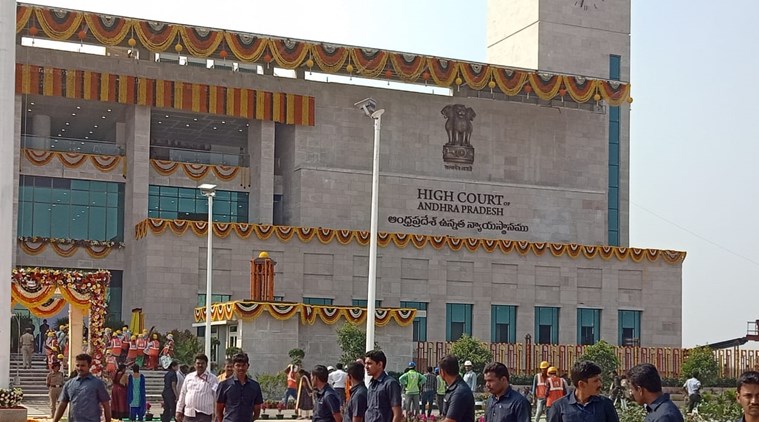
Andhra Pradesh: High Court fumes over derogatory social media posts against judiciary, verbal slandering by YSRCP leaders

0

During the hearing of a petition filed by the High Court in-charge registrar, the Andhra Pradesh High Court expressed displeasure over the Crime Investigation Department (CID) failing to act on the cases of negative social media posts about the High Court judges.

Condemning the social media posts targeting the judiciary, a Bench of Justice Rakesh Kumar and J Uma Devi said that the court would look into the possibility of a larger conspiracy behind such posts against the judiciary in the state, reported the New Indian Express.

The court said that the attempts to lower the dignity of the judiciary which is one of the three pillars of democracy and thus projecting it as redundant might lead to internal strife. It added that the court will not be a mute spectator to the social media posts destroying the reputation of the judiciary. The court, without mincing words, went on to say that the people who do not have faith in the judiciary can go on to Parliament and seek the abolishment of the Andhra Pradesh High Court.

Giving a warning, the court said that it would be compelled to use its powers under the Constitution if there was no rule of law in the State. The court said that if it did not take the matter seriously, individuals might take law into their hands. The High Court requested social media platforms not to allow such posts. Senior Advocates Harish Salve, Sajan Poovayya and others representing social media platforms promised their cooperation in protecting the dignity of the courts.

The court made the above-mentioned remarks after an MP Vijayasai Reddy of the YSRC party made certain questionable remarks against the Andhra Pradesh judiciary. YSRCP leaders have been launching verbal attacks openly against the High Court in recent times. YSRCP MP Vijaysai Reddy had stated in Rajya Sabha, “The AP judiciary is not impartial and it has to be stopped. It is unfortunate that courts are hindering the investigation into scams. As lawmakers, we have the right to raise the issue in Parliament and speak about the functioning of the judiciary in AP”.

The YSRCP leaders have been criticising the HC after its request for a CBI probe into the ‘Amaravati scam’ was rejected by the High Court.

Uttar Pradesh: Hindu woman shot dead by her husband, accused had married her falsely pretending to be ‘Rajkumar’

The untimely death of Neha, the young Hindu girl from Badaun district in Uttar Pradesh, who was shot dead by her husband Asif on September 25 (Friday), has left her family reeling in shock. Mourning the death of his younger sister, one of Neha’s brother said in an angry tone: “Neha was dead for me the day she went against our wishes to marry that boy… see what he did, he killed her”.

Neha’s distressed family in Badaun refuses to speak to the media

A Bajrang Dal activist who met the deceased’s brother told OpIndia that a strange sense of angst, as well as helplessness, has encompassed Neha’s family. Vivek Mishra, the activist told us that Neha’s brother, who evidently looked deeply anguished, refuses to speak to the media or give any statement saying: “I had broken all ties with her, I don’t wish to speak about her”. Vivek Mishra confirmed that Neha’s parents had died long ago and she had two brothers Ashish and Raj.

Love Jihad in Uttar Pradesh Badaun

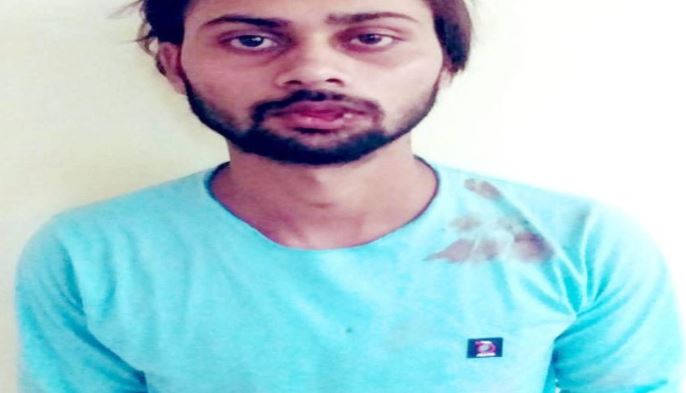
This unfortunate incident was reportedly yet another case of Love Jihad, the ongoing racket in Uttar Pradesh. The Badaun police arrested the accused Asif on September 27 (Sunday), The next day, they also arrested his accomplice Taufiq alias Bablu and sent both of them to jail. Asif has reportedly confessed of shooting his wife dead. According to SO Sudhakar Pandey, Asif had taken his friend Taufiq alias Bablu’s help to plan the murder. Asif also confessed of trying to frame Neha’s brother for the murder of his sister.

In what transpired, Asif, a resident of Uttar Pradesh’s Badaun district in the Civil Lines police station area met Neha one and a half years ago in Delhi, where they worked. He introduced himself to Neha as a Hindu, named ‘Rajkumar’. The two fell in love and decided to marry each other. Neha’s brother was not in favour of the marriage, but Neha went against the wishes of her family to marry Asif aka Rajkumar.

After a few days, Asif’s identity was revealed in front of Neha. This led to regular fights between the couple. Irritated by these tiffs, Asif conspired to kill his wife.

On the pretext of making her meet his family members, Asif brought Neha to his village in Badaun. Here, he took the help of his friend Taufiq. As per reports, the duo called Neha to Meera Sarai Sheikhupur Road near Gandhi Ground and shot her dead.

Accused Asif tried to frame his wife’s brother for the murder

Fearing arrest, Asif tried to frame Neha’s brother for the murder. After shooting Neha, Asif himself took her to the hospital, where she was declared brought dead. He then went to the police station and filed a murder complaint against Neha’s brother. The Badaun police which sensed that Asif was lying, started interrogating Asif, and he soon confessed to his crime.

The growing menace of ‘Love Jihad’ in Uttar Pradesh

Uttar Pradesh has recently been in the limelight as several cases of forced conversions of women on the pretext of marriage reported from the city that has fueled suspicions about a new model of entrapping Hindu women gaining a foothold in the city. However, the menace of Love Jihad is just not confined to this state. It has rapidly been spreading its tentacles across many parts of the country, where very young, even minor Hindu women are being targeted by Muslim men, often under false identities, lured and brainwashed, forcefully converted to Islam, tortured, raped and then either killed or abandoned.

Recently, we reported at least 20 such cases reported from UP and other states in the last 2 months. Seeing the alarming rate at which such cases have been raising its ugly head in Uttar Pradesh, the Kanpur Police have formed an eight-member Special Investigation Team(SIT) to investigate the rising number of forced conversions done on the pretext of marriage.

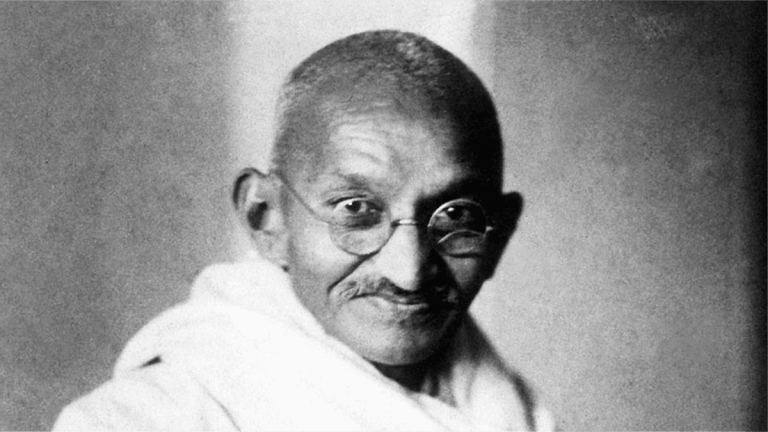
The radical left has always hated Mahatma Gandhi for being a Hindu

…continued to promote a form of religiously charged politics throughout the 1990s. For example, he invoked the Hindu god Ram, and recited passages from the Bhagavad Gita in his political speeches to rally people...”

This is from an article in the New York Times tracing the rise of “Hindutva fascism” in India due to RSS/BJP. Actually, no. I was lying. In reality, this is a quote from Marxist intellectual Ravi Mistry, writing on Marxist.com. Also, I tampered the quote a little and wrote 1990s instead of 1920s. Can you guess who this article was targeting?

What if I told you these harsh words were directed against Mahatma Gandhi?

That’s right. For the far left, Mahatma Gandhi has always been a villain. His “crime”? He was a devout Hindu. I suggest reading the whole article, where the Mahatma is accused of everything from being an upper-caste supremacist to a Hindu fanatic to a male chauvinist. Basically, pretty much every accusation that the left has against the RSS/BJP they have hurled at the Mahatma.

Let eminent Marxist historian Perry Anderson tell you what else the Mahatma is guilty of:

Did principles of non-violence and harmony between faiths distance him from the lunge for Kashmir? Far from it. ‘What is the reason for our fighting in Kashmir? I consider it barbarous for the tribal raiders to have attacked Kashmir; we had to send an army to fight them,’ he told a prayer meeting. ‘The simple fact is that Pakistan has invaded Kashmir. 

Oh dear! The Mahatma referred to Pakistan backed terrorists as barbarians? The Mahatma accused Pakistan of invading Kashmir? Blasphemy!

And here is the gem from this esteemed Marxist historian:

But still trapped in the Hindu nationalism out of which he came, he cheered on the seizure of Kashmir….

Would you look at that? Mahatma Gandhi was a “Hindu nationalist” who cheered the “seizure” of Kashmir.

Indeed, the Mahatma has always been “accused” of being a Hindu Nationalist. Have you ever wondered why Mahatma Gandhi never got a Nobel Peace Prize? Who could have deserved it more than he did? The reason is simple: he was a “nationalist.” You can read this, written explicitly, on the official website of the Nobel Prize. The official advisor to the Nobel Prize Committee in 1937 considered Mahatma Gandhi, but discovered that he was too much of a “nationalist.” That is why Mahatma Gandhi lost out to some guy called Lord Cecil. Congratulations to Lord Cecil : he managed to enter the footnotes of history as the guy who beat Gandhi.

Here is Marxist intellectual Achin Vanaik, writing on Gandhi.

It was, effectively, ‘majoritarian nationalism in a liberal garb.’ During the independence struggle, both versions therefore allowed Hinduism’s symbols and myths to be deployed for the purposes of popular mobilization; the Gandhi-led Congress made no such use of Muslim symbols.”

‘Majoritarian nationalism in a liberal garb.’ That’s what the left has to say about Gandhi.

Are you beginning to see a pattern here? The real grouse of leftists is that the Mahatma was a Hindu, loved India and thought of India as a sacred and ancient nation. That his heart bled at the thought of partition. The leftists have always believed in ‘Bharat ke tukde.’

This hatred towards Gandhi is made very explicit by Divya Dwivedi, an associated professor of the humanities at IIT Delhi.

Gandhi played a huge role in solidifying the Hindu majority identity in India today.”

Yes, the radical left believes that India today is a Hindu fascist state and that the Mahatma is the father of this fascism. You can hear more on this theme from Dwivedi’s appearance on NDTV, where she explains that:

The Hindu religion was invented in the early 20th century in order to hide the fact that the lower caste people are the real majority of India. In fact, religious minorities have been victims of this false majority and Gandhi played a very significant role in it’s construction. He helped to construct a false Hindu majority and a new Hindu identity, but above all, Gandhi theologized politics just when it was beginning on the subcontinent…”

They say the Mahatma created Hinduism to dupe “lower” castes and to victimize minorities and mixed politics with religion. If you ever wanted to see what the “Break India” manifesto looks like, here it is.

Every charge that the left has thrown against the RSS/BJP, it has also thrown at the Mahatma.

This is not to say that the RSS and the Mahatma were of the same ideology. But you have to understand that the left treats all Hindus as enemies. For the left, the difference between Gandhi and Savarkar is irrelevant. All Hindus are enemies of the left. The left sees India as an enemy state and wants to blow it apart.

Bharat ke tukde! Have you forgotten?

In fact, if you go back and examine the sources, the left doesn’t have very nice things to say about Dr. Ambedkar or even Nehru. The left hates Dr. Ambedkar because he embraced Buddhism and not Islam. Do not confuse the Congress of Jawaharlal Nehru with the hardcore anti-Hindu Congress of Sonia Gandhi today. The same left accuses Nehru of presiding over a pogrom of Muslims during police action in Hyderabad.

Yes, even Nehru. Marxist Perry Anderson notes that:

When the Indian army took over Hyderabad, massive Hindu pogroms against the Muslim population broke out, aided and abetted by its regulars. On learning something of them, the figurehead Muslim congressman in Delhi, Maulana Azad, then minister of education, prevailed on Nehru to let a team investigate. It reported that at a conservative estimate between 27,000 and 40,000 Muslims had been slaughtered in the space of a few weeks after the Indian takeover.

Now you see. They don’t just accuse Modi or Amit Shah of presiding over a pogrom. They have the exact same accusation against Nehru! The Hindu right generally does not like Nehru. But Nehru was an Indian with a Hindu name. The left hates all Indians with Hindu names and treats India as an enemy state. The smaller ideological differences don’t matter to them.

Would the left accuse Gandhi of being soft on Hitler just the way the left tries to paint RSS as Nazi sympathizers? You bet! As Shaj Mohan and Divya Dwivedi note in their book “Gandhi and philosophy”:

In the open challenge, as Gandhi knew very well, the state would resort to repressive measures, even the extremes of which were most welcome for Gandhi, as we found in his response to the Jews of Nazi Germany.

They go on to make the argument that Gandhi was supporting a surveillance state, limiting civil liberties and curbing independence of the press.

So here is what the chargesheet against Gandhi looks like, authored by the radical left

(1) Hindu nationalist

(2) Pro-upper caste

(3) Anti-minority

(4) Supports imperialism in Kashmir

(5) Male chauvinist

(6) Nazi sympathizer

(7) Against freedom of the press

Doesn’t this look exactly like the chargesheet that the left has against the RSS/BJP?

On the Hindu right, especially online, one comes across a lot of criticisms of Mahatma Gandhi. This is a strategic mistake, since the Mahatma is one of the most loved icons in the modern world. Worst of all, it gives a chance to the radical left to further its anti-Hindu agenda by demonizing the Hindu nationalists. And in the process, they get to hide their own history of hardcore hatred towards Gandhi and all other Hindus.

PM Modi understands the error of this strategy very well. He has always placed the Mahatma front and centre in his flagship policies, starting from Swachch Bharat Abhiyan. Unfortunately, a lot of BJP supporters keep falling into the trap of going against the Mahatma. In doing so, the average BJP supporter is letting the radical left and Islamists off the hook. The left has a lot to hide. If only the Hindu right would stop helping them with it…

Leaked audio in Hathras case: ‘Don’t move, Priyanka Gandhi will come’ and curious talks of Rs 25 lakh for not letting case reach conclusion

Leaked conversations of the Hathras Case reveal the manner in which politicians and the media have been trying to politicise the issue in order to settle scores with the BJP government in the state. In an earlier report, we had revealed the manner in which Tanushree Pandey, an India Today journalist, was attempting to incite the brother of the deceased with lies and emotional blackmail.

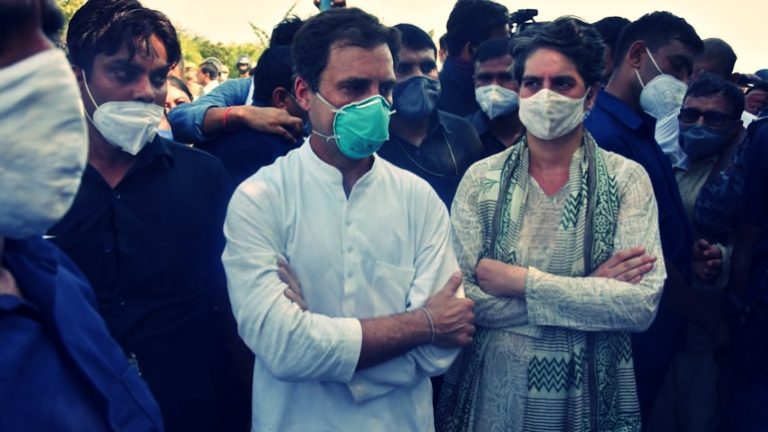
In another conversation, an unidentified individual is heard telling Sandeep, the brother of the victim, to not leave his house because senior Congress leader Priyanka Gandhi would be visiting his home. In the conversation, the person could be heard telling Sandeep, “If anyone wishes to take you anywhere, you must not go, now Priyanka Gandhi will come to your house. Someone says you should go to Hathras, somewhere here, somewhere there, you must not go.”

The man continues, “Say that the police and the media are not allowing your relatives to come, that they have been kept for your protection or for Thakur’s. Tell them everything that has happened to you.” During the conversation, Sandeep tells the man that the SIT was on a visit and one ‘Sanjay bhaiya’, his father and two other people are sitting inside along with some Congress workers. The man further tells Sandeep, “Alright, don’t go anywhere. Now Priyanka Gandhi will come and tell her that pressure has been created on you and you want to create a video of that.”

In another conversation that appears to be between villagers and Sandeep, the brother is advised that he should not accept Rs. 25 lakhs and reach a conclusion. He is told that he should even accept Rs. 50 lakh to reach a conclusion. The lady in that conversation says that some politician is saying that ‘faisla’ should not be reached. During this conversation, the names of one ‘Rahul’ and Manish Sisodia and Barkha Dutt also comes up.

The Hathras Case has sent shock-waves throughout the country. While a lot of details about the case is yet to be unearthed, politicians have already descended upon the village to overturn their falling fortunes. Simultaneously, a great deal of misinformation is also being spread by the mainstream media to further its own partisan agenda. Meanwhile, an SIT probe has been ordered into the matter.

A lot of debate and political mudslinging has been happening around the Hathras case since the victim succumbed to her injuries in Delhi’s Safdarjung hospital on Tuesday morning. She was allegedly raped two weeks ago. The case attracted nationwide outrage when some reports claimed Hathras Police forcefully cremated the girl on Tuesday night without consent of the family members. The police had later stated that the victim’s father was present during the cremation.

Speaking to ANI, ADG Prashant Kumar had informed that the forensic reports that were awaited have also been received. ADG stated that the FSL report found no evidence of ‘rape’. He asserted that it was concluded that there was no sexual assault, and the cause of death was strangulation and injury to the spine.

NIA files charge sheet against 33 Maoists for assassinating BJP MLA Bheema Mandavi and four police personnel in Chhattisgarh last year

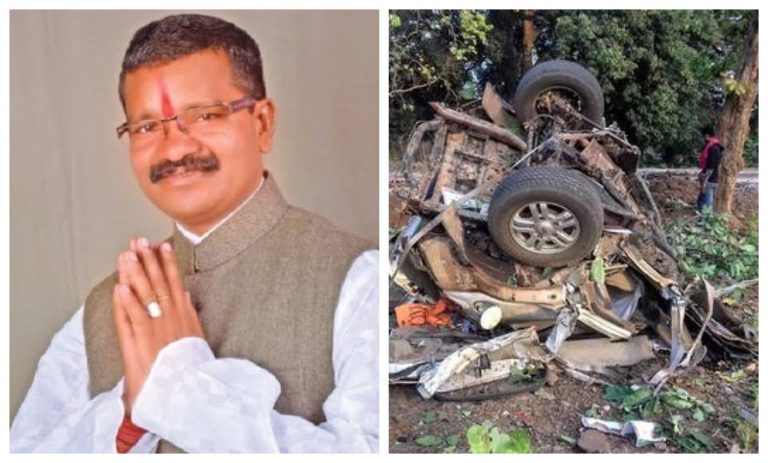
The National Investigation Agency (NIA) filed the charge sheet yesterday against 33 cadres of the Communist Party of India (Maoist) in relation to the assassination of BJP MLA Bheema Mandavi in Chhattisgarh last year. The charge sheet was filed in a special NIA court in Jagdalpur under various sections of the Indian Penal Code (IPC), the Unlawful Activities (Prevention) Act (UAPA), the Arms Act and the Explosive Substances Act.

According to NIA spokesperson, six out of the 33 accused, namely Madka Ram Tati, Bhima Ram Tati, Linge Tati, Laxman Jaisawal, Ramesh Kumar Kashyap and Haripal Singh Chauhan, belong to Dantewada in Chhattisagarh and have been arrested. Five of the accused are dead while the remaining 22 are absconding. The six arrested accused had allegedly provided shelter, food, logistic support, electric wires and steel containers to the naxals.

Mandavi and Four Police Personnel had died in the IED blast

In April, 2019 MLA Mandavi was killed along with four security personnel of Chhattisgarh Armed Force (CAF) in an IED blast which was followed by indiscriminate firing near Shyamgiri village in Dantewala. The assailants had looted the arms and ammunition of the slain CAF personnel. The case was re-registered by the NIA on May 17, 2019 but the investigation was initiated not before March 17, 2020 due to certain legal issues that were raised by the Congress government in Chhattisgarh.

How the Conspiracy was Hatched

According to an NIA official, the decision to assassinate Mandavi was taken in December 2018 in West Bastar at Dandakaranya Special Zonal Committee (DKSZC) level meeting. In another meeting held in the end of February, 2019 in the Gonderas Forest area of South Bastar at Darbha Division Committee level, headed by Giri Reddy who is a member of the DKSZC and in-charge of Darbha Division, it was decided to kill Mandavi along with other political leaders and police personnel as part of Tactical Counter Offensive Campaign (TCOC) with the objective to disrupt elections.

The Secretary of Darbha Division Committee Bada Deva was appointed the overall in-charge for carrying out the objectives of the TCOC. As per the conspiracy, the occasion of the annual fair in Shyamgiri village was chosen as the Maoist leaders thought that prominent political leaders would be attending it. Cadres of the CPI (Maoist) were mobilised who placed the IED on the Nakulnar-Bacheli road near Shyamgiri village. According to NIA official, there was active involvement of the top leadership of the CPI (Maoist) including its general secretary Nambala Keshava Rao in the conspiracy.

Five days after saying he will hug Mamata Banerjee if he contracts Coronavirus, BJP leader in WB tests positive

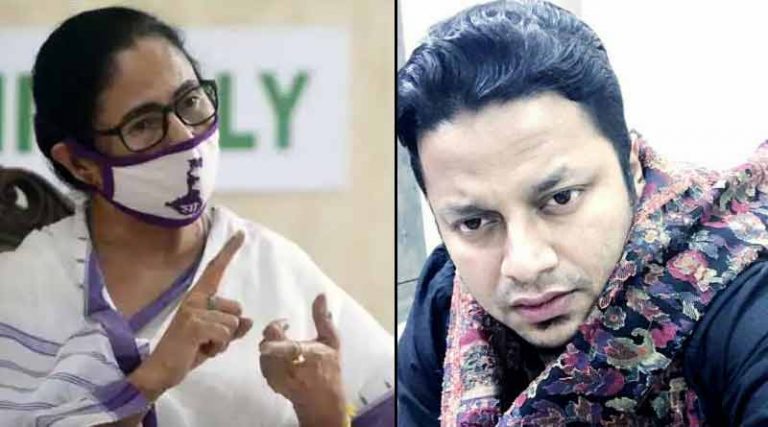
On Friday, BJP National Secretary Anupam Hazra reportedly tested positive for the Wuhan Coronavirus. The development comes five days after he had threatened to hug West Bengal Chief Minister Mamata Banerjee if he ever developed the infection. The BJP leader was tested for Coronavirus after he complained of uneasiness. He has now been admitted to a private hospital in Kolkata.

On Sunday, Anupam Hazra hit out at the Trinamool Congress (TMC) supremo during a BJP party programme in Baruipur, South 24 Parganas. While speaking to reporters, he said, “Our party workers are fighting a bigger enemy than Coronavirus – Mamata Banerjee. When we saw that we can fight her without masks, we stopped taking the Coronavirus pandemic seriously. This is the reality.”

He further emphaised, “Ami to thik korechi atai ki jodi amar konodin corona hoi ami prothom Mamata Banerjee ke joriya dhorbo (By the way, I have decided that I would first hug Mamata Banerjee if I ever contract Coronavirus).”

(Video Courtesy: Sanmarg)

FIR against Anupam Hazra for ‘maligning’ Mamata Banerjee

Earlier, a police complaint was filed against Anupam Hazra by the Trinamool Congress in Siliguri. The party workers also carried out demonstrations against the BJP leader. A senior party member informed, “We have lodged a police complaint against Anupam Hazra. We have urged the police to take immediate action against him.”

While the party has distanced itself from the comments, Anupam Hazra defended his statement. He emphasised, “If my comments are demeaning, then, Mamata Banerjee too had made such comments against the Prime Minister. If one FIR has been filed against me, then, at least 10 FIRs should be lodged against 10 TMC leaders.”

The ‘super Communist’ Lal Bahadur Shastri: Read how Nehru had laid out plans to make Indira Gandhi inherit his PM post

‘Who After Nehru’? This was one key question which became the headline in almost all national and international newspapers after the demise of Jawaharlal Nehru, the first Prime Minister of the country on May 27, 1964. The death of India’s first Prime Minister Jawaharlal Nehru stimulated debates, both inside and outside the Indian subcontinent, on India’s future in a post-Nehruvian world. However, after the death of Jawaharlal Nehru, Lal Bahadur Shastri took over as the Prime Minister of India.

During his nineteen months as PM, one got many glimpses of his unique style of leadership. Much of these months were spent in settling down and dealing with one crisis after another. Just as Winston Churchill was known as the ‘War Time Prime Minister’ in Britain, it would be only just to refer to Lal Bahadur Shastri as the Prime Minister who helped India navigate through its most difficult period in the Post-Independence era.

From calming the violent anti-Hindi agitation that erupted across the southern states to take the first steps in resolving India’s biggest food shortage by promoting the Green Revolution and convincing people to voluntarily give up one meal so that the food saved could be distributed to the affected populace and the White Revolution (Amul cooperative), Shastri led India through its most crisis-ridden period. 

Shastri’s mandate to become Prime Minister was not easy. After Jawaharlal Nehru’s death, there was a fragmented consensus within the Congress party about his ability to lead the nation. After India’s crushing defeat in the Sino-Indian border war of 1962 and a severe food crisis which followed, India’s morale had fallen. Given these developments, India appeared vulnerable. In 1965 Pakistan wanted to take advantage of this ‘weak leadership’. The assumption was that a relatively unstable India would not involve itself in another full-scale war. And it appeared to be a perfect moment for Pakistan to make another effort to seize Kashmir.

Lal Bahadur Shastri surprised many with his wartime leadership that saw the Indian government openly declaring that they will not tolerate another attempt by Pakistan to snatch Kashmir by force.

How vulnerable India’s situation was at that time can be ascertained from what Chakravarti Rajagopalachari informally called Rajaji or C.R said after the death of Jawaharlal Nehru:

“The greatest danger now facing India is the failure to effect cordial relationship with Pakistan or neglect of this important issue. The consequent weakness of the sub-continent against communist aggression should be the first concern of all thinking men India and Pakistan. I also feel that on the economic plane the greatest danger now is a stubborn continuation of the policy of expensive taxation and far too ambitious Soviet-style of Planning, leading to inflation. The vital element of the population, on which depends democracy, is crushed between inflation and taxation. Put in general terms, the greatest danger now would be the failure of the new Government to realize the need for a change of policy in spite of admiration and worship paid to the memory of the late Prime Minister”.

Prime Minister’s election after Nehru’s death

However, Nehru had not anointed a successor before his death, and the battle for supremacy was on with Kamaraj pulling the strings under his famous “Kamaraj Plan” to reinvigorate the party.

It is pertinent to note here that over the years many old guards and the young brigade of the Congress party has used the selection of Lal Bahadur Shastri for the PM post to contend that the party does not necessarily belive in ‘dynasty politics’ as in 1964, Lal Bahadur Shastri succeeded Nehru as India’s Prime Minister, not Indira Gandhi. However, we all know that this argument does not hold waters. It is obvious that this sophistry given by the Congress supporters has been used only to cover up the truth of the dynasty politics prevailing in this political party.

After Nehru’s death, the then Congress leadership was divided between Jayprakash Narayan, Morarji Desai and Indira Gandhi for the post of India’s PM. It is widely believed that on one hand while Morarji Desai was not ready to accept the post, Kamaraj himself did not want to hand over the reins of the country to the old and established guard-Morarji Desai. It is widely believed that this was Kamaraj’s (and Nehru’s) plan to weed out the old guard, leaders such as Morarji Desai, Lal Bahadur Shastri, Jagjivan Ram, Biju Patnaik and S.K. Patil, many of who could stand in the way of Indira Gandhi’s eventual elevation as PM.

The plan succeeded. When Nehru passed away, Shastri was elected, mainly because Kamaraj backed him against Desai. And, when Shastri died suddenly, Indira became PM.

In fact, Jawaharlal Nehru always wanted his daughter Indira Gandhi to be his successor. No one else but Lal Bahadur Shastri himself said this to the late journalist Kuldip Nayar. Kuldip Nayar has mentioned this in his book Beyond the Lines that Shastri had once told him that Nehru wanted to see Indira as his political successor.

Kuldip Nayar had written that in the moments just after Shastri’s demise in Tashkent: “Swaran Singh turned to me and asked, ‘Kuldip, who do you think could be the next prime minister?’ I repeated to him what Shastri had himself told me a few months earlier, ‘If I die in the next two years, my successor will be Indira Gandhi. If I survive, it will be YB Chavan’.

Kuldip Nayar also revealed in his book that Lal Bahadur Shastri was not Nehru’s first choice for his successor.

In fact, the Nehru-Gandhi’s disapproval to Shastri rising to power can be gauged from the fact that Gandhi dynasty has tried to virtually delete Shastri’s name from India’s history. History has it that Indira Gandhi was not in favour of building Shastri’s samadhi in Delhi after his death.

Kuldip Nayar has written in his book that only after Lalita Shastri, wife of Shastri Ji, threatened to fast unto death, did Indira Gandhi change the decision and build a samadhi of Shastriji in Delhi.

The making of Indira Gandhi-the Prime Minister

Indira Gandhi was the daughter of Jawaharlal Nehru, the first prime minister of India. She served as prime minister from January 1966 to March 1977 and again from January 1980 until her assassination in October 1984, making her the second longest-serving Indian prime minister after her father.

But her road to power and politics was carefully crafted by Jawaharlal Nehru. He shrewdly elevated her to the position of the President of the Congress, in 1959, which marked her entry into politics and the first phase of dynastic politics in Congress. After Nehru’s death, Indira Gandhi was sent to the Rajya Sabha and made a cabinet minister in the Shastri government. Soon after the death of Lal Bahadur Shastri, Indira Gandhi became the Prime Minister of the country.

Those who claim that Indira Gandhi’s name was not even discussed for the next Prime Minister candidature after Nehru should read the ‘New York Times’ report in which on January 9 1964, just 5 months before Nehru’s death, Indira Gandhi was mentioned as a possible successor to Nehru.

In fact, DP Mishra, a senior Congress leader who closely witnessed power transitions after Nehru’s and Shastri’s deaths explains Nehru’s game plan. The strategy evolved by Nehru was to groom his daughter for PM-ship, then eliminate Morarji Desai and Jagjivan Ram, two ambitious, competent and influential rivals, and finally place both the Govt and the Congress in the hands of men who, even if tempted by premiership, would be easily removable by his daughter. Through the Kamraj plan, he (Nehru) removed Desai and Jagjivan Ram from his government, got Kamaraj elected as Congress President and left the government in the hands of Gulzarilal Nanda, TT Krishnamachari and Lal Bahadur Shastri.”

When Alexei Kosygin called Lal Bahadur Shastri ‘super Communist’

India’s second Prime Minister- Lal Bahadur Shastri, the exemplary stalwart and an impeccable leader, was also known to be considerate toward those working in his team. On 3rd January 1966, he left for Tashkent hoping for a long-term peace solution with Pakistan. Tashkent was very cold at that time of the year and Shastriji was carrying his usual Khadi woollen coat. Russian leader Alexei Kosygin realised that the coat he wore was not warm enough to fight the snowy winter winds of Central Asia.

Kosygin wanted to present a Russian overcoat to Shastriji but was not sure how to do so. Finally, at a function, he gifted a Russian coat to the Prime Minister hoping that he would wear it while in Tashkent. Next morning, Kosygin noticed that Shastriji was still wearing the Khadi coat. Hesitantly, Kosygin asked the Prime Minister if he liked the overcoat. Shastriji said: “It is really warm and very comfortable for me. However, I have lent it to one of my staff members who was not carrying a good woollen coat to wear in this severe winter. I will surely use your gift during my future trips to cold countries”.

Kosygin narrated this incident during his welcome address at a cultural programme organised in honour of the Indian Prime Minister and the Pakistani President. Kosygin remarked: “We are communists but Prime Minister Shastri is a Super Communist”.

There are many aspects related to Shastriji’s life and values, which make him a cut above all the politicians of any time and age, but it is not easy to pen down the stalwart’s personality in a few words.

Whether it be the incident where the former PM took a loan of Rs 5,000 from PNB to buy a fiat car or be it tactfully handling the food crisis in India or being refered to ‘super communist’ due to his compassion for fellow workers, Lal Bahadur Shastri emerged as a leader with his own distinct style and approach.

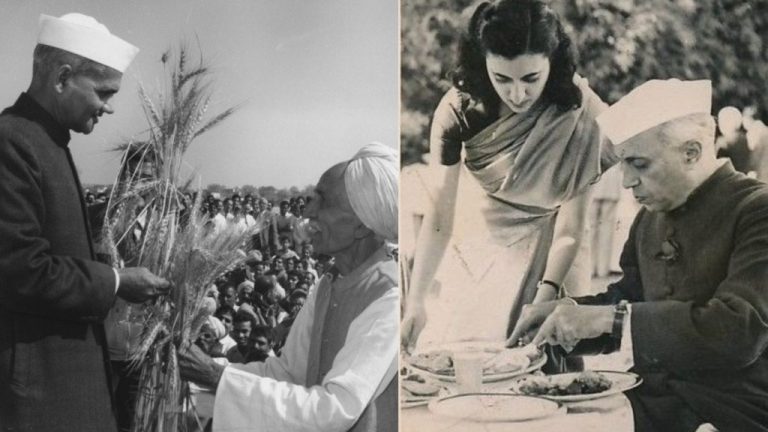
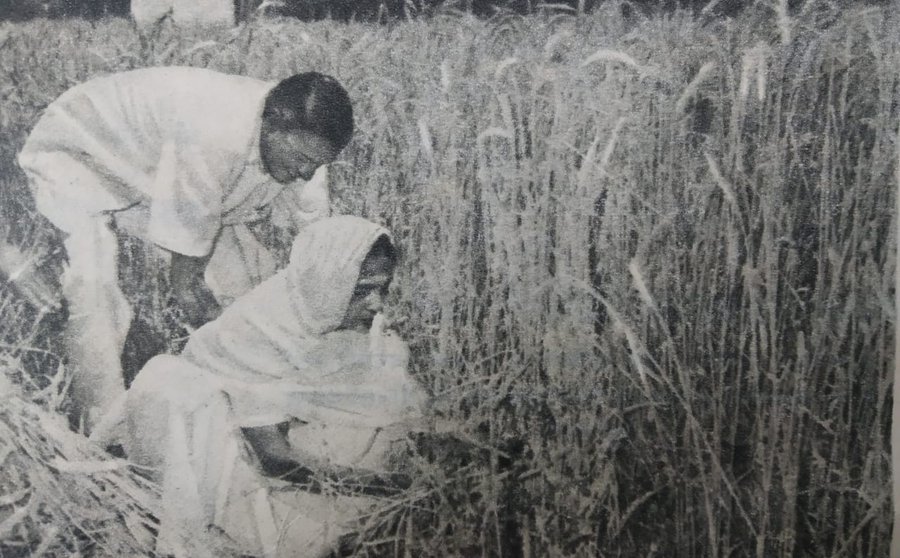
In this picture, 3 months after Shastriji’s death, his wife Lalitha Shastri is harvesting this crop. Shastri ji had grown this crop at 10 Janpath to inspire the countrymen during the food crisis.

Today on his birth anniversary, Shastriji would be remembered as a people’s person who dealt with all individuals with trust, tact and transparency. The trust quotient that Shastri evoked was extremely high. One would not come across examples of his letting down a colleague. His mentors reposed implicit faith in him as did his peers and followers.

It’s extremely unfortunate that Lal Bahadur Shastri departed from the scene much before the country could truly benefit from his full potential. 

Presence of Pakistani fighters on the ground alongside Azerbaijan forces won’t be a surprise: Armenia Foreign Minister Avet Adonts

0

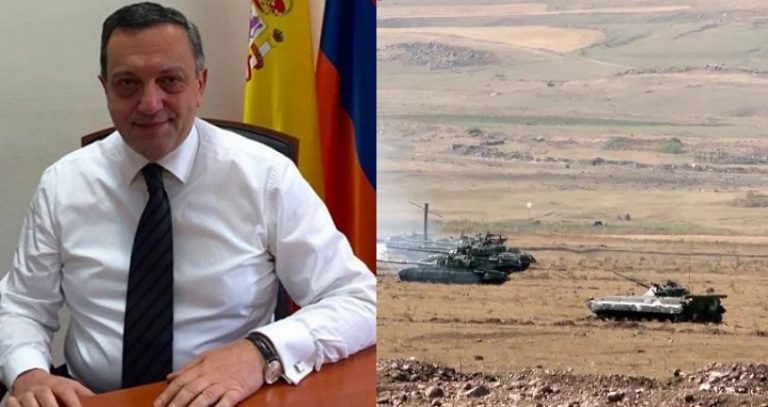
As the spectre of a full-blown war between Armenia and Azerbaijan looms around the corner, the Foreign Minister of Armenia, Avet Adonts, said in an interview with Zee News that it won’t be a surprise to find fighters from Pakistan to battle alongside mercenaries operating in Azerbaijan.

Adonts recounted how Pakistanis were present on the ground in the 1990s when war broke out in Nagorno Karabakh, a longstanding bone of contention between the two countries. With the history of Pakistanis interfering the conflict, the foreign minister said that he couldn’t exclude the possibility of fighters from Pakistan joining the Azerbaijan military against Nagorno-Karabakh and Armenia.

Adonts also slammed Turkey for imposing a war on Armenia. “This imposed or instigated war has been a well planned jointly with Turkey,” he said. He further added that the dictatorship of Azerbaijan, supported by Ankara, instigated a large-scale war when its military instruments, aeroplanes, artillery and all other equipment were mobilised to attack Nagorno-Karabakh on the morning of September 27.

Pakistani trolls jump to the defence of Azerbaijan, vowing to wage a jihad against Armenia

Soon after Turkey extended its support to Muslim-majority Azerbaijan against Christian-majority Armenia, the eternal-rental state Pakistan, which shares a close affinity with Turkey and purports itself as a beacon for the Islamic world, jumped into the conflict, blaming Armenia for ratcheting up hostility against Azerbaijan.

Many social media trolls in Pakistan extended their solidarity with Azerbaijan and vowed to fight against Christian-majority Armenia. Several of them claimed that the war between the two countries represented a war between Christianity and Islam and it was the duty of the Pakistanis to join their co-religionists in Azerbaijan to repel the Armenian attack.

However, Pakistan has refuted the allegations of its forces fighting alongside Azerbaijan against Armenia. In a press release, Pakistan reacted saying the media reports claiming its fighters’ are present on the ground in Azerbaijan are “speculative and baseless”.

Though it rejected the allegations of providing ground support to the mercenaries backed by Azerbaijan, it nevertheless supported the Muslim-majority country, asking Armenia to stop its military action to avoid further escalation.

Clashes erupt between Muslim majority Azerbaijan and Christian-majority Armenia over Nagorno-Karabakh

Deadly clashes erupted on Sunday between two former Soviet Republics—Azerbaijan and Armenia, over a longstanding territorial dispute for the turbulent Nagorno-Karabakh enclave, a strife-torn region that lies within the jurisdiction of Azerbaijan but is governed by ethnic Armenians. 

Nagorno-Karabakh and Armenia had declared martial law after Azerbaijan launched an aerial and artillery attack on Sunday, killing several of the military servicemen and injuring hundreds of others. 

Azerbaijan, on the other hand, had also imposed martial law, claiming its attack was in retaliation to shelling by Armenia that had reportedly killed five members of a single-family.

Hathras case leaked audio: India Today journalist pesters brother of victim for a confession video of father saying ‘there is pressure from administration’

The Hathras Case has sent shock-waves throughout the country. While a lot of details about the case is yet to be unearthed, politicians have already descended upon the village to overturn their falling fortunes. Simultaneously, a great deal of misinformation is also being spread by the mainstream media to further its own partisan agenda. Meanwhile, an SIT probe has been ordered into the matter.

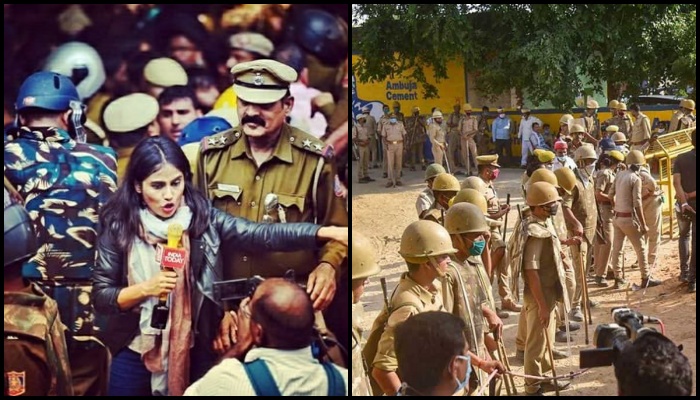
Now, the telephonic conversations between one India Today journalist and the brother of the deceased, Sandeep, has gone viral which has been accessed by OpIndia. In the audio clip, Tanushree Pandey can be heard trying hard to convince Sandeep to send her a video statement of his father alleging that he was under immense pressure from the administration.

Throughout the conversation, Tanushree Pandey appears insistent on coaxing out a very specific statement from Sandeep while the latter remains non-committal on his statement and appears hesitant to toe the line that the journalist wants him to toe. He confirms the journalist’s allegations of pressure and on other occasions, he says that his father was not very clear on whether he was pressurised or not.

Tanushree Pandey tells Sandeep that she has learnt from somewhere, she does not specify where, that an attempt is being made to blame the death of the sister on her family. It does appear to be an incendiary piece of information that has not been reported anywhere in the media. This bit of false information appears entirely fake and seems to have been invented solely to take advantage of the family’s misery to peddle a particular political agenda.

The objective of the conversation is clearly to have Sandeep’s father on record claiming that he was pressurised to give a statement that he was satisfied with the investigations into the matter thus far. She says, “Sandeep, please do one thing for me. And I promise that I will not move from here until your family has received justice… Sandeep, make a video of your father where he says, ‘Yes, there was a lot of pressure on me to issue a statement that I am satisfied.. I want investigation because my daughter has died. And we were not even allowed to see her and she was buried.'”

She adds, “It will only take five minutes. Quickly make the video and sent it to me only.” During their conversations, Tanushree Pandey also tries to incite Sandeep against the SIT that has been formed, however, the brother makes it clear that the SIT was asking them relevant questions and they had left since then. During the whole conversation, the brother appears reluctant and hesitant while the journalist tells him that he should consider her his sister in a bid to convince him.

In another conversation that appears to be between villagers and Sandeep, the brother is advised that he should not accept Rs. 25 lakhs and reach a conclusion. He is told that he should even accept Rs. 50 lakh to reach a conclusion. The lady in that conversation says that some politician is saying that ‘faisla’ should not be reached. During this conversation, the names of one ‘Rahul’ and Manish Sisodia and Barkha Dutt also comes up.

This is not the first time that Tanushree Pandey has been involved with something such as this. During the protests against the CAA, she could be seen having a hush-hush conversation with a leftist student at JNU where she appeared to be ‘coaching’ the person. In the video, the journalist, quite clearly, appears to be having extensive discussions regarding what the events that transpired at the University and at one point, has a prolonged hush-hush discussion with the student that’s not audible to the ears.

In the video that we had accessed, it could be seen that the two of them were having a conversation off the record where an attempt is deliberately made to have a hush-hush conversation so that the content of it is not audible to the observers. Furthermore, in the video, it appears that it isn’t journalism that was happening but propaganda with active collusion between the journalist and the Vice-President of JNUSU.

We have reached out to Tanushree Pandey over the matter. She is yet to respond.