Home Blog Page 5007

Parliament sees its most productive session: Here is a summary of all the 25 Bills passed by the Modi government in Lok Sabha

The truncated monsoon session of the Parliament concluded yesterday, cut short due to the Coronavirus pandemic. Although the session ran for only 10 days, it was the most productive session ever, with the Lok Sabha achieving a productivity rate of 167%. The session ran from 14th September to 23rd September continuously, without any weekend holidays on Saturday and Sunday. A total of 25 bills were passed during this session, some of which are very significant bills. Let’s have a look at the 25 bills briefly.

14 September 2020

The National Commission for Homoeopathy Bill

Introduced by the AYUSH ministry last year, this bill was passed by the Rajya Sabha in March this year. The bill has repealed the Homoeopathy Central Council Act, 1973 and a National Commission for Homoeopathy will be set up under it. The Commission for Homoeopathy will consist of 20 members which will include a Chairperson, the President of the Homoeopathy Education Board, the Director General of National Institute of Homoeopathy, the President of the Medical Assessment and Rating Board for Homoeopathy in addition to other members. The Bill seeks to provide for a medical education system which ensures availability of adequate and high quality homoeopathic medical professionals, adoption of the latest medical research by homoeopathic medical professionals, periodic assessment of medical institutions, and an effective grievance redressal mechanism.

The National Commission for Homoeopathy will frame policies for regulating medical institutions and homoeopathic medical professionals, assess the requirements in the sector, ensure compliance of regulations by the State Medical Councils of Homoeopathy, and ensure coordination among the autonomous boards set up under the Act.

Under the Act, a uniform National Eligibility-cum-Entrance Test will be held for admissions to undergraduate courses in all medical institutions regulated by the Act. Moreover, there will be a National Teachers’ Eligibility Test for postgraduates who wish to take up teaching in Homoeopathy.

The National Commission for Indian System of Medicine Bill

This bill was also passed by the Upper House in March, which was approved by the Lok Sabha on September 14. This bill repeals the Indian Medicine Central Council Act, 1970, and provides for the establishment of the National Commission for Indian System of Medicine (NCISM). The objective of the bill is to ensure adequate and high quality medical professionals of Indian System of Medicine, adoption of the latest medical research by medical professionals of Indian System of Medicine, periodic assessment of medical institutions, and an effective grievance redressal mechanism.

The NCISM set up under this Act will have 29 members, which will consist of the Chairperson, President of the Board of Ayurveda, President of the Board of Unani, Siddha, and Sowa-Rigpa, President of the Medical Assessment and Rating Board for Indian System of Medicine, apart from officials from the Ayush Ministry  and members elected by the medical practitioners of Ayurveda, Siddha, Unani, and Sowa-Rigpa from among themselves.

Apart from the NCISM, State Medical Councils for Indian System of Medicine will be established at each state under the act. The Act also provides for a uniform National Eligibility-cum-Entrance Test for admission to under-graduate courses in each of the disciplines of the Indian System of Medicine in all medical institutions regulated by the Bill. Moreover, there will be a National Teachers’ Eligibility Test for postgraduates who wish to take up teaching in these disciplines.

15 September 2020

Salary, Allowances and Pension Of Members Of Parliament (Amendment) Bill

This bill was passed to replace the Salary, Allowances and Pension of Members of Parliament (Amendment) Ordinance issued in April this year by the union govt. The ordinance was promulgated to reduce the salaries and allowances of the MPs in the wake of Coronavirus pandemic. The bill gives parliamentary approval to those changes. It reduces the salaries of MPs by 30%. The bill further reduces constituency allowance and office expenses allowance of MPs. These changes are effective for one year starting from 1st April.

16 September 2020

The Banking Regulation (Amendment) Bill

The bill was passed to bring cooperative banks under the supervision of the Reserve Bank of India (RBI) by amending the Banking Regulation Act, 1949. The bill replaced the Banking Regulation (Amendment) Ordinance, 2020 which was promulgated in June this year. After the bill was passed, now the regulations and provisions applicable to banking companies will also apply to cooperative banks.

The Act ensures that cooperative banks are equally subject to better governance and sound banking regulations through the Reserve Bank of India (RBI). The cooperative banks will also be able to raise money via public issues and private placements of equity or preference shares as well as unsecured debentures, with the approval of RBI.

With the amendment, RBI will also be able to undertake a scheme of amalgamation of a bank without placing it under moratorium.

The bill is applicable to Primary Agricultural Credit Societies and  co-operative societies whose principal business is long term financing for agricultural development.

17 September 2020

The Farmers Produce Trade and Commerce (Promotion and Facilitation) Bill

One of the major bills passed in the monsoon session, this bill allows intra-state and inter-state trade of farm products beyond the physical premises of APMC markets. This is intended to create a new ecosystem where farmers and traders will enjoy freedom of choice of sale and purchase of farm products. While the APMCs will continue to exist, they are not being abolished as fake news spread by the opposition, there will be freedom to trade at farmgate, cold storage, warehouse, food processing units etc.

The system of govt purchase at Minimum Support Price will also continue, but now the farmers will have the option of selling at MSP to govt agencies or to sell in the open market. The bill also proposes an electronic trading platform for farm products to ensure seamless trade electronically.

The Farmers (Empowerment and Protection) Agreement on Price Assurance and Farm Services Bill

Another landmark bill, this amendment relates to contact farming. The bill empowers farmers for engaging with processors, wholesalers, aggregators, wholesalers, large retailers, exporters etc., on a level playing field. The farmers will have assured price of their produce even before sowing, thereby transferring the market risk from the farmer to the buyer. If the market price becomes more than the contact price, farmers will be entitled to the market price.

This will also enable farmers to access modern technology, high quality seed and other inputs like fertilisers and pesticides. The provisions of the bill will reduce the cost of marketing, and enhance the income of the farmers, as the buyer will have to directly pick up the produce from the farms. This will enable private investment in farming sector, and will link the farms with global markets.

The bill also has provisions for effective dispute resolution mechanism, so the farmers will not have to courts for any dispute. Moreover, 10000 Farmer Producer organizations are being formed throughout the country. These FPOs will bring together small farmers and work to ensure remunerative pricing for farm produce

18 September 2020

The Appropriation (No.3) Bill and The Appropriation (No.4) Bill

The two appropriation bills were passed by the Lok Sabha on Supplementary Demands for Grants for 2020-21 and Demands for Excess Grants for 2016-17. The Appropriation (No 4) Bill, 2020 authorises payment and appropriation of further amounts out of the Consolidated Fund of India for services of the financial year 2020-2021. On the other hand, the Appropriation (No 3) Bill, 2020 provides for authorisation of appropriation of money out of the Consolidated Fund of India to meet the amounts spent on certain services during the financial year ended 2016-2017.

An Appropriation Bill is a money bill that allows the government to withdraw funds from the Consolidated Fund of India to meet its expenses. As per article 114 of the constitution, govt can withdraw money from the Consolidated Fund of India only after receiving approval from the parliament.

19 September 2020

The Taxation and Other Laws (Relaxation and Amendment of Certain Provisions) Bill

This bill provides various reliefs in terms of compliance requirements for taxpayers amid the coronavirus pandemic. The bill replaces the ordinance issued in this regard earlier, which makes some changes to the direct and indirect tax laws. The bill extended the deadline to file Income Tax returns, and for linking PAN with Aadhaar.

It also grants tax benefit for donations made to the Prime Minister’s Citizen Assistance and Relief in Emergency Situations Fund (PM CARES Fund), which was set up in March amid the Coronavirus pandemic.

The bill also makes faceless assessment applicable to at least eight processes under the I-T Act, including collection and recovery of tax and gathering of information.

The Companies (Amendment) Bill

This amendment made changes to several sections of the Companies Act, 2013 by decriminalizing various non-compoundable offences in case of defaults, except frauds. The bill also removes imprisonment for various offences which are considered procedural and technical in nature. For example, it removes the imprisonment of three years applicable to a company for buying back its shares without complying with the Act.

The bill further reduced the fine amount applicable for certain offences. For example, the maximum fine for failure to file annual return with the Registrar of Companies has been reduced from five lakh rupees to two lakh rupees.  

The bill provides several other exemptions to several categories of companies.

20 September 2020

The National Forensic Sciences University Bill

The National Forensic Sciences University Bill seeks to establish the National Forensic Sciences University as an institute of national importance. The proposed university would facilitate and promote studies and research and help achieve excellence in the field of forensic science in conjunction with applied behavioural science studies, law, criminology and other allied areas.

Under this Act, Gujarat Forensic Sciences University, Gandhinagar and Lok Nayak Jayaprakash Narayan National Institute of Criminology and Forensic Sciences, New Delhi will be merged to form the National Forensic Sciences University. The newly formed university will have its campuses both in Gujarat and Delhi.

The Rashtriya Raksha University Bill

Under this bill, the Raksha Shakti University, Gujarat will be upgraded to Rashtriya Raksha University. The university will be an institution of national importance.

The Rashtriya Raksha University is proposed to be a multi-disciplinary university to create new knowledge through research and collaboration with different stakeholders and help to fulfil the need for a pool of trained professionals with specialized knowledge and new skill sets in various wings of policing, the criminal justice system and correctional administration.

The objectives of the university include providing dynamic and high standards of learning and research and providing a working environment dedicated to advancing research, education and training in the domain of policing. The university will have linkage with world-class universities in other countries for exchange of contemporary research, academic collaboration, course design, technical know-how, training and skill development.

The Salaries and Allowances of Ministers (Amendment) Bill

Similar to the other bill on salaries and allowances of MPs, this bill also reduces salaries and allowances of minister by 30% for a year.

The Bilateral Netting of Qualified Financial Contracts Bill

This bill allows for enforcement of netting for qualified financial contracts. Bilateral netting refers to offsetting claims arising from dealings between two parties to determine the net amount payable or receivable from one party to the other.

Under the bill, a qualified financial contract (QFC) is a bilateral contract notified as a QFC by a relevant authority such as the Reserve Bank of India, Securities and Exchange Board of India, Insurance Regulatory and Development Authority of India, Pension Fund Regulatory and Development Authority or International Financial Services Centres Authority. These authorities may designate entities, such as NBFCs or insurance or pension firms functioning under its jurisdiction, as qualified financial market participants to deal in QFCs.

The bill provides the enforcement of netting of QFCs if the contract has a netting agreement. The bill will reduce the net exposure and reduce the credit exposure of banks and other financial institutions, and will result in financial savings for the financial system.

21 September 2020

The Foreign Contribution (Regulation) Amendment Bill

This bill amends the Foreign Contribution (Regulation) Act, 2010, which regulates the acceptance and utilisation of foreign contribution or donation by individuals, associations and companies, mostly non-profit organisations. The amendment has been brought in an effort to ensure transparency in foreign funding received by NGOs.

The bill provides for reduction in administrative expenses of any NGO receiving foreign funding, from 50 per cent to 20 per cent of annual funds to ensure spending on their main objectives. The bill also bars public servants from receiving foreign fund. The bill further says that organisations will be able to receive foreign funding only at a designated FCRA bank account in the State Bank of India in Delhi. From this account, they will be able to transfer the money to their other accounts. The concerned SBI branch in Delhi will report to the Home Minister about the source of funds, manner of reception, and the permitted limit of foreign remittance.

The Insolvency and Bankruptcy Code (Second Amendment) Bill

The bill amends the Insolvency and Bankruptcy Code, 2016 which provides a time bound process for resolving insolvency in companies and also among individuals. It replaces the Insolvency and Bankruptcy Code (Amendment) Ordinance, 2020 promulgated in June this year in an effort to give relief to companies facing the heat due to Coronavirus pandemic.

The Bill seeks to temporarily suspend initiation of the corporate insolvency resolution process (CIRP) under the Code. When a default occurs, the Code allows the creditors of the company or the company itself to initiate CIRP by filing an application before the National Company Law Tribunal (NCLT).  The Bill provides that for defaults arising during the six months from March 25, 2020, CIRP cannot be initiated by either the company or its creditors. 

This amendment was brought due to the Covid-19 situation to give the immunity to the business from insolvency proceedings in this critical situation.

The Epidemic Diseases (Amendment) Bill

The bill amends the Epidemic Diseases Act, 1897 to include protections for health care service personnel combating epidemic diseases and expands the powers of the Central Government to prevent the spread of such diseases. The bill repeals the Epidemic Diseases (Amendment) Ordinance that was promulgated in April this year after the Coronavirus pandemic broke out in the country.

The Act makes harm, injury, hurt or danger to the life of healthcare service personnel as a cognizable and non-bailable offence. Apart from imprisonment from three months to five years fine between Rs 50000 to Rs 2 lakh and, persons convicted of offences under the bill will also be liable to pay compensation to the healthcare service personnel whom they have hurt.

The Factoring Regulation (Amendment) Bill

This Bill amends the Factoring Regulation Act, 2011 to widen the scope of entities which can engage in factoring business. Factoring business is a business where an entity (referred as factor) acquires the receivables of another entity (referred as assignor) for an amount. Factor can be a bank, a registered non-banking financial company or any company registered under the Companies Act.

The Bill amends the definition of the assignment to add that a transfer can be in whole or in part. It also amends the definition of factoring as acquisition of receivables of an assignor by assignment for a consideration.

The amendments are expected to help micro, small and medium enterprises significantly by providing added avenues for getting credit facility, especially through Trade Receivables Discounting System. This will lead to increase in the availability of working capital of such enterprises.

22 September 2020

The Homoeopathy Central Council (Amendment) Bill

The Bill replaces the Homoeopathy Central Council (Amendment) Ordinance, 2020 which was promulgated on April 24, 2020. It seeks to further extend the time to form the Central Council of Homeopathy by a year, after two years allowed for the purpose was over.

The Homoeopathy Central Council Act, 1973 was amended in 2018 to provide for the supersession of the Central Council of Homoeopathy. The Central Council was required to be reconstituted within one year from the date of its supersession. In 2019 it was amended requiring the reconstitution withing two years. Now that suppression period has been extended to three years.

The Indian Medicine Central Council (Amendment) Bill

This bill seeks a year’s time to reconstitute the Indian Medicine Central Council and provides for a board of directors to exercise its powers in the interim period. The bill amends the Indian Medicine Central Council Act, 1970, which provides for the constitution of a Central Council which regulates the education and practice of the Indian medicine system including Ayurveda, Yoga and Naturopathy.

It provides that the Central Council will stand superseded from April this year and the council will be reconstituted within one year from the date of its supersession. In the interim period, the Central Government will constitute a Board of Governors, which will exercise the powers of the Central Council. The board will consist of up to ten members.

The Jammu and Kashmir Official Languages Bill

the Jammu and Kashmir Official Languages Bill, 2020 passed by the parliament adds Kashmiri, Dogri and Hindi to the list official languages of the Union Territory of Jammu and Kashmir. Before this, only Urdu and English were official languages of the former state.

Replying to a debate on the Bill, Minister of State for Home G Kishan Reddy said it was a long-standing demand of the people of Jammu and Kashmir that the language they speak should be included in the list of official languages. He pointed out that around 74 per cent people in the Union Territory spoke Kashmiri and Dogri languages. According to 2011 census, only 0.16 per cent population in Jammu and Kashmir spoke Urdu, while 2.3 per cent spoke Hindi.

The Occupational Safety, Health and Working Conditions Code

This code consolidates 13 existing Acts regulating health, safety, and working conditions. These include the Factories Act, 1948, the Mines Act, 1952, and the Contract Labour (Regulation and Abolition) Act, 1970.

The Code will apply to establishments employing at least 10 workers.  It will apply to all mines, docks, and establishments carrying out any hazardous or life-threatening activity, regardless of number of workers. Certain provisions of the Code, such as health and working conditions, apply to all employees.  Employees include workers and all other persons earning wages for any work, including managerial, administrative, or supervisory work.

The Industrial Relations Code

The Industrial Relations Code seeks to replace three specific labour laws, The Industrial Disputes Act, 1947, The Trade Unions Act, 1926, and The Industrial Employment (Standing Orders) Act, 1946.

The Code provides for a negotiation union in an industrial establishment, having registered trade unions, for negotiating with the employer. If there is only one trade union in an industrial establishment, the employer is required to recognise such trade union as the sole negotiating union of the workers.  In case of multiple trade unions, the trade union with support of at least 51% of workers on the muster roll of that establishment will be recognised as the sole negotiating union by the employer.

The Code prohibits employers, workers, and trade unions from committing any unfair labour practices listed in a Schedule to the Code. The unfair trade practices include restricting workers from forming trade unions, establishing employer sponsored trade union of workers, coercing workers to join trade unions, damage to employer’s property, and preventing any worker from attending work. Violation of these norms will be punishable with fine between Rs 10000 and Rs 2 lakh.

The Code on Social Security

The Social Security Code 2020 replaces nine laws related to social security, which are The Employees Compensation Act, 1923, The Employees State Insurance Act, 1948, The Employees Provident Fund and Miscellaneous Provisions Act, 1952, The Employees Exchange (Compulsory Notification of Vacancies) Act, 1959, The Maternity Benefit Act, 1961, The Payment of Gratuity Act, 1972, The Cine Workers Welfare Fund Act, 1981, The Building and Other Construction Workers Cess Act, 1996, and The Unorganized Workers’ Social Security Act, 2008.

The code provides for setting up of a social security fund, or funds, to provide welfare benefits like pension, medical cover, and health and death and disability benefits to all workers. Workers in the unorganised sector, such as migrant workers, gig workers and platform workers will also be covered under it.

It also provides for filing of a single return, electronically or otherwise, by the employer and to make Aadhaar mandatory for registration of a member/beneficiary/ any other person to register or for receiving benefit.

The Major Port Authorities Bill

This bill aims at decentralizing decision making and to infuse professionalism in governance of major ports. The Bill seeks to provide for regulation, operation and planning of major ports in India and provide greater autonomy to these ports.  It replaces the Major Port Trusts Act, 1963. 

The bill will apply to 12 major ports in the country, located at  Chennai, Cochin, Jawaharlal Nehru Port, Kandla, Kolkata, Mumbai, New Mangalore, Mormugao, Paradip, V.O. Chidambaranar, and Vishakhapatnam. Under this bill, a Board of Major Port Authority will be set up for each major port.  These Boards will replace the existing Port Trusts in those ports.

The Board will be able to use its property, assets and funds as deemed fit for the development of the major port. The bill is expected to help impart faster and transparent decision making benefiting the stakeholders and better project execution capability.

Pakistan: Tehreek-e-Labbaik leader arrested for sexually abusing a 13-year old boy

0

According to a report in Nayadaur, Narowal police have arrested M Shahid Rafiq Madni, a leader of Tehreek-e-Labbaik (Jalali Group), for sexually assaulting a minor boy at a seminary. As per the FIR registered by the boy’s father, the 13-year-old boy was a student at Dar-ul-Uloom Ghousia Rizvia.

On 16th September, after Isha prayers, the cleric forced himself on the boy. “He did not let the teenage boy leave the seminary for three days,” the report suggested. The boy’s father has urged the police to arrest the cleric and hold him accountable for his deeds.

Surge in child sexual abuse in religious institutions

Many such cases of child sexual abuse in religious institutions have been reported in Pakistan in recent times. In May 2020, a 15-year-old boy was raped at a mosque in Gujrat city of Punjab province. In December 2019, a cleric Qari Shamsuddin and four others were arrested for abusing a young boy in a madrassa. He was raped over 100 times. In another case, in December 2019, the father of a child registered a case against a local shrine’s cleric for abusing his child. In Peshawar, a cleric was accused of abusing a child in a madrassa. In October 2019, a cleric named Mukhtar Ahmad was arrested for molesting children. The atrocities against Hindus in Pakistan are well documented including many cases of abduction, rape and forced conversion of minor Hindu girls.

Tehreek-e-Labbaik is the organisation responsible for filing hundreds of blasphemy cases including the one against Asia Bibi.

Yogi govt launches ‘Operation Durachari’ to check crime against women, habitual sex offenders and history sheeters to have their posters displayed on UP roads

0

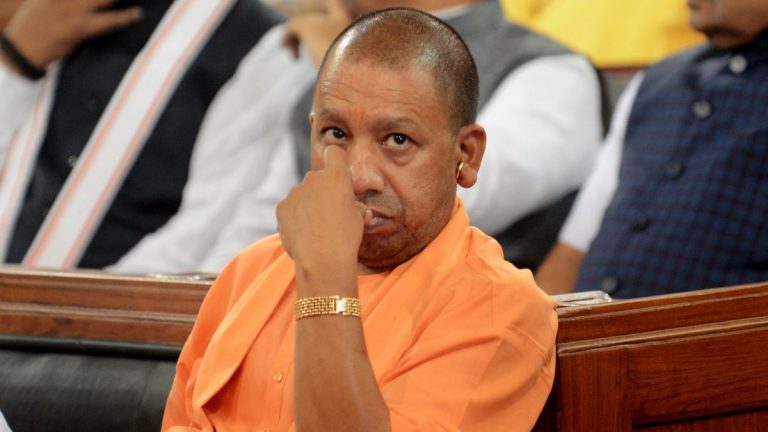
In a bid to tackle crime against women in the state, Uttar Pradesh Chief Minister Yogi Adityanath has directed officials to launch ‘Operation Durachari’. Under this new initiative, the UP government would put up posters of history sheeters guilty of crimes against women and habitual offenders in cases of sex-related crimes on road crossings in Uttar Pradesh. The move is aimed at ‘name and shame’ people guilty of crimes against women. 

According to the state government spokesperson, “the Chief Minister has directed that women police personnel should be asked to take firm action against such offenders and their photographs should be pasted on crossings in order to name and shame them.”

Coming hard on the habitual perpetrators, the Chief Minister said that people should know who are the persons who are vitiating the atmosphere in society and indulging in crime against women.

Anti-Romeo squads to be re-activated and strengthened under ‘Operation Durachari’

He further said that in case any incident related to crime against women takes place, the beat in-charge, chowki in-charge, station officer and the circle officer would be held responsible.

Yogi Adityanath also ordered that anti-Romeo squads should be further activated and strengthened so that the strategy to check crime against women becomes increasingly effective.

It is pertinent to note here, that Yogi Adityanath, last year, miffed with the police for failing to ‘instil fear’ among criminals in the state, had asked the state police to revive the anti-Romeo squad and ordered the police to prepare a list of accused previously involved in crimes against women. Asking them to increase the vigil over these criminals, he also ordered to enhance the foot patrolling in vulnerable regions.

UP govt puts up hoardings identifying violent rioters by name, photograph and address

The Yogi Adityanath government has shown zero tolerance towards crime and criminals. It may be recalled that in a similar move, Yogi Adityanath government had pasted photographs along with names and addresses of anti-CAA protesters on crossings in Lucknow in an attempt to name and shame them just before the national lockdown was announced.

Pakistan: 171 poor Hindus of Bhil community converted to Islam inside Sindh madarsa

0

Pakistani human rights activist Rahat Austin had recently shared that as many as 171 Hindu men, women and children belonging to the highly marginalised and socio-economically backward Bhil community have forcefully been converted to Islam in the Sindh province of Pakistan on Sunday.

The mass conversion ceremony was held at madarsa Ahsan-ul-Taleem, Sanghar in Sindh and a former member of Islamic Ideology Council Noor Ahmad Tashar carried out the conversion, as per a report in Times of India.

Rahat has informed that the poor and vulnerable community has been subject to mass conversion under various allurements.

Previous incident of mass conversion in Sindh

This is, however, not the first such incident reported from Pakistan. Pakistani Hindus are known to be one of the worst persecuted minority communities in the world. In June this year, as many as 102 Hindus were allegedly forcibly converted to Islam in the Golarchi district of Pakistan’s Sindh province. Moreover, it was also reported that all the idols of Hindu gods kept in a local temple were destroyed and the premises was converted into a mosque.

Hindus in Pakistan accepting Islam to survive in the country

Due to the continuous atrocities, many poor Hindus of Pakistan have been left with no choice but to accept Islam. According to reports, many Hindus have become Muslims in hope that they will get money and dignity to survive in the Islamic state of Pakistan.

Amidst rising coronavirus cases in Maharashtra, doctor alleges Shiv Sena leaders have advised self-medication to suspected COVID patients

Amidst the criticism against the ruling Shiv-Sena led Maharashtra government over its inability to limit the rising coronavirus cases in the state, the Uddhav Thackeray-led Sena has now resorted to a dangerous campaign to promote ‘self-medication’ in the state.

With cases rising in almost every corner of the state, the Shiv Sena seems to have shed its responsibility to provide health care facilities to the ailing patients in the state and has now started a new campaign – “My Family My Responsibility” to inform the suspected coronavirus patients regarding the self-medications for the Chinese pandemic.

On Wednesday, Maharashtra Chief Minister Uddhav Thackeray had launched the “My Family My Responsibility” campaign in which the government would conduct a door-to-door survey for tracing and treating patients, identifying people with co-morbidities, raising awareness and educating the citizens on safety measures to break the transmission of the virus.

It is pertinent to note that Shiv Sena-led Maharashtra has been the worst affected state in the country with more than 12 lakh people tested positive for the pandemic and more than 33,000 people have died due to coronavirus.

Meanwhile, an e-poster in the name of Shiv Sena leaders has gone viral on social media platforms, under which they are advising the coronavirus patients to take prescriptions suggested by the Shiv Sena leaders. 

Image Source: Dr Amol Annadate

The poster was shared by Twitter user Dr Amol Annadate to urge the Maharashtra CM to not promote self medication. Through this poster, which has WHO logo and pictures of Chief Minister Uddhav Thackeray and other ministers, the Shiv Sena leaders advise the suspected coronavirus patients to take self-medication. The Shiv Sena leaders have prescribed Hydroxychloroquine, vitamin D, C and Zinc tablets for the symptomatic coronavirus patients.

For people with breathlessness, the campaign prescribes Dexona-5 mg and in case of fever, it advises to take Dolo 650 mg. Similarly, in case of throat pain – Cetirizine 10 mg and the drug Brozedex for patients who suffer from cough.

The detailed poster is being circulated by the Shiv Sena corporator Sujata Patekar and her husband Shiv Sena Vibhag Pramukh of Magathane Udesh Patekar.

The posters also ask people to have ayurvedic kadha, hot turmeric milk, hot water and immunity booster supplements under other “essential guidelines”.

The Shiv Sena leaders also urge people to maintain hygiene and social distancing while asking people to avoid smoking, alcohol and tobacco.

It is important to note that self mediation at the time of a pandemic could be dangerous and fatal for patients who may have other health complications. However, the Shiv Sena, in a shocking act of recklessness has now opted to give free advise to the people of Maharashtra to follow ‘self-medication’ procedures.

Andhra temples attack row: Jagan’s party benefitting from attacks on Hindu temples, says TDP leader Jayadev Galla

0

Telugu Desam Party leader Jayadev Galla has blamed the ruling Yuvajana Sramika Rythu (YSR) Congress party in Andhra Pradesh for the recent attacks on Hindu temples in the state. Questioning the state government for not taking action against the culprits, Galla said that the YSR party was benefitting from such attacks.

Galla stated that at least 6 Hindu temples have been attacked in recent days and no one has been arrested yet. He added that the criminals are emboldened because there has been no action from the state government against them.

Attacks on Hindu temples have been on a rise in the state lately. Just days ago, a Nandi idol inside the historic Kasi Visweswara Swamy temple at Makkapeta village in Vatsavai Mandal in Krishna District was desecrated by some miscreants. The opposition had attacked the YSR government for failing to prevent these attacks. Former CM Chandrababu Naidu had criticised CM YS Jagan Mohan Reddy for not condemning the attacks on the temples.

Amidst the allegations of allowing the attacks on the temples by the opposition leaders, CM Reddy today paid a visit to the Balaji Temple at Tirumala, Chittoor.

CM Jagan has visited the Balaji Temple for the occasion of Brahmotsavam. He reportedly offered sacred clothing at the Temple and performed rituals.

Hunger Strike by Pawan Kalyan and BJP activists

Earlier this month, Tollywood actor and Jana Sena Chief Pawan Kalyan had sat on hunger strike along with several BJP leaders and activists to protest after a 62-years old temple chariot located inside the Sri Lakshmi Narasimha temple at Antarvedi in East Godavari district of Andhra Pradesh was destroyed in a fire, allegedly an act of arson. Kalyan had alleged that the attacks on Hindu temples had increased under the Reddy regime in the State. He said that had the government taken a timely action such attacks could be avoided.

The state government had later ordered a CBI probe into the issue.

Australian cricket legend Dean Jones passes away in Mumbai

0

Australian cricketing legend Dean Jones today passed away in Mumbai following a major cardiac arrest. He was 59.

He was part of the Star Sports commentary team and was in a bio-secure bubble in a seven-star hotel in Mumbai. He was to do off-tube commentary for the IPL which is currently underway in UAE.

Born in Melbourne, Dean Jones played 52 Test matches scoring 3631 runs at an average of 46.55. His best score was 216. Jones scored 11 centuries and was an important member of Allan Border’s team. He also played 164 ODIs and scored 6068 runs with the help of seven centuries and 46 fifties.

‘Have seen cricketers, Bollywood superstars and their wives taking cocaine during IPL KKR party’: Actor Sherlyn Chopra

In an interview to ABP News, Bollywood actor Sherlyn Chopra has revealed how she has seen celebrities, wives of cricketers and Bollywood actors snorting cocaine in the washroom during one of Kolkata Knight Riders (KKR) IPL after-match parties that she attended in Kolkata.

Divulging the details of the incident which she was a witness to, the actor-model said that at the party she attended in Kolkata, where Bollywood superstar- Shahrukh Khan was also present, all these so-called celebrities were busy dancing and doing “dum maro dum“. There was a cocktail of drugs which was being served and while all the so-called “superstars” were doing drugs openly in the party, their wives were snorting cocaine inside to washroom.

Isn’t my hint enough that the ‘superstars’ and their wives were doing drugs in the Kolkata party: Sherlyn Chopra

Though Sherlyn was very careful not to take any names, she said that her hint was enough that the so-called ‘superstars’ and their wives were taking drugs in the party.

“I once went to Kolkata to watch a KKR match, after the game I was invited to an after-party, which was attended by all popular cricketers and their wives. I was enjoying a lot in the party, however, I got tired after dancing and went to the washroom and the scene I saw there was beyond shocking, all these star-wives were snorting white powder- cocaine in the ladies washroom area, they smiled at me and I smiled back. I thought I am at a wrong place and came outside, the party was going on in full swing and such drug parties go on one after other”, said Chopra, furthering that she was sure that the scene in the gent’s washroom must have been similar.

Sherlyn opined that the NCB is doing phenomenal work, at least now the world would see the real faces of these so-called superstars who are hailed as gods and goddesses.

Sherlyn Chopra in ABP News

Without naming anyone in particular Sherlyn said that she was ready to testify about the same in front of the Narcotics Control Bureau, which is currently probing the alleged drug abuse in Bollywood. She said that she is ready to share the names of all the “superstars” whom she saw in the Kolkata party with the department.

She confirmed that such scenes are very common in Bollywood parties as well. She says that the Narcotics department has just reached the tip of the iceberg. This is not just limited to the names which have emerged until now. This nexus is extremely big and NCB has not yet reached out to the bigger players of the game. She says that she has full faith that in the coming weeks NCB would reach to the big players of this entire drug cartel, and when in the future these ‘superstars’ are summoned, the citizens would be shocked to know how big this nexus is.

Bollywood celebrities Deepika Padukone, Sara Ali Khan along with three other summoned by NCB

Recently, the Narcotics Department has sent summon to Bollywood actress Deepika Padukone, Sara Ali Khan along with three other actresses, namely, Rakul Preet Singh, Simone Khambata and Shraddha Kapoor. Deepika will be questioned on 25th September by the NCB.

Deepika’s name had emerged in the drug abuse probe earlier this week after her WhatsApp conversations went viral. 

The NCB has made several arrests in the drug probe that was started along with the investigation into the death of actor Sushant Singh Rajput. Every day, new names are emerging from the statements of the arrested individuals. Recently, NCB chief Rakesh Asthana has stated in an interview that the narcotics peddling and using network runs deep and has spread internationally.

Karan Johar’s party in NCB’s scanner

It is pertinent to note here, that one such party which the NCB has started probing is the one hosted by filmmaker Karan Johar. The party had come under NCB’s scanner after a video of the same went viral on social media. The video had featured Ranbir Kapoor, Ayan Mukherjee, Vicky Kaushal, Deepika Padukone, Arjun Kapoor, Malaika Arora, Shahid Kapoor, Varun Dhawan and others.

NIA takes over Bengaluru riots probe, names SDPI leader Muzammil Pasha for instigating violence

0

The National Investigation Agency (NIA) has taken over the investigation into the Bengaluru riots case that occurred in August. Four people had lost lives and more than 60 police personnel were severely injured following the attacks by a violent Muslim mob, enraged over a Facebook post.

According to the reports, the National Investigation Agency (NIA), taking over the probe, has named SDPI leader Muzamil Pasha for “instigating the mob” to unleash violence on the streets of east Bengaluru. The Muslim mob had attacked and torched down two police station and also the residence of Congress MLA Akhanda Srinivasamurthy.

“The state secretary of SDPI, Muzamil Pasha, had earlier called a meeting and directed the members of PFI/SDPI to instigate the mob and incite violence. The mob went on a rampage in DJ Halli, KG Halli, and Pulakeshi Nagar areas under Bengaluru City,” the NIA statement issued on Tuesday read.

The NIA also stated that more than 1000 people had gathered in front of Congress MLA Akhanda Srinivasa Murthy’s residence in Kaval Byrasandra on August 11 over a derogatory post posted by his nephew Naveen on Facebook which allegedly insulted the religious sentiments of Muslims.

Till now, about 280 people in the case have been booked under the stringent UAPA (Unlawful Activities Prevention Act) and various other provisions of the IPC. The central agency will investigate if the accused persons had links with terror organisations.

It was earlier reported that the SDPI leader Pasha, along with two other SDPI leaders, Jaffar and Khaleel Pasha had instigated the Muslim mob to pelt stones and torch vehicles near the police station. Pasha and others had been arrested.

The Bengaluru Riots

A Muslim mob went on a rampage and unleashed widespread violence in Bengaluru on the 11th of August over a Facebook post that was allegedly derogatory to Prophet Mohammad. Subsequently, FIRs have been filed which names five individuals who are said to have led a mob of 200-300 on that particular day.

Four people were killed and more than 60 police personnel were injured in the stone-pelting and the subsequent riots unleashed by the irate Muslim mobs. At least 10 vehicles, including Innovas of two DCPs, were damaged in front of the stations. The mob also set fire to the vehicles in front of the DJ Halli police station.

During the organised riots, the violent mob, carrying petrol bombs and other weapons, also barged into the nearby police quarters and attacked the premises. The house of MLA Akhanda Srinivasmurthy was brutally attacked and damaged by the mob.

5 questions about the new Industrial Relations Code and the Occupational Safety, Health and Working Condition Code answered

In the current parliament session, three bills – Code on Occupational Safety, Health and Working Conditions, Industrial Relations Code and Social Security Code were passed to reform Labour laws.

The central government had said that there are over 100 state and 40 central laws regulating various aspects of labour such as the resolution of industrial disputes, working conditions, social security and wages. The Second National Commission on Labour (2002) found existing legislation to be complex, with outdated provisions and inconsistent definition, hence, to improve ease of compliance, the Commission recommended the consolidation of central labour laws into broader groups.

In 2019, the Ministry of Labour and Employment introduced four Bills to consolidate 29 central laws. While the Code on Wages, 2019 was passed by Parliament, Bills on other areas were referred to the Standing Committee on Labour. The Standing Committee submitted its report on the three Bills, and then, the Modi government replaced these Bills with new ones on September 19, 2020. To that end, the three bills – Code on Occupational Safety, Health and Working Conditions, Industrial Relations Code and Social Security Code were passed.

There have been several questions raised in connection with the three bills passed by the parliament and in this article, we aim to answer 5 such questions that have been raised.

The Industrial Relations Code 2020

The Industrial Relations Code seeks to replace three specific labour laws:

  1. The Industrial Disputes Act, 1947.
  2. The Trade Unions Act, 1926.
  3. The Industrial Employment (Standing Orders) Act, 1946.

Question 1: Unites up to 300 can hire and fire without seeking government permission, and thus, it might lead to increased hiring and firing

The threshold that has been increased from 100 to 300 was recommended by The Parliamentary Standing Committee. The Parliamentary Standing Committee has recommended that the threshold of one hundred workers may be increased to three hundred workers for seeking prior permission for lay-off, retrenchment and closure. In the previous provisions, the rule of prior government permission for hire and fire only pertained to factories, mines and plantations.

The criticism in this case is that this change in the law would compromise the workers’ rights and promote firing practises. However, the only change in this aspect is that units with up to 300 workers will not have to take prior permission of the appropriate Government before hiring and firing. The workers’ rights workers such as notice before retrenchment, compensation at the rate of 15 days wages per completed year of service and pay in lieu of notice period has not been compromised. 

It is to be kept in mind that there is no evidence that a change of this rule to extend it to units with up to 300 workers would promote hire and fire practises. What is also being pushed under the rug is that the Industrial Relations Code envisages an additional monetary benefit equivalent to 15 days of wages under newly created Reskilling Fund.

The Economic Survey, 2019 had analysed that due to the threshold of 100 workers, there were several businesses that were incentivised to remain a small unit. The State of Rajasthan in 2014 had increased the threshold from 100 to 300 workers and done away with the requirement of prior permission before retrenchment etc., in case of firms having less than 300 workers. The impact of increase in threshold in the state of Rajasthan, showed that average number of factories in Rajasthan having more than 100 increased significantly as compared to the rest of India.  The total output in those factories also increased.  

Following the footsteps of Rajasthan, 15 more States have enhanced threshold to 300 workers even before the Industrial Relations Code 2020 was passed. These States include, AP, Arunachal Pradesh, Assam, Bihar, Goa, Gujarat, Haryana, HP, Jharkhand, Karnataka, MP,  Meghalaya, Odisha, Punjab, Rajasthan and UP.

Question 2: Won’t Fixed Term Employment introduce hire and fire

By several people, the introduction of ‘Fixed Term Employment’ is being touted as a new rule that has been introduced by the government. However, Fixed Term Employment has already been notified by Central Government and 14 other States. These States include Assam, Bihar, Goa, Gujarat, Haryana, Himachal Pradesh, Jharkhand (apparel and made up) Karnataka, MP, Odisha, Punjab, Rajasthan, UP (textile and EOU), and Uttarakhand.

Earlier, an employer could only hire either permanent employees or contractual employees. There were several issues with this limitation. The employer often had to hire unskilled labourers with no commitment and long term relationship with the company, in case of contractual employees. There have also been allegations that the contractors charges full amount in terms of minimum wage and other entitled benefits like EPF, ESIC but do not pass the same to the contract labour.   

However, now with the introduction of Fixed Term Employment, the employer can directly get into a fixed term contract with the employee without the middleman. A fixed term employee has been made statutorily entitled for all benefits and service conditions equivalent to that of a regular employee. In fact the code on Industrial Relations also extends benefit of gratuity even for a Fixed Term Employee contract of one year which is five years in case of regular employee.

Hence, the introduction of the Fixed Term Employee option is actually a pro-labour reform that the Industrial Relations Code, 2020 has introduced.

The Occupational Safety, Health and Working Condition Code, 2020

The Occupational Safety, Health and Working Condition Code, 2020 consolidates 13 acts regulating health, safety and working conditions. These include Factories Act 1948, The Mines Act 1952, and the Contract Labour (Regulation and Abolition) Act, 1970.

Question 1: The definition of Inter-State Migrant worker is different in Inter-State Migrant Workmen Act, 1979 Act and new Code – will it create confusion?

The Inter-state Migrant Worker Act, 1979 has been subsumed in OSH Code.  The various provisions of the erstwhile Act have been further strengthened in the OSH Code. The definition of Inter-State Migrant worker is same in the Social Security Code and the OSH Code. 

The definition of the inter-state migrant worker was very restrictive in the Inter-state Migrant Worker Act, 1979. It provided that a person who is recruited through a contractor in one state for employment in another state, to be an ‘Inter-state Migrant Worker’. The OSH Code expands the definition of the migrant worker to include those workers who would be directly employed by the employer besides by contractor.  Further, it has also been made possible that a migrant, who comes on his own, in the destination State, can declare himself a migrant worker by registering on an electronic portal on the basis of self-declaration seeded with Aaadhar. The registration on the portal has been made simple and there is no requirement of any other document except Aaadhar.  

The Ministry in this regard has also taken steps to develop a national database to enrol unorganised workers including migrants, which will inter-alia help migrant workers get jobs, map their skills and provide other social security benefits.  It will also help in better policy formulation for unorganised sector workers, in general. 

A statutory provision for helpline for migrant workers has also been made.

The migrant workers will also be able to enjoy the benefits of portability in respect of ration and avail benefits from building and other construction cess. They will also get all other benefits of ESIC, EPFO and annual medical check-up etc.

Question 2: Won’t night shifts for women compromise their safety?

Gender equality in the workplace and in hiring practices has been a long-time demand. The Occupational Safety, Health and Working Condition code ensures that gender equality is maintained in workplaces and women, should they want, be entitled to get the same working opportunity, including the night shift.

However, safety of women is always a paramount concern and to that end, sufficient safeguards for employing women at night have been provided. The consent of women for employing them at night has been made mandatory. Further, it is said that the appropriate government shall prescribe conditions for safety, holidays and working hours or other conditions before permitting women to work at night.

Question 3: Have Welfare provisions been diluted in the new Codes?

It is being alleged that in the new code, several welfare benefits have been diluted and that would affect the rights and well-being of the workers. However, that allegation is far from the truth since several new provisions for the welfare of the workers have been introduced through these bills.

Following are some of the welfare provisions:

  1. There is generally a threshold of workers employees, beyond which, the government notifies certain health and safety measures. Through these codes, for establishment carrying on hazardous and life-threatening occupations, the Government can notify coverage even on establishment having workers less than the threshold.
  2. ESIC has been extended to plantation workers.
  3. Appointment letter has been made mandatory. Earlier, hiring workers without an appointment letter could be a means to exploit workers by employers. If there was no appointment letter and no record of the hire, the establishment could arbitrarily fire workers and even deny them there basic rights like ESIC, Provident Fund etc.
  4. Free annual health checkup has been introduced.
  5. The bipartite safety committee has been introduced for establishments in factory, mines and plantation in place of hazardous factories. The involvement of two separate parties in the committee ensures that the steps taken are fair to the workers.
  6. Activities of the plantation worker dealing with elements like insecticides, pesticides have been included as hazardous processes. Earlier, though the health effects of these jobs were severe, they were not considered a hazardous process and thus, these workers were not given certain benefits extended to workers in the hazardous process category.
  7. There are certain other facilities that factories and establishments have to provide, for which, the number of workers threshold has been reduced. For example, the number of workers beyond which an establishment will have to provide canteen services has been reduced to 100. Earlier, in certain acts, the threshold was higher – for example, in Factories Act and Mines Act it was 250. An establishment has to provide Crèche facilities if it employees more than 50 women, and a Welfare Officer has to be employed beyond 250 workers for factory, mine, plantation. Earlier, a Welfare Officer only had to be employed beyond 500 workers for Factories and Mines and 300 workers in Plantations.