In its war against Russia, Ukraine has been using Anglo-French Storm Shadow cruise missiles against Russia. The UK government has provided the missiles made by MBDA to Ukraine, and the Ukrainian forces have been using it against Russian targets. At first, the missile with a 250 km range was used against Russian ships and Russian bases in occupied Ukrainian territories, but later, Ukraine started to fire it inside Russia in November last year.
However, now the missile has become useless after the US president stopped sharing intelligence with Ukraine after the failure of talks with Volodymyr Zelenskyy, as per a report by Daily Mail. The US administration has prohibited UK intelligence agencies and military bodies from sharing intelligence provided by the US with Ukraine.
Notably, Trump has stopped all military aid to Ukraine after Zelenskyy rejected his peace proposal, and this includes a halt on intelligence sharing. The Storm Shadow missile is dependent on data provided by US intelligence agencies to target Russian assets, and without that data, it has now become useless for Ukraine.
Storm Shadow missiles, jointly developed by the UK and France, are precision-guided missiles used for deep-strike missions as they can hit targets up to 250km away. In France, it is known as Scalp. The missiles cost around £2 million each.
Ukraine has been able to hit targets deep inside Russia with this missile, taking down critical infrastructure, including bunkers and ammunition stores. US satellite intelligence is required for precision guidance of the missile for effective hits.
Apart from Storm Shadow missiles, Ukraine is also dependent on data from US and other allies for other weapons like High Mobility Artillery Rocket Systems or HIMARS, and Tactical Missile System, known as ATACMS, both supplied by the USA.
Moreover, halt on US intelligence can also result in reduced early warning of incoming missile and drone attacks from Russian army. Ukraine will also not receive information on Russian military movements.
CIA Director John Ratcliffe said that it was a ‘pause’ in intelligence sharing with Ukraine, adding that it will go away. US may resume providing intelligence to Ukraine if Zelenskyy can convince Trump that he is serious about peace talks, and does not engage in any verbal clash like the last disastrous meeting.
In Jammu and Kashmir, the trend of calling those who executed Islamic jihad against Maharaja Hari Singh as martyrs is starting again. There is a demand to declare a holiday in the name of those who died while doing jihad against Hari Singh, considering the Raja a kafir. This holiday in ‘honour’ of the Jihadists was abolished by the Government of India in 2019. Bharatiya Janata Party (BJP) has opposed calling these Islamic jihadis as martyrs.
The issue came to light again in the budget session of the Jammu and Kashmir Assembly. On Wednesday (March 5, 2025), PDP MLA Waheed-ur-Rehman Para, in the Jammu and Kashmir Assembly, demanded that the holiday of July 13 be reinstated. He demanded to give 13th July the status of ‘Martyrdom Day’.
BJP’s walkout following this demand
Leader of Opposition in the Assembly, and BJP MLA Sunil Sharma, strongly opposed this. He said, “They were not martyrs but traitors.” Sunil Sharma made it clear that those who rebelled against Maharaja Hari Singh were not revolutionaries but a bunch of fanatics.
Under the leadership of Sunil Sharma, BJP walked out of the Assembly following Waheed-ur-Rehman’s comments. Sunil Sharma said outside the assembly that traitors cannot be honored in the name of martyrs. Sunil Sharma said, “I want to tell you today that the people killed on July 13, 1932, first set fire to a Hindu area and then started a riot against the rule of the Maharaja (Hari Singh). These people were made martyrs by the Congress Party, but they cannot be considered martyrs under the rule of Prime Minister Narendra Modi.”
BJP MLA from Kishtwar, Shagun Parihar, also hit back at the National Conference and PDP in this matter. He said, “Those who are demanding a holiday in the name of 13 July are traitors. These people do not talk about Kashmiri Pandits, do not talk about the 90s… These people want the rule of the Maharaja but do not respect him. These people respect Pakistan, because of which lakhs of our people were killed.”
What is controversial about the 13th July holiday
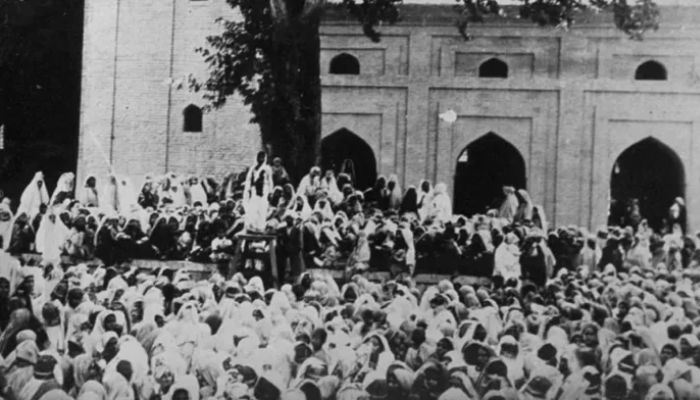
The root of this entire controversy is linked to a date over 9 decades ago, July 13, 1931. In fact, on July 13, 1931, Maharaja Hari Singh’s army shot 21 Islamist rioters outside Srinagar Central Jail. These Islamist rioters had come to attack the jail and wanted to overthrow Maharaja Hari Singh.
When Jammu and Kashmir merged with India in 1948 and the National Conference came to power in the state, they were given the status of martyrs. A holiday was also declared in the state on this day. They were described as revolutionaries who agitated for ‘democracy’. A memorial was also built for them near the tomb of a Sufi saint.
This holiday continued like this for decades. However, in 2019, the Modi government ended this holiday after removing Article 370. However, now there is a demand to restart this holiday in the National Conference government in Jammu and Kashmir. The BJP has strong objections to this.
The dark truth about the ‘martyrs’ of 13th July 1931
The extremists in Kashmir keep calling the incident of 13th July a revolution and mass movement against Maharaja Hari Singh. They call it ‘Kashmir Martyr’s Day’. It is said that it was a rebellion against the alleged cruel rule of the Maharaja. Whereas in reality, it was a fight against a ‘kafir’ Hindu ruler.
Kashmiri Pandit activist Sushil Pandit explained it very well in an article wherein he mentions that the first massacre of modern Kashmir happened then, and that too with a meticulously hatched conspiracy. Hundreds of people were murdered, burnt alive, maimed, and thrown into the river, women were raped, and many houses were looted, and many were forced to convert to Islam.
When the police took action against the rioters, some of them died, after which they were declared ‘martyrs’ by their gang and the new government of Jammu and Kashmir in independent India started remembering them on 13th July, honouring them like heroes to ‘sanctify’ the acts of those terrorists.
Let us now remember what actually happened on that day in 1931. At that time, Hari Singh was the autonomous king of Jammu and Kashmir.
Along with Jammu and Kashmir, Ladakh, Gilgit-Baltistan, Muzaffarabad-Mirpur, Aksai Chin, and the areas of Shaksgam Valley were also part of his territory. However, the British wanted to snatch the areas from him. Maharaja Hari Singh was one of those rare Hindu kings who ruled in a Muslim-dominated area. That is why, as a part of a conspiracy, the British installed an Ahmadi, Abdul Qadir from Peshawar, in Srinagar in the guise of a cook.
After this, Sheikh Mohammad Abdullah of Aligarh Muslim University (AMU) was also brought into the state. He was a person with political ambitions, whose ancestors still considered Jammu and Kashmir as their ancestral property. A public meeting was held at Shah-e-Hamdan in Khanqah Mohalla, where Abdul Qadir gave an inflammatory speech. The Quran was cited for the war against the Maharaja. Abdullah incited the crowd by saying that how can a ‘kafir’ rule over Muslims, this is strictly forbidden in Islam.
He openly incited Muslims for cow slaughter, which was banned according to the law. When he was arrested on charges of treason, riots broke out. Attempts were made to obstruct the legal process. Hearings were held in the jail premises out of compulsion. There was a similar hearing on July 13. However, the mob attacked the premises and tried to enter the judge’s chamber. The mob also attacked the police and started arson.
As it happens even today, the Muslim mob started pelting stones. The prisoners in the jail also started trying to escape from there amidst the chaos. The police force tried all the tricks, but the Muslim mob did not disperse. After this, the local DM ordered the Police to open fire. Meanwhile, the mob also started moving towards Hari Parvat fort. The lathi charge from the Police was not having any effect. Maharajganj used to be a hub of traders then, where there was a lot of looting.
Sushil Pandit writes that after this, shops of Hindus were destroyed and looted from Bhori Kadal to Aikadal. There was a lot of looting in areas like Safakadal, Ganji, Khud and Nawakadal. Account books were burnt in the market and there was a stampede among the Hindu shopkeepers. Goods worth lakhs were looted, or destroyed, or thrown on the roads. However, there was no news of any Muslim breaking into a shop and looting it.
A separate Muslim mob had gathered in Vicharnag in Srinagar. There, rich Hindus were tortured and their women were sexually exploited. By the time the army arrived, the Muslim mob had caused great damage to the Hindus. After this, the ‘intellectual’ gang got to work and named it ‘democratic revolt against feudal power’. Remember, the large-scale massacre carried out by Moplah Muslims in Kerala was also called ‘peasant revolt against landlords’.
While, in reality, whatever happened in Kashmir on July 13, 1931, was an Islamic war against a Hindu king. Sheikh Mohammad Abdullah also had a big hand in instigating these riots. He was arrested and sent to jail. However, the Maharaja pardoned him the very next year and Abdullah started instigating people by forming the ‘All Jammu and Kashmir Muslim Conference’. Hindus in Mirpur tried to save their lives by fleeing. Later hundreds of them had to live as refugees.
Hindu villages were burnt, and temples destroyed
The elders who witnessed this incident at that time mentioned how many were brutally killed and many were forced to convert to Islam. Many incidents of attack on temples and gurudwaras also came to light. Many holy Sanatani books, including Guru Granth Sahib, were burnt and idols of gods and goddesses were broken. This is called the ‘massacre of 88’ as according to Vikram Samvat, the year was 1988 then.
After that incident, hundreds of families and their future generations struggled for rehabilitation for decades. If we go by the English records themselves, 31 temples and Gurudwaras were completely destroyed. Around 600 cases of forced conversion to Islam came to light. Hindus of Sukhchainpur and Sanwal (Mirpur) suffered the most. The English write that wherever the rioters reached, the local Muslim population supported them.
Some Hindu villages were completely deserted while Islamists caused loot and destruction there. After this, on January 18, 1932, 50 Hindu villages were attacked and 300 houses were looted. Out of these, 40 were set on fire. Not only this, 40 Hindus were forcibly converted to Islam at that time. In Thanna village, 36 houses were looted again on January 20, 1932, and 8 were burnt. In Sohana village, 84 houses were looted and another village was looted on January 28.
The Kashmir, which was freed from the clutches of Afghans by Maharaja Ranjit Singh, and where the Dogra kings established Hindu rule, and the non-Muslims got relief from centuries of oppression, saw the massacre of Pandits again. The Constitution of India could not be implemented there even after independence and Abdullah-Mufti families together continued to run the Islamic rule here.
Honouring traitors stopped during Modi rule
In July 2020, for the first time, no tribute was paid to the rioters in Kashmir. This was possible because of the Modi government. The organised expulsion of Hindus from modern Kashmir had started decades back. The conspiracy of the British and the violence of the Islamic mob massacred Hindus to overthrow a Hindu regime, and later the ‘intellectuals’ gave it a different colour. Maharaja Hari Singh had even formed a committee headed by the Chief Justice of the High Court Barjor Dalal to investigate these incidents.
Maharaja Hari Singh had talked about Indian unity at the Round Table Conference in London. Interestingly, after that, the British army officer Major Boat brought and settled a Pathan named Abdul Qadeer in Kashmir. All this was part of a conspiracy. After taking control of power, the British released Abdul Qadeer in 1.5 years, even though he was jailed for 5 years. The Ahmadiyya community of Qadian town helped the British a lot in this entire conspiracy. This report revealed that British officer Wakefield deliberately did not go to the jail to control the situation that day, even though he was in-charge of the security.
On July 4, 1931, news of desecration of the Quran came to light, even though nothing like this had happened. However, Wakefield, after investigation, propagated the matter of desecration of the Quran, and instigated the Muslims. Inflammatory material was sent to Srinagar against Maharaja Hari Singh. Hari Krishna Kaul, who was made the Prime Minister in place of Wakefield, got the state to compromise with the Muslim rioters, but the riots did not stop. This has been the pattern of Islamic riots in many parts of the country, and it is the same even today.
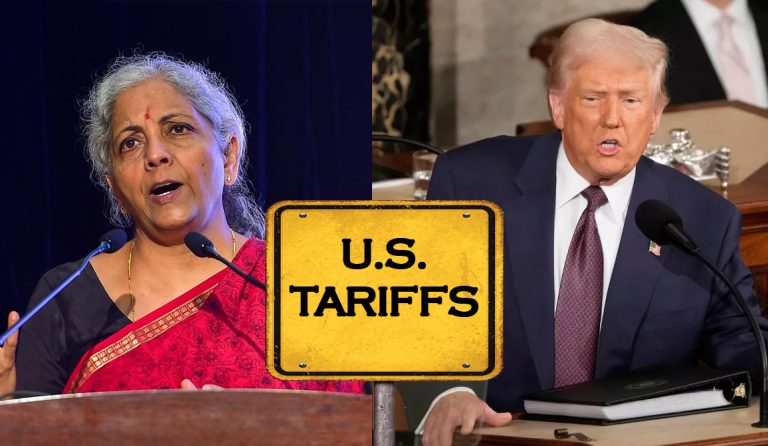
Union Finance Minister Nirmala Sitharaman on Thursday said that the impact of the US tariffs will be felt on India, adding that Union Minister Piyush Goyal is going to America and holding talks with the government there.
Speaking at an event in Visakhapatnam, Sitharaman further stated that the tariffs are likely to increase with the decision of the US President.
Sitharaman said, “We will have to see how the Commerce Ministry takes up negotiations with the U.S. to ensure that our interests are well-represented.”
For context, On February 18, US President Donald Trump outlined a new trade policy focused on fairness and reciprocity and said that the US would implement reciprocal tariffs, charging other countries the same tariffs they impose on American goods.
Trump emphasised that this approach would address unfair trade practices, including non-monetary barriers, subsidies, and VAT systems to encourage foreign countries to either reduce or eliminate tariffs against the US or set up their manufacturing base in the US which will add to its growth in the long term.
The Union Finance Minister also spoke about the new income tax rebates announced in the Union Budget 2025.
She said that new methods have made the income tax payment system easier for taxpayers, adding that only three crore people pay taxes so this number will be further reduced with the new tax relief.
Going further she said that the government is holding nationwide discussions on the Union Budget, adding that the discussions have been held in Mumbai and Visakhapatnam.
She said we met people from different sections of the society during our session in Visakhapatnam, and took their suggestions and recommendations on the budget, highlighting the government’s openness.
The Union Finance Minister asserted that the the centre is making allocations without any deficit for all the projects being done jointly by the center and the state.
(This news report is published from a syndicated feed. Except for the headline, the content has not been written or edited by OpIndia staff)
On the 29th of January 2025, the Supreme Court struck down AGI Greenpac’s resolution plan for Hindustan National Glass and Industries Ltd (HNGIL). The Supreme Court struck down the resolution plan by AGI, saying it did not adhere to the IBC rules and that the plan did not have prior approval of the Competition Commission of India (CCI) before it was put to vote.
A bench comprising Justices Hrishikesh Roy, Sudhanshu Dhulia and S V N Bhatti was hearing a batch of appeals led by Independent Sugar Corporation Ltd against a September 18, 2023 judgement of the National Company Law Appellate Tribunal (NCLAT).
The court held the importance of procedural compliance and noted that AGI Greenpac had failed to get prior CCI approval – a procedure that has been put in place to ensure fair competition and no monopolistic practices.
Earlier, OpIndia published a series of articles where it was demonstrated how AGI Greenpac, the second largest glass manufacturer, wanted to acquire HNGIL, the largest manufacturer of glass, without taking prior approval from the CCI. The merger of the two companies would lead to a monopolistic company – something that the Resolution Professional and AGI Greenpac attempted to skirt by manipulating the procedural requirements.
The CoC was directed to reconsider the resolution plan by INSCO, which had the requisite CCI approval at that time.
After the landmark Supreme Court judgment, which nullified AGI Greenpac’s resolution plan for HNGIL, INSCO, the other bidder that had the prerequisite CCI approval at the time, approached the NCLT for a reconsideration of its bid. AGI, on the other hand, approached the Supreme Court with a review petition. In the review petition, AGI Greenpac urged the court to restrain the Committee of Creditors (CoC) from considering other resolution plans for the takeover of HNGIL. Essentially, with the Supreme Court’s ruling asking the CoC to consider other resolution plans that already had CCI approval, Independent Sugar Corporation (INSCO) owned by Uganda-based Madhvani Group would become the natural choice for the CoC – which would mean that INSCO’s resolution plan would be accepted, and HNGIL would be acquired by it subsequently. AGI Greenpac, with its review petition, wants to restrain the CoC from making that decision.
After the setback in SC because of procedural lapses, which seemed deliberate, the review petition of AGI Greenpac also seems to be riddled with certain fallacies.
AGI Greenpac claims their resolution plan is ‘commercially suprerior’: Analysis
AGI Greenpac’s review petition hinges on the claim that its resolution plan is commercially superior to INSCO’s. This, however, does not seem to be accurate, as already analysed by OpIndia previously.
AGI Greenpac’s proposal includes a deferred payment of INR 356 crore spread over three years in addition to an upfront payment of INR 1,851 crore. In contrast, INSCO’s resolution plan offers a more secure and direct financial structure without leveraging the corporate debtor’s own assets for financing.
INSCO’s resolution plan, in contrast, includes an upfront payment of INR 1,850 crore to financial creditors, an additional Rs 50 crore allocated to operational creditors, and 5% equity in the restructured entity, valued in the range of Rs 300 to 400 crore in a turnaround scenario.
Unlike AGI Greenpac, INSCO has sourced these funds entirely from its own resources, without relying on proceeds from the divestment or sale of HNG’s assets.
AGI Greenpac’s deferred payment structure is not a genuine financial commitment but a calculated scheme that relies on the sale of HNG’s Rishikesh plant to generate funds.
This approach by AGI Greenpac is fundamentally flawed. Following are the problems with the approach taken by AGI:
Using the Corporate Debtor’s Own Assets for Payment:
AGI Greenpac has proposed to raise the deferred amount from the proceeds of HNG’s Rishikesh plant divestment. Essentially, AGI Greenpac is not bringing in fresh funds but is relying on the very assets of the corporate debtor to pay its dues.
This maneuver directly contradicts the principles of insolvency resolution, where a resolution applicant is expected to inject fresh capital rather than use the debtor’s own resources to meet its obligations.
Contradicting the Insolvency & Bankruptcy Code (IBC) Framework:
The IBC framework mandates that a resolution plan must maximize value for creditors. AGI Greenpac’s deferred payment model, financed through asset stripping, fails this test.
This strategy undermines the core principle of ensuring the revival of the corporate debtor while protecting creditor interests.
AGI Greenpac’s questionable conduct: Misleading the court?
As reported earlier, AGI, along with the resolution professional in this case, have deployed questionable tactics to win the bid, opaque financial engineering being one of them.
The resolution process demands transparency and financial prudence. AGI Greenpac’s reliance on deferred payments backed by asset liquidation could be an attempt to game the system while presenting an illusion of a higher bid value.
AGI Greenpac’s attempts to delay the resolution process?
In addition to its review petition, AGI Greenpac has also filed a fresh Interlocutory Application (IA) in the National Company Law Tribunal (NCLT) Kolkata, further creating a bottleneck in the approval process. AGI Greenpac has made submissions before the NCLT Kolkata bench led by Justice Bidisha Banerjee, arguing that the NCLT should not proceed with the approval of the resolution plan until the Supreme Court decides on its review petition.
By attempting to stall the implementation of a legally approved resolution plan, AGI Greenpac could potentially be obstructing the insolvency resolution process and causing undue losses to the creditors and stakeholders of HNG.
It is important to note that the HNGIL resolution process is the longest-running IBC case in India. The delay has caused losses to members of the CoC – led by SBI, a govt bank – to the tune of hundreds of crores. With the Supreme Court’s judgment going against them, AGI may be attempting to delay the proceedings further.
In essence, AGI Greenpac, at this juncture, must not be permitted to delay the proceeding any further, causing crores of loss to CoC – led by SBI.
Upholding the review petition may set a dangerous precedent, allowing resolution applicants to manipulate the process by inflating bids with deferred payments sourced from the corporate debtor’s own assets.
The inquiry into the gold smuggling scandal that involved 33-year-old Kannada actress Ranya Rao, who also starred in Tamil films, and is also a DGP’s stepdaughter, has uncovered shocking revelations. Ranya Rao was caught at the Kempegowda International Airport, Bengaluru, with nearly 15 kilograms of gold bars worth ₹12.56 crore attached to her body in a disguised waist belt.
Actress Ranya Rao, the daughter of senior IPS officer and Karnataka DGP (Police Housing Corporation) K Ramachandra Rao, was arrested at the Kempegowda International Airport while trying to smuggle gold. As per reports, Ranya Rao was found carrying over 14 KGs of gold bars strapped to her belt when the Directorate of Revenue Intelligence caught her.
After investigators raided Ranya Rao’s Bengaluru house, they found gold jewelry valued at ₹2.06 crore and ₹2.67 crore in cash, the DRI (Directorate of Revenue Intelligence) seized a total of ₹17.29 crore worth of Gold from her possession. Reportedly, Ranya Rao made 30 trips to Dubai in the last 12 months. According to reports, the actress, who has only appeared in three movies to date, brought back a significant amount of gold and received ₹1 lakh per kilogram of the smuggled item.
Rao made between ₹12 and ₹13 lakh every trip as a result. “The lady passenger has been placed under arrest under the relevant provisions of the Customs Act, 1962, and remanded to judicial custody,” the DRI informed. She was remanded to 14-day judicial custody on 4th March.
Ranya Rao used modified jackets and waist belts to smuggle the precious metal to get past airport security, based on preliminary investigation. She was under monitoring for the past few weeks because of her frequent journeys to Dubai. Moreover, she was able to avoid scrutiny via protocol rights that are usually reserved for bureaucrats. She was assisted by an airport police personnel in evading security procedures. She was also picked up in a government vehicle to dodge any checking on the road.
The authorities believe that Rao is involved in a broader smuggling network that could include officers, businessmen and politicians. She was about to advance through airport security on her way back when DRI officials caught her. Ranya Rao reportedly alleged, during police interrogation, that she was blackmailed into smuggling gold. Despite having no obvious family or commercial connections to Dubai, authorities are currently looking into her numerous trips there with her spouse, Jatin Hukkeri. The authorities are analysing videos of her past arrivals to determine the full scale of the crime.
Meanwhile, DGP (Director general of police) Ramachandra Rao, her stepfather, disassociated himself from her actions and stated, “I was also shocked and devastated when such an incident came to my notice through the media, I was not aware of any of these things and like any other father, I was also shocked. She got married four months ago and hasn’t visited us since. She is not living with us. She is living separately with her husband. There must be some problems between them due to some family issues.”
The DGP added, “We are unaware of her or her husband’s business dealings. This has come as a huge shock and disappointment. Anyway, the law will do its job, there is no black mark in my career. I don’t want to say anything more.”
Ramachandra Rao’s controversial career
Despite his claims, the top cop is no stranger to controversy. Ramachandra Rao faced heat in a significant hawala case in 2014 while he was the Inspector General of Police (IGP) for the Southern Range, Mysuru. A bus transporting hawala money was stopped by police at the time, and they confiscated ₹20 lakh. A businessman from Kerala, however, later claimed that the cops were embezzling the cash.
The businessman filed a case later charging that a bus bound for Kerala had been looted of Rs 2.07 crore, in Mysuru’s Yelwal neighborhood. After taking over the case, the Crime Investigation Department (CID) conducted probe that resulted in the arrest of Ramachandra Rao’s personal gunman as well as police informants. Rao was consequently sent to headquarters and relieved of his position as IGP of the Southern Range.
Several lower-level police officers were accused of being hand-in-glove with Rao in the robbery case that occurred over a decade ago. The senior police officer was transferred from his posting but no official or legal action was initiated against Rao.
Ramachandra Rao again landed in trouble two years later. He, and another senior IPS officer, were questioned by the CID about the deaths of gangsters Dharmaraj and Gangadhar Chadachana in relation to a purportedly fabricated encounter. The former insisted he didn’t know anything about the matter.
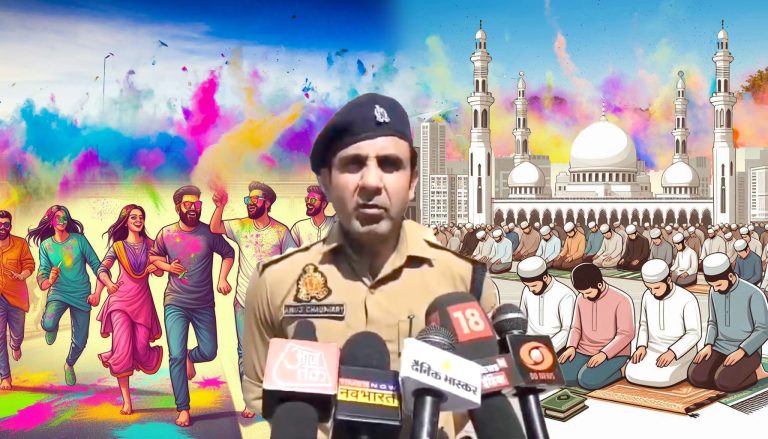
As Sambhal Police gear up to maintain law and order in the communally sensitive Sambhal ahead of Holi, Sambhal Circle Officer (CO) Anuj Chaudhary urged Hindus and Muslims to maintain peace during the festival. He advised people from the Muslim community to avoid stepping out for one day on the occasion of Holi if they want to avoid the colours and festivities. He also urged Hindus not to throw colours at people against their wishes.
This year Holi will be celebrated on 14th March which is a Friday. Every Friday, Muslims offer Jumma Namaz in large numbers. Considering the coincidence between Holi and Jumma Namaz, CO Chaudhary advised Muslims not to offer Jumma Namaz on 14th March to avoid any unpleasant situation due to Holi. “Jumma comes 52 times a year while Holi comes only once a year. If any person from the Muslim community thinks that his religion will be corrupted due to Holi colours, he should avoid stepping out of his house on Holi. And if he still wants to come out then he should have a big heart not to be offended by the colours of Holi,” the CO said to the media.
Anuj Chaudhary, Sambhal CO –
"Jumma comes 52 times in a year.
Holi comes once a year.
If Muslim community feels their religion will be corrupted by the colors of Holi,then they should not leave their homes on that day." pic.twitter.com/oRlSNz3rdZ
Explaining the importance of Holi for Hindus, CO Chaudhary said, “Just as Muslims eagerly wait the entire year for Eid, similarly, Hindus also look forward to Holi. Holi is celebrated by preparing sweets and applying colours. Similarly, on Eid sweets are prepared and people greet one another. Both the communities, Hindus and Muslims, should respect each other.”
He assured that the administration will take stringent action against anyone trying to disturb peace in Sambhal on the occasion of Holi. A meeting of the peace committee was held at the Sambhal Kotwali police station on Thursday as part of the efforts to maintain peace during the festival of Holi.
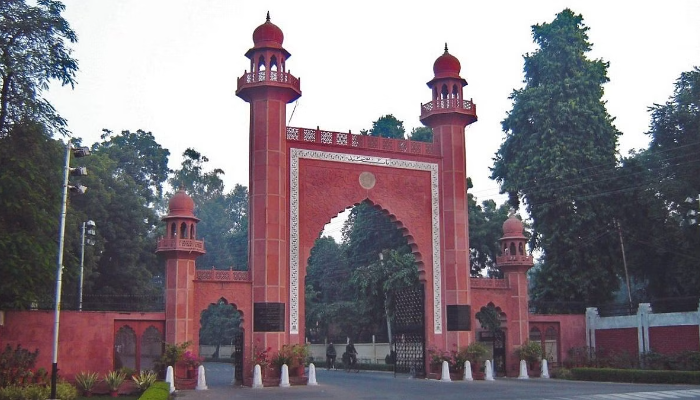
Uttar Pradesh’s Aligarh Muslim University is embroiled in controversy after denying permission to organise an event to celebrate Holi. Hindu students on campus requested approval for the “Holi Milan” program to be held in the university’s club, but the administration denied it. Students can celebrate Holi in the same manner that they do each year, according to AMU, which stated that they cannot permit the introduction of any new customs on campus. The management clarified that no additional authorization is required for this.
Meanwhile, the national president of the All India Muslim Jamaat, Maulana Shahabuddin Razvi Bareilvi, claimed that since Muslims compose the majority of the university’s students, Holi shouldn’t be celebrated there. He added that it’s critical that people respect one another as mutual respect is important to maintain peace. Hence, the event does not necessarily need to be organised on the campus of an institution if the Muslims are opposed to it, as there are very few Hindu students there.
Hindu students were outraged by the situation and complained that the administration of AMU was discriminating against them. LLM student Akhil Kaushal said, “On 25th February, we had applied for permission from the vice chancellor through the proctor, professor Mohammad Wasim Ali, to arrange Holi Milan function at the NRSC (Non-Resident Students’ Centre) hall on 9th March. The Proctor told us that the VC had called a high-level meeting attended by deans and professors regarding the isue where it was decided that the event won’t be allowed. However, now all the information pointed out that the proctor turned back from the statement and refused to give anything in writing.”
“We don’t want to, but if we are compelled, then we have the audio and video proof that proved these individuals explicitly stated that the application to hold the event at the NRSC Club in AMU on 9th March was rejected. If we are not given permission, we will make those viral on social media.” He added that they have no problem with any religious gatherings inside the AMU campus including iftar parties arranged in every department and even hostels, tazia, muharram and chehlum processions, among others.
“We only requested for permission once and many have issues with this too. Prime Minister Narendra Modi’s description of AMU as a “mini India” reflects India’s belief in religious plurality and secularism, which permits people of all faiths to enjoy their festivals. The VC should permit people of all religions to peacefully enjoy their respective festivals if she also believes in the prime minister’s remark,” he highlighted and further warned to bring the entire issue to PM Modi’s attention if sanction for the event is refused.
On the other hand, the former mayor, Shakuntala Bharti, declared that if the Holi festivities are prohibited, then Eid will not be allowed either. “First of all, I warn them that this is Hindustan, not Pakistan. The university is not anybody’s personal property. It belongs to everybody whether they are Hindu or Muslim, Sikh or Christian. No one has exclusive rights over it. No one will tamper with the feelings of Hindus or anyone else in Hindustan. Holi is a symbol of our unity, love and sacrifice, hence, these dirty tactics should be put to an end.”
The Bharatiya Janata Party (BJP) leader conveyed, “I am going to inform Chief Minister Yogi Adityanath about it. Holi will definitely be celebrated inside the campus. The varsity management should exercise commom sense and grant permission to the Hindu students.”
According to Professor Vibha Sharma, the proctor mentioned that authorization for a special program at a specific place was sought. However, the university has not yet made a decision on whether or not to proceed with this. The proctor claimed that there was no prohibition on Holi festivities because Hindu students celebrate it on campus each year and organize the “Holi Milan Samaroh” event. “No permission is needed for this, and the matter is being unnecessarily blown out of proportion,” he added.
Pentecostal Pastor Bajinder Singh has been at the heart of many controversies and condemnation on social media due to his fraudulent healing congregations (Changai Sabha). The ‘Yeshu Yeshu’ fame Christian evangelist has been in the news for all the wrong reasons with a woman recently accusing Pastor Bajinder Singh of sexually assaulting and intimidating her.
From murder convict to ‘Prophet’: The meteoric rise of Bajinder Singh
Pastor Bajinder Singh also known as ‘Prophet’ Bajinder Singh is a controversial Christian evangelist pastor based in Punjab’s Tajpur and runs the Church of Glory and Wisdom, which he founded in 2016. Born on 10th September 1982 in a Hindu Jat family in Haryana, Bajinder Singh’s life took a dramatic turn when he was jailed after conviction in a murder case in 2008. During his incarceration, he converted to Christianity claiming that he experienced miraculous healing after coming in contact with a Christian pastor in jail. After his release in 2012, Bajinder Singh began conducting prayer meetings initially in small gatherings in Chandigarh and Jalandhar claiming to perform ‘miraculous healing’ and cure various ailments in the name of Christ, a modus operandi traced among all Pentecostal pastors in and outside India.
In the year 2016, Pastor Bajinder Singh established his first church in Chandigarh and a second in Tajpur in 2017. In 2018, the Diocese of Jalandhar had in 2018 disassociated the Church from Bajinder. The Jalandhar Diocese PRO, Father Peter, had said that the pastor was in no way aligned with the Diocese. “He ran an independent church, which is not even recognised. His style of preaching does not conform to the mainline churches,” he added.
Despite criticism and controversies, Bajinder Singh’s ministry “Prophet Bajinder Singh Ministry” continued to grow, expanding rapidly to multiple branches within and beyond Punjab, capitalising on his self-proclaimed prophetic abilities and faith-healing theatrics. Singh has used social media aggressively to promote his evangelical activities and lure more and more people, particularly the poor, sick, vulnerable or those from marginalised groups. Pastor Bajinder alone has over 3.74 million subscribers on YouTube and over a million followers on Instagram and regularly posts videos demonstrating his self-proclaimed healing powers.
From hearing disabilities to HIV-AIDS, paralysis to even Cancer, Prophet Bajinder Singh claims to have healed people with these conditions using his ‘Hallelujah’ miracles in his Changai Sabhas (healing congregations).
In one such Instagram post, Pastor Bajinder Singh claimed to have cured a dumb and deaf minor boy using his healing powers.
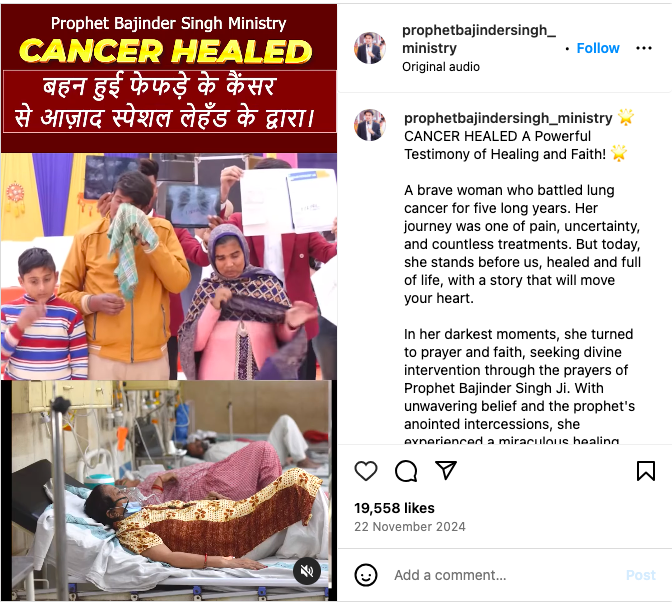
In another Instagram post published in November 2024, Prophet Bajinder Singh claimed to have healed a woman’s lung cancer after Singh performed a ‘special prayer’ for her. Boasting the so-called miraculous healing, Singh wrote, “A brave woman who battled lung cancer for five long years. Her journey was one of pain, uncertainty, and countless treatments. But today, she stands before us, healed and full of life, with a story that will move your heart. In her darkest moments, she turned to prayer and faith, seeking divine intervention through the prayers of Prophet Bajinder Singh Ji. With unwavering belief and the prophet’s anointed intercessions, she experienced a miraculous healing that defied medical expectations.”
Similarly, while modern science is yet to find an effective cure for HIV-AIDS, Pastor Bajinder claimed to have ‘healed’ a married couple from the ‘Satan’ called AIDS by tapping their head, rubbing their cheeks, and chanting slogans of “Hallelujah”.
Bajinder Singh’s Instagram page where he has amassed over 1.1 million followers is replete with videos of such evidently fraudulent healings from his Changai Sabhas.
In a shameless stunt, 2017 shows how “Prophet” Bajinder Singh brought a dead child back to life. With a massive cross hanging from the boy’s neck, “Prophet” miraculously brings the child “back to life”. In another, he brings a patient who has “been in a coma” back to life.
Pastor Bajinder Singh’s modus operandi of soul harvesting
While there are many Pentecostal pastors and Christian preachers including Ankur Joseph Narula commanding ailments to leave a person’s body in the name of Jesus Christ, conducting dramatic exorcism to ‘ward off devils’, where they stage intense scenes of shouting at supposed ‘evil spirits’, none has been as popular as Prophet Bajinder Singh.
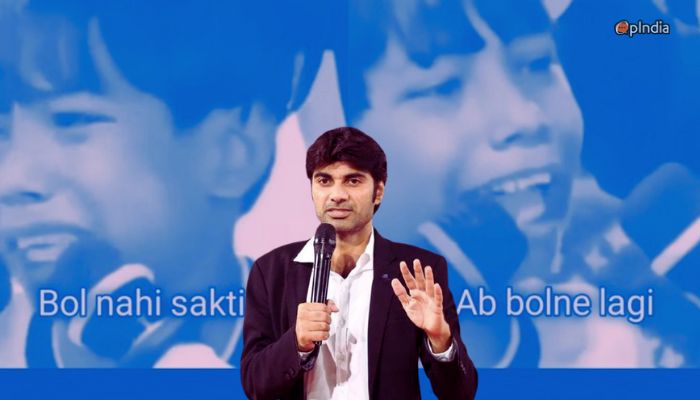
Singh relies on a blend of spectacle, emotional manipulation, and exploitation of the desperation and vulnerabilities of common people. While Bajinder Singh’s fraudulent Changai Sabhas continue unabated and attract huge crowds, his theatrics triggered a meme fest coupled with criticism in 2021 when a video of a minor boy weeping profusely during a Christian missionary event when Pastor Bajinder asks him if his sister could speak earlier and the boy answers in the affirmative while the loud ‘Mera Yeshu Yeshu’ song plays in the background. Back then, the National Commission for Protection of Child Rights (NCPCR) wrote a letter to Mandip Singh Brar, Deputy Commissioner of Chandigarh, seeking action against Singh for using a minor boy for forceful religious conversion activity. The boy seen in the video years later said that he will no longer be influenced by any Christian pastor. This episode, however, sparked outrage over how Pentecostal pastors like Bajinder Singh are using minors to further their conversion agenda.
Much like other fraudulent pastors, Bajinder Singh also employs myriad tactics to trick gullible and desperate people into believing his ‘healing’ theatrics in his Changai Sabhas. Besides dramatic exorcism, Singh uses physical gestures like blowing air from their mouths or touching people with random objects, Bible or a Cross—claiming it channels divine powers to cure diseases and fix deformities of handicapped individuals. These theatrics are performed in front of massive, emotionally charged crowds and controlled settings, amplified by loud and catchy music and testimonies from supposed beneficiaries, who are alleged to be planted actors or coerced into giving fake testimonies. This is done to evoke a sense of awe and belief among the gullible attendees and draw them towards converting to Christianity.
Notably, Pastor Bajinder Singh and his Changai Sabhas attract massive crowds in Punjab’s “church belt” districts Gurdaspur, Amritsar, Jalandhar, Ludhiana and Ferozepur. However, Singh’s activities are not confined to Punjab. Singh has converted a large number of Sikhs and Hindus among other non-Christian communities to Christianity using his fraudulent methods. The controversial pastor has expanded his tentacles to other states including Odisha. Back in 2022, Hindu rights group Kalinga Rights Forum has filed a complaint with the National Commission for Scheduled Tribes (NCST) urging them to ask Odisha DGP to register an FIR against Balangir district Sub-Collector, Lambodar Dharua, for assisting massive Christian conversion event by ‘Prophet’ Bajinder Singh of Punjab targeting tribal Hindus.
The purpose of these ‘Changai Sabhas’ has been to target vulnerable people—poor, sick, desperate and disillusioned people—promising them instant relief where medicine or resources fail. The idea is to subtly push conversion to Christianity as the path to ‘salvation’ and relief from all worldly problems. All this is done to harvest souls for Christianity.
This soul-harvesting tactic, however, involves retaining Hindu, Sikh or tribal names to blend in culturally and enjoy the benefits including reservations bestowed upon certain caste or tribal groups. The Pentecostal pastors and their teams cater to followers in more conventional ways, openly embracing Punjab’s cultural signifiers—turban, Langar, Tappa, and Gidda—in their sermons. To harvest souls for Christianity, several pastors like Bajinder Singh exploit India’s socio-economic gaps, targeting poor and marginalised communities with financial inducements, promises of jobs and facilitating marriages, ‘miraculous’ cures for ailments and even foreign residency in some cases.
Celebrity endorsements and political patronage help Pastor Bajinder Singh thrive
Pastor Bajinder Singh also enjoys support from politicians and Bollywood actors with many of them often courting controversy for promoting Singh’s fraudulent activities. In November 2021, Singh made it to headlines after former CM of Punjab Charanjit Singh Channi and actor Sonu Sood were scheduled to attend his meeting in Moga. Vishwa Hindu Parishad called for a protest against him, after which CM Channi decided to stay away from the event.
It was earlier reported how three Bollywood actors namely famous comedian-turned-preacher Johnny Lever, actress Rakhi Sawant and Naagin series fame Sonia Singh had voiced their support for ‘Prophet’ Bajinder and urged people to attend his meeting. Actors Chunky Pandey and Sooraj Pancholi have also been seen in Bajinder Singh’s events.
In recent months, Bollywood actors like Arbaaz Khan, Jaya Prada, Raza Murad and Tushaar Kapoor among others have attended Bajinder Singh’s events in Chandigarh.
Political parties and governments also remain nonchalant in acting against fraudsters masquerading as preachers given they enjoy the support of their massive number of followers and fear upsetting them. Some ‘secular’ parties even patronise these fraudsters for vote-bank politics further emboldening the evangelists like Pastor Bajinder Singh to carry out their conversion activities unabated. Political support, and celebrity endorsements coupled with a social media presence bolstered by professionally produced videos of ‘faith healings’ have cemented Bajinder Singh’s image as a revered figure among his followers and helped him attract more gullible people to the Christian fold.
Rape, fraud, loot and money laundering: The many cases against Pastor Bajinder Singh
Numerous incidents and allegations levelled against Bajinder Singh’s faith healing claims suggest that Singh’s tactics are fraudulent and exploitative. His ‘miracles’ are staged, preying on the desperation of vulnerable people, particularly the poor and those belonging to disadvantaged caste groups. Bajinder Singh’s legal troubles are extensive and span decades. His criminal history began with charges of assault and intimidation in 2006 in Haryana’s Yamunanagar, followed by his murder-related conviction in 2008 which resulted in his conversion to Christianity and foray into Pentecostal evangelism.
In 2018, he was arrested by Police in an alleged rape case in Zirakpur, Punjab. Singh was picked up by the police at the Delhi airport when the self-styled Christian Godman was about to board a flight to London. The victim had alleged that Singh lured her in 2017 on the pretext of taking her abroad. He then allegedly sexually assaulted her at his house in Chandigarh and made a video of the same, which he then used to threaten her. Reports suggest that the victim had paid the accused pastor a sum of three lakh for promising her to be taken abroad.
While Singh secured bail, the case is pending before the court. On Monday (3rd March 2025), the Mohali Court issued a non-bailable warrant against Pastor Bajinder Singh and two others in this case after they failed to appear before the court.
Back in 2022, a 4-year-old girl suffering from cancer died at Prophet Bajinder Singh’s church in Jalandhar’s Tajpur village. The girl’s parents had brought her to Singh’s church after AIIMS doctors gave up on her. The deceased girl’s father revealed how they were asked to pay Rs 15,000 to Rs 50,000 multiple times to Bajinder Singh and yet he failed to ‘revive’ the girl. The girl’s father alleged that his family was pushed out of the church after the girl’s death. As if this was not inhumane enough, Bajinder Singh’s church allegedly demanded more money from the deceased girl’s family claiming that the pastor would bring her back to life. Back then, the deceased girl’s family had filed a case against Singh.
In 2023, the Income Tax Department raided the residences of two Punjab-based pastors, Bajinder Singh and Harpreet Deol. The raid came after the officers revealed that the pastors had been operating churches under the guise of healing ministries, which are self-styled congregations that accept a significant amount of funding from foreign nations. These are either registered as autonomous religious entities or as societies led by a pastor.
While Singh’s supporters continue to view him as a divine ‘prophet’, his organisation has been accused of collecting large sums under the guise of charitable services and ‘miraculous’ healings raising questions over financial transparency—exemplified by the suspicious Rs 4.3 crore land deal in Mohali. This land deal raised eyebrows back then since it was struck at a way higher price than the area’s market value.
In 2024, an attempt to convert around 400 people to Christianity in a private hotel in Rajasthan’s Bharatpur was exposed by Hindu rights organisations. After the conversion racket was busted, it was revealed that as many as 20,000 poor and vulnerable people of Bharatpur, Rajasthan have so far fallen prey to the trap of religious conversion laid by this gang of evangelists who promised material benefits to those who convert to Christianity. In this case, ‘Prophet’ Bajinder Singh was reported to be the mastermind and he was allegedly transferring funds directly to the accounts of recipients. It emerged that this conversion racket was receiving funding fromthe Italian Christian group Labhana Ministry.
On 1st March 2025, Pastor Bajinder Singh faced fresh allegations of sexual harassment, stalking and criminal intimidation from a 22-year-old woman in Punjab’s Kapurthala. The woman alleged that Bajinder Singh sexually assaulted her as a teenager. The police registered a case of sexual harassment, criminal intimidation and stalking against the Christian evangelist on 28th February 2025. The victim had been attending Pastor Bajinder Singh’s congregation since December 2017. By 2020, she had become a part of his ‘worship team.’ According to the victim, the Christian evangelist began sending her unwanted messages after taking her phone number. Singh, however, has refuted these allegations as baseless.
While authorities have raised concerns over the rapid expansion of Pastor Bajinder’s ministry and fraudulent Changai Sabhas in Punjab and other states like Odisha and Jharkhand, he has not faced any concrete action so far. OpIndia has long been raising the issue of Christian missionaries and pastors harvesting souls for Christianity using fraudulent and exploitative tactics and altering the demographic and cultural fabric of Punjab and other states, however, due to the nonchalance of authorities and lack of political will, Pastor Bajinder Singh and many such ‘faith healers’ continue to run their business of selling the façade of hope and healing.
The ‘Yeshu Yeshu’ fame prophet’s empire of fake miracles and real menace thrives not on some holy favour or divine gift but on the cynical exploitation of faith and vulnerabilities. While cases have been registered against Pastor Bajinder Singh for his alleged involvement in sexual assault, money laundering, fraud, and conversion racket, he is yet to face legal scrutiny for his fake ‘miraculous healings’ at his fraudulent Changai Sabhas.
As the desperate Congress party tries to establish a link between the BJP and USAID after the US president defunded the American organisation, links of Congress with the USAID are emerging regularly. After OpIndia revealed that Congress leader Sam Pitroda’s NGO has links with USAID and other Deep State agents like Rockefeller Foundation. Now, it has emerged that the LGBTQ arm of the Congress party has close links with USAID.
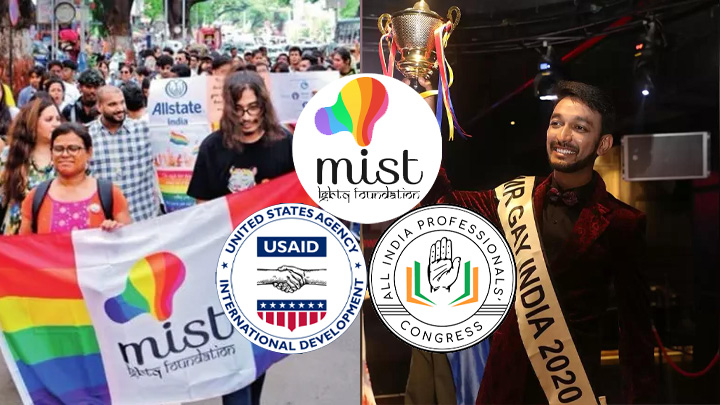
YouTube channel Bespoke Bengali, in an exclusive video, has revealed that Mist LGBTQ is among the three LGBTQ organisations in India to be funded by USAID. The other two groups are The Queer Muslim Project and the Nazariya QFRG.
Mist LGBTQ Foundation is an organisation working for the LGBTQ+ community in India. Apart from working to empower the LGBTQ+ community, Mist LGBTQ also sells LGBTQ themed merchandise through its website. The foundation was founded by Shyam (Samuel) Konnur, who is also the CEO of the organization.
Shyam Konnur, who uses the pronouns he/him and won the Mr Gay India contest in 2020, is also the state coordinator for LGBTQ affairs of the All India Professionals’ Congress in Maharashtra. Konnur’s Mist LGBTQ is directly funded by USAID.
The Professional Congress leader is not only the CEO of the group, the website of the group also lists All India Professional Congress as one of its sponsors and partners. AIPC collaborated with Mist LGBTQ for the Out & Loud – Pune International Queer Film Festival in 2023.
The website of the foundation states that it gets USAID support under the EpiC (Meeting Targets to Maintain Epidemic Control) project for two of its ventures, QueerBazaar – a queer merchandise shop located in Pune with an online presence and Stories Café, a queer café in Pune. Mist LGBTQ also HIV awareness and promotion activities, and its HIV initiatives are also funded by John Hopkins University and YRG Care supported Accelerate project, which in turn are funded by the USAID.
Mist LGBTQ has also received grant from UNDP under the SCALE initiative.
After US president Trump stopped all external funding under USAID, Mist LGBTQ condemned the move, saying it will potentially reduce funding and support for marginalized communities, including LGBTQ+ individuals. In a statement issued on 3 February, it stated that as funding becomes uncertain, “Mist LGBTQ Foundation is calling on corporations, advocacy groups, and allies to reaffirm their commitment to diversity and inclusion.” They also urged individuals to support them.
It appealed, “To sustain our programs, we are now actively seeking donations. Every contribution helps maintain initiatives that provide healthcare access, employment support, and advocacy for the LGBTQ+ community in India. Now more than ever, it is crucial to stand firm in our collective commitment to inclusion and equality. We cannot afford to let progress be reversed.”
Mist LGBTQ collaborates with Pune Queer Collective in various activities like pride marches, and Pune Queer Collective is a pro-Palestine group. It has participated in protests in support of Palestine, demanding end of Israeli military operation. Notably, in such a protest last year in Pune, a Pune Queer Collective said that “there are queer people in Palestine too,” while the fact is that LGBTQ activities are not allowed in Hamas-run Gaza. People who admit to belonging to the queer community are stoned to death in Gaza strip.
Notably, India’s first transgender clinic, Mitr Clinic in Hyderabad, shut down last week due to the freeze in funding from USAID. Mitr Clinic provided various services to the transgender community, including general health care, guidance on hormone therapy, gender-changing procedures, mental health counselling, and HIV/STI treatment. It was operated under the USAID-funded Project ACCELERATE.
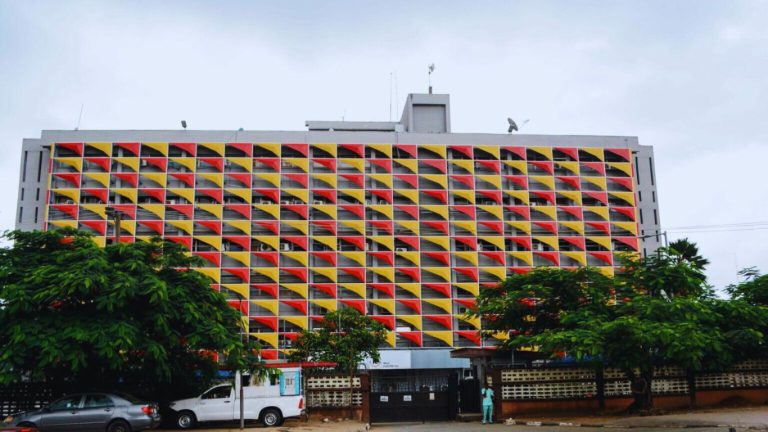
Some Nigerian army personnel reportedly attacked the head office of an electricity supply company named Ikeja Electricity Distribution Company (IKEDC) located at Ago Palace Way in the Okota area of Isolo, Lagos on Thursday (6th March) after the electricity supply to their air force base was disconnected due to unpaid bills. Videos of the incident show uniformed army personnel carrying weapons forcibly entering the company’s office and disrupting the company’s operations.
? BREAKING: Nigerian Military Storms Ikeja Electric Offices in Lagos
Shocking footage captures armed military personnel storming Ikeja Electric offices, forcing staff to kneel, assaulting workers, and crippling operations. The incident unfolded at the Okota office, with a… pic.twitter.com/5AshCZxzA4
— The Guardian Nigeria (@GuardianNigeria) March 6, 2025
The armed personnel assaulted the staff and forced them to kneel. The incident has instilled fear in the staff members some of whom decided to avoid going to the office. “I have been trying to reach our managers. Their numbers have been unreachable, and most likely, they have been attacked by military groups. This is unheard of, unlawful, and disgraceful that the military can invade the offices of companies in civil society,” an employee was quoted as saying by the Guardian. It is being said that tensions may escalate between the company and the Sam Ethnan Air Force Base after the incident. The operations at the company’s office were suspended following the incident.
As per reports, the company disconnected the power supply to the Nigerian Air Force base in Ikeja two weeks ago due to unpaid electricity bills which amounted to millions of naira. The power cut compromised the safety and security of the Air Force Base. Besides, the cooling systems in the warehouse of the base became dysfunctional due to a power cut causing the risk of rising temperatures in the warehouse in which high-calibre armaments were kept.
An agreement was reportedly signed between the Nigerian Air Force and the electricity company to pay a monthly sum of ₦60 million for 10-12 hours of electricity supply in a day. The company alleged that the air force violated the agreement while the latter denied the allegation.