Tuesday, April 14, 2026
Home Blog Page 5178

Social media account of an opera singer being censored due to his resemblance with Chinese President Xi Jinping

A well-known opera singer living in Berlin who bears a striking resemblance to the President of China Xi Jinping is repeatedly being censored on social media. As per reports, the account of Liu Keqing, 63, on the Chinese Tik-Tok like Douyin was locked by the Chinese authorities for allegedly violating the ‘leader’s looks’.

Liu Keqing posted a video on May 10 claiming that his social media handles are being censored due to profile picture violations. Liu Keqing used to share singing tutorials on his 41,000 follower Douyin account since 2019.

Reportedly, he wrote, “Dear friends, my Douyin account has been reported and banned because of my profile picture’s violation. I have provided my identification materials again, and I am currently waiting for approval. This is the third time that my account has been banned because of ‘image violation.”

In a conversation with New York times, Liu Keqing said that he had opened another Douyin account before but it was suddenly deleted by the authorities because the profile picture had resemblance with Chinese President Xi Jinping.

However, Liu Keqing is still active on his social media platforms but many comments on his videos appear to remain blocked.

Other Dopplegangers of Xi Jinping

In fact, Mr. Liu is not the only doppelganger of Xi Jinping, last year a food vendor in China became an internet sensation because he looked much like the Chinese President. Videos emerged in December showing a Chinese man serving pork buns and smiling and waves at the camera was highly resembling with President Xi Jinping.

China is accused of over-protecting the image of President Xi Jinping after it banned Winnie-The Pooh because some netizens compared President Xi with the cartoon character in 2017.

‘We give better quality rice than the Centre,’ says Bengal CM Mamata Banerjee while announcing free ration for people

While announcing that the state would provide free ration to the needy for another 12 months, till June 2021, West Bengal CM Mamata Banerjee claimed that her government was providing better quality rice than the Modi led government at the Centre.

Insinuating that the ration being provided by the central government was benefiting merely 60 per cent of the people in Bengal, the CM said: “We give better quality rice than the Centre. Only 6.01 crore people or around 60% of the people in Bengal have been benefited from the Centre free ration scheme. We are providing to 10 crore people,” she added.

Mamata Banerjee’s announcement to give free ration for another 12 months, till June 2021, had come minutes after Prime Minister Narendra Modi announced the extension of free food grains for poor till November, given the surging coronavirus situation in the country.

“For the first three months of the lockdown we gave each family five kilos of rice. Over the next three months, till September, we would provide five kilos of rice along with an equal amount of flour to each family. We will provide free ration till June 2021,” said Banerjee while speaking to media persons at the state secretariat.

Locals in WB complain of improper distribution of ration and other relief material during coronavirus lockdown

It is pertinent to note here, that the Mamata Government has previously received flak over the ration distribution during the coronavirus lockdown. On April 22, it was reported how distressed locals had clashed with cops in Baduria, 24 North Paraganas in West Bengal over the distribution of ration amid the Coronavirus lockdown. The clash took place after the locals complained of improper distribution of ration and other relief material.

A large number of protestors had alleged that they have not received any help from the govt over the last month during the lockdown, they also alleged that the fair price shops are also not giving food items properly.

Mamata Banerjee govt accused of misusing the funds provided by the central government against the COVID-19

Mamata Banerjee government is also under scanner for corruption in Public Distribution System scheme. West Bengal Governor Jagdeep Dhankhar had alleged that the ruling party has hijacked the PDS and the scam is getting bigger by the days. He also alleged that the TMC government is misusing the funds provided by the central government against the COVID-19. 

PM Modi announces free ration to poor till November 2020

Earlier today, PM Modi, in his address to the nation, announced that the centre’s key central scheme—PM Garib Kalyan Anna Yojana (PMGKAY) will be extended till the end of November in which free ration will be provided to the poor. The scheme is set to cost Rs 90,000 crore to the government, PM Modi said.

While highlighting the work done by the central government to alleviate the concerns of poor adversely affected by the coronavirus induced lockdown, PM Modi said that the scheme to provide free ration to the poor will continue for an additional five months, adding that 80 crore people will get the benefit from the scheme.

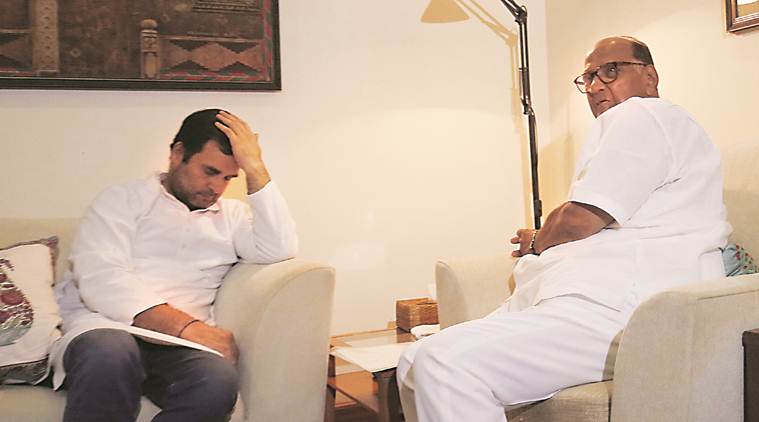
‘Why didn’t you rectify 1962’s mistake when you were Defence Minister?’: Congress leader Nitin Raut slams Sharad Pawar after the NCP supremo criticised Rahul Gandhi

The long-suppressed fissures in the Maha Vikas Aghadi government in Maharashtra have come out in open as an unusual bout of mutual recriminations seems to have erupted between the long-time allies NCP and Congress after the NCP supremo Sharad Pawar stridently criticised the Congress party for politicising the Indo-Sino border dispute.

Following Sharad Pawar’s remarks that he can’t forget what happened in 1962 when China captured India’s 45,000 sq km of land, Congress leader Nitin Raut responded to the comment passed by Pawar saying he should have rectified the mistakes of 1962 when he was Defence Minister of the country.

“When China captured our territory in 1962, situation was different. Sharad Pawar should have rectified mistakes when he was Def Min under Cong rule.Instead of commenting on Rahul Gandhi’s remark he should’ve advised PM to speak on issue,” Maharashtra minister and Congress leader Nitin Raut said.

The trenchant counter-remarks from a Congress leader comes on the heels of NCP supremo Sharad Pawar’s sharp disapproval of the former Congress President Rahul Gandhi’s attempts to politicise the border dispute between India and China.

Pawar was responding to Rahul Gandhi’s comments that PM Modi had “surrendered” to China after violent clashes broke out between the two sides in Galwan Valley that resulted in the deaths of 20 Indian troopers and an undisclosed yet comparable number of fatalities on the Chinese side.

When asked about Rahul Gandhi’s remarks against PM Modi, Sharad Pawar said,”We can’t forget what happened in 1962 when China occupied 45,000 sq km of our territory. At present,I don’t know if they occupied any land,but while discussing this we need to remember past. National security matters shouldn’t be politicised.”

Rahul Gandhi twists PM Modi’s statements on Ladakh standoff

Rahul Gandhi had gone into a tizzy after Prime Minister Modi’s recent statement about the Galwan Valley stand-off. He claimed that the Prime Minister had ‘surrendered Indian territory to China’. Factually, his claims made no sense, of course. However, that did not stop him from furthering this platitude. The Chinese troops entered Galwan Valley earlier and were pushed back by Indian Army in early May.

The Chinese Army then came back and while being pushed back, the present clashes took place. PM Modi’s statement simply meant that the PLA has no presence on our side of the LAC after they were pushed behind.

Using a screenshot where Prime Minister Modi had assured Indians that the Chinese have not managed to intrude in our territory and grab any land, Rahul Gandhi accused Prime Minister Modi of ‘surrendering Indian territory to Chinese aggression’.

He then said that if the land was Chinese, why were our soldiers killed and where were they killed. He thereby cast aspersions that Galwan Valley, which is part of Indian territory and where Indian soldiers were martyred fighting the PLA, is now ‘surrendered to Chinese aggression’. Rahul Gandhi, thereby, suggested that the Galwan Valley territory in Ladakh is now grabbed by the Chinese.

Kejriwal tries to take credit for Center’s free ration scheme, exposed by Meenakshi Lekhi

Aam Aadmi Party has faced criticism many times for spending a lot on advertising. Their method of taking credit for schemes by the Central government has raised many eyebrows in the past. Now, BJP leader Meenakshi Lekhi has shared a screenshot of an e-coupon Delhi government has issued for free ration under Chief Minister Corona Relief Free Ration Scheme.

Meenakshi Lekhi alleged that on the coupon, there is a photograph of the Chief Minister Arvind Kejriwal depicting that it is a state government’s scheme. However, there is no mention of the fact that the Delhi government got the ration from the center under PM Garib Kalyan Anna Yojana. In May, BJP Leader Manoj Tiwari alleged that out of 36,367 tonnes of food grain allocated to Delhi by the Center, Delhi government had distributed only 1% food grains.

Mismanagement in grain distribution, alleges Meenakshi Lekhi

Meenakshi Lekhi also shared a video in which a man was denied ration at the Sarvodaya Kanya Vidalyalay ration distribution center. She alleged in the post that while Delhi got approx 37,000 tonnes grains from center, Kejriwal government failed to provide the same to the needy. In May, Delhi High Court rapped Delhi government for its inability to fulfil the promise of food security for the needy.

AAP’s habit of earning PR brownies

This is not the first time the Aam Aadmi Party has used sensitive issues to gain PR brownie points. During the initial days of the Covid-19 pandemic, AAP’s MLAs, including Manish Sisodia and Raghav Chaddha, posted photos of themselves leading the disinfection drive. The party also tried to take credit for the recently established coronavirus facility at Radha Soami center in Delhi, the work for which was actually carried out by the Central Government.

Killer TikTok: How teens used the app to post suicide videos, film killer stunts and glorify antisocial behaviour

The Indian government has red-flagged the usage of 59 China-linked apps, including TikTok, as being a threat to national security and privacy of people. Out of all the banned apps, the TikTok app, which had more than 10 crore monthly active users in India, was turning out to become the biggest threat, especially amongst teenagers.

Apart from being extensively used to objectify women and glorify attacks on them, promoting rape, animal cruelty, domestic violence etc., the Chinese app has been linked to several deaths, as users had been using the app to post videos of suicide and even murders.

Several murders and suicides in the recent past have been associated with the Chinese social media app. The glorification of pervasive issues and the app’s toxicity has compelled the government to issue a blanket ban on the Chinese app.

TikTok user turns murderer

Recently it was reported how a woman was brutally stabbed to her death by her ‘stalker’ on Wednesday evening (17 June). The stalker, a 21-year-old youth named, Sherkhan Choudhary, was an influential social media user with over 4 lakh followers on TikTok. It was reported that the woman, Naina Kaur, who was around 20, was returning home with her parents when three men, Sherkhan, Asif and Aamir Chaudhary arrived on a bike.

One of them, who was wearing a mask, pulled Naina’s hands and beat her up, and also slapped her mother so she fell unconscious. Sherkhan then stabbed Naina with a knife several times on her neck and abdomen. Shekhan Choudhary, with over 4 lakh followers on TikTok, was seen glorifying violence and ‘badmaashi’ in many video of his.

Advocating rape and acid attacks

A First Information Report (FIR) was filed with the Uttar Pradesh police by Advocate Abhishek Rajpoot against a controversial TikTok video creator named Faizal Siddiqui for promoting acid attack as a means to avenge lost love by jilted lovers. Faisal had 13.4 million followers on the Chinese video-sharing app.

TikTok user Mujibur Rehman was seen promoting rape in another viral video. The boy, along with his friends, attempts to button up his shirt and zip his pants to suggest that they have raped the girl in the contentious video.

In another video posted on the Chinese app in May this year, a user named Tanjeem Khan displayed pervasive behaviour and objectified a woman by enacting suggestively to the tune of a song that says, “Only I have a right over your body.” The video also depicts a girl crying and adjusting her dishevelled clothes, symbolising an act of rape.

Violence and hatred against Hindus

A TikTok user, Saifi Khan, had uploaded a video wherein young children can be seen parroting the lines of a song that advocates genocide against non-Muslims. The song in the background goes as, “The area was shaking with the chants of “Naara-e-Takbeer.” Within a short time, the playground was full of the dead bodies of Kaffirs (infidels)”.

In another anti-Hindu video, a Muslim man, wearing a skull cap, is seen wielding a sword at a Hindu priest. In an act of bigotry and sheer hatred, the Muslim man then enacts attacking the priest with the sword, ‘cutting’ his neck and leaving him bleeding.

TikTok used to advocate anti-national sentiments

In order to get quick fame, delinquent teenagers go overboard and make offensive and violent videos on the Chinese social media app, TikTok. In one such incident, four youths in Bazarkhala area of Lucknow, Uttar Pradesh allegedly burnt the Indian national flag and raised anti-national slogans on June 22 to make a TikTok video go viral.

An FIR, under stringent IPC sections 124 (A), 153 (A), 504, 505 (1) (B) (2), 352, 325, 506 and Rashtriya Gaurav Insult Prevention Act 2, has been registered in Bazarkhala police station, against the accused. During interrogation, the minor admitted of burning the India flag and raising anti-national slogans. He said that they were doing so to make the video go viral on the popular Chinese social media app.

Death while shooting killer stunts on TikTok

In January, a teen named Karim Sheikh suffocated to death while shooting a video. The 17-year-old boy from the Pirganj area of Kolkata’s Malda district passed away while attempting to record a music video that involved risky stunts. Karim was tied to an electric pole with a plastic bag covering his face, where a video of him trying to escape from the same was being recorded by his friends.

When he started having trouble breathing, his friends apparently concluded that he was performing for the video and continued shooting the incident. When the teenager failed to respond after a couple of minutes, the other boys realized what had happened and rushed to rescue him. But Karim had already died of asphyxiation. 

In another incident, a youth named Ammar Haider was killed in Sialkot in the city of Punjab in Pakistan while making a TikTok video. Reportedly two friends Ammar Haider and Zohaib were making a TikTok video when Ammar fired a loaded pistol at his stomach, which caused his death.

Moreover, last year, a 16-year-old boy named Mohammad Noor Ansari was run over by a train while recording a video for TikTok by standing on railways tracks at Kating near Purulia station, West Bengal.

His friend had informed that Mohammad Noor Ansari, a school dropout was crazy about making funny videos and uploading the same on TikTok and other social networking sites. He had made several videos on tracks earlier but this one turned fatel.

Users post suicide videos on TikTok

Last year, in a shocking incident, a woman committed suicide by consuming toxin after her husband scolded her for spending too much time on Tik Tok app. The woman named Anitha killed herself at her residence in Perambalur, Tamil Nadu and video recorded the whole act. She also recorded a statement before committing suicide asking her husband to take care of their kids.

In fact, according to Shekhar Gupta’s ThePrint, the Delhi riot shooter Shahrukh was also a TikTok buff. ThePrint spoke about how Shahrukh aspired to be on the cover page of a fashion magazine before becoming the face of Delhi anti-Hindu riots.

EU air safety agency suspends Pakistan International Airlines to operate in Europe for the next 6 months

The Pakistan International Airlines spokesperson said on Tuesday that the European Union safety agency has suspended the airlines from operating in Europe for the next six months effective from July 1, 2020. Which would mean that no Pakistan’s flights would be allowed to enter European states for the next six months, starting from tomorrow.

“EASA has temporarily suspended PIA’s authorisation to operate to the EU member states for a period of 6 months effective July 1, 2020, with the right to appeal against this decision,” a PIA statement said, adding that PIA would discontinue all its flights to Europe temporarily. The decision was taken in light of the fake pilot license scandal in Pakistan.

Fake pilot license scam in Pakistan

Recently, Pakistan’s Aviation Minister Ghulam Sarwar khan made a shocking revelation saying that more than 30 per cent of civilian pilots in Pakistan carry fake licences and so are not qualified to fly a plane.

While addressing Pakistan’s National assembly, the aviation minister said that some 262 pilots in the country paid someone to sit on their behalf in the exam to clear the examination. These findings were revealed after a probe into the PIA plane crash in Karachi last month. However, Khan did not mention whether the pilots on board the crashed plane were fake pilots or not.

Following the publication of the report into the crash, Pakistan International Airlines grounded 150 pilots suspected of having fake licenses. The Pakistan International Airlines (PIA) passenger plane which crashed near the Jinnah International Airport in Karachi last month happened due to human error, a probe report revealed. The report had suggested that the pilots were discussing the coronavirus crisis during the landing.

Pakistan responsible for 50% of all ‘imported’ Coronavirus cases in the United Kingdom

This news came against the backdrop of reports that the Islamic Republic of Pakistan has accounted for over 50 per cent of the total ‘imported’ Coronavirus cases in the United Kingdom. According to reports, about 190 flights have landed in the United Kingdom from Pakistan since March 1. Public health records revealed that a total of 30 people who had come to the UK from abroad have been diagnosed with the Wuhan Coronavirus. 

Reportedly, several passengers from Pakistan had to be admitted to Intensive Care Units (ICUs) upon their arrival in Britain. Earlier, Emirates had cancelled its flights from Pakistan after 30 travellers were diagnosed with Coronavirus on a flight to Hong Kong. As per reports, around 2 Pakistan International Airlines (PIA) flights arrive in the UK every day. Even though initial flights were meant to evacuate stranded British and Pakistani nationals, later, flight operations were resumed for daily travel.

As Balochistan freedom fighters claim responsibility for attack on Pakistan Stock Exchange, Imran khan accuses India of carrying out the attack

A day after Balochistan Liberation Army claimed responsibility for the attack on the Pakistan Stock exchange in Karachi, the Prime minister of Pakistan, Imran Khan, accused India of carrying attacks in Pakistan.

While speaking in Pakistan’s National Assembly, Imran Khan said that Pakistan has “no doubt” that the terror attack on Pakistan’s Stock Exchange was carried out by India.

Imran Khan said, “India made a huge plan to de-stabilise Pakistan, they came with a huge arsenal. They planned to enter the Pakistan stock exchange and keep the people under captivity. Just like the one happened in the 26/11 Mumbai terror attack.”

He added, “We have no doubt that this was done by India.” He added that it was a huge win for Pakistan as the agencies had averted a major attack which was planned by India to destabilize Pakistan.

Earlier, Pakistan’s Foreign Minister Shah Mehmood Qureshi had referred the terrorists who attacked the stock exchange as ‘sleeper cells of India’. MEA of Indian rejected the ‘absurd comments’ of the Foreign minister of Pakistan.

MEA Spokesperson Anurag Srivastava said, “India rejects the absurd comments of the Foreign Minister of Pakistan on the terrorist attack in Karachi. Pakistan cannot shift the blame on India for its domestic problems. Unlike Pakistan, India has no hesitation in condemning terrorism anywhere in the world, including in Karachi.”

Pakistan Stock Exchange attack

Four gunmen armed with a huge cache of weapons and explosives attacked the Pakistan Stock Exchange on Monday. Four people had lost their lives in the terror attack. The gunmen launched a grenade attack at the main gate of the busy Karachi Stock Exchange building and then stormed it, firing indiscriminately, killing four security guards and a police officer.

Meanwhile, the Balochistan Liberation Army claimed responsibility for the terror attack on the Pakistan Stock Exchange building. Majeed Brigade, a unit of the Balochistan Liberation Army (BLA), confirmed that all the gunmen were suicide attackers.

Pakistan tried to designate an Indian citizen as global terrorist

This is not the first time Pakistan has tried to malign the image of India by blaming for every incident witnessed by Pakistan. Prior to this, Pakistan tried to frame an Indian citizen as a global terrorist in United nations but faced a major setback after UN’s 1267 committee restricted its efforts to proscribe an Indian national working in Afghanistan as a ‘global terrorist’.

Ever since the Pakistani terrorist and Hizbul Mujahideen chief Maulana Masood Azhar was listed as a global terrorist in 2017, Pakistan has been putting efforts to frame Indian citizens of terrorism on its soil to defame the country at the United Nations Security Council. However, the bluff is often called out by the allies of India repeatedly.

Manojātasatya: Speak up for, not stigmatise, mental health! The necessity of reducing the stigma and how we can go about reducing it

In India, since times immemorial, we have always believed in the principle of holistic well-being – physical, mental and even spiritual. Among our civilisational claims to fame in the times of yore are the ancient medical science known as Ayurveda (that arises from the Sanskrit words Ayur or life, and Veda or science) as well as the addressing of mental health.

In the Rig Veda, topics such as the exploration of methods for attaining mental happiness, prayers for mental happiness and methods of increasing medha (intelligence) have been looked at. In first six mantras of Shiv Sankalpamastu, important characteristics of Manas has been described, where subjects such as the speed of mind and the state of mind during different states of wakefulness and consciousness are spoken about.

The mind has been described as the instrument of knowledge and basis of consciousness in these ancient texts. Classification of mental disabilities based on endogenous and exogenous factors has been done systematically in Ayurvedic texts such as the Sushruta Samhita and Charak Samhita: we have Nijmanasrog (endogenous mental disabilities), which is further divided into Manas Dosh Janya caused by psychological factors and Sharir Doshanubandh Janya caused by physical illnesses, and Agantujmanasrog (exogeneous mental disabilities).

Even with such extensive knowledge and understanding of this side of human existence, the tragedy is the way many Indians treat mental health, mental disabilities and disorders today.

Within the health related Sustainable Development Goals (SDGs), one target that is directly associated with mental health is Target 3.4:

By 2030, reduce by one third premature mortality from non-communicable diseases through prevention and treatment and promote mental health and well-being.

As per a report by the WHO 7.5% of the Indian population suffers from some form of mental disability or disorder, and India accounts for nearly 15% of the global mental, neurological and substance abuse cases. WHO predicted that by 2020, roughly 20% of Indians shall suffer from mental illnesses, and to make matters worrisome, we have no more than around 4,000 mental health professionals to tackle this challenge!

The National Mental Health Survey of India 2015-2016, supported by Ministry of Health and Family Welfare (Government of India) and implemented by the National Institute of Mental Health and Neuro Sciences (NIMHANS) – Bengaluru, had some eye-opening findings in this regard. The National Mental Health Survey quantified the burden of those suffering from mental, neurological and substance abuse problems and found that while nearly 150 million Indians needed mental health care services, less than 20% were actively seeking support and care!

Some startling findings included: 1 in 20 people in India suffered from depression, there is high prevalence of psychoactive substance abuse, high suicidal risk for nearly 1% of the population and people in the ‘productive age group (30-49 years)’ (terminology from the Survey Report) were affected the most. It was also seen that

Mental disabilities and disorder affect everyone, regardless of gender, age, lifestyle or residence, even though some groups are at higher risk for certain illnesses

In India, even today and among the youth too, if someone says they are undergoing treatment or support for any mental health issue, you can get a range of reactions from some people: from judgemental astonisment to outright humiliation with derogatory comments such as ‘pagalpan‘ – madness and even ‘defect’, as crass and inhuman as that is!

Even today, we have people who take it as an insult if someone is asked to seek help or support for a point of concern when it comes to mental health. Even today, we have people who find it much better to outcast and throw out people from their circles and lives for mental health issues than engage with them with understanding, love, trust and respect. People will speak about you behind your back, insult and mock, gossip and deride any such individual rather than having the least bit of true understanding and concern.

People with mental health disabilities do not need anyone’s pity or mercy, they need understanding.

For anyone to discuss their mental health can be scary, especially in a society that stigmatises mental illnesses. However, it is of utmost importance to do so, so that the people who care for you are able to support and help you. It also liberates you from either living with the fear of someone finding out about your struggle or adversely affecting anyone without their full knowledge of your condition.

Untitled
Prevalence of mental disabilities and disorders (Source: National Mental Health Survey of India 2015-2016, Government of India)

Stigma and discrimination are consequences of misinformation and ignorance. Some studies on mental health literacy, particularly one titled ‘Mental Health Literacy Among Late Adolescents in South India: What They Know and What Attitudes Drive Them‘ published in the Indian Journal of Psychological Medicine in 2016, show a grim reality: mental health literacy among adolescents is extremely low with depression being identified by around 29% and schizophrenia/psychosis being recognized only by around 1.3%. Invariably stigma was seen to influence (worryingly) help-seeking.

As per the work titled ‘The burden of mental disorders across the states of India: the Global Burden of Disease Study 1990–2017‘ published in The Lancet Psychiatry in February 2020, more than 197 million people had mental disorders in India in 2017. In 2017, depressive disorders were seen to contribute the most to the total mental disorders Disability-Adjusted Life Year (DALY).

For my readers who are not familiar with DALY, a Disability-Adjusted Life Year is a measure of overall burden of a disease or disorder, expressed as the number of years lost due to disability, ill-health or early death. Depressive disorders contribute around 33% to DALYs in 2017, followed by anxiety disorders at 19%, idiopathic developmental intellectual disability or IDID at around 11%, schizophrenia at around 10%, bipolar disorder at around 7%, conduct disorder at around 6%, autism spectrum disorders at around 3%, eating disorders at around 2% and Attention-Deficit Hyperactivity Disorder (ADHD) at 0·3%.

As you can see, the range of disabilities and disorders is large, as is the seriousness and nature of each as and when manifested in different individuals. There is no one category or classification or broad wording that can be or must be presented for individuals with mental health disability.

Some disorders are from birth while some emerge over time. Some are curable and temporary while others are more sustained and possibly life-long. As you can see, governments across the world have taken significant steps to help bridge the gap between people with these disabilities and those without:

Untitled2
Main types of government social support provided for persons with mental disorders, global
percentages (Source: WHO Mental Health Atlas Report 2017)

However, as mentioned previously the biggest hurdle seen in India, as around the world, is

Breaking the barrier

Every individual must be able to discuss mental health, disability or disorder and speak up on the same, with ease and understanding, and not as a point of discomfort, shame or stigma, as is seen by multiple studies and groups studying mental health in India over the years. Whether you tell one person, talk to a doctor or a health professional or become an advocate for mental health awareness, it is extremely important to share your story to help yourself and others.

I have known instances, very closely, where someone not doing so has ended up affecting the professional lives (with attention deficit syndrome coming into play without active acknowledgement, in one case), relationships (with somebody, in another case, even being rejected for a mental health condition instead of being spoken to caringly!) and general welfare of individuals, especially when the other side that learned about their disability or disorder was insensitive or misinformed about mental health! And it can be devastating.

There is no greater pain a person can have than be judged and spoken about in harsh terms, due to something not in one’s control. The only way out is trying to reach out, engage, share and seek support wherever one can. If the other side has the capacity and sensitivity to understand, well and good; if not, well, don’t bother!

In a society with stigma around mental health, do not beg or plead anyone to understand your condition or disability, if any. Mental health disabilities and disorders need not be convoluted with any loss of dignity and self-respect!

What’s most important is to think about who you want to share and how much information you want to share. Not everyone will care or have the understanding or sensitivity to hear you out or understand you. Some may even mock you or gossip about you. If you feel vulnerable and unable to cross this initial boundary, it makes sense to talk to your closest friends first. Just try to prioritize those you can be frank and open to, and who shall be supportive and understanding.

There are some ways to make sure that your point reaches across to the person you are communicating to: prime the conversation (start by letting the person know what you are about to say is serious and important to you), write it out if that helps (so that you can gather your thoughts and place them in one place before sharing), use examples (this is useful to communicate disabilities and disorders especially to those who have never experienced and cannot go all the way in realising the seriousness and nature of the condition), let them know how they can help and ask the person to help you talk to others. These are various nuances and points that are hardly discussed or known in India today!

On the other side, if someone opens up to you about their mental health, disability or disorder, the first and most important thing you can do is: listen. Simply listen. Do not make assumptions and definitely do not jump to conclusions. Make them feel comfortable and secure, and listen to them thoughtfully and carefully.

The second most important thing is to believe them. It is easy to just shrug it off as somebody making something up or joking but when somebody with a genuine issue faces this, it is devastating for them. It makes them feel alone and afraid, especially if they needed to muster a lot of courage to tell you! If they feel judged or dismissed, it might discourage them to talk to you or anyone else about their problems in the future.

Do not treat them differently, like a ‘mental case’ as some very insensitively and inhumanly put it. Ostracisation or discrimination is the worst punishment a person with a mental disability or disorder can be given, for no fault of theirs. Do not gossip mindlessly about their condition (since the person opening up is sharing private medical information and this must not be shared lightly) and instead ask how you can help. Gently ask them to seek support from professionals if need be and accompany them, if you can.

Not once with the feeling of charity or pity but understanding. Not once with misinformation or insensitivity. For the worst thing you can do to someone is misuse this condition or information about it, in society. As they say, scars on your body can heal with time but scars like this, almost like on the soul (subject to your belief in souls; heart would do otherwise), never go.

During this period of crisis and uncertainty, as we battle Coronavirus the world over, it is important to look after your mental health. I have always spoken for spiritualisation and calming the mind. However, I feel some of the following points and steps can also be quite helpful:

covid19-mental-health-Desktop
Points and steps for the battle within (Source: The Federal)

I write here with experiences and thoughts that I have collected over the years, particularly while working on mental health in my Stephanian days and in the University of Cambridge as a student leader and activist. This is the Manojātasatya – मनोजातसत्य or the truth emerging from (and of) the mind, and it is this truth that is of significant importance for us to develop and flourish holistically.

I will end by saying that many of us may have watched the famous movie A Beautiful Mind. For me,

All minds are beautiful. They are just sometimes beautiful in different ways!

Speak up, on mental health. Stigmatise not!

No new users, old users can’t access: TikTok gone completely from your phones

Chinese video sharing app TikTok has also stopped working for the existing users a day after the government of India banned the app over security concerns. Essentially, the problematic app has now completely stopped working.

As can be seen, the existing users get a notification that due to government of India directive, TikTok is in process of compliance of the same.

On Tuesday, however, the app was removed from Google Play Store and Apple store. Hence, new users cannot download the app till the ban is lifted, if it is lifted. Following that, many were wondering whether the existing users will still be able to access the app. However, later in the day, even existing users were unable to access the app.

The government of India has announced a ban on 59 Chinese apps that were listed on the Google Play Store and the Apple iOS App Store in India over concerns that these apps were engaging in activities that threatened national security, defence of India, sovereignty and integrity of India. The list includes the popular short video service TikTok, which considers India as its biggest market, UC News from Alibaba Group, CM Browser, file sharing service Shareit, shopping app Shein, popular mobile game Clash of Kings, and more.

China issues statement on ban on 59 Chinese apps including TikTok, expresses ‘serious concern’ and ‘opposes the move’ by Indian govt

Following the Indian government’s decision to ban 59 Chinese apps, including TikTok, for “engaging in activities which are prejudicial to sovereignty and integrity of India, defence of India, the security of the state and public order”, the Embassy of China has issued a statement asking the Indian government to shun its “discriminatory practices” and continue the momentum of China-India economic and trade cooperation, and treat all investments and service providers equitably.

Statement by China on ban of 59 apps by India including TikTok

Opposing the action taken by the Indian government of banning a slew of Chinese apps, the Chinese Embassy in India counsellor Ji Rong, in his statement, raised concerns over India’s decision to outlaw 59 Chinese apps. Rong claimed that India’s measure selectively and discriminatorily aims at certain Chinese apps on unclear and unconvincing grounds, runs against fair and transparent procedure requirements, abuses national security exceptions and suspects of violating the WTO rules.

The Chinese counsellor further added that the banned apps worked in accordance with the Indian laws and regulations and provided fast and efficient services for Indian customers, creators and entrepreneurs. “The ban will affect not only the employment of local Indian workers who support these apps but also the interests of Indian users and the employment and livelihoods of many creators and entrepreneurs,” the press release said.

India imposes ban on 59 Chinese apps including TikTok on the grounds of jeopardising its sovereignty and integrity

The Indian government has red-flagged usage of 59 China-linked apps, including TikTok as being a threat to national security. The Ministry of Information Technology, invoking its power under section 69A of Information Technology Act, with the relevant provisions of the Information Technology (Procedure and Safeguards for Blocking of Access of Information by Public) Rules 2009 has ordered a block on the use of 59 apps saying that these apps are “engaged in activities which are prejudicial to sovereignty and integrity of India, defence of India, the security of the state and public order”.

The ministry in its press release said that it has recently been receiving complaints from various sources including several reports about the misuse of some mobile apps available on Android and iOS platforms for stealing and surreptitiously transmitting users’ data in an unauthorised manner to servers which have a location outside India. The compilation of these data poses which threat to national security and sovereignty and is a matter of deep concern said the statement.

The ban on the Chinese apps came at a time when the two countries are involved in an intense standoff along the Line of Actual border in Eastern Ladakh and had recently clashed in the Galwan Valley in which 20 Indian soldiers attained martyrdom and a comparable but undisclosed number of Chinese soldiers had died in the violent brawls.