Home Blog Page 5193

Watch: Bishop Scott Girls’ school principal in Patna attacks guardian when questioned fee charged despite schools being shut during lockdown

A video has gone viral on social media in which the school principal of one Bishop Scott Girls’ school in Patna, Bihar, is seen losing her cool on a guardian when questioned over school fees.

One Twitter user with the user name Lone Crusader took to Twitter to share a video where the principal of the private school in Patna attacks a guardian who was trying to film her to expose how the school administration was arbitrarily charging transportation fee and library fee for the months the school remained shut due to the Cironavirus crisis.

In the video, which is being shared widely on social media, the principal of Bishop Scott Girls’ school threatens the guardian who records the conversation between them. She looks visibly miffed with the parent for making a video of their interaction. She warns the parents of dire consequences if she continues to record the meeting.

Bishop Scott Girls’ school principal tries to snatch the phone and slaps the guardian

When the parent does not concede, the principal calls another person to her chamber, who then is seen threatening the parent. He questions the parent whether she would want her daughter to continue studying in the school or not. Meanwhile, the principal is seen getting up from her seat and attacking the guardian sitting across her table. The principal tries to snatch away the phone and allegedly slaps the guardian.

After the video went viral, the Director of Primary Education, Bihar, Ranjit Kumar Singh constituted a two-member investigation team, ordering an inquiry against Patna’s Bishop Scott Girls School.

The Director of Primary Education has categorically stated that during the lockdown, the government had ordered that schools will not charge any transportation fee from parents. Not only this, but the administration also made it clear that during this time the parents will not be forced to pay the school fees. In such a scenario, questions were being raised as to why schools are not following the government advisory and charging the following fees from its students.

Tamil Nadu: Outrage over custodial death of father-son duo, police accused of sexual torture and murder, judicial probe ordered

The death of a father and son-duo in police custody in Tuticorin has generated a huge outrage in Tamil Nadu. P Jayaraj and his son J Benicks reportedly died after they were picked up by the Police for opening their mobile accessories shop open on June 19 when lockdown was still in force in the state. It is alleged that they were tortured in custody, which led to their death.

Chennai based news website The Federal has quoted eyewitnesses who claim that the duo were subjected to sexual torture while in jail. “Between 7 am and 12 pm on June 20, the father and son had changed at least seven lungies each as they had become wet due to blood oozing from their rectums,” Rajkumar, a friend of Benicks, was quoted by the media portal as saying.

The friend also said that thy were instructed to arrange a vehicle for themselves to transport the two to the government hospital in Sathankulam. Then, the father-son duo apparently complained of pain in their rectum. They were also bleeding profusely and their lungis had to be changed on the way to the hospital.

“Thinking the person was Jayaraj, police took him to the station on June 19. Benicks rushed to the station to inquire about it,” said Raja, another friend of Benicks. “After he questioned the police brutality against his father, the policemen held him by his collar and pushed him towards the wall. At least five policemen including the sub-inspector and constables beat him black and blue in front of us,” he added.

People on social media claim that the policemen shoved batons inside the anus of the father and son several times. It is also claimed that their genitalia was also damaged. They were also thrashed brutally in custody, it is alleged.

The Madras High Court has ordered a probe into the matter. “There were complaints that they were killed in police assault..a judicial probe has been ordered,” Tuticorin Collector Sandeep Nanduri said. Tamil Nadu Chief Minister K Palaniswami has assured that strict action will be taken based on the findings of the probe.

Benicks passed away at the Kovilpatti General Hospital on June 22 and his father passed in the morning the next day. Meanwhile, two sub-inspectors have been transferred in connection with the matter but the family of the deceased demand that a case of murder be registered against the two.

West Bengal: Son of TMC leader thrashed with broomsticks and shoes by locals for fraudulently obtaining Cyclone Amphan relief fund: Report

On Thursday, Uttam, the son of a Trinamool Congress (TMC) member of Dharmapukuria Panchayat in Bangaon was thrashed by the locals with brooms and sticks, reported Anandabazar Patrika. The incident took place in the Sukpukur area where the locals attacked the house of the TMC leader, following allegations of corruption in the disbursement of relief funds for Cyclone Amphan.

Dismissing charges of misappropriation of funds and alleging that the BJP supporters had been behind the attack, the TMC politician Gopal Dey said, “If anyone can prove the allegation of corruption, then, I will thank him personally. My own house has been damaged but I didn’t take the money. Instead, all the affected families in the area have been provided financial assistance.”

Anandabazar Patrika reported that the residents of the village had gone to the house of Dey and thrashed his son Uttam with brooms and shoes. A protestor by the name of Urmila Pal claimed that she did not receive the relief amount of ₹20,000, even though her house was damaged during the Cyclone Amphan. She alleged that people whose houses were unaffected in the natural disaster had somehow siphoned off the money.

Protestors had alleged that even though the house of Gopal Dey did not suffer any damage, yet he was a beneficiary of the relief fund. They demanded that the TMC member has to return the money or pay compensation to all the families in the village. The protestors, comprising mostly of women, informed that Uttam was thrashed by them after they saw him beating his own mother.

Deputy chief of Dharmapukuria panchayat Sukdev Shikari told Anandabazaar Patrika, “A list of all victims of Cyclone Amphan has been prepared. The owners of completely damaged houses have received the money. Partially damaged homeowners had not yet received financial assistance in the block.” He assured that stringent action would be taken against those found involved in corruption. Sukdev conceded that a family received double the assured sum but clarified that the mistake had been corrected.

BJP distances himself from the attack

In his defence, BJP’s co-president (Barasat) Devdas Mandal said that the attack was carried out by a group of villagers who did not receive their due share of compensation and that the party had nothing to do with it. There have been widespread protests in several districts, following allegations of corruption and misappropriation of funds on the part of TMC panchayat members. The demonstrations were accompanied by the public humiliation of the accused, vandalism, and obstruction.

TMC Panchayat member publicly shamed for irregularities in compensation distribution

In a similar incident this week, TMC leader and panchayat member Swapan Kumar Ghatu was was gheraoed by the residents of Kailashpur village in South 24 Paraganas and held hostage at a local school playground for illegally receiving compensation amount, originally meant for the victims of Cyclone Amphan. The locals had alleged that the TMC politician had siphoned off relief funds by listing his family members as the beneficiaries. Later talking to media , Swapan Kumar Ghatu conceded that there were anomalies in compensation distribution. He said that there were some mistakes in preparing the list of beneficiaries, and he apologised for the same.

CM Mamata Banerjee orders probe in all allegations

Due to growing allegations of misappropriation of cyclone compensation funds by TMC leaders, West Benagl CM Mamata Banerjee has ordered probe into the allegations. According to reports, CM Mamata Banerjee informed Chief Secretary Rajiv Singh that she had received the said complaints through her sources and directed him to look into every allegation and take appropriate action. The report said that a majority of complaints were about the distribution of funds for farmers and house reconstruction. 

Reportedly, the State Chief Minister had also learnt about the ‘partiality’ displayed by officials in reconnecting power lines in several areas. The government officials had also informed that all complaints received by Prashant Kishore’s organisation, regarding the distribution of relief funds, had been communicated to Mamata Banerjee. The CM has said that corruption in the distribution of relief funds would not be tolerated. About 5-6 Block Development Officers (BDOs) from Hooghly, North 24 Parganas, and South 24 Parganas have been handed show-cause notices, following complaints of misappropriation of funds. If the response to the show-cause notice turned out to be unsatisfactory, then, stringent action would be taken against the said officials. 

Mamata Banerjee on June 6 had warned her party workers against politicising relief work. She had reiterated that relief funds for both Coronavirus and Cyclone Amphan must reach all victims irrespective of party affiliation. Besides warning of dire consequences if found involved in corruption, West Bengal Chief Minister had advised the party leaders not to get involved in relief work and leave it to the administration.

Hundreds of local artisans trained to make handcrafted leak-proof bamboo bottles under Pradhan Mantri Van Dhan Vikas Yojana in Tripura

In a bid to improve the livelihood of the indigenous people, the state of Tripura has recently introduced the Bamboo drinking water bottle. It is a unique fancy bamboo handcrafted utility made by the local artisans of Tripura. The bottles are made of an outer bamboo shell and an inner copper lining.

The product is a step towards improving the lives of tribal people and local artisans. Apart from that, the product is made without the use of plastic to encourage eco-friendly values.

The bamboo bottles are the result of efforts by IFS officer Prasad Rao, who is providing tribal artisans training to create daily use items from bamboo, an abundantly available crop in the state. Earlier, he had trained 1000 people to make bamboo broom handles. After the success of that initiative, six months ago he began training artisan families to manufacture bamboo bottles. Talking to The Better India, the Managing Director of Tripura Rehabilitation Plantation Corporation Limited said, “For almost three to four months we have been immersed in the research and development of this product. We wanted to create something that not just looks good but is of international standards.”

The project has been implemented in collaboration with the Bamboo and Cane Development Institute (BCDI) and Forest Research Center of Livelihood Extension at Agartala. The program started with training by 10 master trainers. Now the trainers are in the process of training 1000 artisans under the Pradhan Mantri Van Dhan Yojana (PMVDVK) and National Bamboo Mission (NBM) schemes.

Rao said that they decided to use copper lining in the bottles to prevent fungus growth that is common with bamboo products. Copper is known to kill pathogens like bacteria, fungus and viruses. Due to this inner lining, the bottles are also leak proof.

The bottles are available in different sizes like 300 ml, 500 ml, 750 ml and 1 ltr, and they cost between Rs 700 and goes upto Rs 1200, excluding tax and shipping charges.

The bamboo bottles were first introduced by the state of Sikkim to avoid the use of single-use plastic bottles and unusual littering earlier this year. The Lachen town in Sikkim was the very first to ban packaged drinking water and introduce the Bamboo water bottles to avoid any kind of environmental desecration.

Sikkim attracts thousands of tourists every year who leave loads of plastic waste behind. Noting this the local community imposed a complete ban on plastic bottles and later introduced these handcrafted fancy bamboo bottles. Till 2016, the state also banned the use of plastic bottles in events and government offices.

Bottles made under Van Dhan Vikas Yojana in Tripura

Earlier this year, the Tripura Chief Minister Biplab Kumar Deb had launched Pradhan Mantri Van Dhan Vikas Yojana to boost the morale of tribals who are specializing in crafting products from local natural raw material. The Chief Minister had thanked Prime Minister Narendra Modi for launching this scheme and claimed, “The center has provided rupees 1,21,90,000 for nine projects under the scheme.”

He added that the Tripura government has sent a total of 11 projects under the PMVDY scheme, of which a total of 9 projects have been approved to get it to implement in the state.

He stated that the scheme is designed to improve tribal incomes through value addition of tribal products. It is based on Value addition, collection, packaging, and marketing of the forest products.

The recent introduction of Bamboo bottles is a result of this initiative in Tripura. There are several incredible features of Bamboo, like it is a sustainable alternative and a rigid packaging material as well. Also, no pesticides or fertilizer is used in growing a bamboo plant, the bottles are safe to store water and free from any kind of chemical.

Rajiv Gandhi Foundation’s links to Clinton Foundation, Ford Foundation, donations from several foreign govts and potential quid pro quo

At what point can a political party be legitimately accused of compromising the sovereignty of a nation? At what point can a political party democratically elected to govern the country be legitimately accused of committing treason? At what point should a political party be disbarred from contesting elections on grounds of threat to national security? These are the questions that our country has to find answers to collectively in light of the latest scandal to have struct the Rajiv Gandhi Foundation.

It has now been revealed that the Rajiv Gandhi Foundation received over Rs. 1 crore from the Communist Government of China during the UPA regime. Then Prime Minister Manmohan Singh, Congress President Sonia Gandhi and other senior Congress leaders were the top functionaries in the Foundation. However, that it not the only problematic aspect to the whole affair and China is not the only foreign government that has donated to the Foundation.

Not Just China: RGF received funds from other foreign governments too

Over the years, the Rajiv Gandhi Foundation has received donations from the Governments of Ireland, Luxembourg and the European Union as well. From the perspective of national security and sovereignty, it does not make sense why Indians should be concerned only when China makes donations to the RGF. Donations from other governments is a cause for concern as well.

Apart from that, the RGF has also received donations from numerous other dubious sources. One of the sources it received a great deal of funds from is the Friedrich Naumann Stiftung. FNS is a liberal organisation based in Germany that is closely associated with the liberal political establishment in the country and is a major donor for the RGF.

Source: RGF Annual Report

Donations from foreign governments to the RGF when the foundation was managed by top functionaries of the Indian government poses a grave threat to national security and sovereignty. We are now aware that the Congress party signed an MoU with the Chinese Communist Party and the African National Congress in 2008 for greater ties. Were similar MoUs signed with parties in western countries which then made a donation to the Rajiv Gandhi Foundation as part of the arrangement?

If the answer is in the affirmative, then it begs the question what did they receive in turn? Even in the absence of such MoUs, it is extremely difficult to see such donations as anything other than investment by foreign governments in order to achieve certain foreign policy objectives. It can hardly be described as anything other than Quid Pro Quo in exchange for favours from the Indian government which was then controlled by the Congress party.

Ministries of Indian Government donated to RGF during UPA rule

In addition to such organisations, the RGF has also received huge donations from multiple government institutions. The Prime Minister’s National Relief Fund is one of them but their annual reports reveal that RGF received funds from multiple government ministries when the UPA was in power. The Ministries who were partners with RGF and donated to them include the Ministries of Environment and Forest, Health and Family Welfare, Small Scale Industries and even the Ministry of Home Affairs. All of this is greatly disturbing.

It is unclear how this could be seen as anything other than the appropriation of public funds by the senior leaders of the Congress party through the Rajiv Gandhi Foundation. They might not have broken any law but it is certainly extremely unethical for a government to transfer its funds to an NGO which is controlled by the same people. It is corruption, plain and simple.

The Rajiv Gandhi Charitable Trust

And it is not just the Rajiv Gandhi Foundation which is a cause for concern here, the Rajiv Gandhi Charitable Trust operates in a similar manner. It is also pertinent to note that the Rajiv Gandhi Charitable Trust does not show up in Home Ministry’s FCRA database until the year 2011-12. And in that very year, the FCRA donations to RGF fall to zero while RGCT records over Rs. 23 crores in donations.

Th trend remained similar in the years to follow. The RGF registered zero foreign donations mostly while the RGCT recorded funds to the tune of crores. The RGCT has Sonia Gandhi and Rahul Gandhi in its Board of Trustees. Thus, on the face of it, it appears that it was decided that RGCT would be the primary receiver of funds going forward.

The RGCT has its own fair share of scandals. It has received a great deal of donations from the Bill and Melinda Gates Foundation. Another of its major donors is the Rural India Supporting Trust based in the United Kingdom. In this respect, a certain American donor raises great concern. Sreedhar Potarazu donated Rs. 11.7 lakhs to the RGCT in 2013.

Sreedhar Potarazu is a prominent Democrat donor in the United States who was sentenced to ten years in prison in 2017 for committing a fraud worth $49 million. He was a major fundraiser for the Democratic Party as well as its leaders Hillary Clinton and former US President Barack Obama. Potarazu was nominated to the important credentials committee at the Democratic Convention in 2016.

Sonia Gandhi’s links with the Clinton Foundation

The RGCT’s ties to the Democratic Party run far deeper than mere common donors. One of its technical partners is the Clinton Health Access Initiative (CHAI), which was floated by the scandalous Clinton Foundation (CF). The CF was founded by former US president Bill Clinton and the corruption in its management was one of the primary reasons why voters found Hillary Clinton so untrustworthy during her failed presidential run in 2016.

In this complicated series of events, another organisation marks its entry, the Rajiv Gandhi Mahila Vikas Pariyojna (RGMVP). The RGCT’s website states, “RGMVP had entered into a non-financial partnership with CHAI to train community members on managing diarrhoea in 31 blocks within the Raebareli and Amethi districts.”

Source: Official Website of RGCT

Even if it is a “non-financial partnership”, we have a Clinton organisation working in partnership with a Sonia Gandhi and Rahul Gandhi backed organisation in constituencies where they have contested elections for years. Needless to say, any positive impact in the lives of the constituents in Rae Baereli and Amethi as a consequence of the partnership would directly translate into more votes for Sonia Gandhi and Rahul Gandhi respectively in those two particular constituencies and for the Congress party across India as a whole.

Thus, if this is not an example of blatant election interference by foreign entities, then what is? Moreover, the Clinton Foundation is the hotbed of financial corruption and ethical malpractice. In this regard, a certain salient point has to be mentioned. The kind of conduct that the Rajiv Gandhi Foundation indulged in is exactly the kind of soup that plagued Hillary Clinton’s presidential run.

It was found that multiple foreign governments which were pursuing foreign policy objectives with the United States Government had also donated significant amounts of money at around the same time to the CF. It created a huge controversy which undoubtedly benefit Donald Trump a lot. Nevertheless, while no evidence of any “wrongdoing” has been established as per law, anyone who looked at the whole affair realises it was ethical corruption at a monumental scale. This is precisely what the RGF appears to have engaged in as well.

RGF received donations from Private Business

There is even more cause for concern here. The annual reports of the Rajiv Gandhi Foundation shows that numerous private businesses made donations to it. It appears unlikely that any private business would donate such huge sums of money to a foundation run by top functionaries within the Indian Government out of the goodness of their hearts. It appears far more likely that these donations were investments these business institutions made in order to secure a lucrative deal.

RGF Annual Report

One particular private company that pops up in this context is Unitech Ltd. In 2010, Rahul Gandhi had purchased two properties worth Rs. 6.80 crores combined. At the time, Unitech was one of the accused in the 2G scam. It is also to be noted that at the time of purchase, the two properties were valued at 3 times the total assets Rahul Gandhi had declared in his election affidavit only 18 months ago. OpIndia had published an exclusive report on the matter, which ought to be read in its entirety. It can be read here.

Now as it turns out, Unitech had made donations to the Rajiv Gandhi Foundation during the fiscal year 2007-2008. And in early 2008, Unitech Wireless, a subsidiary of Unitech, was granted a pan-India telecom license by the government for Rs. 1,658 crore under the infamous first-come, first-serve policy. To say that this is suspicious would be a mild understatement.

RGF and the pervasive ethical malpractice within civil society

The Rajiv Gandhi Foundation is evidence of the corruption and ethical malpractice that festers at the heart of ‘civil society’. And it is only to be expected that they have also formed partnerships and have among their donors the Ford Foundation and the Aman Biradari Trust. The former is of course an extremely controversial NGO that has funded political activists in India such as Teesta Setalvad in the past.

Ford Foundation had become embroiled in a controversy due to their funding Teesta Setalvad’s Sabrang Trust. The Ministry of Home Affairs even wanted to launch a prob into the matter. The Modi government, after it came to power, placed it under a ‘watch-list’. It was eventually rescued by the ‘magic touch’ of John Podesta, a close aide of Hillary Clinton, and the Ford Foundation eventually relented to register itself under Indian laws. The Ford Foundation had also funded Arvind Kejriwal’s NGO before he got into politics.

Along consistent lines, RGF’s annual report for the year 2018-19 mentions that Aman Biradari Trust was one of its working partners. The Aman Biradari Trust was founded by Harsh Mander, who was found inciting Muslim mobs after the passage of the Citizenship Amendment Act. He is also, of course, is a senior member of the Ara Pacis initiative which is known to work with the Italian Secret Service and the Italian Government to help them achieve foreign policy objectives.

In addition, Harsh Mander was also a member of Sonia Gandhi’s extra-constitutional National Advisory Council that drafted the remarkably anti-Hindu Communal Violence Bill. That the Rajiv Gandhi Foundation counted the Aman Biradari Trust among its partners is further evidence of the cesspool of ethical malpractice that festered within the organisation.

Rajiv Gandhi Foundation: Sinister for far more reasons than the China links

Thus, all of this information that is available in public domain, amply demonstrates that the Rajiv Gandhi Foundation was used by Sonia Gandhi and Rahul Gandhi to engage in shady deals with foreign governments that could have very well compromised the sovereignty of our nation. Furthermore, they also received donations from dubious entities abroad.

It also demonstrates that Rajiv Gandhi Charitable Trust had links to the scandalous Clinton Foundation as well. In addition, the RGF also received a lot of funds from private entities which come across as investments rather than for shared humanitarian objectives. Considering all of this, it is imperative that the Government of India order an investigation into the operations of the RGF and the RGCT in order to determine the extent to which they compromised Indian national interests.

TMC leader publicly shamed by locals in South 24 Paraganas for siphoning off compensation meant for Cyclone Amphan victims

On Tuesday, Swapan Kumar Ghatu, a Trinamool Congress (TMC) leader and a panchayat member in West Bengal, was gheraoed by the residents of Kailashpur village and held hostage at a local school playground for illegally receiving compensation amount, originally meant for the victims of Cyclone Amphan. Swapan is reportedly a member of the Nandakumarpur gram panchayat in Mathurapur Block II of South 24 Parganas, West Bengal.

The locals had alleged that the TMC politician had siphoned off relief funds by listing his family members as the beneficiaries. His bike was also vandalised by the angry residents of Kailashpur village. On receiving information about the incident, police and the Block Development Officer (BDO) rushed to the scene.

“Hold your ears”, ordered a villager. With his hands over his ears, Swapan confessed to fraudulently receiving the money and promised to return it back to the concerned authorities soon. The BDO pacified the agitated villagers that the compensation amount will be recovered from everyone who had illegally obtained the funds, meant for those victimised by the natural disaster. Following that, the TMC leader was escorted from the mob.

Later talking to media , Swapan Kumar Ghatu conceded that there anomalies in compensation distribution. He said that there were some mistakes in preparing the list of beneficiaries, and he apologised for the same.

As per the report, TMC has assured to take action against Swapan after the investigation is concluded in the said case. The Opposition party in the State, BJP, has demanded an impartial inquiry into the matter. BJP has stated that the case was not an isolated one but just one amongst a plethora of other cases involving misappropriation of funds. On the other hand, the residents of Kailashpur village are hoping that the investigation is conducted quickly and they get their assured compensation amount in a short time.

TMC Gram Pradhan suspended

Recently, Narendranath Singh who served as a five-time pradhan of Chanditala II block in Hoogly was reportedly expelled from the Trinamool Congress on charges of corruption in the distribution of relief funds. As per a Telegraph report, Singh had submitted a list of 166 people who were to receive the assured sum of ₹20,000 for damage to houses by the cyclone. However, the Pradhan had listed his phone number against 119 names, besides including his wife as one of the beneficiaries. In his defence, Singh said that the reason behind putting his phone number against the names of beneficiaries was that they did not have mobile phones.

Affluent people received government compensation

Earlier, it was reported that the owners of intact one-story and multi-story concrete houses in Madanpur II Gram Panchayat of Kalyani block in Nadia had received money by falsely claiming that they were the victims of Cyclone Amphan. It was found that 20 houses in the 28 did not suffer even the slightest damage, as they are pucca houses.

Local resident Narayan Haldar had lodged an official complaint with the Block Development Officer (BDO) Deep Chatterjee and the sub-divisional magistrate regarding this issue. “I was shocked to see the list of beneficiaries. They are highly accomplished people. All of them have pucca houses. It is a serious case of corruption,” Haldar was quoted as saying in media reports. Shockingly, TMC leader and Local panchayat member Somnath Adhikari, who too had received compensation for his undamaged house, had justified the same by saying that “whoever gets the opportunity will take government’s money. There is nothing poor or rich about it.”

Several other people had justified getting compensation despite suffering no loss due to the cyclone, and the complainant had accused that all of them are close to the ruling party.

Supreme Court stays FIRs against OpIndia editors and CEO filed by West Bengal govt seeking removal of reports, issues notice to state govt

The Supreme Court of India today stayed three FIRs filed by the West Bengal government against four persons, three of them associated with OpIndia, for articles published on the portal. The apex court ordered to stay the FIRs against OpIndia English editor Nupur J. Sharma, OpIndia Hindi editor Ajeet Bharti, CEO Rahul Roushan, and Vaibhav Sharma, husband of Nupur but not associated with the portal. A vacation bench of Justices Sanjay Kishan Kaul and BR Gavai issued the order while taking up the matter via video conferencing on Friday.

Apart from staying the FIRs, the bench also issued a notice to the West Bengal government. The FIRs were filed in relation to three different news articles related to West Bengal on the portal. These reports were published by other media outlets also, and some of the OpIndia reports were actually based on other media reports, but the Mamata Banerjee govt had chosen to target only OpIndia for the reports.

It the petition filed with the apex court, the four petitioners said that the West Bengal govt is taking extortionist and malafide actions to impose illegal censorship in the state by threatening, scuttling, and gagging honest media houses through misuse of state police. “The Government of West Bengal and its authoritarian Kolkata Police is misusing FIRs and brute police-powers not only to intimidate journalists, but also, to intimidate, threaten, and embarrass the family members of such journalists including senior citizens of the family so as to seek deletion of media reports which bring to the public’s notice the actual state of affairs in the State of West Bengal during these difficult times”, the petition had said.

The petition had said that police were using FIRs to scuttle free speech and issuing notices under section 41A of the CrPC to personally intimidate and harass the petitioners. Moreover, despite repeated requests, the police also refused to share the copy of the FIRs with the Petitioners filed against them and didn’t upload the same on their official website, which is a violation of rules and Supreme Court orders.

The first case was filed in relation to a Hindi article published on OpIndia Hindi on 14th May, which had reported an exchange of words between BJP leader and union minister Debasree Chaudhuri and TMC leaders. The BJP MP from Raiganj had alleged that Mamata Banerjee is planning to convert West Bengal into an Islamic state and merge it with Bangladesh. It was a report on comments by her, and reactions to the same by TMC leaders, which was also reported by several media organisations. But the Bengal government decided to file FIR against OpIndia English editor and her husband, who are residents of Kolkata, and Vaibhav was summoned to the police station on 16th May.

It may be noted that Vaibhav is not related to OpIndia, but one phone number used by Nupur is registered in his name, and only because of that phone number, he was interrogated by police. During the interrogation on May 16, the police had threatened that if the report is not deleted, they will be arrested. Police had even talked to Nupur Sharma’s 68-year old father and issued the same threat. When a copy of the FIR was requested, the police had refused the same.

On the same day, Bengal police issued another notice to Nupur Sharma and her husband to appear at a different police station on 17 May, in relation to another report published on OpIndia English. That report was a curation of a Sunday Guardian report, which had claimed that West Bengal government was secretly disposing of bodies pf deceased Coronavirus patients, and was hiding data of Coronavirus deaths.

Subsequently, Rahul Roushan and Ajeet Bharti were also issued notices by West Bengal police to appear for interrogation in Kolkata, but as the lockdown was imposed full-fledged at that time and they are residents of states outside Bengal, they had expressed inability to travel to Kolkata, and requested to be questioned by video conferencing instead. The police is yet to respond to their requests, and also didn’t provide copies of the FIRs as requested by them.

Then on 8th of this month, another case was filed against the portal, this time for an old report on Azaan being played Durga Puja pandal in Kolkata. This report was published on 7th October last year, and it was also reported by several national and local media houses. Moreover, a video of the same had gone viral on social media. Again, a copy of the FIR was not given to the OpIndia editors.

After the repeated threats by police to get reports deleted, the four persons targeted by the West Bengal government decided to move Supreme Court relief, and accordingly, a petition was filed on 12th June through advocate Ravi Sharma seeking to quash the FIRs. The petition stated that as the content was published only on Internet, actions against them can be taken only by the union government under section 69A of the Information Technology Act, and the state government has no jurisdiction over them. The petitioners also pointed out that police do not have powers under the law to demand the removal of content from the internet.

Hearing the arguments from both the sides through video conferencing today, the Supreme Court bench ordered that further proceedings in pursuance to the FIRs have been stayed. The petitioners were represented by senior advocate Mahesh Jethmalani and advocates Sandeep Kapur, Siya Chaudhary, Madhulika Rai. The apex court also ordered to issue a notice to the West Bengal government on the matter. The next hearing in the case is likely to be listed on 14th August.

Office of UN High Commissioner for Human Rights wants 11 ‘activists’ released, arrested for Delhi anti-Hindu riots: Here is what they have been charged with, anti-h

Despite the MEA spokesperson Raveesh Kumar, reiterating to the United Nations’ Office of the United Nations High Commissioner for Human Rights (OHCHR) that CAA is an internal affair of India and that no foreign party has any locus standi on issues related to India’s sovereignty, the UN body has yet again intervened, raising objections at the judicial action initiated against the anti-CAA protestors and rioters by the central government.

Calling the anti-CAA hoodlums, who were instrumental in instigating the mob to unleash a spree of violence across the whole country, “human rights defenders”, the OHCHR urges India to release them immediately.

“These defenders, many of them students, appear to have been arrested simply because they exercised their right to denounce and protest against the CAA (Citizenship Amendment Act), and their arrest seems clearly designed to send a chilling message to India’s vibrant civil society that criticism of government policies will not be tolerated,” the UN body experts said.

“Authorities should immediately release all human rights defenders who are currently being held in pre-trial detention without sufficient evidence, often simply on the basis of speeches they made criticising the discriminatory nature of the CAA,” they said.

OHCHR lists names of 11 anti-CAA protestors whom it wants India to release

Calling the arrest of Safoora Zargar “one of the most alarming cases”, the United Nation’ OHCHR mentioned the name of 11 such anti-CAA hoodlums, whom it wanted India to release. The names being, Meeran Haider, Gulfisha Fatima, Safoora Zargar, Asif Iqbal Tanha, Devangana Kalita, Natasha Narwal, Khalid Saifi, Shifa Ur Rehman, Dr Kafeel Khan, Sharjeel Imam, Akhil Gogoi.

It is pertinent to note here, that all the names which found a mention by the UN’s OHCHR were arrested in connection with the violent demonstrations that rocked several parts of the country, especially the national capital and eventually culminated into full-blown communal riots in the northeast Delhi.

Safoora Zargar

While the United Nations’ OHCHR, which tries to vilify the government for allowing the incarceration of a pregnant woman, chooses to turn a blind eye towards her culpability, it becomes imperative to note that the Jamia student, Safoora Zargar, who was recently granted bail on humanitarian grounds, was accused of inciting mob on Jafrabad Metro Station in Delhi that led to Delhi riots in February 2020. She had been booked under the Unlawful Activities Prevention Act (UAPA).

Her previous bail pleas were rejected by the Delhi Hingh Court noting that the “gravity of offence” against arrested Jamia coordination committee media coordinator Safoora Zargar was serious.

Her arrest has led to a barrage of propaganda accusing the Delhi Police of ‘anti-Muslim’ bias. The Delhi Police had recently slammed far-left propagandists at The Wire for making such dubious allegations.

Meeran Haider

On April 2, the Delhi police arrested a student leader of the Jamia Millia University for instigating violence during the anti-Hindu Delhi riots.

According to the reports, Meeran Haider, a 35-year-old a PhD student from Jamia Millia Islamia University, was arrested in connection with rioting and criminal conspiracy pertaining to anti-Hindu riots in north-east Delhi that have claimed the lives of 53 people and left over 400 injured.

Meeran Haider is also the president of the Rashtriya Janata Dal youth wing’s Delhi unit. Meeran Haider is also a member of Jamia Coordination Committee (JCC).

Reports said that Haider and his few associates had mobilised around 60 people to instigate riots in the national capital. He was also allegedly present in the Chand Bagh area during the riots. The accused had also run Whatsapp groups to incite riots in Delhi.

Gulfisha Fatima

Gulfisha Fatima is one of the Pinjra Tod protesters who was arrested for her patently anti-national and seditious activities which led to the communal violence during protests against the Citizenship Amendment Act in northeast Delhi in February. A Delhi court had last month granted bail to Gulfisha Fatima.

Asif Iqbal Tanha

Arrested on May 17 in the Delhi riots case, the Special Cell of Delhi Police has booked the Jamia Millia Islamia student Asif Iqbal Tanha under the Unlawful Activities (Prevention) Act for purportedly being a part of a larger conspiracy behind the February riots in northeast Delhi.

The development comes days after the Delhi Police’s crime branch arrested the SIO member and Jamia student in connection with the violence that erupted in the national capital during the anti-CAA protests in December last year. He is a resident of Shaheen Bagh.

The police argued in the court that Tanha’s custody was required to uncover the larger conspiracy and to confront him with the electronic data collected during the investigation.

Tanha, a member of the Students Islamic Organisation and a part of Jamia Coordination Committee which led the protests against the Citizenship Amendment Act.

Devangana Kalita

On June 6, the Delhi police investigating the north-east Delhi riots case, booked the second Pinjra Tod activist, Devangana Kalita, under stringent Unlawful Activities Prevention Act (UAPA). She was arrested on May 23 on the allegations of inciting violence.

The JNU student and far-left group Pinjra Tod activist has been booked under the anti-terror charges for allegedly conspiring to incite riots in the parts of Delhi and involving in Unlawful activities.

She was arrested on May 23 by the special cell of Delhi police. The court permitted police to interrogate her and if required arrest her formally on June 3. Devangana has been booked under several sections related to sedition, an attempt to murder, murder, criminal conspiracy, promoting enmity between different groups on grounds of religion, race, place of birth, etc as per a lawyer. This was the fourth case for which Devangana was booked for within a few weeks. The two other cases relate to North-east Delhi riots while one of them is related to the violence that burst out in early December last year.

Natasha Narwal

Before Devangana Kalita, the Delhi Police booked ultra-left activist Natasha Narwal of the controversial group ‘Pinjra Tod’ under the stringent Unlawful Activities Prevention Act (UAPA) for her role in inciting the anti-Hindu communal riots in Northeast Delhi in February. She was the 7th person to be booked under UAPA in the case. 

Khalid Saifi

On June 9, the Crime Branch of Delhi Police had arrested Khalid Saifi, allegedly one of the key conspirators of the violence that took place in the Chand Bagh area during the Delhi anti-Hindu riots in February this year.

Saifi is named as an accused in the third charge-sheet filed by Delhi Police in connection with the Delhi violence case. He is also said to have attended the January 8 meeting at Shaheen Bagh, where Muslims were holding an anti-CAA protest for almost a month.

Moreover, Khalid Saifi is known to be the person who had facilitated the meeting between JNU’s ‘Tukde Tukde’ gang activist Umar Khalid and IB officer Ankit Sharma’s murder accused, the AAP suspended councillor, Tahir Hussain.

As per the Times Now report, Saifi has been named as one of the ‘facilitators’ of the riots. The charge sheet also reportedly mentions that Saifi ran the ‘Shaheen Bagh control room’ to incite, organise and facilitate the Delhi anti-Hindu riots.

Soon after Saifi’s was arrested, pictures of him smiling and posing with Delhi CM Arvind, Kejriwal, Deputy CM Manish Sisodia, journalists Ravish Kumar, Rajdeep Sardesai, Arfa Khanum, Abhisar Sharma and RJ Syema had emerged.

Shifa Ur Rehman

In April, Special Cell of the Delhi Police has arrested one Shifa-Ur-Rehman, the president of the Jamia Alumni Association (JMA), for involvement in the Delhi Anti-Hindu riots under the Unlawful Activities (Prevention) Act (UAPA). 

Delhi Police have stated that Shifa was caught on CCTV footage in riot-hit areas of North East Delhi. Technical evidence such as call records and Whatsapp messages have suggested his role in inciting mobs during the Delhi Anti-Hindu riots. Delhi police, while deamding his custody, said that witnesses had revealed that Shifa Ur Rehman received funds from alumni association of JMI based in Middle Eastern countries and he was coordinating at the protest sites. 

Dr Kafeel Khan

The Uttar Pradesh police have slapped the National Security Act (NSA) against that controversial Gorakhpur ‘doctor’ Kafeel Khan for making provocative comments during his speech on the Citizenship Amendment Act (CAA) at Aligarh Muslim University (AMU) on December 12, 2019.

Controversial ‘doctor’ Kafeel Khan arrested in Mumbai on January 30 for making a provocative speech in the Aligarh Muslim University campus on December 12th, 2019, inciting people against the CAA.

An FIR was filed against Kafeel for attempting to vitiate the peaceful atmosphere and disturb communal harmony. The FIR was registered under section 153-A (Promoting enmity between different groups on ground of religion) of IPC on the 13th of December.

It is pertinent to note here that Kafeel Khan is one of the accused in the BRD Medical College and Hospital children’s death case in Gorakhpur. He had taken to social media to spread false news that he had been given a ‘clean chit’ in the 2017 case in a departmental inquiry. The Uttar Pradesh government had in October initiated a fresh inquiry against him for spreading misinformation in the media and forcibly entering a hospital and trying to treat patients during his suspension period.

Sharjeel Imam

The rabid Islamist Sharjeel Imam was arrested by the Police from Bihar’s Jehanabad. Sedition charges were filed against him in multiple states for his remarks urging Muslims to cut off North East India from the rest of the country by blocking the Chicken’s neck. The arrest was made by the Delhi Police Crime Branch after he was absconding for four days. A manhunt was launched after the video of his seditious speech went viral on social media.

Several states like Uttar Pradesh, Manipur, Assam, Arunachal Pradesh had filed FIRs against him under charges of sedition and other offences for his secessionist statements.

A series of videos had gone viral on social media in which Sharjeel Imam, the chief co-ordinator of Shaheen Bagh protest and a The Wire columnist was seen instigating Muslims of the country to break India by cutting of North-east from the rest of the country. While speaking to Muslim mobs, he said, “Our aim is to cut Assam and North-east India from rest of India”.

Akhil Gogoi

The Krishak Mukti Sangram Samiti leader Akhil Gogoi while addressing a rally at Panitola in Assam’s Tinsukia district had issued a secessionist statement over the Citizenship Amendment Bill. Gogoi had said that if Assamese sentiments are not respected than the state will have to secede from the Union Of India.

Akil Gogoi was already slapped with a sedition case on January 7, after he organised a rally and issued secessionist remarks at Guwahati on January 7, along with Sahitya Akademi winning litterateur Hiren Gohain and senior journalist Manjit Mahanta. The three were booked under sections of 120 (B), 121, 123 and 124 (A).

United Nations High Commissioner for Human Rights (OHCHR) slammed by India

Meanwhile, this is not the first time the United Nations’ OHCHR has interfered in India internal matter. In March it had filed an intervention application in the Supreme Court of India against the implementation of the Citizenship Amendment Act (CAA). The contentious move by the UN’s OHCHR implied that it wanted to be made a party in the existing petitions against the CAA. The message was conveyed to India’s Permanent Mission in Geneva, Switzerland.

India had then slammed the Office of the United Nations High Commissioner for Human Rights (OHCHR) for interfering in its internal affair.

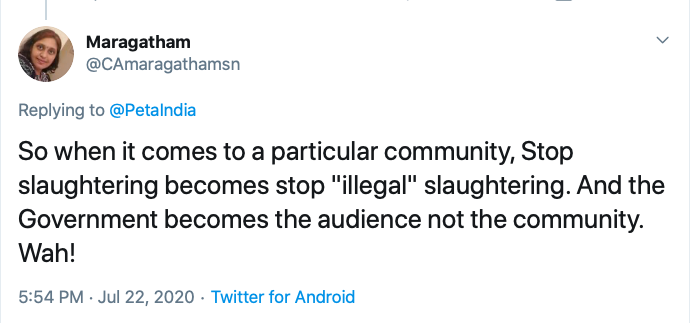
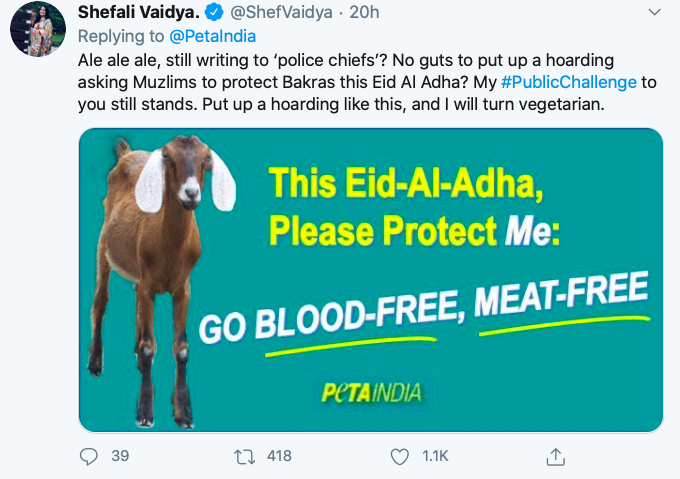
Petition filed in Supreme Court challenging the arbitrary ban in Kerala on animal sacrifice in temples

A plea was filed in the apex court on Thursday challenging a Kerala law that prohibits animal sacrifice for appeasement of deities in temples and temple precincts.

The appeal was filed in the top court after the Kerala High Court summarily rejected the petition against the Kerala Animals and Birds Sacrifices Prohibition Act of 1968 on June 16. The Act bans sacrifice of animal and birds in temples for the propitiation of deity and turns it into criminal activity. The transgression of the law attracts a jail term of up to 3 months and a fine of Rs 300.

The petitioners, who are followers of Shakti worshipping tradition, argued that propitiating deities through animal sacrifice is an essential religious practice backed by religious texts and scriptures followed by them and should, therefore, be allowed.

The petition claimed that the Kerala Animals and Birds Sacrifices Prohibition Act of 1968 criminalises the intent behind the animal sacrifice and not the act itself. “The Act criminalises the intent behind the animal sacrifice and not animal sacrifice per se. If the sacrifice is not for propitiating any deity but for personal consumption, even in the precincts of the temple, it is not forbidden. This arbitrary classification is violative of Article 14 of the Constitution,” the plea said.

The appellants claimed that the Act violates the right to equality, citing similar activities by other religions that are not prohibited by the Act. They claimed that the imposition of the arbitrary law was leading to an “incomplete performance of bali (sacrifice) and diminishing the powers of kul devatha”.

“They reasonably apprehend the wrath of Devi,” the plea contended.

The petitioners also alleged that the impugned Act violates the Central legislation that grants an exemption for the killing of the animals for religious purposes. The petition mentions Section 28 of the Prevention of Cruelty to Animals, 1960, which does not render killing of animals for religious purposes a criminal offence.

Alleging the classification of the law as arbitrary, the petition said, “If the object of the law were to ensure preservation and protection of animals, it would demand its uniform application across all religious communities.”

“Kerala Animals and Birds Sacrifices Prohibition Act, 1968 is repugnant to the provisions of the Prevention of Cruelty to Animals Act, 1960 insofar as the Act operates in the same entry and criminalises an act which the Union Legislation chooses explicitly not to criminalise”, the appeal added.

Newslaundry’s Sharjeel Usmani glorifies Islamist Shahrukh Pathan, who fired at police officials during anti-Hindu riots in Delhi

After publicly subscribing to the secessionist ideology of Sharjeel Imam, who had urged Muslims to cut off North-East India from the rest of the country by blocking the Chicken’s Neck, Newslaundry columnist Sharjeel Usmani today glorified Islamist Shahrukh Pathan, accused of opening fire on Delhi police during the anti-Hindu riots that had broken out in the national capital in the last week of February this year.

Sharing an article which said that the accused Shahrukh Pathan, who intended to be a hero by taking up arms during the anti-CAA riots in Delhi will have to face the law, Usmani lavished praises on the accused rioters, saying that he is proud of Shahrukh, who ‘fought for his community’ (Muslims) when the entire state machinery and ‘Hindutva army’ was apparently ‘killing and looting’ them.

“I am proud of Shahrukh Bhai. he fought for the community when the entire state machinery and Hindutva army was involved in killing and looting our community. He is our hero!” tweeted Sharjeel Usmani.

The tweet was posted by Usmani after the Delhi High Court on Wednesday refused to grant relief to the accused—Shahrukh Pathan—and observed that while Pathan’s intentions were to become to hero but he will now have to face the consequences of taking up arms against the Delhi police. Justice Suresh Kumar Kait said he was not disposed to grant relief to Shahrukh Pathan, after which his counsel withdrew the plea.

Delhi High Court refused Pathan’s pleas for bail

The court dismissed the plea as withdrawn. The advocate representing Shahrukh had sought bail for his client on the grounds that he had to take care of his ailing 76-year-old father who is not well and has no one to look after him. Justice Kait then said, “While committing offence, you forget everyone. Now you are thinking about your aged and ailing parents.”

However, denial of reprieve from the Delhi High Court did not sit well with the Newslaundry columnist Sharjeel Usmani, who not only shares his first name with the secessionist Sharjeel Imam but also subscribes to his radical ideology. Notwithstanding court verdict in the case, Usmani took to Twitter to rationalise Shahrukh Pathan’s unlawful acts by claiming that he stood up against the imaginary “state machinery and Hindutva army” that were involved in killing and looting his community.

In sharing his radical ideas and praising a criminal, Usmani perhaps forgot that the CCTV had captured Pathan’s criminal act when he was firing multiple rounds on a Delhi police official Deepak Dahiya while Dahiya was armed only with a baton, and stood unflinching as Pathan kept on firing his illegal weapon.

Sharjeel Usmani’s propaganda war to tarnish India’s reputation abroad

Earlier too, Usmani had no qualms in associating himself with those accused of making provocative and seditious speeches under the pretext of carrying out peaceful protests against the CAA. The ideological compatriot of Sharjeel Imam, Sharjeel Usmani, has announced his intentions of using Muslims as the fifth columns in the country to undermine Indian interests. Shortly after Imam’s arrest, Usmani waged a propaganda war on the country to smear its India’s image abroad. Sharjeel Usmani announced that he, along with two of his friends, will put English subtitles on the videos of ‘hate crimes’ against Muslims in India to circulate them among social media influencers for wider global reach.

After the incendiary speeches of Sharjeel Imam had gone viral on social media, Sharjeel Usmani had rushed in to defend him. He had urged Muslims to not disassociate themselves from the JNU scholar and declared that he was ‘in this together’ with the radical Islamist. Sharjeel Imam also played a critical role in organizing the Shaheen Bagh protests and weaponizing blockades in order to make the state bend to Islamist demands was his idea.

Mohammad Shahrukh alias Shahrukh Pathan had opened fire at Delhi Police

Mohammad Shahrukh or Sharukh Pathan was caught on video brandishing gun and firing bullets against the Delhi police personnel who were trying to subdue the violent riots that erupted in the national capital in February 2020. Shahrukh reportedly opened 8 rounds of fire on Delhi Police on February 24, the day US President Donald Trump was visiting India. He was later arrested by the police.

On the day of US President Donald Trump’s visit to India, the national capital had witnessed unprecedented violence. A Delhi police constable had lost his life in the riots that ensued in the national capital in wake of the protests against the Citizenship Amendment Act. Another DCP was grievously injured during clashes in Delhi’s Gokulpuri. An IB official, Ankit Sharma, was brutally murdered and his dead body was thrown in a drain. Another Hindu, Dilbar Negi, was brutalised by the rioters in Delhi as his limbs were chopped and his body was thrown in the fire. Similarly, the anti-Hindu riots in north-east Delhi also saw Hindu temples being attacked and vandalised by a rampaging mob.