Home Blog Page 5236

Gold smuggling case: Kerala CM Pinarayi Vijayan distances himself and the state government from the raging controversy

On Tuesday, Kerala Chief Minister Pinarayi Vijayan reportedly gave a clean chit to the State government from any involvement in the high-profile gold smuggling and had instead passed on the blame to the Centre. He stated that the parcel carrying smuggled gold was not received by any agency of the State government. He pointed out that the said parcel came to the UAE consulate and that the Kerala government had nothing whatsoever to do with it.

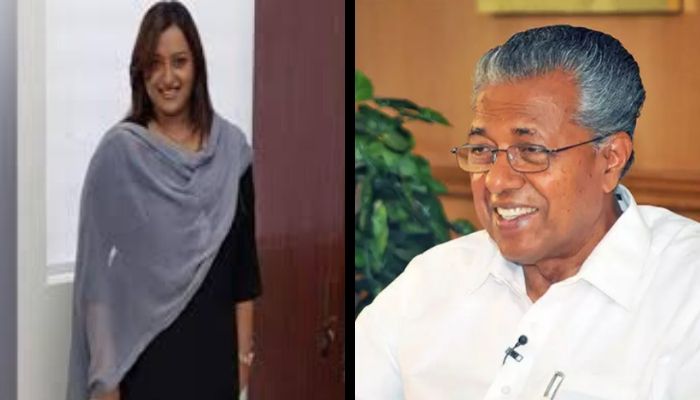
Pinarayi Vijayan alleged that since the airports and its facilities are controlled by the Union government and that the parcel was seized by the Customs department, therefore, it was the responsibility of the Centre and not the State Government. The Kerala Chief Minister had received social media backlash after an image of him with one of the kingpins of the gold smuggling syndicate, namely, Swapna Suresh, went viral.

Pinarayi Vijayan claimed that the said woman had no connection with the Information Technology (IT) Department or the Chief Minister’s Office. “This woman was working as a Marketing Manager for a project under the IT Dept as a contract employee. She was taken through a placement agency.”

Principal Secretary to Pinarayi Vijayan removed

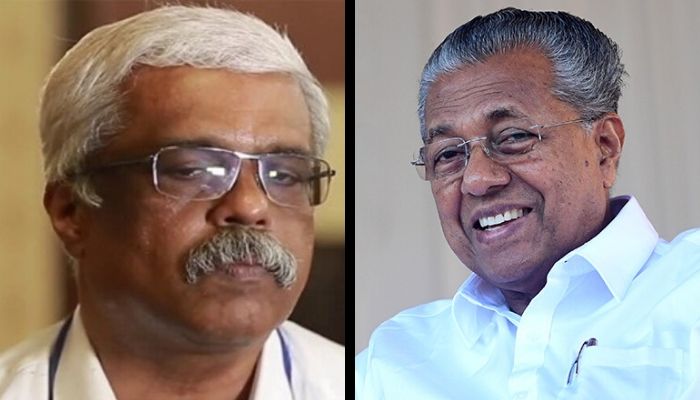
On Tuesday, the Kerala government had removed M Sivasankar as the Principal Secretary to the Chief Minister after his name surfaced in a high-profile gold smuggling case related to the UAE embassy in the capital of Kerala. He has now been replaced by IAS Mir Mohammad Ali. As per reports, Sivasankar was also removed as the IT secretary.

Reportedly, Sivasankar is accused of making calls to the customs department to get clearance for a ‘diplomatic package’ that was smuggling 30-kg of gold. He has also been accused, by both the Congress and the BJP, for protecting one of the kingpins of the gold smuggling syndicate, namely, Swapna Suresh. Swapna Suresh’s diplomatic baggage with smuggled gold was held at the Thiruvananthapuram airport.

Swapna Suresh was misusing ‘diplomatic immunity’

Custom officials in Kerala had earlier nabbed a former employee of the UAE Consulate in Kerala named Sarith where he had divulged that Suresh, also a former staffer, had forged documents to misuse diplomatic privileges. Suresh’s baggage, marked with the address of the UAE Consulate was held at the airport on July 5. Swapna Suresh was working as the marketing liaison officer Space Park under the Kerala State IT Infrastructure Limited (KSITIL) that comes directly under the IT department.

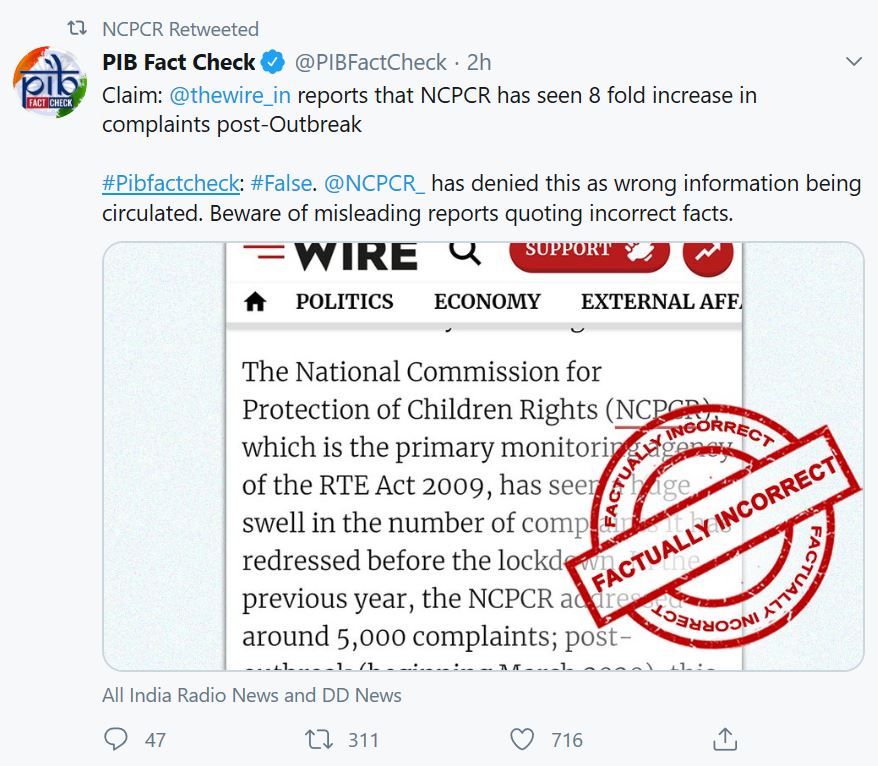
The Wire’s claims that NCPCR saw 8-fold increase in complaints post-Coronavirus outbreak are false: Read details

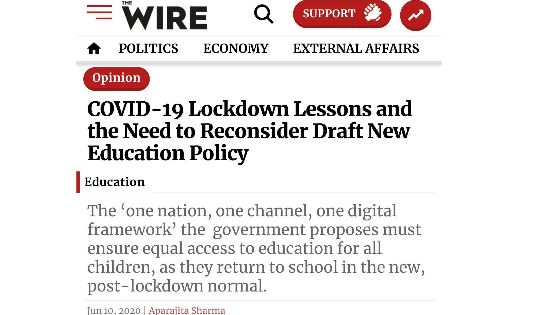
The leftist propaganda website, ‘The Wire’, has once again in its article titled: “COVID-19 Lockdown Lessons and the Need to Reconsider Draft New Education Policy”, claimed that the National Commission for Protection of Children Rights (NCPCR), which is the primary monitoring agency of the RTE Act 2009, has seen a huge swell in the number of complaints it has received post-Coronavirus-lockdown.

The article published by The Wire on June 10, 2020

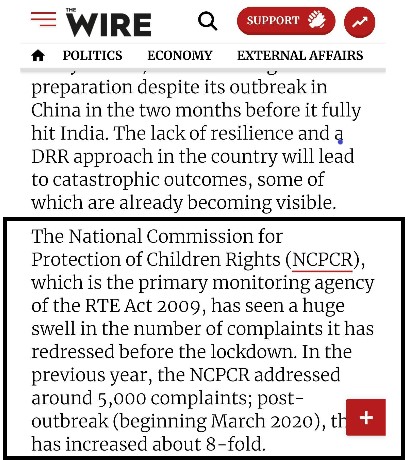
Conjecturing that the Coronavirus-pandemic had magnified educational equalities in the country like never before, the article claimed that the National Commission for Protection of Children Rights has said that it has seen an 8-fold rise in the complaints post lockdown. “In the previous year, the NCPCR addressed around 5,000 complaints; post-outbreak (beginning March 2020), this has increased about 8-fold”, read the article, insinuating that the COVID-19 pandemic has had a critical impact on children’s education, particularly of those from marginalised sections.

The Wire’s article claiming thet NCPCR has seen a 8-fold surge in the number of complaints post lockdown

This claim made by the news portal was immediately fact-checked by the Press Information Bureau (PIB), which said that the National Commission for Protection of Children Rights (NCPCR) has categorically denied the 8-folds increase in the complaint. It said that NCPCR has denied the wrong information being circulated and warned people against misleading reports quoting incorrect facts.

PIB’s fact-check was also endorsed by the National Commission for Protection of Children Rights, which retweeted PIB’s tweet.

PIB’s tweet retweeted by NCPCR calling out The Wire

This is, however, not the first time, the leftist media portal has made such baseless and unsubstantiated claims to project the government in poor light. In fact, the leftist media portal has recently been trying to milk the coronavirus pandemic to cast aspersions on Modi government.

The Wire has peddled fake news with impunity

At the beginning of the month, ‘The Wire’ had maliciously misrepresented facts to project the India Railways in poor light and to propel its agenda it went on to claim that 3 out of 4 ‘fact-checks’ by PIB were ‘unsubstantiated’. To prove the government in a bad light, the website essentially claimed that the country saw an unprecedented crisis with migrant workers from different states wanting to go back home amidst the pandemic. It insinuated that PIB had lied about the cause of death of migrant workers and that they indeed did die due to starvation. 

Last month, too in a similar attempt to deride the Modi government, The Wire blatantly lied about the ventilators which were received in a donation by Gujarat government. It alleged that the firm from which the Modi government procured the ventilators had close ties to the BJP leaders and insinuated that the payment of which might have been made by the PM Cares fund. A claim, which was once again fact-checked by PIB, which did not miss on calling out the lie and deceit peddled by The Wire ‘journalist’ Rohini Singh.

Well lying and maliciously peddling false claims is a talent which this leftist media house has flaunted in abundance. We have reported many incidences in the past where ‘The Wire’ has been caught several times peddling the most outlandish lies with impunity.

‘Turn vegan’ anti-slaughter poster in Lucknow featuring goat not related to Eid, claims PETA in an exclusive interview with OpIndia

There seems to be no need to the controversy that was kicked up after PETA, the world’s largest animal rights group, put up a hoarding in Lucknow, of a goat urging people not to slaughter it. The poster predictably riled up a set of influential Islamic clerics who expressed their vehement protest over the banner and asked for its removal. The Islamic clerics asserted that the banner showing a goat was deliberately put up in Lucknow ahead of the Muslim festival of Bakrid to target the minority community.

As the controversy continues to snowball, OpIndia contacted the international animal right’s group and sought their response on the matter. We had a conversation with PETA official–Radhika Suryavanshi, wherein we asked her questions about the aforesaid hoarding in Lucknow along with the discrimination meted out to Hindus. We also heard PETA’s side on the allegations made by the Muslim clerics that the banner was deliberately put up to target the minority community. Here is the detailed conversation with Radhika Suryavanshi:-

If not PETA, who removed the hoarding? Are you alleging that police and local administration have pulled down PETA’s banner in Lucknow?

I would like to tell you that the billboard was not removed on PETA’s orders. The agency entrusted with the responsibility of putting up such hoardings informed us that the billboard was removed by a local vendor at the behest of the owner of the site. PETA is firm on its stand that there is no wrong in eating vegetarian food and bestowing kindness on the animals. We have also asked for the re-installation of the said hoarding.

The President of the Islamic Center of India, Maulana Khalid Rashid Firangi Mahali, has asked why such hoardings were placed before the festival of Bakri Eid? Is he wrong? What would you say about this? When was the hoarding installed?

PETA India has conveyed the same message on behalf of all of its Muslim supporters and associates and has also installed similar hoardings in Delhi, Guwahati, Hyderabad, Kolkata and Mumbai. The consumption of goat meat happens on a regular basis, it has got nothing to do with Eid. We want to create public awareness about vegetarianism every day. In fact, the said hoarding is one of our new advertisements endorsing our vegan expedition. There are other posters of chickens, fish and other animals also, that are consumed as meat by people. All these boards have been installed in many cities across the country.

Many organisations such as KFC endorse their non-vegetarian food. These advertisements manifestly supporting the killing and consumption of innocent creatures are also wrong. Then why shouldn’t their posters be pulled down as well?

Athar Hussain of the Director of Center for Objective Research and Development (CORD) has said that Muslims sacrifice goats on the festival of Bakri Eid. The hoarding of PETA is giving the wrong message and we have reservations about it. Muslim community opposes this. What is PETA’s response to this?

All religions give a message of compassion and permit the eating of vegan food. Goats are very sensitive and playful animals. In fact, all animals can feel sorrow and pain just like human beings and they deeply care about their self-preservation. Many people celebrate the festival of Bakri Eid by distributing vegetarian food, donating and helping the destitute. Vegan eating is good for our heart health and helps us to avoid cancer, heart disease, diabetes and many other life-threatening diseases.

Is PETA India seeking anything from Uttar Pradesh Chief Minister Yogi Adityanath in this matter?

It is pertinent to note that as per the Prevention of Cruelty to Animals (Slaughter House) Rules, 2001, the animals can be slaughtered only in licensed abattoirs. PETA India had earlier requested all the states to take strict measures against illegal transport and killings of animals during Eid.

It is not unusual during Eid that a large number of animals are packed in small trucks to be to transported to slaughterhouses. Often their bones break and many of them die during their journey to the slaughterhouses in cramped trucks. When frightened animals hesitantly walk towards the slaughterhouses, their tail is twisted and broken to force them to move fast. Inside the abattoirs, these animals are slaughtered in open in front of each other by untrained butchers who slits their throat partially and leaves them all to die painfully.

Have you received any threatening emails, phone calls or messages from fundamentalist Muslims? If yes, can you give the details? (In this case or any other case as well)

No, we have not received any kind of threat from anywhere. And we request the residents that there is nothing wrong in talking about compassion for animals or promoting consumption of vegan food. Like all other advertisements, this vegan billboard of ours is just to create awareness among people about the atrocities faced by animals.

How much truth is there in the allegation that PETA India makes a lot of noise on Hindu festivals but keeps mum on the festivals of Muslims?

See, our campaigns are not based on our against any religion. PETA India is not a religious institution and people of all religions are our supporters. We are only against cruelty to animals. This includes misbehaving with animals for their entertainment such as circus, horse racing, bullock racing, hunting, Jallikattu and many other events. We are against capturing elephants and training them for circuses, or in any other festivals. We are also against the sacrifice of animals, regardless of religion.

An elephant is a social animal who should be living in the jungles on the grasses. However, humans hold them in chains on their paved floors made of cement by imprisoning them for their benefits, subjecting them to extreme physical and mental torture. Without adequate food and water, their condition deteriorates. The nails of their feet get dislocated, their soles are cut, their feet become swollen, and they are made to stand amidst their excreta. According to a survey, more than 50 per cent of elephants who die in captivity, die of these reasons.

This animal suffers from severe mental stress because of its imprisonment, lack of opportunities for a social life or not being able to lead a free life, and it can be easily seen when elephants are seen doing the same thing by moving their head around or right. Huh. The chains tied at the feet lacerate their skins. Sharp metallic curbs are used to control them.

Innocent animals are killed not just on Eid but everyday around us. Their throats are slit with sharp-edged knives and they are left to die a painful and agonising death. The only difference is that on the other days, animals are not killed on the streets but in the slaughterhouses. This does not mean that the cruelty on them reduces. Lat year, we inspected the cattle market in proximity to Mumbai’s Deonar slaughterhouse.

The controversy surrounding the PETA poster in Lucknow

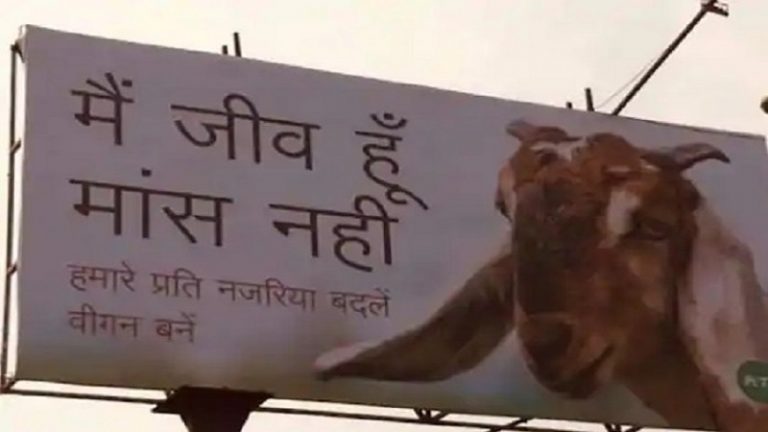
A hoarding put up by Animal rights organisation – PETA with a photograph of a goat, urging people not to slaughter it, was removed in Lucknow, Uttar Pradesh after Islamic clerics objected to such hoardings.

According to the reports, the People for the Ethical Treatment of Animal (PETA) had put up a hoarding in Qaiserbagh, which displayed a huge picture of a goat and read – “Mai Jeev Hoon, Maans Nahi. Hamare Prati Nazariya Badlen, Vegan Bane” (I am a living being and not just meat. Change your view towards us and become a vegan).

As posters were put up by PETA across other parts of the city, Islamic clerics in the city claimed that such posters hurt their religious sentiments.

Maulana Khalid Rashid Firangi Mahali, President of the Islamic Centre of India, had even complained to the Lucknow Police Commissioner demanding the removal of PETA’s hoarding. The Maulana objected to the hoarding by placing a photo of the goat before the festival of Bakrid.

“Bakrid is expected to be celebrated on July 31. Why such hoarding is being put up just ahead of the festival?” the cleric queried. “It seems that these hoardings were deliberately put up in a mischievous attempt to hurt Muslim sentiments,” he added.

Shockingly, two complaints were also registered with the Kaiserbagh police demanding the removal

A letter was also sent by the director of Centre for Objective Research and Development (CORD) Athar Husain.

“Muslims observe ‘Qurbani’ (sacrifice) on the festival. The hoarding is sending out a wrong message, it is objectionable. The community strongly objects to it, “Husain added.

West Bengal: TMC suspends 18 panchayat members over corruption in disbursement of cyclone Amphan funds

On Tuesday, the Trinamool Congress(TMC) has reportedly suspended 18 panchayat members belonging to the party in Nandigram in East Midnapore district for their involvement in corruption in the disbursement of cyclone Amphan relief funds. At the same time, about 200 TMC workers and leaders were issued a show-cause notice.

Following the havoc wrought in the State by Cyclone Amphan on May 20, the West Bengal government had announced a relief package of ₹6,800 crores. The package had provision for compensating families, whose houses were destroyed in the natural disaster, with ₹20,000. However, several cases of blatant misappropriation of relief funds have come to light. As per the reports, 50 TMC workers who had fraudulently obtained the compensation amount of ₹20,000 had returned the money.

Sisir Adhikari from TMC informed that a survey would be conducted in 25 blocks in the East Midnapore district and appropriate action against miscreants who had siphoned off the compensation amount illegally will be ensured. Similarly, General Secretary of the party, Partha Chatterjee stated that TMC members found guilty of fraudulently benefitting their family and relatives would be strictly punished.

Mamata Banerjee assures of ‘rectifying lapses’

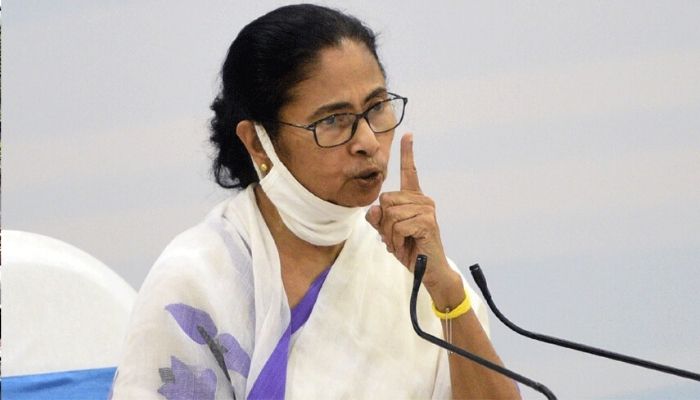
On Monday, West Bengal Chief Minister Mamata Banerjee had said that the State government was rectifying lapses that occurred during the distribution of relief funds. She conceded that the oversight on the administration happened while fast-tracking the payments. “We are rectifying the anomalies. Every affected family will receive the monetary relief,” Mamata Banerjee was quoted as saying.

Reminiscing old political wounds of Nandigram violence and how the current political dispensation benefitted from the same, CPIM leader Mohammed Salim said that the people are now witnessing loot of public money by the TMC. “After she came to power, Banerjee promised to transform Nandigram with new industries. It never happened and local people had to look for jobs in other states,” he was quoted as saying.

BJP launches website for people to lodge complaints

Reportedly, Block Development Officers (BDOs) have been receiving applications from aggrieved people who are yet to receive relief funds from the government. As per the report, the Bharatiya Janata Party (BJP) unit of the State, led by Dilip Ghosh, had launched a website on Sunday to help people lodge their complaints over non-payment of the compensation amount.

TMC gram Pradhan suspended

Recently, Narendranath Singh, who served as a five-time pradhan of Chanditala II block in Hoogly was reportedly expelled from the Trinamool Congress on charges of corruption in the distribution of relief funds. As per the Telegraph report, Singh had submitted a list of 166 people who were to receive the assured sum of ₹20,000. “It is shocking to see that he used his own mobile number for 119 beneficiaries that included his wife. None of those had suffered any damage in Amphan. Local party workers had cautioned him, but he refused to listen. It was only after MP Kalyan Banerjee intervened that the top leadership came to know of this,” a Trinamool leader was quoted as saying. A probe was also conducted into the matter and the allegations of financial irregularities were found to be true.

Pulwama attack: NIA nabs Bilal Ahmed Kuchey, 7th terrorist who provided logistics and high-end mobile phones to the JeM terrorists

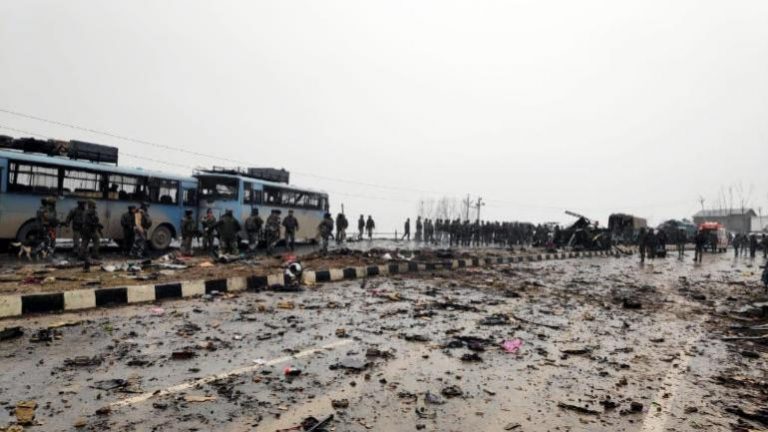
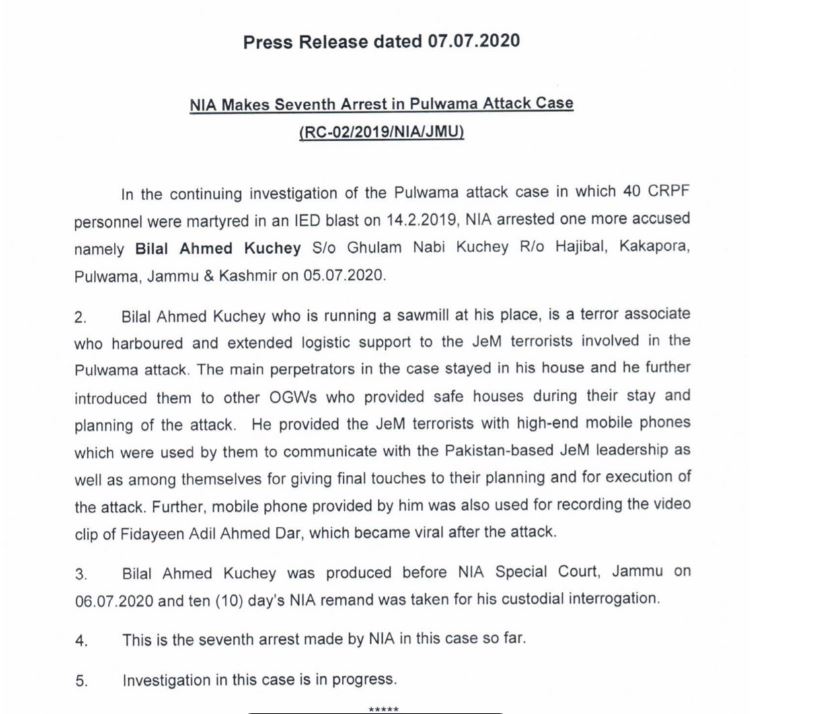
The National Investigation Agency, which has been in a relentless pursuit to nab Pakistan backed Jaish-e-Mohammad (JeM) terrorists behind the Pulwama terror attack, which claimed the lives of 40 CRPF personnel on February 14, last year, has now made the 7th arrest in the case. In a press release dated July 7, 2020, NIA named the 7th accused as Bilal Ahmed Kuchey, a resident of Kakapora, Pulwama who was nabbed by the agency on July 5 (Sunday). Prior to his arrest, the agency has arrested six people associated with the crime.

The agency produced Bilal Ahmed Kuchey before the NIA special court on July 6 (Monday) and took him in 10 days remand for custodial interrogation.

The Press release by NIA dated July 7, 2020 (courtesy: Twitter)

The terror associate, who ran a sawmill at his place was accused of providing logistic support to the JeM terrorists involved in the 2019 Pulwama attack. It is being alleged that Bilal Ahmed had given shelter to the main perpetrators in his house and had further introduced them to other OGW’s who had provided safe houses to these terrorists during their stay and while planning the attack.

Mobile phone used for recording the video clip of Adil Ahmed Dhar

The NIA further stated in the press release that Bilal was also responsible for making high-end mobile phones available to the JeM terrorists, which the later used to communicate with their top leadership in Pakistan as well as among themselves to give final touches to their planning and for the execution of the attack.

The NIA revealed that the phone provided by him was also used for recording the video clip of Adil Ahmed Dhar, which had gone viral after the attack. Notably, Adil Ahmad Dar is the Jaish terrorist and the Pulwama’s suicide bomber who led a deadly attack leading to the killing of 40 CRPF men by ramming his car loaded with 100 kg of explosives into a CRPF bus on 14 February 2019.

Past arrests made by NIA in Pulwama terror attack case

A week before this arrest the NIA had arrested one 25-year-old Mohammad Iqbal Rather, a resident of Budgam. NIA had revealed that Iqbal had facilitated the movement of IED specialist Mohammad Umar Farooq, after he infiltrated into the Indian territory in the Jammu region in April 2018.

Prior to this arrest, the NIA had made two arrests, including a teenager, from Kashmir Valley for their role in Pulwama terror attack carried out by Pakistan Jaish-e-Mohammad (JeM), which claimed the lives of 40 CRPF personnel on February 14, last year. On March 7, 2020, the agency nabbed, 19-years-old Waiz-ul-Islam and 32-years-old Mohammad Abbass Rather, hail from Srinagar and Pulwama respectively.

The NIA revealed that arrested terrorist aide, Waiz-ul-Islam, bought chemicals on the Amazon shopping website which was used to prepare the Improvised Explosive Devices (IEDs) used in the Pulwama suicide attack.

According to reports, Amazon had shared the information with the NIA about a buyer who used the online shopping portal to buy ingredients for the making improvised explosive device (IED). Based on details shared by Amazon, NIA arrested Waiz-ul-Islam.

With these two arrests, the total number of arrests in the Pulwama attack case has gone up to five. On March 7, a father-daughter duo was arrested on the accusation of harbouring the Pulwama suicide bomber and Jaish-e-Mohammad terrorist Adil Ahmad Dar, while on February 29, 2020, NIA arrested a Pakistan-sponsored Jaish-e-Mohammed (JeM) terrorist, Shakir Bashir Magrey, for his involvement in the Pulwama terror attack last year.

According to reports, the 25-year-old terrorist had provided shelter and other logistical assistance to Islamic terrorists and suicide-bomber Adil Ahmad Dar. Magrey was also involved in modifying the Maruti Eeco car and fitting IED to it in early February 2019, the NIA said.

Pulwama attack

On 14 February 2019, a convoy of vehicles carrying security personnel on the Jammu Srinagar National Highway was attacked by a vehicle-borne suicide bomber at Lethpora in the Pulwama district, Jammu and Kashmir, India. The terrorist attack sponsored by Pakistan resulted in the deaths of 40 Central Reserve Police Force personnel, to avenge which, India conducted an aerial strike at a terror training centre in Balakot of Pakistan’s Khyber Pakhtunkhwa province on February 26 last year.

Galwan standoff breathes life into the ‘Free Tibet’ movement, Tibetan activists hope India will soon address the Chinese occupation of Tibet

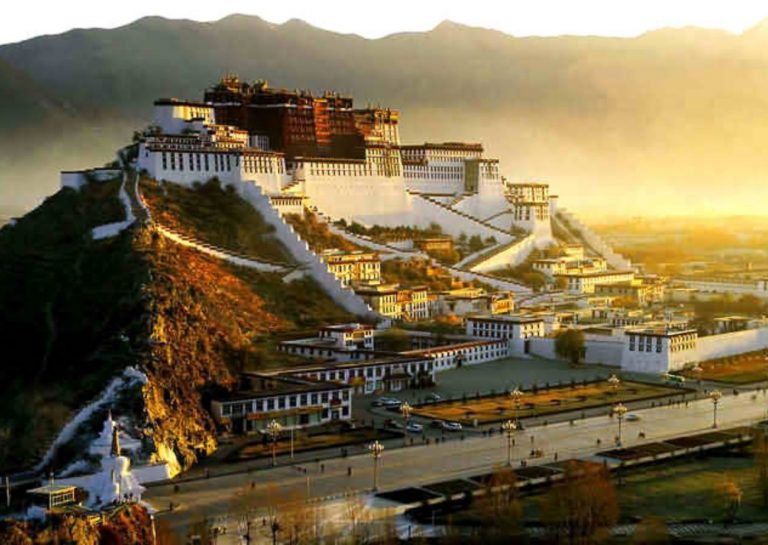
In the aftermath of the violent Galwan Valley face-off, the movement to free Tibet from the clutches of China has once again gathered steam. The Tibetan government-in-exile, based in Dharamshala, the district headquarters of Kangra district of Himachal Pradesh, India and several other independent bodies are now batting for the issue proactively.

According to a report in 101Reporters, the Tibetan leadership have asserted that the friction between India and China will go on unless the Tibet issue is resolved. Expressing agony over the Galwan face-off which killed 20 Indian soldiers, CTA information secretary Tsewang Gyalpo Arya asserted that the Line of Actual Control(LAC) is ‘Indo-Tibet border’ and not ‘Indo-China border’. “We urge the government, media and other people to acknowledge it. It is about time that Tibet issue should be voiced loudly,” CTA information secretary added.

It is pertinent to note here, that after the India-China standoff, the Arunachal Pradesh CM Pema Khandu had also echoed similar sentiments, referring to LAC as ‘Indo-Tibet border.

China had forcefully occupied Tibet in 1951

The statement by the two assumes significance since China had annexed Tibet in 1951. Tibet’s government is currently in exile. New Delhi, too, refers to its border in Arunachal Pradesh as an Indo-Tibet border. Reportedly, around 1 lakh Tibetans are living in exile in India including Dalai lama.

Meanwhile, the campaign and advocacy manager of Free Tibet (a movement advocating Tibet’s autonomy), John Jones, added that the increased militarisation of Tibet puts the population at further risk. As quoted by the article in 101reporters, he adds, “The Tibetan people were given no say over whether they wanted their people and territory to be part of a border conflict. China should end its militarisation of Tibet and end its occupation too. Hopefully, increased reporting and international pressure on Beijing can help,” he added.

In fact, many activists and civil societies in Dharamshala have also batted for India in its fight against China and urged the international communities to publically condemn the Chinese military invasion into Indian territory. The Tibetan Youth Congress (TYC) and Students for a Free Tibet-India, has also in a statement, urged the world leaders to stand with India against the Chinese move. “China is an expansionist nation. They did the same with Tibet decades ago,” said TYC president Gonpo Dhundup.

The Tibetan Youth Congress had recently held a protest opposite the Chinese Consulate General in Toronto in support of the Indian Army and had called for the end of China’s occupation of Tibet.

India’s policy over China clouded by political defeatism, say some experts

While some intellectuals are skeptical over India’s tibet policy and do not hope for much, some pro-Tibet voices assert that India’s foreign policy has been changing and its stand in tibet is bound to reflect its current assertive posture vis-a-vis China soon.

Dr Tsering Togyal, from the Department of Political Science and International Studies in the University of Birmingham, says that India’s policy over China has always been clouded by strategic confusion, misled by ideological compulsions, fragmented by competing issues and goals, and thwarted by political defeatism. However, Tibetan activist and writer Tenzin Tsudue asserted that India now knows better and wouldn’t trust China anymore, stated the article in 101Reporters.

CTA representative in Ladakh says an independent Tibet is not far away now

In a video shared by journalist Arti Tikoo Singh, CTA’s representative in Ladakh Tseten Wangchuk stated that the dream of an independent Tibet is not too far away now because China is under a lot of pressure, due to the coronavirus, an increasing demand for democracy and other geopolitical issues. He added that many people in China too are now supporting democracy. He added that the CTA’s “middle-way approach” will be beneficial to both the people of Tibet and China.

CTA President-in-exile urged UNHRC to discuss human rights violations in Chinese occupied regions

Recently, CTA President-in-exile Lobsang Sangay had also slammed China of its expansionist policies and asked the United Nations Human Rights Council (UNHRC) to hold a special session on “human right violations” by China in Tibet and other regions under it. Accusing China of committing “cultural genocide” in Tibet, President of the Tibetan government-in-exile had issued a statement in which he has asked UNHRC to “act with a sense of urgency” to “unite and ensure that China fulfils its obligations under international laws including human rights obligations before it is too late”.

Accusing China of carrying out unchecked human right violations in Tibet and other places under it, Sangay furthered that China has for decades tortured the Tibetans, and the act of cruelties which China has been imparting on the Tibetans “do not fall short of being categorised as cultural genocide”.

China’s five-finger plan

Earlier, Lobsang Sangay had warned Nepal that China has been looking at occupying the entire sub-continent since the 1960s after the occupation of Tibet. Sangay said that what China did with Tibet, it is looking at emulating the same with Nepal. Speaking on Chinese combativeness, Sangay said that the Chinese leadership had stated that Beijing was looking to accomplish its ‘Five Finger’ plan, where Tibet was the palm, while Ladakh, Nepal, Bhutan, Sikkim and Arunachal Pradesh, the five fingers.

Nindāstuti: A Dharmic Paradigm of Devotion through Apparent Censure

Vedanta is the essence of the Vedic thought, enshrined primarily in the Upanishads. Vedantic principles decentralise the question of the divine to the individual. They make an individual realise Satya – the Absolute Truth of Brahman (the Universal cosmic principle in the Dharmic framework) by looking within, not without. In doing so, the seeker of this Truth finds the paradoxical nature of this reality: it is both transcendent and immanent, both dynamic and unchanging. And most importantly, being existent and non-existent! It is in this final dismantling of the empirical, physicalist conception of reality that the reality beyond the empirical is placed.

The Ultimate Reality, being beyond the relative and worldly, cannot be described in terms of anything that is empirical and worldly. In short, it is best described as attributeless. Going one step further, not only is it attributeless but its existence itself cannot be defined in terms of positive or negative ontological premises. It both is and is not! However, in terms of what we see around us – the elements of nature, society and civilisation, objects and physical processes – the Ultimate Reality is definitely not confined to any of that. Thus, a Vedic Maharishi would suggest the Neti, Neti (not this, not this) approach, with regards to things that we can sense and understand in our worldly existence, as the best one can do to ‘define’ Brahman.

This apparent paradox of existence and non-existence, positive and negative, nothing and yet everything, is beautifully translated to a very absurd form of devotion in the Dharmic framework: Nindāstuti. Nindāstuti is a Dharmic paradigm of devotion through apparent censure! If binaries of any kind, be it of praise and censure or even of language and silence, all constitute the Ultimate Reality and yet the Ultimate Reality is not restricted to any of these, one can express one’s alignment with Brahman using censure and silence too, and not just praise and language!

This highly counter-intuitive idea cannot be easily comprehended, especially by those conditioned to think in terms of binaries and multiplicities in this world as well as those who do not understand the difference between God and gods. God, in the Dharmic framework, is One, is beyond all manner of space, time and causality, while gods are associated with derived manifestations and realities from the Ultimate Reality.

For instance, God does not single out the Devtas (noble celestial being, regarded as gods) for preferential treatment, often to later perturbations well-described in so many mythological stories such as those where Lord Shiva grants boons to the Asuras and Rakshasa like Ravana. One may ask why? And in the answer to that question lies a great truth of Dharmic thought:

SATYA – THE ABSOLUTE TRUTH TRANSCENDS THE BINARIES AND MULTIPLICITIES OF THE EMPIRICAL WORLD.

This is why, while Devtas in Hindu traditions are sometimes shown to have baser instincts and behaviours, such Lord Indra with his wrath, God or Brahman is shown to be indifferent to this. Praise and censure then are just two sides of the same coin: alignment and constant reflection on the Absolute Truth. The pieces composed for Nindāstuti are ones where we question the divine. Sometimes we even scold them and make unflattering comparisons, such as when Sant Tukaram Maharaj compares Lord Vitthala to a ghost in Pandhariche Bhoota Mothe! However, the key principle in this is that this censuring, this criticism, is not done with a spirit of disrespect or hatred.

It is done out of love and in union with the divine. It is like one mock-scolds or gives disparaging comments (in humour and affection) to a child or a friend or a family member one loves. It is done with the paradoxical idea that even when highlight some of the apparently negative sides of, say, a manifestation of the divine, we still highlight the divine essence while doing so. But most importantly, by doing this

NINDĀSTUTI TRIVIALISES THE WORLDLY AND THE EMPIRICAL, THE BINARY OF PRAISE AND CENSURE, THE IDEAS OF POSITIVE AND NEGATIVE ONTOLOGICAL PREMISES, AND SHINES A LIGHT OVER THE TRANSCENDENT REALITY OF BRAHMAN ITSELF

It is one of the most powerful tools to break through the veil of Maya (the illusory veil that hides the true essence of the divine, as per Vedantic thought). It takes the conception of Brahman beyond any understanding in terms of attributes, praises or even language! Ciranjiva Bhattacarya, in his seminal work Kavyavilasa, describes Nindāstuti as

निन्दास्तुतिरलङ्कारो निन्दाव्याजेन चेत्स्तुतिः

which translates to Nindāstuti is when from apparent censure, praise is implied. An example of Nindāstuti is

वाराणसी! वृथैव त्वामाश्रयण्ति महाजनाः।
भवभोगपरित्यक्तं यत्करोषि दिगम्बरम्॥

These lines from the Kavyavilasa speak of how Varanasi is to be apparently blamed for making great men take refuge in it, after denouncing worldly joys and pleasures and remaining as sky-clad (Digambara). But due to the association of the word Digambara with Lord Shiva and great spiritual power, it is also a praise of Varanasi, by saying that Varanasi makes a person denounce worldly pleasures and turn towards Lord Shiva. What is apparently blame and censure is actually praise!

There have been a number of musicians, poets and spiritual luminaries who have used this form of devotion. Purandara Dāsa, known as the father of Carnatic music, is remembered for his devotional pieces, with famous pieces such as the popular Devaranamas like Chandrachooda Shiva Shankara Parvati, Sharanu Siddhi Vinayaka, Neene Anatha Bandhu, Gajavadana Beduve and Gummana Kareyadire. He is also known for composing Nindāstuti such as Entha Cheluvage, a Nindāstuti on Lord Shiva in Raga Abheri. Sadhguru Sri Tyagaraja also is known for composing various pieces in Nindāstuti such as Abhimaanamu Ledemi in Raga Andhaali.

These may look like strong pieces to censure the deities but they are actually to praise and show love to them. After all, Nindāstuti is a form of Shleshakavya – a poetic composition that is laden with double-entendres and is looked upon as a form of Dvesha-bhakti – a devotion that is expressed through censure and even apparent maliciousness.

Besides this being a form of devotion we must all know about, this also brings to us an important lesson – of breaking the shackles of righteous indignation and exclusivism that one sees in various religious and spiritual traditions around the world. Dharma brings to us all a very different, quite counter-intuitive understanding of devotion, theism and spirituality in Nindāstuti.

I believe keeping the balance between employing this form of Bhakti and yet not using it as a license to insult or deride spiritual truths is important, and for this, I would like to suggest the principle of Viśiṣṭvividhīkaran (विशिष्टविविधीकरण) or qualified diversification that speaks of how one must always think dually: regarding the worldly alignment and association with God or Brahman in terms of religion, the conception of divinity in terms of social and cultural ideas, myriad forms of devotion, and yet always remembering that there is a level of unity, of oneness, beyond all this that remains unaffected, indifferent and beyond these concepts – of the Absolute Truth.

Even if one were to employ Nindāstuti or even general censure and criticism for anything or anybody in life, be it in the spirit of free speech and free will or in Bhakti – devotion and spiritual pursuits, one must never forget the unity transcending all this. The unity transcending the bounds of doctrinal elements of religions. The unity transcending the bounds of identities, ideas and ideologies.

NEVER FORGET THE UNITY, IN ESSENCE, OF HUMANITY AND OF UNIVERSAL TRUTHS THAT TRANSCEND THE APPARENT MULTIPLICITY THAT WE SEE AROUND US.

Only then shall we be firmly on the path to true liberation!

‘You work to protect Islamist terrorists, you’re anti-Hindu and anti-India’: Read Kapil Mishra’s response to The Quint

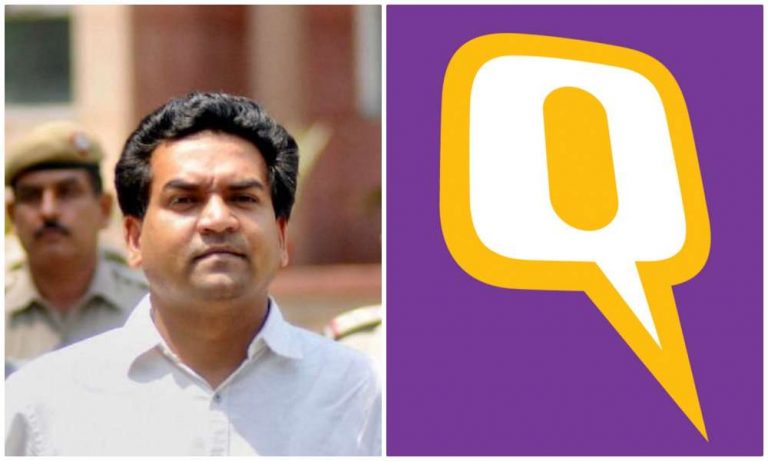
BJP leader Kapil Mishra responding to a question from The Quint journalist on Delhi riots said that a journalist from ‘The Quint’ who was looking for a response for the allegations made against him. In a tweet, Mishra posted two screenshots of the question the journalist asked and his reply.

The Quint wanted to cover a statement by Mishra over the allegations of his involvement in the February 2020 Delhi riots. Mishra, however, was not in a mood to oblige.

Responding to the journalist, he said that in his personal opinion Quint is anti-India and anti-Hindu and biased against the truth. “I have strong reasons to believe that Quint is working to protect Islamic Terrorists, especially in Delhi Riots Case – where Islamic Terrorists were funded by criminals like Zakir Naik. Your false and fabricated stories are useless,” he said, adding that he has strong faith in Lord Ram and he believes in truth.

The Quint’s complicated relationship with facts

In June this year, The Quint, in a report Head Constable Ratan Lal’s murder, tried to exonerate the AIMIM leader who was named in the charge sheet. The Quint had insinuated that AIMIM leader DS Bindra, who is accused of inciting a mob for violence, was named in charge sheet only because he set up a langar to feed the protestors and hence, he is being called an instigator. In the entire article, The Quint carefully quoted only statements that pointed towards Bindra’s role in setting up the tent for protests, langar for meals etc. Certain other aspects that were conspicuously missed by The Quint point towards the fact that the publication was trying its best to shield Bindra.

Similarly, The Quint recently compared the crackdown on anti-CAA rioters in India with the police brutality in US during the Black Lives Matter protests which turned violent. The Quint even incited its readers to replicate the violent US protests in India. Amid coronavirus outbreak in March, The Quint transformed an engineer into a ‘doctor’ and spread fake news that India was already in middle of community transmission of coronavirus.

CMO’s link with gold smuggling racket? Kerala CM’s Vijayan’s principal secretary removed after his name comes up in the scandal

On Tuesday, the Kerala government had removed M Sivasankar as the Principal Secretary to the Chief Minister after his name surfaced in a high-profile gold smuggling case related to the UAE embassy in the capital of Kerala. He has now been replaced by IAS Mir Mohammad Ali. As per reports, Sivasankar was also removed as the IT secretary.

As per reports, Sivasankar is accused of making calls to the customs department to get clearance for a ‘diplomatic package’ that was smuggling 30-kg of gold. He has also been accused, by both the Congress and the BJP, for protecting one of the kingpins of the gold smuggling syndicate, namely, Swapna Suresh. Swapna Suresh’s diplomatic baggage with smuggled gold was held at the Thiruvananthapuram airport.

Reportedly, Sivasankar had facilitated the appointment of Suresh as the operations manager at the Space park under the department of Information Technology. However, according to Kerala Chief Minister Pinarayi Vijayan, the appointment was made without his knowledge.

The government has asked for an explanation from the accused. As per reports, Suresh has been sacked after her name surfaced in the gold smuggling case. Earlier, Sivasankar also signed a deal with the US-based company Sprinklr to collect Coronavirus data for the state. Allegations of data breach were levelled against the company.

Swapna Suresh was misusing ‘diplomatic immunity’ under forged documents

Custom officials in Kerala had earlier nabbed a former employee of the UAE Consulate in Kerala named Sarith where he had divulged that Suresh, also a former staffer, had forged documents to misuse diplomatic privileges. Suresh’s baggage, marked with the address of the UAE Consulate was held at the airport on July 5. Swapna Suresh was working as the marketing liaison officer Space Park under the Kerala State IT Infrastructure Limited (KSITIL) that comes directly under the IT department.

Swapna Suresh on the run

During the appointment as operations manager, a crime branch case and adverse remarks by the intelligence wing against her were ignored. While Sarith has been nabbed by customs and is being interrogated, the main accused Swapna Suresh is absconding. Customs officials have arrested Sarith and raided the residence of Swapna Suresh.

The UAE Consulate has made it clear that they have no role in the corruption and their staff members were not involved. The baggage with the smuggled gold was opened by customs in the presence of the Consular attache´ and after due permission from the Ministry of External Affairs. The UAE Consulate has also issued a statement and has condemned the misuse of diplomatic channels to carry out illegal activities.

Yeh Dil Mange More! Never forget the exemplary bravery of Captain Vikram Batra who attained martyrdom on this day in 1999

Captain Vikram Batra was just 24 years old when he sacrificed his life for the nation. A Param Vir Chakra Awardee, he killed five Pakistani soldiers in hand-to-hand combat. His exemplary courage became an inspiration for many soldiers to come. Captain Vikram Batra, the Kargil War hero, sacrificed his life 21 years ago on this day. He was given the highest wartime gallantry award posthumously.

Kargil was not an easy win. Harsh weather, lack of roads and benefit of altitude enjoyed by the enemy made is extremely difficult for our side. India launched Operation Vijay to take back control of several peaks captured by Pakistani soldiers, ISI and terrorists. On 4th July 1999, India took control of the Tiger Hill and the whole nation applauded for the soldiers. Operation Vijay was successful.

The day when we captured Peak Point 4875

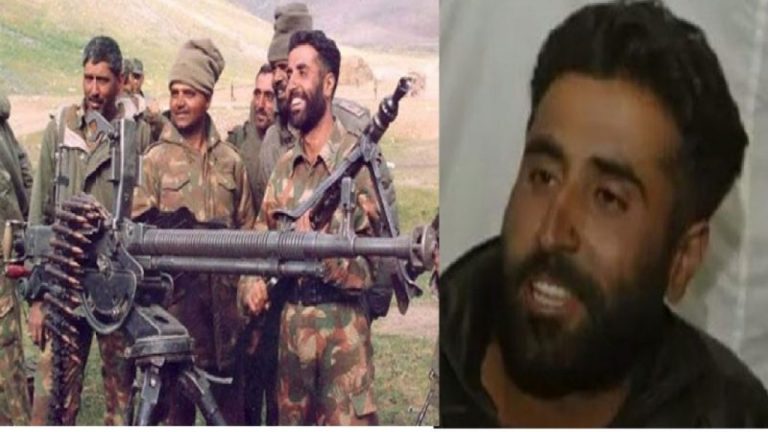
Captain Vikram Batra had one of the most challenging missions to deal with. He went to capture peak Point 4875. He was often called “Sher Shah” by the opposite side because of his valour. His slogan “Yeh Dil Maange More” is still remembered by those who were around during the Kargil War. The day his team captured Point 4875, he had a high fever, but he still volunteered to lead the team. The officer on the Pakistani side warned him, “On Sher Shah, you have come. Don’t come up, or you will have a tough time.”

Point 4875, Kargil War

On the intervening night of 6th and 7th July 1999, Pakistani troops had reached so close to Indian soldiers that over and above the firearms, the soldiers also indulged in verbal exchanges. At a long and narrow ridge running north from Point 4875, Indian soldiers detected enemy presence. Batra was recovering from wounds he had received during the battle of point 5140 few days prior. On their way to the top, Batra saw that Pakistanis were firing at trapped Indian soldiers. He slowly moved toward the machine gun and hurled a grenade, destroying the position of the machine gun.

He then moved the teammates to the next position. The Indian soldiers were at a height of 16,087 feet. It had started snowing and visibility was very low. Undeterred, by 7th July, the Indian soldiers had destroyed two more Pakistani machine guns. By the time the troops reached the ridge, the sun was high up and shining.

At 5:30 AM, Lt. Col. Joshi asked Batra to take stock of the situation. Along with Sub. Raghunath Singh and Maj. Bhat, Cap Batra did a recce. Spotting enemy, Batra realised the only way to attack is full frontal assault in broad daylight. Screaming the J&K Rifles War Cry, “Durga Mata Ki Jai”, Batra moved forward to the enemy. He killed five Pakistani soldiers in close combat. Seven Pakistani soldiers died that that point and Indian troops managed to gain some ground.

Taken by surprise, the Pakistanis began to retreat. We had gained an upper hand. However, we had not won yet. The enemy was just right around the corner. Spotting Pakistani soldiers manning a machine gun nest, Capt Batra charged towards them alone. One of the Indian soldiers accompanying him was injured. He turned toward Sub. Raghunath Singh and told him that the two of them will evacuate the injured soldier.

As Pakistanis continued to fire bullets, Capt Batra put himself between Singh and the enemy and pushed him towards the safe side. “You have a family and children to go back to, I’m not even married,” he told Singh and said that he will hold the injured soldier’s head while Singh can hold him by his feet as they take him to safety. In the process, he was shot in the chest by Pakistani soldier from a very close range. Split-second later, a splinter from an RPG hit him in the head. Batra collapsed next to the injured soldier and breathed his last.

A tribute to the War hero

Today, on the 21st death anniversary of Captain Batra, the Indian Army paid tribute to the Kargil War hero with a video. Born on the 9th day of the 9th month in 1974, Captain Batra sacrificed his life on the 7th day of the 7th month in 1999. His poetic war cry “Durge Mata ki Jai” will remain the source of energy for every soldier who joins the Army.

“I am Captain Vikram Batra and I will be back. 21 years down the line, yeh dil, fir maange more. So the countrymen, if you want me back, be a citizen worth fighting for…”

Vikram Batra was awarded Param Vir Chakra, India’s highest military honour on 15 August 1999. India is forever indebted to the soldier who showed immense personal bravery and rose up to the occasion when mother India needed her son the most.