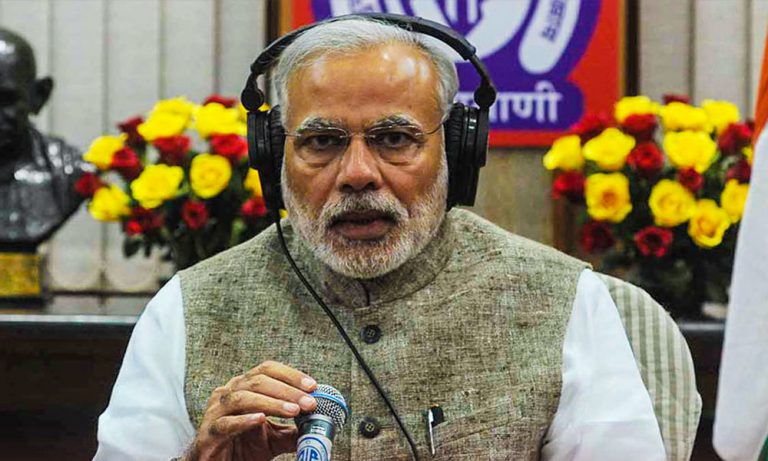
Prime Minister Narendra Modi in his monthly radio address ‘Mann Ki Baat’ today took on China and opposition who have mysterious links with the Chinese CCP. In his address, PM Modi recited a Sanskrit shloka:
It means, a bad person he uses is knowledge to create unnecessary disputes, wealth for arrogance and power to cause pain to others. However, a good person uses his knowledge to spread the same, wealth to help others and power to protect himself. India has always used her power for protecting herself. India is determined to protect its integrity and sovereignty. India aims to be self-reliant. India is has always been known for being a good friend and knows how to fulfil friendship. India will continue to move ahead with these principles, he said.
And while India knows how to be a good friend, India also knows how to give a befitting reply to those who cast a bad eye on our nation. “Our brave soldiers have shown that they will never let anyone harm the motherland,” PM Modi said.
Further, PM Modi said that those who tried to cast a bad eye on India were given a befitting reply in Ladakh. He urged Indian citizens to go vocal for local. “This movement needs people’s participation. You must go vocal for local. Buy local. If you buy local and go vocal for local then you are also part of this movement,” he said.
PM also came down heavily on Chinese toys in the Indian market. He spoke on Indian traditional indoor games and asked start ups to rise to the occasion and work on them.
Without being explicit, PM Modi made it amply clear that his comments were targeted at China. Indians know PM’s taunt on China. And the message has reached the Chinese too, as can be evident from the way Chinese state media is high on propaganda and using the divisive tactics. However, the China-sympathisers do not want to accept the reality. For them, they’d rather believe the enemy than the Prime Minister of their country.
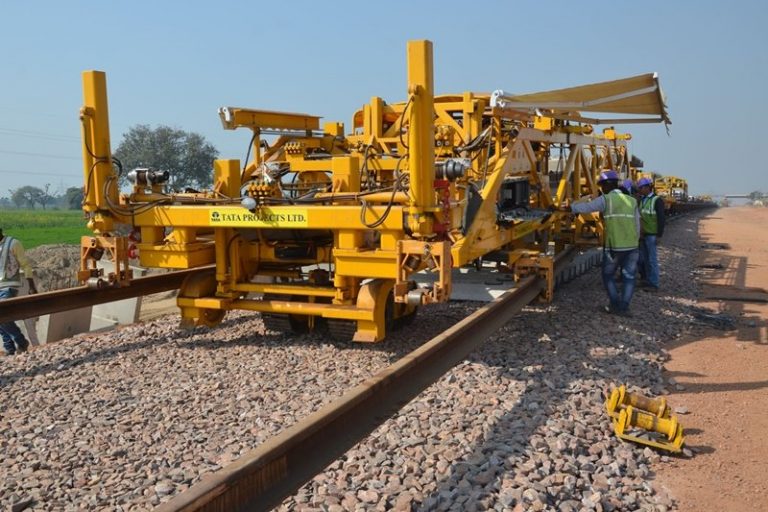
As per a press release issued by Indian Railway, the ministry has managed to complete 200 long due projects amid the lockdown. Indian Railway has a long list of pending projects that could not have been completed because of the busy schedule. Some projects required a complete or partial shutdown of some of the busiest railway stations in India, which is practically impossible in normal days. However, the lockdown brought a once-in-a-lifetime opportunity for the Railway, and the ministry took full advantage of the lockdown.
Backend Warriors on the Go ??♂️: Boosting safety & speed of train operations, Railways has completed 200 maintenance projects of critical importance during COVID-19 lockdown period.
These projects include yard remodelling, repair and registering of old bridges, doubling and electrifying rail lines, and renewing scissor crossovers. Some of the projects were pending for several years, and there were some unfinished projects as well. All these together created bottlenecks for the Railways, which has now been cleared to a large extent.
Railways played a vital role in ensuring the supply chain of essential commodities during the lockdown. The parcel trains and freight trains ensured that every state gets an ample supply of essentials, including grains, groceries, medicines, and more. Indian Railways is also running special Shramik Trains to ensure migrant workers’ smooth movement back to their states.
As the passenger services were suspended, Railways got a chance to finish the pending projects. The main focus revolved around several long-pending projects that require traffic block of a long duration, which was not possible, especially on busy routes and stations. When the lockdown happened, Railway decided that it is time to take advantage of the situation and clear these maintenance arrears.
During last three months, Railways completed several projects including 82 rebuildings/rehabilitation of the bridge, 48 limited height subway/road under a bridge in lieu of level crossing gate, 16 construction/strengthening of the foot over bridge, 14 dismantlings of the old foot over bridge, seven launchings of the road overbridge, 5-yard remodelling, 1 commissioning of doubling & electrification and 26 other projects.
Some of the key projects include:
Yard modification work at (Chennai Division, Southern Railway): The project was completed on 21st May 2020. It helped in easing out of the curve and enhanced track speed up to 60 Kmph on Bengaluru end.
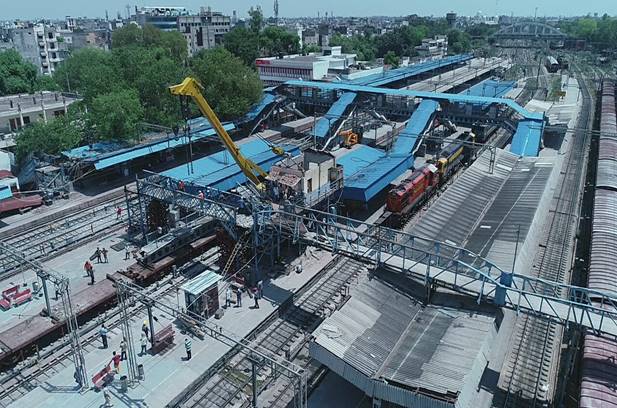
Dismantling of old abandoned, unsafe Foot Over Bridge at Ludhiana (Ferozepur Division, Northern Railway): The project was completed on 5th May 2020. IT was a 135-meter bridge that was covering 19 tracks and seven passenger platforms. Ludhiana is one of the busiest railway stations in Punjab, and closing it down for a long duration was not possible. The project was overdue since 2014 after the new Foot Over Bridge was commissioned.
Re-girdering of the bridge on Tunga River (Mysuru Division, South Western Railway): The project was completed on 3rd May 2020. The Railways dismantled the unsafe deck of Kopar Road ROB near Dombivali (Mumbai Division, Central Railway) on 30th April 2020. It improved safety settings over the tracks. This deck was declared unsafe for road users in 2019 and had six railway tracks under it.
Doubling with Electrification in Varanasi Division, North Eastern Railway: Two projects were complete on 13th June. One is on Kachhwa Road to Madhosingh Section, and the second one is 16 KM of Manduadih to Prayagraj Section. It will help in decongestion of east-west routes.
ROB dismantling by Chennai Central Station: The project was completed on 9th May 2020. It was declared unsafe in July 2016. It was impossible to dismantle the Road Over Bridge as it would have required a traffic block resulting in massive cancellation and rescheduling of trains.
Construction of two new bridges in the Vijayawada Division of South Central Railway: The project was completed on 9th May 2020. It will help in increasing the operational efficiency of the trains.
The signaling up-gradation work of Azamgarh station (Varanasi Division, North Eastern Railway) was completed on 23rd May 2020.
Railways also initiated an innovative pilot project to power trains by solar power developed over vacant railway land at Bina. It is a 1.7 MegaWatt project that will directly feed to 25 kV Railway overhead lines. The project is a joint venture of BHEL and Indian Railways.
Apart from completing many pending projects and ensuring essentials in every part of the country, Indian Railway has been producing PPE kits and masks on a large scale. Indian Railways has also deployed non-AC coaches as the Covid-19 isolation wards.
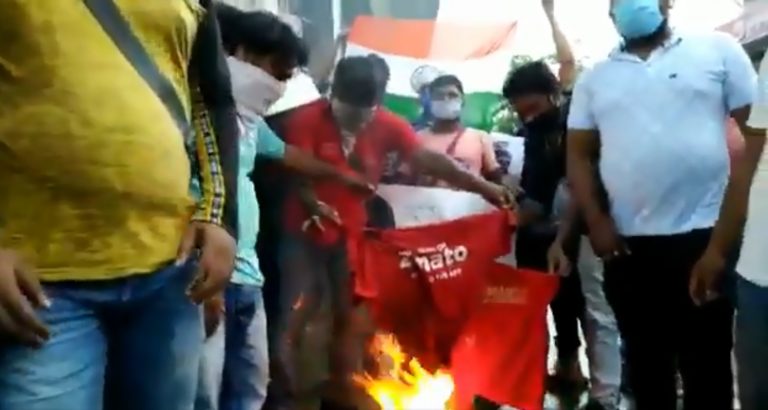
To protest the killing of 20 Indian soldiers by the Chinese troops along the Line of Actual Control near Ladakh, several Zomato food delivery employees hit the streets in Kolkata tore and burnt their official T-shirts on Saturday.
According to the reports, the protests occurred at Behala, Kolkata against Chinese misadventures along the LAC. The protestors said that some of them had quit their job at Zomato as the food delivery has a sizeable Chinese investment.
The protesters also urged people to stop ordering food from the company. About a dozen delivery personnel of Zomato burnt the company’s uniform outside the Behala police station in south Kolkata. They also raised slogans like “Chinese agent Zomato leave India!”, with the tricolor in hand.
In 2018, the food delivery major Zomato had received a substantial funding USD 210 million from the Amt Financial, which is part of Chinese major Alibaba. The Chinese firm had acquired 14.7 percent stake in the Indian company. Recently, the firm had raised an additional $150 million from Ant Financial.
“Chinese companies are making profit from here and attacking the Army of our country. They are trying to grab our land. This cannot be allowed,” one of the protesters said. Another protester said they were ready to starve but would not work in companies having investment from China. “Zomato has tied up with Chinese company Alibaba to run its operations. Today we have quit Zomato and we hope consumers will also boycott this company,” said Dipankar Kanjilal, one of the employees participating in the protest.
“The Chinese are killing our soldiers using our money! If our soldiers are not safe, how can we be safe? So we shall boycott Zomato. 50-60 of us have uninstalled the app today,” another Zomato delivery agent said.
In May, Zomato had sacked at least 520 employees, 13 per cent of its workforce, as its business took a hit due to the novel coronavirus pandemic.
Indian troops killed by Chinese aggression along LAC
Twenty Indian Army personnel, including a colonel, were killed in a fierce clash with the Chinese troops in the Galwan Valley in eastern Ladakh on June 15. The Indian soldiers were killed in an unprecedented violent clash with PLA troopers in the Galwan Valley.
The official statement said that it took place during the de-escalation process underway in the Galwan valley. It reported that no bullets were fired but the Chinese troops pelted stones and used clubs and batons.
During the clashes, the Chinese troops have also suffered severe casualties as at least 43 Chinese troops are either injured or dead during the attacks that took place on Monday night, as per reports.
Something very curious happened after the recent clash in Galwan Valley in Ladakh, where India lost 20 soldiers. The New York Times report that came out the following day did not accuse the Chinese of aggression. Instead, it went the other way and accused India of provoking the conflict.
How? Did the New York Times toe the Chinese official line and accuse India of crossing the LAC?
Not at all. The New York Times went in a different direction. It said the conflict happened because Home Minister Amit Shah provoked the Chinese during his speech in Aug 2019 during the abrogation of Article 370.
Most Indians were probably not even thinking about China when Article 370 was abrogated in August of 2019. And India has consistently claimed Aksai Chin. But this perverse argument is now being made all over the place, by the global elite at the New York Times, leaders of opposition parties, supposedly independent military analysts and their supporting cast of internet trolls. As if China acted in self-defense and India was the provocateur.
Can you give me an example of this argument being made before June 2020? Perhaps in Aug 2019 itself? No!
All these people, acting independently, arrived at the same conclusion at the exact same time. And the timing was perfectly convenient for China, an authoritarian superpower with the means and the motive to influence public opinion in India and abroad. It was all just a coincidence. Let’s believe that.
It’s time to start thinking about the China factor in India’s domestic politics.
How? First, we have to understand what China wants. They appear to have immediate targets, such as salami slicing territory and snatching strategic positions from India in Eastern Ladakh. But what’s the real, long term objective?
China wants to dominate the world. For that, they have to dominate their own backyard first.
For a moment, put yourself in the shoes of a Chinese strategist, trying to come up with a master plan for world domination. What do you see? China’s east coast is dotted with hostile states such as Japan, Korea and Taiwan, with the US Navy constantly patrolling the waters. Think about how infuriating that must be.
Then, you look south and you see India. Of course, India is not as powerful as the United States, but nevertheless it is the world’s fifth largest economy. And India will always be there, located just south of China, because you can’t change geography. Unless India submits to China, the Chinese will never become a true superpower.
But why would India submit to China today or at any time in the future? In ten years, India will be the third largest economy in the world.
This is the problem China faces. All of China’s ambitions are dashed against a single rock: India.
And there is only one solution. It is not enough for China to slice bits of territory. China needs India to be literally atomized, broken into pieces so tiny that they would never be able to challenge Chinese power. In other words, China needs “Bharat ke tukde.”
Do you see the confluence of interests now? China has to find every single faultline in India and tear our country apart. Here it is, over ten years old.
“Posted on April 8 on the website iiss.cn (International Institute for Strategic Studies), the article detailed a roadmap for breaking up India. To split India, China can bring into its fold countries like Pakistan, Nepal and Bhutan, support Ulfa in attaining its goal for Assam’s independence, back aspirations of Indian nationalities like Tamils and Nagas, encourage Bangladesh to give a push to the independence of West Bengal and lastly recover the 90,000 sq km territory in southern Tibet, the write-up said.
The article claimed that India as a nation never really existed in history. It was held together by decadent Hinduism which encouraged caste and exploitation.
China in its own interest and the progress of whole Asia, should join forces with different nationalities such as Assamese, Tamils and Kashmiris…“
In case you are confused, this is not from some liberal Indian “historian” writing on some news portal that came up after 2014. This is from the Chinese think tank, back in 2009. There was no Modi and no Shah ruling India back then. Even if you are a liberal who is against Modi, wake up. This is not about Modi. This is about my country, which is your country too.
Now tell me honestly. Is this not exactly the roadmap that Indian liberals are following?
Bharat ke tukde.
That slogan is not a joke. It is not something that some left wing campus hothead said in sudden anger. That slogan is a very loud statement of intent. We just have to open our eyes and ears.
Now play through your mind every single protest that India has seen in the last 9 months against CAA, against abrogation of Article 370, etc. Think of every time they compared India to the Nazi state. Were they really just dissenters singing Faiz’s poetry? Or were they deliberately working to a plan?
You heard somebody was pregnant. Did you hear the same person chanting for the blood of Kashmir, Punjab and Delhi? Now read the article from the Chinese think tank again. Do you still feel sorry for her?
The thing is: anti-national elements have human bodies just like us. They can get old and frail. They can get pregnant. Each of them has a father and a mother and one of them may well be a school principal somewhere. Anti-national elements can be well educated. Anti-national elements can also have passions for the arts or sports or video games. Hitler was a painter. Didn’t make him any less evil.
Whenever these anti-national elements are picked up by police, they hide behind these humanizing traits. Do not let them. Keep your eyes and ears out for what they are really saying.
Take them at their word. When they say they want the blood of Kashmir or Assam, accept that they are either terrorists or cheerleaders for terrorists. In principle, this should be easy: taking people at their word. But our liberal media makes it surprisingly hard.
Do not look for hidden meanings in what they say. When they call on XYZ people to take up arms, accept that they are inciting a violent overthrow of the Indian state. Do not look for excuses, do not put it down to youthful indiscretions. Do not fool yourself. Remember that India has very powerful enemies.
Why now? Good question. Because this coming decade is perhaps the most crucial for India’s survival. We all have a mind block regarding 1962 and sometimes we don’t realize how powerful India is. We are already the fifth largest economy. If we survive the next ten years, we will be the third largest and simply too powerful for China to do anything. For the Chinese, the window closes in ten years. For them, it is now or never.
Don’t ignore the propaganda battle that is taking place inside our minds. Every time we fall for even a bit of propaganda, we are yielding a slice of ourselves. They advance to the next finger point and set up patrol parties to penetrate our minds even further. The so called headmasters’ sons, whether pregnant or otherwise, have made up their minds. Have you?
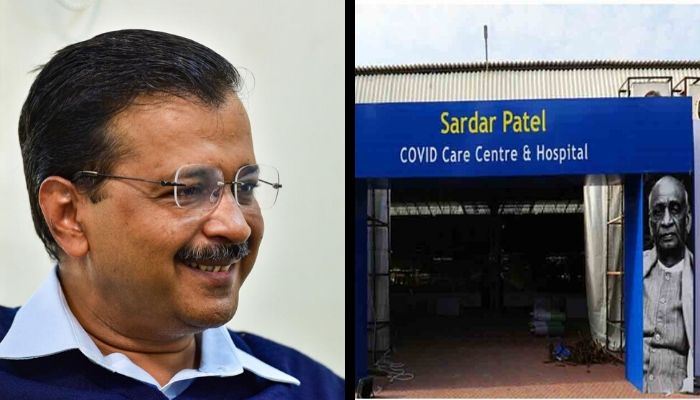
The Aam Aadmi Party-led Delhi government, which has been receiving a lot of criticism over the handling of Coronavirus pandemic in Delhi, on Saturday stoked a massive controversy after it attempted to politicise the newly constructed Sardar Patel COVID Centre and Hospital in Delhi.
The 10,000-bed COVID facility, which has been set up inside the Radha Soami Satsang Beas facility in Delhi, was operationalised after Union Home Ministry Amit Shah took control of the affairs of the national capital. Despite the limited role of the Delhi government in setting up the facility, Aam Aadmi Party (AAP) attempted to take credit for the same on social media. As such, netizens ridiculed Delhi Chief Minister Arvind Kejriwal with witty memes.
Netizens took to Twitter to share images of various iconic structures across the world to say how the same have been built by Aam Aadmi Party government, the way the Sardar Patel COVID-19 facility has been created.
Tweeting the painting of ‘The Last Supper’, a Twitter user (@YoYoFunnySing) slammed Kejriwal for the rising number of Coronavirus case in the National Capital. He wrote, “It’s (The picture is) a representation of Arvind Kejriwal and his disciples having one last supper just before entire Delhi died of Corona.”
Another user, Mohit Gautam, thanked Arvind Kejriwal and the AAP for building the historic Indus Valley Civilisation, a bronze Age civilisation in South Asia.
In a bid to mock the Delhi government for taking undue credit, Maddy thanked the State Chief Minister for building the wonders of the world, namely, the Colosseum, Machu Picchu, Taj Mahal, the Great Pyramid, Christ the Redeemer, Chichén Itzá, Petra, and the Great Wall of China.
Highlighting the disparity between the inflated promises of Arvind Kejriwal and the grim reality, a Twitter user (@LOLiyapa) mocked the Delhi government by sharing a picture of a well-equipped hospital and that of a Mohalla clinic with broken walls, in the vicinity a garbage dump. The same user also took a jibe at Kejriwal for successfully launching rockets into space from SpaceX headquarters.
On Saturday, India’s largest facility for coronavirus patients, the Sardar Patel COVID Centre and Hospital, Chattarpur became operational in Delhi. The ITBP, which managed to build the facility at Delhi within a short span of time, will also be responsible for the operation of the 10,000-bed facility. However, AAP leaders not only hijacked the credit for the facility but also went on to mock the BJP government at the Centre for naming it after Sardar Patel.
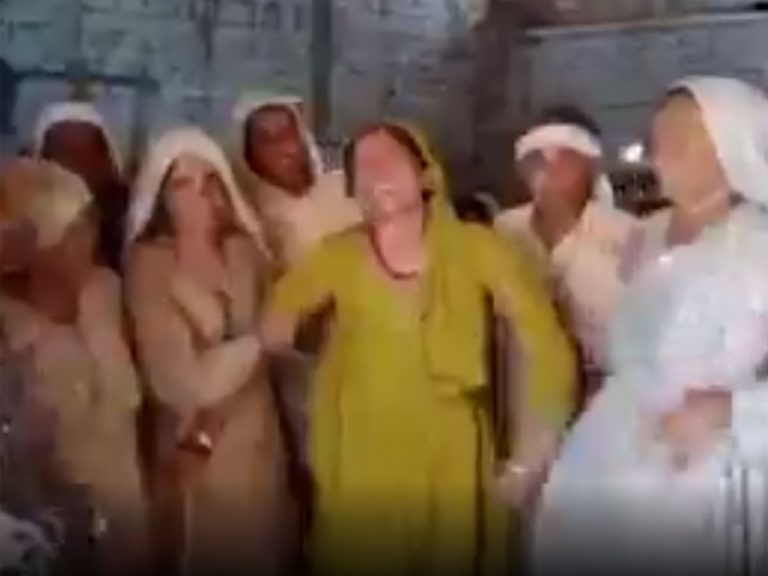
Another 14-year-old Hindu girl has been abducted in Pakistan. According to an activist, Rahat Austin, working in Pakistan, the alleged abduction took place on 27th June in Saedabad, Hala Mitiari, of Sindh province Pakistan. In a video shared by the activist, the mother of the abducted girl was seen broken down with grief. She kept on saying that “It’s a curse to be born in an Islamic country.”
“It is a curse to born in an Islamic County”. Says a Non-Muslim, Hindu mother, while hiting herself with grief, falling unconscious, whose 14-years daughter, Nasiban, is taken for sexual exploitation & forced conversion to Islam in Saedabad,Hala,Mitiari, Sindh-Pakistan.27-6-2020 pic.twitter.com/h8rdVoXJlX
As per Rahat Austin, the 14-year-old Nasiban was taken for sexual exploitation and forced conversion to Islam.
Pakistan and rampant abduction and forceful conversion of minor girls
Pakistan has a history of atrocities against the minority community, especially Hindu girls where they are often kidnapped and forcefully converted to Islam. Many of these girls are minors and are sexually exploited. A minor Hindu girl was abducted in Jacobabad in June this year. Two minor girls, one Hindu and other Christian (hearing and speech impaired) were abducted on different occasions in May. In April, two Hindu girls were abducted from Sindh province and in January, a Sikh girl was abducted, followed by an attack on Nankana Sahib Gurudwara.
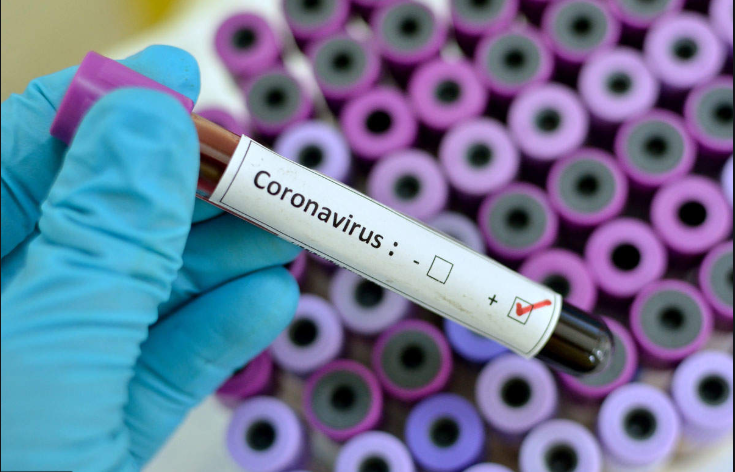
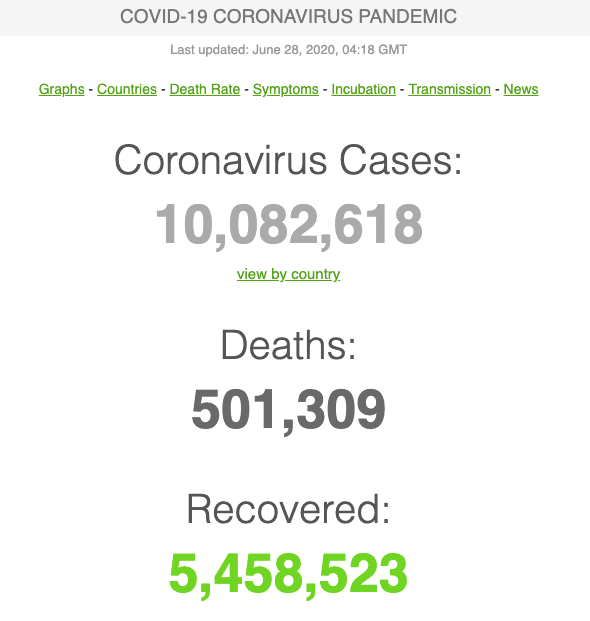
Coronavirus, which originated in Wuhan city of China, has infected more than 1 crore people worldwide. The death toll of the pandemic has suppressed 5 lakhs globally according to worldometres.
Coronavirus cases worldwide
There are 41,22,786 active cases and roughly 1% (57,748 patients) are in critical condition. A total of 54,58,523 people have recovered from the deadly disease. The United States has reported a total of 25,96,537 cases and 1,28,152 fatalities. About 10 lakh people have also recovered from the infection as of June 28.
Coronavirus in India
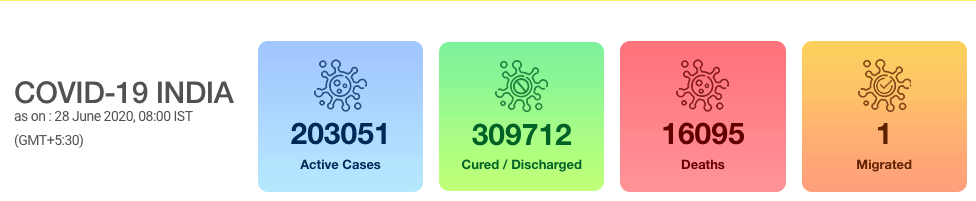
The total number of Coronavirus cases in India has breached the 5 lakh mark as of June 28, 2020. While 3,09,712 people have been cured so far, there are still 2,03,051 active Coronavirus cases in India. The pandemic has also claimed the lives of 16,095 people in the country, till now. Of all states, Maharashtra has been the worst affected with over 1.5 lakh positive cases and over 7,000 fatalities as of June 28. In last 24 hours, India saw highest single-day spike of 19,906 new cases and 410 deaths.
Coronavirus in India
This is followed by Delhi with over 80,000 positive cases cases and over 2,500 fatalities.
Lockdown or No Lockdown?
Amidst the rising cases of Coronavirus, some states have been forced to extend the lockdown that was earlier eased to help revive the economy. Reportedly, Jharkhand with 635 active cases has extended the lockdown till July 31. Assam with 2,339 Coronavirus cases has announced a 12-hour long curfew every night from June 16 and a complete lockdown in Kamrup from the midnight of June 28. Moreover, West Bengal has extended the lockdown in the State till July 31. However, there has been an-hour relaxation in the night curfew.
Even though the Delhi Chief Minister has ruled out the return of lockdown, educational institutions in Delhi will remain closed till July 31 due to the rising Coronavirus cases in the national capital. However, online classes and shall continue without interruption. The drastic increase in the number of Wuhan Coronavirus cases in Hyderabad in Telangana has forced several businesses and markets to shut shops temporarily for a period of 7-10 days. All non-essential services have been ceased in Chengelpet, Kancheepuram and Tiruvallur districts of Chennai, Tamil Nadu. Karnataka which has been successful in containing the Chinese virus to a large extent has ruled out the possibility of a lockdown and has emphasised on the need for increased surveillance.
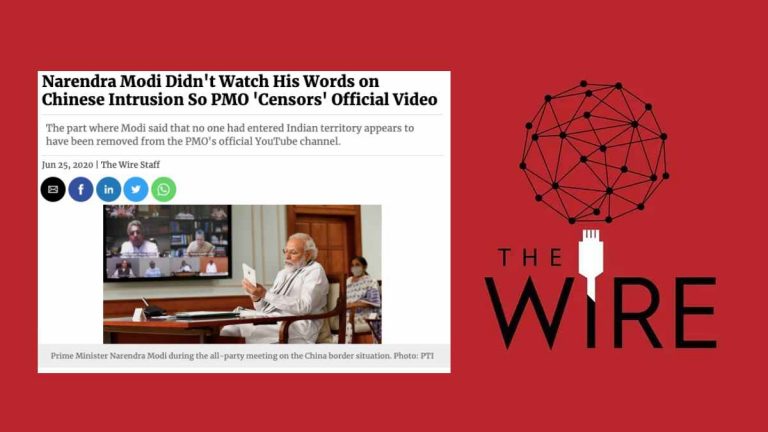
It must’ve been a really slow news day at The Wire office as their reported donned the hat of a detective and conjured up a story that the official Prime Minister Office YouTube channel had ‘censored’ the PM Modi speech after the All Party Meeting held last week. In its June 25, 2020 article titled “Narendra Modi Didn’t Watch His Words on Chinese Intrusion So PMO ‘Censors’ Official Video”, The Wire tries to cast aspersions that PM Modi’s statement where he said that no Chinese has intruded on Indian soil was ‘censored’ from official video upload on the YouTube channel.
It is important to note here that the video was live-streamed on television channels and across all social media channels so the ‘censoring’ if it were to be carried out, would be counterproductive, much like The Wire’s jasoosi. In its article, The Wire claims that while official YouTube channel of Narendra Modi and PMO India carried the June 19 remarks live and while these live telecasts continue to be available on these channels, the PMO India video is shorter and starts in middle of a sentence which led to a manufactured controversy by Congress last week.
Here is the video shared by Narendra Modi’s YouTube channel:
Here is the video posted on PMO India’s YouTube channel:
As can be seen in both the videos, the telecast starts in middle of a sentence. Clearly, the streaming was a little delayed because of a technical glitch. However, the Jagga Jasoos at The Wire concluded that despite the live streaming of both the videos, the one uploaded by PMO was ‘trimmed’ later and then uploaded. When multiple copies of the video and multiple live streams are already available, The Wire thinks that the PMO would just ‘censor’ this particular clip on this particular channel.
As we said, the ‘investigation’ by The Wire reporter is as counterproductive as this ‘censoring’ would have been.
When OpIndia reached out to the sources in the PMO regarding this ‘censorship’ allegations, they laughed off the allegations and said it is too much to expect journalism from The Wire. “It is laughable how allegations are being levelled without basic knowledge of how technology works. It is beneath us to even dignify these allegations with a response,” sources in the PMO said.
PM Modi’s statement on Galwan Valley standoff and manufactured controversy
On 19th June, 2020, after the All Party Meeting, PM Modi addressed the nation and apprised the citizens of the situation in Galwan Valley, Ladakh where Indian soldiers had a violent faceoff with the Chinese soldiers earlier this month. While most opposition leaders including TMC Chief Mamata Banerjee and NCP chief Sharad Pawar voiced their support to the union government, Congress was busy manufacturing a controversy where none existed.
What happened in Galwan Valley?
Twenty Indian soldiers, including Commanding Officer, were martyred during a violent face-off between Indian and Chinese troops on the intervening night of 15th and 16th June. The incident took place during the de-escalation process in Galwan Valley. Reports suggest that the Chinese side has also suffered casualties, including a Commanding officer. Still, there is no confirmation from the Chinese side as they have decided to keep the number of causalities a “secret in the national interest.”
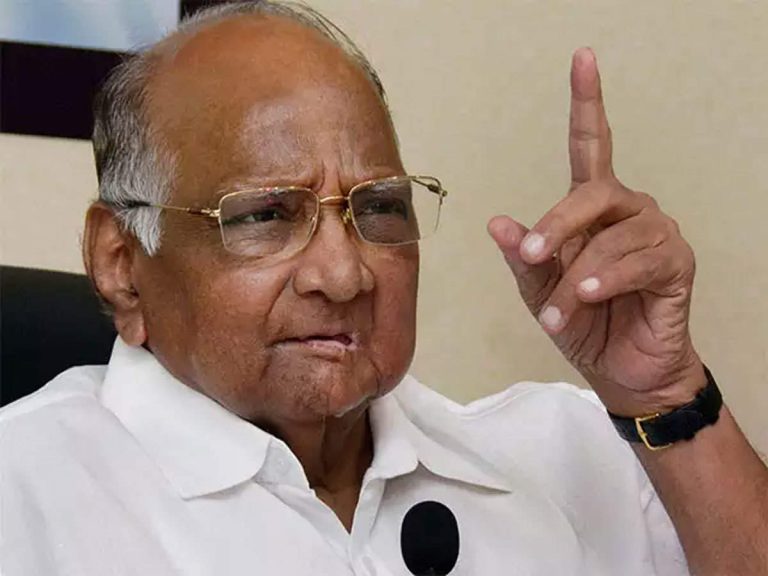
Nationalist Congress Party (NCP) supremo Sharad Pawar on Saturday slammed Rahul Gandhi for his comments on border dispute with China and said that the national security matters should not be politicized and one should remember that what happened in the 1962 war when China grabbed large tracts of land that was belonging to India.
Pawar’s statement was in response to the allegation of Rahul Gandhi against the Central government of surrendering against the Chinese forces. The Congress party under the leadership of Rahul Gandhi is continuously taunting the center since the violent clashes in the Galwan valley took place. The party wants PM Modi to clarify whether China has infiltrated India in Ladakh or not.
However, PM Modi had officially made a statement in this regard and confirmed that no Chinese invasion happened in the Indian Territory. On this, NCP Supremo Sharad Pawar said that this happened for the first time in the 1962 war when the Chinese grabbed a large part of Indian territory. While speaking to the reporters in Satara, he said, “We cannot forget what had happened in 1962 when China occupied 45,000 square kilometers of India’s territory. While making these allegations, one should also look at what had happened in the past. This is an issue of national interest and once should not bring in politics here.”
Talking about the Aksai Chin region the Sharad Pawar also said that the center cannot be blamed for the standoff at Galwan valley. He said, “Our soldiers tried to push back Chinese army men when they tried to encroach upon Indian soil. To say this is the failure of anyone or of the defence minister isn’t correct. Had our army not been on alert, we wouldn’t have known Chinese assertion.”
He further added, “The scuffle itself means that we were vigilant else we would have been caught unaware. Hence, I don’t think such allegations are fair to make.” NCP supremo also mentioned the agreement between India and China that states that both the nations will not use any guns on the LAC.
Sharad Pawar’s NCP is an ally with the Congress in the Shiv Sena led Maha Vikas Aghadi government of Maharashtra.
It is notable that on 15 June 2020, 20 Indian Army soldiers laid their lives in service of the nation during the violent clash in Galwan valley. Since then Rahul Gandhi is trying to give it a political angle.
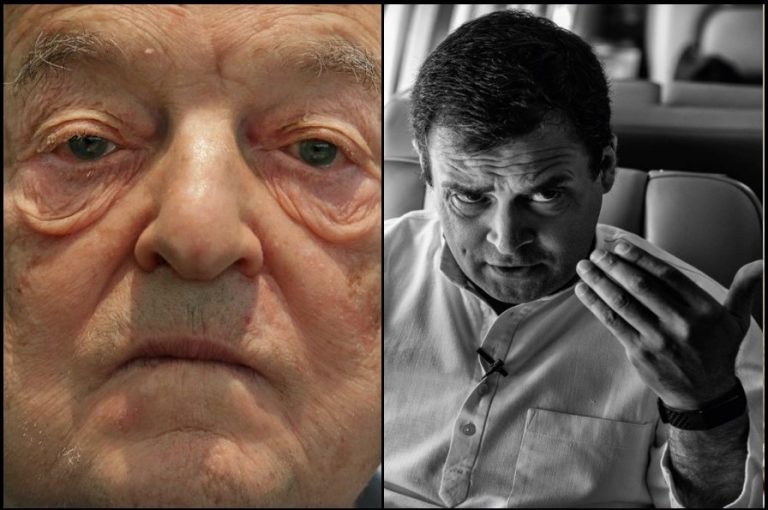
At the Davos World Economic Forum, a certain billionaire created quite a storm when he declared a war upon nationalism and nationalist politicians around the world. His target included Prime Minister Narendra Modi. From the podium, with unrestrained arrogance, he committed himself to combating the democratically elected leaders whose worldview differed considerably from his own. He was, of course, the Jewish American Billionaire George Soros.
George Soros has a history of meddling in the internal affairs of foreign countries. He has been accused of interference in their internal matters by multiple countries. Therefore, hardly anyone considered his vow to take on the nationalists as an empty threat. As it so happens, the individual who seeks to undermine the democratic will of the Indian people has a long history of ties with a major political party in India.
Again, this, of course, isn’t surprising at all given the fact that George Soros attempts to influence policies of a country by establishing a working relationship with one of the country’s political parties or through a network of ‘civil society’ organisations. In India, George Soros, through his funding of numerous Indian NGOs, also established quite a close working relationship with the Congress party.
Rajiv Gandhi Foundation and its links to Soros funded organisations
The annual report of the Rajiv Gandhi Foundation for the year 2007-08 lists a rather interesting partner, the Human Rights Law Network (HRLN). We have reported extensively on the organisation and its links to associations that are intimately associated with ‘Urban Naxals’ and separatists in Kashmir and elsewhere.
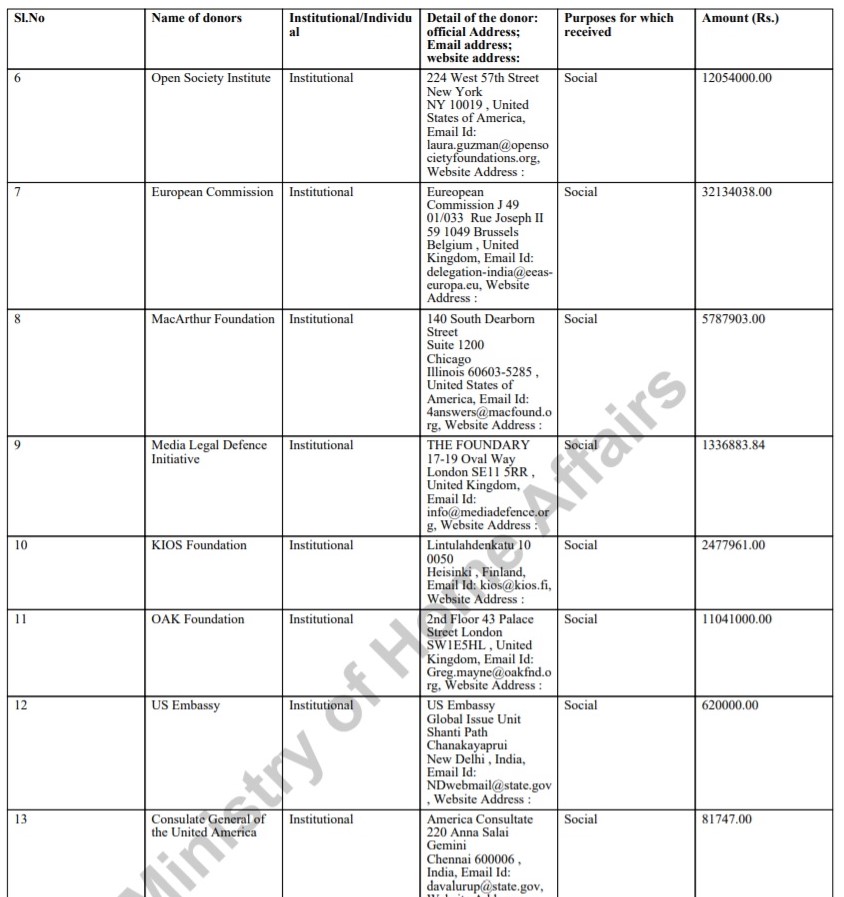
The foreign donations are available for HRLN only from 2014-15, therefore, we cannot be sure whether the organisation was receiving foreign funds while it was partners with the RGF. But its FCRA submissions do reveal that it has been receiving a huge amount of funds from George Soros’ Open Society Institute.
A list of donors to the Socio Legal Information Center, the parent organisation of HRLN
In addition to the Open Society Institute, the HRLN has also received huge funds from Christian Missionary organisations and foreign governments as well. HRLN’s public declaration of funds is also consistent with th Modi government’s crackdown on foreign funded organisations and the insistence of the government on greater transparency.
The HRLN has also been campaigning against Indian sedition laws along with Nacxal-linked organisations and has also been providing free legal aid to Rohingyas who have been living illegally in this country.
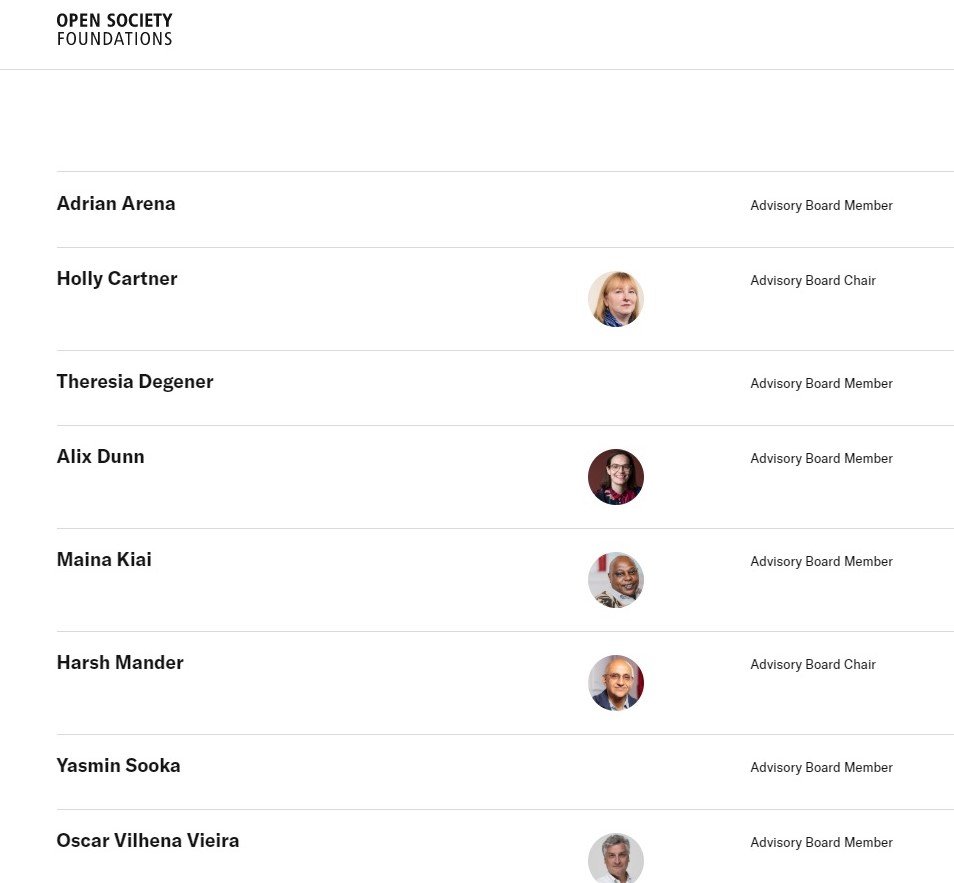
In addition to Human Rights Law Network, the Rajiv Gandhi Foundation also partnered with the Aman Biradari Trust as late as 2018-19. The ABT was founded by Harsh Mander, an individual who is closely linked to George Soros and is the Chairman of Open Society Foundation’s Human Rights Initiative Advisory Board.
The antics of Harsh Mander during the violence in the aftermath of the passage of the Citizenship Amendment Act is quite well known. He also made an appearance at the Shaheen Bagh protests. During the UPA Regime, he was part of the National Advisory Council that drafted the blatantly anti-Hindu Communal Violence Bill.
The links of Rajiv Gandhi Foundation to shady Soros linked foreign orgs
One of the organisations that has donated heavily to the Rajiv Gandhi Foundation is the Friedrich Naumann Foundation. The FNF is a liberal organisation based in Germany that is closely associated with the liberal political establishment in the country and was a major donor for the RGF. This particular organisation has links to George Soros as well although it is not obvious on the surface.
Not too long ago, Turkish media had reported that the FNF had started donating to certain organisations after Open Society announced that it was closing its operations in the country. Other than that, they have often partnered with the same organisation because as is obvious, they largely share similar objectives.
The RGF is linked to the Clinton Foundation through its sister organisation Rajiv Gandhi Charitable Trust. While senior Congress leaders apart from Sonia Gandhi and Rahul Gandhi are also nth top functionaries in RGF, only the mother-son duo appear in the Board of Trustees in RGCT from the top brass of the party.
As we have reported earlier, the RGCT partnered with the Clinton Health Access Initiative (CHAI) of the Clinton Foundation, which was established by former US President Bill Clinton. According to the RGCT’s website, another sister organisation partnered with CHAI “to train community members on managing diarrhoea in 31 blocks within the Raebareli and Amethi districts.”
Needless to say, an initiative floated by the Clinton Foundation was working with a foundation where Sonia Gandhi and Rahul Gandhi are in the Board of Trustees for welfare work in constituencies from where the mother and son have contested Lok Sabha elections from. All of this is blatant election interference at quite an unprecedented scale.
And as is quite well known, George Soros is a major Democrat donor, the party in the US that Bill Clinton and Hillar Clinton belong to. Thus, when George Soros says he will launch a fight against nationalists and nationalism around the world, it is only to be expected that the Democratic party will be an important tool in his arsenal. And as we have seen just now, prominent leaders of the Democrat party have established a spider’s web with the autocrats who rule the Congress party.
What does it mean for Indians?
As is obvious, the extensive links of the Nehru-Gandhi family with George Soros has profound implications for India and Indians. We can be relatively certain that until the Nehru-Gandhi Parivar continues to rule the Congress party, Indians cannot rely on it to defend nationalism. In the past few years, the conduct of the Congress has amply revealed that it only cares about power, it does not worry about the cost.
The Nehru-Gandhi ruled Congress party has demonstrated an unnerving callousness with regards to national security and interests. Be it Surgical Strikes or the Balakot Airstrikes, or even now during the Indo-China conflict at Galwan Valley, the Congress party under the Parivar has demonstrated that it will be ever willing to let the country burn as long as it could rule over the ashes.
Thus, when George Soros tries to undermine nationalism and nationalists in India, there’s one party Indians will not be able to count on as long it remains hostage to the Nehru-Gandhi Parivar. The recent revelations with regards to the cesspool of treachery that permeates the functioning of the Rajiv Gandhi Foundation only serves to cement that fact.