Looking at the deliberate rise of (left-led) ‘how safe is democracy in India?” debates and posts, I, as a curious student of Political science, decided to read up on major incidents that can be seen as scattered milestones on the horizon of Democracy. And that was when I came across the horrific incident of Tiananmen Square and the massacre that ensued.
Tiananmen Square Massacre
This is the portrayal of the will of man! The lengths he will go to for his rights and that of his fellow countrymen and this immense bravery needs proper dissemination and a yearly tribute by believers of democracy across the world!
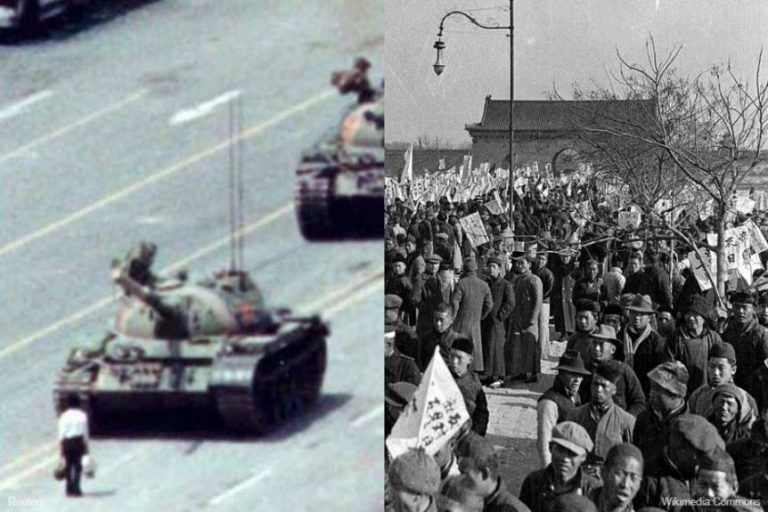
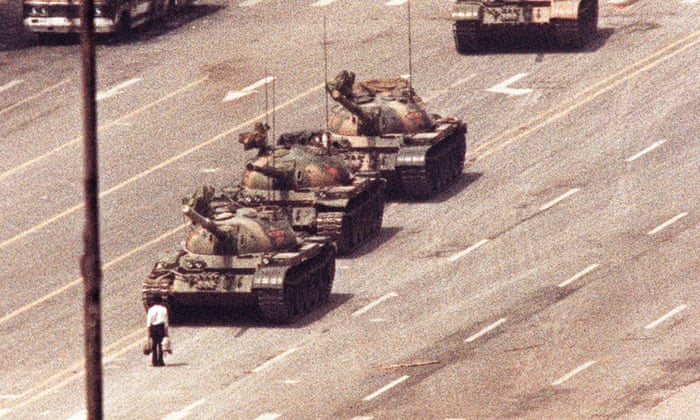
If we look closely, we see a man, with the nerves of steel standing with his head held high in front of Army tanks while he had shopping bags in his hand. Now obviously, no civilian will go shopping in a war zone which is the place for such heavy-duty tanks. So what were these doing in the middle of city road?
This heart-wrenching image was taken on 5th June 1989 by a certain photographer named Stuart Franklin, 31 years ago and it still sends chills down my spine.
The history of this image is wrapped in the incidents of the Tiananmen Square which is a place in the heart of the capital of China. In 1989, thousands of students gathered here for certain political demands. According to History.com, “The Tiananmen Square protests were student-led demonstrations calling for democracy, free speech and a free press in China”. So one may ask what is so horrific about this, why would a group of students who were staging a demonstration for their political right ever be a horror?
The truth be told, this was not only dreadful and frightening for democracy but for the entire mankind at the same time.
What really happened at Tiananmen Square – The Massacre
Hu Yaobang, a former Communist Party leader who was vocal about increasing of political freedom died on 15th April 1989. Three days after his death, the populace rose in unanimous mourning in the form of demonstrations for the demand of political freedom as envisaged by Hu Yaobang- because there could be no better way of paying tribute to him. In just a month, around mid-May, the demonstrators realized that the ruling communist government would not let this dream come true and more than 100 students began a hunger strike at Tiananmen Square on May 13, 1989. These hundred students were later joined by thousands of citizens: all of whom were innocently and non-violently demanding political freedom in the form of demanding democracy.
To a sane, considerate government, this humongous number of people on a hunger strike would be an absolutely radical situation. One man in India sat on an indefinite hunger strike and the government had to come up with the RTI act, but here in the heart of communism, the Chinese government was all set to commit a sin against humanity.
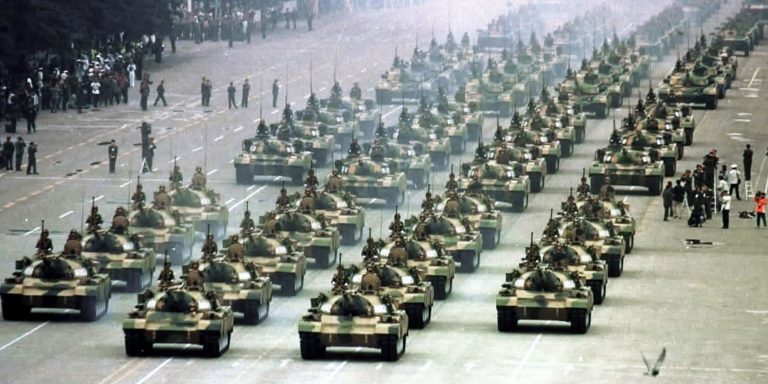
Immediately after the hunger strike began, Premier Li Peng imposed martial law on May 19, 1989, in a fanatic attempt of suppressing the voices that were dying to be heard. Despite all the desperate efforts by the authorities, when the protesters were unmoved, and their resolve was steadfast, the communist government, unleashed their demonic side on the demonstrators when the movement was at its peak on 4th June 1989.
At about 1 AM, the communist government took an outrageous decision of unbridling their armed forces on these 1.2 million people demanding freedom in their own capital. Throughout the day, Chinese troops opened fire on civilians and students, brutally crushing the movement, killing anyone in sight and muting the cries for democracy that were once echoing in that arena. There was violence and bloodshed of unimaginable magnitude, lives were lost and the pro-democracy slogans were soon turned into wailing of men and women alike, pleading for help and mercy. This was done when millions of people had already joined hands with each other over the firm resolve of establishing democracy and political freedom in China only in order to silence the public mandate.
Statistic
The official statistic was never released by the Chinese government. While by the end of June a vague figure of the death of 200 civilians and ‘several dozen security personnel’ was given out, it is highly unbelievable and drenched in lies. According to BBC, more shockingly in 2017, newly released UK documents revealed that a diplomatic cable from then British Ambassador to China, Sir Alan Donald, had said that 10,000 people had died in this massacre.
This was the most believable yet unofficial and estimated number of people who were killed for demanding a secure political environment.
The tank man in the Tiananmen Square picture
After the unleashing of the army upon the demonstrators, on the next day, an unidentified man stood in front of army tanks in Beijing. This is the man that we started this article with. The Tiananmen protests were immortalized in Western media on 5 June through the image of a lone man in a white shirt carrying shopping bags, facing an imposing column of military tanks sent by the government to disperse protesters. The man is known simply as Tank Man: his identity has never been confirmed.
This hidden hero became the shield for the protesters of Tiananmen Square. His resolve became the barrier that was needed by the demonstrators against the tyranny of their government. He became the symbol of democratic persistence against communal despotism.
The value of democracy
Reading up upon this incident painfully reminded me of how certain irresponsible sections of our society today have begun to take this freedom, this democracy and these rights of granted. How they have shamelessly begun misusing it, how they have completely set out against the nationalist, democratic ideals and have rather tilted towards bigotry and hypocrisy in the name of “freedom of speech”, how their selective sensitivity and propaganda has begun the rotting process of several pillars of this country.
We are one of those few lucky countries who have been able to nurture the sanity that keeps a democratic ideology alive and functional through the corridors of our parliament but today, in the name of opposition, in the name of criticism, in the name of (pseudo) secularism and liberalism this pious ideal is being dented.
This incident brought a boil to my blood and fervour ran through my arteries to know about such heinous and brutal deeds of a country which even today has left no stone unturned in troubling the entire world! We as humans must feel ashamed.
Conclusion
While the world may fail or skip to commemorate the 30th Anniversary of the iconic sacrifice that took place at the Tiananmen Square, I pray that the heroes who lost their lives get justice and their legacy lives on. I, as a student and as an Indian also hope that the divisive forces of this country will also, kneel in front of the spirit of democracy, respect it and carry it forward without any propaganda-driven selfishness.
I also at the same time urge to the international watchdogs of human rights and justice to hold the communist government responsible for this mass murder of their own people. This is no joke, this is not a light matter, this is a grave issue and no one knows how many people even today, across the world are going through hell under such brutal, fascist, inconsiderate and sinful regimes; justice must be served to all of them and one must remember, justice delayed is justice denied.
Let us, as a global village begin holding such radical thoughts accountable for the crimes that the commit against humanity.
I might not have been present on this earth on that fateful date, but today, on the30th anniversary of the Tiananmen Square massacre I not only remember, but also bow down to these heroes of ‘political freedom’. I also, count my blessings here to be a part of the world’s largest democracy and my heart cries out for people who are kept away from this boon. May we all one day be free citizens living a life of prosperity and dignity under the guidance of a government that we chose!
(This article has been authored by Anandita Sing, who is a researcher in Center for North East Studies, New Delhi)
In a recent update a US-based cyber threat intelligence company Cyble has announced a major leak of Indian National IDs over the dark web. The firm mentioned in its report that there are over 110,000 national IDs available in the dump. They acquired a sample of 1000 IDs and confirmed that they are indeed Indian National IDs, including passport, PAN card, voters card, Aadhaar, driver license and more.
During the investigation, Cyble noted that the files originated from data collected from 2017 to 2020. The firm is determining the source of the leak. In the last four weeks, the researchers at Cyble are on the edge of their seats as major data leaks have taken place including Weibo accounts, credit card information, Truecaller user dump, personal information of Indian job seekers, and more.
In this instance, the firm said that a non-reputed actor is claiming to have access to over 100,000 national IDs from different locations in India. The total size is believed to be over 100 GB. Though the actor has a low reputation and in general such claims get skipped by the experts, this particular leak is sensitive as the data dump has national IDs and that too in large volume.
Source of the national IDs leak is a non-government entity
In its initial investigation, Cyble found out that the data came from a third-party source. There are no indications that the data was leaked from a government system. The researchers are working extensively and should be able to provide more details about the leak in the next few days. The researchers pointed out that they have learned about a surge in banking and KYC scams in India. This leak may be used by scammers to target individuals, especially elders and technologically naive.
About Cyble
Cyble is a well-reputed US-based cyber threat intelligence company that was formed with a mission to provide organizations with real-time information about cyber threats and risks. They help individuals and organizations to access and secure their system from potential attacks and hacks.
It’s June 4, the anniversary of the 1989 massacre at Tiananmen Square in Beijing. Some say that lakhs had gathered to protest the Communist regime. How many were killed? How many were wounded? The Chinese state says 200 were killed. Others say as many as 10,000 were killed. What are the real numbers? Only China knows.
Instead, this is what the Communist government of China has to say to the world.
The iconic picture at Tiananmen Square
The really scary part is that it doesn’t even matter whether the actual number of dead was closer to 200 or to 10,000. Over the last century, Communism has killed 1000 lakh people across the globe. So, whether 200 or 10,000, the Tiananmen Square incident is a just a drop in the grim bucket of Communism.
What we should really be worrying about is not Tiananmen Square, but the fact that the same deadly ideology is still around us. We’ve now brought them down from three states (Kerala, Bengal and Tripura) to just one. That is good news, but cold comfort considering that Communists still control multiple levers of power within the media and intelligentsia, which often gets to set the narrative. How safe are we while the Communists still get to set the narrative? And, they still have Kerala! Over three crore Indians live there.
The victims at Tiananmen Square became famous. But as I mentioned, they are just a drop in the Communist bucket. We should worry about the victims who are forgotten.
Kerala colleges with ‘torture rooms’
Did you know about this? Let me quote from the article.
“Colleges in Kerala have turned into places of torture, according to a report by former Kerala High Court Justice (retd) P.K. Shamsuddin that has been submitted to the state governor and the Chief Minister’s Office. The report reveals that several colleges and universities have “torture rooms” for students who do not fall in line with the directives of student political parties or unions, in particular the Students’ Federation of India (SFI), student wing of ruling Communist Party of India (Marxist).”
So why won’t the college teachers intervene when this horror takes place? Again, I quote:
“Even amongst the teachers, there are many who support the Left-wing parties, and when a case of torture is reported, they do not take action against it.”
This is from a report by retired Justice P K Shamsuddin, formerly of the Kerala High Court. The report was submitted to the Governor and the Chief Minister’s Office. The Commission was set up after an SFI member was stabbed in the chest because he had a disagreement with his fellow comrades.
Our kids are literally getting stabbed in the chest, being thrown into dungeons and torture rooms by Communism. The same deadly ideology that set tanks upon students at Tiananmenn Square.
Did you know about this? In an age when the smartphone and social media picks up every act of fashionable “dissent” by any student anywhere, the report of the Shamsuddin Commission came and went. No cable news coverage, no newspaper headlines, no dizzying social media storm, no inspiring poems, no murals or graffiti. Just an inconvenient truth, which slipped by without mention.
There are two kinds of dissent that students can choose in this country. There’s the fashionable version. That’s the one where you need five meters of bandage to cover up a single scratch on the head. The one where you have back to back media interviews scheduled for the next one month and an admission to a social “science” course arranged for you at a prestigious foreign university.
And then there’s the other, unfashionable, forgotten one. It happens in torture rooms in colleges in Communist ruled Kerala. If those walls had eyes, the Communists would surely have gouged them out.
And, thousands of kilometers away from the torture rooms of Kerala, we have the cozy living rooms of Delhi. Here the Communists rule as well, certifying who gets to be a ‘free speech hero.’ This testimony records how Sitaram Yechury came to JNU at the time, carrying a Chinese propaganda film that denounced the protesting students as CIA operatives.
Sitaram Yechury with Chinese propaganda film
This is not a one off event. In fact, the CPI(M) officially supported the massacre.
CPI(M) supported massacre
Perhaps you think this was so long ago that it is not relevant today. In that case, let me remind you that Kerala’s Communist Chief Minister Pinarayi Vijayan praised North Korean dictator Kim Jong Un at a party meeting in Jan 2018. That is just two years ago.
Indeed. In between spotting India’s next big protest talent and denouncing Modi sarkar as fascist, the Communists always have time to pay tribute to their supreme leader : Kim Jong Un.
The ones who cheered the tanks at Tiananmenn Square are in charge of deciding youth icons for India today. Let that sink in.
No wonder that their heroes and ‘sheroes’ turn out to be supporters of Yakub Memon and Afzal Guru.
As a nation, we need to open our eyes and understand what a real hero is. And who the real victims are. You see that man in the famous photo facing off against a line of armored tanks? That man is a real hero. The forgotten students in the torture rooms of Communist ruled Kerala are the real victims.
In the media glare, we have forgotten both the real heroes and the real victims. Therein lies the pity.
Amid the preparations for the approaching Rajya Sabha elections, the Gujarat Congress has faced a huge backlash after two of its MLAs resigned from their respective positions. Reportedly, a third MLA is also on the way out.
As per reports, Gujarat Congress MLA from Karjan, Akshay Patel, and MLA Jitu Chaudhary from Kaprada had been out of reach of Congress for a long time. Congress leaders also revealed that a third MLA is also on the way out of the party.
A senior AICC leader said, “Two I can confirm. Third, we are trying to confirm. It was expected. It is Gujarat. If they (BJP) can do this sort of thing in other states….Gujarat is their home ground.”
Assembly speaker Rajendra Trivedi has just confirmed the resignations of the two MLAs. He has added that he has accepted their resignations.
Two MLAs Akshay Patel and Jitu Bhai Chaudhary (both from Congress) have resigned voluntarily from the post of MLA and I have accepted it: Rajendra Trivedi, Gujarat Assembly Speaker pic.twitter.com/nKqSeRgafo
Reportedly, Congress leaders tried reaching out to the two rebel MLAs but despite several attempts they couldn’t. Rajeev Satav, the AICC in-charge of Gujarat took to twitter and alleged that BJP is involved in buying their legislators. He wrote, “India is in the midst of its independent history’s biggest health and economic and humanitarian crisis. BJP, though, cannot think beyond putting all its energies in poaching legislators for RS polls, people be damned!”
India is in the midst of its independent history’s biggest health, economic & humanitarian crises. BJP, though, cannot think beyond putting all its energies in poaching legislators for RS polls, people be damned!
Previously, five Gujarat Congress MLAs had resigned in the month of March taking the tally to 68 in the state. The recent developments are a big jolt to the political party as it has splintered its plans to win at least two of the four Rajya Sabha seats.
Media reports say more resignations on the way
Media reports have speculated that at least 6 MLAs may resign from Congress. Desh Gujarat has claimed that as many as 7 Congress MLAs may have resigned.
Seventh Congress MLA resigns from the Assembly ahead of polling for Rajya Sabha seats in Gujarat https://t.co/IKRQfQaf69
The ruling BJP has 103 members in the assembly while Congress had 68 after the resignation of those five MLAs in the month of March. While the BJP can look forward to a comfortable winning of two seats, Congress’ plans have suffered a jolt.
Elections before June 22
The elections for 18 Rajya Sabha seats scheduled on March were postponed due to the coronavirus pandemic. The ECI had stated that Elections will be held for 4 Rajya Sabha seats each from Andhra Pradesh and Gujarat, three each from Madhya Pradesh and Rajasthan, two seats from Jharkhand, and 1 seat each from Manipur and Meghalaya before June 22.
As is argued several times, that in India as in the rest of the world, the government in power and the establishment, so to speak, are extremely different entities. While BJP has certainly formed the government at the centre two consecutive times, the establishment is still a behemoth of left-leaning institutions and individuals with the chips firmly stacked against ‘non-left’ voices. OpIndia has been one platform that has attempted to fight the Left hegemony and in the process, the establishment has attempted to define what OpIndia is, what we aim to do, distort the history of OpIndia etc and much of it has been done not just through hate campaigns but also through altering OpIndia Wikipedia page to present a biased, hateful picture to Wiki readers.
Why is the OpIndia page on Wikipedia so negative
This is a question that OpIndia has often been asked – why is the Wiki page of OpIndia so negative, and the answer is rather simple. From the very inception of OpIndia, the portal has tried to break the left hegemony and present the truth as is. Most recently, for example, OpIndia took on the deeply discriminatory Halal industry that ensures the employment of Muslims and not of Hindus. Before that, OpIndia took on the reportage of the Delhi Riots. While the entire Left establishment tried to paint the riots as an Anti-Muslim genocide, through our persistent reportage, we showed how it was an organised riot against Hindus, the seeds of which were sown in November itself. Further, we have taken on the mighty BBC, exposed scams by the Congress scions Rahul Gandhi and Priyanka Gandhi Vadra, exposed hitherto unknown facts about the Bofors scandal, thwarted attempts to paint the death of a judge as a murder, exposed the nefarious designs behind the Rafale tirade and published several such reports and fact-checks that decimated the fake narrative by the Left.
After the reportage we do, the attacks on our credibility and existence were a given. We expected it.
To answer the question, the OpIndia page on Wikipedia is negative because OpIndia dared to challenge the ecosystem and the foot-soldiers of the ecosystem decided to hit back at us.
What one needs to understand is that nobody really ‘owns’ a Wikipedia page. For example, if there is a page about OpIndia on Wikipedia, it is not ‘owned’ by OpIndia and is not necessarily created by OpIndia either. There are several ‘editors’ who can make edits and create pages. Wikipedia is supposed to be a community-driven project where people, over time and several ‘edits’, climb up the ladder and acquire the authority to create pages and make edits. They even get the authority to ‘lock pages’ so others, who are not as ‘senior’ as them cannot change the details on the page.
Wikipedia has a domination of Left leaning editors and thus, several pages on Wikipedia are biased, with the information added catering to the whims and fancies of the Left leaning editors.
The co-founder of Wikipedia, Larry Sanger, who is no longer involved with Wikipedia had gone on the record to talk about the bias of the online encyclopedia. Sanger had written that it has long forgotten its original policy of aiming to present information from a neutral point of view, and nowadays the crowd-sourced online encyclopedia “can be counted on” to cover politics with a “liberal point of view”.
With a pronounced Left bias in the platform itself and even in the community driven editors, the OpIndia page on Wikipedia really did not stand a chance at neutrality.
The OpIndia page on Wikipedia has been created and edited by an ecosystem that the OpIndia went after and exposed, time and again. While Wikipedia is no longer considered an authentic source of information by any serious researcher, it is still a source that is widely read by laypersons and thus, it becomes important to lay threadbare the nefarious ecosystem behind the concerted defamation of OpIndia.
To summarise:
Wikipedia pages are not owned by successive brands
The cartel of left-leaning editors and administrators have made sure that the OpIndia Wiki article is biased
Any changes that show a neutral point of view is reversed and the contributor is warned and then blocked
The editors have shown visceral hatred for Hinduism and Hindutva ideology multiple times
We decided to focus on our work than battling them on a platform they have come to control and manipulate
In fact, though we are not soliciting any positive edits, those who want to test this theory must try making edits to any page that the left might not like. Even when tries to make the most neutral edits, the Editor is often warned and blocked.
How the Wikipedia vs OpIndia battle started
About 2 or 3 years ago, there existed an OpIndia page on Wikipedia which was fairly neutral and gave an accurate picture of the portal. It identified our states ideology and the work we aimed to do. However, that page was deleted by the very same ecosystem as they did not think OpIndia deserved the “prominence” of having a Wikipedia article dedicated to the portal. After the deletion, OpIndia did not bother to contest or rectify this deletion and continued to grow regardless. It was perhaps the frustration of the ecosystem that made them bring back the OpIndia page with extremely defamatory and biased content.
The current Wikipedia page of OpIndia was not created by OpIndia and then subsequently vandalized, as many seem to believe. The page itself was created by a Wiki editor who calls himself ‘Winged Blades of Godric’.
Details from Wikipedia about the creation of OpIndia page
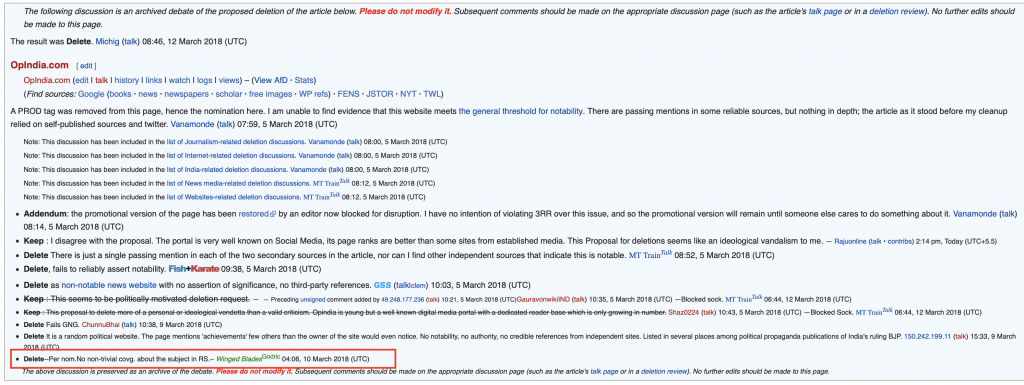
Interestingly, as mentioned above, the neutral page of OpIndia was deleted in 2018. One of the people who had vehemently voted for the page to be deleted from Wikipedia was Wings Blade of Godric himself.
In 2018, his rationale for demanding the deletion of the OpIndia page from Wikipedia was that the portal was too trivial and did not deserve a Wikipedia page in itself.
2018 page where the deletion of OpIndia Wikipedia article was discussed
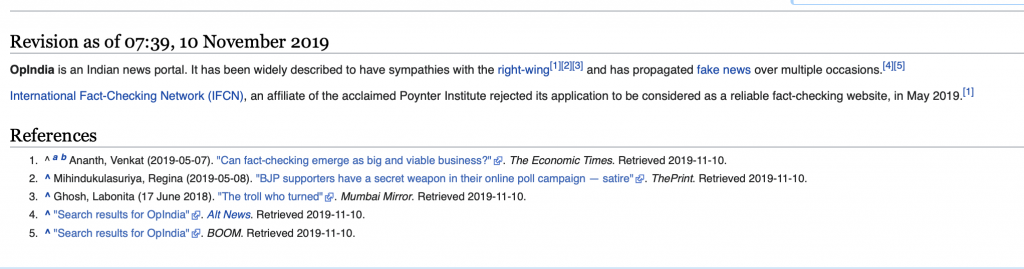
The current page was created on the 10th of November 2019 as can be seen from the edit history, only about a year after the same individual got the OpIndia page deleted because he thought the portal was too trivial. From the very beginning, and from the very first sentence written, an extremely skewed picture of OpIndia was presented to the readers by the Wiki editor who took it upon himself to create a page for OpIndia for the sole purpose of defamation.
The very first edits that were made by Winged Blades of Godric after creating the page was branding OpIndia as a “fake news website” without adequate research.
First edits made to the current Wikipedia page of OpIndia
In the references, only broad search results from AltNews and BOOM were taken without taking into consideration that almost every story that has been written against OpIndia by these portals have been torn down by OpIndia itself.
Who is Winged Blades of Godric: The editor who created OpIndia Wiki page
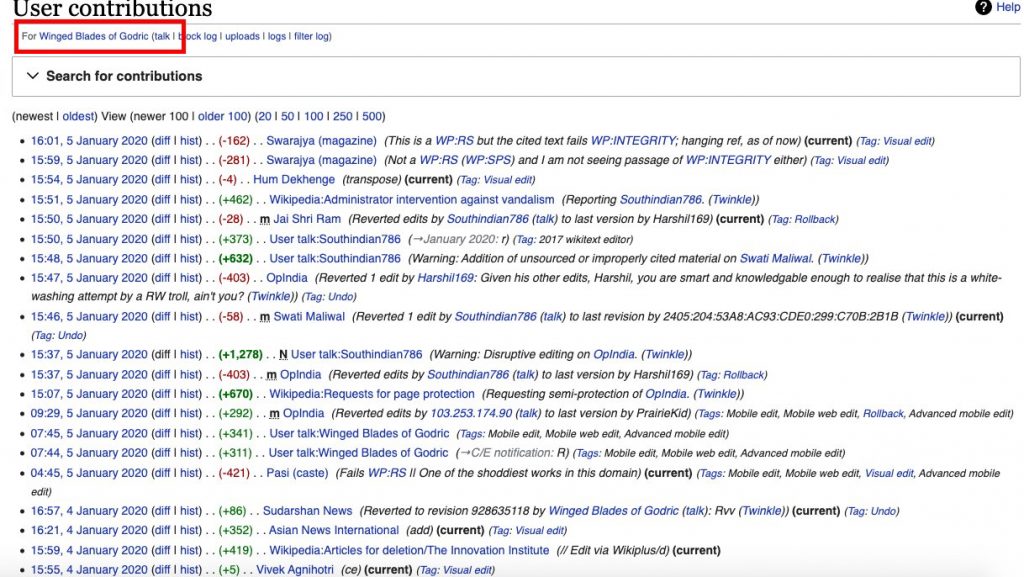
Winged Blades of Godric’s real name is Anureek Biswas who hails from Kolkata. While his personal identity is not the point of this article, one can easily judge his ideology and political inclination from several other edits that were made by him.
He has regularly vandalized pages of Republic TV, Jaggi Vasudev, Arnab Goswami and even Swarajya – all seen as those who oppose the Left hegemony.
How WBG habitually vandalised pages
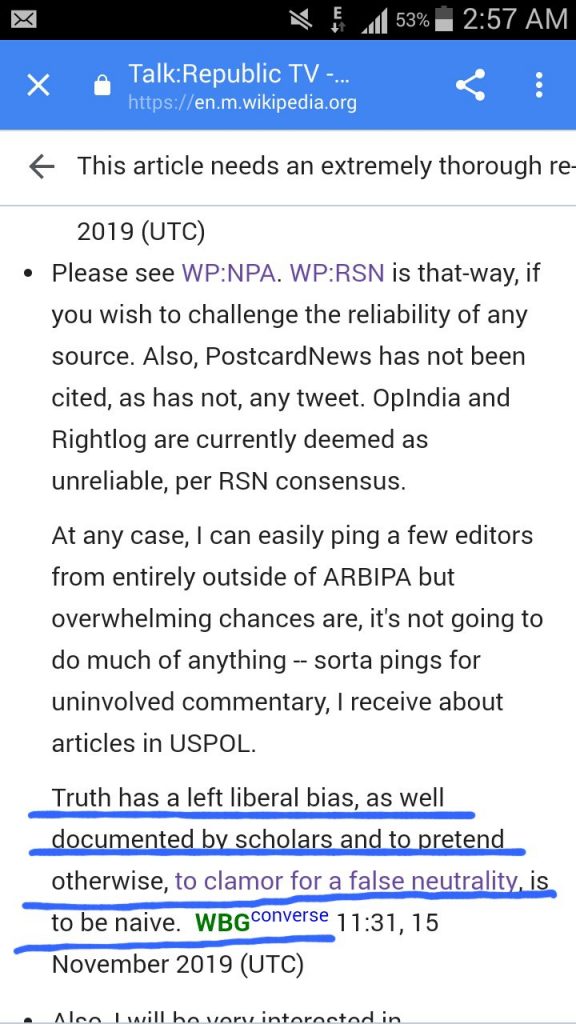
In his own words, WBG has admitted that the ‘truth has a Left-leaning bias’ and thus, for him to consider any truth to the contrary as ‘fake news’ is obvious.
WBG saying that the truth has a Left bias
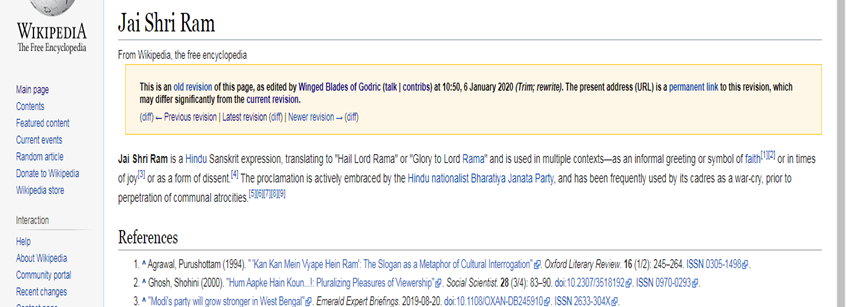
Further, he has done several problematic edits that deride Hindus and also conforms to the radical-left bias. For example, here, he had called the pious chant of ‘Jai Shree Ram’ a “war cry”.
Archive page of ‘Jai Shree Ram’ that was edited by WBG
While an entire article in itself can be dedicated to the problematic edits made by WBG, so far, we have already established that the Editor who made the Wikipedia article himself as a strong Left bias and thus, his opinion on OpIndia cannot be considered sacrosanct.
There are certain other strings that need to be explored about why the OpIndia page is heavily biased, and the other elements who are involved in the constant propaganda.
One of the close friends and allies of WBG is one ‘DBXray and Newslinger’.
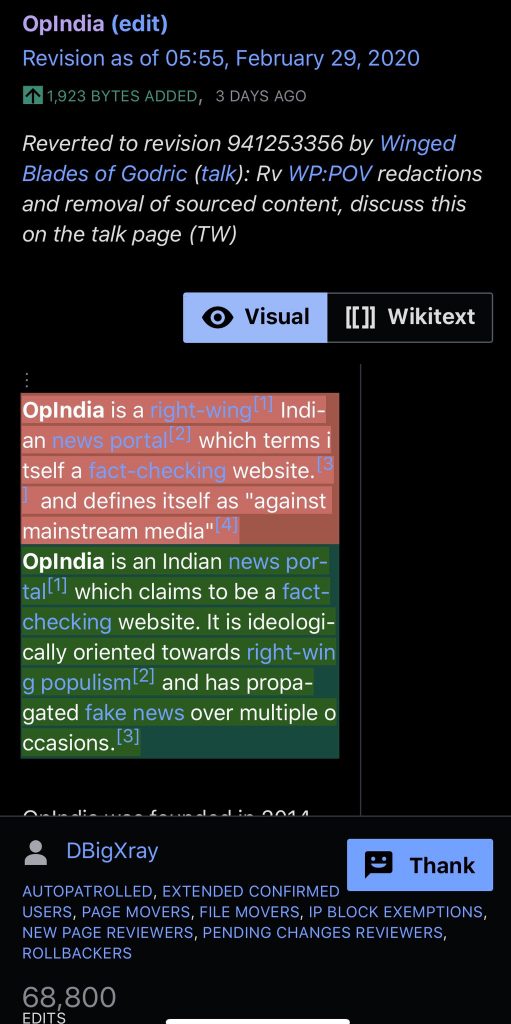
DBxray was one of the people who was ensuring that any neutral edit was not accepted to the OpIndia page. The proof of that can be understood by this screenshot where DBXray is seen reverting a neutral edit and reinstation OpIndia being called ‘fake news website’.
DBXray reverting the OpIndia page to the edits made by WBG
Who is DBXray? – Another crusader against OpIndia and Hindus on Wiki
DBXray is a motivated Wiki Editor who OpIndia had exposed threadbare for making extremely biased edits to the Wikipedia page for the Delhi riots. This editor, in the Wikipedia page for the Delhi riots, refused to acknowledge the role of Islamists and the brutal murder of Hindus. While Tahir Hussain, AAP leader, was being named as one of the masterminds in the killing of Hindu IB staffer Ankit Sharma, the editor refused to even let the name of Tahir Hussain be mentioned in the article. The user, Deepesh Raj (DBXRay), also claimed that Tahir Hussain, the AAP leader who led an Islamist mob that tortured and murdered IB sleuth Ankit Sharma was being framed.
Further, he says that Tahir Hussain cannot be mentioned until he is convicted by a court of law. It is pertinent to mention here that Kapil Mishra has been made the face of the riots based on nothing but propaganda.
In fact, he even says that Ankit Sharma, who was stabbed multiple times and was tortured to death “was not notable enough” to be mentioned in the Wikipedia article.
Another example of his glaring bias was revealed when he was asked to include the hateful speeches of Waris Pathan since he had mentioned Kapil Mishra.
When the conversation revolved around the addition of Kapil Mishra as the sole ‘Lead Figure’ of the Delhi riots, he refused to add Waris Pathan’s speech as one of the instigators of the riots. He said that he could not find anything provocative in Waris Pathan’s speech. It is worthy to note here that Waris had openly incited mobs and said that 15 crores Muslims can overpower Hindus.
We had explored several other anti-Hindu and deceitful edits made by this user. Our investigation can be read here.
How did the OpIndia expose of DBXray impact the Wikipedia page of OpIndia
After OpIndia exposed DBXray, one of the Wikipedia editors who was close to WBG, who had created the biased page of OpIndia, the attacks against the portal became stronger and far more motivated.
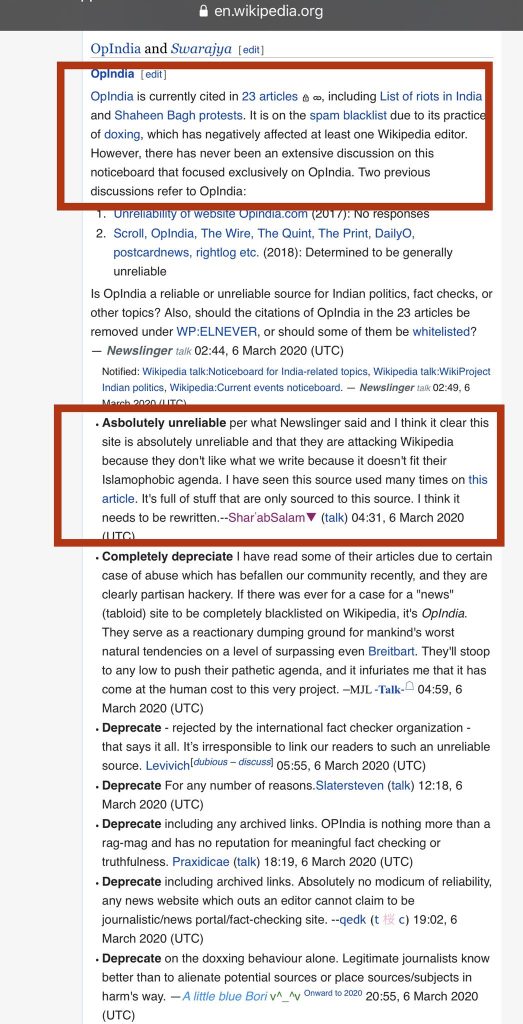
After the report was published, a campaign to ‘blacklist’ OpIndia on Wikipedia was launched. Blacklisting the OpIndia page would essentially mean that no OpIndia article would ever pass scrutiny on Wikipedia if cited as a source. The campaign of blacklisting was started because of the OpIndia article exposing the biased Delhi Riots article and this was admitted in the ‘talk’ page by the editors themselves.
Discussion on blacklisting OpIndia
The Left editors of Wikipeda had even started a campaign to write favourable articles about editor DBXray, who had written the Hinduphobic Delhi riots article, after the expose by OpIndia.
Discussion to write favourable articles about DBXray
Another name that comes up – Newslinger
Another name that surfaced in the tirade against OpIndia is a Wiki Editor called Newslinger. During the discussion about OpIndia being blacklisted, Newslinger too had said that OpIndia should be blacklisted.
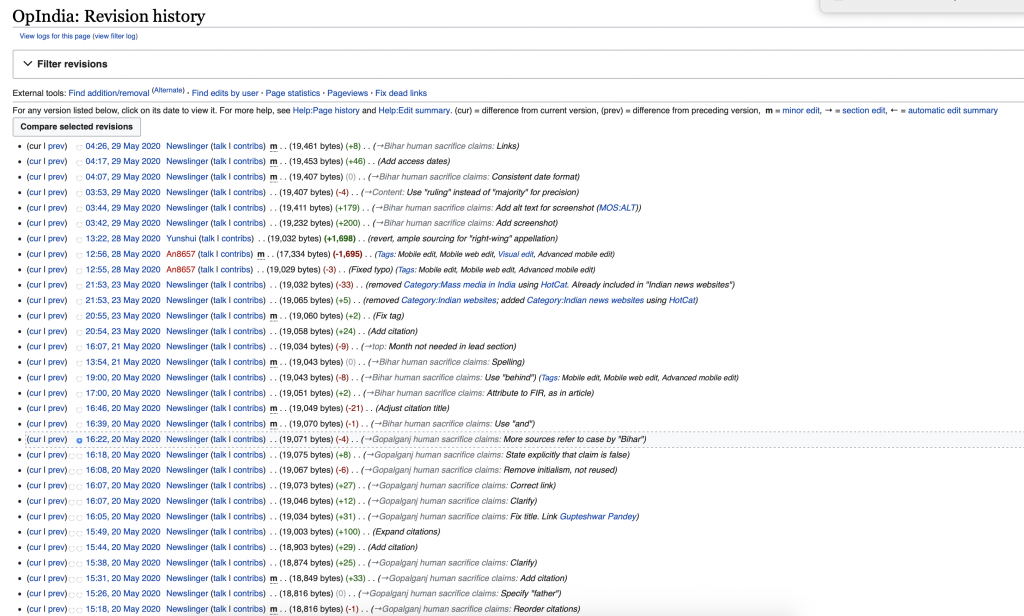
When one looks at the current edits in the OpIndia Wikipedia page, it becomes clear that while the page was created by WBG, it is now being actively managed by Newslinger.
Newslinger editing OpIndia Wikipedia page
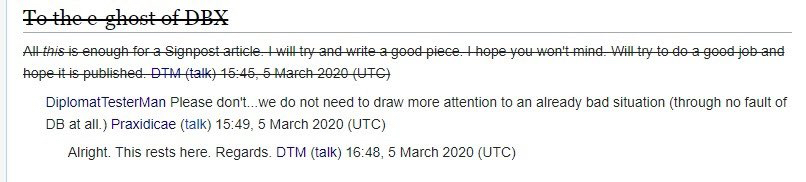
Soumyadipta, a journalist who has reported from West Bengal in the past, today took to Twitter to say that Wikipedia admin “Newslinger” has permanently banned him from the platform for ‘offline harassment’. “Newslinger” is the same person who has been trying to ‘blacklist’ OpIndia on Wikipedia.
He said that ‘Newslinger’ is well-known for promoting vandals and found Soumyadipta as he was on Wikipedia with his real name. Just a few days earlier, Soumyadipta had taken to Twitter to expose how there is a cartel of admins and editors on Wikipedia who earn money by creating and editing Wikipedia pages.
Soumyadipta explained how he got in touch with an ‘agency’ by posing as a PR (public relation) agency of a relatively unknown actress. They emailed the ‘agency’ instructions regarding the edits required for the page along with payment details. Rs 10,000 was paid to the ‘agency’ to create a page of an actor. Total charges for creating and ‘maintaining’ the page for six months were Rs 50,000.
Soumyadipta further states that on Wikipedia, one cannot make edits as one likes as they would be ‘reversed’ if ‘they’ (the cartel) does not like them. “A gang of about 50 Indian editors are on top of a chain of editors and they have complete control over Wikipedia,” Soumyadipta said. “They are on top of a chain of command. A team consists of about 10 editors. A newbie proposes an edit and a chain of command approves it and further edits it,” he adds.
Google algorithm is such that the first search result is almost always the Wikipedia page. “Google changes its algorithm frequently but they used to heavily favour Wiki because it is an open-source, publicly edited charity platform,” Soumaydipta says.
Adding on their investigation into the ‘business’ of Wikipedia editors, Soumyadipta says that for two months, they kept adding the favourable edits like turning flop film into semi-hit at the box office and obscure awards. “Every time the top editors approved the edits and they were never reversed. Even if somebody reversed it, they were brought back,” he adds. Soumyadipta says that the top Wikipedia editor would make up to Rs 5 lakh per month as ‘consultants’. Except, they do not mention Wikipedia on any documents. The ‘consultancy’ fees are usually for IT-related or PR agency work. Even income tax is paid on the ‘consultancy charges’.
Revealing how the hierarchy on the platform works, Soumyadipta says, “Here most editors mask their identity. So, it’s difficult to figure who’s attacking you. You might be a professor with a PhD on the subject but a first-year student will reverse your edits if he’s higher in the hierarchy.” It takes years to ‘climb’ the ladder on Wikipedia. Wikipedia gives you badges, stars etc in recognition of your work and you won’t them unless you have the tacit support of the “gang”.
Soumyadipta explains that to climb the ‘hierarchy’ your edits on Wikipedia should not be reversed. That is possible only with the support of the editors who are higher-ups. “Backed with data, you edit the article on Wikipedia only to find that it has been reversed the next day. Imagine this happening to you frequently. Day after day,” Soumyadipta says.
On the bullying on Wikipedia platform, Soumyadipta says, “There are these “Talk” pages where you can ask why your edits have been deleted. These pages are public and the language is monitored. It is here that the senior editors will bully you by clever usage of words. They’ll tell you that your edits were “pretty pointless” or “vague”. You have the liberty of re-editing or seeking help from someone else but the bullies who are trying to block your edits will patrol your Talk pages to figure out who you are talking to and what are you saying. If they find you intimidating, they will try to block you permanently.”
Wikipedia relies heavily on external citations for your edits. “These editors ensure by one method or the other that their narrative on a particular page does not change. This is mainly the case with political pages. It’s interesting to note that there are many Bengali and Malayali senior editors on Wikipedia who have been editing Wikipedia pages for years. They’re staunch Leftists and their job is to ensure that Wikipedia doesn’t say nice things about non-left personalities and media,” he says.
Explaining how the leftist ‘editors’ vilify pages, Soumyadipta explains that for individuals, they highlight their flaws. “For example, create a separate section for an unverified allegation levelled against him just by citing a newspaper report. But for others, they would ignore it. For people who are known to have anti-left views, the attacks get more vicious. They scour the internet for publicly available articles that show you in bad light. Once they get such an article, a new editor will edit and the senior editors will ensure that it sticks to the page,” he explains.
Apparently, such malicious edits take place through secret chat rooms outside of Wikipedia. “They will ensure that the edits come from different locations. So it’s impossible to figure out that it’s a coordinated attack. If seniors from Virginia, Kolkata, Vietnam, Karachi & Mumbai are saying the same thing about an article, then the edit sticks. No matter how much you try, you will not be able to modify it. Every time new senior editors will come and block you from editing or will reverse the edit,” he explains.
What all of this means: The Wikipedia crusade against OpIndia
Wikipedia is a platform that is still used widely by laypersons to quick-read about various subjects. Though it is not considered a reliable source, it is still the top result when one searches almost any topic on Google. The inherent Left bias of Wikipedia is not a novel claim. Even the co-founder of Wikipedia, Larry Sanger has written extensively about the bias in Wikipedia.
The sequence of events in the case of OpIndia is rather clear.
A neutral page of OpIndia was created on Wikipedia. That neutral page was deleted in 2018 saying that the platform was too trivial to be given space on Wikipedia. Then, in a year, the very people that called OpIndia trivial and deleted its page created a biased Wikipedia article about OpIndia that vilified the portal and provided a completely skewed narrative in an attempt to influence its readers. Any attempt to present a neutral picture was thwarted. In the meantime, OpIndia exposed one of the editors of the same cartel who was attempting to rewrite history by shielding Islamists in the Delhi Riots 2020 Wikipedia page. That angered the cartel further that moved to blacklist OpIndia from Wikipedia.
To top it all, the page of OpIndia on Wikipedia is also ‘locled’, which means that any edit to the page will have to be approved by this very cartel.
This chronology does not affect OpIndia or its readership, however, the truth must be told and the crusade must be exposed. OpIndia has stood strong for what it has always believed in and will continue to do despite the repeated onslaught. But while we stand strong, we will not allow such cartels to defame us from behind the cloak of anonymity. The truth must be told.
Kodagu police in Karnataka have registered an FIR against a woman named Vindhya Poonacha for allegedly making derogatory remarks against Muslims and Prophet Muhammad on her Facebook profile.
Kodagu: Cops register an FIR against a woman who made alleged derogatory remarks about Muslims & Prophet Muhammad.
According to reports, the woman has been booked under IPC Section 153 (A) (Promoting enmity between different groups on grounds of religion, race, place of birth, residence, language, etc) and 105 (Commencement and continuance of the right of private defence of property).
The complainant Ajiz GE in his complaint said that the lady had been posting hateful and derogatory remarks against Muslims and their Prophet Muhammad.
Campaign launched against the woman for her remarks against Muslims and Prophet Muhammad
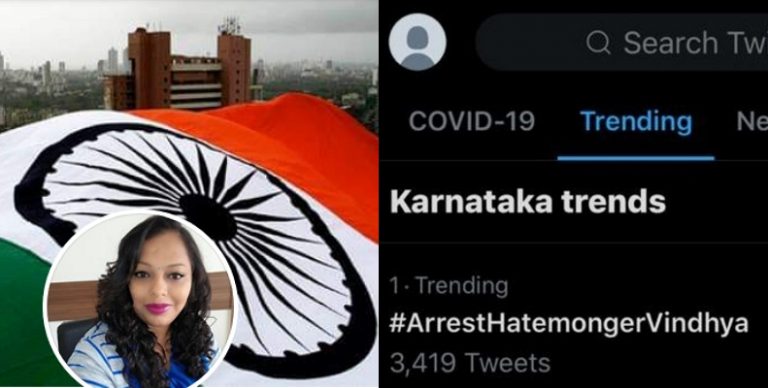
Twitter users on Tuesday evening launched a campaign against Vindhya Poonacha sharing the screenshots of her Facebook posts. Soon, the hashtag demanding her arrest started trending on Twitter. Several users using #ArrestHatemongerVindhya demanded the woman’s arrest. Some users also shared pictures of the police complaint filed against her by Ajiz GE to the Madikeri Cyber Cell.
Netizens tagged the Deputy Commissioner and Superintendent of Police of Kodagu District in all their tweets to bring the issue to the notice of the authorities.
It is being alleged that the Police inspector at Kushalnagar Police Station had initially refused to file an FIR against the accused when he was approached.
Earlier incidents
Last year a Malaysian citizen was sentenced to more than 10 years in jail and three others were charged for insulting Islam and the Prophet Muhammad on social media.
In 2017, a Gujarati woman in Hyderabad named Sonu Dangar was booked for allegedly making derogatory comments against Prophet Muhammad and Islam. After her video wherein she allegedly made derogatory comments against Islam had gone viral on social media, a large scale protest was organised in Hyderabad’s Old City area then. Several Muslim organisations had conducted a rally from Charminar to the office of the South Zone Deputy Commissioner of Police. They had then carried photos of the woman and beat it with slippers, besides shouting slogans and demanding her arrest.
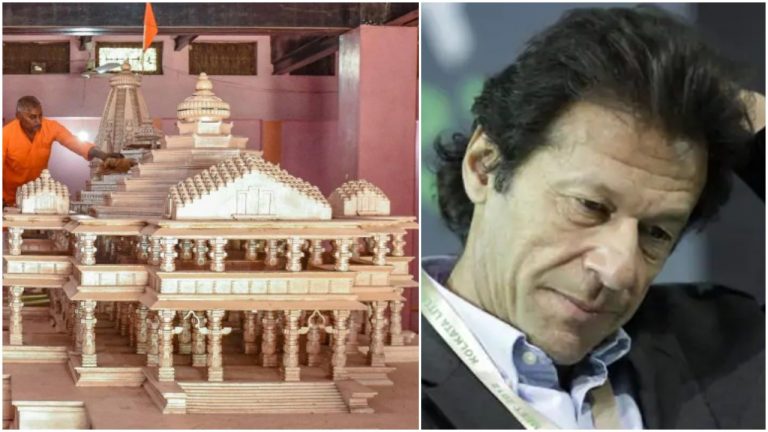
The Sadhus, who are overseeing the construction of Ram temple at Ayodhya, have objected to Imran Khan-led Pakistan government against interfering in country’s affair. The strong objection by the Hindu Sadhus comes after Pakistan had ranted against the start of construction of the Ram Mandir at Ayodhya.
According to the reports, the Hindu Sadhus at Ayodhya have raised concerns regarding recent Pakistan Foreign office statements on Ram Mandir construction at Ayodhya and warned the Pakistan authorities of not to cross limits or else Ram mandir will be constructed in Islamabad too.
The Sadhus have also urged the government of India to give a ”befitting” reply to Pakistan.
Pakistan’s constant rant against India’s internal matters
Earlier, the Imran Khan-led Pakistan government, continuing its anti-Hindu propaganda, had alleged that the RSS-BJP are busy advancing their “Hindutva” agenda even as the world is grappling with the coronavirus pandemic.
A statement issued by the Pakistani Foreign Ministry has stated that the commencement of Ram Mandir at Ayodhya is another step towards the direction of implementing the RSS-BJP’s ‘Hindutva agenda’.
At a time when Pakistan is accused of persecuting its own religious minorities, even at the time of global pandemic of coronavirus, the terrorist-state had found time to interfere in India’s affairs by ranting against the construction of Ram Mandir at Ayodhya.
Indulging in fear-monger about India’s religious minorities, the Islamic country of Pakistan had issued a statement against the commencement of the construction of Ram Mandir at Ayodhya to ‘condemn’ it and also to call the Supreme Court verdict in the matter ‘controversial’.
India had responded to Pakistan’s rant against the start of construction of the Ram Mandir at Ayodhya, saying that the Islamic country had no locus-standi on the issue.
Launching a blistering attack on Pakistan, the Indian Foreign Ministry advised the Imran Khan-led government to read their own country’s constitution before comments.
Sadhus say that the Ram Mandir will be built on VHP model
The grand Ram temple at Ayodhya will be built on the earlier model promoted by the Vishwa Hindu Parishad (VHP). Jagadguru Shankaracharya Vasudevanand Saraswati said that the VHP model of the temple had been approved by the entire country and the proposed Ram temple will be built on the same model.
“The temple will be built on the same model. Those who are demanding that the temple should be made of marble should also say where will get Makrana marble in such large quantities. Besides, stones have already been carved for the temple and we cannot change our plans at this stage,” he said.
Swami Jitendranand Saraswati also insisted that the first phase of construction of the temple should be completed in the Yogi government’s tenure as he said there are apprehensions that other political parties may try to create obstacles in the construction work.
“The Congress, in particular, may try to stall temple construction. Some of its leaders have already said that temple construction should be stalled due to the ongoing Corona crisis,” said Swami Jitendranand Saraswati.
On Thursday, former Congress President Rahul Gandhi spoke to Rajiv Bajaj, the managing director of Bajaj Auto, in a series of discussions in which the Gandhi-scion is speaking to experts on the effects of the pandemic.
In conversation with the managing director of Bajaj Auto, the former Congress President Rahul Gandhi went on to make misleading claims that the Narendra Modi government did not provide any stimulus package to various sectors of the economy, which has seen a downturn due to the effects of the global pandemic coronavirus and the subsequent lockdown imposed by the government to tackle it.
Speaking to Rajiv Bajaj, Rahul Gandhi claimed that it was shocking to him and his party as they tried to figure out why there was no stimulus package by the Modi government to support various sectors of the economy who are facing hardship due to the coronavirus pandemic.
Rahul Gandhi claimed that he had sent feelers to the Modi government to understand the logic behind, what he claimed, that the government not ‘giving stimulus’.
In the interview, the Gandhi-scion listed some of the alleged responses given by the government regarding giving a stimulus package. Rahul Gandhi said that the insiders in the Modi government said to him that if at all the government provided handout to labour, they will get spoilt and they will not come back from their villages.
One of the other reasons given by the insiders in the Modi government to Rahul Gandhi, as he claimed, that giving out money to the poor and deprived may send a wrong message to the international community who will be needed to invest in the country. He also added that the sources inside the government said to him that a stimulus will be provided in the future to address the needs of the economy.
However, the Gandhi-scion did not provide any substantive proofs to show that the government had denied giving economic stimulus nor provided any official document saying so. Further, Rahul Gandhi did not even give a timeline for his so-called sending feelers to know the rationale behind decisions of the government.
As usual, Rahul Gandhi’s claims regarding the Modi government’s reluctance to provide fiscal stimulus is yet another lie as the government of India, along with the RBI, have been forefront at announcing relevant measures from time to time to address the economic woes that have currently plagued the country.
The Modi government, along with RBI, had announced two packages before May 13. Later, both the packages were subsumed into a single package under Atmanirbhar Bharat Abhiyan economic package that is worth Rs 20 lakh crore.
Fact Check:
Contrary to the claims made by the former Congress President Rahul Gandhi regarding the Modi government not providing any economic package to the sectors of the economy, the Modi government has announced a series of fiscal stimulus worth Rs 20 lakh crore to battle the economic downturn induced by the coronavirus outbreak.
In a series of announcements, Finance Minister Nirmala Sitharaman had announced various measures to be taken by the Modi government under the Atmanirbhar Bharat Abhiyan to boost India’s sectors of the economy. The Finance Minister had announced a host of measures in five separate tranches under the Rs 20 lakh crore Atmanirbhar Bharat Abhiyan economic package.
The relief package announced by the government includes a host of measures such as free food grains for distraught migrant workers, hike in foreign direct investment in defence, liquidity measures for the MSMEs, changes in Essential Commodities Act, increase in public expenditure in health, among others.
Here’s the split-up of the overall economic stimulus package:
First tranche
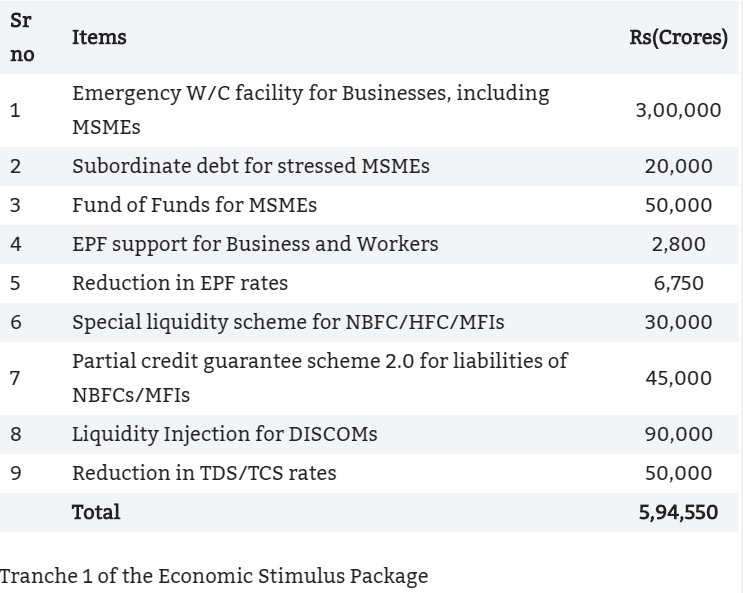
The first tranche of the economic relief package was announced by Finance Minister on May 13. In the first tranche, Rs 5.94 lakh crore of liquidity measures were provided to shore up small and medium business and support to shadow banks and electricity distribution companies.
The definition of the MSME was changed and the threshold to qualify as MSMEs were raised. One of the significant announcement made by FM Sitharaman in the first tranche of the economic stimulus package was Rs 3 lakh crore collateral-free automatic loans for businesses. 100 per cent of the credit guarantee will be provided by the government to the banks and NBFCs on principal and interest.
First Tranche of stimulus package announced by the Modi government
Second Tranche
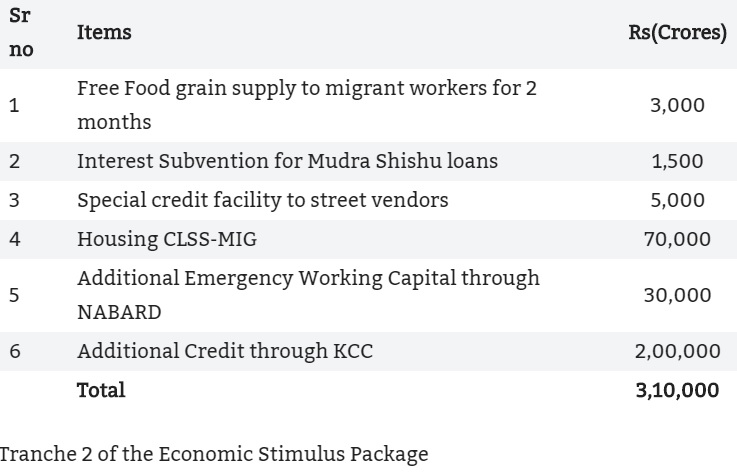
Finance Minister Sitharaman on May 14 had announced the second tranche giving relief measures to migrant workers, street vendors, housing, employment generation for tribals and small farmers.
Totally Rs 3.1 lakh crore, the second tranche of the economic relief package included free food grains to the migrant workers across the country who have been amongst the worst-affected sections of the population from the economic tailspin caused by the coronavirus outbreak.
A total of 9 announcements were made in the second tranche, which included free food grains to migrant workers for 2 months, national portability of ration cards, which permitted people to take ration from any public distribution unit in the country.
Second Tranche of stimulus package announced by the Modi government
Third Trance
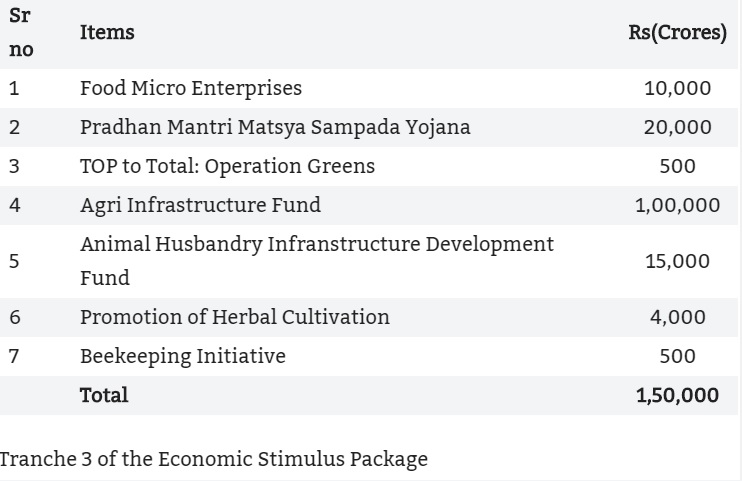
Finance Minister Sitharaman on May 15 had announced the third tranche of package focusing on Agriculture and Allied Activities – fisheries, animal husbandry, dairy, etc.
The third tranche of the economic stimulus package saw the finance minister Nirmala Sitharaman allocating money for the Agricultural, Animal Husbandry and the ancillary sectors. A whopping Rs 1,00,000 crore was earmarked for bolstering the agricultural infrastructure in the country under Agri Infrastructure Fund.
The government also declared that the Essential Commodities Act will be amended to deregulate prices of cereals, edible oils, oilseeds, pulses, onions, potatoes etc. The stock limit imposed on processors or value chain participants or any exporter subject to export demand was also removed by the government.
Third Tranche of stimulus package announced by the Modi government
Fourth and Fifth Tranche
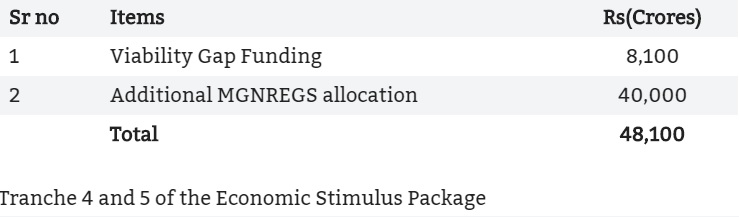
The fourth and fifth tranche of the investment largely dealt with bringing about structural reforms. About Rs 40,000 crore allocation was added to the Mahatma Gandhi Rural Employment Guarantee Act(MGNREGA) and about Rs 8,100 crore for Viability. Gap Funding.
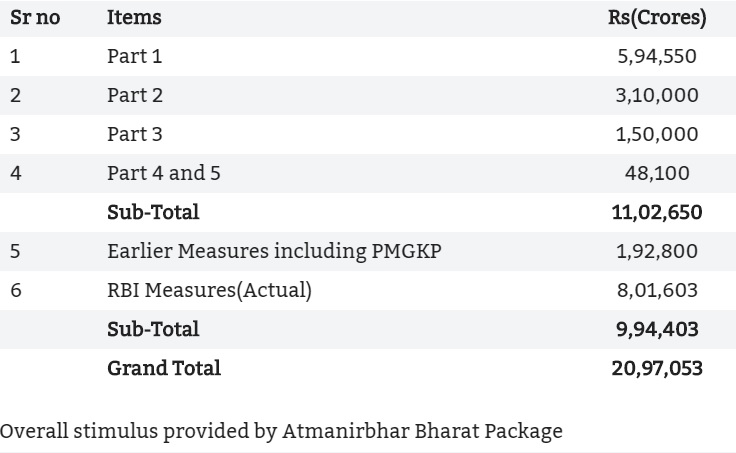
While the five tranches of stimulus package announced by the government totalled Rs 11,02,650 lakh crore, the relief measures declared by the government including the earlier scheme of Pradhan Mantri Garib Kalyan Package (PMGKP) worth Rs 1,92,800 crore and the measures announced by the RBI to tackle the economic downturn as the country staggers under the economic shadow of the coronavirus lockdown.
The RBI package which is pegged at Rs 8,01,603 crore includes measures like a moratorium on loan repayments for all borrowers and interest rate cuts etc.
Overall package announced by the Modi government
Despite the massive economic package worth Rs 20 lakh crore was announced by the Modi government to battle the economic downturn induced by the coronavirus outbreak, the Gandhi-scion Rahul Gandhi indulged in a blatant lie during his so-called discussions with Rajiv Bajaj. Shockingly, the industrialist did not even dare to correct the mischievous agenda of the Congress leader, but rather was encouraging Rahul Gandhi to make absurd claims on the issue of economic stimulus.
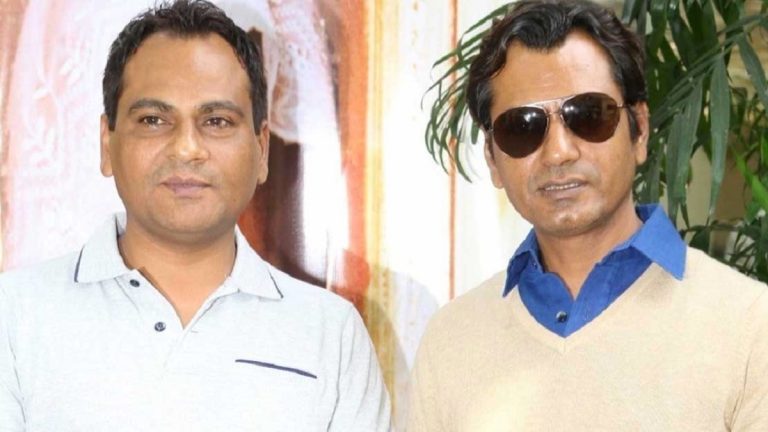
Nawazuddin Siddiqui’s brother, Shamas Nawab Siddiqui, on Wednesday took to Twitter to defend his brothers Nawazuddin and another one who has been accused of sexually assaulting his niece when she was a minor.
How can someone misguide the law and file the same case with different statement at @DelhiPolice , when there was no name of @Nawazuddin_S in the earlier statement given 2 years back to Court & the case is in #UttrakhandHighCourt as well.
— Shamas Nawab Siddiqui (@ShamasSiddiqui) June 3, 2020
Without directly mentioning the allegations his niece has thrown on his and Nawazuddin’s brother, Shamas claimed that different statement was filed with Delhi Police two years after a certain claim was made to Uttarakhand High Court. He then claimed that the allegations of sexual assault by his niece on his brother had ulterior motives.
It clearly indicates the motive and the person behind publicising this fake things in media. Truth will be uncovered soonest. @CPDelhi#NawazuddinSiddiqui
— Shamas Nawab Siddiqui (@ShamasSiddiqui) June 3, 2020
He stated that Nawazuddin’s name was never mentioned earlier and claimed that the law has been misguided.
Nawazuddin Siddiqui’s niece alleges sexual assault by his brother
As per a report published in TOI, Nawazuddin Siddiqui’s niece has alleged torture and sexual abuse by one of her uncles, Nawazuddin’s brother, when she was a child. She told ETimes that a sexual harassment complaint had been filed against her uncle. She has alleged that she was sexually harassed in her childhood by her uncle.
Nawazuddin Siddiqui has eight siblings.
In the conversation, Nawazuddin’s niece mentioned that when she was two years old, her parents got divorced. Her stepmother tortured her a lot. As a child, she was unable to understand what her uncle was doing to her. However, when she grew up, she realised it was a different kind of touch. She claimed there was violence too.
“Lot will be revealed”: Nawazuddin’s estranged wife
Nawazuddin’s estranged wife Aalia Siddiqui, who recently filed for divorce alleging harassment stated that a lot more shocking facts will be revealed soon. She alleged that she had faced mental and physical torture by her in-laws. She had mentioned that the marriage has been draining her self respect and there were also some issues concerning Nawazuddin’s brother Shamas. She has stated that she has gone back to her original name, Anjana Kishore Pandey.
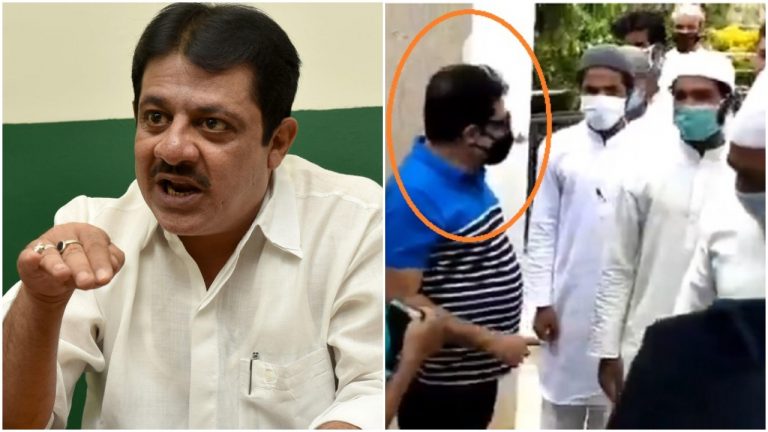
In a shocking incident, the 126 rioters accused in the Padarayanapura violence last month in Bengaluru were given a grand welcome by Congress MLA BZ Zameer Ahmed Khan on Wednesday.
The rioters, who had attacked the health workers in Padarayanapura on April 19, not only received a rousing welcome but each accused reportedly received Rs 10,000 from the Congress MLA following their release from the Haj Bhavan, where they were quarantined under judicial custody.
On Wednesday morning, Chamarajpet MLA BZ Zameer Ahmed Khan went to Haj Bhavan and welcomed the accused with folded hands. The accused were then taken in a bus belonging to his firm. The Congres MLA also provided them with ration kits and hand sanitisers, apart from the money.
Reportedly, all the 126 accused got bail after each furnished a Rs 1 lakh surety amount. It is being reported by the local media that the Congress MLA provided money to get the accused out on bail. The high court had on May 29 granted bail to them.
In the video, which was gone viral now, it can be seen how Congress MLA was seen giving rousing welcome to the accused rioters, who are coming out from the quarantine centre.
Congress MLA gives a warm welcome and distributed 1.26 Crore to the rioters who attacked Corona Warriors in Padarayanapura. pic.twitter.com/WuPyASUJ5u
There were reports that some of the accused out of the 126 arrested had tested positive for the coronavirus. Even the JDS leader from Padarayanapura – Imran Pasha had tested positive for the coronavirus, who has been taken to Victoria Hospital in Bengaluru to keep him in isolation.
The JDS corporator had created a high-drama near his house as the authorities took him to the isolation facility two days back. Hundreds of Pasha’s followers assembled near his house to cheer for their leader as he was leaving for the institutional quarantine after being tested positive for coronavirus.
An FIR has been filed against Padarayanapura JDS corporator Imran Pasha for violating social distancing norms on Saturday to gather a crowd near residence despite him testing positive for the coronavirus.
Attack on healthcare workers by a violent mob in Bengaluru’s coronavirus hotspot Padarayanapura
On the evening of Sunday, 19 April, a team of health workers and BBMP officials in Bengaluru was brutally attacked by a violent mob in the Padarayanapura locality, a coronavirus hotspot. The government health team was there to quarantine the primary contacts of coronavirus positive patients.
The violent mob attacked the police after the primary contacts of the coronavirus patients refused to be taken into quarantine. The mob is seen brutally attacking the policemen and health workers and damaging the barricades, tents and other setups made by the officials.
A group of BBMP doctors, nurses and ASHA workers had gone to the Padarayanapura locality to take into quarantine 58 primary contacts of coronavirus positive patients to a government-run quarantine centre.
The Padarayanapura locality is one of the worst affected localities in Bengaluru. It had been declared a hotspot and barricades had been set up by the police to enforce a complete lockdown. The violent mob also broke down the barricades. As per a report in Times of India, two Tablighi Jamaatis who had returned from Delhi’s Nizamuddin Markaz had first tested positive and then 15 of their contacts were found to be coronavirus positive.
A total of 126 arrested in connection with the attack against the healthcare workers on April 19 were all sent to the district jail in a nearby Ramanagara after being remanded to judicial custody by the court. Later, they were shifted to Haj Bhavan in Bengaluru after residents in Ramanagara had raised an objection.