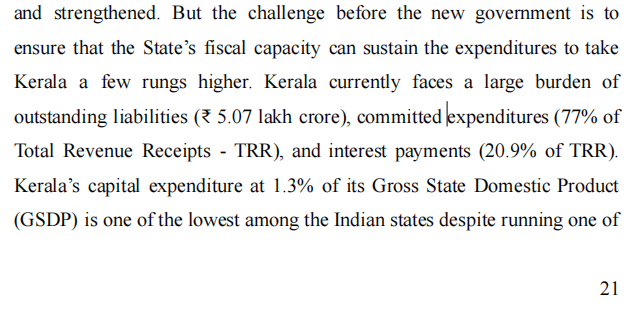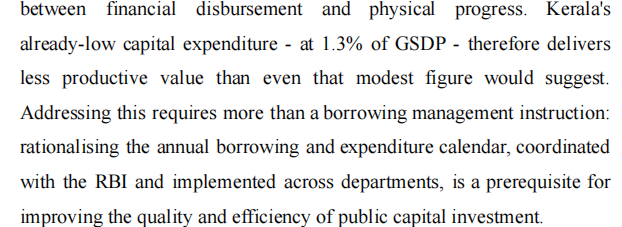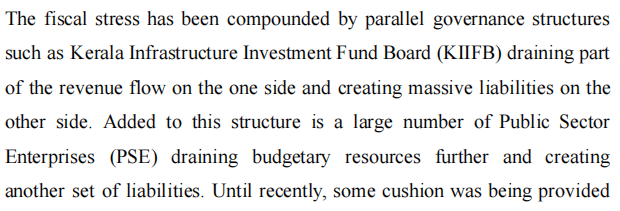
Home Blog Page 57

Ahead of the retrial of 2022 Leicester anti-Hindu violence instigator Majid Freeman, Islamist outfit CAGE International gives ‘mobilise for Freeman’ call

In September 2024, Majid Freeman, the Muslim ‘activist’ who had spread lies and misinformation about the role of Hindus in the 2022 anti-Hindu Leicester violence, was jailed for 22 weeks for attempts to spark violence during the same unrest. Freeman offered no plea back then, knowing that he had no defence for his actions. However, CAGE International, a UK-based NGO dedicated to the cause of ensuring the release of jailed Islamists, is running a campaign whitewashing his anti-Hindu and criminal activities.

CAGE International, previously known as CagePrisoners Project, is mobilising support for Majid Freeman ahead of his retrial in the Leicester case on 9th January. In a flyer, CAGE International described Freeman as a ‘humanitarian’ and ‘anti-genocide activist’. It claimed that he was “convicted in a politicised trial for the crime of defending the Leicester community during Hindutva-inspired riots in 2022.”

“MOBILISE FOR MAJID FREEMAN. Humanitarian and Pro-Palestine activist Majid Freeman stood up for the Leicester community during the 2022 Hindutva-inspired riots after multiple failures from Leicestershire police. He was convicted last year in a politicised trial. Stand in solidarity with him at his retrial. Leicester Crown Court, 90 Wellington Street, LE1 6HG. Friday 9th Jan 2026. We stand with Majid!” CAGE International wrote on X.

INSIGHT UK, a Hindu rights advocacy group, has raised questions over CAGE International’s support for a convicted Islamist and accused the outfit of “victim-flipping” to downplay his anti-Hindu actions that fuelled the violence against Hindus in Leicester in 2022.

“Majid Freeman has been convicted for a racially aggravated public order offence linked to the Leicester riots, where a court found he used abusive words intending to provoke violence. Despite this, CAGE is ‘victim flipping’ and running a campaign that presents him as a persecuted community defender, downplaying his actions that fed anti‑Hindu sentiments in a city already on edge experiencing violence. Why is CAGE, a group with a long history of defending extremists now mobilising support for someone whose actions worsened hate and fear for Hindus in Leicester?” INSIGHT UK wrote.

Majid Freeman’s conviction

On 9th September 2024, Majid Freeman, who had spread lies and misinformation about the role of Hindus in the 2022 anti-Hindu Leicester riots, was jailed for 22 weeks for attempts to spark violence during the same unrest. He was sentenced by District Judge Amar Mehta at Northampton Magistrates’ Court after being convicted of a section 4 public order offence.

The court had noted back then that Freeman intended “immediate unlawful violence” and used “abusive words with the intention that violence would be provoked.”

Notably, in July 2023, Freeman was charged with inciting terrorism and lending support to the proscribed terrorist organisation, Hamas. The prosecution had stated that Majid Novsarka, also known as Majid Freeman, who was arrested on July 9th 2023, on suspicion of counter-terrorism offences, including encouraging acts of terrorism, stated views or beliefs that were in favour of Hamas, a banned terrorist organisation, on several occasions between December 26 of last year and June 20. 

Birgitte Hagem, for the prosecution, had informed the court at that time that Majid Freeman was encouraging individuals to carry out, plan, or incite acts of terrorism on social media on March 11, 2015, in reference to the 2015 murderous attack on the French satirical weekly Charlie Hebdo.

Majid Freeman incited anti-Hindu violence in Leicester

On 28th August 2022, unrest engulfed Leicester following a scuffle after India’s victory over Pakistan in a T20 match, during which the Indian flag was desecrated. Despite Hindus calming the situation and assisting the individual who desecrated the flag, Majid Freeman spread a false narrative against Hindus, further escalating the violence.

Amidst the peddling of disinformation by Muslim organisations, on 30th August 2022, Majid Freeman falsely claimed that Hindus in Leicester chanted “death to Muslims,” an allegation later debunked by the police. That same day, Freeman also spread a false rumour on X (formerly, Twitter), alleging that the Quran had been desecrated in Leicester and insinuating that Hindus were responsible. These claims were found absolutely false, however, the damage was done.

Furthermore, Freeman had sparked tensions by falsely accusing a group of Hindu men of chasing and assaulting a Muslim teenager. On 4th September 2022, while Muslim mobs were attacking Hindus in Leicester, Freeman further incited his local coreligionists against Hindus through social media.

Between 4th to 7th September, Hindus were attacked by Muslims. A local Ganesh Chaturthi celebration was disrupted by Muslim mobs, who threw eggs at Hindu sacred symbols. A Hindu man was attacked. In another incident, after Freeman falsely claimed that Hindu men had attempted to abduct a Muslim girl, a Hindu man was doxxed. The police later revealed that the whole story was fabricated.

On social media, Majid Freeman’s team, CAGE International and other Islamist outfits like the US-based Indian American Muslim Council (IAMC) have long been highlighting a story that somehow Freeman ‘saved’ a Hindu man during the Leicester violence and thus should be seen as a protector of locals against violence and not an instigator of the same. However, this reminds of the disgraceful ‘Muslims form human-chain to protect Hindu temples in Bangladesh’ narrative peddled by Islamo-leftists during violence after Sheikh Hasina’s ouster. Who were they (Muslims) protecting Hindus from? Majid Freeman essentially incited his co-religionists to attack Hindus, so how does allegedly ‘saving’ one Hindu from the same mob he incited absolve him from his role in inciting riots?

CAGE International’s ‘Free Majid Freeman’ advocacy

Established in 2003 as CagePrisoners Project, the outfit became CAGE International in 2013. As per its website, CAGE International is a source of “information on the status and whereabouts of prisoners seized under the war on terror, for their families, lawyers, as well as press and academics.”

The NGO has a record of defending Islamic extremists and even terrorists in some cases, in the name of opposing ‘misuse’ of counter-terrorism laws. Back in September 2022, CAGE International advocated for the release of Muhammad Rahim Al-Afghani, a close associate of slain Islamic terrorist Osama Bin Laden.

In addition, CAGE International has also advocated for the release of ‘Lady Al-Qaeda’ Aafia Siddiqui, who is serving an 86-year jail sentence after conviction in the case involving an attack on US officials in Afghanistan. OpIndia reported earlier that in 2008, the US Department of Justice had found a number of items in her possession, including handwritten notes that mentioned a mass-casualty attack.

Unsurprisingly, CAGE International is a supporter of the Palestinian Islamic terror group Hamas.

Coming back to Majid Freeman, CAGE International had organised a solidarity event for Freeman in July 2025. The Islamist NGO claimed that Freeman is “facing terrorism charges for sharing words of solidarity with Palestine.”

Right after Freeman’s conviction in the Leicester anti-Hindu violence case, CAGE International had claimed that Freeman was jailed in a ‘politicised Hindutva riots trial’. The Islamist outfit labelled Leicester Hindus as ‘Hindutva agitators’ and called them the perpetrators of the 2022 Islamist violence, even as Hindus were the victims of the Islamist-orchestrated attack, fuelled by disinformation peddled by Freeman.

“Since the 2022 Hindutva-inspired riots in Leicester, ongoing revelations have highlighted the failures of Leicestershire Police, particularly Chief Constable Rob Nixon, in managing the situation. The force allowed paramilitary-style marches by Hindutva agitators in Muslim neighbourhoods in Leicester, directly causing the community tensions,” CAGE International claimed.

While Majid Freeman, Mohammad Hijab (another radical Islamist and key instigator of Leicester violence), their Islamist supporters, and outfits like CAGE International have been trying to blame ‘Hindutva’ and Hindus for the 2022 anti-Hindu violence, the UK court debunked this propaganda earlier.

Ahead of the reported retrial of Majid Freeman on 9th January, CAGE International, operated mostly by British Muslims of Pakistani origins, is giving calls to Islamists to mobilise outside the Leicester Crown Court to show ‘solidarity’. However, concerns have been raised that, more than solidarity, this is a call for a show of ‘strength’.

Ambedkar backed Somnath Temple reconstruction: Viral letter to KM Munshi reveals a forgotten chapter of history

It has been 1000 years since Mahmud Ghaznavi attacked the Somnath Temple, India’s pride, standing proudly on the seashore in Gujarat. The state of Gujarat is set to celebrate the Somnath Swabhiman Parv on 8th January. Ahead of the big day, the history of the Somnath Temple has piqued the interest of many. A letter written by Dr Bhimrao Ambedkar to Kanhaiyalal Maniklal Munshi, or simply KM Munshi, regarding the temple is going viral on social media.

Back in November 1947, Sardar Patel had promised the public that he would rebuild the Somnath Temple. After his death in December 1950, Munshi, the then Food Minister, took on this responsibility and oversaw the Somnath temple’s reconstruction. Ambedkar wrote to Munshi in March 1951, before the consecration of the Jyotirlinga in the new temple by then-President Dr Rajendra Prasad in May 1951.

It is no secret that India’s first Prime Minister, Jawaharlal Nehru, was disturbed by the temple’s reconstruction. Nehru even opposed the proposal to rebuild the Somnath Temple, calling it “Hindu revivalism .” Ambedkar’s letter, meanwhile, makes it clear that he not only supported the temple’s reconstruction but also offered his suggestions.

What Ambedkar wrote in the letter to KM Munshi?

A section of people today portrays Ambedkar as anti-Hindu, but this letter offers a new perspective. Anuj Dhar, author of popular books like “Conundrum ” and “Your Prime Minister is Dead, ” shared this letter on X.

“I find that the date for the installation of the Idol of Somnath is fixed on the 11th of May. I would very much like you to invite my friend Mr Anirudhachary to the ceremony. He is the Head of the Matha in Chandoda in Baroda District. I know personally and do not doubt that he is worthy of an invitation. I am /attaching herewith his name and full address,” Nehru wrote.

Grok said Ambedkar’s letter to KM Munshi is fake. Is Grok wrong?

After Anuj Dhar shared the post, many xAI users began claiming the letter was fake and created by AI. Several users tagged Musk’s company xAI’s chatbot, GROK, and asked questions about the letter, which the chatbot later confirmed as AI-created.

“The letter does not appear in Ambedkar’s official writings or historical archives. No prior mentions found in searches before 2026. The name “Antrudhachary” lacks matching historical records for 1951. It appears likely fabricated, possibly AI-generated,” the chatbot wrote in Post X.

Subsequently, there was a flood of people claiming that it was created by AI. We spoke to Anuj Dhar himself about this letter. He clearly stated, “The source of all these records is the National Archives. Anyone who thinks these are fake should consult KM Munshi’s papers in the archives.” He also shared other letters related to this letter.

This means that relying solely on AI chatbots for information could be problematic. Chatbots can’t read archives because a large portion of historical records don’t even exist in digital form. Archives around the world, not just in India, hold millions of documents on paper, including old government files, private letters, handwritten diaries, reports, and registers. These documents are often neither scanned nor available online. Chatbots can only access content that is already digitised and publicly available.

This also presents several challenges, as even the archives that have been digitised are mostly scanned images, not neat text files. They contain ink stains, torn pages, blurred letters, and old scripts. Reading such material requires not only linguistic knowledge but also experience in palaeography and reading historical documents, which is simply not possible for a chatbot.

Other letters exchanged between Ambedkar and Munshi about the Somnath idol installation ceremony

Anuj Dhar has also shared two other letters related to this letter from Ambedkar: one containing Munshi’s reply to Ambedkar and the other an invitation to Swami Aniruddhacharya. On March 30, 1951, Munshi wrote to Dr Ambedkar, “Thank you for your letter dated 27th March 1951. I shall be very pleased to invite Shri Anirudhachary for the ceremony. I would request you to make it convenient to attend the installation ceremony.”

Meanwhile, on 30th March 1951, KM Munshi wrote to Swami Anirudhachary, inviting him to the Somnath idol installation ceremony. “You are perhaps aware that the installation of the Somnath Lingam has been scheduled to be held at Prabhas Patan on the 11th May 1951. At the same time All India Sanskrit Parishad will also be held. We are inviting the heads of all religious institutions and it will be a great pleasure if you will make it convenient to grace the occasion by your presence. You can come a couple of days in advance,” Munshi wrote.

After reading these two, in addition to Ambedkar’s letter, Anuj Dhar’s claim that this letter is not a single one created by AI, but rather a series of letters, is borne out. This also exposes those who seek to portray Ambedkar as anti-Hindu.

Delhi Riots verdict explained: Why the SC rejected bail for Umar Khalid and Sharjeel Imam, seeing it as a planned conspiracy and not spontaneous violence

The Supreme Court of India’s judgment in the Delhi Riots conspiracy case on January 5, 2026, established a precedent that fundamentally alters how democratic courts weigh individual freedom versus state security. This historic ruling, authored by Justice Aravind Kumar, distinguishes between criminal conspiracy and superficial activism while revealing the government’s case and the court’s clever reasoning. There are several levels of argument that the average reader cannot see to comprehend what the court deemed most convincing.

The conspiracy that wasn’t spontaneous

The central claim of the prosecution’s case is that the February 2020 Delhi riots were a well-planned conspiracy that was developed right after the Citizenship Amendment Bill was approved on December 4, 2019, rather than an unplanned outburst of intercommunal violence. This distinction is significant because, under the Unlawful Activities (Prevention) Act of 1967, it changes the legal landscape from spontaneous public disorder to premeditated terrorist activity.

The timetable is devastating. The ‘Muslim Students of JNU’ WhatsApp group was established just hours after the Cabinet approved the CAB. In a matter of days, communally sensitive references to Kashmir and Babri Masjid were being printed in leaflets. In a matter of weeks, Sharjeel Imam gave talks at Jamia Millia Islamia advocating for Delhi to be ‘choked’ by traffic blockades, or chakka jams, which would interfere with supplies of milk and water. The court determined that this development was structural evidence of planning rather than accidental. Acid bottles, stones, and petrol bombs are not stored in homes weeks in advance of a spontaneous protest. Children from minority schools are not evacuated in advance during a spontaneous protest.

The Umar Khalid: Strategic Direction vs. Physical Absence

Umar Khalid’s absence from North-East Delhi during the actual rioting is one of the judgment’s most glaring features. His legal team took advantage of this that he cannot be held accountable if he wasn’t there when the riots took place. The court’s response is worth reading. 

According to Justice Aravind Kumar, once the fundamental plan is put into action, conspiracy legislation does not require actual presence at the scene of violence. As the ideological architect, Umar Khalid was responsible for conceptualisation and direction. The court discovered evidence of managerial responsibility in speech material, contemporaneous strategic discussions, and digital communication trails.

More delicately, the decision emphasised that Khalid’s absence from riot areas actually strengthened the case against him, demonstrating that he worked as a coordinator rather than a street-level participant. A mastermind gives orders from a distance. What the court noted but never said clearly, Khalid’s status as a student activist at JNU gave him authority and a following that regular organisers do not have. This was viewed by the court as proof of command authority, the capacity to organise people both inside and outside of one’s immediate social circle. When an intellectual leader issues a call for disruption, followers carry it out. Conspiracy responsibility allows the leader to be held accountable for such execution. 

Sharjeel Imam: The Incitement through Indirection

The case of Sharjeel Imam offered another perspective. He consistently denied wanting to use violence. However, the prosecution (as well as the court) found conspiracy in the structural inevitability of violence stemming from the objectives he outlined rather than in explicit appeals for violence. In words that few people understood, the court stated, ‘A conspirator may outwardly disavow violence while simultaneously engaging in acts designed to create conditions where violence becomes unavoidable.’

This is the legal equivalent of stating, Plan an event that you know will result in a confrontation with police, purposefully mobilise women and children to prevent police action, block arterial roads, and claim you didn’t intend violence.

The court deemed this to be unlawful. You cannot later claim ignorance of anticipated repercussions when you plan a chakka jam knowing it would cause communal strife, when you specifically mention Babri Masjid and Kashmir in brochures, or when you collaborate with members of radical student groups like ‘Students of Jamia.’ According to the ruling, where effects are anticipated and structurally foreseeable, carelessness regarding them qualifies as conspiracy.

Why delay arguments failed? 

The appellants made a strong case for the delay because they had been detained for years, the trial had not yet started, and around 1,000 witnesses had been called. Long-term confinement must be against Article 21 of the Constitution. The court’s response was skilfully crafted to both firmly reject the mechanical premise that time alone determines outcomes and avoid coming out as unconcerned with liberty rights.

Judges genuinely concluded that delays caused by the accused themselves, such as requests for adjournments, different ways to submit documents, and disagreements over the order of witness examinations, cannot be used as leverage to get bail. The prosecution repeatedly said that it was prepared to move on while the defence cited procedural issues, according to the court’s review of trial order sheets.

More damningly, the judgment cited Tasleem Ahmed v. State (NCT of Delhi), a co-accused case from the same trial in which the trial court expressed distress at being unable to proceed, and the Delhi High Court had detailed how the defence caused delays. The appellants’ footing was severed by this precedent. You cannot participate in a delay and then argue that you are entitled to bail as a result. Subversively, the ruling distinguished between speedy trial and automatic bail.

The court will uphold the constitutional guarantee of a prompt trial by giving orders to speed up the procedures. However, constitutional courts are not obligated to issue bail only because the trial is taking a long time. Rather, the court has the authority (and has done so) to order prompt witness hearings and penalise those who cause additional delays.

The Section 43D(5) Gatekeeping Mechanism

A crucial technical detail that was overlooked in the media reportage is that bail is not strictly prohibited by Section 43D(5) of the UAPA. The court must be convinced that there are reasonable grounds for believing that the accusation against the accused is prima facie true. The court must then consider whether, in light of that prima facie case, liberty should be restrained. The government’s stance gets nuanced at this point.

Taken at face value, the prosecution’s evidence against Umar and Sharjeel reveals the following:

  1. Creating and managing WhatsApp groups as a collaboration tool
  2. Pamphlets that use poignant stories to inspire
  3. Speeches outlining a disruption tactic before acts of violence
  4. Participation in secret meetings when escalation was considered
  5. Pre-planning digital evidence from December 2019
  6. Statements from witnesses outlining their pivotal roles.
  7. They were at the top of a vertical chain of command.

The court determined that all of this information exceeded the level of prima facie plausibility. Defences can be examined during a trial, hence it is not proof of guilt. However, the court is asking if the claims are facially believable at the pre-bail stage rather than evaluating the evidence for conviction. The court determined that they were.

The differentiation doctrine (The sleeper issue)

One of Justice Aravind Kumar’s most important doctrinal decisions occurs almost casually in the judgment. Distinguishing between principal conspirators and facilitators even within the same FIR. Although this law is not new, the court’s articulation of it with clarity and power is noteworthy.

Umar Khalid and Sharjeel Imam stand on a ‘qualitatively different footing’ from the other accused, according to the court. In contrast to Gulfisha Fatima, Saleem Khan, Meeran Haider, and others, who are depicted as local-level facilitators carrying out orders, the prosecution’s own narrative characterises them as ideological drivers with intellectual and command involvement.

The court stated that even if everyone is charged in the same conspiracy, this distinction cannot be disregarded. This is important for the bail stage (as opposed to the trial stage) since different roles require different levels of custody. Detaining a local protest organiser is not justified in the same way as detaining a key conspirator in order to stop networks from reactivating and interfering with witnesses. This principle, according to the court, is ‘intrinsic to criminal adjudication’ and not an exception to conspiracy law, but a constitutional discipline imposed upon bail jurisdiction.

This goes unnoticed because the court claims that proportionality analysis is not eliminated by the UAPA’s statutory ban on bail. Although the statute states that ‘prima facie case closes the inquiry,’ proportionality is required by Article 21 of the Constitution. The court threaded this needle by stating that, although the statutory bar usually applies when a prima facie case exists, the constitutional requirement of proportionality may allow bail for peripheral players even if the bar technically applies when the prima facie case involves varying degrees of culpability.

Because of this, five of the accused, Gulfisha, Meeran, Shifa, Saleem, and Shadab, were granted bail even though all seven were initially charged. Their roles fell short of the level of prominence that warranted ongoing moderation.

The 12 Conditions: Glided Chains

The accused who are granted bail must execute bonds worth Rs. 2 lakh, stay in Delhi NCT, appear in court twice a week, refrain from contacting any co-accused, particularly the major plotter, avoid contacting witnesses, give up their passports, and refrain from discussing the case in public. Any violation results in an instant cancellation.

What’s noteworthy is that the court placed limitations so rigorous that those who were granted bail continue to be closely monitored without being physically detained. They can travel around Delhi, see relatives, and build defences, but their freedom is restricted. This is a compromise, supervised conditional release rather than incarceration or freedom. It responds to the underlying complaint that the court was treating certain people with mercy while treating others harshly. No benefit from bail is guaranteed by the terms.

The clause that specifically forbids communication with principal conspirators Umar Khalid and Sharjeel Imam is instructive. It implies that the court sees bail as a means of dividing networks. Although those freed may have served as operational facilitators, they are not capable of rekindling the conspiracies on their own. The court eliminated the possibility of additional cooperation by keeping them apart from key conspirators.

The Reopener Clause (Buried in Paragraph 432)

According to the court, Umar and Sharjeel are ‘ at liberty to renew their prayer for grant of bail before the jurisdictional Court’ when the protected witnesses have finished being questioned or after a year has passed, whichever comes first. This is a constitutional protection against incarceration without charge or trial. It is not mercy. ‘We accept the statutory bar for now, but not forever,’ the court stated. These limitations are lifted if the trial doesn’t make significant progress. 

This is important because it demonstrates the court’s true stance, which is to temporarily accept the stringent bail regime of the UAPA in exchange for the trial moving forward. Prosecutors are warned under the reopener clause that if they continue to postpone the trial, the court will step in. This is constitutionalism through the back door, upholding parliamentary legislation while making sure that prosecutorial inaction doesn’t undermine constitutional principles.

Conclusion

The verdict conveys the Supreme Court’s stance on coordinated attempts to unsettle the capital under the pretence of protest in a straightforward, although carefully worded, manner. The court has unequivocally held that the statutory bar under Section 43D(5) of the UAPA must operate with full force, and bail cannot be granted simply because custody has been prolonged when the prosecution material, taken at face value, reveals a central, formative role in a conspiracy that allegedly threatens communal harmony and the security of the State.

Constitutional scrutiny of liberty will always be role-sensitive rather than rhetoric-driven, as the court has drawn a principled line between those who are said to have conceived and directed the design and those whose roles are described as derivative, logistical, or site specific. Importantly, the court has refused to let delay be used as a way to get around the UAPA framework, particularly in cases where the evidence indicates that procedural disputes and delays were not exclusively the fault of the prosecution or the court system.

The bench has taken a more stringent approach, preserving pre-trial detention for the accused prime conspirators while also requiring the trial court to proceed with due priority and reasonable expedition, especially about protected witnesses and crucial prosecution evidence. The message is clear: an expedited and closely monitored trial, rather than automatic discharge, is the solution for delays in severe national security prosecutions. This is where the judgment’s small but significant bias is found. On paper, it reiterates that Article 21 is still in effect and that the appellants may reapply for bail after protected witnesses have been questioned or after a year, whichever comes first.

However, in reality, it puts the actual burden on the accused and the trial court. Any further stalling will be seen through the prism of constitutional concern rather than tactical gain; the procedures must not be blocked, and adjournments must be extraordinary. In essence, the Supreme Court has maintained the State’s authority to detain individuals suspected of masterminding the conspiracy while tightening the trial schedule to ensure that questions of liberty, guilt, and national security are ultimately settled in court rather than through piecemeal bail litigation. 

‘Imaginary law-and-order bogey manufactured for political convenience’: Madras HC slams DMK’s political agenda, upholds lighting lamp at Thiruparankundram Hill

The Madurai Bench of the Madras High Court upheld Justice GR Swaminathan’s judgment, which directed the lamp to be lit atop the ancient stone pillar over the iconic Thiruparankundram hill, one of the six abodes of Lord Murugan. The order was pronounced on 6th January by a division bench of Justice G Jayachandran and Justice KK Ramakrishnan.

The court expressed strong disapproval towards the “mighty” Dravida Munnetra Kazhagam (DMK) government for its refusal to permit the ritual to be conducted on a designated day annually, claiming it would cause a “disturbance to public peace.” The bench referred to the assertion as “ridiculous and hard to believe” and berated, “Of course, it may happen only if such a disturbance is sponsored by the state itself. We pray no state should stoop to that level to achieve their political agenda,” in a major embarrassment for the government. 

Appellants fail to provide proof, Waqf Board lacks authority

The judges noted that the appellants, which comprised Hazarat Sultan Sikandar Badusha Avuliya Dargah and the state authorities, had not presented compelling evidence that the “Agama Shastra” belonging to the Saivites prohibited the lighting of the lamp at the location, “which is not straight on top of the deity in the sanctum sanctorum.” They added, “Nor it is the case of the Devasthanam or the government that lighting deepam is not a custom prevailing in Thirupankundram Hill.”

The court explained that the “stone pillar with a provision to light a lamp, in Tamil, is called Deepathoon.” It mentioned that the pillar is situated in the area of the hill that has been designated as Devasthanam property by a competent civil court, and the Waqf Board has no jurisdiction over this issue as of yet. 

It then shed light on a devious plea and its role in fostering doubt about the proposal for court-monitored mediation. “For the first time in the course of argument in the intra-court appeals, on behalf of the Waqf, a mischievous submission was made that the lamp pillar belongs to dharga. This plea, we would say, had deterred and added yet another reason for the other side to be sceptical about the offer made by the Waqf Board for court monitoring mediation,” the bench conveyed. 

It cited an older decision that allowed worshippers to choose another location for Deepam lighting on any other Devasthanam-owned hill, with a 15-meter buffer from the dharga property to protect the site. 

“The spirit of the direction is to ensure safety. Therefore, we clarify that the distance restriction suggested by the learned judge is not a sine qua non (essential condition) to fix the place of lighting the Deepam. The safety of the dharga property alone is sine qua non while fixing the alternate or additional place of lighting the Deepam lamp,” the court stressed. 

Significance of religious activities, relevance of lighting Deepam at the stone pillar

The bench stated that the best spot to ignite Deepam is the stone pillar, which is situated on a distinct rock summit and beneath the peak where the dharga is situated. The judges also pointed out the purpose of the religious activities and conveyed that it is customary to ignite deepams at vantage spots during Karthikaideepam and other festivals, to ensure that the devotees in the foothills and adjacent areas can witness and worship.

They then quoted Saint Thirumoolar, who noted that “the light is personification of Lord Shiva.” The court emphasised that there is no good reason for Devasthanam to disregard the wishes of its devotees when there is a tradition of burning lamps at elevated points that are accessible within the boundaries of its land. Moreover, such demands are not in conflict with public policy or morality. 

It reiterated a prior verdict to showcase that any activity on the hill, which the statute designates as a protected place, must stay within the acceptable bounds.

The court reaffirmed that the hill is a protected area under the Ancient Monuments and Archaeological Sites and Remains (AMASR) Act and maintained that everyone must abide by the act, its regulations and the conclusion reached by Justice R. Vijakumar following a split judgment.

DMK government’s fake concern and communal conduct

The judges chastised the district administration for its alleged concern about the likelihood of an upset to public order and termed the same as nothing more than a fictitious ghost conjured up for their own convenience. They further stated that the administration incited suspicion and persistent enmity amongst two communities.

“By allowing a few persons from Devasthanam to the pillar for lighting the lamp and keeping the devotees stay at the foothill and worship is not an unmanageable task. Projecting as if such a congregation will cause disturbance to peace, stampede, disharmony among the community, etc., is either an exposure of their incapacity to maintain law and order or a hesitation to bring harmony among the communities,” the bench charged.

It noted that the state, via the district administration, should have seized this opportunity to address the divide between the communities assisted by peaceful and serious negotiation. The court expressed that the peace talks throughout the years have simply served to increase suspicion because of a dearth of conviction.

Afterwards, it hoped that the execution of its directives, which can be appropriately adjusted whenever the celebration in relation to a respective faith occurs, would result in “only light and not any fight.”

The court upholds lighting lamp at Thiruparankundram Hill

The judges announced that the lamp at the Deepathoon needs to be lit by the Devastham. Archaeological Survey of India (ASI) will apply suitable and important conditions alongside the limitations and prohibitions in the AMASR Act to protect the hill’s monuments.

They outlined, “The Devasthanam, through their team, has to light the lamp in the Deepathoon on the event of Karthigaideepam festival falling in the Tamil month, Karthigai. No public shall be allowed to accompany the Devasthanam team.” The number of team members is going to be selected after consulting with the police and ASI, while the event will be coordinated and overseen by the district collector.

“The writ appeals are disposed of accordingly. Consequently, connected miscellaneous petitions are closed. There shall be no order as to costs,” the court concluded.

The legal battle for Hindu rights

The Madras High Court decided that the old stone pillar on Thiruparankundram hill is suitable for lighting the Karthigai Deepam lamp. However, there was opposition due to the pillar’s proximity to the Sikandar Badusha Dargah, and the lamp was usually lit at a different location close to the Uchipillaiyar temple.

Justice GR Swaminathan, however, rejected these arguments and argued that there would be no adverse impact on the rights of the Muslim community or the dargah from burning the lamp at the Deepathoon. Afterwards, a fight broke out between police and Hindu activists after a lamp was lit at the traditional Uchipillaiyar temple mandapam on 3rd November in defiance of the injunction.

Furthermore, the DMK also chose to oppose the order in court, under the guise of law and order issues. On the other hand, petitioner Rama Ravikumar attempted to scale the hill with Central Industrial Security Force (CISF) forces.

However, the state police, under the command of Madurai Commissioner J Loganathan, intervened and stopped them when the Madurai district collector issued prohibitory orders invoking public safety and the law-and-order situation. Hindu Munnani members, together with others, gathered in front of the temple to demand that the lamp be allowed to be lit in the place mandated by the court.

A few individuals also attempted to cross police barricades. A police officer was injured as a result of the jostling and altercation. According to a top Hindu Munnani activist, the temple administration had made “no arrangements whatsoever” to abide by the court’s edict.

The management of the temple had even challenged the former ruling, contending that the action could threaten communal harmony. However, the court responded with a firm instruction that the lamp must be lit by 6 pm or contempt proceedings will begin at 6:05 pm.

“I specifically mandated the jurisdictional police to ensure that the right of devotees to celebrate the event and offer worship at the petition-mentioned site is upheld. The order of this court was not only not complied with but brazenly defied,” slammed Justice Swaminathan after a contempt plea was filed owing to the major transgression.

Nevertheless, the Tamil Nadu government and the Madurai authorities later approached the court to contest the judgement where devotees informed the division bench of Justices G Jayachandran and KK Ramakrishnan that the Hindu Religious and Charitable Endowments Department (HR&CE Department) Commissioner of Tamil Nadu has “undisguised scorn and contempt” for Sanatan Dharma on 17th December.

Senior Advocate S Sriram, who was representing the Hindus, asserted that every time a peace meeting has been called, the temple has been forced to surrender or give up its rights, shutting down any chance of resolution with the help of mediation. He also discussed the illegal occupation of the Thiruparankundram hill, along with efforts to commit animal sacrifice there, rename it to Sikandar Hill and paint it green during an Islamic occasion. It was also mentioned that the state was unable to provide any documentation illustrating that the pillar is not a Deepathoon.

It is noteworthy that opposition leaders even walked out of the Parliament over the matter. Thol. Thirumavalavan, the founder-president of Viduthalai Chiruthaigal Katchi, even labelled Hindu devotees attempting to light a lamp at the Thiruparankundram hill as “terrorists” and demanded that Justice Swaminathan be removed from office. Meanwhile, Members of Parliament (MPs) from the I.N.D.I. Alliance filed a notice of impeachment against the judge for implementing a centuries-old custom and demanding adherence to court decisions.

Madras HC’s landmark precedent to curb state’s penchant for suppressing Hindu rights

The Madras High Court has set a landmark precedent for future cases, despite the efforts of the state machinery to shamelessly suppress Hindu rights and infringe upon their religious rights. The judgment noted that it is the responsibility of the state to maintain law and order, rather than to hinder Hindu devotees from carrying out their beliefs and practices under the pretence of communal harmony.

It has also denounced the perverse interpretation of communal harmony, which is only achieved by attacking the religious freedom of Hindus. Most importantly, the court has called out the malicious intentions of the state government, which aimed to restrict the rights of the Hindu community for the sake of appeasing Muslims.

Married to two, cheated a third and harassed another for 16 years: Bolta Hindustan ‘journalist’ Haseen Rahmani booked for blackmailing and raping a woman, read FIR details

Mohammad Haseen Rahmani, a ‘journalist’ associated with Islamist propaganda outlet Bolta Hindustan, has been accused of rape, molestation, blackmail, marrying two women simultaneously, and deceiving several others. An FIR has been registered against Rahmani at the Zakir Nagar Police Station in New Delhi, on a complaint by one of the victims. The FIR alleges that the alleged harassment started from 29th January 2010 to 3rd January 2026, continuing for 16 years.

The accused has been booked under Sections 69 and 351 of the Bharatiya Nyaya Sanhita (BNS), 2023, relating to sexual offences and criminal intimidation.

The victim has revealed her ordeal on social media and claimed that if Haseen Rahmani is granted bail, her life would be in danger as the accused has already threatened her.

In her complaint, the victim alleged that Haseen Rahmani trapped several girls and forced them to do as he pleased, asking them to “please” politicians and close associates. As long as the girls obeyed him, he would keep them as his girlfriends.

Victim alleges threat to life, seeks protection

The victim filed an FIR against Haseen Rahmani, based on which he was arrested by the Delhi Police. She has also sought protection from the Delhi Police. In her complaint, the victim states that she was raped, mentally tortured, defrauded, and physically exploited under false promises of marriage.

According to the complaint, the victim was studying at Jamia Millia Islamia in 2010. Around that time, she became friends with Haseen Rahmani. Gradually, the friendship deepened, and one day, Rahmani invited the victim to his Zakir Nagar flat. When she arrived, he took her to his bedroom and, promising to marry her, had physical relations with her. The victim was displeased and began to distance herself from him.

Reacting to this, Rahmani began blackmailing her, citing objectionable photos and videos. Through his brother, Mustafa Rahmani, he promised to marry the victim. After this, the two began meeting, and this continued until 2014.

Details of allegations against Haseen Rahmani

Haseen Rahmani introduced the victim to his family after making false promises of marriage: What the victim said

In 2014, when she questioned him about the photos and suspected an extramarital affair, Haseen Rahmani allegedly assaulted her, locked her in a room, and raped her. The truth about the photos remained unknown, due to which, she continued to be blackmailed. On 25th July 2025, Rahmani introduced the victim to his sister, Reshma, and brother-in-law, Sarwar Hussain, at the Mazar Cafe in Lajpat Nagar.

According to the victim, during this time, Rahmani said he would marry her. Even her brother, Mustafa Rahmani, tried repeatedly to convince her that Haseen Rahmani would marry her. However, the victim had already learned that Rahmani had relationships with several women. He had signed a Nikahnama or marriage contract with a girl named Shifa, also known as Shalu, and had already married a girl named Ruba. The victim claimed that the accused established sexual relations with her on the pretext of marriage.

On 27th April 2025, Haseen Rahmani arrived at the victim’s residence along with his friend Amir. The victim claimed that Rahmani engaged with her and later on continued to obtain money from her.

Rahmani’s family is involved in the conspiracy

The victim further claimed that the family of Haseen Rahmani was not only aware of the accused’s alleged wrongdoings but also complicit in them. The Rahmani family demanded a car as dowry; however, when the victim refused, they broke off contact with her.

She even started getting information about Rahmani’s other relationships. These people may have passed on this information to the victim as part of a conspiracy. On December 6, 2025, a Nikahnama arrived on the victim’s brother’s mobile, which was between Haseen Rahmani and Shalu Siddiqui. Shalu Siddiqui, a resident of UP, has been in a relationship with him for the last 5-6 years.

The victim also found another marriage certificate belonging to Ruba Siddiqui. Ruba told her that Haseen Rahmani lived with her. A child was looking at Rahmani’s photo and calling him “Abba.”

The victim claims that not only Haseen Rahmani but his entire family is involved in the conspiracy. She claimed that Rahmani’s family hid the truth about his two marriages. The full extent of his misdeeds is known to everyone, including her brother Mustafa Rahmani, sister Reshma, and her husband. Therefore, the victim asserted that the named members of the Rahmani family should also be sent to jail.

Bharuch Jama Masjid dispute: Saints go on a hunger strike, call it a site of a pre-existing Jain temple; allege ASI norm violations

The Jama Masjid, located opposite Pioneer School in Bharuch, has become the centre of a controversy. Sanyasis of the Akhil Bharatiya Sant Samiti have launched a protest against the mosque, stating that the site is actually an ancient Jain temple and the birthplace of Chakradhar Swami.

The Sant Samiti has also alleged that illegal construction has been carried out at the mosque, despite it being under the protection of the Archaeological Department. In view of the situation, the Bharuch Superintendent of Police visited the site and held discussions with officials of the Archaeological Survey of India (ASI) and the sanyasis of the Sant Samiti, assuring them that a survey would be conducted.

On Monday (5 January), the Akhil Bharatiya Sant Samiti staged a sit-in protest at Shaktinath Maidan and announced that they would abstain from food and water until the ASI takes firm action. Earlier as well, the Sant Samiti had identified the Jama Masjid as the Samli Vihar Jain temple and the birthplace of Shri Chakradhar Swami. At present, five times namaz is offered at the Jama Masjid, and madrasa children are also taught there.

Around 1905, the Archaeological Department took over this mosque and declared the entire site a protected monument. Despite this, the Sant Samiti has alleged that construction has been carried out in violation of rules. According to the saints, even though it is a protected national monument, members of the Muslim community are engaging in illegal activities at the site and are attempting to alter its original identity.

To register their protest, the saints gathered and demanded that the site be restored to its original form and that all illegal activities be stopped. Akhil Bharatiya Sant Samiti president Sant Avichal Devacharya stated that there are no symbols of any other culture at this heritage site. Since the Archaeological Department has taken it under its control, the department bears full responsibility for it. If any activities are taking place there, they must be stopped immediately. Any new construction that did not exist earlier and was added later should be removed without delay. The demand of all saints and the Hindu community is that the site should be preserved solely as an archaeological monument.

What did the saints say?

Speaking to OpIndia, Swami Muktanand, a sanyasi of the Akhil Bharatiya Sant Samaj who is leading the protest, said that the Jama Masjid located near the Head Post Office in Bharuch was originally known as the Samli Vihar Jain temple, where Shri Chakradhar Swami was born. This historic site belongs to the Government of India and is a living national monument protected by the Archaeological Department. Any alteration to it is legally a criminal offence. However, he alleged that the rules are not being followed.

He stated that there are around 3,800 monuments under ASI protection in India, of which about 820 are considered living monuments. Citing the examples of the Bhojshala’s Maa Saraswati temple and the Gyanvapi temple in Kashi, he said that both fall under the category of protected living monuments, and similarly, this site should also be treated as a living monument. According to the law, no changes are permitted in a living monument. No such changes have been allowed at Bhojshala or in Kashi. He added that even driving a single nail into a living monument is a violation of the law. Despite this, a wuzu-khana has been constructed at the Bharuch Jama Masjid, and fans, lights, boards, and other items have been installed. Madrasa-related materials have also been placed there.

He further said that if a monument is classified as a living monument, namaz is allowed only on one day a week, Friday, just as in the case of the Taj Mahal. When some Muslims attempted to offer namaz five times a day at the Taj Mahal, the ASI approached the court and stopped them. At Bhojshala, too, worship is allowed only on Tuesdays. In short, only one day a week is allotted. However, these rules are being continuously violated at the Jama Masjid.

He also stated that at such monuments, worship or namaz may be permitted for a limited time, but no religious symbols can be brought in, and no religious identity can be established. There can be prayer or namaz, but no construction or permanent structure can be erected. At the Bharuch Jama Masjid, all these rules have been completely ignored. The interior of this protected site has been converted to resemble a mosque, which is not the norm for protected monuments.

He further pointed out that no construction is allowed within a 100-metre radius around a protected monument, and if it happens, the ASI is required to take action. However, several houses have been built adjoining the Bharuch Jama Masjid. Buildings have been constructed right against the monument’s wall, which is clearly visible.

What are the saints’ demands?

The Sant Samiti told OpIndia that it is a fact that a Hindu-Jain temple existed at the site of the present Jama Masjid in Bharuch. The architectural style and nature of the monument make this evident at first glance. However, the current protest by the saints is focused on stopping the violations of rules taking place at the monument and on conducting a fresh ASI survey. The saints said their sole demand at present is that the management of the monument should be carried out strictly by the ASI and that all ongoing violations of rules must be completely stopped.

The demands of the Sant Samiti are as follows:

  1. To make public the map, gazette notification, and the agreement showing how and from whom the site was taken over, when it was brought under ASI protection under the Archaeological Act of 1904.
  2. To fix visiting hours for the protected monument as per the Archaeological Act of 1958, and to ensure that opening and closing arrangements remain under ASI control and are conducted according to the rules.
  3. To stop all activities that are being carried out in violation of rules under the Archaeological Act of 1958.
  4. To immediately remove all constructions that have altered the original form of the protected monument, as per the Archaeological Act of 1958.
  5. To immediately remove illegal permanent constructions made using sand, cement, and bricks, even though the use of cement is prohibited in the original structure and premises of protected monuments under the Archaeological Act of 1958.
  6. To remove, as per rules, the many houses and permanent constructions built in violation of the prohibited (100 metres) and regulated (200 metres) zones defined under Sections 20A(1) and 20B of the 2010 amendment to the Archaeological Act, and to ensure proper protection of the conserved area.
  7. To restore the main entrance of the monument to its original form, as illegal permanent constructions at the main gate have narrowed the access route.
  8. To initiate legal action against concerned officials and employees of the department for misuse of authority and serious criminal negligence in performing their duties, as the rules framed for the protection and management of this ASI-protected site have not been followed for many years, and to arrange police deployment at the site.

‘Survey to begin in two days’: Sant Samaj

Speaking further to OpIndia, Swami Muktanand said that since no action was taken even after submitting applications, the sanyasis of the Akhil Bharatiya Sant Samiti began an indefinite hunger strike from 5 January. However, the administration took cognisance of the matter soon thereafter. He said that, under the mediation of SP Akshay Rajni, a meeting was held between ASI officials and the Sant Samaj, during which assurances were given that action would be taken on all issues.

According to him, the temporary arrangements at the site will be removed within 8–10 days, while permanent structures will be removed within the next two months. Additionally, the survey will begin within the next two to three days, and some members of the Sant Samaj will also be included in the survey process.

Before petroleum, there was bird poop: Read when Spain fought a war in South America, and US brought a law to claim islands. When empires went batsh*t crazy

On January 3, the US made a daring, overt attack on Venezuela after years of covert CIA attempts to change regimes. The operation, code-named Absolute Resolve, saw elite Delta Force commandos, over 150 aircraft, and airstrikes that culminated in the kidnapping of Venezuelan President Nicolas Maduro and his wife off to USA.

Even though the Trump administration has been repeating ad nauseam that their problem with Maduro, and Venezuela is narco terrorism, pretty much everyone in the world knows that it was about oil, Venezuela’s vast oil reserves and US companies profiting from it.

Global oil reserves

A lot of wars in recent decades have been about oil. However, there was a time when wars were fought over other resources. Since the global discussion has shifted to South America for now, there was a period in history when South American nations fought a war with another Western power, not for petroleum, but for bird droppings.

If you think the American attitude, which led to its fixation on Venezuela, is a recent development, history begs to differ. The USA, like other colonial and imperial powers, has long had a peculiar habit of being a maniac when it comes to resources. With no moral compass guiding the USA in these cases of brute realpolitik, one should not be surprised to learn that the USA once had the same passionate interest, not in gold or silver, but in heaps of bird poop. In fact, it treated batsh*t as a matter of ‘strategic national interest’.

When bird poop was coveted

This interesting episode of history unfolds in mid-19th-century America. Farming was rapidly being scaled. American farmers had moved beyond subsistence cycles. Commercialized Agriculture, dependent on markets and profit, was everywhere. Plantations still employed slaves, exploiting the trans-Atlantic slave trade. Industrialization of Agriculture was still decades away, as was a deeper, more scientific understanding of it.

In this commercialised, market-driven agriculture, a worrying trend emerged. With every harvest, the production declined. By 1850, four-fifths of American farms were losing fertility. It was as if their greed was costing the farmers the fertility of their soil. The logic of empires is both inexorable and straightforward: profits must keep rising. But for ever-increasing profits, one needs more and more resources, some of which may lie beyond their geographical bounds. This Scarcity transforms those substances into strategic assets.

A substance most people today would avoid stepping near became the centre of attraction in the mid-19th century. Something that spoils balconies regularly in this era became a globally coveted item. It became the object of international law, naval deployments, and outright wars. That substance was guano, the dried excrement of seabirds and bats, powdered for their intended use in farmlands. It was sourced from hot, dry islands without human habitation, mainly in the Middle Americas and the Pacific. The solution to the problem brought by market forces and commercialisation was ironically available in the same market for American farmers.

Guano: The world’s most unlikely miracle material

Guano may not sound like an ingredient for an empire, but in its day, it was coveted. Rich in nitrogen, phosphate, and potassium, it was a miraculous fertiliser that could turn poor, exhausted soil into highly productive farmland. It was an organic product rich in the three compounds, which are still the three main constituents of NPK-based fertilisers. It did wonders for farms. In a few cases, the harvest increased manifold. At a time when agriculture was critical to economies, and gunpowder relied on nitrates (mainly potassium), guano became a vital strategic resource for its two-pronged benefits.

Colonial powers, hungry for productivity and military advantage, clamoured for access to it. Nevertheless, guano deposits were rare and geographically scattered: small, remote islands covered in layers of accumulated seabird droppings over centuries, maybe millennia. These islands could gather these deposits only because they were inaccessible to all for millennia. These layers of guano, one atop the other, solidified, and thousands of such layers formed massive guano rocks on these islands. Another contributing factor to their potency was the tropical dry climate, which prevented frequent rainfall and, in turn, helped preserve guano’s water-soluble nutrients.

To modern eyes, the idea that nations would go to war over bird poop seems laughable, but to 19th-century strategists, it was nothing short of essential.

Islands covered with centuries of bird poop

The rocks no one wanted, until everyone did

​Islands off the Peruvian coast had the perfect conditions for producing high-quality guano. These favourable conditions made the Peruvian guano the most sought-after, as it was the most nutrient-dense. Colonial powers wanted this gold mine among the guano islands. Among the most famous guano sites were the Chincha Islands, off the coast of Peru. Barren, windswept, and devoid of inhabitants, these rocky outcrops seemed useless at first glance. But these conditions enabled it to contain vast quantities of the highest-quality guano, enough to secure agricultural productivity for years and thus the revenue that made empires jealous.

Spain, whose imperial grip on the Americas had been slipping since the early 19th century, saw an opportunity in Chincha Island. On April 14, 1864, they claimed the islands and began to extract guano, intending to bolster their finances. Peru and neighbouring states, equally aware of the value of these deposits, were not about to let Spain take them without contest. The combined forces of Peru, Chile, Ecuador, and Bolivia forced the Spanish to withdraw from Chincha Island. The stage was set for conflict, over rocks covered in bird excrement.

Chincha Islands off the Peruvian coast

Peru, backed by Chile and Bolivia in this war, resisted. Naval battles erupted in the Pacific, cannons roared, and diplomats scrambled. The absurdity is almost too perfect to believe: fleets of ships exchanged fire over islands whose claim to fame was accumulated and solidified layers of bird droppings. Yet for those involved, the stakes were serious. Guano sales funded armies, sustained trade, and could determine national solvency.

USA smells the poop of opportunity

North of the battlefields, the United States had already done something years ago. The US Congress passed the Guano Islands Act of 1856, a  law (in force to this day) that seems whimsical today but made perfect sense to American lawmakers at the time. It allowed any American citizen to claim an uninhabited guano-rich island on behalf of the United States. American citizens went on sea voyages to spot guano and make it part of American territory. In 1857, the USA sent a 22-gun warship to collect and assess guano from islands that this law had just claimed. Dozens of islands in the Caribbean and the Pacific were claimed this way. American flags were planted, and resources were extracted from those islands. Settlements were rarely permanent; the goal was simple: ship the guano home, profit, repeat. The american approach was pragmatically casual: if an island had guano, it was America’s business. Under the Guano Islands Act, the US reportedly claimed more than a hundred islands. However, most of the guano islands were abandoned after the exhaustion of guano.

US guano islands

As abruptly as it rose, guano’s strategic relevance faded. Scientific advances revealed the workings of Guano. They knew the reason for guano’s success in boosting harvest. The production of synthetic fertilisers supplied nitrogen and phosphorus at scale. No longer was it necessary to risk warships, diplomacy, or cannon fire for a few tons of bird droppings. At first, it was replaced by bone meal, ground rock phosphate, etc., and with the advent of Haber’s process (1910s), urea became the norm.

For historians, the lesson is fascinating: a resource that once justified wars and laws became obsolete within decades. Entire empires adjusted, pivoted, and moved on, leaving abandoned islands behind, still covered in white, chalky layers, a monument to the quirks of history.

​To keep perspective, consider this brief timeline of the guano era. Europe started seeing soil exhaustion around the 1840s. From 1840s to 60s, the Peruvian guano rocks were stripped at scale. The US brought the Guano Islands Act in 1956. The Chincha Islands war between the Spanish Empire and its former colonies was fought between 1864 66. In the late 1800s, the world started ignoring the bird droppings and moved on to synthetic fertilisers.

Beyond outrage without strategy: Here is a 10-step roadmap that the Indian govt can follow to protect Hindus in Bangladesh

When Hindus are subjected to atrocities anywhere in the world, be it Bangladesh, Pakistan, Afghanistan, or even in distant corners of the diaspora, India’s civil society instinctively responds. We speak out. We express solidarity. We condemn violence. We amplify the pain of victims whose only “crime” is their faith, identity, or civilisational inheritance.

That moral instinct is neither new nor negotiable. It is rooted in a civilisation that has, for millennia, internalised the idea that suffering anywhere matters everywhere. Yet alongside this instinctive solidarity, a familiar accusation often follows: “The Indian government is not doing enough to save Hindus in Bangladesh.”

It is a powerful line. It is emotionally satisfying. It also deserves a serious question in response: What exactly should the government do?

Spell out the roadmap. Because outrage without strategy may comfort the outraged, but it rarely protects the victim.

The Reality of Atrocities: This Is Not Imagination or Exaggeration

Before discussing policy, let us be clear: atrocities against Hindus in Bangladesh are not a figment of imagination, nor are they isolated aberrations.

Over the past decades, and with worrying regularity in recent years, there has been a pattern:

Targeted attacks during political instability: Hindu neighbourhoods and temples are often attacked during periods of unrest, elections, or regime transitions, when law enforcement weakens and mobs act with impunity.

Temple vandalism and desecration: Durga Puja pandals attacked, idols destroyed, temples burned or occupied.

Mob violence triggered by allegations of blasphemy, often later found to be fabricated, leading to arson, lynching, and displacement.

Land grabbing and forced migration: Violence followed by systematic seizure of Hindu property, pushing families to flee permanently.

Sexual violence against women used as a tool of humiliation and terror.

Selective policing where victims are arrested or silenced, while perpetrators melt back into political or radical networks.

These are not anecdotes floating on social media. They are patterns acknowledged by human rights groups, journalists, diplomats, and even Bangladeshi civil society voices, many of whom risk their own safety to speak up.

To deny this reality is dishonest.

To exaggerate it into reckless calls for war is irresponsible.

Both extremes harm the very people we claim to care about.

The Easy Anger Trap

In moments of communal violence, anger feels like action. Hashtags trend. Videos circulate. Demands escalate.

“Why doesn’t India send troops?”

“Why not break relations?”

“Why not teach them a lesson?”

These questions sound strong. They collapse under scrutiny.

Because geopolitics is not cinema, and governments do not operate on adrenaline.

A reckless move by India does not punish mobs; it puts minorities at greater risk. History across regions has repeatedly shown that external escalation often leads to retaliatory targeting of minorities inside the affected country.

The first casualty of emotional geopolitics is the weakest citizen on the ground.

That is why serious states act through graduated pressure, not impulsive theatre.

If Not Silence, Then What? The Need for a Real Roadmap

Criticism of government action is legitimate. But legitimacy demands specificity.

If someone claims “the government isn’t doing enough,” they must answer three questions:

What should be done?

In what sequence?

With what acceptable risks to the victims themselves?

Let us therefore outline what a realistic, actionable roadmap actually looks like.

1.         Step One: Define Clear, Measurable Objectives. A government cannot operate on moral outrage alone. It must define achievable goals, such as:

(a)        Immediate cessation of mob violence in identified districts.

(b)       Deployment of security forces to minority-dense areas.

(c)        Arrest and prosecution of named perpetrators.

(d)       Protection of temples, homes, and livelihoods.

(e)        Compensation, reconstruction, and safe return of displaced families.

(f)        Establishment of monitoring and reporting mechanisms.

Without defined outcomes, diplomacy degenerates into noise.

2.         Step Two: Build an Evidence-Backed Atrocity Dossier. No sovereign state acts on forwarded videos alone. India must, and does, compile verified dossiers that include:

(a)        Incident timelines

(b)       Locations and patterns

(c)        Victim identities

(d)       Forensic corroboration

(e)        Political or radical linkages, where established

This documentation is crucial not just for bilateral talks, but for international credibility. It ensures that denial becomes difficult and that pressure rests on facts, not emotion.

3.         Step Three: Quiet but Firm Diplomacy with Deadlines. Public megaphone diplomacy may satisfy domestic audiences, but quiet diplomacy saves lives faster. This includes:

(a)        Formal demarches to Dhaka.

(b)       Direct engagement with civilian and military leadership.

(c)        Clear timelines for action: arrests, deployments, prosecutions.

(d)       Explicit communication that inaction will have consequences.

This stage is critical because it allows the host state to act without losing face, which often determines whether it acts at all.

4.         Step Four: Make Protection Operational, Not Rhetorical. Statements condemning violence mean little without boots on the ground. India’s focus must be on:

(a)        Static police pickets near vulnerable clusters.

(b)       Night patrols and rapid response teams.

(c)        Protection of religious sites during festivals.

(d)       Witness protection for those willing to testify.

(e)        Fast-track judicial processes.

Where invited, India can even offer technical assistance in riot control, forensics, or cyber-tracking of instigators, support that strengthens institutions without breaching sovereignty.

5.         Step Five: Smart Internationalisation, Not Loud Internationalisation. The objective is not to embarrass Bangladesh publicly, but to increase the cost of inaction. This involves:

(a)        Briefing select global partners privately.

(b)       Coordinated messaging focused on minority rights and rule of law.

(c)        Leveraging forums where Bangladesh values reputation and trade.

Ensuring this is framed as law vs mob, not India vs Bangladesh. Selective pressure is more effective than universal shouting.

6.         Step Six: Targeted Leverage, Not Collective Punishment. If violence continues despite engagement, pressure must escalate, but intelligently. Options include:

(a)        Visa restrictions on identified instigators and enablers.

(b)       Financial scrutiny of radical funding networks.

(c)        Conditional cooperation in specific sectors.

(d)       Support for international sanctions against individuals, not the state.

Blanket economic punishment often rebounds on minorities themselves. Precision matters.

7.         Step Seven: Humanitarian and Legal Support Pipelines. Even without violating sovereignty, India can:

(a)        Support humanitarian NGOs.

(b)       Facilitate medical aid and trauma care.

(c)        Fund legal assistance for victims.

(d)       Support reconstruction through permitted channels.

Relief is not intervention. It is civilisation in action.

8.         Step Eight: Refugee Preparedness Without Panic. If violence triggers displacement, pretending it won’t happen is negligence. A serious state prepares:

(a)        Temporary humanitarian facilities near borders.

(b)       Medical care and registration mechanisms.

(c)        Case-based long-term visas for the most vulnerable.

(d)       Robust security screening to prevent infiltration.

Preparation prevents chaos. Chaos helps no one.

9.         Step Nine: Counter-Disinformation and Narrative Warfare. Many riots are sparked or amplified by lies. Governments must:

(a)        Verify and debunk fake content quickly.

(b)       Expose manufactured blasphemy allegations.

(c)        Prevent retaliatory rumours from spreading.

(d)       Keep the focus on protection, not revenge.

Information discipline is as important as physical security.

10.       Step Ten: Long-Term Deterrence Through Institutions. Lasting safety does not come from episodic outrage. It comes from:

(a)        Police accountability.

(b)       Judicial certainty.

(c)        Property restitution.

(d)       Political costs for enablers.

(e)        Continuous monitoring, not episodic attention.

Institutions protect minorities far more reliably than hashtags.

What not to do, and why it matters

Calls for:

  • Military intervention,
  • Sudden diplomatic rupture,
  • Total trade embargoes,
  • Or permanent outrage mode

may feel satisfying, but often increase the vulnerability of minorities on the ground.

States that act emotionally often lose leverage. States that lose leverage lose the ability to protect.

A Fair Question to the Critics

So, to those who say “the government is not doing enough”, a reasonable response is not dismissal, but a challenge:

Which of these steps do you want the government to take, and which risks are you prepared to own?

Because real policy is not about sounding angrier than the mob.

It is about saving lives quietly, steadily, and sustainably.

Solidarity is essential.

Condemnation is necessary.

But protection demands a strategy.

Anything less may satisfy our conscience, but it will not save the next family when the mob arrives.

Explained: PM-DeVINE and How it is transforming government school education in Assam

The Prime Minister’s Development Initiative for North East, known as PM-DeVINE, is playing a key role in reshaping school education in Assam. The scheme has come into focus after Assam Chief Minister Himanta Biswa Sarma spoke on Sunday, 4th January, about the visible improvements in government schools across the state.

He said PM-DeVINE is helping transform these schools into “true temples of learning” with smart classrooms and modern facilities.

Sharing his views on the social media platform X, the Chief Minister said the initiative is strengthening school education by creating learning spaces where technology supports teaching without taking away traditional values. He said government schools are gradually becoming places that promote knowledge, discipline and a sense of nation-building among students.

A scheme focused on the North East

PM-DeVINE is a Central Sector scheme announced in the Union Budget 2022–23. The initiative was designed to speed up infrastructure development and support social and economic growth across the North-Eastern states. While the scheme covers multiple sectors, education has emerged as a key focus area in Assam, where improving government schools has long been a priority.

For many years, schools in rural and semi-urban parts of the state struggled with old buildings, limited classrooms and poor facilities. These gaps affected learning outcomes and often forced families to look for private options or send children far from home.

PM-DeVINE has helped address these long-standing problems by providing funds to upgrade infrastructure and improve the overall learning environment in government schools.

One of the most visible changes under PM-DeVINE is the introduction of smart classrooms in government schools across Assam. These classrooms are equipped with digital boards, audio-visual tools and modern teaching aids that allow teachers to explain concepts more interactively. Students are now able to learn through videos, presentations and digital content, making lessons easier to understand and more engaging.

Alongside technology, the scheme has also focused on basic facilities. Many schools have received upgraded buildings, improved classrooms and better amenities. Officials say these changes have created safer and more comfortable spaces for students, helping them focus on their studies. As a result, children can now access better quality education closer to their homes, reducing dependence on distant schools or private institutions.

A 1953 school in Palasbari that reflects the change

To explain the impact of PM-DeVINE at the ground level, the Chief Minister sarma referred to a government school in Palasbari, which was established in 1953.

For decades, the school functioned with limited resources and basic facilities. After receiving upgrades under PM-DeVINE, the institution has undergone a major transformation.

According to the Chief Minister, the school now reflects a renewed focus on learning and national development. Modern classrooms, improved infrastructure and better facilities have given the old institution a new identity.

The Palasbari school has become an example of how long-standing schools can be modernised to meet present-day education needs while still preserving their history and connection with the local community.

PM-DeVINE is not working in isolation. The initiative aligns closely with the Assam government’s broader efforts to reform the education sector. The state government has repeatedly said that education is central to Assam’s long-term development plans, especially when it comes to building a skilled and capable workforce for the future.

As part of this larger vision, the Assam Cabinet has approved the establishment of 100 new schools across the state. The Chief Minister said this move signals a major expansion of the public education network and reflects the government’s commitment to ensuring that every child has access to education. The focus, he added, is not just on increasing the number of schools but also on improving the quality of education offered in them.

Experts welcome the combined approach

Education experts have welcomed the way PM-DeVINE projects are being integrated with state-led education initiatives. They believe that improved infrastructure, when supported by trained teachers and digital learning tools, can bring lasting improvements in learning outcomes.

Experts also point out that visible improvements in government schools help rebuild public confidence in the education system. Better classrooms and facilities encourage parents to trust government schools and see them as reliable spaces for their children’s education.

Giving old schools a new purpose

The Palasbari school is just one of many legacy institutions in Assam that have benefited from PM-DeVINE upgrades. Across the state, decades-old government schools are being reimagined to serve today’s students better. While their physical structures are being modernised, efforts are also being made to preserve their historical importance and local identity.

These changes show that development does not always mean replacing the old with the new. Instead, PM-DeVINE is helping Assam upgrade its existing education infrastructure in a way that respects the past while preparing for the future.

Laying the foundation for the next generation

As PM-DeVINE continues to be implemented across Assam, government schools are steadily moving towards a future-ready model. With stronger infrastructure, smart classrooms and a clear focus on quality learning, the initiative is helping create better opportunities for students, especially in rural and semi-urban areas.

The changes seen so far suggest that PM-DeVINE is more than just an infrastructure scheme. It is becoming an important part of Assam’s effort to build a strong education system that supports long-term human resource development and prepares the next generation for future challenges

With Indus Water Treaty paused, India proceeds with multiple hydropower projects: Read how Modi govt is putting a stop to Pakistan taking unfair share of India’s rivers

Indus Waters Treaty, the lopsided water-sharing agreement signed between India and Pakistan, was essentially a documentary embodiment of the one-way ‘Aman ki Asha’, until the Modi government decided to put both the ‘treaty’ and the ‘Asha’ in abeyance, because ‘Aman’ was never there in from Pakistan’s side. On 5th January 2026, Union Power Minister Manohar Lal Khattar inspected multiple hydropower projects along the Chenab River.

On the first day of his two-day visit, Minister Khattar visited the Salal Power Station in the Reasi district. The Power Minister directed the officials of the National Hydroelectric Power Corporation (NHPC) to expedite silt removal from the reservoir to enhance storage capacity and optimise water utilisation.

Image via PIB

Later, Manohar Lal Khattar proceeded to the Kishtwar district, where he laid the foundation for dam concreting works at the 850 Mega Watt Ratle Hydropower Project. The minister instructed the team to maintain high-quality and safety standards, ensuring the timely completion of the project.

On the second day, the minister reviewed the progress at three projects under the Chenab Valley Power Projects (CVPP). These included the 624 MW Kiru, the 1000 MW Pakal Dul, and the 540 MW Kwar hydroelectric projects. Minister Khattar met the relevant officials and directed them to ensure commissioning of the Pakal Dul by December 2026, and the Kiru hydel project by March 2028.

Taking to X, Minister Khattar wrote, “An inspection and review of the progress of the Kiru (624 MW) and Kwar (540 MW) hydroelectric projects located in Kishtwar was conducted. Necessary directives were issued to the officials and engineers to ensure the completion of work in these two important projects in accordance with high quality, safety standards, and the stipulated timeline. These projects will not only establish a new benchmark in the production of green and renewable energy in Jammu and Kashmir but will also strengthen regional development and infrastructure, thereby creating direct and indirect employment opportunities for the local people.”

Amidst the suspension of the Indus Waters Treaty, India is accelerating hydropower development in the upper Chenab basin to boost energy security, utilise water resources, and deprive Pakistan of the unfair reception of India’s waters.

Indus Waters Treaty and India’s efforts at maximising its share of water before and after the treaty’s suspension

Signed on 19th September 1960 in Karachi, the Indus Water Treaty between India and Pakistan was brokered by the World Bank. This water-sharing agreement governs the use of the Indus River system by India and Pakistan. Signed by Prime Minister Jawaharlal Nehru and Pakistan Field Marshal Ayyub Khan, this treaty allocated the waters of six rivers originating in the Himalayas, broadly divided into two categories: the eastern rivers and the western rivers. The eastern rivers Ravi (origin in Himachal Pradesh), Beas (flows through Himachal Pradesh and Punjab), and Sutlej (originates in Tibet, flows through India into Pakistan) were allocated to India, while Indus, Chenab and Jhelum were allocated to Pakistan.

Under the now-suspended IWT, India controlled around 20 per cent of the total water flow, which translated into 33 million acre-feet or 41 billion cubic meters annually, and Pakistan received 80 per cent, which is approximately 135 million acre-feet or 99 billion cubic meters. This agreement allowed limited non-consumptive uses of the western rivers, such as hydropower generation; however, it restricted blocking or dramatically altering water flow into Pakistan.  

India, however, utilises the waters of eastern rivers for hydropower, irrigation and other purposes. Meanwhile, Indus, Jhelum and Chenab are essential for Pakistan’s hydropower, irrigation and other needs, with Indus being Pakistan’s lifeline.

While the signing of the IWT was touted as a historic step towards mutual cooperation and peace, this treaty was not essentially balanced; in fact, it actually benefited Pakistan more due to the higher water flow in its assigned rivers, the western rivers. Pakistan, living up to its reputation of a backstabber, attacked India just five years after the IWT’s signing, although the betrayal culminated in Pakistan’s defeat.

OpIndia reported earlier how then Prime Minister Jawaharlal Nehru signed the controversial Indus Water Treaty with Pakistan without the Indian parliament’s approval or even prior discussion.

Pakistan has repeatedly cited the IWT to assert its claim over the waters of the Indus River system. After enduring numerous Pakistan-sponsored Islamic terror attacks and betrayals since 1960, especially after the April 2025 Pahalgam attack, India decided to cut off the fragile thread of Aman ki Asha it was holding on to, and suspended the Indus Water Treaty and carried out Operation Sindoor.

Pakistani politicians and their rogue madarsa-bred jihadist military leadership continue to threaten to stop India’s breath if the IWT is not restored. Pakistan even knocked on the doors of the International Court of Arbitration to force India into resuming the treaty. However, the Modi government remains undeterred even in the face of nuclear attack threats and continues to bolster India’s hydel infrastructure.

Kishanganga hydel project

Over the years, India has progressively worked to utilise its full allocation under the Indus Water Treaty, particularly after the 2016 Uri Attack. India has, in recent years, increasingly focused on bolstering infrastructure to capture water from the eastern rivers and the limited use of western rivers.

In this direction, PM Modi inaugurated the Kishanganga project on the western river of Jhelum in Jammu and Kashmir in May 2018. Over 300 megawatts of electricity might be generated, and at least 30,000 hectares of land can be irrigated using the approximately 0.65 million acre-feet (MAF) of water that the Kishanganga project stores from the Ujh river. PM Modi’s bold move came despite Pakistan’s protests. The Kishanganga hydropower plant, which is situated on the Indus tributaries, started construction in 2007.

Ratle Hydropower Project

The Ratle hydel project is a joint venture between the NHPC and Jammu and Kashmir State Power Development Corporation, with NHPC having a 51% stake and JKSPDC having a 49% stake. Executed through the Ratle Hydroelectric Power Corporation Limited, the project is an 850 MW run-of-the-river scheme on the Chenab River in Kishtwar. It features a 133m tall gravity dam in addition to an underground powerhouse with four 205 MW Francis turbine units. The project is expected to generate around 3,137 million units (GWh) of electricity annually.

Back in 2017, Pakistan had raised a dispute over the project’s pondage and spillway features, potentially affecting the river flow. While Pakistan claimed that the project design violated the Indus Waters Treaty, India maintained that the project’s design and all features comply with the run-of-the-river rules.

While the construction process was gradual initially due to various challenges, with the project being around 25 to 26% complete, after the suspension of the IWT in 2025, the construction work has been accelerated.

Shahpurkandi Barrage

India had long allowed its share of water flow into Pakistan unused, due to a lack of storage infrastructure. However, with the completion of the Shahpurkandi Barrage in 2024, this flow was halted, and around 1,150 cusecs of water were diverted to Jammu and Kashmir and Punjab for irrigation. With this, India not only maximised the usage of an allocated eastern river for domestic use but also reduced water reaching Pakistan. 

Shahpurkandi Barrage (Image via Exclesior)

Earlier, India built storage facilities including the Bhakra Dam on the Sutlej, the Pong and Pandoh Dam on the Beas, and the Thein (Ranjitsagar) on the Ravi as part of a number of water management projects. India is now able to use almost all (95%) of the water from the eastern rivers because of these efforts and other projects like the Indira Gandhi Nahar Project and the Beas-Sutlej link.

Work to boost reservoir holding capacity at Salal and Baglihar hydel projects

Days after the Pahalgam Islamic terror attack last year, India started work to boost reservoir holding capacity at two hydroelectric projects in Salal and Baglihar. No work has been carried out on these projects since 1987 and 2008/09, respectively, when they were first built. The Indus Water Treaty had prohibited any expansion work on these projects. With the Indus Waters Treaty held suspended, India no longer heeds Pakistan’s ‘concerns’. India is now proceeding with building infrastructure to harness the Indus River, as per its requirements.

Revival of the Ujh multipurpose project

The Modi government is reviving the impending Ujh multi-purpose project in Jammu and Kashmir’s Kathua. The Ujh is a tributary of the Ravi. This project will be used for hydropower, irrigation and drinking purposes. A second Ravi-Beas link below Ujh, which was earlier planned to halt excess Ravi water from entering Pakistan, will now be part of the larger canal project. This would involve a barrage and a tunnel to transfer water to the Beas basin.

Feasibility study for Indus water transfer plan

In June 2025, India chalked out an inter-basin water transfer plan for full utilisation of its share of Indus River waters. A feasibility study is being undertaken for a 113-km canal for diverting surplus flows from Jammu & Kashmir to Punjab, Haryana, and Rajasthan. This canal will link the Chenab River with the Ravi-Beas-Sutlej system.

Under this project, India will optimise its share of water as per IWT by ensuring better use of both eastern (Ravi, Beas, Sutlej) and western (Indus, Jhelum, Chenab) rivers, reducing excess flows into Pakistan.

The proposed canal project will involve connecting the 13 existing canal structures across Jammu and Kashmir, Punjab, Haryana, and Rajasthan, ultimately flowing water into the Indira Gandhi canal system. With effective redirection of surplus waters of the Indus River, India will be able to better cater to domestic requirements and help Punjab, Rajasthan, and Haryana achieve balanced regional water availability even in the face of climate variability and changing rainfall patterns.

Ranbir Canal length doubling

In order to facilitate the 113-km-long canal for redirecting surplus flows from Jammu and Kashmir to Punjab, Haryana, and Rajasthan, the central government is set to double the length of the Ranbir canal from 60 km to 120 km to draw water from the Chenab. Based on feasibility assessments, the Centre will work towards fully utilising the Pratap canal.

Ranbir Canal (Image via Jammu Virasat)

These programs supplement current short-term interventions like the Chenab’s Salal hydro projects and the desilting of Baglihar reservoirs. 

Acceleration of key storage-based projects post IWT suspension

Following the suspension of the Indus Waters Treaty in 2025, India has expedited the development of infrastructure in the upper Chenab basin, taking a bold shift toward storage-based projects that were restricted under the IWT.

In a major policy shift, the Modi government has fast-tracked around seven stalled projects, including the 1,856 MW Sawalkote Project on the Chenab. This project was stalled for years. In October 2025, it received the much-needed environmental clearance and a renewed budget of Rs 31,380 crore. The project holds strategic significance as it is located across Ramban, Reasi and Udhampur districts. Once operational, the project will generate around 7,534 million units of electricity annually.

Dulhasti HEP (Image via The Hindu)

Similarly, the 390 MW Dulhasti run-of-the-river project, which has its stage I operational since 2007, had the construction of its second stage stalling. In December 2025, the Centre’s Ministry of Environment gave clearance to the 260-megawatt Dulhasti Stage-II hydel project on the Chenab River in Jammu and Kashmir’s Kishtwar district.  

Under Dulhasti Stage-II, water from the Stage-I power station will be diverted through a separate tunnel to form a horseshoe-shaped pondage for Stage-II. In addition, the project includes a surge shaft, a pressure shaft, and an underground powerhouse housing two 130 MW units.

There were many factors that caused delays in commencing construction or accelerating progress of these projects, including IWT-mandated information-sharing, design restrictions, and the exploitation of dispute resolution mechanisms by Pakistan to put hurdles. Pakistan would often claim that even the run-of-the-river projects could allow India to control water flows during low seasons, significantly affecting Pakistan’s water requirements.

Back in 2023-24, India issued notices to modify the Indus Waters Treaty, citing Pakistan’s intransigence in resolving disputes pertaining to the Ratle and Kishanganga HEPs. India also highlighted factors like demographic changes, environmental needs and climate impacts, etc. The diplomatic efforts continued until Pakistan’s bloodied misadventure in Pahalgam warranted a decisive measure.

Notably, the Indus waters system accounts for around 25% of Pakistan’s GDP and sustains crops such as wheat, rice, sugarcane, and cotton. What further exacerbates the situation for Pakistan is its ongoing water crisis. India’s hostile neighbours’ per capita availability is also steadily dropping.

The significance of “Sindhu” for Pakistan can be understood from the fact that Pakistan relies on the Indus basin for around 75% of its renewable water, irrigating about 80-90% of farmland, supporting 90% of agricultural crops, and generating around 20-30% of electricity through hydropower.

Under the prevailing circumstances, if India closes off or drastically decreases flows from the Indus, Jhelum, and Chenab, the consequences could prove disastrous for Pakistan, as their agricultural production could decline, putting food security for millions of Pakistanis at risk in the coming years.

Overall, India’s hydropower capacity in the Indus basin was confined to about 33 projects in planning or construction, generating only around 20-30% of potential output due to IWT-mandated storage caps. After relegating the Indus Waters Treaty to the veritable dustbin, India is working on unlocking its full potential to harness its share of Indus system waters.