Home Blog Page 5739

Delhi court grants bail to Chandrashekhar Azad, orders him to stay away from Delhi till elections, not to join Shaheen Bagh protest

An additional sessions court in Delhi has today granted bail to Bhim Army Chief Chandrashekhar Azad in a case registered against him related to anti-CAA riots in Delhi’s Daryaganj area last month, after imposing various conditions and furnishing a bail bond of Rs 25,000. The Bhim Army chief will be released from prison tomorrow.

While hearing the case, Additional Sessions Judge Kamini Lau imposed certain conditions and ordered the Bhim Army Chief should not stay in Delhi for the next four weeks owing to the upcoming Delhi elections.

As elections are around the corner, the judge expressed her concern regarding security in Delhi. Azad was strictly told to appear before an SHO in Saharanpur, his hometown, every Saturday for the next four weeks, and then every last Saturday of every month until the chargesheet is filed in the matter. He has even been prohibited from taking part in dharnas for next one month.

Azad has also been banned from joining the protest at Shaheen Bagh in Delhi, as he had planned. Instead, he will be escorted back to Saharanpur in Uttar Pradesh.

During the verdict pronouncement, Mahmood Pracha, the lawyer appearing for Azad said the Bhim Army chief faces threats in Uttar Pradesh.

Though Pracha attempted to convince the court that Azad should be allowed to stay in Delhi, the Court did not relent. Pracha even undertook to keep Azad at his home in Delhi. The Court, however, turned down the plea.

While reading out the verdict the Additional Sessions Judge (ASJ) reprimanded Azad and said that taking names of RSS could be inciting. The ASJ furthered that the institutions and Prime Minister must not be attacked and should be respected. “Where there is right, there is remedy and cannot be Anarchy”, the ASJ said.

Azad had filed his bail application claiming that the Delhi police invoked “boilerplate” charges against him and arrested without following the due process of law.

Bhim Army chief Chandra Shekhar Azad had been arrested in connection with the violence in Old Delhi’s Daryagan on December 21, a day after his outfit defied a Police ban and organised a march from Jama Masjid to Jantar Mantar against the new citizenship law.

The Delhi Police had denied permission to Chandrashekhar Azad’s protest march against the Citizenship (Amendment) Act from Jama Masjid to Jantar Mantar. Reports say that thousands of Muslims gathered at Jama Masjid after the Friday prayers, joined by Bhim Army members.

On the day of the march, Azad had given a slip to the Delhi Police after the security personnel tried to detain him. He came outside Jama Masjid early Saturday (December 21) and was detained. He was arrested later, police said. After being detained, Azad was kept at the Crime Branch office in Chanakyapuri since he said he was unwell. He was later handed over to the central district police.

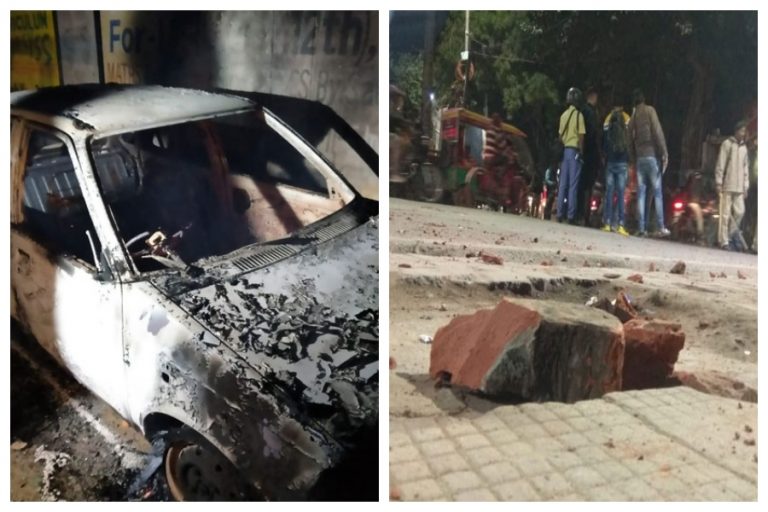
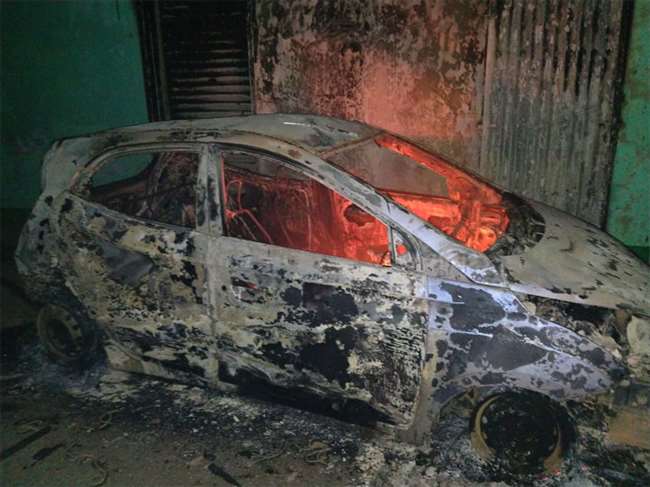
Police had suspected Azad instigated the crowd which turned violent near Delhi Gate and burnt a car.

The masks are off? JNUSU President Aishe Ghosh rakes up Kashmir during the Jamia protests against CAA

0

Several anti-CAA demonstrators today carried out a protest rally in the National Capital to commemorate one month of the protest against the enactment of the Citizenship Amendment Act. The protest was also attended by JNUSU President Aishe Ghosh, against whom two FIRs have been lodged for her alleged involvement in the vandalism of server rooms in Jawaharlal Nehru University on January 4, 2020.

However, referring to the abrogation of Article 370, Ghosh added a new dimension to the protest against the CAA by dredging up the Kashmir issue and linking it with the demonstrations against the citizenship act.


“While we are in this fight, we cannot forget Kashmir and the people over there. Whatever is happening with the people in Kashmir, the process of depriving us of our constitution by the central government started from there,” Aishe claimed.

The JNUSU president’s remarks were in reference to the Central Government’s decision taken on August 4, 2019, to strip Jammu and Kashmir of its separate status by abrogating Article 370 and subsequently bifurcate the state into two union territories-Jammu and Kashmir and Ladakh. The central government had claimed that the invalidation of Article 370 will enable the real integration of the state with the Indian Union while opening up a host of new economic opportunities for the residents.

Read: The Battle from CAA to JNU: Khilafat 2.0, Communist Fantasies, Petty Politics and the conspiracy of Hong Kong style protests

However, JNUSU president Aishe Ghosh’s mention of Kashmir during the anti-CAA protests have unmasked the real intentions behind the demonstrations. It vindicates Union Home Minister Amit Shah’s stand who had earlier claimed that the anti-CAA protests are politically motivated and orchestrated by those having ulterior motives.

It is noteworthy to mention that Aishe Ghosh belongs to the hotbed of seditious elements, Jawaharlal Nehru University, where anti-India slogans of “Bharat tere tukde honge inshallah inshallah” and others were raised in 2016. Besides, JNU students also routinely indulge in chanting “Azaadi” slogans.

Read: 2019 anti-CAA protests: 9 visuals that prove they were motivated by deep seated anti-Hindu bigotry and Islamic extremism

The Citizenship Amendment Act passed in December 2019 in both the houses of the Indian Parliament seeks to provide fast-track citizenship to the persecuted minorities from the neighbouring countries of Pakistan, Afghanistan and Bangladesh.

However, the passage of the act sparked off sporadic protests in some parts of the country, especially at the leftist bastions, where the protestors have put forth perverse reasons claiming that the Act aims to disenfranchise Indian Muslims and is a step towards the transformation of India into a Hindu Rashtra.

Nirbhaya case: Delhi High Court dismisses convict Mukesh Singh’s plea challenging death warrant, says nothing wrong with trial court’s January 7 order

0

The Delhi High court Wednesday declined to entertain the plea of one of the four death row convicts in the Nirbhaya gang rape and murder case, Mukesh Singh, against the death warrant but gave him the liberty to challenge the same in the sessions court.

Refusing to interfere with the trial court January 7th order, a Division Bench of Justices Manmohan and Sangita Dhingra Sehgal opined that there was no error in trial court’s order issuing death warrant against convict Mukesh in Nirbhaya case.

The High Court also noted that the Supreme Court of India (SC) has rejected the appeal, review and curative pleas of the convict.

Convict Mukesh’s lawyers have approached the trial court and moved an application apprising the court about the mercy petition moved by him and seeking postponement of execution date (January 22). The trial court, in turn, has issued notice to State, saying hearing to be held tomorrow at 2 pm. Court has also sought response from parents of 2012 Delhi gangrape victim.


Earlier in the day, during the hearing, the Aam Aadmi Party led-Delhi government standing counsel (criminal) Rahul Mehra told the bench that now that one of them has filed a mercy plea, the execution of none of the four can be carried out on January 22 as per the Prison Rules. He said that since Mukesh has moved a mercy plea, as per the rules they have to wait for the other co-convicts to exhaust their mercy pleas as well.

Quoting prison rules, the Kejriwal government told the court that they are duty-bound to wait for convict’s mercy plea to be decided for executing the death warrant.

To this, the bench said, “Then your rule is bad if you cannot take action till all the co-convicts have moved mercy plea. There has been no application of mind. The system is suffering from cancer.”

As per reports, Advocate Rahul Mehra, the standing counsel for the Tihar Jail authorities stated that ‘Execution of convicts (2012 Nirbhaya case) will surely not take place on January 22’. He added that the execution can take place only 14 days after the final mercy plea has been rejected by the president. The Tihar jail authorities have reportedly conveyed that they are duty-bound to serve a 14-day notice to the convict after the rejection of their mercy plea.

In response to the submission by prison authorities, the court said asked the authorities to put the house in order. “Your house is in disarray. The problem is people will lose confidence in the system. Things are not moving in the right direction. The system is capable of being exploited and we see a stratagem to exploit the system, which is oblivious about it,” the court said.

Apart from pulling up the prison authorities, the court expressed displeasure at the delay in filing curative and mercy pleas by Mukesh after the Supreme Court in May 2017 dismissed the appeals of the four convicts against their conviction and death sentence.

The Supreme Court on Tuesday dismissed the curative petitions filed by two of the four convicts in the 2012 Nirbhaya case, Mukesh and Vinay Sharma, challenging the May 2017 judgment of the court that had upheld their conviction and death sentence.

Immediately after the Supreme court rejected the curative petitions, Mukesh had filed his mercy plea before the President.

As far as the status of Mukesh’s mercy petition is concerned, Mehra informed the Court that it is presently with the Home Department which will forward the same to the LG Office. The file will then be sent to the Home Ministry which will forward it to the President.

20 years ago, Narendra Modi called out the mentality behind Islamic terrorism on NDTV, and Rajdeep Sardesai was ‘upset’

The NDA government has demonstrated great ideological clarity since it came to power in 2014. Within six months of Narendra Modi’s second term as Prime Minister, his government took several monumental steps to strengthen the territorial integrity of India as well as bring to closure disputes that have festered in the country ever since independence. MEA Jaishankar, too, has on several occasions hinted towards the fact that the current government wishes to resolve disputes that it has inherited from predecessors.

Narendra Modi has always demonstrated remarkable clarity in matters of governance and politics. It was, perhaps, most evident during a debate on the Big Fight with Rajdeep Sardesai as the anchor in the aftermath of the 9/11 terror attacks almost two decades ago. During the debate, he called out the mentality and the worldview that is now amplified by the anti-CAA protesters when they made ‘La ilaha ilallah’ the central theme of their protests.

In the debate, Narendra Modi said, “Indian media never had the courage to use the term Islamic Terrorism because pseudo-secularism weighed heavily upon them. When, last Tuesday, after the attack in the USA, when global newspapers started using the term, then for the first time, and I wish to compliment Rajdeep Sardesai for the same, that they have demonstrated the courage to say the truth.”

However, immediately, Rajdeep Sardesai “clarifies” that NDTV had not used the world “Islamic terrorism” in its reports. “We don’t need the compliments from you,” Rajdeep is heard saying in the video clip just after Narendra Modi’s opening remarks.

Narendra Modi, who hadn’t become the Chief Minister of Gujarat yet, added, “As far as Islam is concerned, it has numerous positive aspects, yes. The question is, in what way is it being used by people today. Where do the roots of it lie? When one community argues that their community is different from everyone and superior when it is argued that until and unless you adopt my ways, you will not be able to attain Moksh, Allah or Jesus, then conflict is bound to arise.”

He continued, “And I believe, India has advocated the philosophy of Truth is one but approaching it is many. If this remains the root of one’s ideology, that every path is equal, then there’s no possibility of conflict. But when I argue that yours is false, mine is true, conflict arises and hatred manifests itself. And when this hatred combines with sentiments of nationalism, then terrorism occurs.”

The politician who would go on to fundamentally alter the direction of the Indian State also said that instead of criticising Islam as a whole, it would be better to focus on those elements who are using it to further their nefarious agenda. Rajdeep Sardesai, true to his nature, quickly retorts, “We haven’t used the term Islamic Terrorism, we have only raised the question. So we don’t need the compliments from you at the moment.”

The words spoken by Narendra Modi almost two decades ago are still relevant to this day. The notions of supremacy that he alluded to during the debate are relevant to this day as can be seen in the manner in which ‘la ilaha ilallah’ was made the central chorus of the anti-CAA crowd. ‘La ilaha ilallah’ is a declaration that means ‘There is no God but Allah’.

It’s a slogan that denies the existence of all Hindu Gods and Goddesses and calls them false. That it has been made the central focus of political protests ought to concern every sensible citizen of the country. Even Shashi Tharoor, one of the most ‘secular’ politicians from the Congress party was disturbed by it and when he called it out, he faced intense criticism and protests from the anti-CAA crowd.

Later in the debate, Narendra Modi further elucidates the manner in which terrorism manifests itself. He said, speaking of the ideology of the terrorists, “Terrorism has reached the strength it has today because it is intertwined with fundamentalism. You have to understand that Muslims, and when I say Muslims I do not mean Islam, they have divided the world into three parts.”

Explaining himself, he said, “One, Dar-ul-Aman, second, Dar-ul-Harb, third, Dar-ul-Islam. Dar-ul-Aman means land of peace, that is, where Islam has reached or not in a position to assert itself. There, peace should prevail. Then Dar-ul-Harb, where you have the strength, fight for it, plant your flag. And the third is Dar-ul-Islam, to convert the whole world to Islam. To this end, certain political activists who belong to the Islamic faith are indulging in these activities. Until and unless we understand these people, we will not be able to tackle terrorism.”

As expected, Modi set the cat among the pigeons with his explanation of the ideology that motivates terrorists. Rajdeep Sardesai, consistent with his nature, tried to interrupt him on several occasions but he managed to get his points across in spite of the cacophony. Narendra Modi did not stray away from his points even when accusations of Islamophobia were levelled at him. He said clearly that he was not levelling allegations at the entire Muslim community but only explaining the motivations that drive terrorists to commit the crimes they do.

“Met Dawood Ibrahim several times over, Indira Gandhi used to visit Mumbai to meet Karim Lala”: Shiv Sena leader Sanjay Raut

Firebrand politician Sanjay Raut, who played a central role in stitching alliance between ideologically disparate parties of Shiv Sena, Congress and NCP in Maharashtra, has made an explosive revelation that he had met underworld don Dawood Ibrahim many times over. In fact, Raut also stated that he once rebuked the dreaded gangster as well.

Speaking at an award function organised by Lokmat media group in Pune, Raut reminisced about his journalistic days in the yesteryears when Mumbai was “controlled” by thugs and gangsters. Raut claimed that Dawood Ibrahim, Chhota Shakeel and Sharad Shetty used to control Mumbai and the adjoining areas and had a say in the appointment of Mumbai police commissioner as well as those in the Mantralaya(Secretariat).

On being asked if he had photographed underworld dons, Raut responded in affirmative, stating that he had clicked pictures of various gangsters, including Dawood Ibrahim, who was one of the key accused in the 1993 Mumbai Bomb blasts. Raut mentioned that he met Dawood many times. “I have met Dawood Ibrahim many times. I had even admonished him once,” Raut said.

Read: NCP’s Nawab Malik asks Shiv Sena’s Sanjay Raut to ‘cross all limits in love’ after both parties ally

In addition to this, Raut also claimed that former Prime Minister Indira Gandhi used to visit Mumbai to meet Karim Lala. Karim Lala was one of the three infamous dons of Mumbai in India for over three decades from the 1960s to 1980s. He operated Pathan gang from the crime-infested Muslim ghettos of South Bombay and were involved in illegal gambling, liquor dens, contract killing, illegal money recovery and other things. He died in Mumbai in 2002 at the age of 90-91.

“During those days, when Haji Mastan came to ‘Mantralaya’, the entire ‘Mantralaya’ would come down to see him. Indira Gandhi used to come to meet Karim Lala in Pydhonie (in south Mumbai),” claimed Raut, whose party joined hands with Congress and NCP to form a government in Maharashtra last year.

The Imperial Cholas, Part I: An Introduction to the longest ruling Dynasty in India

The power of the Cholas

From a study of the annals of Indic studies, it is quite clear that the Imperial Cholas of south India claim the record for being the longest ruling dynasty in Indian history. It is undoubtedly also one of the grandest empires that the country has ever seen. The earliest datable historical record of the Cholas is in the form of epigraphical evidence, where the dynasty finds a mention in the 13th Ashokan edict, dated 3rd century BCE. Besides this, the Cholas are also mentioned in the ancient Greek nautical logbook used by traders and sailors as the ‘atlas’ of those times, Periplus of the Erythraean Sea, which was written in the 1st c. CE.  The 5th century CE Buddhist literary text Mahavamsa talks of frequent wars between the Cholas and Ceylonese in the 1st c. BCE. As one of the Three Crowned Rulers, or the World of the Three, known as Moovendhar, the Cholas along with the Cheras and Pandyas controlled the political world of Tamilakam, the ancient Tamil country.

Photo: 13thAshokan edict that mentions Cholas (as Chodas), now kept in Khalsi, Dehradun- Uttarakhand. The English sentence in the middle, at the beginning of the southinscription, is from the public domain: Archaeological Survey of India Vol. 1, p.247 by Cunningham, Alexander (1814-1893.)

While the main power centre of the Cholas was located in the Kaveri river valley when this mighty dynasty had reached its zenith in the 9th to 13th century CE, its imperial territories stretched across Kerala, Tamil Nadu, Andhra Pradesh, and Andamans. The lands south of the Tungabhadra river was brought together as one territory under the Chola sway, and they remained so from 907-1215 CE when the Chola kings were the military, socio-economic, and cultural superpower of the southern states. Under their famous king, Rajendra Chola, a victorious Chola army also crossed the Tungabhadra border and marched into eastern India, to the banks of the river Ganges in Pataliputra; and as per the Chola inscriptions, also defeated king Mahipala of the Pala dynasty.

However, the Cholas did not remain limited to just controlling the Indian states; they also held strong military and cultural sway over the islands of Maldives, Indonesia, Sri Lanka, Lakshadweep, parts of Myanmar, Srivijaya (Sumatra &Java), and the islands in the Eastern Archipelago. This is evident from the records of their naval raids on Srivijayan maritime cities, and their embassies to the Chinese court. The Chola naval fleet was considered as the strongest Indian sea power of ancient times.

Map showing the extent of the Chola empire c. 1030

Besides being mighty warriors and seafarers, the later Chola kings were also prolific builders, and they commissioned many beautiful temples across their empire. Highly influenced by the Pallavan temple art (who were their predecessors), the Chola era monuments stand as a symbol of the power and ingenuity of Cholas and their craftsmen. Some of the Cholan temples are now considered among the finest examples of south Indian art and architecture.

Architecture of Cholas

The Chola kings

Historically very little is known about the early Cholas, though there are references to the dynasty in various texts collectively known as the Sangam literature. Without much available historical information, the tales associated with the early rulers such as Karikala, have now acquired the statuses of grand semi-legendary tales. While the Pandyas and Pallavas came into historical limelight from the end of the 6thc. CE, the Cholas reappeared only around the mid-ninth century under their king Vijayalaya, and it was under him that the imperial Cholas fanned out from Thanjavur. Starting with Vijayalaya, the Chola dynasty ushered in a grand revival of religion and literature in the southern part of India that continued unabated until the 10th c. CE. Again, in the 10th century CE, the Cholas saw a weak phase in their rule when some of their rulers were killed in different wars, one king was assassinated, and power seized by the Rashtrakuta ruler, Krishna III, who took over Tondai-mandalam.

Finally, in 985 CE, Rajaraja I came to power, and under him, the Chola dynasty rose to heights never achieved before. Titled as Rajakesari ArumolivarmanRajaraja I (985-1014 CE) is considered as the most powerful Chola king, and during the three decades of his rule, the Cholas established themselves as a formidable power. Rajaraja I is unmatched in his war triumphs (across India and foreign countries), administrative skills, as a great patron of art and literature, and as an epitome of religious tolerance. Rajaraja I was succeeded by Rajendra I (1012-44 CE), who was as brilliant as his father. Based on the foundations made by his father, Rajendra I further raised the stature of the Chola dynasty to such levels where it was considered as the most extensive, influential Hindu kingdom of that time.

By the turn of the 9th century, CE Shaivism became the dominant religion of the Chola empire. Started by Parantaka I (an early Chola ruler), the Shaiva theology was further reinforced by Rajaraja I and Rajendra I. Owing to this we see the frenzied building of many Shiva temples in Dravida style architecture, and an attainment of lofty levels in paintings, bronzes, and sculptures, which were expressions of great devotion. The Chola centres of religion and learning were mostly centred around Thanjavur, Gangaikondacholapuram, and Darasuram.

After a succession of many good rulers, the last two great Chola rulers were Rajadhiraja (1166-1180 CE), and Kulottunga III (1178-1218 CE). Kulottunga III made great efforts towards stemming the decay that had slowly started affecting the once great Chola empire. He was also a prolific builder, which is seen by his various additions to the Chola monuments, as seen in the Kampaharesvara temple at Tribhuvanam, and also in other temples at Madurai, Kanchipuram, Tiruvidaimarudur, Chidambaram, and Darasuram.

The Cholan dynasty, which continued to rule various parts of southern India, slowly came to end in the 13th century CE, when their arch rivals, the Pandyas, took over the control.

[In the next part, The Imperial Cholas- II, I will take up the administration and governing details seen under this mighty dynasty].

Former AAP leader Kumar Vishwas refutes the rumours of him joining BJP

With Delhi Assembly elections round the corner, a wave of rumours have been making rounds that the former AAP member Kumar Vishwas may join the Bharatiya Janta Party (BJP).

The poet-politician, however, today took to Twitter to put all the speculations of him joining BJP to rest. “I am in Qatar (Doha) for an NRI summit. Shall I join from here, if you say? Set an alarm for this report and run it every week, why do you bother your fingers time and again,” he said on Twitter in Hindi while responding to a journalist.


Vishwas started his political career as co-founder of Aam Aadmi Party, but differences emerged between him and AAP leadership, especially with party chief and Delhi Chief Minister Arvind Kejriwal which probably compelled him to drift away from the party.

Vishwas on several occasions has been extremely critical of the Aam Aadmi Party supremo Arvind Kejriwal. Kumar Vishwas on Wednesday targeted Arvind Kejriwal for his tweet on Army Day. Vishwas said Kejriwal is saluting the Indian Army because elections are around the corner.

Read: Kapil Mishra asks Kumar Vishwas to break his silence over rampant corruption and malpractices in AAP

“Elections are cruel. Those who questioned the bravery of our soldiers and maligned our country’s image in the eyes of the international community, are today congratulating the Indian army,” Vishwas said in Hindi while attaching Kejriwal’s tweet.

Earlier, Vishwas had also criticised Kejriwal after he was denied a Rajya Sabha seat. He had even vented his dissent in public when former TV journalist Ashutosh quit AAP. He quipped at Ashutosh’s resignation with a tweet congratulating him on his “freedom”.

He also called Kejriwal “a habitual liar” when he had appeared in the Arun Jaitley defamation case in Delhi High Court in May last year. In fact, in an interview with Rajat Sharma in Aap ki Adalat program on India TV last year, Vishwas had not only exposed Kejriwal on Surgical strikes but also divulged how Kejriwal used to compare himself with Jawaharlal Nehru and ask Vishwas to write poems on him, as poet Dinkar wrote on Nehru.

Congress’ Mani Shankar Aiyar goes to Pakistan and lies about PM Modi and HM Shah, says NRC has created rift between them

Senior Congress leader Mani Shankar Aiyar came out of woodwork to claim that PM Modi and Union Home Minister Amit Shah are not on same page as far as NRC is concerned.

Known for his tactless remarks, Aiyar asserted in a panel discussion in Lahore that there is a rift between PM Modi and Amit Shah over the articulation of NRC and NPR. The program was also attended by Pakistan’s Najam Sethi where Aiyar claimed that both Shah and Modi are the face of “Hindutva” in India.

“NPR has never been considered by the PM Modi government as a precursor to the setting up of NRC. However, the Union Home Minister has said in Parliament and given written assurances that NPR is indeed a predecessor to it,” Aiyar said.

Stirring a hornet’s nest, Aiyar said how India’s image has taken a hit internationally and that PM Modi will find it hard to explain the sudden opposition on the streets on the new law.

Read: Watch this epic meltdown of Congress leader Mani Shankar Aiyar after he gets triggered when reminded of his ‘chaiwala’ comment

Earlier on Tuesday Aiyar joined the anti-CAA protests and National Registers of Citizens in New Delhi’s Shaheen Bagh and criticised the Modi government saying that they fought the elections on the promise of “Sabka Saath Sabka Vikas” but they did “Sabka Saath Sabka Vinash”.

Furthermore, he added, “Whatever sacrifices needs to be given, I’m ready for the same. Now let’s see whose hands is strong, our or that murderer’s?”

However, this is not the first time that Mani Shankar Aiyar has weighed in about India’s internal matters in Pakistan. In November 2015, Aiyar had sparked off a controversy when he said to a Pakistani media channel that Modi had to be removed in order to restore relations between India and Pakistan. That was construed by many as soliciting help from Pakistan on defenestrating PM Modi.

Mumbai consultant Vikas Sachdeva convicted by special POCSO court for molesting former Bollywood actress on a flight in 2017

0

A court in Dindoshi has found Vikas Sachdeva, a 41-year-old consultant, guilty of molesting an ex-Bollywood actress in 2017 on a Delhi- Mumbai flight. She was a minor at the time of the incident.

Vikas was convicted under Section 354 of the Indian Penal Code (IPC) and Section 8 of the Special Protection of Children from Sexual Offences (POSCO) Act. Judge AD Dev has also imposed a fine of ₹25,000 and sentenced Vikas to 3 years of imprisonment.


The story came to light in 2017 when the Bollywood actress took to Instagram to share her ordeal. The actress accused the consultant of molesting her on-board the flight while he sat behind her and placed his leg on the armrest.

However, 3 out of 7 witnesses testified in favour of Vikas Sachdeva, including Sachdeva’s wife who was travelling with him. She stated that Sachdeva was tired after attending a funeral in Delhi and was asleep throughout the flight. She stated that her husband’s leg might have accidentally touched the victim. Two crew members had also given similar statements.

As per an India Today report, Sachdeva’s lawyer Adnan Sheikh argued highlighting his client’s good nature, besides the fact that he was a first-time offender and the only earning member of his family. The lawyer also pointed out a 2018 Instagram post to suggest that the former actress may not have been in the right frame of mind. In the said post, the victim admitted to having anxiety, nervous breakdowns, and hallucinations.

The said actress had since retired from Bollywood after declaring on social media that her career was taking her away from Islam.

Vikas Sachdeva and his wife reportedly broke down when the former was proclaimed guilty. Sachdeva still has the option to appeal before a higher Court. This case had sparked a debate on social media whether existing laws meant for protection to victims are being misused.

The make-believe world of Shaheen Bagh protests will come down crashing: Here is why

There are broadly four major bridges across the Yamuna, which flows apologetically next to the capital city of Delhi, connecting it to Noida. Noida, a suburb to the national capital region, falls in UP and is ruled by the Yogi Adityanath. As a monk, who has dropped his earlier identity, that is how he is addressed by people who understand the Hindu practice of asceticism. The Congress though insists addressing him as Ajay Singh Bisht for some reason better known to them. The states adjoining Delhi, ruled by BJP, both Haryana and UP remain tranquil as an island of tumult separates Delhi from the Yogi ruled Noida. One of the four major bridges which connect Noida, that falls in UP, apart from DND, Nizamuddin and ITO, is Kalindi Kunj.

Kalindi Kunj connects Delhi with the upcoming societies of Noida where most people who couldn’t find connects in the old Lutyens and climb the stairs of success too quickly, and who rely solely on their hard work to sustain them lacking any worthwhile surname which could keep them afloat, stay. The working middle-class which watches more news than what it creates and which would rather want to drive a couple of hours to work than to live in illegal colonies finds a home in Noida. This is a boring set of our society which is largely law-abiding, a non-communal population which keeps its head down, loves the nation and goes about its work. This section wakes up in the morning, goes for morning walks, drops kids to school, and is at work having driven often around fifty kilometres by the time the more interesting folks who make to the headlines get out of their beds.

Since this set of people offer no excitement, except on the rare occasions when they get kidnapped, attacked or looted; they are ignored by the journalists. The journalists usually focus their attention on the people minus this boring lot. On the other end of Kalindi Kunj, lies a constituency run by an able lieutenant of the current Chief Minister of Delhi Arvind Kejriwal, Shri Amanatullah Khan called Shaheen Bagh, which houses an interesting set of people that media loves.

The unrest in Delhi started with Amanullah Khan making a speech, claiming that CAA will somehow disenfranchise Indian Muslims. The people in that area have been enlisted to create extravagant riots and provide material for brilliant editorials justifying them. As a recent report in a leading daily mentioned, this area which has been at the forefront of communal protests recently is slum-like, with dingy lanes, power cables hanging dangerously across the street, an island of story-worthy sadness and despair, stuck between tranquil Lutyens and well-planned Noida expressway societies. The noted journalist didn’t seem to be bothered that the MLA of the area seemingly has done no work in his constituency which could have rendered this extremely interesting lot to the boredom of working-class living on the other side of Yamuna.

Read: AAP MLA Amanatullah Khan spotted leading the protests which turned violent in Delhi: Reports

There are people camping in this area, ostensibly to oppose the Citizenship Amendment Act, 2019. The act allows the minority refugees from three neighbouring theocratic Islamic states who have come before 2014 to gain Indian citizenship in Five years instead of the earlier naturalisation period of six years. The local MLA has been able to convince his constituency that this will somehow impact them because they are Muslims. You cannot expect people who could not come about asking for roads, cleanliness, and schools from their representative to know when their MLA is deceiving them.

Secondly, the kind of decadent life they lead, ignored by the larger sense of governance, with two huge mosques standings amid the slums as if mocking their quagmire of negligence from which they arise; it is impossible for them to understand the big game being played when they step out of their silent existence into the riot of flashlights of press cameras.

The neglected existence of decades which falls below the radars of planning commissions and media reports suddenly sneaks into the conversations of conclaves held in sanitized halls of India Habitat centre. It isn’t the pathetic state of governance of this constituency which trails the rest of Delhi by decades in development, that finds the attention of the middle-aged millionaires sipping champagne listening to Rabindra Sangit in their cosy south Delhi or south Mumbai villas. The old have-beens of Naxal Seventies have their old-tired eyes shining at the prospect of sacrificing some young lives at the altar of their long failed ideology. The calculating minds of communists-turned-capitalists are charmed by this scene being enacted at Shaheen Bagh. From their sanctified sanctuaries, they hail Mao in muted whispers before booking New Year vacations to France or the evil land of capitalism, the US.

Read: ‘Jinnah wali Azadi’ slogans raised at Shaheen Bagh: The true face of anti-CAA protests and what these slogans mean

Softly enough, not to let it rise above the soft clinking of their champagne glasses, they send out catchy slogans to the Shaheen Bagh protestors who shiver under severe cold pursuing a goal which was never a goal for those who set them up. Those who ride these palanquins are targeting a land of Mao, and the Palanquin-bearers are walking in the belief that they are on a holy crusade walking to the holy land of Islam. Between the intellectuals and the foot soldiers, the game of deception is on. Those who considered the chant of Jai Shriram and a sacred symbol of Hinduism on an airplane communal, try to cover up the agenda of Islamist supremacy which drives the protestors on the ground. The Biryanis, the sponsored gala, the song, dance and pomp is all fine but when Mao meets the Maulana, the masks quickly fall. Little kids, hardly aware what their parents are thrusting them into in their search for free food packet and two minutes of fame, get initiated on the path of teenage fanaticism and the media claps like some evil doll of some black magic woman.

The farce is unravelling fast as intifada nudges out fake secularism. Even Iran too it started as a revolution for freedom and democracy before it turned into a brazen and unabashed hard-line Islamist nation, with zero freedom and zero democracy. It always comes like that, like a bandit hiding under the cloak of democracy. The left gleefully looks at the revival of the bloody history of Naxalism. They have appropriated Congress and Ambedkar both. This helps them to hide their cynical cunningness with which they are conspiring to break the nation. We may forget that the left-sided with the British during the Quit India Movement.

Today, when the opposition stands rejected by the masses in India, the ideological lines have blurred as Congress aligns with Muslim League, and the Communists stake claim to the history of Congress and all of them, claim to be a follower of Dr Ambedkar. This cynical fakery of the left needs to be called out. The left stood with the British during the Quit India and with the Congress during Emergency. They are again coming back claiming to be warriors for democracy and freedom with a little hesitation because of their faith in their ability to create a false narrative and their belief in a short span of public memory. Since the left is unable to win electorally, their idea is to break India down and create chaos and anarchy. Ambedkar, in reality, was possibly was the first one to call out the left’s tendency to hide their designs within a pretended love for freedom and democracy. He said in his famous speech Grammar of Anarchy made on 25th of November 1949.

Read: The Battle from CAA to JNU: Khilafat 2.0, Communist Fantasies, Petty Politics and the conspiracy of Hong Kong style protests

“The Communist Party want a Constitution based upon the principle of the Dictatorship of the Proletariat. They condemn the Constitution because it is based upon parliamentary democracy. The Socialists want two things. The first thing they want is that if they come in power, the Constitution must give them the freedom to nationalise or socialise all private property without payment of compensation. The second thing that the Socialists want is that the Fundamental Rights mentioned in the Constitution must be absolute and without any limitations so that if their Party fails to come into power, they would have the unfettered freedom not merely to criticise, but also to overthrow the State.”

When we look at the leftist intellectuals and politicians collude and conspire behind the farcical Shaheen Bagh protest, we can find the echo of the words of Dr Ambedkar here. Everyone can see it for what it is. Shaheen Bagh protest is nothing but a brute mob staring in the force of an elected government waiting for it to blink. The media is trying hard to give Shaheen Bagh a colour of Tahrir Square during the Arab Spring. They try hard to hide the truth which lurks within the protest. While Tahrir Square protest was to usher in an age of freedom, Shaheen Bagh protest is anything but.

Tahrir Square protests tried to create a democracy by usurping a tyranny; Shaheen Bagh protests attempt to create a religious tyranny by usurping a democracy. They do not want to file a case in the court or fight elections on this ground. They want to bulldoze both the judiciary and the parliament. They claim that neither the Parliament nor the judiciary represents the will of the people. They have a small mob which as per them represents it. They want to reject anything and everything which runs counter to their argument. In the same speech referred above Ambedkar has said

“If those who are dissatisfied with the Constitution have only to obtain a 2/3 majority and if they cannot obtain even a two-thirds majority in the parliament elected on adult franchise in their favour, their dissatisfaction with the Constitution cannot be deemed to be shared by the general public.”

This comment of Dr Ambedkar is a clear answer to the unelected and unelectable, self-propelled leaders of Anti-CAA protests like Yogendra Yadav, Sitaram Yechuri and Kanhaiyya Kumar, who cannot win one election but claim to be the voice of the people.

Shaheen Bagh protests and the conspirators behind it ignore Ambedkar and the boring, silent majority which is fast running out of patience. A thin thread holds the reserve of the silent, which if breaks will wash away the obstinate, noisy recklessness of the sloganeering mob. When that happens, it will be the same mob of Shaheen Bagh misled by Kejriwal’s lieutenant into believing that they are fighting some holy war, and funded by the Bankers of Congress, which will be at the receiving end.

Read: Congress-supporting Bharatiya Kisan Union leaders join the anti-CAA protests at Delhi’s Shaheen Bagh

Those who sit in their cosy apartments, posting pictures of Resistance 2020 will not even turn up to count the fallen. They will wash, paint and create art to resurrect their new lives around the ugly aftermath of a farce which ends in a mess. Shaheen Bagh will go back into its cesspool of misgovernance, slipping back into the darkness of an existence ignored by the nation at large. The PIL filed in the Delhi High Court seeking a directive to get this illegal blockade cleared has been dismissed, as the judiciary left it to the wisdom of Police as to how to handle it. One cannot fault this, in isolation.

It is for the Delhi Police to act. If the protestors from Gateway of India could be shifted to Azad Maidan in a day, it is inexplicable why Delhi Police would be mollycoddling the protestors blocking the public road for a month. Reports have come in of kids suffering on their way to school and even one loss of life due to an Ambulance stuck in this mess. Technically it is proper for the judiciary to stay out of the way of the executive on the matter, but then the same would apply to curtail internet in Kashmir. Why could that not be left to the wisdom of law and order machinery? Another one of the courts claimed that the protests on the street are valid because the arguments which were supposed to be made in the parliament did not happen.

I would hope that the law ministry would take a clear position on this attempt by a Judge to decide the course of parliamentary debate. I am sure that the writers of Indian Constitution would not have imagined a judiciary which essentially supports lawlessness on the streets because the elected lawmakers have not taken the position the Judge as an unelected Government official desires them to take. Hope someone takes note of this hopelessness to which their absurd protest is hurtling them because someday soon, driven into the corner, the silent will speak. When the silent speaks, this make-believe world of Shaheen Bagh farce will come down crashing. End unlike what Eliot wrote, it is not always that the world ends with a whimper, it often ends with a bang, a deafeningly loud bang.

References:

1. The Grammar of Anarchy