Home Blog Page 5740

‘They planned to burn all of us alive, used to constantly abuse us’: Family of Dalit man set ablaze by Muslim neighbours in MP

0

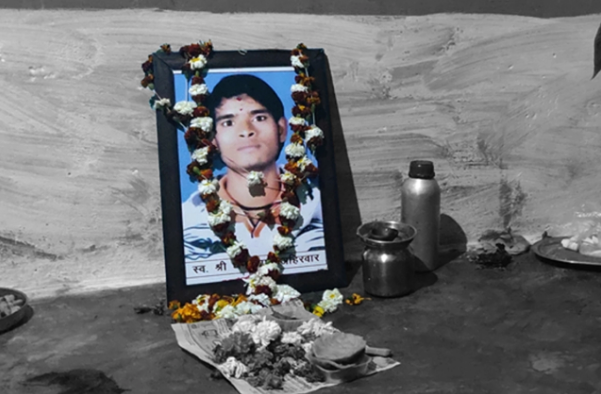
On January 14, a dalit man named Dhan Prasad Ahirwar (alias Dhaniram Ahirwar) was set on fire by his Muslim neighbours in Madhya Pradesh’s Sagar district. After three days, he was shifted to Gandhi Medical College in Bhopal. On January 21, he was airlifted to New Delhi’s Safdarjung Hospital.

The 24-year-old Dalit man who suffered 70% body burns breathed his last January 23. Ahirwar who had married six months ago is now survived by his wife, parents and five siblings. His wife had gone missing after the incident. Swati Goel Sharma of Swarajya Magazine recently visited the village of Ahirwar and did a ground report of the incident. Here is a summary of that report.

The First Information Report (FIR)

The victim, in his statement, has said that four men from the neighbourhood had been abusing his parents for many days. When he told the accused men to stop, they attacked him and set him on fire. The statement also highlighted that the perpetrators abused him by calling him “chamaar” and asked him to stay in his limits. Dhan Prasad added the name of the 5th accused in his statement to the magistrate.
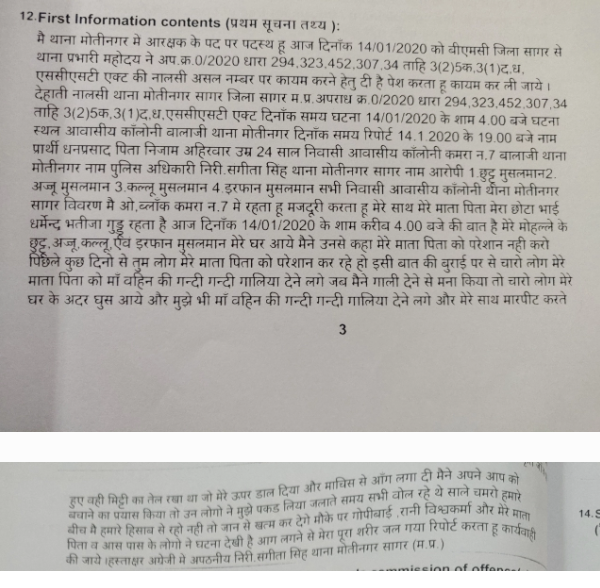
Dalit man Dhan Prasad Ahirwar was called "Chamaar", set ablaze by his Muslim Neighbours in Madhya Pradesh
Statement of Dhan Prasad in the FIR (Photo Courtesy: Swarajya)

The Perpetrators

The police had apprehended all the five accused allegedly involved in the case. They include Ajju Musalman, Chhotu Musalman, Kallu Musalman, Irfan Musalman and Babli alias Danny Khan. They had been booked under various IPC sections (34,147,148,149, 294, 302, 307, 323, 452) and relevant sections of the SC/ST Prevention of Atrocities Act.

Eyewitness Accounts

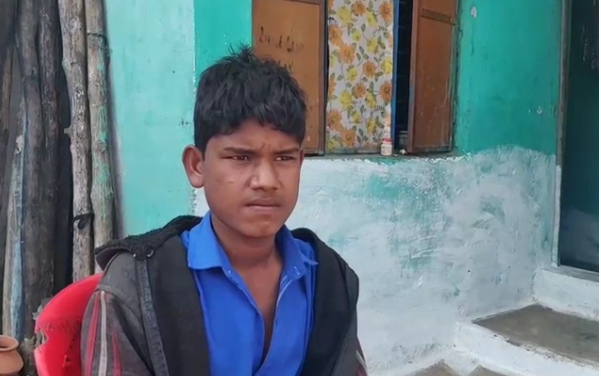
The nephew of the victim, Guddu, was an eyewitness to the heinous crime. According to him, around 50-60 men barged into their house at around 4 pm on the day of the incident. They dragged Ahirwar into a room, poured kerosene oil over him and set him ablaze.

The 15-year-old remembered, “I saw my chacha burn. We went inside the house, trying to douse the flames. A woman from the crowd removed the blanket that we wrapped chacha with.” He was able to escape unhurt. He stated that his grandparents and three cousins were at home at the time of the incident.
Dalit man Dhan Prasad Ahirwar was called "Chamaar", set ablaze by his Muslim Neighbours in Madhya Pradesh
15-year old Guddu (Photo Credits: Swarajya)

The victim’s nephew also said that his family would not have been alive without his neighbour, Rani Vishwakarma. She is also listed as an eye witness based on the statement of Dhan Prasad Ahirwar.

Contradictory Claims

Guddu’s 8-year-old brother, Sachin, narrated that the scuffle broke out after a man had asked him to leave the open area where he was playing. When he resisted, the man threatened to pack the body of “chamaars” and send it to the market.

Sachin recollected, “I said that if you do so, the police will arrest you. He let out an expletive at my aunt. I abused him in return. Then, I went inside and told my chacha (Dharmendra Prasad) about it. He got furious and called up elder chacha (Dhan Prasad)”.

The Bone of Contention

Dhan Prasad’s family lives in a colony that was set up as part of a rehabilitation programme under the prime minister housing scheme. Mostly, construction workers, day labourers and house helps live in the residential area which falls under the jurisdiction of Motinagar Police Station.

Rani Vishwakarma alleged that the government committed a grave mistake while allocating houses. According to her, this was the bone of contention.

She said, “The government didn’t do the distribution of families in the buildings in the right manner. They have given four houses to Hindus in each building. The Muslim families gang up against us and try to dominate over us. We are constantly fighting among ourselves. The government could have put all Hindus together.”
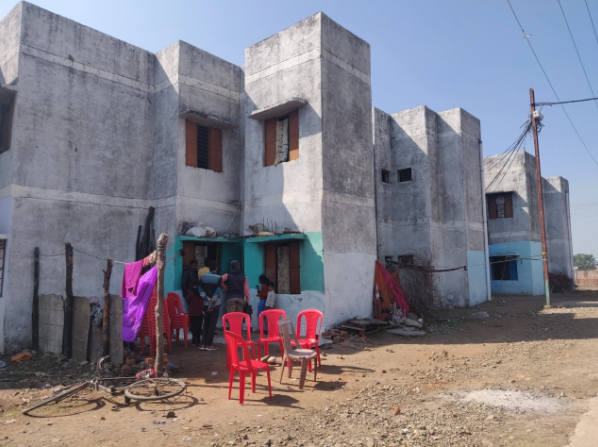
Dalit man Dhan Prasad Ahirwar was called "Chamaar", set ablaze by his Muslim Neighbours in Madhya Pradesh
The view of the Dhan Prasad’s house (Photo Courtesy: Swarajya)

Rani’s mother contended that they are often addressed with casteists slurs such as “chamaar” by their Muslim neighbours in an attempt to belittle them.

Another woman in the same building complained that her Muslim neighbours do not allow Hindu children to play in the common area. She alleged, “On Holi, they warn us that no colour should reach their doorstep. On Rakshabandhan, when our married girls come home, their men ogle at them.”

Muslim community claims innocence

A labourer in the same colony by the name of Saddam Qureshi claimed that the victim had self-immolated. He demanded a comprehensive investigation, preferably from the Central Bureau of Investigation (CBI).

Qureshi also alleged that the incident was being given a communal angle. He claimed “We Muslims are not against Dalits. All of us have the same blood. What will we even achieve by fighting,”

Another resident by the name of Mohammad Nasir, another resident alleged that Irfan Musalman frequently objected to Dharmendra talking to his sister and that things took a drastic turn on the fateful day.

SP Amit Sanghi said the police are investigating claims of self-immolation, but there is nothing to support the claim. Sanghi reiterated that the probe is being done according to the victim’s dying declaration.

Aftermath

BJP had protested in Sagar over the death of Dhan Prasad Ahirwar on January 28. Shivraj Singh Chouhan, former chief minister of MP, called out the ruling Congress dispensation for negligence and “minority appeasement”.

The victim’s sister, Janaki, said that she had no information about any protest. While bursting into tears, she said, “My father is really old. It’s tough for him to bear the loss at his age.” She complained that the family had not received any monetary compensation from the State Government.

This is not the first time that such an incident has come to light. Amidst the noise of “Jai Bheem-Jai Meem”, such horrifying stories of crime against Dalits committed by Muslims often fall on deaf ears.
‘Lawyer of convicts mocked me by saying that hangings will be postponed till eternity’, mother of Nirbhaya after court stays execution of the rapists

0

Merely 12 hours ahead of the much-awaited execution of the four convicts in 2012 Nirbhaya gang-rape and murder case, the Patiala House court in Delhi on Friday once again directed the Tihar Jail authorities not to execute the four convicts until further notice. The execution was scheduled for February 1st at 6 am.

“Execution is postponed till further orders”, Judge Dharmender Rana said. The execution has been deferred in view of the pendency of one of the convicts Vinay’s mercy plea before the President.

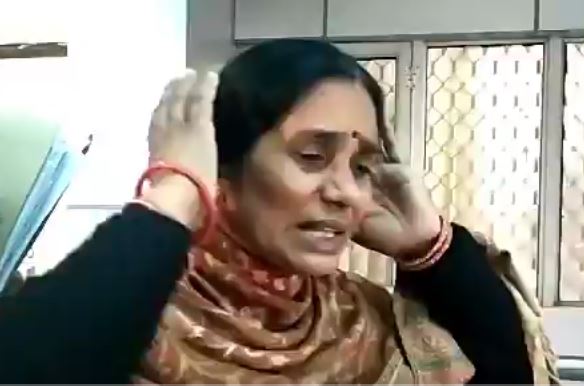
This decision has broken down Asha Devi, Nirbhaya’s mother who has been for the last seven year awaiting justice. She alleged that the convicts’ lawyer AP Singh pointed fingers at her and told her that the hangings have been deferred till eternity.


In a video clip, Asha Devi can be seen totally dejected with the Delhi court’s decision. “Mujrimom ke vakeel AP Singh ne mujhe aaj anguli dikha kar challenge kiya ki ye faasi ab anant kaal tak tal gayi hai (Today, the convicts AP Singh pointed fingers at me and challenged me that he will get the hangings to be postponed till eternity),” Nirbhaya’s mother told reporters outside the court.


Blaming political parties and Arvind Kejriwal led state government for the delay in executing the convicts, Asha Devi said none of them are interested in implementing the court’s order. “Why do we have a system where nothing happens to the culprits even after courts have pronounced them guilty and awarded sentences?” she asked.

“The government will have to execute them. I will continue my fight. These convicts have no right to live. We keep getting disappointed by the system. I will continue my fight till the convicts are hanged,” she said.

Prior to this, parents of Nirbhaya had alleged that politics is being played over our daughter’s death. Badri Nath Singh, the father of the 2012 Delhi gangrape and mother victim, had said that the AAP government in Delhi came to power using the Nirbhaya case, and now they are again using the case for politics.

On Friday, deferring the execution, Judge Dharmender Rana said: “Without commenting upon the dilatory tactics adopted by the convicts, suffice it would state that seeking referral of one’s grievances through the procedure established by law was the hallmark of any civilized society. The Courts of this country cannot afford to adversely discriminate any convict, including death row convicts in pursuit of his legal remedies, by turning Nelson’s eye towards him.”

Read- Who is she to tell me to follow Sonia Gandhi’s footsteps? Because of people like her, justice not done to rape victims: Nirbhaya’s mother hits out on Indira Jaising

Representing convicts Pawan Gupta, Vinay Kumar Sharma and Akshay Kumar, their counsel AP Singh has urged the court to put a stay on executions ‘sine die’  as one of the convicts Vinay’s mercy plea before the president was pending.

Invoking Rule 836 of the prison manual, the lawyer of the convicts told court that in a case where more than one person has been handed over the death penalty, the execution cannot take place unless all the convicts have exhausted their legal options.

The four convicts in 2012 Nirbhaya gang-rape and murder case were sentenced to death by a trial court in September 2013, and the verdict was confirmed by the Delhi High Court in March 2014 and upheld by the Supreme Court in May 2017, which also dismissed their review petition in July 2018.

On 17th January 2020, the President had rejected the mercy plea of Mukesh Singh. After the President rejected the petition, Tihar jail approached the court for reissue of the death warrant. Accordingly, a Delhi court had issued fresh death warrants for the four convicts and ordered that they will be hanged at 6 AM on February 1.

Coronavirus crisis: Indian Army sets up quarantine facility at Manesar in Haryana for 300 Indians returning from Wuhan

0

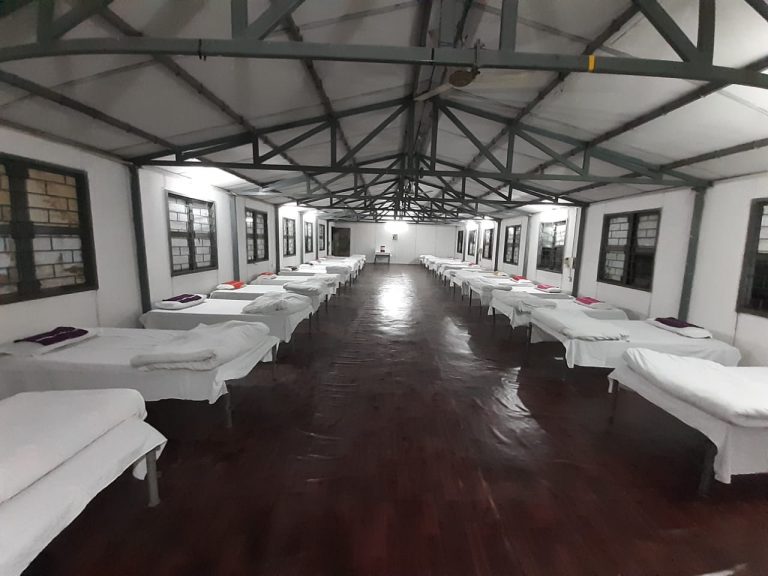
Rising to the occasion, the Indian Army has today revealed its preparedness to deal with the deadly coronavirus crisis as it plans to keep 300 Indian returnees from the virus-hit Wuhan city of China. The Indian Army has set up a quarantine facility in Manesar in Haryana to keep 300 returnees from the Hubei province of China amidst the outbreak of coronavirus. Most of those returning are medical students studying in Wuhan and its surrounding areas.


Revealing the quarantine process, the Indian Army stated that the procedure has been divided into two steps. The first one comprises of screening of the returnees at the Delhi airport followed by quarantine at Manesar facility. If any individual to be found to have contracted the coronavirus, he/she will be transferred to the isolation ward at the Army’s Base Hospital at Delhi Cantonment. The joint team of Armed Forces Medical Services and Airport Health Authority will preside over the screening of the returnees on Delhi airport.

In addition to that, Army plans to segregate the students flying back from Wuhan into three categories. The first group will have ‘suspect cases’, where any individuals with any symptoms of fever and/or cough and/or respiratory distress will be directly transferred to the Base Hospital.

The second group will comprise of ‘close contact’ in which any returnee without symptoms but who had gone to a seafood/animal market or a health facility in Wuhan or has come into contact with a Chinese person with symptoms in the last 14 days will be transferred in a designated vehicle right away to the quarantine facility.

In the third group, termed as ‘non-contact case’, the students without any symptoms or contact or who do not fit into either of the first two categories will be grouped with the close contact category and escorted to the quarantine facility.

Read- Coronavirus: The deadly epidemic that originated in Wuhan, China

Furthermore, the Army said that the facility has accommodation barracks for students, administrative areas and medical areas for students. To ward off a mass outbreak, the facility has been divided into several sections, each with a maximum capacity of 50 students. Each barrack is further divided into sub-barracks and students from one section will not be allowed to mingle with others.

A team of qualified doctors and staff members at the quarantine facility will monitor the returnees for a duration of two weeks to identify signs of infection. The medication of all students will be done at the medical facility area on a daily basis. The medical staff members along with doctors are strictly advised to wear all the personal protective equipment (PPE) all the time. After 14 days of monitoring, students with no symptoms will be allowed to go to their respective homes, with their detailed documentation sent to State/District administration for further surveillance.

An Air India flight was sent to Wuhan on Friday to bring back the stranded Indian students in the Chinese city which has been the epicentre of the coronavirus outbreak. The flight is expected to reach India on Saturday 2 AM. Government sources say that the plane is equipped with all the medical kits and other paraphernalia required to address any contingency. The Air India crew will not de-board in Wuhan and have been provided with safety masks and other protective equipment.

Sharjeel Imam went to Shaheen Bagh 2 days before and the day the protest started, was instrumental in organising protest

0

The Delhi police interrogating Shaheen Bagh mastermind and The Wire columnist Sharjeel Imam has now made a shocking revelation. According to a report by Amar Ujala, the police has said that investigations revealed that Sharjeel Imam had visited Shaheen Bagh on December 13 and 15 that is two days before and the day when the protest started at Delhi’s Shaheen Bagh area.

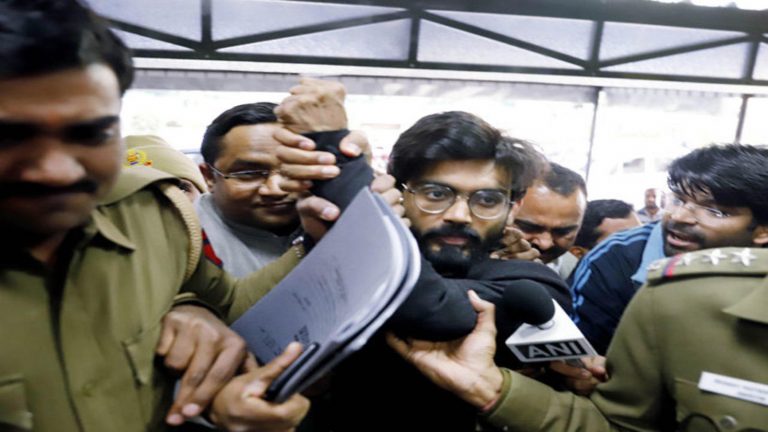
Delhi Police took Sharjeel to several places including JNU on Thursday and verified his friend and acquaintance.

OpIndia in an exclusive expose on December 31st revealed that Sharjeel Imam was the mastermind of the Shaheen Bagh protests and had severely nefarious designs and Islamist bent of mind.

From December 15 the group of protesters mostly comprising of Mulsim women blocked a road in Kalindi Kunj area that connects Faridabad- New Delhi- Noida. This has led to traffic inconvenience, increasing travel time from 20 minutes to several hours.

In just a week, many incidents have surfaced which laid the secessionist agenda of the ultra-left wing protestors at Delhi’s Shaheen Bagh area exposed. It is now sufficiently clear that this protest like all other anti-CAA riots is anything but ‘organic’. In fact, it is another typical left-wing organised blatant communal event where protestors are openly batting for secession from India.

Moreover, Delhi Police through its investigation has also revealed that Sharjeel Imam was frequently called to give speeches. And when he went to Jamia Nagar to deliver his speech he was approached by the PFI people. An officer of the crime branch said that the member of the PFI approached Sharjeel on the stage itself. The Delhi police have now been investigating Sharjeel Imam’s link to PFI and Islamic Youth Federation.

Read: Police probing Sharjeel Imam’s links to PFI and Islamic Youth Federation: Here is all you need to know about these radical orgs

Crime Branch officials said that what Sharjeel has revealed that he has admitted of giving the seditious speech he is accused of and has said that he was not remorseful. He was attempting to incite Muslims to come to the streets and do ‘Chakkajam’ (bringing a city to halt) in Delhi. The police said he intended to carry out such lockdowns in the entire country so as to intimidate and force the government to withdraw CAA and NRC.

He wanted the seven north-east states to be separated from India. Police officials said that Sharjeel has done research on how many Muslims live in the country and which are the Muslim dominated areas in the country and what is the exact Muslim population of each such areas.

Crime Branch team of Delhi Police have now recovered Imam’s phone from a house in Jehanabad district of Bihar.

While the video of his seditious speech has been sent for forensic analysis the Police are also probing Sharjeel Imam’s links to PFI and Islamic Youth Federation. His bank accounts are also being investigated to check how much money is in his accounts and where the money used to come from.

Read: SIT questions three Jamia students Abdul Bari, Junaid Ashraf and Rahim Yusuf over association with Sharjeel Imam, were seen during riots too

During interrogation, it was revealed that Sharjeel Imam is highly radicalized and wants to turn India into an Islamic state. Delhi Police sources to news agency ANI have said that he has admitted of giving the seditious speech he is accused of and has said that no tampering has been done with the videos. He has also reportedly admitted that he knew that he can be arrested for sedition but went ahead to deliver his speeches anyway.

All his videos are being sent to a forensic science lab and his social media accounts are being examined, informed the police.

Assam police have also reached Delhi on Thursday morning to interrogate Sharjeel. Sharjeel was questioned for a long time by the Assam Police today. Apart from this, UP Police is also in touch with the Delhi Police. According to reports, Delhi Police can take Sharjeel to Bihar as a part of their investigation.

Read: From The Wire to everything else, the Anatomy of an Islamist: Into the mind of Sharjeel Imam, mastermind of Shaheen Bagh

Imam, who masterminded the Shaheen Bagh road blockade to protest against the CAA, was arrested by Delhi Police from Bihar after multiple FIRs were filed against him for his seditious speech. Addressing a gathering at Aligarh, Imam had urged Muslims to come together and cut off the Siliguri Corridor aka the chicken’s neck, which connects the seven northeastern states to rest of India. He had also earlier made provocative speeches where he had asked Muslims to come out and block roads of India and bring it to a standstill so as to get international media attention.

Imam is also a columnist with leftist propaganda website, The Wire.

Delhi Police Crime Branch arrest one Mohammad Illiyas in Jamia riots case during anti-CAA protests

The Delhi Police Crime Branch arrested a person named Mohammad Iliyas for rioting during Anti-CAA protests. He is said to be identified by police through CCTV footage and pictures of the riots in Jamia.


Police have found evidence that Illiya was involved in rioting that had taken place at Jamia area in Delhi on December 13 during protests against the CAA.

Prior to this, Furkan, a resident of Jamia Nagar was nabbed by police for his involvement in Anti-CAA riots. Aam Aadmi Party MLA from Okhla, Amanatullah Khan who allegedly instigated riots after the enactment of the Citizenship Amendment Act had created a ruckus demanding the release of Furkan.

Soon after the Citizenship Amendment Act was enacted in Parliament, protests and riots broke out in Delhi’s atmosphere. Jamia became a hotbed of violence. Reportedly, Netas of Aam Aadmi Party, as well as Congress was seen backing the crowd.

Read- Here are 20 heinous incidents of violence, arson, rioting by Muslims mobs during anti-CAA protests

In an inflammatory speech on December 15 at Delhi’s Shaheen Bagh, Amanatullah Khan had attacked the BJP government for enacting the Citizenship Amendment Act by claiming that it was discriminatory for Muslims of the country. He also alleged that the silence of Muslims on the Triple Talaq Act was taken as their weakness by the central government.

The speech which was attended by thousands gathered to protest against the CAA and minutes after the violence broke out on the streets of Delhi.

The protests against CAA and NRC had turned violent amidst chants of Allah-o-Akbar and Naara-e-Taqbeer. The protestors had burnt four DTC buses, 100 private vehicles and 10 police bikes and pelted stones, injuring several policemen.

Earlier on January 12, senior Congress leader Shashi Tharoor too had expressed his support for the anti-CAA stir happening in Delhi. He visited Jamia, Shaheen Bagh and expressed his solidarity with the demonstrators while resorting to misinterpretation by stating that CAA is discriminatory against the Indian Muslims.

The sit-in protestors in Seelampur Delhi had claimed that they are sitting after being backed by congress candidate Chawdhary Mateen Ahmed. It is noteworthy that the Congress leader was named in an FIR related to Seelampur riots.

With Congress candidate allegedly supporting and promoting Shaheen Bagh-like protest in a sensitive area like Seelampur, it is proven beyond doubt that Congress is aiming to encash electoral gains in the upcoming Delhi elections by raising the bogey of CAA-NRC and engendering unwarranted fear among the Muslim residents.

Highlights from the Economic Survey 2019-20 presented by Finance Minister Nirmala Sitharaman ahead of the Budget

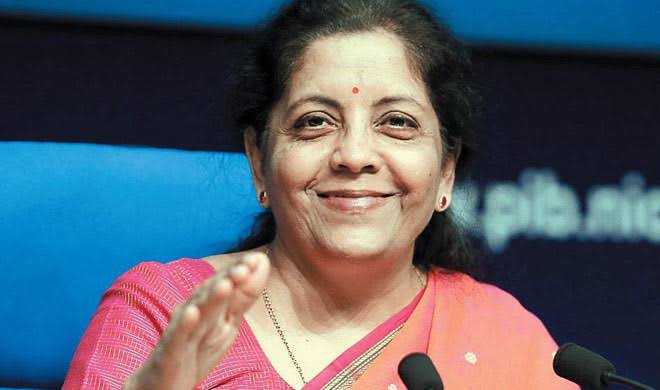
The Union Minister for Finance & Corporate Affairs, Nirmala Sitharaman presented the Economic Survey 2019-20 in the Parliament today. In this report, we shall look at some of the key highlights from the survey. Based on advance estimates, the GDP growth rate for the fiscal year 2019-2020 has been pegged at 5%. It suggests an uptick in the growth rate in the second half of the fiscal year.

As per the survey, the uptick in second half of 2019-20 is a consequence of ten positive factors like picking up of NIFTY for the first time this year, an upbeat secondary market, higher FDI flows, build-up of demand pressure, positive outlook for rural consumption, rebound of industrial activity, steady improvement in manufacturing, growth in merchandise exports, higher build-up of foreign exchange reserves and positive growth rate of GST revenue collection.

The economy of the country is expected to rebound in 2020-21 and grow at 6.0-6.5% and the survey implores the government to deliver on reforms to expedite the strong rebound. Global factors such as the Trade War between China and the USA and geopolitical tensions between the US and Iran have been said to contribute to the slowdown in the world economy. The survey points towards the fact that the world economy grew at the slowest pace since the economic crisis of 2009.

The government said, “Amidst a weak environment for global manufacturing, trade and demand, the Indian economy slowed down with GDP growth moderating to 4.8 per cent in first half of 2019-20, lower than 6.2 per cent in second half of 2018-19. A sharp decline in real fixed investment induced by a sluggish growth of real consumption has weighed down GDP growth from 2nd half of 2018-19 to 1st half of 2019-20.”

In 2019-20, the central government’s fiscal deficit was budgeted at Rs. 7.04 lakh crore (3.3 per cent of GDP), as compared to Rs. 6.49 lakh crore (3.4 per cent of GDP) the previous year. Furthermore, the Good and Services Tax (GST) collections grew by 4.1 per cent for the Centre during April-November 2019. However, the uptick started in October 2019 and has sustained its momentum in November December 2019 as well.

There has also been a rise in formal employment from 17.9 per cent in 2011-12 to 22.8 per cent in 2017-18 as per the latest records on employment data which points towards a formalization of the economy. The CPI inflation for the first half of the fiscal year was marked at 3.3%, slightly higher than the same in the second half of the previous year. At the same time, the Wholesale Price Index (WPI) inflation declined sharply from 3.2 per cent in April 2019 to 2.6 per cent in December 2019, reflecting the weakening of demand pressure in the economy. The growth in the agricultural sector showed a modest revival in the first half of FY 2019-2020.

The survey also noted that India ranks third in the number of new firms created, as per the World Bank. A12.2 % cumulative annual growth rate of new firms in the formal sector during 2014-18, compared to 3.8 % during 2006-2014, shows a sharp increase in the creation of new firms since the Modi government came to power. This was significantly higher in services than in any other sector.

The survey also suggests a strategy similar to the one used by China in order to capitalize on the creation of jobs and growth. It says that By integrating “Assemble in India for the world” into Make in India, India can raise its export market share to about 3.5 % by 2025 and 6 % by 2030 and create 4 crore well-paid jobs by 2025 and 8 crores by 2030. The survey recommends a “Specialization at large scale in labour-intensive sectors, especially network products” combined with a “Laser-like focus on enabling assembling operations at mammoth scale in network products”.

The Survey noted that India gained a trade surplus of 0.7 % per year for manufactured products and 2.3 % per year for total merchandise. It was also observed that India trails in areas such as Ease of Starting Business, Registering Property, Paying Taxes and Enforcing Contracts. For further progress in the area of Ease of Doing Business, the survey recommended “Close coordination between the Logistics division of the Ministry of Commerce and Industry, the Central Board of Indirect Taxes and Customs, Ministry of Shipping and the different port authorities.” It also recommended a more targeted approach towards individual sectors such as Tourism and Manufacturing.

The government’s decision to divest 53.29% of its shares in BPCL increased the national wealth by around Rs. 33,000 crore, the survey noted. It recommended aggressive disinvestment in Central Public Sector Enterprises (CPSEs) in order to bring in higher profitability, increase efficiency and competitiveness, and promote professionalism.

SIT questions three Jamia students Abdul Bari, Junaid Ashraf and Rahim Yusuf over association with Sharjeel Imam, were seen during riots too

0

Three Jamia student’s namely Abdul Bari, Junaid Ashraf and Rahim Yusuf have come under the Special Investigation Team’s (SIT) scanner for their alleged link with the mastermind of the Shaheen Bagh protests and a columnist at The Wire Sharjeel Imam, who is in police custody after his secessionist speeches declaring war against India.

According to a Times Of India report, the SIT has found that Imam was not alone when he addressed the crowd at Jamia Millia Islamia and Aligarh Muslim University two days prior to the anti-CAA violence in Jamia last month.

These three Jamia students had allegedly accompanied The Wire columnist. Police sources said that the three students, Abdul Bari, Junaid Ashraf and Rahim Yusuf were spotted during the riots and at the protest attended by Sharjeel Imam. Their role during the protest on December 13 is being probed. They were interrogated on Thursday by the SIT too.

Crime Branch team of Delhi Police have now recovered Imam’s phone from a house in Jehanabad district of Bihar. The police have been looking for Sharjeel’s mobile since the day the police arrested Sharjeel and finally, they have found his phone. Sources said during interrogation, Sharjeel first claimed that his mobile phone was in his room at JNU, but when police didn’t find it there, he claimed that it was at a friend’s house in Bihar.

While the video of his seditious speech has been sent for forensic analysis the Police are also probing Sharjeel Imam’s links to PFI and Islamic Youth Federation.

During interrogation, it was revealed that Sharjeel Imam is highly radicalized and wants to turn India into an Islamic state. Delhi Police sources to news agency ANI have said that he has admitted of giving the seditious speech he is accused of and has said that no tampering has been done with the videos. He has also reportedly admitted that he knew that he can be arrested for sedition but went ahead to deliver his speeches anyway.

Read: Police probing Sharjeel Imam’s links to PFI and Islamic Youth Federation: Here is all you need to know about these radical organisations

Further, the police inform that Imam has no remorse over his arrest. All his videos are being sent to a forensic science lab and his social media accounts are being examined, informed the police. As per reports, he said that the speech doing rounds on social media is not its full length. The police believe that his seditious speech was well planned and not in the heat of the moment.

Imam, who masterminded the Shaheen Bagh road blockade to protest against the CAA, was arrested by Delhi Police from Bihar after multiple FIRs were filed against him for his seditious speech. Addressing a gathering at Aligarh, Imam had urged Muslims to come together and cut off the Siliguri Corridor aka the chicken’s neck, which connects the seven northeastern states to rest of India. He had also earlier made provocative speeches where he had asked Muslims to come out and block roads of India and bring it to a standstill so as to get international media attention.

Imam is also a columnist with leftist propaganda website, The Wire.

It is time the ‘right-wing’ sets its own terms and frustrate ‘liberals’ with strategic silence: Here is the ‘why’ and ‘how’

Does it ever frustrate you? That even after losing two general elections in a row (and by massive margins), liberals still seem to hold a psychological edge over the right? That every time, we end up rushing to them, asking the ‘intolerance gang’ and ‘award wapsi gang’ and ‘tukde gang’ to speak up on this or that. As if their reaction is the only thing that matters. As if nothing means anything unless validated by a liberal.

And I am as guilty of this as anyone else. Perhaps even more guilty than the average online right-winger.

But please hear me out on this.

Let me give you a small example. In your social media interactions, perhaps even with friends on Facebook, you must have come across this phenomenon.

Phenomenon 1

Liberal posts something from <insert usual leftist website/news channel>

RW: X, Y and Z in that article are wrong. Point number 3, 4 and 7 in that article is hypocritical. This website is biased. Why won’t it talk about A, B and C?

Liberal: Shut up you idiot, don’t do whataboutism.

Phenomenon 2

RW posts something from a right-wing website or news channel.

RW: Hey liberal, see this!

Liberal: LOL! Fake news. F*ck it.

Now, neither side managed to convert anyone, as arguments rarely do. But there is a crucial difference between how a right-winger treats a liberal website and a liberal treats a right-wing website.

The liberal will dismiss the right-wing website as fake and stupid, without even clicking on it. 

The right-winger will actually read what the liberal posted, get angry and try to poke holes in it. 

Of course, it is a good thing to be informed about opposing viewpoints before picking on them. But do you see what happened here? The left-wing website got due respect and validation from *both* sides of the aisle. By engaging with it, the right-winger helped make the left-wing website appear like a genuinely authoritative source of information, providing a viewpoint worthy of respect.

The liberal, on the other hand, treated the right-wing website with outright contempt, refusing to engage with it, dismissing it as fake by definition.

Globally, how did all the ‘authoritative’ sources of information get to be far left? Like the New York Times or BBC? Precisely because the right-wing keeps walking into this trap every single time.

Read: The BBC research on ‘fake news’ is shoddy, unethical, dishonest, and actually an example of fake news

Do you remember the contempt from liberals when Deepak Chaurasia was attacked at Shaheen Bagh a few days ago? Republic TV crew have also been attacked, heckled, manhandled. Just yesterday, the Zee News crew was attacked and dragged by anti-CAA rioters. But see the liberal reactions: each one saying that Chaurasia or Zee News or Republic are not “journalists” at all.

Why not? Because Zee News refused to accept that people at Shaheen Bagh are magically receiving “kudrati khaana” directly from heaven?

But see how liberals don’t give even an inch to their adversaries, refusing to treat them with even an iota of respect.

Rather they make the right-wing run around in circles, arguing and begging with the liberals to say a word about this or that. As if liberals have a conscience.

The good news is that we can do to them exactly what they do to us. We can frustrate them with our strategic silence on what they want to talk about. Let them be the ones begging with us to utter a word on this or that. Let’s act like we can’t hear them. Let’s talk about what we feel is important and act as if we cannot even hear their outrage, let alone respond to it. Let them foam at the mouth.

What explains this psychological edge that liberals enjoy? It’s a deep-seated feeling of inadequacy that the left has sowed in us through its decades of control over every textbook, every newspaper, every magazine and every TV channel.

Read: Dear New York Times, India has chosen Modi 2.0, deal with it

This was their backup plan. They knew they could lose elections someday, but they would retain the right to “validate” things, an abstract power that cannot be measured in real terms. And as long as they held that power, the right, even if it won elections, would feel inadequate and insecure, seeking out their approval.

I’ll give you another example. Every now and then, there’s a liberal out there who calls the right-wing uneducated, illiterate or something like that. This leads to a flood of responses, with right-wingers announcing their educational degrees and professional success.

If you think about it, that’s a huge psychological victory for the liberal. It’s not like they didn’t know there were educated and successful people on the right. But they still managed to bait the right and get under their skin. They’re enjoying this.

Remember that the Indian liberal has spent decades rubbing their noses on the ground before a political dynasty whose leading lights have rarely managed to finish college.

Indira Gandhi wasn’t a college graduate.

Rajiv Gandhi wasn’t a college graduate.

Sanjay Gandhi wasn’t a college graduate.

Sonia Gandhi isn’t a college graduate!

How could the loyalists of this dynasty manage to make other people insecure about their education? Only because the other side let them do it.

If the right had treated liberals with as much condescension as the liberals treat the right, this would never have happened.

Now, let me give you an example of something that the right did very successfully, which can serve as an instructive model. In the 2007-2014 period, at the dawn of social media in India, the right-wing became an early adopter of possibilities offered by technology. They used this very successfully to turn the establishment candidate for ‘youth icon’ into a clown prince that everyone laughed at. And his career simply never recovered. Even liberals today are shy to defend him. Whenever it comes to him, it is liberals who are inadequate, feeling insecure, playing catch up, trying to prop him somehow. The outright contempt for him worked. It became the default across the political spectrum.

Of course, social media was a new thing. The right had the first-mover advantage. The left has certainly levelled the playing field long ago. But see the power of defaults. Despite the fact that the left has just as much power on social media, they struggle to validate their leader.  Every few days they dust him up and beg before the right for validation. Do you concede he has grown up now? How about now? Okay, now?

Now you can see the structural reasons why the left still has a psychological edge in everything else. They got to set all the defaults. The right is still very new in power. Like a teenager, they want to rebel against the established ways, but they also crave validation from the very generation they rebel against!

But all this can change. The right can set its own terms and absolutely refuse to give respect unless the respect is returned in equal measure. In other words, this is about growing up! Let’s make this happen.

Delhi Elections 2020: BJP releases manifesto, pledges 10 lakh jobs in Delhi, clean water, and women empowerment

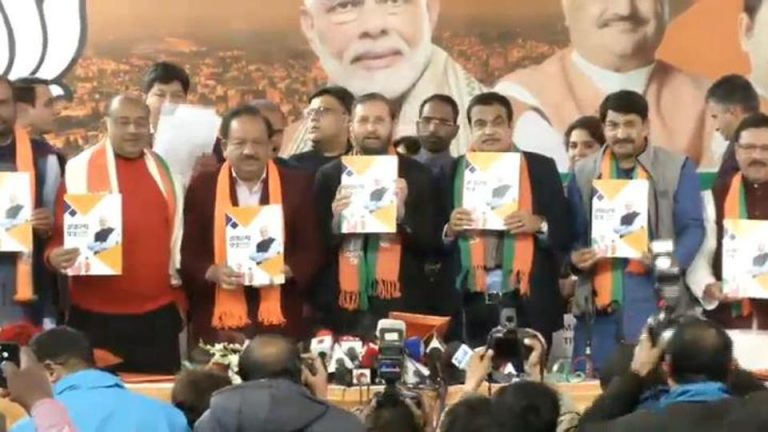
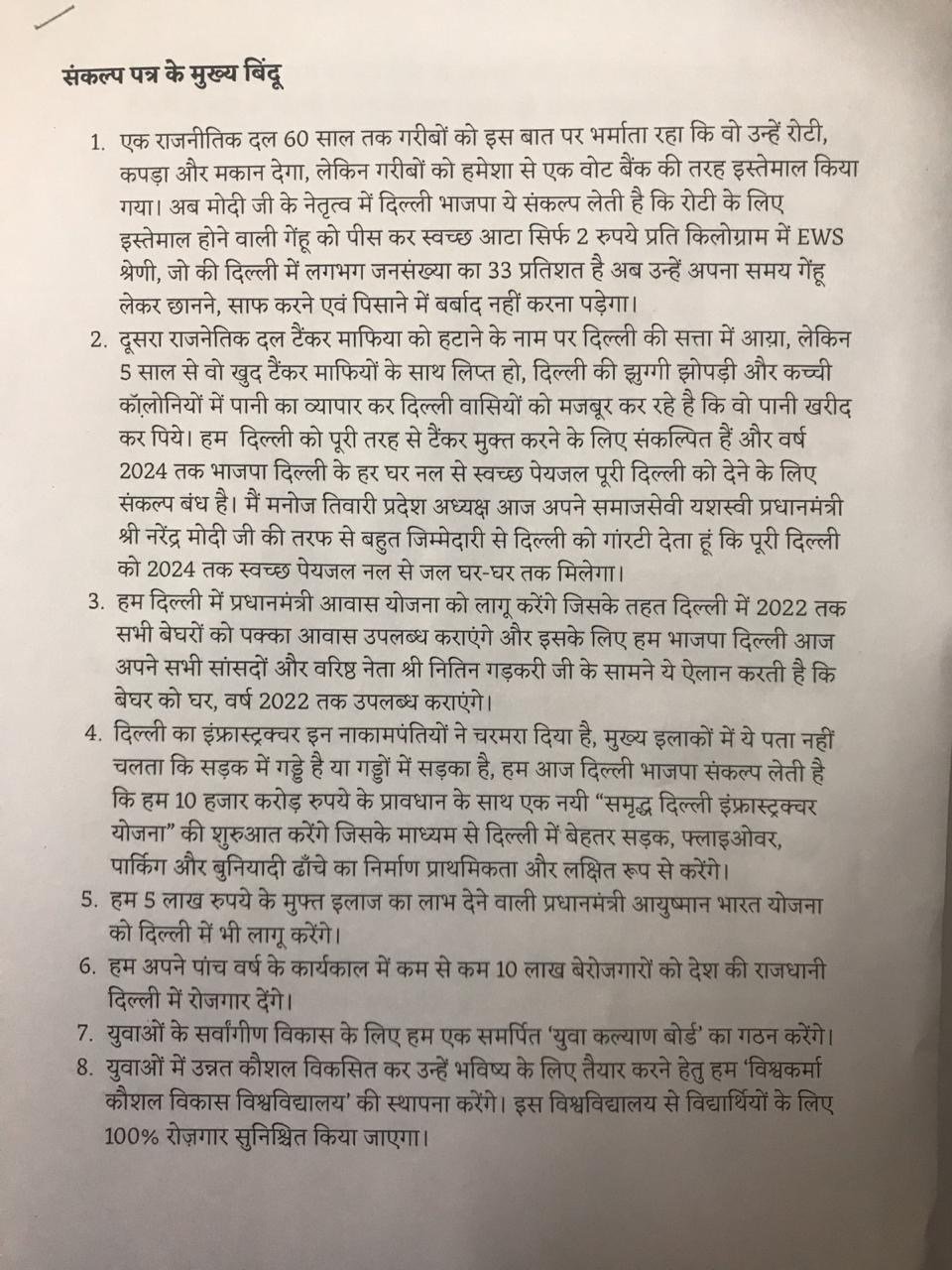
The BJP has released its election manifesto on Friday for the upcoming February 8 Delhi assembly elections. The manifesto which includes a host of promises for the residents of Delhi with the saffron party’s vision for the National Capital was unveiled by senior party leader Nitin Gadkari, Union minister Harsh Vardhan, Delhi BJP chief Manoj Tiwari, party’s Delhi election in-charge Prakash Javadekar, Rajya Sabha MP Vijay Goel and other leaders.

Delhi BJP chief Manoj Tiwari said that if BJP government is elected in the national capital, people in Delhi will get clean tap water and their dependency on water tankers will become zero. Also present at the event, Union Minister Nitin Gadkar, took a swipe at freebies given by AAP government saying, “Freebies will not help carve Delhi’s future, concrete steps were needed”.

The top focus of the ‘ Sankalp Patra’ is to reduce the air and water pollution in Delhi. The BJP, with its manifesto, has also made a range of promises to be fulfilled if it is elected to power in the state elections. Some of the salient points of the manifesto are:

  • Good quality wheat flour for Rs 2 per Kg for Economically Weaker Sections(EWS).
  • Ending the tanker mafia and providing every household in Delhi with clean tap water by 2024.
  • Provision of Rs 10000 crore to develop robust infrastructure in Delhi
  • Extension of “Ayushmaan Bharat” scheme that provides treatment worth Rs 5 lakhs to the residents of Delhi; providing a permanent house to homeless in Delhi by 2022 through “Pradhan Mantri Awaas Yojana”
  • Employment to at least 10 lakh unemployed youth in 5 years
  • 200 new schools to be built in Delhi; 10 new colleges to be opened
  • Cycles to be offered to girls from economically weaker sections studying in 9th standard to 12th standard
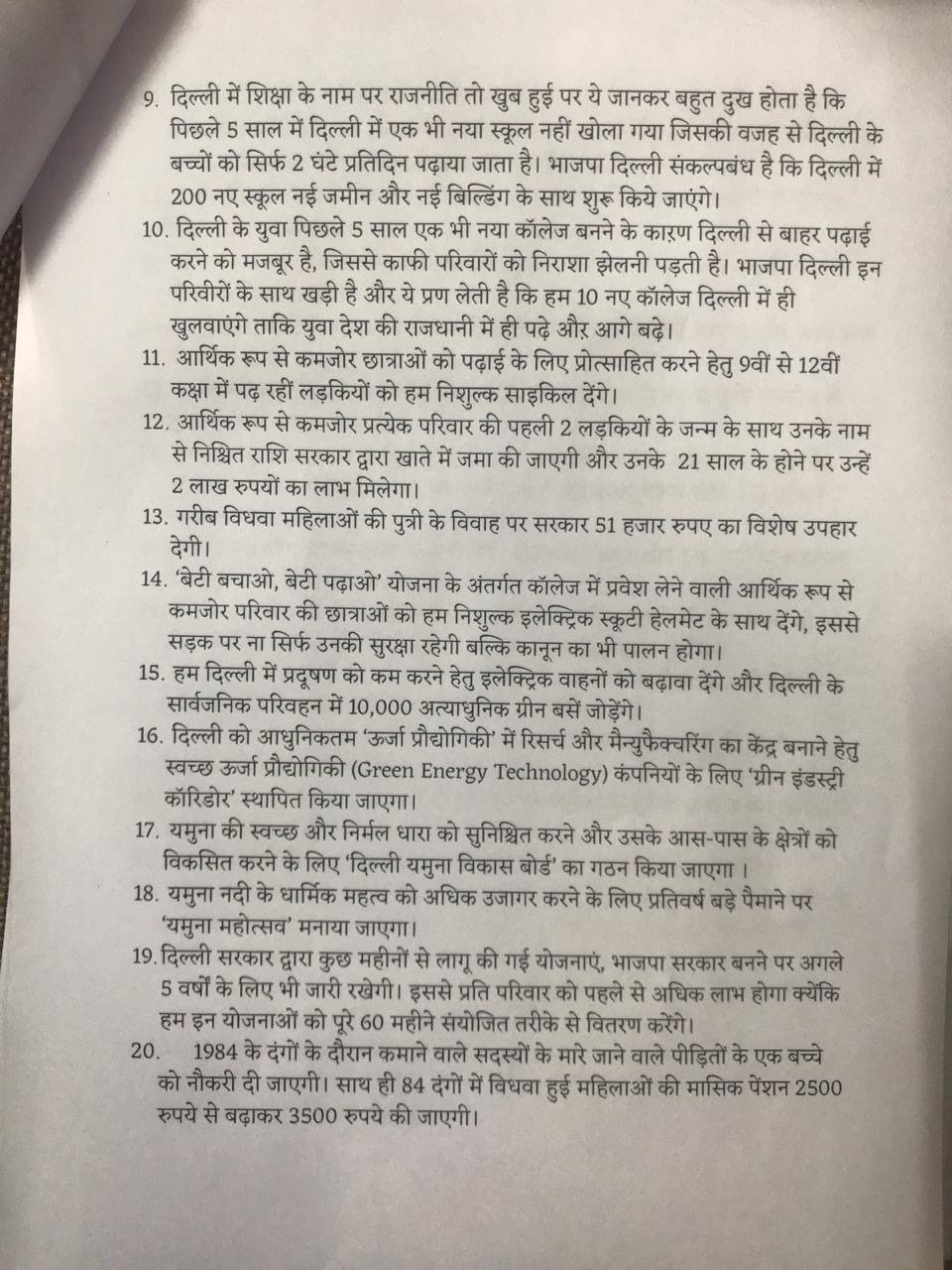
  • Financially weaker families to get Rs 2 lakhs in their accounts for first two daughters when they turn 21
  • The government will provide Rs 51000 for the marriage of the daughters of poor widows
  • Free electric scooty to be given to poor college girls
  • Boost to electric vehicles and the addition of 10000 advanced green buses for Delhi transport; Green Corridor to be established for Green Energy Technology companies
  • In order to create awareness about the religious significance of the Yamuna river, an annual celebration of “Yamuna Mahotsav” on a grand scale to be commenced
  • Monthly pension of widows whose spouses died in 1984 anti-Sikh riots to be raised from Rs 2500 to Rs 3500; Any 1 progenies of the 1984 Sikh riots victim to be granted with a job
  • Pension amount for Differently-abled, widows, poor women and elderly residing in Delhi to be increased
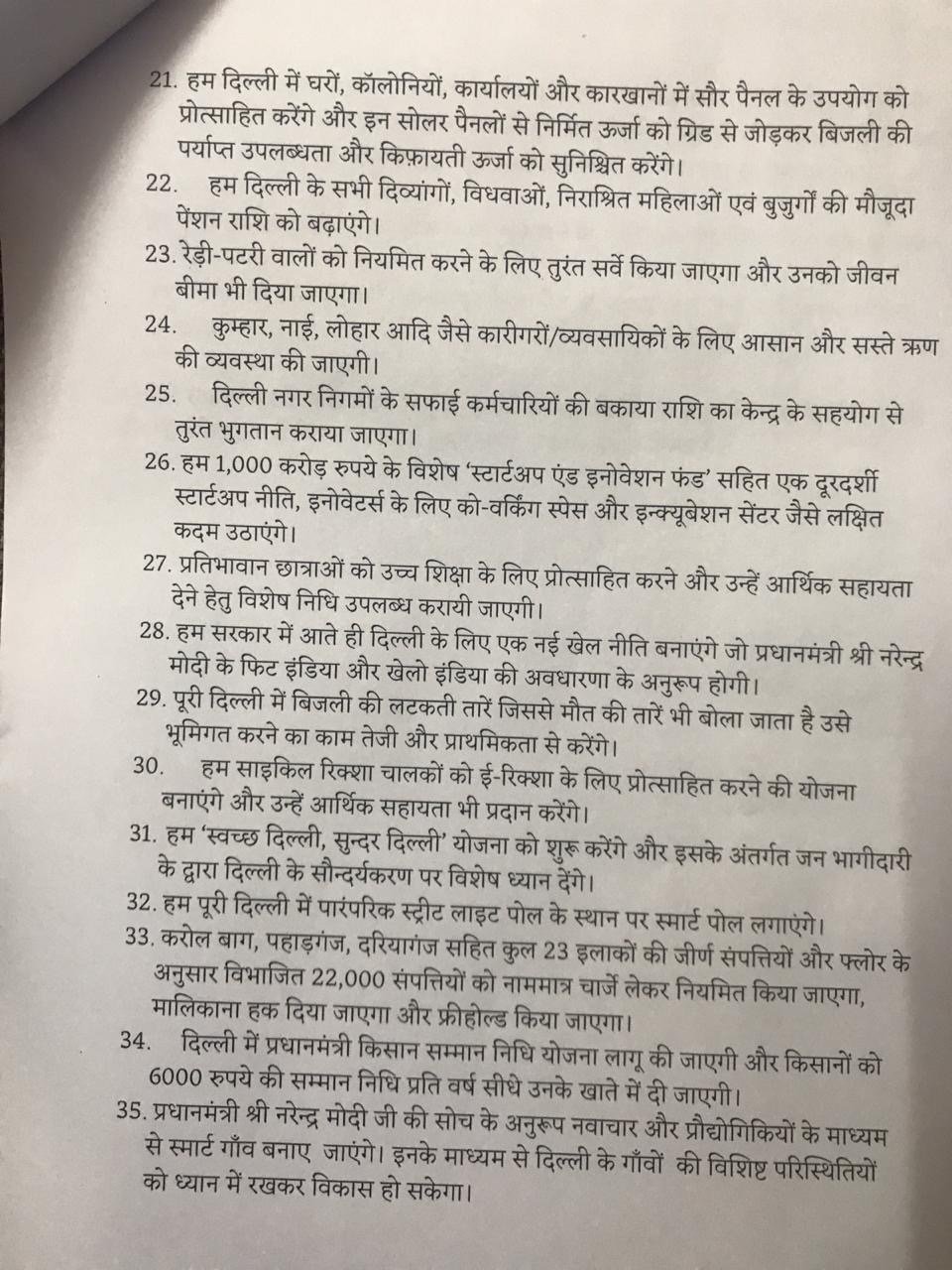
  • Rs 1000 crore to be earmarked for “Startup and Innovation Fund”, along with instituting a futuristic startup policy, co-working spaces and incubation centres
  • New sports policy in line with PM Modi’s “Khelo India” and “Fit India” to be instituted in Delhi
  • Encourage and financially support rick-shaw pullers to migrate to e-rickshaws
  • Beautification and modernisation of Delhi under ‘Clean Delhi, Beautiful Delhi’ project
  • PM Kisan Yojana  to be extended for Delhi farmers and Rs 6000 to be transferred annually to their accounts
  • Delhi’s villages to be developed under PM Modi’s ‘Smart Villages’ initiative
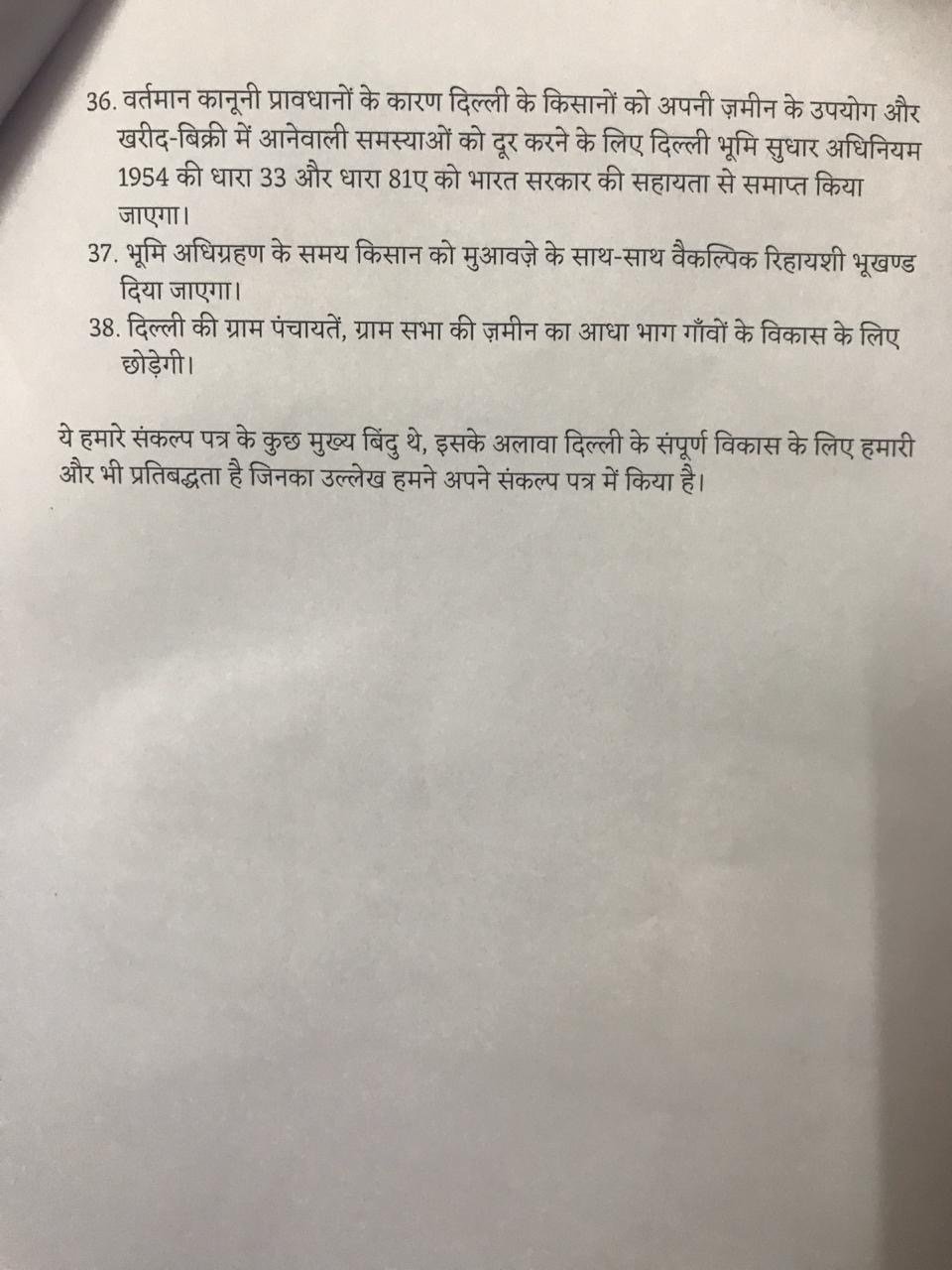
  • Section 33 and Section 81A of the Delhi Land Reforms Act, 1954, that poses problems for the farmers in Delhi in buying and selling of their lands, to be removed with the help of central government
  • Along with monetary compensation, farmers who lose their land to land acquisition to be provided with an alternative residential plot

Read: Delhi govt led by Arvind Kejriwal failed to deliver on 75% promises made: Detailed analysis of all 70 promises made in 2015

Delhi is scheduled to go to polls on February 8, 2020. The results of the assembly elections will be declared three days later, on February 11, 2020.

‘Happy that both houses of parliament passed CAA to fulfil the wishes of Gandhiji’: President Kovind addressing joint session of parliament

President Ram Nath Kovind inaugurated the budget session of Parliament by delivering a speech at a joint sitting of both the houses of parliament on Friday. Outlining the government’s policies and certain actions, agreements signed within the Indian state, President asserted that he expects that the decade will be India’s decade, and the century will be India’s century.

President Kovind started his speech with greetings of New Year and a new decade. Quoting Mahatama Gandhi’s dream of swaraj, Nehru’s dream of creating a modern society, Sardar Patel’s vision of Ek Bharat-Shreshtha Bharat, Deen Dayal Upadhyaya’s goal of Antyodaya, Ram Manohar Lohia’s vision of social equality, he asserted that we the people of India will make their dreams a reality.

President Kovind said he is glad that the performance of Parliament in the last seven months has set new standards for conducting its businesses.

He congratulated the government for enacting the laws against Triple Talaq ensuring justice to Muslim women and safeguarding their rights; the Consumer Protection Act providing new rights to the citizens; the Banning of Unregulated Deposit Schemes Act for protecting the savings of the poor; the Chit Funds AmendmentAct protecting the poor from fraudulent chit fund schemes; the law enhancing punishment for sexual offenses against children; Motor Vehicles Amendment Act aimed at reducing road accidents; and the law protecting the rights of the transgender persons, explaining the government’s strong commitment towards the population.

Appreciating the maturity displayed by the countrymen after the Supreme Court’s verdict on Ram Janmabhoomi, he said that the mutual discussions and debates strengthen democracy and any kind of violence in the name of protests weakens the society and the nation.

Thanking for the mandate given by the people of the country, President said we are committed to making a new India.

‘Sabka Saath, Sabka Vikas, Sabka Vishwas’

President Kovind said in his speech that following the mantra of ‘Sabka Saath, Sabka Vikas, Sabka Vishwas’, the government is working with sincerity. Free gas connections to 8 crores poor, houses to 2 crores poor, bank accounts to about 38 crores poor, free treatment facility of up to Rs 5 lakh to 50 crore people, insurance cover to 24 crore people and free electricity connections to over 2.5 crore people have been provided evenhandedly. The government has provided equitable access to benefits and facilities hence winning the support and trust of the people.

On Jammu and Kashmir,  President quoted Dr. Shyama Prasad Mukherjee’s concern raised when he was the Minister of Industry in the Government led by Jawaharlal Nehru, in the Lok Sabha: “In a democratic federal state, the fundamental rights of the citizens of one constituent unit cannot vary vis-à-vis the citizens of another unit. Are not the people of Jammu and Kashmir entitled to the fundamental rights that we have given to the people of India minus Jammu and Kashmir?”

He expressed gratitude by saying, “Today, after seven decades, the whole country is happy that the dream of Dr. Mukherjee has come true as the people of Jammu-Kashmir and Ladakh, the Dalits and women from that area have also got the same rights as the people in the rest of the country. The abrogation of Article 370 and Article 35A of the Constitution by a two-thirds majority in both the Houses of Parliament is not only historic but has also paved the way for the equitable development of Jammu-Kashmir and Ladakh”.

The desire of paying respects at the Kartarpur Sahib for many years has been gratified. The Government has built the Kartarpur Sahib Corridor in record time and dedicated it to the nation on the occasion of the 550th birth anniversary of Guru Nanak Dev Ji. The 400th birth anniversary of Shri Guru Tegh Bahadur Ji will also be celebrated in a befitting manner with full grandeur and devotion.

Talking about north-east he stated that North-east has an emotional disconnect more than a physical distance that disheartened the people of the region. He stated that the Government has been working tirelessly to transform the situation during the last five years. As a result of these efforts of the Government, by 2022, the capitals of Sikkim, Mizoram, Manipur, and Nagaland will be connected to the rail network. The work on the Agartala-Akhaura rail link is also progressing at a fast pace. He declared the construction of the new airport at Holongi in Arunachal Pradesh by 2022.

The Central and Assam Governments have recently signed a historic agreement with the Bodo Organizations to bring an end to the 5 decade-old Bodo dispute. With this agreement, a complex problem, that has claimed more than 4000 lives, has been resolved. He declared that after this agreement, the Government will spend Rs1500 crore on the development of the Bodo community. Similarly, another landmark agreement between Tripura, Mizoram, the Central Government, and the Bru community has not only resolved a decades-old problem but has also ensured a secure life for thousands of people belonging to the Bru community.

Read- President Ramnath Kovind holds a mirror to Indian media at RNG awards, advises them to not indulge in fake news

Citing the Citizenship Amendment Act President said India has always believed in the principle of equal respect for all faiths. In the environment prevailing in the aftermath of partition, the Father of the Nation Mahatma Gandhi had said: “Hindus and Sikhs of Pakistan, who do not wish to live there, can come to India. It is the duty of the Government of India to ensure a normal life for them.” Saying that the parliament fulfiled the wishes of Mahatma Gandhi by enacting the CAA, the president Kovind said, “the father of our nation – Mahatma Gandhiji – had said after partition that Hindus, Sikhs, Buddhists, Jains, and other religious minorities in Pakistan and Bangladesh (East Pakistan) should be granted citizenship of India if they came seeking refuge. We must respect and honour the wishes of the father of the nation. To that effect, I am happy that both houses of Parliament passed the Citizenship Amendment Act to ensure Bapu’s wishes come true”. While condemning the atrocities on the minorities in Pakistan, He urged the world community to take cognizance of it and take the necessary steps in this regard.

‘We are committed to the goal of making India a USD 5 trillion economy’.  

President expressed his commitment to attain the goal of making India a USD 5 trillion economy. He said, ” Government is making efforts at all levels of the economy, in consultation with all stakeholders. In spite of global challenges, the fundamentals of the Indian economy are strong. Our foreign exchange reserves have reached a historical high of over USD 450 billion. The inflow of Foreign Direct Investment to India is also on the rise. As compared to last year, FDI has increased by USD 3 billion between April and October this year”.

He affirmed that In the first half of this financial year, 12 Public Sector Banks have reported profits. Due to the Insolvency and Bankruptcy Code, nearly Rs 3.5 lakh crores have also been recovered by the banks and other institutions. The reduction of corporate tax and the codification of Labour Laws will increase the ease of doing business in India although In the World Bank’s ease of doing business rankings India has upsurged 63rd position moving by 79 places. In the Resolving Insolvency rankings India has moved from 108th to 52nd rank and in the Global Innovation rankings 74th to 52nd rank. India has improved its international ranking by 10 points in the Logistics Performance Index. India has moved from 52nd to 34th position in the World Economic Forum’s Travel and Tourism Competitiveness rankings.

He further added, “The fundamental mantra of independence was a Self-reliant India. A self-reliant India is possible only when every Indian takes pride in every product made in India. My Government believes in the mantra of ‘Buy local for a better tomorrow’. I urge every representative of the people, from Panchayat level to the Parliament, and every Government in the country, to transform the philosophy of ‘Buy local for a better tomorrow’ into a movement. I also urge every Indian to give priority to local products. By using locally manufactured products, you will be able to help the small entrepreneurs in your area to a great extent.”

He mentioned, “India is making rapid strides in the electronics manufacturing sector in particular. National Policy on Electronics has been formulated to give further impetus to the manufacturing of mobile phones, TVs and other electronic devices. The value of electronic equipment manufactured in the country has increased to Rs 4 lakh 58 thousand crores in 2018-19, as against Rs 1 lakh 90 thousand crores in 2014-15. In 2014, there were only 2 companies manufacturing mobiles in India. Today India is the second-largest mobile manufacturing hub in the world. Make in India is also being encouraged by the Government in the automobile sector and railways. Full indigenous manufacturing of modern trains like Vande Bharat and Tejas Express is in progress”.

The speech of President Kovind to the joint session of parliament was delivered a day before the tabling of the budget that observed ruckus in Parliament.