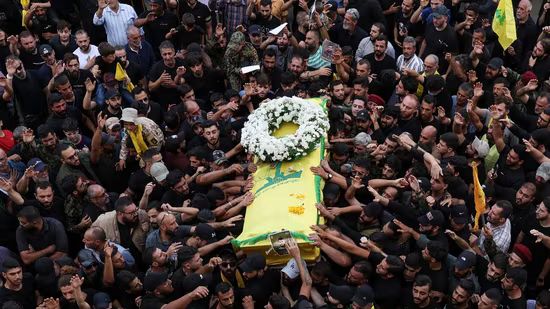
A major revelation has surfaced regarding the pager blast and walkie-talkie explosion in Lebanon. Hezbollah’s internal military intelligence documents reveal that 879 of its members were killed in the communication equipment explosions, including 131 Iranians and 79 Yemenis. Among the dead are 291 senior Hezbollah officials.
#BREAKING: Hezbollah’s Internal Military Intelligence Document claims 879 Hezbollah members were killed as a result of explosion of its internal communication network devices such as pagers and walkie-talkies. 131 Iranians, 79 Yemenis, of which 291 senior officials were killed. pic.twitter.com/bJADRz8Y9T
Although Hezbollah publicly stated that the explosions caused significant damage to their communication resources, initial reports had indicated that around 9 people were killed and 3,000 injured in the pager blast.
However, the information from Hezbollah’s intelligence documents is shocking, with the death of 879 members being nothing short of a catastrophe for the organisation. Hezbollah leader Nasrallah has threatened Israel, stating that it has crossed all red lines and will have to pay a heavy price for these attacks.
Late on Thursday, Israeli warplanes launched their most intense strikes on southern Lebanon in nearly a year, escalating the conflict with Hezbollah, a Lebanese armed group, despite calls for restraint.
The heavy bombardment came after earlier attacks in the week, which Lebanon and Hezbollah blamed on Israel. These attacks destroyed Hezbollah’s communication equipment, resulting in 37 deaths and around 3,000 injuries in Lebanon. During Thursday night’s operation, Israel’s military reported that its jets targeted hundreds of multiple-rocket-launcher barrels in southern Lebanon over a two-hour period, which were poised to be launched toward Israel.
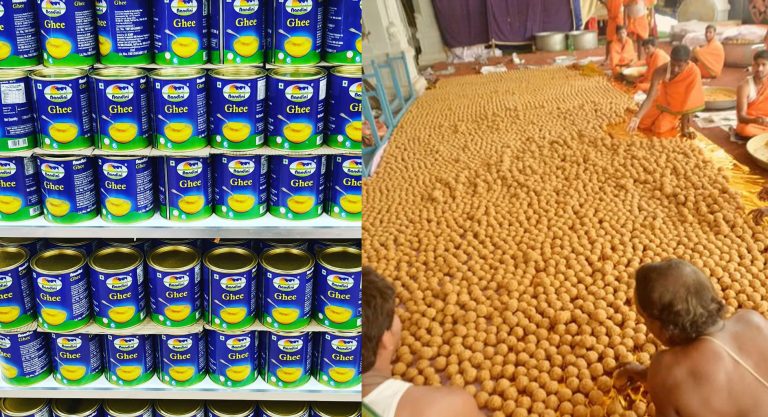
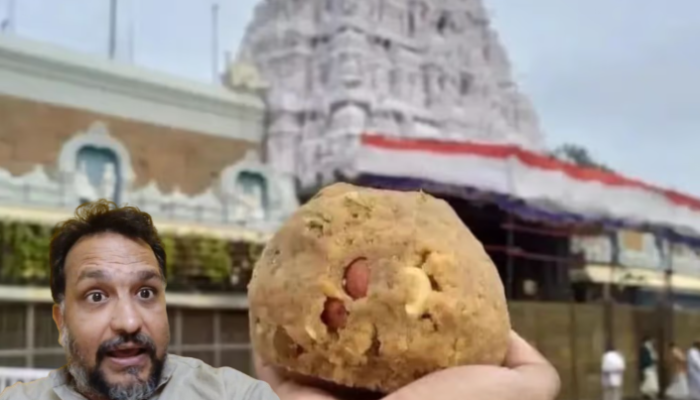
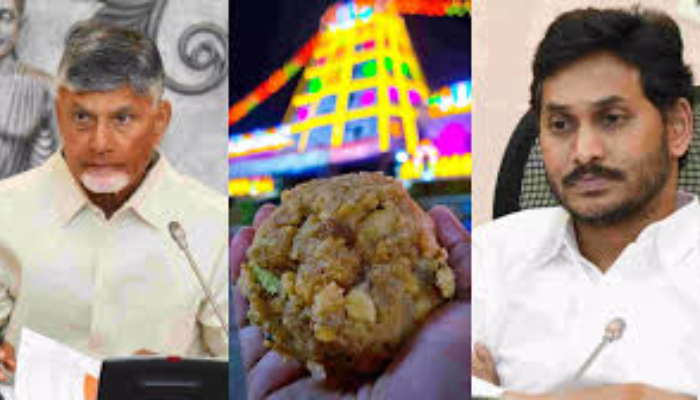
A tremendous outcry ensued in Andhra Pradesh following CM Naidu’s claim that animal fat was used in the ghee used to make the famous Tirupati prasadam. He claimed that poor components and adulterated ingredients were utilized to make the laddus during the previous YSRCP administration. Later, a lab report confirmed the presence of beef fat, pig fat and fish oil in the laddus. However, the state government led by YS Jagan Mohan Reddy has dismissed the assertions.
“Even Tirumala laddu was made with substandard ingredients…they used animal fat instead of ghee,” Naidu alleged during an NDA legislature party meeting in Amaravati on Wednesday, September 18, sending shockwaves across the entire Hindu community. Lord Balaji temple in Andhra Hills is one of India’s richest temples; around 3.5 lakh laddoos are produced daily at the temple. Every day, approximately 400-500 kg of ghee, 750 kg of cashew nuts, 500 kg of raisins, and 200 kg of cardamom are needed to make the laddoos.
Following this controversy, the ruling Telugu Desam Party in Andhra Pradesh affirmed that the laboratory reports from Gujarat had confirmed that the previous YSRCP government used animal fat in the Tirupati prasadam distributed to over crores of Hindu devotees. In the midst, the Karnataka Milk Federation (KMF) additionally claimed that it had been supplying Nandini brand ghee to the Tirumala Tirupati Devasthanams (TTD) only after the regime change.
In the year 2023, during the YS Jagan Mohan Reddy’s government, KMF chairman Bheema Naik stated that the TTD was procuring low-quality ghee. At that time, the then-TTD executive officer, AV Dharma Reddy, denied the charges, stating that the temple body purchased cow ghee from suppliers who met the twin requirements of uncompromising quality and lowest cost (L1 bidder) through a rigorous e-tender procedure.
However, a report by the Centre for Analysis and Learning in Livestock and Food (CALF) laboratory at the National Dairy Development Board (NDDB) in Gujarat’s Anand revealed that fish oil, beef tallow (fat) and lard (pig grease) were used in the Tirupati laddus.
This is not a Laboratory Report.
This is a SLAP
This is a Slap on you This is a Slap on me This is a Slap on our ancestors This is a Slap on every Hindu alive This is a Slap on every Hindu Soul
Nandini’s supply to TTD stopped after Congress raised the prices of milk?
It is crucial to note that the Congress party had increased the prices of the Nandini milk which led to TTD rejecting the price bidding for its ghee. Amid the controversy of Amul and Nandini, in August 2023, the Congress had accused the BJP of allegedly threatening the local Nandini brand and allowing the entry of Amul into the state. However, the BJP had stated that the Congress was stopping the supply of Nandini ghee to the Tirumala Tirupati Devasthanam (TTD) because of its indifference towards Hindu beliefs and devotion. Party leader C T Ravi stated that the state government’s increase in the price of Nandini milk made the Karnataka Milk Federation (KMF), which controls the brand, uncompetitive in the bidding process.
In July 2023, the Karnataka government gave its nod to increase the price of Nandini milk by Rs 3 per liter. In a statement, Karnataka CM Siddaramaiah said, “The milk [toned] that costs Rs 39 will be sold at Rs 42 per liter from August 1. Elsewhere, it is sold between Rs 54 and Rs 56 per liter. In Tamil Nadu, the price is Rs 44 per liter.”
Following this, the then Karnataka Congress CM Siddaramaiah stated that the supply of Nandini milk to the TTD had stopped during the BJP rule in 2021. However, the KMF officials confirmed that the last supply it made was in the year 2021 and later could not meet the bid requirements due to the price raised by the Congress government. KMF chairperson Bheema Naik stated that the Nandini brand is known for its quality and it could not be compromised on pricing. He stated that the organization had thus opted out of the tender procedure after 2021.
Senior KMF officials stated to the media that the tender procedure occurs every six months and was recently held in March 2023. According to officials, KMF began supplying Nandini Ghee to the TTD in 2005, and the last time its offer was partially successful was in 2021 when it was awarded 35% of the supply contract following talks. “A bid was submitted in 2022, but it was unsuccessful. We did not bid in 2023,” a top official stated.
The Chief Executive Officer of TTD, Dharma Reddy also confirmed that the KMF had not participated in the bid in the year 2023 and that the last it was awarded a contract was in the year 2021. Notably, it was the year when the BJP was in power. The prices of Nandini ghee had been raised from Rs 610/per kg to Rs 620/kg. However, the supply rate for the TTD had been increased from Rs 392/kg to Rs 470/kg.
After the controversy erupted following Naidu’s statements, Hindu devotees claimed that the quality of the prasadam had improved recently and that it had deteriorated in the past 3-4 years. “I have been coming here for the last 10 years. Earlier, the quality of the laddus used to be good but it deteriorated in the last 3-4 years. Today, I came for darshan and the taste of the laddu is very good. The ghee quality is also good,” one of the devotees was quoted as saying at Tirupati temple.
VIDEO | Tirupati laddu controversy: Pilgrims express their views over Andhra Pradesh CM N Chandrababu Naidu's claim that animal fat was used in Tirupati laddus during the previous government.
"I have been coming here since last 10 years. Earlier, the quality of the laddus used… pic.twitter.com/4Hs1pLxinm
Discriminatory practices kept Nandini out of TTD: Naik
After the recent controversy, KMF president Bheema Naik stated that discriminatory practices forced Nandini ghee out of the renowned Tirumala laddoo. “The laddoos will not be the same anymore. Nandini provides the best ghee in the market and goes through all the quality checks. If any brand is supplying ghee for a price lower than Nandini, I assume that the quality will be compromised,” he said.
The recent statement by Naidu has sparked a political blame game, with the BJP accusing the Karnataka Congress government, led by Siddaramaiah, of meddling in the affairs of the Tirupati temple. There are also charges of compromised laddoo quality and the YSRCP government pressing the temple board to use ghee from a different brand.
BJP’s Shobha Karandlaje posted on X that the TTD had deliberately bid on a lower price compromising on the quality. She indicated that the decision had been taken in the board meeting by the TTD due to price concerns. “We are deeply hurt by the news that animal fat was used in the holy prasad. It’s a conspiracy against the Hindu faith and is strongly condemnable!! The Andhra government should take strict action against Jagan Reddy and his team,” she said.
We are deeply hurt by the news that animal fat was used in the holy prasadam. It’s a conspiracy against Hindu faith and is strongly condemnable!! The Andhra government should take strict action against Jagan Reddy and his team. 2/2
BJP’s T Raja Singh also condemned the issue saying, “This is a direct assault on our rich cultural and religious heritage, which cannot and should not be tolerated. The time has come for us to unite and protect our sacred traditions from being undermined.”
It has come to light that Beef Fat and Fish Oil are being used in the sacred #TirupatiLaddu prasadam under the governance of YSRCP in Andhra Pradesh.
This is a direct assault on our rich cultural and religious heritage, which cannot and should not be tolerated.
However, as per the reports, following Chandrababu Naidu’s direction to improve the quality of laddoos, the KMF resumed supplying its famous Nandini ghee to TTD beginning in August. The development occurred after Naidu’s TDP swept to victory in Andhra Pradesh in the July Assembly elections, garnering 167 seats in coalition with the BJP and Jana Sena.
On 19th September, a lab test report found that beef tallow, fish oil, lard (pig fat) and palm oil among other things, were being used to make the laddus, which are distributed as prasadam at the prominent Sri Venkateswara temple in Tirupati under YSR Congress Party (YSRCP) government.
The report from the Centre of Analysis and Learning in Livestock and Food (CALF) lab at Gujarat’s National Dairy Development Board read, “The S value of all equations for sample coded as AB023654 are falling out of the range as prescribed by the method. If any S-value falls outside the corresponding limits, consider the sample to contain a foreign fat.”
The Tirumala Venkateswara Temple which is dedicated to Lord Venkateswara, an incarnation of Lord Vishnu is among the most revered Hindu temples worldwide. The temple is well-known for its grand rituals and laddu prasadam which is considered as a divine delicacy. Therefore, the shocking development has infuriated the devotees. However, the notorious Dravidianists have found the sensitive matter to poke fun at Hindus and mock them over the startling discovery.
One such person named Piyush Manush who describes himself as an environmentalist was seen mocking the transgression of the faith of the Hindu community, reported The Commune. “Did you get a good laddu? Just a few days back, we got cream bun a few days ago. We got a good bun. All these days you kept looking at others’ plates if they were consuming beef, you even checked their refrigerators, and you even killed. At least 100 crore people would have visited Tirupati. They would have got laddus. What happened? Did you enjoy the beef? Did you like it? You are done. At least now do not look at another person’s plate. Go do your work. Perumal himself gave a good laddu to you,” he stated in a video on X.
Notably, on 18 September Andhra Pradesh Chief Minister Chandrababu Naidu accused the previous YS Jagan Mohan Reddy administration of using animal fat in making laddus served at the renowned Hindu temple during his address at the National Democratic Alliance (NDA) legislative party meeting. “They (YSRC government) not only provided substandard food to the devotees, such as Anna Prasadam in Tirumala, but also used inferior quality ingredients to make Prasadam, which is offered to Lord Venkateswara. Instead of using pure ghee, they used animal fat,” he charged.
The chief minister further added, “Today, we are using pure ghee and cleansed the system in the temple. Quality of Prasadam and food have improved and steps are being taken to make further improvements.” His statement was eventually validated by the test findings. The conclusions drawn by the report revealed that there were residues of animal fat in the ghee used to prepare iconic Tirupati laddu prasadam. Furthermore, ingredients like soybean, sunflower, olive, rapeseed, linseed, wheat germ, maize germ, cotton seed, coconut, palm kernel fat, and palm oil were also used in making the laddus.
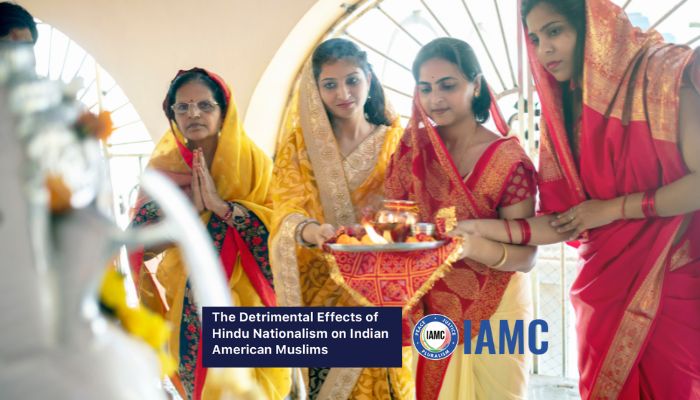
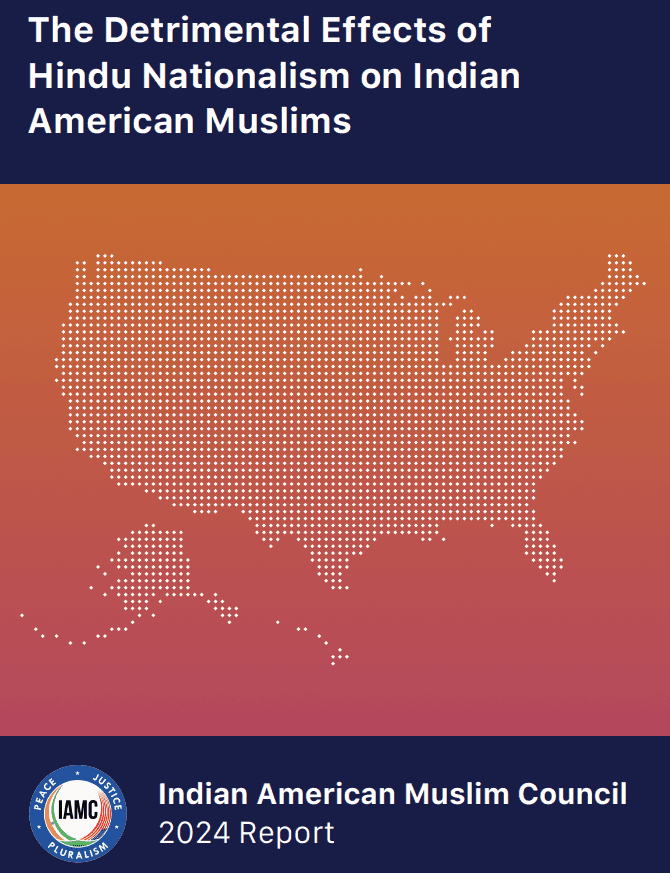
Indian American Muslim Council (IAMC), a Washington-based Islamist organisation with ties to terror outfits, has yet again resorted to anti-Hindu and anti-India propaganda.
In its latest attempt at demonising Hindus living in the United States, IAMC conducted a ‘survey’ [pdf] with the ulterior motive to brand the religious minority group as ‘racist’, ‘intolerant’ and ‘Islamophobic.’
While Indian-origin Muslim Americans have a population of 2.41 lakhs in the US, the sample size chosen by IAMC was extremely small i.e. 950 or ~0.003 % of the population.
Screengrab of the malicious IAMC survey report
While the Washington-based Islamist outfit is not new to spreading canards about India, it chose to link the supposed ‘rise of Hindu nationalism in India’ to alleged ‘discrimination’ against Muslims by Hindus in the US.
The nefariously designed survey was meant to solicit adverse responses from Indian-origin Muslim Americans about their Hindu counterparts and then attribute the same to the Narendra Modi-led-BJP government in India.
“A significant majority of respondents reported experiencing harassment, discrimination, or prejudice from Hindu friends or social contacts over the past decade. Discrimination was also prominent in professional settings, with a majority of respondents experiencing biased treatment from Hindu colleagues,” IAMC claimed albeit without evidence.
Vague, subjective opinion presented as ‘absolute truth’
OpIndia reviewed the ‘survey’ (which has been titled – ‘The Detrimental Effects of Hindu Nationalism on Indian American Muslims’) conducted by the Islamist outfit and found no specific cases that could remotely establish ‘discrimination’ in any form or manner.
“Respondents reported feelings of isolation, fear, and emotional fatigue, with particular concern for how this hostile environment affects younger generations,” IAMC did not provide details on how behaviour of Hindu Americans impacted their Muslim counterparts.
It relied on vague, subjective and perceived notions of ‘mistrust’ and ‘social isolation’ from its respondents to conclude a ‘noticeable deterioration’ in relationships, which the Islamist outfit shrewdly associated with the rise of BJP in India.
Ironically, it also included trolling on social media as a form of ‘harassment’ faced by Indian-origin Muslim Americans. The said trolls could be based anywhere and could have any religious affiliation. But the Islamist outfit was quick to point fingers at Hindu Americans.
“Digital platforms have become hotspots for discrimination, with 48% of respondents reporting harassment on social media, including Facebook, WhatsApp, and LinkedIn. Respondents described these experiences as emotionally exhausting, contributing to feelings of isolation and hostility,” IAMC alleged.
One interesting point to note is that the ‘survey’ also attempted to rally the support of the Christian community in the hounding of Hindu Americans and present the Muslim community as its ally.
“An overwhelming 94% of respondents strongly agreed that Hindu nationalism poses a threat to religious minorities, particularly Muslims and Christians, in both India and the US,” IAMC claimed based on the response of 950 random, Indian-origin Muslim Americans.
IAMC survey designed as per agenda
In line with its sinister agenda, IAMC dedicated a significant part of its ‘survey report’ to buzz words – Hindu nationalism (64 times), India (35 times), Hindutva (16 times), BJP (8 times), RSS (5 times),
All these keywords were packed in a 24-page report. There were also sweeping false assertions about the Citizenship Amendment Act (CAA), the National Register of Citizens and how it was a ploy to “potentially disenfranchise its Muslim citizens”.
The choice of Muslim respondents, to opine on the effect of ‘Hindu nationalism’ originating from India, was also interesting. 92% of them described Faith (aka Islam) as ‘very important.’
Based on the response of this particular cohort of individuals, IAMC concluded, “A staggering 80% of respondents noted that they feel less comfortable in Indian American cultural spaces since the rise of the Bharatiya Janata Party (BJP) in India…Not a single respondent reported feeling more comfortable.”
With its staggering sample size of 950 Indian-origin Muslim Americans, the Islamist outfit thus concluded, “This data speaks to the corrosive effects of Hindu nationalism on social cohesion within the diaspora.“
IAMC survey shows anything can be deemed ‘Islamophobic’
Some of the ridiculous survey questions pertained to social and cultural events in the US. It determined the level of comfort experienced by Muslims in such public gatherings in the North American country, based on the incumbent government in far-flung India.
“Since Narendra Modi and the Bharatiya Janata Party (BJP) came to power in India in 2014, do you feel more comfortable, less comfortable, or about the same in Indian and Indian American cultural and social events/spaces in the United States?” read one of the questions.
One respondent told IAMC that Hindu nationalism affected him and his family but did not care to elaborate. Another claimed he lost good, and old friends to alleged “Islamophobia and hatred brewed by the BJP government.”
He did not provide any instance that could lend any credence to his unsubstantiated claims. One respondent was quoted as saying, “[Hindu nationalism] has led to isolating ourselves from [the] broader Hindu community.” Yet again, there is no evidence to back the claim.
The pattern is rather evident from the survey. Subjective opinions of individuals in a personal or professional setup can be interpreted as the truth.
The infamous case of ‘caste discrimination in Cisco’, which was based on similar subjective lies, has now fallen apart due to lack of evidence. Given that the IAMC ‘survey’ is not a court case, respondents do not need to provide any shred of evidence to back their claims.
Brazen generalisation passed off as the reality
A worrisome conclusion by IAMC was the generalised determination of perceived ‘harassment, discrimination, or prejudice’ against Indian-origin Muslim Americans by their Hindu counterparts.
“This discrimination was not confined to casual interactions but also extended to professional settings, where 70% reported experiencing similar treatment from Hindu colleagues. The experiences ranged from social exclusion to direct harassment,” the Islamist outfit brazened out.
As proof, the IAMC cited instances where Indian origin Muslim respondents were not offered promotions or laid off from jobs. It alluded to the point that the managers belonged to the Hindu Faith and thus possibly discriminated against their Muslim counterparts.
Interestingly, the possibility of mediocre job performance, availability of better candidates or structural changes within a company leading to layoffs was not taken into consideration before attributing sinister motives to Hindu managers and senior employees.
More fearmongering about Hindu Americans
Given that many Indian-origin Hindu Americans work in respectable positions within the US government, IAMC chose to fearmonger about them and their potential to ‘influence’ US politics.
A radical Muslim respondent claimed, “Hindu extremists are infiltrating the US government, State Government as elected representatives… they are dangerously infiltrating US universities as teaching staff and in admission committees.”
Another anti-Semitic respondent, quoted in the survey report, alleged that American Hindus were trying to eradicate Islam like Zionists ( a term used to demonise Jews advocating for Israel).
Evidently, the Washington-based Indian American Muslim Council (IAMC) wants its supporters to develop resentment and hostility towards accomplished Hindu Americans. The notorious ‘survey’ is an extension of this very sinister agenda.
A little about IAMC
According to the Hindu American Foundation (HAF), the Indian Americal Muslim Council has links [pdf] with the banned Islamic terror outfit, Students’ Islamic Movement of India (SIMI).
Besides, the Indian American Muslim Council has ties with Lashkar-e-Taiba (LeT) and Jamaat-e-Islami (JeI) through its founder Shaik Ubaid. The IAMC is a Jamat-e-Islami-backed lobbyist organisation claiming to be a rights advocacy group.
Shoot and scoot strategy ?
Baseless allegation of 'crime against humanity' is hurdled against CM #YogiAdityanath, who won a thumping re-election in India's most populous state.
In the past, it had reportedly collaborated with and even paid money to various groups in the USA to get India blacklisted by the USCIRF (United States Commission on International Religious Freedom).
IAMC had been caught spreading fake news and misinformation to further the Islamist cause in India. It had also been slapped with the UAPA in 2021.
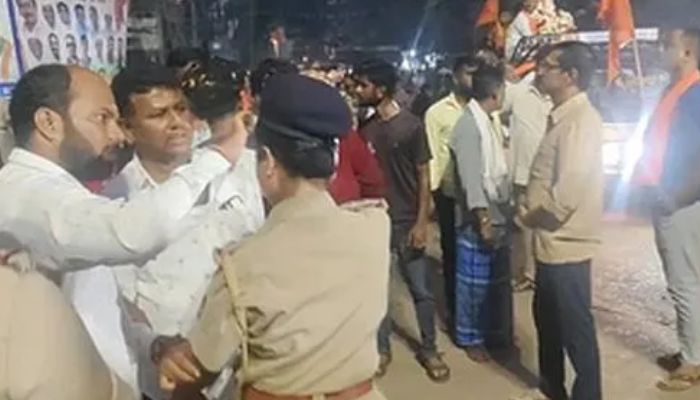
On Thursday, tensions in Karnataka’s Davanagere rose as stones were pelted during the Ganpati Visarjan [immersion] procession of idol placed at Venka Bhovi Colony. Four police officers, including a police inspector and a sub-inspector, and constables Raghu and Annapoorna were injured, and several home and vehicle windows were shattered in the violence.
As the Ganpati Visarjan procession arrived at the Chamarajapete circle in Davanagere, the Hindus raised Jai Shri Ram slogans. This somehow infuriated the Muslims who started raising Islamic slogans and a verbal clash ensued. Soon after, stones were hurled at the Hindu procession.
Superintendent of Police Uma Prashanth, who was on the scene, caned the mob to bring the situation under control. The Hindu organisation members requested that the police take action against people who pelted stones at the Hindu procession. Police teams were deployed in the area to prevent any unpleasant situations, and shops were closed as a precautionary measure.
Reports say that after one Satish Poojari made a statement during a recent protest in Nagamangala, Mandya district a Muslim youth abused and challenged Hindus threatening to bring the procession to Bethur Road.
Consequently, Hindu organisations gathered at Venkateshwara Circle on Jagaluru Road. When the immersion procession, led by a DJ set, approached Aralimara Circle, both Hindus and Muslims raised slogans, and soon after the Muslim side began pelting stones on the Hindu procession.
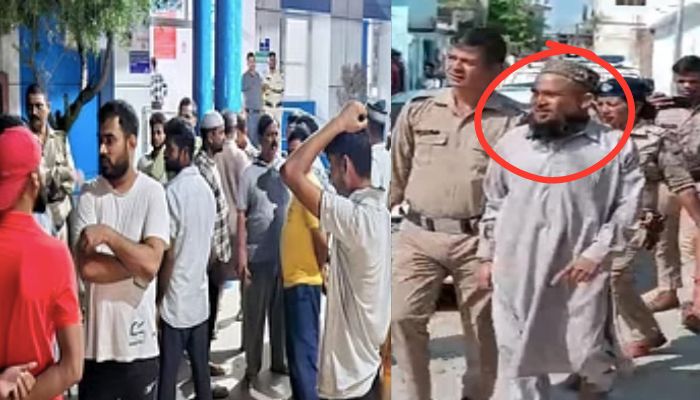
In August this year, a Maulvi named Shabbir Raza was arrested for allegedly raping at least five minor girls, aged 5 to 9 years, inside the premises of an illegal Madrasa in Uttarakhand’s Rudrapur. In this case, a dispute erupted on the 17th of September in the Malsi village after a confrontation between those who wanted action against the accused Maulvi by filing a complaint letter and those who were advocating for Maulvi Shabbir Raza.
The confrontation took a violent turn as the two parties started firing and attacking each other leaving five to six people injured. The police took three of the injured persons identified as Mohammad Yunus, Shahid Ahmed, and Kabir Ahmed to the district hospital after the altercation.
It was reported how the accused Maulvi used to scare the minor girls by telling them stories of ‘djinns’ and threatening to unleash those spirits on their parents. He is also accused of showing the minor girls porn videos on his phone. On Tuesday, at around 10 pm, Mohammad Khurshid (supporting accused Maulvi) and Nabi Hasan (one of the complainants against the Maulvi) indulged in an argument over the case against the accused Maulvi and it soon took a violent turn. Soon after, SP City Manoj Katyal, CO Niharika Tomar and many other police officials reached the hospital and met the injured. In addition, PAC teams were deployed in the affected Malsi village to maintain law and order.
Speaking about the incident, SP City Manoj Katyal said that there was a dispute in the village Malsi of Rudrapur Kotwali area wherein several rounds of firing were done by the clashing parties and seven people were injured. Meanwhile, Mohammad Hussain of the injured side said that the other side wanted to attack since evening and for this, they had called youths from outside to the village. Reports say that the complainant side including Nabi Hasan was being pressured by the supporters of the accused Maulvi to withdraw the case.
As reported earlier, The accused Maulvi, Shabbir Raza, was arrested on 18th August from Malsi village in Uttarakhand’s Rudrapur. Raza arrived in Malsi only two months before his arrest as he was earlier living in Rampur Shahbad. The heinous crime came to the fore when one of the minors narrated her ordeal to her family members on 16th August. Subsequently, on the next day, her mother filed a Police complaint in this matter. The police investigation had confirmed the sexual exploitation of at least five girls. Raza used to beat older boys on the pretext that they didn’t complete their homework and sent them away. He also asked older girls to leave by giving them a lot of homework. However, he used to make the younger girls, aged 5-9, stay at the Madrassa for extra classes.
Over two days on 17th and 18th September 2024, thousands of pagers, walkie-talkies and other communication devices carried by Hezbollah operatives exploded in Lebanon, killing around 37 persons and injuring thousands. The pagers on Tuesday received a message, overheated and then exploded, several of the incidents were caught in CCTV cameras. Then on Wednesday, two-way radios exploded in Beirut and other places in southern Lebanon exploded similarly.
It is largely believed that Israeli agency Mossad is behind the sophisticated attack targeting Hezbollah operatives, even though the Israeli govt has not commented on it. Earlier it was suspected that lithium batteries in the devices were maliciously overheated, causing them to explode. But later it was confirmed that tiny amounts of high-grade explosives were hidden in the batteries, in an elaborate operation.
Now, a report by New York Times claims that the incident was the result of a long-term operation run by Mossad, which included setting up a legitimate company in Hungary to supply communication devices.
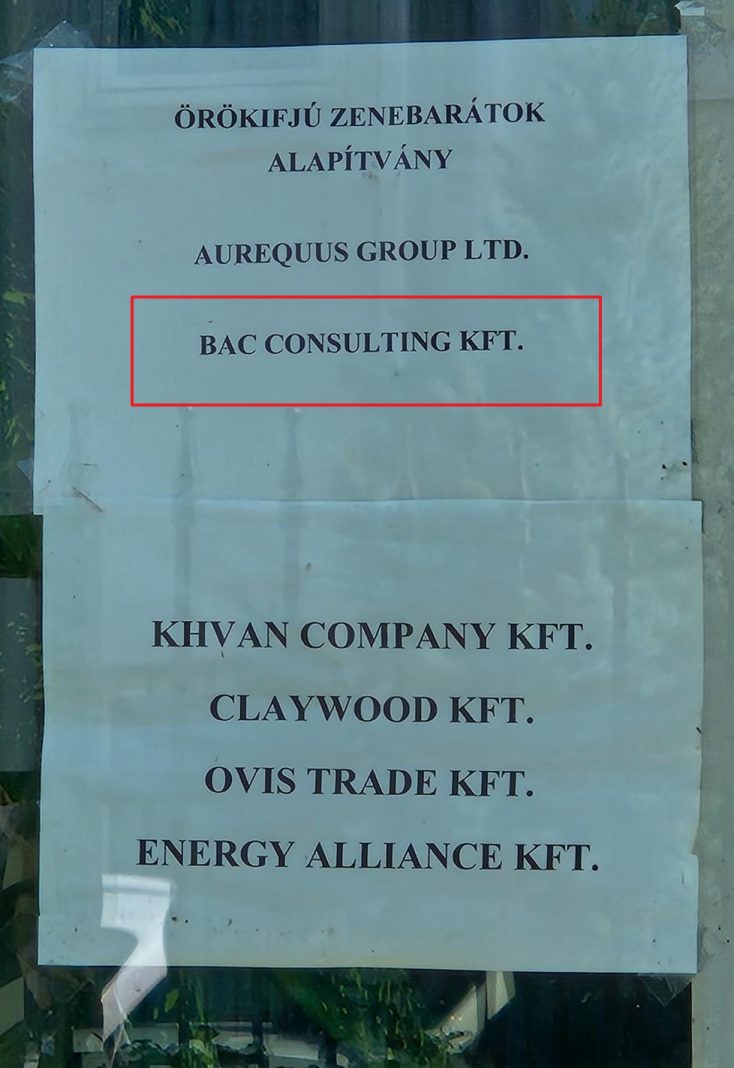
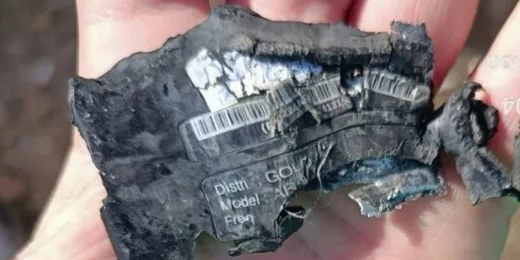
The pagers that exploded on Tuesday are from Taiwanese company Gold Apollo. Photos of the company’s pager model AR-924 after the blasts appeared on social media. It was reported that Hezbollah had acquired large number of pagers for it used a few months ago. However, Gold Apollo denied making the pagers, saying that they were made by Hungarian company BAC Consulting under licence from them.
Gold Apollo’s founder and CEO Hsu Ching-kuang said that “there was nothing in those devices that we had manufactured or exported to them.” Hsu added that the pagers made by BAC are completely different from those made by Gold Apollo and that only the brand has been licenced to the company.
Now, the NYT report says that this BAC Consulting headquartered in Budapest is nothing but a front established by Mossad, citing three intelligence officers briefed on the operation. They added that the Israeli spy agency also created at least two other shell companies, to mask the real identities of the people involved with making the pagers at BAC.
Hungarian records show that BAC Consulting was registered as a company in May 2022. As per its LinkedIn page, it offers services in the areas of international relations, telecommunication, environment, development and innovation, and monitoring systems for external aid intervention.
As per the report, BAC functioned as a legitimate company, they supplied a range normal pagers to several clients. According to Hungarian, it is a trading intermediary and has no manufacturing or operational site in Hungary. Zoltan Kovács, the spokesperson for the Hungarian prime minister’s office, posted on X that “the referenced devices have never been in Hungary.”
He added that Hungarian national security services are cooperating with all relevant international partner agencies and organizations in the probe.
BAC CEO Cristiana Barsony-Arcidiacono also said that the company didn’t make the pagers, and that she was just a link in the supply chain.
Cristiana Barsony-Arcidiacono
It is not clear where the pagers were made, but it is known that BAC somehow received the rigged pagers from Mossad and supplied them to Lebanon as per order.
They started supplying the pagers in the summer of 2022, but it accelerated after Hezbollah chief Hassan Nasrallah asked the operatives to not use mobile phones, and to use low-tech pagers for communication, with the belief that they can’t be hacked. Nasrallah’s order was fuelled by reports that Israel has developed technology to track any cellphone anywhere in the world, including remotely activating their cameras and microphones.
As per the intelligence officers, Israel had invested millions in developing the technology, and word spread among Hezbollah and its allies that no mobile phone communication was safe anymore, not even encrypted messaging apps.
Therefore, Hassan Nasrallah barred Hezbollah members from carrying cellphones from meetings of the organisations and made it mandatory for them to carry pages all the time to receive messages to receive instructions. Using low-tech one-way text message device was seen as a security measure against Mossad’s high-tech capabilities to hack mobile phones and computers, but Mossad had already started making pagers in Hungary, to supply to Hezbollah.
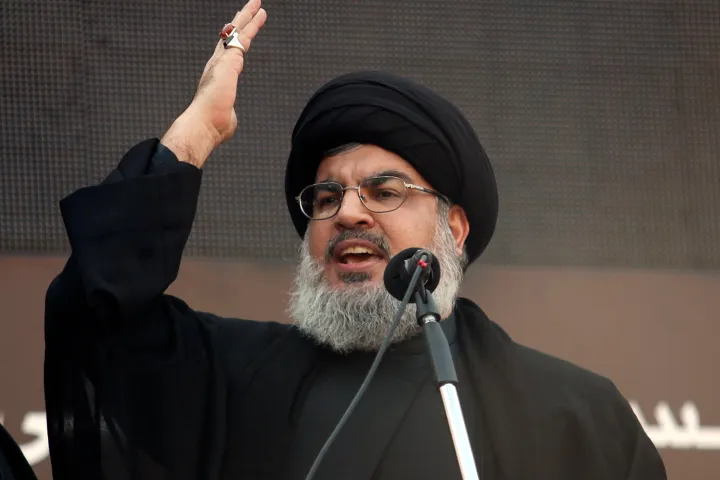
Hassan Nasrallah
BAC Consulting managed to beg the order of pagers from Lebanon, it helps that there are not too many competitors for this device in the market, and started making the rigged devices. An explosive device needs five components, a container, a battery, a triggering device, a detonator and an explosive charge. A pager or most other electronic devices only has the first 3 components, so BAC needed to add just the explosive and the detonator.
As per reports, tiny amounts of military-grade explosives, most likely 3 to 5 grams PETN or RDX, were placed with the batteries in the pagers. They also likely added a mechanism to trigger the explosive remotely.
Hezbollah purchased around 5000 pagers, and they were supplied to the group in Lebanon around 5 months ago. Till now, the devices worked fine, and the hidden explosives were not detected.
On Tuesday, Mossad decided that it was time to execute the operation. Thousands of pagers in Lebanon and some in Syria beeped in the afternoon and received a message in Arabic that appeared to be sent by Hezbollah’s senior leadership. Immediately, the pagers overheated and then exploded. As per experts, the embedded software in the pagers was modified to trigger the bomb by a specific message.
Exploded pager showing model and maker name
Some operatives actually saved themselves by throwing away the devices after they felt the intense heat, but most didn’t and were injured by the force of the blasts. 12 persons died in the explosions, while over 2700 were injured, many of them seriously.
Japanese walkie-talkies made over 10 years ago
A day later, thousands of walkie-talkies used by Hezbollah exploded, which killed 25 people and injured over 1000. The two-way radios were also rigged with explosives and were remotely detonated, as per reports.
It is being speculated that the radios was triggered just a day after the pager blasts because Hezbollah would have started to inspect all their communication devices, and would have detected the charges and detonators.
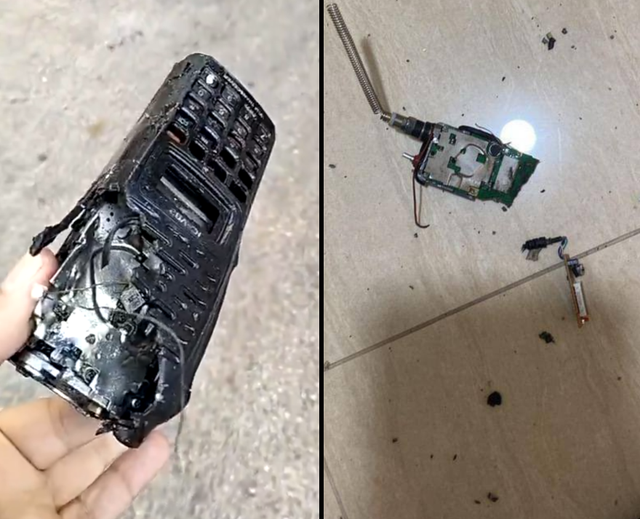
Images show that some of the walkie-talkies were made by Japanese radio equipment maker Icom. However, the company said that it stopped making the model used in the attack a decade ago. Icom said that it is investigating the matter.
Exploded walkie talkies
Icom exported its IC-V82 two-way radio to regions including the Middle East until October 2014, after which it stopped making the model, the company said on Thursday. It also no longer makes the battery used in the device. The company further said that they can’t determine if the products are their own.
At present there is no theory on how the radios were rigged. As they were sold a decade ago, they must have been modified at a later stage. However, it is known that Hezbollah bought them just five months ago, around the same time they acquired the pagers. Therefore, they were most probably rigged before supply to Lebanon.
It is not known whether BAC supplied the radios or some company. As the devices went out of production a decade ago, it is unlikely there was an inventory of thousands of unsold devices lying somewhere. Therefore, there is high possibility that copies of the original device fitted with explosives and triggering mechanisms were made by Mossad to be sold to Hezbollah through BAC or some other front company.
The explosions of communication devices have caused a serious dent in the operations of Hezbollah, apart from the death and injuries, now the group is almost crippled as it can’t any electronic devices now. The group switched to low-tech devices to avoid being spied on by Mossad through modern devices, but now those very same devices have been turned into bombs.
The operation shows how deeply Mossad penetrated into Hezbollah. The spy agency managed to beg orders for sensitive communication devices and supplied the same. They also have access to two different communication systems in Lebanon, and used them to trigger the explosives hidden in pagers and radios remotely. Israel also likely to have a list of Hezbollah operatives who used the pagers and walkie-talkies.
US firm General Atomics is expected to replace the MQ-9B Predator drone at the earliest to carry out surveillance missions for the Indian Navy as per the requirements projected in the contract between the two sides.
As per the lease agreement between the Indian Navy and the US firm, they are supposed to fly a certain number of hours every month to meet naval requirements and that can’t be done by one bird only. They will have to replace the crashed bird to meet the contractual obligations, defence officials told ANI.
The Indian Navy has also briefed Defence Minister Rajnath Singh about the crash that took place off Chennai on Wednesday.
The Indian Navy had signed a lease contract with the American firm under the Contractor Owned Contractor Operated (COCO) model right after the Galwan clash in 2020. American drone pilots fly the drones for the Indian Navy missions sitting in an Indian Navy base near Chennai.
The Indian Navy has been using drones for surveillance missions in the Indian Ocean Region to keep an eye on Chinese military and intelligence-gathering vessels, along with operations against pirates and other elements in the area.
The Indian Navy had yesterday stated that a MQ-9B Predator High Altitude Long Endurance Remotely Piloted Aircraft (HALE RPA) encountered a technical failure on Wednesday, after which the aircraft was navigated to a safe area over the sea and carried out a controlled ditching at sea off Chennai.
“A detailed report has been sought from the Original Equipment Manufacturer (OEM),” it added.
“The MQ-9B Predator drones (HALE RPA) flying for the Indian Navy are operated by General Atomics under a lease agreement between the Indian Navy and the American firm. The Indian side pays only for the services provided by the vendor and the drones are flown by the pilots from the vendor side. The Indian side has asked for a detailed report from the vendors on the accident,” Navy officials said.
(This news report is published from a syndicated feed. Except for the headline, the content has not been written or edited by OpIndia staff)
The test results have revealed, shockingly, that beef tallow, fish oil, lard (pig fat) and palm oil among other things were used to make laddus which were distributed as prasad or prasadam (sacred food according to Hindu tradition) at the popular Sri Venkateswara temple in Tirupati, a prominent Hindu pilgrimage. “They (YSRC government) not only provided substandard food to the devotees, such as Anna Prasadam in Tirumala, but also used inferior quality ingredients to make prasadam, which is offered to Lord Venkateswara. Instead of using pure ghee, they used animal fat,” Chief Minister Chandrababu Naidu’s startling charge had raised major concerns among the devotees. However, his statement has unfortunately been found to be true.
According to a report by the National Dairy Development Board’s “Centre of Analysis and Learning in Livestock and Food” (CALF) laboratory in Gujarat, animal fat was found in the ghee used to prepare the prasad for the hordes of worshippers that flocked to the sacred site during the Jagan Mohan Reddy-led Yuvajana Sramika Rythu Congress Party’s (YSRCP) rule. “The S value of all equations for sample coded as AB023654 are falling out of the range as prescribed by the method. If any S-value falls outside the corresponding limits, consider the sample to contain a foreign fat,” the report highlighted.
Breaking: Test report confirms beef fat, fish oil used in making laddus at Tirupati Temple.
As per the report, the laddus used Fish Oil, Beef tallow which is a form of fat, and Lard which is form of fart obtained from pigs. The laddus also used vegetarian ingredients like Soya Bean, Sunflower, Olive, Rapseed, Linseed, Wheat germ, Maize germ, Cotton Seed, Coconut, Palm kernel fat, and Palm Oil.
“Today, we are using pure ghee and cleansed the system in the temple. The quality of prasadam and food has improved and steps are being taken to make further improvements,” Chandrababu Naidu added during his address at the National Democratic Alliance (NDA) legislative party meeting on 18th September. The Tirumala Tirupati Devasthanams (TTD) manage the famous Sri Venkateswara temple in Tirupati. The charges were refuted by YSRCP leader and former TTD chairman YV Subba Reddy who termed the accusations as “malicious” and added that the TDP supremo would “stoop to any level for political gain.”
The Tirumala Venkateswara Temple, located in Tirumala, Andhra Pradesh, is one of the most revered Hindu temples in the world. Dedicated to Lord Venkateswara, an incarnation of Vishnu, it is perched atop the Tirumala hills, part of the Seshachalam Range. Devotees from all over the globe visit the temple to offer prayers and seek blessings, making it one of the richest and busiest pilgrimage sites in India.
Managed by the Tirumala Tirupati Devasthanams (TTD), an independent trust overseen by the Andhra Pradesh government, the temple is renowned for its grand rituals, including the famous “Laddu Prasadam,” which is considered divine. Festivals like Brahmotsavam attract millions of devotees, showcasing the temple’s cultural and spiritual significance.
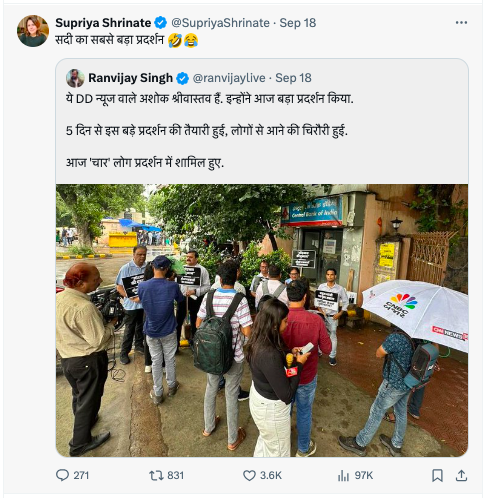
On the 18th of September, senior journalist at Doordarshan, Ashok Shrivastava was allegedly attacked wherein his car was hit by an SUV from behind. While the DD News anchor was safe, the incident has raised concerns over the safety of journalists.
As reported earlier in the day, this incident happened at a time when Ashok Shrivastava has fiercely come out in support of IndiaToday journalist Rohit Sharma who was attacked by Congress workers in the US during Rahul Gandhi’s visit to the country for asking his views on the Islamist onslaught against Hindus in Bangladesh. The attack on Sharma triggered condemnation from several journalists and netizens alongside the condemnation from the National Press Club (NPC) of Washington DC.
From online trolling and threats by Congress supporters to Congress leader Supriya Shrinate mocking Shrivastava and other journalists who held a protest against Congress’s misconduct against the India Today journalist, Ashok Shrivastava has drawn the Congress ecosystem’s ire. In an elaborate conversation with OpIndia, Shrivastava spoke about the recent alleged attack, his ideology, and more.
“Not me, but attacks on journalists for doing their job remains the core issue”: Ashok Shrivastava tells OpIndia
Speaking to OpIndia, Ashok Shrivastava said that despite the attack on him on Wednesday, to him, the main issue remains what happened to India Today journalist Rohit Sharma in the United States. “For me, even now, the issue is still the same for which we came on the streets. What happened in America, the way a journalist was attacked by the goons of a political party, for me the issue is that such political attacks on journalists should stop,” Shrivastava said.
He further slammed Congress leader Rahul Gandhi for his hypocritical stance on press freedom saying that on one hand, the Leader of Opposition (LoP) asserts that the media has the right to ask questions, however, when Rohit Sharma was asking questions to Congress leaders in US, he was manhandled. Shrivastava reiterated that the truth behind the alleged attack on him would emerge only after a thorough investigation, for him, demanding safety against political attacks on journalists for doing their job remains central.
When asked what action he planned to take in response to the alleged attack on him, the senior journalist stated that he is preparing to file a complaint and demand a high-level investigation. He added that he has not sought police protection yet and that the investigative agencies will decide based on the threat perception whether he needs to be provided security or not. Shrivastava further stated that this could be the fourth political attack on him and that he is concerned for his safety.
“I want to work freely, and every journalist should be able to do their job without fear. In 2011, I was kidnapped in Uttar Pradesh with three others, but no concrete action was taken in that matter, then once Congress and RJD workers barged into my studio and attacked me, I had filed a complaint but I am not satisfied with the police action in that case. I am not sure whether these incidents are mere coincidences or are linked, this is something the probe agencies will look into and decide further course of action,” Shrivastava said.
Ashok Shrivastava said that the truth of whether the Congress supporters were behind the attack or not, whether it was an accident or attack would only be clear after an investigation. “Whether this was a Sanyog [conincidence] or Prayog [experiment] would be revealed after an investigation by the authorities,” he said.
“Not against any political party but always against anti-India ideology”
Speaking about his ideological stance, particularly in the context of his protest against Congress for the manhandling of the IndiaToday journalist in the US by Congress workers, Ashok Shrivastava said that he is not opposed to any political party, however, he is opposed to the ideology that functions against the interests of India.
“I am not against any political party. I have nothing to do with Congress or the BJP. But, my opposition is against the anti-Bharat ideology. If an ideology or its adherent goes to a foreign land and says that Sikhs can’t wear Kada and turban in Bharat. If some political leader claims that minorities are not safe in India or claims that the media is not safe and then his own party workers attack a mediaperson…or if a leader says that democracy is ended in India or that [Article] 370 should be reinstated in Jammu and Kashmir as the Pakistani Defence Minister said that Congress and Pakistan are on the same page…so my opposition is only to this sort of ideology and not against any specific political party. As a journalist, I understand I am not supposed to be pro or against any political party,” Shrivastava said emphasising that even before being a journalist, he is an Indian and as an Indian, he opposes the anti-India ideology adding that every Indian citizen should do the same.
Congress’s Mohabbat ki Dukaan is not for journalists asking ‘uncomfortable’ questions
Last week, journalist Rohit Sharma from India Today was assaulted by Congress workers in Dallas, Texas, during Rahul Gandhi’s US visit. Sharma, covering Gandhi’s trip, asked Sam Pitroda, Chairman of the Indian Overseas Congress, if Gandhi would raise the issue of Hindus killed in Bangladesh by Islamists following the fall of Sheikh Hasina’s government. Before Pitroda could respond, Congress supporters deemed the question ‘controversial,’ assaulted Sharma, and forcibly deleted the interview from his phone. Despite Pitroda suggesting a re-recording, it never happened. Be it the manhandling of Sharma, the online trolling and mocking of Ashok Shrivastava and protesting journalists, Congress has demonstrated that its advocacy for press freedom is farcical and the party only invokes it when it suits their narrative and crushes the same otherwise.