Home Blog Page 939

‘Craze for Sarkari job and the plague of paper leaks’: How major exam mismanagement cases haunt some states, seeding dissatisfaction among youth

India’s public examination system has enjoyed widespread recognition and admiration on a national and international level for a number of decades. It has been characterized as clean, fair, and strong allowing capable students to secure greater positions and build a solid life. Public exam tests and competitive and intense and Indian students have always performed admirably, even passing the Graduate Record Examinations (GREs) to get admission into universities in New York and Canada. 

In other words, India’s examination system, which is a cornerstone of the educational structure, is diverse. In recent years, however, things appear to have deteriorated. Public test papers are being illegally released and leaked at a rate that the elderly founding fathers of India’s education system could never have imagined.

No institution appears exempt from IIT entrance exams and pre-medical entry NEET to mid-term school papers in Punjab and constable recruitment in Haryana. Unfortunately, such leaks have a negative influence on the brand value of some well-known public institutions, compromising their reputations and the future potential of their otherwise talented students.

The latest happening to recall is the ongoing NEET UG-2024 controversy in which the concerned authorities had to explain that the sanctity of the medical exam test had not been compromised though 63 students used unfair means to get through the exam.

NEET UG 2024 controversy: NTA says no papers were leaked

The saga began on 4th June after the National Testing Agency (NTA) declared the results of the recently conducted NEET UG-24 exams.

A plea was filed against the NTA stating that grace marks were awarded to 1563 students who appeared for the NEET exam on May 5th. As per the plea, these grace marks aided some of the students to secure top ranks, also scoring 718 or 719 out of 720 which is technically impossible, given the negative marking system. Further around 67 students are said to have scored 720/720. The plea demanded a thorough investigation of the case, risking the futures of around 24 lakhs who appeared for the exam across 4750 centres in India.

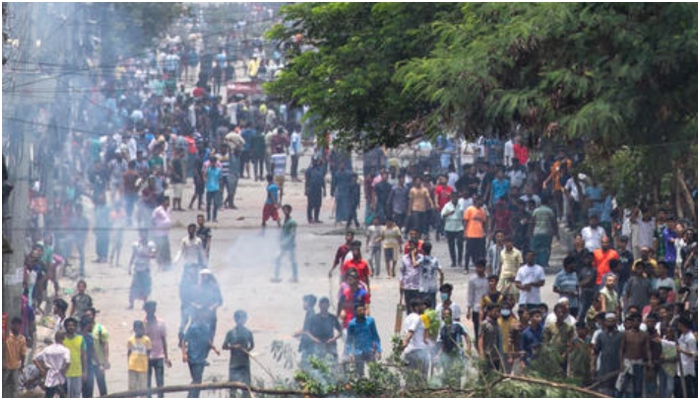
Students protesting (Image- India Today)

Notably, on Thursday (13th June), the Centre informed the Supreme Court that it had cancelled the decision to award grace marks to 1563 candidates who appeared for NEET UG-2024. The Centre also said that these 1563 students had the option to appear for a re-test or go ahead without the grace marks, which will be held on 23 June. Meanwhile, several petitions have been filed to the SC claiming paper leaks and a significant increase in high scores. However, the NTA clarified that no papers were leaked though 63 cases were found who used unfair means to get through the examination.

It is noteworthy that one of the most popular poll perspectives nowadays is the problem of paper leaks in India’s central regions. The results of the Lok Sabha election in 2024 have highlighted several issues with political parties’ social engineering initiatives. This exemplifies how the frequently shared issues of youth employment and education can unexpectedly come to the forefront of politics. For young voters between the ages of 18 and 25, exam paper leaks and frauds in areas like Uttar Pradesh, Rajasthan, Madhya Pradesh, and Bihar have been a big problem.

41 paper leaks in 15 states in the last 5 years

A report by The Indian Express confirms that 41 paper leaks over the last five years in 15 states have affected around 1.4 crore job hopefuls who applied for over one lakh positions. It is important to understand why this has led to stress and disappointment among young voters, especially when examinations continue to be rescheduled and recruitment for state-level government posts remains postponed.

Standardized testing, when used to administer large-scale exams, is widely considered a reliable method in the educational setting. The idea is well-known throughout the world for how well it works to cut down on time and administer exams utilizing standard scoring guidelines to applicants to universities.

Without much consideration, the standardized testing model is used in recruiting processes due to its ability to analyze a large number of candidates in a short period. Unlike any other testing method, the standardized exam groups the candidate with a wide cohort of people who may have prepared differently but nevertheless show up and compete for a set number of jobs. This recruitment approach is employed by the state public service commissions to fill positions ranging from entry-level data operators to college and school teachers. However, preparedness for applicants from remote rural backgrounds and underprivileged groups is hampered by loans incurred to pay application fees, coaching centers, computer training facilities, and rent.

Representative Image- BBC

With the news of question paper leaks and exam cancellations, the arduous process of creating a dream can swiftly turn into disaster.

Few recent incents of paper leaks in India

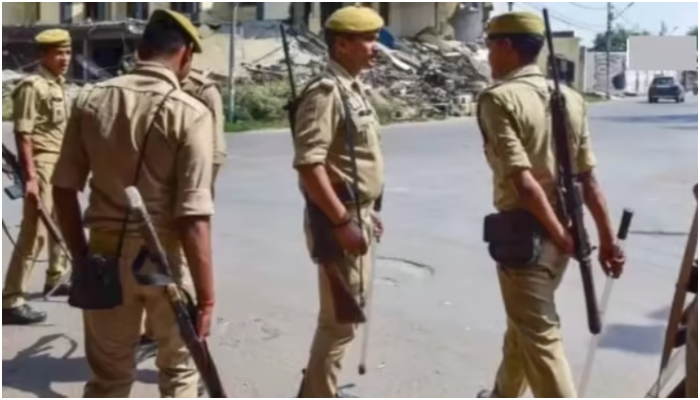
UP Police Constable recruitment exam paper leak led to 400 arrests

In 2024, question paper leaks affected three key competitive exams for government posts in Uttar Pradesh. The most recent addition to this list was the UP police constable recruitment exam, which was held in February and had over 48 lakh people apply.

The Uttar Pradesh Police Constable recruitment exam, scheduled for February 17 and 18, 2024, was canceled due to claims of paper leaks. Yogi Adityanath, the Chief Minister of Uttar Pradesh, later announced that a re-examination would take place within six months. The leak led to 400 arrests across UP and six states, with 12 FIRs filed. 

CTET exam 2024 leaked

In January this year, the Central Teacher Eligibility Test (CTET) exam 2024 was conducted by the Central Board of Secondary Education (CBSE). This national-level exam is administered twice a year to verify candidates’ eligibility to teach in CBSE-affiliated schools. However, shortly after the CTET January 2024 exam was completed, various complaints were made about the question paper being leaked. Candidates flocked to social media platforms such as Twitter to complain that the CTET 2024 question paper was leaked just minutes before the exam began.

According to various candidates, the CTET paper leak in 2024 occurred for both Paper 1 and Paper 2. Paper 1 is for applicants who want to teach classes 1–5, and Paper 2 is for those who want to teach classes 6–8. Candidates stated that the entire question paper was leaked via WhatsApp and other channels.

HSLC exam paper leaked in Assam

The English question paper for the High School Leaving Certificate (HSLC) Exam 2024 was leaked in Dhubri, Assam in February. The leaked question paper, apparently from Jaruar Char Public High School, surfaced just as students began their exams, adding to the region’s long series of exam-related scandals. This incident marks yet another breach in the security of matriculation examinations.

Image- India Today NE

UP Class 12th board exams 2024 paper leaked

The question papers for the Uttar Pradesh Class 12th board exams 2024, which include subjects such as Mathematics and Biology, were leaked over WhatsApp. The maths and biology question papers for the Uttar Pradesh class 12th board exam were purportedly circulated on a WhatsApp group an hour after they began in March this year. Dinesh Kumar, the District Inspector of Schools (DIOS) for Agra, had then filed a complaint with the police at Fatehpur Sikri.

Image- Amar Ujala

In 2023, several paper leak incidents struck India’s educational sector, affecting Telangana, Maharashtra, Assam, and Rajasthan. The instances highlighted systemic weaknesses, including leaked question papers for SSC and HSC exams as well as recruitment tests for government professionals such as assistant engineers and elementary teachers.

Telangana SSC paper leak 2023

The Hindi question paper was leaked during the Secondary School Certificate (SSC) examination in Kamalapur village, Hanamkonda district (formerly Warangal district), in 2023. The leaked material immediately spread on social media, mainly WhatsApp, raising concerns among education officials and the district collector. An investigation was immediately set up to determine the scope of the leak and identify those responsible for the breach.

TSPSC Assistant Engineer exam paper leak

In March 2023, the Telangana State Public Service Commission (TSPSC) noticed a question paper leak for the Assistant Engineer recruitment exam. This unfortunate situation resulted in the cancelation of the March 5th, 2023 exam for posts such as Assistant Engineer (AE), Municipal Assistant Engineer (MAE), Technical Officer (TO), and Junior Technical Officer.

As a result, candidates who took the compromised exam were disappointed and unclear about the status of their applications, raising questions about exam security and fairness in the recruiting process.

Image- South India First news

Assam HSLC 2023 paper leak

The Secondary Education Board of Assam (SEBA) was compelled to cancel the High School Leaving Certificate (HSLC) exams for English and General Science in March 2023 due to a set of leaked question papers. Minister of Education Ranoj Pegu then immediately requested a CID probe into the incident. However, the details of the CID investigation and its findings remain undisclosed to the public.

Maharashtra HSC paper leak

In March 2023, a private institution in Maharashtra was implicated in the leak of the Higher Secondary Certificate (HSC) Mathematics paper, raising worries about the examination’s integrity. Subsequent investigations by Mumbai police revealed evidence indicating that the college had also compromised the Chemistry and Physics examinations. The leaks, widely believed to be coordinated to assist associated students, involved the exchange of question papers over WhatsApp shortly before each examination, giving those who got them an unfair advantage.

The leaks occurred around an hour before each exam, allowing college students to gain access to the compromised question papers. This immoral conduct not only harmed the credibility of the testing system but also raised concerns about the security mechanisms in place to prevent similar instances in the future.

REET 2023 paper leak

The Rajasthan Subordinate and Ministerial Services Selection Board (RSMSSB) administered the Rajasthan Eligibility for Elementary Teachers (REET) test on February 25, 2023. However, claims of a document leak occurred the same day, raising significant concerns. The leak apparently occurred before the exam’s morning session began, causing a group in Jodhpur to be apprehended while solving the compromised paper. The police then arrested the persons implicated, forcing the Rajasthan Police to conduct an inquiry into the source and length of the leak.

Candidates who had painstakingly prepared for the REET exam faced the risk of unfair competition as a result of the leak, emphasizing the importance of severe procedures to protect the evaluation system’s legitimacy.

Govt order regarding REET paper leak (TOI)

Impact of Frequent Paper Leaks in India and probable steps to stop leaks

Students from remote rural areas and marginalized castes are disproportionately affected due to such incidents of frequent paper leaks since they are burdened with debts incurred to pay for application fees, coaching centers, computer training centers, and rent. The cancellation of exams has also increased student exhaustion and unease about another batch of applicants joining the queue.

The cancelation of recruitment procedures further exacerbates the spiraling of issues in an already scarce job market. The postponing and cancelation of exams owing to paper leaks disrupt academic calendars and cause anxiety for students. The regular paper leaks also cause students to lose faith in the fairness and meritocracy of tests, raising issues about the value of their efforts and education.

Representative Image- India TV

In order to address the rising issue, an act Public Examinations (Prevention of Unfair Means) Bill, 2024 has been introduced to reassure the youth that their sincere and genuine efforts for the public examinations will be fairly rewarded. The act aims to bring greater transparency, fairness, and credibility in the public examinations system. Also, a National Testing Agency (NTA) body has been formed to make the examination system more scientific, reliable, and professional.

For each paper leak instance, the question that needs to be asked is what must be the reimbursement for years of labor, excessive financial costs, and the emotional toll borne by lakhs of candidates who place all their hopes in the exam. Young people’s dreams and time invested in acing recruitment examinations are priceless. Their opportunity to secure a government position through these tests also represents their chance at generational mobility. The substantial planning that goes into exam preparation must also be taken into account. This includes moving to cities to attend coaching programs, accepting jobs that do not align with one’s educational background and skill set, and setting up alternate sources of income.

Youth dissatisfaction and concern become worse because of the inaction and absence of suitable steps to stop the leaks. Given the numerous shifts and the involvement of a network of business entities, such as printing presses, coaching centers, and consulting firms, the lack of a reliable and transparent exam administration system is an issue that needs to be carefully considered. The government should consider whether it is beneficial to assign specific task forces to look into the organized use of unfair means in examinations, even after passing the Public Examinations (Prevention of Unfair Means) 2024.

Pakistani terrorist Arif Mohammad can still challenge the rejection of mercy petition citing delay: Here is how that will change with the new criminal laws

In May this year, President Droupadi Murmu rejected the mercy petition of Mohammed Arif, alias Ashfaq, a Pakistani terrorist found guilty in the nearly 24-year-old Red Fort attack case.

However, under the existing laws, the Pakistani terrorist could still petition the Supreme Court under Article 32 of the Constitution to have his sentence commuted on the grounds of protracted delay, even though the mercy request was rejected by the President.

In the past, the Supreme Court has ruled that the president’s or governor’s use of prerogative powers, including clemency and pardons, is justiciable and can be challenged on grounds such as “undue and unexplained” delay, solitary confinement, and so on.

Several death-row convicts in the past approached the courts to challenge the rejection of their mercy petitions. In a few instances, the president’s “inordinate delay” in deciding mercy requests was found to be a violation of Article 21 (right to life) of the Constitution, leading to the commutation of the death sentence.

Notably, Article 72 of the Indian Constitution empowers the President of India to grant pardons, reprieves, respites, or remissions of punishment, and to suspend, remit, or commute the sentence of any person convicted of any offence. Similarly, Article 161 grants powers to the Governor of a state for offences against state law.

After exhausting all judicial appeals, a convict on death row can submit a mercy petition to the President or Governor. The petition is then forwarded to the Ministry of Home Affairs (MHA) for review. The MHA evaluates the petition and provides recommendations to the President or Governor. There is no specific timeline for the processing and decision on mercy petitions, sometimes leading to prolonged delays.

There have been instances where terrorists and convicts of heinous crimes have attempted to misuse these provisions to delay or evade justice. For instance, the case of Ajmal Kasab, who was one of the Pakistani terrorists involved in the 2008 Mumbai attacks, which killed 166 people. After being sentenced to death, Kasab filed a mercy petition. Although it was ultimately rejected by the President of India, the process contributed to delays in his execution, highlighting the potential exploitation of the system to buy time.

Similarly, in 2001 Parliament Attack convict Afzal Guru’s mercy petition took several years to be decided, during which there were numerous debates and controversies. The delay raised concerns about how the mercy petition process can be used to prolong legal proceedings and delay the execution of justice.

Notably, convicts often file multiple petitions and appeals in various courts, including review petitions, curative petitions, and mercy petitions, creating a protracted legal battle that delays final resolution. Lawyers appearing for convicts sometimes exploit procedural loopholes, such as filing petitions at the eleventh hour, thereby compelling courts to stay executions and review the petitions, further delaying the process.

There have been some cases wherein the courts overturned or commuted death sentences despite the rejection of mercy petitions by the President. This was seen in the V. Sriharan alias Murugan vs. Union of India (2014). This case involved three convicts in the Rajiv Gandhi assassination case—V. Sriharan alias Murugan, Santhan, and Perarivalan—who had their mercy petitions rejected by the then President Pratibha Patil. Later, the Supreme Court commuted their death sentences to life imprisonment, citing the inordinate delay of 11 years in deciding their mercy petitions as a ground for relief.

Currently, the convicts are free to challenge the rejection of a mercy petition by way of a writ in the Supreme Court. The Bhartiya Nagarik Suraksha Sanhita (BNSS), however, introduces a specific provision to disallow writ petitions challenging the rejection of mercy petitions.

What does the new Bhartiya Nagrik Suraksha Sanhita say about the process of mercy petitions?

Notably, the new Bharatiya Nyaya Sanhita (BNSS), proposed as an overhaul to the existing criminal justice system, introduces significant changes to these procedures. The Bharatiya Nagarik Suraksha Sanhita, 2023 (BNSS) is set to replace the Criminal Procedure Code of 1973. The CrPC specifies the procedure for arrest, prosecution, and bail. The new BNSS will come into effect from the 1st of July 2024.

Under BNSS Section 472(1), convicts can file mercy petitions within a period of thirty days from the date on which the Superintendent of the jail,—(i) informs him about the dismissal of the appeal, review or special leave to appeal by the Supreme Court; or (ii) informs him about the date of confirmation of the sentence of death by the High Court and the time allowed to file an appeal or special leave in the Supreme Court has expired.

The convicts can petition the Governor and President based on dismissal of appeals or confirmation of sentences. The new law says that in cases with multiple convicts in the same case, they all must file petitions within 60 days.

Pertinently, BNSS Section 472(7) states that the President’s decisions on mercy petitions are final. Courts cannot question or review the grounds for President’s pardons or commutations.

Centre’s role in mercy pleas under the BNSS

Under the provisions of the new BNSS, the Central Government shall, upon receiving the mercy petition seek the comments of the State Government and consider the petition along with the records of the case.

The Government will then have to provide recommendations to the President within 60 days. “Whenever an application is made to the appropriate Government for the suspension or remission of a sentence, the appropriate Government may require the presiding Judge of the Court before or by which the conviction was had or confirmed, to state his opinion as to whether the application should be granted or refused, together with his reasons for such opinion and also to forward with the statement of such opinion a certified copy of the record of the trial or of such record thereof as exists, Section 473 of the BNSS states.

“When there are more than one convict in a case, the petitions shall be decided by the President together in the interests of justice. No time limit is specified for the President’s decision. Upon receipt of the order of the President on the mercy petition, the Central Government shall within forty-eight hours, communicate the same to the Home Department of the State Government and the Superintendent of the jail or officer in charge of the jail,” it adds.

It is worth noting that the BNSS replacing the CrPC, introduces a more structured and time-bound procedure for handling mercy petitions, reducing bureaucratic delays. It mandates a specific timeframe within which the President or Governor must make a decision on the mercy petition after receiving recommendations.

Moreover, the BNSS emphasises transparency in the decision-making process, ensuring that all stakeholders, including the judiciary and the convict, are informed about the status and progress of the petition. In addition, under the provisions for mercy petitions in BNSS, detailed reasons for the acceptance or rejection of mercy petitions must be documented and communicated, thus enhancing transparency. While the CrPc had no specific provision for mercy petitions, the BNSS has specific sections regarding mercy petitions.

By setting defined timelines and requiring detailed documentation, the BNSS increases accountability within the system. Most importantly, with BNSS stating that the President’s decision on mercy petitions will be final, it would no longer leave the scope for ‘eminent intellectuals’ so-called human rights ‘champions’ to seek ‘mercy’ for terrorists by knocking on the doors of the judiciary at the eleventh hour.

Gamer Shikha Metray arrested by Ghaziabad Police gets bail: Was running a pornographic channel on YouTube as ‘Kuwari Begum’ for two years

Gamer Shikha Metray who promoted child sex abuse on her YouTube channel “Kuwari Begum” was taken into custody by the Ghaziabad Police on 13th June. She was, however, later granted bail. She had set all of her social media accounts to private prior to the action and also removed a lot of her videos. Her account is currently disabled. She reportedly either deleted her channel or changed the privacy settings. The police have decided to send her mobile and laptop to the laboratory for forensic investigation.

“On the basis of a complaint received at Kaushambi police station, a case has been registered under relevant sections. The said woman has been arrested. Further legal proceedings are underway,” conveyed Assistant Police Commissioner Ritesh Tripathi. 

23-year-old Shikha Metray is a resident of Indergarhi in Ghaziabad. She completed a course in fashion design at Delhi’s National Institute of Fashion Technology (NIFT) in 2021–2022. Afterwards, she was employed by an e-commerce company in Kalkaji. Her mother serves as an engineer for a company in Gurugram, and her father teaches at a school in Ghaziabad. Her younger sister is a 12th grader. Shikha has also worked with the Aditya Birla Company in Bengaluru. However, she has been running the “Kuwari Begum” YouTube channel for the past two years. She was doing this in an attempt to broaden her audience by posting content about pornogrpahy. Additionally, she disclosed to the authorities that she was a professional gamer.

The First Information Report was filed against her on 12th June based on a complaint by activist Deepika Narayan Bhardwaj. She reported the YouTuber to the Police Commissionerate office, charging that her channel promoted sexual crimes against minors and newborns. She brought an official complaint against her under the Information Technology Act and Protection of Children from Sexual Offenses (POCSO) Act at Kaushambi police station.

She made particular reference to the video “She will say no. Let her” on Shikha Metray’s YouTube channel, alleging that she was endorsing sexually aggressive behaviour towards women and children and suggesting that men should disregard women’s permission. She further asserted that the content misguides young boys. Shikha Metray was captured, produced before the court and then sent behind bars. Additional Commissioner of Police (ACP) Dinesh P Kumar earlier informed that two police teams were dispatched to arrest Shikha Metray, who had 2,050 subscribers and published over 115 videos on her channel which had a few hundred views.

A clip posted by Shikha Metray encouraging her audience to sexually assault infants went viral on social media on 10th June. She was heard expressing, “If I had a d*ck, I would have made a tutorial on masturbation. I could have then shared tips on how masturbation can be made to feel better. I would have also explained why you should masturbate. Find an infant who doesn’t even have teeth. Seek permission from the child’s mother to take the child somewhere and do something.” She further added, “I am not so sorry. If I had a d*ck, then, I would have tried it. Imagine children without teeth. Wow, it would be one heck of an experience.”

‘The Wire’ columnist gives dangerous spin to Islamist terror attack in Reasi, attacks those creating awareness through #AllEyesOnReasi

Days after Islamic terrorists killed 9 Hindu pilgrims and injured 41 others in the Reasi district of Jammu and Kashmir, ‘The Wire’ columnist Tanushree Pandey on Thursday (13th June) attempted to disassociate the victims from their Hindu identity.

She also tried to shame and guilt-trip those who raised global awareness about the dastardly terror attacks through the hashtag ‘#AllEyesOnReasi.’

Tanushree Pandey wrote an article titled ‘In the Shattered Lives of Poor Pilgrims, the Human Toll of Reasi Terror Attack’ for the leftist propaganda outlet The Wire on Thursday (13th June).

Screengrab of the article by Tanushree Pandey for The Wire

At the very onset, she refused to identify the religious motivation behind the terror attack by dubbing the Islamic terrorists as ‘foreign terrorists.’

“Their bus, returning to Katra, Vaishno Devi, from Shiv Khori, another pilgrimage spot, was ambushed by at least three foreign terrorists,” her article in The Wire read.

Tanushree Pandey was quick to spin the narrative from the targeting of Hindu pilgrims by Islamic terrorists to ‘poor people being attacked by foreign terrorists.’

The Wire columnist ignores Hindu identity of the victims

In this way, she ensured to de-identify the victims from their religious Faith – the primary motivation behind the terror attack.

The whitewashing did not stop there. The propaganda artist sought to twist the public discourse by fixating on the impoverished family background of the Hindu victims.

A bus full of pilgrims, unaware of the impending tragedy, was bound together by more than just the trauma of the attack. It was poverty that not just brought them together but also made them vulnerable. All the people on the 53-seater bus, including the nine who died, came from poor families. They had been saving money to visit Vaishno Devi, often choosing the cheapest mode of transport, a bus, to save on costs,” her article stated.

Tanushree Pandey focuses on poverty instead

Pandey went on to narrate the stories of 23-year-old Ruby Verma, 2-year-old Kittu Saini and his father Pawan Kumar Saini, 60-year-old Om Prakash Saini and his family members, Rajat Ram Sharma, and Shyam Pati Devi.

Her focus remained on the poverty of the victimised families instead of the fact that they were attacked for the virtue of their Faith. The ‘poverty porn’ of sorts was designed nefariously, to whitewash the growing Islamic terror in the Reasi district of Jammu and Kashmir.

To add to her existing intellectual dishonesty, Tanushree Pandey chose to label her twisted coverage of the Reasi terror attack as “stark reminder of the human cost of terrorism.”

She not only ignored the religious motivation behind the terror attack but also conveniently stripped the victims of their religious identity.

Tanushree Pandey targets netizens creating global awareness with #AllEyesOnReasi

Besides, ‘The Wire’ columnist also targeted the social media users who were trying to create global awareness about the terror attack against Hindu pilgrims in the Reasi district of Jammu and Kashmir.

Dismayed by the fact that those whining on social media over the Israel-Hamas conflict have ignored the plight of Reasi victims, concerned netizens began tweeting and posting updates using the hashtag – #AllEyesOnReasi

Tanushree Pandey, who had previously tweeted about the Israeli airstrike in Rafah with the hashtag ‘#AllEyesOnRafah, attacked those posting about the plight of Hindu pilgrims in Reasi.

In her article for The Wire, she claimed that tweeting with the hashtag #AllEyesOnReasi leads to ‘hate and division’.

As the country begins tweeting #AllEyesOnReasi, comparing the brutal killings of Hindu pilgrims in Jammu to the killings in Palestine by Israel and spreading more hate and division, no one really knows the stories of the victims and the wants of their families,” the propaganda artist brazened out.

In this way, Tanushree Pandey chose to virtue signal and silence those willing to speak about the Reasi terror attack perpetrated by Islamic terrorists.

Her shrewd labelling of the sympathisers of the victims as being complicit in ‘spreading hate and division’ is a sinister tactic to brush the terror attack under the carpet.

Vadodara: House allotment to a minority in Hindu-populated residency built under govt housing scheme sparks outrage, Hindus demand reversal of decision

A novel controversy has erupted over the allotment of a house to a person belonging to a minority community in the Chief Minister’s Housing Scheme named Motnath Residency, built near the Motnath Mahadev temple at Harani in Vadodara. The Vadodara Municipal Corporation’s (VMC) decision has sparked outrage among the Hindu residents of the society. The Hindus are demanding a reversal of the decision taken by the VMC and saying that the family belonging to the minority community shall be given residence in the minority community area and not in the Hindu-populated region.

According to the information received, a society named Motnath was built under the Chief Minister’s Housing Scheme in the Harani area of ​​Vadodara. A total of 462 houses have been constructed in this society. Out of these houses, 461 houses were allotted to Hindus, while 1 house has now been allotted to a person belonging to a minority community. The decision has sparked outrage among residents who have demanded that the house belonging to a minority community be transferred to a society built in a minority area.

The incident of protest is said to have happened on June 10th. The Hindu residents also raised slogans against the VMC regarding this demand. Amidst the outcry over house allotment, a local person said, “Houses have been built for minority communities in areas like Tandalja, Akota, which is a Hindu area. Despite this, a person from a minority community has been allotted housing in a Hindu residency. No one is paying attention to this. We have been protesting for the past 6 years and if these people continue to live in a Hindu residency, our situation will become dire.”

Local women were also upset about this type of house allotment. A local woman told reporters, “Our only demand is that their (minority community member’s) house be shifted to their region. This is a Hindu community; we simply wish to live here in peace.”

It should be mentioned that these residences were assigned in 2019, and the locals protested the VMC decision as soon as they learned that people from the minority population would be living here.

Residents claim that their protest is now concentrated merely within the society. If their demands are not met by the Vadodara administration, these protests will take place outside of society. Locals have vowed to go on hunger strike if their demands are not met, in addition to peaceful agitation.

TMC MP Yusuf Pathan gets notice from Vadodara Municipal Corporation over land encroachment for his bungalow

Over a week after being elected as the Lok Sabha MP from West Bengal’s Baharampur on a Trinamool Congress ticket, cricketer-turned-politician Yusuf Pathan has received a notice from the BJP-ruled Vadodara Municipal Corporation (VMC) for allegedly encroaching a civic body-owned land.

A former Bharatiya Janata Party corporator Vijay Pawar has complained that Yusuf Pathan has illegally occupied government-owned land in Vadodara. He raised the issue in writing to the Chairman of the Standing Committee, demanding that the plot of land be taken over by the corporation.

The notice sent by VMC to Yusuf Pathan on the 6th of June stated, “This is to state that the VMC had (earlier in March 2012) received a request from you to allot a land measuring 978 square metres in TP Scheme Number 22 and Final Plot Number 90. As per the process, your application was referred to the Standing Committee and thereafter to the General Board after the valuation committee decided the minimum upset value.”

“Thereafter the application was forwarded to the state government of Gujarat for approval in order to lease the land for a period of 99 years under a special case without conducting an auction. However, as per the reply received from the Urban Development Department on June 9, 2014, the request to lease the said land to you was rejected. The same had been communicated to you vide a letter… However, it has come to light that you have encroached upon the said land of the VMC and you are hereby directed to clear the encroachment at the earliest,” it added.

The matter involves a municipal corporation-owned plot near the Shubham Party plot in Tandalja, Vadodara. Yusuf Pathan decided to build a bungalow on plot number 91, which is adjacent to plot number 90 and requested the Vadodara Municipal Corporation to allot plot number 90. A proposal was prepared based on the Municipal Commissioner’s recommendation.

The proposal recommended allotting land to Yusuf Mahmud Pathan for residential purposes for Rs 57,270 per square metre without holding a public auction in special cases of security, in. addition, to granting all powers to obtain approval from the Government and grant security over the 99-year lease.

The proposal was submitted to the Municipal Standing Committee on the 30th of March in 2012 and was approved. It was subsequently submitted to the General Assembly for approval. On the 8th of June 2012, the General Assembly unanimously approved the proposal and sent it to the State Government for approval. However, on the 9th of June 2014, an official from the Urban Development and Urban Housing Department rejected the proposal. The Commissioner was told in writing that the State Government has rejected the request to allot land to cricketer Yusuf Mahmud Pathan as a special case without a public auction.

Former corporator Vijay Pawar has now filed a complaint with the standing committee chairman, claiming that the state government has given the land site in issue. Despite the rejection of the land allocation request, Pathan has walled the compound to build a garden and stables. Pawar questioned how the land could be occupied without the government’s authorisation. The argument is that Yusuf Pathan continues to use the land.

The BJP leader requested that this government land be opened up, and possession taken over by the VMC. He has called for adequate action in this case.

On Thursday (13th June), Standing Committee Chairperson Dr Sheetal Mistry informed that action can be taken against Pathan after two weeks. Mistry said that Pathan was served the notice of 6th June and given two weeks to clear the encroachment adding that two weeks is sufficient time. If the TMC leader fails to clear the encroachment on his own, then the committee will take further action. The Standing Committee Chairperson also denied allegations of the action taken in the matter being a ‘political move’. “I am not aware about the political move but this is a procedure of encroachment removal after it has come to our notice,” Mistry said.

Notably, Yusuf Pathan, who formerly played for the Indian cricket team, has recently entered politics, running for Mamata Banerjee’s Trinamool Congress from the Behrampur seat in West Bengal. In this election, he defeated Adhir Ranjan Chaudhary, Congress leader and former Leader of the Opposition in Lok Sabha.

Maharashtra govt allocates ₹10 crores to strengthen Waqf Board, VHP protests, says MahaYuti will face wrath of Hindus if decision not reverted

The BJP-led-Maharashtra government has courted controversy for strengthening the State Waqf Board through the allocation of ₹10 crores.

To this effect, the Minority Development Department of the government has issued an order to distribute ₹2 crores to the Waqf Board in Aurangabad on Monday (10th June). The remaining funds will be allocated to relevant bodies in the Financial year 2024-25

Reportedly, the Maharashtra government has earmarked 20% of its minority welfare funds to the Waqf Board this year. The development was confirmed by Islamic scholar Mufti Manzoor Ziai.

He remarked, “It is a matter of happiness that the government has given 20 percent of the money allocated for the welfare of minorities to the Waqf Board. The funds can now be used better…It was about to go. So, it is appropriate to release this money.”

The Vishwa Hindu Parishad (VHP) has objected to the allocation of ₹10 crores to the Maharashtra Waqf Board for “appeasement of one religious community.”

VHP (Konkan) Prant Secretary Mohan Salekar remarked, “This will never be tolerated.” He added that the BJP leaders opposed grants based on religion during elections but have now taken a U-turn.

Salekar cautioned that if the decision is not reverted, the Maha Yuti will have to face the wrath of the Hindu community in the upcoming local body and Vidhan Sabha elections.

“The allegation levelled by the VHP is serious and the government, specially deputy chief minister Devendra Fadnavis should take note of it. Else there will be big problem during the elections,” a BJP office-bearer was quoted as saying by Free Press Journal.

In May this year, OpIndia had reported that the entire village of Wadanage in Kolhapur observed a bandh to protest against the land grab by the Waqf Board around Mahadev Temple. Several Hindu organisations and locals participated in the Bandh.

PM Modi lands in Italy for G7 summit, says India looks forward to addressing global challenges and fostering cooperation

After landing in Italy’s Apulia to participate in the G7 Summit, Prime Minister Narendra Modi said that he is looking forward to engaging in productive discussions with world leaders.

He said that they aim to address global challenges and foster international cooperation for a brighter future. “Landed in Italy to take part in the G7 Summit. Looking forward to engaging in productive discussions with world leaders. Together, we aim to address global challenges and foster international cooperation for a brighter future,” PM Modi posted on X. Notably, India is participating in the summit as an Outreach country.

The summit is taking place at the luxurious Borgo Egnazia resort in Italy’s Apulia region from June 13-15. PM Modi is attending the summit at the invitation of Italian PM Giorgia Meloni.

As PM Modi touched down at Brindisi Airport in Apulia on late Thursday night (local time), he was received by India’s Ambassador to Italy, Vani Rao, and other officials.

This marks PM Modi’s first trip abroad after assuming office for the third consecutive term. MEA spokesperson Randhir Jaiswal detailed the Prime Minister’s engagements with the world leaders on June 14.

“Namaste! The Prime Minister of India has arrived at Brindisi Airport in Italy to participate in the G7 Summit. Tomorrow is a packed day for him. We have several bilateral meetings with the world leaders lined up,” Jaiswal said in a video. “He will also be addressing the outreach session of the G7 Summit.”

Earlier, Prime Minister Modi, in his departure statement, said that he is glad that his first state visit in the third consecutive term is to Italy for the G7 Summit. He recalled his previous visit to Italy and Prime Minister Giorgia Meloni’s visits to India which have contributed significantly to enhancing bilateral ties.

“I am glad that my first visit in the third consecutive term is to Italy for the G-7 Summit. I warmly recall my visit to Italy for the G20 Summit in 2021. Prime Minister Meloni’s two visits to India last year were instrumental in infusing momentum and depth in our bilateral agenda. We remain committed to consolidate the India-Italy strategic partnership, and bolster cooperation in the Indo-Pacific and the Mediterranean regions,” PM Modi had said.

It will be India’s 11th participation and PM Modi’s fifth consecutive participation at the G7 Summit. PM Modi is also expected to hold a bilateral meeting with his Italian counterpart Giorgia Meloni. 

(This news report is published from a syndicated feed. Except for the headline, the content has not been written or edited by OpIndia staff)

Fact-Check: Is TRAI going to charge users for having two SIMs in a phone? Here is how media twisted proposals made in TRAI consultation paper

On 13th June, News24 published a report claiming that if someone has 2 SIM cards in one phone, the Telecom Regulatory Authority of India (TRAI) may impose a fine on them. The post on social media further claimed that the fine might be imposed in a one-time-payment format or annually and the mobile operators can recover the charges from the users. The confusing post by News24 caused a major controversy on social media with users accusing TRAI of imposing irrational charges.

Source: X

In a video, News24 explained that if you are using a mobile phone with Dual SIM cards and keeping one SIM inactive, you might have to pay a charge. However, this claim is misleading as TRAI has proposed that it should charge fees for inactive SIM cards to address the issue of inactive SIMs that are not being surrendered back to TRAI by the operators. The report further suggested that TRAI’s data shows over 219 million mobile numbers are inactive, causing a significant problem.

Upon search, we found another report by Navbharat Times on the same lines. According to the report, if you are using a mobile phone with two SIM cards and keeping one inactive, you might have to pay a charge, either as a lump sum or annually. The report suggested that TRAI has proposed the same. It added that mobile operators avoid deactivating unused SIM cards to retain users. However, regulations state that SIM cards not recharged for a long time should be blacklisted. Consequently, TRAI plans to impose fines on operators for not doing so, which might be passed on to users.

Source: Navbharat Times

Navbharat Times had quoted an Economic Times report for suggesting the Dual SIM theory. When we checked ET’s report, it read, “It is also considering whether to impose penalties on operators, who are holding on to number resources with low utilisation. For instance, a subscriber might have dual SIMs and not use one for a long period, but the operator avoids cancelling the number to retain its user base.” under the section “Unused numbers might face penalties”. Here, “For instance” caught our eye and we dug further to understand where this Dual SIM theory came from. The next step was to check TRAI’s actual document that talked about the proposal.

The proposal was part of the Consultation Paper on Revision of the National Numbering Plan by TRAI that was released on 7th June 2024.

In the consultation paper, there is a section named “Allocation of TI resources on chargeable basis”. Here, TI stands for “telecommunication identifiers”. In simple terms, the phone number or mobile number of SMS Syntax allotted to the user is telecommunication identifier. These are a series of digits, characters and symbols or a combination thereof, used to uniquely identify a user. Under this section, TRAI discussed the scarcity of TI resources in India and ways to rectify the problem.

For those who are unaware, TI resources, which are essentially phone number blocks, are the Government of India’s property. These are allotted to service providers without any cost. The ownership, however, remains with the government. The operators can use these resources only during the tenure of their licenses.

A provision in the Telecommunications Act, of 2023 states that the “Central Government may, subject to such terms and conditions, including fees or charges as may be prescribed, allot telecommunication identifiers for use by authorised entities.” TRAI pointed out that allocation of these resources is chargeable in many other countries and it varies from country to country.

TRAI said that though the numbering system is not a marketable commodity, specific numbers are in high demand as they are referred to as “vanity/fancy/premium” numbers. Telecom Service Providers or TSPs, just like the RTOs, offer these numbers at a premium price.

Considering several aspects of the numbering system and demand, TRAI has proposed to charge for the TI resources. TRAI has proposed to either impose a one-time charge per number or per numbering resource block or impose an annual recurring charge for each numbering resource allocated to the service providers, including deactivated numbers of prior allocation but pending reuse.

Furthermore, TRAI proposed allocating numbering series excluding the vanity numbers for free, with the government conducting centralized auctions for the vanity numbers.

Last, but not the least, the point that resulted in the misleading DUAL SIM theory, TRAI proposed to “Impose some financial disincentive (FD) on TSPs who keep holding to X% or more of the allocated TI resources unused beyond a certain time frame. A provision can also be made for TSPs to surrender certain contiguous unutilized numbering resources back to DoT from the allocated numbering resource.”

We checked the document twice to make sure if there was a mention of charging users for having Dual SIM in their phones and we found not a single reference in TRAI’s document. As mentioned above, ET categorically said “For Instance” which means it was giving just an example or a hypothetical situation.

TRAI never said it would charge for having two SIMs on your mobile phone. TRAI has, however, proposed to charge mobile operators or telecom companies for the inactive numbers that the telecom companies failed to reuse or surrender back to TRAI, which according to law is a must. TRAI believes that if it imposes such a cost, the telecom companies might forward the cost to the users. Thus the agency has sought recommendations and suggestions from the stakeholders.

Furthermore, this is just a consultation paper. It is not the final documentation of the regulations for the National Numbering Plan of the Government of India. It will take more time for the government to decide if it wants to impose the charges on unused or inactive numbers in the future, which is highly unlikely.

Verdict: The reports by News24 and Navbharat Times are misleading. Their reports were based on a hypothetical situation given by the Economic Times report. TRAI has not mentioned anything about phones with DUAL SIMs in the consultation paper.

Actor-turned-YouTuber Kamaal R Khan (KRK) booked under the SC-ST Act and IPC in Uttar Pradesh for his derogatory remarks against BSP chief Mayawati

Kamaal Rashid Khan, popularly known as KRK, has been booked by the authorities in Uttar Pradesh for uttering derogatory remarks about Mayawati, the leader of the Bahujan Samaj Party (BSP). BSP district unit chief Sushil Kumar filed the First Information Report (FIR) at the Deoband police station, according to Superintendent of Police (Rural) Sagar Jain. The actor who is a native of Fulas Akbarpur made the divisive remarks in a social media post on X (formerly Twitter).

KRK has been booked under the stringent Scheduled Caste and Scheduled Tribe (Prevention of Atrocities) Act, 1989, apart from sections 500 (Punishment for defamation) and 509 (Word, gesture or act intended to insult the modesty of a woman) of the Indian Penal Code. SP Sagar Jain said, “Bollywood actor Kamal Rashid Khan, known as KRK, has been charged under IPC sections 500, 509, and the SC/ST Act at Devband Police Station for allegedly making derogatory remarks against Bahujan Samaj Party (BSP) President Mayawati.”

He had stated, “Behanji ne tikat diya! Kaun hai Behan ji? Behan ji ko bolo shauchalya saaf karen! Yahi aukat hai uski. (Behenji gave us a ticket! Who is she? Tell her to clean the toilets. That is her status).”

Netizens began to mock him for his judgemental words against the politician shortly after he uploaded the tweet. He was also trolled for the same. Furthermore, KRK’s responses to users also sparked debate. Meanwhile, Majid Ali, the brother of KRK, who earlier made an unsuccessful bid for the Lok Sabha on a BSP ticket, has purportedly claimed that he hasn’t spoken to the latter in the last fifteen years.

The YouTuber and alleged movie critic further slammed the former chief minister of Uttar Pradesh and charged, “Neither does any Muslim want a ticket from your cheap party nor does any Muslim want to vote for you. Now sit at home and dream of becoming a CM! Now you will not get a chance to loot the country again,” while reacting to her comments regarding her party’s performance in general polls.

Kumari Mayawati conveyed, “The Muslim community, which is an important part of the Bahujan Samaj Party, is not able to understand the BSP properly despite being given proper representation in the past elections and this time also in the Lok Sabha general elections. So, in such a situation, the party will give them a chance in the elections only after a lot of thought so that the party does not suffer a huge loss in the future like this time.”

KRK shared news articles and accused her of blaming the Muslim community for her party’s dismal performance in the Lok Sabha election. He stated that the Muslims of Uttar Pradesh are neither her nor her father’s servants and can vote for any party they want. He also added that the politician has not done any favours on them.

The YouTuber also held Mayawati responsible for helping the Bharatiya Janata Party in order to defeat the Samajwadi Party and the Congress and advised his community not to vote for her ever.

Notably, KRK claimed that he had left India never to return again. He even mentioned that his children live in London and they won’t get to visit their native hamlet. “My statements have nothing to do with my brother’s political journey,” he asserted and wished him the best.

The actor was previously apprehended at the Mumbai airport in 2023 while travelling to Dubai. He told his fans about his arrest on his official X account. “I have been in Mumbai for the last year and I attend my all court dates regularly. Today I was going to Dubai for the new year but Mumbai police arrested me at the airport. According to police, I am wanted in a 2016 case. Salman Khan is saying that his film Tiger 3 is a flop because of me. If I die in any circumstances in a police station or in jail, you all should know that it’s a murder and you all know, who is responsible.”

Salman Khan received a public apology from KRK on social media after the former was deemed accountable for his arrest. Furthermore, KRK had stated that he had voluntarily decided to stop reviewing the Bollywood star’s movies.