

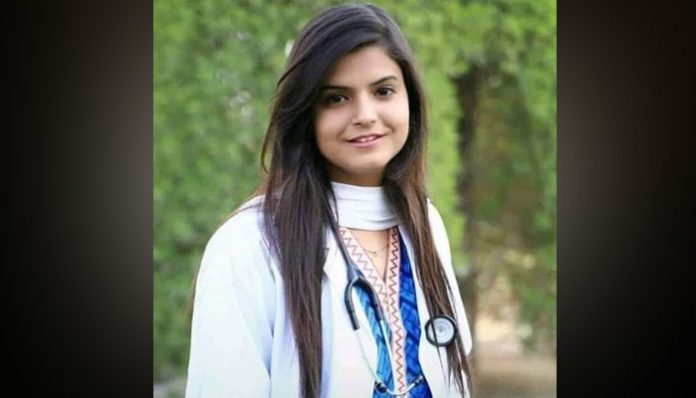
A huge revelation has been made in the murder case of the Hindu student in Pakistan. Earlier, the final autopsy of Dr Nimrita Kumari Chandani revealed that she was murdered after being raped in her hostel room in September 2019. Now, it is being reported that the police in Pakistan did not even send crucial evidence pertaining to the investigation in time to the forensic lab for testing.
The police have now received the DNA report of the dupatta that was wrapped around the victim’s neck at the time of death. However, forensic experts have told the Police that they were unable to retrieve any shred of skin or droplets of blood from the dupatta, as a consequence of which they could not retrieve any DNA sample from the object.
It is pertinent to mention that DNA can be retrieved in such instances only within 72 hours of the time of death. However, the Police had sent the dupatta to the lab a week after the murder.
Meanwhile, the National Database and Registration Authority have told Larkana Police that the fingerprints they had sent them were of extremely poor quality and none of them matches with the records in their database. The Police had sent the fingerprints a month after the murder.
Hindu student Nimrita Chandani, a final year BDS student in the Bibi Asifa Dental College of Larkana, Pakistan was found dead in her room in September. She was found lying on a cot with a rope tied around her neck while her room was locked from inside. The college administration tried to pass it as suicide. Following the incident, the Sindh High Court on September 25 had ordered a judicial inquiry into it as her family alleged that she may have been murdered.
The Larkana police have stated in its defence that they were alerted of the incident three hours after Nimrita’s body was found. They added that the crime scene was already contaminated and college students had admitted that they had removed the dupatta and had shifted Nimrita’s body to a different position. However, they have not stated why the police had made such a delay in sending the evidence to the DNA lab.


