

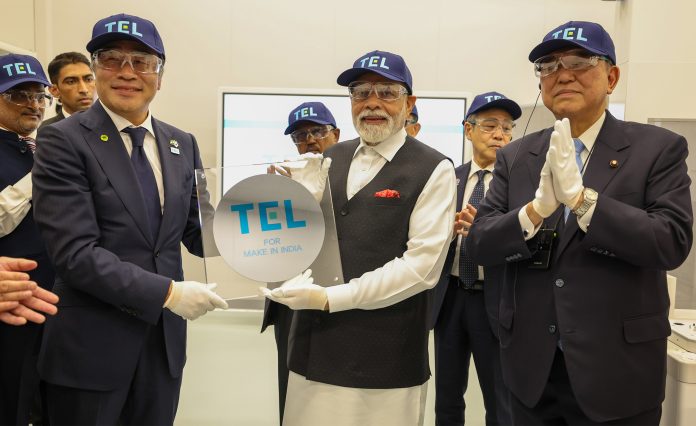
Prime Minister Narendra Modi visited a semiconductor plant in Japan on his second day of the visit to the country. He was accompanied by Japanese Prime Minister of Shigeru Ishiba for the visit to Sendai in Miyagi Prefecture on a bullet train. In Sendai, the two leaders visited Tokyo Electron Miyagi Ltd (TEL Miyagi), a leading Japanese company in the semiconductor sector.
Prime Minister Modi was briefed about TEL’s role in the global semiconductor value chain, its advanced manufacturing capabilities and its ongoing and planned collaborations with India. The factory visit gave the leaders a practical understanding of the opportunities that exist between the two countries to forge collaboration in the field of semiconductor supply chain, fabrication and testing.
PM Ishiba and I visited the Tokyo Electron Factory. We went to the Training Room, Production Innovation Lab and interacted with top officials of the company. The semiconductor sector is a key area for India-Japan cooperation.
— Narendra Modi (@narendramodi) August 30, 2025
In the last few years, India has made many strides in… pic.twitter.com/6Fmv0s7gUo
PM Modi posted on X, “PM Ishiba and I visited the Tokyo Electron Factory. We went to the Training Room, Production Innovation Lab and interacted with top officials of the company. The semiconductor sector is a key area for India-Japan cooperation.”
PM Modi also posted pictures of his travel on the Shinkansen, popularly known as bullet train. He said, “Reached Sendai. Travelled with PM Ishiba to this city on the Shinkansen.”
Reached Sendai. Travelled with PM Ishiba to this city on the Shinkansen.@shigeruishiba pic.twitter.com/qBc4bU1Pdt
— Narendra Modi (@narendramodi) August 30, 2025
The visit to Sendai highlighted the complementarity between India’s growing semiconductor manufacturing ecosystem and Japan’s strengths in advanced semiconductor equipment and technology. Both sides reaffirmed their commitment to deepening cooperation in this sector, building on the Memorandum of Cooperation on the Japan–India Semiconductor Supply Chain Partnership as well as ongoing partnerships under the India–Japan Industrial Competitiveness Partnership and Economic Security Dialogue.
The visit came amid reports that Japan will be shifting manufacturing of legacy chips and LCD screens to India. While decides like computers and phones use the latest semiconductors and displays, many devices use older legacy technologies, like household electrical equipment. A Nikkei Asia report said that Japan will be transferring technologies for such legacy systems to India to reduce reliance on China, while the plants in Japan will focus on making cutting-edge latest items.
This joint visit by Prime Minister Modi and Prime Minister Ishiba also underscored the shared vision of India and Japan to develop robust, resilient and trusted semiconductor supply chains. Prime Minister Modi conveyed his appreciation to Prime Minister Ishiba for joining him in this visit and reaffirmed India’s readiness to work closely with Japan in this strategic domain.
Prime Minister Ishiba also hosted a lunch in honour of Prime Minister Modi in Sendai. The Governor of Miyagi Prefecture along with other dignitaries were present on the occasion.
PM Modi later departed from Japan to Tianjin in China to attend the SCO summit.


