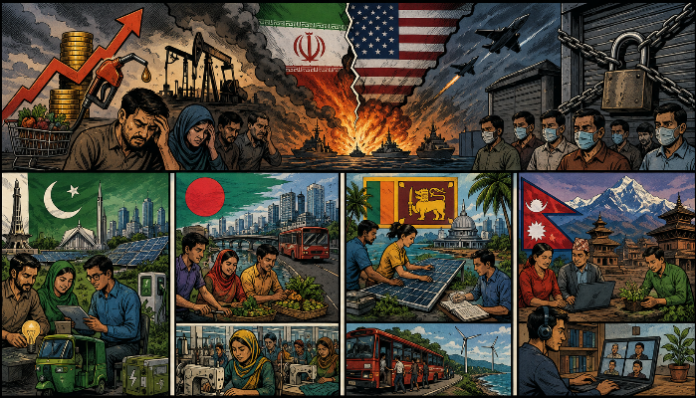
The intensification of conflict between the United States, Israel and Iran caused fuel prices to spike, underscoring the vulnerability of the energy sector to geopolitical shocks. Fears of protracted disruptions to shipments through the Strait of Hormuz, a crucial chokepoint for 25% of global oil flows, pushed Brent crude prices to multi-year highs in late April and early May, at over $100 per barrel.
Energy markets have been profoundly destabilised, resulting in inflation and a surge in energy costs around the world. However, India has proven to be an exception despite its own set of struggles owing to the war. It successfully maintained a steady energy supply with consistent prices without any major alterations, even as G20 states had to confront the fallout from the tensions in West Asia.
Petrol Prices in G20 Countries as of 11 May, 2026. pic.twitter.com/TGU6iuMyhs
— The Indian Matrix (@indianmatrix) May 11, 2026
Likewise, India’s immediate and larger neighbourhood had to adopt to a range of policies to manage the growing energy challenge. Many countries shared plans to ration fuel and energy consumption as the dispute persists. Fuel shortages prevailed in nations including Maldives, Bangladesh, Nepal, Sri Lanka and Pakistan.
Additionally, they are relying on New Delhi for support. India is the fourth-largest refiner in the world and supplies fuels to Bangladesh, Nepal, Bhutan and Sri Lanka. The nation is viewed as a vital alternative during emergencies, from urgent shipments to continuous pleas for diesel and Liquefied Petroleum Gas (LPG). This emphasises India’s expanding position as a dependable partner for upholding stability throughout South Asia and the Indian Ocean.
Maldives looks at India for help
These countries depend on energy imports and tourism is a major source of income for Sri Lanka and the Maldives which witnessed a major decline. The number of tourists visiting the Maldives decreased by 20%, just weeks before a due $500 million debt repayment. The figure in the first 16 days of March was down by 21% compared to the same period last year. Meanwhile, Maldives hiked fuel prices and wanted to secure deliveries from India.
“The government of Maldives has reached out to us for supply of petroleum products both on short-term and long-term basis. The request is being examined keeping in mind our own availability and our own needs,” mentioned Ministry of External Affairs spokesperson Randhir Jaiswal.
Pakistan issues directives due to severe fuel shortage
On the other hand, Pakistan, which takes around 80% of its crude oil from the United Arab Emirates and Oman, where prices hit a record high because of the ongoing turmoil, faced a substantial rise in costs of fuel amid its role as a failed “mediator” between Washington and Tehran. The Islamic Republic also extended school holidays by 2 weeks, switched to online classes and mandated a four-day workweek for government offices.
All markets and commercial centers, with the exception of Sindh province, were ordered to shut at 8 pm. Weddings at private residences or commercial locations were not permitted after 10 pm. Public transit in Gilgit and Muzaffarabad was declared free for a month. Fuel allocations for government divisions were reduced by 50% for a period of two months.
It was communicated to offices that only 50% of the staff should be physically present. The initial Twenty20 cricket matches in the Pakistan Super League were played behind closed doors without any audience and its opening ceremony was cancelled.
“Prime Minister Shehbaz Sharif requested all of Pakistan to restrict their movements because of the fuel crisis. We closed schools and instituted work from home and increased the number of Eid holidays. We don’t know how long this war will last,” expressed Pakistan Cricket Board (PCB) chairman and the country’s interior minister, Mohsin Naqvi.
Bangladesh introduces strict measures
95% of Bangladesh’s gas and oil originate from West Asia. Hence, it had to assess its energy usage in light of the unrest. The country increased Ramzan holidays, shortened shop and office hours in an effort to save electricity. Banks were told to function from 9 am to 3 pm, and government and private offices from 9 pm to 4 pm.
Offices had been directed to reduce power consumption, which included eliminating overly bright lighting. There were also limitations on non-essential travel and on the amount of fuel and energy used in public offices.
The nation’s shopping malls were required to close at 6 o’clock in the evening but food establishments were expected to maintain their regular hours. Government entities had been advised to forgo purchasing computers and automobiles. Dhaka stopped production at fertiliser facilities and placed restrictions on fuel procurement. Bangladesh also outlawed decorative lighting at weddings until further notice.
The country also turned to India for assistance. “We have received requests from some neighbouring countries for energy exports, including diesel from Bangladesh. Domestic availability and production will be factored in before any decision is taken,” Jaiswal stated at the time. The Modi government had promised to send over 50,000 tonnes of diesel to Dhaka by April.
Sri Lanka’s economy continues to struggle amid the new hurdle
Sri Lanka, which continues to grapple with economic instability and is trying to prevent another collapse similar to 2022, also bore precarious circumstances stemming from the present distress. It proclaimed every Wednesday to be a “holiday” to preserve the fuel reserves, reinstate work-from-home options and formal programs were postponed.
The public institutions, universities and schools were covered under the four-day workweek. Moreover, Colombo implemented constraints on the quantity of fuel its residents could obtain. This move was last enforced in 2022, at the height of its bankruptcy.
Bus and train services were scaled back. Households and businesses had to confront greater electricity rates. The island nation drove the cost of power by up to 40% and that of fuel by a third. It also slapped a ban on the utilisation of billboards, neon signs and streetlights. The government also encouraged use of fewer air conditioning units.
A conversation happened between Prime Minister Narendra Modi and President Anura Kumara Dissanayake after which India shipped 38,000 metric tonnes of fuel (20,000 MT diesel and 18,000 MT petrol) to Sri Lanka.
Nepal announces various regulations to address the situation
Nepal similarly lowered its working week from 6 to 5 days in April in response to the violent face-off in the Middle East. Official spokesperson Sasmit Pokharel noted, “Given the present uncomfortable situation caused by fuel supply, the government and educational institutions remain closed for two days.” Government offices would run from Monday to Friday from 9 am to 5 pm. Furthermore, senior administrative personnel received a 50% slip in their fuel quota.
The Nepalese government added that it was going to examine possibilities (legal arrangements) to switch from petrol and diesel vehicles to electric models. The cost of aviation fuel more than doubled alongside a surge in the price of petrol and diesel. The landlocked Himalayan country started selling gas cylinders that were only partially filled due to the sensitive situation and frenzied buying. Nepal also asked India for larger provision of LPG.
The military junta declares strict directives for Myanmar
A comprehensive fuel rationing system for private vehicles was unveiled by the ruling junta in Myanmar. The National Defence and Security Council (NDSC) stated that the new rules, which went into effect on 7th March, were a reaction to “global political situations” and armed strife in the Middle East that had impeded the influx of oil.
According to the regime, even-numbered plates would be authorised to drive on even dates and odd-numbered plates on odd dates under an innovative “even-odd” licensing regime. Electric motorcycles and cars were exempt. Additionally, the NDSC threatened to penalise companies and people that hoarded fuel for resale at inflated prices.
All government staff were asked to work from home every Wednesday as gas and diesel prices ascended by 50%. Domestic flights were temporarily suspended due to massive scarcity of jet fuel.
The state of affairs just as serious in the wider neighbourhood surrounding India
Southeast Asia’s economy is heavily dependent on commerce and exports and the altercation between the Islamic regime and Trump administration triggered to grave implications for the area, especially with rising oil prices and hindrances in international trade. The continuing feud hurts the regional economies and renders matters more complicated for nations who have significant trade surpluses with the United States, such as Vietnam, Thailand, Malaysia, Indonesia and the Philippines.
These countries are predominantly reliant on fossil fuels from the Middle East and is consequently quite susceptible to supply chain failures. Fuel prices skyrocketed throughout Southeast Asia. The cost of gas and diesel rose by 50% in the Philippines, Laos, Vietnam and Cambodia.
The cost of jet fuel, a byproduct of crude oil, likewise soared. Thailand had a 50% reduction in tourist arrivals in March compared to the previous month. According to one estimate, up to 3 million fewer tourists could make it to the nation if the standoff lasts longer than 6 months, costing it an estimated US$4.5 billion in lost tourism earnings.
A national energy emergency was approved in the Philippines due to “the resulting imminent danger posed upon the availability and stability of the country’s energy supply.” The nation’s jeepney drivers were among those most adversely affected by the war. Prices climbed up and inflation took hold.
The high cost of fuel equally bothered farmers and fishermen. Bulacan had already seen the forced cessation of planting by many vegetable growers.
A looming danger to economies
Civil servants were directed to work from home one day a week in Malaysia, Indonesia and the Philippines. Laos government recommended ministries to cut back on travel, opt for electric vehicles, promote remote work and meetings as well as rotate employees to save on fuel in its emergency order. Laos’s predicament was exacerbated when Thailand stopped importing energy to its neighbours.
The school week in Laos was shortened from five to three days. Notably, “The Laotian Times” reported on 28th March that the Lao Statistics Bureau’s most recent data showed headline inflation increased to 9.7% in March from 6.2% in February and 5.1% in January. The war was feared to prompt another economic crisis in the country.
Vietnam also removed some fuel taxes until mid-April to offset outrageous fuel costs and ease the burden on people and companies. These prices diminished by about 20% as a result of the action, although they stood far higher than they were prior to the violent rivalry. Operational costs also shot up by almost 60% due to the dearth of diesel and LPG needed for factory equipment. Airlines in Vietnam clamped on flights on certain domestic routes to save jet fuel.
Indonesia vowed to sustain fuel subsidies for the remainder of the year and carried out fuel rations for private drivers to quell domestic chaos. It also had to slash its free school food program by one day per week due to higher government spending.
Malaysia temporarily dropped the monthly subsidised fuel allotment from 300 litres to 200 litres after its fuel subsidy cost quadrupled in March. Governments urged commuters to use public services rather than private vehicles and promoted energy efficiency in homes and workplaces.
Singapore underwent elevated electricity and inflation rates, with certain sectors of the economy being more vulnerable than others. The cost of aircraft fuels more than doubled. Public agencies received guidance to minimise their usage of electricity, particularly air conditioning, while the government launched support measures of approximately S$1 billion ($785 million) to stabilise the economy.
Conclusion
The hostilities in West Asia have brought about upheaval and trouble internationally with every country feeling the heat even though some regions have been better prepared to counter it than others via subsidies, fresh rules or other means. Nevertheless, the most alarming aspect is that the conflict does not appear to be nearing an end anytime soon.