Home Blog Page 11

From USCIRF to IAMC: Read about 5 anti-India outfits, with ties to Islamists and Khalistanis, which are opposing the visit of RSS chief Mohan Bhagwat to the US

Rashtriya Swayamsevak Sangh (RSS) chief Mohan Bhagwat is set to embark on a three-nation tour of the United States, Canada and the United Kingdom from 25th August. The visit, coming during the organisation’s centenary year, has already stirred opposition among the global anti-India, Hindu-hostile nexus of Islamists, Khalistanis and liberals. 

Hence, they have begun pressurising the government to prevent Bhagwat from entering their country and speaking publicly, portraying him as a “Hindutva” leader who poses threats to Indian minorities. His organisation has been absurdly described as a replica of the Nazi Party, which persecutes Muslims and Christians with the implicit support of the Bharatiya Janata Party (BJP) government led by Prime Minister Narendra Modi. The unsubstantiated allegations intend to attack not only Bhagwat or RSS but also the country on the international front and even strain its diplomatic relations with other nations.

OpIndia has already covered how the Islamist organisation “Justice For All,” founded by a Pakistani-origin man, has launched an online petition for this purpose. The group has its roots in Jamaat-e-Islami and a profound relationship with the notorious ICNA (Islamic Circle of North America). Unsurprisingly, there are multiple other entities with similarly sinister credentials and devious agendas that do not want Bhagwat to land in their country.

United States Commission on International Religious Freedom

USCIRF (United States Commission on International Religious Freedom), which is also headed by a Pakistan-born American, Dr Asif Mahmood, also shares the same objective. Notably, the chief of this “independent body,” who has accepted to share warm ties with political parties across his native country, wanted India to be considered as a Country of Particular Concern (CPC) along with sanctions on the Research & Analysis Wing (R&AW) and RSS in their 2026 report.

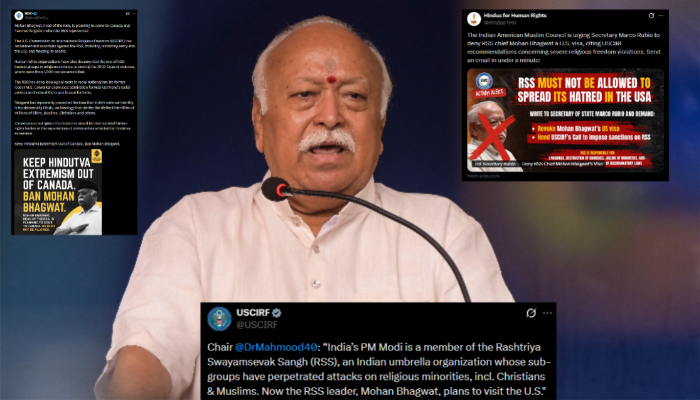
He is once again engaged in his propaganda against Bhagwat, outlining that PM Modi is a part of RSS, “an Indian umbrella organisation whose sub-groups have perpetrated attacks on religious minorities, including Christians and Muslims.” USCIRF Commissioner Gene Mills has also lent her voice to strengthen this fabricated narrative and added, “RSS leaders, even when affiliated with the Indian government should not be honoured with high-level meetings or diplomatic,” restating the demand to put sanctions on RSS and those affiliated with it.

However, these statements are fairly obvious as the commission has historically been a stage for anti-India elements that seek to fulfil their ulterior objectives by continuously targeting the nation in the name of minority rights. Furthermore, Hindus have been attacked in the US, and their temples are frequently desecrated and vandalised, but this apparently does not constitute an assault on minorities or their religious rights as the country is not India.

Indian American Muslim Council and Hindus for Human Rights

Two vehement detractors of India, the Indian American Muslim Council (IAMC) and Hindus for Human Rights (HfHR), have joined forces in their mission to prevent Bhagwat from making an appearance in the United States.

HfHR has promoted IAMC’s online petition asking people to take part in it to urge Secretary of State Marco Rubio to revoke Bhagwat’s US visa, insisting that otherwise it would “send the wrong message about America’s commitment to religious freedom and the safety of minority communities.”

It has referenced the aforementioned USCIRF report to support its argument against the “Hindu nationalist,” contending that he should not be permitted to speak at a significant event scheduled to take place in New York City on 29th August. Bhagwat is reportedly going to address “Universal Oneness Celebrations” which is organised by American Hindus for Engagement and Dialogue (AHEAD).
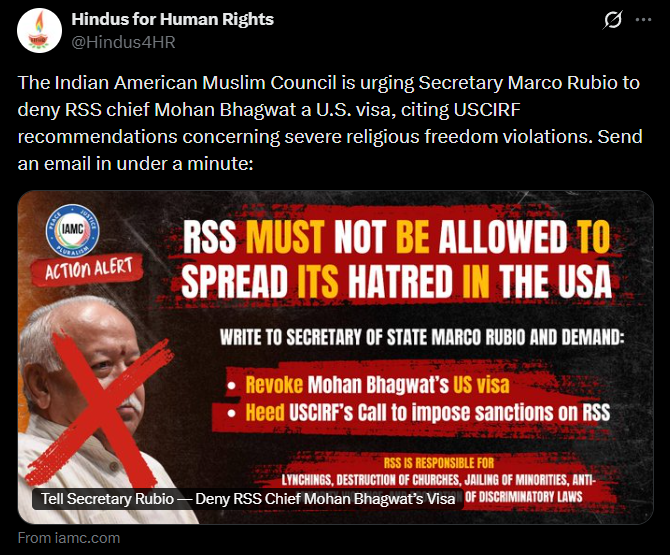
IAMC recounted that the United States has previously yielded to such pressure and cancelled PM Modi’s visa over the 2002 Gujarat riots, in which he had no involvement, as clarified by the Indian Supreme Court. Therefore, it is time for the “State Department to act again” and adhere to the demands of these groups, regardless of the reality of their allegations or the potential impact on relations between the two nations.

IAMC, which hosts figures such as Ilhan Omar to spread disinformation against India, has consistently launched programs and events that aim to paint a target on the backs of the vulnerable Hindu American community. This includes referring to them as racists to promote its anti-Hindutva and Muslim victimhood agenda.

IAMC, a Jamaat-e-Islami weapon pretending to be an advocacy group, maintains links with Lashkar-e-Taiba (LeT). The Hindu American Foundation (HAF) has also reported its connections with the banned terrorist group, Students Islamic Movement of India (SIMI). The outfit together with others of its ilk, had also planned to demonstrate against PM Modi’s 2023 US visit holding banners that read, “Save India from Hindu Supremacy” and “Modi Not Welcome.”

HfHR, which has no connection to Hindus or human rights, is a 2019 product of the unholy union of IAMC and the Organisation for Minorities of India (OFMI). It has openly supported Hamas and has even utilised Hindu religious texts to justify their acts of terrorism.

HfHR’s Executive Director Sunita Viswanath had drawn a comparison between the suffering of Palestinians in Gaza and the challenges faced by Lord Krishna and the Pandavas in the Mahabharata, in an opinion piece published on the propaganda platform “The Wire.” She wanted Hindus to empathise with Hamas terrorists on the pious occasion of Krishna Janmashtami.

HfHR even called on London Mayor Sadiq Khan to terminate all associations with Hindu groups like the Vishwa Hindu Parishad (VHP), BAPS (Bochasanwasi Akshar Purushottam Swaminarayan Sanstha) and Chinmaya Mission. The anger was triggered due to their involvement in the organisation of the Diwali festival at Trafalgar Square in London in 2024.

The IAMC and HfHR, infamous for their anti-India and Hinduphobic agendas and their ties with extremist and terrorist groups had opposed the Ram Mandir tooth and nail. The Federation of Indian Associations NY-NJ-CT-NE (New York, New Jersey, Connecticut, and New England) intended to feature a Ram Janmabhoomi float in the India Day Parade to celebrate India’s 78th Independence Day in 2024. However, HfHR, IAMC and others in this ecosystem initiated a campaign against the move driven by unfounded reports and misinformation.

World Sikh Organisation and other Khalistanis elements

If Islamists are objecting to Bhagwat’s visit, their Khalistani lackeys are not far behind, regurgitating the same rhetoric to voice their protest. The World Sikh Organisation (WSO), based in Canada, has latched onto the controversial USCIRF report and beaten the drum of disproven accusations surrounding the Gujarat riots.

The group also took issue with the Hindu identity of India, a reality highlighted by Bhagwat, whose remarks have been deliberately misconstrued. “Bhagwat has repeatedly promoted the idea that India’s national identity is fundamentally Hindu, an ideology that denies the distinct identities of millions of Sikhs, Muslims, Christians and others,” it charged.

His comments were meant to reflect a broad national and cultural identity linked to the land and its heritage, rather than a narrow religious classification. However, the sentiment was knowingly distorted to impart a communal colour to it.
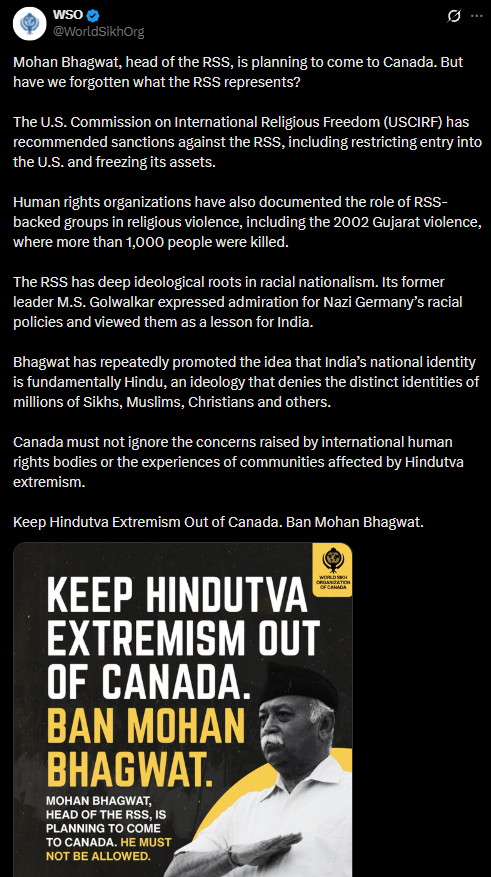
World Sikh Organisation then declared, “Canada must not ignore the concerns raised by international human rights bodies or the experiences of communities affected by Hindutva extremism,” seeking a ban on Bhagwat. The group aspires to be the champion of this manufactured outrage, while Canada has turned into a haven for criminal Khalistanis who have assaulted numerous temples and Hindu devotees.

However, this evidently does not fit their interpretation of “extremism” and how could it, when the group instead honours Khalistani terrorists such as Talwinder Singh Parmar and Hardeep Singh Nijjar in association with the infamous Sikhs for Justice.

Furthermore, the pro-Khalistani cheerleaders of Islamists, MPs Heather McPherson and Jenny Kwan, even wrote to Canada’s ministers for public safety, immigration and foreign affairs, asking Bhagwat to be declared inadmissible to the country because he purportedly has a history of “hate speech, advocacy of violence against religious minorities, targeted intimidation of critics in India and in Canada.”

They went so far as to assert that he has links to criminal and terrorist groups, calling for a ban on the RSS, contending that its influence might endanger minority communities and disrupt public order.

Meanwhile, the Khalistanis on the other side of the Canadian border have planned a “peaceful” agitation to oppose Bhagwat’s event at Madison Square Garden. “Participants and human-rights advocates are invited to stand together for equality, religious freedom, pluralism, justice, and peaceful democratic expression,” they urged.
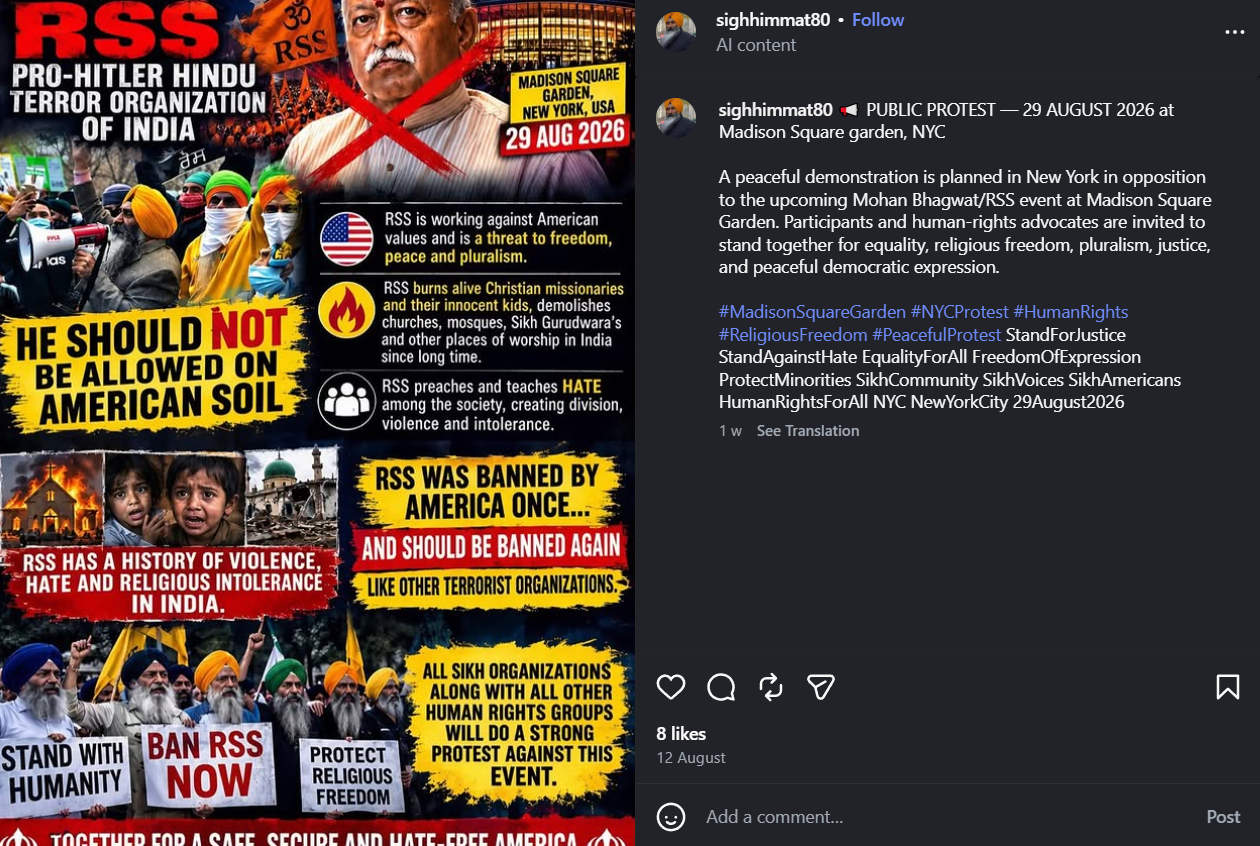
Words such as extremism, hate, violence, minority rights and other similar terms from the anti-Hindu glossary have found their way into these appeals and demands to advance a malicious agenda. However, the narrative remains largely anchored in jargon, rhetoric and a firm lexicon, conspicuously devoid of any empirical evidence, because the goal is not what is projected but to perpetually target India and Hindus by one means or another.

Canadian Forum for Human Rights and Democracy in India

A coalition of alleged “civil society, human rights, labour, and faith-based organisations” in Canada requested Public Safety Minister Gary Anandasangaree to forbid Bhagwat from entering the nation. Obviously, the US report along with usual anti-India rhetoric, has formed the basis of this submission.

“Minister Anandasangaree must enforce Canadian law to protect our communities from far-right extremism, hate speech, and foreign intimidation. Allowing the head of a violent paramilitary network into Canada threatens vulnerable minority populations, including Muslims, Sikhs, Christians, Jews, Dalits and undermines Charter rights,” it expressed.

Canadian Council of Indian Muslims (CCIM), Canadians for Indian Democracy (CID), South Asian Dalit Adivasi Network (SADAN), World Sikh Organisation (WSO), Canadian Council of Muslim Women, Independent Jewish Voices Canada (IJV), Just Peace Advocates, South Asian Women’s & Immigrants Services Inc, Dr Ambedkar International Mission (AIM), Toronto, Toronto East Anti-hate Mobilisation (TEAM) and Asian Canadian Labour Alliance (ACLA) are among the petitioners.

Moreover, Justice For All Canada, together with 266 similar groups, also asked the Canadian government, including the Prime Minister, to prevent Bhagwat from entering the country. A similar outfit named “Savera: United Against Supremacy” endeavoured to disseminate propaganda in relation to the visit by circulating conspiracy theories about its organisers and purpose.

However, the rights and freedoms these organisations continuously advocate are rooted in secessionism, aggression against Hindus, anti-national activities and spewing venom against India, with anyone who challenges them rapidly categorised as an enemy.

Their authentic position on these grand declarations has been exposed multiple times, including their blatant demonstrations against the Citizenship Amendment Act which basically pertained to the right of life of the severely oppressed minorities in Pakistan, Bangladesh and Afghanistan.

Conclusion

All these entities, which unmistakably belong to the worldwide Islamo-leftist cabal, have tried to present their prejudice as a form of advocacy for human and minority rights, even though their hypocrisy and actions consistently reveal their genuine intentions. Their actions are a result of a pathological animosity towards Hindus, which extends to the Hindu Prime Minister, Hindu organisations and their leaders.

These groups might manifest in various shapes and forms but function within a singular ecosystem that is solely dedicated to undermining India and its largest community, irrespective of whether they are inside or outside the nation. The perpetual collaboration among them on these issues serves as compelling evidence of this.

Their overarching aim is to characterise the Indian government and Hindutva groups as extremist groups that merit sanctions and bans. For decades, this has been their course of action, and it is likely to remain so for the unknown future ahead. And India has introduced the Foreign Contribution (Regulation) Amendment Bill, which will only create a larger target on individuals associated with the “Hindutva government” and outfits dedicated to India.
Suchitra Vijayan of Soros-funded ‘The Polis Project’ comes under scanner for workplace harassment, former employees speak up: Here is what happened

On Thursday (20th August), Suchitra Vijayan, the founder of the George Soros-funded Kashmiri separatist platform ‘The Polis Project’ was exposed on X (formerly Twitter) for unethical practices, workplace harassment, toxic behaviour and arbitrary firing of employees.

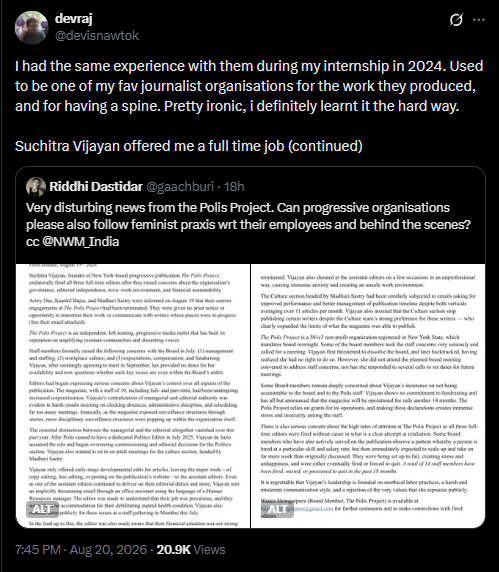
A press release to this effect was posted on X by ‘journalist’ Riddhi Dastidar. It read, “Suchitra Vijayan…unilaterally fired all three full-time editors after they raised concerns about the organisation’s governance, editorial independence, toxic work environment, and financial sustainability.”

The affected Editors were identified as Aritry Das, Kaashif Hajee, and Madhuri Sastry. “They were given no prior notice or opportunity to transition their work or communicate with writers whose pieces were in progress,” the press release stated.

It further added, “Ironically, as the magazine exposed surveillance structures through stories, more disciplinary surveillance structures were popping up within the organization itself.”

Suchitra Vijayan took increasing control of the editorial content of ‘The Polis Project’ and began interfering with the work of full-time editors.

“Even as one of the assistant editors continued to deliver on their editorial duties and more, Vijayan sent an implicitly threatening email through an office assistant using the language of a Human Resources manager. The editor was made to understand that their job was precarious, and they were given no accommodation for their debilitating mental health condition. Vijayan also mocked them publicly for these issues at a staff gathering in Mumbai this July,” the press release exposed.

It pointed out, “In the lead-up to this, the editor was also made aware that their financial situation was not strong enough for them to fail to meet any of the conditions set out by Vijayan, lest they would be terminated. Vijayan also shouted at the assistant editors on a few occasions in an unprofessional way, causing immense anxiety and creating an unsafe work environment.”

As per the press release, Suchitra Vijayan also attempted to dissolve the Board on being questioned about accountability and transparency. She has announced that ‘The Polis Project’ will remain operational for 14 more months.

“A total of 14 staff members have been fired, ousted, or pressured to quit in the past 18 months. It is regrettable that Vijayan’s leadership is founded on unethical labor practices, a harsh and intolerant communication style, and a rejection of the very values that she espouses publicly,” the press release concluded.

An X user Devraj, who previously worked at ‘The Polis Project’, also narrated his ordeal.

“I reported her head of Comms misbehaviour and threatening email towards me. What followed was 2+ hour long disciplinary grilling of me because I called them casteist. I left that role because I was essentially told to apologise or get fired because I was dispensable for them. Months of hard work, staying up late and working on weekends just to be told your work is not valuable,” he stated.

“Horrible work environment where SV would yell at her employees during meetings for having different opinions than her…The constant demeaning behaviour I have faced at the hands of their leadership is beyond description. Polis Project is no better than all the other organisations they called out in that podcast series. SV does not respect her employees or the work they do, and anybody who has worked there will tell you the same,” the ex-employee of The Polis Project emphasised.

“SV refers to the organisation as a non-hierarchical one where everyone is welcome to share their opinions and perspectives. When I did, I was labelled as a misogynist Ambedkarite activist,” he lamented.

He concluded by pointing out how ‘The Polis Project’ is a ‘two-faced organisation masquerading as progressive’.

Who is Suchitra Vijayan

Suchitra Vijayan is the founder of the George Soros-funded-Polis Project. A casual look at Suchitra Vijayan’s Twitter timeline (which has now been deleted) shows her political antecedents. She had expressed her open support and admiration for Delhi riot accused Umar Khalid.

In 2023, Suchitra Vijayan also supported ‘journalist’ Irfan Mehraj who was arrested in connection with a ‘terror funding case.’ NIA had pointed out that Mehraj was a close associate of ‘activist’ Khurram Parvez and a member of the Jammu and Kashmir Coalition of Civil Societies (JKCCS).

According to Disinfo Lab, the Facebook page of the Polis Project has a Pakistan-based admin, even though her entire propaganda work is based on India. The OSNIT handle also stated that ‘The Polis Project’ is regularly featured in events of the Islamist organisation ‘Indian American Muslim Council (IAMC).

The Polis Project extensively published content claiming Muslims were facing atrocities in India. The organisation’s reports described the anti-Hindu riots in Delhi in 2020 as a “pogrom against the Muslim community”.

Upon a simple search on Twitter, we found that the organisation called it “Pogrom” against Muslims multiple times. The organisation also propagated separatist views on Kashmir and published content favouring terrorists like Burhan Wani, Yasin Malik and others.

The Polis Project consistently called Kashmir “Indian-administered” and called India a “settler-colonialist”. It further claimed that “genocide” was underway in Kashmir.

It furthered their propaganda and gave a clean chit to Pakistan in the Pulwama attack and called Indian media a “BJP’s propaganda machine”. Banned organisation Jamaat-e-Islami also uses its content in its course material on “Stand With Kashmir

TCS is monitoring nearly 600,000 employees: Where does cybersecurity end and workplace surveillance begin?

Tata Consultancy Services (TCS), one of India’s largest IT services companies, has reportedly deployed a Digital User Experience Monitoring tool on laptops issued to its employees, potentially giving the company unprecedented visibility into how its workforce uses corporate devices. Reportedly, the software can provide information about which applications employees use and how much time they spend on them. With TCS employing nearly 600,000 people, the scale of the reported deployment makes the development significant and raises questions about where legitimate cybersecurity monitoring ends and workplace surveillance begins.

A legitimate cybersecurity purpose, but unclear boundaries

There is a legitimate business case for monitoring corporate devices. TCS handles sensitive information belonging to banks, financial institutions, healthcare companies, governments and multinational corporations. Endpoint monitoring can help identify malware, detect unusual activity, investigate security incidents and prevent confidential information from being transferred outside corporate systems. The company therefore has a clear interest in ensuring that devices issued to employees are not being misused or compromised.

The problem, however, begins when monitoring a device starts becoming a means of monitoring the person using it. Knowing that a corporate laptop is running a particular application can be useful for IT troubleshooting or cybersecurity. Knowing precisely how long an individual employee spends on different applications, when the employee switches between them and how frequently the system registers inactivity creates a much more detailed picture of that employee’s behaviour. Such information can potentially become a behavioural profile rather than merely a security log.

Why the lack of transparency matters

That distinction is particularly important because TCS has not publicly explained the precise scope of the reported deployment. The identity of the software provider, the categories of information being collected, the length of time for which the information will be retained and the people or teams authorised to access it have not been publicly established. It is also unclear whether the information is being collected purely for cybersecurity and digital-experience purposes or whether it could eventually be used by managers or HR teams to assess individual employees.

This lack of clarity is what makes the development particularly sensitive. Employee monitoring does not necessarily become problematic simply because a company-owned laptop is being monitored. A company can reasonably expect to have significant control over its own devices and networks. But hardware ownership should not become a blanket justification for collecting every piece of behavioural information that technology makes available. The important questions are why the information is collected, whether it is necessary for that purpose, who can access it and whether it can subsequently be used for a different purpose.

How monitoring could be weaponised against employees

The potential for such technology to be weaponised against employees is perhaps the biggest concern. Application usage and periods of inactivity may look objective because they are generated by software, but they do not necessarily provide an accurate picture of productivity. An employee could spend an hour reading technical documentation, attending a meeting, speaking to a client on the telephone or thinking through a complicated programming problem while generating very little measurable computer activity. A system that sees inactivity may record a period of low activity; it cannot necessarily understand what the employee was actually doing.

If managers begin treating such data as a proxy for productivity, the consequences could be significant. A worker who spends relatively little time on a particular corporate application could be perceived as underperforming even if their work is being completed efficiently. Long periods of inactivity could be interpreted as unauthorised breaks. Frequent browser activity could be treated as evidence of non-work-related browsing even when the employee is researching a technical problem. Over time, such information could potentially influence appraisals, promotions, project allocation, performance-improvement plans or even disciplinary proceedings.

This creates the possibility of turning workplace monitoring into a digital version of presenteeism. Instead of employees being judged by the quality and outcome of their work, they could increasingly feel compelled to maintain visible computer activity simply because the system is watching. The workplace incentive then changes from producing results to appearing active.

Could it turn productivity into surveillance?

That concern is particularly relevant in India’s IT sector, where long working hours and constant availability have already become subjects of intense debate. The material reviewed for this article includes employees describing workplaces where leaving on time could be interpreted as a lack of commitment and where there was greater pressure to appear busy than simply deliver results. One employee described a culture in which “performance” could become synonymous with visible activity rather than actual work.

Research cited in the same material also raises concerns about treating longer working hours as synonymous with greater productivity. A WHO/ILO study estimated that hundreds of millions of people worldwide were working 55 hours or more per week and associated such exposure with an increased risk of ischaemic heart disease and stroke. Another study of Indian bank employees found an association between longer working hours and higher levels of burnout and stress. The lesson is not that every additional hour is inherently harmful, but that organisations should be cautious about creating systems that reward visible activity rather than sustainable productivity.

The privacy question under India’s data-protection framework

There is also a genuine privacy question. India’s Digital Personal Data Protection Act recognises certain employment-related purposes for processing personal data, including protecting employers from losses and liability and preventing corporate espionage or protecting intellectual property. That means employee monitoring is not automatically unlawful. But the existence of a legitimate employment purpose does not answer the larger question of proportionality. A company that needs endpoint telemetry to prevent data theft does not automatically need an unlimited behavioural history of every employee.

The scale of TCS’s workforce makes this even more consequential. Monitoring hundreds of thousands of employees can generate an enormous dataset containing application usage patterns, device activity and potentially other information depending on how the software is configured. Individually, these data points may appear innocuous. Aggregated over months or years, however, they can reveal detailed patterns about how particular employees work. The larger the dataset, the greater the importance of access controls, retention limits and safeguards against misuse.

The 600,000-employee data problem

There is another complication involving client-owned virtual desktop infrastructure. Many IT employees work through client environments, meaning that the boundary between an employee’s TCS device and a client’s systems can become complicated. If monitoring extends into virtual environments, the system could potentially encounter information belonging to TCS clients as well. A security tool intended to prevent data leakage must therefore itself be designed carefully enough to ensure that it does not unnecessarily collect or centralise sensitive information.

What happens when employees work on client systems?

TCS is also not the first Indian IT major to face questions around employee monitoring. Cognizant previously faced scrutiny over its use of ProHance, a workforce-management platform capable of recording login times, application and website usage and periods of inactivity. The company said the tool was used only on specific projects at client request and was intended to understand processes and identify inefficiencies rather than evaluate individual employee performance. That distinction is critical: analysing how a process works is fundamentally different from building a behavioural profile of the person performing it.

Cognizant and Infosys offer cautionary precedents

The experience of Infosys in France provides another useful comparison. French labour authorities examined how Infosys recorded working hours for certain employees and found shortcomings in the reliability and auditability of those records. Infosys was fined because its system for recording employee working hours failed to meet local legal standards for reliability, auditability, and monitoring for certain staff categories. 

The larger issue was not simply whether employees were being monitored, but whether the employer could reliably demonstrate what hours employees had actually worked. European jurisdictions generally impose significantly stronger restrictions and safeguards around employee monitoring than India, making the French example a reminder that workplace surveillance is not merely an internal corporate matter.

TCS therefore needs to answer some basic questions about the reported deployment. Employees should know what information the software collects, whether that information is tied to individual identities, how long it is retained and who can access it. Most importantly, the company should clarify whether the data can be used for performance evaluation, attendance monitoring or disciplinary action. If the purpose is cybersecurity, employees should not later discover that information collected for security has quietly become a productivity-monitoring system.

What TCS should clarify

There is nothing inherently wrong with TCS monitoring its corporate infrastructure. A company responsible for sensitive client data must have strong cybersecurity controls. But security cannot become a blank cheque for collecting employee information. The principle should be simple: collect what is necessary to secure the system, not everything that technology makes technically possible to collect.

The real issue, therefore, is not simply whether TCS is watching its employees. It is whether employees know what is being watched, why it is being watched, who is watching it and what conclusions can be drawn from it. Until TCS provides clarity on those questions, the reported deployment of monitoring software across a workforce approaching 600,000 people will inevitably raise concerns that a tool introduced in the name of digital security could evolve into a powerful system of workplace surveillance.

No, Abhijeet Dipke, support from MK Gandhi’s great-grandson Tushar Gandhi is not the ‘biggest certificate’ of patriotism; here’s why

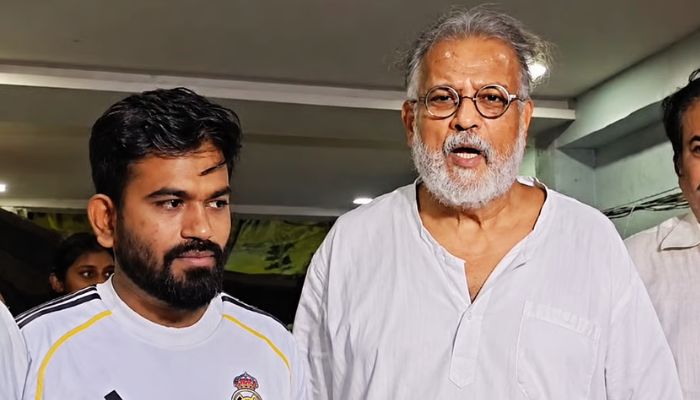
The Cockroach Janta Party (CJP) founder and former Aam Aadmi Party (AAP) functionary Abhijeet Dipke met Mohandas Karamchand Gandhi’s great-grandson, Tushar Gandhi, on 19th August. Abhijeet Dipke claimed that the family of ‘Mahatma Gandhi’ supporting him and the CJP is the biggest certificate of their patriotism.

CJP ‘cockroach’ Abhijeet Dipke boasts support from Tushar Gandhi as ‘biggest certificate’ of patriotism

Taking to X, Dipke shared a video clip of his interaction with Gandhi, and wrote, “It was a great honour to host Mahatma Gandhi’s great-grandson @TusharG sir at my house. Thank you, sir, for your words of encouragement. Cockroaches will always walk on the path shown by Bapu.”

During media interaction on Wednesday, Abhijeet Dipke claimed that receiving endorsement or backing from the family, the great-grandson of ‘Mahatma Gandhi ’, is “the biggest certificate of our patriotism”.

“It is a matter of pride that the family of Mahatma Gandhi is standing with us. During the agitation, we were called anti-nationals, anarchists and violent people. But Tushar Gandhi is standing with us today, which is the biggest certificate that we are peace lovers, non-violent and patriots. I hope those who made allegations against us have got a reply today,” the CJP founder said.

Even though the CJP protest on 20th July turned violent, with ‘cockroaches’ pelting stones and resorting to hooliganism, Dipke claimed the CJP agitation succeeded because the ‘cockroaches’ walked MK Gandhi’s path of non-violence.

“But Gandhiji’s ideology is the soul of this country. Our agitation succeeded because we walked on the path of Mahatma Gandhi. We have shown that his thoughts can never die. Earlier, we were compared with Nepal and Bangladesh. But as I said earlier, when the world learns from Gandhiji, there is no need to look anywhere else,” he added.

Meanwhile, Tushar Gandhi also heaped praises on Abhijeet Dipke and the CJP protestors, and wrote on X, “Made a new friend today. Abhijit Dipke ‘Cockroach Parent’. Respect and Admiration were mutual.”

During a media interaction, Tushar Gandhi also praised the CJP’s turning of Maharashtra government schools into his political battleground under the garb of the ‘School Thik Karo’ campaign, saying that now, after Gen-Z, Gen-Alpha is also asking questions.

Is receiving endorsement from the great-grandson of MK Gandhi really the ‘biggest certificate’ of patriotism?

While Abhijeet Dipke contends that receiving endorsement by Tushar Gandhi or MK Gandhi’s family vindicates him and the CJP against the allegations of being ‘anti-national’ and is the ‘biggest certificate’ of patriotism, patriotism is not a hereditary title or a stamp that one descendant of a person involved in the freedom movement can confer.

No single family gets to monopolise the right to ‘certify’ who is patriotic and who is not. Tushar Gandhi is not a super-citizen or an authority on patriotism merely by virtue of being a descendant of MK Gandhi. Securing Tushar Gandhi’s support does not automatically validate CJP’s motives, methods, and outcomes of its activities.

There is a lot more to Tushar Gandhi than just the identity of being MK Gandhi’s great-grandson. Tushar Gandhi is a long-time critic of the Bharatiya Janata Party and Rashtriya Swayamsevak Sangh; his disdain for Prime Minister Narendra Modi is also widely known. Tushar Gandhi has often claimed that PM Modi’s success is “built on hate” and undermining of ‘secularism’.

In fact, Tushar Gandhi had described Hindutva as “ideology of hate”, and called the BJP-RSS “cancer” in 2025. Despite massive backlash for expressing such extremely hateful and derogatory views for ideological opponents, Tushar Gandhi refused to apologise.

Tushar Gandhi has also participated in various Congress-linked events, endorsed electoral candidates from anti-BJP parties, and joined Congress MP Rahul Gandhi’s infamous ‘Bharat Jodo Yatra’.

Clearly, the hateful rhetoric of Tushar Gandhi against the BJP-RSS is not neutral or above-politics commentary. It is obvious that Tushar Gandhi endorsed the CJP and hailed Abhijeet Dipke, after all the ‘cockroach movement’ managed to do something Congress and the entire left-liberal cabal could not do despite trying all possible manoeuvres, pushing the near-invincible Modi government on the back foot momentarily.

It is not surprising that, driven by his ideological hatred for PM Modi and the BJP, Tushar Gandhi described the CJP protest of 20th July as ‘modern-day Satyagraha’ despite the fact that the cockroaches had resorted to violence and hurled the worst of the abuses at PM Modi and his deceased mother during the supposed ‘Satyagraha’.

The Cockroach Janta Party received support from all the Modi-BJP-RSS-hating political parties, the Islamo-leftist media ecosystem, and even from Khalistani terrorists like Sikhs for Justice chief Gurpatwant Singh Pannun, and Pakistanis. It is natural that Tushar Gandhi, yet another BJP hater, endorsed the unofficial B-Team of the Aam Aadmi Party, the CJP, given it is directly and selectively targeting the BJP governments, be it in the Centre or various states.

If endorsement from the great-grandson of MK Gandhi automatically means ‘biggest certificate’ of patriotism, doesn’t endorsement from Khalistani terrorists and Pakistanis become the biggest certificate of being anti-national?

Not to forget, Tushar Gandhi has also been active in politics. Back in 1998, he formally joined the Samajwadi Party; he even contested elections from Mumbai North West Lok Sabha against the Shiv Sena incumbent.

In April 2021, Tushar Gandhi faced allegations of shielding left-wing terrorists from criticism a day after Naxals killed 22 Jawans in an ambush at Bijapur, Chhattisgarh. Today, in 2026, the Modi government has eradicated violent naxalism from the country, although Dimagi Naxals continue to masquerade as liberal-secular-progressive ‘intellectuals’.

Tushar Gandhi has publicly, through his online presence, books, commentary, and other activities, been aligned with anti-BJP/RSS ideology.

In such a situation, CJP leader Abhijeet Dipke describing endorsement from Tushar Gandhi and the family that ‘represents’ Gandhian ideology as a conclusive ‘certificate’ or ‘proof’ of unquestionable patriotism is ridiculous. The perceived greatness of one ancestor does not automatically pass on to their descendants, just as Tushar Gandhi does not believe in his great-grandfather’s belief of offering the other cheek after being slapped on one.

Abhijeet Dipke’s meeting with Tushar Gandhi came at a time when the CJP leader is running a ‘School Thik Karo’ campaign, barging into government schools in the BJP-ruled Maharashtra, disturbing classes, collecting details and reprimanding school authorities without himself having any legal authority to conduct inspections.

The blatant sexist commentary of Tushar Gandhi

In addition to his hateful rhetoric against his ideological adversaries, Tushar Gandhi has also earned infamy for his creepy and sexist online commentary.

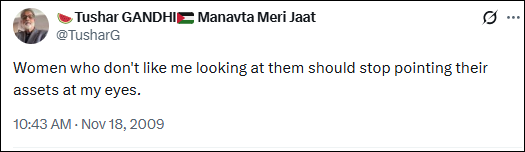
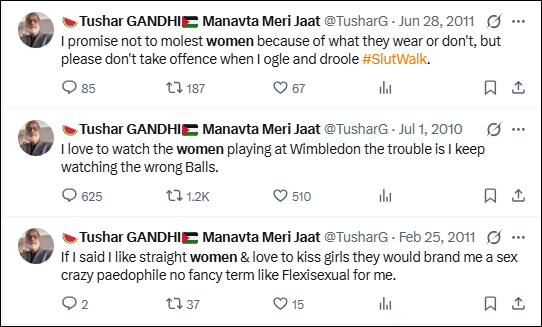
In 2009, Gandhi wrote on Twitter (now X), “Women who don’t like me looking at them should stop pointing their assets at my eyes.”

In another one, he wrote, “Admiration: F&*k kya Maal hai.”

Back in 2010, Tushar Gandhi published a social media post riddled with sexual innuendos. “I love to watch the women playing at Wimbledon the trouble is I keep watching the wrong Balls.”

In another post he wrote back then, “2 all men avoid the Missionary Position 2day its International Women’s Day. Make love 2day in Kerala Position, Women on Top.”

A 2011 post by Tushar Gandhi reads, “I promise not to molest women because of what they wear or don’t, but please don’t take offence when I ogle and droole #SlutWalk.”

Relevant screenshots via X (formerly Twitter)

In a 2014 post on International Women’s Day, he wrote, “Since it’s ‘Happy Women’s Day, ’ men should be allowed to touch them to feel happiness.”

Dredging up Tushar Gandhi’s old disgusting posts was necessary even if one may argue that these posts do not define his entire public life; however, they do undermine claims that somehow the Gandhi family name naturally equates to unimpeachable moral authority.

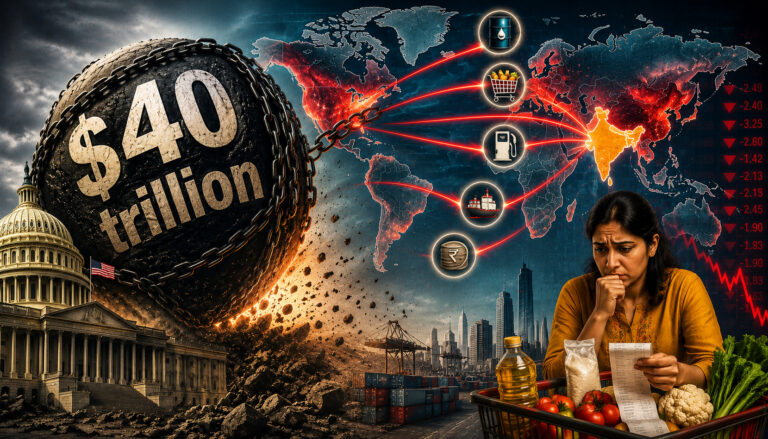
Washington’s debt, Delhi’s bill: USA’s $40 trillion problem is already in your kitchen

Neha, a 34-year-old in Gurugram, checks her mutual fund app every morning before work. For three months straight, it’s been red. Nothing’s crashed, but it’s enough to make her pause over her coffee. The real reason has little to do with anything happening in India. It’s sitting in Washington, where US government debt just crossed $40 trillion, growing by roughly $8.46 billion every single day.

That number alone doesn’t tell the full story. What actually worries markets is the debt held by public lenders, pension funds, foreign governments, banks, money the US must keep refinancing at whatever rates the market demands. The CBO projects this will jump from 101% of GDP now to 120% by 2036, blowing past the post WWII record. Interest payments alone could hit $2.1 trillion a year by then, nearly a fifth of federal spending, just to service old debt.

This isn’t America going bankrupt, it borrows in its own currency, and the dollar remains the world’s safe haven. The real risk is subtler, a slow erosion of confidence, rising rates, and creeping inflation that chips away at the dollar’s dominance over time.

And this doesn’t stay contained to Wall Street. It travels to India through four channels. First, equities, foreign investors pulled nearly ₹2.3 lakh crore from Indian stocks in early 2026, though domestic SIP money absorbed almost 90% of that selling, which is reassuring but also means ordinary retirement savings are now absorbing global shocks. Second, the rupee weakened to nearly ₹95.7 per dollar, pushing up oil and fertiliser costs. Third, that translates into inflation, wholesale prices jumped from 2.1% to nearly 9.9% within months, driven largely by fuel. Fourth, American corporate caution over tech spending slows hiring at IT firms in Bengaluru and Gurugram, since over half of India’s software exports go to the US.

None of this means India should panic. Its foreign exchange reserves dipped under pressure but recovered to nearly $693 billion by July, showing real resilience. And a stable US genuinely benefits India, nobody should want American decline. But the bigger point is this, India can’t treat Washington’s fiscal mess as someone else’s problem. It shows up here too, in fuel prices, in a farmer’s fertiliser bill, in a red number on someone’s phone. Big economies rarely collapse overnight. More often, they leak slowly, and the countries standing nearby feel it first, sometimes before the source even notices.

Read the full article available on Chapter One Mag.

‘Justice For All’ opposes Mohan Bhagwat’s US entry: How the Islamist group and its Pakistani founder have long targeted India and Hindus

Rashtriya Swayamsevak Sangh (RSS) chief Mohan Bhagwat is scheduled to travel tothe United States, Canada and the United Kingdom beginning 25th August (Tuesday) at the “invitation from overseas local associations and organisations” which are connected to the Indian diaspora. He is expected to participate in various events as well as engage with representatives of these groups and members of the community during his visit. The outreach is particularly noteworthy as it aligns with the outfit’s centenary year.

It is hardly surprising that the familiar chorus of anti-India voices has grown louder in opposition to the tour, and Chicago-based non-governmental organisation (NGO), “Justice For All,” has emerged as a key advocate among those seeking to push this agenda. Of course, the familiar vocabulary soon makes an appearance: human and minority rights, equality, justice and everything in between, carefully woven for an appealing moral veneer both to attract their audience and deceive the unaware.

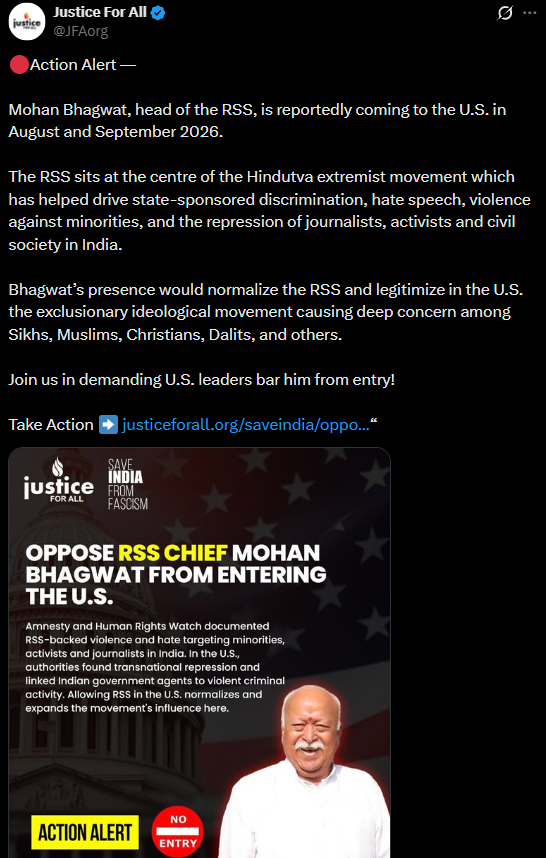
It read, “The RSS sits at the centre of the Hindutva extremist movement which has helped drive state-sponsored discrimination, hate speech, violence against minorities and the repression of journalists, activists and civil society in India,” on social media. “Bhagwat’s presence would normalise the RSS and legitimise in the US the exclusionary ideological movement causing deep concern among Sikhs, Muslims, Christians, Dalits and others,” the post further claimed.

Justice For All even launched an online campaign that urged people to put pressure on the US government to bar Bhagwat from entering the United States. Supporters were asked to add their names, email addresses and locations to an already drafted message addressed to US Secretary of State Marco Rubio.

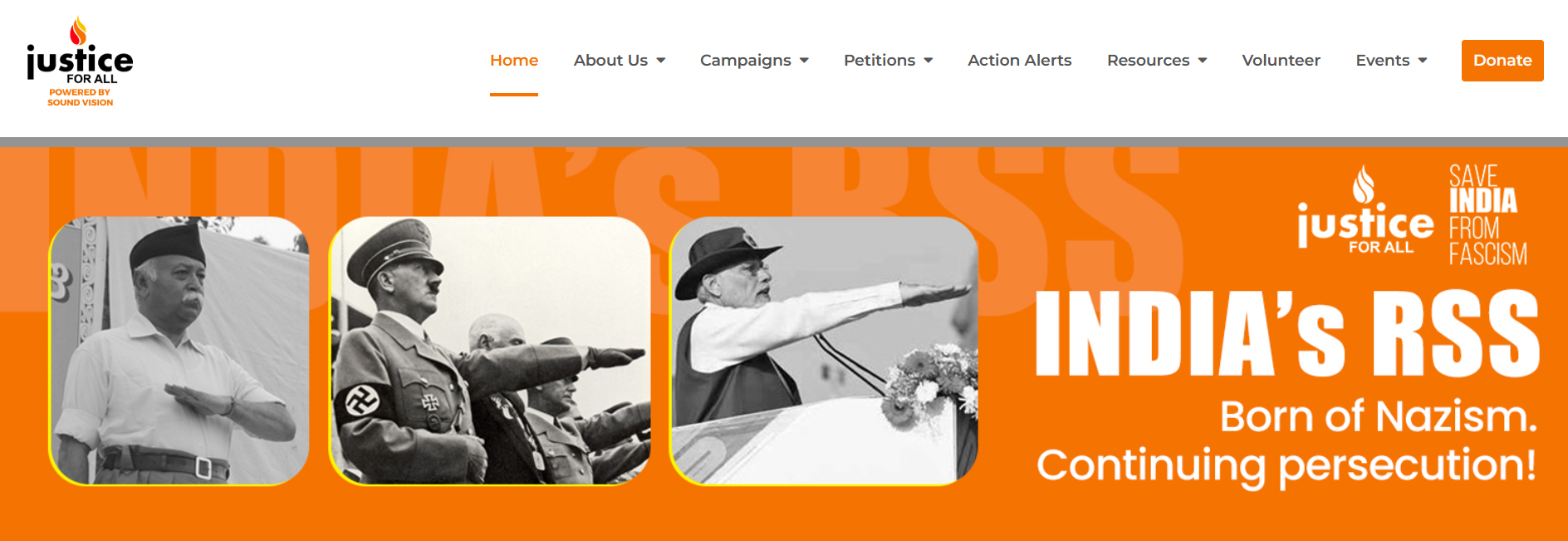
The message itself followed a familiar line of attack. It portrayed Bhagwat as the head of the RSS and the wider network of organisations collectively referred to as the Sangh Parivar, which took inspiration from Nazi Germany and allegedly tried to “cleanse” India of Abrahamic faiths.

However, the demographic picture tells a different story. The growth of both the Muslims and Christian populations in India counters the sweeping accusations, but inconvenient facts are often pushed aside when propaganda takes centre stage. Afterwards, the already discredited discourse surrounding attacks on churches and mosques was again brought to the fore as if Hindu temples are neither vandalised nor desecrated in both India and abroad.

The “NGO” acknowledged, “Bhagwat keeps himself insulated from the attacks, by continually speaking of India being open to religious traditions and Hindu as a culture.” However, in a bizarre demonstration of guilty by association, it declared that “by extension, he is equally culpable as the perpetrators” for not sending his “troops” to stop them.

If this logic is applied, then authorities and administrations globally should also be held responsible for every crime within their jurisdictions due to their failure to deploy personnel to prevent it. The petition then concluded with a statement to “support policies to promote accountability, respect for human rights, and responsible stewardship of taxpayer resources in India. Allowing Bhagwat to visit will provide a whitewash to the RSS in America.”

The familiar anti-India and Hinduphobic narrative had simply been repackaged and delivered, dressed in the same emotive language designed to stir public sentiment and sympathy for their divisive intention.

What is Justice For All

Justice For All was founded in 2001 by Pakistani-born American imam, author and media operator named Abdul Malik Mujahid and is currently chaired by Dr Khursheed Mallick. It holds consultative status with the United Nations Department of Public Information and masquerades as a human-rights organisation committed to the concerns of “Muslim minorities.” It is a result of advocacy work over supposed breaches of human rights in Bosnia and later Kosovo during the dissolution of the former Yugoslavia.

However, it essentially serves as a propaganda platform with deep animosity towards India, like the rest of these entities which aim to demonise Hindus by using the RSS, Bharatiya Janata Party, Hindutva and Prime Minister Narendra Modi as tools through selective human rights language, genocidal rhetoric and US lobbying.

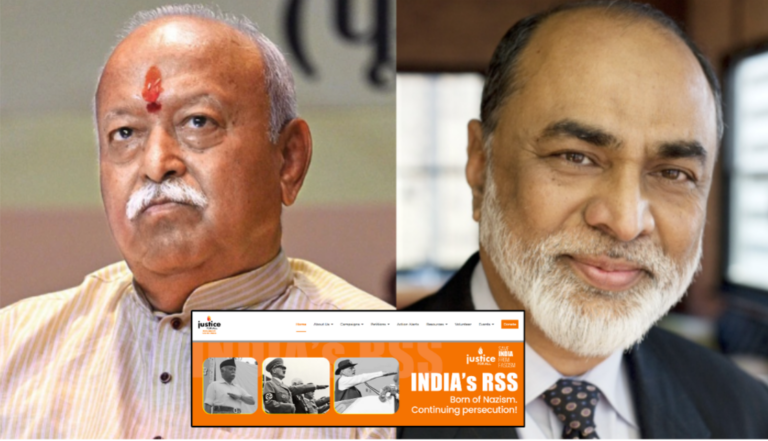
A glimpse at its website is enough to tear away the mask, revealing its fixation on making outrageous parallels to demean the country while posing as a champion of minority rights.

Notably, Mujahid, who was born and educated in Sindh, was also the president of Islami Jamiat-e-Talaba (IJT), which is affiliated with Jamaat-e-Islami Pakistan. Jamaat-e-Islami was created in British India to implement Islamic Law. However, it was split into separate parts after the partition and independence of Bangladesh, yet the core principles remained unchanged.

Jamaat-e-Islami Pakistan strictly opposes the non-existent secularism in the Islamic Republic and wants to impose Sharia Law. It is also notorious for its violent actions, targeting of minorities, especially Hindus and promoting extremist views. The outfit has consistently called for Kashmir’s separation from India and even urged the Muslim Ummah to unite in pursuit of this objective.

Given such roots, Mujahid’s hatred for India and Hindus hardly comes as a surprise. However, he seems to have mastered the art of presenting his Islamist agenda to Western audiences in a compelling manner, cloaking his actual goals behind the arguments for human rights and obscuring his real motives and profound hypocrisy.

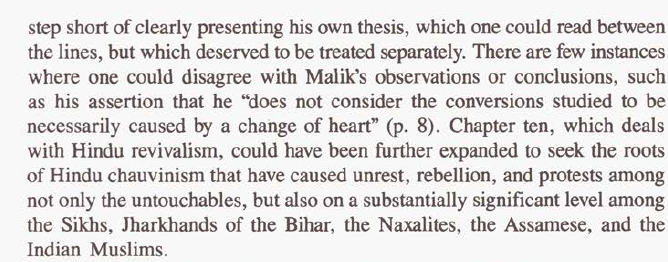
He also authored a book, “Conversion to Islam: Untouchables Strategy for Protest in India” in 1989, glorifying conversions as a revolt against “untouchability,” while exonerating the role of petrodollars in facilitating this menace. He tied “Hindu revivalism” with “Hindu chauvinism” and blamed it for the bloodshed, upheaval, armed movements and agitations not only among the purported “untouchables” but also “Sikhs, Jharkhandis of Bihar, the Naxalites, the Assamese and the Indian Muslims.”

Mujahid clubbed all these together to first sanitise violence and terrorism and to showcase Hindus as the real source of the problem. It is an agenda he has continued to push ever since. Today, he is asserting to “lead efforts to stop genocide” in campaigns such as the Save Uyghur campaign, Save India from Fascism, Burma Task Force, and Kashmir Action in campaigns.

The strategy is simple: claim human rights abuses selectively while conveniently overlooking the massacres of minorities in nations such as Pakistan and Bangladesh. Additionally, it places a specific emphasis on India and highlights dubious and biased reports to lend credibility to narratives of “Muslim victimhood.” The issue of caste is also touted as “India’s sanctioned apartheid” to continue to exploit the fault lines and drive a wedge between Dalits and the so-called upper castes.

There is a calculated and repeated attempt to form a forceful equivalence between the RSS-BJP and the Nazis, even showcasing Bhagwat as the head of a “Nazi party” who should not be allowed on American soil. He is going to speak at Madison Square Garden in New York on 29th August, where more than 5,000 Indian Americans could assemble for the “Universal Oneness Celebrations” program. Predictably, it has also triggered sharp criticism from the group.

The hostility towards Hindus and the anti-India activism

Justice For All has embarked on a mission to target India and has endorsed the recommendations of the USCIRF (United States Commission on International Religious Freedom) to add the country to the CPC (Country of Particular Concern) list. It complained that the body has been making this suggestion since 2020, but the US Department of State consistently failed to act on it.

According to USCIRF, asset freezes and a travel ban should be slapped on both the Research & Analysis Wing and the RSS. It has outlined the arbitrary report to protest against Bhagwat’s visit. The commission targeted PM Modi and the RSS with unsubstantiated allegations of orchestrating attacks on Muslims and Christians, insisting that “RSS leaders, even when affiliated with the Indian government, should not be honoured with high-level meetings or diplomatic courtesies,” while pressing for sanctions against its members.

Therefore, it is understandable why Justice For All, similar to the rest of this anti-India ecosystem, was eager for these obnoxious recommendations to be imposed.

Moreover, the outfit has also been involved in congressional briefings, seeking sanctions and starting petitions against India and informed that “our petition asking the Bill and Melinda Gates Foundation not to honour Prime Minister Modi gained more than 100,000 signatures.”

The group compared Indian policies to Nuremberg-style laws and PM Modi to Adolf Hitler in a report titled “The Nazification of India.” It repeated the disputed Gujarat riots narrative from 2002, maintaining that he “presided over a pogrom” that killed around 2,000 people, the majority of whom were Muslims.

It is noteworthy that the Supreme Court had cleared him of any involvement in the unrest. However, Justice For All ignores the results of the Special Investigation Team (SIT) formed by the apex court, the ensuing clean chits along with the troubling reality and extent of Islamist violence, and uses contested reports and media rankings to support its allegations.

How can an anti-India narrative be complete without accusing the nation of “occupying” Kashmir while completely glossing over the region’s true cultural and historical reality? Justice For All adheres to the same playbook, crying about human-rights violations in the valley, including supposed extrajudicial killings, detention, demographic change and cultural erasure.

The outfit, which reportedly provided a platform to convicted ISI (Inter-Services Intelligence) agent Ghulam Nabi Fai, painted Indian security measures in Kashmir as systematic repression, while the suffering of Hindus, from the exodus of Kashmiri Pandits to the massacre of 25 Hindu tourists in Pahalgam last year, went without any word of compassion for the actual victims of jihad.

The blast at the Red Fort was also leveraged for the same objective with no regard for the lives lost. The organisation has, in essence, adopted Pakistan’s stand on Kashmir, striving to convert it into an Islamist hub within a secular country where only Muslims should possess the right to exist.

Justice For All further demands the release of people facing serious charges in its initiative “Prisoners of Haqq“, implying that their incarceration is not due to unlawful conduct, but rather in pursuit of an honourable cause. It features people such as Dukhtaran-e-Millat chief Asiya Andrabi, who has been found guilty under the UAPA (Unlawful Activities Prevention Act) and awarded life imprisonment.

Indian legal system follows due process, as those deemed innocent or against whom sufficient evidence is not established are released. However, the group’s agenda goes beyond vilifying New Delhi and extends to interfere in its internal affairs.

Justice For All also built its agenda around an Amnesty report, “Made in India: The Supply of Weapons and Ammunition to Israel,l” charging that the Indian government and private companies were selling weapons to Israel and demanding an immediate end to it while “questioning” the silence of American media over the matter. Meanwhile, Hamas has marked its presence in Pakistan-occupied Kashmir, intending to incite jihad against India.

Taking cues from the script of the propaganda web series “Laila,” the group accused that the Taj Mahal was under threat, asserting that the Babri Masjid was earlier handed over to Hindus on the grounds of faith. It entirely distorted the Supreme Court judgement, contending that it indicated there was no proof of a temple at that location.

The outfit then utilised Diljit Dosanjh’s film “Satluj” which downplays Khalistani terrorists to further malign India. Interestingly, Mujahid has charged the Indian film industry with acting as an instrument of the nation’s foreign policy, except apparently when it is useful for his agenda.

Justice For All further stepped up its attacks on India after the government warned of action against it, pointing to the sustained propaganda against the country.

In bed with the ICNA

It is common knowledge that Islamo-leftist factions, such as Justice For All, operate in the same space, often working in close coordination with one another. Mujahid’s Sound Vision, for instance, has been reported to share a close relationship with ICNA (Islamic Circle of North America). Both take their ideological guidance from a mutual source: Jamaat-e-Islami.

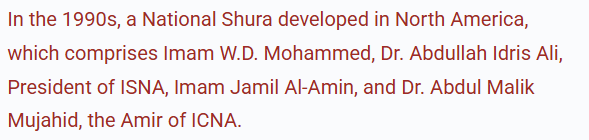
Mujahid was selected as ICNA supremo (amir) after he landed in the US, and Hizbul Mujahideen commander Syed Salahuddin was interviewed for its magazine “The Message International” during his tenure in 1997. Salahuddin was hailed as a hero for his violent endeavour to separate Kashmir from India and unite it with Pakistan,n announcing him as an “undisputed leader of the mujahideen struggling to liberate the territory of Kashmir from brutal Indian occupation.”

ICNA continually attacks the Hindu community. It has strong connections to terrorist organisations in Pakistan and has been probed by US congressional committees for its proximity to international terrorist groups including the Muslim Brotherhood.

The group has an extensive track record of ties to Jamaat-e-Islami, its members and leaders. Helping Hand for Relief and Development (HHRD), its international charity division, has relations with terrorist groups such as Lashkar-e-Taiba, and people connected to jihadi entities like the Hizbul Mujahideen and even the ISI.

Furthermore, the founder ofthe Students Islamic Movement of India (SIMI) also joined ICNA. Ghulam Nabi Fai has also been provided a podium to address various programs organised by the latter. “Jamaat-e-Islami believes in Islamic revolution, with the ultimate goal of establishing a global Islamic superstate, ruled by sharia. This is exactly what is preached by ICNA at its conventions, at its events and in its publications,” stated Abha Shankar of the Investigative Project on Terrorism, reported Islamist Watch.

“ICNA’s radical leadership not only includes ties to Jamaat-e-Islami, but it has also glorified jihad and martyrdom, and speaks in support of Islamist movements,” she added.

The campaign against Mohan Bhagwat

It is not difficult to comprehend why Bhagwat, PM Modi, the BJP or the RSS remain in the crosshairs of this extremist cabal, which celebrates jihad and terrorism while attacking India and Hindus. Anyone who speaks openly about Hinduism, embraces the civilisational legacy of the country or its Hindu heritage is quickly branded a “threat to minority rights.”

This seems to lie at the heart of the resentment towards a Hindu-majority nation that is increasingly confident about asserting its own identity. Hence, the allegations of persecution and manufactured victimhood are repeatedly pushed into the discourse, without substantive evidence to support them, to show the Hindu community as an intolerant mob emboldened by a Hindutva government.

Bhagwat has also described India as fundamentally a Hindu nation based on culture and ancestry, not religion. Moreover, the RSS-led fight against conversions along with the work undertaken by its volunteers to counter the epidemic is another point of contention for Islamists.

Thus, the very idea of a proud Hindu leader heading a popular organisation being welcomed in another country becomes enough to provoke outrage. However, the underlying objective is to target India and Hindus, sometimes aiming at Bhagwat or PM Modi, and at other times using others as the vehicle for the same narrative. And this propaganda is going to intensify with time as these sinister forces will definitely up the ante in the days ahead.

Vehicles torched, non-locals attacked in violence during the Khasi Students Union black-flag bike rally in Shillong: All you need to know

0

Widespread violence and vandalism were reported during a black-flag bike rally organised by the Khasi Students Union (KSU) in Shillong, Meghalaya on Wednesday (19th August). The rally was organised after the 15-day ultimatum issued by the KSU to the state government to fulfil its five-point demand charter expired.

The bike rally commenced around 4 pm from the KSU office at Jaiaw and passed through Lumdiengjri, Malki, Dhankheti, Umpling, Golf Link and Mawlai Mawroh before returning to Jaiaw.

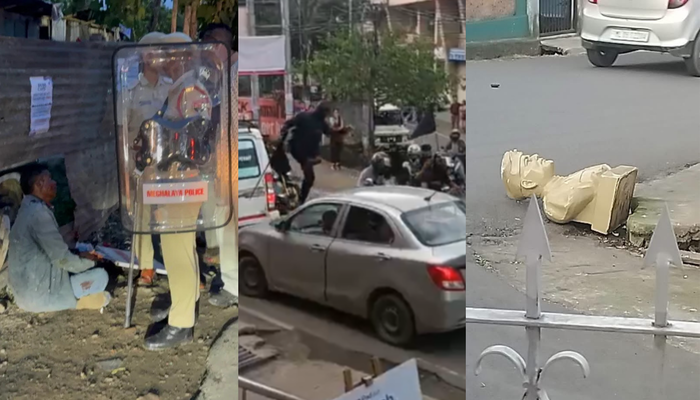
Many incidents of violence were reported in various areas as masked men participating in the rally attacked government and private vehicles. A government Bolero was torched at Mawlai Nongmali, and several other government vehicles were damaged.

Videos of hooligans committing violence during the rally have been going viral on social media. Viral videos show masked men jumping on vehicles, damaging windshields and windows. Such incidents came to light at Dhankheti, Jylli Shop, Nongrim Hills and other areas.

Statues of Swami Vivekananda and Netaji Subhash Chandra Bose were also desecrated during the bike rally. A common commuter’s car with women and children on board was also reportedl attacks by vandals.

According to the police, 31 vehicles were damaged in the violence, and the vehicles of non-local people were particularly targeted by miscreants. Several Assam-registered vehicles were also attacked, which led to the Assam State Driver Association (ASDA) condemning the attack and demanding an apology and compensation. The association warned of possible restrictions on Meghalaya vehicles entering Assam through Jorabat if action is not taken.

Following the bike rally, many people were found lying injured on the streets of Shillong with blood oozing out of their wounds.

In the aftermath of the violence, the Meghalaya Police raided KSU’s central office on Jaiaw Chapel Road late Wednesday and arrested three of its senior leaders. The arrested have been identified as KSU president Raymond Kharjana, vice-president Pynkmenlang Sanmiet and general secretary Reuben Najiar. They were taken to Sadar Police Station for questioning.

According to the police, the three KSU leaders have been booked under various provisions of the Bharatiya Nyaya Sanhita, 2023, including those relating to damage to public property, causing hurt and unlawful assembly.

What is the KSU asking for?

The bike rally in Shillong was announced by the Khasi Students Union general secretary Reuben Najiar on Tuesday during a public meeting. “From tomorrow, we will take to the streets and begin our public agitation. We will start with a black-flag march across Shillong city to put pressure on and condemn the government,” Najiar said, announcing the rally.

The KSU had held demonstrations and public meetings across Shillong on 17th and 18th August. The organisation had given the state government 15 days to respond to its five-point charter. It had opposed a hearing for the proposed Shree Cement project in East Jaintia Hills, which was held on 31st July. The Union alleged that the hearing was pre-arranged and sought action against officials allegedly responsible for the handling of the hearing. The Union has sought action against the Deputy Commissioner and Superintendent of Police of East Jaintia Hills and concerned officials of the Meghalaya State Pollution Control Board.

The Union has sought implementation of the Meghalaya Residents Safety and Security Act (MRSSA), 2016, enforcement of the 2024 amendments relating to migrant workers, changes in government recruitment, including removal of interviews for Grade B, C and D government posts; and the introduction of standard operating procedures for all recruitment boards.

Its other demands include immediate enforcement of amendments to the Meghalaya Migrant Workmen Act, 2020; recruitment reforms at North Eastern Indira Gandhi Regional Institute of Health & Medical Sciences, Shillong (NEIGRIHMS), including an 80:20 female-to-male ratio for nurses and reservation for Khasis, Jaintias and Garos

The organisation further demanded implementation of the Meghalaya Residents Safety and Security Act, 2016, pending the introduction of an Inner Line Permit system in the state and fulfilment of the Government’s earlier commitment to oppose uranium mining.

Background and ideology of the Khasi Students Union

Formed in 1978, the Khasi Students Union is a hardcore indigenous socio-political student organisation in Meghalaya, which claims to represent and fight for the rights of the Khasi indigenous group. In the name of protecting the rights of the Khasi people, the union has openly displayed racism towards people from different states of the country coming to Meghalaya.

The Union has been vehemently opposing the immigration of people into the state, not just from the neighbouring countries of Nepal and Bangladesh but also from “mainland India”. The organisation believes that “massive flow of migrants into the state from Bangladesh, Nepal and mainland India since the 1970’s” has been threatening the existence of indigenous communities of Meghalaya.

The KSU has also been opposing the Centre’s proposed uranium mining project in Meghalaya, called the Kylleng-Pyndengsohiong, Mawthabah (KPM) Uranium Mining Project (formerly known as the Domiasiat project). It is managed by the Uranium Corporation of India Limited (UCIL) and is located in the South West Khasi Hills district. Various indigenous groups in Meghalaya, including the KSU, have been pressuring the state government not to allow the Centre’s uranium project in the state.

The organisation has been overtly emphasising its indigenous identity and has been averse to the Khasi community being viewed as part of the larger national identity. Recently, the KSU refused to accept all six stanzas of the national song of India, Vande Mataram, arguing that the later verses of the song invoke Hindu deities and amount to “a process of assimilation” that is contrary to Khasi traditions.

Earlier in July, the Union was in the news for locking an under-construction temple located on the premises of the Central Bureau of Investigation (CBI) office in the Mawdiangdiang area of New Shillong Township.

Who was Sajjan Kumar? The Congress strongman whose legacy was defined by his role in the 1984 anti-Sikh riots

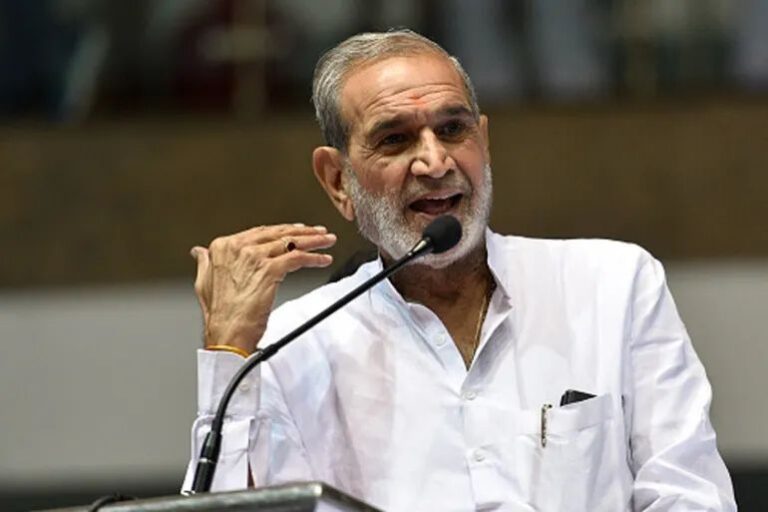
Former Congress MP Sajjan Kumar, who died in Delhi on Thursday at the age of 80, spent decades as one of the Congress party’s influential leaders in the national capital before his political career was eventually eclipsed by his convictions in cases arising from the 1984 anti-Sikh riots. He died while serving a life sentence, with his appeal against his 2018 conviction still pending before the Supreme Court.

Kumar, who represented Outer Delhi in the Lok Sabha, remained a prominent Congress figure even as allegations over his role in the violence continued to follow him. His eventual conviction in 2018 resulted in a life sentence and his imprisonment in Tihar Jail. He was later convicted and sentenced to another life term in a separate 1984 riots murder case in February 2025.

Sajjan Kumar and the Congress connection

Kumar’s political association with Congress was not confined to his years in Parliament. Despite allegations surrounding the 1984 violence, he continued to remain part of the party’s political machinery for years.

He returned to electoral politics in 2004 when Congress fielded him from the Outer Delhi constituency, from where he won a Lok Sabha seat. His political influence in Delhi also extended beyond parliamentary elections, with the party relying on his organisational network and ability to mobilise crowds.

In 2014, Kumar was reportedly included in the Congress campaign committee for the Delhi Lok Sabha elections. He also participated in party rallies and election campaigns, including events linked to Rahul Gandhi.

Even after decades of allegations concerning the 1984 violence, Kumar was seen participating in Congress programmes. In 2018, he was seen leading a Congress protest in Delhi during a Bharat Bandh over fuel prices. His appearance at the demonstration triggered controversy when he confronted a journalist who questioned him about the 1984 riots.

He also participated in a Congress rally in September 2018 against sealing drives, unemployment and price rise in Delhi.

The continued public presence of Kumar within Congress circles became particularly contentious because victims and survivors of the 1984 violence had repeatedly alleged his involvement in the killings.

The 1984 riots and the cases against Kumar

The anti-Sikh violence erupted after Prime Minister Indira Gandhi was assassinated by her Sikh bodyguards, Satwant Singh and Beant Singh, on October 31, 1984.

Delhi witnessed widespread attacks on Sikh families, homes, businesses and places of worship. More than 2,700 Sikhs were killed in the national capital during the violence, according to official figures cited in subsequent court proceedings.

Kumar became one of the most prominent Congress politicians to face criminal proceedings over the violence. However, the legal process moved slowly, with several cases being closed, ending in acquittals or remaining unresolved for years.

Senior Supreme Court lawyer and 1984 riots victims’ counsel H S Phoolka had repeatedly alleged that the police and government machinery had failed to properly investigate cases in which political leaders were accused. The issue of delayed investigations and alleged lapses in the original police probes became a recurring feature of the legal battle surrounding the riots.

2018 conviction: Delhi High Court’s damning observations

One of the biggest turning points in Kumar’s case came in December 2018, when the Delhi High Court convicted him for his role in the killing of five Sikhs in the Raj Nagar area of Delhi Cantonment during the riots on November 1 and 2, 1984. The case also involved the burning of a gurdwara.

The High Court overturned the earlier acquittal and sentenced Kumar to life imprisonment. He subsequently surrendered and was lodged in Tihar Jail. His appeal against the conviction remained pending before the Supreme Court.

The judgment was particularly significant for its observations about the circumstances in which the 1984 cases had been handled. The court criticised the manner in which perpetrators had escaped accountability and referred to the role of political patronage and the failure to bring the accused to trial.

The verdict also dealt a major political blow to Congress, prompting senior party leaders to distance the organisation from Kumar.

Congress leaders argued that Kumar was no longer holding office or contesting elections on a party ticket. The attempts to separate the party from Kumar, however, came against the backdrop of his long political association with Congress and his continued participation in party activities over the years.

Kumar subsequently resigned from the Congress.

Convicted again in 2025

The 2018 conviction was not the end of Kumar’s legal battles.

On February 12, 2025, a Delhi court convicted him in another 1984 riots case concerning the killings of Jaswant Singh and his son Tarundeep Singh in Saraswati Vihar on November 1, 1984. The court found him guilty of murder, rioting and several other offences.

The details recorded in this case were particularly disturbing. According to the prosecution case and the court record, a large mob armed with iron rods and lathis attacked the family’s home in the Raj Nagar area at around 4 to 4:30 pm. The attackers broke into the house, looted valuables, assaulted the family and set the property on fire. Jaswant Singh and his son Tarundeep were dragged out and burned alive in a nearby vacant plot, while the women in the family were brutally beaten as they tried to protect them. A police official was allegedly present when the family pleaded for help, but no effective intervention followed.

The prosecution alleged that Kumar was not merely a member of the mob but had led it and instigated the attacks. When charges were framed in 2021, the trial court said the material on record was sufficient to form a prima facie view that Kumar had participated in and led the riotous mob. The charges included murder, rioting, unlawful assembly, dacoity, robbery, causing hurt and destruction of property by fire.

The case also became an illustration of how the 1984 cases remained buried for decades. An FIR was registered in 1985, but the matter was not properly investigated and was eventually marked “untraced” in 1994. Judicial records were later stated to have been destroyed in the routine process of weeding out old records. The complainant had identified Kumar after seeing his photograph in a December 1984 issue of India Today, but her identification did not result in his prosecution at the time. The case was reopened after the Ministry of Home Affairs ordered fresh investigations into 1984 riot cases in 2015.

The complainant’s account was also striking for what it said about the failure of the state machinery. She told investigators that a police official was present during the attack and that she had pleaded for her husband and son to be saved. The court later noted that her reluctance to place trust in the police was understandable given what she had experienced during the violence.

The case had a particularly long history. The FIR was registered in 1991 after earlier complaints and investigations, while a Special Investigation Team later revisited the case following recommendations to reopen a number of 1984 riot cases.

The prosecution alleged that Kumar had led a mob that attacked the family’s house, looted and destroyed property and burnt the two men alive. The trial court ultimately held that the prosecution had established its case beyond reasonable doubt.

The prosecution subsequently sought the death penalty, describing the crime as an attack that had severely damaged communal harmony.

On February 25, 2025, the court sentenced Kumar to life imprisonment in the case. This meant that Kumar was serving life sentences in two separate 1984 riots cases.

A career that ended behind bars

Kumar’s trajectory from a powerful Congress politician in Delhi to a convicted prisoner is one of the more consequential political-legal stories to emerge from the long aftermath of the 1984 riots.

For years, his name remained intertwined with allegations that victims said had not been adequately investigated. The 2018 Delhi High Court conviction finally established criminal liability in one of the cases, while the 2025 conviction added another murder conviction to his record.

The legal history also remained complicated. Kumar was acquitted in other 1984 riot cases, demonstrating the varying outcomes of decades-old prosecutions. In a later case, a Delhi court held that there was insufficient admissible and reliable evidence to establish his presence or participation in the crime and acquitted him.

Kumar’s death on Thursday therefore closes the life of a politician whose public career cannot be separated from the tainted legacy of 1984. His rise within Congress, his continued political relevance despite allegations, the Delhi High Court’s findings about political patronage and investigative failure, the disturbing evidence in the later father-son murder case, and his eventual imprisonment collectively made him one of the most prominent faces of the prolonged judicial reckoning over the anti-Sikh violence.

‘Those arrested are CJP protestors’: Days after Amit Shah announced ISI-backed Shahzad Bhatti network’s destruction, Pakistani gangster claims 3,000 of his men still ‘free’

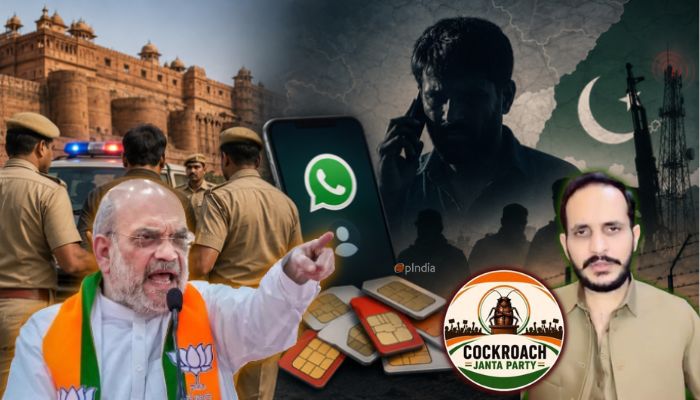
Days after Union Home Minister Amit Shah announced the dismantlement of the ISI-backed terror Shahzad Bhatti Network, a rattled Bhatti has claimed that the arrested 253 terrorists are Cockroach Janta Party (CJP) supporters.

In a video, the ISI stooge and gangster Shahzad Bhatti claimed that the dozens of individuals arrested for being part of his terror network are actually CJP supporters and people associated with the July 20 Jantar Mantar protest. Shahzad Bhatti ‘challenged’ Amit Shah and the Modi government to reveal the images of the arrested individuals along with the weapons seized from them and also confirmed the country of origin of those weapons.

“Amit Shah tweeted that ‘We have caught more than 200 of Shahzad Bhatti’s associates. That is what is being shown to you, and the media is also broadcasting that, but that is not the reality. These are people from the Cockroach Janta Party. The people who went to Jantar Mantar, our photos and videos were made there as well,” Shahzad Bhatti said.

To project strength and continuity despite the destruction of his terror network, Bhatti further claimed that around 3,000 of his men are roaming in India freely.

The Pakistani jihadi also offered legal and financial assistance to CJP ‘cockroaches’ if they contact him. In addition, Bhatti played the usual ISI-style ‘we sympathise with Sikhs’ card, and claimed that the Indian government “pits Sikhs against each other to get votes”.

“My network has been active for the past 5-6 years. “Why did you have to start this operation just now? Were your agencies and police asleep before this? If you have arrested 300, I have 3,000 who are roaming the streets freely. Sometimes you blame Pakistan to get votes; other times, you pit Sikhs against each other to get votes. How much longer can you keep doing this?” he said.

“I will not step back; I will look into the cases of these men you have arrested and give them legal support even if they are CJP’s men, and if CJP needs me, they can contact me; I will even back them, Bhatti added.

Amit Shah announced destruction of ISI-backed jihadi Shahzad Bhatti Network

On 17th August 2026, the Home Minister revealed that the Modi government has destroyed the ISI-backed terror group Shahzad Bhatti Network, which was planning subversive attacks in India. Shah added that more than 200 ‘operatives’ of this jihadi network have been arrested from different locations across 14 states.

“Modi govt destroyed the ISI-backed terror group Shahzad Bhatti Network ahead of Independence Day and thwarted its plans for subversive attacks by arresting more than 200 operatives. Indian security forces ripped apart the network by launching coordinated operations across different locations in 14 states, upholding a brilliant example of India’s zero-tolerance towards terrorism,” he posted on X.

Home Minister Amit Shah further revealed that during the operation against the Shahzad Bhatti Network, IEDs, grenades bearing Pakistan Ordnance Factory markings, pistols, live cartridges, and CCTV cameras used for espionage were recovered.

“Substantial recoveries, including IEDs, grenades bearing Pakistan Ordnance Factory markings, pistols, live cartridges, and CCTV cameras used for espionage, were made from the ISI-funded group. The network was involved in several terrorist activities,” Shah added.

Crackdown on Pakistani ISI-backed jihadist Shahzad Bhatti Network

In recent months, the police and security agencies have arrested numerous individuals allegedly working for the terror network of ISI proxy and gangster Shahzad Bhatti.

The ISI-backed Shahzad Bhatti Network is actively involved in recruitment, online radicalisation, reconnaissance, logistics, espionage, illegal procurement of arms, establishment of sleeper cells and facilitation of terrorist activities across different parts of India.

Intelligence inputs indicate that the anti-India terror network operates via Pakistan-based handlers using encrypted communication channels and maintains association with several front organisations involving Khalistani separatists, including the Khalistan Armed Force, Punjab Sovereignty Alliance, Khalistan Liberation Army, Sher-e-Punjab Brigade, United Sikh Brotherhood, Sikh Tigers of Khalistan and Tehrik-e-Taliban Hindustan.

The newly created TTH had claimed responsibility for two targeted killings of Punjab Police personnel in February and May this year. One of the early tasks assigned by TTH to an Indian operative named Sohail was painting “TTH” graffiti across Delhi and Faridabad. Sohail was later arrested by the Delhi Police Special Cell.

The ISI proxy has weaponised social media to recruit ‘operatives’ in India.  The Pakistani handlers allegedly scan social media profiles to identify unemployed or vulnerable youth, lure them with money, and begin with small assignments. Gradually, the handlers assign violent tasks to the operatives, including firing at clubs, throwing grenades, targeting police personnel, and filming terror acts.

An alarming aspect of Bhatti’s network is that he is not recruiting only Muslims but also Sikhs, and even Hindus, through the ISI-style brainwashing and other tactics.

In July, the Bikaner Police arrested a man named Anil Kumar over allegations of him providing Indian SIM cards to Pakistani gangster Shahzad Bhatti’s gang members. The action comes after the investigation agency came to know that a WhatsApp account had been operating in Pakistan using an Indian mobile phone number belonging to the 18-year-old arrestee.

On 17th July, Anil Kumar, a resident of Godu village in the Bajju Police Station area, shared the one-time password (OTP) required to activate the SIM card with Shahzad Bhatti’s associates. Initially, the Rajasthan ATS detained Kumar and interrogated him. Thereafter, the ATS handed him over to the police, who arrested him on 19th July.

The authorities then launched a probe into his terror links and the allegations that he displayed firearms on social media. 

Reports say that Bikaner’s border regions, including Bajju, Khajuwala, and Pugal, have been prone to alleged honey-trap operations, espionage, and suspected links to Pakistan’s ISI.

Back in October 2023, a man from the Dantor area was arrested for sharing strategic and confidential information with Pakistani female agents through social media.

In a 2024-25 case in the Mahajan Field Firing Range espionage case (2024–25), a canteen operator, an e-Mitra operator, and a railway employee were arrested for leaking information related to Army activities and maintaining contact with Pakistani female operatives.

In November 2025, a grenade attack took place on the Sirsa Women Police Station in Haryana. The National Investigation Agency linked the incident to the Bhatti gang.

 In April 2026, Delhi Police Special Cell uncovered a plot involving shootings, grenade attacks and planned murders in Delhi NCR. The police arrested two men working at the behest of Bhatti, Rajveer and Vivek Banjara from Madhya Pradesh. The duo had procured weapons and cartridges on the instructions of Shahzad Bhatti.

Shahzad Bhatti Network’s name also emerged in the arrest of a man named Vikrant Kashyap from the Jhajhra area in Uttarakhand. Kashyap was reported to have been in contact with Bhatti and his associates through Instagram and WhatsApp. Security agencies recovered a .32 bore pistol, seven live cartridges, a spray paint can and a mobile phone from him. He conducted reconnaissance of sensitive and important places in Dehradun, including the police headquarters and ISBT. Kashyap was also given the TTH graffiti task earlier.

In February 2026, Chinese-made pistols and ammunition were allegedly dropped by a drone near the Khajuwala border. The probe into the case uncovered an active cross-border smuggling network.

In late July 2026, the Assam Police Special Task Force (STF) arrested three suspected members of the Shahzad Bhatti Network.  The arrested suspects were identified as Akramul Islam, aged 26, a resident of Beparipara in Dhubri district; Aminur Rahman, aged 22, of Dhupiri in Panbari, Chirang district; and Abdul Hussain, aged 54, of Dabandia in Kalgachia, Barpeta district.

The security forces recovered five mobile phones, seven SIM cards, Aadhaar cards, bank passbooks, debit cards and other incriminating documents from the possession of the arrested suspects.

Now watching his terror network comprising trapped and brainwashed traitors to bleed India from within, crumble, Shahzad Bhatti is using divisive tactics by claiming that the arrested members of his network are not his people but CJP protestors. Fully aware of the recent CJP protests, and the Central government’s commitment of not pursuing punitive action against violent ‘cockroaches’, Bhatti is trying to stir violent protests against the Modi government.

Kerala Congress alleges PM Modi ‘sold’ India to China over Chinese tech companies’ donations to PM CARES during COVID: Exposing Congress’ lies and duplicity

On 18th August, the Kerala unit of the Congress party claimed that because various Chinese companies reportedly made donations to the PM CARES Fund during the COVID pandemic, Prime Minister Narendra Modi remained ‘silent’ over China occupying 4067km 2 land in Ladakh, and is still silent on Chinese land grabbing in Arunachal Pradesh.

In an X post, Kerala Congress shared a screengrab of a 2020 report by the leftist propaganda portal The Wire, and wrote, “Several Chinese companies including TikTok, Huawei, Xiaomi donate crores of rupees to PM CARES fund. Why are Chinese companies, particularly close to the Chinese communist party, paying @narendramod to his private fund? Is this the reason why he was silent when China occupied 4067 km2 in Ladakh? Is this the reason why he is silent on the land grab happening in Arunachal Pradesh?”

The Congress suggested that somehow the PM Modi-led Central government has been ‘allowing’ Chinese troops to not only enter thousands of kilometres inside India but occupy Indian territory because some Chinese tech companies close to the Chinese Communist Party (CCP) reportedly donated a few crores to the PM CARES Fund.

The Kerala Congress essentially accused the Modi government of compromising India’s territorial integrity and national security to secure funding for his ‘private fund’.

It has been widely reported in the media that several Chinese companies operating in India, including TikTok (₹30 crore), Huawei ₹7 crore), and Xiaomi (₹10 crore), made donations to the Prime Minister’s Citizen Assistance and Relief in Emergency Situations Fund (PM CARES Fund), set up in March 2020 in response to the Covid pandemic.

These voluntary corporate donations were made amidst the global pandemic when many Indian firms also contributed to the PM CARES Fund.

However, the Kerala Congress skipped basic homework before levelling accusations that amount to treason.

Modi government banned Chinese apps and tightened FDI rules just months after Chinese companies made donations to the PM CARES Fund

While the donations by the named Chinese companies were made in March-April 2020, just two months after TikTok’s donation, it was banned in India in late June 2020.

The ban came over reports that some apps originating from China were stealing user information and sending it to Chinese servers. TikTok, along with 58 other apps, including WeChat, UC Browser, etc., were banned as they “engaged in activities which are prejudicial to sovereignty and integrity of India, defence of India, the security of the state and public order”.

Before this, in April 2020, the Modi government effectively excluded Huawei from India’s 5G core networks and faced sustained restrictions on telecom contracts and equipment. Huawei has long been under the scanner globally over allegations that Huawei devices and equipment collect sensitive data of foreign countries and pass them to the CCP in China.

Since the June 2020 Galwan Valley clash between Indian and Chinese troops, India has ramped up border infrastructure and military deployments to prevent any fresh incursion attempts by China. The Modi government had also tightened the Foreign Direct Investment (FDI) rules from bordering countries, specifically targeting China.

If the Modi government were operating as a ‘Chinese stooge’ bought by modest Covid donations, it would not have permanently banned TikTok out of its largest overseas market, restricted Huawei, imposed stricter investment screening, and intensified security actions on the LAC.

The truth of China occupying 4,067 km² of Indian territory in Ladakh, and incursions in Arunachal Pradesh claim

In recent years, the Congress party has been randomly claiming that China has ‘occupied’ 4,067 km², ‘the size of Delhi’, and sometimes 2,000 km² of India’s land in Ladakh.  Both the Central government and military sources have repeatedly denied claims of any Chinese incursions and occupation of land in Ladakh, and yet the Congress party and its ideological lackeys in the leftist media time and again amplify the same lies to portray the Modi government as ‘weak’.

This 4,067 km² claim was first floated by Subramanian Swamy, who has for years been a staunch Modi detractor, peddling conspiracy theories driven by his own disgruntlement over being ‘sidelined’ by the BJP.

Similarly, ‘China ghar mein ghus gaya hai [China has barged into Indian territory] claims have been made by Opposition leaders and their supporters about Arunachal Pradesh. In recent months, a blatant lie that Chinese troops have entered 60 km inside Arunachal Pradesh and occupied the territory has been amplified online through AI-generated images, deepfakes, and unrelated videos passed off as those of Chinese troops entering Arunachal Pradesh.

However, these claims have already been debunked by the Press Information Bureau’s Fact Check unit and categorically labelled the claim as fake.

The PIB Fact Check confirmed that the videos being circulated do not show any recent Chinese incursion into Arunachal Pradesh. Instead, the visuals are either unrelated military footage or videos that have previously circulated online under entirely different contexts. The fact-check noted that the videos had been misrepresented to create the impression of a fresh Chinese advance into Indian territory.

Before the PIB’s fact-check, the Indian Army had dismissed reports alleging Chinese encroachment and the construction of PLA camps inside Arunachal Pradesh.

In response to similar claims regarding the Taksing sector, the Army stated that reports of Chinese encroachment and establishment of military camps were “incorrect and without any basis.”

Be it Ladakh or Arunachal Pradesh, the Opposition’s claims of China indulging in any fresh occupation of Indian territory are devoid of factual accuracy, and are alarmist political rhetoric framed in a way to establish an apocryphal narrative that the Modi government perceived to be uncompromising on the national security and integrity front has ‘surrendered’ before the ‘dragon’ in exchange for a few crores’ donations from China to PM Modi’s ‘private fund’, as insinuated by the Kerala Congress.

Notably, PM CARES Fund is not PM Modi’s ‘private fund’ but a registered charitable trust formed during the Covid pandemic to collect voluntary donations and respond quickly to Covid-related and future emergencies. 

Congress party’s public, secretive and financial ties with China and the CCP

Ironically, the Congress party is desperately linking PM CARES Fund donations by Chinese companies during the Covid pandemic to India-China border issues, to portray the Modi government as a CCP stooge, while Congress itself has a documented record of coddling China.

The infamous 2007 Congress-CCP MoU

In August 2007, the Sonia Gandhi-led Congress party and the Communist Party of China (CCP) had signed a deal in Beijing for exchanging high-level information and co-operation between them. The memorandum of understanding (MoU) also provided the two parties with the “opportunity to consult each other on important bilateral, regional and international developments”.

This MoU was infamously signed by then Congress general secretary Rahul Gandhi in the presence of Sonia Gandhi, and on the Chinese side, it was signed by none other than Xi Jinping himself, who was then the Chinese vice-president and standing committee member of the CPC’s politburo.

A year before, Sonia Gandhi and Rahul Gandhi had also led a delegation of the Congress party to China. This MoU between the CCP and Congress came at a time when the Left parties in India had openly expressed lack of trust in the UPA-1 government led by the Congress. However, the CCP went ahead with coddling the Congress party, since it wanted to deepen ties with the then most powerful political family in India.

Rahul Gandhi’s secret meetings with CCP officials

Not only the MoU, but the Congress party has also maintained secretive communication with the CCP leaders. Congress leader and perennial PM-in-the-making, Rahul Gandhi, was caught meeting Chinese officials on multiple occasions.

The first meeting had taken place in 2017, when Rahul Gandhi had a meeting with Chinese Ambassador to India Luo Zhaohui. This meeting came at a time when India and China were in the middle of a stand-off at Doklam.

As the news of their secret meeting leaked, Congress first denied such meetings and had termed news reports suggesting that the Gandhi scion had indeed met Chinese officials as ‘fake news’.

However, the Congress party was left red-faced after the Chinese embassy had itself confirmed the meeting between the then Congress vice president and the Chinese envoy.

This meeting came when the Congress party and Rahul Gandhi were consistently attacking the Indian government over their stand in the ongoing military standoff with China. The party received immense backlash for secretly coddling the officials of a country engaged in a direct clash with India, with the BJP even accusing Congress of taking notes from their CCP masters for their shared agenda against the Modi government.

In 2018, Rahul Gandhi had himself revealed the secret meeting with a couple of Chinese ministers during his trip to Kailash Mansarovar in September 2018.

Initially, this meeting was kept secret. However, later Rahul Gandhi ended up accidentally revealing the details of the meeting. At that time, questions were raised as to why both the Congress party and China were trying to hide the meeting if it was a mere courtesy meeting or devoid of any sinister agenda.

Congress forced its own leader to delete an anti-China post during India-China border tensions.

An interesting incident unfolded in May 2020, exemplifying how Congress self-censors any real or performative criticism of China by its own leaders. Back then, Congress leader Adhir Ranjan Chowdhary had published a social media post against China for its aggression along the LAC and had issued some warnings to China while praising the Indian armed forces.

Chowdhary warned the communist nation about how Indian forces can ‘defang the venomous snakes’ like China and stated that the entire world was watching the sinister designs of China while calling them “Yellow expansionist”. Chowdhury also urged the Modi government to accord diplomatic recognition to Taiwan “without much delay”.

Unsurprisingly, even the BJP supporters had rallied behind Chowdhury over a Congress leader making a rather rare nationalistic demand from a government known for its uncompromising nationalism.

In no time, however, Congress leadership forced Chowdhury to delete his anti-China post and even Congress leader Anand Sharma issued a clarification.

Rahul Gandhi hailed China’s debt trap model as a model of ‘prosperity’

In May 2022, Rahul Gandhi attended an event at the Cambridge University and heaped praises on China. Gandhi defended China’s rising influence in the Indian sub-continent and claimed that China wanted the countries around it to ‘prosper’ and hailed the Belt and Road Initiative.

“There are two competing visions now on the ground. One is the western, India is part of it, which is a maritime vision, and the other is a terrestrial vision, the Belt and Road, where most trade moves from China through the old Silk Road to Europe and China dominates that trade. That is the clash. That is what China is building. What China is offering to countries around it is the idea of prosperity. China is saying, allow us to build your infrastructure. Allow us to put in the communications backbone.  Allow us to put in 5G…,” he said.

OpIndia reported earlier, however, contrary to Rahul Gandhi’s claims of China offering prosperity to Asian countries, the Communist nation has taken over infrastructure projects in countries like Sri Lanka after these countries failed to repay hefty loans.

Gandhi hailed China’s 5G offers even though China has been accused of spying on the countries that are using its technology, especially in government and academic institutes.

Rajiv Gandhi Foundation received funds from China.

Back in 2020, details about the Rajiv Gandhi Foundation’s (RGF) monetary operations emerged.  The Chinese government ‘gave funds to RGF in 2006 and subsequent years. It is worth noting that Sonia Gandhi is the Chairperson of the Rajiv Gandhi Foundation, and the trustees have been Rahul Gandhi and Priyanka Gandhi Vadra since 2005.

In October 2022, the Foreign Contribution Regulation Act (FCRA) licence of RGF was revoked by the Centre for alleged violation of the foreign funding law. It was reported that RGF received approximately ₹1.35 crore between 2005 and 2007 from the Chinese government.

Over the years, RGF churned out many pro-China articles and studies, including the ones advocating for FTA feasibility between India and China.

Why the Congress party is now casting aspersions on the integrity of PM Modi and questioning why PM CARES Fund is not under the purview of the Comptroller General of India (CAG) and Right to Information (RTI), the Rajiv Gandhi Foundation, helmed by the Gandhi family, refused CAG audit and stayed out of the RTI Act citing the same reasons for which PM CARES Fund is exempt from CAG audits and RTI.

In PM CARES Fund’s case, however, the State Emblem of India and a .gov.in domain are used since the Fund operates like the domain because it is chaired by the Prime Minister and administered like the 1948-founded Prime Minister’s National Relief Fund (PMNRF), despite the government classifying it legally as a private public charitable trust. PMNRF is also a private charitable trust chaired by the Prime Minister.

Interestingly, while PM CARES Fund receives voluntary donations and does not receive budgetary allocations from the Consolidated Fund of India, the Rajiv Gandhi Foundation received ‘donations’ from multiple government ministries when the UPA was in power. These ministries included the Ministries of Environment and Forest, Health and Family Welfare, Small Scale Industries and even the Ministry of Home Affairs.

The RGF received funding from various foreign left-liberal entities. The Rajiv Gandhi Charitable Trust also has a similar story.

Clearly, Congress takes delight in attacking the BJP and accusing it of caving to foreign pressure, while Congress’s own activities indicate its compromised loyalties.

India suffered territorial and geopolitical losses due to Congress’s blunders.

The Congress party is now attempting to bolster its ‘nationalist’ credentials by pushing a narrative that the Modi government surrendered India’s territorial integrity to an expansionist China. However, history records that India has lost a significant portion of its territory to China not in war but due to blunders of Congress governments.

India’s first Prime Minister and Congress leader Jawaharlal Nehru made a catastrophic blunder and rejected the offers from the US and the Soviet Union to replace China at the UN Security Council to avoid conflict with China. While having a permanent UN seat would have elevated India’s global standing, the Congress government prioritised shooting itself in the foot so China could stand tall. Z

Despite the pro-China suicidal idealism, Nehru was viewed in China as a “lackey” of the British and the Americans. China returned Nehru’s UNSC generosity with the 1962 war with India.

Not to forget, Nehru-led Congress government presided over the disastrous Sino-Indian war, wherein 3,250 Indian soldiers were killed, and India lost around 43,000 square kilometres of land, captured by China. This includes nearly 38,000 square kilometres in Aksai Chin seized during the 1962 war, and 5,180 square kilometres in the Shaksgam Valley illegally ceded by Pakistan in 1963.

This 1962 war itself could have been avoided had Nehru heeded the military advice and warnings two and a half years before the war began. Lt Gen SPP Thorat, commanding the Eastern Command, had warned of a possible Chinese attack; however, neither Nehru nor then Defence Minister VK Krishna Menon took the warnings seriously.

In more recent decades, China occupied over 640 square kilometres of Indian land during UPA’s tenure. Between 2010 and 2013, China entered Indian territory around 600 times. The land grab happened after India and China signed nine agreements, including the Border Defence Cooperation Agreement (BDCA). Despite China itself presenting the Agreement, Beijing essentially undermined the agreement and continued incursions into the Indian side.

The Congress governments had been so meek and weak that none of the bilateral agreements signed between India and China in 1993, 1996, 2005, and 2012 managed to stop China’s plans to occupy land that belongs to India.

It is due to the failures and disastrous policy decisions of the erstwhile Congress governments that China continues to audaciously stake claim over Arunachal Pradesh and fan tensions in Ladakh. Congress should first look at its own track record of receiving funds from China and toeing Chinese narratives going against Indian interests before accusing PM Modi of ‘silence’ on the imaginary land grab happening in Arunachal Pradesh.