Home Blog Page 128

ISRO launches heaviest ever GSAT-7R satellite using LVM3-M5 rocket, read how it will supercharge the capabilities of Indian Navy

0

In a remarkable feat, the Indian Space Research Organisation launched the Indian Navy’s GSAT-7R (CMS-03) satellite on Sunday (2nd November) at the Satish Dhawan Space Centre (SDSC), Sriharikota, Andhra Pradesh. What sets the spacecraft apart is that it is India’s heaviest communication satellite to be launched from the country’s soil into the Geosynchronous Transfer Orbit (GTO).

GSAT-7R equipped with indigenous state-of-the-art components

The multi-band communication satellite is expected to boost the Indian Navy’s space-based communications and enhance its maritime domain awareness capabilities. The indigenously developed satellite marks a significant milestone in India’s journey towards self-reliance in space technologies and bolsters India’s sovereign defence communication infrastructure. The satellite is a specimen of the country’s ascending capabilities with respect to designing, building, and launching complex mission-critical satellites. It will remove India’s dependence on the Inmarsat constellation for the strategic communication needs of naval assets.

GSAT-7R is an entirely indigenously made satellite weighs around 4,400 kg and is equipped with many indigenous state-of-the-art components developed specifically to meet the Indian Navy’s operational requirements. It will provide strong telecommunication coverage across the Indian Ocean Region, a wide oceanic region including the Indian landmass. The satellite will considerably enhance connectivity with high-capacity bandwidth, enabling seamless and secure communication links between ships, aircraft, submarines, and Maritime Operations Centres of the Indian Navy. The satellite will strengthen India’s network-centric warfare capabilities by providing real-time, secure voice, video, and data transmission across naval assets, including warships, submarines, aircraft, and shore-based command centres.

GSAT-7R will replace GSAT-7 (Rukmini), which was launched in 2013. Both satellites are dedicated to the Indian Navy. Belonging to the same series, the GSAT-7A satellite was launched for the Indian Air Force.

The satellite’s journey to its destination

Like other geostationary satellites launched by ISRO, GSAT-7R will first enter the GTO, which is around 36,000 kilometres above the planet at its farthest point. Then the Liquid Apogee Motor (LAM) will come into play to raise the orbit. Thereafter, the LAM engine will fire multiple times in a carefully orchestrated sequence and duration to adjust the apogee and perigee, achieving a perfect geostationary orbit.

The LAM will initially fire at the perigee (the closest point to Earth) to raise the apogee, followed by a second firing at the apogee (the farthest point) to gradually circularise the orbit. The entire process is expected to take 4-7 days. After the desired orbit is achieved, it will take another 4-5 weeks for satellite commissioning.

The LVM3 launch vehicle

The satellite has been launched aboard the LVM3-M5 launch vehicle, which is referred to as ‘Bahubali’ for its heavy-lift capabilities. The LVM3, also known as Geosynchronous Satellite Launch Vehicle (GSLV) MkIII, earlier launched the Chandrayaan-3 mission, which made India the first country to make a successful landing on the Moon’s south pole. The LVM3 is ISRO’s operational heavy lift Launch vehicle with a positive record of completing several successful missions. The launch, the fifth Operational Flight of the LVM3, was carried out from the Second Launch Pad (SLP), SDSC, SHAR.

The 43.5 metre tall LVM3-M5 launch vehicle was fully assembled and integrated with the satellite before being moved to the second launch pad for pre-launch operations on October 26, 2025. The three-stage rocket was fitted with two solid motor strap-ons (S200), a liquid propellant core stage (L110) and a cryogenic stage (C25). The vehicle provides ISRO much-needed self-reliance in launching heavier communication satellites weighing up to 4,000 kg in GTO.

The entire project was funded by the Ministry of Defence at a cost of ₹1,589 crore (approximately US$225.65 million), and was contracted in June 2019.

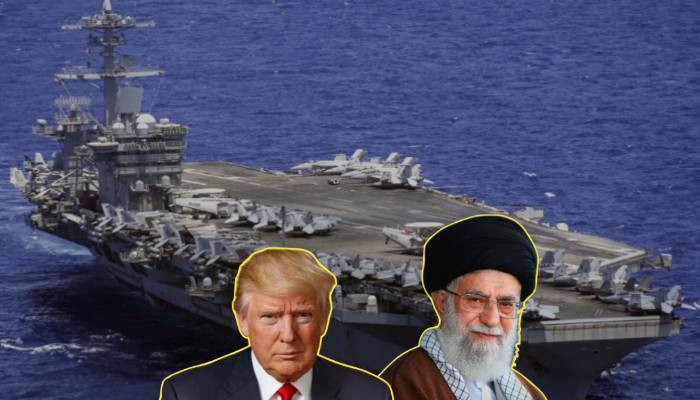
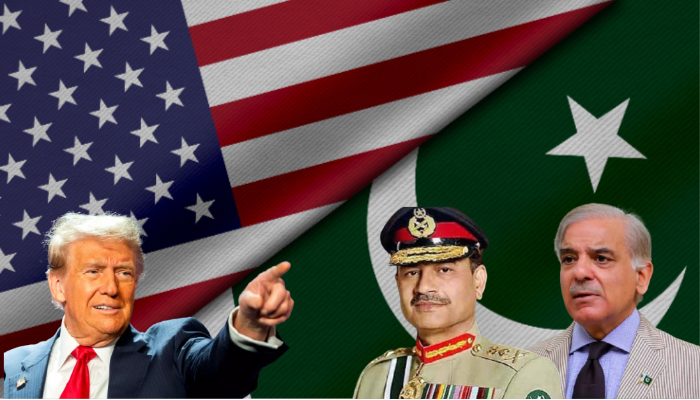
Trump-Xi meet in Busan sparks debate about ‘G2’ reset: Read why it is a tactical pause and not a long-term alliance between China and US

On Thursday (30th October), President Trump and President Xi met in Busan and announced an agreement to reduce tariffs on goods related to fentanyl from 20% to 10%, loosen restrictions on rare earths, and resume China’s purchases of US soybeans.

This was interpreted by many observers as evidence that Beijing and Washington could still negotiate ‘big power bargains’ over everyone else. However, the lesson is more complex for Indian strategists. In order to create room for their actual competition in technology, maritime influence, and global rule-making, both sides trade tactical concessions on tariffs, commodities, or enforcement at the so-called G2.

The Busan talks may initially appear to be a G2 reset, with the two superpowers calming markets and stabilising trade. However, none of the fundamental issues were settled, as evidenced by Taiwan, China’s covert support of Russia, South China Sea tensions, and restrictions on AI chips. What Indian analysts have long suspected is confirmed by the Busan deal.

Beijing and Washington can handle brief tactical pauses, but not a long-term strategic alliance. Their rivalry simply moves into more technical domains that directly impact nations like India when the high-level tensions subside. Therefore, a thaw between the United States and China should not be interpreted as a safer regional environment. Limited compromises can strengthen their hold on long-term power dynamics.  

The visible layer: Tariffs, showy détente and a hidden hardening

The story appears simple at first glance. While Beijing needed relief on rare earths after its export restrictions on October 9 had unsettled markets, the U.S. president wanted to see tangible progress on drug control and farm exports. Prior to the APEC meetings, both parties sought to reassure investors. For this reason, the Busan meeting resulted in a deal on soybeans and tariff reductions.   

However, Washington’s regulatory apparatus continued to tighten behind the handshake. The Congressional Research Service published a list of new export control measures in September 2025. The use of Huawei’s Ascend AI chips was formally treated as an export-control concern. 42 more Chinese entities were added to the U.S. Entity List.

The previous, more lenient “AI diffusion” rule was eliminated and, crucially for South Korea and Taiwan, Chinese-based Samsung and SK Hynix factories lost their “Validated End User” privileges. China’s soybean purchases and tariff cooperation were essentially accepted by the United States, but restrictions on what really counts, China’s access to cutting edge computing power, semiconductor tools, and American technical know how were not loosened.

This is the most important lesson for India. The tech dispute will not be resolved by a cordial photo op between Beijing and Washington. Delhi should anticipate that Beijing will use its own leverage, such as controls over rare earths, to resist U.S. technology restrictions on China.

This competitive environment will be the setting for India’s “China plus one” manufacturing initiatives, its incentives linked to electronics production, and its aspirations to become a center for chip packaging and ATMP (Assembly, Testing, Marking, and Packaging). To benefit, India must be perceived as a trusted partner who adheres to US technology controls.

The Maritime layer: South china sea pressure and Indian Ocean implications

Since 2016, 2025 has been one of the South China Sea’s most tense and active years. Chinese coast guard ships attacked Philippine boats with water cannons and rammed them on October 12. Prior to the Busan summit, Washington had hinted at planning a “show of force” with allies to reiterate its treaty obligations to Manila, and the U.S. State Department denounced these actions as dangerous.

The seventh joint maritime exercises between the United States and the Philippines in June 2025 had already demonstrated Manila’s refusal to back down. This escalation is significant for India. Washington seeks a reliable, non-aligned, and militarily capable ally to secure the western half of the Indo-Pacific whenever tensions between the United States and China escalate east of the Malacca Strait. Naturally, India is the target of that obligation.

However, Delhi faces additional risks as a result of this. The United States will expect India to maintain stability in the Indian Ocean and stop Chinese “grey-zone” activities there, such as survey ships using fictitious AIS signals, PLAN support vessels staying close to island territories, or civilian-looking ships carrying out covert underwater mapping, if it gets involved in a South China Sea conflict.

Concurrently, China’s trade with Africa and the Gulf will keep growing, employing more alternative networks for payment, insurance, and shipping that are intended to evade American regulation. India will thus face an increasing challenge in maritime surveillance.

In an increasingly crowded and opaque ocean space, the Navy and Coast Guard will have to make a careful distinction between suspicious, dual-use operations and typical Chinese commercial movements. In this sense, the consequences of the rivalry between the United States and China increase India’s maritime burden even when India is not directly involved in the conflict.

The Invisible Layer: Standards, Data, and Parallel Rails

The competition for standards, data, and digital infrastructure is the least talked about but possibly most significant aspect of the current rivalry between the United States and China. The most recent export restrictions imposed by Washington go beyond restricting China’s access to expensive chips. They now focus on cloud services, training support, and the transfer of AI model weights, which could help Chinese businesses get around hardware limitations.

China is reacting in two ways. In order to prevent sanctions from shutting down Huawei’s system, it is first attempting to get its own AI accelerators and digital platforms widely adopted among Belt and Road partners. Second, it is subtly promoting its algorithmic standards and content policies to encourage friendly nations to adopt Chinese-style digital regulations by default. Chinese companies are testing alternative systems for payments, insurance, and vessel tracking (AIS) in order to maintain strategic trade without depending on American frameworks, as U.S. financial and shipping regulations tighten.

For India, this has major ramifications. India’s digital economy is at a critical juncture. It depends on inexpensive Chinese hardware and smartphones to maintain widespread and inexpensive digital access, but it also needs U.S. cloud services, investment, and cutting-edge chips to power its expanding AI and startup sectors. India’s technology costs will increase if it aligns too closely with U.S. regulations, making it more difficult to maintain its inclusive digital model. However, it runs the risk of being subject to U.S. secondary sanctions if it leans too much toward Chinese systems, a problem it has already faced when purchasing Russian oil. Diversifying suppliers, maintaining thorough documentation, and retaining sovereign control over its data continue to be India’s best course of action since 2014. Staying open to both sides, adhering to all regulations, and preventing Beijing or Washington from defining India’s digital standards are the basic strategies.

Why the G2 still can’t make india optional

The Busan meeting also made clear why Beijing and Washington cannot afford to overlook India. India is crucial to the United States in a number of ways. In order to prevent China from opening a second front while American forces are occupied in the South China Sea, India must maintain the Himalayan line.

Additionally, since 2023, U.S. officials and think tanks have been pushing for India to be a reliable destination for international supply chains that are leaving China. Beyond that, Washington values India’s voice in the Global South. India’s statement that “you can work with both sides” is more palatable to many governments in Africa, the Gulf, and Southeast Asia than a direct, hard-line message from Washington.  

Though for different reasons, China also regards India as essential. India must maintain stable trade relations with one of the biggest markets in the world, keep organizations like the SCO and BRICS operational, and stop a formal anti-China naval coalition from forming in the Indian Ocean.

India has a special place to operate because of this mutual reliance. A truly multipolar world necessitates a multipolar Asia, as External Affairs Minister S. Jaishankar has stated time and time again since 2024. This means that India and China must manage their relationship, even if it is polarizing. In a nutshell, his message to Washington and Beijing is clear that Asia’s future cannot be decided solely on India’s head.

Modi Doctrine in a G2 world: Interest first, Coalition by issue

The foreign policy of the Modi government exhibits a distinct and consistent pattern when viewed from 2014 to 2025. India continued to purchase oil during the conflict with Russia, but it adhered closely to the price cap regulations. It protected shipping lanes in the Red Sea without completely embracing the Western narrative. India maintained open diplomatic relations with China while maintaining a firm stance along the Line of Actual Control. Protecting national interests first, meticulously documenting every action, and joining coalitions selectively, issue by issue, are the clear guiding principles.

The U.S.-China dynamic is a good fit for the same strategy. When India develops its own capabilities, it will accept American defense and technology partnerships. In order to support Indian manufacturing and consumer welfare, it will maintain economic ties with China. Because Global South nations can voice concerns about Western overreach in the BRICS and SCO forums, it will continue to be active there. Above all, India consistently claims that decisions are made in Delhi and are not influenced by other places.  

In 2025, this strategy has become more valuable due to its predictability and transparency. Washington is aware that sanctions evasion is not concentrated in India. Beijing is aware that India is not attempting to militarily encircle China. ASEAN nations can observe that India takes part in Indo-Pacific projects without importing every conflict between the United States and China. This clarity makes India a reliable and stable partner at a time when U.S.-China relations are becoming more transactional, with tariffs falling one day and new AI controls rising the next.

The Under the Radar risks India must track

India must consider three subtle but serious risks in its strategic thinking.

First, Indian cloud service providers or researchers utilizing U.S.-based platforms may face enforcement issues if U.S. export controls extend beyond hardware to include service-level limitations on AI training for Chinese entities, as suggested by the Congressional Research Service report from September 2025. Delhi must get ready by establishing independent capacity or negotiating exemptions.

Second, more vessels with unclear ownership, cargo, or purpose may be seen in the Indian Ocean as Chinese shipping becomes more covert to evade American surveillance. The Indian Navy would have to perform more AIS data analysis and on-sea inspections to ensure maritime security, which would increase surveillance costs.

Third, India may need to firmly defend the global expansion of UPI, the RBI’s rupee-trade initiatives, and its data localization policies if Washington and Beijing eventually reach an agreement on payment systems or data exchanges, say, on Chinese fintech oversight or data-transfer regulations. These ought to be portrayed as crucial elements of India’s strategic autonomy rather than as protectionist policies.

What India should do next

India should have a simple plan for the years 2025–2027. Through the Quad, cooperative maritime awareness programs, and defense production initiatives, it should continue to have close interoperability with Western partners. This guarantees that India’s interests are taken into consideration whenever Washington interacts with Beijing.

India should maintain open trade channels with China at the same time, but with stringent security and documentation requirements. This keeps inexpensive Chinese hardware accessible to Indian manufacturers and consumers without sacrificing security.

India must bolster its own capabilities at home by developing secure AI training facilities, increasing the Navy’s lift and intelligence-surveillance-reconnaissance (ISR) capabilities, and advancing semiconductor assembly and testing (ATMP). By taking these actions, India will be better equipped to withstand any unexpected disruptions in the U.S.-China relationship. Lastly, India should keep spearheading the Global South narrative that states don’t need to take sides. In today’s divisive world, many partners in Africa, ASEAN, the Gulf, and Latin America find this balanced approach credible and comforting.

Conclusion

From Delhi’s point of view, the Busan agreement does not indicate that China and the United States will soon co-rule the world. Instead, it demonstrates that both powers are primarily focused on resolving their own immediate issues, leaving others to deal with the consequences.

Although rare earth exports have resumed, tariffs have been loosened, and cooperation on fentanyl has been promised, South China Sea tensions have increased, U.S. AI controls have grown, and China is still testing its presence in dual-use maritime zones.

Rejecting an either-or option has been India’s most consistent response in this situation, which is consistent with the Modi government’s strategy. India is establishing itself as the third major force in a game that was previously dominated by two by strengthening its technological and defense cooperation with the United States, maintaining a cautious but functional relationship with China, and gradually increasing its own economic and naval power.

In 2025, neither the United States nor China will be able to make long-term decisions about Asia or technology without first asking, “What will India do?” That is already a major accomplishment for a nation that prioritizes strategic autonomy.     
           

Pirates of Sundarbans return in Bangladesh: Read how a problem eradicated by Sheikh Hasina govt re-emerged under lawless Md Yunus regime

Bangladesh under interim chief Muhammad Yunus has descended into lawlessness after the fall of the Sheikh Hasina government. With increasing attack on minorities like Hindus, now a separate danger has risen its head, a problem that was successfully curbed by the previous democratically elected government. That new danger is the Pirates of Sundarbans.

In the twisting rivers of the Sundarbans, the world’s largest mangrove forest between Bangladesh and India, pirates have resumed their terror. A little over a year after students ousted the Sheikh Hasina’s government in July 2024, pirate gangs are returning. Fishermen, honey collectors, and crab farmers now facing attacks, kidnaps, and demands for money. Gunshots can be heard again in the foggy islands. The peace that Hasina’s government created is breaking in the UNESCO world heritage site.

The trouble started quietly after Hasina left power on August 5, 2024. She fled to India after 15 years as prime minister of Bangladesh. The massive violence that preceded and followed the fall of the government meant that the entire police force was busy with controlling violence and riots.

While the violence has reduced now, sporadic incidents do take place now and then. Moreover, the new temporary government, led by Muhammad Yunus, is busy with big changes across the country, including preparing for the election and making changes to the constitution as demanded by the protestors.

This has left the far-away Sundarbans with less police protection. As a result, at least 20 pirate groups, such as Dulabhai Bahini and Jahangir Bahini, are now active again in the south and centre of the forest. These groups include old pirates who had returned to mainstream, escaped prisoners, and jobless locals.

As per Bangladeshi media reports, areas in the Sharankhola and Chandpai ranges of the Eastern Forest Division of Sundarbans have reported regular activities of pirate gangs. The violence is so extreme that now fishermen, foresters and traders don’t even dare to move out of their villagers for work.

In the past month, bandits have kidnapped more than a hundred fishermen in the Sundarbans and extorted ransom in exchange for their return. In the last one year, over 300 people were kidnapped and tortured by the pirates. Most of the hostages returned after secretly paying ransom.

Locals say that many fishermen  and others are still being held hostage by various forces. Pirates are more active in various areas of the Sharankhola range of the eastern Sundarbans, including Mara Bhola, Ali Banda, Dhanche Bariya, Tetul Bariya, Tiar Char, Andharmanik, Pashur, and Shibsha.

People who witnessed the attacks narrate the scary stories. In late September, 20 fishermen from Satkhira disappeared near the Jamuna River. They were freed only after paying 500,000 taka to men with guns. “They came like ghosts from the past,” said villager Abdul Karim. “We thought pirates were gone for good. Now no one goes deep into the forest without fear,” he said.

Similarly, honey collectors in Bagerhat are stopped and forced to pay “fees.” Crab sellers in Khulna get threats. Prices of such products are going up, and people are losing work. Villages are forced pay weekly ‘protection money’ to stay safe.

These pirate groups control secret paths for smuggling fish, wood, drugs, and fake items. At least five big gangs are moving with guns. They feel fearless because the new government is focused on other problems and have largely stopped caring about the region.

According to sources from the Forest Department, fishermen and businessmen, bandits are forming groups under different names and carrying out criminal activities. These groups are formed by people involved in various crimes who had surrendered earlier and those who were convicted in various cases. Among these groups, Jahangir Bahini, Manjur Bahini, Dada Bhai Bahini are the most dangerous ones in terms of weapons and number of members. Members of these three groups had surrendered earlier and returned to normal life. In addition, some other notable pirate ganges are Karim-Sharif Bahini, Asadur Bahini, Dayal Bahini, Robi Bahini, Dulabhai Bahini, Ranga Bahini, Suman Bahini, Anwarul Bahini, Hannan Bahini and Alif Bahini.

As per local officials, influential people in the areas adjacent to the forests are acting as intermediaries and sources for the bandits. They secretly communicate with the families of kidnapped fishermen and their moneylenders, collect ransom money and deliver it to the pirate gangs. Various bandit forces are also giving tokens with their respective symbols to the fishermen, in exchange of ‘protection money’. If such pirate tokens are on the boat, fishing can be done safely in the forest.

Fishermen are required to pay a ransom of 20,000 to 30,000 taka per boat if they are sent to the forest. In the event of kidnapping, a ransom of 50,000 to 3,00,000 taka is required. The fishermen who are unable to pay this ‘fee’ have stopped going to the forest for fishing. If anyone is caught fishing without tokens, they are kidnapped, and are forced to pay much higher ransom.

Several fish traders in Sharankhola, who spoke on condition of anonymity, said that it is not safe to speak out against the goons. Representatives or sources of the gangs roam around the fishermen’s fish stalls near the forest. If they find out about the leak of information, they will torture the fishermen later and the extortion amount will increase. For this reason, none of the fishermen or moneylenders are speaking out against them.

Lieutenant Commander Abrar Hasan, Staff Officer of the Coast Guard Mongla West Zone, told the media that the trouble of pirate gangs bandits in the Sundarbans has started since fall of Hasina government in August last year. The Coast Guard has been conducting operations in the in different areas of the Sundarbans, but with limited success. Only around 40 pirates have been arrested so far. Large quantities of weapons and ammunition have been recovered from the arrested people. Local administration officials admitted that they are not equipped enough to fight the pirates.

Notably, while piracy was an issue in the Sundarbans earlier, it had disappeared completely. But the July revolution and the regime change at Dhaka paved the way for return of the Pirates of Sundarbans. As police and security forces were diverted to more pressing issues, the hard-to-reach areas in the world’s largest delta were left largely without any security.

For years, the Sundarbans was a hideout for armed gangs. They kidnapped people, killed for money, and hunted tigers. In the early 2000s, over 100 groups caused hundreds of deaths each year and hurt the fishing business.

Starting in 2012, Hasina’s government fought back with force and help. A special task force formed in 2012 under RAB (Rapid Action Battalion), and then there was massive crackdown on the criminals. Police, navy, and coast guard teams hunted the gangs. Local leaders and reporters helped make peace.

After that, the government launched the most important part of the plan, an “amnesty program.” Pirates who gave up their guns got money, training for new jobs like fish farming or bee-keeping, and small loans.

The plan worked well. On November 1, 2018, PM Hasina said the Sundarbans was free of pirates. Over 1,500 men from 32 groups gave up weapons and violence. “They answered our call to stop,” she said. Attacks dropped 90 percent by 2019. Tiger hunting fell. Former pirates started various occupations with government’s help and started normal lives. For example, Mostafa Sheikh, leader of Master Bahini, the most notorious pirate gang that controlled he entire southern coastline of Bangladesh, opened a bike garage.

From 2018 to 2024, Sundarbans was pirate-free. But exit of Sheikh Hasina government resulted in the return of the pirate gangs. Many of the gangs are formed by former pirates who had surrendered. For example, while Ilias Bahini’s head Ilias has died, his brother-in-law Rabiul formed a new gang. Locals have called it ‘Dulabhai Bahini’, which literally means (brother-in-law gang).

Large number of prisoners were freed by students during the July revolution, and many such former inmates have also joined or formed such gangs.

Before the 2018 surrender, the pirate gangs only operated in waters, targeting fishermen and traders. But after their re-emergence, they have started coming ashore also.

The interim government has promised action. In October, Md. Yunus started a special team with 500 guards and local helpers. But many doubt it will work. Sheikh Hasina succeeded in solving the menace because she mixed punishment with reward, she offered good incentive to pirates to return to normalcy.

For now, terror rules the pristine forests of Sundarbans. The terror of pirates means more than just crime, it shows how fast safety can disappear after a regime change.

Genocide in Sudan: Civil war between radical Islamist SAF and RSF has resulted in a dire crisis for Christian minorities, thousands killed and starved while the world ignores

Sudan’s ongoing civil war has taken a horrific turn, with new reports of mass killings and ethnic violence emerging from the Darfur region. El-Fasher fell on Sunday, 26th October, after 18 months of RSF seize, which blocked the entry of food and essentials for thousands of people trapped inside. 

The brutal conflict between the Sudanese Armed Forces (SAF) and the Rapid Support Forces (RSF) has left more than two thousand dead, millions displaced, and entire communities wiped out by Friday, 31st October.

For over 18 months, El-Fasher, the capital of North Darfur, had been under siege by the RSF, a powerful paramilitary group that grew out of the notorious Janjaweed militias responsible for the early 2000s Darfur genocide. El Fasher was the last remaining stronghold of the Sudanese Armed Forces. When the city finally fell, the violence that followed mirrored the same atrocities that shocked the world two decades ago.

1.2 million people in the city had been under siege for 18 months, forced to survive on animal feed, or worse, as the RSF built 56km (35-mile) of barriers, preventing entry of food and medicine and sealing off escape routes.

An analysis by Yale’s Humanitarian Research Lab (HRL) appeared to confirm reports of mass killings, using satellite imagery and remote-sensing data.

According to the HRL, clusters of objects and ground discolouration are evidence of human bodies and pools of blood. The clusters and discolouration were not present in images taken before the RSF invaded, the report noted.

More than 26,000 people have fled el-Fasher in just two days, most on foot towards Tawila, 70km (43 miles) to the west, the UN said. Some 177,000 civilians remain trapped in El-Fasher, according to the International Organisation for Migration.

A report earlier this month stated that as many as 14 million people have been displaced, calling the Sudan civil war the worst displacement crisis in the world currently.

Image via Aljazeera

The RSF fighters themselves have posted videos online, showing civilians, mostly men and boys, being executed, beaten, and mocked. The footage, which has spread across social media, has been verified by multiple human rights investigators.

According to the Yale report, El-Fasher “appears to be undergoing a systematic and intentional process of ethnic cleansing of indigenous non-Arab communities through forced displacement and execution.”

The RSF denies accusations of genocide, but even its leader, General Mohamed Hamdan Dagalo, known as “Hemedti,” admitted that his forces had committed “violations.” He released a video expressing “regret” for what had happened and announced the arrest of one RSF fighter,  a move international observers dismissed as symbolic.

The roots of Sudan’s endless war

Sudan has a long and painful history. Since gaining independence in 1956, after nearly six decades of British Egyptian rule, Sudan has endured a succession of devastating wars in its southern, western, and eastern regions. According to United Nations estimates, the civil war in South Sudan claimed around two million lives before the region’s succession in 2011. In western Sudan, the Darfur conflict left more than 300,000 people dead between 2003 and 2019.

Sudan conflict map by Visual Capitalist. Link: https://www.visualcapitalist.com/map-explainer-sudan/

Even before the current war, recurring tribal and regional clashes had already exacted a heavy toll, killing over 250,000 people. Today’s conflict has only deepened this national tragedy. More than 150,000 people have been killed and millions have been displaced, and countless civilians subjected to grave abuses, including extrajudicial killings, arbitrary detentions, sexual violence, and widespread looting.

The war has also brought agricultural and industrial activity to a standstill, driven nearly 19 million children out of school, destroyed critical infrastructure, and caused the Sudanese currency to collapse to unprecedented levels.

By 2023, their rivalry had exploded into open warfare. Since then, at least 15,000 people have been killed in major massacres, including one in El-Geneina, where RSF forces wiped out members of the Masalit tribe.

Bloodbath visible from space: A nation drenched in violence

What makes the current conflict even more shocking is its scale and savagery. Satellite imagery from several humanitarian organisations has shown bloodstained terrain, destroyed villages, and mass graves so large that they are visible from space.

The RSF’s campaign follows a clear and horrifying pattern: surround a city, cut off food and medicine, block electricity and communication, and then attack once the population is weakened. “They are using starvation and terror as weapons of war,” said Claire Ferguson, a researcher documenting atrocities in Darfur.

Doctors Without Borders (MSF) has reported entire communities being wiped out, especially in camps for displaced people like Zamzam near El-Fasher, and rampant sexual violence against women. Survivors say RSF fighters deliberately targeted civilians belonging to the Zaghawa ethnic group, seeing them as supporters of the army.

But atrocities have not been limited to the RSF. The SAF, which controls parts of eastern and central Sudan, has also been accused of bombing civilian areas indiscriminately, particularly in Sennar, Gezira, and North Kordofan states. Human rights groups say both sides have committed war crimes, including extrajudicial killings, torture, and sexual violence.

Christians caught between two Islamist factions

Sudan is a predominantly Muslim country, with around 90% of its population adhering to Islam. Christians, who make up a small minority, have long faced persecution, discrimination, and a lack of political power. With the civil war now raging between two Islamist factions, both influenced by radical ideologies, Christian minorities have become even more vulnerable.

While most of the victims of the war are Muslims, Christian communities have been through unspeakable horrors, caught in the crossfire. Most live in abject poverty and have little to no access to political or legal protection. Churches have been destroyed, pastors arrested, and aid workers targeted. In areas controlled by the RSF, Christian families have reported being forced to flee or convert under threat of violence.

Sudan’s long history of religious persecution dates back to Omar al-Bashir’s dictatorship, which imposed strict Islamic laws and banned the open practice of Christianity. Even after Bashir’s fall, the system that marginalised Christians remained in place. Today, with both the SAF and RSF claiming to defend Islam, Christian minorities find themselves trapped between two forces that view them with suspicion or outright hostility.

“The Christians of Sudan have no voice,” said a Khartoum-based pastor who fled to South Sudan earlier this year. “They are killed, starved, and forgotten. The world looks at Sudan and sees a Muslim war, but it is also a war on Christians.”

The UAE’s shadow over Sudan’s war

While Sudan bleeds, powerful foreign interests are accused of fueling the fire. A recent UN report and several independent investigations have stated that some powerful elements in the UAE are providing financial, logistical, and military support to the RSF.

The UAE’s motivation is largely economic and strategic. Despite being a wealthy Gulf nation, the UAE lacks its own gold reserves, and Sudan, particularly Darfur, is rich in gold. Hemedti’s RSF controls many of these gold mines and sells the metal primarily to Emirati buyers. In return, the UAE has supplied the RSF with weapons, drones, and ammunition, often disguised as “humanitarian aid.”

According to reports, the UAE has also allowed the RSF to operate businesses, financial fronts, and propaganda campaigns from its territory. Injured RSF fighters are reportedly flown to Abu Dhabi for treatment in military hospitals. Even Hemedti himself has been seen travelling in an Emirati royal’s private jet for diplomatic visits to African nations.

According to The Africa Report, Sudan exports approximately $16 billion worth of gold to the UAE annually, with a substantial portion originating from Darfur mines seized by the RSF since 2017. Most of these mines use illegal mining practices, and much of the gold is illicitly smuggled out of Darfur.

“Without UAE support, the RSF would not have been able to wage war at this scale,” said a UN analyst familiar with the investigation. “They are bankrolling a genocide.”

The UAE has denied these allegations, but Western diplomats and human rights groups remain unconvinced.

A humanitarian disaster ignored by the world

The war in Sudan has created one of the world’s worst humanitarian crises. Millions of people have been internally displaced, while 2 million have fled the country. Nearly half of Sudan’s population, around 25 million people, now needs humanitarian aid. Yet, according to the UN, only 12% of the $2.7 billion in requested aid has been funded.

Famine, disease, and violence are spreading rapidly. Entire towns have been burned to the ground. Aid workers have been killed. Relief convoys have been looted. The fighting for El-Fasher, in particular, has trapped hundreds of thousands of civilians with no food or clean water.

Meanwhile, international peace efforts have failed. Talks hosted in Jeddah by the US and Saudi Arabia in 2023 produced a “declaration to protect civilians,” but both the SAF and RSF violated it almost immediately. The UN, the African Union, and the European Union have condemned the atrocities but stopped short of concrete intervention.

Observers warn that unless the flow of weapons is stopped, Sudan could fall into permanent chaos, a failed state controlled by warlords and militias.

A country bleeding from its past

Sudan’s tragedy is not just about two generals fighting for power, it is the legacy of decades of dictatorship, inequality, and foreign exploitation. From the Darfur genocide to today’s war, the victims have largely been the same: poor, marginalised people with no voice.

Christians, ethnic minorities, and civilians who simply want peace are paying the price for a conflict they did not start. With both the SAF and RSF using religion and ethnicity as weapons, and powerful businesses profiting from the bloodshed, Sudan’s future looks increasingly uncertain.

Another disturbing aspect of these ongoing human tragedy is that most of the world has been aloof. While the news media is occupied with ‘All Eyes on Gaza’ and geopolitical tensions around the war in Ukraine, the suffering of millions of impoverished, helpless people in Sudan has been largely ignored.

As the world’s attention drifts elsewhere, the genocide in Sudan continues, visible from space, but ignored on Earth.

As Mohammad Azharuddin joins Congress cabinet in Telangana, read about the match fixing scandal that ended his cricket career

A political storm has emerged in Telangana amid the induction of controversial former Indian cricket captain Mohammad Azharuddin into the state cabinet after Governor Jishnu Dev Varma administered the oath at Raj Bhavan, on 31st October. Chief Minister A Revanth Reddy and his cabinet colleagues attended the event.

According to reports, Azharuddin could be offered the positions of Home Ministry or Minorities Welfare and Sports Ministry. His appointment gave the Congress government its first Muslim cabinet member. Meanwhile, Mahesh Kumar Goud the president of the Telangana Pradesh Congress Committee (TPCC) and multiple other top Congress leaders were caught off gaurd by the decision.

On 29th October, he acknowledged to a select members of the media that he was unaware of the development beforehand, reported Telangana Today. According to party sources, his remarks highlighted the absence of consultation and the rising resentment among senior leaders over unilateral actions initiated by some party members.

They are upset about being left out of crucial decisions and have reservations about Azharuddin’s selection since it shows that the party is trying to win over a certain (Muslim) demographic before the Jubilee Hills by-election.

Notably, Azharuddin has yet to join the council or legislative assembly which is a prerequisite for becoming a state minister and Varma has not approved his nomination to the legislative council under the governor’s quota. He has to be made the MLC within the next six months to maintain his ministerial berth.

BJP, BRS hit out at Congress party

The Bharatiya Janata Party (BJP) and the Bharat Rashtra Samithi (BRS) have strongly objected to Azharuddin’s appointment to the cabinet, arguing it is a ploy to sway the highly anticipated 11th November Jubilee Hills by-election. It seems to be an attempt to “woo the electorate” ahead of a triangular contest between the three parties as the assembly constituency has more than one lakh Muslim votes.

The saffron party pointed out the timing and charged that the action violated the Model Code of Conduct and filed a complaint with the state Election Commission. “It is an attempt to court the voters of a certain community and it is evident,” a party leader expressed, according to The Indian Express. According to BJP spokespersons, a minister’s induction, especially if the they recently wanted to contest from the same seat, amounts to the abuse of governmental authority to manipulate voters.

Similar assertions were made by the BRS as it added that the action was planned with the Jubilee Hills election in mind. The seat has been occupied by the party since Telangana was created in 2014.

On the other hand, Congress retorted that the move acknowledged Azharuddin’s political and cricketing accomplishments. Deputy Chief Minister Mallu Bhatti Vikramarka contended, “There is a nexus between the BJP and the BRS and that is why they are opposing his elevation,” at a press conference.

The same allegation was levelled by Goud at the two parties despite earlier row. “The Congress party had made a commitment to ensure cabinet representation for minorities. Governments, even in erstwhile Andhra Pradesh, always included a minority face. We are simply correcting a long-overdue imbalance,” he claimed while talking to NDTV.

The downfall of Azharuddin

Azharuddin, who was appointed as the captain of the Indian cricket team in 1990, represented the nation in four World Cups, three of them as captain, after making his debut on the field with three consecutive Test centuries in his first three games in 1985.

However, his cricketing career took a turn for the worst as the massive match-fixing scandal broke and he was banned by the Board of Control for Cricket in India (BCCI) in December 2000 which was eventually stayed by the Andhra Pradesh High Court in 2012.

The scandal unfolded on 7th April 2000 when Delhi police revealed to have a tape of a phone call between South African captain Hansie Cronje and bookie Sanjay Chawla, resulting in the accusation of match-fixing. The lawsuit also involved Cronje’s three other teammates, Pieter Strydom, Nicky Boje and Herschelle Gibbs.

On 8th April, Cronje and the United Cricket Board of South Africa (UCBSA) denied that South African players were involved in any form of game-fixing. On 11th April, Cronje was fired as team captain as he professed of not being “entirely honest” to Ali Bacher, executive director of Cricket South Africa.

During the 2000 India series, he acknowledged receiving payment between $10,000 and $15,000 for “providing information and forecast but not match-fixing.” The Indian government summoned the Central Bureau of Investigation (CBI) on 28th April to look into the claims and determine whether any Indian officials or cricket players were involved. The King Commission in South Africa started looking into the matter on 7th June.

Pat Symcox, Gibbs, Henry Williams and Strydom, all South African players, testified in court that Cronje had offered them money in exchange for poor performance in several of the India tour’s games.

Azharuddin enters the picture

Cronje made his contact with bookmakers public in a statement released, on 15th June. He informed the King Commission that while South Africa was touring India in 1996, Azharuddin had introduced him to a bookmaker who promised him money to lose a Test match. The latter denied the allegations.

Afterward, the homes of prominent Indian cricket players Azharuddin, Ajay Jadeja, Nayan Mongia alongside Nikhil Chopra as well as the Indian coach Kapil Dev were raided by the central agency on 20th July. However, nothing suspicious was located.

Gibbs and Williams received a four-month penalty on 28th August 28 as Strydom was acquited. Azharuddin reportedly admitted to fixing three One-Day Internationals (ODIs) during the CBI investigation. The first was against South Africa in Rajkot in 1996, followed by Pepsi Cup matches in Sri Lanka in 1997 and Pakistan in 1999. However, he later denied any involvement in an interview.

Meanwhile, the CBI published a report on 31st October that outlined his admission of match-fixing and disclosed that he had enlisted the assistance of colleagues Ajay Jadeja and Nayan Mongia to carry out the fixing operations. On 27th November, Azharuddin was pronounced guilty by the BCCI.

Ajay Sharma, Jadeja, Manoj Prabhakar alongside Ali Irani, a former Indian team physio, were all charged for their connections to bookies. Kapil Dev and Mongia were not found guilty. Azharuddin and Ajay Sharma were suspended for life by the cricketing body on 5th December. Prabhakar and Irani were barred from holding any position in Indian cricket for five years while Jadeja was given a five-year suspension.

Delhi bookie names Azharuddin

Delhi bookmaker and a goldsmith by profession, Mukesh Gupta (also known as John or MK) knew a number of Indian and international cricket players and had been known to Indian authorities since the initial rumours of match-fixing, based on ESPNcricinfo. Cronje confirmed Gupta’s involvement when he admitted to the King Commission that Azharuddin had introduced him to the former in Kanpur in 1996.

Cronje received $40,000 from Gupta in return for information. Gupta revealed the truth and provided the CBI enough proof to go after Azharuddin, Manoj Prabhakar, Ajay Jadeja, Ajay Sharma and Nayan Mongia.

More importantly, photographs depicting Azharuddin with prominent members of the Bombay mafia, including at least one whose name has been connected to terrorist bombings in the city in early 1993, were in the CBI’s possession.

The police did not question the cricket player after finding these photos during their bombing investigations. According to sources, he broke under pressure when the CBI presented him with proof of his dubious affiliations. There had been long-standing claims that some of these underworld personalities have a tight relationship to Sharjah matches.

However, the Andhra Pradesh High Court declared Azharuddin’s sentence “unsustainable” and removed it on 8th November 2012. The Delhi High Court also lifted Jadeja’s ban in January 2003, stating that there was insufficient evidence to support his role in match fixing.

Sardar Patel’s unite India campaign and the decisive role of Bhavnagar Maharaja Krishnakumarsinhji: The First Princely State’s Merger with India

India is celebrating National Unity Day on 31st October. Special ceremonies, programs and celebrations have begun in various places and states on the birth anniversary of Sardar Vallabhbhai Patel. India is celebrating and taking inspiration from the grit and patriotism of Sardar Patel, the “Iron Man” who united the nation. The people of India are also remembering Bhavnagar State and its ruler Maharaja Raol Saheb Shri Krishnakumarsinhji Gohil . The only reason is that Bhavnagar became the first step towards the dream of a united India. 

When Sardar Patel commenced his efforts to unify India, Bhavnagar was the only princely state that chose to join India. The result was that seeing Bhavnagar, other princely states also joined India. Bhavnagar took the first unique step in Sardar Patel’s campaign to unite the fragmented India after independence in 1947, and from there the campaign for the merger of princely states began. 

The then ruler of Bhavnagar, Maharaja Krishnakumarsinhji Gohil, had set a noble example by merging Bhavnagar to the Indian Union. In this article, we will discuss the conversation between Maharaja Saheb and Sardar Patel. On the birth anniversary of Sardar Patel, we will discuss in detail how Bhavnagar state contributed to his campaign to unite India.

The 1939 Praja Parishad and the Maharaja’s meeting with Sardar Patel

Bhavnagar state was a monarchy; however, it also included the Praja Parishad, hearings, courts and other important democratic elements. The common people were also given powers and Maharaja Krishnakumarsinhji himself was an independent and liberal personality. He was born on 19th May 1912 in Bhavnagar. After the death of his father Maharaja Bhavsinhji II, he was entrusted with the throne of Bhavnagar at the young age of only seven years. However, till 1931, the government was run under the guidance of the Diwan. 

During Krishnakumarsinhji’s reign, Bhavnagar became the key trading centre of Kathiawar, where maritime trade and industrial development were encouraged. In 1938, he also received many international honours and was also awarded the KCSI, yet his heart was always intertwined with the Indian independence movement. 

In 1939, Maharaj Krishnakumarsinhji and Sardar Patel had their first meeting. During this conference, Sardar Patel delivered a speech on public, state development and national unity, which instilled great respect for him in the mind of the Maharaja. In this very meeting, the seeds of future unification were sown. 

“There was a transcendent power of unity in the words of the Sardar, which touched my heart,” he said.

The situation in 1947 – The challenge of making India ‘unified’ across the continent

The country gained independence in 1947, however, at that time there were 565 princely states in India, whose area was 48% of the total area of ​​India. These princely states were given three options. One was to join India, the second was to join Pakistan and the third was to remain independent. Sardar Patel, as the Home Minister, had prepared the ‘Accession Instrument’ and called upon the princely states to join the Indian Union. This document asked the princely states to give the Union of India authority over defence, foreign policy and communications, while guaranteeing the security of internal administration and inheritance.

At that time the situation was such that many princely states wanted to remain independent, making it difficult to unite India. If any princely state joined the Union of India, then the rest of the princely states could also join the Union of India. Amidst this turmoil, Maharaja Krishnakumarsinhji was the first to accept the call of Sardar and voluntarily offered 1,800 Padar on a Tulsi leaf to the country. During this, he said, “Joining the Union of India is the only right option for the people of Bhavnagar and its heritage.” 

Meeting with Gandhi and Sardar’s diplomacy

The main conversation between Maharaja Krishnakumarsinhji and Sardar Patel took place in Delhi in December 1947. The Maharaja was only 35 years old at that time. He met Gandhi at Birla House on 17th December 1947 and expressed his commitment to merger with India. Manubhen Gandhi has written a description of the Maharaja’s meeting with Gandhi in Delhi’, According to the description, as the time seemed close, Gandhi asked Manubhen to go outside in front of the car and respectfully bring the Maharaja. The Maharaja met Gandhi alone and had a conversation. 

 “I hand over my kingdom to the feet of the country. I will accept whatever decision is made regarding my salary, private properties, etc.” Gandhi was very pleased with such a generous and noble presentation of the Maharaja. However, he asked, “Have you asked your queen and brothers?” The Maharaja replied, “Their opinion also comes into play in my decision. When the entire elephant is going, there is no point in keeping the elephant,” he humbly said.

In response, Gandhi said, “The decision of Bhavnagar Maharaj is important for the unity of India.” He also advised the Maharaja to meet Sardar Patel and asked him to move forward in this direction. Subsequently, a meeting was held between both Maharaja Krishnakumarsinhji and Sardar Patel and for the first time, the merger of a princely state into the Union of India was considered. 

Notably, Dr. Gambhir Singh Gohil, who wrote the biography of Krishna Kumar Singh under the title ‘Prajavatsal Rajvi’ and former principal of Shamaldas College, Bhavnagar, has also mentioned this incident. Sardar had personally told the Maharaja that, “Unification of princely states is not only a political matter, but the welfare of the people is also hidden in it. Only with the cooperation of progressive rulers like you, India can become the great democracy of the world.” Responding to this, the Maharaja expressed concern about the traders, people and its economic stability of the Bhavnagar state. 

Sardar Patel, however, assured that all matters would be taken care of. “Bhavnagar will be given an annual annuity, autonomy of internal administration and security of trade routes. The Centre will help in strengthening your polytechnic institutions.” 

This agreement was finalised via VP Menon. Expressing gratitude to the Maharaja of Bhavnagar, the agreement stated, “This merger will further strengthen Bhavnagar and the connection and feelings of the Maharaja of Bhavnagar with his people will remain intact and unbroken.” 

The first merger and its consequences

On 15th January 1948, Sardar Patel arrived in Bhavnagar and in a special ceremony, Maharaja Krishnakumar Singh publicly announced the official declaration of ‘Responsible Democracy’ to the people of Bhavnagar . During this time, he handed over the administration to the representatives of the people and signed the Accession Instrument. With this, Bhavnagar became the first princely state in India to be completely merged with India. On 15th February 1948, Bhavnagar merged with the state of Saurashtra, which also inspired 222 other princely states of Saurashtra. 

This sent a strong message to Junagadh, Porbandar and other princely states and their people that only unity is the path to progress. With the joint efforts of Sardar Patel and the Maharaja of Bhavnagar, the process of merger started moving forward. Gandhi also used to give the example of Bhavnagar to other princely states. Manubhen’s book describes that Gandhi used to tell other princes who came to meet him, “You were asking, how should we behave now? So, you should take the example of Maharaja Krishnakumarsinhji of Bhavnagar and adopt the path he took.” 

Bhavnagar’s merger with India inspired other princely states. These started preparing for an official merger with India and Sardar Patel being India’s ‘unifier-in-chief’ expedited the process. he merger of Bhavnagar was the first victorious step of Sardar Patel’s strategy. He united the princely states on the basis of diplomacy and trust. On the birth anniversary of Sardar Patel, this history reminds us that unity is built only through trust and dedication. What makes it important to remember Bhavnagar and the Maharaja of Bhavnagar on the birth anniversary of Sardar Patel is that he took the first and decisive step for the unification of India and offered the first “Aahuti” in the dream-like yagna of Sardar Patel’s Akhand Bharat.

Amit Shah remembers Sardar Vallabhbhai Patel’s contribution in protecting India’s territorial integrity: Here is how the Iron Man of India protected the Lakshadweep Islands

Commemorating independent India’s first Deputy Prime Minister and Home Minister, Sardar Vallabhbhai Patel, on his 150th birth anniversary on Friday (31st October), Union Home Minister Amit Shah and Prime Minister Narendra Modi paid tributes to the ‘Iron Man’ of India. Prime Minister Narendra Modi paid a floral tribute to Patel at the Statue of Unity in Gujarat’s Ekta Nagar. Taking a pledge of unity, PM Modi also announced the release of a special commemorative coin and stamp as a tribute.

Marking the occasion, Union Home Minister Shah flagged off the ‘Run for Unity’ program in the national capital and administered the pledge of unity and reaffirmed the nation’s commitment to unity and integrity. Addressing the participants during the celebrations on the Rashtriya Ekta Diwas (National Unity Day), which is observed on Patel’s birth anniversary since 2014, Shah remembered Patel’s immeasurable contribution in shaping the current map of India.

He highlighted how the visionary statesman accomplished the monumental task of integrating 562 princely states into the Indian territory with his diplomacy. Shah recalled how, even after India got independence, Sardar Vallabhbhai Patel remained vigilant and ensured that the territorial integrity of India was intact. It was because of Patel’s forward thinking and far-sightedness that he was able to realise the strategic significance of several territories, including the Lakshadweep (Laccadive) islands and merge them into the Indian territory.

Sardar Vallabhbhai Patel foresaw Pakistan’s ill intentions about the Lakshadweep Islands and thwarted its attempts to capture them. Patel sent an Indian Navy ship to the Lakshadweep Islands just in time and spoiled Pakistan’s dream of maliciously acquiring the islands.

How Patel thwarted Pakistan’s plans to capture the Lakshadweep Islands

If not for the futuristic thinking of Sardar Vallabhbhai Patel, India could have lost a vital Arabian Sea position like the Lakshadweep Islands to Pakistan. Patel recognised the strategic significance of the Lakshadweep Islands and prevented it falling into the hands of Pakistan. At the time of independence, when the Indian territory was partitioned based on religion to form East and West Pakistan, the Lakshadweep Islands, with their majority Muslim population, were eyed by Pakistan.

The islands have a critical geographical location, with proximity to India’s southern coast, which made Pakistan covet them. Sensing that Pakistan was conspiring to acquire the Islands by force, Patel ordered the Indian officials in South India to immediately dispatch a ship with troops to the islands. By the time, a Pakistani ship had also embarked on a journey to capture the islands. However, the Indian ship, surpassing the Pakistani vessel, reached the islands and unfurled the Indian tricolour, establishing India’s authority on the islands. Pakistani forces had to return empty-handed.

The significance of the Lakshadweep Islands

The Lakshadweep archipelago is a group of 36 small islands scattered across the Arabian Sea. The islands are loacted around 400–500 km off the coast of Koch in Kerala. Referred to as the Indian tropical paradise, the islands have huge environmental, strategic, and economic significance for India. Because of their strategically crucial position in the Arabian Sea, the islands prove extremely helpful for India in maritime surveillance, and naval operations. They also provide India access and control over crucial sea routes that connect Middle East, Africa, and Southeast Asia.

Coral reefs in Lakshadweep Islands. (Image via undp.org)

The islands contribute immensely to India’s blue economy through their rich marine resources. The islands also have potential for eco-tourism and sustainable fishing, which can boost the local economy. The coral reefs, lagoons and atolls of the islands form a unique part of India’s marine ecosystems. They help maintain ecological balance in the Arabian Sea by acting as natural barriers against coastal erosion and sustaining biodiversity.

Priyank Kharge’s elitism is Congress’ legacy: Why Himanta Biswa Sarma’s Assam embodies the new India of talent and transformation

When Karnataka cabinet minister Priyank Kharge questioned whether there was any “talent” in Assam or Gujarat to host semiconductor industries, he did more than just display political immaturity, he revealed the deep-seated arrogance of the Congress ecosystem that still believes India’s progress is limited to a few privileged states. His remarks were not simply a political gaffe; they were an insult to the hardworking youth of Assam, to the technological aspirations of India’s Northeast, and to the very spirit of equitable development that the Modi government and Chief Minister Himanta Biswa Sarma have been striving to achieve.

Kharge’s words were not taken out of context. His recorded statement is clear: “What is there in Gujarat? Is there talent there? What is there in Assam? Is there talent there?” This was not a policy critique, it was a derisive swipe at entire populations, implying that regions outside the traditional urban-industrial belt of South India are intellectually or economically unfit for high-technology industries. Coming from the son of Congress president Mallikarjun Kharge, it epitomizes the dynastic disdain that has long alienated the Congress Party from the grassroots energy of India’s new federal development story.

Assam’s Moment of Industrial Renaissance

Under Himanta Biswa Sarma’s leadership, Assam has been quietly but steadily transforming itself into the industrial and infrastructural hub of the Northeast. The Tata Group’s ₹27,000-crore semiconductor assembly and testing facility in Jagiroad, Morigaon district, is not just a business project, it’s a statement. Scheduled to begin its first phase by mid-2025, it is projected to generate over 27,000 direct and indirect jobs, making it one of the largest industrial investments in Assam’s history.

This project is not a result of “arm-twisting” by the Centre, as Kharge insinuates. Rather, it’s the fruit of strategic vision, where the Northeast, long neglected under Congress rule, is being reimagined as a vital node in India’s technological and manufacturing map.

The semiconductor plant aligns with Prime Minister Narendra Modi’s “Digital India” and “Aatmanirbhar Bharat” vision, aiming to make India self-reliant in semiconductor manufacturing, a sector critical for everything from smartphones to electric vehicles. For Assam, the facility represents both a technological leap and a social revolution, local youth trained for global industry, regional economies integrated into national value chains, and a new identity for the Northeast beyond tea and tourism.

Himanta Biswa Sarma: The Architect of a Confident Assam

The fierce response from Chief Minister Himanta Biswa Sarma was both natural and justified. His retort, calling Kharge a “first-class idiot” for insulting Assamese youth, may sound harsh to some ears, but it reflects the emotion of a leader deeply protective of his people’s dignity. Sarma’s words were not mere political rhetoric; they came from the conviction of a chief minister who has seen, firsthand, the rising potential of Assam’s youth.

Sarma rightly noted, “Why shouldn’t a Northeast Chief Minister aspire for prosperity like those in the South or West? If striving for progress is desperation, so be it.” This is the essence of the new India’s federal confidence, where every state, from Gujarat to Assam, can compete on merit, innovation, and vision, not lineage or legacy.

Over the past few years, Sarma’s government has aggressively pushed industrial reforms, improved law and order, streamlined land and power policies, and expanded technical education infrastructure. The Assam Startup initiative, Skill Development Mission, and collaborations with national institutions like IIT Guwahati have created fertile ground for technology-based industries to take root. These are the kinds of structural changes that Congress governments, trapped in bureaucratic inertia and caste-communal politics, failed to achieve for decades.

Congress’s elitism and the old politics of entitlement

Priyank Kharge’s comments are symptomatic of a deeper malaise within the Congress Party, a sense of elitist entitlement that cannot reconcile with India’s decentralized development model. His words echo the old Nehruvian mindset that viewed the Northeast as a periphery, not a partner, in India’s modernization. For decades, under Congress rule, Assam and the Northeast were politically exploited but economically abandoned. Investments flowed into select states like Karnataka and Maharashtra, while the Northeast was left to grapple with insurgency, unemployment, and infrastructural neglect.

That same mindset now sneers at the idea of a semiconductor plant in Assam. But the irony is stark. Many of the engineers who fuel Bengaluru’s IT revolution come from Assam and the Northeast. Thousands of Assamese youth work in Bengaluru’s tech parks, contribute to global firms, and run startups. To claim that Assam lacks “talent” is not just factually wrong, it is morally offensive.

Even more hypocritical is Kharge’s backpedal, where he accused Sarma of “twisting his words.” But his initial statement questioning Assam’s “talent” was clear enough. When called out, he resorted to the same victimhood politics the Congress deploys whenever caught in arrogance: blame the BJP, blame the Centre, and claim misinterpretation.

The real picture: Assam’s human capital and rising aspirations

Contrary to Kharge’s dismissive claim, Assam’s educational and technological base is growing faster than ever. Institutions like IIT Guwahati, Assam Engineering College, and Tezpur University are producing world-class engineers, scientists, and researchers. According to the All India Survey on Higher Education (AISHE) 2024, Assam ranks among the top states in the Northeast in terms of technical graduates. Its youth are increasingly being absorbed into the private sector, startups, and national skill programs.

Moreover, the Tata Group itself acknowledged Assam’s potential, partnering with the state to train 1,500 youth at facilities in Bengaluru. These trainees will be employed at the Jagiroad semiconductor unit, a program that symbolizes collaboration, not condescension, between states. Even Sarma’s critics admit that this project will be a benchmark for inclusive industrialization in Eastern India.

By contrast, Karnataka, despite its established IT base, has faced investment flight in recent years due to poor governance under the Congress-JDS combine. As BJP’s IT cell head Amit Malviya pointed out, Karnataka lost Google’s $15-billion data center to Andhra Pradesh’s Vizag, and multiple semiconductor proposals shifted to Gujarat and Assam. Instead of introspection, Priyank Kharge has chosen to lash out with arrogance and false allegations.

Politics of progress vs. Politics of privilege

The Kharge-Sarma spat is not merely a personal duel, it encapsulates two opposing political philosophies in India today.

On one hand stands Himanta Biswa Sarma, a leader who rose through hard work and intellectual merit, symbolizing the BJP’s model of performance-driven politics. His Assam is aspirational, reform-oriented, and deeply rooted in regional pride. On the other hand is Priyank Kharge, heir to a dynastic throne, whose political existence owes more to pedigree than performance. His sneer at Assam reflects the Congress Party’s insecurity at seeing states once dismissed as “backward” now competing with and even surpassing the so-called industrial elites of the South.

In this clash, Sarma represents the new India, where leaders from diverse regions are redefining growth narratives. The BJP’s governance model emphasises equitable industrial distribution, encouraging sunrise sectors like semiconductors, electronics, and renewable energy to reach Tier-2 and Tier-3 locations. The idea is simple: growth must be national, not sectional.

The Tata semiconductor plant in Assam embodies that philosophy. It will not only create jobs but also stimulate auxiliary industries, logistics, training, housing, and digital infrastructure across the region. It signals that the Northeast is no longer a political afterthought but an economic frontier.

A lesson in humility and federalism

Kharge’s comments have rightly drawn condemnation from across Assam’s political spectrum, even from Asom Jatiya Parishad (AJP) leaders like Lurinjyoti Gogoi and Jagadish Bhuyan, who are opposed to the BJP but united in defending Assamese pride. They reminded him that Assamese youth are already integral to Karnataka’s IT sector and are globally recognized for their skills. That a Congress ally had to rebuke a Congress minister shows how far the party has fallen from its pluralist ideals.

In contrast, Sarma’s response, though sharp, underscores a new form of regional assertiveness, not defensive or parochial, but proud and progressive. His leadership style has made Assam a talking point in national economic planning. He has brought discipline to governance, improved fiscal management, and expanded industrial linkages with Southeast Asia through the Act East Policy.

The BJP’s Northeast policy, from infrastructure to digital literacy, is dismantling decades of neglect. Under this paradigm, Assam stands tall not as a recipient of Delhi’s charity, but as an equal stakeholder in India’s future.

Conclusion: Pride in progress

Priyank Kharge’s remarks have done what decades of neglect could not: they have united Assamese people across political lines in defense of their dignity. His elitist condescension inadvertently reaffirmed what Assam already knows: that the state’s youth are capable, competent, and ready to shape the next phase of India’s technological revolution.

Chief Minister Himanta Biswa Sarma’s spirited defense of Assamese talent is not just political theatre; it’s a reminder that leadership must be rooted in faith in one’s people, not disdain for others. Assam is no longer content being in the shadow of the South or the West; it is forging its own destiny, with confidence, competence, and courage.

I was invited to a conference of Western Conservatives: As a Hindu, here is why I decided not to go

Note: I was invited invited to the ARC Conference (Alliance for Responsible Citizenship Conference). The conference, set to be held in June 2026, aims to unite conservative voices, with Jordan Peterson, Douglas Murray, Vivek Ramaswamy and several others on the advisory board. As one of the first Hindus to be invited to such a conference, I was looking forward to attending it. However, I decided to decline the invitation. Following is a reproduction of my response to the organisers.

Dear organisers, 

At the very outset, I wish to express my gratitude for the invitation. I am acutely aware that at this esteemed gathering, it is rare for Hindu conservatives to be welcomed. Therefore, it would ordinarily be considered a privilege to be among the first Hindus to engage in a broader discussion about the threats faced by my community, common enemies, and a loose coalition to combat civilisational adversaries. I would also like to thank my Jewish friend who recommended my name. He believed (perhaps, still does) that a conservative alliance would be just as incomplete without Hindus as it would be without Jews, since both communities face persecution and religiously motivated hostility.

When my Jewish friend and I had a conversation about ARC (The Alliance for Responsible Citizenship) and him recommending my name for an invite, I was somewhat sceptical. A conservative conference in the US, without a doubt, revolves around Christian revival. I, of course, will not criticise that. Every community has the absolute right to work towards its own cultural, religious and civilizational revival. As a Hindu, I was unsure what my role would be at such a conference. 

My friend reminded me that I have long maintained that Hindus are alone in their civilizational battle. I have long advocated that a community victory of the Hindus is for us alone to cherish, and a loss, a defeat, is for us to bear the burden of. I had also brought up Jordan Peterson’s shameful denigration of the Hindu mother Goddess (Maa Kali) and Douglas Murray’s inaccurate defence of the colonisation of India – what could I possibly have in common with these folks, I had asked. My friend, the eternal optimist, said that the world is no longer a place where persecuted communities can survive without allies and possibly, the ARC Conference could be a great opportunity to find allies against common threats and enemies. 

I have, in fact, also believed that the best way forward would be reaching a common minimum program of sorts, where, despite our theological differences, Hindus, Christians, and Jews work towards tackling common civilizational threats. What that alliance would look like, however, always eluded me, because the theological differences between Hindus and Christians are insurmountable. 

When Mr. Ram Madhav spoke at the National Conservatism Conference in July 2024, he went in solidarity. In the Christian conservative fight against the Global Left, Madhav said a billion Indians would be their brothers in arms. “We can be at the forefront”, he had said. Despite the olive branch, he was derided, mocked, humiliated and abused for his Hindu faith by Christian conservatives on X. 

I knew that if I had attended the ARC Conference, I would have been met with similar derision. But that hardly bothers me. Online hate is something every non-Left commentator is used to – regardless of where they come from. Despite these realities, I thought the ARC Conference could add value for my community because mostly, the racist attacks against Ram Madhav came from what one could dismiss as fringe quarters – random social media accounts who, I thought, had no power to impact policy or serious engagement. 

That the racist social media chatter did not affect policy or rules of engagement got slightly reinforced when those like Elon Musk, David Sachs and others defended Sriram Krishnan after MAGA enthusiasts unleashed a barrage of racist abuse against him after Donald Trump picked him as the Senior White House Policy Advisor on Artificial Intelligence (AI). 

It was then that I thought maybe I was being too much of a pessimist. Perhaps a common, limited understanding could be reached, and my community could benefit from such an alliance. Even in the face of increasing racist attacks and comments, I believed that this conference could allow me to address the bias. 

That pushback or even some sign of disapproval during the Sriram Krishnan saga was completely absent during the recent flurry of anti-India and anti-Hindu comments after Donald Trump’s policies sparked a debate on H1B visas. 

In fact, the intellectual leadership of the MAGA movement or the anti-woke movement seemed either in agreement through their silence or too scared to voice their dissent. 

As someone who has spent the better part of her life advocating for Hindu rights and documenting religiously motivated hate crimes against Hindus, I could not, however, overlook the Hinduphobic comments made not by fringe white supremacists but by the Vice President of the United States of America himself.

When JD Vance told USA that he hopes his wife, Usha Vance, would find Christianity, he essentially declared to the one billion-plus Hindus that their faith was not good enough. He sanctified the Hinduphobic comments made by his supporters, calling Hinduism a “false religion” and our Gods and Goddesses, Demons. 

Now, I cannot authoritatively speak for what JD Vance truly believes, but if it was not a statement of conviction, it was evident that, at the very least, he was too scared to offend fringe sentiments. While being married to an ethnic Indian and a practising Hindu, Vance not only refrained from wishing Hindus on Diwali (clearly a conscious decision) but also hoped, publicly so, that his wife would convert to Christianity. If nothing else, the statement of JD Vance proves that in the USA, the racist fringe is the mainstream now, dictating how leaders behave and what they espouse. 

One must contrast this with India and the Indian leadership, viewed as Hindu nationalists. In India, a large section of the Hindu population believes that India should be a Hindu nation. That, however, does not stop the leadership from reaching out to the Christian community or the Muslim community, because the current leadership and its ideological foundation – the RSS – believes that anyone born on this land needs to be viewed as a brother, regardless of theological differences. In fact, the USCIRF often screeches, relying on inauthentic data, to claim that Christians are being persecuted in India. The truth is quite the contrary. There are hundreds of cases and thousands of Hindus who Christians persecuted in their own land. These cases are meticulously documented on Hinduphobia Tracker – a database of Hindu persecution. Despite this, the government, viewed as Hindu nationalist and tarnished by elements in the USA, makes an earnest attempt to assuage the fears of minorities. 

I am, in fact, one of those Hindus who believe India is the civilizational, cultural and religious land of the Hindus. And since I say this, I must also place on record that as someone who believes India is a Hindu land, I am the last person to take umbrage at Christians thinking of the USA as a Christian country. However, for Hindus, India being a Hindu land does not mean the expulsion of Christians but the preservation of Hindu rights, religious and cultural. India is the only land to have accepted persecuted communities from across the world – from the Jews to Parsis, Christians and even Muslims, not once expecting them to abandon their faith. The pushback against Christians is limited to infringement on Hindu religious rights. In other words, Hindus oppose Christians only when they attempt to, by force, alienate Hindus from their faith and impose their religious beliefs on them. The pushback is not inherently due to theological differences; fundamentally, Hindus are perhaps the only people who accept differences, theological or otherwise, as part of coexistence. 

While Hindus have their fundamentals clear, it is the Christians who now need to define what their Christian nation would look like. That is not for me to weigh in on. But for now, it is apparent that the fringe racists dictate the leadership in the USA, and they will even throw their own family under the bus if it means that the fundamentalists would be assuaged. 

The sceptical hope of a broader coalition between the global non-Left, which was hanging on by a thread after Elon Musk and others had condemned racist attacks against Sriram Krishnan, his ethnic and religious identity, is now all but gone. 

When the leadership itself appears in sync or scared, attending such an event would reap no benefit. 

The obvious defence to what has recently transpired would be that it is natural for JD Vance, a Catholic, to hope that his wife embraces Christianity because Christians believe it to be the only path to salvation. And I hold no brief for Usha Vance. I, frankly, don’t particularly care what Usha Vance decides to do. But what the Vice President of the United States says about the faith of a billion people matters because it shapes how the Western World, or at least a large part of it, interacts with the followers of that faith. 

When JD Vance said that his wife is not very religious, contradicting Usha Vance’s earlier statement that she was a religious Hindu, he essentially negated the faith in its entirety. He basically said that Usha Vance was “faithless”, not because she was an atheist (by her own admission, she comes from a religious family), but because she did not follow Catholicism. When he admitted that his children were being raised Catholic, only months after claiming that their kids follow both religions, with Hindu rituals being a part of their life, he delegitimises the faith itself – presumably because he wanted to pander to the fundamentalists, his core vote bank. 

Here, I would like to reiterate: I don’t care what faith Usha Vance or their children follow. Their marital arrangement is not a matter of global concern. What is of international concern, however, is what his statements mean for Hindus and how they would translate into their dehumanisation and the delegitimisation of their faith. 

Vance’s statement wasn’t just about his wife. It implied the inferiority of the Hindu faith and furthered cultural erasure and stereotyping. 

It is a byproduct of racial and religious hate that Hindus, who neither proselytise nor impose their religious practices on others, apart from being productive members of any society, are expected to give up their religious practices and chip away at their cultural identity to “assimilate”. The pressure to give up their religious identity is such that most Hindus in the US hardly call themselves religious. They claim they are “spiritual” or pull a Vivek Ramaswamy to claim that Christian values and Hindu values are synonymous. Essentially, to escape discrimination and humiliation, even Hindus who have political power must capitulate to Christian supremacists by giving up their exclusively Hindu identity to claim they are, if not Christian, then Christian adjacent. 

Of course, I blame such Hindus just as much as I hold Christian fundamentalists responsible. The Hindus’ need to assimilate and find crumbs of acceptance from White supremacists contributes just as much to the dehumanisation of fellow Hindus. But if the Vice President of the United States of America cannot stand up and defend the faith of his wife, I have very little hope from other Christian conservatives, even for a limited alliance to fight common enemies. 

In all honesty, my only interest is the preservation and protection of Hindus, and any global non-Left alliance is pointless if that objective isn’t furthered. I have little regard for validation – from the Left or from the Christian conservatives. I do believe a Global Alliance against the Left and possibly Islamism would be beneficial to my community; however, any such alliance must be founded on equal footing. I never was, nor will I ever be, a votary of chipping away at my own religious and cultural identity for the purpose of forging such an alliance, nor would I ever capitulate to those who deem themselves superior. 

This letter would undoubtedly raise debate among my followers and readers. Should I have attended the ARC Conference to say this in person? Is it not better to be there than be derided in absentia? Would my letter change anything? And if it would not, why not simply attend and have a shot, even if it is a slim one, at convincing other conservatives that Hindus are meant to be allies. 

I fear, now more than ever, that a Global Non-Left Alliance may not be forged. Theologically, Christians would always be inclined to alienate Hindus from their faith. In India, there are thousands of cases of Christians persecuting Hindus, forcing them, and threatening them to convert to Christianity. Politically, the ‘right’ would always be local in nature, unlike the Left, which finds global consonance. Hindus would want to focus on the religious, cultural, and traditional preservation of their people’s faith and the land of their ancestors. In contrast, Christians, in addition to working towards cultural and religious revival, would also be theologically invested in eradicating Hindus and their faith. 

I am sure the ARC Conference or other Conservative Conferences would find several other Hindus who would be more than willing to capitulate, to blame Hindus for their own persecution and humiliation. I refuse to be one of them. 

I believe the need is for Christian conservatives to get their house in order because, currently, their message to the world is clear – Christian conservatism is either subservient or indistinguishable from fundamentalism rooted in pristine theology and xenophobia, which hates Hindu existence itself.

I do hope there comes a time in the future when Christian conservatives realise that while they poured their energies into converting the “heathens”, their land and their identity were being stolen by common enemies – forces inimical to civilizational survival. I do hope that someday, forging a common alliance would not necessarily entail Hindus chipping away at their own cultural and religious identity. Until then, I would be uncomfortable attending this conference, while being deeply appreciative of the invitation extended to me. 

I am, of course, not placing the blame for JD Vance’s Hinduphobia on the ARC Conference. But in the absence of any condemnation from the conservatives and widespread agreement in contrast, I believe a Christian Conservative gathering is not one I feel the need to attend. 

India Today’s Marya Shakil justifies RJD’s genocidal “Bhura Baal Saaf Karo” slogan in 90s calling it “political necessity,” read how it led to violence targeting upper caste Hindus in Bihar

In the turbulent 1990s, Bihar under Lalu Prasad Yadav’s Rashtriya Janata Dal (RJD) was witnessing politics of caste-based mobilisation masquerading as social justice. The so-called upper caste Hindus were singled out, targeted and villainised by the RJD and its supporters with slogans like “Bhura Baal Saaf Karo”. Decades after, India Today journalist Marya Shakil has justified the RJD’s genocidal “Bhura Baal Saaf Karo” slogan.

Marya Shakil is the daughter of Shakil Ahmed Khan, who was a minister in Rabri Devi’s cabinet for 10 years.

During a panel discussion program on India Today, Marya Shakil said that in the Bihar of 1990s, “Lalu Prasad Yadav was a political necessity. When he carried out the movement of ‘Bhura Baal Saaf Karo’ and the entire movement against the upper castes, that was the need of the hour.”

She further justified the anti-upper caste movement and genocidal calls by the RJD in the 1990s by saying that when Nitish Kumar arrived on the political scene in 2005 and emphasised “Mahila voters (women voters), etc that was the need of the hour. How conveniently, Marya Shakil whitewashed a political movement calling for the targeting and elimination of upper caste Hindus, not only a ‘political necessity’ but also equating with other social issues like the push to increase participation of women in voting.

This is not only an attempt at justifying and romanticising caste-based targeting and genocide calls as some sort of savvy realpolitik, but also normalising it. Just imagine, if today a BJP leader gives a slogan calling for genocide of a particular religious or ideological group it deems oppressive, arguing that most terrorists or anti-national elements emerge from this community, would Marya Shakil call it ‘political necessity’, ‘need of the hour’ or ‘realpolitik’?

No! Then it would have been hate speech, collapse of democracy, ‘Hindutva fascism’ and triggered ‘Minority khatre mein hai’, ‘I can’t breathe’, ‘Not the India I grew up in’ and similar such responses.

Bhura Baal Saaf Karo: RJD’s genocidal call becomes a political necessity for the daughter of a Jungle Raj-era minister

It is essential to recall that back in the 1990s, particularly 1996, RJD coined the slogan “Bhura Baal Saaf Karo” which became a rallying cry to wipe off the ‘upper-caste’ Hindus. This slogan was not confined to seeking social justice or a mere subtle poetry used during election campaigns. It was an acronym targeting specific Hindu upper castes, Bhu for Bhumihars, Ra for Rajputs, Ba for Brahmins and L for Lalas or Kayasths.

Taking inspiration from the British ‘divide and rule’ policy, the RJD came up with this anti-Savarn slogan to sow divisions within the Hindu community on caste lines by projecting RJD as the sole fighter and defender of the backward caste against ‘oppressive’ Savarn groups. RJD aimed to unite and empower the Hindu backward castes and Muslims. This became the infamous “MY” formula replicated by the Samajwadi Party in Uttar Pradesh.

It was after Lalu Yadav gave the ‘Bhura Baal Saaf Karo’ slogan, which essentially meant eliminate Bhumihars, Rajputs, Brahmins, and Lalas/Kayasths, a series of caste-based killings targeting the upper caste Hindus unfolded in Bihar. The caste fire ignited by the RJD engulfed Bihar and significantly contributed to the Lalu era’s “Jungle Raj”. Lawlessness, kidnappings for ransom, caste-based murders, loot and absolute lawlessness became the new normal in Bihar.

Driven by political desperation and perhaps genuine hatred for the upper caste Hindus, Lalu Yadav and his party’s caste-based politics devolved into a license for goons, especially those linked to his own party, to terrorise upper-caste Hindu villages. These incidents resulted in forced migrations. While Lalu’s Yadav-Muslim supremacist regime rode this wave to power, it scarred generations.

During the 15-year RJD rule, law enforcement collapsed, crimes became rampant, the economy decayed, kidnappings for ransom became a thriving industry, and mass murders, caste clashes became the new normal. This opprobrious era also marked the rise of brutal ‘Bahubalis’ like Mohammed Shahabuddin and Mohammed Taslimuddin, who ran their fiefdom with impunity. Police became a puppet of the RJD government, and migration of youth in search of jobs and to flee violence contributed to the law and economic collapse in the state.

Unsurprisingly, much like his denial of involvement in corruption cases he was convicted in, Lalu Yadav denies coining the ‘Bhura Baal Saaf Karo’ slogan and blames the media for falsely attributing it to him.

However, even decades later, the RJD is using election campaign strategies for the coming state assembly election, particularly songs glorifying guns, violence, the idea of establishing Yadav supremacy and eliminating political opponents just as it used to be during the Jungle Raj.

In fact, the dormant but never dead “Bhura Baal Saaf Karo” has resurfaced in poll-bound Bihar’s charged political chatter. In July this year, a senior RJD leader while addressing a public event has said the same genocidal slogan.

In another incident reported from Gayaji, a crowd in July this year, ‘Bhura Baal Saaf Karo’ slogans were raised in the presence of RJD MLA from Attari, Ranjit Yadav.

Munarik Yadav, husband of Sahoda Panchayat head Photu Devi, referring to former Chief Minister Lalu Prasad Yadav, said, “Our leader used to say, ‘Bhura Baal Saaf Karo,’ and he was right. Now is the time to truly execute the Bhura Baal Saaf Karo slogan.’”

While Marya Shakil’s blatant justification of the ‘Bhura Baal Saaf Karo’ slogan has sparked online outrage, it is not shocking coming from the daughter of Ahmed Shakil Khan, who was a close aide of Lalu Prasad Yadav and served as the energy and law minister when Lalu’s wife Rabri Devi was the chief minister of Bihar. The daughter of a jungle-raj era minister justifying the horrors of those days would not have been very surprising; however, it coming from a journalist does raise concern.

If Bihar’s casteist and violent nightmare is what Marya Shakil would call ‘political necessity’, then the state is better off without those dreaming of scripting its sequel.