Home Blog Page 129

From Governance to Greatness: NDA’s Sankalp Patra for Bihar elections is a roadmap to turn the once-BIMARU state into an industrial powerhouse

The National Democratic Alliance (NDA) on Friday unveiled its manifesto for the upcoming assembly elections in Bihar. Nitish Kumar has been the chief minister of the state for a long time, since 2005, except a brief intervention when Jitan Ram Manjhi was the CM. Therefore, the alliance is fighting anti-incumbency along with combined strength of RJD and Congress. To ensure return to power, NDA has released the Sankalp Patra that reads less like a list of poll promises and more like an agenda for development.

Created around the slogan “Viksit Bihar,” it envisions a confident, self-reliant, and industrially developed Bihar, with the aim to join the league of India’s top ten states within the next five years. The Sankalp Patra contains 25 main promises.

The document reminds voters of the journey from the lawless, infrastructure-starved Bihar of the 1990s to the transformed state of the 2020s, while laying down a detailed plan to sustain double-digit growth, create one crore jobs, and turn Bihar into the industrial heart of eastern India.

From Darkness to Development: The Numbers Tell the Story

A key section of the manifesto, titled “Bihar Kal Aur Aaj” (Bihar Then and Now), shows the contrasts in the condition of the state between 1990–2005 and 2005–2025. The comparison serves as the NDA’s central argument, that Nitish Kumar’s two decades of governance have fundamentally changed the economic and social status of Bihar.

The state’s average annual growth rate has jumped from a meagre 3% in the pre-NDA years to 11% over the past two decades. Per capita income, which was just ₹7,840, now stands at ₹66,828, over eight times higher. Notably, Bihar’s Gross State Domestic Product (GSDP) stood in 2005 was ₹79,000 crore, which has gone up to ₹11 lakh crore by 2025, a more than thirteenfold increase.

The state’s economic growth is reflected in the size of its budget, which has gone up to ₹3,16,895 crore from just ₹23,885 20 years ago, an increase of over 13 times.

Infrastructure growth tells an equally striking story. In 1990–2005, Bihar had barely 8,000 km of rural roads. Between 2005 and 2025, that figure has expanded to over 1.2 lakh km, connecting virtually every village. The state had 0 km of expressways, now it has over 2000 kilometres.

The number of police stations has increased from 817 to 1,380, while the police force itself has grown from 42,000 to 1.35 lakh, including 35,000 women personnel. Electricity availability was just 22% with power available for just 7-8 hours a day, has now surged to approximatively 100% with supply for around 23-24 hours.

The transformation in education and healthcare spending is equally dramatic. Bihar’s education budget has grown from ₹4,366 crore in 2005 to ₹77,690 crore in 2025. The number of engineering colleges has expanded from just two to 38, ITIs from 23 to 152, and medical colleges from six (pre-1990s) to 15 functional and 21 under construction. The state’s health budget has risen from ₹705 crore to over ₹20,000 crore. These statistics form the bedrock of the NDA’s claim that Bihar has not only recovered from decades of neglect but is now poised for industrial takeoff.

The 25 Sankalp: A Roadmap for a “Viksit Bihar”

At the heart of the manifesto are 25 key commitments, or Sankalp, that map out Bihar’s next stage of growth. They span sectors like employment, industry, agriculture, women empowerment, infrastructure, education, and welfare. The 25 Sankalps are as follows:

  1. Jobs and Employment for Every Youth: Provide over one crore (10 million) government and private jobs; conduct a statewide skill census and establish global-level skill centers in every district.
  2. Women’s Prosperity and Self-Reliance: Financial support up to ₹2 lakh for women entrepreneurs; empower one crore women to become “Lakhpati Didis” and launch “Mission Crorepati Didi” to help top-performing women become millionaires.
  3. Economic and Social Empowerment of Extremely Backward Classes: Provide ₹10 lakh financial assistance to EBC occupational groups and form a high-level commission to assess and promote their social and economic progress.
  4. Farmers’ Dignity and Guaranteed MSP: Launch the Karpuri Thakur Kisan Samman Nidhi giving ₹9,000 annually to farmers, and ensure MSP-based procurement of key crops — paddy, wheat, pulses, and maize.
  5. Prosperous Farmers through Dairy and Fisheries Missions: Launch Jalaj Sahni Fish Farmers Assistance Scheme and Bihar Dairy Mission to double fish and milk production and exports.
  6. High-Speed Connectivity through Expressways and Rail: Build seven new expressways, modernize 3,600 km of rail tracks, expand metro services, and develop new high-speed train routes.
  7. Modern Urban Development: Develop a New Patna Satellite City, greenfield smart townships, and “Seetapuram” near Sitamarhi as a world-class spiritual city dedicated to Goddess Sita.
  8. Direct International Flights from Bihar: Establish international airports at Darbhanga, Purnea, and Bhagalpur; add 10 new domestic air routes.
  9. Guarantee of Industrial Revolution: Launch the Developed Bihar Industrial Mission with ₹1 lakh crore investment to build mega industrial parks, create jobs, and ensure large-scale industrialization.
  10. Factory in Every District, Jobs in Every Home: Establish 10 new mega industrial parks and district-level manufacturing units under the One District One Factory model.
  11. The Era of the New Age Economy: Develop Bihar into a Global Back-End Hub and Global Work Skill Centre, attracting ₹50 lakh crore in investments over the next five years.
  12. ‘Panchamrit’ Guarantee for the Poor: Ensure five basic welfare guarantees: Free ration, 125 units of free electricity, Free healthcare up to ₹5 lakh, 50 lakh new houses, Comprehensive social security pensions.
  13. Free Education from KG to PG: Provide quality education completely free for children from poor families, with nutritious meals, modern labs, and smart schools.
  14. ‘Made in Bihar for the World’ – Doubling Agri Exports: Develop five mega food parks, boost exports of makhana, fish, and pulses, and achieve self-sufficiency in key crops by 2030.
  15. South Asia’s Textile Hub: Establish Mithila Mega Textile and Design Park and Ang Mega Silk Park to make Bihar a textile and design powerhouse.
  16. Eastern India’s New Tech Hub: Create a Defense Corridor, Semiconductor Manufacturing Park, Mega Tech City, and Fintech City to attract high-tech industries.
  17. Network of Cottage Industries and MSMEs: Build 100 MSME parks and 50,000 cottage industries; promote ‘Vocal for Local’ with testing labs, quality certification, and marketing support.
  18. World-Class Education Infrastructure: Build a ₹5,000 crore Education City, make major schools AI-enabled, develop Bihar as a “State of Excellence in Learning and Innovation.”
  19. Health Services at Global Standards: Set up a world-class Medical City, complete construction of all district medical colleges, establish specialized hospitals for cancer, autism, and super-specialty care.
  20. Promotion of Sports and Youth Excellence: Build dedicated Sports Cities in every division, set up State-of-Excellence Training Centres for priority sports disciplines.
  21. Welfare of Scheduled Castes: Provide ₹2,000 monthly stipend to SC students; set up residential schools and entrepreneurship programs for their upliftment.
  22. Dignity and Support for Gig Workers and Drivers: Offer ₹4 lakh life insurance and low-interest collateral-free vehicle loans to auto, taxi, and e-rickshaw drivers; social security for gig workers.
  23. Development of Religious Tourism: Develop Ramayan, Buddhist, Jain, and Ganga Circuits; build Janaki Corridor and Mahabodhi Corridor; promote eco-friendly homestays.
  24. A New Centre for Art, Culture, and Cinema: Establish a Film City, Sharada School of Arts, Bihar School of Dramatics, and Ubhaya Bharati School of Performing Arts to make Bihar a cultural capital.
  25. A Flood-Free Bihar in Five Years: Form a Flood Management Board and implement major river-linking projects (Koshi–Gandak–Son, etc.) to make Bihar free from annual floods within five years.

The Sankalp Patra outlines detailed plans to achieve these promises.

Jobs and Economic Growth

The most attention-grabbing pledge is the creation of over one crore jobs, including government jobs. To achieve this ambitious goal, the NDA government will set up a mega still centre in every district. The NDA promises to make Bihar a “Global Skilling Centre” with the development of skills among the youth.

If the 2000s were about restoring governance, the 2020s, the manifesto asserts, will be about industrial revolution. Bihar’s ethanol, already credited for bringing ₹32,000 crore in investment, is cited as a model of success. The document pledges more mega food parks, an electronics manufacturing hub, a green energy park for solar and battery production, and a South Asia Textile and Design Park in Mithila. The Sankalp Patra promises make Bihar a textile hub of South Asia with establishment of textile and design parks, and a Khadi Promotion Mission.

Under the Developed Bihar Industrial Mission, the state plans a ₹1 lakh crore industrial push, establishing 10 mega industrial parks, 5 mega food parks, district-level manufacturing clusters, and special economic zones across Champaran, Begusarai, and Khagaria. The manifesto outlines a “Made in Bihar for the World” campaign, aimed at doubling exports in sectors like food processing, textiles, leather, and electronics.

NDA promises to complete the ongoing industrial parks at an accelerated rate. The Sankalp Patra promises ₹50 lakh crore investment in new age economy, targeting establishing Bihar as a Global Back End Hub and a source for Global Workforce.

It also promises a Fintech City in Patna, a Tech City and Defense Corridor in southern Bihar, and specialized industrial corridors linking Chhapra to Kishanganj. By 2030, the NDA aims to place Bihar among India’s top five states in “Ease of Doing Business.”

The manifesto envisions “One District, One Factory,” ensuring every district has a distinct manufacturing identity tied to its local resources. The Sankalp Patra promises 100 MSME parks and over 50,000 cottage industries to promote ‘vocal for local’ campaign.

The state’s NDA government will collaborate with the central government to establish a defence corridor in the state. They also aim to establish Aircraft MRO centres.

Together, these measures aim to create lakhs of new jobs and move Bihar beyond its traditional image as a labour-exporting state.

Agriculture: From Annadata to Agro Processing Powerhouse

For Bihar’s large agrarian population, the NDA promises a shift from subsistence farming to high-value agriculture. NDA aims to double food processing industry in the state in the next five years. Mega Food Parks and Fishery & Poultry Parks will be established for this purpose.

A ₹1.6 lakh crore Fourth Agriculture Roadmap aims to mechanize farming, modernize irrigation, and triple cold-storage capacity to 50 lakh metric tonnes. Along with this, network of integrated cold storage and refrigerated vans will be set up for fruits, vegetables, dairy and poultry products. NDA also plans to launch 10 new national and international cooperative food brands to establish Bihar as Food Brand leader. Modern food processing, packaging and quality certification unites will be established to achieve this goal.

Every panchayat will have modern procurement centres for paddy, wheat, pulses, and maize under a guaranteed Minimum Support Price (MSP) system. The manifesto also pledges a Mukhyamantri Makhana Mission, Fishery Export Promotion Board, and the Bihar Dahi Mission to make the state self-reliant in dairy and aquaculture.

The NDA promises subsidised power to farmers for irrigation, and resolves to complete the ongoing irrigation projects in time. They will also promote establishment of solar energy production on farm land.

To combat recurring floods, the NDA plans a Flood Management Board and river-linking projects connecting the Koshi, Gandak, and Son rivers, with the ambitious goal of a “Flood-Free Bihar in five years.”

Women and Youth: The Human Capital

The manifesto puts a lot of emphasis on women’s empowerment. The NDA credits its tenure with making Bihar the first state to reserve 35% of government jobs and 50% of local body seats for women. Going forward, it pledges to make one crore women “Lakhpati Didis”, through self-help groups, easy microcredit, and entrepreneurship programs. They also launch a Mission Crorepati Didis for successful Lakhpati Didis, providing them with collateral free loans upto ₹20 lakh and other supports.

The Mukhyamantri Mahila Rozgar Yojana will provide up to ₹2 lakh per woman for business ventures, while the “Mission Crorepati Didi” will identify and mentor high-performing entrepreneurs. Skill development partnerships with IIMs and IITs are planned to professionalize rural enterprises.

For youth, the focus is on employability. A Mega Skill Census will map local job demand, and new Skill Hubs in every district will train workers for global outsourcing roles under a Global Work Skill Centre plan. Education reforms include free quality schooling from KG to PG, mid-day meals with nutritious breakfast, AI-enabled smart classrooms, and a ₹5,000 crore Education City to make Bihar a “Start-up Hub of Eastern India.”

The state govt will set up coaching centres in the state, which will include hostels and libraries. NDA promises self-help allowance of ₹2000 for graduates and post graduates for a period of two years.

Infrastructure and Connectivity: The Engine of Growth

The manifesto promises seven new expressways, including the Champaran–Kishanganj and Rajgir–Banka industrial corridors, and modernization of 3,600 km of railway tracks. Patna will be connected with all major districts with 4 or 6 lane highways. It proposes three new international airports, at Darbhanga, Purnea, and Bhagalpur, and three new domestic airports at Raxaul, Bhagalpur and Rajgir. A new International Airport at Patna is also planned.

River transport will get a boost through a Ganga Multimodal Logistics Park and Gandak Inland Water Corridor. But connectivity will also see improvements with modernisation of bus depots and launch of inter-state bus services.  

Urban Bihar will see the rise of greenfield smart townships and expansion of metro services. A new greenfield city ‘New Patna’ comprising areas of Patna, Saran and Vishali will come up. Piped natural gas is promised in every district by 2030.

NDA promises a Delhi-Patna-Kolkata bullet train route, and establishment of Namo Rapid Train Services in major industrial and tourism corridors.  

Welfare, Governance, and Heritage

The NDA’s welfare push promises free ration for the poor, 125 units of free electricity, free healthcare up to ₹5 lakh under Ayushman Bharat, 50 lakh new houses, and expanded social security pensions. Governance reforms include e-administration, paperless services, and a drive to place Bihar among India’s top five states for ease of doing business.

On the cultural front, the manifesto taps into pride and heritage. It envisions a Film City, Performing Arts University, and spiritual tourism circuits — Ramayan, Buddhist, Jain, and Ganga — to make Bihar the cultural capital of eastern India once again.

The Vision: From Governance to Greatness

If promises in the manifesto are realized, the roadmap could turn Bihar into a regional powerhouse, self-reliant, industrially dynamic, and socially inclusive. Bihar has come a long away from the jungle raj days, and in re-elected, the Nitish Kumar government promises to continue the progress of the state.

From crediting Usha and her Hindu faith for his own religious journey to wanting her to convert: JD Vance panders to white Christian extremists amid racist anti-Hindu hate rising in USA

United States Vice President JD Vance has sparked a massive controversy when he voiced his desire for his Hindu wife Usha Bala Chilukuri to adopt his Christian beliefs.

What incited even greater outrage was his description of her as “agnostic” and his shocking reluctance to recognize her “Hindu faith,” despite his earlier candid acknowledgment of how Usha and her religion helped him draw closer to Jesus Christ. Likewise, she linked Hinduism to her excellent upbringing and pointed out the role it played in shaping her parents into such admirable people.

“I was never baptised. I was raised Christian but never baptised. I was first baptised in 2018. Usha was raised non-Christian. She is actually not Christian. But I remember when I started to re-engage with my faith, Usha was very supportive,” he pointed out while talking to Fox News.

Vance’s latest statement has come months after Usha’s declaration of her clear disinterest in conversion to Christianity during an interview with Meghan McCain where she emphasized that her children were being educated about India, her religion as well as traditions through trips to the country and relevant books.

Meanwhile, the Republican leader who credited his wife’s beliefs for assisting in his own religious journey seems to be failing to accept her clear reluctance to embrace Christianity. Furthermore, Vance’s statement comes across as blatant appeasement, pandering to religious bigotry and supremacist ideology that is raising in the USA.

Vance’s contradictory comments from now and earlier reveal stunning hypocrisy and even a degree of political shrewdness. He is the man who expressed guilt for taking his spouse to mass as she was not a Christian and felt regret over the fact that she “didn’t sign up to marry a weekly churchgoer.”

Moreover, Vance disclosed that Usha was comfortable with their church visits and aided him in carving his own spiritual path but it appears to be too much to expect the same from him in return. Now, Vance does not hesitate to boast to a crowd of thousands that he would like to get his Hindu wife converted into Christianity, fully cognizant of the rising anti-India and Hinduphobia present in the nation.

The vice president understood what his supporters wished to hear and certainly met their expectations, without reflecting on the implications of his remarks or perhaps he simply did not care because the political agenda and religious supremacy take precedence. Worse still, he essentially cast his wife to the racist wolves to secure their backing and attract their support.

Usha highlighted her Hindu background

Usha mentioned in the aforementioned conversation with McCain that her grandmother prays daily, performs puja, and regularly attends the temple. “My children have plenty of access to the Hindu tradition from books that we give them, to things that we show them, to the recent trip to India, and some of the religious elements of that visit,” she conveyed.

She noted that they had given their children the liberty to choose their own path and stated, “So what we’ve ended up doing is we send our kids to Catholic school, and we have given them each the choice, right? They can choose whether they want to be baptised Catholic and then go through the whole step-by-step process with their classes in school.” 

“We had to have a lot of real conversations about how do you do that, when I’m not Catholic, and I’m not intending to convert or anything like that,” the second lady of the United States outlined while discussing their interfaith household. “Kids are smart. They know I’m not Catholic, and they know there are many ways to experience the divine,” she emphasized. However, her spouse does not seem to hold the same view, especially at this time, as indicated by his public efforts of pressuring her to convert.

“My parents are Hindu and that’s one of the things that made them such good parents and good people and I have seen the power of that in my own life. I knew that JD was searching for something. This just felt right for him,” Usha likewise conveyed in the interview to Fox News.

Vance who is well aware of his wife’s Hindu heritage, which he attributed to his own spiritual awakening, has opted to label her as “agnostic.” He married a Hindu but apparently draws the line at naming her religion in front of his radical fans.

Racists target Usha and her children due to their Indian heritage

The white Christian nationalists express their animosity and disdain towards Hindus and Indians on a daily basis. No one from the community, not even those affiliated with the Donald Trump administration, is immune to this rampant hatred. A similar incident unfolded when Usha and her three children were targeted by this vitriol.

Vance’s nomination as vice president was severely criticised due to his marriage to a non-Christian brown person. She was subjected to racial slurs while the neo-Nazis derided her ancestry, skin color and background. Social media was rife with bigoted and xenophobic posts such as “Tragic. I presumed Vance was a Christian,” “Our forefathers are rolling in their graves,” “Christ is King, not a distasteful Indian idol,” and “Will a cow soon be in the White House,” among others.

Nevertheless, Vance supported 25-year-old Department of Government Efficiency (DOGE) employee Marko Elez after his resignation over racist posts even after the vitriol directed at his family, rather than taking a stand against the irrational enmity towards Hindus and Indians. He even received backlash for emboldening such elements but remained unfazed.

Vance had been siding with these bigots despite knowing the adverse effects it could have on both the larger Indian Hindu community and his own family.

Elez had written “I was racist before it was cool,” “You could not pay me to marry outside of my ethnicity,” and “Normalize India hate,” on his later deleted social media account and was exposed by The Wall Street Journal.

Interestingly, Vance had earlier identified as a “Never Trump guy” and rightly emphasized that “there is undoubtedly an aspect of Donald Trump’s backing rooted in racism or xenophobia.” However, he subsequently referenced “many successes in office” as a reason for altering his perspective on the president after being selected as a running mate.

Conclusion

The Make America Great Again (MAGA) movement, which was once a refuge for the aspirations of conservatives weary of leftist hypocrisy and appeasement towards Islamists, has now devolved into a white Christian extremist cabal. Disturbingly, even the tallest right-wing leaders occupying the most influential positions are catering to this audience.

Nonetheless, it is even more crucial to note that these remarks not only reinforce the delusions about religious or race supremacy but also empower the hateful sentiments against Indians in general and Hindus in particular, as proven by ongoing and increasing incidents of violence. This rhetoric has far-reaching consequences for Indians, even transcending the borders of the United States.

King Charles strips Prince Andrew of all royal titles and honours over Epstein sex scandal: All you need to know

The alleged links of Prince Andrew of England with convicted sex offender Jeffrey Epstein have cost him his royal titles and honours. On Wednesday (30th October), the Buckingham Palace announced that King Charles has stripped his 65-year-old brother Prince Andrew of all his remaining royal titles and honours.

Andrew is the third child and second son of Queen Elizabeth II and Prince Philip. He has been under pressure since his alleged links with Jeffrey Epstein surfaced in public. Earlier this month, Prince Andrew was stripped of from the title of Duke of York.

In a statement, the Buckingham Palace said that Prince Andrew will now be known only as Andrew Mountbatten Windsor. The Mountbatten Windsor surname was created in 1960, and combines the surnames of the late Queen Elizabeth II and Prince Philip when they married.

The Palace stated that King Charles has initiated a formal process to remove his “Style, Titles and Honours”. It added that Andrew’s lease on Royal Lodge “has, to date, provided him with legal protection to continue in residence”.

“Formal notice has now been served to surrender the lease and he will move to alternative private accommodation…These censures are deemed necessary, notwithstanding the fact that he continues to deny the allegations against him. Their Majesties wish to make clear that their thoughts and utmost sympathies have been, and will remain with, the victims and survivors of any and all forms of abuse,” the statement reads.

From being a celebrated naval officer and trade ambassador to accusations of sexual misconduct and losing royal patronages: The rise and fall of Prince Andrew

During the early 1980s Falklands War with Argentina, Andrew was a member of the armed forces and was once a noted navy officer.
However, he was stripped of his royal patronages and military connections in 2022 because to accusations of sexual misconduct, which he has consistently denied, after having to quit from his position as a travelling UK trade ambassador in 2011. He also stepped down from his royal obligations in 2019. 

In that year, he reached a settlement in a case filed by Virginia Giuffre, who passed away in April, alleging that he had sexually assaulted her as a teenager. Since the publication of her memoir, Andrew has consistently rejected her accusations.

In her memoir, Virginia Giuffre wrote that an “entitled” Andrew believed it was his birthright to have sex with her.

Earlier this month, the British media reported about a correspondence between Andrew and Epstein from 2011, revealing that Andrew told Jeffrey Epstein that they should “keep in close touch” and that they would “play some more soon”.

According to a 2016 deposition in a lawsuit, Giuffre said she was pimped out to disgraced royal Andrew but also claimed she had sex with another prince on Epstein’s direction.

Giuffre revealed that she met this prince in 2001, when she was 17, at a lavish party in the south of France. She could not recognise the prince but said he spoke a “foreign language” and English fluently. Giuffre testified that she met “the Prince” alone on the directives of Epstein and his former companion Ghislaine Maxwell, who were well aware that she was being sex-trafficked to this royal.

“They were present before the sexual activity and then I went to have sexual activity with him alone … on the instruction of Epstein and Ghislaine,” Giuffre went on to say. The newly revealed court documents also include testimony from Maxwell, who strongly refuted Giuffre’s claims and asserted she was lying.

Virginia Giuffre also claimed to have seen Bill Clinton twice on Epstein’s Caribbean Island. Another renowned face she mentioned was former presidential candidate Al Gore and his wife Tipper. Giuffre clarified that she saw them having private discussions during dinner but did not accuse them of anything.

Prince Andrew, Virginia Giuffre and Ghislaine Maxwell in 2001 (Image via BBC)

Lawyers questioned Giuffre in a 2015 deposition about the precise incident in 2001 in which she reported spending time with Prince Andrew. “Were you paid $10,000 – $15,000 by or on behalf of Jeffrey Epstein for having sex with Prince Andrew?” she was asked, to which she replied, “Yes, I was paid $15,000.I don’t know what equivalent that is to pounds. I received it in US dollars.”

The late Queen Elizabeth II stripped Prince Andrew of his military and royal titles, and he paid a $12 million lawsuit launched by Giuffre. He has, however, always denied any involvement, claiming he never met Giuffre.

The unsealed court documents in the Epstein scandal brought to light serious allegations that disgraced financier Jeffery Epstein filmed sex tapes of Prince Andrew, Bill Clinton, and Sir Richard Branson. The documents are part of a civil lawsuit filed by Virginia Giuffre against Ghislaine Maxwell in 2015. The matter was settled in 2017. However, Miami Herald’s legal battle ensured that the documents were released, revealing high-profile names and a shocking series of events on Epstein’s Island.  

Amanda, the sister-in-law of Virgina Giuffre told BBC that King Charles is “setting a precedent for the rest of the world leaders out there to actually come forward and say even if it is my brother I’m going to hold him to account because I believe survivors”.

However, she opined that this is not enough. “We have to have some sort of investigation that goes further into this, he’s still walking around a free man. I commend the King… but we need to take it one step further, he needs to be behind bars,” she said.

Who was Jeffrey Epstein?

Jeffrey Epstein was an American financier who was convicted by a Florida state court for procuring a child for prostitution and soliciting a prostitute. He served 13 months in jail and was arrested again in July 2019 after being charged with sex trafficking of minors in Florida and New York. He died a month later in August while undergoing trial. Authorities deemed the death as a suicide, but there have been questions around the circumstances and handling.

Epstein files are investigative documents containing files, records, videos, and contacts compiled by federal agencies during the investigation into Epstein’s criminal activities. The files are said to contain flight logs from Epstein’s private aircraft, contact lists, accounting records, and even video evidence of abuse.

During his presidential election campaign, Donald Trump promised to release the Epstein Files in public, which would have exposed numerous celebrities who were at some point in time involved in sexual abuse at Epstein’s Island. However, after coming to power, President Trump reneged from his poll promise and refused to make the files public. Meanwhile, Trump himself was reported to have had links with Jeffrey Epstein.

JD Vance hopes his Hindu wife will convert to Christianity: How US Vice President’s remarks reflect America’s institutionalised Christian supremacism and anti-Hindu bias

On 29th October, United States Vice President James David (JD) Vance declared that he hoped his wife, Usha Bala Chilukuri who comes from a Hindu family of Telugu immigrants, would eventually convert to Christianity in the name of “free will” and “mutual respect” in their interfaith union. He made the comments while addressing the Turning Point USA (United States of America) Event in Mississippi.

“Now, most Sundays, Usha will come with me to church. As I’ve told her, and as I’ve said publicly, and as I’ll say now in front of 10,000 of my closest friends, do I hope, eventually, that she is somehow moved by the same thing that I was moved by in church? Yeah, I honestly do wish that because I believe in the Christian gospel and I hope eventually my wife comes to see it the same way,” he expressed.

The statement came after a query about Vance’s hopes for his wife to possibly “come to Christ” in the future. He emphasised that the couple had made their “own arrangement” in their dual-faith home as well as insisted that religious beliefs are very personal and do not cause any issues in their family.

“If she doesn’t, then god says everybody has free will, and so that doesn’t cause a problem for me. One of the most important Christian principles is that you respect free will,” Vance claimed. “My wife did not grow up Christian. I think it’s fair to say that she grew up in a Hindu family, but not a particularly religious family in either direction,” he conveyed and maintained that the pair has managed their interfaith household in a “balanced” manner.

“Everybody has to come to their own arrangement here. The way that we’ve come to our arrangement is that she’s my best friend. We talk to each other about this stuff. We’ve decided to raise our kids Christian. Our two oldest kids, who go to school, go to a Christian school. Our 8-year-old did his first communion about a year ago. That’s the way that we have come to our arrangement,” the vice president highlighted.

Vance also boasted that Usha was more acquainted with the priest who performed his baptism.

Vance advocates for the integration of religion and politics

The Republican leader even disagreed with the idea that religion must be kept out of politics and public life. “Anybody who tells you it’s required by the Constitution is lying to you. The Supreme Court interpreted ‘Congress shall make no law respecting an establishment of religion’ to effectively exclude religion from public spaces at the federal, state and local level. I think it was a terrible mistake, and we’re still paying for the consequences of it today,” he complained.

“I make no apologies for thinking that Christian values are an important foundation of this country. Anybody who’s telling you their view is neutral likely has an agenda to sell you and I’m at least honest about the fact that I think the Christian foundation of this country is a good thing,” Vance asserted regarding the separation of church and state.

Vance engaged in discussions with college students at the occasion amid roaring applause from the conservative crowd, taking the place of his late friend and conservative leader Charlie Kirk who was shot dead in Utah last month.

Usha showed reluctance to embrace Christianity

The Second Lady of the United States spoke out just a few months ago about how she, a Hindu and her husband who is a Catholic, were raising their children in an interfaith home. “When you convert to Catholicism it comes with several important obligations, like to raise your child in the faith and all that,” she explained in a conversation with Meghan McCain.

However, contrary to her spouse’s wishes, she outlined her disinterest and stressed, “We had to have a lot of real conversations about how do you do that, when I’m not Catholic, and I’m not intending to convert or anything like that.”

Usha stressed that they had given “them each the choice,” as she talked about sending their children to a Catholic school. She stated that her children understood her position on the issue properly, even if she hoped to turn their church-going custom into a “family experience.”

Usha pointed out, “The kids know that I’m not Catholic, and they have plenty of access to the Hindu tradition from books that we give them, to things that we show them, to the recent trip to India, and some of the religious elements of that visit.”

How Usha’s Hindu roots supported Vance in his beliefs

Vance met Usha while attending Yale Law School prior to his conversion to Catholicism in 2019. He was brought up in a non-Christian household and did not frequently attend church as a child. “In fact, when I met my wife I would consider myself an agnostic or an atheist, that’s what she would have considered herself as well,” he voiced at the recent program.

Interestingly, the faith he desires her to substitute with Christianity has played a crucial role in assisting him to overcome challenges and harmonise his Catholic beliefs.

“I was never baptised. I was raised Christian but never baptised. I was first baptised in 2018. Usha was raised non-Christian. She is actually not Christian. But I remember when I started to re-engage with my faith, Usha was very supportive. Usha was actually raised non-Christian. But I remember when I started to re-engage with my faith, Usha was very supportive,” Vance recounted in an interview with Fox News.

“My parents are Hindu and that’s one of the things that made them such good parents and good people and I have seen the power of that in my own life. I knew that JD was searching for something. This just felt right for him,” Usha added with pride.

Notably, the former Donald Trump detractor also acknowledged that he felt guilty about taking his Hindu wife to church on Sundays, in contrast to his current conversion aspirations. Vance stated that she was “more than ok with it,” even if she “didn’t sign up to marry a weekly churchgoer,” in a previous interview with the New York Times.

Stunning change of stance amidst rising Hindu animosity, anti-Indian rhetoric in the US

It is not unusual for politicians to shift their positions, retract promises or resort to dishonorable tactics for petty agendas as this is part of the political landscape. However, Vance’s remarks have laid bare the pervasive supremacist ideology embedded in the American society.

This is not the first display of such distasteful discourse as the escalating anti-India sentiment and hatred for Hindus have been present for years and have recently become prominent in the age of internet. This vitriol which is brazenly portrayed on social media has also culminated in fatal crimes against the members of the Indian community in the land of the Ku Klux Klan.

A disturbing incident occurred last month when a Dallas motel manager Chandra Mouli Nagamallaiah, a Karnataka native, was brutally killed after advising a guest against using a malfunctioning washing machine. The horrific act was committed by 37-year-old Yordanis Cobos-Martinez in the presence of the victim’s wife and children who unsuccessfully tried to intervene.

Cobos-Martinez and a woman were cleaning a room and he became irritated since Nagamallaiah relied on her to translate for him rather than speaking to the perpetrator directly. Hence, he decapitated him, kicked his head into the parking lot and then placed it in a dumpster. A trivial matter led to the death of an innocent man, demonstrating that the venom directed at Indians has tangible consequences in reality.

There appears to be no distinction between the ideology of a career criminal and that of a police officer, as showcased following the death of 23-year-old Jaahnavi Kandula who was from Andhra Pradesh, in January 2023. She was killed by a police officer named Kevin Dave in Seattle, Washington.

A bodycam video featuring Daniel Auderer, a leader of the Seattle Police Department union gained widespread attention as he was captured making jokes about the tragedy. He chuckled and mocked that she was 26 and her life had “limited value” alongside adding that the city should simply “write a cheque” for $11,000.

23-year-old Richard Florez shot and killed a 27-year-old Indian student in Dallas. Hyderabad native Chandrashekar Pole who moved to the Western country in 2023 for higher studies was slain while he was working at a gas station.

The prevalence of such incidents is escalating with the intensifying rhetoric against Indian Hindus in America as they are being painted as lesser humans, making them vulnerable targets and easy preys to both deranged individuals and racists, irrespective of their social standing.

Neo-Nazis demonstrate genocidal loathing for Indians and deride Hindu gods

While Indians are facing violence and attacks, the racists are focused on stoking the flames online by belittling Sanatan Dharma, its deities and even calling for an end to its practice, especially in “Christian nations.” The same was at peak during Diwali when they could not bear the celebrations and festivities, prompting them to initiate an abhorrent attack on Hindus, reminiscent of jihadis and Islamists.

Additionally, referring to Hindus as pagans, labeling Hindu gods as “false or demonic” and encouraging others to write “Curse Vishnu” to prove their their non-Indianness has become a widespread behavior among the MAGA (Make America Great Again) group.

American politicians are similarly complicit in this reprehensible rhetoric as evidenced by Republican Senate candidate for Texas, Alexander Duncan who referred to Lord Hanuman as a “false god” and opposed his idol in the “Christian country.” He then proceeded to quote Bible versus to prove his point and later defended his Hinduphobic post.

This cabal aims to deport all Indians even those from the Trump administration, including Tulsi Gabbard which is quite amusing as she is of Samoan and Caucasian descent, solely due to her Hindu faith. The citizenship of these individuals or their shared conservative views does not prevent them from pursuing a racist agenda and harboring a toxic mindset.

Likewise, these racists even exalt colonization, genocide and the deaths of Indians, employ the most derogatory language against them, hold them accountable for all the ills under the sun including the destruction of wildlife which India has remarkably excelled in conserving despite the near-endangerment caused by the invaders, merely to undermine the bloodstained history of their white ancestors.

All Indian stereotypes, regardless of the inaccuracy are amplified and their every achievement is downplayed while shamelessly justifying the actions of their imperialist heroes. More importantly, these neo-Nazis do not have hesitation in making open threats of genocide and colonization against Indians.

It is significant to mention that even Vance’s family has been targeted by white supremacists due to his wife. Now, if that same man who occupies the second most significant position in the world’s most powerful country which claims to be an ideal liberal democracy, is engaging in such rhetoric, it is very troubling.

The United States claims to grant equal rights to all its citizens, regardless of their religion, gender, race or other differences. Thus, what effect will these comments have on the Indian or Hindu community there which is already grappling with a high degree of racism? Is it not likely to embolden Christian radicals and racists to intensify their attacks?

Moreover, does it not highlight Vance’s own biases and personal prejudices particularly considering that his wife is part of the community despised by his conservative supporters. He was even refraining from stating that she is a Hindu and opted to replace the term with “agnostic.” How could it be so difficult to marry a Hindu woman yet not recognize her religion?

Such statements from the vice president of a country that releases a mandated “US Commission on International Religious Freedom” vividly paints a picture of hypocrisy and double standards, which honestly is quite characteristic of America.

Meanwhile, the hostile remarks and policies orchestrated by Donald Trump, owing to the Modi government’s refusal to submit to his demands in relation to accepting his self-proclaimed mediation between New Delhi and Islamabad, halting the purchase of Russian oil and nominating him for the Nobel Peace Prize have only added fuel to the anti-India sentiment among the racists.

Conclusion

The United States, which often lectures the world, particularly India, on individual freedom, equality, tolerance, minority rights and similar aspects, consistently favors Christianity over other religions. This nation, which strives to portray itself as nothing less than a real world utopia, despite being the farthest from perfection, is, in fact, a hub of racism and Hindumisia.

The President of the United States swears an oath on the Bible, unlike in India where the Constitution is utilized, highlighting the subjective and non-secular nature of the Oval Office. Their media has likewise communicated such malice for ages, as evidenced by American newspapers in 1910 which were filled with spite towards the “Hindoos.”

The shared theme among these conservatives, from Trump and Vance to an ordinary troll or their media and diplomats, appears to be the same: to insult Hinduism as well as target India and Indians, of course, with varying degrees of bile and manipulation in language.

The present administration is thus catering to its racist audience, fully aware of the consequences for ordinary Indians and Hindus. However, as has always been the case, when has America ever prioritised anything other than its own interests and agenda?

Moreover, Vance will likely be the presidential candidate for the GOP after the end of the Trump’s term, and he is likely to be criticised by conservatives for non having a non-Christian wife. Despite being the so-called champion of democracy, the post of president in the USA is always occupied by Christians, and that to men, and it is unlikely to change in near future. Therefore, it is very much possible for Vance to convince his wife to convert to Christianity before the next presidential elections.

Shashankasana has nothing to do with Namaz, yet caught teachers keep giving the same excuse: Know the vast difference between ‘Sajda’ and Yogic postures

Cases like these often come to light where Muslim teachers in schools are accused of teaching Hindu students prayer-like postures under the guise of yoga classes. After parents raise complaints, such teachers are caught, yet the same defense is always offered: that the posture being taught was merely a yoga pose.

A similar case has recently emerged from Deohari village in Madhya Pradesh’s Burhanpur district. A government school teacher named Jabur Ahmad has been accused of teaching Hindu students Islamic prayer postures during yoga and Surya Namaskar sessions. As the controversy escalated, the Muslim teacher was immediately suspended, and an inquiry was initiated.

In his defense, Jabur Ahmad claimed he was only teaching students the “Shashankasana” (Rabbit Pose). He argued that while this pose might resemble an Islamic prayer posture, it is purely a yogic asana. So what is the actual difference between a yoga posture and a namaz (Islamic prayer) position, and why do some individuals deliberately exploit this confusion?

The difference between Shashankasana and Namaz posture

Examining the frequently cited “Shashankasana” argument shows clear distinctions between the posture used in namaz and the yogic pose. Their physical configuration and procedural sequence are fundamentally different.

Namaz’s “Sajda” posture

The most controversial part of the namaz is the “sajda,” in which the worshipper places their forehead on the ground. In this position, the body’s balance rests on five main points: the toes, knees, palms, and forehead.

In sajda, the elbows are kept above the ground and away from the body, ensuring that the forearms do not touch the floor. The toes are curled inward and touch the ground, while the ankles remain bent, and the heels are raised.

Shashankasana (Rabbit Pose)

Shashankasana is a beneficial yogic posture derived from the Sanskrit word Shashanka, meaning “rabbit,” as the body assumes a rabbit-like shape. It is known to improve digestion, relieve constipation, and help with asthma, diabetes, and heart ailments by calming the nervous system.

To perform Shashankasana, one sits in Padmasana or Vajrasana with the spine erect. The knees are spread apart, and the arms are extended above the head. Exhaling, one bends forward from the waist, keeping the arms straight until the forehead, arms, and chin touch the floor. After holding the pose briefly, one slowly returns to the starting position while inhaling. This process can be repeated three to five times. The position of the arms and elbows here differs completely from the namaz posture, where the elbows must remain lifted.

Similar past incidents

This is not the first time that Muslim teachers or event organizers have been accused of teaching namaz postures to Hindu students under the guise of yoga or Surya Namaskar. Such incidents reveal a recurring pattern that can hardly be dismissed as coincidence.

One of the major incidents took place in April 2025 at Guru Ghasidas Central University (GGU) in Chhattisgarh. There, 155 Hindu students accused seven teachers and one student leader of forcing them to perform Islamic prayer postures during a morning “yoga class” at an NSS camp. Students alleged that they were threatened with disciplinary action if they refused. Police later registered a case against the eight accused individuals.

Forcing Hindu students to perform namaz without even the yoga pretext

In several other instances, Muslim teachers have allegedly compelled Hindu students to perform namaz without disguising it as yoga. One such case was reported from Hathras, Uttar Pradesh, where Hindu students were allegedly made to perform namaz in 40°C heat and recite Fatiha (an Islamic prayer). Hindu girls were reportedly made to wear burqas, and students were coerced into chanting “Allahu Akbar.” The incident triggered massive protests in the area.

In another case, parents in Gujarat’s Karnavati accused Kelorex Future School of making Hindu students perform namaz. The revelation caused a major uproar, prompting the Gujarat government to order an immediate inquiry and direct schools to ensure that no religious practice is imposed on students.

Though these cases differ from the Burhanpur “Shashankasana” controversy, together they highlight an alarming pattern of complaints that Hindu students are being exposed to Islamic rituals in schools, a trend that warrants strict action.

Misunderstanding or a convenient excuse?

A comparison between the Shashankasana and namaz postures reveals unmistakable physical and procedural differences, particularly in weight distribution, arm positioning, and point of contact with the ground. In Shashankasana, the body’s weight is concentrated on the hips, while in namaz it is distributed across multiple points (palms, knees, toes, and forehead).

Given these differences, the repeated claim by accused teachers that the posture was simply “Shashankasana” and that the issue arose from a “misunderstanding” appears highly dubious. The fact that the same excuse is used every time points toward a deliberate attempt to deflect blame and conceal religious activity under a secular cover like yoga.

This repeated pattern strongly suggests that the “Shashankasana defense” is less a misunderstanding and more a calculated strategy to normalize and disguise Islamic practices within educational spaces.

Jairam Ramesh slams Modi govt for quoting Manusmriti, but Ambedkar quoted it too for drafting the Hindu code bill: Is Jairam now suggesting Ambedkar was against the constitution?

From mollycoddling anti-Hindu elements, enacting laws like the Places of Worship Act to prevent Hindus from reclaiming their temples to rejecting the existence of Lord Ram, Congress has never shied away from expressing their disdain for India’s Hindu majority. In a latest, Congress leader Jairam Ramesh has objected to the Union Labour Ministry’s draft Shram Shakti Niti (2025) taking inspiration from Manusmriti.

Taking to X on 29th October, Jairam Ramesh insinuated that the Shram Shakti Niti draft taking inspiration from Manusmriti, a foundational Hindu legal code, somehow marks India’s departure from constitutional values.

“The Modi Govt’s draft Shram Shakti Niti 2025 released earlier this month for public feedback explicitly claims that the Manusmriti embeds” the moral basis of labour governance within India’s civilisational fabric, centuries before the rise of modern labour law,” Ramesh wrote.

“This return to the principles of the Manusmriti is in keeping with the RSS’s most cherished traditions. After all it had attacked the Constitution of India soon after it was adopted – on the grounds that it did not derive inspiration from the ideals and values of Manu as embodied in the Manusmriti,” he added.

Intensifying his attack on the BJP, Jairam Ramesh told news agency ANI, “When the Constitution of India was adopted on 26 November 1949, the RSS launched a fierce attack on it, saying that this Constitution is not the Indian Constitution because it is not based on the values of the Manusmriti and draws no inspiration from it. Modi and the RSS are one, and the draft of the Modi government says that the Shram Shakti Niti draws inspiration not from the Constitution of India but from ancient texts like the Manusmriti. This is highly objectionable and against our Constitution…The caste system and casteism in our country are the contributions of the Manusmriti, and you will formulate a labour policy from that text. This is an insult to our Constitution.”

The mention of Manusmriti in Shram Shakti Niti draft rattles Congress, party cries ‘insult to constitution’ while Dr BR Ambedkar himself took inspiration from Manusmriti for Hindu Code Bill

Notably, the draft policy “Shram Shakti Niti 2025” aims to address the challenges for India’s labour force, which is going through a “profound structural transformation” with steady rising productivity and enterprise growth. However, it is still having issues pertaining to wage disparity, gender imbalance, and skill mismatch which hinder inclusive development.

The draft’s Civilizational Ethos and Guiding Principles section highlights labour as a sacred duty and social value. It elaborates on how in the Indic worldview, labour/work or Shram is not merely a means of livelihood but a contribution to the broader order of dharma (righteous duty).

To emphasise this point, the draft states, “Ancient texts such as the Manusmriti, Yajnavalkyasmriti, Naradasmriti, Sukraniti, and Arthashastra articulated this ethos through the concept of rajadharma, emphasising the sovereign’s duty to ensure justice, fair wages, and the protection of workers from exploitation. These early formulations embedded the moral basis of labour governance within India’s civilisational fabric, centuries before the rise of modern labour law.”

While the Congress party has persistently been engaged in targeting Hindu faith and beliefs, this time, the grand old party used Dr BR Ambedkar’s name for the same. Jairam Ramesh accused BJP of ditching the values of ‘Ambedkar’s constitution’ and returning to the principles of the Manusmriti, in a bid to paint the BJP as casteist and regressive. However, the Congress leader forgot that even BR Ambedkar leaned on the principles of Maharishi Manu and his Manusmriti while drafting the Hindu Code Bill.

Only if Congress leaders cared to read an actual copy of the constitution instead of waving that small and blank red constitution book, and read the writings of Dr Ambedkar, they would have known that despite his many disagreements, Ambedkar took inspiration from Manusmriti while drafting the Hindu Code Bill in 1949.

The legislation aimed to provide equality by ‘reforming’ Hindu personal laws including those governing inheritance, marriage, and succession. BR Ambedkar had contended that giving women rights in property was stated by Smritikars such as Rishi Manu. During the constituent assembly debate on 24th February 1949, he said [pdf].

“There is no doubt about it that the two Smritikars whom I have mentioned Yagnavalkya and Manu, rank the highest among the 137 who had tried their hands in framing Smritis. Both of them have stated that the daughter is entitled to a one-fourth share. It is a pity that somehow for some reason custom has destroyed the efficacy of that text: otherwise, the daughter would have been, on the basis of our own Smritis, entitled to get one-fourth share.”

He further blamed the Privy Council for prioritising customs over laws, in the absence of which Manusmriti would have empowered women and their inheritance rights years ago.

I am very sorry for the ruling which the Privy Council gave. It blocked the way for the improvement of our law. The Privy Council in an earlier case said that custom will override law, with the result that it became quite impossible to our Judiciary to examine our ancient codes and to find out what laws were laid down by our Rishis and by our Smritikars. I have not the least doubt about it that if the Privy Council had not given that decision, that custom will override text, some lawyer, some Judge would have found it quite possible to unearth this text of Yagnavalkya and Manusmriti, and women today would have been enjoying, if not more, at least one-fourth of the share of their property.

While upholding the views of Rishi Manu, BR Ambedkar emphasised:

“However, this is the position, namely, so far as the daughter’s share is concerned, the only innovation that we are making is that her share is increased and that we bring her in the line with the son or the widow. That also, as I say, would not be an innovation if you accept my view that in doing this we are merely going back to the text of the Smritis which you all respect.

It is ironic that the party which strangled democracy by imposing national emergency to hold on to power has the audacity to accused others of ignoring or undermining the constitution. While Jairam Ramesh claims that Manusmriti introduced caste system and casteism in the society, the ancient text did not prescribe or promote birth-based caste and related privileges or discrimination, rather, it talks about a Guna and Karma-based social order. Had the ancient Hindu text been entirely divisive and casteist, Ambedkar would not have relied on its wisdom to draft the Hindu Code Bill, decades after he reportedly burnt the copies of Manusmriti publicly.

Far from rejecting the text outright, Dr Ambedkar strategically invoked Manusmriti to demonstrate that progressive reforms found their roots in Hindu tradition. Ambedkar was not like a typical present clout hungry Congress politician but a scholar who was open-minded enough to take inspiration even from sources he may have criticised in the past. By wielding Ambedkar as some sort of unassailable shield against the BJP’s imaginary regressive and casteist pivot, Jairam Ramesh’s salvo inadvertently paints Dr Ambedkar as an opponent of the very constitution he is accredited to have played a key role in drafting.

If taking inspiration from religious scriptures which some may find regressive was such a sin, the ‘secular, liberal and progressive’ Congress should oppose those who follow a religious text which essentially commands killing of and discriminatory treatment of those who the book deems ‘infidels’, and those who openly chose their religious text over ‘Babasaheb’s constitution’. However, forget calling them regressive or anti-constitution, the Congress party goes to the extent of bringing up the anti-Hindu, Communal Violence Bill 2011 and even gift 123 government properties.

120 Indian soldiers fought Chinese military in freezing temperatures: Read about the Rezang La battle that inspired film ‘120 Bahadur’, and why Ahir community is protesting

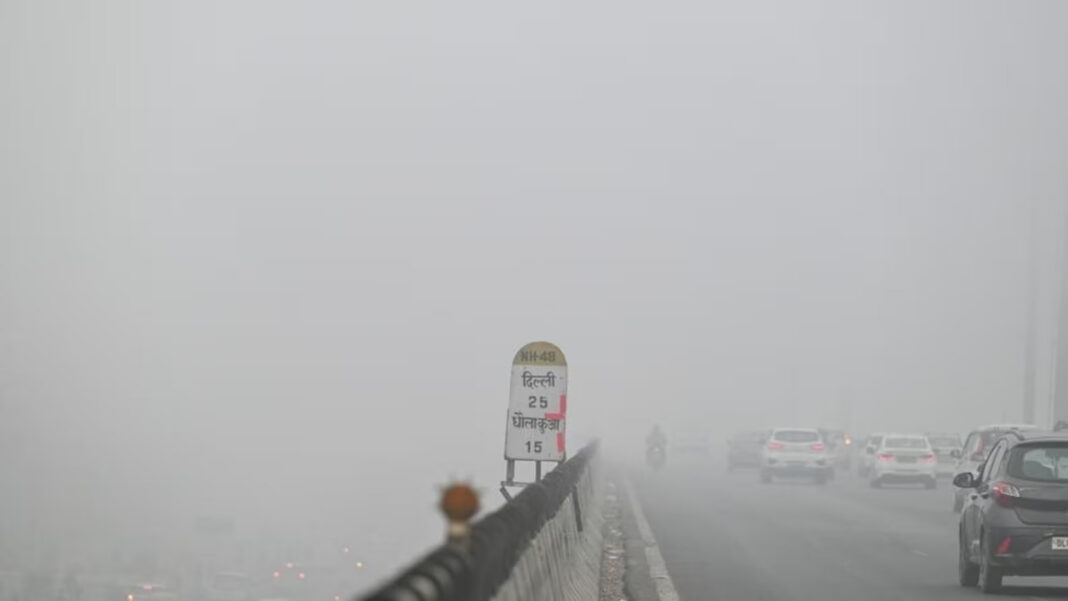
Recently, actor-producer Farhan Akhtar’s upcoming film “120 Bahadur” got embroiled in a major controversy. On Sunday (October 26, 2025), hundreds of members of the Ahir community took out a massive protest march on NH-48 against the film. The protest led by the United Ahir Regiment Front resulted in a kilometre-long traffic jam.

Protesters believe the film’s title, ‘120 Bahadur,’ does not accurately portray the sacrifice and unique identity of these 120 brave Ahir soldiers. The movie is based on the Battle of Rezang La Pass in Ladakh, a legendary saga from the 1962 India-China War. In this battle, 120 Ahir soldiers of ‘C’ Company of the 13th Kumaon Regiment displayed extraordinary bravery and risked their lives.

The protestors are demanding that the movie’s name be changed to “120 Veer Ahir” to accurately reflect the community’s unique contributions. They threatened that it the name of the movie is not changed, they would not allow the film to be released in all states, including Haryana, where majority of the Ahir community resides. The movie and this protest has once again brought the historical and emotional story of Rezang La into national focus.

India-China War 1962: Strategic Importance of Rezang La

The 1962 Sino-Indian War is a painful chapter in Indian history, but the Battle of Rezang La emerged as a symbol of the Indian Army’s indomitable courage and valour. The roots of this conflict began to grow in 1961 when India faced a threat to its territorial integrity because of Chinese encroachments, especially after China started building a strategic road through Indian territory, connecting Xinjiang and Tibet.

To counter this situation, then-Prime Minister Nehru made a decision, which came to be known as the “Forward Policy”. Nehru instructed the Indian Army to establish and hold small outposts along the disputed border, including at positions right across the Chinese positions. This policy led to an escalation of tensions along the border. China, under the guise of the diplomatic slogan “Hindi-Chini Bhai-Bhai”, was rapidly building up its military strength. Finally, on October 20, 1962, the tension at the border escalated into a full-blown war when China launched a simultaneous devastating attack on several Indian posts.

Leh’s last defense wall

By November 1962, the Indian Army had retreated to Leh, the capital of Ladakh. All preparations were now focused on defending Leh. The most important point for Leh’s defense was Rezang La. Rezang La was no ordinary place. It was a pass located at a very high mountain at an altitude of approximately 18,000 feet (about 5,500 meters).

This pass protected the Chushul Valley. If China had reached the Chushul Valley, the route to Leh would have been open. Therefore, crossing Rezang La was crucial for China, and for India, securing this pass at all costs was the final and most important challenge.

Defenders of Rezang La: The 120 warriors of ‘Charlie Company’

The challenging task of defending Rezang La was entrusted to ‘Charlie Company’ of the 13th Kumaon Regiment, under the command of Major Shaitan Singh Bhati. The company consisted of 120 brave soldiers, most of whom belonged to the Ahir (Yadav) community of Haryana. They had very little equipment to fight the battle: old rifles and mortars, but their greatest strength was an unwavering determination not to surrender. These soldiers were prepared to face this extremely difficult challenge.

November 18, 1962: The snowy night when the Chinese attacked

It was around 3:00 a.m. on the morning of November 18, 1962. Cold winds were blowing, and the temperature was minus 25 degree centigrade. Lance Naik Hukum Singh and four soldiers were stationed at a small listening post. Through the dense fog, they spotted hundreds of Chinese soldiers stealthily moving up the hill.

The Chinese were marching in thousands, supported by their heavy mortars. Hukum Singh’s brave soldiers immediately reported this to their main company. Hukum Singh knew he was facing hundreds of enemies, yet he refused to retreat. Hukum Singh said, “The longer we hold off the enemy and kill them, the better chance our company has of winning”. As soon as Hukum Singh gave the order, their guns began to fire. The first line of the Chinese army was completely taken by surprise by this sudden attack.

Iron till the last breath: When soldiers fought with bare hands

As the Chinese launched a major offensive on the Indian front, Major Shaitan Singh stood firm. The enemy attacked from three sides and tried their best to surround the Charlie Company. However, the Indian soldiers responded with a heavy barrage of bullets. Naib Subedar Suraj’s 7th Platoon was attacked by around 400 Chinese soldiers. Mortar shots from the Indian troops inflicted heavy casualties on the Chinese. Nevertheless, the Chinese soldiers continued to advance, unconcerned about their fallen comrades.

At one point, some Ahir soldiers ran out of ammunition. Even then, they didn’t stop; they began fighting the enemy with their bare hands. Two soldiers even ran towards the Chinese machine gun post, but were martyred. A strong Ahir soldier grabbed a Chinese soldier, lifted him up, and threw him off the cliffs of Rezang La. Unfortunately, Naib Subedar Suraj was hit in the head by a bullet shrapnel, and he uttered “Keep fighting, keep the name of 13 Kumaon high” as he lay his life for the nation.

Commander’s Courage: Major Shaitan Singh’s Greatest Sacrifice

Even as bullets rained down all around him, Major Shaitan Singh remained steadfast. He constantly moved from one post to another. His focus was to keep the soldiers’ morale up, repair broken defenses, and ensure targetted firing at the enemy. However, he was seriously wounded in a machine gun explosion.

Paramveer Major Shaitan Singh

But Major Shaitan Singh refused to move from his position and get treatment. He ordered his men to leave him where he was and continue the fight. His last words were, “Tell the battalion how bravely the company fought”. Three months later, his body was found in the snow at the same spot. For his supreme courage, superb leadership, and the ultimate sacrifice for the country, he was posthumously awarded India’s highest gallantry award, the Param Vir Chakra.

History of Rezang La: A tale of frozen fingers on the trigger

The fierce battle of Rezang La was over by 8 a.m. In just five hours of fighting, the ‘Charlie Company’ of 13 Kumaon added a rare valorous chapter to India’s military history. All of Major Shaitan Singh’s men fought to their last breath. Out of 120 brave soldiers, 114 were martyred. Only four survived. In 1963, when the snow melted and the bodies of the soldiers were discovered, it was a shocking sight. Most of the soldiers’ bodies were found clutching their guns. They had suffered many deep wounds from bullets and bayonets.

A small Indian contingent inflicted heavy losses on the Chinese. According to Major General Jagjit Singh, about 500 Chinese soldiers were killed. The battle exhibited an example of the grit and determination of Indian soldiers. The Battle of Rezang La remains a symbol of indomitable courage for the country till day.

The Pride of Rezang La: Salute to the Martyrs

The Battle of Rezang La is one of the shining examples of courage in the country’s history. A war memorial has been built at Rezang La to honor the supreme sacrifice of these martyrs. On November 18, 2021, which marked the 59th anniversary of the battle, the memorial was renovated and inaugurated by the country’s Defense Minister. The memorial continues to narrate the story of the sacrifice of 120 brave Ahir soldiers and the unmatched courage of the Indian Army.

(The article is a translation of the original article published on OpIndia Hindi.)

India’s Maritime Renaissance

Yesterday, I was in Mumbai to attend the Maritime Leaders Conclave as part of the ongoing India Maritime Week 2025. Mumbai, as we all know, has a strong link with India’s maritime sector. There are historical linkages with Chhatrapati Shivaji Maharaj, and today, it has a vibrant port infrastructure and is a key trading centre for our nation. I met key CEOs and interacted with leading stakeholders of the sector. In these interactions, it was gladdening to see the optimism towards India in furthering port-led development.

We became disconnected from our roots

India’s proud maritime heritage is well known. We were always known for shipbuilding and coastal trade. We are the land of the Cholas and the Marathas, whose naval might, trading impact and strategic brilliance became pathways of progress and power. Their vision showed us how the oceans can serve as bridges of opportunity.

However, a decade ago, when we assumed office, India’s maritime sector was filled with outdated laws and limited capacities. This was not acceptable to us. And, with a focus on infrastructure, reforms and public participation, the sector has witnessed many transformations over the last eleven years. Today, the sector stands transformed as a symbol of modern infrastructure, global trust and national pride.

Maritime Growth That Redefined Scale

These facts speak for themselves…

India’s port capacity has doubled from 1,400 to 2,762 MMTPA.

Cargo handling rose from 972 to 1,594 MMT, including 855 MMT in FY 2024–25.

Vessel turnaround time has been reduced from 93 hours to 48 hours.

Net surplus increased ninefold from Rs. 1,026 crore to Rs. 9,352 crore. The operating ratio improved from 73% to 43%, marking a new era of efficiency.

This is not all. At the core of every ship and port are our skilled seafarers.

India’s seafarer workforce has grown from 1.25 lakh to over 3 lakh, now accounting for 12% of the global seafaring workforce. India is today among the top three suppliers of trained seafarers in the world.

Shipping and Waterways – The New Engines of Growth

India’s shipping power is expanding across coasts and rivers.

Indian-flagged vessels increased from 1,205 to 1,549, and fleet gross tonnage grew from 10 MGT to 13.52 MGT. Coastal shipping cargo nearly doubled from 87 to 165 MMT.

Inland waterway cargo grew by 710%, from 18 MMT in 2014 to 146 MMT in 2025. Operational waterways expanded from 3 to 32, while ferry and Ro-Pax services carried 7.5 crore passengers in 2024–25.

Modern Ports, Green Future

Our vision for the Maritime sector places topmost importance on sustainability and innovation.

Vizhinjam Port has become India’s first deep-water transhipment hub. Kandla Port hosts the nation’s first green hydrogen facility. JNPT has doubled its capacity and attracted the largest FDI in port history.

The Vadhvan Port project in Palghar, Maharashtra, with an investment of around ₹76,000 crore, will be among the world’s few deep-draft ports at 20 meters. Its seamless railway and highway connectivity, proximity to the Delhi–Mumbai Expressway and the Western Freight Corridor will transform the region’s economic landscape, creating new opportunities for logistics, warehousing and trade.

Reform, Perform, Transform

Reform has powered India’s progress at sea.

Five landmark bills, from the Bills of Lading Bill to the Indian Ports Bill (2025), have modernised maritime governance, simplified trade, empowered states and aligned India with global standards.

To accelerate this growth, the government has approved a Rs. 70,000 crore umbrella package for the maritime sector.

The Shipbuilding Assistance Scheme, Maritime Development Fund and Shipbuilding Development Scheme will attract over Rs. 4.5 lakh crore in investment and help produce more than 2,500 vessels. This initiative will position India among the global leaders in shipbuilding and maritime innovation.

Come, invest in India

I can say with confidence that India offers the perfect harbour for investments.

We have a very long coastline.

We have strategic global trade routes,

We have world-class ports,

And, we have an ambitious vision for Blue Economy growth.

We have infrastructure, innovation and intent.

Thanks to our youth, our ecosystem is primed for innovation.

Come aboard!

This article was written by Prime Minister Narendra Modi on LinkedIn and has been republished here with due credit. The original article can be read here.

Indian-origin businessman beaten to death in Canada: The chilling rise of racist and violent attacks on Indians in Canada

A 55-year-old Canadian-Indian businessman, Arvi Singh Sagoo, was attacked viciously by a stranger in Edmonton, Canada, after he confronted the latter for peeing on his vehicle. The shocking attack occurred on 19th October, and Arvi died five days later, on 24th October.

According to Global News, Arvi had gone out for dinner with his girlfriend that night. When they came back to their car early the next morning, they saw a man pissing on it. “Hey, what are you doing?” Arvi asked the stranger, as his brother later told the media. The man reportedly replied, “Whatever I want,” before walking up to Arvi and punching him hard in the head.

Arvi collapsed on the ground, unconscious. His girlfriend immediately called 911 for help. Paramedics arrived within minutes and rushed him to a nearby hospital, where he was placed on life support. Sadly, despite doctors’ efforts, he died on October 24.

Police later identified and arrested 40-year-old Kyle Papin, charging him with aggravated assault. Edmonton police confirmed that Papin did not know Arvi and that the attack appeared to be random and unprovoked.

Fundraiser launched for his children

One of Arvi’s close friends, Vincent Ram, launched a fundraiser to support his two children. “This fundraiser aims to ensure that Arvi’s kids have the resources and support they need during this difficult time,” the campaign description reads. The funds will be used for funeral expenses, daily needs, and to create a foundation for the children’s education and future.

“This isn’t just about financial help,” the post continues. “It’s about showing that the community stands with them as they face life without their father. Please keep Arvi and his family in your prayers.”

Another Indian businessman was murdered in Canada

Just days before Arvi’s killing, another Indian-origin businessman, 68-year-old Darshan Singh Sahsi, was murdered on Monday morning (27th October) in front of his home in Abbotsford, B.C., Canada. TheLawrence Bishnoi gang took responsibility for the murder. Sahsi was shot dead while sitting inside his pick-up truck by an unidentified assailant.

A CCTV footage of the incident showed the 68-year-old businessman getting into his pick-up truck, and seconds later, a masked man got out of a silver sedan parked nearby and walked to Sahsi’s truck. The masked man aimed a gun at the driver’s side window of the truck and fired multiple shots through the closed window. He ran back to the sedan and drove away. The entire incident happened within a few seconds. The team of Police that arrived at the scene found Sahsi in a critical condition. 

Subsequently, Goldy Dhillon, a member of the Lawrence Bishnoi gang, admitted that the Ludhiana-born businessman was killed by the gang as he was involved in the drug trade and refused to give them money.

Sahsi, who hailed from Rajgarh village in Ludhiana district of Punjab. He moved to Canada in 1991 and worked odd jobs for some time. Later, he bought the stakes in a dwindling textile recycling unit, Canam International, and revived it into an international company.

Punjabi singer Teji Kahlon was shot earlier this month

Just days earlier, three men identifying themselves as gangster Rohit Godara’s aides uploaded a video confessing to shooting Punjabi singer Teji Kahlon in the stomach.

In a post on social media, the associates of the Godara gang claimed that Kahlon was supplying arms and was conspiring to attack their gang.

Taking to Facebook, Godara members named as Mahender Saran Dilana, Rahul Rinau, and Vicky Phalwan claimed Kahlon was injured in the shooting. “We carried out the shooting in Canada at Teji Kahlon. He was shot in the stomach. If he understands, fine; if not, next time we will finish him,” they said.

Bullet kills an Indian student in Canada

On 25th April this year, Mohawk College student Harsimrat Randhawa, 21 years old, was killed at a bus stop. She was an innocent bystander in a shoot-out between two cars, a black Mercedes SUV and a white car. She was shot in the chest by one of them, and she died on the spot despite attempts by paramedics.

Randhawa had arrived in Canada with hopes and aspirations. Her killing put the Indian student community in Canada in a state of shock and raised concerns about public safety.

Security guard shot Dead in Edmonton

In December 2024, 20-year-old Indian student Harshandeep Singh was gunned down and murdered while employed as a security guard in Edmonton, Canada. Singh was discovered dead in a stairwell after three people attacked him and shot him, and the two suspects have since been charged with first-degree murder.

A CCTV video of the incident depicts three individuals harassing and pushing the 20-year-old student downstairs, with one of them shooting him from behind.

Immediately after shooting Singh with what seems to be a humongous weapon, the three culprits leave the scene.

Stabbed to death at his own house: Gurasis Singh case

In another such incident, 22-year-old Gurasis Singh was stabbed to death in hisrented apartment in Sarnia, Ontario, on 1st December 2024. Singh had been in Canada for four months, seeking higher education, when he was murdered.

The assault occurred during the early morning hours and was said to have begun as a fight with a neighbour. But Gurasis’ father is convinced his son was attacked in his sleep. The alleged perpetrator, 36-year-old Crossley Hunter, has been charged with second-degree murder. The Sarnia police say the stabbing occurred in the kitchen of the residence where Gurasis resided.

Surge in hate crimes against Indian-origin people in Canada

These back-to-back attacks are indicative of a concerning trend. In recent years, hate crimes and targeted violence against South Asian, specifically Indian-origin, communities all over Canada have seen a steep increase.

Hate crimes against South Asians in Canada rose by 227% between 2019 and 2023, reports a recent study by the Institute for Strategic Dialogue (ISD), a London-based think tank that tracks extremism and hate. The report also discovered that the deployment of anti-Indian and anti-South Asian slurs on social media increased by a whopping 1,350% over the same four years.

Between May 2023 and April 2025, over 26,600 posts on social media platforms contained anti-Indian hate speech, including derogatory slurs like “pajeet.” These numbers were far higher than posts targeting any other ethnic community in the country.

The ISD report also said that hateful content online often portrays Indians as “dirty,” “dangerous,” or “unskilled.” In recent years, this anti-Indian rhetoric has intensified, particularly during political debates and elections, with extremist groups using it to stoke division.

Between 1st March and 20th April, 2025, in the lead-up to Canada’s federal election, more than 2,300 posts spreading anti-South Asian hate were shared online, generating over 1.2 million engagements. The rise in hate speech has not only led to online harassment but also coincided with real-world violence targeting immigrants from India and neighbouring countries.

The ISD report identified Diagolon, a far-right extremist network formed in 2020, as a key source of this online hate. The group, led by Jeremy MacKenzie, promotes racist, anti-government conspiracy theories often masked as “jokes” or satire to avoid accountability. These narratives, experts say, are fueling prejudice and radicalisation in Canadian society.

Lack of permission, breach of regulations, shady management and more: Ahmedabad school’s probe report finds many discrepancies after murder of Hindu student

A committee established by the District Education Officer has presented its comprehensive report in the aftermath of a Hindu student’s murder by a Muslim junior at the Seventh Day School in Ahmedabad. The findings indicated negligence on the part of the institution’s administration and violations of multiple regulations. Consequently, it has called for government intervention. The Education Officer has forwarded this report to the state government which will now proceed with further actions.

The inquiry uncovered that the school did not adhere to government regulations necessary for its recognition and failed to secure approval for additional classrooms. Essential permissions were also lacking for modifications to the management and the school facilities as well as discrepancies were identified in the school’s operations. The probe further disclosed irregularities in the process of obtaining minority school status.

Absence of various permissions

The investigation discovered that the current location of the school was leased by the Ahmedabad Municipal Corporation, in 2003. While the school had obtained permission for some classes in the 1980s, this is not the same location and the committee was not provided with the basis for allowing classes at this site. Thus, it has concluded that the school appears to be illegal.

Moreover, the school later incorporated more classes which require prior consent from the board as outlined in the regulations. Nevertheless, it did not take the required steps to obtain this approval. According to the rules, any changes to management, trust or school property necessitate approval from the relevant board but no such documents were presented in this case.

Likewise, the school must also obtain prior permission from the board to run two shits, however, the institution did so without the needed authorization.

The inquiry additionally uncovered that the particular trust or society managing the school was not made known. Documentation submitted to the committee indicates several names, including the India Financial Association of Seventh-day Adventists, the Council of Seventh-day Adventist Educational Institutions and the Ashlock Education Trust, as the entities overseeing the school. Consequently, it remains ambiguous which trust or society is accountable for its operations.

The investigation also unveiled that the school failed to adhere to specific regulations necessary for acquiring minority status. According to the report, the Ashlock Education Society submitted an application for a minority status certificate in September 2020 at the office of the Ahmedabad District Education Officer.

The society is registered in Pune and was awarded “minority status” by the Maharashtra government on 14th March 2013, which is only applicable within the state. The report indicates that the institution did not adequately present its minority educational institution status for the primary section leading to the rejection of admission for 25% of children from economically disadvantaged backgrounds which constitutes a breach of the RTE (Right of Children to Free and Compulsory Education) Act.

Infringement of lease agreement: Consent secured by different trust, administration via another body

The report also mentioned that the school has violated the lease terms. The land on which the school runs was leased by the Municipal Corporation to The India Financial Association of Seventh-day Adventists for educational purpose. However, it is being operated by other organizations. Therefore, the land was leased by a different organization and the school is under the management of separate entity.

The inquiry further emphasized breaches of fee regulations and legal standards, pointing out that the organization reported a rental amount of Rs 159,000 in the documents provided to the Fee Regulatory Committee, whereas the Municipal Corporation had actually leased the land for Rs 10,000.

Additionally, MBA as well as Bachelor of Science and Arts colleges function on the school premises. As per regulations, it is essential to secure a NOC from the appropriate board for this purpose. The school received a NOC from ICSE in 2022, but it failed to acquire the same from the Gujarat Secondary and Higher Secondary Education Board.

Additionally, certain irregularities have come to light, including the stipulation that selling books on school grounds is considered a profitable venture. However, the audit report confirmed that books were being sold.

Recommending government intervention

The committee expressed in its report that, after reviewing all pertinent issues, it is evidently clear that the school has not adhered to the conditions of accreditation. Moreover, the report claimed that fraudulent actions have been undertaken by providing misleading information, thereby damaging the credibility of the Education Department, FRC, parents, and students.

The committee, therefore, recommended that in the best interests of the more than ten thousand students attending the school, the government should assume control of its administration or assign it to another trust. The education officer has delivered this report to the state government and further decisions could be made in the future.

School surrounded by controversy following the murder of Hindu student

Nayan Santani, a tenth-grade Hindu student, was fatally stabbed by a Muslim student at the same institution in August. This incident incited outrage among parents and resulted in serious accusations against the school. Previous incidents were also unearthed leading to charges of administrative misconduct.

Afterward, the District Education Officer initiated an investigation. The Gujarat High Court provided no relief and instructed it to aide with the probe despite the school’s plea. The committee has now completed its report and the issue is currently under review by the District Education Officer and the government.