Home Blog Page 1420

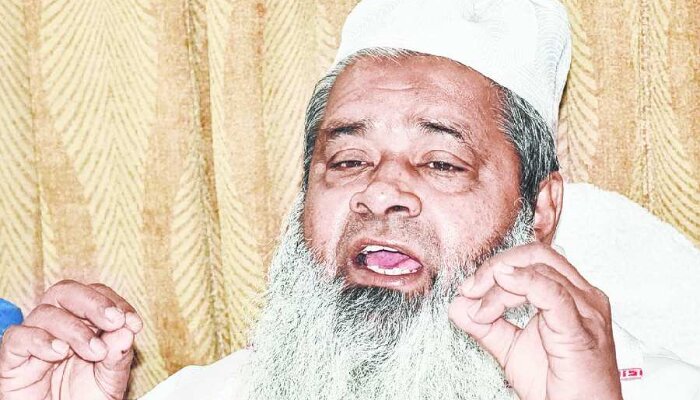
Hijab is must for Muslim women, uncovered hair is devil’s thread: AIUDF chief Badruddin Ajmal says women IAS, IPS should wear hijab

All India United Democratic Front (AIUDF) president Maulana Badruddin Ajmal who is notorious for his contentious statements stirred another major row after his controversial recommendation that Muslim women in prestigious professions like IAS, IPS and the medical field should be obligated to put on the hijab during a recent rally in the Karimganj region of Assam on 23rd January.

He maintained that a hijab must be worn by women in these sectors to be acknowledged for their Muslim identities. “If Muslim women do not know how to wear hijab or cover their hair, how will they be recognized as Muslims,” he questioned and added that hijab is compulsory and not an option for Muslim women. He proclaimed, “Hijab is a must. Hair is the devil’s thread, and makeup is the devil’s work.”

He proclaimed, “I’ve seen young women in the other areas go to study with their heads covered in the hijab. They walk with their eyes lowered and head downcast. Nonetheless, girls must continue to wear the hijab in Assam. Our faith requires us to wear a headscarf and keep our hair covered.”

He placed the cornerstone for a mosque and cemetery in Karimganj. Ajmal has courted controversy in Barak before. He previously gained headlines for wearing a lungi, an unusual piece of clothing at the North Karimganj constituency’s foundation stone-laying ceremony.

On 27th October last year, the politician declared that he would repeal the proposed law in Assam that prohibits polygamy if his party were to attain power. He urged, “Those with the ability should consider marrying two wives. I am elderly and unable to take on two wives at this point in my life. They (Himanta Biswa Sarma-led BJP government in Assam) will not stay in power forever. At some point, we will come into power and overturn the restrictions imposed on second marriage by the government,” while addressing the media.

A few days earlier on 20th October, he bemoaned that Muslims rank “number 1” in terms of committing crimes like robbery, rape, murder, eve teasing and jail time. The businessman-politician-cleric attributed the high crime rate among Muslims to their lack of education. “Crimes like robbery, dacoity, rape, loot we are No.1 in all. We are also No.1 in going to jail. Our children find no time to go to schools and colleges, but find enough time to gamble, to cheat others. For all such wrong things, ask who’s involved. It’s Muslims and that’s sad.”

He further lamented, “People are going to the moon and the sun, and we are doing a PhD on how to go to jail. Walk into a police station and you would know who’s in absolute majority, Abdur Rahman, Abdur Rahim, Abdul Majid, Badruddin, Sirajuddin and Fakruddin. Isn’t it a sad thing,” while speaking at an event at the Dalgoma Anchalik College, a private institution in Assam’s Goalpara district.
Can Pran Pratishtha bring dead bodies back to life? SP’s Swami Prasad Maurya mocks Ram Mandir Pran Pratishtha rituals

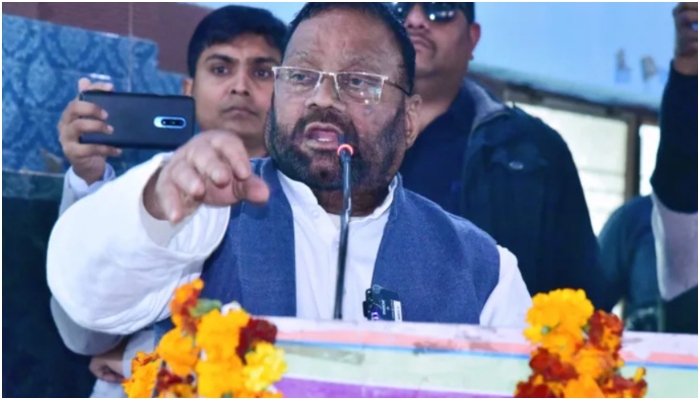
A day, after the Ram Mandir Pran Pratishtha ceremony concluded in the city of Ayodhya in Uttar Pradesh, Samajwadi Party leader Swami Prasad Maurya, made controversial remarks about the ceremony, further mocking the Ram Mandir and the Hindu faith. He termed the ceremony as hypocrisy and fraud and said that if a ‘stone’ can become alive by consecration, then why can’t the dead bodies walk?

Maurya was addressing a gathering organized by the Karpuri Thakur Sena in Gazipur. He stated that people need to know the truth about the BJP and stay away from the party ideology. “The BJP had organized the event just to distract the voters from the real problems. The party members are fake. This all is fake. Pran Pratishtha should be now done to the family members who have died. If a stone becomes alive by Pran Pratishtha then why can’t a dead person walk?” he said.

The Senior Samajwadi Party leader also stated that the BJP only worries about big businessmen and does not care about the laborers and workers. “They don’t want people to discuss unemployment, inflation, and other social problems so they are distracting the voters by making Ram Mandir. Lord Ram has been worshiped for thousands of years. What was the need to organize the Pran Pratishtha event? The people in the government want to hide their sins so they are organizing such religious events. They want themselves to be called Gods,” he added.

Maurya, who has a habit of using derogatory remarks against Hindu beliefs and scriptures, further reiterated that the event was a political stunt and that if it was a religious event, 4 Shankaracharyas would also have been part of it. “Even the President was invited but did not attend the event. The event was attended by only BJP, VHP and RSS people. It was a planned political event,” Maurya was quoted as saying.

Samajwadi Party leader Swami Prasad Maurya has been making controversial statements against the Ram Mandir and the Hindu faith. Recently on 10th January, he justified the Mulayam Singh Yadav-led Uttar Pradesh government’s ‘shoot at sight’ order resulting in the deaths of numerous unarmed karsevaks in the year 1990, after the rath yatra. The UP Police had opened fire on karsevaks on 2 November 1990, during the height of the Ram Mandir movement.

Swami Prasad Maurya gave a ‘clean chit’ to the then-Samajwadi Party government’s order to open fire on karsevaks, saying, “At the time the incident occurred at the Ram temple in Ayodhya. Unruly elements committed large-scale vandalism without judicial or administrative intervention.”

Maurya asserted that the Mulayam government ordered firing on karsevaks “to safeguard the constitution and the law and to protect the peace, the then government gave shoot at sight orders. The government merely did its duty…”

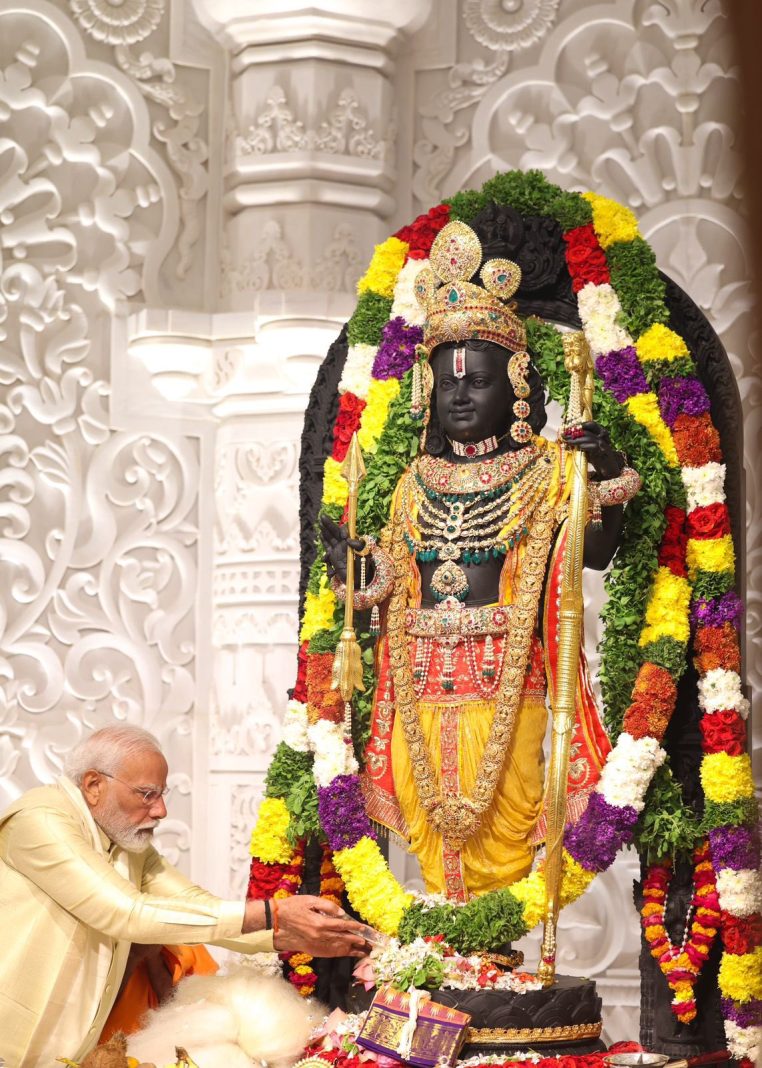
Ram Mandir Pran Pratishtha: Ram Lalla idol carved out of 2.5 billion years old black granite stone from Karnataka

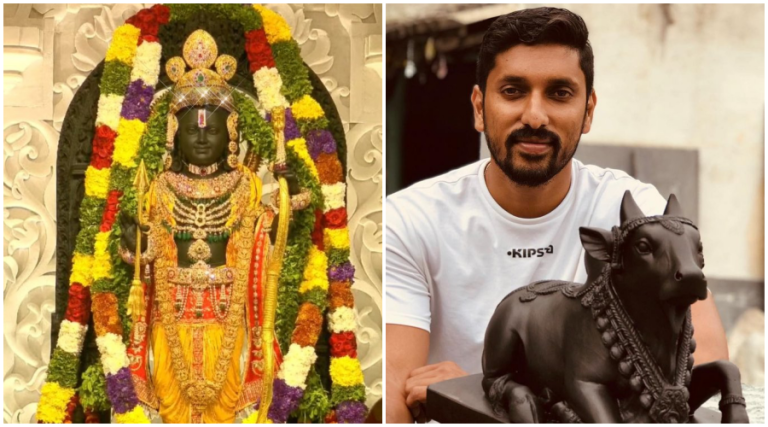
The “Pran Pratishtha” of Ram Lalla in Ram Mandir in Ayodhya on January 22, 2024, has been etched into the glorious history of Bharat. Arun Yogiraj, a renowned sculptor from Karnataka, sculpted the Achal Murti depicting Lord Ram in his child form. Interestingly, the ‘Krishna Shila’ (black granite stone) from Karnataka used for making the Ram Lalla idol is around 2.5 billion years old.

Speaking to NDTV, HS Venkatesh, Director of the National Institute of Rock Mechanics (NIRM), Bengaluru said that the stone is 2.5 billion years old and is highly durable.

“The stone is 2.5 billion years old. The rock is highly durable and resistant to climatic variation and will sustain thousands of years in this subtropical zone with minimum maintenance,” Dr Venkatesh said.

The stone was selected from Mysuru district’s Jayapura Hobli village, which is located in an area known for high-quality granite mines. Subsequently, it was tested by the National Institute of Rock Mechanics (NIRM), a key body that tests rocks for Indian dams and nuclear power plants.

The granite block was analysed in laboratories at Kolar Gold Fields and deemed to be “massive, melanocratic, and uniform in colour, devoid of any internal cracks and fractures.” The stone is finely grained, hard, and compact.

PM Modi offering Puja at the feet of Balak Ram idol in Ram Mandir

It exhibited strong compressive strength, tensile strength, bending strength, breaking strength, and elasticity. “In addition, the rock possesses high density, low porosity and water absorption,” Venkatesh said.

Interestingly, because the earth is said to have formed around 4.5 billion years ago and the black granite rock is 2.5 billion years old, the statue’s rock has witnessed more than half of the planet’s history.

Notably, there are two types of idols in the Ram Mandir: one is known as the ‘Utsav Murti’ which was placed in 1949 and the other is sculpted by Arun Yogiraj as the ‘Pran Pratishtha Murti’. Pran Pratishtha idols cannot be moved anywhere, they stay where they are installed. At the same time, ‘Utsav Murti’ is taken out in events like Jhankis or Shobha Yatras.

The Pran Pratishtha of Bhavya Ram Mandir in Ayodhya has been conducted by the hands of PM Narendra Modi. The grand idol of Shri Ram’s Baal Swarup (childhood form) is now the revered God of over a billion Hindus across the world. There were 15 “Yajmans” for the consecration ceremony with RSS leader Anil Mishra and his wife Usha being the mukhya or pradhan yajman.

How Muslims had planned to not let Hindus enter ‘Muslim area’, demanded Aadhaar cards: What BJP MLA from Mira-Bhayandar Geeta Jain revealed

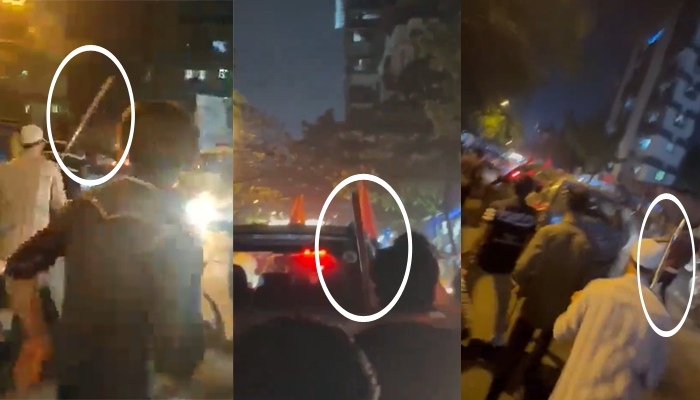
Tension has gripped Mira Road as the Islamist threat continues to loom in the area in Mumbai after a mob attacked a group of Hindus holding a rally on 21st January, a day before Pran Pratishtha.

BJP MLA from Mira-Bhayandar Geeta Bharat Jain met the authorities on 23rd January to complaint about the Islamist hate that continues to prevail in Mira Road despite action taken by the government.

She has said that Islamists have set up barricades in the area on their own to block Hindus from passing through the area.

Moreover, Jain has alleged that Islamists have been demanding to see the Aadhar Cards of the Hindus wanting to pass through the area.

“We told the Commissioner that if a simple family along with its women is carrying the flag of their religion then it is their right,” the BJP MLA said.

“If someone says that this firecracker will not be allowed here, the person is pushed, spit on, vomited on, women are dragged and beaten and then it is said that ‘Will your Ram come and save you?”You will have to say Allah-Hu-Akbar only then we will spare you’. This is about snatching our freedom, this is anti-democratic. We will not tolerate. Secondly, a barricade has been put up, if we want to pass we will have to show our Aadhar Card. What kind of democracy is this? There are no such areas that are mine and yours. This is what we approached the Commissioner about,” Jain said.

She also added that the Commissioner has given orders for the barricades to be removed from the concerned area in Mira Road. “We have told them that if barricades are not removed in 24 hours then we will return again and we will remove the barricades ourselves and we will pass from there. Then we will see whose area it is,” she said.

In a strong message, the BJP MLA said, “We are tolerant, not cowards.” When asked about viral videos where Islamists are threatening by saying that they only need 10-15 minutes time, she added that yes such messages are going viral. “We are such a big number. Give us 5 minutes, that much itself is enough for us,” she said.

Meanwhile, the Mira Bhayandar Vasai Virar Police has issued a note asking all group admins to take note that no forwards, jokes or videos related to clashes should be forwarded on social media to maintain communal harmony.

“Cops to take action against group admins, if this order is violated,” the police has said.

A bulldozer action followed on 23rd January razing down the illegal shops in Naya Nagar area.

“Illegal structures and encroachments were razed by bulldozers in the Naya Nagar area of Mira Road where Ram Mandir Pran Pratishtha celebrations were stone pelted. After instructions from the Maharashtra government, action is being taken by the Municipal Corporation with the help of the police,” the Maharashtra government said.

A case was registered at Naya Nagar Police Station regarding the incident that took place on January 21 in the Nayanagar Police Station area of Mira-Bhainder, Vasai-Virar Police Commissionerate area, said the police.

(With inputs from agencies)

Bengal: ED raids absconding TMC leader Sheikh Shahjahan’s residence in Sandeshkhali in PDS scam case

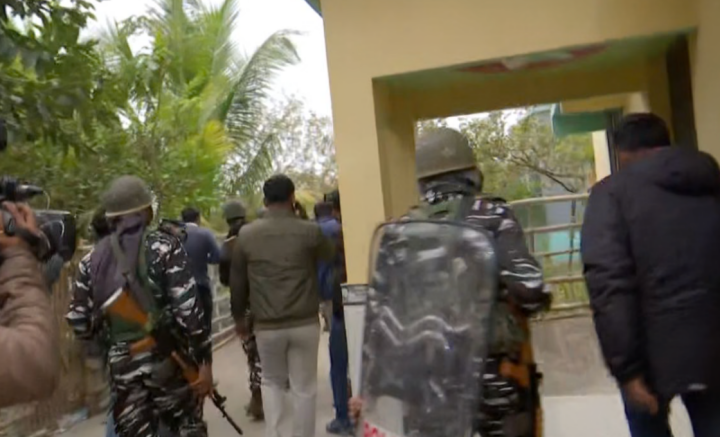
The Enforcement Directorate (ED) has conducted raids at Trinamool Congress leader Sheikh Shahjahan’s residence in West Bengal’s Sandeshkhali in the early hours of Wednesday in connection with the alleged Public Distribution System (PDS) scam case. Shahjahan is presently absconding.

The ED officials were accompanied by central forces during their operation.

Earlier on January 5, ED officials were attacked when they were on their way to carry out raids at the residence of Sheikh Shahjahan and fellow TMC leader Shankar Adhya at Sandeshkhali in the North 24 Parganas district.

Over 200 locals, all believed to be the TMC leader’s supporters, encircled the ED officials as well as the armed paramilitary forces accompanying the team when they tried to raid his residence in connection with the ration scam probe.

The loyalists circled the officials and demonstrated before assaulting them and forcing them to leave the area. They attacked the officers when they tried to break the lock of the gate, which the TMC leader did not open despite multiple calls made by the ED officials. Two ED officials were injured in the incident.

While the BJP gunned for the Mamata Banerjee government, claiming a complete of law and order in the state, the TMC said the locals responded to provocation from the central agency sleuths.

Taking a serious view of the incident, Governor CV Ananda Bose summoned the state Home Secretary and DGP to Raj Bhaban and sought the arrest of the absconding TMC leader at the earliest. However, several days have passed since and the TMC leader continues to be in the wind.

The Union Ministry of Home Affairs (MHA) has sought a detailed report from the West Bengal government over the attacks.

The raids against TMC leaders were being conducted in connection with the alleged ration scam in the state. Former Food and Civil Supplies Minister Jyotipriya Mullick is already behind bars in connection with this case.

(This news report is published from a syndicated feed. Except for the headline, the content has not been written or edited by OpIndia staff)

‘Vessels of friendly countries welcome’: Maldivian Foreign Ministry confirms Chinese ‘research’ vessel heading to the archipelago for docking

On 23rd January (Tuesday), the Maldivian Foreign Ministry confirmed that they had received a “diplomatic request” from the Chinese government for “rotation of personnel and replenishment”. The confirmation came a day after it was reported that a Chinese “research vessel” was heading towards the Maldives via the Indian Ocean Region. 

In an official statement, the Maldivian Foreign Ministry said, “The Maldives has always been a welcoming destination for vessels of friendly countries and continues to host both civilian and military vessels making port calls for peaceful purposes.” 

However, it claimed that the vessel would not be conducting any research while in Maldivian waters.

The statement added, “Such port calls not only enhance bilateral ties between the Maldives and its partner countries but also demonstrate the centuries-old tradition of the Maldivian people welcoming vessels from friendly countries.” 

It further stated that Maldives continues to uphold international best practices, and relevant international maritime law on all such cases.

As per reports, the Chinese vessel is expected to dock in Male on 8th February. It has been widely reported that China has been notorious for disguising its spy ships as “research vessels”. The so-called research vessel was spotted in the Java Sea off the coast of Jakarta, Indonesia on 22nd January (yesterday). 

On Monday (22nd January), an open-source intelligence researcher Damien Symon took to X to point out that the Chinese vessel Xiang Yang Hong 03 was en route to Male. According to the post, the vessel “is entering the Indian Ocean Region, displaying its destination as Male, the vessel is expected to run an ocean survey operation in the Indian Ocean Region raising concern in #India”.

Following his observation, an Indian military official confirmed Symon’s finding and said they are monitoring its movement, Reuters had reported. 

Meanwhile, India has so far not issued any statement about the movement of the Chinese “research” or spy vessel.

However, in the past, India has flagged similar movements by other Chinese research vessels with its island neighbour Sri Lanka. Since 2022, Sri Lanka has denied permission for such vessels to dock at its ports. 

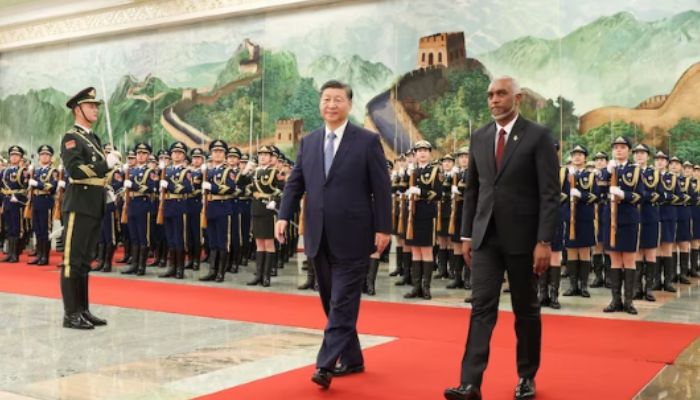
It is pertinent to note that apart from the latest pro-Chinese remarks by the Maldivian Ministry Maldives’ pro-Chinese government has been taking steps to worsen its diplomatic ties with India and increasing its tilt more towards Beijing.   

Pro-Chinese Maldivian President worsening relations with India

Amid diplomatic tension with India, a 14-year-old Maldivian boy died on 20th January after President Mohammed Muizzu reportedly refused to allow a Dornier aircraft provided by India to airlift him.

On 14th January, reiterating his demand that India withdraw its troops from Maldives, the Maldives’ President Mohamed Muizzu asked India to withdraw its military deployment from the archipelago nation by 15th March. 

Additionally, Maldives President Mohamed Muizzu on 9th January urged China to send more tourists to the archipelago. His remark came amid reports that a large number of Indians had cancelled their trips to Maldives in the wake of their Ministers’ unwarranted and deplorable comments on India, Indians, and PM Modi.  

Notably, it all started on 4th January after PM Narendra Modi shared some pictures of his visit to Lakshadweep. He exhorted people to explore the scenic islands in what could be seen as a push to his ‘vocal for local’ slogan, and an effort to give a boost to tourism on the archipelago.

Following his visit to Lakshadweep, a large demand erupted among Indians to explore the Indian Islands and boost our tourism sector before visiting beaches or tourism sites in other countries. However, jittery Maldivian politicians interjected and reacted by making racial commentary on Indians. 

It is important to note that neither the Indian PM mentioned any country nor it was targeted toward any nation, yet some Maldivians feared a potential hit to their tourism economy. 

Mariyam Shiuna, Deputy Minister of Youth Empowerment, Information, and Arts, recently made insulting remarks against PM Modi, referring to him as a ‘clown’ and a ‘puppet of Israel’ after he posted pictures from his visit to Lakshadweep Islands. She later deleted the tweet and was among one of the three Ministers who were suspended by the Maldivian government for making disparaging remarks on India. 

On Friday (5th January), Zahid Rameez, a Council member of the ruling Progressive Party of Maldives (PPM) also took to the microblogging site X to mock Indians.

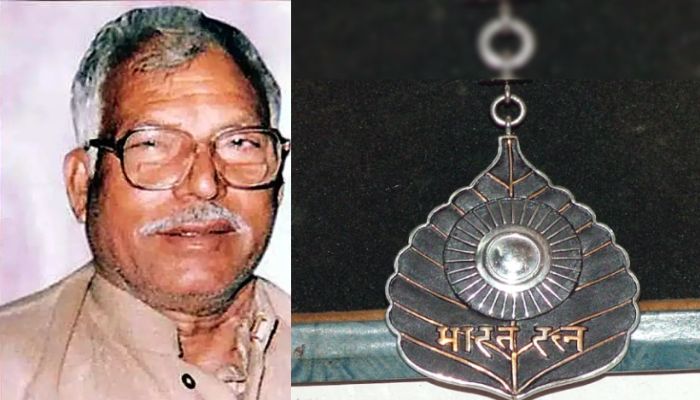
Bharat Ratna awarded posthumously to socialist icon Karpoori Thakur a day before his 100th birth anniversary, PM Modi welcomes the decision

On 23rd January (Tuesday), the President of India announced Bharat Ratna for socialist leader Karpoori Thakur based on the recommendations of Union government led by Prime Minister Narendra Modi. It is India’s highest civilian award and it has been bestowed on the socialist leader posthumously. The announcement comes a day before his 100th birth anniversary.

Karpoori Thakur hailed from the Bihar state and had served as the state Chief Minister twice. He got the moniker 'Jan Nayak' during his career in politics.

Thakur served as the Chief Minister of Bihar from December 1970 to June 1971 (Socialist Party/Bharatiya Kranti Dal), and from December 1977 to April 1979 (Janata Party).

"The President has been pleased to award Bharat Ratna to Shri Karpoori Thakur (posthumously)," a Rashtrapati Bhavan communique said a day before his 100th birth anniversary.

Karpoori Thakur's son Ram Nath Thakur is a Rajya Sabha MP from Nitish Kumar-led JD(U) party. When he was the state Chief Minister, Thakur had decided to implement the Mungeri Lal Commission report, which recommended the institution of reservations for Backward Castes in government jobs.

Thakur aligned himself with the All India Students Federation during his student years. His political philosophy was additionally shaped by the Lohia school of thought.

In November 1978, Karpoori Thakur implemented a 26% reservation for backward classes in Bihar, laying the groundwork for the later recommendations of the Mandal Commission in the 1990s. When he was the education minister, Thakur also abolished English as a compulsory subject at the matriculation level.

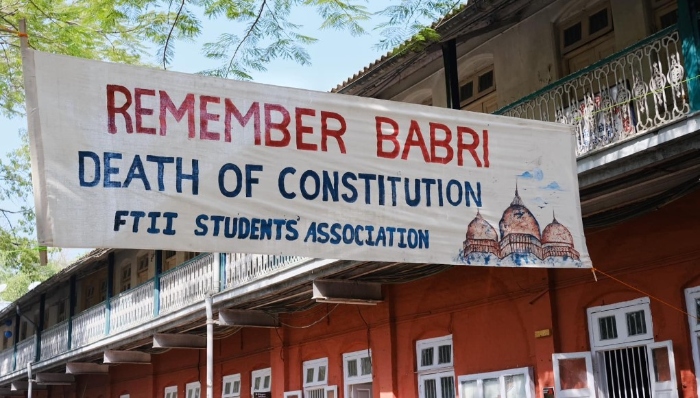
FTII Pune students put up ‘Remember Babri’ posters a day after Ram Mandir Pran Pratishtha, clash with members of Hindu outfits after they burn the posters

0

On Tuesday, January 23, a day after the Ram Mandir Pran Pratishtha in Ayodhya, students of the Film and Television Institute of India (FTII), Pune put up pro-Babri posters on the campus. The posters that read: ‘Remember Babri-Death of constitution’ were reportedly put up by FTII Students Association at the campus located at Law College Road in Pune.

After the video of the incident went viral, members of some Hindu outfits entered the campus and burnt the posters. This led to a clash between them and the students of the varsity. People from both sides got minor injuries in the clash. 

On getting the information, security forces intervened and brought the situation in control.

Officers from the Deccan Gymkhana police station said that the incident took place around 2 pm on the FTII campus.

“Our initial information suggests that a banner was displayed on the campus by the FTII Students’ Association. The banner read ‘Remember Babri, Death of Constitution.’ Some members of various right-wing outfits entered the FTII campus on Tuesday afternoon and took down the banner and set it on fire while chanting slogans. At this point, a clash broke out between the members of the right-wing outfits and a group of FTII students,” said an officer from the Deccan Gymkhana police station.

Senior inspector Vipin Hasabnis, in-charge of Deccan Gymkhana police station, said, “As soon as we received information, teams were dispatched. Our personnel intervened and brought the situation under control.”

According to reports, three people have been detained by the police and investigations are underway.

Pro-Babri Masjid slogans raised at Jamia Millia Islamia on the day of Ram Mandir Pran Pratishtha

On 22nd January (Monday), tensions were high near Delhi’s Jamia Millia Islamia after videos of students raising Pro-Babri Masjid slogans on the university campus surfaced online. It came on the day when the nation marked festivities for Ram Mandir Pran Pratishtha in Ayodhya. The police official said that a group of youth gathered inside the campus carrying placards and raised slogans like “Strike for Babri”.

After the videos surfaced online, the Delhi Police deployed police personnel outside the campus and increased vigilance to avoid any untoward incidents.

‘No Ram leher’: Rahul Gandhi a day after Ram Mandir Pran Pratishtha in Ayodhya

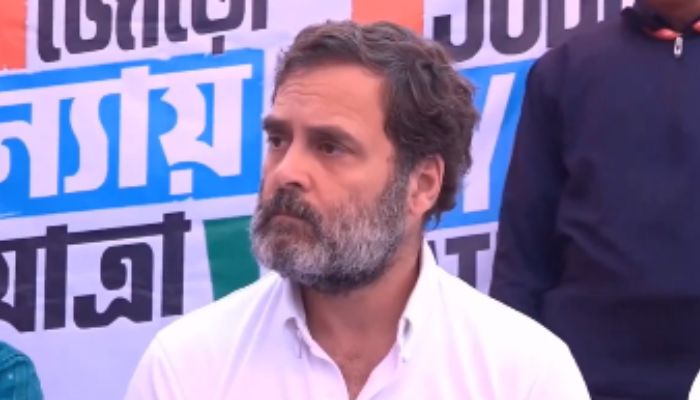
A day after the nation celebrated the Pran Pratishtha of Ram Lalla marking the fruition of 500 years of struggle, Congress leader Rahul Gandhi dismissed that there is any such phenomenon as Ram leher (wave).

During media interaction, the Congress leader was asked what is the impact of Ram Mandir Pran Pratishtha in Ayodhya which took place yesterday (on 22nd January) on places he is visiting in Assam. The journalist added that at places people are raising slogans of ‘Jai Shri Ram’. Responding to the query about what has Congress planned for Ram leher, Rahul Gandhi replied, “There is no such thing that there is a wave (leher).”

He added, ” I have already said that this was a political program of the BJP. We will present our plan in front of the country in the coming days. We will release our roadmap for justice for youth, farmers, and women.”

Notably, leher (wave), tsunami, phenomenon, etc have been used in the political and journalistic parlance as an event, act, or personality that has a sweeping effect/impact on people. 

His remark soon went viral on social media attracting scathing criticism from several users. Some of the users claimed that the Congress party would be wiped out by Ram Bhakts for dismissing that Ram leher has swept the country. 

One user wrote, “This hate for Shri Ram by Rahul Gandhi is unacceptable.” 

Another user tweeted, “Shri Ram ki koi lehar nahi hai – Rahul Gandhi. In the upcoming elections, Ram Bhakts will make sure that Congress will be wiped off from Bharat!” 

Notably, the devotion of Ram which can be crudely dubbed as Ram leher had swept the social media, general discourse in family, and events’ discussion with fresh content on Shri Ram’s bhakti hitting social media by lakhs in number. All who’s who of every sector – sports, entertainment, content creation, spirituality, chipping in with their efforts. 

Even political leaders were swayed by their devotion to Lord Ram and hence defied their party line to show reverence to Shri Ram. Evidently, several Congress leaders visited Ram Mandir Pran Pratishtha while the Central leadership – which had incidentally denied the existence of Shri Ram in Courts – had boycotted the grand consecration ceremony citing one excuse after another. 

Additionally, Congress’ Himachal Pradesh CM had taken a contrasting stand with its party’s state government in Karnataka to announce a full-day public holiday for its state residents to celebrate the festivities and mark the homecoming of Shri Ram at his birthplace. 

However, the Congress leader’s remark dismissing Ram leher seemed to have stemmed from the innate dismissal of such a phenomenon called Modi leher.  

While the media later admitted that Modi leher (wave) had an impact on the outcomes of 2014 and 2019, Congress and the opposition dismissed such a phenomenon. In antagonism to the Modi wave, a phenomenon which had impacted Congress’ political fortune, the Congress leader seems to have missed the pulse of the nation overlooking the cultural and deep-rooted connection and impact Lord Shri Ram has on India and Indians. Ram Leher which may have been subdued for years has been rekindled by once in a millennium event like Ram Mandir Pran Pratishtha.  

As Western media maligns India over Ram Mandir, here’s how Greece reclaimed churches turned into mosques under Ottoman rule

Greece’s history has diverse cultural aspects prominently featured by the Byzantine Empire and Ottoman rule. The country has a complex heritage that is visible via architectural landscape. Numerous churches were once converted into mosques during the Ottoman occupation. Later, they were reclaimed and restored to their original religious purpose.

As the Western media unleashes its propaganda onslaught against India over the completion of the Ram Mandir Pran Pratishtha in Ayodhya, it is pertinent to highlight how Greece, too, had reclaimed churches that had once fallen to the Islamic despotism and converted to mosques under the Ottoman Empire. Several Western media outlets have fallen over themselves to malign the Indian government over the completion of Ram Mandir Pran Pratishtha, making disingenuous claims and resorting to obscurantism as they downplayed the legacy of Muslim rule in India that involved usurping temples and destroying the presiding deities within them to humiliate and punish the ‘idol-worshipping kafirs’.

So while the Western media make a beeline to defame India, it is worth revisiting how Greece, a European country intimately cognisant of the horrors of the Islamic rule, took measures to restore its Christian legacy and rich cultural heritage that predated the oppressive Ottoman rule it had to endure for centuries.

The Byzantine Empire lasted for thousands of years and fell to the Ottomans in the 15th century. The period marks a profound transformation in the religious and cultural landscape of the region. When Ottomans established their rule in Greece, they brought a significant change to convert churches to mosques. It is a practice that has been common among the Islamic rule over centuries regardless of geography. Wherever Islamic rulers went, they destroyed religious places that stood for hundreds of years to build mosques over them or simply converted the buildings into mosques. It was done to reflect the religious identity of the “new ruler” of the region and humiliate the natives by destroying their religious places that often served as the epicentre of their civilisational history.

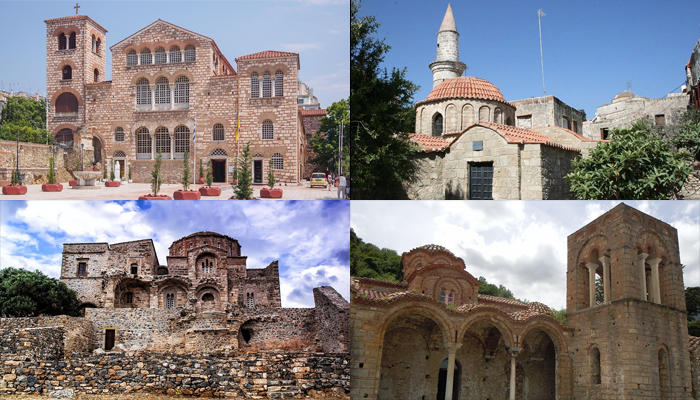
X user Paul Antonopoulos, a PhD Candidate, wrote a thread on the Churches that were once converted by Ottomans to mosques and were later converted back to their original religious purpose. In 1493, Agios Demetrios’s church in Thessaloniki was converted into a mosque. The church was built in the 4th century AD. It was reclaimed and converted back to a church in 1949.

Hagia Sophia Church in Monemvasia was constructed in 1150. It was turned into a mosque in 1715. Later, in 1827, repair works began to turn it back into a church.

The construction of Hagia Sophia in Mystras dates back to the 1300s. It was converted to a mosque by the Ottoman invaders. The exact year of its conversion into a mosque is unknown. It was converted back into a church immediately after Greece’s independence in 1830.

Agios Spyridon church in Rhodes was constructed in the 1200s. It was turned into a mosque in 1522. It was turned back into a church after the Ottoman Empire fell.

The Church of Panagia Chalkeon in Thessaloniki was constructed in 1028. It was converted into a mosque in 140 and restored to a church in 1934.

Holy Trinity Church in Rhodes was constructed between 1365 and 1374 as a catholic church. Paul wrote, “[It was] converted into a mosque under the name Khan Zade Mescidi by the Ottomans, then turned into an Orthodox church when Greece annexed the island after World War II.”

The Church of Prophet Elijah in Thessaloniki was constructed in the 1300s. In 1430, it was converted into a mosque and restored into a church in the early 1900s.

Church of Saint Nicholas in Chania was a Catholic church built around 1320. It was converted into a mosque by the Ottomans. It was reclaimed in 1918 and turned into an Orthodox Church.

In the case of India, the Mughals did the same with temples associated with Hinduism, Buddhism and Jainism. Hundreds of temples were razed down to build mosques. For example, the Hindu Temple of Bhagwan Ram was demolished in Ayodhya by Babur to build a mosque in the mid-1500s. The disputed structure stood on the spot for almost 500 years. Hindus could reclaim the land and build the Bhavya Ram Mandir after the Supreme Court of India handed the disputed piece of land to Hindus in November 2019. The temple was open to the public in January 2024 after Ram Mandir Pran Pratishtha on 22nd January.

Cultural Significance of Reclaiming Religious Structures

The reclamation of religious places is about more than just restoring the buildings. It is a representation of the reclamation of the historical identity and cultural memory of the region. The reclaimed structures stand as a symbol of resilience and continuity. They create a bridge between the past that was once thought to have been lost, the present and the future. They serve as a reminder of the historical and cultural unification inherited by the region’s people. The reclamation of religious structures not only provides a sense of justice but also reignites the hope and desire to move forward among the people who have suffered atrocities for centuries.

The journey of reclaimed religious buildings, whether in Greece, India, or any part of the world, narrates the story of resilience, collaboration, and respect for diversity. Such reclamations often highlight the complex but essential parts of history, culture and religion. They underscore the importance of preserving the true history of the region to ensure future generations can experience them in their proper forms.