Home Blog Page 144

The Washington Post lays off 300 employees: Read about sacked ‘journalists’ Pranshu Verma and Gerry Shih, who have been the face of relentless anti-India propaganda

The Washington Post has announced it is cutting one-third of its workforce and has begun large layoffs across all divisions of the corporation, which would drastically reduce its coverage of international and sports news. The decision was announced on Wednesday (4th January) and will affect staff members from all departments.

The United States (US) daily’s sports section will disappear and some of its remaining correspondents are going to cover sports culture in the features unit. Its books and metro segments along with the flagship news podcast “Post Reports,” will all face the same outcome. The move asserted to bring “stability” by executive editor Matt Murray has been described “absolute bloodbath” and as one of the “darkest days in the history” of the newspaper which is owned by Amazon founder and billionaire Jeff Bezos.

However, Murray discussed the necessity to compete in a saturated media industry and admitted that the daily has had difficulty reaching “customers” and stated, “Today, the Washington Post is taking a number of actions across the company to secure our future.” He added that the overseas coverage headcount will be reduced with about 12 bureaus maintained “with a focus on national security issues.”

He told the employees on call, “We all recognise the actions we are taking today will be painful, most of all, of course, for those of you who are directly affected, but for everybody. I know that the reset is going to feel like a shock to the system and raise some questions for everybody.” Local and foreign reporters had also begged Bezos to keep their jobs prior to the announcement but to no avail.

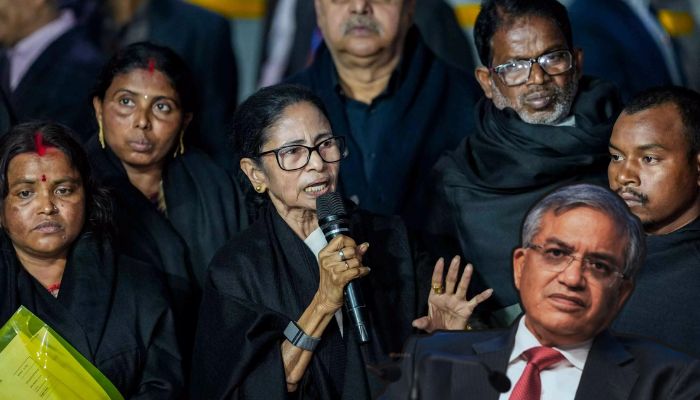
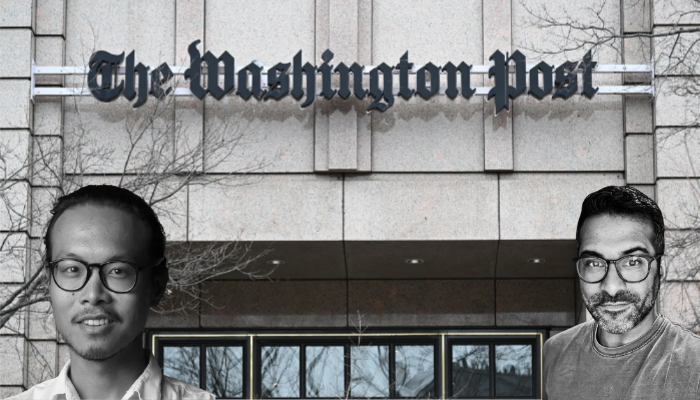
The action also had repercussions for the company’s Indian staff as many notable names, including Shashi Tharoor’s son, Ishaan Tharoor, were among the more than 300 individuals who were shown the door. Likewise, many impacted parties shared the same on social media. Pranshu Verma, the New Delhi Bureau Chief and Gerry Shih, the Jerusalem Bureau Chief of The Washington Post have also been ousted.

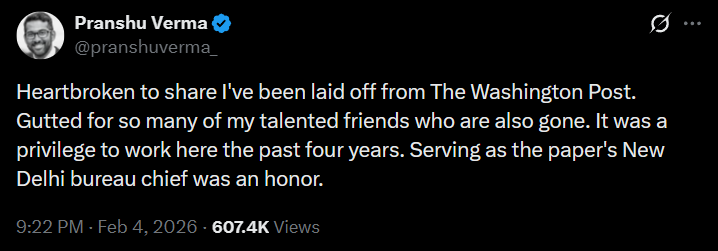
Notably, the two have emerged as prominent anti-India figures connected with the outlet already infamous for its biased coverage, similar to the rest of the Western media. “Heartbroken to share I’ve been laid off from The Washington Post. Gutted for so many of my talented friends who are also gone,” Verma, who was with the newspaper for four years, referred to the association as an “honour.”
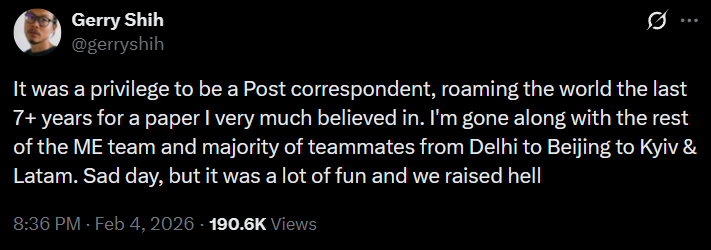
Shih called his time with The Washington Post a “privilege” and mentioned that he had spent more than seven years travelling the world “for a paper I very much believed in.” He remarked, “I’m gone along with the rest of the ME (Middle East) team and the majority of teammates from Delhi to Beijing to Kyiv & Latam. Sad day, but it was a lot of fun and we raised hell.”
Meet Pranshu Verma who tried to target the Modi government to protect his job

According to The Washington Post’s official website Verma was “responsible for covering news out of India, Bangladesh, Sri Lanka, Nepal and Bhutan. Verma joined The Post in 2022 and covered artificial intelligence. He previously wrote about technology at the Boston Globe and reported on diplomacy and transportation at the New York Times.”

His journalism career began at the Philadelphia Inquirer, where he covered politics in New Jersey alongside prisons. He holds degrees from the University of Delaware and the Graduate School of Journalism at Columbia University. Now, the axe has fallen on his job despite publicly slandering the Modi government to his superiors.

Verma tried to beg the management to spare his position by claiming that the media house was one of the few in India that can do “accountability reporting without fear of government censure.” However, his statement, which was intended to portray the Modi government as autocratic and was actually a resume, a loyalty affidavit and an ideological confession consolidated into one, appeared to have fallen on deaf ears.

His attempts to satisfy his liberal employee were subsequently aided by his emphasis on the bureau’s repeated attacks against the Modi government, accompanied by unfounded allegations aimed to discredit not only the ruling party but the entire nation.

Verma went on to proudly highlight several articles including those on Indian billionaires being “treated far better than others,” accusations of crony capitalism under the leadership of Prime Minister Narendra Modi, pieces about the nation’s corporations purportedly “fuelling Russia’s war in Ukraine” and the portrayal of India’s campaign to reduce illegal immigration as a “draconian deportation campaign of Muslims to Bangladesh.”

Each illustration was meant to reflect ideological conformity with the perspective that has progressively characterised The Washington Post’s international reporting especially in relation to India.

What is needed to become a journalist at the Washington Post

Verma made it abundantly clear what was required to be recruited as an Indian reporter at The Washington Post. The country which is presently governed by a “right-wing” government, already despised in liberal circles, should be painted as a dubious entity and its actions must be viewed through the lenses of tyranny, majoritarianism and moral delinquency rather than as a sovereign democracy confronting challenging issues.

Hence, Verma peddled a national security issue concerning illegal Rohingya immigration which involves falsified documents, border penetration and even criminal charges as a sorrow tale of communal persecution. Similarly, billionaires were presented as tools for government corruption rather than commercial players in a free market.

According to him, geopolitics does not serve as the origin of diplomatic strife, which is instigated by the personal and strategic ambitions of powers like the United States but is a “breakdown” resulting from India’s alleged moral failings. New Delhi is repeatedly vilified for its attempts to defend its sovereignty and the welfare of its people.

Verma was fundamentally gloating about the narrative his coverage disseminated and the detrimental effects his biased and inaccurate reporting has had on India over the years while leveraging it as a plank in hopes of keeping his job. It is indeed ironic that while he relentlessly attacked Indian billionaires and voiced concerns about censorship in India, he had to turn to an American mogul for work.

His arguments about freedom from power were contradicted by appeals to the generosity of the affluent owner but what defines a liberal if not blatant hypocrisy and double standards?

Meet Gerry Shih who is deeply committed to the cause of Khalistan separatism

The Washington Post stated that Gerry Shih, who attended Stanford University, became its part in 2018 and covered Israel, the Palestinian territories and the larger Middle East as the Jerusalem Bureau Chief. He previously “served as the New Delhi Bureau Chief from 2021-2025 and reported on politics, foreign policy, intelligence and technology in India and other South Asian countries.”

Gerry also covered China for the newspaper after “working for the Associated Press, Reuters and The New York Times. He was a finalist for the Pulitzer Prize for International Reporting in 2024 for his reporting on India and received the 2020 Osborn Elliott Prize.” He is reportedly of Chinese descent.

“He reported for the Associated Press from Beijing, where he covered the Chinese government crackdown in Xinjiang, domestic politics and foreign policy. He has also covered Silicon Valley’s social media companies for Reuters and Northern California for The New York Times,” informed The Media Rumble.

It is unnecessary to reiterate that being anti-India is not an oddity but rather a highly encouraged norm and requisite to join The Washington Post. Therefore, in line with this tradition, Gerry chose not only to use his pen to advocate for Khalistan separatists but also collaborated with Prime Minister Justin Trudeau’s government in accusing India without any substantiation.

The collusion shattered the glass walls of journalistic integrity

The Royal Canadian Mounted Police (RCMP) and the government made grave but groundless allegations against India on 14th October 2024, contending that Indian agents, officials and senior Indian diplomats, including Sanjay Kumar Verma, who was India’s High Commissioner to the nation at the time had engaged in “criminal activities” on Canadian soil.

The newspaper produced a story written by Gerry and Greg Miller on the charges levelled by Canadian officials within hours and even declared Amit Shah as one of the conspirators in unlawful criminal operations. Canada’s National Security Advisor, Nathalie Drouin and Deputy Minister of Foreign Affairs, David Morrison, were the government sources cited in the article.

However, it was already unveiled how the daily was briefed days before the RCMP and Canadian authorities accused India. It was merely waiting for a press conference before printing a prepared report. The assassination of terrorist Hardeep Singh Nijjar and other targeted killings as well as attacks on separatist elements were blamed on India. Canada’s NSA dictated these accusations to the media house long before any formal conclusions or evidence were made public.

The revelation adequately burst the bubble of the credibility of the newspaper’s independent journalism and integrity as its writers were discovered to be moonlighting as Ottawa’s instruments to demean New Delhi.

Unyielding attacks directed at India, promotion of conspiracy theories

Gerry, who had been using The Washington Post to accuse India of every “conceivable wrongdoing” from the withdrawal of “daring” content on Netflix and Amazon due to pressure from the Modi government to “hate speech” on Facebook to murders of terrorists in Pakistan spotted a golden opportunity to further the propaganda when the United States stated that India attempted to murder the banned “Sikhs For Justice” supremo, Gurpatwant Singh Pannun in 2023.

Gerry insisted that Samant Kumar Goel, the former Chief of the Research and Analysis Wing (R&AW), was completely involved in the conspiracy while conversing with Karan Thapar on the propaganda channel The Wire.

He first wrote, “US intelligence agencies have assessed that the operation targeting Pannun was approved by the R&AW Chief at the time, Samant Goel” in his article and later defended the statement as an “assessment from what we understand of US intelligence agencies,” in the 2024 interview.
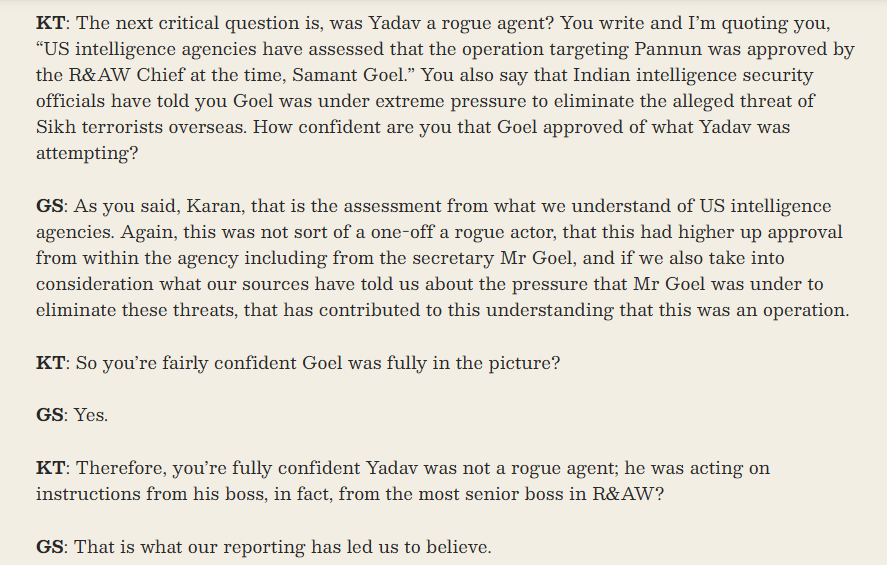
Gerry eloborated, “Again, this was not sort of a one-off a rogue actor, that this had higher up approval from within the agency including from the secretary Goel, and if we also take into consideration what our sources have told us about the pressure that he was under pressure to eliminate these threats, that has contributed to this understanding that this was an operation.”

However, his “reporting” raised strong doubts in light of his complicity with the Canadian government and his consistent propensity to fabricate in his criticisms of India. Gerry has continuously illustrated his intellectual deceit as he did not even hesitate to equate India with China in 2022.

The Modi government decided to follow an independent foreign policy and did not cave to Western influence in the Russia-Ukraine War. However, he slammed the government for not aligning with the polity he favours and serves.

“Modi on same page as China on the issues of human rights, climate change, the treatment of religious minorities and freedom of expression, claims of Western hypocrisy emanating from Indian diplomats could well be coming from Chinese diplomats,” he mentioned while reacting to a column on anti-India The Caravan, authored by another member of the leftist lobby, Sushant Singh who is at Yale University.

“WP (The Washington Post) would love the absurdities in this article (meaning Sushant Singh’s article in The Caravan) coming from a kindred spirit targeting his own country with a Yale connection in mind. No one with an iota of intellectual honesty can bracket India and China on the issues mentioned. Shih expelled from China enjoying India’s freedom,” former Indian Foreign Secretary Kanwal Sibal had appropriately fired back at him.

Conclusion

The firings are the most recent in a string of buyouts and personnel reductions that have occurred throughout the media outlet’s offices in recent years due to criticism of certain editorial choices made by the publication which conveyed that it will not support a presidential candidate before the 2024 US presidential election, a stance taken by Bezos. Afterwards, it swiftly lost tens of thousands of subscribers.

Interestingly, the newspaper had backed a candidate in the majority of presidential elections since the 1970s and all of them were Democrats. Moreover, the decision made by Bezos to centre the paper’s opinion section on “personal liberties and free markets” last year led to the resignation of the division’s editor.

The company is notorious for its partial and politically motivated reporting and has a deep-rooted prejudice against India as well as profound resentment towards the Modi government which has only grown over time. Verma and Gerry also devoted their utmost efforts to penetrate this narrative and were foundational to this corrupt legacy.

However, the fresh development has once again brought attention to the internal issues of the firm and has proved that disparaging India specifically by the modern brown sepoys does not ensure job security within liberal media. They are all disposable, irrespective of their eagerness to launch unwarranted attacks on their country.
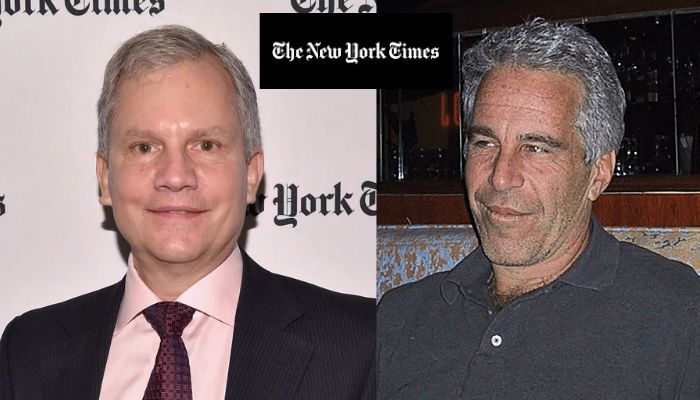
‘Outing’ the NYT boss ‘Pinch’ Sulzberger: Epstein emails resurface as The New York Times downplays new DOJ documents

A fresh controversy has erupted after WikiLeaks shared a long post on X on Wednesday, 4th February, highlighting previously released emails that expose the connection between the convicted sex offender Jeffrey Epstein and The New York Times. 

The email is discussing the possibility of “outing” Arthur Ochs ‘Pinch’ Sulzberger Jr., the former publisher of The New York Times. The post has once again brought attention to Epstein’s behind-the-scenes connections with powerful media companies and the tone in which he spoke about influence, leverage, and elite institutions.

In its post, WikiLeaks cited an email trail that took place about a month before Sulzberger abruptly stepped down as publisher of The New York Times in December 2017. His retirement became official two weeks later.

Emails that sparked the debate

According to the details highlighted by WikiLeaks, one month before Sulzberger’s retirement, Epstein wrote to attorney Brad Karp asking, “How about Sulzberger? Would that be funny?” Karp reportedly responded, “That would be pretty ironic and give whole new meaning to his nickname ‘pinch’.” The exchange appeared to suggest that Epstein was considering publicly exposing Sulzberger in some way.

The following day, Epstein had a conversation with journalist Michael Wolff about a potential sex scandal that, in their words, could mean “the end of the establishment as we know it.” Epstein asked, “If Bannon outed Charlie and Pinch Sulzberger, then what?” Wolff replied, “The end of the establishment as we know it.” Epstein responded, “That’s the way I see it. ‘Pinch’ = sulz your silver bullet.”

The discussion referenced Charlie Rose, the veteran television journalist who was fired from CBS just three weeks later following allegations of sexual misconduct. While the emails do not prove coordination or direct involvement in subsequent events, they reveal how Epstein privately framed scandals involving powerful media figures as tools capable of shaking the elite establishment.

In another exchange dated 11th December 2017, Wolff wrote to Epstein about “Big names on the horizon” for potential sexual abuse scandals and mentioned Arthur Sulzberger as his “favourite.” Epstein replied in a casual tone, “You and I are old news? :)”

On 13th December 2017, The New York Times officially announced that 66-year-old Sulzberger would retire as publisher. His departure took effect two weeks later. The day after the announcement, Epstein emailed Landon Thomas Jr., then a journalist at the Times, writing, “Sulzberger – told you.” When Thomas asked for proof of what was driving the retirement, Epstein responded with a single word: “Wait.”

Epstein’s relationship with the Sulzberger family reportedly dated back to the 1970s, when he spent time at the family’s country estate. This detail was mentioned in a draft profile written by Landon Thomas Jr. for New York Magazine in 2015, though the profile was never published.

The New York Times has also downplayed the significance of the latest document release, stating that the materials “reveal a bygone elite” and are “steeped in a clubby world that is all but gone.” This has raised questions about whether Arthur Ochs “Pinch” Sulzberger Jr. had any direct connection with convicted sex offender Jeffrey Epstein.

Today, the paper is led by A.G. Sulzberger, son of “Pinch” Sulzberger and the fifth generation of the family to run the newspaper since it was acquired in 1896. While there is no direct evidence showing that Epstein’s conversations resulted in action against Sulzberger, the tone of the emails has fueled speculation. 

Who is Arthur Ochs Sulzberger Jr.

Arthur Ochs Sulzberger Jr., born on 22nd September 1951, is an American journalist and longtime leader of The New York Times. He served as publisher of the newspaper from 1992 to 2018 and as chairman of The New York Times Company from 1997 to 2020. In December 2017, he announced that he would step aside as publisher, appointing his son, A.G. Sulzberger, to lead the company beginning 1st January, 2018.

Born in Mount Kisco, New York, Sulzberger is the son of Arthur Ochs “Punch” Sulzberger Sr. and the grandson of Arthur Hays Sulzberger. He is also the great-grandson of Adolph Ochs, who purchased The New York Times in 1896 and transformed it into a leading national newspaper. Sulzberger grew up in New York and graduated from the Browning School before earning a Bachelor of Arts degree in political science from Tufts University in 1974.

He began his journalism career as a reporter for the Raleigh Times in North Carolina and later worked as a London correspondent for the Associated Press. In 1978, he joined The New York Times as a correspondent in the Washington bureau and later held positions including metro reporter and assistant metro editor. He also completed Harvard Business School’s program for management development in 1985.

Throughout the 1980s, Sulzberger held key business and editorial roles within the company, including assistant publisher and deputy publisher. During his tenure, he oversaw major modernisation projects, including automated colour printing facilities and expanded distribution systems. When he became publisher in 1992 and chairman in 1997, he led the Times into the digital era while navigating the changing media landscape.

Background: The Epstein Files

The renewed focus on Epstein’s emails comes amid the broader release of investigative material under what is known as the Epstein Files. In December last year, the U.S. Department of Justice (DoJ) released millions of pages of documents following months of political pressure and a legal deadline established by Congress through the Epstein Files Transparency Act.

On 30th January, the DoJ released a massive cache of materials, over 3 million pages of investigative records, more than 2,000 videos, and around 180,000 images. The documents included interviews with victims of sex crimes and numerous email correspondences involving Epstein and various prominent individuals. Reports indicated that several high-profile names appeared in the materials, including Microsoft co-founder Bill Gates and US former President George HW Bush. The newly released files have reignited public scrutiny over Epstein’s connections with influential personalities across politics, business, and media. 

Nasser Hussain’s rant backing Pakistan, Bangladesh exposed: How his attack on ICC and BCCI collapses under his own record

0

Nasser Hussain’s latest outburst against the ICC and the BCCI, triggered by Pakistan’s decision to boycott its T20 World Cup match against India on February 15, is being dressed up as a principled stand for “consistency” and “fairness” in world cricket.

On a Sky Sports podcast, Hussain questioned whether the ICC would have acted as firmly if India had cited government restrictions or security concerns and refused to travel. He lamented the “power imbalance” in the game, accused the apex body of bending to influential boards, and even applauded Bangladesh and Pakistan for “sticking to their guns”.

It all sounds lofty. It is also a masterclass in selective outrage, strategic amnesia, and false equivalence.

Hussain’s lies, false equivalence over India’s refusal to travel to Pakistan for the Champions Trophy

First, let us deal with the central misrepresentation. Bangladesh were not summarily or arbitrarily thrown out of the T20 World Cup at the BCCI’s whim. The ICC convened its members. Fourteen boards voted against Bangladesh’s inclusion. Only two, Bangladesh and Pakistan, supported it. That is not Indian strong-arming; that is the overwhelming majority of world cricket telling Dhaka that you do not get to tear up schedules and contracts a month before a global tournament and expect everyone else to absorb the chaos.

Why did Bangladesh suddenly find itself on the wrong side of that vote? Because after KKR terminated Mustafizur Rahman’s IPL contract amid public backlash, the Bangladesh Cricket Board abruptly discovered “security concerns” about touring India. For months, there was no such alarm. The team had toured India before. The calendar was known well in advance. The panic surfaced only after a franchise decision they disliked.

This is the part Hussain carefully tiptoes around. The BCCI does not run franchises like KKR. League organisers do not, and cannot, force private owners to sign or retain specific players. That is the entire commercial logic of franchise cricket. If investors are told who they must buy, the model collapses. No serious Indian bidder is going to pour money into a league where player choice is dictated by nationality quotas or political pressure. To pretend otherwise is either ignorance of how modern cricket economics works or deliberate misdirection.

If Bangladesh believed it was being treated unfairly, it had several options: take it up with the IPL, restrict its players from participating, or negotiate through boards. What it did instead was invoke “security concerns” barely weeks before the tournament, creating massive logistical and commercial disruption. The ICC responded in the only way any regulator would: by enforcing the rules and the timelines everyone had already agreed to.

Hussain’s next move is the oldest trick in this debate, false equivalence. He compares Bangladesh’s last-minute pull-out to India’s refusal to travel to Pakistan for the 2025 Champions Trophy. What he does not tell his listeners is that India communicated its position months in advance to both the ICC and the PCB. Nor does he mention the reason behind India’s refusal to travel: Pakistan’s well-documented record of exporting terrorism into India.

The Pahalgam terror attack in April 2025, where Pakistani terrorists opened fire on Indian tourists after identifying them as non-Muslims, happened barely weeks after that Champions Trophy concluded. This is not ancient history or abstract geopolitics. This is the security environment India operates in. Despite this, India went ahead and played its matches against Pakistan in the Asia Cup. BCCI could have easily walked away from the tournament, but it played purely for the commercial interests of associate nations. What did it get in return? A petulant Pakistan Cricket Board chief whisking away with the trophy because the Indian team refused to accept it from someone who represents Pakistan’s political leadership.

Bangladesh does not face cross-border terror from India. Pakistan does inflict it on India. To pretend these are comparable situations is not a plea for “consistency”; it is an exercise in intellectual dishonesty. Either Hussain does not understand the difference between a genuine, long-communicated security red line and a last-minute political tantrum, or he is counting on his audience not to care.

Then comes the sentimental flourish: “At some stage, someone should say, enough with this politics, can we just get back to playing cricket?” A touching line, until you remember a basic fact Hussain also omits. It was not the PCB that publicly announced Pakistan would not play India on February 15. It was Pakistan government and later, Pakistan’s Prime Minister, Shehbaz Sharif. When a head of government declares a sporting boycott, and former cricketers still insist it is the BCCI that is politicising the game, you are no longer in the realm of analysis. You are in the realm of narrative laundering.

There is also the tired accusation that the ICC is essentially an extension of the BCCI. This argument ignores a simple financial reality: the ICC’s biggest revenue drivers are India-centric broadcast deals, especially India–Pakistan matches. A significant portion of that money is redistributed to associate and smaller boards. When Pakistan boycotts fixtures or Bangladesh blows up schedules, it is not “hurting India”; it is shrinking the very pool that sustains global cricket’s weaker members. That is precisely why the idea that the ICC should indulge serial contract breaches is absurd. Rules exist for a reason. If you forfeit, you pay. If you violate agreements, you face consequences. That is not “BCCI control”; that is basic governance.

If Pakistan believes it has the financial muscle to survive outside this system, it is free to try. It can form a parallel body and invite others to join. What it should not be allowed to do is sabotage the existing structure while pretending to be a victim of it.

World Cup 2023: When Hussain-led England refused to play in Zimbabwe over political reasons

The most revealing part of this entire episode, however, is Hussain’s own history. In the 2003 World Cup, England, led by Hussain, refused to play Zimbabwe. The reasons were not concrete security threats in the way India faces from Pakistan; they were moral and political objections to Robert Mugabe’s regime. Hussain supported that decision. He did not accuse the ECB of bullying a smaller board. He did not thunder about the ICC’s “consistency”. He did not complain that cricket was being politicised. In fact, he later said he was “proud” of the stance.

2009: Hussain’s silence when England refused to issue visas to Zimbabwe over political grounds

Even more instructive is what happened in 2009, when Zimbabwe were effectively eased out of the T20 World Cup and replaced by Scotland in what the ICC called a “win-win” solution. England refused to grant visas to visiting Zimbabwean players. Again, no grandstanding from Hussain about powerful boards crushing minnows. No lectures about responsibility. No tears for “diminishing” Zimbabwe cricket. Apparently, politics in sport is acceptable when England does it, or when it suits the prevailing Western consensus, but outrageous when India insists on rules being followed.

Which brings us to the uncomfortable conclusion Hussain and his admirers would rather not confront. This is not really about consistency. It is about a shift in power. The centre of gravity in world cricket is no longer Lord’s or the ECB. It is the BCCI. That reality rankles a certain segment of Anglo commentary that was perfectly comfortable when “principles” conveniently aligned with English interests and remarkably flexible when they did not.

Cricket has never existed in a political vacuum. It did not in 2003. It did not in 2009. It does not today. The difference is that now, India is no longer expected to quietly absorb the costs of other boards’ political theatrics. The ICC should enforce its contracts. The BCCI should protect its interests. And Pakistan and Bangladesh should decide whether they want to be part of a rules-based system or a grievance-based circus.

As for Nasser Hussain, his sudden passion for “consistency” would be more persuasive if he applied it to his own record. When England boycotted Zimbabwe, politics and sport “inevitably clashed”. When Pakistan boycotts playing India at its government’s behest, suddenly, it is the BCCI that has corrupted cricket. That isn’t principle; it is indignation at losing control. The real discomfort is not about politicisation, it is about the fact that Western boards no longer run the game. India does, because it is India whose stakes in world cricket are now higher than anyone else’s.

Sex, lies and hypocrisy: How anti-India MAGA influencer duo Elijah Schaffer and Sarah Stock imploded in explosive scandal

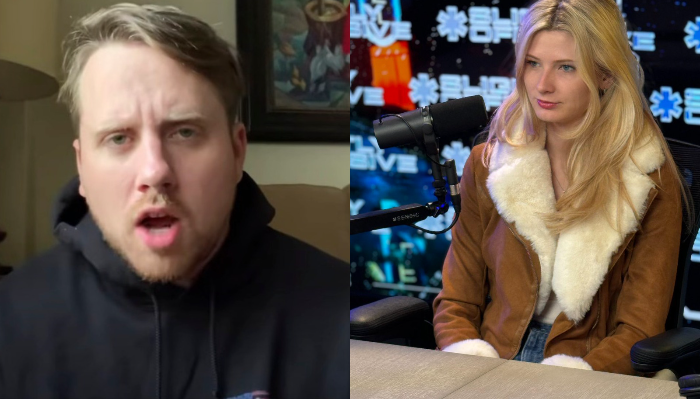
RiftTV founder Elijah Schaffer, the fervent India hater infamous for his anti-Hindu content as part of his crusade to demonise the nation and the community, has now found himself embroiled in a degrading controversy which includes accusations of cheating, substance abuse, sexual violation and even homosexual inclinations.

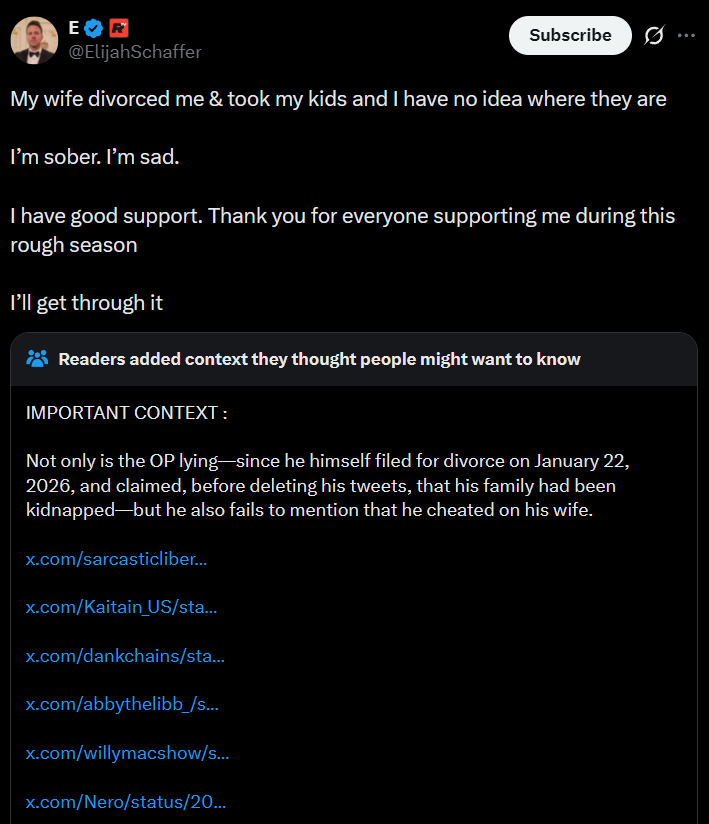
On 4th February (Wednesday), he announced that his wife had divorced him and taken their children without informing him. However, the community notes soon revealed that he had initiated the divorce on 22nd January and even claimed that his family had been kidnapped before he removed the tweets. Furthermore, he had also cheated on his spouse.

Schaffer was in a relationship with another rabid anti-India voice and his employee, Sarah Setka, also known as Sarah Stock, who had a boyfriend. Interestingly, Milo Yiannopoulos, another member of this white supremacist cabal, posted a lengthy thread regarding the six-month relationship that started at the Conservative Political Action Conference (CPAC) in February of last year.

He wrote, “The affair ended on the day she got engaged, about six months later. In that time, they experienced multiple pregnancy scares,” and added that a previous acquaintance even asserted that Stock underwent at least one abortion. Ironically, she supported the “pro-life movement” and wanted a “national ban” on abortion alongside “equal protection for unborn babies.”

Milo additionally made public an audio recording of Stock admitting to the affair and stating that she would not unveil it to her husband, “who met Schaffer many times, but did not know about their sexual relationship when he proposed.” The duo declared their love for each other and Schaffer expressed his intention to leave his wife.

Milo mentioned that Stock claimed to be very drunk during her sexual encounter with Schaffer and thus could not remember all the events. Meanwhile, the pair acted as if they were devout Christians donning religious symbols in public. He posted that several people were “convinced that Schaffer is, or at least was, gay” while others viewed him “as a cookie-cutter drunk and womaniser. Both groups are correct.”

The twink and the virgin

Milo then shared that Schaffer underwent a “twink phase” prior to his wedding. “A twink is a slender young homosexual male who enjoys being aggressively anally penetrated by an older, active, usually more muscular partner. This period seems to coincide with Schaffer’s time as a youth pastor,” he informed. “Schaffer left the church in a hurry when he was discovered having sex with another man,” Milo further highlighted.

Milo remarked that there were too many hypocrisies to count, such as “Stock was posting online while she was cheating on her boyfriend with Elijah Schaffer almost weekly for six months.” She told her partner to wait till marriage as she pretended to be a virgin. “Sarah Stock’s husband believed he was marrying a virgin. That’s what she told him, or at least allowed him to believe. What we don’t know is how she explained not being intact on the big night,” he wrote.

Stock reiterated the similar falsehoods during a podcast, promoting herself as a Christian and a virgin who is awaiting her wedding.

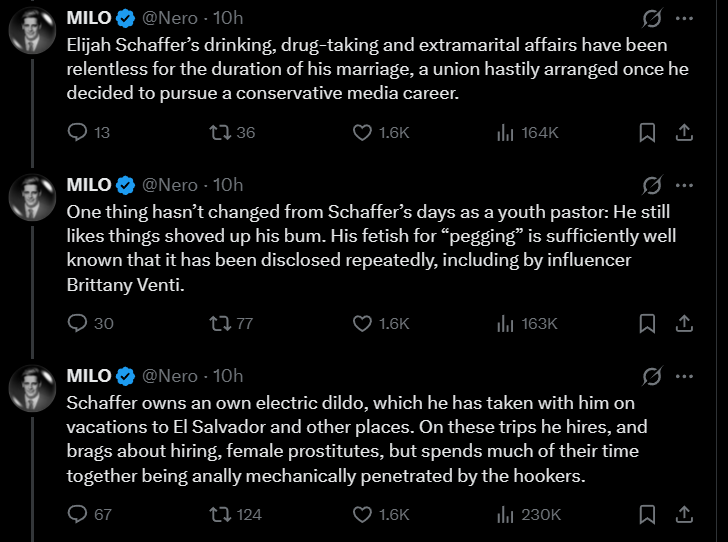
Milo conveyed that Schaffer’s drug use, alcohol consumption and adulterous encounters have persisted throughout his marriage which was “hastily arranged once he decided to pursue a conservative media career” and “his fetish for pegging is sufficiently well known that it has been disclosed repeatedly, including by influencer Brittany Venti.”

He outlined, “Schaffer owns an electric dildo, which he has taken with him on vacations to El Salvador and other places.” The latter employs and boasts about hiring female prostitutes on these trips, however, “spends much of their time together being anally mechanically penetrated by the hookers.”

The broke drug addict with a proclivity for cheating and sexual assault

“Schaffer is on a cocktail of both illegal and prescription drugs, including peptides and accelerants. He has been blacking out from excessive alcohol consumption in combination with these chemicals multiple days per week for years,” Milo detailed and uploaded a recording of the former acknowledging the same.

Milo commented that Schaffer’s “conduct as husband and father has been derelict, frightening and neglectful in the extreme” and asserted that his wife applied for divorce in Texas in January following years of adultery, insensible outbursts while intoxicated, abuse and wrongful charges of felonies. “Worried about his manly public image, Schaffer filed in Florida, so he could pretend he had instigated the divorce,” he added.

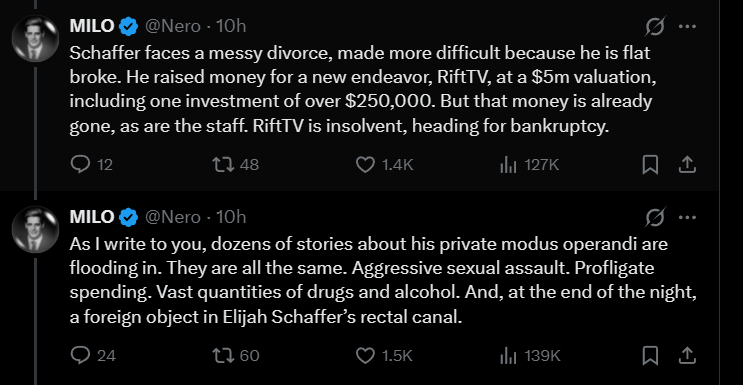
Afterwards, Milo revealed that Schaffer is dealing with a hard divorce that is made more challenging because he is “flat broke” and explained, “He raised money for a new endeavour, RiftTV, at a $5m valuation, including one investment of over $250,000. But that money is already gone, as are the staff. RiftTV is insolvent, heading for bankruptcy.”

Milo outlined that “dozens of stories about his private modus operandi are flooding in. They are all the same. Aggressive sexual assault. Profligate spending. Vast quantities of drugs and alcohol. And, at the end of the night, a foreign object in Elijah Schaffer’s rectal canal.”

Milo also attached screenshots of tweets from 2024 made by YouTuber Blaire White, who recounted Schaffer’s actions which involved taking her gay friend into a room alone, continuously cheating on his wife and sexually assaulting a married female coworker.

Meanwhile, Schaffer alleged that his wife and two kids were missing. He tweeted that a gun and his car disappeared. He also charged that federal authorities were attempting to frame him and drugs had been planted in his house. Those posts gained massive traction on social media but he deleted them.

Milo stated that he has been in contact with Schaffer and posted images of their chat. He also verified that the latter’s wife and children were safe.

The deranged animosity towards India and Hindus

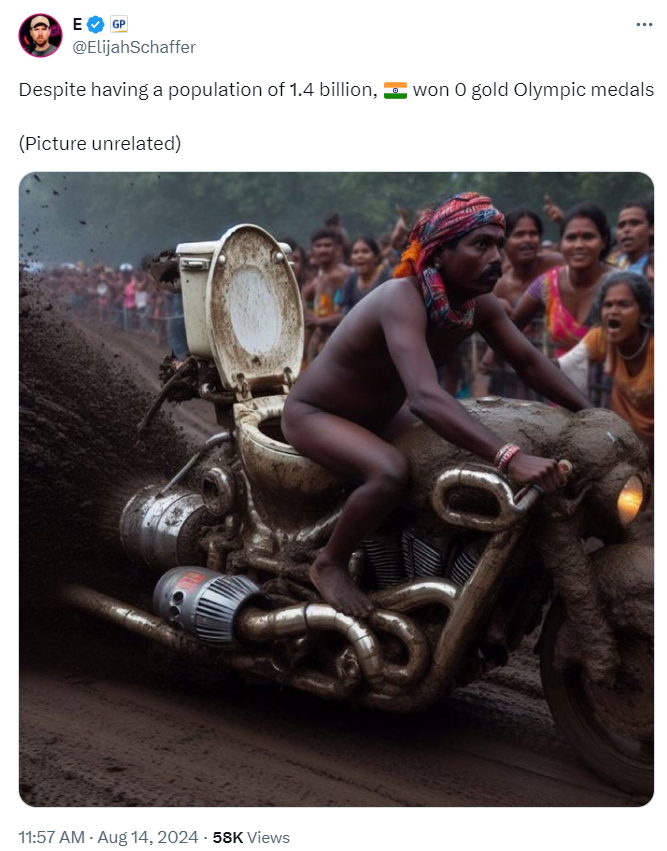
Schaffer and Stock take pleasure in their animosity towards India and Hindus as they appease their MAGA (Make America Great Again) audience, much like other neo-Nazis. He utilised a derogatory image and mocked that India possesses zero medals in the Olympics, even with a population of 1.4 billion.

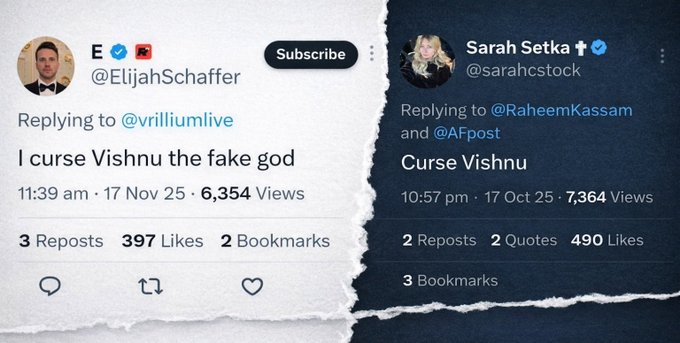
The two went so far as to disparage Hindu deities, labelling them as false and wrote “Curse Vishnu” in a startling demonstration of their Hindumisia.

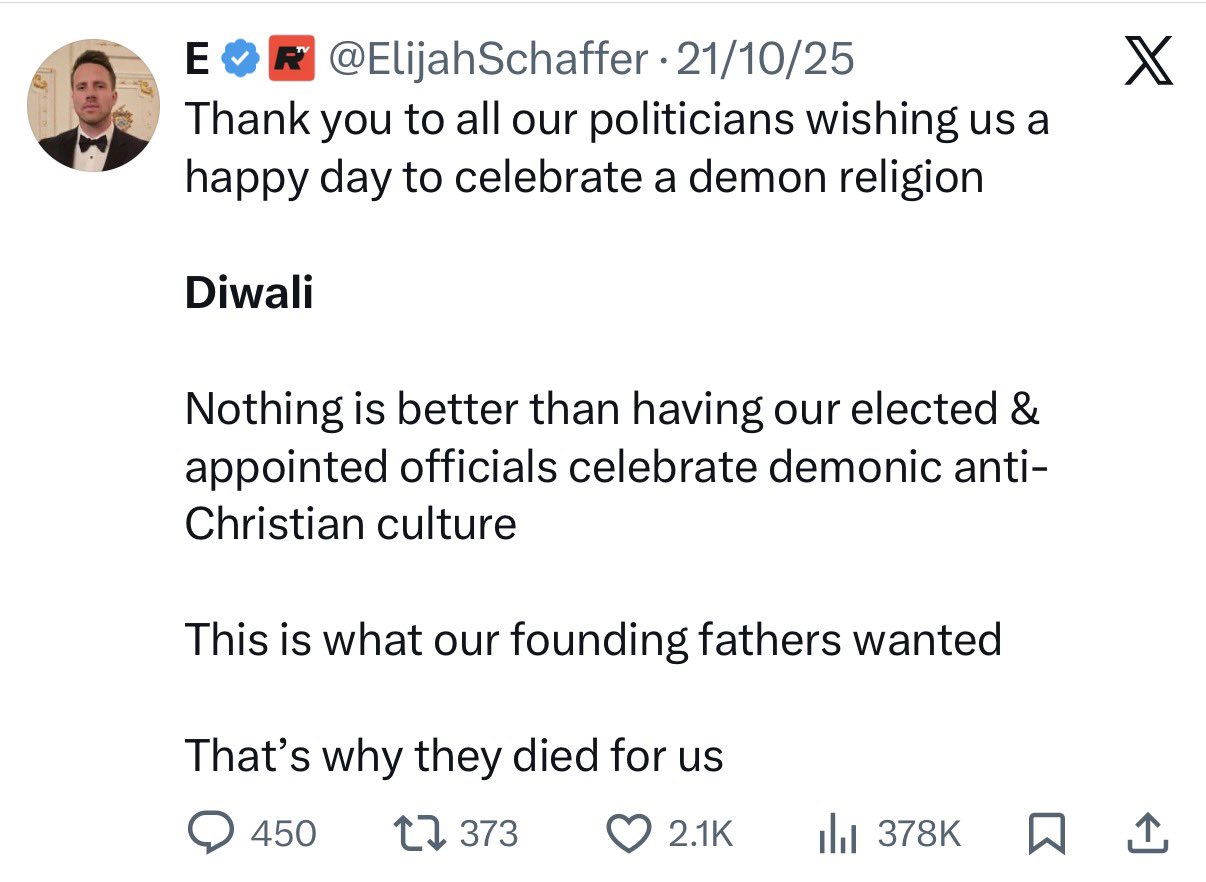
Schaffer lashed out at American politicians for their greetings during Diwali which he termed as “demonic anti-Christian culture.” He also characterised Hinduism as a “demonic religion,” insinuating that their ancestors did not die for this.

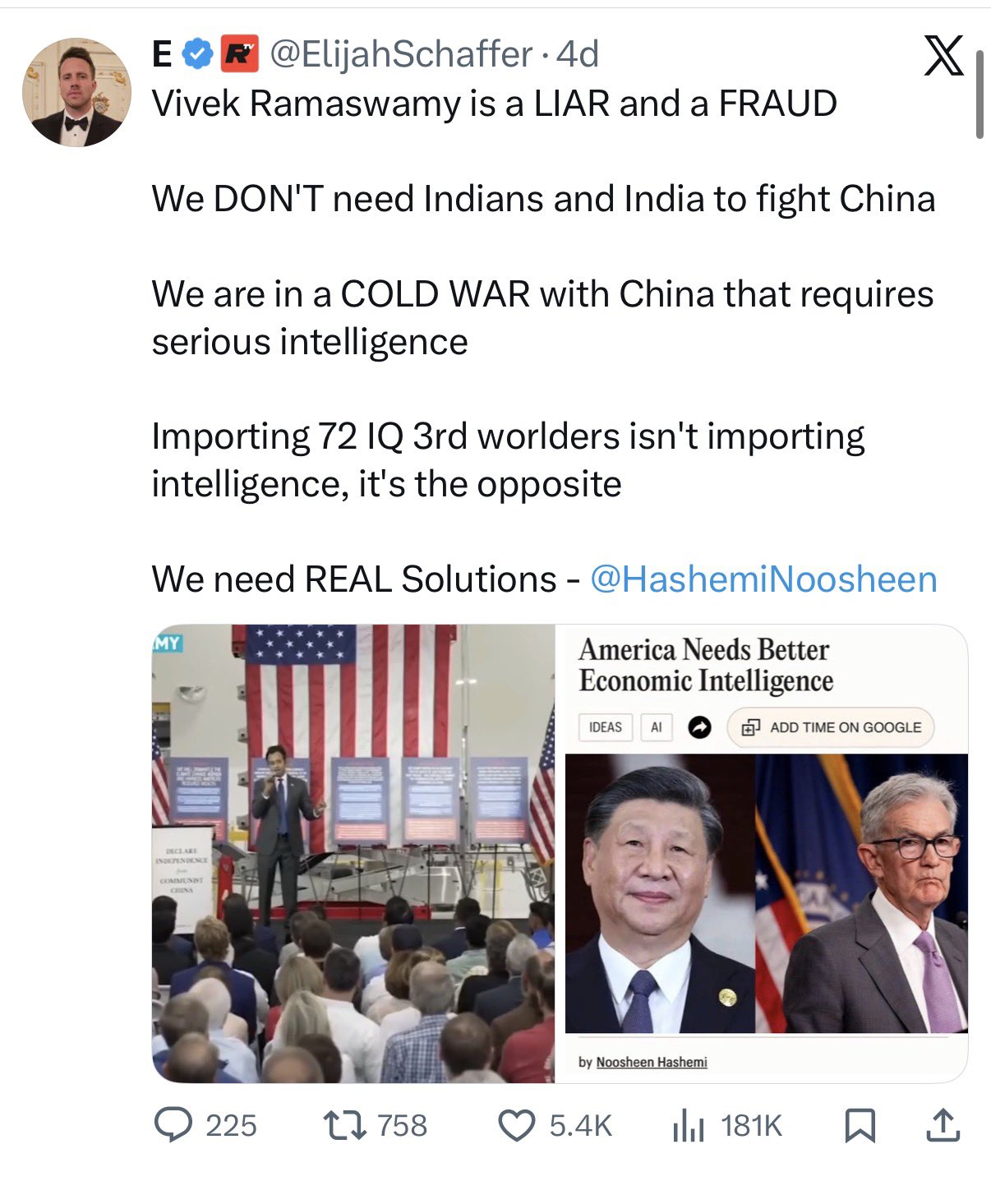
Schaffer labelled Vivek Ramaswamy as a “liar” and a “fraud,” asserting that the United States does not require India to confront China. “We are engaged in a cold war with China that requires serious intelligence,” he remarked, calling Indians as third-world individuals with an IQ of 72. He subsequently declared that their immigration would not enhance intelligence but would have the contrary effect.

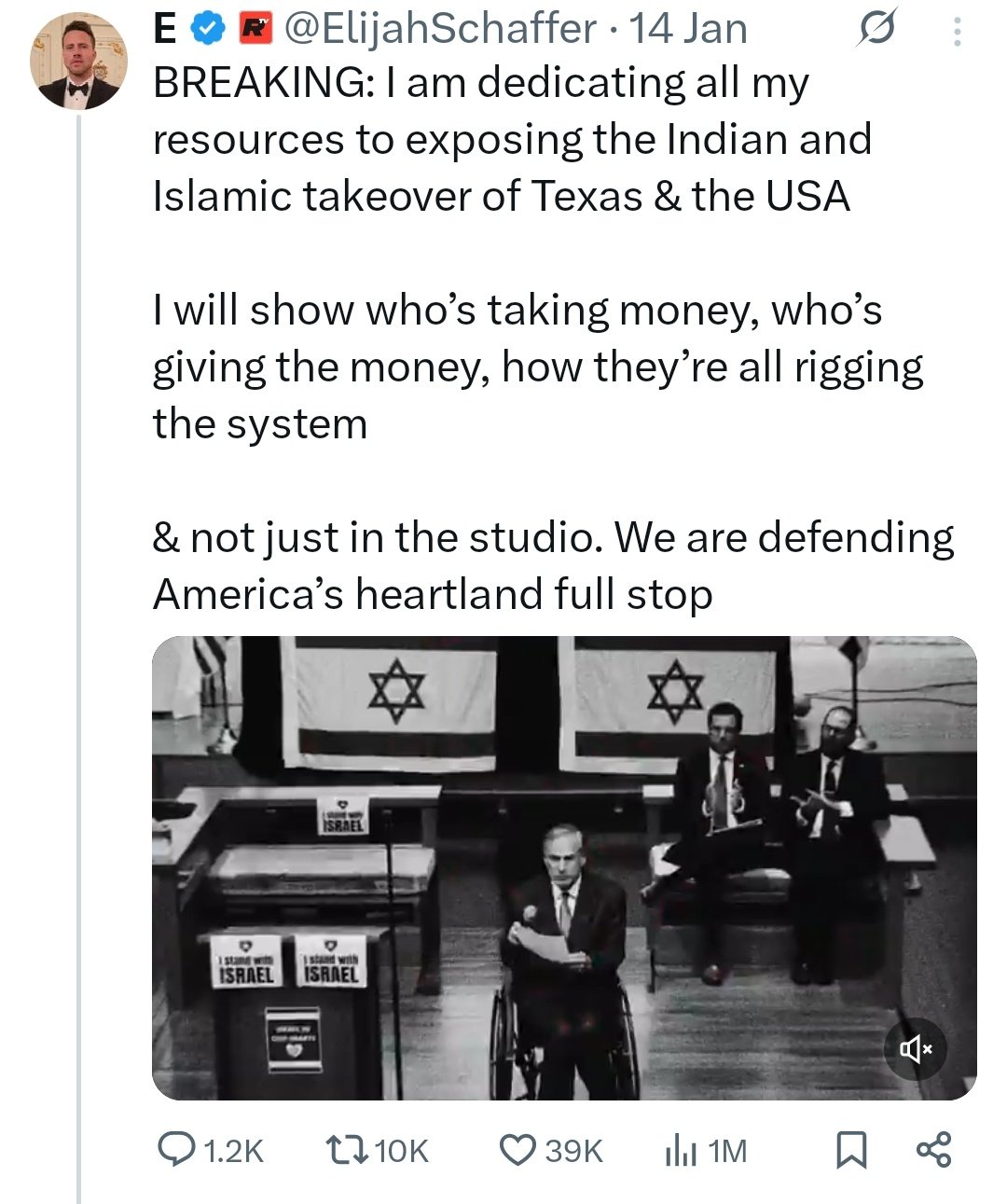
Schaffer attempted to inaccurately equate Indians with Islamists, alleging that he is financing an expose regarding their takeover of Texas and the United States by taking money and manipulating the system.

Schaffer grabbed the headlines recently for attacking the accent of Abraham George, the chairman of the Texas GOP (Grand Old Party). “The Texas GOP is led by an Indian with an Indian accent. Now you know why Texas is turning into Mumbai and the centre of H1B immigration fraud,” he contended last month. He then slammed the Republican Party and charged, “Our own party is orchestrating it, it’s not just the Democrats. Indians are loyal to their race and non Indian politicians are paid off.”

Why BlazeTV removed Schaffer

Elijah Schaffer began his career as a conservative podcaster and on-camera analyst during the 2020 protests through street reporting and culture war discussions. He first became well-known for anchoring “Slightly Offensive” on BlazeTV. Man-on-the-street videos from the Black Lives Matter demonstrations following George Floyd‘s killing were the source of his early fame as videos of arguments, jokes, and altercations went viral on the internet.

Due to Schaffer’s increased visibility, he was able to secure a regular spot on BlazeTV, where his show focused on humour and outrage-driven commentary on issues such as gender politics, government policy and racism. He later co-hosted podcasts but was kicked out of the platform in 2022 due to accusations of misbehaviour. “Following an investigation regarding a recent personnel matter, Elijah Schaffer’s employment with Blaze Media has been terminated for violating company policies and standards,” read a statement issued by BlazeTV.

Schaffer then founded RiftTV as a stand-alone channel and shifted his focus to documentaries, independent media and guest spots on MAGA networks. It is noteworthy that Stock joined his team as a street interviewer and political analyst. Moreover, he was one of the rioters who overran the Capitol on 6th January 2021 after current President Donald Trump’s defeat at the hands of former President Joe Biden. He posted pictures of emails from a computer in the office of the ex-speaker of the House of Representatives, Nancy Pelosi.

On the other hand, he maintained his attacks on Indians and Hindus in a repugnant showcase of racism and xenophobia before his MAGA fanbase, acting as a divisive and provocative figure.

Mohammad Deepak, hailed as symbol of love by Rahul Gandhi, starts deleting Facebook posts after OpIndia exclusive, had mocked Hindus after Pahalgam attack

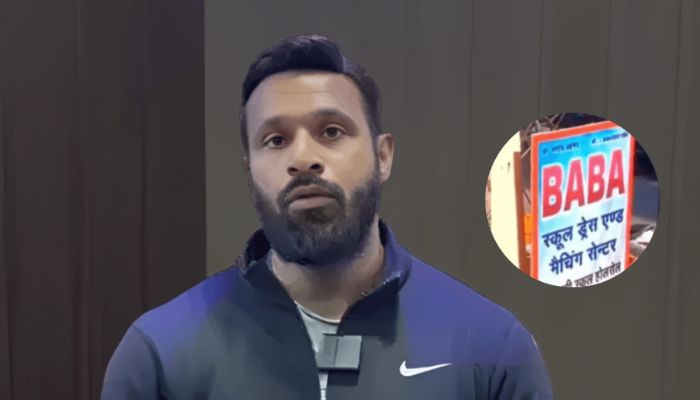
A controversy has erupted over the name of a shop in Kotdwar of Pauri Garhwal district of Uttarakhand. A Muslim youth named Shoaib Ahmed ran a shop called “Baba School Dress and Matching Centre.” The use of the word “Baba” in the shop’s name sparked local protests.

Those familiar with Kotdwar know that the word “Baba” holds special religious and cultural importance, meaning “Siddhabali Baba.” The Siddhabali Baba Temple, dedicated to Lord Hanuman, located in Kotdwar, is not only an ancient and renowned religious site but also a centre of the city’s identity and faith. The sentiments of the local Sanatan community are deeply connected to Siddhabali Baba. The temple’s popularity can be gauged from the fact that people wait for years to organise a community feast here.

It is reported that Shoaib Ahmed had been running his shop using the name “Baba” for several years. Some Bajrang Dal activists objected to this. They argued that using the name “Baba” for personal gain was inappropriate when the shopkeeper did not believe in Siddhabali Baba. Based on this, they demanded that the word “Baba” be removed from the shop’s name.

Meanwhile, the situation escalated when Youth Congress District President Vijay Rawat and Deepak Kumar, who runs a nearby gym, arrived at the scene with some young men. They reportedly became angry over the demand to remove the word “Baba” from the shop’s name and began arguing with Bajrang Dal workers. When Deepak Kumar was asked for his name, he gave his name as “Mohammad Deepak.” The dispute escalated, and the atmosphere became tense.

A dispute over the name of a shop in Kotdwar escalated into a violent clash. Youth Congress officials Vijay Rawat and Mohammad Deepak clashed with Bajrang Dal workers, leading to a scuffle. A video of the incident shows Vijay Rawat and Mohammad Deepak initiating the scuffle. The video also shows Deepak manhandling and shoving an elderly Bajrang Dal worker.

Videos of the incident quickly went viral on social media. The matter escalated from a local dispute into a political and ideological debate. Social media erupted with varying reactions to Mohammad Deepak. Some groups began to hail him as a symbol of “Ganga-Jamuni culture.” Overnight, Deepak became the beloved of the leftist, Islamist, LibTard, and Congress ecosystems. Simultaneously, those fighting Islamic jihad in Uttarakhand were vilified.

The issue sparked political rhetoric. Congress leader Rahul Gandhi, reacting to the incident, described Mohammad Deepak as a “lamp of love” and accused the RSS of spreading hatred in society.

Meanwhile, former Uttarakhand Chief Minister and Congress leader Harish Rawat also jumped into the controversy. He described Mohammad Deepak as the “Light of Uttarakhand” and a “beacon of justice.” Harish Rawat has previously been in the news over the Muslim University issue, which some political analysts link to Congress’s defeat in the 2022 assembly elections.

Who is Mohammad Deepak?

Before delving further into the matter, it’s important to focus on one name: Mohammad Deepak. He runs a gym called “Hulk Gym” in Kotdwar and is considered an influential figure locally. Deepak is said to be closely associated with Youth Congress District President Vijay Rawat. Furthermore, photos available on social media reveal his close ties to several prominent Congress leaders.

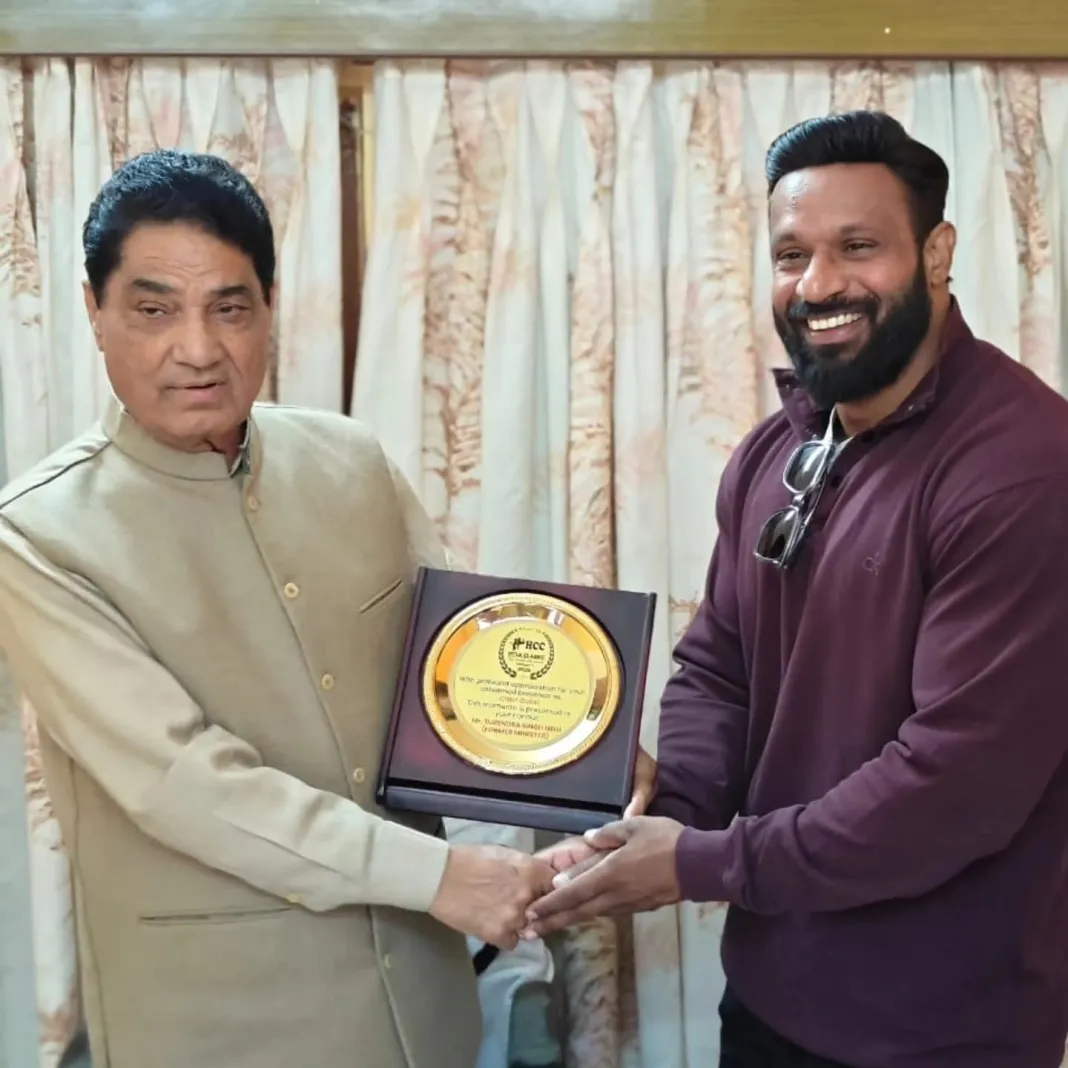
Mohammad Deepak with senior Congress leader Surendra Singh Negi

Mohammad Deepak’s Facebook account also indicates his close ties to members of the Muslim community. Among these, Chand Maula Baksh, a Dubai-based businessman, is prominent. According to posts on social media, Chand Maula Baksh organises bodybuilding shows for Mohammad Deepak. However, he has now gradually begun deleting these posts.

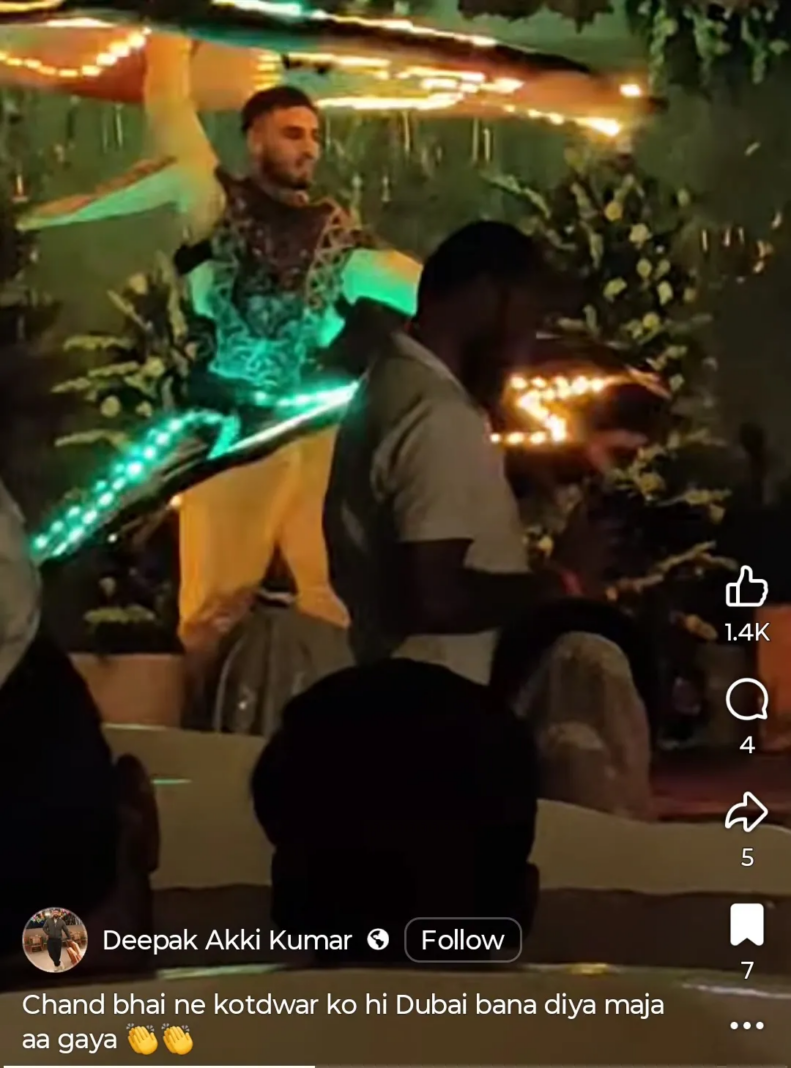
Post of Mohammad Deepak

A video shared by Mohammad Deepak shows a young man dancing, along with which he wrote, ‘Chand Bhai has made Kotdwar like Dubai’.

Mohammad Deepak’s Facebook post

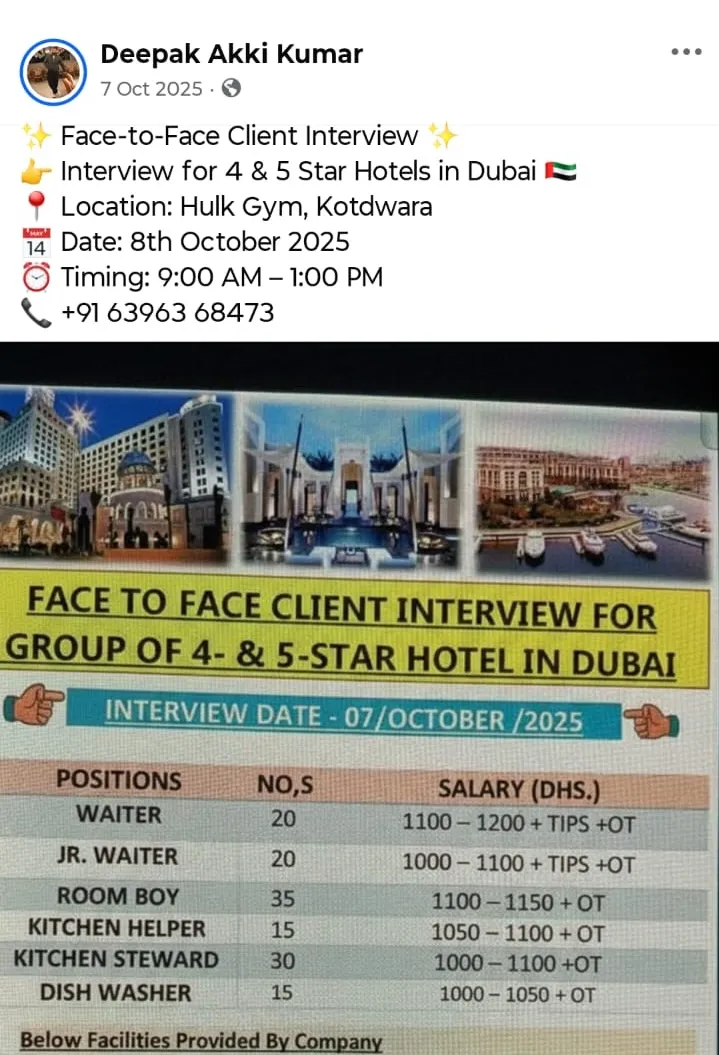
Mohammad Deepak has also posted an advertisement inviting young people to interview for jobs at 4 and 5-star hotels in Dubai. It’s worth mentioning another fact about Chand Maula Baksh: he’s also in the hotel business in Dubai.

Deepak’s post for interview in Dubai

In Dubai, a festival called Kauthig is held to celebrate the folk culture and traditions of Uttarakhand. A large number of people from the mountains of Uttarakhand live in Dubai, but the main organiser of their Kauthig is Chand Maula Baksh. Unfortunately, Garh Ratna Narendra Singh Negi also attends this Kauthig, organised by Chand Miyan and calls Chand Bhai a true Uttarakhandi.

Another video of Mohammad Deepak is going viral, in which he says that there is immense power in the name Mohammad.

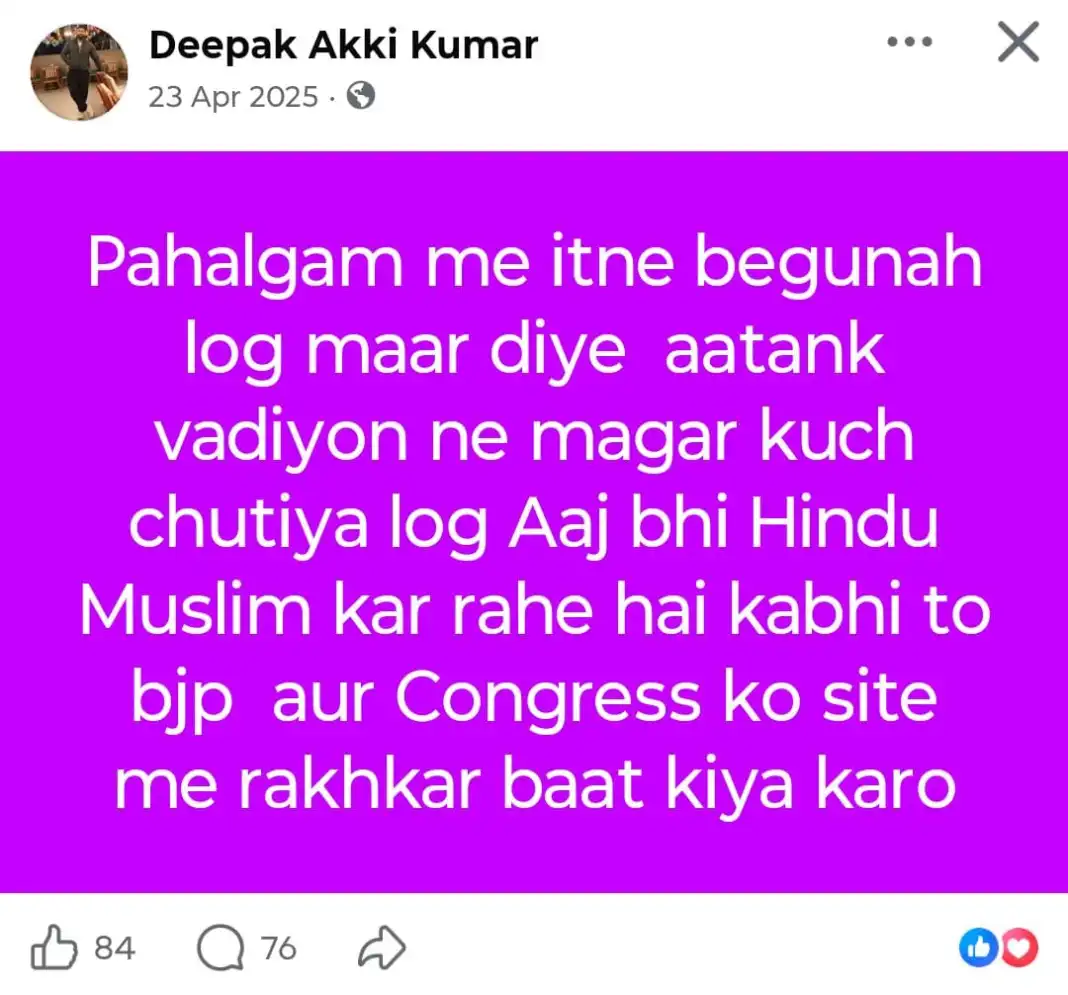
Additionally, several of his photos and videos are going viral, clearly demonstrating his close friendships with Muslims, most of whom are gym owners or salon owners. Another viral post by Mohammad Deepak is calling those who call the terrorists involved in the Pahalgam attack Muslims “chutti@.”

Mohammad Deepak’s post on the Pahalgam attack

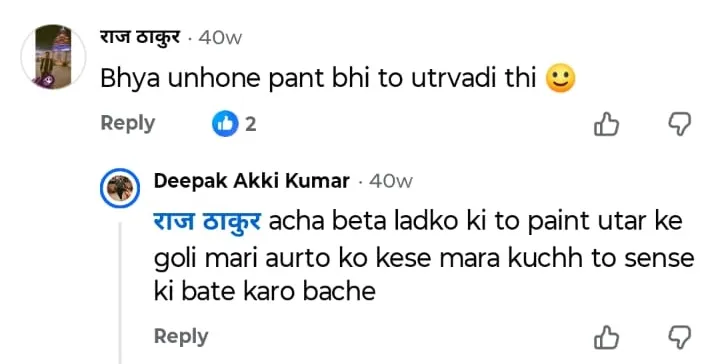
In a comment on the same post, he says that if the terrorists took off the pants of Hindu men before killing them, then what did they take off of the women?

Mohammad Deepak’s comment on women

Many questions are being raised about the process of Deepak Kumar becoming Mohammed Deepak. Available evidence suggests that there may be some social and ideological reasons behind his name change, which are being discussed.

An analysis of Deepak Kumar’s social media accounts reveals that his Facebook wall contains almost no greeting posts for Hindu festivals, while numerous posts for Muslim festivals like Eid are present. This raises the question: was an Islamic network at work brainwashing Deepak, who proudly adds “Mohammed” to his name and attributes his strength to Muhammad?

Mohammad Deepak is being described as secular, but his actions clearly show that he is deeply influenced by Islam. In such a situation, isn’t there a possibility that a conspiracy to wage ‘gym jihad’ is being hatched using this as a weapon? 

Now, using Mohammad Deepak as an excuse, the game of tarnishing the image of Devbhoomi has also begun. Earlier, in the cases of Kashmiri Muslims in Dehradun’s Vikasnagar and the Bulleshah Majar in Mussoorie, attempts were made to create the same narrative that Devbhoomi Uttarakhand has now become a state of hatred. But the people’s outspoken opposition to this narrative has frightened the fundamentalists.

The hill community is now speaking out against the conspiracies of Muslims, and the plans of jihadists and rioters to engulf Devbhoomi appear to be failing. In this context, a new formula has been devised to denigrate those fighting against the jihadists. An environment should be created that conveys the message that the Hindus of Devbhoomi are against those fighting for Sanatan Dharma.

Mohammad Deepak is nothing more than a small pawn in this chess game of the jihadis, advanced across the board and turned into a knight. Those projecting Mohammad Deepak as a hero of India are said to be enjoying the spectacle, while Deepak considers it his promotion. However, according to the text, he does not realise that in the coming moves, he may be sacrificed to trap the king.
This chessboard has been laid out by Islamic jihadis, and leaders like Rahul Gandhi are present on the field to play the game, seeking to cultivate Muslim voters to reach power. It further claims that their combined objective is the establishment of “Dar-ul-Islam” in Devbhoomi. The text argues that if this were not the case, Mohammad Deepak would not see strength in the name “Mohammad,” nor would Rahul Gandhi allegedly be encouraging him.

However, the tricks this name has played are evident in history as well as geography, and they all have one goal: to implement the same model as Syria, Pakistan, Afghanistan, and Bangladesh in Uttarakhand. The people of Devbhoomi should understand this as soon as possible; otherwise, when they fall under the influence of this secular cocktail, they won’t ask whether you’re a Congressman or a BJP supporter; they will simply and simply be infidels to them.

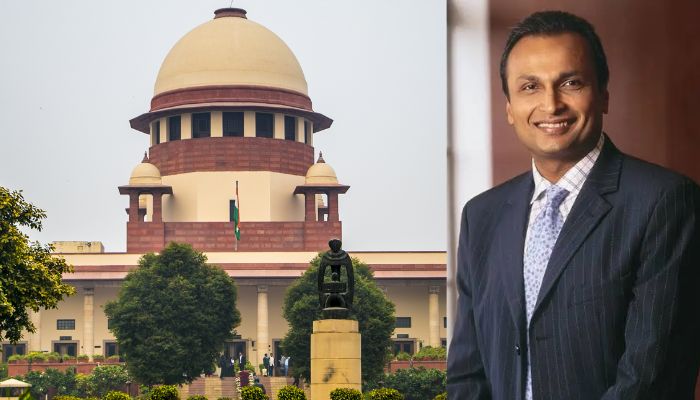
Anil Ambani directed not leave India, SC orders ED to set up SIT to probe allegations: All you need to know about the ADAG bank fraud case

The Supreme Court of India on Wednesday, 4th February, took a firm stand in the Anil Dhirubhai Ambani Group (ADAG) bank fraud case, as it ordered the Enforcement Directorate (ED) to form a Special Investigation Team (SIT) to investigate serious irregularities related to Reliance Communications, its group companies and industrialist Anil Ambani.

The court also noted that it has been assured that Anil Ambani will not leave the country without its permission.

The order was passed by a bench headed by Chief Justice of India Surya Kant, along with Justices Joymalya Bagchi and Vipul Pancholi. The bench stated that the ED must constitute a dedicated SIT of senior officers and that the investigation must be taken to its “logical conclusion”.

The court also made it clear that all necessary steps must be taken so that the investigation is not delayed or disrupted in any manner.

Anil Ambani was told not to leave India

During the hearing, there were apprehensions that Anil Ambani may leave the country during the course of the ongoing investigation. In response to this, Anil Ambani’s lawyer, senior advocate Mukul Rohatgi, told the court that his client would not leave the country without the court’s permission.

“He will not leave India without the leave of this court,” Rohatgi told the court, following which the bench recorded this assurance in its order.

Solicitor General Tushar Mehta pointed out that there have been instances in the past where such assurances have not been sufficient. This led to some sharp exchanges in the court, but the bench made it clear that the government has assured that all preventive measures would be taken to ensure that the investigation takes place smoothly.

CBI asked to investigate the role of bank officials

The court also pulled up the Central Bureau of Investigation (CBI) and asked it to expand its investigation. The bench asked the CBI to investigate if there was any role of bank officials in the sanctioning or release of funds.

The court said that the CBI must investigate any possible nexus, collusion, or conspiracy between the borrowers and the bank officials, and must take all legal steps to reach the end of the investigation.

The judges also expressed concern over the slow pace of investigation by both agencies and pointed out that there had been unexplained delays, especially on the part of the ED.

Status reports are sought every month

Taking note of the seriousness of the matter, the Supreme Court directed both the ED and the CBI to file detailed status reports within four weeks. The bench also said it expects regular monthly updates on how the investigation is progressing.

“This is a huge amount of public money. We expect the agencies to act promptly, independently and fairly,” the court observed while addressing the Solicitor General.

The bench added that based on a status report filed by the CBI, the FIR was initially registered only on a complaint by the State Bank of India (SBI), and was later expanded to include complaints from other banks. The court noted that this approach did not appear proper.

Arguments from both sides

The case is being heard on a petition filed by former Union Secretary EAS Sarma, who has sought a court-monitored investigation. Sarma has argued that the investigations conducted so far are not sufficient.

Representing Sarma, advocate Prashant Bhushan told the court that the FIR was registered in 2025 and the first arrest came only recently, even though this is one of the biggest corporate fraud cases in the country.

On the other hand, Mukul Rohatgi and senior advocate Shyam Divan, appearing for ADAG companies, denied claims of fund diversion. They said insolvency and bankruptcy processes should not be seen as criminal acts and also stated they were not opposing the formation of an SIT.

The Solicitor General countered this by saying banks had carried out forensic audits through independent auditors, which clearly pointed to the misuse of funds.

Court flags misuse of insolvency process

During the hearing, the bench also made strong oral remarks on how the insolvency process is being used. Chief Justice Surya Kant noted that assets often get undervalued and companies are later picked up by related parties through what appears to be pre-planned auctions.

“The haircut is phenomenal,” the court remarked, with the government also telling the bench that it is closely examining issues related to the Insolvency and Bankruptcy Code (IBC).

What is the ADAG Bank Fraud case?

The ADAG bank fraud case is connected with loans of ₹31,580 crore taken between 2013 and 2017 by Reliance Communications and its subsidiaries, including Reliance Infratel and Reliance Telecom. The loans were sanctioned by a set of banks headed by SBI.

According to the petition, a forensic audit ordered by SBI found that large amounts were used for purposes other than what the loans were approved for. These included repayment of other loans, transfers to connected entities, investments in mutual funds and fixed deposits that were quickly withdrawn, and circular transactions meant to keep loans running.

The petition further highlights that the forensic audit report was received by SBI in October 2020, but the complaint was filed only in August 2025, which raises serious doubts about the delay.

The Supreme Court has now made it clear that only strict monitoring and a focused investigation can ensure accountability in a case involving such large public funds.

HAL out of AMCA program, private player to build 5th generation stealth fighters for the first time: Read which companies are shortlisted as the PSU denies knowledge

Hindustan Aeronautics Limited (HAL) is out of the ambitious AMCA (advanced medium combat aircraft) project, also known as the country’s fifth-generation stealth fighter jet. As per media reports, the government has shortlisted three private sector firms to develop and produce next-generation fighter jets, and the winner is set to be chosen in the upcoming three months. This means the state-owned aircraft manufacturer would not be participating in one of the nation’s most important defence initiatives for the first time.

According to reports, Tata Advanced Systems Limited, Larsen & Toubro and Bharat Forge Limited of the Kalyani Group have made the cut following a review of the technical bids submitted by seven consortia of public and private sector companies who submitted bids for the program last year, while others have been eliminated from consideration. The lowest bidder is anticipated to get the contract.

The trio have fulfilled the requirements and advanced to the next review step, which entails presenting cost proposals for the construction of five AMCA prototypes and one structural test specimen. HAL also joined the race with two smaller businesses, but didn’t fit the requirements, reported Hindustan Times.

Now, an Indian private firm will join hands with the Aeronautical Development Agency (ADA) to build the country’s fifth-generation fighter project. India will have two separate fighter aircraft manufacturing lines because of this pivotal event, including a private company with the AMCA and HAL with the Tejas fleet.

Why was HAL disqualified from the competition

The program’s EoI (expressions of interest) had stated that a single business, joint venture or consortium could submit an application. Interestingly, HAL chairman DK Sunil outlined that it would be extremely difficult for the company to operate alone due to the qualifying requirements and circumstances connected with the financial performance of enterprises in the EoI issued by ADA.

“There are clauses that have loaded the dice against HAL. The EoI says if a company’s order book is three times its turnover, then it will get zero marks. In HAL’s case, it is almost 8X. It means someone who has fewer orders will get more marks. I don’t know why they have done this. Still, we will go with some partnerships and pursue the project,” he mentioned while talking to the media house in 2025.

The Tejas program by HAL has seen long delays, and only now has its production been streamlined with the arrival of GE engines from the USA. It is clear that the government does not want to overburden the PSU with another large project, and wants it to concentrate on producing the Tejas Mark I and Mark II fighter planes as per schedule.

HAL’s omission, if true, will be the most prominent indication of an important shift in the country’s defence sector, as the aerospace and defence company has been the exclusive integrator of Indian military aircraft for many years, including the continuing Tejas Light Combat Aircraft program. The company also assembles the Sukhoi Su-30MKI fighter jets, apart from making several helicopters.

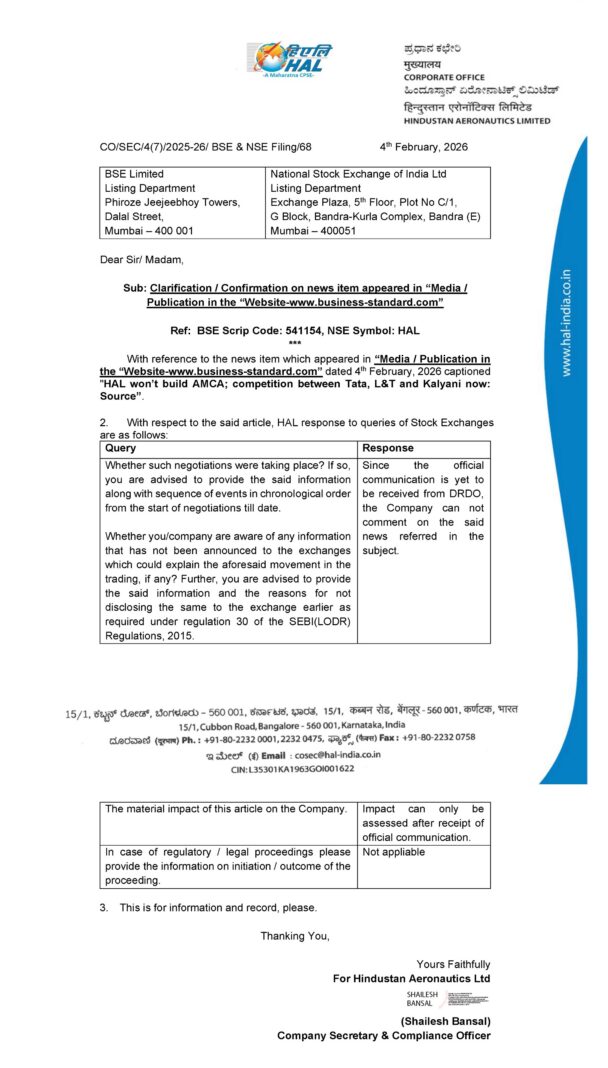
However, HAL has said that it has not received any communication from the DRDO on the matter. In a submission made to BSE and NSE, the company said, “Since the official communication is yet to be received from DRDO, the Company can not comment on the said news referred in the subject,” in response to the media reports.

The company added that the impact of the decision on it “can only be assessed after receipt of official communication.”

The selection process and the three contenders

The entities that sent their offers included Tata Advanced Systems Limited, Adani Defence and Aerospace, Larsen & Toubro (L&T) with Bharat Electronics Limited (BEL), Goodluck India along with BrahMos Aerospace Thiruvananthapuram Limited and Axiscades Technologies, and Bharat Forge Limited in collaboration with Bharat Earth Movers Limited (BEML) Limited and Data Patterns in addition to HAL.

The top Indian manufacturers tried to advance to the next round, which was determined by technical proficiency, manufacturing capacity, order book and financial stability. They had to illustrate their technical capability of absorbing the AMCA design in addition to having sufficient experience in development, engineering, production, equipping and testing, as well as other expertise. Businesses with a lengthy standing order book were also discouraged.

The companies prepared plans to show their ability to integrate complicated systems, use modern avionics and stealth manufacturing but only three will be able to turn in a Request for Proposal (RFP) by April 2026 because of their different approaches.

  • Tata Advanced Systems Limited (TASL): It has chosen to put forward an independent offer by drawing on its broad understanding of international aerospace supply chains and alliances. This displayed a great deal of faith in its current infrastructure and its knack to provide a full-spectrum military platform without the assistance of outside consortia partners.
  • Larsen & Toubro (L&T): It has forged a strong deal with Dynamatic Technologies and Bharat Electronics Limited (BEL), the state-owned electronics behemoth. This partnership offers a “holistic” airframe-and-systems solution by fusing BEL’s leadership in radar and electronic warfare systems with L&T’s background in heavy engineering and marine platforms.
  • Bharat Forge: This coalition has a strategic division of tasks with Data Patterns owning 20%, BEML 30% and Bharat Forge 50% of the business. The goal is to combine specialised defensive electronics and digital systems with high-strength metallurgy and structural production.

The difficult challenge of converting early prototypes into financially feasible production plans now falls to the finalists. Moreover, they must be able to establish a manufacturing unit for the series production of AMCA. The winner is predicted to be revealed by late 2026 and must set up the jet’s entire ecosystem from final assembly and flight testing to supply chain administration and quality monitoring.

Defence Ministry’s landmark decision

The Defence Research and Development Organisation’s (DRDO) ADA asked for EoI to identify the companies that could develop prototypes, support flying tests and certify the domestic stealth fighter in June of last year and the firms had responded to the call.

The development took place merely weeks following the defence ministry’s disclosure of its hotly expected plan to expedite the production of the stealth fighter. It declared that both public and private sector enterprises would have equal opportunity under the competitive execution approach. Defence Minister Rajnath Singh’s approval of the industrial cooperation model happened when HAL, the nation’s only fighter jet maker, was believed to be the effort’s strongest contender up until that point.

A team of senior DRDO officials initially assessed the seven companies, after which a panel led by Defence Secretary Rajesh Kumar Singh reviewed the committee’s conclusions. ADA relies on an industry association to carry out the project. The EoI stipulated that the contract for development, prototyping, flight testing and certification should not last longer than eight years.

The design and prototype development, worth ₹15,000 crore, were approved by the Cabinet Committee on Security in 2024. However, the total order will be much higher after the aircraft is confirmed and ordered by the Indian Air Force. According to IAF’s modernisation plan, over 120 stealth fighters (six squadrons) will be deployed starting in 2035 to assume an extensive part in future air combat.

The number will increase dramatically as more cutting-edge varieties are created in the upcoming years. The aircraft’s production is scheduled to be finished by 2034, before it goes into production a year later. The first prototype is slated to make its first flight in 2029.

India’s aspiration for fifth-generation stealth

AMCA might be India’s largest military research and development initiative to date. It will potentially become the country’s primary aerial platform beginning in the mid-2030s. It will have the newest military technologies, such as stealth features, artificial intelligence (AI) integration, long-range targeting capabilities and joint operation with unmanned systems.

The goal is to propel India into the select group of countries that can field fifth-generation stealth aircraft, which currently consists of the United States, China and Russia. The 25-ton, twin-engine fighter will have internal weapons storage for upholding stealth profiles, a “serpentine” air intake for radar evasion and super-cruise characteristics like continuous supersonic flight without afterburners.

The Mk-1 variant with American F-414 engines shall drive the first two squadrons, while the more sophisticated Mk-2 version with an even more potent engine that will be produced in India with French aid is set to power the remaining squadrons. It will have an internal weapons bay and a diverterless supersonic intake that can carry 5,500 kilograms of external payload and 1,500 kilograms of internal payload. AMCA will also have an AI-powered electronic pilot for sophisticated decision-making.

It will also consist of an internal armament bay that would accommodate four long-range air-to-air missiles and many precision-guided munitions, along with Netcentric Warfare Systems for real-time combat coordination and Integrated Vehicle Health Management. The fighter jets will ensure smooth coordination with unmanned aerial vehicles (UAVs) and prove useful in intricate combat scenarios.

A 120-kilonewton thrust class engine fuel AMCA will be manufactured after the government authorises a joint effort between the French company Safran and DRDO’s Gas Turbine Research Establishment (GTRE). It will create nine prototypes over a 12-year period, transferring all technology and intellectual property rights to India.

The venture’s success will be a testament to the Indian private sector’s prowess in managing complex military aeronautics. The government hopes to de-risk future programs by abandoning the single-producer model, which might pave the way for the upcoming sixth-generation fighter projects.

The acceleration of the program is essential at a time when the J-20 fifth-generation fighters have already been deployed by China. It has allegedly tested two sixth-generation systems, J-36 and J-50 and is launching the J-35 stealth fighters that Pakistan wants to acquire.

Assam govt clears 912 acres of forest land along Assam-Mizoram border from encroachment, CM Himanta Biswa Sarma says ‘will reclaim every inch of our land’

The Assam government’s fight against illegal land encroachments continues, as an eviction drive to free forest lands along the Assam-Mizoram state boundary was conducted on 3rd February. The drive was completed peacefully as most of the illegal settlers had left the encroached land in advance. The authorities freed over 912 acres or 2,800 Bighas of land during the anti-encroachment drive.

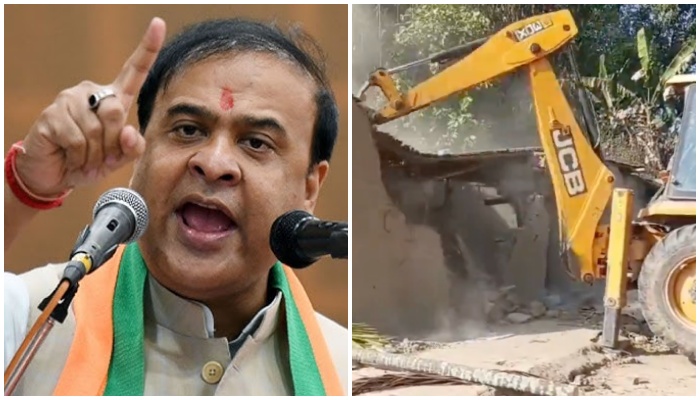
Taking to X, Assam Chief Minister Himanta Biswa Sarma said that around 912 acres, an area bigger than the campus of IIT Guwahati was freed from illegal encroachment in Hailakandi district. CM Sarma reiterated his government’s resolve to free every inch of the state’s land from encroachers.

“912 acres- an area bigger than the campus of IIT Guwahati has been freed in Hailakandi. As our bulldozers rolled in since yesterday, we reaffirmed our commitment to reclaim every INCH of our land from encroachers. It’s a question of our survival, and we shall emerge victorious,” he said.

The encroachment drive in Hailakandi targeted the Gharmora (also spelt ‘Gharmura’) Inner Line Reserve Forest in the Damchera forest village area, as per reports. The illegal settlers here had built houses, cultivated crops, including betel nut plantations. The anti-encroachment drive affected over 500 families.

Akhil Dutta, Divisional Forest Officer (DFO), Hailakandi, said that while 50% of the anti-encroachment action was conducted on 2nd February, the rest was completed on Tuesday across sectors 1, 2, 3 and 4. The officer highlighted that all the illegal houses were under the Inner Line Reserved Forest, Garmura Range, where commercial and non-forest activities are prohibited.

“Betel nut, coffee, tea or rubber plantations all fall under non-forest commercial activities. Reserved forests are not permitted for such purposes. These activities violate the Forest Conservation Act, 1980, and the eviction is being carried out to uphold the law,” the DFO said.

Assam government’s continued crackdown against illegal encroachments

In recent years, the BJP government has intensified eviction and anti-encroachment actions, freeing forest reserves, wildlife sanctuaries, and government lands. In line with Chief Minister Himanta Biswa Sarma’s resolve of freeing every inch of Assam’s land from illegal encroachments, the state government has reclaimed tens of thousands of acres of land cumulatively since 2021. The government maintains that this action is necessary to preserve indigenous rights and natural resources as well as to thwart attempts by Muslims, particularly, Rohingya and Bangladeshi infiltrators, to alter local demographics.

In January 2026, a two-day eviction drive was conducted in Burhachaori Wildlife Sanctuary, which spans Sonitpur and Nagaon districts. The authorities cleared around 6,200 Bighas (830 hectares) of encroached forest land, displacing 710 illegal encroacher families. The action was taken in areas under the Tezpur Sadar and Dhekiajuli revenue circles. These included Jamuktol, Arimari, Siyalichar, Baghetapu, Galatidubi, Lathimari, Kundulichar, Purba Dubramari and Batulichar.

After the clearance of about 40 per cent of the land from the clutches of land encroachers, the Sonitpur district administration launched the eviction operation in the remaining land,” an official said.

In February 2025, the BJP administration freed over 2,099 hectares of land in Burhachapori Wildlife Sanctuary and nearby villages, which affected around 12,800 people.

In another major anti-encroachment operation, the Assam government removed encroachments from 5,250 bighas or 1,700 acres of land in the Hojai district’s Jamuna-Maudanga Reserve Forest in January 2026. The state government informed that over 1,500 families from the Muslim community had illegally occupied the area. The forest reserve comprises more than 8,000 bighas.

Bidyut Bikash Bhagawati, the district commissioner, revealed that some encroachers claimed to have lived on the land for more than thirty years. Furthermore, others alleged that they were there for roughly twenty years. The district administration added that these people had settled on forest land mainly for cultivation. They also possessed land beyond the forest zone in multiple places of the Hojai district and other regions.

It must be recalled that in November 2025, CM Sarma had said that “illegal Miyas” would not live in peace under his government, as the eviction drives would continue in the state.

On 5th December 2025, the 38 bighas of government and forest land encroached by illegal settlers in the Nagaon district were cleared by the local administration in collaboration with the police and the Forest Department. The administration issued prior notice to around 100 families directing them to vacate the land they had illegally encroached on and built houses on. The drive freed forest land under Bhakatgaon in Khatuwal Mouza.

In the latter half of November, an anti-encroachment drive was conducted to clear 5,962 bighas (around 2000 acres) of land in the Lutumari Forest Reserve in Nagaon district, following two days of bulldozing. The eviction drive was conducted in the Chankhola, Kandapara, Juripar, Bederipar, and Majgaon areas of the Kachua Lutumari Wildlife Sanctuary under the Kampur Forest Regional Office in Nagaon district. 

It was reported that a large number of valuable trees were cut down by smugglers in the forest areas, clearing large areas of land. Later, people from various places arrived and occupied the land. According to officials, around 1,700 Muslim families had encroached upon forest land over the years, gradually establishing clustered settlements and setting up beetle nut orchards and other agricultural farms. The occupiers had built brick houses, and the administration provided electricity and set up schools.

Similar anti-encroachment action was taken in Goalpara, wherein the officials initiated the process of clearing about 1,140 bighas of land, over 376 acres, inside the Dahikata Reserve Forest. Nearly 600 families, most of them reportedly Bangladeshi infiltrators, were evicted. These operations were carried out peacefully after moving about 70% of the families who were served an eviction notice, while the rest were in the process of vacating the encroached land.

In October 2025, the Sribhumi district administration demolished 21 structures across two villages. Most of the demolished structures were residential and commercial buildings built illegally in Shibbari and Ghilaiti villages under the Patharkandi constituency. 

In August 2025, 26 hectares of land were freed from encroachment in the Rengma Reserve Forest area. The Rengma Reserve Forest falls under the Uriamghat area, in Assam’s Golaghat district. It is spread across over 827 acres.

In July 2025, an eviction drive took place in the Paikan Reserve Forest located in the Goalpara district. 140 hectares (equivalent to 1038 to 1040 bighas) of forest land had been unlawfully taken over predominantly by Muslims, who had migrated from adjacent regions or Bangladesh. Tejas Mariswamy, the Divisional Forest Officer of Goalpara, outlined that 1,080 families had built houses in this area.

On 8th July 2025, the Assam government conducted a mega eviction drive in Dhubri district to clear over 1,150 acres of government land encroached by Bengali Muslims. Displacing around 1400 families, the eviction drive took place in three places in the district, and it turned violent in the Chapar area. 

On 3rd July 2025,  an eviction drive was conducted by the state government in 3 places in Lakhimpur district. Over 300 houses belonging to Muslim families were demolished days after notices were issued to the people living in the Village Grazing Reserve areas in the district.

In June 2025, the Jorhat District Administration in Assam carried out a demolition drive to remove encroachment, including illegal residential and commercial structures on government land at Kabristan Road. However, the demolition drive faced massive protests by local Muslims who came out in support of a person named Azad Choudhary, whose illegal properties were among the properties demolished by the Jorhat Municipality Board. Choudhary had named the area ‘Dhaka Patti’, after the capital of Bangladesh.

The BJP government in Assam has maintained that all the rules and laws are being followed while conducting anti-encroachment drives, and prior notices are given before the ultimate bulldozer action. In the recent past, the Himanta Biswa Sarma-led state government has reclaimed over 40,000 to 42,500 acres of land. Despite protests, sometimes violence by Islamist mobs, as well as propaganda by their liberal cheerleaders, the Assam government has remained undeterred in its commitment to freeing Assam from illegal land encroachments and puncturing the nefarious designs of Islamists to alter the religious demography of the state.

National Council of Churches moves SC to dilute anti-conversion laws: Read how the nation is plagued by the virus of illegal conversions by missionaries

On 2nd February (Monday), the National Council of Churches in India filed a writ petition in the Supreme Court contesting the constitutionality of anti-conversion laws introduced by multiple states throughout India, including Odisha, Chhattisgarh, Madhya Pradesh, Arunachal Pradesh, Gujarat, Himachal Pradesh, Jharkhand, Uttarakhand, Uttar Pradesh, Karnataka, Haryana and Rajasthan.

The organisation claims to stand for over 14 million Indians and is composed of 32 member churches, 17 regional Christian councils, 18 all-India outfits and 7 related agencies. A panel made up of Justice Joymalya Bagchi and Chief Justice Surya Kant of India grouped the case with other similar petitions concerning pleas pertaining to religious conversions.

“Issue notice. Let a copy of each be served on Advocate Generals (of states) also. Let a counter affidavit (of the centre and 12 states) be filed within four weeks. Let respondents file a common counter affidavit. Having regard to the importance, let it be placed before a three-judge bench,” the judges pronounced.

NCCI was represented by senior counsel Meenakshi Arora, who alleged, “Their acts have been structured in such a manner that it incentivises certain vigilante groups to take action because there are rewards out there. So, even if there is no case at all against a person, someone would make a complaint, and that person would be arrested.”

She declared that the current case is the only one that questions the laws of Arunachal Pradesh and Odisha. The Rajasthan Prohibition of Unlawful Religious Conversion Act, 2025, was the subject of a similar petition filed by the Catholic Bishops Conference of India. The notice was received by the court in December.

Arora stated that she has also made a request for a stay of the laws and claimed, “In many states, there is an issue of huge abuse, there have been applications, and there is an application fora stay here also.” The statutory definitions of “conversion,” “allurement,” “inducement”, and “undue influence” were termed as ambiguous, overly general and lacking in objective standards.

She accused that it breached the legality doctrine, gives authorities unrestricted power, permits discriminatory enforcement and stifles free speech as well as the promotion of religion. Arora added that without implementing procedural protections, the impugned acts broaden the class of complainants to include unaffiliated third parties. They place the burden of proof on the accused, compromising fundamental ideas of criminal jurisprudence.

“Implementation of the impugned acts across states reveals a uniform pattern of misuse. Routine worship, prayer meetings, charitable activities and interfaith marriages are criminalised through expansive interpretations of allurement and inducement. Vigilante groups function as de facto enforcers, while police authorities act mechanically on complaints without independent scrutiny. This state-enabled vigilantism legitimises social hostility, instils fear among minority communities, thereby corroding the secular fabric of the Constitution,” she submitted.

The petitioner requested directives to declare several such provisions in various state laws to be illegal and an interim stay on the acts. Furthermore, it prayed for instructions to police authorities not to make arrests or take actions in accordance with the acts and a stay on all criminal proceedings related to FIRs (First Information Reports) registered under Sections 3 and 5 of the same and the ensuing probes.

Modi government’s firm rebuttal

Tushar Mehta, the Solicitor General of India, strongly countered the assertions on behalf of the centre and highlighted that the government had “our answers.” He stated, “Our reply is ready and will be filed shortly.” Mehta cited the five-judge Constitution Bench verdict and charged that the petitioner’s arguments were not “factually correct” and invoked the Rev. Stainislaus v/s State of Madhya Pradesh case of 1977.

Notably, the apex court had already affirmed the constitutional legitimacy of the Madhya Pradesh Dharma Swatantraya Adhiniyam, 1968 and the Orissa Freedom of Religion Act, 1967 at the time. The ruling noted that the term “propagate” in Article 25 of the Constitution did not grant “the right to convert another person to one’s own religion, but to transmit or spread one’s religion by an exposition of its tenets.”

There was “no fundamental right to convert another person to one’s own religion,” according to the Constitution Bench, which had reasoned that freedom of religion applied to all religions, not just one.

The ugly face of religious conversion

India appears to be a peculiar anomaly where religious minorities advocate for the legalisation of conversion while the majority opposes it. The underlying reason for this is that Abrahamic religions are fundamentally proselytising, often attempting to compel others to submit to their beliefs. These actions, which involve force, manipulation, enticement or other similar methods, have been quite prevalent in various regions of India, leading to the establishment of anti-conversion laws.

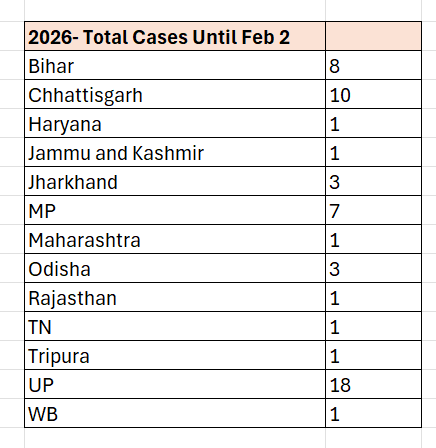
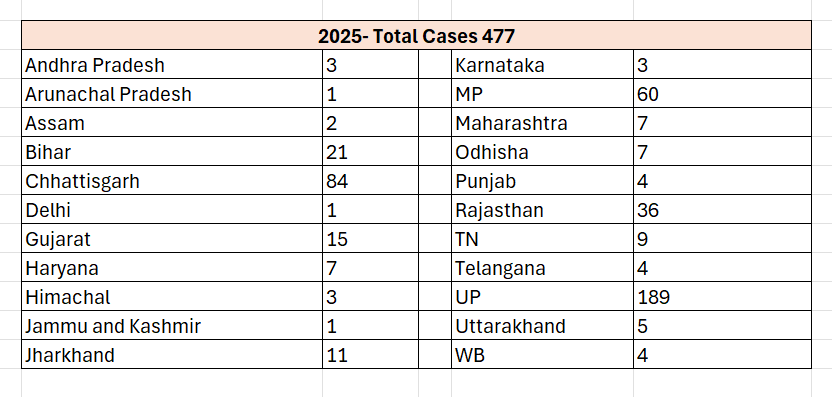
According to OpIndia’s Hinduphobia Tracker, 2026 has already seen 56 cases of Christian religious conversion reported from different regions of India. The majority of these cases have been identified in Uttar Pradesh and Chhattisgarh, with figures reaching 18 and 10, respectively.

The Hinduphobia Tracker similarly recorded an astonishing 477 cases from India last year. Uttar Pradesh had the highest number of these instances at 189, followed by Chhattisgarh with 84, Madhya Pradesh with 60, Rajasthan with 36 and Bihar with 21. The alarming factor is that these occurrences seem to progressively gain momentum, posing not only a significant demographic challenge and an assault on the nation’s roots and history but also a threat to national security.

A German couple, Swain Boz Bet Jaler and Sandra, as well as others, were arrested in Sri Ganganagar of Rajasthan in December after an unlawful church was found inside a house where people were pushed to embrace Christianity by offering financial assistance. Hindu deities and gurus were also abused there to coerce people to abandon their religion.

The German duo had even visited the sensitive Majhiwala border in Ganganagar, resulting in a high alert in the area as a massive police force was deployed to counter any potential problem. Foreign nationals are subjected to strict limitations in Sri Karanpur. According to a preliminary investigation, the Germans were secretly planning a religious meeting when they entered the region without authorisation, while the locals were oblivious.

The national security is evidently at risk due to these elements, especially in the critical context of India’s adversarial neighbours like Pakistan. These acts, which are performed under the pretext of prayer meetings, frequently involve the illicit occupation of houses and other places while vulnerable groups, such as underprivileged communities are targeted for their agenda.

Several organisations have persistently raised their voices about the same. The Punjab Bachao Morcha has declared its commitment to taking legal action against these programs associated with “miracle cures” in the state and has demanded the passage of an anti-conversion bill to halt the widespread and illegal religious conversions by “self-styled godmen and pastors.”

“Around 65,000 pastors are operating in the state and engaging in conversions through enticement, coercion, and fake miracle cures in violation of the Drugs and Magic Remedies (Objectionable Advertisements) Act, 1954 and several sections of the Bharatiya Nyaya Sanhita (BNS),” the leaders informed. They also pointed out, “The 2011 Census recorded the Christian population at 1.26 per cent (around 3.48 lakh people), which has risen to nearly 15 per cent, pointing to large-scale conversions in the last decade.”

Conclusion

The laws were introduced to address the fears expressed by the people who are being affected by these offensive deeds. The incidents of religious conversions by Christian missionaries and their Islamist counterparts regularly come to the fore from different parts of the nation. The alarming reality is also conveyed by the Hinduphobic Tracker. The more startling issue is that numerous cases remain unreported, allowing many such individuals to evade the law.

A Hindu-majority country, despite hundreds of years of outside rule and oppression, is already a bane for these entities and their allies in foreign lands. Hence, the petition in the Supreme Court is another attempt to mainstream these conversion tactics in the name of freedom of religion and victimhood to destroy the native population and their indigenous faith.

Mamata Banerjee storms out of meeting with ECI over SIR, poll body says TMC MLAs threatened and used abusive language

The political drama staged by the Trinamool Congress (TMC) in West Bengal over the Special Intensive Revision (SIR) of the electoral roll heated up as Chief Minister Mamata Banerjee stormed out of the meeting with Chief Election Commissioner Gyanesh Kumar on 2nd February. Dressed in all black as a mark of protest, CM Banerjee-led TMC delegation in Delhi claimed that the ECI officials ‘humiliated’ them. The ECI, however, stated that the TMC MLAs threatened and abused them.

Mamata Banerjee claims ECI ‘humiliated’ them and gave a ‘garbage of lies’

Mamata Banerjee claimed that the Election Commission officials ‘humiliated’ them and failed to address the concerns of the affected families over the SIR exercise in poll-bound West Bengal. The TMC delegation decided to ‘boycott’ the meeting after the ECI officials allegedly failed to address their grievances.

“The ECI humiliated us. They did not listen to us. That is why we walked out. I boycotted and stepped out. This election commissioner is very arrogant. We have been misbehaved with. We have been humiliated. The CEC gave us a garbage of lies. We came here for justice but were given injustice,” Banerjee said.

Launching a personal attack on CEC Gyanesh Kumar, CM Banerjee said, “I have never seen this kind of Chief Election Commissioner. He is a great liar. He is giving a briefing after our queries.”

After a 90-minute meeting with CEC Gyanesh Kumar, CM Mamata Banerjee abruptly left the meeting and reiterated the same old claims that the Election Commission is somehow working at the ‘behest’ of the Bhartiya Janata Party (BJP). Banerjee told the media that the ECI is deliberately doing large-scale deletion of voters’ names from the electoral roll, over minor spelling errors and title changes common in the state.

The West Bengal Chief Minister claimed that names were being struck off over spelling differences like Mukherjee and Mukhopadhyay, or Chatterjee and Chattopadhyay. CM Banerjee further claimed that over 58 lakh names have been deleted from the draft electoral roll without being given a hearing. “They didn’t even ask,” Banerjee said.

“They say whatever they have done is right. They did not allow any outside cameramen to enter. What is done to hide democracy? They are working under the BJP’s direction. First, they removed 58 lakh voters, then they removed 1.4 crore voters. Around 2 crore people’s names have been removed from the voters’ list and put under mismatch. BJP has won Haryana, Maharashtra and Bihar by manipulation. I can bring lakhs of people here in Delhi, and I can parade them in front of anybody…” she said.

Mamata Banerjee then proceeded to highlight her main ‘Muslim’ concern, coupling it with the safe and effective ‘Dalit’ card, as she said that the Election Commission was specifically targeting Muslim ‘minorities’ and Scheduled Castes.

“Why are SCs and minorities being targeted? Are they not human beings?” she asked.

Even as there is all the more need for SIR in poll-bound states, CM Mamata Banerjee questioned why the SIR was conducted in states set to undergo elections, asserting that poll-bound states should have been skipped.

“Why the hurry before the election? You should have left the states going to polls,” Banerjee said.

Election Commission hits back at TMC, says party MLAs threatened and abused them

As the Mamata Banerjee-led TMC delegation levelled grave accusations against the ECI, the Commission not only called out the alleged lies peddled by the TMC but also detailed how the TMC leaders misbehaved with ECI officials.

The ECI officials said that Mamata Banerjee “raised false allegations, misbehaved, thumped the table and left”. In a statement, the Election Commission said that CEC Gyanesh Kumar responded to the queries raised by Mamata Banerjee and assured her that the rule of law will prevail throughout the SIR exercise.

However, despite the polite demeanour of CEC Gyanesh Kumar and the other two Election Commissioners, CM Banerjee behaved inappropriately, thumped the table and walked out.

“Despite the fact that CEC & ECs were listening to her patiently. Mamta Banerjee ran away from the meeting in between by BANGING THE TABLE IN RAGE,” the ECI sources said.

“CEC Shri GK responded to her queries & explained Rule of Law shall prevail, and anybody taking law into their own hands shall be dealt with strictly as per the provisions of law and powers vested in the Commission,” the statement reads.

Furthermore, the ECI alleged that the TMC leaders are constantly threatening and abusing the Commission, especially CEC Gyanesh Kumar.

“TMC MLAs are openly using abusive and threatening language against the Commission and especially against the CEC. Also threatening the election officials,” the ECI said.

The ECI also pointed out that there have been “incidents of vandalisation of the ERO (SDO/BDO) Offices by TMC workers/MLAs.”

“CEC reaffirmed that no pressure, obstruction, or interference of any kind by anyone should be exerted on officers engaged in SIR work,” the ECI said.

The Commission also raised administrative issues pertaining to the SIR exercise. The ECI stated that honorarium payments to booth-level officers (BLOs) should be released on time.

“Honorarium payable to Booth Level Officers (BLOs) be released in a timely manner without any further delay. Only Rs.7,000 out of Rs.18,000 per BLO has been paid as of now,” the ECI said.

“EROs/AEROs provided for deployment are not of the level of SMs/Tehsildars. Appointment of Returning Officers: The Commission has requested for proposal for appointment of ROs on 20.01.2026 as per the criteria (SM/SDO/Revenue Divisional Officer from General Administration). At present only in 67 Assembly Constituencies ROs are of the rank of SDO/SDM,” it added.

The Election Commission further pointed out during the meeting that the TMC government in West Bengal has transferred three Electoral Roll Observers without consulting the ECI. Despite ECI’s objections, the Mamata Banerjee-led government did not take any action.

“ECI has requested for cancellation of transfer orders on 27.01.2026. However, no action has been reported so far,” the ECI said.

The Commission also highlighted that the West Bengal government failed to register FIR against four officers (two ERO and two AERO) and one Data Entry Operator “for their failure to perform their statutory duties and for violating data security policies by sharing log-in credentials with unauthorised persons.”

Frustrated over SIR weeding out illegal voters in West Bengal, Mamata Banerjee indulges in whataboutery, asks why no SIR in Assam

Ever since the announcement of SIR was first made ahead of the last Bihar assembly elections, West Bengal CM Mamata Banerjee has been at the forefront to attack the Election Commission and the BJP-led Central government. Banerjee, joined by other I.N.D.I. bloc parties, has been claiming that the ECI is acting on the BJP’s behest to remove names of Muslim and Dalit voters from draft electoral rolls under the pretext of weeding out illegal or fake voters. When the authorities cracked down on illegal Bangladeshi and Rohingya Muslims carrying fake voter IDs, the TMC linked it to Bengali Asmita or pride, insinuating that in the name of taking action against Bangladeshi illegals, the Centre was deliberately harassing Bengalis.

Even ahead of the start of SIR in West Bengal, CM Banerjee had raised objections and even issued veiled threats to BLOs, reminding them that they were for her government and not the ECI.

Various research and studies suggest that the 2024 electoral roll of West Bengal may include approximately one crore excess voters, recording an inflation of a whopping 13.69%. As per a study by Dr. Milan Kumar, Assistant Professor at the Indian Institute of Management Visakhapatnam and Dr Vidhu Shekhar, Assistant Professor at SP Jain Institute of Management & Research, the estimated number of legitimate voters (2024) is 6,57,06,849, while the number of voters per the official electoral roll (2024) is 7,61,24,780. This marks an estimated surplus of 1,04,17,931 voters, which in percentage translates into 13.69%.

However, despite the alarming numbers in her own state, CM Mamata Banerjee decided to concoct a narrative that somehow the SIR exercise is being conducted only in non-BJP-ruled states, even as BJP-ruled states like Uttar Pradesh have also been through the SIR exercise.

“In Assam, there is a BJP government, so you didn’t do SIR there. You are targeting Bengal, Kerala and Tamil Nadu and leaving a BJP-ruled state,” Banerjee said.

This comes even as the ECI has already explained why Assam is not undergoing the conventional SIR exercise. In October 2025, CEC Gyanesh Kumar said that the citizenship rule for Assam “differs from the rest of the country” and thus, a special order will be issued for SIR in Assam.

Regarding why no SIR will be conducted in Assam like other states and UTs, CEC Kumar said, “A special order will be issued by the Election Commission to hold SIR in Assam. Under the Citizenship Act, there are separate provisions for citizenship in Assam. Under the supervision of the Supreme Court, the exercise of checking citizenship is about to be completed. The June 24 SIR order was for the entire country. Under such circumstances, this would not have applied to Assam. So, there will be separate revision orders issued for Assam, and a separate SIR date will be announced.”

Assam’s special citizenship law caps foreigners from voting or holding citizenship rights. Apparently, the ECI cannot apply a uniform SIR without conflicting with Assam’s special provisions, as SIR verification, including the 2003 cut-off, could inadvertently overlap or undermine them.

Besides, the NRC in Assam ordered and monitored by the Supreme Court since 2013, is nearing completion. Final appeals and re-verifications are pending, though. The Assam NRC has already excluded over 19 lakh people as “doubtful citizens”, triggering opposition. Thus, conducting an SIR now would risk double-deletion, duplicate efforts and also essentially mean an interference with SC-mandated timelines of the NRC. Since citizenship adjudication in Assam remains ongoing under the Supreme Court’s supervision, making parallel revisions through SIR will be impractical.

It is also amusing that Mamata Banerjee loathes SIR and initially wanted it not to happen in West Bengal altogether, and remains belligerent against the ECI, wants the same SIR exercise to be conducted in Assam.