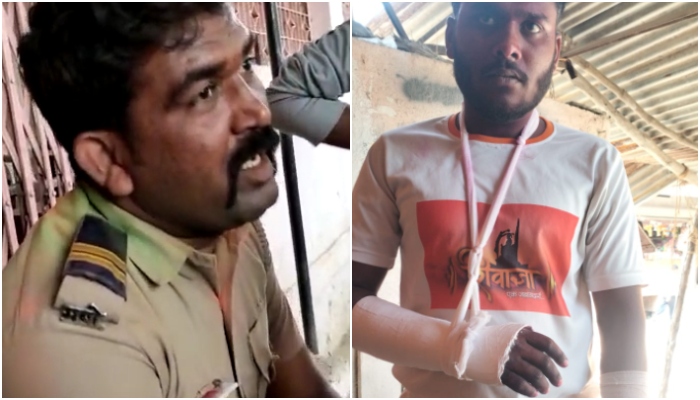
On Wednesday, the Maharashtra government police booked two of its officers named Udayraj Shukla and Sandesh Pawar and sent them to police headquarters for allegedly unnecessarily assaulting a person belonging to a local Hindu group while he was going to the farm. The incident is said to have happened in the Shembalpimpri region of Pusad in the Yavatmal district. The victim, who claims to be a part of Bajrang Dal is also believed to have been named in a false case by the duo.
The government action in the case was confirmed by Amol Baburao Patankar who is under secretary to the state Dy Chief Minister, Devendra Fadnavis. “Prompt Action Taken! Report of Yavatmal Police regarding the Shembalpimpri issue! Injustice will not be tolerated to any extent,” he tweeted.
Prompt Action Taken! Report of @yavatmalpolice regarding Shembalpimpri issue!
— Amol Baburao Patankar (@AmolPatankar_) March 9, 2023
Superintendent of Police Yavatmal, Dr. Pavan Basode mentioned in the letter dated March 8 that a Hindu person named Mahesh was unnecessarily beaten by police while he was on his way to the farm and directed the two police officers to submit a detailed report in the case within three days. The sections imposed against the Police officers named in the case are sections 143, 147, 149, 323, 504, and 506 of the Indian Penal Code.
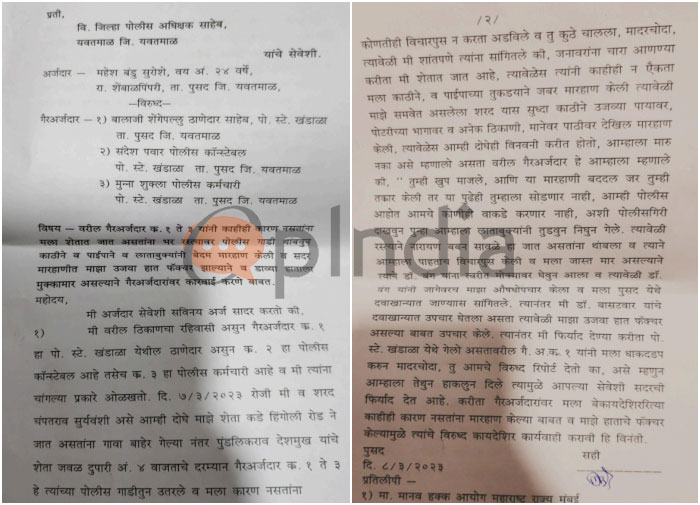
The action was reportedly taken after victim Mahesh filed a complaint against the police officers and stated that the Police deliberately fractured his hand and broke his both legs on March 7. “I was on my way to the farm. At around 4 pm, the police officers arrived from nowhere and trapped me. They abused me and began assaulting me,” Mahesh said in the complaint, the copies of which he sent to Maharashtra State Human Rights Commission, Sub-divisional office, Pusad, and MLA Sanjay Rathod.
Mahesh also said that the police failed to provide a reason for the assault and kept on beating him with a rod and cane. They also happened to threaten Mahesh. As per the complaint submitted by the victim, the Police said, “You have become arrogant. If you even think of complaining about this assault, we’ll not spare you. Nobody can take action against us. Better you keep your mouth shut otherwise you’ll have to face dire consequences.” The officers left the spot.
Complaint copy obtained by OpIndia
The victim was then immediately taken to the hospital by a passerby. He, however, was again manhandled by the same officers after he went to the Khandala Police Station to complain about the assault.
OpIndia talked to the brother of the victim, Sharad, who confirmed the development and said that the Police also tried to pressure Mahesh by falsely accusing him in a fake case. “Few days ago Mahesh had an argument with a Muslim rickshaw driver named Rasool in the main city circle. The duo fought over a minor traffic issue which was resolved then and there. The Police after beating Mahesh on March 7 contacted Rasool and persuaded him to file an FIR against Mahesh. He (Rasool) himself has confirmed that the police officers had gone to his place and requested him to file an FIR. This was all to impose pressure upon Mahesh, to prevent him from registering a complaint against the police officers who beat him,” Sharad said.
He also added that Mahesh was beaten in front of a small hotel, which falls on his way to the farm. According to the brother of the victim, the Police also approached the hotel owner and asked him to book Mahesh in a false case accusing him of forcefully barging into the hotel premises and creating a fuss thereafter.
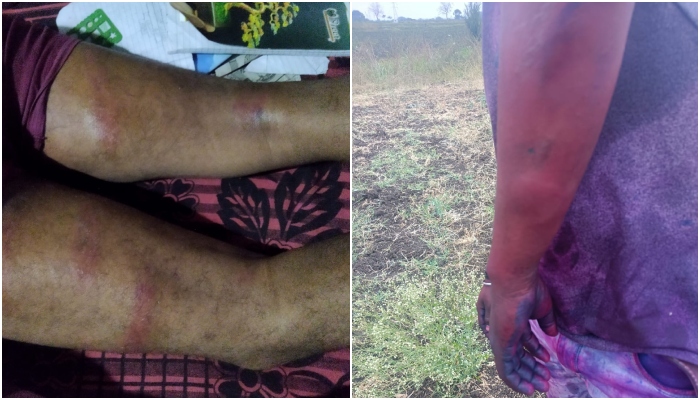
Images obtained by OpIndia
Sharad further informed OpIndia that Mahesh was accompanied by some of his friends on his way to the farm. However, the other ran away from the spot after the Police began brutally beating Mahesh.
Another brother of victim, Kailas, told OpIndia that the police officer named Sandesh Pawar possesses friendly relations with the Muslims in the district. “He also had requested the Muslim rickshaw driver to file case against Mahesh,” he claimed. “Mahesh is a Bajrang Dal member and is active in Hindu activities happening in the city and around areas. We still are unaware of the reason why Mahesh was so brutally beaten,” he added. He also shared a few images of the injuries donned by the victim after the attack.
After the matter escalated, the police officer named in the case, Sandesh Pawar has apologized for the incident, a video of which was shared by Kailas on his Twitter handle.
— Kailas suryawanshi (@Kailassuryawan) March 9, 2023
Sharad meanwhile claimed that two unnecessary FIRs have been filed against Mahesh at present. The victim has been booked under section 160 (Punishment for committing affray) of the Indian Penal Code, 1860. The state headquarters reportedly has taken cognizance of the incident and has directed the officers to submit a detailed report by March 11.
(OpIndia contacted the Yavatmal LCB and also SI Dr Pavan Bansode for their comments in the case. But the calls remained unanswered. The story will be updated once the details are availed)
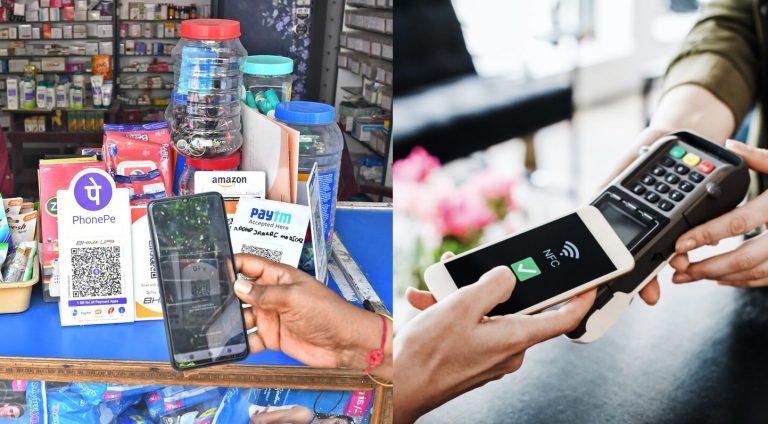
In a country witnessing rapid growth, it comes as no surprise that India also has one of the fastest-growing fintech landscapes in the world, driven primarily by the advancement in digital payments segment. A recent report by PhonePe and Boston Consulting Group concluded that India’s digital payments market will more than triple from USD 3 trillion to USD 10 trillion by 2026.
In 2015, the Indian Union government launched its Digital India programme, with one of the objectives to achieve a “faceless, paperless and cashless” status for financial transactions at grass-root level. In line with this, the use of digital payments continues to be promoted so that each citizen of the country can access digital payment facilities that are affordable, convenient and secure. The introduction of innovative reforms and technological advancements are further accelerating growth at an unprecedented pace.
When one thinks digital payments, UPI – India’s payment gateway – instantly comes to mind. The Unified Payments Interface (UPI) has been the flag-bearer of India’s fintech revolution – launched in 2016 by the National Payments Corporation of India (NPCI).
The UPI is an instant real-time payments system that enables inter-bank peer-to-peer and person-to-merchant transactions through mobile devices instantly.
In a span of just six years, India, primarily a cash-based economy, now leads the world in real-time digital payments, accounting for almost 40 per cent of all such transactions.
The mass adoption of UPI during the COVID-19 pandemic has extended far beyond the urban to even rural India, an effect that left the experts in amazement.
As the success of the UPI grows, so does its attractiveness and acceptance by other countries; for instance, on February 21, 2023, India and Singapore launched cross-border connectivity between UPI and its equivalent in Singapore called PayNow, enabling low-cost and faster cross-border transactions.
This initiative is also closely aligned with the India’s G20 financial inclusion priorities of driving faster, cheaper, and more transparent cross-border payments. It also generated interest from Latin American countries to use the system or one similar to it in their countries.
Along with this, the coming together of the Jan Dhan-Aadhaar-Mobile (JAM) trinity is further fuelling financial inclusion in India like never before. The Pradhan Mantri Jan-Dhan Yojana aims to provide bank accounts to the unbanked and Aadhaar — the flagship product of the Unique Identification Authority of India–is a simple and effective method to verify individuals and beneficiaries based on their biometric information.
These two programmes are closely linked with the mobile. The success of these programmes is evident by the numbers they reflect — the Jan-Dhan Yojana initiative has seen the opening of more than 460 million bank accounts and nearly 99 per cent of the Indian population now has an Aadhaar number.
Now, a global leader in the fintech space, India does not seem to be slowing down its pace in terms of disrupting traditional financial services. Reflecting this is India’s Finance Minister Nirmala Sitharaman’s announcement of the systematic introduction of the digital rupee by the central bank at the Union Budget 2022-2023.
The Reserve Bank of India’s (RBI) latest concept note highlights the digital rupee’s potential design choices and implications. In December 2022, RBI announced the launch of the first pilot for the retail digital rupee; this pilot will test the robustness of the entire process of digital rupee creation, distribution, and retail use in real time. Different features and applications of the eRs-R token and architecture will be tested in future phases of the pilot, based on the insights gained from this one.
In addition, the National Electronic Toll Collection (NETC) system has also witnessed substantial growth. With the FASTag now mandatory for all four-wheeler vehicles across the country at highways for toll collection, digital payments have received and are likely to record a further boost. The NETC is live across at least 429 toll plazas across the country, and more than 36 million FASTags have been issued to date.
The utility service provider, Bharat Bill Payment System (BBPS), offers online and on-ground bill payment services to customers. These include the payment of utility bills such as those for electricity, gas, and water.
Government initiatives aimed at building better infrastructure, particularly in rural areas, will lead to an increasing number of households with electricity and water supply, adding more demand for telecom and gas connections, and subsequently increasing the customer base of BBPS users.
As per a PwC report, by 2025-2026, new biller categories are expected to reach an estimated value of USD 14.5 billion with existing categories still accounting for a majority of the transaction value at an estimate of USD 27 billion.
While the vast majority of these payment solutions work in online mode, geographical barriers and lack of access to internet connectivity can hamper their growth.
Realising this, fintech companies are exploring the concept of offline payments. For instance, India’s largest private-sector lender HDFC Bank is attempting to execute digital payments in offline mode under the RBI’s Regulatory Sandbox programme.
If successful, this could drastically alter the digital payment landscape by leaps and bounds and accelerate financial inclusion in remote areas untouched by internet connectivity.
(This news report is published from a syndicated feed. Except for the headline, the content has not been written or edited by OpIndia staff)
On Thursday, March 9, a video went viral wherein a youth was seen scaling a wall and breaking into a girls’ hostel. As per reports, the youth entered the girls’ hostel of Baba Jaswant Singh Dental College in Ludhiana in the wee hours of Thursday, held a female student at knifepoint, and attempted to molest her.
A young man entered in the girls hostel by scaling a wall of dental hospital & college in #Ludhiana, tried to molest a girl student by putting a knife on her neck. Girl students staged a protest, police investigation going on. pic.twitter.com/RiNeWlv8Bk
The accused was reportedly amongst a group of boys who scaled the walls of the building to enter a girl’s hostel at night. The hostel inmates, alarmed by the invaders, began yelling for help. The men fled the scene when they saw hostel security guards approaching them.
Speaking about the incident, the police said that as per the recordings from the CCTV surveillance cameras, the man who scaled the wall spent nearly 7 to 8 minutes in the hostel building. The police said that they have recorded the girls’ statement based on which they started investigating the matter.
Significantly, following the incident, the females residing at the hostel sat in a protest seeking improved security measures. When queried about this, the police stated that the students stated that this was not the first incident and that similar incidents had occurred earlier. The police stated that they had never received a complaint about such instances earlier, but they are investigating the matter.
The Ludhiana police also verified that the girl, who was held at knifepoint by the accused, was not seriously hurt and escaped with minor scratches. The police added that they are using the CCTV footage to identify the accused.
The migrant workers from Bihar are in the news again. The last time it was discussed was during the coronavirus pandemic when migrant labourers walked back to their homes amid the lockdown. Lakhs of Biharis leave their villages and towns for work in India’s more prosperous states. The thing is, despite tons of news articles and media coverage, political debates and outrages, the ground realities have not changed. If they had, they won’t be migrant workers from Bihar.
Futile promises of employment by the politicians of Bihar
No new big industries have been established n Bihar in the past decades. Without any big industry, labourers from Bihar move to the states of Maharashtra, Gujarat, Tamil Nadu, and Andhra Pradesh seeking jobs. Politicians from various parties cite different reasons for this. For example, Nitish Kumar once said during the 2020 assembly election campaign that Bihar doesn’t have industries because it doesn’t have a coastline. He essentially meant that large industries are established in states that have seashores.
On the other hand, Rashtriya Janata Dal leader Tejashwi Yadav looks at government jobs as the solution to this problem. He had promised to give 10 lakh government jobs in the very first cabinet meeting if his party is voted to power. Nitish Kumar and Tejaswi Yadav are ruling the state in an alliance they formed in August 2022, but the promise is yet not fulfilled despite so many cabinet meetings being held.
With the state government not fulfilling their promise of 10 lakh government jobs, students and young aspirants in Bihar protested for the jobs and the Bihar police lathi-charged the agitating youths. Now the veteran chief minister and young deputy chief minister have shifted their promise from 10 lakh government jobs to ‘generating opportunities for employment for 10 lakh people’.
It is evident in this situation to ponder a thought over the possible ways to stop the Bihari labourers from migrating to other states for jobs. Is government jobs the only way to stop the forced migration from Bihar? Or it is only the big industries that can bring about a change in the situation? Can’t employment be created in the state without big industries? Is it not possible to change the state without special category status or central package?
Bihar’s local industries died an unregistered death in the last three decades
To understand the problem and its root cause, let’s take the example of Kenar Chatti located at a distance of 28 kilometres from Gaya – one of the most crowded cities in Bihar. Once this place was known for the manufacturing of bronze and brass utensils. Traders used to come to Kenar Chatti from different parts of Bihar, nearby states, and even Nepal.
50 local families were directly involved in the work of making bronze and brass utensils. Today this number has reduced to 5 houses. The members of the rest of the families either became hawkers or turned from artisans to labourers. Some members of the families who are still associated with this work have now migrated to other states for earning their livelihoods.
As it happened
During a visit to Kenar Chatti in the year 2020, I met 60-year-old Rajmohan Kasera who said at that time, “As far as I remember, no government ever made any efforts to keep the industry afloat. So many MLAs came here, clicked photos, and went back after assuring us that they will do something to promote the local business. None of them looked back at us. This shattered the hope of our people, so we started doing other jobs. We have to do it to run the families. If government provides proper help and support, the 50 families who used to do this work will be uplifted and the work will be revived.”
In the 2020 assembly elections, politicians in Bihar made big promises to stop migration. But Kenar Chatti’s situation did not change even in 2023. In fact, those big promises were made because the migrant workers who returned home due to Corona were present in the state in large numbers to cast their votes. As the economy recovered from Corona, they again left their homes and went to different parts of the country for their jobs.
Villages in Bihar today are bereft of men of working age. The only males left are the ones too old or too young to travel for work.
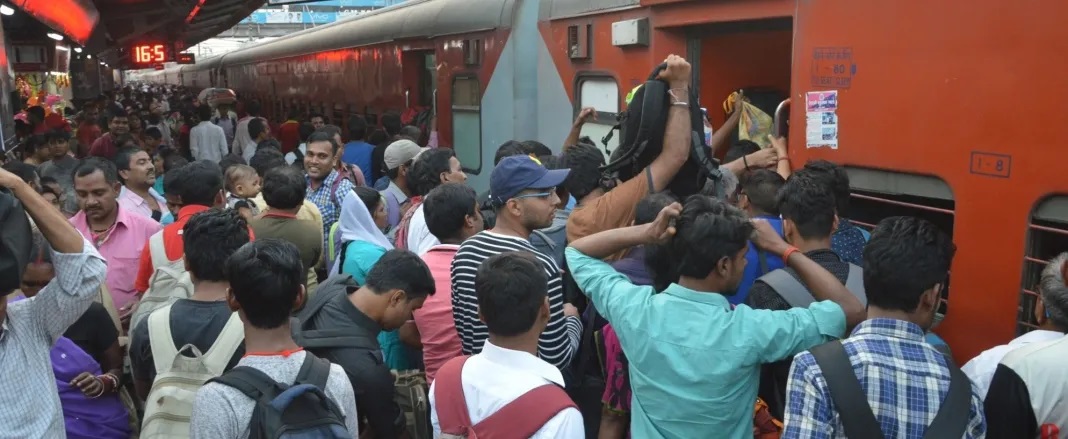
Whether it is a train going to a metro city from Bihar, or coming to Bihar from a metro city, the scenes are always the same. Image Source: OpIndia Hindi
There are so many similar cases in Bihar
This is not just the story of one place called Kenar Chatti. This is the story of the whole Bihar state. Every part of Bihar once had its own local industry. Most of these industries were agri-based. Because of this, farming was not a loss-making deal for farmers like it has become today. Also, migration to other states was not the only option for the workers in Bihar.
Recent migrations from Bihar are way different than the older ones
In his work Migration and Achievements of Maithil Pandits, Jagdish Chandra Jha mentions that Maithil people have always been going to other areas of the country for better opportunities, having greater economic benefits. However, there is a significant difference between the migrations then and the migrations in current times.
In old times people used to bring with them new techniques of agriculture, ways to live a healthy life, and the tricks of setting up domestic industries as they returned to their homes. It was because of this exchange of ideas, knowledge, and techniques that the industry in Bihar was growing despite the usual migrations.
For example, the industry of muslin cloth in Madhubani, cheap clothes in Dulalganj, and paper in Kishanganj flourished despite migrations. Darbhanga became a major production centre of ivory goods. Areas like Khagaria and Kishanganj were known for brass, and bronze utensils. Bhagalpur was famous for Silk while Munger became famous for horseshoes, stoves, and shoes. Purnia was famous for Sindoor and for the production and export of tent house goods.
Local industries continued to flourish for a while after the independence
Apart from this, many public sector undertakings in independent India were also set up in different parts of the state. Sugar mills, textile industries, jute industries, tobacco processing units, dal mills, flour mills, oil mills, etc. are a few to name.
Big private sector companies like Rohtas Industries Limited (Dalmia Nagar), Ashok Paper Mill (Darbhanga), and Hind Engineering Company (Barauni) also started operating in Bihar. A fertilizer factory was established in Barauni in 1946. An oil refinery was also set up here. The railway workshop was started at Jamalpur in Munger and the Bharat Wagon and Engineering Company Limited started its unit in Mokama. The part of Jharkhand carved out of Bihar, was identified with industries and minerals.
Many cities in Bihar had industrial potential
Different cities in Bihar (and Jharkhand) were known for different industries. The below-mentioned list of cities and the industries they are known for briefly explains the extent of various sectors that used to flourish in Bihar and Jharkhand.
Lac Production Industries: Gaya and Purniya
Oil Mills: Patna, Munger, Shahabad
Paper and Pulp Industry: Dalmia Nagar, Samastipur, Darbhanga, Patna, Barauni
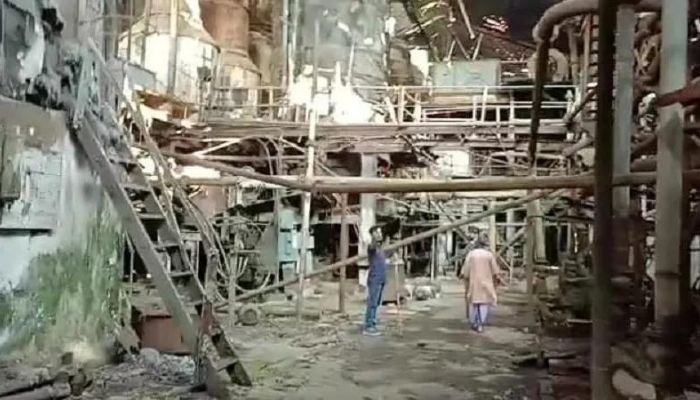
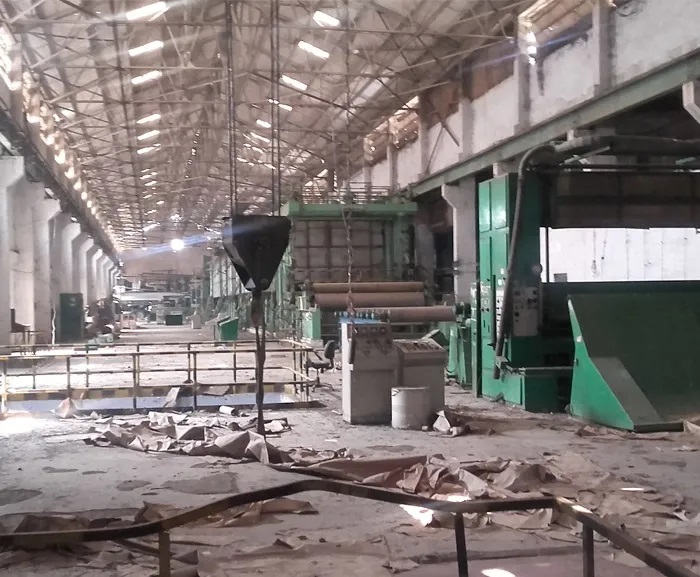
None of these local industries is functioning today. The factories have turned into ruins and scrapyards. Those who were once artisans are working as labourers today, far away from their homes. On various occasions, these migrant Bihari labourers become targets of violence in different states.
Ashok Paper Mill of Darbhanga, abandoned and dilapidated. Image Source: OpIndia Hindi
Who is responsible for the migration of labourers from Bihar to other states?
There is not just a single factor responsible for this situation in Bihar. But the spurt in joblessness that Bihar has witnessed in the last few decades is only because of the policies framed by Congress, Lalu Prasad Yadav’s Jungle Raj, and Nitish Kumar’s alleged “good governance”.
When Congress enjoyed uninterrupted power from the Centre to the state, it neglected these industries in Bihar. Rather, the Congress governments enacted laws that encouraged industrialists to set up industries outside Bihar.
When Lalu Prasad Yadav, the pioneer of the Jungle raj, came to power in Bihar, he started saying openly that development is not his agenda. He would claim that his agenda is to bring ‘social justice’. Due to this, Bihar almost came to a standstill in the race for development. Old industries were destroyed one after the other. Job creation and industrialisation were sacrificed at the altar of appeasement and virtue signalling.
In almost two decades of Nitish Kumar’s regime, there has been a lot of talk of development, but employment opportunities have not been created. This holds true despite Nitish Kumar sharing power with the BJP or with the RJD and other parties. This is why the local aspirants working in various industries in Bihar were forced to go away from their homeland because of a lack of opportunities.
The ‘Push Factor’
Dr Praveen Jha is the author of ‘Coolie Lines’, a book on indentured labourers. He lives in Norway. He told OpIndia in 2020, “If migration is called relocation or travel, it is an opportunity. This is the reason why migration has also been taking place from the prosperous states of India (Gujarat and Punjab). The influx of foreign money has been enriching them. This is called the ‘pull factor’ in displacement. That is when you go to a place for a better opportunity. That is when the better opportunity pulls you towards itself. But the word ‘migration’ is associated with anger when it has the role of ‘push factor’ more than ‘pull factor’. The ‘push factor’ is a major reason for migration from Bihar. The reason for this migration has been the closure of local industries and jungle raj.”
The push factor means the people are forced to leave their native places to survive, to earn a basic livelihood, not for ‘better prospects’ of socio-economic ambitions.
Reasons of migration
Senior sociologist Naval Kishor Chaudhary, a former principal of Patna College, considers both social and economic reasons for this. According to him, migration from Bihar gained momentum due to the following reasons:
1. In the decade of 90s, Bihar witnessed widespread caste discrimination and subsequent violence. This caused a mass migration of different classes from different parts of the affected areas.
2. Industries in the state were closing one after the other and no new businesses were established. This not only stopped new employment opportunities but also eliminated the already available jobs. This forced people to go to other states of the country in large numbers to work as labourers.
3. With changing power equations, the backward classes started tending more toward working as a labourer in a metro city rather than doing a similar job in their villages and towns. Our social structure is such that people quite comfortably do jobs in metro cities that they are otherwise ashamed to do in their own villages or towns. They feel that no one watches them doing it in the city.
4. The abolition of ancestral occupations also forced people to migrate as labourers. It happened in two ways. For example, there was a section of barbers, iron smiths, and potters who were doing their ancestral works in the villages and were not ready to take this work forward. They went to the cities. For those who wanted to stay associated with the ancestral business, there was a crisis of livelihood due to the migration of other classes from the villages. Gradually, they also moved to metros.
5. Every year, floods and droughts also force people in large numbers to migrate from rural areas to work as labourers in metros.
The yarn mill in Pandaul has been reduced to ruins. Image Source: OpIndia Hindi
Effects of certain acts
Senior journalist Surendra Kishor hails from Bihar. He observes that one of the major reasons for this is the Rail Fare Normalization Act. This law was made by the central government after independence and it ended in the 90s. Under this law, the freight rate for the transportation of coal from Dhanbad to Ranchi was the same as it would take to reach Chennai. It encouraged industrialists to set up coal-based industries near the seashore.
Surendra Kishor told OpIndia, “Had this law been there in the British era, there would be no Tata Nagar. Then Tatas would set up their industry in cities like Mumbai. Due to this dishonest approach of the central government, Bihar suffered a loss of at least Rs 10 lakh crore. Industries did not develop as expected in the state. Agriculture has not developed like in Punjab. The population increased. Employment opportunities were not being created at the local level. In such a situation, migration for jobs became a must.”
Will the people of Bihar be able to change this?
The way out to stop migration from Bihar is not just big industries, government jobs, special status, or central government packages. It can be stopped only by reestablishing industries according to different areas of the state. The Yogi Adityanath government is promoting the One District One Product scheme to encourage the flourishing of local industries in various districts across the state. Likewise, efforts can be taken in Bihar too. This is a tried and tested model. The improvement in education standards, vocational training from an earlier age and general entrepreneur-friendly governance can go a long distance in creating job opportunities at different levels.
But, finding solutions to address the crisis is neither a priority for the common people of Bihar nor for the political parties. In such a situation, no one knows when this trend of migrating for jobs will end. Bihar will continue to be a BIMARU state, and the word ‘Bihari’ will be used as abuse until the ‘Bihari’ stereotype is a poor migrant worker in a perpetual state of fleeing, either from his village to a big city, or running from a big city to his village because he is scared to stay there.
The Hindi version of this article can be read here.
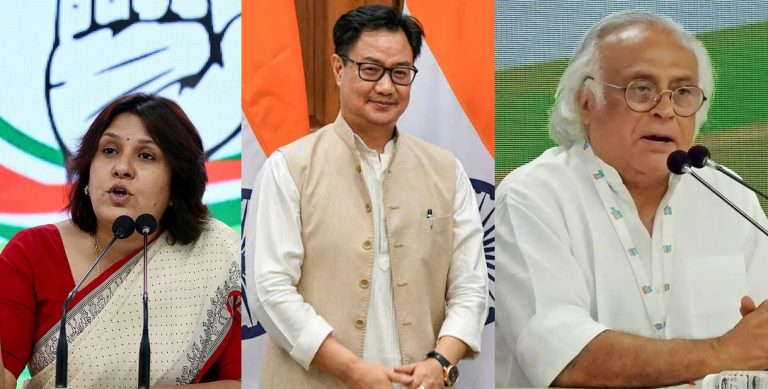
After Union Law minister Kiren Rijiju slammed Congress leader Rahul Gandhi for making anti-India comments in the UK, Congress leaders and supporters have started attacking him online. Several Congress leaders and workers replied to him on Twitter calling him a Rs 2 troll. This was led by Supriya Shrinate, Chairperson of Social Media and Digital Platforms of the Congress party.
While responding to a tweet by Union Minister Kiren Rijiju where he said that Rahul Gandhi is Pappu but foreigners don’t know it, she called him a 2 rupee troll and a pest. Kiren Rijiju has said, “People of India know Rahul Gandhi is Pappu but foreigners don’t know that he is actually Pappu. And it’s not necessary to react to his Foolish Statements but the problem is that his Anti-India statements are misused by the Anti-India Forces to tarnish the image of India.”
Quoting the tweet of Rijiju, she said “You are a ₹2 troll. @KirenRijiju Min of (Out) Law and (In) Justice You owe your existence and relevance to lying about Rahul Gandhi But you know what? The more pests like you lie about him – the clearer it becomes how he rattles the living daylights out of each one of you”.
You are a ₹2 troll @KirenRijiju Min of (Out) Law and (In) Justice
You owe your existence and relevance to lying about Rahul Gandhi
But you know what? The more pests like you lie about him – the clearer it becomes how he rattles the living daylights out of each one of you. https://t.co/DNeSEuLrv2
Kiren Rijiju was pointing to the speech that Rahul Gandhi gave at Cambridge recently where he alleged that democracy was in danger in India under the Narendra Modi government. Rahul Gandhi’s speech at Cambridge was criticized by media across the political spectrum. Kiren Rijiju also pointed to the fact that Rahul Gandhi’s unfounded and vacuous claims of minorities being second-class citizens in India were something that the western media and anti-India forces will use to further their agenda.
Senior Congress leader Jairam Ramesh also joined in attacking the minister, calling him an absolute disgrace. He supported Supriya’s comments, and retweeted her tweet with the comment “Absolute disgrace as a Minister”.
Notably, many other Congress trolls were seen in the comment section of Kiren Rijiju hurling similar abuses. Maskoor Usmani, a Congress leader from Bihar, said that a Rs2/Tweet troller prevails better sense of humour than the minister, and alleged that Rijiju was “shaming the world largest democracy by making such a statement on opposition leader.”
It doesn’t seem a minister of union government tweeting. Rs2/Tweet troller prevails better sense of humor than you!
You’re shaming the world largest democracy by making such a statement on opposition leader!
Several other Congress leaders made similar comments directed towards Kiren Rijiju.
Champu calling someone pappu, truly speaking you are the biggest pappu in our country right now. Nothing to do instead of rubbish comments, remarks & all. you got nothing to show to the people of India, what you have done as a minister of India.
Rahul Gandhi and his obsession with India not being a nation but rather a Union of States doesn’t seem to be fading. He repeated the same thing in his Cambridge talk which was questioned by an IRTS officer and a scholar of Public Policy at Cambridge.
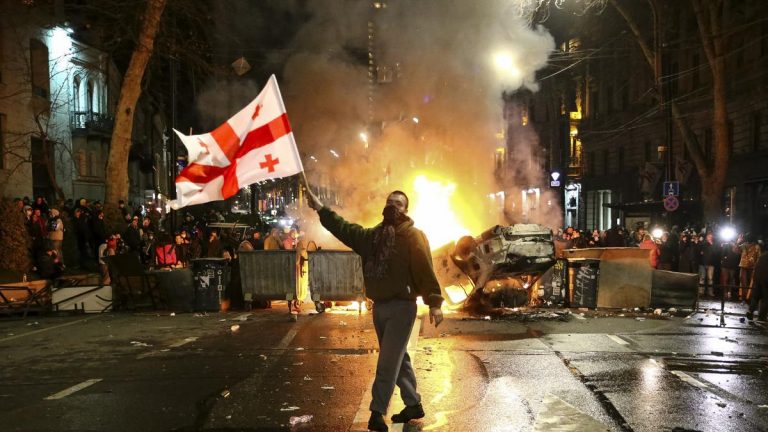
The Georgian Dream ruling party has decided to withdraw its ‘Foreign Agents’ bill after widespread protests over the past 2 days in the country. Georgia saw two days of violent protests across the country over a bill that was called a Russian-inspired authoritarian shift by the opposition. The opposition also said that the bill imperiled hopes of the country joining the European Union.
The ruling Dream party said in a statement that it would “unconditionally withdraw the bill we supported, without any reservations”. It cited the need to reduce confrontation in society, while also denouncing lies told about the bill by the radical opposition.
The EU delegation to Georgia welcomed the announcement, saying it wanted to “encourage all political leaders in Georgia to resume pro-EU reforms, in an inclusive and constructive way”.
Earlier, thousands of protestors led by the opposition had gathered on the streets of Georgia to protest against the law that said that any organization that received more than 20 percent of its funding from abroad will be labeled as a “Foreign Agent”.
The introduction of the bill led to massive protests backed by the opposition outside the Georgian Parliament. The protests against the bill turned violent and Police had to use tear gas and water cannons to disperse the protestors. At least 50 Police officials were injured during the clashes. Many protestors were arrested.
From Rybar: ?? Right now, mass protests are taking place in Georgia after the country’s parliament passed the bill on “foreign agents” in the first reading. The law implies that non-profit organizations and the media receive the appropriate status if more than 20% of their… https://t.co/t6FEGSqZ6Ppic.twitter.com/FSx05TNqte
The ruling government officials said the bill was necessary to root out foreign influence and spies from Georgia’s political scene. They argued that the Georgians have the right to know who funds non-government organizations working in the country. However, the opposition said that it is a law to crush dissent.
Interestingly, the bill has deepened a rift between the ruling party Georgian Dream and Georgia’s President Salome Zourabichvili, a pro-EU woman who has moved away from the party since being elected with its support in 2018.
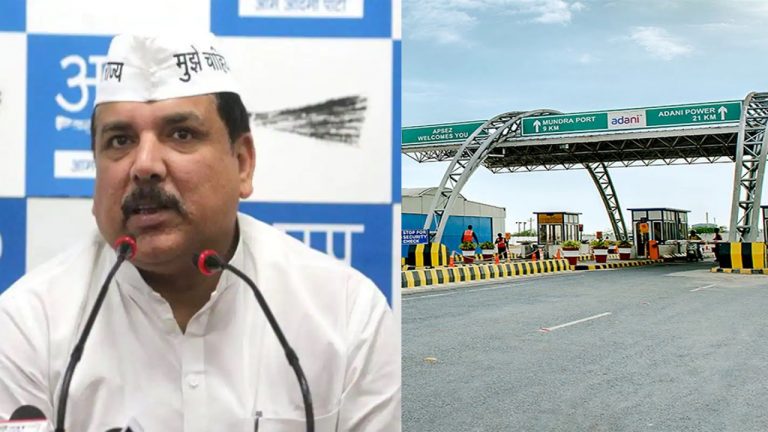
Aam Aadmi Party spokesperson Sanjay Singh recently made an absurd and unfounded assertion regarding the humanitarian relief that India provides to Afghanistan. He claimed that Indian govt didn’t take any action on drugs from Afghanistan seized at Mundra port in Gujarat.
Reacting to a tweet by his advisor and AAP member, Priyanka Kakkar, the Rajya Sabha MP has claimed, “In Adani’s Mundra port, heroin worth Rs 20,000 crore was recovered, but neither the ED nor the CBI had taken any action. India is being destroyed by Taliban’s drug trade.”
अडानी के मुंद्रा पोर्ट पर तालिबान से आई 20 हज़ार करोड़ की हेरोइन पकड़ी गई ED CBI की कोई कार्यवाही नही हुई। मोदी जी तालिबान भारत को हेरोइन से बर्बाद कर रहा है। आप तालिबान को गेहूँ और करोड़ों की सौग़ात दे रहे हैं। तालिबान से BJP और मोदी सरकार का क्या रिश्ता है? https://t.co/ltjOfvMgUR
“You (BJP government) are providing them (Afghanistan) with wheat and crores of rupees. What kind of relationship does the Modi administration have with the Taliban,” he alleged.
However, the allegations of the AAP leaders are completely false, as the Mundra drug haul is being seriously probed by the NIA. The probe agency has filed a charge sheet and then filed additional charge sheets, made several arrests, and the case is going on in the full swing. NIA has arrested both Indian and Afghan nationals in the case. Apart from a large number of people, several companies also have been named as accused in the charge sheets.
Mundra port drug haul case
In September of 2021, the Directorate of Revenue Intelligence (DRI) reportedly confiscated containers carrying around 3,000 kg heroine from Mundra Port, managed by the Adani Group, in Gujarat’s Kutch. The contraband, valued at an estimated Rs 9,000 crore, came from Afghanistan.
There were 7 Iranian citizens aboard the ship and it was loaded in an Iranian port. According to reports, Ashi Trading Firm, situated in Vijayawada, Andhra Pradesh, imported the containers to Mundra Port from Afghanistan. The exporting entity was revealed to be Hasan Husain Ltd., based in Kandahar, Afghanistan.
The investigating agencies discovered that Pakistani drug traffickers transfer the drugs to Iran for further distribution through the Iranian port of Konarak.
પોરબંદરના ડ્રગ્સ કેસમાં તપાસમાં મોટા ખુલાસા, ઈરાનના કોનાર્ક પોર્ટ અને પાસેના બંદરોમાં થાય છે ડ્રગ્સની હેરાફેરી, ડ્રગ્સ કેસમાં પાકિસ્તાનની પણ સંડોવણી pic.twitter.com/Xb28IMNTE6
Machavaram Sudhakar, Chennai resident, and owner of the Ashi Trading Company, and his wife Govindaraju Durga Purna Vaisali, were taken into custody by the DRI.
Subsequent investigation found that a similar consignment had already been imported from Afghanistan in June of the same year by the Andhra firm that was designated as the official recipient of the drugs. The same exporter sent the shipment. The invoice was issued in the name of Kuldip Singh, a resident of Delhi’s Alipur.
Sudhakar informed DRI, “Business was established in August of last year, and the consignment came from Hasan Husain Ltd. in Afghanistan via their local representative Amit.”
Case handed over to NIA and UAPA invoked
The National Investigative Agency (NIA) took over the investigation of the case next month, in October, because of the gravity of the situation and its global implications.
According to the NIA, the heroin shipment came from Afghanistan and was sent as a package of ‘semi-processed talc stones.’ The consignment had come from Iran’s Bandar Abbas Port.
NIA takes over case of seizure of 2988.21 kgs of narcotics at Mundra Port, Gujarat pic.twitter.com/omr6xe3jaR
The investigation agency filed an FIR in response to the Ministry of Home Affairs directive. NIA conducted raids in Chennai, Coimbatore, Vijaywada, and at the premises of suspects involved in the import.
NIA invoked sections 120 B of IPC, section 8 (C), 23 of the Narcotics Drugs and Psychotropic Substances (NDPS) and section 17, 18 of Unlawful Activities (Prevention) Act, 1967 against accused Sudhakaran, his wife Govindaraju, Rajkumar Perumal and others.
More people arrested by NIA
In December, NIA arrested Afghan National Sobhan Aryanfar (28) who lived in Neb Sarai in South Delhi, in relation to the drug case.
NIA Arrests Another Afghan National in Mundra Port Drugs (Heroin) Seizure Case (RC 26/2021/NIA/DLI) pic.twitter.com/wdsauailQt
The agency informed, that he was a part of a drug trafficking ring that imported ‘semi-processed talc stones’ from Afghanistan while concealing the heroin inside.
In August of 2022, NIA made another significant arrest of a Delhi-based businessman, Kabir Talwar, also known as Harpreet Talwar. He is the owner of the Playboy club at the Samrat hotel in Delhi. Another businessman, Prince Sharma, was also arrested by the agency as part of the investigation.
Delhi based Kabir Talwar arrested by @NIA_India in the Mundra Port drug haul. He runs the playboy bar in Delhis samrat hotel! two key accused involved in smuggling of Heroin through import consignments from Afghanistan using maritime route, have been arrested today. pic.twitter.com/CJvhu5R3dU
NIA stated, that Talwar, an Indian drug lord, imported drugs, sold them to different peddlers, and then transferred the proceeds via hawala networks to people in Afghanistan who funded terrorist organizations.
NIA filed chargesheet
NIA filed its initial charge sheet against 16 people, on March 14, 2022. “During investigation it was established that the smuggling of narcotics was carried out earlier as well by the same set of accused persons,” it read.
NIA Files Charge Sheet Against 16 Narco Traffickers in Seizure of 2998.21 kgs Narcotics Drugs at Mundra Port, Gujarat Case (RC-26/2021/NIA/DLI) pic.twitter.com/yiO1qMrf8V
The charge sheet contained the names of Sudhakar and his wife Govindaraju, Rajkumar Perumal, Afghan nationals Mohammad Akhlaqi, Said Hussaini, Fardin Amery, Sobhan Aryanfar, Alokozai Khan and Murtaza Hakimi. The agency also named Pradeep Kumar, a resident of Ghaziabad in Uttar Pradesh.
NIA filed supplement charge sheet
Three Afghan nationals were among the nine individuals named in a supplement chargesheet, the NIA issued in connection with the case, on 29 August of the same year. The people named were previously arrested by the agency.
NIA Files Supplementary Charge-Sheet against 9 Narcotics Traffickers in Mundra Drugs Seizure Case (RC-26/2021/NIA/DLI) pic.twitter.com/TkLDAhNL4A
“The accused charge sheeted today are members of an international drug smuggling network involved in trafficking of heroin from Afghanistan to India for distribution in Punjab, Delhi, Gujarat, UP and other states of India,” disclosed NIA in a statement.
Sarabjit Singh alias Setthi from Hoshiarpur (Punjab), Balwinder Singh and Jasvir Singh from Amritsar (Punjab), Jannat Gul Kaker, Shami Ullah and Mohammad Lal Kaker from Kanduz (Afghanistan), Mujahid Shinwari from Linghara (Afghanistan), and Imtiaz Ahmed and Imran Ahmed from Rampur, Uttar Pradesh, were named in the chargesheet.
NIA filed another chargesheet
In connection with the drug case, the NIA filed another additional charge sheet in February 2023, listing 15 people and seven companies as offenders.
NIA Files 2nd Supplementary Charge-sheet in Mundra Port Narcotics Seizure Case pic.twitter.com/TSsSKTyTjq
The second supplementary charge sheet was filed against Kabir Talwar alias Harpreet Singh Talwar, Prince Sharma, Rah Matullah Kakar, Ishwinder Singh, Jasbir Singh, Shaheenshah Zaheer, Sushanta Sarkar, Vityash Koser, Faridoon Amani, Abdul Salam Noorzai, Mohd Iqbal Awan, Mohammad Hussain Dad, Mohammad Hasan Shah, Machavaram Sudhakar, and Rajkumar Perumal.
Major revelations by the NIA
“The chargesheet was filed in the NIA Special Court, Ahmedabad, Gujarat. We have also charge sheeted seven companies, M/s Aashi Trading Co. (IEC- AOTPG6030R), India based company; M/s Jesus Christ Impex, India based firm/company; M/s Magent India, India based firm/company; M/s V/K Enterprises, India based firm/company; M/s Vyom Fashions (IEC- CXBPP7317K), India based company; M/s Hasan Husain Limited, Afghanistan based company and M/s Habib Shahab Talc & Marble Processing Company, Afghanistan based company,” said an NIA spokesperson.
“During the investigation, it has also emerged that an organized network of syndicate members was being run by foreign-based narcotic traders for importing the heroin-laden consignments into Indian ports (Mundra, Kolkatta) and its further delivery to various warehouses located at New Delhi,” he further stated.
According to complaints lodged by the NIA, money obtained from the sale of heroin was given to members of the Lashkar-e-Taiba (LeT) so they could engage in terrorist activities in India.
He unveiled, “The India based network of Afghan nationals was responsible for hiring these warehouses and for processing/extracting and distributing the heroin once it reached New Delhi. The investigation established that funds generated through the sale proceeds of heroin were provided to operatives of Lashkar-e-Taiba (LeT) for the furtherance of terrorist activities in India.”
As per the agency, Kabir Talwar visited Dubai, United Arab Emirates, frequently and knowingly took part in a plot to use the commercial marine route to bring heroin into India.
“He is running multiple trades in New Delhi, like clubs, retail showrooms, and import firms. These firms are opened by Kabir Talwar in the names of his employees, relatives, and friends, which are solely operated by him. These firms were used for importing narcotics, banned items, and receiving remittances in form of legitimate goods in lieu of his role in the smuggling cartel,” he disclosed.
He added, “Over a dozen such firms have been identified and investigated, including the charge-sheeted firm, M/s Magent India. This company was used to import and receive heroin disguised as semi-processed talc stone from Afghanistan to India.”
He unveiled, that additional research showed a systematic criminal plot, formed by the accused, to smuggle illegal consignments of heroin through international trade lines to India from Afghanistan. “While investigating forward and backward linkages of the crime, a well-oiled network of operatives involved in the import, facilitation, and transport of drug-laden consignments has been uncovered,” he conveyed.
Additionally, it was discovered that shipments were being imported through numerous fictitious or shell import proprietorship corporations set up in India by multiple accused.
Opposition’s baseless accusations on Adani Group
Not only AAP, but Congress and its workers had also blamed Gautam Adani, chairman of the Adani group, of using the port to smuggle the drugs. However, the case’s inquiry found no support for the unsubstantiated accusations.
There are several ports across the Indian coast line, yet drug smugglers only want to use Gujarat. The all important question being, do they consider it safer? #BJPGujaratDrugsModelpic.twitter.com/qJ8JudsYb0
In September 2021, the group released an official statement countering the vicious campaign against them.
Media statement on the malicious social media campaign against the Adani Group on the seizure of illegal drugs at Mundra Port. pic.twitter.com/z4gutdzKyK
The press release clearly stated, “The law empowers the Government of India’s component authorities such as the Customs and the DRI to open, examine and seize any unlawful cargo. No port operator across the country can examine a container. Their role is limited to running the port.”
Sanjay Singh’s groundless claims
Sanjay Singh made the remark notwithstanding the lack of evidence supporting any involvement on the part of the Adani Group or Gautam Adani.
Notably, he is a member of the political party which provides unfair perks to the illegal Rohingya immigrants settled in Delhi. Their leader and Okhla MLA Amanatullah Khan is a known Rohingya supporter.
In January 2020 it was reported how the party was systematically settling illegal Rohingya immigrants in Delhi. During Covid lockdown, Khan, a vocal advocate for the Muslim immigrants, discriminated against the poor Hindus because they didn’t vote for him.
In a viral video from Ahmedabad in December 2022, AAP supporters confessed that the party had given illegal Bangladeshi and Rohingya Muslim immigrants excessive favours.
The reason the Member of Parliament has an issue with the help being delivered to Afghanistan by India is, that his party has a policy of elevating politics above everything, even the most noble of causes. The AAP leader and his party have a history of attacking Prime Minister Modi and the center administration over frivolous issues.
Their animosity towards the prime minister has transmogrified into a nonsensical resistance to every decision, irrespective of how positive, taken by his government.
On Wednesday, March 8, the assembler of Honda automobiles in Pakistan, Honda Atlas Cars announced a complete shutdown of its plant for the month of March due to supply chain disruptions.
In a notice issued to the Pakistan Stock Exchange, the car manufacturer stated that the decision was made since the company’s supply chain has been “severely disrupted”.
“Considering the current economic situation of Pakistan whereby the government resorted to stringent measures including restricting the opening of LCs (letter of credits) for import of CKD (completely knocked-down) kits, raw materials and halting foreign payments, the company’s supply chain has also been severely disrupted by such measures,” Honda Atlas Cars stated.
Since the company is not in a position to continue with its production, it will ultimately be forced to shut down its facility from March 9 to March 31.
It is notable that several companies in various sectors have stopped production in a cash-strapped Pakistan as they ran out of raw materials or foreign exchange and in some cases both. In February this year, Pak Suzuki Motor Company (PSMC), another prominent car manufacturer had announced to shut down its automobile plant from February 13 to February 17 due to a shortage of inventory.
Suzuki motorcycles, sedans, pickup trucks, vans, 4x4s, and other vehicles are locally assembled, produced, and marketed by PMSC along with any necessary replacement parts.
In January, PSMC announced that its plant would be temporarily shut down from January 2 to January 6 and again from January 16 to January 20 due to inventory shortages.
PSMC had to further extend the shut down till February 21. Due to restrictions placed by the State Bank of Pakistan on Letters of Credit (LCs) opening as a result of the continuing depreciation of the rupee, Pakistan’s automobile sector, which is heavily dependent on imports, is currently experiencing a crisis. As Pakistan’s reserves have drastically depleted, industries are experiencing operational challenges.
In December last year, Indus Motor Cars (IMC), the makers of Toyota vehicles in Pakistan had announced to halt production temporarily owing to a delay in import approvals from the State Bank of Pakistan (SBP).
Logistic services suffer amidst forex crisis in Pakistan
As Pakistan’s shattered economy struggles with a foreign exchange crisis, logistics companies serving the nation are being compelled to restrict their services.
Express logistics giant DHL said it was compelled to cease operations in Pakistan as of March 15 for locally billed imports and limit handling outbound shipments to a maximum of 70 kg until further notice due to the significant difficulty in completing currency transactions.
DHL claims that the restrictions have made it incredibly challenging for them to continue offering the full range of product offerings for shipments leaving Pakistan.
On February 27, Virgin Atlantic, a UK-based airline announced that it is suspending its connections between London Heathrow and Pakistan as part of a revised flying programme for 2023.
Lahore flights from London Heathrow (LHR/EGLL) will terminate on April 30 while Islamabad flights will end on July 9.
Skyrocketing car prices
In a country where even prices of essential food items like flour have witnessed a dramatic surge, rising prices of cars are not surprising at all. According to a recent report by Pakistan Business Forum (PBF), car costs in Pakistan have soared by a record-breaking 149%. According to PBF Vice President Ahmad Jawad, this increase is the result of the auto industry’s tendency to base prices on how the US dollar is performing against the Pakistani rupee.
China comes to Pakistan’s rescue
The country is still short of dollars to meet import and other foreign payment obligations. The foreign exchange reserves of the central bank currently total nearly $3.8 billion, hardly enough to meet a month’s worth of essential imports. However, China has stepped in to ‘rescue’ Pakistan as the Industrial and Commercial Bank of China (ICBC) loan inflow is expected to increase the State Bank of Pakistan’s foreign exchange reserves as ICBC has approved an extension of a $1.3 billion loan for the country.
Pakistan-IMF meeting over bail-out fails
The talks for a much-needed bailout package between International Monetary Fund (IMF) and Pakistan failed earlier this month, posing a serious question about the country’s ability to repay international loans. Pakistan is in talks with the IMF on a $1.1 billion funding round, which is part of a $6.5 billion bailout package signed in 2019. While an IMF team was in Pakistan to discuss the deal, the talks collapsed as they failed to reach a staff-level agreement within the stipulated time. Following this, Shehbaz Sharif-led ruling coalition decided to significantly increase tax rates to meet with IMF’s conditions. Adding more to the troubles of Pakistan, IMF recently added a new condition for the much-needed bailout. Reuters cited the resident representative of the IMF as saying that the international financing body had directed Pakistan to assure that its balance of payments deficit is completely covered for the fiscal year that ends in June.
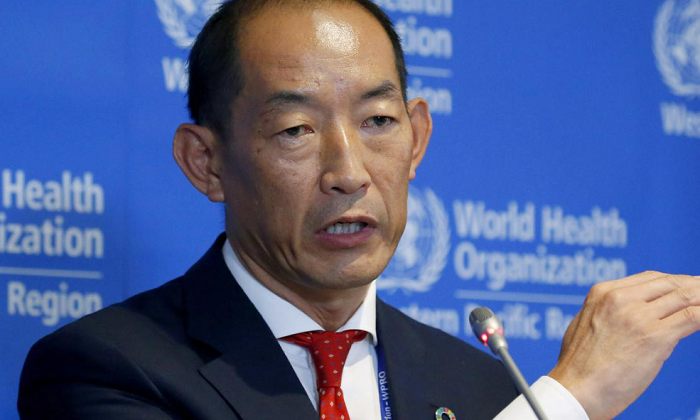
The World Health Organization dismissed its chief representative in the Western Pacific after a US-based news agency revealed that dozens of employees had accused him of partaking in racist, abusive, and unethical behaviour that may have jeopardised the U.N. health agency’s response to the coronavirus outbreak.
In a message to staff members on Wednesday, WHO Director-General Tedros Adhanom Ghebreyesus stated that Dr. Takeshi Kasai, director of West Pacific region headquartered in Manila, has been terminated from his position due to findings of misconduct in an internal inquiry. The removal of a regional director is unprecedented in WHO history.
“This has been an unprecedented and challenging journey for all of us,” Tedros wrote. He announced that voting will start the next month to choose a new regional director for the Western Pacific region.
Kasai harassed employees in Asia on a daily basis, according to a summary of an internal WHO inquiry that was delivered at a meeting of the agency’s executive board this week in Geneva. This harassment included “aggressive communication, public humiliation, (and) making racial comments.”
Leading WHO directors complained that Kasai had cultivated a “toxic culture” and that employees were scared of reprisals to the organization’s highest governing body. If they denounced him, it would indicate that WHO was not trusted.
According to the reports, the authorities also discovered Kasai had falsified at least one performance review of a subordinate. Kasai was fired as a result of an Associated Press investigation that was published in January 2022. The research showed that more than 30 unnamed WHO employees had complained in writing about the director to top WHO officials and members of the organization’s executive board.
The report was based on an internal complaint filed against Kasai in October last year, which described a “toxic atmosphere” with “a culture of systemic bullying and public ridiculing” at WHO’s Western Pacific headquarters in Manila, led by Dr. Takeshi Kasai.
The emergence of COVID-19 in several Pacific countries was attributed by Kasai to his employees’ “lack of capacity due to their inferior culture, race, and socioeconomic level,” according to records and documents. Kasai also made racial remarks towards his workers.
Employees said that Kasai’s authoritarian style led to the departure of more than 55 key staff in the past year and a half, most of whom have not been replaced.
Kasai reportedly unlawfully communicated secret COVID vaccination information with other WHO employees so that his native Japan might use targeted contributions to gain political advantage. Dr. Kasai is a Japanese national who spent time in his nation’s public health system prior to joining WHO, where he has worked for more than 15 years.
Days following the AP article, WHO director Tedros said to the staff in an August email that Kasai was “on leave” and another senior official was dispatched to replace him temporarily.
An AP investigation discovered top WHO management was informed of several exploitation accusations in 2019 but refused to act and even promoted one of the managers implicated. More than 80 outbreak responders working largely under WHO’s guidance sexually assaulted or exploited vulnerable women.
Sophie Harman, a professor of international politics at Queen Mary University of London commented on the matter and said, “What we need now is consistency in how WHO applies the rules on abuse. The survivors of sexual abuse and exploitation from (Congo) are still looking for justice; the WHO has to show them that they matter.”
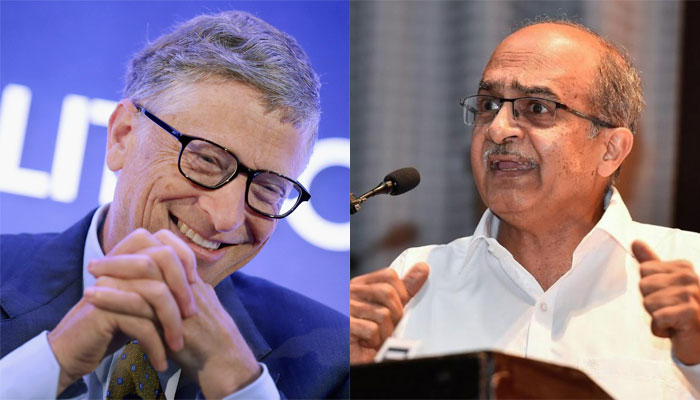
On March 9, controversial aandolanjivi and professional PIL advocate Prashant Bhushan published a video [Archive link] on his Twitter account claiming Bill Gates admitted to promoting untested and dangerous Covid vaccines. He wrote, “Bill Gates talking about how he was uniquely qualified to promote the untested & dangerous Covid Vaccines! It would be funny if the man did not do so much damage to the world. But he is still feted in India. Indian Express recently invited him to deliver the Goenka lecture.”
Watch: Bill Gates talking about how he was uniquely qualified to promote the untested & dangerous Covid Vaccines! Would be funny if the man had not done so much damage to the world. But he is still feted in India. Indian Express recently invited him to deliver the Goenka lecture pic.twitter.com/PV6YlBkwc9
By the time we published this report, his Tweet was seen over 104,000 times, and the video was played over 32,000 times. Bhushan was not the only person to share the video. We found that many other Twitter users also shared the same video.
The clip showed the interviewer asking Bill Gates about his contribution to the world. When Gates said he made the most popular computer operating system, the interviewer said he did not create it but stole it from Gary Kildall for a couple of dollars. She then asked by what authority he spoke extensively about Covid vaccines.
When Bill Gates said he read about it and talked to professionals, she said it was becoming more evident that the medication he was promoting and made billions from, caused countless injuries, deaths, and side effects. She accused him of taking tech from other people, selling products full of bugs, causing damage, and profiting from it in a “spectacular way”. When she asked Gates if he could sleep at night, he left the interview abruptly.
The clip made it look like Gates was uncomfortable with the questions and left the interview. However, upon research, we found that the video was originally posted on TikTok by a user, bdti989. Though the video has been deleted [Archive Link], its title read, “How dangerous AI can be”. The video is an AI-generated video, and all the content was superimposed on the original interview.
Prashant Bhushan and his love for fake news
This is not the first time that the senior lawyer has shared fake or misleading news via his Twitter handle. Back in 2021, Bhushan claimed that the Covid-19 virus is dying a natural death. He advocated that financial resources allocated towards Covid-19 vaccines in Union Budget 2021 ought to be relocated to migrant workers and farmers because Covid-19 was “naturally dying down” in the country.
In October 2022, Bhushan was at it again, he shared a video from his Twitter handle claiming that BJP used Hindus dressed as Muslims to win elections. He shared a video as proof of this claim, saying that a BJP MLA confessed to doing the same. The “BJP MLA” turned out to be Aam Aadmi Party leader Yatin Oza.
Bill Gates interview with ABC
Australian Broadcasting Corporation journalist Sarah Ferguson conducted the interview with Gates. It was aired on January 31, 2023 (local time) during her current affairs show on 7/30. During the interview, Sarah asked about Covid-19 conspiracy theories, Elon Musk buying Twitter, AI, climate change, renewable energy, Gates association with Jeffery Epstein and his pledge to donate almost all his wealth.
In the interview, no question that has been represented in the viral video clip was asked.
Verdict: The video shared by Prashant Bhushan is fake.