Home Blog Page 296

As Rahul Gandhi pretends to be a well-wisher of students, here is how they were tortured, imprisoned or killed by his grandmother during the Emergency

50 years ago, on 12th June 1975, Justice Jagmohan Lal Sinha from the Allahabad High Court delivered an extraordinary verdict that altered the trajectory of Indian politics and history for generations to follow. Prime Minister Indira Gandhi’s membership in Parliament was revoked and she was prohibited from holding political office for six years.

She was found guilty of fraud during the general elections in 1971 after a case was filed by Raj Narain, who had been defeated by her. However, she refused to give up her Raebareli seat. A disgraced Indira subsequently persuaded President Fakhruddin Ali Ahmed to declare an internal emergency, thirteen days later, in accordance with Article 352 of the constitution.

President Fakhruddin Ali Ahmed (Source: Manorama Online)

A national emergency (NE) was announced on 25th June 1975 that lasted until March 1977. She enforced a period of blatant authoritarianism as a result, imprisoning her political rivals, suppressing the media, violating human rights, brutalising students, disregarding fundamental rights, torturing and murdering citizens in cold blood and even mangling the Constitution.

No aspect of the emergency was devoid of shock, however, her unprecedented assault on defenseless students is especially reprehensible. The government apparatus of a self-proclaimed strong leader, who was even referred to as the “Iron Lady” by her party members and sycophants, was unleashed to target young boys and girls whose primary goal at that point in their lives should have been to pursue education and create a future for themselves.

However, they found themselves obligated to counter a regime that brought about a dark chapter in India’s history, leading to harsh curbs on individual and institutional freedoms including severe media censorships.

It has been the history of the Congress party and especially of the Gandhi family to brutally suppress voices of dissent. Artists and students have always suffered when they raised their voice against the Gandhis and the Congress. Yet, Indira Gandhi’s grandson, Rahul Gandhi, pretends to be a well-wisher of students, merely to use them as a tool to gain power. In reality, Rahul Gandhi is no different from his grandmother who tortured and even killed students during the Emergency. The dictatorial streak never ended.

He never has, so far, addressed the issue of the suppression of students under the reign of his grandmother either. He clearly does not possess any genuine concerns for the students and utilizes them as a means to further his political agenda and attack the saffron party.

Interestingly, he does not only speak to students in India, but also abroad, to raise awareness about the “wrong” policies of the government, yet, his party’s own record is never referenced in these events as he desparately tries to paint Congress as pro-students and BJP as their adversary. From raking up the bogey of saffronization to fueling language politics, the Gandhi scion has executed all measures to incite the students while remaining silent about the atrocities of the emergency during which they were truly oppressed.

Rahul Gandhi calls NEP 2020, a weapon to communalise

Rahul Gandhi claimed that the National Education Policy 2020 was implemented by the center without seeking input from teachers and students, in 2021. He added that it was being used as a tool to spread a specific ideology and communalize Indian society. “An education system is for our students and it is run by our teachers. If we are going to have any policy made for the education system, then, it has to come from a conversation with students and professors. Unfortunately, this was not done.”

Rahul was talking to college professors at Saint Xavier’s College in Tirunelveli of Tamil Nadu before the assembly elections in the state. “There is too much power is being centralised in one institution (in the NEP). This is going to damage the education system. The positive side is that it is reasonably flexible on many counts but is a weapon to communalise, to push a particular ideology into Indian society,” he charged.

The parliamentarian added, “I don’t believe that education should be only for financially strong people. When we come to power, we are going to push for scholarships in education.” He claimed, “You don’t want to necessarily remove religion from the discourse. You want all religions to be part of it. As long as ideas are competing without hatred and anger, there is no problem. The problem is when you tell someone that you cannot open your mouth because you are from a certain religion,” in response to a query.

“The Government of India says that they represent Hinduism but a lot of the ideas they espouse have nothing to do with the religion. Nowhere does it say insult, kill people,” he proclaimed, as part of his habitual practice of only insulting the majority religion and its adherents under the guise of slamming BJP and the centre.

“One organisation is trying to destroy the Indian education system, and that organisation is the RSS. If our education system falls into their hands, the country will be destroyed and employment will be finished,” the Congress functionary announced as he tried to instigate the students by invoking the fabricated fear of RSS at Jantar Mantar during a protest arranged by National Students Union of India (NSUI) in March of this year.

The protest was directed at the University Grants Commission (UGC) draft rules, the National Education Policy (NEP) 2020 and the alleged paper leaks. He claimed that public universities are about to come under the same kind of control as the RSS, which is appointing its “nominated candidates” as vice chancellors in universities across the country.

“A few days ago, the Prime Minister spoke about the Kumbh Mela. It is good that he spoke about the Kumbh, but I wanted him to speak about employment. Your government has made the youth of this country unemployed and you should speak about that too,” he added.

He delivered additional rhetoric regarding RSS and the industrialists Adani and Ambani before concluding his speech by expressing solidarity with the students and assured, “We are all united and we will fight together.”

Rahul Gandhi and his political coalition’s tendency to invoke RSS and Hindutva ideology to criticize the BJP, regardless of the truth, is neither novel nor original. The Modi government has consistently clarified that the entire policy, including the three-language formula, will only be enacted with the approval of students and their teachers, however, he never allows facts to interfere with his propaganda.

Furthermore, aside from the propaganda deeply embedded in hatred, he lacks any proof to substantiate his ridiculous claims against the RSS.

Rahul Gandhi tries to provoke students over NEET exam

The Raebareli MP argued last year that the medical undergraduate entrance exam was “designed to suit rich students” and was more of a “commercial exam” than a “professional one,” in the lower house.

He insisted, “NEET students spend years and years preparing for their exams. Their family supports them financially and emotionally, and the truth is that NEET students today do not believe in the exam because they are convinced that the exam is designed for rich people, not meritorious people. I have met several NEET students. Every single one of them tells me that the exam is designed to create a quota for rich people and to create a passage for them into the system and is designed not to help poor students.”

He had earlier issued a video in which he addressed candidates for the National Eligibility-cum-Entrance Test (NEET) as well as other competitive exams and accused the centre of avoiding a discussion on paper leak in the parliament. “The idea behind the discussion was to get a resolution to this issue. It is unfortunate the government didn’t want it. It seemed to me the direction was directly from the Prime Minister,” he stated.

Rahul further charged, “It is sad the Prime Minister of India, who should be leading the discussion and should be telling us about his opinion and what he is going to do, simply doesn’t want a debate. We don’t want to fight the government, we want to place our views on the table.”

“I tried to raise it in Parliament, of course I was not allowed to speak. It is clear there is a systemic problem and there is a huge amount of corruption and we simply cannot continue like this,” he alleged while reiterating that there was a paper leak and everyone knew about it.

He had previously attacked PM Modi and declared that even before the latter took power for a fresh term, the “irregularities” in the NEET-UG medical entrance examination had crushed the hopes of over 24 lakh students. “We had pledged in our manifesto to give students ‘freedom from paper leak’ by making a law.

The Congressman enphasised, “Six students from a single exam centre topped the exam with maximum marks, while many got such marks which are technically not possible, but the government is continuously denying the possibility of paper leak.”

“Today, I assure all the students of the country that I will become your voice in the Parliament and strongly raise the issues related to your future,” he conveyed and added that the youth have expressed faith in the I.N.D.I. Alliance which will not let their voice be suppressed.

Notably, the National Testing Agency denied any anomalies and maintained that some of the factors contributing to the improved scores were the modifications made to the NCERT textbooks and the grace marks for students who were late for the exam.

The issue of paper leaks indeed is a harsh reality that requires firm action, however, rather than addressing the problem, Rahul appears more interested in exploiting it for political gain which clearly demonstrates his real intentions behind raising these matter.

Rahul Gandhi’s unannounced visit to DUSU sparks row

The former Congress supremo frequently engages with students from different educational institutions to present his party as a supporter of their interests, while criticizing the BJP government’s actions as detrimental to students. Nevertheless, a similar incident recently triggered significant backlash in the national capital.

Student representatives protested and university administrators voiced strong objections to his unplanned trip to the Delhi University Students Union (DUSU) office and interactions with students, last month. He spent more than an hour at the DUSU office, which was surrounded by security guards during that period, according to a statement from the university.

Unsurprisingly, he extended his infamous caste politics to the varsity, which appears to be the only cornerstone of his party’s political strategy after suffering repeated defeats at the hands of PM Modi and the BJP.

Rahul reportedly urged students from the Scheduled Castes (SC), Scheduled Tribes (ST), and Other Backward Classes (OBC) to actively participate in building a fair and inclusive educational environment by taking inspiration from Dr BR Ambedkar’s teachings to “educate, agitate, and organise.”

Ronak Khatri, NSUI leader and DUSU president conveyed, “The students raised concerns over caste-based discrimination, lack of representation of marginalised communities in faculty positions and their exclusion from jobs in top companies.”

However, the visit was denounced by the institution, which also noted that it was the second time he had visited without warning. The university’s proctor Rajni Abbi Rajni Abbi issued a notice and highlighted, “The DUSU secretary was not allowed to enter her office and was not let in by National Students Union of India (NSUI) students. There were some students inside the DUSU secretary’s room who were locked and were subjected to harassment by the NSUI members. Strict action will be taken against students involved in this.”

Rahul pretendts to be devoted to student issues, especially for those from the lower levels of society and he never passes up a chance to express the same by attacking the government. Nevertheless, he often fails to live up to his own words, as clearly illustrated by the DUSU incident. His concern for students is limited to their potential benefit to him politically, otherwise, he shows no regard for their harassment by his party members.

He even wrote to PM Modi on 10th June to discuss the dire living conditions in the residential dormitories for students from underprivileged families and the delays in the distribution of post-matric scholarships for them, after he went to a university hostel in poll-bound Bihar.

“I request you to resolve two critical issues which hinder education opportunities for the 90% of students who are from marginalized communities. Firstly, the conditions in residential hostels for students from Dalit, ST (scheduled tribe), EBC (extremely backward classes), OBC (other backward classes) and minority communities are deplorable,” he stated.

The shadow of the Bihar election is prominently visible in his comments. He is a shrewd politician who knows how to capitalize on any opportunity to create an impression on the voters. It is simply that people are able to see through him and he is unable to deceive them to secure votes for his party’s rise to power.

The grim era of Emergency: How students were treated under Congress rule

The aforementioned instances are just a few among several and illustrate Rahul Gandhi’s attempts to politicize matters concerning education and students while attributing blame to the BJP for political gain. However, he fails to acknowledge the egregiously anti-student actions of his own party during the emergency, which have been inscribed in the dark annals of history.

The Maintenance of Internal Security Act (MISA) was widely abused. Ironically, the former Chief Minister of Bihar and ex-union minister, Lalu Prasad Yadav, who is currently a part of Congress-led I.N.D.I. Alliance, named his eldest daughter after the act to commemorate the hardships he experienced during that period.

Kasu Brahmananda Reddy (centre), the home minister who signed a letter seeking the president’s assent for imposing internal emergency. (Source: Manorama Online)

People were detained for no other reason than outright victimization, false accusations and vague suspicions. The controls and gags immediately became unacceptable to young people including students. Their leaders were arrested and imprisoned with the exception of those who supported the grand old party.

Consequently, the youth rose up against the tyranny of Indira’s government and their protest was met with ruthless crackdown. Many students fell victim to the violence inflicted in the name of crimes that were never validated, leaving their families in despair as they mourned the uncertain fate of their children.

On 1st March 1976, P. Rajan, a student at Calicut Regional Engineering College, was arrested by the police for an unproven offense. He was later found to be dead “while in unlawful police custody at the Kakkayam police camp on 2nd March 1976, as a result of continuous police torture with iron and wooden rollers.”

The returns filed in the form of affidavits by the respondents, including the former chief minister, K Karunakaran, acknowledged this before a division bench of the Kerala High Court, consisting of Justice P. Subramanian Poti and Justice V. Khalid, during the hearing of the habeas corpus petition submitted by the father of the victim, TV Eachara Warrier.

His corpse was disposed of and has yet to be found. It was the lengthy and solitary battle of Eachara that uncovered the truth regarding his disappearance. Rajawardhan, a sudent leader, was brutally thrashed until he passed out and vomited blood. He did not, however, receive any medical care from the authorities.

“Aeroplane ” assault on students

According to multiple accounts, the “aeroplane” was the police’s “favorite” method of torture in Karnataka. The victim was bound by securing their hands behind their body with a rope and then hauled many feet above the ground while the rope was pulled toward the ceiling using a pulley. The person hung midair as their hands were tied behind their back.

Young Belgaum college students were hanged from the ceiling via this method and tortured to the third degree. They were rendered unconscious by the intense pain. Puttu Swamy, Padmanabh Harihar and Shrikant Desai, three student leaders in Hubli were assaulted and underwent same torture. Student leader Ravi was detained, battered, kicked and suspended as an “aeroplane” in Mysore as well.

On 12th November 1975, Udaya Shankar, a student from Canara College, was taken by the police without a warrant, in Mangalore. He was thrashed, caned and kicked until his body was left with red and blue marks. He was also denied food. These acts of cruelty occurred in the presence of Superintendent of Police. Udaya was later tormented employing the “aeroplane” technique three times.

Another student, Shrikant from Bangalore was also attacked and subjected to “aeroplane” torture. Student leader, Sesha, was covered entirely with poisonous caterpillars. Shimoga (Shivamogga) students were lathicharged.

Delhi University Union Secretary Hemant Kumar Vishnoi was captured while having a picnic in the Buddha Gardens of Delhi with other students. They beat him and hung him upside down. His bare soles were covered with burning candles and his nose and rectum were covered in chili powder. However, he refused to “confess” to a fictitious conspiracy against Indira Gandhi in spite of the cruelty. All of this occurred despite the fact that he had no charges against him. The agony caused his entire body to swell.

Another Delhi University student, Mahavir Singh, suffered torture and abuse to the point where his skin began to react to even the clothes he wore. Another pupil of the institution, named Shiv Kumar Sharma was made to breathe in chili powder. Rods, shoes and rifle butts were also used to pound him. Ashwini Kumar, a student leader, was forced to lie down at the police station while a constable in ammunition boots danced on his chest.

Furthermore, more than 200 Delhi University teachers were taken into custody on 26th June 1975 alone.

On 23rd June 1976, Jawaharlal Nehru University student Jasbir Singh was apprehended and he detailed the abuse he suffered in his statement. He described how, from 6 pm till midnight, he was brought into a police station room and thrashed with clubs, boots and slippers. The following day, two chairs were attached to a pole and his wrists and feet were chained to it as he was left hanging between them.

He began to spew blood as he was swung on it and shoved side to side. Police repeatedly threatened him that his body would be tossed into the Yamuna River, where no one would ever know he had died. The pain and misery dragged on for days.

The corrupt Congress administration’s brutality on a student

A year before to the declaration of Emergency, Ashwini Kumar Choubey, who is currently a Union Minister, was introduced to state terror. The Abdul Ghafoor administration in Bihar targeted him because, as the head of the Rashtriya Swayamsevak Sangh (RSS) unit at Patna University, he actively supported freedom fighter Jayaprakash Narayan’s movement against corruption and misrule.

Ashwini Kumar Choubey (Source: Zee News)

Aside from his dedication as an activist, Choubey gained recognition for exposing Ghafoor and the then-finance minister Daroga Rai’s involvement in scams pertaining to sugar mills. Predictably, the government persecuted him in retaliation. “Congress goondas and the police had planned to finish me,” he unveiled.

He was arrested by the police on 12th June 1974, charged with DIR (Defence of India) act and taken to the Phulwarisharif Jail outside of Patna. The night was one of unspeakable horror. Choubey was propped upon a massive hot iron pan used to make chapatis, beaten with lathis and tortured with blazing iron rods.

The police also attempted to employ spikes to blind him. Afterwards, he was “disposed of” and wrapped in a sack. At the moment, other activists broke into the jail. Choubey awoke in the hospital four days after the occurrence, suffering from serious burns and kidney damage. Afterward, he was arrested again and charged under MISA.

With repeated calls for a public curfew, morchas and dharnas demanding the ousting of the government, JP’s campaign had gained traction by the time the Emergency was declared. The state arrested, imprisoned and tortured leaders across the nation in retaliation. Unfortunately, it Choubey’s time on 12th July 1975 when he was taken to Arrah Jail after being apprehended while attempting to enter Patna Science College secretly to take his B.Sc. Hons. (Bachelor of Science with Honours) examinations.

His incarceration was a recurrence of his previous imprisonment experiences. He was transported from Arrah Jail to Buxar Jail, where he was not given food or water during the trip. He was tortured and placed in a cell near the mentally challenged section of Buxar Jail. The cell was stinky, gloomy and mosquito-infested. Choubey was close to death after five months under these conditions.

Eventually, he was transferred to Patna Medical College, where he spent the following 11 months in a hospital under police control until the emergency ended.

Congress govt’s atrocities on students during JP movement

The Gujarat Congress government was overthrown by the Nav Nirman movement, which also witnessed the arrest of 326 students as the cops resorted to tear gas and lathicharge. Afterward, political student organizations including Akhil Bharatiya Vidyarthi Parishad (ABVP) of the Jana Sangh, Samajwadi Yuvajan Sabha (SYS) from the Samajwadi Party and Lok Dal joined the Jayaprakash Narayan (JP) movement.

Jayaprakash Narayan Movement (Source:The Hindu)

All India Students Federation (AISF) of the (Communist Party of India) CPI also became a part of it. A countrywide strike was called by opposition groups in 1973. Due to their involvement in the movement, eight students were killed on 17th August 1973, when police targeted agitators in Bhopal, the capital of Madhya Pradesh. Additionally, the Raina Enquiry Commission confirmed that the Madhya Pradesh Congress government’s actions were excessive and it had not handled the matter appropriately.

Student leaders from throughout the state were invited to a convention hosted by the Patna University Students Union on 18th February 1974. They organized the demonstration under the name Bihar Chhatra Sangharsh Samiti (BCSS). Lalu Prasad Yadav was selected as the president, Sushil Kumar Modi, Narendra Singh, Bashistha Narain Singh, Chandradeo Prasad Verma, Mohammad Shahabuddin and Ram Vilas Paswan were among its prominent youth leaders. Their requests included meals in dorms and education.

Jayaprakash Narayan during the Emergency. (Source: KnowLaw)

The Bihar Assembly was gheraoed by students on their call on 18th March 1974, a significant moment in the Jayaprakash Narayan movement. Three students were killed after police opened fire when clashes broke out. All around Bihar, protests broke out calling for Ghafoor to be ousted from his position. Jayaprakash Narayan intensified the demonstrations, demanding democratic reforms and integrity in public life, when eight more students were slain by police shooting on 12th April.

Horrors of Emergency

After the glory of the 1971 victory over Pakistan faded, the brutality of Indira’s regime was witnessed by all during the Emergency.

Approximately one million people, including members of opposition political parties, journalists, academics, activists and community members were arrested under MISA and held without charge or trial for up to 18 months. The act infringed upon fundamental human rights and freedoms guaranteed to the people by the Indian Constitution.

The Emergency (Source: KnowLaw)

During the 21-month emergency, 1,40,000 people nationwide were arrested without charge or trial, according to reports provided by Amnesty International. No one was spared from the wrath of the Congress government including socialist stalwarts Madhu Dandavate and Shyam Nandan Mishra, former deputy prime minister LK Advania nd former prime minister Atal Bihari Vajpayee.

A staggering 6.2 million men in India underwent sterilisation within a single year, a figure that is “15 times greater than the number of individuals sterilised by the Nazis.” A plane was even hijacked and later the action was shamelessly defended in the Parliament.

Her grandson too frequently transforms every student issue into a political campaign against the BJP, accusing the government of targeting students and suppressing their voices. However, much like his grandmother, Rahul Gandhi too has a dictatorial streak who views students as a tool for politics and a means to achieve power. For example, in 2011, a student was arrested merely for mocking Rahul Gandhi. In the same breath, Rahul Gandhi himself supported “students” like Umar Khalid after seditious statements like “Bharat Tere Tukde” were chanted in JNU. It is pertinent to remember that Umar Khalid then went on to mastermind the Delhi 2020 anti-Hindu Riots in which Congress workers were also involved, including a close aide of Rahul Gandhi himself. Essentially, just like his grandmother, Rahul Gandhi uses students, arresting and persecuting them when it suits his politics and supporting the worse elements who pose as students when it suits his politics.

The unfounded allegations he directs at the present government account for not even 1% of the anguish and suffering they experienced during the Emergency and even before that, when they were subjected to the most severe punishments and had to sacrifice their lives just for speaking out against the corrupt practices of Congress, in a democracy.

The democracy which the Congress claims to bestow upon the nation and frequently vocalizes is in jeopardy since they are not in power. The fact remains that the only time Indian democracy has been sincerely threatened was during Indira’s leadership in the Emergency.

Canada’s intelligence agency finally acknowledges that Khalistani extremists are using Canadian soil to fund and plan violence in India

For the first time ever, Canada’s premier intelligence agency, Canadian Security Intelligence Service (CSIS) officially acknowledged that Khalistani extremists are using Canadian soil to promote, fundraise, and plan violence in India.

CSIS released its annual report on Wednesday, outlining some key concerns and threats to Canada’s national security.

Canada intelligence agency CSIS report categorically states, “Khalistani extremists continue to use Canada as a base for the promotion, fundraising or planning of violence primarily in India.”

India has been raising concerns about Khalistani extremists operating from Canadian soil for years, but Canada had largely turned a blind eye to the issue.

The CSIS report confirmed that Canada has become a safe haven for anti-India elements, validating India’s concerns that have been raised for years.

This comes a day after Prime Minister Narendra Modi and his Canadian counterpart Mark Carney “agreed to take calibrated steps to restore stability to the relationship” and decided to restore High Commissioners to each other’s capitals.

At the G7 Leaders’ Summit in Kananaskis, Alberta, Canadian Prime Minister Mark Carney held talks with Prime Minister Narendra Modi and both leaders agreed to designate new high commissioners, with a view to returning to regular services to citizens and businesses in both countries, according to a press release from the Prime Minister of Canada.

The Politically Motivated Violent Extremism (PMVE) threat in Canada has manifested primarily through Canada-based Khalistani extremists (CBKEs) seeking to create an independent nation state called Khalistan, largely within Punjab in India.

The report noted that since the mid-1980s, the PMVE threat in Canada has manifested primarily through CBKEs.

“A small group of individuals are considered Khalistani extremists because they continue to use Canada as a base for the promotion, fundraising or planning of violence primarily in India. In particular, real and perceived Khalistani extremism emerging from Canada continues to drive Indian foreign interference activities in Canada,” the report reads.

This revelation, part of CSIS’s latest annual report, has reignited concerns about foreign interference and extremist activity within Canada, particularly in the context of its sensitive diplomatic relationship with India.

Canada’s own intelligence security has confirmed what New Delhi has long maintained — Canada has become a safe haven for anti-India elements.

The report called for sustained vigilance against both external influence campaigns and domestic extremist financing networks

“These activities attempt to steer Canada’s positions into alignment with India’s interests on key issues, particularly with respect to how the Indian government perceives Canada-based supporters of an independent homeland that they call Khalistan,” added the report.

Tensions escalated further when former Canadian Prime Minister Justin Trudeau claimed that his government had “credible allegations” of India’s involvement in the killing of Khalistani terrorist Hardeep Singh Nijjar in Canada in 2023.

India has strongly denied the allegations, terming them “absurd” and “motivated,” and has accused Canada of giving space to extremist and anti-India elements.

In the aftermath, India recalled six diplomats from Canada after they were declared “persons of interest” by Canadian authorities investigating Nijjar’s killing. Nijjar was shot dead outside a gurdwara in Surrey, British Columbia, on June 18, 2023.

“Links between the Government of India and the Nijjar murder signals a significant escalation in India’s repression efforts against the Khalistan movement and a clear intent to target individuals in North America, Wednesday’s report read.

“Real and perceived Khalistani extremism emerging from Canada continues to drive Indian foreign interference activities in Canada, the report added.

Canadian Prime Minister Mark Carney faced criticism for inviting Indian Prime Minister Narendra Modi to the G7 summit, with some Sikh advocates and his own MPs expressing disapproval. However, Carney defended his decision, citing India’s significance in global affairs.

Carney emphasized India’s status as the world’s fourth-largest economy and most populous country, making it a crucial player in addressing global challenges. 


(This news report is published from a syndicated feed. Except for the headline, the content has not been written or edited by OpIndia staff)

India’s indigenous fifth generation fighter jet moves towards reality: ADA invites expressions of interest from companies around the world to develop AMCA

In a major step in developing an indigenous fifth generation fighter aircraft, the Aeronautical Development Agency has issued an invitation for ‘Expression of Interest’ from companies around the world for the development of Advanced Medium Combat Aircraft. This comes just 3 weeks after the defence ministry approved APCA Programme Execution Model through partnership with public and private industry.

As per the notification issued by ADA, “the Objective of this EOI is to short list Indian Companies (owned & controlled by resident Indian citizens) who are technically capable for the Development, building of Prototypes, supporting Flight Test and Certification of AMCA. The applicant may be a Single Company, Joint Venture or a Consortium of companies, compliant with all applicable Indian Laws & Regulations. It should also demonstrate experience and competence to execute projects of comparable technical complexity and scale.”

ADA states that the applicant companies should have the “capability to absorb the design of AMCA and have adequate experience in the field of Development & Engineering, Manufacturing, Integration, Fabrication, Testing, Quality Management, Customer Support etc. with a manufacturing facility or strategic tieups with another Supplier with up a manufacturing facility for series production.”

The ADA states that “all participating entities will be assessed based on the eligibility criteria and the evaluation matrix provided in the EOI document.”

The duration of the contract for Development, Prototyping, Flight Test and Certification of AMCA shall not exceed eight years from the effective date of contract. A pre-Expression of Interest meeting will be held in the 1st week of July 2025 for clarifications.  The deadline for submissions is 16 August 2025.

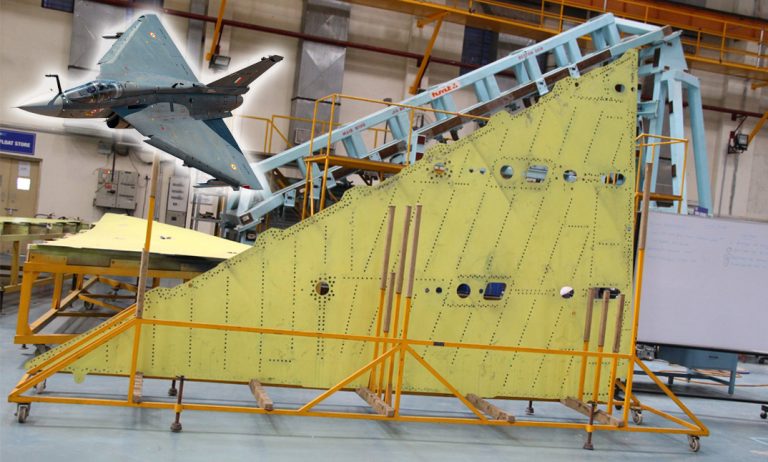
As per the current roadmap of the fifth generation stealth fighter, the first prototype is expected to take flight by 2029. Full development should be completed up by 2034, with production likely to begin a year later. As per DRDO, HAL will complete manufacturing the current orders for Tejas Mark-1 and Tejas Mark-2 jets.

The shortlisted entity will need to set up a dedicated manufacturing facility to support eventual mass production of the AMCA. Several major companies are expected to submit bids, including Tata Advanced Systems, Larsen & Toubro, Adani Defence and Aerospace, and the Mahindra Group. HAL will also be a contender, but it will have to compete with private entities, and its participation in eventual production is not guaranteed.

Like Tejas LCA, AMCA is also being developed in two phases. The Mark-1 version will be powered by American GE F-414 engine, which will also power Tejas Mark-2. AMCA Mark-2 is planned to be powered by an indigenous engine, and will be a sixth-generation aircraft.

Govt of India launches Operation Sindhu to evacuate Indian nationals from Iran, first batch of 110 students evacuated via Armenia to arrive soon

Amid the ongoing Iran-Israel war, the govt has launched an operation to evacuate Indian nationals from Iran. A press release issued by the Ministry of External Affairs said that Operation Sindhu has been launched in view of the deteriorating situation as a result of the ongoing conflict between Iran and Israel.

The MEA said that as a first step, the Indian Embassy has evacuated 110 Indian students from northern Iran, assisting them in safely crossing over into Armenia on 17th June 2025. The students travelled by road to the Armenian capital, Yerevan, under the supervision of Indian Missions in Iran and Armenia. These students departed Yerevan on a special flight at 14:55 hours on 18th June 2025 and will arrive in New Delhi in the early hours of 19th June 2025, as part of the initial stages of Operation Sindhu.

The statement said that the Government of India is grateful to the Governments of Iran and Armenia for the smooth facilitation of the evacuation process.

“India accords highest priority to the safety and security of Indian nationals abroad. As part of the ongoing operation, the Indian Embassy in Iran has been assisting large numbers of Indian nationals in moving from areas seeing increased hostilities to relatively safer areas within the country and to subsequently evacuate them using the available and feasible options,” the statement added.

MEA said Indian nationals in Iran are advised to stay in touch with the Indian Embassy in Tehran through its emergency helpline, and with the 24×7 Control Room established by the Ministry of External Affairs in New Delhi.

The emergency helpline numbers are:

  • Emergency Helpline numbers of Embassy of India in Tehran for calling only: +98 9128109115, +98 9128109109
  • Emergency Helpline numbers of Embassy of India in Tehran for WhatsApp: +98 901044557, +98 9015993320, +91 8086871709
  • Bandar Abbas: +98 9177699036
  • Zahedan: +98 9396356649
  • Email- [email protected]
  • Helpline numbers of 24 X 7 Control Room set-up by Ministry of External Affairs in New Delhi:
    800118797 (Toll free), +91-11-23012113 , +91-11-23014104, +91-11-23017905
    WhatsApp: +91-9968291988 ; Email- [email protected]

Hope US would not use Pakistani airspace and airbases to attack Iran: Senior Iranian diplomat amid Pakistan Army Chief Asim Munir’s US visit

0

Amid speculation over Pakistan Army Chief Asim Munir’s meeting with US President Donald Trump amid Iran’s conflict with Israel, a senior Iranian diplomat has hoped that Pakistan airspace and airbases will not be used for operations against his country.

In an interview with ANI, Iranian Deputy Chief of Mission in India, Mohammad Javad Hosseini answered queries on a range of issues and said his country has not talked of mediation and has called upon the international community to stop “aggression” by Israel as it is not beneficial to anyone.

He hoped the United States will not enter the conflict because it would “not benefit” any of the players in the region.

“I hope it would not use this one,” Hosseini said when asked about Asim Munir’s meeting with Trump and the possibility that Pakistan airspace and airbases could be used for operations against Iran.

“The truth is that since June 13, we were attacked by the Israeli regime in an aggression which is a flagrant violation of international law and a violation of the sovereignty of an independent state. It was highly expected that the free nations would condemn such aggression, a blatant international law violation. We are in a position to defend our people, our government, our country in the best way. We have shown that we are able and we will continue because we are under attack and we have to defend,” he said.

Hosseini said his country’s retaliatory action is based on self-defence, which is enshrined in Article 51 of the United Nations Charter, “which gives us this power to defend our people”.

“The Israeli government and the Israeli officials officially announced some threats against Iranian high-ranking officials. They assassinated some of the Iranian military officials, which is totally against any regulations,” he said.

He also referred to Iran cancelling next round of nuclear talks with the United States amid rising tensions in the Middle East.

“We were at the negotiating table. It was America that gave the green light to the Israelis to have these military attacks against Iran. They have made a lot of accusations, but there was no proof… We are still at the negotiation table, but nobody can force us to do whatever they want. They cannot tell us to stop or continue the war, or defend ourselves. We hope that America doesn’t enter into this conflict because it would be to the benefit of none of the players in the region,” Hosseini said.

US President Donald Trump on Tuesday said “we” now have “complete and total control of the skies over Iran” and “we know exactly where the so-called ‘Supreme Leader’ is hiding”.

“We now have complete and total control of the skies over Iran,” Trump wrote on his social media ‘Truth Social’.”

“Iran had good sky trackers and other defensive equipment, and plenty of it, but it doesn’t compare to American-made, conceived, and manufactured ‘stuff.’ Nobody does it better than the good ol’ USA,” he said in a post.

“We know exactly where the so-called ‘Supreme Leader’ is hiding. He is an easy target, but is safe there – We are not going to take him out (kill!), at least not for now. But we don’t want missiles shot at civilians or American soldiers. Our patience is wearing thin,” he added.

Israel launched a series of airstrikes on Iranian military and nuclear targets, prompting retaliatory attacks from Tehran.

Trump has been vocal in his support for Israel, emphasising that Iran cannot be allowed to develop nuclear weapons.

Earlier, speaking aboard Air Force One, Trump emphasised the need for a “real end” to the conflict, arguing it’s better than a ceasefire while also suggesting that giving up entirely on negotiating is a possibility.

Trump said, “an end, a real end, not a ceasefire. An end. Or giving entirely. That’s OK, too.”

“Iran cannot have a nuclear weapon. It’s very simple — you don’t have to go to too deep into it. They just can’t have a nuclear weapon,” he added.

Trump said that he expects the next 48 hours will reveal more about whether Israel plans to slow down or accelerate its attacks on Iran, as per CNN.

“You’re going to find out. Nobody’s slowed up so far,” Trump said.

Trump left the G7 summit in Kananaskis, Canada, after Monday night’s dinner, citing the need to attend to pressing matters in the Middle East.

Iran’s supreme leader, Ayatollah Ali Khamenei, on Wednesday warned Israel and said that the “Zionist regime made a grave mistake” and will face the consequences of its actions.

“Our nation will not forsake the blood of their martyrs, nor will they remain silent in the face of violations of their airspace,” Iran’s First International News Network reported Khamenei’s statement.

Iran “will stand firm against an imposed war, just as it will stand firm against an imposed peace”, the supreme leader said in a televised address reported by the Tasnim news agency.

“This nation will not surrender to anyone in the face of imposition,” he said.

Khamenei also pointed to statements made by Trump, saying those who know Iran and its history “know that Iranians do not answer well to the language of threat”.

“And the Americans should know that any US military intervention will undoubtedly be accompanied by irreparable consequences,” he stated.

Earlier in the day, he also said that Tehran will harshly retaliate against Israel’s attacks as aerial attacks between the two nations continued overnight, marking the sixth day of the war.”

We must give a strong response to the terrorist Zionist regime. We will show the Zionists no mercy,” Ayatollah Ali Khamenei wrote in English on X.

Meanwhile, the Iranian armed forces chief warned of imminent “punitive operations” against Israel.”

Chairman of the Chiefs of Staff of the Iranian Armed Forces: The operations carried out so far have been a warning for deterrence, and punitive operations will be forthcoming,” IRNA News Agency posted on X.


(This news report is published from a syndicated feed. Except for the headline, the content has not been written or edited by OpIndia staff)

Sambhal Violence: Over 1,000-page chargesheet filed against 23 people including SP MP Zia-ur-Rehman Barq and SP MLA Iqbal Mehmood’s son Suhail Iqbal

In a major development in the Sambhal violence case, police have filed a chargesheet against 23 individuals, including Samajwadi Party (SP) Member of Parliament Zia-ur-Rehman Barq and Suhail Iqbal, son of SP MLA Iqbal Mehmood. The chargesheet of over 1,000 pages was submitted before the special MP/MLA court on Tuesday.

The case pertains to communal violence that broke out in Sambhal last year against an ASI survey of Shahi Jama Masjid. This chargesheet has been filed in the case related to crime number 335, in which Ziaur Rahman Barq and Suhail Iqbal along with 700 to 800 unknown people have been made accused. 

The police investigation has found that inflammatory speeches and incitement to violence led to the outbreak, resulting in arson, stone-pelting, and damage to public and private property.

According to the chargesheet, SP MP Barq is accused of inciting the crowd by giving provocative speeches before the violence. Suhail Iqbal is also alleged to have played a key role in mobilizing the crowd.

Four people were killed in the violence while over 30 policemen and administrative officers were injured. 

According to officials, the chargesheet is based on electronic evidence, including video footage, call data records, and witness testimonies. The accused face multiple charges, including criminal conspiracy, rioting, incitement, and damage to public property under various sections of the IPC and other relevant laws.

Police sources say that the investigation was thorough and impartial. “We have strong digital and forensic evidence. This is a case against instigators, not communities,” an official said.

India soon to have a missile more deadly and fearsome than BrahMos: Read all about ET-LDHCM being developed by DRDO as part of ‘Project Vishnu’

India is all set to test its most formidable missile yet, the Extended Trajectory-Long Duration Hypersonic Cruise Missile (ET-LDHCM). The missile has been developed under DRDO’s top-secret “Project Vishnu”. The indigenous weapon is three times faster and boasts over triple the range of BrahMos. It has the ability to strike targets at 11,000 KMPH and has a range of 1,500 KMs. Once deployed, the ET-LDHCM will put India alongside the US, Russia and China in the exclusive club of nations that have operational hypersonic missile capabilities.

Technological leap from BrahMos

The ET-LDHCM operates at hypersonic speeds of Mach-8 while BrahMos can achieve a max speed of Mach-3. The high speed enables the ET-LDHCM to reach targets within minutes. It uses an air-breathing scramjet engine that allows it to draw oxygen from the atmosphere for combustion. The technology eliminates the need for heavy onboard oxidisers. It results in greater speeds and reduced launch weight. Furthermore, it can carry both conventional and nuclear warheads weighing between 1,000 and 2,000 KG.

Designed to defeat modern defences

The ET-LDHCM is not just fast, it is also extremely versatile and stealthy. It flies at low altitude, making it difficult to detect using radar. Furthermore, its ability to manoeuvre mid-flight allows it to evade most air defence systems. It is also capable of operating in extreme conditions, including heat levels up to 2,000°C, with heat-resistant and oxidation-proof coatings that ensure high performance even after sea or air launch.

Strategic dominance across land, air and sea

The missile can be launched from land, air, or sea. It provides unmatched operational flexibility. Whether targeting strategic military bunkers, enemy command centres, radar stations, or naval destroyers, ET-LDHCM offers precision with minimal warning. This makes it an ideal deterrent against both Pakistan and China, particularly in the current climate of heightened regional tensions.

More than just a missile

While the ET-LDHCM represents a significant military achievement, its implications go beyond warfare. The underlying hypersonic technologies could benefit space launches, disaster response, and even boost India’s defence manufacturing ecosystem by creating jobs and opportunities for domestic industries.

Strait of Hormuz, Sevastopol to Singapore: How key seaports and trade chokepoints decide global power play, trigger wars, and shape history

The narrow Strait of Hormuz is once again making global headlines. Iran has recently warned that it might close this vital waterway as its conflict with Israel escalates. Hormuz is not an ordinary waterway. It is the world’s most important oil transit checkpoint, funnelling around 20% of global oil consumption, which translates to around 21 million barrels per day.

If the passage shuts down because of the Israel-Iran conflict, oil prices would surge and the supply chain would be impacted worldwide. Unlike other routes, there is no alternative path out of the Persian Gulf. Every tanker leaving Gulf ports has to pass through the Strait of Hormuz. Even countries that do not rely on Gulf oil would feel the pain, as a major supply shock would spike global energy prices.

This is not the first time Iranian forces have used the Strait of Hormuz as a bargaining chip during a war. During the 1980s “Tanker War”, Iran and Iraq attacked oil vessels, but the pathway was not fully shut. Closing it now would hurt Iran’s own exports and almost certainly provoke the United States’ military intervention. Notably, the US 5th Fleet patrols these waters.

However, the mere threat is a powerful weapon. For Iran, attacking shipping lanes is a card to play amid hostilities. It is a way to pressure adversaries without direct confrontation, and Iran is, anyway, a master in proxy wars. The world is reminded that a single strait, only a few kilometres across, can hold global trade hostage. Hormuz’s plight points towards a broader historical truth, that is, whoever controls the marine trade chokepoints controls the flow of wealth and power. This reality has driven empires and ignited wars for centuries.

Vasco da Gama at Calicut – Ports as Gateways to Empire

The strategic grip of ports on power is not new. There have been several instances that shaped the world we see today. Over 500 years ago, a voyage to an Indian port altered the course of history. In 1498, Vasco da Gama landed at Calicut on India’s Malabar Coast. He became the first European to find an alternative sea route to India, without relying on the Arabs and Ottomans. It was a breakthrough that shattered the old world order in the coming years and paved ways for the colonisation of India by European powers.

Source: Dall-E

For centuries, spice trade to Europe was dominated by Venice and its Middle Eastern partners, who controlled overland routes. Da Gama’s arrival by sea, however, opened direct ocean commerce and broke the Venetian monopoly. It allowed Portugal to tap into the fabulous profits of pepper, cinnamon, and cloves at the source. Notably, Portugal was a tiny country with a population of less than 1.5 million.

The Portuguese quickly understood that controlling key seaports was the key to imperial dominance. Admiral Alfonso de Albuquerque, their colonial architect, believed in focusing on a few strategic ports and maritime chokepoints to command the Indian Ocean trade. By force and treaty, the Portuguese seized a string of port fortresses, Goa in India (1510), Hormuz at the Gulf entrance, Malacca in South Asia (1511), aimed at diverting all spice traffic to Lisbon.

Though only temporarily, the plan worked. Venetian spice revenues fell to a third of previous levels in the early 1500s, as trade got re-routed via Portuguese harbours. Though Portugal’s Eastern empire eventually overextended and declined, the lesson was clear: secure the port, and you secure a foothold on unprecedented wealth and power. Other European powers took note. The British arrived in India a century later and similarly began with a coastal takeover.

The British East India Company established fortified trading ports at Madras in 1649, Bombay in the 1660s, and Calcutta in 1690. These were all prime harbours granted by local rulers. From these port bases, the British could project military force inland. By the mid-18th century, India’s Mughal Empire had fractured, and the British used their coastal strongholds and private armies to pick off Indian states one by one. Eventually, they got hold of the entire subcontinent. In short, the colonisation of India began from the sea. Whoever held the ports of entry, whether Portuguese galleons or British East Indiamen, held the gateway to conquest.

Sevastopol – Russia’s Lifeline to warm waters of trade

Seaports gave power not only to colonial traders but also to would-be great powers starved of access. Consider Sevastopol, the prized port on the Crimean Peninsula. From the era of the Tsars to Putin’s Russia, Sevastopol has been seen as a lifeline to the world’s oceans. It is Russia’s only warm-water naval port, which it can use year-round, unlike the ice-prone harbours of the North and East.

Source: Wikivoyage

Catherine the Great first seized Crimea in 1783 explicitly to secure this warm-water outlet. It fulfilled Russia’s age-old quest for a year-round port. Ever since, the Black Sea port of Sevastopol has been Russia’s springboard into the Mediterranean and beyond. Because of this, Crimea has been a flashpoint of conflict for centuries.

In the Crimean War of 1853–1856, Britain and France went to war to check Russian expansion and protect Ottoman Turkey. The Allies knew that Sevastopol was Russia’s naval nerve centre in the Black Sea. In 1854, they invaded Crimea specifically to capture Sevastopol, which housed the Tsar’s Black Sea Fleet.

The port was strategically important as it was the location of the Tsar’s Black Sea Fleet, seen as a threat to the Mediterranean. Following a bloody year-long siege, Sevastopol fell and Russia’s fleet was neutralised, at least for some time. Fast-forward to 2014, and once again, Sevastopol was at stake.

When the pro-Russian president was removed in Kyiv, Moscow feared losing its leased naval base in Sevastopol to a hostile government. The Kremlin resorted to a dramatic response. Russian troops annexed Crimea outright and reasserted control over Sevastopol’s harbour. President Putin did it openly, keeping NATO out and keeping Russia’s Black Sea Fleet in.

For Russia, it was not only strategically important to maintain a naval base at Sevastopol, but it was also a matter of self-esteem. Sevastopol housed Russia’s only warm-water port. There were around 15,000 military personnel, and it was impossible for Russia to choose an alternative, as there was none. Losing Sevastopol would bottle up Russia’s navy. Sevastopol is the only way Russia can send warships from the Black Sea through Turkey’s straits to the Mediterranean and project power abroad.

The need to hold Sevastopol drove Russia to seize Crimea in 2014, just as it had driven Catherine in 1783. The port is the prize, national pride and naval strategy altogether.

Turkey’s Gatekeeping of the Black Sea

As Sevastopol is Russia’s sea gate, Turkey holds two key waterways, the Bosphorus and the Dardanelles. These are the only outlets from the Black Sea to the Mediterranean. These Turkish Straits have given Istanbul, once called Constantinople, enormous geopolitical clout as a maritime gatekeeper. Since the Montreux Convention of 1936, Turkey has had sovereign control over the straits. It can regulate naval traffic in both peace and war.

Image via: porteconomicsmanagement.org

In peacetime, commercial ships pass through these straits peacefully. However, Montreux Convention sharply limits the size and stay of foreign warships in the Black Sea and effectively bars outside powers from having permanent deployment there. Only six Black Sea nations, including Turkey, Russia, Ukraine, Georgia, Romania, and Bulgaria, are allowed to have full-fledged navies in those waters. In practice, such an arrangement has made the Black Sea a joint Turkish-Russian lake.

In wartime, Turkey uses its leverage. Montreux empowers Ankara to close the straits to military vessels of any warring state. In February 2022, when Russia invaded Ukraine, Turkey invoked Montreux to close the Bosphorus and Dardanelles to all warships not returning to home port.

Turkey played neutral, but in practice, it trapped a number of Russian naval assets outside the Black Sea, since Ukraine’s navy was negligible compared to Russia. It showed how Turkey’s control of a mere few miles of waterway can have great influence on a powerful country’s operations.

Historically, the Turkish Straits have been coveted and contested. In the 19th century, Russians fought several wars with the Ottoman Empire with the aim of gaining control over Constantinople and the straits. During World War I, the Allied powers launched the Gallipoli campaign in 1915 in an attempt to storm the Dardanelles, knock out Ottoman defences, and open a sea supply route to Russia. However, it was a costly failure. Today, with the help of its geography and treaties signed with different nations and organisations, Turkey sits astride one of the world’s most important naval crossroads. It exerts quiet control over who enters the Black Sea. Its role of diplomatic leverage is far beyond its size. NATO allies and Russia alike have to follow Turkey’s rules in these narrow waters.

Global Chokepoints from Singapore to Gibraltar

Beyond Hormuz and the Turkish Straits, there are several maritime chokepoints that shape global trade and security. These narrow passages and pivotal ports act as valves in the circulation of global commerce. In times of conflict, these passages are also used as pressure points.

Strait of Malacca in Singapore

The Strait of Malacca connects the Indian and South China Sea near Singapore and Malaysia. It is one of the busiest shipping lanes on Earth. Around 30% of all globally traded goods pass through this corridor. Everything from Middle Eastern oil to Chinese manufactures squeezes between Sumatra and Singapore’s island.

Source: Namuwiki

For the British Empire, Singapore was the “Gibraltar of the East”, a fortified port guarding this artery of empire. In today’s time, Singapore’s port (among the world’s largest) and the strait remain vital to Asian trade. However, it is also a vulnerability. A blockage or conflict in this passage could send tremors through the world economy. Furthermore, there is a limit to this strait’s capacity, and experts believe it will reach its maximum traffic by the end of this decade. Regional powers are exploring alternatives, including the possibility of diverting traffic to a Thai canal or a rail “land bridge” to bypass Malacca.

Bab-el-Mandeb in Djibouti

Bab-el-Mandeb links the Red Sea and Suez Canal to the Indian Ocean. It is flanked by Djibouti and Yemen at the Horn of Africa. Though it is less famous, Bab-el-Mandeb still sees around 10% of global trade, including much of Europe’s Asia-bound oil. It has also become heavily militarised, as it has attracted foreign bases from the US, China, France and others due to its strategic location.

Source: Britannica

The ongoing conflict in Yemen has exposed this strait’s vulnerability. In late 2023, terrorists from the Houthi group started attacking ships in the Red Sea and threatened merchant vessels. An attack or closure of this strait would force ships to detour around Africa, much as a Suez Canal blockage would. Indeed, Bab-el-Mandeb and Suez are interlinked components of the Europe-Asia route. The presence of great power navies in Djibouti is a 21st-century echo of the 19th-century scramble for coaling stations, a reminder that the value of a chokepoint rarely escapes strategic notice.

Due to the ongoing Houthi attacks on Israel and US vessels, many commercial ships have been avoiding this route, instead choosing to spend extra days and extra fuel to go around Africa.

Suez Canal

The Suez Canal was carved through Egypt in 1869. It is an artificial chokepoint that has become one of the world’s most strategic waterways. It connects the Mediterranean to the Red Sea. It saves ships from the 7,000 kilometre detour around Africa’s Cape of Good Hope. By the 1950s, two-thirds of Europe’s oil was sailing through Suez.

Source: Royal IHC

The canal handles over 20,000 ship transits a year. Its importance has been proven whenever it is closed. During the 1956 Suez Crisis and again from 1967–75, after the Arab-Israeli wars, global shipping had to reroute around the Cape, increasing costs. In 2021, a single grounded container ship (EverGiven) blocked the Suez for six days, resulting in a loss of $10 billion in trade losses each day.

Suez’s centrality also makes it a geopolitical chess piece. Control of the canal was so prized that it sparked an invasion in 1956. Egypt’s government heavily secures the waterway, given modern threats like militant attacks in the Sinai or, more recently, spill-over from Red Sea clashes.

Panama Canal

The Panama Canal is yet another man-made shortcut. It was opened in 1914 and links the Atlantic and Pacific through Central America. It enables vessels to avoid the stormy Cape Horn route, making it crucial for both commercial shipping and naval mobility. The canal connects nearly 2,000 ports across 170 countries. The importance of the canal can be understood by the fact that in 2023 alone, it handled over 14,000 ship transits.

Source: Britannica

The United States long controlled the canal zone, 1903 to 1999, to be precise. It still regards its neutrality as vital. However, supersized cargo ships and US Navy carriers now test its limits. Panama remains a key conduit for grain exports, LNG shipments, and the US Navy’s ability to rapidly shift forces between oceans. Recent droughts, however, have lowered water levels and forced Panama Canal authorities to restrict large ship transits, reminding the world that even this engineering marvel is a fragile resource.

Notably, United States President Donald Trump recently expressed a desire to seize control of the Panama Canal once again, resulting in diplomatic tensions between the two countries.

Strait of Gibraltar

The Strait of Gibraltar is a storied strait at the mouth of the Mediterranean. It has been a strategic prize since antiquity. It is only 12 kilometres wide and serves as a gate between the Atlantic Ocean and the Med. On one side, there is the Rock of Gibraltar, which has been a British-held fortress since 1704, and on the other side, there is the coast of Morocco and Spain.

Source: Marine Insight

Gibraltar’s position allows whoever controls it to monitor and potentially seal off naval traffic into the Mediterranean. The British recognised this and have clung to “the Rock” through countless challenges, enduring several sieges by Spain and France. It was so pivotal that during the Napoleonic Wars, it proved essential to defeating the French Navy in the Med and keeping trade routes to India open.

Even today, the UK’s naval base there helps it project power into the Med and North Atlantic. The strait sees a constant flow of tankers and cargo ships; closure would trap shipping in (or out of) the Med. Thus, the Rock’s strategic value far exceeds its size. It is a stationary aircraft carrier of sorts, anchoring British (and NATO) influence at a global chokepoint.

Each of these locales, whether a man-made canal like Panama or a natural strait like Malacca, illustrates the same principle: that the control of a seaway confers outsized influence. They are the pressure points of globalisation. Little wonder that throughout history, rival powers have schemed to possess them or built fleets to secure access.

Wars for the Waves: Gibraltar, Singapore, Suez and More

As these straits and ports are so crucial, they have often been flashpoints of warfare for maritime dominance. Great powers in history have repeatedly fought over harbours and sea lanes. They knew that the victor would command trade and projection of force.

Crimean War of 1853 to 1856

As discussed before, this war was fundamentally about Russia’s bid to challenge the status quo in the Near East, and the Anglo-French resolve to contain Russia’s naval power. The focal point became Sevastopol, the Russian naval base. The British and French poured armies and fleets into besieging Sevastopol in 1854–55 precisely because destroying Russia’s Black Sea Fleet would remove the Russian threat from the Mediterranean.

The epic siege, immortalised by events like the Charge of the Light Brigade, ended with the city in ruins and Russia humbled. The post-war treaty forced Russia to temporarily forfeit the Black Sea Fleet. The result of the war illustrated how control of a single port could be deemed worth a pan-European war. Sevastopol’s saga would repeat in 2014 when Russia, unwilling to lose its naval foothold, annexed Crimea, a 21st-century annexation motivated by 19th-century-style geopolitics. In many ways, it was the 2014 annexation of Crimea that sowed the seeds of the Russia-Ukraine war, that has been raging for three years now.

Great Siege of Gibraltar of 1779 to 1783

When the American Revolution raged across the Atlantic, an equally pivotal siege unfolded in the Mediterranean. Spain, with the help of France, attempted to take control of Gibraltar from Britain. The war involved bombarding and blockading “the Rock” for several long years. Despite desperate conditions, the British fought until the siege was lifted in 1783. The victory had far-reaching consequences. British determination to keep Gibraltar, even at the cost of diverting fleets from America, showed how vital the strait was to London’s grand strategy.

Historians argue that the resources Britain tied up at Gibraltar might have cost it the war in America. However, in the subsequent Napoleonic Wars, Gibraltar paid dividends. It served as an indispensable base to undermine Napoleonic France’s naval operations and protected British commerce to the East.

In other words, holding that “few kilometres of barren rock” turned out to be crucial for Britain’s global empire. The Great Siege remains the longest in British history, a testament to how fiercely an empire will fight for a strategic port.

Battle of Singapore in 1942

Sometimes, losing a port is all it takes to alter history. In December 1941, the Japanese Army swept down the Malayan Peninsula and attacked Singapore, which was Britain’s mighty naval bastion in Asia. Singapore’s fall was swift and shocking. British forces surrendered on 15th February 1942, with 80,000 troops taken prisoner, the largest capitulation in British military history.

Churchill called it the worst disaster in British military history. Why was Singapore so significant? It was Britain’s foremost military base and economic port in Southeast Asia, anchoring its interwar defence strategy in the region.

Dubbed the “Gibraltar of the East”, Singapore’s docks and big guns were supposed to deter any Asian aggressor. Its loss not only handed Japan control of the Malacca Strait and a superb harbour, but also shattered the myth of Western imperial invincibility. The domino effect was visible. Japanese victory in Singapore emboldened independence movements and sounded the death knell of British rule in Asia. Control of that port had made the British Empire in Asia, and losing it broke their hold. The battle exemplified how maritime power and colonial power went hand in hand. Once the Royal Navy was swept from its eastern base, Britain’s Asian colonies were doomed.

Suez Crisis of 1956

In a 20th-century example of fighting over a chokepoint, Britain and France went to war in 1956 to seize back the Suez Canal after Egypt’s President Nasser nationalised it. For the European powers, Suez was an economic lifeline (the shortcut for oil and colonial trade) and a symbol of residual imperial influence.

In late October 1956, Britain and France, in collusion with Israel, launched military operations against Egypt to topple Nasser and reclaim the canal. Militarily, the Anglo-French forces swiftly occupied the canal zone. But geopolitically, the gambit failed, the US and USSR pressured them into a humiliating withdrawal.

The Suez Canal was closed for months as sunken ships blocked navigation. It demonstrated how easily a chokepoint can be paralysed. The crisis marked the end of Britain and France as global policemen and the rise of new superpowers. It also underlined the importance of the Suez Canal.

At the very moment the European empires were fading, Suez became the highway of oil. By 1955, half of the canal’s traffic was petroleum. Control over Suez was so strategic that great powers were willing to go to war. When they lost that control, it signalled that their era had ended. Ever since, Suez’s status has been an international concern. Egypt takes pride in safeguarding it and, of course, profiting from tolls. The Suez episode shows that even in the modern age, nations will fight to possess a crucial transit route, no matter how costly it may be or even if the profits are much lesser than the losses.

Going further, the Anglo-Dutch Wars of the 1600s can be added to the list, where control of sea lanes and trading posts sparked repeated naval conflicts between England and the Netherlands. Another example from the past is the Battle of Trafalgar in 1805, where Admiral Nelson’s victory ensured British dominance of the seas, and thus its global trade empire, by crushing Napoleonic naval power.

From Athens versus Sparta, to the British Grand Fleet versus the German High Seas Fleet, to modern carrier groups patrolling chokepoints, command of the sea’s strategic arteries has been a deciding factor in power politics.

Cleopatra’s Naval Gambit

To end with a historical anecdote, let us consider one of antiquity’s most famous figures, Queen Cleopatra VII of Egypt. She was deeply aware of the power of naval dominance. In the last days of the Roman Republic, Cleopatra aligned with Mark Antony in a massive bid to rule the Mediterranean. She personally commanded a fleet alongside Antony’s in the climactic conflict against Octavian, who would later become Emperor Augustus.

Source: Dall-E

The showdown came at the Battle of Actium in 31 BC, a naval engagement off the coast of Greece. Antony and Cleopatra’s combined fleet of giant galleys faced Octavian’s smaller, more agile ships. Despite Cleopatra’s wealth and Egypt’s naval resources backing Antony, by some accounts she brought 60 ships herself, and Antony had around 500, the battle went poorly for them.

Octavian’s navy, led by Admiral Agrippa, outmanoeuvred the heavy Egyptian ships. In the thick of battle, Antony’s lines collapsed. Cleopatra took the chance to break out of the engagement with her squadron of ships and abandoned the battle. When Antony’s forces saw her depart, they lost hope, and Octavian won decisively.

The defeat ended Cleopatra’s naval power and her rule. Antony and Cleopatra fled to Egypt and soon committed suicide as Octavian closed in. Actium’s outcome had huge consequences. Octavian’s victory made him master of the Mediterranean and ushered in the Roman Empire under his new name, Augustus. For Cleopatra, it was the end of her ambitions. She may be remembered for her romances and political intrigue, but her final throw of the dice was at sea, and it was a naval defeat that sealed the fall of Egypt to Rome.

Conclusion

From the Strait of Hormuz in 2025 to Actium in 31 BC, geography has dictated the fate of empires. Seaports, straits, and canals are more than geographic features, they are the lifelines of commerce and conflict. An empire rises by securing trade routes and falls when it loses them. Whether it is Russia holding Sevastopol or Britain losing Singapore, chokepoints shape global power. Despite modern warfare shifting to missiles and cyberspace, sea lanes still decide leverage. As crises unfold, history reminds us, control of the waves, from Gibraltar to Malacca, remains as decisive today as it was centuries ago.

Hero Motocorp introduces Battery-as-a-Service model for its VIDA VX2 electric scooter ownership

0

Hero Motocorp on Wednesday introduced the Battery-as-a-Service (BaaS) model for its VIDA VX2, which will help consumers reduce the upfront ownership cost, making electric mobility more affordable and accessible to a wider customer base.

This “pay-as-you-go” battery subscription is intended to make VIDA Electric Vehicle (EV) ownership more flexible and affordable.

This BaaS model will be launched on July 1, 2025.

This subscription model will allow, customers to have the option to finance the scooter chassis and battery separately, reducing significant upfront capital expenditure into manageable monthly payments.

With the help of this BaaS model, VIDA customers will be get an option to improve cost efficiency. Additionally, they will also get access VIDA’s pan India ecosystem which includes over 3,600 fast-charging stations and 500+ service points across 100+ cities.

“By removing conventional barriers and reimagining EV ownership and experience, VIDA aims to democratize electric mobility while offering unmatched convenience, flexibility, and peace of mind”, the company said.

According to Hero Motocorp, consumers can choose from flexible subscription plans tailored to their daily or monthly budget and usage, which will offer greater affordability, convenience, and peace of mind in EV ownership.

Recently, VIDA launched the ‘Charging Simple Hai’ campaign during the ongoing IPL season in May. Showcasing its removable battery technology with the message “Every plug point is a VIDA charging point”, the campaign highlights the ease of charging VIDA’s batteries using any standard 5-amp socket, making electric mobility truly convenient and accessible.

VIDA, powered by Hero MotoCorp, continued to deliver growth with dispatches of 8361 units and 7161 VAHAN registrations for the VIDA V2 electric scooter range. VIDA achieved a Vahan market share of 7.2 per cent, indicating sustained progress. VIDA is set to electrify the market with a new product launch on July 1, 2025.


(This news report is published from a syndicated feed. Except for the headline, the content has not been written or edited by OpIndia staff)

Iran’s Supreme Leader Khamenei responds to Trump’s “absurd rhetoric”, says Iran will never surrender and the US will suffer great damage

Amid the escalating military tensions between Israel and Iran, the Iranian Supreme Leader Ayatollah Ali Khamenei on Wednesday (18th June) responded to US President Donald Trump’s demand of an “unconditional surrender”. In a televised message Khamenei said that the Iran stands firm against an “imposed war” and that any US military intervention will be met with irreparable message.

“The Iranian nation will stand firm against an imposed war, just as it will stand firm against an imposed peace, and this nation will not surrender to anyone in the face of imposition,” the Supreme Leader said. “Intelligent people who know Iran, the Iranian nation, and its history will never speak to this nation in threatening language because the Iranian nation will not surrender, and Americans should know that any US military intervention will undoubtedly be accompanied by irreparable damage,” Khamenei added. Khamenei’s message came in response to US President Trump’s recent remarks wherein he demanded Iran to surrender.

The Supreme leader of Iran also posted several messages on X (formerly Twitter), saying Iran will never surrender, and warning that US will face the consequences of helping Israel.

Trump had posted on Truth Social that the US military knew the exact location where Khamenei was “hiding” and that it did not want to kill him yet. “We know exaactly where the so-called “Supreme Leader” is hiding. He is an easy target, but is safe there- We are no going to take him out (kill!), at least for now. But we don’t want missiles shot at civilians, or American soldiers. Our patience is wearing thin. Thank you for your attention to this matter!” said Trump.

Describing Trump’s comments as “absurd rhetoric”, Khamenei said that Iran would never surrender before the US. “The US President threatens us. With his absurd rhetoric, he demands that the Iranian people surrender to him. They should make threats against those who are afraid of being threatened. The Iranian nation isn’t frightened by such threats,” Khamenei wrote on X.

“It isn’t wise to tell the Iranian nation to surrender. What should the Iranian nation surrender to? We will never surrender in response to the attacks of anyone. This is the logic of the Iranian nation. This is the spirit of the Iranian nation,” he said.

Khamenei warned the US that it was entering the war to its own detriment and that it will suffer greater damage than Iran.

The Iranian Supreme Leader said that the Israel attacked Iran without provocation, at a time when the US and Iranian officials were holding negotiations. “The Zionist regime’s malicious attack on our country took place at a time when Iranian officials were indirectly engaged in negotiations with the US side. There was no indication on the part of Iran that signaled a military move,” Khamenei added.

Khamenei expressed the suspicion that the US, which has so far has not been militarily involved in the ongoing conflict between Israel and Iran, of being innvolved in the “malicious move carried out by the Zionist regime”.

It has been six days of continued missiles attacks between Israel and Irana since it started with Israel’s ‘Operation Rising Lion’. The conflict does not seem to end soon as the Israeli PM Netanyahu recently said that Israel would not stop without eilimiating Khamenei. The conflict began after Israel launched missile attacks on Iran on 12th June to destroy Iran’s nuclear facilities.