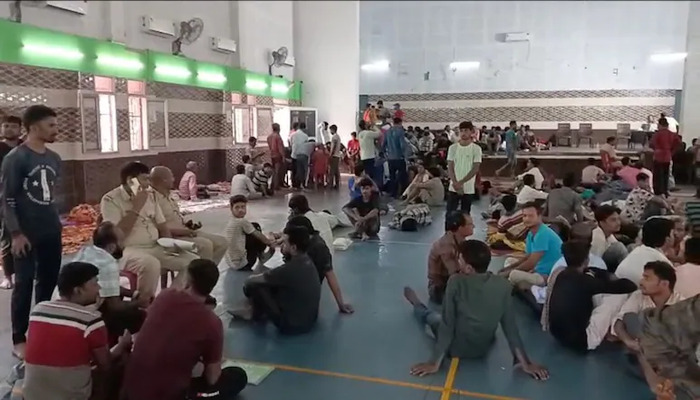
In a major crackdown on illegal immigrants, the Odisha government has detained 444 suspected Bangladeshi nationals and Rohingyas in the Jharsuguda district of Odisha, who are undergoing a verification process that started on Monday (7th July). Out of the detainees, 265 persons have been temporarily kept at Surabhi Kalyana Mandap, and the remaining are lodged at a holding centre on the premises of Black Diamond College of Engineering and Technology.
As per reports, Police are verifying the documents of the detainees, many of whom have been working as labourers, masons, hawkers and house painters in different parts of the district. The action of the state government is part of the broader operations launched on the directions of the Union Ministry of Home Affairs (MHA) to identify foreign nationals illegally staying in the country.
Addressing the media on Monday, Northern Range IG Himansu Kumar Lal said the verification of the detained individuals is going on, and further action will be taken accordingly. Jharsuguda Superintendent of Police (SP) Parmar Smit Parshottamdas said that a Special Task Force (STF) was formed as per the guidelines of the MHA to identify the foreign nationals living illegally in the state.
Their document verification is also being carried out in compliance with the guidelines issued by the MHA and the Odisha government. “These people were mainly working in the construction sector, while some were engaged in the mining sector. All 444 of them are men,” the SP said on Tuesday (8th July). “A drive was launched by the STF within different police limits in the district during which 444 people were identified and shifted to two holding centres for verification,” he added.
TMC MP Mahua Moitra claims that the detainees are from her constituency
While the verification process of the suspected Bangladeshis and Rohingyas is still going on, TMC MP Mahua Moitra claimed that the detainees are ‘Bengali workers’ and 23 out of them are from her constituency.
23 workers from Mirzapur village Panighata GP in my constituency are being illegally detailed with 421 other Bengali workers at interrogation centre by Orient Police Station in Jharsuguda, Odisha despite full documentation @DGPOdisha@SecyChief@Naveen_Odishapic.twitter.com/nlvmW6Zfoc
“23 workers from Mirzapur village Panighata GP in my constituency are being illegally detailed with 421 other Bengali workers at interrogation centre by Orient Police Station in Jharsuguda, Odisha despite full documentation,” Moitra wrote on X on 9th July.
She posted a video showing a large hall with the detainees, where a man can be heard saying that they are Indians, and they have been detained as they were suspected to be Bangladeshis. He appealed to the West Bengal chief minister to take action on the matter.
In March this years, Odisha CM Mohan Charan Majhi informed the state assembly that 3738 Bangladeshi infiltrators have been identified in Odisha so far, who have been living in different parts of the state, including Bhdrak, Kendrapara, Bhubaneswar, Jagatsinghpur, Malkangiri and Nabrangpur. He said that the state government has been coordinating with the central government for the identification and deportation of the Bangladeshi infiltrators.
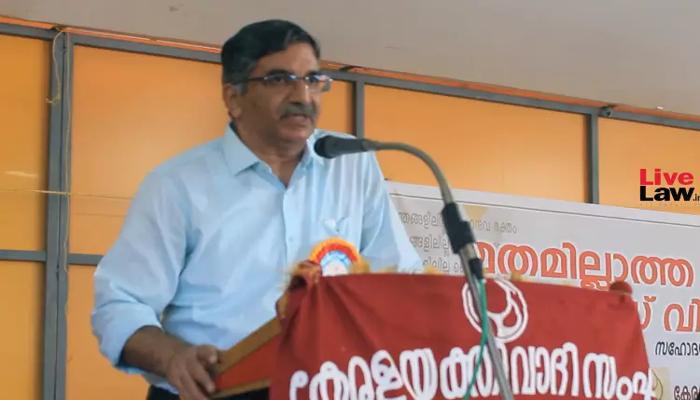
Kerala High Court Judge VG Arun recently spoke at an event organised by the Kerala Yukthivadi Sangham, where he strongly emphasised the importance of raising children free from any ‘religious influence’. “The hope for the future lies in children who are unbound by the notions of religion,” he claimed during his address.
Children raised without religion, caste are the hope for future: Kerala High Court Justice VG Arun
Justice Arun praised parents who choose to raise their children without attaching religious or caste identities to their names. He remarked, “I laud each of you who send your children to school and teach them without linking their identities to religion or caste. These children are the promise of tomorrow. They will be the ones to ask the right questions, without fear, even in the face of societal opposition.”
His remarks echo his 2022 judgment in which he upheld the right to be recognised as non-religious in a secular country like India. The judgment came in response to a petition filed by a group of students who had passed their Class XII examinations and sought community certificates in the non-religious category for college admissions.
In the judgment, Justice Arun observed, “As has often been held, the objective of secularism is to ultimately reach a classless society. The declaration by certain citizens that they and their progeny are non-religious can only be perceived as a bold step towards that constitutional goal.”
The event was held to commemorate Pavanan, a prominent rationalist and writer known by his pen name. Another noted rationalist author, Vaisakhan, was felicitated for his contributions to rationalist discourse.
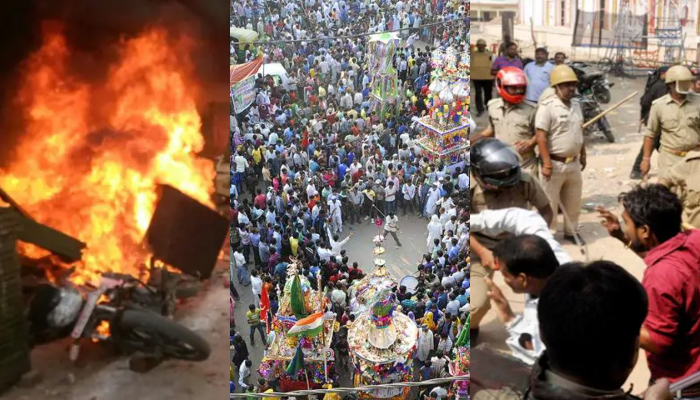
Muharram is viewed as one of the most revered months in Islam, second only to Ramzan. It is particularly significant for the followers of Shia, the second largest branch of Islam, who commemorate and grieve the death of Imam Hussein, the grandson of the Prophet Muhammad, during the Battle of Karbala. However, like other Islamic occasions, it is often marred by violence and unrest, where Hindus are targeted, maintaining law and order turns into a challenge and communal tensions grip entire regions.
The situation has deteriorated progressively over time. This year similarly witnessed multiple incidents from different parts of the country as the weapon wielding processions attacked Hindus, their temples as well as authorities and even raised Pakistan’s flag. Such instances have become the norm nationwide where Muslim mobs create chaos and disorder under the pretext of religious processions.
The following list details multiple major incidents in which law and order was rendered ineffective as the unruly “mourners” rampaged and assaulted Hindus, cops and destroyed properties, during Muharram gatherings from 2011 to 2024.
Hindus assaulted, a youth killed and beheading threats
On the evening of 19th July 2024, some individuals began to play drums in front of a temple, during the Muharram procession in Gausganj village of Uttar Pradesh’s Bareilly which led to a dispute between the two communities. Subsequently, the disagreement escalated into a confrontation as the stone pelting ensued.
The members of Muslim community started hurling stones at Hindus and their houses from the street and harassed women. Numerous individuals sustained injuries as a result which created a tense atmosphere in the area. 26-year-old Tejpal was brutally thrashed and later died while being treated at Bareilly Medical College.
Two individuals, Alamgir and Nizakat, were taken into custody by the police, a day earlier. Alamgir was shot in the leg. A motorcycle and a pistol were found at the scene. It was disclosed that they wanted to instigate trouble during the procession. The police apprehended 35 individuals and conducted a search for those who had fled.
The administration also identified 16 structures, including a place of worship and residences of two primary perpetrators, related to this matter. The houses were demolished as a significant number of police personnel from various stations were stationed in the vicinity.
Superintendent of Police (SP) Manush Pareek infromed that two cases had been registered in relation to the occurrence. It was also revealed that the accused had unlawfully occupied land belonging to the village community and hence, the administration took it down.
Meanwhile, during the intervening night of 16th-17th July, murderous clarion calls such as “Sar Tan Se Juda” were chanted outside the residence of a Bharatiya Janata Party councillor in Kanpur. “Hindustan main rehna hoga Allahu Akbar kehna hoga” (One must say Allahu Akbar if they wish to live in India) was also heard during the Muharram procession.
Shop attacked and looted
On 17th July 2024, Shubham Kirana Store was vandalized and looted during a Muharram procession and the shopkeeper was assaulted with sticks when he protested. The incident which was recorded on CCTV camera happened in Madrasa Gali of Raja Bazar in Patna, the capital of Bihar. Afterward, a large number of cops were stationed in the area and the administration urged the public to uphold peace.
The CCTV footage showed how the shop was relentless attacked by the assailants. The refrigerator was also damaged and when the shopkeeper attempted to intervene, he was struck with a stick as well. He expressed that he had no enmity with anyone. “The attackers claimed that the Muharram procession was approaching and instructed me to close the shop. I lowered the shutter, but they came and started breaking the refrigerator.”
Nevertheless, he refuted the accusation of vandalism following his meeting with the police. His family members stated that the matter pertained to their locality and they did not wish to engage in conflict with anyone as they had to live and conduct business there. They only wished that such an incident should not repeat itself in the future and caution was exercised regarding this matter.
Bricks, stones and attack on police
Bricks and stones were thrown, resulting in numerous injuries, during the Muharram procession at the Karbala ground in Donwa village, located in the Sakra police station area of Muzaffarpur, Bihar, on 17th July 2024. The police rushed to the scene promptly after receiving reports of unrest in the wake of the disturbances during the Tazia procession.
Earlier, a police team that had arrived to confiscate a DJ in Sipahpur Bakhri neighbourhood which is under the jurisdiction of Ahiyapur police station in Muzaffarpur was also attacked. The Muslim crowd targeted the cops with stones, resulting in injuries to around 12 officers, including women. They chased the police for a kilometer, continuing to throw stones at them.
Those who could not flee were assaulted by the throng. Several police vehicles, notably the 112 unit, were subjected to attack. Somehow, the Ahiyapur police and the official automobiles managed to leave from there. The mob also blocked the road and initiated a commotion. People who were traveling through the area were also attacked and stones were thrown at the vehicles.
Over twelve vehicles, both large and small, including buses and cars, were damaged and two passengers experienced head injuries, while one person suffered a broken arm due to the stone pelting. Moreover, Palestinian flag was waved during the Tazia procession in the Mehsi police station area of Motihar after which a youth was caught by the police and was questioned after the video gained traction on social media.
Shopkeeper, his staff assaulted
On 15th July 2024 Muslim youths abused and attacked the owner of Das Music, on the main road in Ranchi following an argument over a forced Muharram donation from a store close to Sankat Mochan Mahavir Temple. The entire incident was captured on CCTV camera and it soon became viral on social media.
The victim, Rinku Das, filed a complaint at the Lower Bazaar police station, stating that two unidentified individuals arrived at his shop and inquired about a donation for Muharram. He refused to contribute and they started to abuse him. His son who was also present there tried to step in but they attacked him and their employee with a rod which wounded the two. The police then arrested the accused.
Jharkhand Bharatiya Janata Party president and former chief minister Babulal Marandi took to social media to condemn the instance and stated that these occurrences could jeopardize the peace and harmony of the entire city.
Hindu family targeted with swords, sticks
On 14th July 2024, a Hindu family inside a car was attacked with sticks and swrods by young Muslim men who took part in the Muharram procession in Dalsinghsarai of Samastipur district in Bihar. They were hurt and their vehicle was wrecked. Afterward, five persons were arrseted by the police after a FIR (First Information Report) was launched.
दलसिंहसराय में मधुबनी के रहने वाले कार में सवार एक परिवार पर ताजिया जुलूस में शामिल लोगों ने तलवार से हमला कर गाड़ी के शीशे तोड़ डाले. कार मालिक का कहना है कि उसने मौके पर @Samastipur_Pol को एवं एसपी को फोन किया पर कोई रिस्पॉन्स नही मिला. एसपी फोन नहीं उठाते ये सही है, अनुभव है pic.twitter.com/Put7hxZfbY
— Bishnu K Jha | Darbhanga (@bisnujha) July 14, 2024
The procession was organized to collect soil for Tazia and participants were engaging in sword stunts while the assembly moved along the main road. During this period, Abhitesh Kumar, a resident of Madhubani district, was traversing the area on his way to Patna. His wife and son were present with him. He had parked his car along the roadside. The culprits broke the windows of his four-wheeler as well as injured him and his family.
The accused also shattered glasses of other vehicles and assaulted bike riders as well as pedestrians. The incident caused unrest as people felt scared of individuals armed with swords and sticks and vacated their vehicles to escape. The police present with the procession reportedly did not take any action and the perpetrators soon absconded.
Common people, police assaulted
On 30th July 2023, unrest broke out during the Muharram procession in the Nangloi area of Outer Delhi, leading to injuries to several policemen and pedestrians. Multiple automobile on the road, including police vehicles, were also damaged. The police indicated that the Tazia procession had more than 10,000 participants. There were attempts to divert the procession from its prescribed route and to forcibly enter the Maharaja Surajmal Stadium, which is located near the Maharaja Surajmal Stadium Metro Station.
The cops attempted to halt their movement as they lacked authorization to access the place which resulted in a confrontation and stones were thrown at the police. Several policemen and bystanders sustained wounds as well as various DTC buses and cars including those belonging to the police were hit. Some officers also incurred injuries.
According to the official complaint filed on Station House Officer Nangloi Prabhu Dayal’s statement, the organizers of the Tazia procession, who arrived on 6-7 carts, began to provoke the crowd to enter the stadium. They were armed with weapons such as swords, knives, iron rods and sticks. When the police denied entry, they retaliated by throwing stones and a member of the crowd assaulted a sub-inspector with a knife.
They also launched stones at people who were walking on the road. They destroyed the glass windows of the passing buses, frightening the passengers. Hundreds of youths were seen racing down the road as people closed their shops and left the area. Traffic was severely congested on the Nagaloi Rohtak road.
Senior police officials including Joint Commissioner of Police also arrived at the scene accompanied by a significant police presence, as cops had to resort to lathichrge to disperse the mob. A case was lodged against the accused under multiple sections of the Indian Penal Code (IPC).
Pro-Pakistan slogans raised
During a Tazia procession on 29th July, 2023, anti-India and pro-Pakistan slogans were shouted, leading to the arrest of 33 individuals in Godhna village of Mirganj police station area in Uttar Pradesh’s Jaunpur district. The action followed the circulation of a 30-second video clip on social media, which captured Muslims chanting slogans such as Allahu Akbar, Nara-e-Takbir and Pakistan Zindabad.
The police immediately took cognizance of the video and submitted a case against 33 people under sections 153A (promoting enmity between different groups on grounds of religion), 153B (imputations, assertions prejudicial to national integration, if made in a place of public worship, etc), 259A (deliberate and malicious acts, intended to outrage religious feelings of any class by insulting its religion or religious beliefs), 188 (wilful disobedience of any order duly promulgated by a public servant empowered by law to do so) and 505(2) (hate speech) of the Indian Penal Code.
A similar instance happened in Jaunpur in 2022. A Tazia procession was held in the neighbourhood on 10th August when pro-Pakistan chants were yelled. Four people were apprehended by police after a video of the incident went viral.
Minor girl gang-raped
A 17-year-old girl who went to attend a stunt show involving sticks during Muharram was gang raped by two local boys, Mohammad Ashfaq and Mohammad Mumtaz. They abducted her and brought her to a field where they violated her sequentially. The incident occurred in a village within the jurisdiction of the Forbesganj police station in Araria of Bihar, on the night of 28th July 2023.
The perpetrators escaped the scene, leaving her in an unresponsive condition. The victim’s mother stated that she went missing during the event after which a search was carried out and she was discovered naked and unconscious in a nearby field. The culprits were nabbed and thrown behind bars after the minor girl unveiled their names.
Hindus attacked and wounded, swords brandished
On 9th August 2022, violence erupted in Kardhana, located within the jurisdiction of the Mirzamurad police station in the Varanasi district of Uttar Pradesh. Individuals transporting Tazia from Jansa village arrived at the Kardhana market via Pampapur. There was a Jamun tree along the path and the people in the procession tried to cut its branches.
However, the Hindus stopped them, but the mourners attacked them and started to throw bricks, stones and even used sticks. Witnesses indicated that swords were also brandished. Adarsh Jaiswal (19), Rajan Jaiswal (25), Rahul Jaiswal (22), Khaderu Jaiswal (55), Bablu Jaiswal (56), Satya Prakash Jaiswal (29), Monu Jaiswal (30), Jamuna Jaiswal (65) and Jwala Jaiswal (60) were gravely injured.
The atmosphere in the Lohta police station area of Varanasi was equally strained. When the Tazia procession from Korauta village arrived at a person named Bhagelu Singh’s doorstep in Kotwa, the participants climed onto his door while shouting slogans which provoked a clash when people voiced their objection. Dinesh Kumar Maurya, the Kotwa outpost in-charge, swiftly reached with his police team and brought the situation under control.
On the other hand, stones were pelted at stores in Bhojipura’s Majhoua Gangapur neighbourhood in Bareilly, on the same day. The footage of the incident, which featured even women from a particular community taking part in the violence, landed on social media. According to reports, the stone-throwing lasted for almost 30 minutes before the police arrived and made an effort to defuse the situation.
The Hindu residents of Majhoua hamlet reportedly filed a complaint against the procession organisers for incorporating DJ music, which caused chaos in the vicinity. They charged that a new custom was being established thereby unsettling the social order. “If anyone tries to start a new tradition, strict action will be taken against him. Hunt is on to nab the stone pelters,” declared the authorities.
Arson, rioting and stone pelting
On 9th September 2019, chaos was witnessed at the Shajapur district headquarters in Madhya Pradesh after stones were allegedly thrown at the Muharram procession which led to a riot as arson and stone pelting commenced. Pankaj Srivastava, the Superintendent of Police for Shajapur district, mentioned that during the late-night Muharram procession, unknown assailants suddenly hurled stones at the procession on Nai Sadak Nathwada, due to which a stampede took place.
He pointed out that during the stampede, unidentified individuals initiated acts of vandalism and arson. As a result, three motorcycles were entirely consumed by fire. Later, senior police officials arrived at the scene and managed to restore order and legal proceedings were started against the anonymous accused. Cops were deployed to the area as a preventive measure.
Hindu man, two others attacked in car
On 9th September 2019, a ruckus transpired during the Muharram procession near Arya Kanya Chauraha (square) in Mutthiganj in Prayagraj of Uttar Pradesh when a car was vandalized and the individuals inside were assaulted. The protesters blocked the square, calling for the arrest of the perpetrators. Police officials, with the support of local leaders, successfully placated the situation by providing reassurance to the public.
The procession was advancing from Arya Kanya Square to Mutthiganj Square at night when the vehicle of a man named Ravi Kesarwani, son of transporter Anil Kumar, was targeted. The glass of his car was smashed and he along with Saurabh Gupta and Ravish Verma, who were accompanying him were assaulted. Ravi was seriously wounded. Once the news spread, residents of the area began to gather and demanded action against the accused. However, they returned after officers assured them.
Cops attacked, violence erupted in many areas
Multiple instances of violence came to light during the Tazia procession in the Gorakhpur district of Uttar Pradesh and its neighboring regions of Uttar Pradesh on 27th September 2018. A Taziadar was electrocuted, after which the mob not only assaulted police officers but also set a police vehicle ablaze. A sub-inspector was left battered and covered in blood, in Bhathat. They also damaged other cars on the road.
This incident occurred in Pipraich, close to Gorakhpur. A young man, who was seated on a DJ vehicle during the Tazia procession, died after he came into contact with the electric wire from the Doordarshan Center in Bhathat. Afterward, the crowed stormed the police station and assaulted a sub-inspector and a home guard who sustained serious injuries. They also vandalized the sub-inspector’s vehicle.
Moreover, another case of unrest in Gorakhpur emerged near Tarang crossing where angered people blocked the road after a youth was attacked with a weapon during a dispute over the movement of the Tazia. Police arrested one person in relation to the issue.
There have been reports of violent incidents in the nearby areas in addition to Gorakhpur. There was one instance in Kushinagar where a dispute over the route of the Tazia procession led to violence, injuring numerous people. At the same time, disagreements over the procession’s route caused Tazias to be obstructed at several locations in Maharajganj, which led to reports of unrest in the area.
Violence was also reported in Deoria. A young person was hurt in the the procession and apparently did not receive adequate medical attention after which the agitated mob damaged Rampur Chauraha, in the district’s Gauri Bazaar. Many automobiles, including an ambulance and police cars, were wrecked by the crowd.
Arson, vandalism and communal tension
On 2nd October 2017 communal tension spread concerning the movement of the Tazia without an established route, in Parampurwa located in the jurisdiction of the Juhi police station in Kanpur district of Uttar Pradesh. It resulted in stone pelting between two groups.
Afterward, six individuals endured injuries and eight vehicles including two cars and four motorcycles were set on fire amidst vandalised, during the Muharram procession. Bricks and stones were also launched.
Param Purwa (Kanpur): Tension between 2 groups over Tazia procession route. Nobody reported hurt, situation under control (earlier visuals). pic.twitter.com/AGpANsht77
“The Muharram procession in Parampurva was to be taken out through a certain path but it was suddenly changed which led to a dispute between the two parties. The police force present on the spot managed the situation. But some unruly elements started setting fire to vehicles parked on the roadside. After that, stone pelting started,” highlighted Additional Director General of Police Avinash Chandra.
Law enforcement officials, including senior personnel, were deployed to uphold law and order and to take stock of the violence. The district and police administration requested that citizens stay indoors, owing to the critical situation.
Meanwhile, on the same day, violence was unleashed in Gujarat’s Vadodara during the immersion procession of Tazia, resulting in stone-throwing and three injuries. They wounded were taken to a private hospital. Police had to fire four tear gas shells and three rounds to bring the situation under control.
Violence led to imposition of curfew
On 1st October 2017, several individuals were injured during a Muharram procession in the Jamui district of Bihar after which a curfew was slapped in the area. A considerable number of police personnel were deployed. Superintendent of Police Jayant Kant informed that a minor argument between two groups transpired at Masaurhi Chowk, reported Aaj Tak. Afterwards, members of a specific community took part in arson during the Tazia procession, which resulted in violence and many persons were wounded, including police personnel.
Stone pelting and curfew
On 24th August 2015 curfew was imposed after stone pelting was reported in a locality over a dispute about the procession route.
Shops damaged, houses set on fire
On 5th November 2014, unrest transpired in various districts of Awadh in Uttar Pradesh during the Muharram procession. The crowd engaged in vandalism, damaged shops and torched them. Additionally, multiple instances of gunfire were reported. During the Tazia procession in the Bahraich district, a chaat cart was looted in Parampur of Rupaidiha as a dispute took place. Additionally, a hut was set ablaze and a flour mill was damaged.
The authorities managed to restore order after considerable effort. Likewise, disturbances were reported from Baundi and Payagpur. Another conflict started over climbing onto the platform of a religious place duirng Muharram procession in Mathura Bazar of Balrampur district. Afterward, numerous shops were set on fire and gubshots were heard.
The market remained quiet the following day as well. Police filed a case against several individuals and arrested four. Tensions ran high in Anbhula village of Rasulabad in Musafirkhana, Amethi district when a peg that was in the way of the procession was removed and a house’s thatched roof was put on fire by the participants.
Violence and assault on police personnel
Several individuals were wounded on 5th November 2014, as the Muharram procession in Rajasthan’s Bhilwara descended into violence. Jyoti Swaroop Sharma, an additional superintendent of police, was hurt when the Muslim residents of the old city threw stones at the cops. The crowd was then dispersed by the police using batons. 50 unnamed individuals were booked for rioting and stone-throwing and two were arrested.
A traffic bottleneck also resulted from the brief halt of the Muharram procession near Old Kuthcery Road. Sharma was struck in one eye by a stone that was thrown at him after police ordered the mourners to leave. Two young people were then apprehended for interrogation at the Bhimganj police station after the cops used lathi-charge.
This infuriated the crowd even further and the protesters demanded the their release, pausing the procession for about an hour. The procession was able to continue after the police intervened, but the mourners once more stopped at Tejaji Ka Chowk. After some time, the Muslim mob gathered at the same location and the police had to use force.
Muslim mob instigates terror against Hindus
On 15th November 2012, violence erupted in a bustling market located in the Bhadohi Kotwali area of Uttar Pradesh during the Muharram procession, resulting in a devastating situation in the city. Muslim mobs unleashed chaos in predominantly Hindu neighborhoods.
Additional Superintendent of Police, Shubham Agarwal, reported that 50-year-old Shamim Ansari, son of Hafiz Ansari, along with several associates, unleahsed terror on the area. They blocked the road, did vandalism, arson and threw stones at houses and trains.
Image via ABP News
Several sections of Indian Penal Code were slapped on him alongside 152 Railway Act, 4/5 Explosive Substances Act and 7 Criminal Law (Amendment) Act at Bhadohi police station. He was arrested last month following a tip-off from an informant.
Cops targeted, Hindus attacked
A disagreement began on 8th December 2011, when Muslims attempted to take out the Muharram procession by a different route from Malokhar village in the Dulhipur region under the jurisdiction of the Mughalsarai police station in the Chandauli district of Uttar Pradesh. However, members of the other community objected to the start of a new practice which enraged the mob which went on a frenzy and engaged in mayhem, claiming that Tazia was damaged.
A car, many motorcycles, a pumping set, hutments, fodder and mounds of upla (cawdung cakes used as fuel) were set on fire by them. The cops had to use force to break up the rowdy mob. However, the irate crowd started brick-batting, injuring many police officers, members of the media and even residents.
Two of the five seriously wounded police officers were transferred to Varanasi after they were taken to Chandauli District Hospital. 200 people from roughly 25 families were impacted by the violence. Section 144 was imposed on the area.
“After lodging of FIR (First Information Report) against 43 identified persons and over 400 unidentified persons for indulging in violence and arson and interrupting the government work, efforts for their arrest have been intensified. Video clippings are also being utilised to identify the demonstrators. The policemen suffered injuries during violence are out of danger,” stated Superintendent of Police, Chandauli, Shalabh Mathu while talking to The Times of India.
Conclusion
The aforementioned cases represent merely the tip of the iceberg, as Muslim mobs have historically, whether in the name of mourning or celebration, consistently exploited such events to attack Hindus and display their street power in the most reprehensible ways. They provoke with the most offensive slogans, brandish weapons, embark on a rampage and make a complete mockery of law and order. At the same time, the authorities and administration have also largely failed to control them or prevent such incidents.
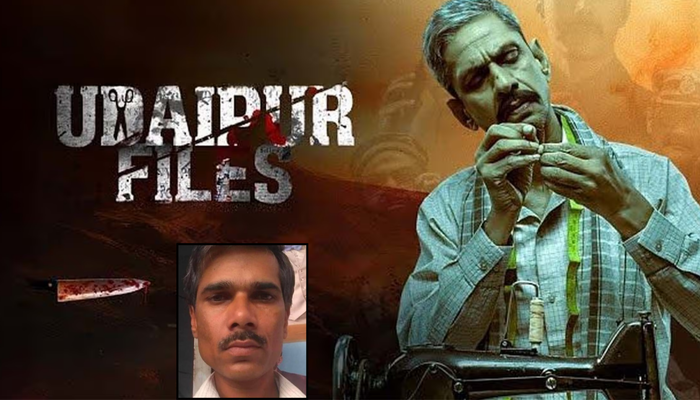
The Supreme Court on Wednesday (9th July) refused to stop the release of the movie ‘Udaipur Files: Kanhaiyalal Tailor Murder’ by declining urgent hearing of a petition challenging the release of the movie. The plea was filed by Mohammed Javed, one of the accused in the brutal murder case of tailor Kanhaiya Lal. A vacation bench of Justices Sudhanshu Dhulia and Joymalya Bagchi said that the petition can be mentioned before the appropriate bench when the Supreme Court reopens after summer vacation on 14th July.
When the counsel for the accused apprised the court that the movie, set to be released on 11th July, will be released before the court reopens, the court said that let the movie release. “It is releasing on Friday Trailer was released on July 4. They are showing only the prosecution side,” the counsel for the accused said, to which the top court replied, “Mention before the court concerned on reopening.Let it be released”.
Counsel for Mohammad Javed, who is accused number 8 in Kanhaiya Lal’s murder case, contended before the court that the movie is being portrayed as a true story and therefore will prejudice the proceedings in the case. He tried to imply that the incidents shown in the movie actually didn’t take place.
He said “Releasing such a trailer at this juncture, portraying the accused as guilty and the story as conclusively true, has the potential to seriously prejudice the ongoing proceedings. It compromises the presumption of innocence and risks influencing public opinion in a manner that could affect the fairness of the trial. This directly impacts the right to a free and fair trial of the Petitioner, as guaranteed under Article 21 of the Constitution of India,” the counsel submitted before the court.
“The trailer and promotional material of the said film contain content that is provocative and communally sensitive, which has the potential to disturb the religious harmony of the country and interfere with the ongoing judicial proceedings, as the matter is currently sub judice before a Special NIA Court,” the counsel added.
However, the claims of the lawyer are baseless, as the killers of Kanhaiya Lal brutally beheaded him on camera. Moreover, after killing him in cold blood in broad daylight, they recorded a video remorselessly boasting about killing Kanhaiya Lal and threatening PM Modi.
Therefore, the contention that the movie is being portrayed as a true story, as it is in fact based on a true story. However, the case remains under trial and nobody has been convicted yet. While the accused number 8 Mohammed Javed may or may not be convicted based on evidence, there is no doubt that the two killers will be convicted.
Another petition filed by Islamic clerics’ body, Jamiat Ulama-i-Hind, challenging the release of the movie is pending before the Delhi High Court. The Islamic body has filed several petitions against the release of the movie in different High Courts. Jamiat Ulama-i-Hind, which has a history of protecting terrorists, objected to a movie based on the life of Kanhaiya Lal and his eventual murder by two Islamic terrorists. It has approached the High Courts of Delhi, Gujarat and Maharashtra to stop the release of ‘Udaipur Files Kanhaiya Lal Tailor Murder.’
Brutal murder of Kanhaiya Lal Murder
In June 2022, a Hindu tailor named Kanhaiya Lal was brutally murdered by two Islamists identified as Mohammed Riyaz Akhtar and Mohammed Gos for an alleged post in support of former spokesperson of Bharatiya Janata Party (BJP) Nupur Sharma. Two days after the post was made, two men approached him at his shop and demanded to see his phone. They told him about the post, to which Kanhaiya Lal replied that he did not know how to operate the phone, and his son used it to play games. They deleted the post and warned him not to repeat it.
But, Kanhaiya Lal’s neighbour, Nazim, leaked and circulated his details like name, photograph and location, and also filed a complaint against Kanhaiya Lal for the alleged post. Following Nizam’s complaint, Kanhaiya Lal had approached the police seeking protection as he was receiving death threats. He told the police that the alleged post was accidentally made by his 8-year-old son while playing video games on his mobile phone.
However, the police arrested him instead for the alleged post and did nothing to provide him protection after his release, which eventually resulted in his killing on 28th June 2022 by Muhammad Riyaz Attari and Ghaus Muhammad.
As the Bihar state assembly election approaches, the opposition has once again resorted to questionable practices. False allegations aimed at disrupting the functioning of the Election Commission of India (ECI) have once again gained nationwide attention. Opposition parties, including Lalu Yadav’s Rashtriya Janata Dal (RJD) and other Mahagathbandhan allies such as the Congress, Left parties, Vikassheel Insaan Party (VIP), and independent leader Pappu Yadav, have taken to the streets in Bihar to protest against the Special Intensive Revision (SIR) being conducted in the state ahead of the assembly elections.
Rahul Gandhi, the Leader of the Opposition, and RJD leader Tejashwi Yadav are expected to join hands and lead a statewide protest in Bihar on July 9. Rahul Gandhi will participate in the protest march starting at 10 a.m. in Patna, from the Income Tax office at Golambar to the Election Commission office. The protest will be directed against the central poll body’s decision to revise electoral rolls and implement the new labour code.
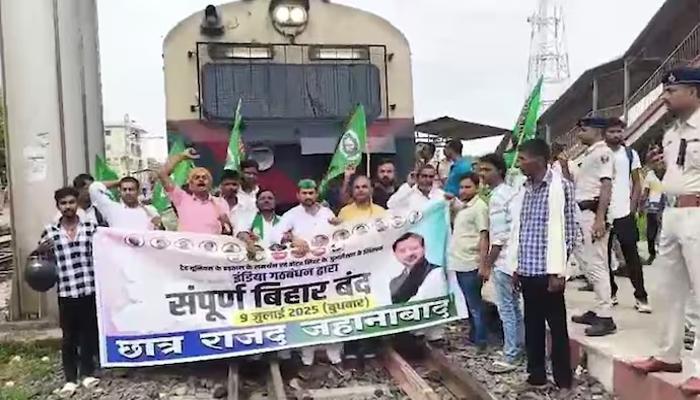
Roads are being blocked with burning tyres by local leaders in areas like Sonpur and Hajipur. In Jehanabad, the student wing of the RJD has even blocked railway tracks. In Hajipur, RJD supporters have blocked the Gandhi Setu, while in Sonpur, RJD MLA Mukesh Roshan has led the blockade. Meanwhile, members of the RJD’s student wing have blocked train tracks at Jehanabad railway station.
The road blockade, or “chakka jam,” comes just ahead of the Bihar assembly elections. Interestingly, it coincides with the “Bharat Bandh,” a protest demanding minimum wage, a new labour code, and addressing several other issues.
Before we delve into why the opposition is engaging in such protests, it is important to understand why the Centre has initiated the Special Intensive Revision.
What is the Special Intensive Revision?
To conduct free and fair elections, enhance transparency, and eliminate ineligible entries from the voter list, the Election Commission has decided to initiate a Special Intensive Revision (SIR) in Bihar ahead of the assembly elections. The SIR is being implemented as an urgent corrective measure to rectify the electoral rolls.
Launched on June 24, the initiative seeks to include the names of eligible citizens in the voter list while removing those who are no longer eligible. According to the ECI, multiple factors such as rapid urbanisation, the influx of illegal immigrants, inclusion of newly eligible young citizens, unreported deaths, and the presence of names of foreign nationals make this revision critically important.
Chief Election Commissioner Gyanesh Kumar has said, “Not a single political party is satisfied with the current status of electoral rolls for different reasons. During the past four months, all 4,123 Electoral Registration Officers (EROs), 775 District Election Officers (DEOs), and 36 Chief Electoral Officers (CEOs) have conducted nearly 5,000 meetings with 28,000 political party representatives. The ECI has also invited all recognised political parties for interaction. No one was satisfied with the current status of the electoral rolls for one reason or another.”
How will the process function?
To ensure smooth and hassle-free execution of the electoral process, the Election Commission has developed a detailed plan. As per the EC, the Electoral Registration Officers will provide enumeration forms to Booth-Level Officers (BLOs). These BLOs will then distribute the forms to voters via door to door visits. Voters will have the option to upload supporting documents online. Once submitted, the forms will be verified, and a preliminary electoral roll will be published on the websites of both the ECI and the respective Chief Electoral Officers. This draft will also be shared with political parties. Voters and political parties will be allowed to raise objections to the draft list. Once all objections have been reviewed and addressed, the final electoral roll will be released.
The Election Commission aims to publish the draft electoral roll on August 1 and the final list by September 30. As of now, nearly 87 per cent (6.86 crore) of Bihar’s 7.90 crore voters have received enumeration forms during the ongoing Special Intensive Revision, according to the ECI. The Commission also noted that 1.5 crore households have already been covered in the first round of visits by BLOs.
The Election Commission has made it mandatory for voters to submit at least one of 11 listed documents for verification. These include:
Birth certificates
Passports
Identity cards or pension payment orders issued to government employees or pensioners
Permanent residence certificates
Forest right certificates
Caste certificates
Family registers prepared by state or local authorities
Land or house allotment certificates issued by the government
Aadhaar is not included in the list of acceptable documents for verification.
Why are they protesting a legal electoral process?
The opposition has raised concerns about the process, claiming it may lead to the exclusion of legitimate voters through the misuse of government machinery. The Congress backed Empowered Action Group of Leaders and Experts (EAGLE) criticized the Election Commission’s move, suggesting that the revision of electoral rolls could end up causing more harm than the issue it intends to address.
West Bengal Chief Minister Mamata Banerjee also condemned the process, accusing the Election Commission of targeting the youth in Bengal under the guise of verifying voter lists. She pointed out that a new declaration form requires those born between July 1, 1987, and December 2, 2004, to submit their parents’ birth certificates to get enrolled—questioning the necessity and fairness of such a requirement. “What is happening in the name of full enumeration?” she asked, calling the directive irregular and troubling.
Tejashwi Yadav echoed similar sentiments, arguing that the Election Commission’s decision would ultimately disenfranchise poor and marginalised individuals who rely solely on Aadhaar as identification, an ID that the EC now deems unacceptable for verification.
In addition, a group of 11 parties from the INDIA bloc submitted a formal objection to senior Election Commission officials, labelling the Special Intensive Revision (SIR) as a serious threat to the foundational principles of the Constitution.
While the Election Commission maintains that the revision aims to enhance accuracy and transparency in the electoral process, opposition parties appear focused on undermining the initiative without offering concrete alternatives. Their increasingly aggressive demonstrations have begun to obstruct a lawful and necessary democratic procedure.
Rather than engaging constructively to strengthen the electoral process, the opposition appears more focused on inciting chaos for political gain. With Bihar heading into a crucial election, the priority should be safeguarding a fair, transparent, and inclusive voter roll, not turning voter verification into a battleground for partisan theatrics.
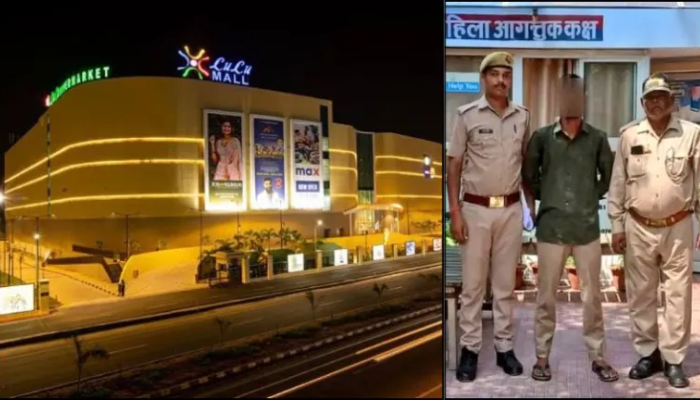
A female Hindu employee at Lulu Mall in Uttar Pradesh’s Lucknow charged her manager, Farhaz also known as Faraz, with rape and blackmail. He also forced her to convert to Islam, leading to his arrest. She disclosed that he gave her a cold beverage that was spiked with drugs and then sexually violated her.
He recorded the disturbing act on video, which he later used to blackmail her and extort money and jewellery. The victim endured cigarette burns, verbal abuse and physical assaults when she resisted. He also issued death threats to her. The complaint additionally indicated that the accused persistently pressured her to embrace Islam.
He claimed that she need to comply in order to keep her job at the mall. Moreover, he repeatedly disparaged Hinduism and its deities, which deeply hurt the woman’s religious beliefs. An initial investigation revealed that the perpetrator might have links with suspicious social media accounts and conversion networks.
The police are currently carrying out a cyber forensic inquiry to determine whether he is involved in a broader network. Additionally, the police are interrogating other employees of the mall. The Deputy Commissioner of Police (North) informed that a case has been filed against the offender under multiple charges, including rape, threats to murder and attempts at forced conversion.
He has been presented in court and placed under remand. As of now, there has been no official statement from the management of Lulu Mall regarding the incident.
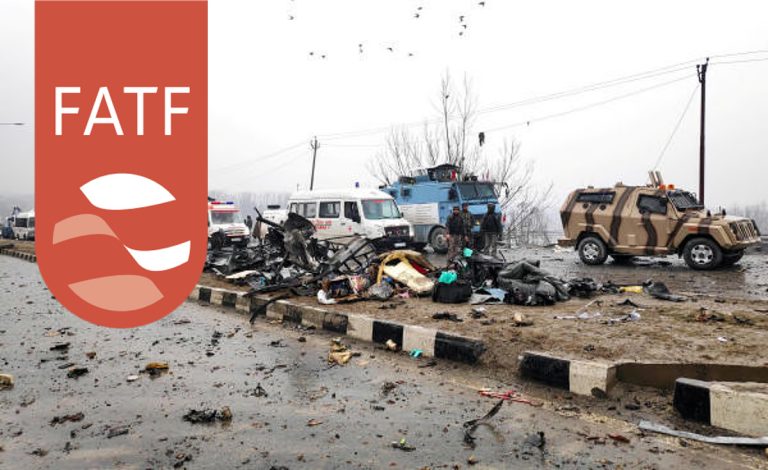
The Financial Action Task Force (FATF), the international watchdog that tracks terror funding, has identified serious concerns regarding the use of e-commerce sites and online payment facilities by terrorists to execute and finance attacks. In a recent report published on Tuesday, 8th July, FATF cited instances such as the 2019 Pulwama attack and the 2022 Gorakhnath Temple attack in India to bring attention to this increasing danger.
The report, Comprehensive Update on Terrorist Financing Risks, reveals terrorists’ persistent ability to exploit the international financial system to support their activities and carry out attacks.
Pulwama Attack Used Online Platforms for Explosives, Says FATF
As per FATF’s findings, key materials used in the 2019 Pulwama attack were bought through an e-commerce platform. The report says that aluminium powder, which was used to make the explosive more powerful, was purchased via Amazon.
On 14th February, 2019, a suicide bombing targeted a convoy of Indian Security forces in Pulwama in Jammu & Kashmir, resulting in the deaths of 40 soldiers. India’s authorities concluded that the attack was orchestrated by Jaish-e-Mohammed (JeM), a Pakistan-based terror group. The suicide bomber was identified as Adil Ahmad Dar. After the investigation, 19 people, including seven foreign nationals, were charged under India’s anti-terror laws
FATF said the materials were part of an improvised explosive device (IED) that caused the deadly blast. FATF mentioned that in such cases, terrorists are using platforms like Amazon to quietly buy equipment and chemicals. These platforms also help them move money in ways that are difficult to track.
Lone-wolf attacker in Gorakhnath temple case used PayPal and VPN: FATF
The FATF report also discusses the 2022 Gorakhnath Temple incident in Uttar Pradesh.
On April 3, a man identified as Ahmad Murtaza Abbasi initiated an attack on Gorakhnath Temple in Uttar Pradesh. The incident took place just a day before UP CM Yogi Adityanath was scheduled to visit the temple. Abbasi’s family claimed he was mentally unstable, but the claims were refuted by the Police and doctors who treated him after the attack.
According to FATF, the attacker, who was influenced by ISIS (Islamic State of Iraq and Syria) ideology, used online payment services like PayPal to send nearly ₹6.7 lakh (around $7,685) abroad in support of the terror group.
The person also received money from a foreign source and used a VPN to hide his identity online. The report says he made 44 international transactions through PayPal and even paid for VPN services through his bank account.
Due to these suspicious activities, PayPal suspended his account to stop further misuse. FATF said that such use of digital payment platforms gives terrorists new ways to transfer money and stay hidden.
State support for Terrorism still a big problem
The FATF didn’t just stop at online platforms. It also raised concerns over the role of national governments in supporting terrorist groups. According to the report, some terrorist organisations continue to receive financial help, training, and logistical support from certain governments.
Though the report doesn’t directly name countries, India has often accused Pakistan of backing terrorist organisations like JeM. Indian officials have long maintained that Pakistan shelters designated terrorists and misuse international funds to aid terror activities.
As per FATF, this kind of state support is often used not only for funding attacks but also for long-term management of terror operations.
How terrorists use online shopping and payments
According to FATF, terrorists have found multiple ways to misuse e-commerce platforms, also known as Electronic and Physical Online Marketplaces (EPOMs).
These platforms are being used not just to purchase materials like chemicals, weapons, and other equipment, but also to sell items and generate funds for terrorist activities. Some even use fake transactions to disguise the movement of money, a method similar to trade-based money laundering.
FATF noted that platforms which offer easy access across borders and allow anonymous or pseudonymous payments are particularly at risk. Such digital tools have become preferred channels for not only organised terror groups but also lone actors and extremist groups motivated by ethnic or racial ideologies to fund their operations and spread propaganda.
Terror groups getting smarter with technology
FATF said that with the rise of fintech companies and peer-to-peer (P2P) payment apps, terrorists now have more ways to move money secretly. These services tend to permit the use of fictitious identities or pseudonyms, which complicate it for investigators to identify the origins of the funds.
FATF added that groups are even utilising social media to collect funds in the form of donations and crowdfunding, bringing recruitment, propaganda, and financing all together in one location.
What FATF wants the government to do
FATF has urged its 200 member jurisdictions to enhance monitoring of virtual financial services and better regulate online platforms.
The organisation advises monitoring suspicious activity on web-based e-commerce sites, tightening controls on peer-to-peer payment services, and collaborating closely with international platforms such as PayPal and Amazon to identify and prevent abuse.
FATF wrapped up by cautioning that while terrorists keep embracing sophisticated digital practices, it is only through robust international collaboration that they would be stopped from misusing online platforms to fund terrorism.
Months have passed since India conducted Operation Sindoor to attack Pakistani terror and military establishments, yet stories of the tactics and ingenuity of the Indian Armed Forces continue to intrigue the world. It has now been reported that the Indian Air Force used the artificial intelligence-powered towed decoy system X-Guard on Indian Rafales during the four-day military conflict in May 2025.
A former F-16 pilot Ryan Bodenheimer, called Operation Sindoor, a breakthrough in modern aerial combat. Developed by Rafale Advanced Defense Systems, X-Guard creates a 500-watt, 360-degree jamming signal using artificial intelligence. The 30-kilogram device follows the aircraft along a fibre-optic wire that is 100 meters long. It makes it harder for adversary radar systems and missiles to spot genuine aircraft by simulating the radar emissions and Doppler effect of an authentic Rafale fighter.
Bodenheimer dubbed the X-Guard “the best spoofing and deception we’ve ever seen.” The former F-16 pilot added that the decoy system may have “redefined the rules of electronic warfare.”
As per the IDRW report, Pakistan’s Chinese-made PL-15E air-to-air missiles and J-10C fighter jets failed to detect or target the actual Indian fighter jets. The decoy misled missile systems and confounded enemy radar. An export variant of China’s PL-15, the PL-15E missile, lacked sophisticated spoofing resistance. It’s also possible that the X-Guard tricked Pakistan’s J-10C fighters’ KLJ-7A AESA radar into believing they had locked onto and struck Rafale jets.
Apparently, Pakistani ‘Aand’ Forces counted the decoys they struck as Rafale hits and came up with claims of shooting down 4 to 5 Indian fighter jets. However, when asked for proof, even their defence minister would say “It’s all over the social media.”
Other than X-Guard, the Indian decoy drones also played a vital role, especially in creating heat signatures that matched Indian fighter jets, confusing the Pakistani air defence system.
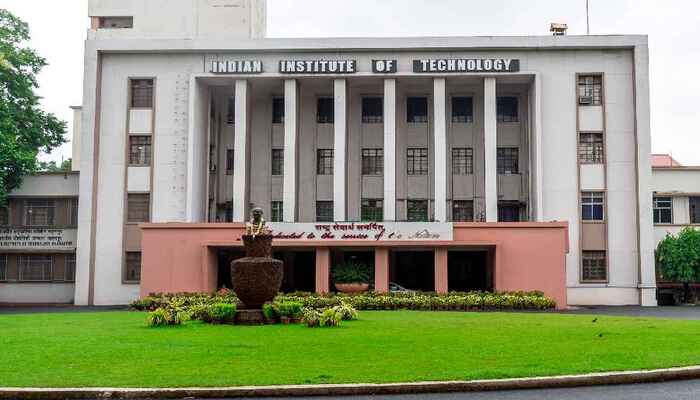
The Indian Institute of Technology in Kharagpur, West Bengal, has come up with a unique initiative to help students deal with stress by providing them with ‘mothers’ on campus. Under its ‘Campus Mothers’ initiative, the institute will train women residing on campus, both faculty and non-faculty, to provide emotional support and mentorship to students in distress. The proactive measure is intended to help new students adjust to life on campus.
The initiative was announced by the institute’s Director, Suman Chakraborty, who assumed charge last month. In addition to the ‘Campus Mothers’ initiative, a Student Welcome Committee has also been formed by the institute for a broader campus and community development programme. “This committee’s main role is to help new students and their parents settle in and feel at home on campus. They will address the major challenges new students might face,” Chakraborty told The Print.
The decision comes in the wake of three student suicides that happened at the IIT this year, with the most recent being reported in May. 22-year-old Mohammad Asif Qamar, a third-year BTech student and native of Bihar, died by suicide in his room at Madan Mohan Malviya Hall of Residence. Earlier in April, Aniket Walker was found dead in the hostel. In 2022, Faizan Ahmed was brutally murdered during ragging and there were attempts to look like a suicide.
“It’s a shock to me, and all of us as teachers, that we had to lose our beloved students. I believe we need to be active, not just reactive. Often, when such incidents occur, there’s a lot of noise, and steps are taken just for compliance. That approach isn’t enough,” Chakraborty said about the suicides.
Campus Mothers will have an understanding of students’ challenges
Highlighting that students in India are usually closely monitored by their parents till Class 12, the director said that new students cannot be expected to suddenly adjust to their first year in college. The Director said that many of the women receiving training to be ‘Campus Mothers’ have experienced motherhood and therefore have an understanding of the challenges faced by children.
“Many of these women have experienced motherhood themselves, some have grown-up children who may now be living abroad or otherwise independent. Having gone through motherhood, they understand the unique challenges children face. While it’s often said that Indian parents tend to overparent, it’s unrealistic to expect students to suddenly adjust in their first year of college after being closely monitored until Class 12,” he said.
Campus Mothers will engage in informal interaction with students
Explaining the programme, Chakraborty said that participation in the programme will be voluntary. Those volunteering to be Campus Mothers will receive orientation and training in counselling. “That’s why we thought of a structured approach where these ‘campus mothers’ can support students, especially in more challenging situations. They will receive orientation and training in counselling and related skills. Participation in this programme will be voluntary for those who wish to get involved,” the Director said.
The Campus Mothers will engage in informal conversations with distressed students. They can have tea, coffee or dinner with the students to listen to their concerns. Chakraborty said that the initiative will have an amalgamation of personal interaction and the use of technology, as it is not possible to have Campus Mothers engage with every student on the campus. “This kind of personal interaction allows students to express themselves in ways that a mechanised chatbot simply can’t match, there are limits to what technology can do. That’s why we need both approaches. Technology helps because it’s not scalable to have campus mothers engage with every single student individually,” he added.
To address the limitation of personal engagement, the Student Welcome Committee will launch a student engagement initiative, which will include the use of AI-based tools to monitor student well-being. Moreover, the students will also be encouraged to take part in physical activities like sports and other extracurricular pursuits. A detailed plan is being prepared for the implementation of the programme.
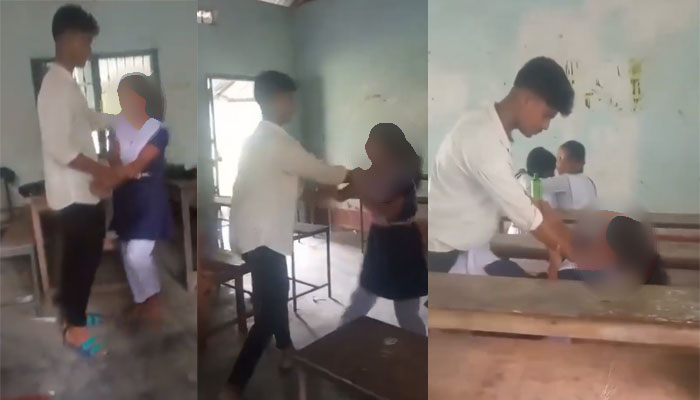
On 2nd July, a minor Hindu girl was brutally assaulted at Dakghora High School, Coochbehar district in West Bengal. A video of the incident has gone viral on social media. A complaint has been filed at Sitalkhuchi Police Station by the parent of the victim.
In the complaint, the parent of the victim stated that she is a ninth-grade student. She was sitting in her classroom when the accused, Sagar Islam, allegedly began abusing her with obscene language. The incident took place during the recess before the third period. When the victim protested, Islam reportedly beat and strangled her. The complainant stated that the victim was sexually assaulted as well. Islam threw her to the ground multiple times during the assault. The complainant accused Islam of assaulting the victim with intent to kill.
The complainant further added that while Islam was assaulting the victim, two of her classmates recorded the assault and later uploaded the video on Facebook. The video went viral on social media. Islam was seen laughing while assaulting the victim.
Plea for justice
The complainant expressed deep concern for the victim’s safety and stated, “We are all very scared after knowing about the incident. I think my daughter’s life may be in danger later.” The complainant urged the authorities to conduct an on-site investigation and take strict action against the accused.
Police yet to act
It is unclear if the police have filed an FIR or taken any action in the matter so far.