Home Blog Page 323

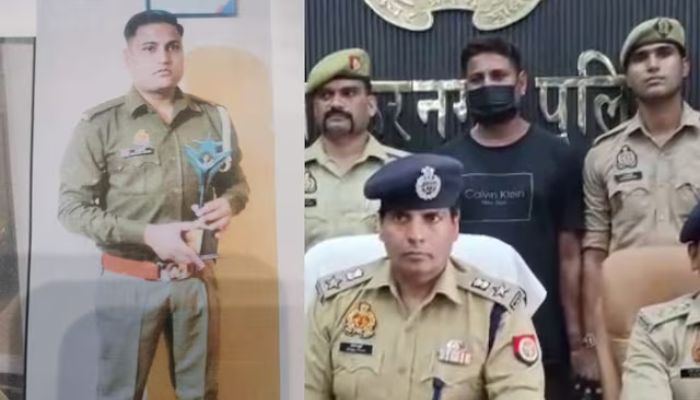
UP: Naushad Tyagi posed as Rahul Tyagi and Ricky Tyagi, pretended to be a cop, sexually exploited and duped 20 women nationwide

A 32-year-old Uttar Pradesh man from Muzaffarnagar has been arrested on Tuesday, 1st July, for impersonating a Police Officer and scamming a minimum of 20 women in four states by giving them false names, false identities, and while posing with a stolen police uniform.

The impersonator, Naushad Tyagi, used various names such as Rahul Tyagi, Ricky Tyagi, and Naushad Tyagi, respectively, depending on the victim being Hindu or Muslim. He posed as a constable working in the Uttar Pradesh SOG (Special Operations Group) to gain the confidence of women by using the uniform of his friend, who is a policeman.

How the impersonation started

The whole act began in Sambhal, where Naushad had been living with a friend who was an actual constable. In 2019, when his friend went for election duty in Madhya Pradesh, he forgot his bag containing his uniform. Naushad used this opportunity, forged his friend’s signature, and came to Muzaffarnagar with the uniform.

He then started impersonating an SOG constable and put on the uniform to deceive others.

Widows and single women were targeted

Naushad, who has been married twice before, resided in various places in Muzaffarnagar with both women. He hunted widows or single women using social media. Naushad became friends with them, won their confidence, and initiated romantic relationships. He did so in such areas as Mathura, Sambhal, Noida, Ghaziabad, Bulandshahr, Delhi, Assam, and Meghalaya. Among the 20 women he lured, police say that he had physical relations with at least 10.

He created three different nameplates and utilised them based on the meeting. With the counterfeit uniform, he also utilised it to make illegal money and developed close relationships with a couple of actual policemen to establish social credibility.

Truth revealed after a woman complained against ‘Rahul Tyagi’

Naushad’s deceptions were revealed when he deceived a widow who had a small shop. He approached her dressed in a uniform with the name tag “Rahul Tyagi,” claimed to have fallen in love with her, and said he would get married to her. He then stole ₹2.75 lakh and gold jewellery valued at ₹3 lakh from her. When he began shying away from her marriage proposals, she suspected something and approached the police.

On 1st July, Naushad was arrested by the police while plotting to flee to another city in pursuit of a new target. Officials recovered objectionable photographs and videos of several women from his mobile phone, as well as the fake uniform he had worn. Police say he is a repeat offender, and his entire criminal record is currently being probed.

A case has been registered against Naushad under sections 316 (criminal breach of trust), 351 (criminal intimidation), 204 (personating a public servant), 205 (wearing garb or carrying token used by public servant with fraudulent intent), and 319 (cheating by personation) of the Bharatiya Nyaya Sanhita (BNS).

Pentagon says US strikes set back Iran’s nuclear program by up to two years

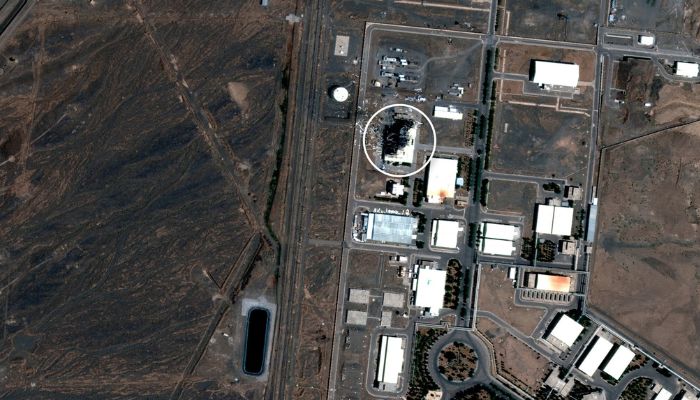
On 2nd July, Wednesday, the Pentagon declared that U.S. military strikes on Iran’s nuclear facilities have delayed the country’s nuclear program by one to two years, asserting the operation achieved its primary objective despite conflicting assessments from international watchdogs and earlier U.S. intelligence reports.

During a press briefing, Pentagon spokesperson Sean Parnell stated, “We have degraded their program by one to two years, at least, intel assessments inside the Department of Defence assess that.”

Internal Defence Department intelligence reviews concluded the 22nd June strikes, involving B-2 stealth bombers delivering massive “bunker-buster” bombs and submarine-launched Tomahawk missiles, severely damaged Iran’s capabilities.

“We’re thinking probably closer to two years.” He further said that the three targeted facilities (Fordo, Natanz, and Isfahan) were “completely obliterated” and asserted the strikes may have damaged Iran’s ambition to build a nuclear weapon.

The U.S. assessment hinges on the destruction of critical infrastructure needed for uranium enrichment and bomb development. Parnell emphasized the psychological impact of the 37-hour non-stop bomber mission alongside physical damage .

  • Conflicting Assessments: The Pentagon’s revised timeline contrasts sharply with a preliminary Defence Intelligence Agency (DIA) report leaked shortly after the strikes, which suggested the setback might only be months, not years. That early, low-confidence assessment indicated key centrifuges remained intact and Iran’s stockpile of highly enriched uranium (HEU) likely survived, potentially having been moved before the attacks. Rafael Grossi, Director General of the UN’s International Atomic Energy Agency (IAEA), cautioned, stating Iran could resume enriching uranium “in a matter of months” due to its retained technical knowledge.
  • Iran’s Response and Uncertainty: Iranian officials acknowledged significant damage, particularly at the underground Fordow site, but Supreme Leader Ali Khamenei dismissed President Trump’s “obliterated” claims as exaggerated. Verification remains extremely difficult. Satellite imagery shows surface damage and craters, but it cannot confirm the status of deeply buried facilities. Furthermore, Iran’s parliament has suspended all cooperation with the IAEA, cutting off independent monitoring and leaving the program “in the dark”. The location and integrity of Iran’s HEU stockpile, crucial for any weaponisation effort, remain a major unknown.

Geopolitical context

The U.S. strikes occurred during a 12-day conflict initiated by Israeli attacks on Iranian targets. President Trump announced a ceasefire hours after Iran retaliated against a U.S. base in Qatar. While both the U.S. and Israeli governments claim victory and significant degradation of Iran’s nuclear threat, Tehran insists its nuclear and missile programs endure. The State Department has condemned Iran’s suspension of IAEA access as “unacceptable” .

The Pentagon maintains its assessment is ongoing, but stands firmly behind the view that the strikes delivered a significant, multi-year blow to Iran’s nuclear progress.

From Rare Earths to iPhones: How China is waging a silent war on India’s tech rise as Foxconn recalls Chinese staff from Apple factories

As the world falls over itself to “de-risk” supply chains and reduce its overwhelming dependence on China, Beijing is employing subtle yet aggressive tactics to stall the global technology transfer to India, one of its fastest-growing rivals. The latest flashpoint in this economic and geopolitical tug-of-war is the sudden withdrawal of hundreds of Chinese engineers and technicians from Foxconn’s iPhone factories in India, a move that exposes Beijing’s discomfort with India’s rise as a high-end manufacturing hub.

Foxconn Technology Group, Apple’s largest iPhone assembler, has reportedly directed hundreds of its Chinese workforce based in India to return home, even as the company prepares to ramp up production of the iPhone 17 and expands operations with a new factory in southern India. While no official explanation has been provided, the broader geopolitical backdrop makes Beijing’s motivations apparent.

Earlier this year, Chinese officials verbally instructed regulators and local authorities to quietly discourage technology transfers, equipment exports, and skilled labour migration to India and Southeast Asia. This informal crackdown reflects Beijing’s anxiety over the steady erosion of its manufacturing monopoly, as global corporations increasingly diversify production beyond China’s borders.

The Trump shock: Tariffs catalysed supply chain diversification

The seeds of this shift were sown during the first term of former U.S. President Donald Trump, whose aggressive tariff wars targeted China, the world’s second-largest economy, in an attempt to counter its growing influence. China has openly challenged U.S. hegemony across various sectors, including trade, technology, and artificial intelligence, as well as strategic infrastructure initiatives such as the Belt and Road Initiative. Its ambition to reshape the global world order with Beijing as the central axis has unnerved the West, triggering efforts to realign economic dependencies.

Trump’s tariff blitzkrieg, combined with export controls on critical technologies, served as a wake-up call for multinational giants like Apple, compelling them to dilute their dependence on a single country for production. The COVID-19 pandemic and mounting geopolitical tensions only reinforced this strategy. India, Vietnam, and Thailand emerged as preferred alternatives, offering scale, stability, and the promise of insulating business operations from geopolitical shocks.

Apple, for instance, set an ambitious goal of manufacturing most of its iPhones for the U.S. market in India by the end of 2026, a move that not only aligns with de-risking but leverages India’s large workforce and policy incentives. But China, facing economic headwinds, domestic demand slumps, and the risk of revenue losses to competing nations, is far from passive in this transition.

Beijing’s playbook: Subtle, strategic sabotage

China’s response has been predictably aggressive. Beyond formal restrictions on rare earth mineral exports vital for electronics and semiconductors, Beijing is now weaponising its skilled labour pool to slow rivals’ ascent. The withdrawal of Chinese engineers from Foxconn’s Indian operations is a tactical move designed to disrupt the transfer of technical expertise and manufacturing know-how essential for scaling production in India.

Apple CEO Tim Cook has long emphasised that China’s manufacturing supremacy isn’t merely about lower costs; it hinges on deep-rooted expertise, assembly line efficiency, and a vast ecosystem of skilled workers, advantages difficult to replicate overnight. The removal of Chinese personnel from Indian plants may not immediately affect product quality, but it hampers workforce training, slows technology absorption, and raises production costs, creating friction for companies eyeing India as a serious manufacturing alternative.

Beijing’s playbook: Subtle, strategic sabotage

China’s response has been predictably assertive. Beyond formal restrictions on rare earth mineral exports vital for electronics and semiconductors, Beijing is now weaponising its skilled labour pool to slow rivals’ ascent. The withdrawal of Chinese engineers from Foxconn’s Indian operations is a tactical strike designed to disrupt the transfer of technical expertise and manufacturing know-how essential for scaling production in India.

Apple CEO Tim Cook has long emphasised that China’s manufacturing supremacy isn’t merely about lower costs; it hinges on deep-rooted expertise, assembly line efficiency, and a vast ecosystem of skilled workers — advantages difficult to replicate overnight. The removal of Chinese personnel from Indian plants may not immediately affect product quality, but it hampers workforce training, slows technology absorption, and raises production costs, creating friction for companies eyeing India as a serious manufacturing alternative.

Economic power play: Beyond iPhones and assembly lines

The timing of this manoeuvre is no coincidence. Apple is on the cusp of ramping up new product lines in India, and Foxconn is building a major iPhone facility in the country’s south. The prospect of India capturing a larger slice of global manufacturing — particularly for premium products like iPhones — is a direct threat to China’s position as the world’s factory.

Moreover, Beijing’s actions send an unmistakable signal to other multinational corporations: relocating from China comes with consequences. Whether through labour withdrawal, equipment export barriers, or leveraging its rare earth dominance, China is prepared to use strong-arm tactics to ensure that companies remain tethered to its economy, willingly or otherwise.

India’s Tightrope: Pursuing growth amid geopolitical tensions

For New Delhi, the sudden exodus of Chinese engineers underscores the complexities of navigating global supply chain shifts. Though Foxconn informed Indian authorities of the withdrawals, no official reasons were cited. So far, production hasn’t suffered significant disruptions, but experts caution that delays in technology transfer could hinder India’s ambitious manufacturing targets.

This plays out against a broader backdrop of frosty bilateral ties. While high-level diplomatic engagements between India and China have resumed, deep-rooted mistrust lingers. Direct flights remain suspended post-2020 border clashes, Chinese apps like TikTok stay banned in India, and Beijing continues selective export restrictions, such as fertilisers crucial for Indian agriculture.

The way forward: Shadow battles for global manufacturing

As the battle for economic influence intensifies, the world is witnessing a quieter, more strategic form of confrontation — fought not through tariffs or troops, but through assembly lines, minerals, and technical expertise. China’s subtle sabotage of India’s manufacturing ambitions is emblematic of its broader resistance to ceding ground in the global supply chain hierarchy.

Yet, the momentum behind diversification is undeniable. Multinationals have learned the hard lessons of over-reliance on a single country, especially one entangled in geopolitical rivalries with the West. For India, this presents both a challenge and an opportunity to develop its own ecosystem of skilled labour, advanced manufacturing, and resilient supply chains, independent of Beijing’s influence.

As this high-stakes contest unfolds, one thing is clear: the future of global manufacturing will not be decided by cost alone, but by resilience, security, and the ability to navigate the geopolitical crosswinds shaping the 21st-century economic order.

“What option do I have?” DK Shivakumar’s helplessness exposed as Siddaramaiah asserts 5-year term amid Karnataka power tussle

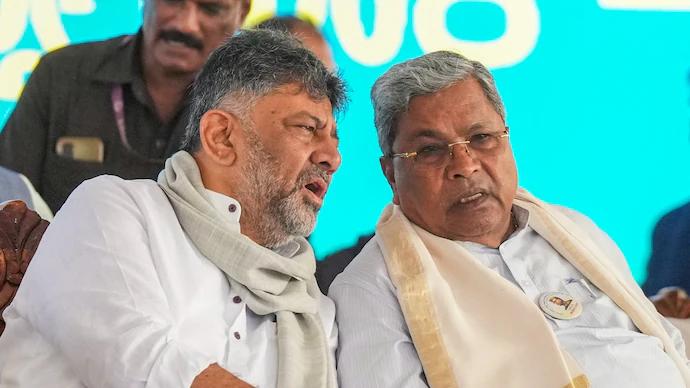
In a statement that perfectly reflects the deepening cracks within the Karnataka Congress, Deputy Chief Minister DK Shivakumar’s defeated words have reignited talk of the party’s bitter internal feud. Hours after Chief Minister Siddaramaiah confidently declared, “Yes, I will continue [as Chief Minister for five years], why do you doubt it?”, his deputy, long seen as a contender for the top post, sounded anything but content.

“What option do I have? I have to stand by him and support him,” Shivakumar told reporters, his tone betraying a mixture of resignation and frustration.

While Shivakumar brushed aside talks of discord, his choice of words tells its own story: of a leader cornered by political arithmetic, community pressures, and a high command unwilling to gamble with stability just yet.

Five years or a mid-term change?

Siddaramaiah’s declaration came as a direct snub to months of speculation over a leadership switch, driven largely by the rival camps within the party and fueled by influential religious leaders backing their caste representatives.

The Chief Minister scoffed at the idea of an imminent change, asking rhetorically, “Are they [BJP and JD(S)] the Congress high command?” But beneath the bravado lies a fragile truce stitched together after the party’s 2023 Assembly election victory.

Siddaramaiah secured the Chief Minister’s post after majority support from MLAs, leaving Shivakumar, the Vokkaliga strongman, with the deputy CM role and the KPCC President title. But the ambitions didn’t die there; they merely simmered under the surface.

Vokkaliga pressure, Lingayat bargains, and a divided Congress

The rivalry sharpened in July 2024 when Vokkaliga seer Chandrashekar Swamiji publicly urged Siddaramaiah to step down and pave the way for Shivakumar. “Everyone has enjoyed power. Our DK Shivakumar hasn’t become the Chief Minister yet. Please hand over power to him,” the seer declared at Kempegowda Jayanti, with both leaders awkwardly sharing the stage.

For Shivakumar, a key face of the Vokkaliga community that forms nearly 15% of Karnataka’s population, this endorsement was both a boost and a political trap, forcing him to walk the tightrope between ambition and party discipline.

Not to be left behind, Lingayat seers also threw their hats into the ring, demanding a share in the power pie if leadership changes occur. Prominent Lingayat voices have even suggested adding more Deputy Chief Ministers to dilute Shivakumar’s influence, a proposal some ministers aligned with Siddaramaiah are aggressively pushing.

This caste arithmetic, with religious heads increasingly dictating terms, reflects a deeper malaise within Karnataka politics: power, rather than policy, has become the currency of governance.

Shivakumar cornered: From hope to helplessness

Shivakumar’s hopes of leveraging the 2024 Lok Sabha elections to strengthen his bid for the Chief Minister’s post took a hit after his brother, D.K. Suresh, lost Bengaluru Rural — their family stronghold. Meanwhile, BJP’s C.N. Manjunath, a high-profile cardiologist and Deve Gowda’s son-in-law, added pressure by clinching a significant victory.

Having once resisted settling for second-best, Shivakumar’s latest remarks — “What option do I have?” stand in stark contrast to his earlier defiant posturing.

His camp’s quiet frustration is compounded by MLAs like Iqbal Hussain openly claiming that over 100 of Congress’s 138 legislators want Shivakumar elevated, warning that “the Congress may not return to power if the high command doesn’t act.”

But Shivakumar, aware of the high command’s hesitation, has chosen to publicly downplay the discontent, for now.

Siddaramaiah’s calculated defiance

For Siddaramaiah, survival depends on projecting strength and rallying MLAs wary of Shivakumar’s growing caste-based backing. His “bande” (rock-solid) government comment and unwavering five-year claim are calibrated to undermine rivals both within and outside the party.

Simultaneously, his camp’s push for additional deputy CMs signals an attempt to fragment community loyalties and weaken Shivakumar’s grip.

What’s ahead? A delicate truce or a brewing storm

Despite public assertions of unity, the Congress’s Karnataka model is anything but stable. With seers stirring caste loyalties, factions angling for influence, and a visibly cornered Shivakumar forced to publicly declare his helplessness, the question isn’t if the power struggle will erupt — but when.

For now, DK Shivakumar stands by Siddaramaiah, but his words echo far beyond the press briefing: “What option do I have?”

An option may emerge, sooner than Siddaramaiah hopes, or Shivakumar expects. Until then, Karnataka’s governance hangs in the balance.

Husband dead, affairs with brothers-in-law, and mother-in-law murdered for property: The full story of the Pooja Jatav saga

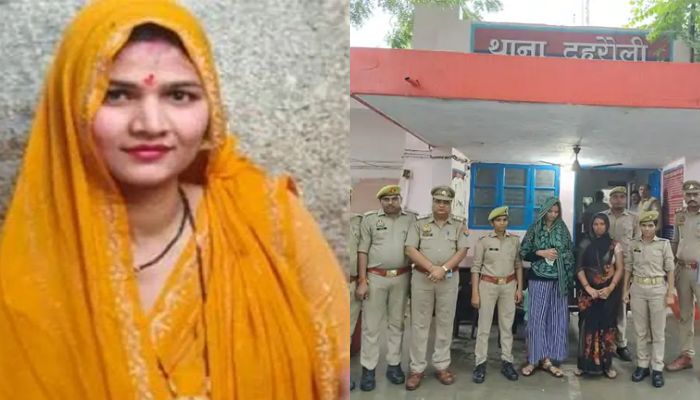
In Uttar Pradesh’s Jhansi district, a 29-year-old woman named Pooja Jatav is accused of killing her mother-in-law over a land dispute on 24th June 2025. It, however, has emerged that beyond the alleged land dispute, the case revolves around a disturbing saga of multiple marriages, betrayal, and murder.

On 24th June 2025, a 60-year-old Sushila Devi, who lived in the Tahrauli area of Jhansi, was found dead under suspicious circumstances. When Sushila’s daughter-in-law, Pooja Jatav, vanished following the murder, the case—which had been initially investigated as a potential robbery—took a sinister turn as more details emerged. When Pooja suddenly disappeared, suspicions were aroused, and investigators started looking further.

Game of greed: Pooja Jatav conspired to kill her mother-in-law to grab the family land

According to reports, Pooja Jatav intended to permanently relocate to Gwalior and sell eighteen bighas of her in-laws’ family land in Jhansi. Currently under family control, the land was officially the property of her late husband, Kalyan. Sushila Devi vehemently opposed Pooja’s intentions of selling the property, even though other family members, such as her father-in-law and brother-in-law Santosh, were apparently willing to offer her share. Sushila Devi, however, did not give consent to sign the property papers, thus enraging Pooja Jatav.

Subsequently, accused Pooja Jatav hatched a conspiracy to kill Sushila Devi with the help of her sister Kamini and his boyfriend Anil Verma. Per the plan, Kamini and Anil drove 125 km to Jhansi on the evening of 24th June, waited until the house was vacant and then gave Sushila Devi a poison injection. After this, they strangled the 60-year-old woman to death. Subsequently, they proceeded to steal jewellery valued at Rs 8 lakh and escape the crime scene.

When Pooja did not come home after the funeral, suspicion arose. Police brought her in for interrogation due to her suspicious absence, inconsistent statements, and her mobile data. After being questioned for a long time, she finally admitted to plotting the murder

Consequently, Pooja and Kamini were taken into custody and imprisoned. Meanwhile, the police also nabbed Anil Verma.

Pooja Jatav, her multiple marriages, live-in relationship and betrayal for property

As if the cold-blooded murder of an old woman by her own mother-in-law was not disturbing enough, details about the accused Pooja Jatav’s multiple marriages within her first husband’s family have also emerged.

Pooja Jatav’s first marriage was with a Gwalior resident. That marriage, however, turned bitter after allegations of domestic violence emerged. Pooja was allegedly shot by her husband during one of their fights and the matter reached court. During the legal proceedings, Pooja met Kalyan. The two soon grew close as Kalyan sympathised with Pooja and eventually got married.

However, six years after their marriage, Kalyan reportedly died in a road accident. Pooja wasted no time and indulged in an affair with her deceased second husband’s elder brother and her brother-in-law, Santosh. He was married, nonetheless, Pooja moved into Santosh’s house and started staying in a live-in relationship with Santosh and began claiming marital rights. This, however, did not go well with Santosh’s wife, who often confronted Pooja over her illicit affair with her husband.

While frequent quarrels over this matter occurred in the family, accused Pooja Jatav started pressuring the family to give her 50 per cent share in the ancestral land. Pooja argued that she deserves a share in the family property since she is Kalyan’s widow. Although Santosh and other family members were willing to settle the matter as Pooja wished, however, Kalyan’s mother, Sushila Devi (deceased victim), remained reluctant.

Some reports say that rumours of Pooja’s alleged illicit relationship with her father-in-law added to the ongoing tumult in the family. As Sushila Devi refused to give Pooja her demanded share in the family property and also grew suspicious over Pooja’s alleged inappropriate relationship with her father-in-law, Pooja decided to eliminate her mother-in-law.

With Santosh and other family members not supporting her strongly, Pooja Jatav decided to kill Sushila Devi to obtain property share. She then conspired to kill her mother-in-law. Pooja involved her sister Kamini and his boyfriend Anil in the plan to first kill Sushila Devi, seize gold and other valuables, and pass off the murder as ‘robbery gone wrong’.

However, the Tahrauli Police registered an FIR on the complaint lodged by the deceased victim’s husband and dissected the crime layer by layer. Currently, all the accused persons, Pooja, Kamini and Anil, have been arrested. The police have imposed IPC sections pertaining to murder, conspiracy, and robbery. Meanwhile, the police are reported to be investigating whether other cases, including her second husband Kalyan’s death, also have any criminal conspiracy angle.

Uber, Ola, Rapido can now charge 2x of the base fare during peak hours: All you need to know

Vehicle aggregators including Uber, Ola, inDrive and Rapido have been granted headroom on surge pricing by the the Ministry of Road Transport and Highways, on 1st July. The Road Transport Ministry’s guidelines for ride-hailing services permitted them to charge up to twice the base fee, instead of the previous 1.5 times, while maintaining non-peak hour charges at a minimum 50% of the base fare.

The updated standards must be adopted by states within three months. A 10% fare penalty, to a maximum amount of Rs 100 is scheduled to be applied if a driver cancels a reservation without providing a valid explanation after accepting the trip on the app, in a new set of Motor Vehicle Aggregator Guidelines (MVAG) 2025. The aggregator and the driver will each incur the fine.

Likewise, a similar charge would be collected when an individual cancels a reservation via the application. These aggregator companies use surge pricing to control sudden spikes in demand during peak hours.

New working requirements for the drivers

The same compliance requirements that apply to other aggregator drivers must be met by all drivers onboarded for non-transport motorcycle services. These requirements include completing required 40-hour induction training programs, undergoing medical examinations, including eye tests, psychological evaluations and police background checks at least seven days before initial integration.

App usage, traffic laws, first responder training, gender sensitivity and disability awareness are all included in the training programs that all drivers must conclude, which combine in-person and online courses. Aggregators are required to guarantee that drivers possess health and term insurance worth no less than Rs 5 lakh and Rs 10 lakh for each driver, respectively with yearly increases announced by the centre.

Drivers who rate their duration of engagement with the aggregator below the five percentile of all drivers will be required to do refresher training every quarter, which is mandated annually and will not be permitted to continue using the aggregator if they don’t.

Safety and comfort of passengers

The criteria for safety and technology have been extensively reinforced. Applications need to be accessible in Hindi, English, and the official state language in cases where Hindi is not the state language. Aggregators are required to acquire cybersecurity certification from companies that CERT-In (Indian Computer Emergency Response Team) has approved and accredited.

The Digital Personal Data Protection Act of 2023 and other related laws must be followed when storing data, including trip, passenger and fare records. All aggregators must establish round-the-clock control rooms to keep an eye on vehicle movements and be in constant communication with vehicles that are on board.

The centre has directed that the aggregator make sure that vehicle locating and tracking devices (VLTDs) are put in vehicles, their feed is received and are connected to the state government’s integrated command and control centre for the sake of passenger safety.

Moreover, they have to run round-the-clock call centres that offer support in both English and the official state language. Every automobile must have active AIS 140-compliant vehicle location tracking equipment installed, as well as panic buttons that are linked to the control room of the aggregator.

Apps must have particular features for Divyangjan (people with disabilities) to comply with accessibility standards and state governments must decide how many vehicles are proportionately included in aggregator fleets that are suitable to people with disabilities.

State governments have the authority

According to the new guidelines, state governments would announce the base fare for various vehicle categories that fall under the policy’s purview, such as autorickshaws and bike taxis and are free to add clauses beyond those outlined in the updated standards. The state governments could now allow the aggregation of motorbikes that are licensed for personal use as well.

Furthermore, the incentives and fare share percentage of the drivers are to be fixed after their recommendations. States “may impose fees on the aggregator for issuance of authorisations permitting non-transport (private non-commercial) motorbikes to undertake journeys through such aggregator, on a daily, weekly, or fortnightly basis, as may be determined by their government.” The implementation of fees is a matter of discretion and states are free to choose whether or not to impose such costs.

Meanwhile, companies must disclose their base prices if the states have not notified them of the rate. Additionally, dead mileage costs won’t be imposed until the pick-up distance is less than three kilometres. The cost for the distance a driver covers to pick up a person is known as a dead mileage charge.

Only the fare from the starting point of the ride to the destination, where the passenger is dropped off, shall be levied. At least 80% of the applicable fare, including all costs under the driver’s fare, must be paid to the driver who boards the vehicle with the aggregator while the balance should be held as the latter’s appropriated fare.

According to the terms of the driver-aggregator agreement, the payment might be made every day, every week or every two weeks but not afterward. The revised guidelines highlighted, “With respect to motor vehicles owned by the aggregator the on-boarded driver shall receive at least 60 per cent of the fare applicable, including all costs specified in driver fare and the remaining charges shall be retained as the apportioned fare.”

Aggregators have to “mandatorily adhere to targets fixed for inclusion of electric vehicles in their fleet,” according to the guidelines, which introduce compulsory electric vehicle targets. State governments or the proper government agencies in charge of controlling air quality will establish these goals. On a yearly basis, they may also order aggregators to gradually raise the proportion of electric, alternative fuel or zero-emission vehicles in their fleets.

Significance of the new framework

While the decision has been met with criticism from some sections, it exemplifies the operation of a free market economy, where private companies are permitted to function. They are permitted to charge within a reasonable framework under the jurisdiction of higher authorities including state governments. Moreover, the public is not entirely reliant on these services, as public transportation offers nominal fare options.

According to reports, the goal of the government is to prevent aggregators from undercutting competition by providing steep discounts, while also guaranteeing that consumers are not burdened during times of high traffic. Along with offering reasonably priced passenger transportation, hyperlocal deliveries and the creation of job possibilities, the move is anticipated to alleviate traffic congestion and vehicle pollution.

The fresh regulations could even legalise bike-taxi services, which have long operated in murky regulatory conditions by Rapido, Ola and Uber. However, the decisions made by each state government to use this fresh authority are going to dictate how it is actually implemented.

India’s shared mobility ecosystem has undergone “rapid and significant change” since the first 2020 framework was introduced, which prompted the inclusion of the bike taxi provision in the aggregator rules. The government stated that the growing popularity of electric cars, bike-sharing and autorickshaw rides has “widened the consumer base.”

According to the government, the revised framework seeks to preserve a minimal regulatory approach while guaranteeing driver welfare, user security, and safety. Industry players, including Uber and Rapido, have welcomed the guidelines, with Uber calling them a step toward innovation and regulatory clarity, and Rapido describing the recognition of non-transport motorcycles as a milestone for affordable transport and last-mile connectivity.

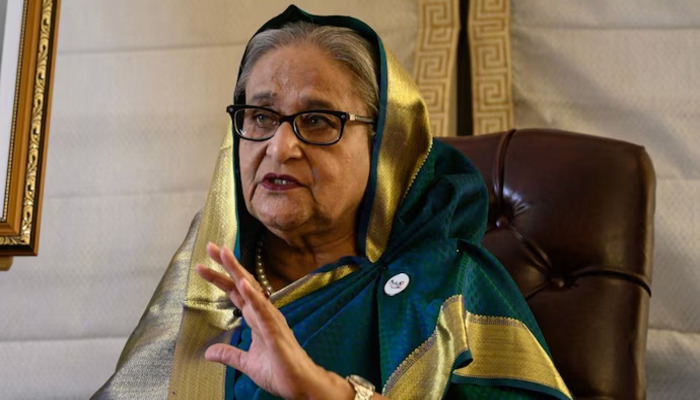
Yunus-led regime convicts ousted PM Sheikh Hasina, grants 6-month jail term in contempt case

On 2nd July (Wednesday), Ousted Bangladesh PK Sheikh Hasina was granted a six-months jail term in a contempt case by Bangladesh’s International Crimes Tribunal (ICT).

As per The Dhaka Tribune, a three-member bench, headed by Chairman Justice Md Golam Mortuza Mozumder, of the ICT convicted Hasina for contempt of court. The sentence will take effect when is she is arrested or surrenders. The tribunal also granted 2 months imprisonment to Shakil Akand Bulbul, a member of Awami League’s student wing, Bangladesh Chhatra League (BCL), from Gobindaganj in Gaibandha for the same offence.

The case reportedly relates to a leaked phone call, in which Hasina allegedly told Bulbul that she had obtained a license to kill 227 people. “227 cases have been filed against me, so I have obtained a licence to kill 227 people,” Hasina reportedly said in her phone conversation with Bulbul made in October last year.

It was contended by the prosecution before the Tribunal that the statement of Hasina amounted to contempt of court as it threatened the judicial process and was intended to create fear among those involved in the ongoing war crimes trials relating to last year’s revolution that overthrew the Awami League government in Bangladesh. Hasina was formally charged by the ICT in June this year, for crimes against humanity alleging her role in ordering mass killings during the ‘student uprising’ in July last year.

After 15 years of successfully ruling Bangladesh, Sheikh Hasina had to flee from her country in August last year following regime change operations disguised as a student-led protest that went on for weeks. The Hindu minorities of Bangladesh faced brutal violence during the so-called protests. An interim government led by Nobel Laureate Muhammad Yunus took over and promised to take the country on the path of democracy. However, almost a year after the undemocratic ouster of the Hasina government, the elections are nowhere in sight in Bangladesh. Instead, Muhammad Yunus launched a campaign called ‘Operation Devil Hunt’ to hunt down Awami League (AL) leaders from across the country.

India’s growing stray dog population: A silent crisis that no governments are paying attention to

On a late March morning this year, a six-year-old boy was mauled to death by a pack of stray dogs in Ludhiana, Punjab. In just a matter of three months, he was the fourth child fatality in the district. He was playing near a garbage dump when the dogs attacked, fatally injuring him. Just weeks later in Goa, a 20-month-old toddler wandered outside her home. Stray dogs saw her as an easy prey and attacked. Her gruesome wounds proved fatal.

In one of the most recent incidents, 22-year-old Kabaddi player Brajesh Solanki died of rabies in Uttar Pradesh’s Bulandshahr. Solanki was bitten by a puppy two months ago while rescuing it. He neither informed anybody of the bite nor took anti-rabies vaccination. Last week, he felt numbness during practice. He was shifted to the district hospital and then to Noida when his health worsened, where he was diagnosed with rabies. After suffering from horrifying symptoms for around a week, he succumbed to the disease.

These incidents were once isolated and rare. However, now they have become disturbingly frequent across India. They shine a harsh light on a silent crisis that has been intensifying over the years. The explosion in the stray dog population has resulted in devastating consequences for public safety and health. Still, the central government, state governments and local authorities have failed to put an end to the problem of stray dogs that is quickly becoming a menace for the public.

Surging stray dog population since independence

Street dogs have long co-existed with humans in Indian cities and villages. However, their numbers today are unprecedented and alarming. During the colonial era and even for several decades after independence, the standard method of dog population control involved culling, or in the literal parliamentary language, “destroying the dogs”.

According to documents accessed by OpIndia from Lok Sabha and Rajya Sabha, every year thousands of dogs were killed by local authorities in an attempt to control their numbers. However, despite such drastic measures, the population continued to grow. It pointed to the failure of kill-based strategies in the Indian context. However, the numbers remained somewhat under control, and if the method had been mixed with sterilisation campaigns, it would have controlled the population of street dogs to a great extent. Alas, it did not happen the way it should have.

The 2012 Livestock Census noted that there were around 1.71 crore stray dogs in India. In 2019, the reported number was 1.53 crore. While the stats show decrease in number of strays, experts raised questions over the accuracy of these figures. They cited under-reporting and inconsistent survey methods. State of Pet Homelessness Index of India states estimates suggested in 2024 that there might be over 6 crore stray dogs in India, probably the highest in the world.

This growth is not limited to cities alone. Rural areas have witnessed a dramatic increase in free-roaming dogs. Decades ago, the issue of stray dogs was still manageable but now it has become a crisis of overwhelming proportions. The reasons behind this surge are urbanisation, uncollected garbage, poor planning, an ineffective population control system and the increasing number of so-called dog lovers who have made it their life’s motto to ensure authorities cannot even move dangerous dogs to other locations, let alone cull them.

Why the stray dog population remains unchecked

One of the main reasons for the unchecked growth in the stray dog population is policy paralysis surrounding animal control. Supreme Court-backed Animal Birth Control (ABC) Rules were first introduced in 2001. The only permissible method to manage stray dogs, according to the new rules, was sterilisation and vaccination, followed by release at the same location. The Supreme Court, on the behest of pro-dog “animal welfare” groups, passed a judgement making it impossible for the authorities and the public to get rid of the dogs, even by shifting them to a safer location where animal-human interaction could be minimised.

While the rules appear “humane” in theory, it is extremely hard to implement them in practice, especially at the scale required to make a dent in the stray dog population. To effectively reduce numbers, at least 70% of the stray dog population in a given area must be sterilised. However, in most Indian cities, the coverage is reportedly patchy at best.

Municipal bodies struggle with limited funding, insufficient infrastructure, lack of trained personnel and backlash from animal welfare groups on top of overall incompetence and gross negligence. The result is a slow and ineffective sterilisation effort, unable to match the breeding rate of strays.

Furthermore, in many Indian communities, feeding stray dogs is considered an act of kindness and, in some cases, even has religious merit. People routinely offer leftover food to stray dogs. If that is not enough, there are thousands of individuals and organisations across the country that specially cook food for stray dogs and feed them wherever and whenever they want, without considering the plea of locals who have to face the consequences of the formation of packs of dogs as people feed them at those locations.

While compassionate, such practices inadvertently support larger dog populations by providing easy access to food, especially in neighbourhoods where waste disposal is already poor. Garbage dumps, overflowing bins, and food leftovers on streets become regular feeding grounds for entire packs.

Mismanagement and corruption is another reason for the increasing number of stray dogs. There have been reports that municipalities in many states outsource ABC programmes to NGOs or private contractors. However, there is little to no monitoring. Several cases have surfaced where NGOs claimed to sterilise thousands of dogs, but the actual numbers were a fraction.

In Bhopal, audits revealed inflated figures, ghost surgeries, and substandard facilities. Without proper oversight, public money meant for population control ends up being wasted, and the dogs continue to multiply every year.

Public safety at stake amid a rabies crisis

The unchecked population is no longer an urban problem. It has become a public safety emergency and a national shame. India has the largest number of rabies deaths annually in the world. Dog bites are now an everyday occurrence. Between 2019 and 2022, over 1.6 crore dog bite cases were officially recorded in India. That is an average of more than one bite every two seconds. These figures are likely underreported, as many rural cases never reach the dataset.

Some states are facing a particularly grim situation. For example, Kerala reported 3.16 lakh dog bite cases in 2024 alone. In Ludhiana, Punjab, government hospitals registered over 40 cases a day. Stray dogs attack people from all age groups. From children to elderly pedestrians, sanitation workers, and delivery agents, no one is safe on Indian roads, not even in gated societies, anymore. Stray dogs are increasingly territorial, aggressive, and often move in large packs. It makes attacks more frequent and dangerous.

Notably, India accounts for 36% of global rabies deaths. Around 18,000 to 20,000 people die of rabies every year, and most of these deaths are caused by dog bites. Rabies is 100% fatal once symptoms appear, making post-exposure treatment the only line of defence. Sadly, access to vaccines, especially in remote and rural regions, remains inconsistent. Furthermore, lack of awareness is another reason people fail to report or go to the doctor immediately once they are bitten by a stray dog. There is also a psychological toll. Fear of dog attacks keeps elderly people confined indoors. Children are restricted from going to parks or playing in front of their houses. Even youth, in some areas, have to walk with a stick in their hands. In short, the growing stray dog population has transformed the issue into a full-blown national crisis, and nobody is ready to talk about it, all thanks to the Animal Welfare Boards, animal lovers, and the judiciary.

The way forward – solutions and national-level reforms

Solving this crisis demands a coordinated, multi-agency effort without any interference from animal ‘activists’, the Animal Welfare Board, dog lovers or the judiciary. India needs a mission-mode campaign that must be backed by the central government, involving the ministries of health, animal husbandry, urban development and municipal bodies. The government and local authorities must scale up sterilisation infrastructure rapidly. Dedicated funds, real-time monitoring apps, mobile ABC vans and digital dog-tagging systems for stray dogs should be implemented.

The central health ministry has started coordinating with animal husbandry authorities under a “One Health” framework, recognising that human rabies control is impossible without controlling it in dogs. However, it will take time to get results as getting all stakeholders onboard is not an easy task.

There is also a need for waste management. Unattended garbage is a key contributor to the high stray population. Municipalities must ensure clean streets and prompt waste collection. Designated feeding zones, away from residential clusters should be set up, and ‘animal lovers’ must comply with this without making a fuss.

Furthermore, there is a need for strict laws against pet abandonment and illegal breeding. Many strays originate from dumped pets or their unneutered offspring. Making pet sterilisation compulsory and regulating breeding can cut down the influx of new strays.

Finally, public awareness must increase. Citizens need to be educated about rabies prevention, responsible feeding and how to engage with authorities to sterilise strays in their areas. Compassion and caution must go hand in hand if India wants to address this human-animal conflict in a strict yet humane manner.

It is time to act decisively

India has a major stray dog problem, and it is not just about animals on the street. It is about human lives, public health and safety. The numbers have reached a stage where authorities cannot ignore them. The tragedies are happening too frequently to brush aside. India needs not only better rules but stronger action, strict accountability and a public conversation. There should be a balance between animal welfare and people’s right to live without fear. If this crisis remains unaddressed, the headlines will continue to speak through bloodied playgrounds, grieving parents and a healthcare system battling avoidable rabies deaths. The time to act was a day before yesterday. The time to wake up is now.


As PM Modi embarks on his first-ever visit to Ghana, a resource-rich African nation locked in a standoff with China over illegal gold mining: Here’s what’s at stake

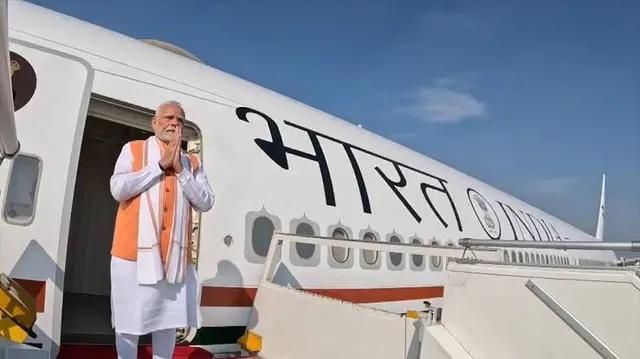
Prime Minister Narendra Modi on Wednesday (2nd July 2025) departed for a five-nation visit to Ghana, Trinidad and Tobago, Argentina, Brazil, and Namibia from 2 to 9 July. PM Modi’s Ghana visit comes at a time when China and Ghana are at loggerheads over illegal gold mining.

At the invitation of Ghana’s President John Dramani Mahama, PM Modi will visit Ghana on 2-3 July. Ghana is a valued partner in the Global South and plays an important role in the African Union and the Economic Community of West African States.

“I look forward to my exchanges aimed at further deepening our historical ties and opening up new windows of cooperation, including in the areas of investment, energy, health, security, capacity building and development partnership. As fellow democracies, it will be an honour to speak at the Parliament of Ghana,” an official statement said.

Taking to X, PM Modi said, “Over the next few days, I will be attending various bilateral, multilateral and other programmes in Ghana, Trinidad & Tobago, Argentina, Brazil, and Namibia. Looking forward to interacting with world leaders and discussing ways to make our planet better.”

Highlighting the significance of PM Modi’s Ghana visit, High Commissioner Manish Gupta said, “We are privileged indeed that the Prime Minister Modi is visiting Ghana for the first time. This is the first visit of the Indian Prime Minister to Ghana in three decades. It is a very historical moment for us, and when it comes to our bilateral ties, this is a very deep-rooted relationship with a rich historical legacy.”

The Indian envoy also emphasised New Delhi’s development cooperation with Accra, noting India’s investments in Ghana through a combination of private business initiatives, government-to-government grants, and concessional credit lines. Notably, India is also set to establish a vaccine hub in Ghana.

“India is among the leading countries taking the charge for the Global South…As the Prime Minister initiated the policy to make the development human-centric and all-inclusive, this is one of the core priorities for the Global South…We have invested nearly two billion dollars through our Indian businesses in this country. Another billion dollars’ worth of investments have come through government-to-government grants, concessional lines of credit, and bias credit programs. Some of the very signature infrastructure came through here through the Indian Partnership, and one of the prime examples you would see tomorrow is the Jubilee House. This has come through Indian Partnership,” he said.

Ghana and China at loggerhead over illegal gold mining

In recent times, tensions have escalated between China and Ghana as Chinese nationals have been involved in small-scale illegal gold mining “galamsey” in Ghana. These illegal activities of Chinese nationals are causing environmental damage and also inflicting economic losses. Illegal gold mining is reported to have caused significant damage across Ghana’s Western, Ashanti and Eastern regions. Ghana has accused Chinese miners of flouting regulations, however, China denies these allegations.

In 2023, a Chinese national Aisha Huang also known as the ‘Galamsey Queen’, was sentenced in 2023 to over four years in prison and fined US$4,000 after returning to Ghana despite a previous deportation.

Ghana issued a mandate in April this year for foreigners to exit the gold market by the month end to curb smuggling and boost revenue through a centralised Gold Board. Previously, multiple license holders competed for gold from small-scale miners. This led to revenue leakage and inconsistent pricing.

Prime Minister Modi’s historic visit to Ghana, first by an Indian PM in 30 years, is seen as a step towards further strengthening an already deep Indo-Ghana ties amid the ongoing China-Ghana dispute. Not to forget, India is a major importer of Ghanian gold. India is likely to position itself as a counterbalance to China’s influence in Ghanian resource sector.

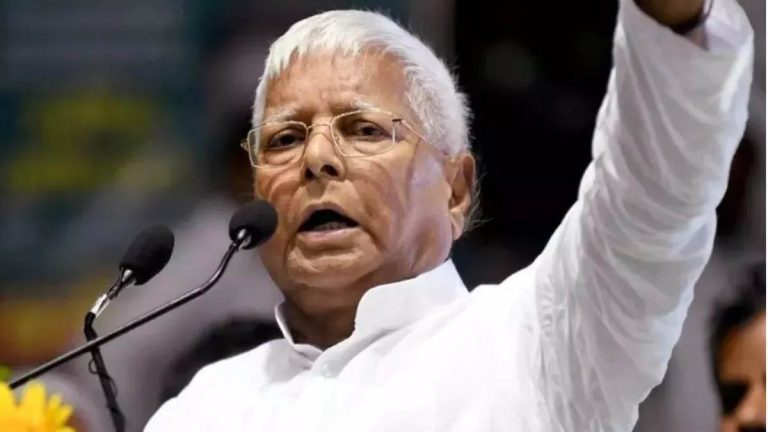
Land for job scam: Lalu Prasad Yadav named ‘kingpin’, Tejashwi and Rabri Devi ‘beneficiaries’ in CBI chargesheet

The Central Bureau of Investigation (CBI) on Tuesday concluded its arguments on the framing of charges in the alleged land-for-jobs scam involving Rashtriya Janata Dal (RJD) chief Lalu Prasad Yadav, his wife Rabri Devi, their sons Tejashwi Yadav and Tej Pratap Yadav, and other co-accused named in the charge sheet.

During the hearing, the CBI referred to Lalu Prasad as the “kingpin” of the alleged conspiracy. The agency cited statements from two approvers, who claimed they were pressured by Lalu to appoint certain candidates whose names were finalized by his office. The CBI also presented testimonies from several prosecution witnesses who confirmed that a list of selected applicants was handed over by Lalu’s then private secretary during a conference of general managers in the Railway Department, where Lalu served as Union Railway Minister.

In addition, the agency argued that Rabri Devi, their daughter Misa Bharti, and sons Tejashwi and Tej Pratap were direct beneficiaries of land parcels transferred by job seekers. These transfers, the CBI alleged, were made in exchange for appointments made illegally within the railway department at Lalu’s behest.

With the Central Bureau of Investigation (CBI) concluding its arguments in the alleged land-for-jobs scam, the next stage in the legal proceedings will see the accused, including Lalu Prasad Yadav and his family members, present their counter arguments opposing the framing of charges. Once these arguments are heard, the court is expected to reserve its order before deciding whether to formally begin the trial.

So far, the CBI has named 78 individuals in its chargesheets, including Lalu Prasad Yadav.

The agency had previously obtained the necessary sanction to prosecute Lalu for his alleged role in the case. Initially, the CBI filed two separate chargesheets detailing irregular appointments in the Central and Western Railway zones. In June last year, the agency submitted its final and consolidated chargesheet, encompassing additional railway zones and naming Lalu, Rabri Devi, Tejashwi Yadav, Hema Yadav, former OSD Bhola Yadav, and others.

According to the final chargesheet, Lalu and other public servants were accused of influencing recruitment processes in exchange for land and other benefits. The CBI alleged that Lalu, Rabri Devi, and Tejashwi Yadav were the “ultimate beneficiaries” of the scheme. It also claimed that the conspiracy extended beyond land-for-job exchanges to include cash payments and other political incentives. The agency further stated that Lalu, in his capacity as railway minister, used his position to pressure officials, particularly in the West Central Railway zone.