Home Blog Page 3467

The symmetry between 2006 Varanasi bomb blasts and 2020 Delhi anti-Hindu riots: Carnages preceded by violent protests by Muslim demonstrators

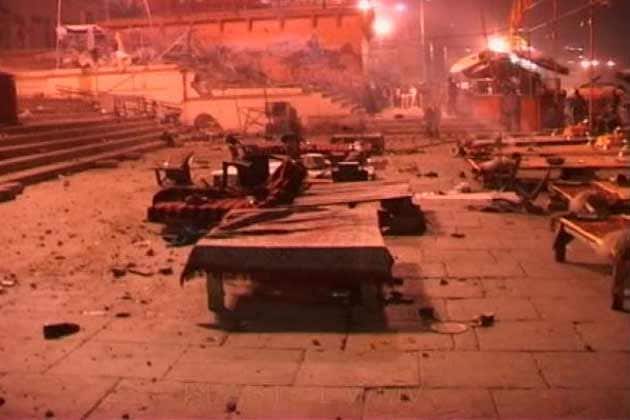
On this day, sixteen years ago, one of the holiest cities of Hindus, Varanasi, came under the attack of Islamic terrorists. A series of bomb blasts took place in the city on 7 March 2006, leaving at least 28 dead and over 100 injured. A Pakistani terror outfit, Lashkar-e-Qahab, took responsibility for the attacks.

The first bomb blast took place at the hallowed Sankat Mochan Hanuman Mandir that is located in the vicinity of the Banaras Hindu University. The location of the attack was specifically chosen presumably to inflict maximum damage and send a message to Hindus given that it was Tuesday, an auspicious day regarded by Hindus to worship Lord Hanuman. Hundreds of devotees had gathered in the temple in the evening to offer prayers when the bomb went off.

The explosives were planted near the temple’s gate, where women usually sat for worship. At 6:20 pm in the evening, when the temple was teeming with devotees, the bomb exploded, causing the death of 10 people while causing grievous injuries to at least 40 others.

A few minutes later, another blast took place at Varanasi Cantonment railway station, claiming 11 lives and rendering scores of people seriously injured. As per reports, the explosive had been packed inside a pressure cooker and left inside an unremarkable bag. Here again, it was conjectured that the timing of the bomb blast was decided meticulously, to coincide with the large number of passengers waiting for the Shiv Ganga Express.

After the two blasts, police swung into action, launching a widespread search operation across the city to locate more explosives planted by the terrorists. Consequently, they found six explosives—three live bombs from a temple complex and three from other parts of the city—averting what could have been an even deadlier and catastrophic attack.

In the aftermath of the bomb blasts, a call originating from Pakistan claimed the responsibility for the attacks. A caller who identified him as Abu Feroz contacted a private news organisation to claim that he is a spokesperson for a terror outfit named Lashkar-e-Qahab who had carried out the attacks in Varanasi. Feroz threatened to carry out similar attacks unless the Indian government stopped its operations against terrorists in Jammu and Kashmir.

However, preliminary investigations into the blasts revealed that the call from Abu Feroz could have been a hoax as the role of Lashkar-e-Taiba, the same terror outfit that carried out Mumbai terror attacks two years later, in 2008, began to emerge in the Varanasi bomb blasts. It was also reported that the bombs were made in Bihar and the explosives were procured from Nepal, which was then smuggled into India via porous Indo-Nepal border. Shamim Ahmed, a HuJI worker was one of the accused in the case, who was claimed to have planted a bomb, which remained unexploded. The UP special task force had arrested one Waliullah, an imam of a mosque, for playing a pivotal role in the execution of the bomb blasts.

Protests erupts across India against US president’s visit in 2006 and against depiction of Prophet Muhammad in European newspapers

While the investigation centred around the perpetrators of the dastardly bomb blasts that roiled Varanasi, one of the oldest cities in the world and the foremost cultural centre of the Hindus, what is often glossed over is the turn of events that transpired before the attacks. The bomb blasts were treated as an isolated incident, carried out by terrorists based out of Pakistan, who harboured a deep hatred for India and were brainwashed with supremacist Islamic beliefs.

However, it is worth noting that the fateful bomb blasts in Varanasi took place just weeks after the widespread protests that broke out in India against the publication of cartoons of Prophet Muhammad in European newspapers. The protest had touched off after a Danish newspaper had published a caricature of Prophet Muhammad, triggering massive protests across the globe, including in India.

Thousands of Muslim protesters who felt aggrieved at the depiction of their Prophet, something which is banned under Islam, took to the streets in cities across India, shouting slogans, carrying placards denouncing European newspapers for publishing the cartoons of Prophet Muhammad. While they claimed the protests to be peaceful, they were marked with riots, vandalism and arson as protesters hurled stones at cars, clashed with law enforcement officials and torched vehicles that came their way.

The protests against the depiction of Prophet Muhammad were spurred by the visit of the then US President George Bush. The former US President was on his visit to India in the first week of March 2006, just days before the ghastly bomb blasts in Varanasi. Several Muslim organisations, nursing hatred for America, hit the streets in many cities around the country, most notably Mumbai and Delhi, where rioters went on a rampage protesting against Bush’s India visit.

As Bush was having lunch with India’s then Prime Minister Manmohan Singh, tens of thousands of protesters gathered at Mumbai’s iconic Azad Maidan, demonstrating against the US president. The crowd gathered burnt American flags and stepped on them. A young boy named Shoaib, who was in third grade, who also accompanied the protests, urinated on the flag after being spurred by the demonstrators.

According to a report published in New York Times, a dozen men who participated in the protests in Azad Maidan held a banner declaring that they were ready to become suicide bombers. “Bush is here. If I get a chance, I will bomb him to death,” said Sajid, a protester who was resentful of America’s actions to eliminate Islamic terrorists.

Scenes on the streets of India’s capital, New Delhi, were not too different. As per reports, thousands thronged the protest against American President, with many of them carrying placards calling for Bush to return. The protests were also attended by several Indian politicians, including Prakash Karat of the CPI, a party that has been pushed into the abyss of political irrelevance in the one and a half decades since the Varanasi attacks.

However, in 2006, Prakash Karat defended the protests that were taking place across the country against the visit of the US President. “George Bush is the guest of the government of India but not of the people of India,” Karat had reportedly said then, even though CPI was supporting Singh’s Congress-party led UPA government at the Centre.

2020 anti-Hindu riots in Delhi: How protesters under the pretext of opposing CAA unleashed violence against Hindus

Interestingly, 14 years later, a similar protest preceded and accompanied the visit of American President Donald Trump in 2020, when thousands of anti-CAA protesters ran riot on the streets of New Delhi, in a bid to draw America’s attention to their concerns and build international pressure on the Indian government to revoke the Citizenship Amendment Act, a bill that sought to grant swiftly the citizenship of India to persecuted minorities from the neighbouring three countries, namely Pakistan, Bangladesh and Afghanistan.

And just like the protests against US President George W. Bush and the depiction of Prophet Muhammad in European newspapers culminated into the bomb blasts that targeted Varanasi, one of the holiest cities of Hindus, similarly, the anti-CAA protests following the visit of US President Donald Trump reached a crescendo, touching off a horrifying bout of anti-Hindu riots in Delhi’s northeast region.

Muslim mobs, be it those who reportedly lynched IB officer Ankit Sharma after allegedly dragging him inside AAP leader Tahir Hussain’s house or the one who attacked Dilbar Negi, who was burnt by a Muslim mob after being cut off with a sword during the Anti-Hindu Delhi riots in the national capital, were on a murderous rage against what they perceived as injustice committed against them.

The stark resemblance between what led to 2006 Varanasi bomb blasts and 2020 anti-Hindu riots in Delhi

There is a stark resemblance between the events that led to the Varanasi blasts in 2006 and those that took place before the horrifying anti-Hindu riots in Delhi in 2020. In both cases, the carnage was preceded by protests carried out by Muslim organisations and protesters on account of perceived injustice committed against Muslims. In 2006, it was the cartoons of Prophet Muhammad and the American action against Islamic terrorists. Fourteen years later, it was against the naturalisation of persecuted minorities from neighbouring countries.

An uncanny symmetry between the two cases illustrates how protests are just a smokescreen, used as a means to mobilise susceptible Muslims by drumming up the hackneyed trope of “Islam is in danger” or “Discrimination meted out against Muslims” so that thousands of Muslims are galvanised into hitting the streets, protesting against what they assume to be against their faith and rights. As protests start taking place, the local authorities are compelled to shift their focus on maintaining law and order rather than deploying their resources to avoid terror attacks and outbreaks of riots.

The distraction caused by such protests is then exploited by rabble-rousers to realise their nefarious designs. For instance, during the 2006 Varanasi blasts, the terrorists planted explosives inside Hindu temples with the express desire to cause Hindu casualties. Similarly, during the anti-Hindu riots in Delhi in 2020, Hindus and their places of worship were specifically targeted by frenzied Muslim mobs that were purportedly carrying out protests against the CAA.

Thus, a pattern emerges out of these two incidents, which shows protests that have borne out of perceived Muslim resentment usually ends up bearing cataclysmic consequences for the Hindus. They are a prelude to something much more sinister and dangerous, threatening to not just disrupt the peace and tranquillity of the country but also cause grave human loss and deepening societal fissure. It demonstrates that “peaceful” protests carried out in the name of ‘Discrimination against Muslims’ and ‘Islam is in danger’ are nothing more than a ruse designed by Islamists to disguise their real intentions, which include unleashing violence against Hindus and throwing the country into chaos and disorder.

Women in the Indian movie and entertainment industry: Still caged inside toxic stereotypes

A video of a wedding is going viral on social media for the last couple of days. A groom, visibly drunk and barely able to even sit straight, is threatening that since the bride’s side has not given him the dowry he demanded, he is going to walk away, calling the wedding off.

It is not known where is it from or when it is from. But there is something in that video that hurts more than the shameless impunity that the loser of a groom displays in the video. The bride, a girl decked up with jewellery and fineries, pleading with the groom that her family has arranged whatever they could and they will eventually fulfil his demands, maybe over instalments.

The girl, like the ‘good girl’ stereotype in our societies, takes repeated insults against her family, herself, forgets her dignity and ‘pleads’ with that drunk piece of sh*t to not call off the wedding, and allow her family to fulfil his demands instalments as they are unable to do it now.

This is saddening because it is not a rarity, it is the norm, even though we refuse to accept it. The ‘good girls’ are expected to put up with absolute crap behaviour not just from the prospective husband, in-laws and random relatives, but even within their own family. Yes, there are stringent laws against dowry, yes, there are cases where anti-dowry laws are being misused rampantly. But take a moment to reflect, has this social evil been banished yet? Flip through the fourth, fifth, sixth pages of your local newspaper and you will find dozens of women still being burned, strangulated, ‘found dead under mysterious circumstances’, committing suicide over domestic issues and much more.

In 2020, 6966 women had become victims of dowry related deaths in India, at the average of 19 deaths per day.

The stereotypes that a ‘good girl’ should be as the patriarchy around her demands her to be, is widely reflected in the movie and entertainment industry too. We are in 2022, but our TV serials still show that the illiterate, cowering, demure, never arguing, dumb bahu is the good bahu and the good daughter, but the educated, smart, assertive, confident woman is the villain, whose only goal in life is to scheme and try to steal the husbands of all the good bahus.

Bollywood and its pathological obsession with prostitution, far from the realities of the flesh trade

Bollywood has a strange, pathological obsession with prostitution. The problem is not that Bollywood focuses on prostitutes, the problem is that Bollywood, for decades, has been making obscene efforts to glorify the profession, by completely washing over the rampant sexual exploitation, kidnapping, rapes, child abuse, trafficking and a score of other crimes that the profession enables, uses and depends on.

In Bollywood’s depiction, prostitutes are the glamourous, rich, talented, queen-like ladies of charm who only perform dance numbers in extravagantly decorated halls. They are the masters of art forms like singing and classical dance and the world rushes to admire them.

In reality, the prostitutes who are often very young girls kidnapped, or sold into the profession against their wishes, suffer years of abuse, live in stinky mohallas with scant sanitation and healthcare, and die early from diseases. They do not look like Madhuri Dixit or Alia Bhatt dancing away in abandon and swinging in ornate ‘jhoolas’, they look like beaten, broken, helpless women with deep sunken eyes who sell their bodies to survive.

One would think the old Bollywood stereotype of a super-rich, super-beautiful, super-talented super-dancer ‘Kothewali’ has become cliched and the Hindi movies industry has moved on. But no, ‘Kalank’ was released in 2019, and Gangubai is playing now.

TV Serials: The toxic mix of all that is wrong in our societies

TV serials in India clock hundreds of millions in viewership. Sadly, there is some compulsion among the makers to never get out of their respective cocoons, their imaginary worlds where the ‘good’ bahu should be an illiterate dumb simpleton (preferably poor) who has no idea how the world works, she has no agency, no choice over who she will be married to, and she just obeys what her parents tell her.

The good dumb illiterate bahu then becomes the tragic victim of schemes hatched by educated, smart vamps. The good bahu takes insults, abuses and even violence with a smiling face. She obeys her monstrous saas, evil aunts-in-law, and even accommodates the extramarital affairs of her husband because that is what an ‘adarsh naari’ should do, as per serial makers.

In the rare case when she gets a job, it is only because she is coaxed into it by wellwishers, only to help her family or children, not because she loves it or wants it. She never calls out the abusive behaviour of her husband, never objects to the torture and insults, never tells her in-laws to shut up and stop their mean behaviour, never objects to anything. She never asks for a divorce, she is only forced into it. Even if she accepts the divorce, she never accepts the alimony or child support because she must be the one to uphold the fake moral grandstanding. And all through this, she is always dressed like an adarsh naari, not a hair out of place. Also, her ‘happiness’ only has to come through a man, who will be her saviour and her hero.

“I started the catering business only because I needed to at that time. Normally, a woman should only focus on caring for her household and her husband,” declares the protagonist Babita in ‘Patiala Babes’.

In Anupama, the woman spends her life smiling through repeated insults and abuse, and the affair of her husband, because she is the ‘adarsh bahu’. She then takes the tough decision of divorce, because she has to let her husband live with his girlfriend, and like every adarsh bahu, she still comes back to live in the same house “to care for her in-laws”, because that is her “duty’ as an adarsh bahu.

Tropes like bigamy, infidelity, domestic violence, mental abuse, psychological torture, humiliation and toxic emotional exploitation are normalised in these serials and the female characters are made to endure it, even enable and endorse it because that is what the so-called ideal women has to, as per serial makers.

Even if the serial starts with the promise of a free-spirited, independent girl, it has to soon fall into the ‘bahu’ stereotype. And the ‘good bahu’ just has to endure, go through endless humuliations and abuse, to finally ‘win everyones’s heart’.

The hero has to be savior, the woman has to be ‘saved’

Portrayal of women in our movies and almost the entire entertainment industry, irrespective of the region or state, is just about reducing them to objects of sexual desires, or the usual dumb, incapable victims who have to be saved by the hero every time. Sadly, even in 2022, we have not evolved enough to write stories about women who take their own decisions and who are not force-fitted into the conflated ideas of what the patriarchal society wants them to be.

In Allu Arjun’s 2019 superhit Ala Vaikunthapuramulo, the female lead is a successful entrepreneur, but she still needs the hero to ‘save’ her from everything in her life, from hostile business deals, to forced marriages. There are episodes of Kapil Sharma’s comedy shows where he insults actress playing his wife for being the daughter of a poor man who brought nothing, and the audience laughs at it. Pick up any movie of any superstar, of any language, the most common message is that the women can only be the victims, and when they are not victims, they are the ‘good wife’ or ‘good bahu’ stereotype who does everything that every ‘ideal woman’ is expected to do, to make a perfect case for the the hero’s heroism.

In movies where the makers claim to portray the so-called ‘independent’ women, the so-called ‘independent’ are apparently the hot-headed bombshells whose idea of independence is being sexually promiscuous and the so-called ‘independence’ is depicted by smoking or drinking, not by showing that the women are smart and savvy, can take practical decisions and become successful on their own.

Some exceptions, but a long way to go

There are some rare exceptions to the toxic stereotypical depictions of female characters in the stories we watch. Shefali Shah’s character of the DCP in Delhi Crime does not need top notch make-up, not made to look glamourous in every shot. She looks, and acts what a DCP is supposed to, tough, no-nonsense and sometimes tired. There are few other examples, but these cases are rare. For some reason, we, as a society, as an audience and as even consumers, are yet to accept women as persons first, away from the idealism and fake romanticisations of false stereotypes.

Women are persons first, and like any person, there are shades to their characters. Most importantly, the female characters need not follow the age old stereotypes at all. In a rapidly evolving socio-econmic scenario, as is the case in our country, the expectations from women, (which ultimately reflects in the female characters shown on TV) to walk the tightrope of 19th century stereotypes is both dishonest and problematic.

The change cannot be brought by one side, shows exist because the audience want them to, and the audience gets used to what they are shown. There is a need in our entertainment industry to break this toxc cycle and tell stories of women that are more realistic, stories that do not shy away from the ugly side of life, stories that do not put silken drapes and make up over the scars of real women who live real lives.

Chinese citizens stranded in Ukraine blame their govt for abandoning them, say embassy did not help at all

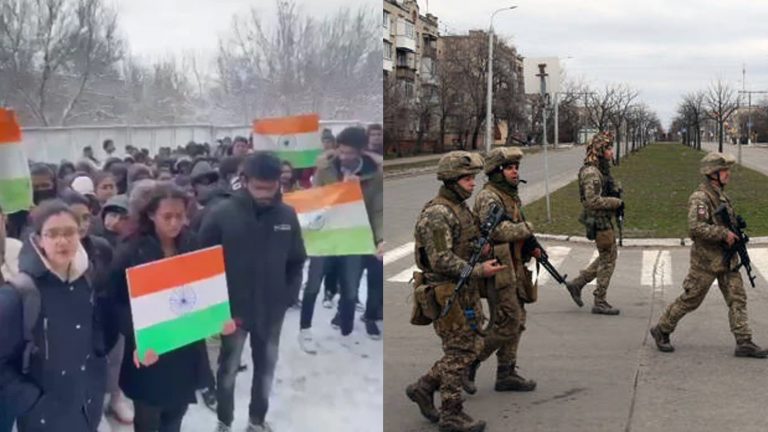
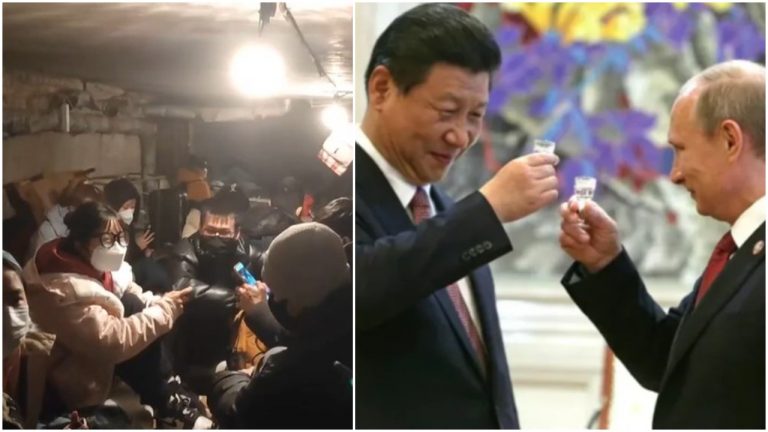
While India announced on Sunday that it has begun the final leg of Operation Ganga, an evacuation attempt for Indians stranded in Ukraine, distressed Chinese citizens stranded in Ukraine have been sharing snippets of their lives. They are blaming their own government for failing to help them in their time of need.

Chao, a 25-year-old Chinese student, recounted feeling helpless and abandoned after being told to fend for himself by the Chinese embassy in Ukraine. Chao is one of the 6000 Chinese nationals who were in Ukraine when Russian tanks rolled into Ukraine.

“The embassy told us to find a way to solve the problems we’re facing by ourselves,” Chao told AFP from a small town outside Chernihiv, where he has taken refuge with a local family.

Chao took to WeChat, the Chinese messaging app to criticise the communist government back in China for shrugging off its responsibility. “They said that fighting is everywhere, they aren’t able to do anything… Shouldn’t this be a nation’s responsibility?” asked Chao.

He added, “We want to leave, but there are no cars. I’m afraid I’ll be killed if I attempt to walk several hundred kilometres.”

Chao isn’t the only Chinese national who has publicly chastised China’s Xi Jinping administration for abandoning its people and leaving them to fend for themselves.

Indeed, social media images have been circulating depicting large groups of Chinese students still stranded in Ukraine, crammed into rooms to be alive amid the fighting and shelling, with some running out of food.

One student posted, “There are still 138 people here in the Sumy region of Ukraine who haven’t been evacuated yet. Please can the relevant departments coordinate and let us go home.”

Fang Lei, a Chinese national stranded in the southeastern city of Melitópol, claimed he tried to make similar calls on Chinese social media but was blocked.

“There are a lot of people trapped in Kharkiv, and this piece of information will be covered up immediately,” Fang said.

“Comments and likes are not allowed. Those of us who cannot evacuate from the war zone don’t get a mention,” Fang said adding, “If I get blown up, then at least I have left a note … I want the world to know what it feels like to be left behind to die.” 

“Chinese students are getting bombed in Ukraine, and the embassy hasn’t been very proactive in protecting them, nor offered any aftercare service,” another Chinese national Wang Longde was quoted as saying.

Chinese nationals stuck in Ukraine condemn embassy’s conflicting advice

In fact, many Chinese nationals trapped in Ukraine have criticized the embassy’s conflicting advice since the Russian attack began.

At the outset of the invasion, the Chinese embassy in Kyiv advised citizens to place Chinese flags on their vehicles to avert attacks. However, less than 48 hours later, it changed its mind and advised expats not to reveal their nationality.

According to The People’s Daily, a state-run news outlet, several Chinese students in Ukraine have said that they are feeling unsafe because of the perceived strong ties between China and Russia.

China pursuing trade with Russia, opposes sanctions posed by the US, EU against Russia

Notably, China has been carefully playing with words ever since its strong ally Russia has launched an attack on Ukraine. President Xi Jinping’s government has tried to distance itself from Russia’s offensive but avoided criticizing Moscow. The government has offered to act as a mediator and denounced trade and financial sanctions against Russia.

In fact, according to the reports, China has opposed the sanctions imposed upon Russia by the United States, European Union and has said that it will continue to carry out normal trade cooperation with Moscow. It has, in fact, reverted back to its own currency in pursuing trade with Russia. “China and Russia will continue to carry out normal trade cooperation in the spirit of mutual respect, equality and mutual benefit”, said Foreign Ministry spokesman Wang Wenbin at a regular press briefing in Beijing.

He added that economic sanctions are not a solution to the problems, instead, they create new ones. He also demanded that the US should not harm the legitimate rights and interests of China and other parties when handling the Ukraine issue and its relations with Russia.

The US shared intelligence with China on Russia’s troop buildup near Ukraine, China shared the info with Moscow

In the last three months, the United States officials met high-level Chinese officials over half a dozen times in a bid to use China’s influence to convince Russia not to carry out military attacks on Ukraine. Senior Biden administration officials held urgent meetings with the Chinese diplomats and presented them intelligence showing Russia’s troop buildup around Ukraine. 

The Biden administration was desperate to stop Russians and thus shared intelligence with China on Russia’s troop buildup in hopes that President Xi Jinping would step in. The officials privy to this information said that the Biden administration shared high-level info with its adversary to gain support from China to stop Russian President Vladimir Putin from invading Ukraine.

However, the Chinese government repeatedly rebuffed the efforts and instead turned over the intelligence data to Moscow.

Fresh contempt of court proceedings sought against ‘comedian’ Kunal Kamra after ‘l*vda pakad ke jhul ja’ video goes viral

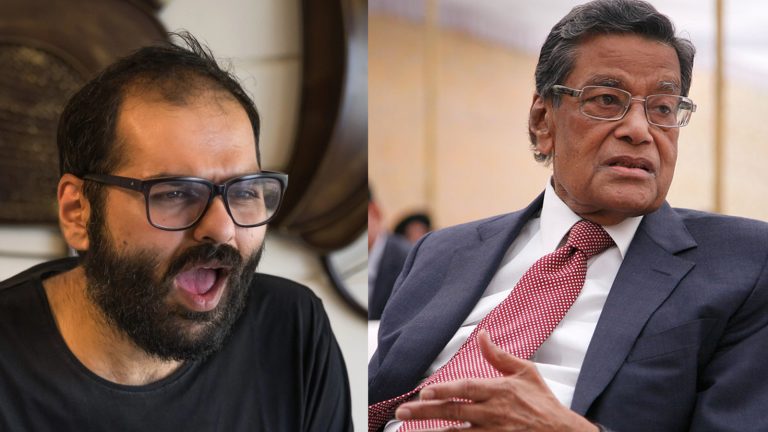
Advocate Vineet Jindal has written a letter to India’s Attorney General, KK Venugopal, requesting permission to commence contempt proceedings against stand-up comedian Kunal Kamra for vilifying and defaming the Indian judiciary in his recent video.

The letter addressed stated that Kamra has been misusing his freedom of speech and expression and intends to defame the Indian judicial system. The letter stated that “He has passed derogatory and scandalous statements about the Hon’ble Supreme Court of India while he was already undergoing a trial for his contempt against Court.”

It further added that Kamra “intends to develop mistrust among Indian citizens by challenging the secular nature of the judicial system and questioning its constitutional authority by calling it “Brahmin Baniya” affair and that it did not represent different cultures.”

In addition, the letter requested AG Venugopal’s permission to begin criminal contempt proceedings against Kunal Kamra under the Contempt of Courts Act 1971.

Another suit was also filed against ‘comedian’ Kunal Kamra for intentionally denigrating and tarnishing the image of the Supreme Court of India. Advocate Ashutosh J Dubey, a practicing legal attorney at the Bombay High Court and the legal advisor to the BJP-Maharashtra, released a copy of the complaint he filed against the comedian on Twitter.

In the letter, he stated that the constitution protects freedom of speech and expression, but Kamra had intended to exploit this right in order to intentionally tarnish the whole legal system.

It should be noted that Kunal Kamra made disrespectful statements about the Supreme Court in his newly published video ‘Be Like’ on his YouTube channel. In response to the contempt of court suit brought against him in the Supreme Court, Kamra replied, “Dear SC, kal ki baat bhul ja, l*vda pakad ke jhul ja (forget yesterday’s talk, come swing on p*nis)”.

In the video, Kamra further stated that he had more respect for the food court in the shopping mall than the Supreme Court and that the SC is a ‘Brahmin Baniya’ affair that does not represent other ethnicities.

All of this has occurred while Kamra is already on trial for making disparaging statements about the Supreme Court in his tweets. In one of his tweets, he showed the middle finger to CJI Arvind Bobde, and in another, he painted the Supreme Court in saffron to claim that it had become a puppet of the NDA government. Kunal Kamra was served with a contempt of court notice on December 18, 2020, under the Contempt of Courts Act, 1971, for his insulting tweets towards the judiciary.

Congress spokesperson criticised evacuation from war-torn Ukraine in military aircraft ‘which does not have seat belts’, gets schooled

While the Modi government is busy evacuating stranded Indian nationals from Ukraine under ‘Operation Ganga‘, the Opposition Congress party has stooped to undermining the government’s initiative by highlighting the alleged inconvenience faced by students during their evacuation in a military aircraft.

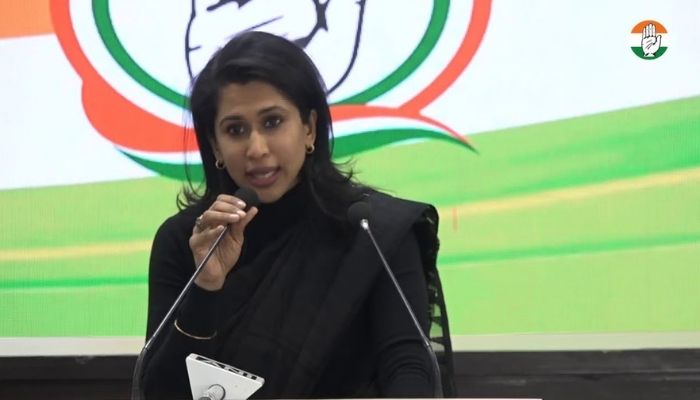
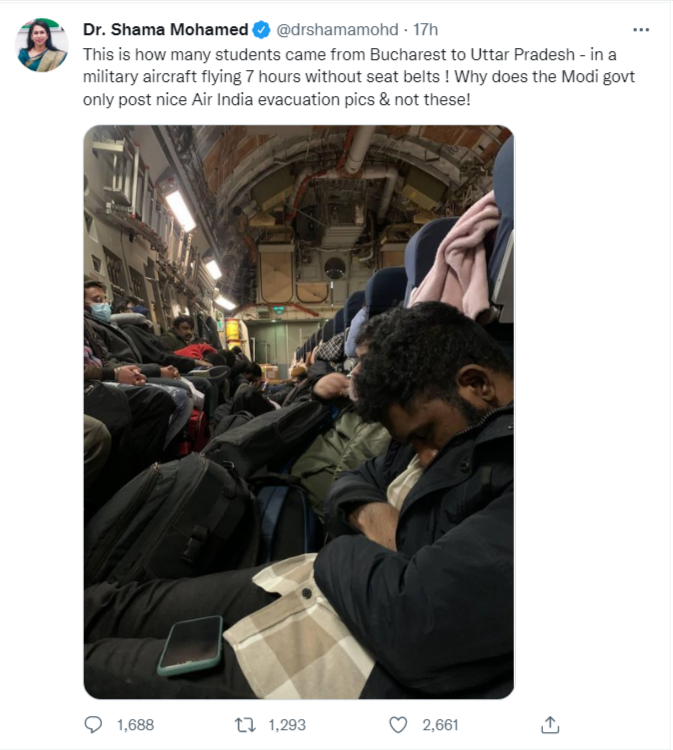
In a tweet of Sunday (March 6), Congress National Spokesperson Dr Shama Mohamed posted a cropped picture of the IAF C-17 Globemaster and claimed that Uttar Pradesh-bound-students had to travel for 7 hours without a seat belt.

“This is how many students came from Bucharest to Uttar Pradesh – in a military aircraft flying 7 hours without seat belts! Why does the Modi govt only post nice Air India evacuation pics & not these,” she wrote. Her tweet came a day before the 7th Phase of polls in the State of Uttar Pradesh.

Screengrab of the tweet by Shama Mohamed

It is important to note that Congress is playing petty politics by nit-picking at wartime evacuations. When two foreign countries are at war, it is the product of the Modi government’s prudent foreign policy that India is even being able to evacuate all its students. Congress party, had in the past, jeopardised the lives of Indians when it was trying to evacuate Indians from Libya.

Wartime evacuation is nearly never perfect and inconveniences to evacuees are expected. To nitpick and say that the government is doing a bad job at saving the lives of Indian stranded in a war-torn nation because of these minor inconveniences can only be charted to petty politics at best and devious intentions at worst.

Netizens slam Shama Mohamed for being unreasonable

Netizens were miffed at the desperate attempt of the Congress spokesperson to find nooks in the evacuation mission. India Today Audience Engagement Editor, Kabir Goswami, took potshots at Shama Mohamed for being deliberately unreasonable.

He tweeted, “Oh No. This is unacceptable. Modi Govt has failed miserably in providing (the) best flying experience to the Indians onboard the WAR EMERGENCY EVAC FLIGHTS. Govt should have ensured gourmet meals, in-flight entertainment and if not all these, at least some extra legroom. Duh!”

“Worst, they cant add air miles.. worst day in history of independent India,” wrote another user sarcastically.

One Twitter user, Superstar Raj, posted a video of the interior of the Indian Air Force (IAF)’s C-17 Globemaster. “What kind of crook you are Shama you folks are awefully shameless. 1. Use Uttar Pradesh on voting day. 2. Crop pictures show just 2% of the whole aircraft. Here is how the whole aircraft looks like…” he tweeted.

Former journalist Mohan Sinha stated, “It was an evacuation from a war zone not a picnic they were returning from. Stop tweeting like your idiot boss.”

A Twitter user pointed out how the United States had undertaken a similar evacuation from Kabul after the fall of Afghanistan at the hands of Taliban. “This is US C-17 where 671 Afghans and Americans were packed like sardines during Afghan evacuation,” she remarked.

Popular Twitter user Rishi Bagree further mocked the Congress spokesperson, “Modi Govt failed to arrange a Business class seat in military aircraft. There was a time when people use to cut birthday cakes on military aircraft. Is this the #AccheDin promised by Modi????”

Congress politicises Operation Ganga, draws comparison with 2011 Libya evacuation

Earlier, Congress scion Rahul Gandhi went on to politicise the tragic death of Naveen Shekharappa in Ukraine on March 1 to allege that the Indian government had no ‘strategic plans’ for the speedy evacuation of Indian nationals.

Instead of extending support to the government of the day in evacuating stranded Indians, the Congress party saw the geo-political conflict as a ‘political opportunity.’ It tried to create hysteria by highlighting isolated cases of inconvenience caused to a handful of stranded Indian students.

The grand-old party also used these isolated cases to peddle the narrative that the government has not been catering to the needs of the students. Significantly, it attempted to undermine the government’s initiative as a ‘Public Relations (PR) stunt’.

The Congress party envied the ‘personal involvement’ of Ministers in the evacuation process in Ukraine and began drawing ‘superfluous’ analogies with the ‘slow’ mission conducted by the then UPA government in Libya in 2011.

Congress uses the Russia-Ukraine War to target Modi govt, had earlier fanned North-South divide: How the statement that plays petty politics

The All India Congress Committee has issued a statement on the ongoing Russia-Ukraine War on the Congress’ Twitter handle on Monday. The statement says that the party is ‘alarmed and distressed’ over the escalation of military conflict in Ukraine, two weeks after Russia started its invasion of Ukraine.

The statement also indirectly accused the Central government’s operation to rescue Indians laced with ‘partisan propaganda’. The statement said, “It is the duty of Government of India to make all efforts to bring back our citizens and it is important to remember and recall that India has in the past undertaken successful large-scale operations by its Air Force and Navy to evacuate Indians during Gulf War, Lebanon, Libya and Iraq without indulging in partisan propaganda”.

At a time when rescue operations of Indians under the Central Government’s Operation Ganga are underway, the AICC has asked to remember how ‘large-scale rescue operations’ were carried out by India during the Congress rule as well. While close to 16,000 have already been evacuated from war-torn Ukraine, Central ministers including Gen. VK Singh, Hardeep Singh Puri, Jyotiraditya Scindia and Kiren Rijiju are themselves monitoring the rescue operations from neighbouring countries.

While tom-toming their own achievements, Congress seems to have forgotten how they endangered lives of Indians during the Libya evacuation.

What was, however, far more concerning was their first paragraph where they issued a statement on the war itself, given that when international events take place, like a war between two nations, it is the government of India that issues statements and decides the policy on how to deal with the situation. Generally, political parties do not issue statements on international conflicts.

However, this is not the first time Congress has gone beyond the foreign policy of the nation and has issued a personal official statement on matters concerning international politics. In 2021, The AICC had issued a similar patronizing statement on the Israel-Palestine issue saying it was concerned about ‘the intrusion by Israeli forces into the Holy Al Aqsa mosque during Ramzan prayers (which) ruptured the delicate peace in the region’

Earlier, the Congress itself tried to peddle its propaganda when the statement made by a Congress leader’s daughter who was evacuated from Romania was used by Rahul Gandhi to attack the Modi Government. The Congress leader had shared a selected excerpt from the NDTV interview of the student quoting, “Evacuation is a Duty, not a Favour,”

Congress Party ally in Tamil Nadu, the DMK did not spare the occasion of the war, to further its North-South divide rhetoric. By claiming that the evacuation efforts of ‘Tamil’ students needed to be accelerated, The TN government made a PR stunt by sending an additional fleet of DMK MPs to look after the operation. Here, TN Chief Minister M K Stalin was toeing the similar line Congress line to that of Rahul Gandhi when the latter claimed that India was just a “union of states” and not as a nation.

In more ways than one, Congress has cultivated an opportunity in times of calamity at a time when a war has broken out between two countries while rescue operations to bring back Indian nationals is underway. Congress and its allies seem to be playing dangerous politics, not just by issuing statements on an international event that is contrary to the stand of the Indian government but also by playing petty local politics during tumultuous times.

Russia announces ceasefire in Sumy, opens two different routes for stranded Indian students to evacuate

Amidst the ongoing war between Russia and Ukraine, Russia has announced a ceasefire for many regions including Sumy. Also, Russia announced the opening of two different routes for evacuation of more than 500 stranded students in Sumy.

In a tweet, journalist Sidhant Sibal stated that two routes have been opened by Russia to allow Indian citizens to pass after it announced a ceasefire.

The first route is the one that gives passage to Indian students stranded in Sumy, Ukraine to Belgorod, Russia on the eastern side. The second route facilitates the passage of Indian students through central Ukraine.

Notably, some Indians were only allowed to get to Ukraine’s western border, rather than Russia’s eastern border. Apart from those in Sumy and Pisochyn, Arindam Bagchi, spokesperson for the Ministry of External Affairs, said there aren’t many Indians remaining in Ukraine.

The Ministry of External Affairs and teams of Union Ministers stationed in Ukraine’s neighboring countries to oversee the evacuation are constantly working to ensure that Indians stuck there get safe passage.

The Indian government has repeatedly requested the Russian and Ukrainian governments to establish a safe passage for students to be evacuated. The Indian mission in Ukraine had also arranged for buses to be sent to Sumy for evacuation of Indian students.

As per reports, Russian President Vladimir Putin has instructed Russian forces to protect the Indian students with “all possible efforts.” A senior Russian general, Mikhail Mizintsev, has also stated that the Russian army is working to evacuate Indians to safety.

Arindam Bagchi tweeted on March 5th “We are deeply concerned about Indian students in Sumy, Ukraine. Have strongly pressed Russian and Ukrainian governments through multiple channels for an immediate ceasefire to create a safe corridor for our students.”

According to the MEA, over 21,000 persons have already left Ukraine, and the remaining Indians who are safe in neighboring countries would be returned to India within a few days. On a daily basis, 3,000 Indians arrive in India on special flights arranged by the Indian government. In addition, the Indian Air Force is assisting with the evacuation too.

Amid Russia-Ukraine war, women in Paris go topless to protest against Vladimir Putin

Latest in the series of various sanctions, cancel culture and protests against Russia for starting military operations in Ukraine, women in Paris went topless to protest against the Russian president Vladimir Putin. A video of this has appeared on Twitter on 7th March 2022.

News agency Visegrad24 has shared a video from its Twitter handle in which many women are seen protesting topless in front of the Eifel Tower in Paris. They have painted the Ukrainian flag on their body and have painted slogans in protest of the war. The slogans read ‘Stop war Putin’, ‘Feminists against War’, ‘Slava Ukraini’, etc.

With each passing day, various governments and organizations from the West have started boycotting or sanctioning Russia one after the other. The cancel culture has not even spared the space research sector. In such times these topless protests by the women in Paris have appeared on Twitter as they express their opposition to the war and to the Russian president Vladimir Putin in particular.

In the next tweet, Visegrad24 has said that Putin had faced similar topless protests by feminist women back in 2013. At that time he had reportedly replied, “I liked it … I didn’t catch what they were shouting, I didn’t even see if they were blondes, brunettes, or chestnut-haired.”

This is not the first time that some feminist women from Europe have staged their protest going topless. Earlier in 2019, a woman from Ukraine had protested outside a polling station in Kyiv, where then-presidential candidate Volodymyr Zelenskyy had cast his vote.

Zelenskyy is now the President of Ukraine.

Amidst continued provocation, Uddhav Thackeray hopes for Chinese money, may have to scrap plans due to Modi govt’s strict policy

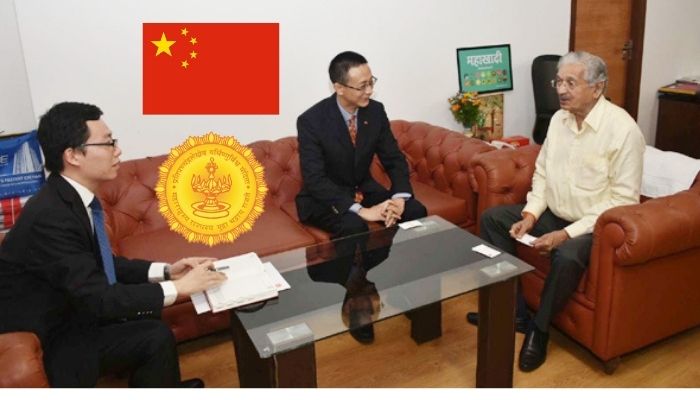
After stalling the MoUs signed with Chinese companies following the Galwan Valley clash in June 2020, The Maharashtra Government is now keen on revisiting the status of Chinese investments in the state. When the Galwan Valley Clash broke out in June 2020, the Maharshtra Government was busy signing MoUs with three Chinese companies worth over ₹5,000 crores. However, after advice from the Central government, The state Industries Ministry had put the Chinese proposals on hold within a week after the clash in Galwan broke.

The Uddhav Thackeray led-Maharashtra Government had signed memorandums of understanding (MoUs) with three Chinese companies including Hengli ( ₹250 crores), Great Wall Motors ( ₹3,770 crores), and PMI Electro Mobility Solutions, a joint venture with Foton, ( ₹1,000 crores) in June 2020. As of now, the investment proposals remain on hold, while it has been learnt that the Maharashtra Government is keen on seeking clarity from the Centre as to whether these projects can be restarted.

While talking to the Hindustan Times, state industries minister Subhash Desai said, “The policy adopted by the state government back in 2020 over Chinese foreign direct investment (FDI) still stands because the matter is of international relations. However, we are yet to receive any communication or approval from the Centre,” Arguing that the proposals are from non-strategic sectors on which guidance was sought from the Centre, the Maharashtra government arguably sees a future with China.

For this, the Maharashtra Government has written letters to different authorities allied to the Central Government on the underlying fate of the MoUs with Chinese companies. In March 2021, additional chief secretary to industries, Baldev Singh, wrote a letter to Guruprasad Mohapatra, secretary, DPIIT. A letter was also was sent to Amitabh Kant, CEO, Niti Aayog, by P Anbalagan who is the CEO of Maharashtra Industries Development Corporation (MIDC), in September 2021. Reportedly, the issue was also discussed in the pre-budget meeting with finance minister Nirmala Sitharaman this year.

While the Central Government has not responded on the issue yet, Maharashtra Government’s intent to revive the Chinese memoranda is quite clear. On June 25, 2020, when the decision to put the investments on hold was announced, Subhash Desai had asserted, “We have decided to put the MoUs signed with the three Chinese firms worth ₹5,020 crores on hold. However, this doesn’t mean that they have been cancelled. We will be waiting for a clear policy from the Central government on this issue before taking any decision,” Desai was also open about the possibility of the projects being implemented in the state if the relations between the two countries improve.

Even before the rising anti-China sentiment in the country which broke after the Galwan Clash, The Central Government revised its FDI policy by making approval mandatory for FDI from countries sharing land borders with India, which includes China.

Chinese Investments in Maharashtra

With a move to boost jobs in the state, Maharshtra Industries Ministry signed 12 MoUs worth ₹16,300 crores with major global companies. Pacts worth over ₹5,000 crores were signed with three Chinese firms alone, with companies like Hengli, Great Wall Motors and PMI Electro Mobility Solutions. According to a senior official from the department, the MoU with Hengli is deal with the automobile sector with the company being a major auto component manufacturer. The Maharashtra Industries Development Corporation (MIDC) was ready to allot land to the Chinese company but the decision was taken back in June.

The Great Wall Motors (GWM) wanted to buy a closed General Motors (GM) plant in Talegoan while both the companies signed an agreement in January 2020. GWM is an electric vehicle and auto-manufacturing company.

Speaking on behalf of the Chinese companies, the industries minister requested in the pre-budget meeting, “Hengli is one of the biggest investors from China…However, with the implementation of the revised FDI rules requiring companies based in neighbouring countries to receive government permission before investing in Indian business, the Chinese companies such as Hengli are still awaiting the decision by the Centre.”

While the Maharashtra state government is keen on seeking guidance from the Centre on the matters pertaining to the existing Chinese investments in the state, its ambitions to review Chinese investments while working on new proposals have caught the light of the day.

Delhi CM Arvind Kejriwal spent ₹11 lacs of taxpayer’s money in ‘medical treatment’ of family members between Financial Year 2015-2021, reveals RTI

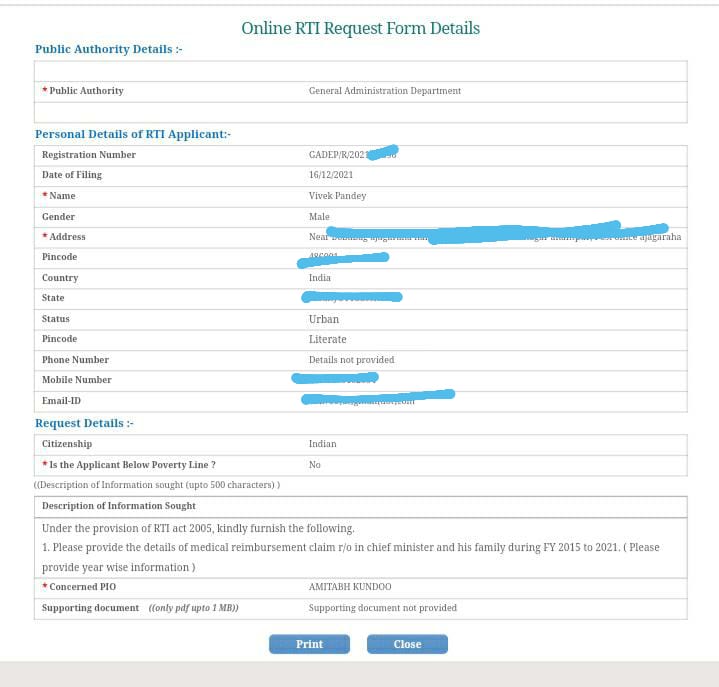
Delhi Chief Minister Arvind Kejriwal has spent a whopping ₹11.46 lakhs of public money on his medical treatment and that of his family between the Financial Year 2015-2021. This was revealed in a recent Right to Information (RTI) reply, which was filed by activist Vivek Pandey on December 16 last year.

In his RTI query, the activist had asked details pertaining to medical reimbursement claim for Delhi Chief Minister and his family during FY2015 to 2021.

Screengrab of the RTI query filed by activist Vivek Pandey

As per the RTI reply obtained on January 10, 2022, Arvind Kejriwal and his family have spent ₹11,46,102 of taxpayers’ money on medical treatment. While the Delhi CM spent ₹2,91,913 in FY 2015-2016, the medical expenditure was more than double at ₹7,95,453 in FY 2016-2017.

Between Financial Year 2017-2018, the taxpayers bore the cost of Kejriwal’s medical treatment to the tune of ₹54,968. However, the medical expenditure was reduced to ₹3,750 in FY 2019-2020.

In a tweet on Monday (March 7), he informed, “Arvind Kejriwal was against VIP culture but on medical expenditure, he spent ₹11,46,102. It doesn’t matter who you are, but this is (the) money of people. Why (are) political parties using people’s money for their own benefits?”

Earlier, an RTI reply obtained by activist Vivek Pandey had put the Arvind Kejriwal-led-Delhi government in dock over fund utilisation for its waste management scheme named the ‘Mukhyamantri Septic Tank Safai Yojana.’ In November 2019, the Delhi government launched the scheme to ensure the safety of sanitation workers and the proper management of waste.

The RTI reply, obtained in December last year revealed that the Delhi government allocated ₹50 crores for 2019-2020 and ₹110 crores for the period 2020-2021. Interestingly, no fund was sanctioned for the year 2021-2022 until November 21. For the first year (2019-2020), the Delhi government did not utilise any fund that was sanctioned for the cleaning of septic tanks.

Another RTI reply sought by Pandey in April last year revealed that the Delhi Government received almost Rs 35 crores under LG/CM Relief Fund from March 2020 to January 2021 but spent ‘nil’ on preventing Covid-19 in the National Capital.