Home Blog Page 4373

From sitting on upturned dustbins to photo ops at crematorium grounds, Barkha Dutt gets questioned for her ‘vulture journalism’

Amidst the rising cases of Coronavirus in the country, Lutyens’ journalist Barkha Dutt has hit the streets. In what appears like bid to restore her dwindling reputation in journalistic circles and among her viewers, she has decided to up her ‘ground reporting’ in such challenging times.

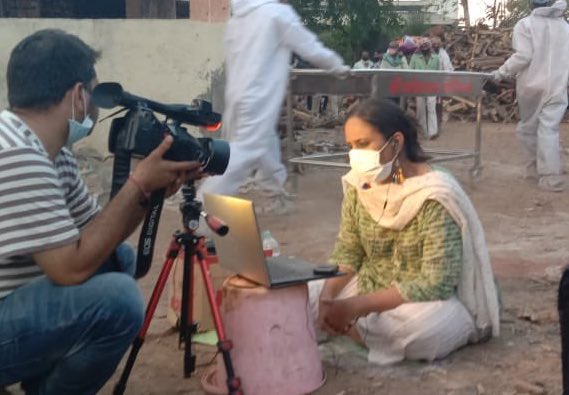
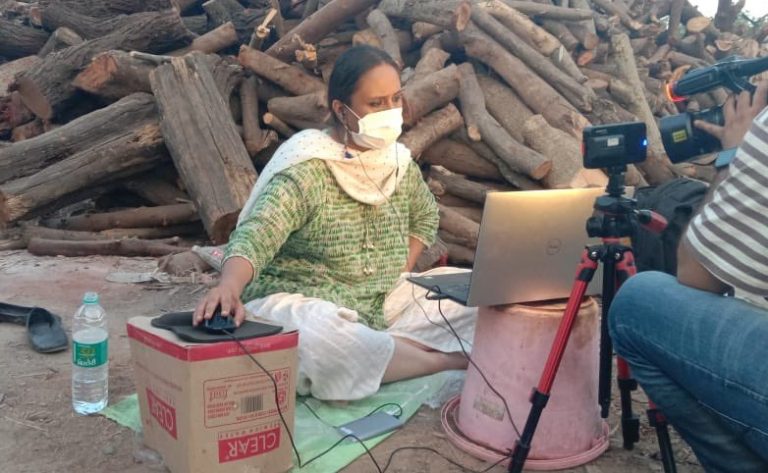
From camping outside civil hospitals to crematoriums, Barkha has been sharing her pictures where she sits on an upturned tin can and puts her laptop on upturned plastic dustbins to bring us ground report. It is not yet clear why Barkha, who could quite possibly afford portable desks, has resorted to upturned tin cans as desks.

Wooden logs, used for cremation, could also be seen in the background of the image. While posting such shocking visuals, Barkha Dutt wrote, “In these apocalyptic times, we learn how to survive, innovate & adapt so we can still report in the toughest situations. From a cremation ground in Surat, an overturned plastic bucket & a cardboard box is my ‘studio’.”
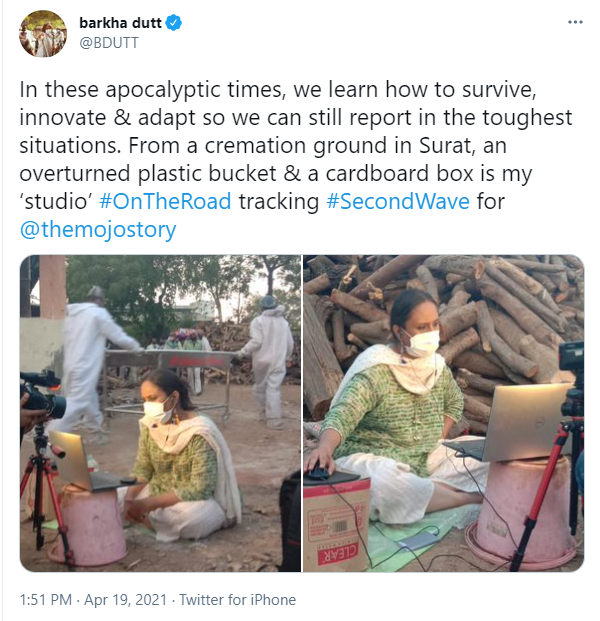
Screengrab of the tweet by Barkha Dutt

On Sunday (April 18), she had shared images of family members of Coronavirus patients, who had died at the Civil Hospital in Surat. Barkha Dutt tweeted, “Among toughest moments I’ve reported ever, waiting with families at mortuary in Civil Hospital, Surat, as they’re instructed to identify bodies wheeled up a ramp, to be taken away then for COVID protocol funerals. No goodbye hug, no touch, just- “He’s mine” from afar.”
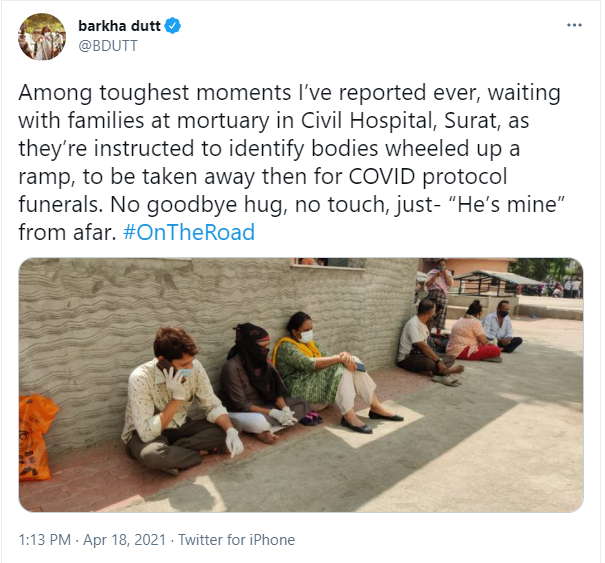
Screengrab of the tweet by Barkha Dutt

In another tweet on Saturday (April 17), Barkha Dutt shared her picture from the site of Ramnath Ghela cremation centre in Surat. Far from making the story the epicentre, she tweeted her picture and claimed that the iron furnaces used for cremation have melted due to overuse. “Reporting from the Ramnath Ghela cremation site in Surat where the fire bridges in the iron furnaces have melted from too many cremations and clouds of smoke rise up above the ground to mark the imprint of the SecondWave,” she added.
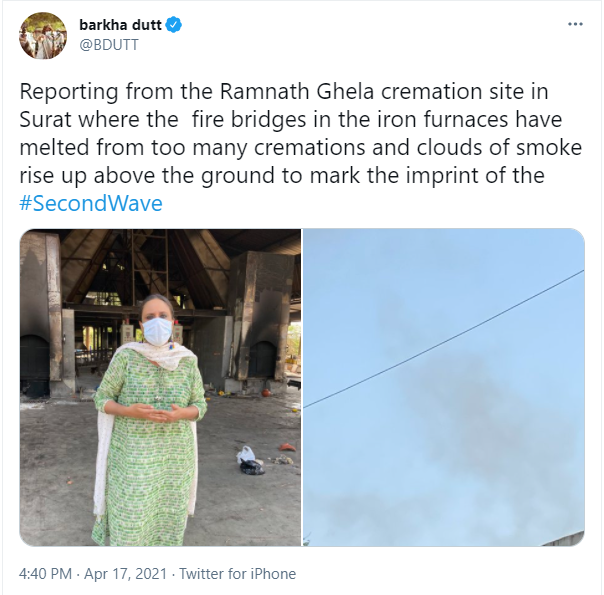
Screengrab of the tweet

A day prior to this, the Lutyens’ journalist had shared another story from Ghatkopar cremation ground. And yet again, she was at the epicentre of the story. Her laptop was carefully placed over a wooden box while she sat on the ground. In her tweet, she said, “When you’re reporting a crisis you learn where you pause is where your ‘studio’ is. On the pavement outside Ghatkopar cremation ground where a man says to me: “First no room at hospital, now no room at the Shamshan Ghat.”
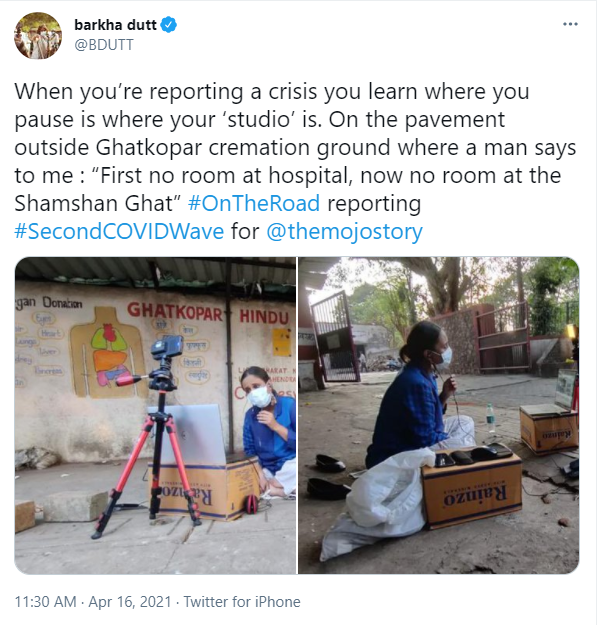
Screengrab of the tweet by Barkha Dutt

While the situation on ground is indeed grim, people on social media have been calling out the dramatics by journalists who could have perhaps focused on the news instead of their brand building.

Netizens call out Barkha Dutt on social media

The repetitive use of wooden boxes as support for her laptop, attempts to fearmonger the public about the Coronavirus crisis through stories on deaths/ crematoriums and morgues and her ‘self-obsession’ did not miss the public eye. Slamming her for theatrics, one Twitter user (@i_sid007) wrote, “You are such a drama when you can easily get a foldable laptop table for as little as 600 rs anywhere …”

A similar point was raised by another Twitter user (@Bassappamv). He wrote, “Mumbai to Surat average flight price round trip Rs.6000. By this you can buy very good mobile furniture. Don’t do drama sitting on floor.”

Others slammed her for clicking images alongside families mourning the death of their loved ones. Shivangi asked, “Why would you click your picture there? How shameful?” When one user named Shashank Baranwal pointed out about her photo Op, he was immediately blocked by the Lutyens’ journalist.

Twitter user Zafar Abbas criticised the narcissism of Barkha Dutt. He wrote, “She did it again…This lady is self obsessed. Crime reporters do it as a normal practice outside mortuaries. Last time it was her dirty shoes when she felt it was only hers that get dirty. Kamaal hai..Aisi situation me bhi ‘Me, I and Myself “

Barkha Dutt was also slammed for doing politics over dead bodies. Col Hunny Bakshi inquired, “Where is that queue (of corpses), long line she is talking about ?”

Another user (@finproedge2) said, “Can journalism around dead bodies be termed as Vulture journalism ….More the people die more people will log on to @BDUTT channel. Guess what she would be wishing now…….?” Despite her attempts to project herself as an ‘independent journalist’ who has not lost the common touch, Barkha Dutt ended up exposing her self -obsession, ability to do theatrics to draw more eyeballs and draw political influence from the corpses of the deceased Coronavirus patients.
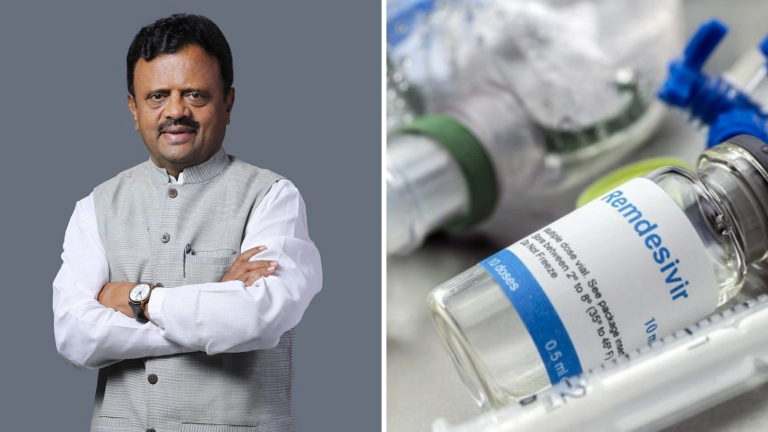
Maharashtra FDA minister embarrasses his own govt and alliance leaders, says his ministry had approved Remdesivir procurement by BJP

Maharashtra’s Food and Drug Administration Minister and NCP leader Dr. Rajendra Shingne’s admission has put all conspiracy theories triggered by his own government and the alliance leaders to rest. In an interview to News18 Lokmat on Tuesday, Dr Rajendra Shingne admitted that the Remdesivir procured by the opposition party Bhartiya Janta Party was indeed intended for the Maharashtra government, and he was aware of the same.

“I was aware of it. The BJP leaders had met me at my house along with the manufacturers’ representatives. They offered to help us procure the Remdesivir stocks for the state government and I agreed to it. The entire process was done following all rules, with due permissions and with genuine intentions to help the citizens,” he informed much to MVA’s dismay. 

Further embarrassing the MVA government, Dr Shingne confirmed that the injections could not be used for any other purpose and that he was assured about the same by the BJP leaders. He also urged the political parties to come together in the time of crises rather than indulging in in-fighting.

The Maharashtra minister’s comment completely embarrasses his own government, especially the Shiv Sena and the Congress party, who have been trying to find a ‘scam’ in the procurement of the drug by BJP. Congress and Shiv Sena leaders have been accusing that BJP was not authorised to purchase Remdesivir even if it was meant for the general public. They have been demanding a probe into how the opposition was able to procure the drug, alleging irregularities. But now the concerned minister himself has clarified that BJP went ahead with the deal following due process, and had obtained approval for the same from the ministry.

In the due course, the Leader of Opposition in Legislative Council Praveen Darekar had reiterated multiple times that they had been in touch with Minister Shingne right from the beginning to sanction legitimate approvals from the FDA. But this did not deter the MVA leaders from launching a scathing attack on the BJP for procuring the drug for the people of Maharashtra.

After Rajendra Shingne’s clarification, Praveen Darekar said, “Minister Shingane had thanked us for our efforts and we also assured the injection doses would be given to the state government.” He further added, “I had been in touch with Minister Shingane right from the beginning, met him at his home and he agreed. Now, all the allegations by the ruling party leaders and the police station drama stands exposed.”

Praveen Darekar has also demanded that now MVA leaders like NCP’s Home Minister Dilip Walse-Patil, Minority Affairs Minister Nawab Malik, Shiv Sena MP Sanjay Raut, State Congress chief Nana Patole, Congress leader Priyanka Gandhi Vadra etc to reply in the matter after their lies have been exposed by their own minister.

Bruck Pharma Controversy

The high voltage drama began after the Mumbai police held a director of Bruck Pharma- a Daman-based manufacturer of Remdesivir for allegedly “hoarding” the critical drug in his storage facility. He was let go only after the intervention of LoP Devendra Fadnavis who came to his rescue with all relevant permissions and approval documents. Devendra Fadnavis and Praveen Darekar had to spend hours at the police station to sort out the matter, as they tried hard to explain to the police that the Maharashtra Food & Drugs Administration (FDA) had permitted the consignment.

MVA leaders accuse BJP of hoarding

Following the incident, the police had issued a statement saying that the Bruck official was questioned as they had received complaints of Remdesivir being hoarded by the company, but later the matter was resolved as the consignment was found to be legal. But it didn’t stop the ruling alliance partners in Maharashtra to launch an attack on BJP, alleging irregularities in the purchase.

Priyanka Chaturvedi, a vocal member of the Shiv Sena accused the BJP of hoarding Remdesivir that the party allegedly secured “secretly”. She has been giving interviews to the likes of NDTV furthering her claims and allegations.

Saket Gokhale, a Congress party sympathizer went a step ahead and filed a complaint with state home minister Dilip Walse Patil against Devendra Fadnavis in connection with the “illegal hoarding” of Remdesivir procured through Bruck Pharma.

Wonder what the Home Minister will have to say when he learns that the permissions were given by a Cabinet Minister and his own party member.

Similarly, Dr Shingane’s revelation will leave NCP’s Nawab Malik looking for ways to justify his accusation against the BJP creating who also has been going around giving interviews trying to pin Devendra Fadnavis with his false allegations.

In an attempt to create panic Nawab Malik had also alleged that the Centre gave permission to one of the export companies to supply Remdesivir to the state of Gujarat only.

BJP leader Kirit Somaiya was quick to diffuse the baseless accusations made by Nawab Malik by tweeting a copy of the official approval letter signed by the Commissioner of Food and Drugs Administration- Maharashtra State, giving a go-ahead to the distribution of the life-saving drug- Remdesivir.

The unfolding of the entire drama just exposes the lack of coordination in the Maha Vikas Aghadi where the leaders of the same political party are caught unaware of the party proceedings. Let alone coming together of three ideologically very different political parties.

At a time when the state of Maharashtra is reeling under a pandemic, we hope the parties will find a way to battle the crisis together rather than to be at war with each other.

Journalism: The new performance art

Our earliest memories of journalists and journalism, that we saw on TV, is perhaps that of a motherly looking woman reading out the events of the day in a voice that could put one to sleep. Speaking in a low register, with her hair tied up in a bun, pronounced kohl and tons of foundation. The anchor would often drone on about a dog stuck in a well and a terror attack without any pitch-contouring whatsoever. One could simply not understand the difference in emotions behind the two stories. A dog being stuck in a well and a terror attack killing hundreds sounded exactly the same.

One could say that journalism depended on the Wisdom of the Crowds. It was trusted that a group of disparate people, crores of them, would take a piece of information and draw the right, collective decision from that piece of information. As Aristotle said, “It is possible that the many, though not individually good men, yet when they come together may be better, not individually but collectively, than those who are so, just as public dinners to which many contribute are better than those supplied at one man’s cost”.

This was not really a terrible principle to work on as far as journalism was concerned. The power resting in the hands of few experts and intellectual elites was indeed problematic. And in theory, the people of the country, the crowd, should be able to reach their own conclusions without being prejudiced with personal biases.

However, then and now, that is not exactly what happens. When the flow of information itself is tainted, the Wisdom of the Crowd can do little to reach the conclusion that it must. Noam Chomsky explained the mass media rather perfectly, except for one pesky point. He essentially said that the mass media applies ‘filters’ to ensure that the information flow toes the line of the establishment. The news ‘filters’ include what information is allowed to be given by those who control mass media, and the wealth/profit thereof, what information would sit well with advertisers, the reliance on ‘experts’ funded and approved by those who control the media and the most important, ‘flak’. If any media platform chooses to go against the establishment and the information that mass media has deemed fit for consumption, that platform is vilified, tarnished, discredited and deemed unfit by the mass media.

Of course, Chomsky also talks about “anticommunism’ as a national religion and control mechanism”, but one can fairly conclude that in India, the flow of information and the ‘filters’ to news are applied far more with the prism of ‘anti nationalism’ or at least, anti-BJP and anti-Hindu.

Chomsky says that “The raw material of news must pass through successive filters, leaving only the cleansed residue fit to print”.

Now, when the raw information itself has to go through filters to reach the people, the Wisdom of the Crowd principle becomes tainted. The crowds believe that the intellectual elite wants it to believe.

Whether it is the monochromatic journalism of yonder or the dramatic journalism of today, the information that has percolated to the masses have often been tainted, at least, when it comes through the mass media. Therefore, Wisdom of the Crowd, in its truest sense, has never really been tested in its purest form, as far as how a country might react when they are given a naked piece of information by the media, and the conclusions are to be drawn by them alone.

The mass media today barely relies on documents and hard facts. They rely on sources, information that has been fed to them, and how that information can be twisted, broken, represented to ensure that the people believe that agents of power want them to believe. The mass media decides a common enemy and anyone who dares to present anything that is in non-observance of the narrative that has been decided receives flak. They are dragged to the courts of law, whose value code is more often than not aligned with those who wish to ensure that a people live and think like herds, led by the elite in power. 

The common enemy and the universal victim is pre-decided and facts, which inconvenience the narrative that is to be furthered, are pushed under the rug, till someone manages to shine the light on them, at which point the cycle of them receiving flak from the powers that be is kickstarted anew till the facts are conveniently filtered again – to help the elite subjugate the people.   

What Chomsky perhaps did not forsee is a sixth filter that the media would apply to craft its propaganda.

Theatre.

Journalism, more than ever before, relies not only on tainted information and subjugation but on drama, theatre (sometimes of the absurd) and visual propaganda.

You have panels as large as the jury’s in a Scotland court, the largest in the world, the words are over-the-top, the sentiment is tumultuous and the discussion, clamorous. The recent Sushant Singh Rajput case was perhaps the greatest example of journalistic drama being played right in front of our eyes. An entire swath of people were emotionally bullied, mentally subjugated to give wind to opposing narratives from each side. On the one hand, one section wanted to paint Sushant Singh Rajput as an innocent middle-class boy who fell victim to Bollywood vultures, brutally so. On the other, we had a section of the media interview Rhea Chakraborty, with questions that redefined cringe and tears that appeared as fake as the forehead that refuses to show any form of life after being addled with Botox.

Since the mass media created a furore over the case, even those who had no interest in participating in the drama, covered the drama nonetheless. Mostly, to cover a case that the crowd was reading about, a bit, to settle scores and largely, to mock the drama that had been created.

In the end, the truth was lost. After a point, nobody really cared about the facts. What really happened. What is the conclusion by the CBI? How was the initial investigation botched up? None of it mattered. It became a performance art revolving around the imagined life of a person who had tragically passed away and those he had left behind. We still don’t know what really happened and perhaps, we will never know.

With the COVID-19 pandemic raging on, journalists have transformed themselves into the Soothsayers who would scream “Beware of the Ides of March” to just about anyone who would listen. Barkha, for example, looking like one of the 4 Biblical Horsemen of Apocalypse and proving beyond doubt the Biblical verse, “wherever there is carcass, there the vultures will gather” (Matthew 24:28), sat crossed leg in a Hindu crematorium, “reporting” and feeling mighty proud of herself.

Like Laurie Anderson’s early pieces, Duets on Ice, where she wore ice skates frozen in blocks of ice and danced a duet with herself, and continued to do so till the ice on her skates melted, Barkha sat there, on a tattered cloth, with her laptop perched on a dirty bucket, till the last Hindu was cremated.

One could wonder if it was necessary for Barkha Dutt to create this entire dramatic scene, where woods for the funeral pyre of those who passed by the virus unleashed by China could be seen in the background, but art follows reason. And that is what journalism perhaps is for Barkha, the woman who has fallen from the grace of the powers that be – from both ends of the political spectrum.

From marching with good-looking men in uniform on either side to sitting on a tattered cloth, covering the death of citizens, with no resources whatsoever. It could be argued that perhaps the lowest ebb of the ladder could become the foundation that helps Barkha catapult herself to the top of her now waning career again. How? Well, who would not respect a journalist, a Padma awardee no less, who would toil in the dust and dirt to bring stories of death and destruction to the masses. To open their eyes to the “apocalypse” that seems to have engulfed the country.

But do the ‘aesthetics’ of the setting have anything to do with facts? Does one need to sit in a crematorium, with paltry respect for those who have lost their lives, to tell people just how many people have died due to the pandemic? Is it necessary to perch your laptop on a dirty bucket? Does she not have the basic means to carry along a foldable table?

If the aesthetics are not essential to the facts, then what purpose does it serve? Without the drama, will the facts themselves sell? Will the aesthetics, the trauma of seeing PPE clad men taking dead Hindus to be cremated perhaps exponentially exacerbate the panic and hysteria that has gripped the world?

Let’s not talk about the fact that Barkha being in a crematorium and not in a Muslim burial ground is a statement in itself. But truly, that drama that Barkha seems to have created only works as a sixth ‘filter’ of propaganda. Much like the media feasted on the dead body of Sushant Singh Rajput, that Barkha had taken offence to back then, Barkha now seems to feast on the dead bodies of those who lost their battle to COVID.

The visuals shock, horrify and help with the augmentation of widespread panic.. the panic which can then be used as fuel to prove how a good journalist covers the very panic that their reportage created. The result is not just the amplification of panic but also helps in the multiplication of notability for the journalist.

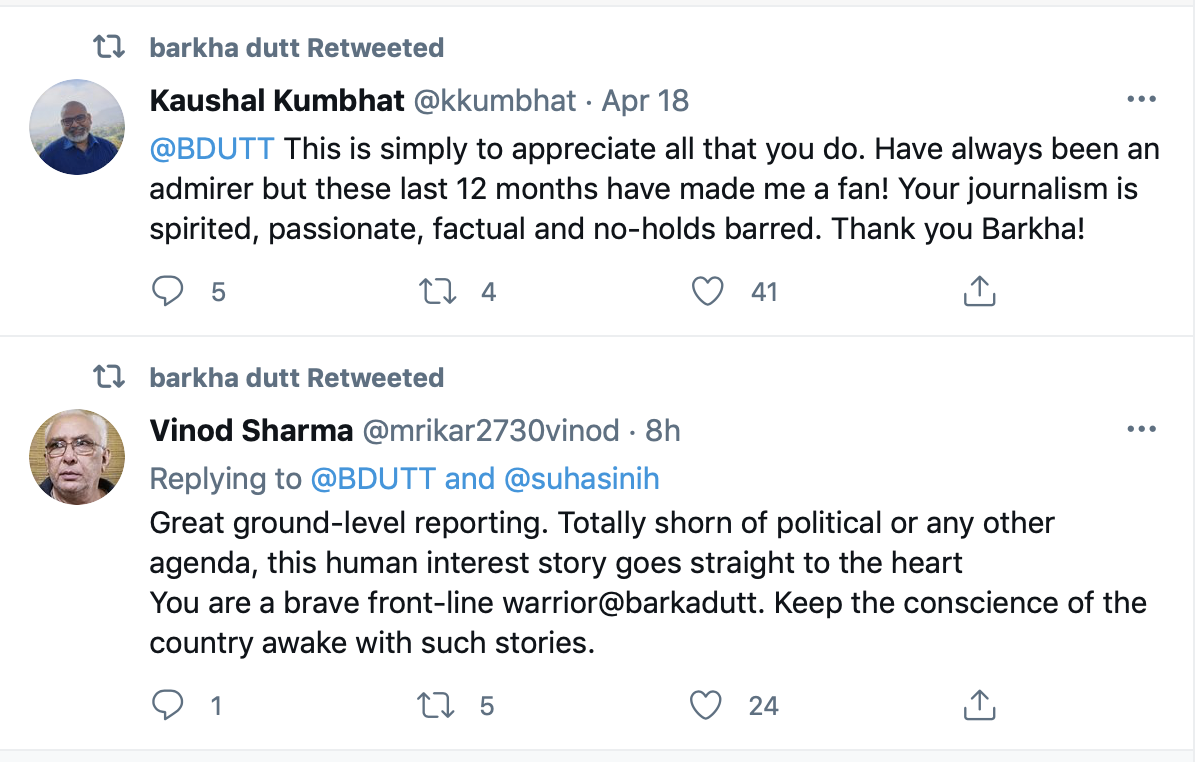
Laudatory tweets retweeted by Barkha Dutt

To keep the conscience of the people awake, to shine a light on the political agenda, to present a human interest story, one just has to desecrate a crematorium with the cinematography of an Oscar-winning artist.

Because in performing arts, it’s always about location, location, location.

Not about the truth. Not about the facts. Not about public anger. Not about assigning blame. Not about investigations. But about creating hysteria to settle political scores, about putting on a dramatic rendition to entertain the masses and about elevating one’s own distinction while stepping on the dead bodies of those who lost the fight… denying them even a dash of dignity even in death.. because the show certainly must go on.

Amidst religious festivals, celebrations at Ayodhya and other places to be symbolic as coronavirus plays spoiler

0

The raging coronavirus outbreak in the country has thrown a spanner at the works ahead of various religious festivals in the country. Temples across the nation, from Ayodhya in Uttar Pradesh to Gandhinagar in Gujarat, have decided to hold symbolic celebrations as the daily COVID-19 caseloads continue to surge at an alarming pace.

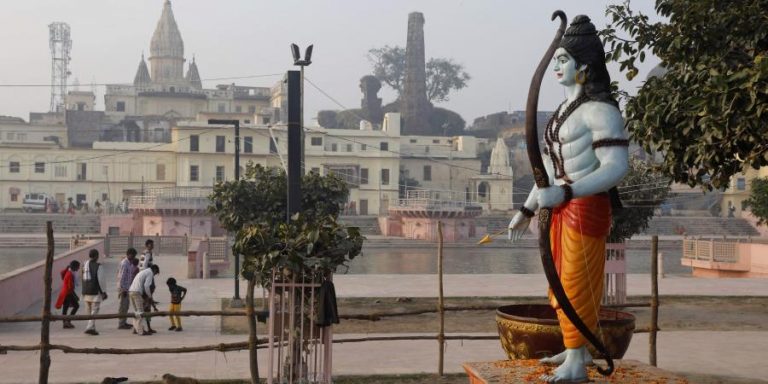
Symbolic celebrations of Ram Navami at Ayodhya, no devotees allowed amid COVID-19 pandemic

In the wake of the ban on Ram Navami Mela in Ayodhya following the COVID-19 outbreak, the Ram Janmbhoomi Trust has decided to celebrate the birthday of Lord Ram Lala at the make-shift temple complex symbolically on April 21 without allowing any devotee.

In a post uploaded on Twitter, the Trust said that on this year’s Ram Navami, the Chief Priest of the make-shift temple will offer puja and perform other rituals in accordance with the COVID-19 protocols. The Trust said no devotees will be allowed to enter the temple complex during the symbolic celebrations.

“Considering the surge in COVID cases, it has been decided that on Shri Ramnavami, Bhagwan Ramlalla ji’s Janmotsav will be celebrated inside the premises of Shri Ram Janmabhoomi in the traditional manner under guidance of Mukhya Pujari ji, but the entry of devotees will be restricted,” the official Twitter account of Ram Janmbhoomi Teerth Kshetra tweeted.

For a second year in a row, the UP state government had banned the organisation of Ram Navami Mela following a surge in the number of active coronavirus cases in the temple town.

The Ayodhya District Magistrate Anuj Kumar Jha has announced a ban on religious congregation in the town, along with banning the entry of Ram Bhakts in Ayodhya. In addition, an order has been passed allowing only five persons at a time to visit any temple in Ayodhya on Ram Navami.

Salangpur Hanuman Temple in Gandhinagar to have muted Hanuman Jayanti celebrations

Similarly, the Salangpur Hanuman Temple in Gandhinagar has decided to not celebrate upcoming festival of Hanuman Jayanti in presence of public because of the COVID-19 pandemic. The celebrations will continue in absence of public and all the ceremonial rituals will be performed by the priests and the management of the temple. Hanuman Jayanti this year will be celebrated on April 27.

No Karaga procession this year in Bengaluru in the wake of the coronavirus outbreak

Down in south, the historic Bengaluru Karaga procession has been cancelled for the second consecutive year because of the COVID-19 pandemic. The decision was announced by the Bengaluru District Collector’s office in an order dated April 17. With the state government restricting religious gatherings, Bengaluru Urban DC J Manjunath said that the decision to cancel the Karaga procession was taken in compliance with the government orders.

The Bengaluru Karaga is one of the oldest festivals celebrated in the heart of Bengaluru. Celebrated for over 300 years by the Thigala community of south Karnataka, it is also known as Karaga Shaktyotsava. It is a celebration of the wife of the Pandavas, Draupadi, where a man from the community dresses as a woman and carries a deity on his head. On the eighth day of the festival, the procession called the Karaga Shaktyotsava Sanchara crosses through the city, visiting several temples across Bengaluru.

From censorship to propaganda and disinformation: Here’s how China seeks to reshape the narrative on the repression of Uyghurs in Xinjiang

As China faces increasing global scrutiny on a slew of issues, including its inhuman treatment of Uyghur minorities in Xinjiang, it has launched an aggressive campaign to vigorously defend its policies in the region, and rubbish the allegations of repression being levelled against it.

China’s Foreign Ministry last month issued the most assertive defence of its policies in Xinjiang to date, calling accusations of “genocide” in the region the “lie of the century”. The statement marks a stark shift in China’s strategy to reshape the narrative regarding its treatment of Uyghurs.

Until now, China had been denying and dismissing the allegations of state-sponsored oppression of Uyghur minorities in Xinjiang. However, this has changed as China’s strategy to counter such allegations has now evolved from outright denial to unabashed public defence. This hardened public posturing can be attributed to a growing sense of confidence in Beijing and its eager alacrity to be combative in taking on its critics in the West on issues ranging from COVID-19 cover-up, South China sea, its repression in Hong Kong or its subjugation of Uyghurs in Xinjiang.

China’s shift to belligerence was precipitated by the onset of the coronavirus outbreak that first emerged in the central Chinese city of Wuhan, and from their spread across the world. The virus hit the Western nations particularly hard, with the death toll rising to hundreds of thousands. The outbreak also brought in its wake crippling lockdowns, causing indescribable economic hardships. It forced Western countries to reassess their relationship with China, which used its newly gained economic heft to browbeat nations that demanded an impartial inquiry into the origins of the virus.

China’s menacing moves in the South China sea, its surreptitious activities in the greater Himalayan region bordering India, and its brutal crackdown of pro-democracy activists in Hong Kong only served to embolden the several western nations to bell the cat and hold China responsible for its misdeeds that were so far swept under the rug, most glaringly its atrocities on the Uyghur population.

As a consequence, it drew a sharp response from Beijing, which then launched a propaganda campaign to control the narrative surrounding Xinjiang even as it staunchly denied the suppression of Uyghur minorities. State media reporters were hurriedly dispatched to Xinjiang to show that everything is hunky dory and to discredit the allegations of mistreatment of Uyghurs.

The glowing accounts of state media reporters were then firehosed on Chinese social media websites to disprove the allegations of the harsh treatment meted out on the Uyghur population and rally support from the Chinese masses against the Western nations, whom they accused of tarnishing the image of China.

The Chinese Communist Party also deployed censorship—one of the powerful tools that Beijing uses to control the narrative. Stories of Uyghur suppression by credible western media outlets were banned in China so that Chinese citizens do not have access to the articles that described in excruciating details Beijing’s cruel treatment of the Uyghur minorities.

Besides, a ‘whataboutery’ campaign was also launched where the Chinese officials raised questions on the state of human rights in the countries that dared to question China’s poor human rights record. This was most evident against the United States as Chinese diplomats known for indulging in wolf warrior diplomacy questioned America on its treatment of people of colour in the aftermath of the Black Lives Matter movement.

When it fails to control the narrative by propaganda and censorship, it uses disinformation to achieve its ends. A case in point is the disinformation campaign surrounding the origin of the coronavirus. A senior Chinese spokesperson publicly called the US military the source of the coronavirus. Soon after the Chinese spokesman ascribed the virus to the US military, all the arms of the media warfare coalesced to amplify the disinformation that the US military was responsible for unleashing the pandemic.

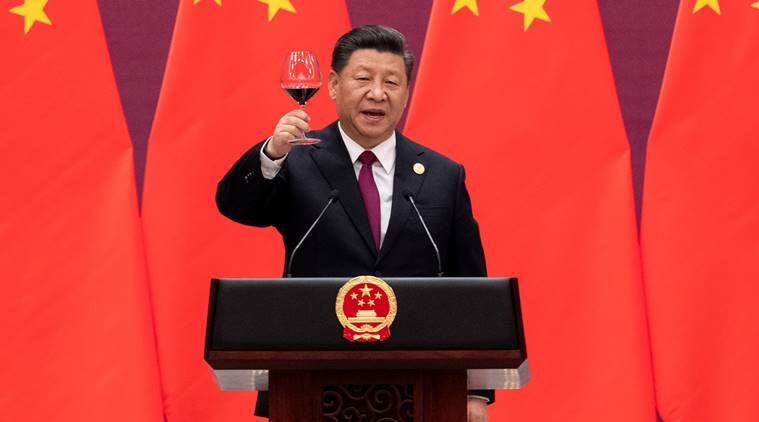
Censorship, Propaganda and Disinformation are the pillars of the Chinese Communist Party’s strategy to control the narrative domestically, as well as globally. China has one of the world’s most restrictive media environments and it relies heavily on these three pillars to add ballast to the growing dominance of the CCP and Xi Jinping over the Chinese people.

China’s attempt to cover-up repression of Uyghur Muslim population in Xinjiang

From the last few years, several reports have emerged detailing the cruel treatment subjected to Uyghur Muslims living in the restive province of Xinjiang. According to a 2017 report by the head of the Institute of Sociology at the Xinjiang Academy of Social Sciences, Beijing considers the increasing Muslim population in Xinjiang a threat to its political hegemony.

It took elaborate measures to contain this threat. The strategy of the Communist Party of China (CCP) was to strip Uyghurs of their religious and ethnic identity and assimilate them into the dominant Han Chinese ethnicity. While Uighur Muslims are often subjected to re-educational programs, forced labour, and digital surveillance, their children are indoctrinated in orphanages.

A report by the Associated Press shed light on the reasons and measures taken by the Chinese State to ensure a ‘demographic genocide’ of its Uyghur population. With several ‘draconian measures’ in place, China ensured a significant decline in the birth rates of Uighurs (mostly comprising of Muslims).

The measures included regular pregnancy tests, sterilisation, abortion, forced insertion of IUDs (intrauterine devices), huge penalties, and incarceration in detention camps for having three or more children. Reportedly, the number of people held up in such camps range from hundreds and thousands of ethnic minorities to millions.

Another report published by The Intercept threw light on the lengths that China goes in not only scrutinising the minority Uyghur Muslims in Xinjiang but also their relatives and friends, along with those who are living abroad. Artificial Intelligence, sophisticated surveillance systems, new-age technology and human intelligence are all employed by the Chinese Communist Party to track and monitor the Uyghur Muslims and those associated with them.

Beijing’s use of censorship, propaganda and disinformation to discredit reports of pervasive oppression of Uyghurs

To counter these damning reports, the CCP scrubbed all the Western reports that detailed the horrors meted out on the Uyghurs in the internment camps. Multiple foreign journalists who reported on the forced incarceration of the Uyghurs were expelled from China, while academics, activists and survivors who sought to expose China’s chicanery were denounced and harassed. Those who dared to speak against the illegal detention of Uyghurs inside China have been silenced or detained.

The crackdown against the Uyghur Muslims was accompanied by a propaganda campaign, where the internment campaigns were portrayed as “vocational training” education centres, with choreographed media tours for state outlets, who interviewed the “graduates” lauding the system. Simultaneously, the CCP’s disinformation arm also swung into action, terming the persecution of Uyghur minorities as a figment of Western imagination and sowing confusion about the scale of the “education centres” and abuses experienced by the detainees, while also painting Beijing as the victim of violent extremism and Western propaganda.

Initially, the CCP was secretive about its concentration camps for Uyghur Muslims in Xinjiang. When the news about their existence started making the rounds in the global media, China’s first response was to use censorship to limit its spread in the Chinese media and vehemently deny their existence.

When the mounting evidence to the contrary became irrefutable, China flip-flopped and launched a propaganda campaign to claim they were just “education centres” to impart valuable skills to the backward Uyghur people. The Chinese government portrayed the camps as humane and launched a disinformation blitz to paint the criticism as a Western conspiracy meant to vilify China.

Dhaka: Leader of radical Islamist group Hefazat-e-Islam, which is leading riots against PM Modi’s Bangladesh visit, arrested in 2020 violence case

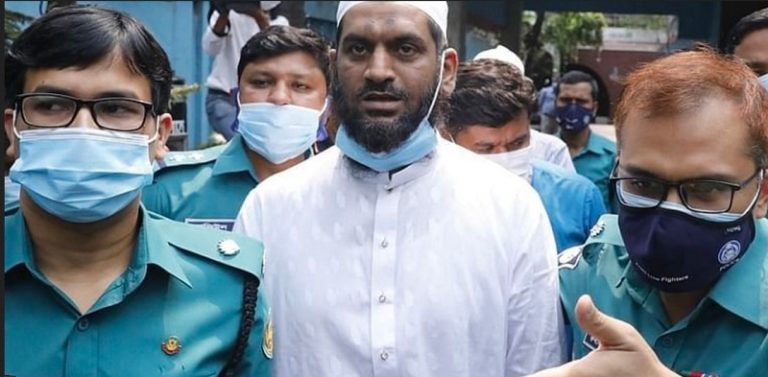
Mamunul Haque, an influential leader of hardcore Islamist group Hefazat-e-Islam in Bangladesh, was arrested by Dhaka police on Sunday on the charges of instigating violence, attempt to murder, assault and vandalism relating to a case filed last year. Harunur Rashid, a senior Dhaka Metropolitan Police official, informed in a short briefing that Haque was arrested from a madrassa in the capital of Dhaka’s Mohammadpur area.

The Islamist organization Hefazat-e-Islam of which Mamunul is the joint secretary is said to be the instigator behind violent riots and targeted attacks on Hindus in Bangladesh after Prime Minister Narendra Modi’s visit to the Muslim-majority nation.  

Several other Hifazat leaders have been accused in several cases, including planned attacks on police and police stations and vandalism which are being investigated.

More than 300 people have been arrested till now for their involvement in the cases of arson, vandalism and violence during the period 26-28 March in various towns of Bangladesh.

Mamunul Haq has been sent on seven-day remand after the police produced him before the court on Monday.

The Chief of the Hefazat-e-Islam Junayed Babunagari in a video message demanded unconditional release of all the religious leaders of the organization including Mamunul Haque and the party’s Organising Secretary Azizul Haque Islamabadi.

Violence in Bangladesh

Bangladesh’s Prime Minister Sheikh Hasina had extended an invitation to India’s PM Narendra Modi to join a March 26 celebration of the country’s 50th anniversary of independence. The radical group had warned the government of bloodshed if the visit took place.

The two-day visit was overshadowed by the violence. At least 17 supporters of Hefazat-e-Islam were killed in separate clashes with police as they attacked a police station and other government buildings, and blocked highways elsewhere in the country to wreck havoc in the country to supposedly oppose the visit.

What is Hefazat-e-Islam

Established in 2010, the Hefazat-e-Islam controls the largest number of madrasas running into thousands in Bangladesh. The organization came into prominence after its hardline Islamist demands during the 2013 Shahbagh protest movement in Dhaka. 

In its 13 point demand, Hefazat-e-Islam demanded an anti-blasphemy law with death penalty as punishment, ban on erecting sculptures, declaring Ahmadiyas as non-Muslims and several restrictions on social gathering between men and women among others.

Mamunul, who is the joint secretary general of this radical group, is infamous for his hate speech and aggressive sermons in religious congregations and social media. For the same, he enjoys immense popularity among hardliners.

Haque and his associates also led a recent campaign against building a sculpture of independence leader Sheikh Mujibur Rahman, Hasina’s father, saying sculptures are un-Islamic following which the government had to back off.

Attack on Hindu village

The same radical Islamist group was responsible for ransacking over 80 houses of Hindus in the village of Sunamganj, Bangladesh after a young Hindu man from the village, uploaded a video criticizing Mamunul Haque’s speech.

Many local Hindus had to flee their homes fearing for life which gave the attackers an opportunity to ransack and loot their homes.

Rahul Gandhi tests positive for COVID-19

Congress leader Rahul Gandhi has tested positive for coronavirus. He took to Twitter to inform the same. The Gandhi scion has requested all those who came in contact with him to follow safety protocols.

Rahul Gandhi said in his Tweet: “After experiencing mild symptoms, I’ve just tested positive for COVID. All those who’ve been in contact with me recently, please follow all safety protocols and stay safe.”

While Rahul Gandhi is eligible to take the vaccine as his age is over 45 years, it is not known whether he has taken the vaccine or not, as there is no report of him taking the same.

Adar Poonawalla of Serum Institute thanks PM Modi, FM Sitharaman for financial package, vaccination policy

0

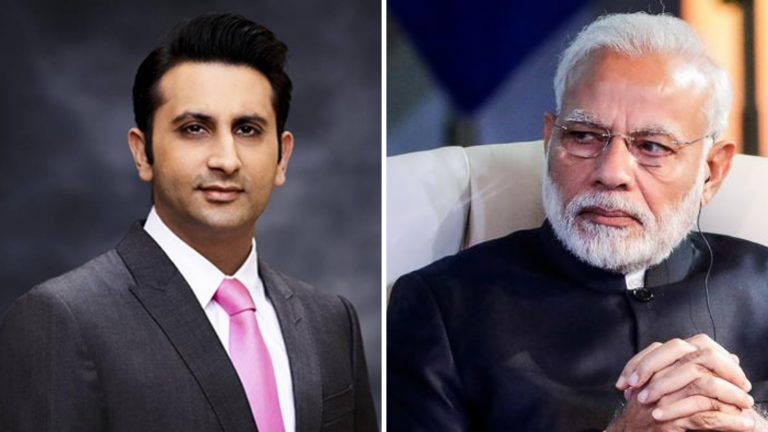
The CEO of Serum Institute of India which is manufacturing the vaccine developed by Oxford and AstraZeneca as Covishield, applauded Prime Minister Narendra Modi and Union finance minister Nirmala Sitharaman for their decisive policy changes to help boost Covid-19 vaccine production and distribution in India.

Adar Poonawalla took to Twitter on Tuesday to thank the Modi government for its efforts. He wrote in a tweet, “On behalf of the vaccine industry in India, I would like to thank and applaud Shri @narendramodi Ji, @nsitharaman Ji, for your decisive policy changes and swift financial aid which will help vaccine production and distribution in India.”

The tweet was made hours after the Union finance ministry approved ₹4,567 crores on Monday for Serum Institute of India and Hyderabad-based Bharat Biotech, which produces indigenously developed Covaxin, to boost the capacity of Covid-19 vaccine production in India. The amounts sanctioned are advanced payments for vaccines.

Both Covishield and Covaxin have been extremely crucial to India’s vaccination drive. The two vaccines which were the first to be approved by the government, are being administered in India since early this year. Yesterday, the government had also announced vaccinations for all above 18 years of age.

Last week, Poonawalla, through a tweet, had urged the United States to lift the export ban from critical raw materials essential for the production of vaccines to fight Covid-19.

Finance Minister Sitharaman announces package of Rs 4567 crore to SII & BBL

In a major development boosting the vaccination efforts, the Finance Ministry on Monday approved Rs 4,567.50 crores to Serum Institute of India (SII) & Bharat Biotech (BBL). The SII has been provided with Rs 3,000 crores while BBL has been approved Rs 1567.50 in order to ramp up the vaccination production in India. 

Vaccination for all above 18 years 

On April 19, the Government of India announced the Phase 3 Strategy of Covid-19 vaccination in which every citizen of India above the age of 18 will be eligible for the vaccine. 

The government said that in phase-3 of the vaccination program, the National Vaccine Strategy aims at liberalized vaccine pricing and scaling up vaccine coverage. It would require vaccine production and its availability to pace up across the country.

The government will provide support for the manufacturers to ramp up the production and will invite new players at the domestic and international level.

One can register for the vaccine with the Arogya Setu app or Co-Win website. As the government is going to allow states and open market sale of the vaccine, more instructions on how you can get the vaccine are expected from the central and state government.

Jignesh Mevani questioned by netizens for ‘occupying a hospital bed’ and criticising Gujarat’s healthcare system

On Monday (April 19), Gujarat MLA Jignesh Mevani was slammed by netizens for ‘deliberately’ occupying a hospital bed and denying hospice care for other Coronavirus infected patients. Mevani, who represents the Vadgam constituency in the Gujarat Vidhan Sabha, had informed on Friday that he had tested positive for Coronavirus.

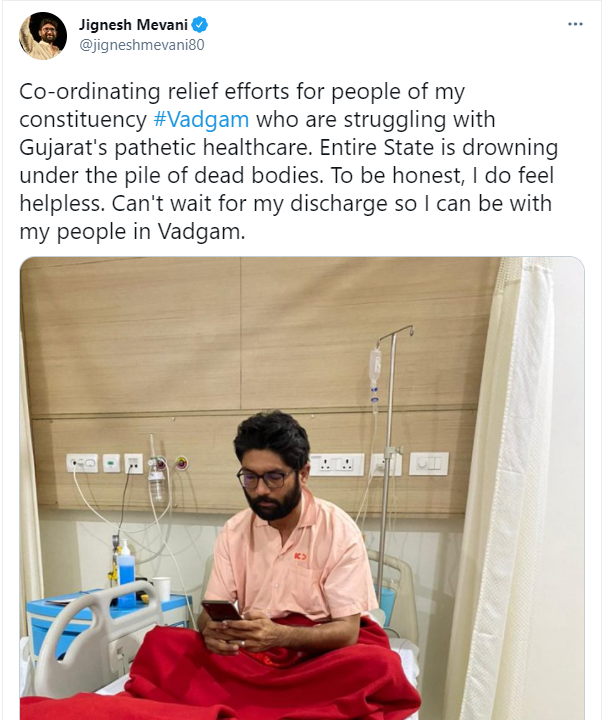
In a tweet on Monday, the Gujarat politician alleged that the state has been drowning under the pile of dead bodies. “Co-ordinating relief efforts for people of my constituency Vadgam who are struggling with Gujarat’s pathetic healthcare. Entire State is drowning under the pile of dead bodies. To be honest, I do feel helpless. Can’t wait for my discharge so I can be with my people in Vadgam,” he tweeted.

Screengrab of the tweet by Jignesh Mevani

Netizens slam Jignesh Mevani for occupying a hospital bed

His tweet however did not go down well with netizens. They pointed out his doublespeak about the supposed worsening condition of Coronavirus treatment in Gujarat while he was being treated at a luxurious private hospital.A Twitter user (@bharatendu2206) wrote, “Sitting in the comfort’ of a hospital ridiculing the healthcare system and managing the constituency from his mobile phone, wah kya bat hai (wow).”

One Bhavesh Lodha tweeted, “Khud VIP bed rok ke betha he aur dusre ko gyaan de raha he (You are occupying a VIP bed and patronising others about the healthcare system).”

Another user (@ugwande2) pointed out that it was because of people such as Jignesh Mevani that helpless people are unable to secure a hospital bed for the treatment of Coronavirus infection.

One Abhi Patel accused Jignesh Mevani of looking fit and fine but still occupying a hospital bed. He said, “Nice photo op..btw..you looks absolutely fine..why not give your bed to other??”

Jignesh Mevani has been critical of Gujarat Healthcare system

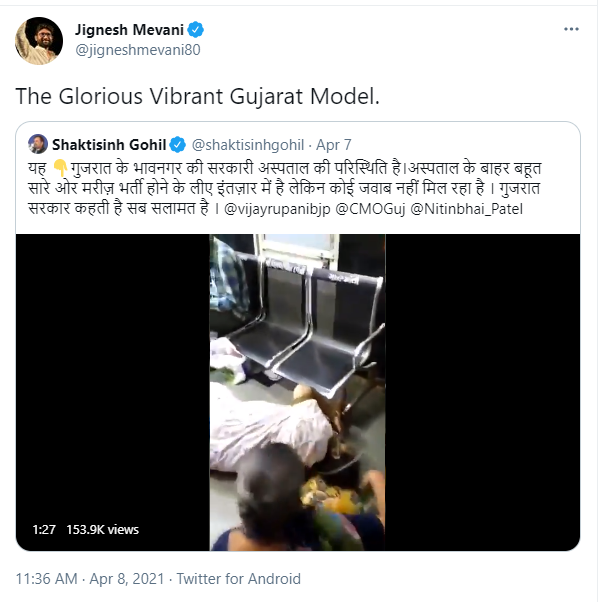
He had previously taken potshots at the ‘glorious vibrant Gujarat model’, prior to being infected with the Wuhan Coronavirus.

Screengrab of the tweet by Jignesh Mevani

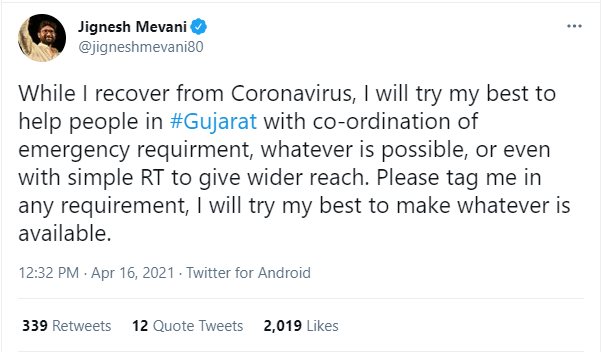
Earlier, he had vowed to help the people of Gujarat with emergency requirements. In a tweet on April 16, he wrote, “While I recover from Coronavirus, I will try my best to help people in Gujarat with the co-ordination of emergency requirement, whatever is possible, or even with simple RT to give wider reach. Please tag me in any requirement. I will try my best to make whatever is available.”

Screengrab of the tweet by Jignesh Mevani

While several netizens have suggested that Jignesh Mevani has been undergoing treatment at the KD Super Speciality hospital in Ahmedabad in Gujarat, Opindia could not independently verify the claims.

‘Make sure migrants do not suffer like they did during 2020 lockdown’: Delhi HC raps Arvind Kejriwal

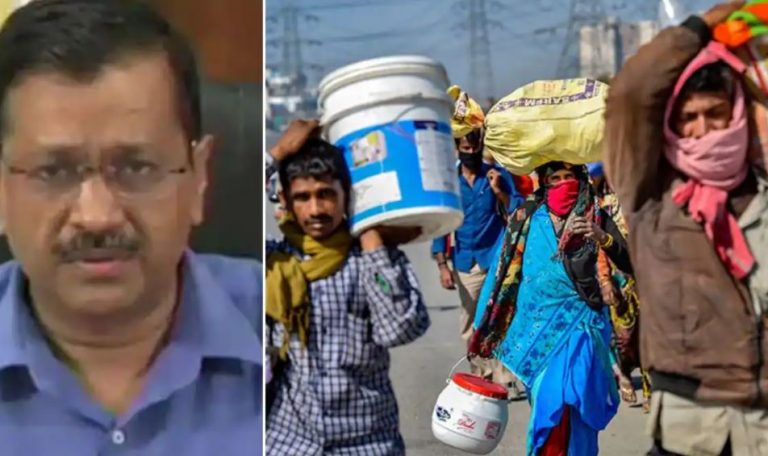
As the mass exodus of migrant workers continues in the National capital, the Delhi HC has issued a stern warning to the Kejriwal government. The High Court has asked his government to ensure that the migrant workers and daily wagers in the region do not undergo the sufferings they had to undergo in the state when the centre imposed a lockdown in 2020, reports Live Law.

The Delhi HC made these observations while hearing the case of Rakesh Malhotra vs GNCTD and others. It was a petition which was filed seeking steps to control the COVID-19 situation in the national capital, which was disposed of in January. However, owing to the second wave of the COVID-19 outbreak, the court decided to revive the case.

The bench of Justices Vipin Sanghi and Rekha Palli observed: “One of the lessons that none should forget from the lockdown imposed in the year 2020, is the plight that the daily wagers and migrant labour force which reside and work in GNCTD had to suffer. We have been seeing news reports about migrant labours already going back to their origin states, with the surge in the COVID cases in the GNCTD. With the imposition of curfew till 26.04.2021, the daily wagers –who are hand to mouth, and earn their bread every day to feed themselves and their families, are once again faced with the grim reality of facing a shortage of even basic necessities such as food, clothing and medication.”

Acknowledging the Kejriwal government’s apathy towards the migrant labourers back in 2020, the HC observed that when India was grappling with the first wave of the coronavirus outbreak then too, the civil society had come forward and provided food and other necessities to the large sections of such needy people.

To control the havoc the second wave of coronavirus has wreaked in the National Capital, the Arvind Kejriwal government announced a sudden 6-day rigorous lockdown. After having had a bitter experience during the first wave of pandemic last year when the nation-wide lockdown was announced by Centre to curb infection and build up health infrastructure, the migrant workers in Delhi have decided to go back to their hometowns, lest they be left in the lurch. 

The High Court reminded the Kejriwal government of the plight of migrants and daily wagers during the 2020 lockdown and urged it to take adequate steps to ensure that the same is not repeated this time.

Arvind Kejriwal govt fails to utilize thousands of crores they are sitting on, observes Delhi HC

Though the counsel appearing on behalf of the Government of the National Capital Territory of Delhi (GNCTD) argued that the State has taken adequate steps in this regard, the bench said: “we may say with our own experience, and that the State failed to do enough”.

The Court slammed the Arvind Kejriwal government for failing to utilize thousands of crores of rupees they are sitting on, which is available with the Board constituted under the Building and Other Construction Workers (Regulation of Employment and Conditions of Service) Act, 1996, and which has been collected as Building cess for construction workers.

While reprimanding the Kejriwal government for its nonchalant attitude towards the migrant labourers in the National Capital, the HC sought affidavits from the Centre and GNCTD regarding the availability of COVID beds in hospitals, oxygen supply etc.

Arvind Kejriwal’s 2020 mismanagement compells migrants to once again run away from Delhi

It is imperative to note that last year when the pandemic hit India, it is alleged that the AAP govt in Delhi ran state-govt buses and made announcements to get the migrants to bus stations. From there, Delhi Transport Corp buses brought these migrants to the Delhi-UP border and left them, promising them that the UP buses will take them to their respective villages. This when all the states had stopped inter-state movement and there were no state-run buses plying on road. So, in the first wave of the pandemic, Kejriwal had left the migrants on their own before the Yogi govt stepped in to help them.

Left with this bitter taste, it is understandable why the migrant labourers are once again thronging bus terminals after the government announced a 6-day lockdown in the National Capital.