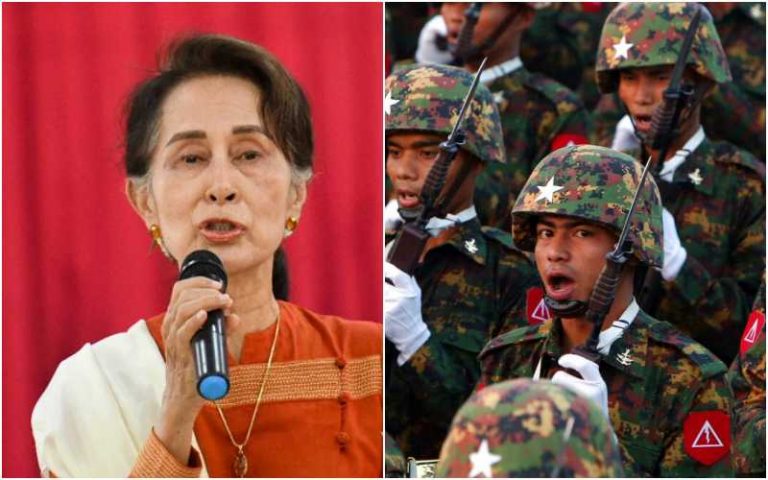
On the early hours of Monday, the Myanmar Army staged a coup and declared it had taken control of the country for one year under a state of emergency.
According to the reports, the Myanmar military’s intervention came after weeks of continued friction between the country’s military, which ruled the country for over five decades, and the civilian government over allegations of irregularities in November’s elections.
The Myanmar military has now detained the country’s top political leaders, including Aung San Suu Kyi and other senior members of Myanmar’s ruling party amidst rising tensions over a recent election. Aung San Suu Kyi, Myanmar’s 75-year-old state counselor, President Win Myint, and other members of the National League of Democracy were arrested at their residences in the capital Naypyidaw early on Monday.
Following their arrests, the military then declared a one-year state of emergency. The troops seized the city hall in Yangon, the former capital that is Myanmar’s commercial hub.
Army takes control amidst rising tensions over alleged election irregularities
Earlier this week, the Myanmar Army had suggested they were ready to take control of the country after pointing out the alleged election fraud in the November 8 election. In the elections, the incumbent NLD had won the election by a landslide, ensuring Aung San Suu Kyi a second five-year term in office.
The military-backed Union Solidarity and Development Party had suffered a massive defeat at the pro-democratic party’s hands. Incidentally, the country’s new parliament was set to hold its first session on Monday.
For nearly five decades, from 1962 to 2011, Myanmar was ruled by the military. Post-2010, democracy started returning slowly in Myanmar under a constitution that had to reserve three important ministries and 25% of seats in the parliament for army appointees.
The November polls were only the second democratic elections the country had seen since it emerged from the 49-year military rule grip in 2011. The NLD took power in 2016 in a civilian government headed by Aung San Suu Kyi.
US, Australia express concerns
The coup by the Myanmar Army has triggered a quick response from the United States and Australia, who demanded the immediate release of detained NLD leaders and the restoration of democracy.
“The United States opposes any attempt to alter the outcome of recent elections or impede Myanmar’s democratic transition and will take action against those responsible if these steps are not reversed,” White House spokeswoman Jen Psaki said in a statement.
Similarly, Australia also expressed its concern saying that the military was “once again seeking to seize control” of the country and asked them to respect the rule of law.
Ahmedabad based NGO chief Hassan Johar, has been reportedly booked on charges of sexual harassment. As reported by DeshGujarat, the complainant is a 33-year old Gandhinagar resident who moved here from Bihar. In her complaint, she alleged that she had applied for the job at Johar’s NGO and her interview was conducted on 10th October 2020. Johar runs an NGO called SPART (Society for Promoting Rationality) in Ahmedabad.
The victim alleged that she joined SPART on 13th October 2020 and was asked to pay Rs 43,000 as deposit for HR policy. Since she was unable to pay the amount, she deposited her original documents. The woman alleged that Johar had asked her to additionally work in HR department too which she denied. She would have frequent verbal spats with him for the same, she said.
She further alleged that Johar would indulge in indecent behaviour and would say that he needed a partner for sex. Upon finding opportunities, Johar would hug her and hold her hands. Adding that he would indulge in indecent talks with her, she said that he told her that he would masturbate when he gets bored. She alleged that he would ask if she has a boyfriend and has sex.
Tired of the harassment, she resigned on 12th December and demanded the original documents are returned to her. However, he has not returned the documents.
The woman has named five witnesses including a woman in her complaint.
Hassan Johar’s past complaints
Earlier in March 2019, a 44 year old man had filed a police complaint alleging that Johar cheated him and breached his trust by demanding Rs 50,000 to return the original documents he submitted while taking up a job. Nilabh Mishra, a native of Bihar and living in Ahmedabad, had alleged that he had submitted his original documents like Aadhaar, passport and driving licence while taking up a job in April 2017. However, he quit within a week as he fell unwell. When Mishra demanded the documents, Johar allegedly demanded money.
Hassan Johar ex-husband of ‘activist’ Zakia Soman
Hassan Johar is ex-husband of Zakia Soman, founding member of Bharatiya Muslim Mahila Andolan, a ‘human rights movement’.
He has been booked under section 354A(i) of the Indian Penal Code pertaining to physical contact and advances involving unwelcome and explicit sexual overtures.
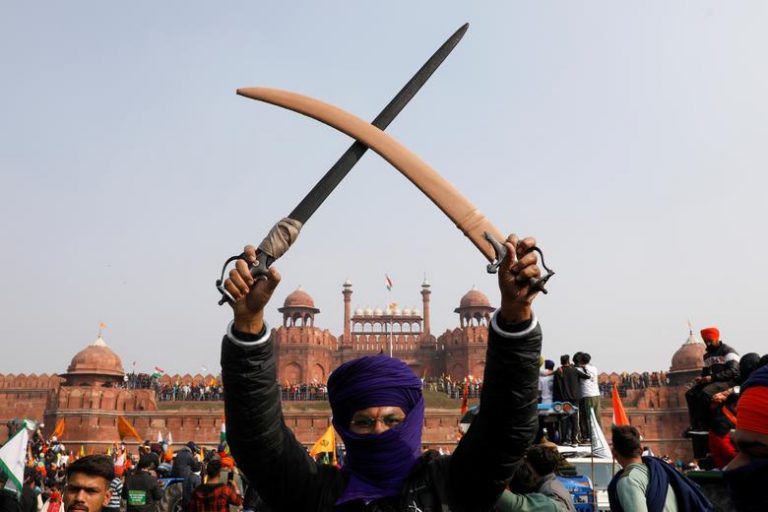
The Khalistani face of the ‘farmer protests’ was out in the open on Republic Day when a Khalistani mob hoisted the Sikh flag at the Red Fort. While some have claimed that it is only the Sikh flag and not the Khalistan flag, it is pertinent to mention that the flag was allegedly hoisted by Deep Sidhu and his band of followers. Deep Sidhu is a known Khalistani.
During the entire protests, entertainers have played a critical role in promoting the Khalistani narrative. In this article, we look at some of the incendiary songs that are being manufactured by entertainers with dubious ideological inclinations.
“Waaris Nalwe De” really manhandling lion or running into rat traps?
Babbu Maan, a hugely popular Punjabi singer recently released a 24-minute song “Waaris Nalwe Da”, latest in the sheep-herd series of the farmers’ agitation-centred Punjabi songs. Till now over 75 such songs have been produced.
Of these, a large contribution is made from mainstream popular artists like Babbu Maan, Jas Bajwa, Kanwar Grewal, Ranjit Bawa, Sidhu Moosewala, Karan Aujla, Shree Brar and also international artists Bohemia, J Hind, The Game, etc. Though, all these and other artists are world renowned for their songs instigating violence, narcotics and sexism.
This is acting as another catalyst in provoking the youth in the current so-called farmers’ agitation on Delhi’s borders. Here, we discuss the narratives and agendas being set up by these Punjabi songs.
Raging war between Punjab and Delhi
The word “Dilliye” is used commonly in 99% of the songs. Many may argue that the term refers merely the seat of the Indian government, hence the government itself. But the songs say something else.
Kanwar Grewal says, “Bas 4-5 Ghanteya Di Waat Delhi-e Tenu Yaad Karva Deyange Aukaat Diliye, Teri Hikk Utte Chadd Ke Jaikaare Launge” in song Ailaan. Anyone who understand basic Punjabi can notice how Kanwar threatens “Delhi” to make it realise its ‘Aukaat’ by seizing on its borders. Who is affected by seizing Delhi’s borders? The seat of power or the citizens, majority of whom are non-Sikhs?
In another song, Punjab Bolda, Ranjit Bawa argues, “Rabb na kari je gora pher aa gaya, le leyo azaadi ohdoyoga karke”. Which roughly translates to, “Yoga won’t help if the British enslaves India again”. The same song also mocks Ayurvedic medicines and other constituents of Bharat’s cultural ecosystem. For merely attacking the central government? However, the above-mentioned songs merely give two instances out of a large chain of such songs and narratives. The term is being used in wide context to create divide between Punjab and the rest of Indian union.
Rejuvenation of Khalistan movement
Amid a lot of ruckus over the involvement of Khalistan movement in the farmers’ agitation, these songs force us to again peek into the agitation carefully. On the one hand, the above mentioned “Dilliye” narrative also leads to a bigger separatist picture.
On the other hand, pro-Khalistan artists Jazzy B, Sophia Jamil, Sidhu Moosewala and Pakistani artist AB Chatha vehemently showcased secessionist and the self-determination propaganda through their songs Bagawatan, Khalistan the Solution, Panjab and Baghi Punjab, respectively.
Two lines from Shree Brar-produced very popular so-called “Kisaan Anthem” also instigate secessionism for which he was even detained by Punjab Police. The song lyrics says, “Jinna nu tu attwadi kehndi Dilliye, Je attwadi hoge tetho sambhe ni jaane”. This threatens “Delhi” that those who are alleged of being terrorists may really become terrorists.
Another line says “Babe Nanak ne saanu si kisani bakshi Baajan wale ne kalma te khande Delhi ae”. Clearly promotes the Sikh self-determination propaganda by threatening that Guru Gobind Singh has bestowed dagger upon Sikhs.
Agra Fort vis-a-vis Raisina Hills
No, we won’t discuss the regimes of the Mughal empire and the current Indian government. But somehow the artists of these songs find interest in and are even obsessed with doing so.
The Kisaan agitation songs are constantly trying to invoke the 1984 Operation Bluestar and anti-Sikh riots, 1947’s partition, etc. The more concerning part is that the artists are repeatedly comparing these issues with the tyrannical and barbarous Mughal and other foreign atrocities in the medieval era. Repeatedly flaunting victory over Abdali and Alexander, and further misusing names of Sikh heroes to threaten others. Also claiming that Punjab has some previous uncleared accounts with “Delhi”.
For instance, the Kisaan Anthem says, “Khoon khaulda niyana ki siyana Dilliye, Hissab tere naal sadda ae purana Dilliye”. Which roughly translates to “the previous uncleared accounts provoke us”. Mentionable is that, this particular propaganda is more relevantly exhibited through visuals in these songs. So, the argument is that not only the lyrics are dangerous, but the visuals in the song videos are also vicious and under great suspicion.
“Kitte Modhe Te Bandook Na Aa Je”
Constant threats of grabbing arms if not convinced, and still calling the so-called farmers’ agitation peaceful. This single line basically defines the Punjabi songs centred around farmers’ protest.
Repeated threats of reviving insurgency in Punjab not only provokes the Punjabi youth but also challenges India’s integrity. Koroala Maan’s Weapon Shoulder, Anmol Gagan Maan’s Kisaan v/s Rajneeti, Kanwar Grewal’s Jawani Zindabad & Pecha, and many other extremist songs openly calls the youth to get armed. Might be a crucial logistic in the peaceful protest as per the artists.
But lest we forget, that the protest is also supported by gangster-turned-activists like Lakha Sidhana and Navdeep Guggu.
The article is not calling the administration to take stand against such songs, since an army of “human rights” advocates is standing just outside the court premises to defend the accused. But the brutal history of Punjabi music industry’s violent, alcoholic and sexist nature fairly narrates the vulnerability of Punjabi youth to such extremist songs. If the 80s-90s insurgency is revived in Punjab, the aftermath stands unimaginable.
The article is written by Devanshu Mittal, Student, Kurukshetra University.
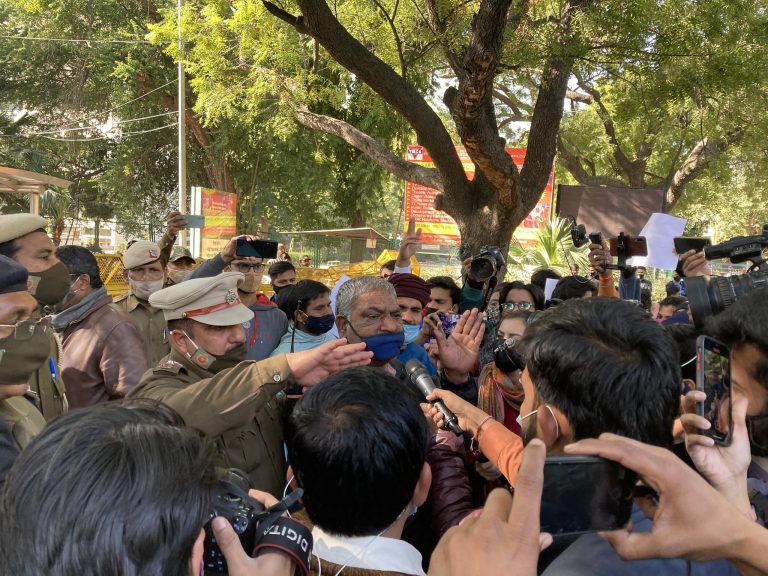
‘Journalists’ protested at the Delhi Police headquarters on Sunday demanding the release of Mandeep Punia, detained after he misbehaved with a station house officer (SHO) at the Singhu Border on Saturday night. He was reportedly attempting to removed barricades and misbehaved with police due to which he was detained.
Speaking about the arrest, a senior police officer said Punia was standing with the protesters and he did not have a press ID card. He was trying to move through the barricades which were kept to segregate and secure the area. An altercation broke out between police personnel and him.
The police said that Caravan ‘journalist’ misbehaved with the police and was soon detained. ‘Journalists’ could be spotted on Sunday sloganeering at the Delhi Police headquarters. Slogans of ‘Tanashahi nahi chalegi’ could be heard.
Journalists protesting against the arrest of Mandeep Punia next to the new Delhi police headquarters pic.twitter.com/3yxkRvWQeX
In a video that was shared by Scroll’s Vijayta Lalwani, one of the protesters could be spotted ranting about ‘BJP goondas’ and describing how Mandeep Punia used to live with the anti-farm law protesters and dine with them.
The ‘journalists’ could be seen sloganeering in a fashion that reminds one of scenes that are usually observed at JNU protests organized by far-left protesters.
Journalists protesting against Delhi police and demanding that Mandeep Punia should be released. pic.twitter.com/j313mHSPPT
The Caravan, the media portal Mandeep Punia is reportedly associated with, is under the dock as well as its journalists have been booked for sedition for trying to incite violence by sharing misinformation in connection with the death of a protester during the Republic Day violence.
Now, it appears that for certain ‘journalists’, misbehaving with the Police falls under the purview of ‘press freedom’ as well.
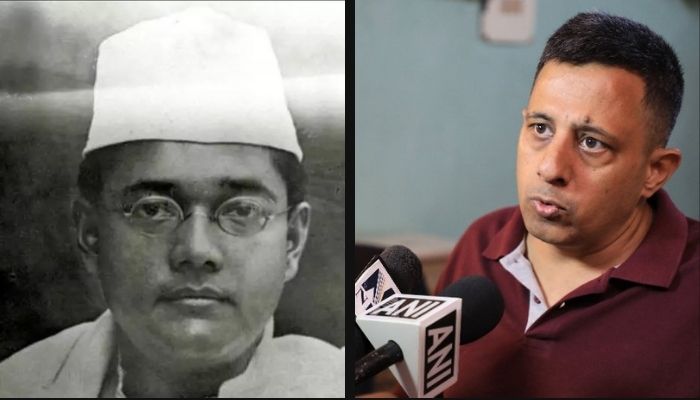
Former journalist, Anuj Dhar, who is also the author of the book ‘Conundrum: Subhas Bose’s Life after Death’, stirred up a controversy on social media on Saturday.
In a tweet, he wrote, “This day in 1939, Subhas Chandra Bose was elected president of Congress. According to a declassified CIA record, Bose was later ousted from Congress presidency by certain “British influences”. Dhar further added, “At that time, Bose suddenly took ill. Poisoning was suspected.” His claims sparked outrage on social media amidst aspersions about the role of the then Congress high command in his mysterious disappearance.
This day in 1939, #SubhasChandraBose was elected president of Congress. According to a declassified CIA record, Bose was later ousted from Congress presidency by certain “British influences”. At that time, Bose suddenly took ill. Poisoning was suspected. #Netaji125pic.twitter.com/2wx91I2RfF
Subhas Chandra Bose and his ouster from the Congress
Bose had been elected as the president in Haripura session of Congress in 1938. Bose had been advocating opposition to the British government’s federal scheme as per Government of India Act 1935. He had been proposing a mass movement for ‘Purna Swaraj’, unlike other elements within the party which were in favor of accepting the new concessions from the British. However, the old guard, including Mahatma Gandhi, refused to heed to his words. Therefore he contested for re-election to the presidency of the next annual Congress session that was to be held in Tripuri.
Unlike today’s Congress party, there were real elections to the post of president during that time. He won against Gandhi’s candidate Pattabhi Sitarammayya (1,575 to 1,376 votes). In response, the entire CWC (Congress working committee) resigned. Thereafter, he was shunted out of the Congress party because he had the charisma and ability to win an election against the wishes of Mahatma Gandhi.
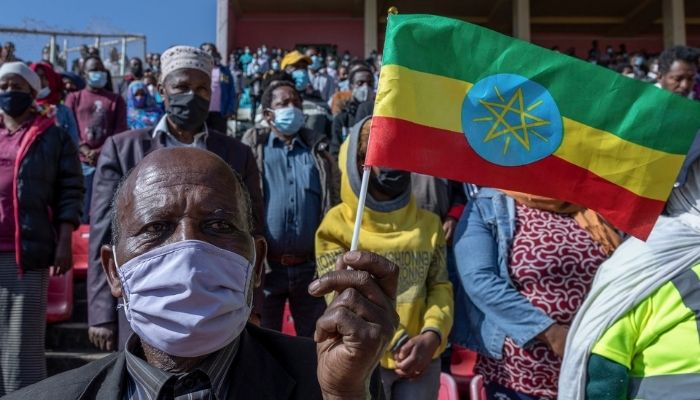
Amidst the ongoing armed conflict between the Ethiopian government and rebel group Tigray People’s Liberation Front (TPLF), the United States has directed the Eritrean government to withdraw its security forces from the conflict zone. It is important to mention that Ethiopia has denied any presence of Eritrean troops in the region, although credible reports estimate their numbers to be in thousands.
According to the spokesperson of the State Department, the United States has expressed grave concerns after witnesses reported human rights violations, loot, sexual assault and killing in the Tigray region. The US is concerned that the Eritrean forces are reluctant to leave the region.
On Thursday, IT Minister of Eritrea responded to concerns raised by US ambassadors to Ethiopia. He said, “The allusion by these ambassadors to potential territorial war between Eritrea and Ethiopia can only be disingenuous in content and vicious in intent.” Eritrea had emphasised that the concerns were ‘provocative’ and ‘ill-intentioned’ in nature.
The impact of conflict in the Tigray region
Following the military intervention of the Ethiopian government under Prime Minister Abiy Ahmed against Tigray People’s Liberation Front (TPLF), the Tigray region has become an isolated territory with only limited access to humanitarian workers. The conflict zone is home to 6 million people and concerns have been raised about the growing starvation and shortage of food and other essential supplies.
While speaking about the situation, Ato Abera Tola, President of Ethiopian Red Cross Society said, “There is no area which is not affected by this conflict … the conflict is everywhere.” With no access to journalists, it is difficult to verify assertions made by the government or the armed rebel group.
Debretsion Gebremichael, a fugitive rebel leader, said in a purported audio clip, “Many have paid and many are continuing to pay the ultimate sacrifice…They are carrying away what they can and burning what remains.” He asked residents of Tigray to continue the ‘struggle’ against those threatening their identity and existence. He also reiterated allegations of torture, rape and murder against the Ethiopian government.
How the Tigray conflict began
Prime Minister of Ethiopia, Abiy Ahmed, ordered a military offensive against the TPLF after an attack on one of its military bases early in November. Ahmed accused the rebels of being responsible for the attack which resulted in the capture of the military base by the rebels. A state of emergency was declared in the country for six months.
Ahmed said that the attackers “tried to loot” military assets, asserting that “the last red line had been crossed”. “The national defence force that has been in the bunkers for the past 20 plus years defending its people and the country by paying heavy sacrifices with its blood and flesh, has been attacked, this evening in Mekelle and many other places, by traitors and the force they organised,” he said in a televised address.
During its initial years, the TPLF had a Marxist ideological bent but later, it moderated itself and claimed to be pro-democracy. Since 1991, after overthrowing what it labelled as a dictatorship, the TPLF and others formed a coalition government that ruled Ethiopia until 2018.
In 2018, however, another coalition, the Prosperity Party, assumed power after the Ethiopian People’s Revolutionary Democratic Front Chairman under Abiy Ahmed unified the constituent parties into a new coalition. The TPLF did not accept the merger and called it illegal. Amidst the ongoing fight, the government has claimed to taken two key towns from the rebels in Northern Tigray.
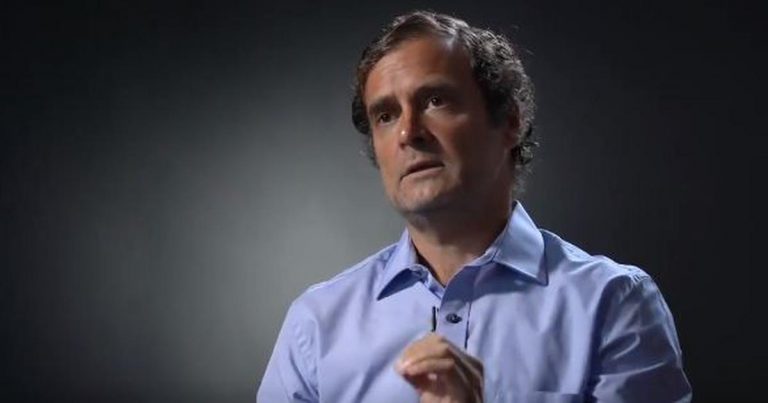
Delhi State Congress unit today passed a unanimous resolution to make senior Congress leader and Wayanad MP Rahul Gandhi as the party President.
Rahul ji is only one who can inspire Congress workers. All his predictions are coming true from farmers issue to ills of GST. He's shown his leadership ability. So we passed resolution to make him Congress president again: Delhi Pradesh Congress Committee President Anil Chaudhary https://t.co/FjfBOEUMJnpic.twitter.com/c3tlSTee2B
Delhi Congress unit believes that because Rahul Gandhi’s ‘predictions’ are coming true, he has shown his leadership ability and hence they passed a resolution to make him party president again.
Rahul Gandhi quit after 2019 general elections debacle. Upon his resignation as party president, his mother Sonia Gandhi was made interim President. Prior to Rahul Gandhi, she had served as party president for two decades.
Soon after he had resigned as party chief, speculations were rife that he would come back as party president, mostly because of the party’s lack of leadership and political will to think beyond the Nehru-Gandhi family. However, other senior leaders like Shashi Tharoor have been quite vocal about expressing disdain over dynastic politics in the grand old party.
Various state units have also passed similar resolutions to make him the party president.
Amidst all this, there are rumours that Rahul Gandhi has again left the country for foreign vacation. Congress, however, has dismissed the reports.
Senior Trinamool leader Madan Mitra has found himself in the dock recently after making Hinduphobic comments during a live debate on Zee 24 Ghanta with BJP MP Arjun Singh on the 28th of January. He claimed during the debate that Sita made beef for Parshuram and announced his inclination to move the High Court and have the ‘Jai Shri Ram’ slogan banned.
But that was not the only bizarre comment that was made during the debate which soon devolved into mudslinging and something that could not be accurately described with words. Madan Mitra also somehow managed to link Sita to NRC.
He said, “Jai Shri Ram, we have to ban this slogan. I am going to the High Court. This is Bharatvarsha. Why are you saying Jai Shri Ram? You are excluding Sita. Can there be Ramayana without Sita? It means you have been trying to implement the NRC from the beginning.”
A visibly disgusted Arjun Singh responded saying, ‘We cannot expect better from Madan Mitra. The culture he is a part of cannot distinguish between mother and wife. He belongs to Mamata Banerjee. That is why she in such a situation.’ And this was probably the highest point of the debate. At one point, the Trinamool leader called himself the ‘crush of Bengal’.
But Madan Mitra, here, is a repeat offender. Only a few days earlier, he threatened the violence. He said, “Those from BJP listen, ‘doodh maango to kheer denge, agar Bengal maango toh chiir denge’ (if you ask for milk, we will give you kheer, But if you ask for Bengal, we will rip you off).”
After Suvendu Adhikari jumped ship to the BJP, he expressed his happiness saying that the party was free from virus now. He also said that if Mamata Banerjee does not defeat Suvendu Adhikari in Nandigram by 1 lakh votes, he will cut his own wrist.
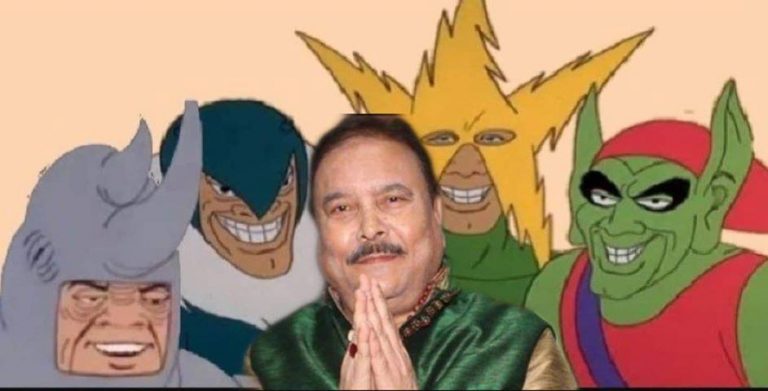
Madan Mitra started his career with the Indian National Congress. However, later, he joined the All India Trinamool Congress founded by Mamata Banerjee. He was elected to the Legislative Assembly from the party and even became a Minister in West Bengal. Now, he is a meme sensation in Bengali sections of social media.
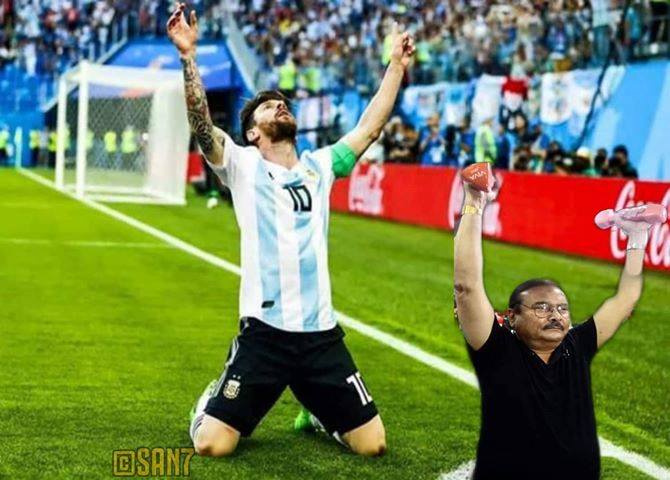
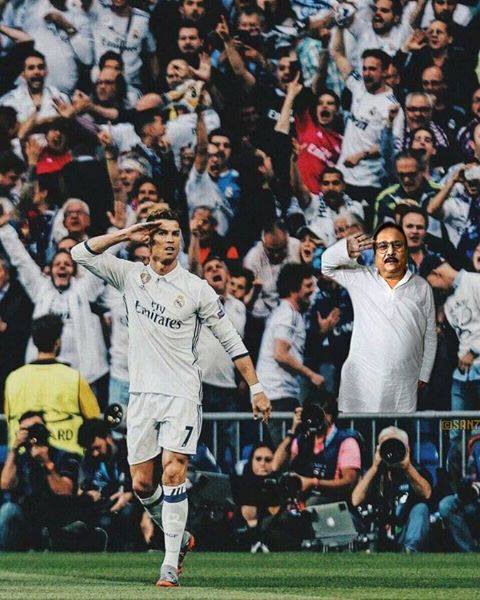
There is an extremely popular Facebook page called ‘Madan Mitra at Unusual Places’ that has over eighty-six thousand likes on the platform. The page is dedicated to, as the name suggests, sharing photographs of the Trinamool leader at unusual places. Sometimes, he is shown in football matches and sometimes, in posters of popular movies.
Image Credit: Madan Mitra at unusual places/Facebook
Image Credit: Madan Mitra at unusual places/Facebook
Image Credit: Madan Mitra at unusual places/Facebook
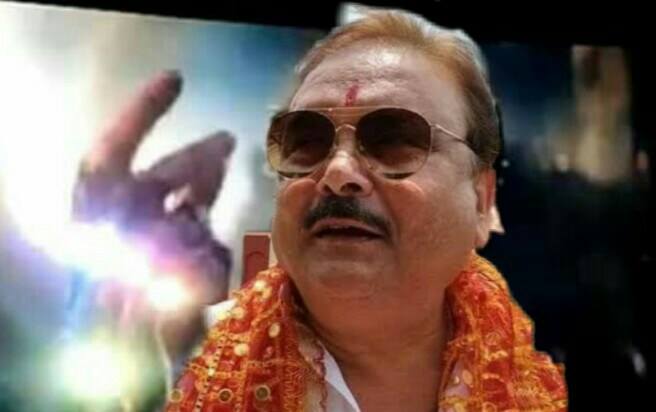
Memes were shared where the Trinamool is shown as Hulk, Thanos or one of the other Avengers characters.
Image Credit: Madan Mitra at unusual places/Facebook
Image Credit: Madan Mitra at unusual places/Facebook
Image Credit: Madan Mitra at unusual places/Facebook
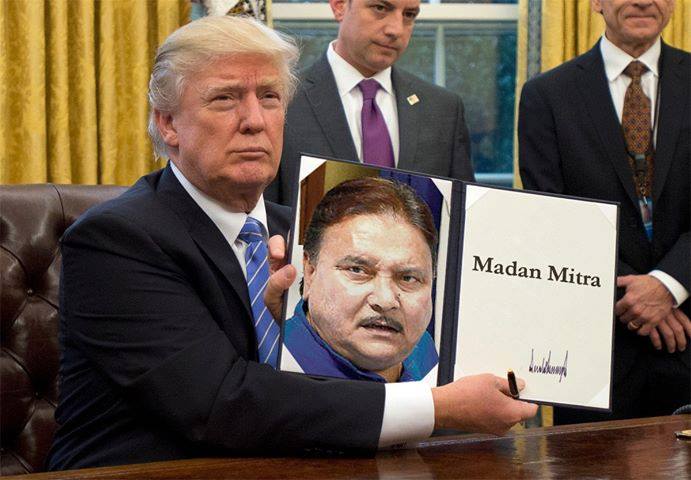
He was also shows with former US President Donald Trump on one occasion.
Image Credit: Madan Mitra at unusual places/Facebook
Madan Mitra is well aware that he is a meme on social media. However, to his credit, he does not mind being one. During an interview with Bankura Memes that was shared on YouTube, he equated the current meme culture with the work of the legendary comedian Charlie Chaplain.
During the interview, he revealed that he was once asked by a journalist from a very prominent media house why he did not take any action against those making memes on him, he responded, “How many people have been making a living by selling God? And in our land of over a billion, Ram and Sita are the ones most being sold. Some Hanumans have gathered, they don’t have Ram-Sita in their hearts, they have them in their mouths.”
He continued, “If someone is most responsible for the troll culture, if someone is most responsible for the memes, the ones responsible for vandalism…” He did not really complete the train of thought.
At another point, he said, “If someone can guarantee that they want sunglasses like mine, then I will say that please do something, vote for Trinamool Congress. I will come wearing these sunglasses in front of you however many times you want, I might even let you wear it once but I will take it back.
He was asked once during an interview why he had such a huge following among the young crowd. He went on to describe how people always prefer ‘kochi’ (kachcha/young) things. He spoke at length about the attractiveness of ‘kochi aam (kachcha mangoes)’.
‘It looks good, the size is also good,’ Madan Mitra said about ‘Kochi aam’. Unfortunately, ‘kochi’ is also used to refer to nubile women in a derogatory fashion. From his conduct, it does not appear that he was aware of that meaning while speaking.
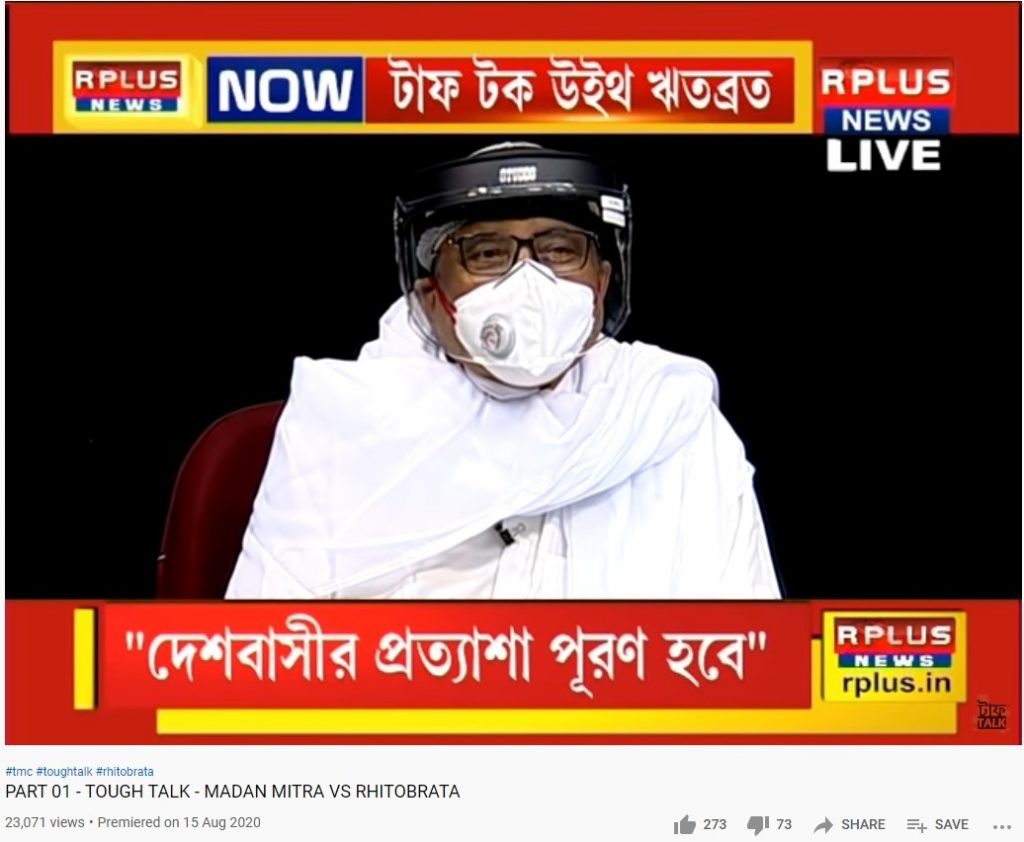
The Trinamool leader also appeared on a TV show during the height of the Coronavirus pandemic in India covered totally in clothing. It appears sensible enough but it is a bit comical as he could have easily appeared for the interview through live stream from his home if he were so worried about the virus. But then again, perhaps he should not be mocked for exercising too much caution. It is funny nonetheless.
YouTube screengrab
In 2013, the Trinamool leader boasted about how he had threatened a police officer with physical violence prior to the elections in 2011. He claims to have told the police officer, “Ekta kaan er goraay debo na, kal shokal er por khuje pawa jaabe na (I will slap you and they will not be able to find you next morning.”
In 2018, he claimed that Amit Shah looks like the dacoits from Chambal and compared Mamata Banerjee to the ‘Maa’ of Bengal. He was also arrested by the CBI in 2014 in connection with the Saradha scam. He was granted bail two years later.
Madan Mitra also loves going ‘live’ on Facebook. People on social media also claim that he is a drunkard, although we cannot verify such claims. Following the debate with Arjun Singh, YouTube and Facebook were rife with comments that he was under the influence of alcohol during the debate.
The Trinamool leader also questioned the morals of the victim in the infamous Park Street rape case and asked who would befriend strangers at 2 am in a discotheque.
Under such circumstances, it appears that there is some merit to Arjun Singh’s comments that the fact that Madan Mitra is still relevant in the party only demonstrates that the state of the party. During the debate, the Trinamool leader called Singh ‘Chor’ and ‘Lompot’ (Thief and lumpen).
The Republic Day violence and the subsequent desecration of Indian tricolour and the hoisting of other religious flags at the Red Fort created shock waves across the country. The riots that were unleashed in the capital on a historic day was suspected to have pro-Khalistani outfits hand, who along with far-left ‘activists’ and ‘farmer’ leaders instigated protestors to carry out large scale violence on the streets of Delhi.
Ever since the so-called farmer protests began to oppose the three farm laws passed by the Modi government, there were allegations of Khalistani interference. OpIndia had also reported in detail regarding how Khalistani elements were trying to hijack the protests to incite the ‘farmers’ to carry out insurrection against the state.
As suspected the farmer protests culminated in the massive violence during the tractor rally in the national capital on Republic Day. A few days after the riots, explosive details are emerging that links to the involvement of Khalistani elements in instigating the violence.
According to a report published by Sunday Guardian, members of a group going by the name of “Khalistan Zindabad” had discussed ‘picking up arms’ and ‘carry as many arms as possible’ in the initial days of January on the popular messaging application Telegram. These members also discussed their present and future moves to oppose the farm laws.
Private Telegram groups asked members to pick up arms, says report
As per the report, the suspected Telegram group had 42 members, and the group’s admin is identified by the name of ‘EmbassyofKhalistan’. The admin has the picture of Khalistani leader Gurpatwant Singh Pannun, who is declared a terrorist by the Ministry of Home Affairs (MHA) in July last year. Following the Republic Day riots, the number of members in the group decreased.
However, it is not yet clear whether any of these 42 members were part of the protestors, squatting at various points outside Delhi. These protestors disguised as ‘farmers’ created a riot-like situation in the national capital region on 26 January, that ended with desecration of the Red Fort and the unfurling of an alleged Khalistani flag from its ramparts.
On 11 January, one of the members of this ‘private group’ on Telegram had asked the members to ‘carry as many arms as possible’. It is not clear from the conversation as to where these armed members were asked to go and when.
Most importantly, the Sunday Guardian report disclosed that one of the prominent members of this group is also behind a music video, released on 31 October 2020 glorifying the life of Khalistani secessionist Jarnail Singh Bhindranwale. The video glorifies Khalistani movement and incidents like assassination of the then Prime Minister Indira Gandhi apart from Bhindranwale. It was uploaded from Southall district of London, United Kingdom, on YouTube as well as Instagram.
During a conversation between members of this group on 14 January, at around 9 pm on the ‘ills of farm bills’, one of the group members is inciting the other members to ‘pick up arms’.
Protesters resort to violence, vandalism and destruction amidst Tractor Rally
Thousands of farmers breached barricades and proceeded towards Delhi amid huge police presence as they kicked off their tractor rally on Republic Day. Chaos was unleashed on the streets leading to the national capital as farmers flouted the designated route and marched towards the Parliament and Red Fort.
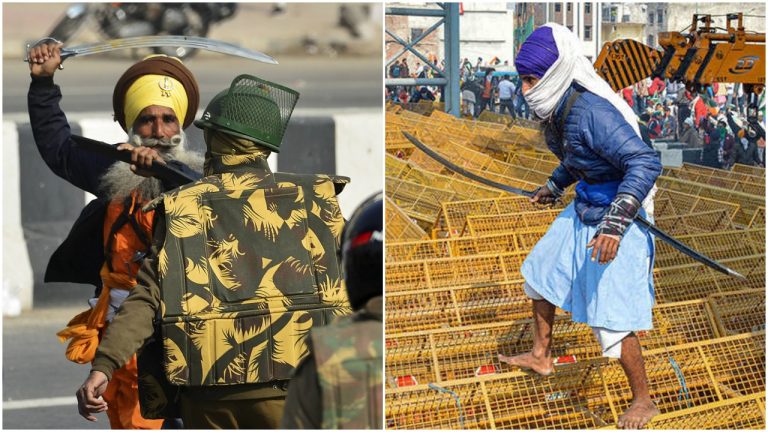
The participants of the tractor rally also resorted to vandalism as they ran amok on the highways, attacking the trucks and breaking the barricades that were put up by the Delhi police to control their route. As disorder swept over the city’s borders, protesters were baton-charged and tear-gassed by the policemen on duty.
The upheaval was primarily caused after the protesters who were allowed to hold the “Kisaan Parade” between 12 to 5 PM, started the march much before the allotted time and veered away from the agreed-upon routes. The security personnel had tried in vain to convince the farmers to stick to the plan of holding the tractor parade after the conclusion of the Republic Day parade at Rajpath. But, their requests fell on deaf ears as the protesters ran riot, breaking barricades and vandalising vehicles on their way.
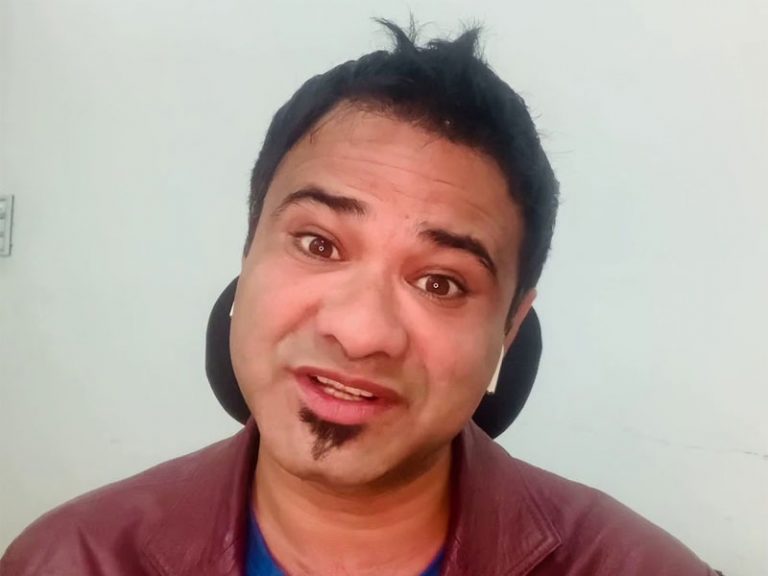
Uttar Pradesh Police has opened a history-sheet of 81 people in Gorakhpur district. Dr. Kafeel Khan, who was named as main accused of involvement in the deaths of several children in BRD Medical College in 2017, is amongst the top ten on the list of history-sheeters. After becoming a history-sheeter, Khan will remain on Police’s radar.
History-sheeters are those people who have a criminal record.
Senior Superintendent of Police Jogendra Kumar gave the instructions to open history sheets against 81 people. As of now, there are 1,543 history-sheeters in Gorakhpur.
Kafeel Khan accused in Gorakhpur BRD Medical collage case
Adeel Khan, brother of Kafeel Khan, claimed that the history-sheet against controversial Dr Kafeel Khan was opened in June 2020, but the media came to know about it on Friday. He has since moved to Rajasthan after Congress General Secretary Priyanka Gandhi assured him of ‘safe stay‘ in the Congress-ruled state.
Dr Khan was suspended after allegations of medical negligence was levelled against him in 2017 after 72 infants had died in BRD medical college in Gorakhpur due to lack of oxygen supply, and was arrested on that charge. Two years later, after a probe by UP police, the charges of negligence and corruption were dropped, but he was still charged with running a private practice and two other accusations. He was released in 2018 after spending 9 months in jail, and he still continues to be suspended from his job.
In January 2020, he was arrested for his speech at Aligarh Muslim University on December 10, 2019, during anti-CAA protests.
Khan had made some inflammatory remarks in his speech delivered during the anti-CAA protests in Aligarh Muslim University. He had allegedly remarked against Home Minister Amit Shah that he was a murderer whose clothes are foul with blood. He had also said that the CAA made Muslims second class citizens. He alleged that the students in the RSS run schools are taught that people with beard are terrorists and that with the CAA the government has told us that India was not our country. Khan had urged people to fight for their existence.
He was later booked under National Security Act. In September 2020, Allahabad High Court quashed his detention and ordered immediate release.