Home Blog Page 4635

Punjab Assembly to pass bills again to counter central farm laws after Governor refused to give assent: Details

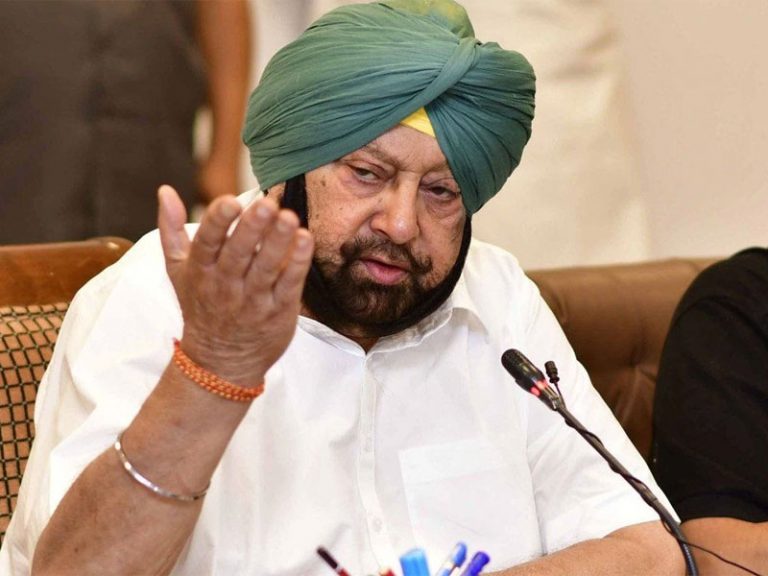
Chief Minister of Punjab, Captain Amarinder Singh, said on Tuesday that his government would bring the State Amendment Bills once again to negate the Agriculture Laws passed by the central government. The Governor had not given his consent for the bills passed by Punjab Assembly.

He further added that he would seek time to meet President Ramnath kovind regarding the ongoing farmer protests. In October, the Punjab government had passed three bills to nullify the Agriculture laws passed by the Center, however, the Governor did not sign them.

‘Will bring bills again’: Punjab CM

CM Amarinder Singh said that his government would bring Bills again as the Constitution provides that if Bills are passed twice by the Vidhan Sabha, they have to be sent by the Governor to the President. He blamed Governor for delaying in signing the bills and said he should not have ‘sat’ over the Bills.

He further said, “If anger builds here, it will be exploited,” which is being seen as a warning by the CM. Singh had called for an all-party meeting to discuss the situation around the farmer protests and recent developments, including Republic Day Violence and Singhu border clash.

Punjab government had passed three farm bills in October

In October 2020, the Amarinder Singh-led Punjab government passed three bills to negate the Agriculture laws passed by the central government. The three bills make MSP a statutory right of the farmers. If passed, it will seek punishment for the sale/purchase of agriculture products below MSP.

The bills also seek fees on traders, or electronic trading and transaction platforms, for trade and commerce in a trade area outside APMC mandis. It will also reintroduce the government’s power to impose stock limits under special circumstances.

Opposition leaders from AAP and SAD had blamed Amarinder Singh for the delay in action against the Agriculture bill. They have claimed that Singh knew about the Agriculture bills to be passed by the Center in 2019 itself as he was part of the committee that worked on the details of the bills.

Republic Day Violence

Though the farmer unions have assured in writing that they will hold the tractor rally peacefully, violence had erupted on Republic Day, resulting in a clash between the protestors and security forces. The so-called farmers broke down the barricades much before the allowed time and marched on the route that was not approved by the Delhi Police.

A group of protestors had reached the Red Fort, where they not only caused damage to the property but also hoisted two flags, a yellow rectangular flag and a saffron triangular flag with the holy Sikh symbol. Hundreds of police personnel were injured in the clash.

In the aftermath of the violence, Delhi Police registered several cases against the farmers and union leaders. Delhi Police has issued a lookout notice against the union leaders. The farmer unions have announced that they will hold ‘chakka jam’ on February 6 that has prompted Delhi Police to increase security around in and around the national capital.

With Iranian link to bomb blast near Israel Embassy being suspected, India keeps an eye on Iran return students

0

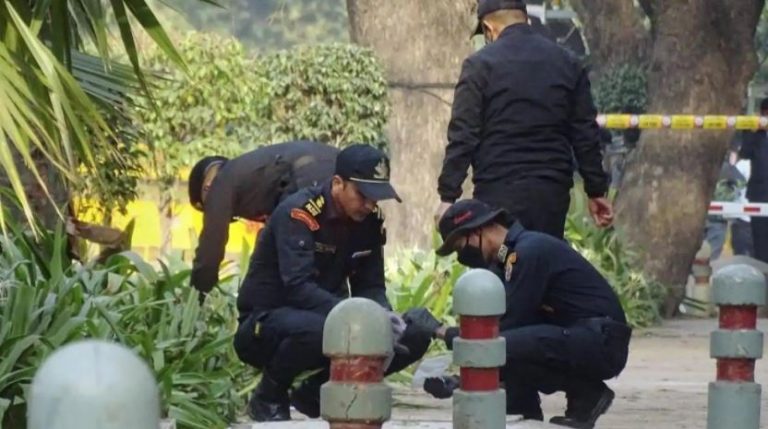
The Indian security agencies have been probing the recent improvised explosive device (IED) blast executed near the Israel Embassy in New Delhi on January 29 (Friday) evening. According to reports, though the investigations into the incident still remain in-conclusive, prima facie evidence points the needle of suspicion towards the involvement of Iran in the blast.

Counter-terrorism officials in New Delhi have been quoted by Hindustan Times as saying that there is enough to suggest the involvement of Tehran in the blast.

India has taken the heinous attack very seriously and has, in strong words, opined that it cannot be used by any other country to target its perceived enemies. “Once we have concrete evidence we will take up the matter in very serious terms with the country behind the attack,” said a second official in know of the entire investigation who too asked not to be named.

For those unaware, India has close ties with both Israel and Iran, although the two countries, in turn, are enemies.

Delhi Police eyeing students returned from Iran, questioning few Iranians living in Delhi

Meanwhile, the counter-terror officials said that the ongoing probe is focussing on students who have returned after studying at Qom, a Shia Islam city in Iran. Without specifying names, the officials added that the agencies are also focusing on a particular city in south India and a Shia dominated city in Afghanistan. Delhi Police Special Cell has also been questioning few Iranians living in Delhi in connection with the blast. The foreign nationals being questioned include those whose visas have expired.

According to the evidence made public so far, at 3.27 pm, hours before the blast at the Israeli embassy in the National capital on January 29, a Telegram (messaging app) user, VikarUdDeen@Vikar45 had claimed responsibility for the blast near the Israeli Embassy on behalf of an unknown group called “Jaish ul Hind.” The message posted by Vikar was forwarded and posted in several other ISIS-linked Telegram groups such as Jaag Muslman Jaag, Muslim Groups and Azaadi ki Awaaz Channel of which Vikar is also a member. 

After the IED exploded around 5.11 pm, the investigators recovered a letter addressed to Israeli Ambassador to India, Ron Malka. The letter was addressed to Israel Ambassador with ‘trailer’ written on it. The threatening letter also contained a reference to two ‘Iranian martyrs’ – General Qassim Soleimani, the head of Iran’s elite Quds Force, and Nuclear Scientist Dr Mohsen Fakhrizadeh.

Moreover, the preliminary forensic examination of the site and the bomb have revealed that the explosive used was PETN, a military-grade explosive which is not easily available. The PETN has been used in the past by groups such as Al Qaeda for making bombs.

A senior official told media that deliberate efforts have been made to firewall the real perpetrators behind the terror incident with false flags “and deniability built into the attack that was carried out at the behest of Iran.”

Iran had attacked Israeli diplomats in 2012

It is pertinent to note here, that this is not the first time that the Israel Embassy in India has been attacked. On February 13, 2012, a sticky bomb was placed on Tal Yehoshua Koren’s car, the Israeli diplomat’s wife, in which she had received injuries. Incidentally, the Quds Force, also known as Iranian Revolutionary Guard Corps (IRGC), was then accused of carrying out attacks on the Israeli Embassy in New Delhi.

Quds Force was commanded by Qasem Soleimani whose name has appeared on the letter found outside the blast site on Janaury 29.

Incidentally, the assassination attempts of the Israeli diplomat in 2012 had come after the killing of an Iranian scientist. Iran and blamed Israel for the assassination and had vowed to take revenge for the scientists’ killings. The attacks had also coincided with the anniversary of the killing of Iran-backed Shiite Lebanese group, Hezbollah leader, Imad Mughniyeh.

Following the 2012 attacks on Israel embassy, Delhi police had arrested an Indian journalist Syed Mohammad Ahmad Kazmi. According to the police, Kazmi had a deep network in Iran. The then Delhi police commissioner B K Gupta had disclosed that Kazmi had also confessed to having helped the Iran nationals conduct a recce of Israel embassy.

Has Karan Johar’s Takht been shelved following outrage over its Islamist writer? Here is what we know so far

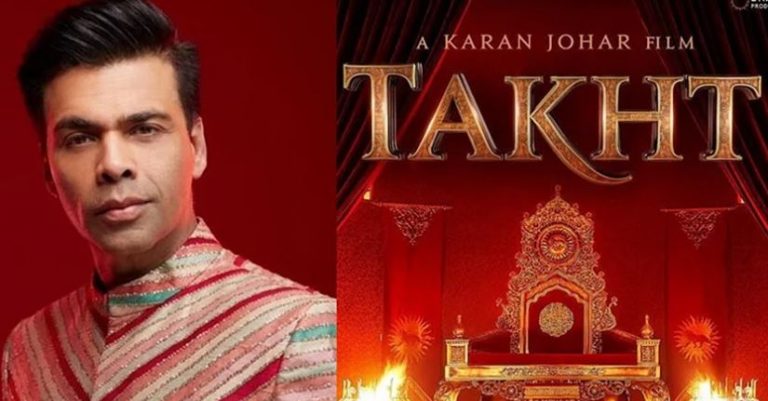
Media reports have been doing the rounds suggesting that Bollywood Director Karan Johar’s much anticipated new period drama ‘Takht’, starring multiple superstars such as Alia Bhatt and Vicky Kaushal has been shelved. The period drama was scheduled for a 2020 release but was put on hold due to the Coronavirus outbreak. Rumours have it that the movie has been deferred indefinitely. 

A source known to the development was quoted by a media house as saying that the makers of the movie have decided to do away with the movie after being unable to sort out ‘creative differences’. There were also rumours that it was shelved following outrage on social media.

“Karan Johar’s ambitious project Takht has been shelved permanently. It was put on hold due to COVID-19 earlier. However, the team developing it have been having a hard time sort their creative differences and be on the same page”, the source was quoted as saying.

Karan Johar denies humour of ‘Takht’ being shelved

The film director Karan Johar has, however, refuted the reports. Speaking to SpotboyE, Johar said: “Takht is not shelved. It’s just delayed”.

The period drama titled Takht was announced by Karan Johar in the year 2018. Takht is a historical drama that narrates the story of Mughal emperor Aurangzeb and his brother Dara Shikoh, and their fight for the throne. The movie, which is by far Karan Johar’s most expensive project, has been in the line of fire since last year after its Hinduphobic Islamist writer Hussain Haidry had spewed venom against Hindus on Twitter.

Karan Johar’s movie receives backlash for its Islamist writer

Hussain had in February last year, taken to the micro-blogging site to express his hatred towards Hindus as he repeatedly spread Hinduphobic bile on social media. Several times earlier, Haidry, a quintessential Islamist, has given words to his bigoted thoughts on Twitter.

Irate over Haidry’s blatant Hinduphobic and hateful tweets, netizens had demanded strict action against the Takht writer. The hashtag #BoycottTakht began trending on Twitter with netizens slamming Haidry for allegedly defaming Hindus in his tweets.

Soon after the backlash, Hussain Haidry had also deactivated his Twitter account.

Karan Johar not new to controversies

Karan Johar, too, has been in the line of fire after the untimely death of actor Sushant Singh Rajput. He has been criticised for fostering the culture of nepotism and favouritism in Bollywood. He had also come into the radar after his name emerged in the Bollywood drug probe after he shared a party video featuring Bollywood celebrities including Deepika Padukone, Vicky Kaushal, Varun Dhawan, Ranbir Kapoor, Shahid Kapoor, and Malaika Arora among others.

Watch: Viral video shows Sikh anti-farm law protesters raising ‘Naara-e-Takbeer’ slogans

A video has gone viral on social media where Sikh anti-farm law protesters can be heard raising “Naara-e-Takbeer, Allah-hu-Akbar” slogans. Other slogans such as “Kisan-Mazdoor Ekta Zindabad” and anti-Modi slogans were also raised.

People on social media expressed their unhappiness over the matter. In the video, a few men, most wearing a turban or a scarf over their head, can be seen sitting on the back of some moving vehicle. They raised various slogans including “Sat Sri Akal” and “Modi Sarkar Murdabad”.

It is not clear where the video is from or when the visuals were captured. However, given the nature of the slogans, it appears that the video was captured during the agitation against the farm laws passed by the Parliament.

The video shared on social media is 45 seconds long. The protests have been underway for quite a few months and it is not yet clear when they might end. The Delhi Police has fortified the borders in Delhi after protesters stormed the national capital on Republic Day.

Pakistanis and Islamists attack former England cricketer after he thanked ‘beloved country’ India for Covid-19 vaccines

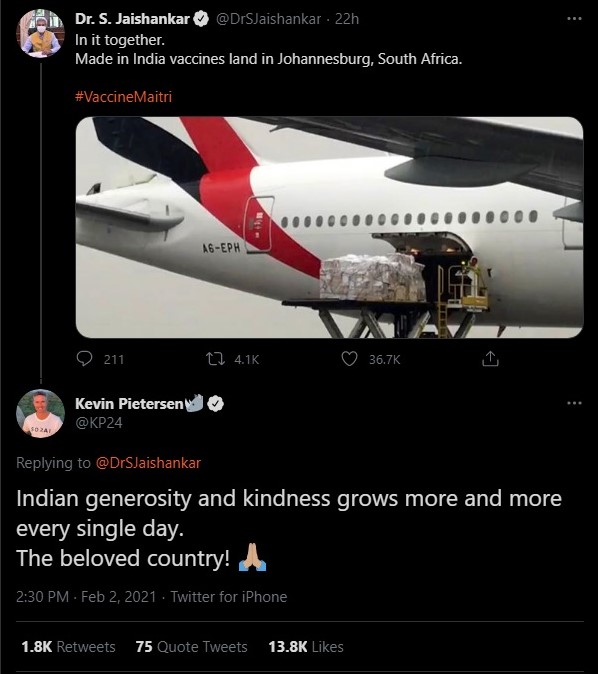
Kevin Pietersen, former England cricketer, has expressed his gratitude towards India after Minister of External Affairs Dr. S. Jaishankar shared photographs of made in India Covid-19 vaccines reaching South Africa. The cricketing superstar was born in South Africa but later moved to England.

Kevin Pietersen thanks India
Source: Twitter

Kevin Pietersen replied to MEA Jaishankar’s tweet saying, “Indian generosity and kindness grows more and more every single day. The beloved country!” While he received endearing messages from Indians, he was trolled for his comment by Islamists and Pakistanis.

The trolls also dragged in the ‘farmer protests’ to make snide comments on Kevin Pietersen.

The High Commission of India in Pretoria, South Africa thanked Pietersen for the kind words.

India has been delivering Covid-19 vaccines to numerous countries to enable them to fight the pandemic. The initiative has earned India a lot of good will across the world. However, it is only to be expected that Pakistanis are not too happy with the development. But Pakistan, too, will receive 17 million doses of the India-made Covishield under UN’s vaccination alliance Covax.

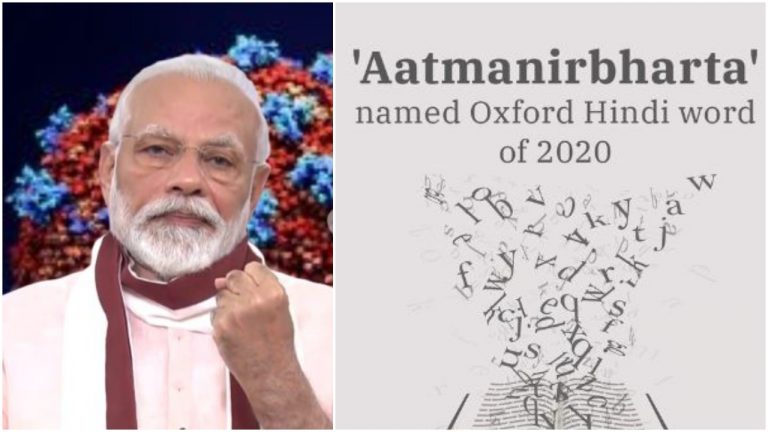
After PM Modi bats for ‘Aatmanirbhar Bharat’, Oxford panel chooses ‘Aatmanirbharta’ as the Hindi Word of 2020

An advisory panel of Oxford languages has declared the word ‘Aatmanirbharta’ as the Hindi word of 2020. The word, meaning self-reliance came into prominence after Prime Minister Narendra Modi gave a call for ‘Aatmanirbhar Bharat‘ (self-reliant India) an important initiative in the wake of the novel coronavirus pandemic.

Experts Kritika Agrawal, Poonam Nigam Sahay and Imogen Foxell were on the panel of Oxford Languages which made the announcement Tuesday.

Word ‘Aatmanirbharta’ gained prominence after PM Modi’s call for a self-reliant India

“In an unprecedented year, ‘Aatmanirbharta’ found resonance with a wide cross-section of people as it is seen to be an answer to the revival of a COVID-impacted economy,” said Oxford University Press India managing director Sivaramarkrishnan Venkateswaran. He further added that amid a number of interesting and topical entries received, ‘aatmanirbharta’ stood out as it validated day-to-day achievements of the countless Indians who dealt with and survived the perils of a pandemic.

In a statement, Oxford Languages said that in the early months of the pandemic when PM Narendra Modi announced India’s COVID-19 recovery package, he emphasised the need to become self-reliant as a country, as an economy, as a society and as individuals, in a bid to navigate the perils of the pandemic. It opined that the usage and the prominence of the word gained significance after PM Modi’s call for an “Aatmanirbhar Bharat”.

Aatmanirbhar Bharat Abhiyaan is the vision of new India envisaged by PM Modi

Aatmanirbhar Bharat Abhiyaan or self-reliant India campaign is the vision of new India envisaged by PM Narendra Modi aimed to make India into a bigger and more important part of the global economy.

India’s significant achievement in the time of corona has been about discovering its forgotten ability to globally lead as a manufacturer. For instance, India experienced a brilliant transition from zero PPE production in the country to becoming the world’s second-largest manufacturer of PPEs. All this was achieved during the time of the pandemic.

Understanding this potential, PM Narendra Modi launched a remarkable initiative for self-reliance – Aatmanirbhar Bharat. As the Prime Minister said, making India self-reliant is the only way to make the 21st century as India’s century. The goal is to focus on domestic manufacturing by being Vocal for Local and ultimately to take Local to Global.

The large-scale manufacturing of the Covid-19 vaccine in India went on to become one of the most important achievement under the entire Aatmanirbhar Bharat campaign coined by PM Narendra Modi.

During the Republic Day parade, the Department of Biotechnology highlighted the Aatmanirbhar Bharat campaign and showcased the Covid-19 vaccine development process in its tableau at Rajpath.

Previous Hindi words of the year are Aadhaar (2017), Nari Shakti (2018) and Samvidhaan (2019).

Leaked Chinese Police data reveals the extent of Uyghur Muslim repression: From population control to surveillance

0

The systematic and pervasive repression of Uyghur minorities in the restive Chinese province of Xinjiang is a well-known fact. But the latest report published by The Intercept, which accessed the leaked Chinese Police data, reveals the depth and extent of how the Chinese state keeps a tab on its Muslim minority population.

The database throws light on the lengths that China goes in not only scrutinising the minority Uyghur Muslims in Xinjiang but also their relatives and friends, along with those who are living abroad. Artificial Intelligence, sophisticated surveillance systems, new-age technology and human intelligence are all employed by the Chinese Communist Party to track and monitor the Uyghur Muslims and those associated with them.

For instance, the police automation system in Urumqi, the largest city in Xinjiang province, issued an “intelligence information judgment” to flag that a female relative of a purported extremist had been offered free travel to Yunnan, a province to the south.

Technology used as a tool to further repress the Uyghur residents

The woman had found the offer on a WeChat group called “Travellers”. Authorities zeroed in on the group because of ethnic and family ties, its members included minorities such as Uyghurs, Kazakhs, and Kyrgyz. The order said, “This group had over 200 ethnic-language people, many of whom are relatives of the incarcerated people. The order directed the police to launch an investigation immediately citing the tendency of relatives of extremist people to gather.

As a consequence of the order, one person with no criminal background, who had not heard of WeChat before or travelled within China came under the scanner of the police. The authorities noted that the person exhibited “good behaviour” and elicited “no suspicion”. Yet, his phone was confiscated and sent to “internet safety unit” and the community was to “control and monitor” him, meaning that a government would appoint a trusted cadre member to visit him regularly and keep an eye on his household.

Apparently, the man was investigated primarily because of religious activities, not by him but by his elder sister a few months ago. According to the police data, the woman and her husband had invited a couple over Tencent QQ app. The couple had bought a laptop and logged on to the group every day from 7 am to 11:30 pm. The husband stopped drinking and smoking and this was a cause for alarm for the Chinese authorities. Between the two couples, the police recovered 168 religious audio files deemed illegal, as they were linked to the Islamic seminary Tablighi Jamaat.

Following Islam is considered as a “red-flag”

Practising Islam is considered a red flag that can invite coercive police action. While China claims that the policing in Xinjiang is to curb the menace of extremism and terrorism, it is just a cover for carrying out invasive surveillance of the Muslim minority residents. Mosques have cameras inside and people are monitored for the way they pray. Showing curiosity about Islam, growing a beard, carrying a prayer rug, Uyghur Books, quitting drinking or smoking, is a potential sign of religious extremism and can trigger police action against the adherents.

A wide range of behaviour habits among Muslims is considered criminal even if it is legal at the time of the incident. A police document revealed that Hui women were detained because of the evidence that showed that they had studied Quran in an online group—which was apparently legal when they studied but became illegal just before their detention. The group was inactive for almost a year before they were detained.

Chinese police forcibly suck out information from mobile phones through the “anti-terrorism sword” tool

The police database is a product of a reporting tool developed by a private defence company Landasoft that aides the Chinese government to carry out surveillance of citizens in Xinjiang. The database brings to fore a systematic campaign of repression that involves cameras placed in the homes of private citizens, the development of internment camps for housing the “extremists”, children being forcibly separated from their families and sent to preschools with electric fences, the organised destruction of Uyghur cemeteries, a structured plan to suppress Uyghur births, forced abortion, sterilisation, and birth control.

One of the most invasive ways in which China prises out personal information from its residents is using a mechanism called as “anti-terrorism sword” phone inspection tool. Checkpoints dot across the expanse of Urumqi, where city police force to plug their phones into these devices. They collect personal data such as contact list, text messages, photos, videos, audio files and documents to run it against an array of prohibited items.

Biometrics program touted as health initiative used for surveillance activities

In addition to sucking out private information from mobile phones, the Chinese government has also hustled people into participating in the biometrics program that is dubbed as a health initiative. The citizens were mandated to have their faces scanned, voice signature analysed and provide their DNA under the “Physicals for All” program. The database accessed by The Intercept reveals that the program was extensively used by the police for their surveillance activities.

Besides, the documents in the database also show widespread use of facial recognition technology to keep a tab on people that alerted by the surveillance system as ‘suspicious’. China has been increasingly deploying new technologies to aide its repression of minorities in Xinjiang.

Suffocating surveillance of Uyghurs a result of Chinese paranoia about the external or malign influence

The primary objective of Chinese authorities to put the citizens of Xinjiang under surveillance is to limit any influence that could engender the desire for greater autonomy and freedom among people. The zeal for “back-flow prevention” was reflected in China’s efforts to identify those who left the country as security threats. According to a report, Uyghur residents in Xinjiang who had managed to go abroad and seek political asylum elsewhere were regarded as terrorists, further cementing the fact that Uyghurs are monitored outside China as well.

Contact with areas outside Xinjiang, or with people in contact with those areas, is extensively monitored and is grounds for suspicion. Authorities also keep a strict vigil on suspected individuals who are made to participate in weekly “flag-raising” ceremonies to assess their psychology, with a keen eye on their loyalty and fervour. Authorities monitor not just former detainees, people under suspicion, but their relatives as well, to confirm their participation and ascertain how passionate they are about doing so.

Detention centres used to control the population, especially of Muslims

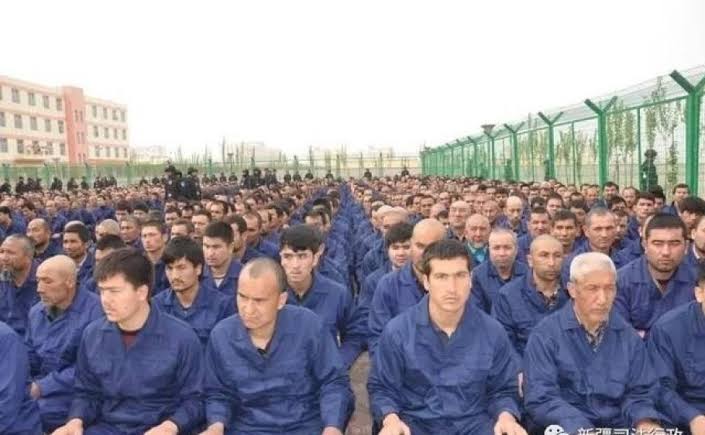
Ever since allegations of the existence of detention centres to house Uyghur population surfaced, China has been in denial, calling them “training centres” and “re-education camps” for the welfare of the residents. However, the Chinese police database leak illustrates an expansive network of detention centres that are put to use to incarcerate people and control the population, especially of Muslims.

Along with surveillance and strict policing, the database sheds light on a system where lengths of incarceration, even under the pretext of “training” or “re-education”, is often so uncertain that relatives are obliged when the detainees are handed out fixed-term sentences. Documents reveal Xinjiang’s complex system of prison-like facilities are categorised into four categories: “re-education” is for temporary detention; “vocational training” is a more lenient form of re-education; and long-term prison. It is not unusual for detainees to pass through multiple types of imprisonment in a sort of pipeline fashion.


Delhi Court grants bail to The Caravan journalist Mandeep Punia, not allowed to leave country without permission: Details

0

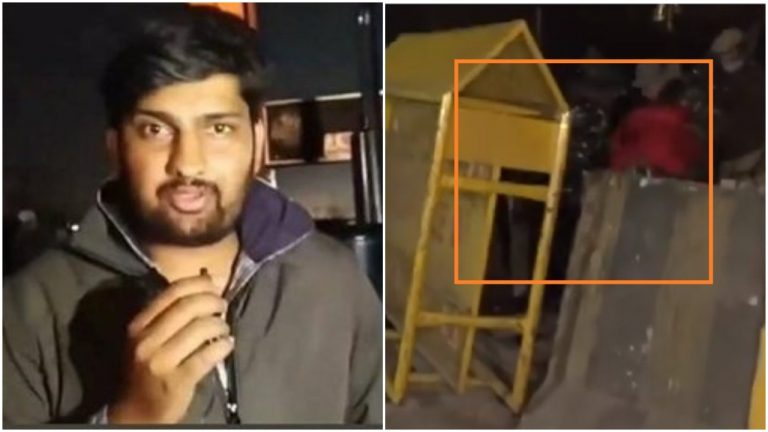
A Delhi Court on Tuesday granted bail to Freelance Journalist Mandeep Punia who works for The Caravan and Janpath. Delhi Police arrested Punia on January 30 when he was moving through roadblocks, tried to remove the barricades and misbehaved with the Police. A video of Punia had gone viral on social media platforms where he was seen trying to cross the barricades forcefully. He was soon nabbed by the Delhi police and detained.

Bail granted against a bail bond of Rs.25,000

The Court said that as the complainant, victims and witnesses are police personnel only, there is no possibility that the accused/applicant will be able to influence any of the police officials.

The Court further added, “It is well settled legal principle of law that “bail is a rule and jail is an exception”. Hence, considering the totality of facts and circumstances of the present case, submissions on behalf of both the parties as well as keeping in view the period of detention of the accused in judicial custody, he is admitted to bail on furnishing bail bond in a sum of Rs.25,000/- along with one sound surety in the like amount.”

The Court also imposed some conditions with the bail. The Court asked the accused to appear in Court regularly when required. Also, Punia is not allowed to leave the country without prior permission of the Court.

‘Journalists’ had raised slogans against Punia’s detention outside Delhi Police Headquarters

After Punia’s arrest, the ‘Journalists’ had protested at the Delhi Police headquarters on Sunday demanding the release of Mandeep Punia. Police had said that Punia was standing with the protesters, and he did not have a press ID card. He was trying to move through the barricades that were kept to secure the area. An altercation broke out between police personnel and him, after which he was arrested.

The protest outside Delhi Police Headquarters made it quite clear that for certain ‘journalists,’ misbehaving with the Police falls under the purview of ‘press freedom’ as well.

Taiwan overtakes China in economic growth for the first time in 30 years

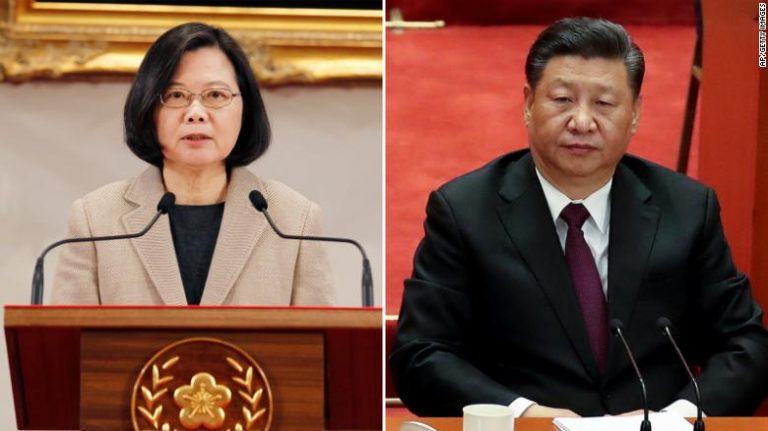
In an unprecedented event, Taiwan overtook China in terms of economic growth for the first time since 1990. As per reports, Taiwan recorded 2.98% growth in 2020 as compared to 2019.

The country’s growth was even higher than China’s annual growth rate of 2.3% in 2020. The last time Taiwan edged out the Communist-run country was 30 years ago when it clocked 5.5% growth as compared to China’s 3.9%. Taiwan also became the fastest growing economy in Asia in 2020, surpassing Vietnam’s 2.9% growth.

The historic feat was achieved amidst the global economic slowdown caused due to the Coronavirus pandemic. Taiwan’s economic success story can be attributed to the country’s tech exports, especially semiconductors, that helped tide over the financial crisis. Unlike other countries, Taiwan was successful in checking the spread of Coronavirus and avoided a strict lockdown. This factor also contributed to the growth of Taiwan’s economy.

Taiwan’s semiconductor exports boosted its economy growth

The global shortage and demand for semiconductors, used in mobile phones and computers, paved the way for imports from Taiwan. Automakers such as Ford Motor and Nissan Motor had to cut down their production due to the shortage of semiconductors. With people forced to stay indoors, coupled with a surge in electronic devices, countries had to look towards the superconductor power Taiwan.

According to economists at TS Lombard, Taiwan and South Korea have a ‘near-monopoly’ status in memory chip output and global processor chip production. The two Asian countries will use their tech exports as leverage over world powers such as the United States and China. “Taiwan and Korea are on the front line of the US-China confrontation, reliant on China for growth, but on the US as a guarantor of national security,” they argued.

Experts believe that Mainland China might become self-reliant in future in semiconductor production and emerge as the primary competitor to Taiwan. But with China still far behind in the semi-conductor race, it will continue to procure them from Taiwan amidst escalated tensions with the United States. It is important to mention that despite the global pandemic, TSMC (Taiwan Semiconductor Manufacturing Company Ltd.) grew by 60% in 2020 and rose by 11.5% in January as compared to last year.

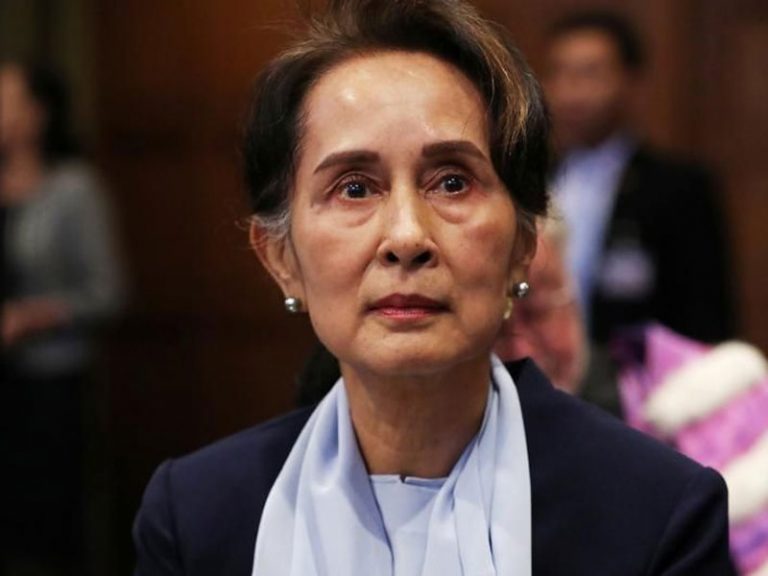
Norwegian Nobel Committee issues statement against Myanmar military coup, demands release of Aung San Suu Kyi

0

On February 2, the Norwegian Nobel Committee issued a statement condemning the military coup in Myanmar. The committee also condemned the detention of Nobel Peace Prize laureate Aung San Suu Kyi. While mentioning the work done by Aung San Suu Kyi for her struggle for democracy in Myanmar, the committee weighed in for the immediate release of Aung San Suu Kyi and other arrested politicians.

The statement was shared in the official website of the Nobel Peace Prize.

Statement by the Norwegian Nobel Committee

The Norwegian Nobel Committee is appalled by the military coup in Myanmar and the arrest of Nobel Peace Prize laureate Aung San Suu Kyi, President Win Myint and other political leaders. Aung San Suu Kyi was awarded the Nobel Peace Prize for 1991 in recognition of her brave struggle for democracy in Myanmar. She has continued to be a leading figure in developing democracy, both during the years when she was kept captive by the military and after her subsequent release. Now, 30 years after she was awarded the Peace Prize, the military has once again pushed democracy aside and arrested leading representatives of the legally elected government. The Norwegian Nobel Committee asks for the immediate release of Aung San Suu Kyi and other arrested politicians, and for the result of last year’s general election to be respected.

The military coup in Myanmar

On February 1, the Myanmar Army staged a coup and declared it had taken control of the country for one year under a state of emergency. They also detained Aung San Suu Kyi and other senior members of Myanmar’s ruling party amidst rising tensions over a recent election. As per reports, 75-year-old state counsellor of Myanmar Aung San Suu Kyi, President Win Myint and other members of the National League of Democracy were arrested at their residences in the capital Naypyidaw.

Reaction from the world leaders

The military coup has attracted sharp criticism from world leaders. Indian foreign ministry said, “India has always been steadfast in its support to the process of democratic transition in Myanmar. We believe that the rule of law and the democratic process must be upheld. We are monitoring the situation closely.”

The United States has warned of action against those who are responsible for the coup if it is not reversed. Similarly, Australia also expressed its concern saying that the military was “once again seeking to seize control” of the country and asked them to respect the rule of law.

Antonio Guterres, the UN secretary-general, has strongly condemned the military coup. Stéphane Dujarric, Spokesman for the Secretary-General said, “The Secretary-General strongly condemns the detention of State Counsellor Aung San Suu Kyi, President U Win Myint and other political leaders on the eve of the opening session of Myanmar’s new Parliament.” He further said that these developments represent a serious blow to democratic reforms in Myanmar.

It is notable here that in the past few years, certain left-liberal sections in many countries have been advocating for stripping Aung San Suu Kyi of her Nobel Prize over the Rohingya issues. However, the military coup and Suu Kyi’s detention has been widely condemned all over the world.