Home Blog Page 4634

As mobs take over during the farmers ‘tractor rally’, Sagarika Ghosh celebrates violence on Republic Day

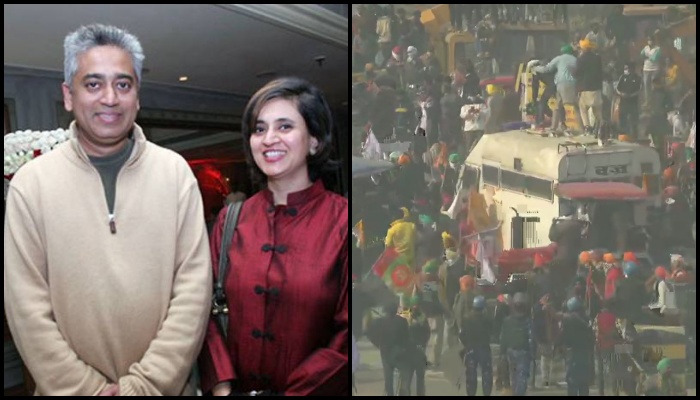
As the nation celebrates Republic Day, honouring the day on which the Constitution of India came into effect on 26 January 1950, mobs have taken over the streets right outside the borders of Delhi. As the so-called farmers break barricades and march inside Delhi and one saw horrific visuals of policemen being attacked and swords being drawn by the so-called farmers, prominent journalist Sagarika Ghosh, who is widely known as a propagandist, often spreading fake news, is in a jolly mood, celebrating the display of mobocracy by farmers during the tractor rally.

Tweet by Sagarika Ghosh

At 11:17 AM, just as news of the violence started trickling in, Sagarika Ghosh picked up the visuals of so-called farmers breaking the barricades to enter Delhi and rejoiced about the mob putting the ‘public’ back into the ‘Republic’. Almost mocking the people of India who choose to follow the law and take pride in their nation, she tweeted the violent visuals with the hashtag #HappyRepublicDay.

It is important to notice the kind of violence that Sagarika seems to be celebrating here.

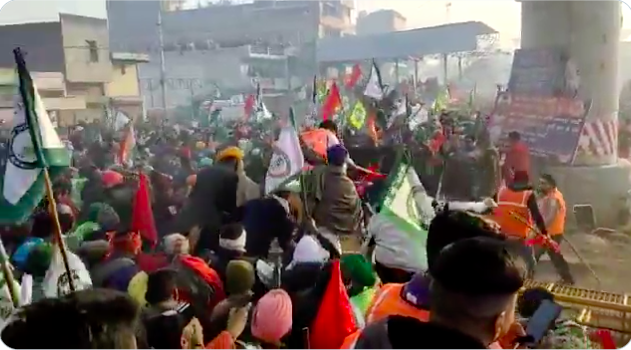
Visuals appeared where these so-called farmers were seen attacking the police with sticks, breaking the barricade to enter Delhi while the security, as is the norm, was put on high alert for Republic Day celebrations.

Similar visuals emerged from the Delhi-Meerut Highway.

After farmers became violent, the police was even forced to use tear gas.

While these visuals emerge, as the nation celebrates Republic Day, one has to truly wonder what mindset would let someone celebrate, rather emphatically and publicly, the nation descending into anarchy because certain elements and political parties cannot stand to lose power to the will of the people. The farm laws were enacted by the elected government of India and in all respects, it is a law that will uplift farmers from being taken advantage of by middlemen. Large parts of the nation’s farmers support the farm laws and have extensively spoken about how it helped them.

However, for the past 3 months, it is only the Punjab and some elements from Haryana who have been protesting continuously, demanding that the farm laws be taken back. As the protests progressed, it became exceedingly clear that the ones protesting were not really farmers, but several vested interests who wanted the nation to burn.

From Congress’ Rahul Gandhi to Mamata Banerjee of the TMC, Sharad Pawar of NCP and several leaders of other opposition parties have encouraged the tractor parade by these so-called farmers.

Terrorist organization Sikh For Justice has announced Rs. 1.8 crore award for hoisting the Khalistani flag at India Gate on Republic Day. Gurpatwant Singh Pannu of the SFJ said, “On January 26, Sikhs should roam in Delhi on their tractors and remove every tricolour. The Indian flag is the symbol of suppression that Sikhs have faced in India. Every Indian flag must be removed and crushed.”

Rakesh Tikait, one of the prominent figures involved in the protest, had then announced a march from Red Fort to India Gate but that appears to have been abandoned. Several instances have occurred where the protesters raised Kahlistani slogans and indulged in violence.

It is quite worrying, really, that everyone who has encouraged the tractor parade is working towards the same goal as Khalistanis. The core agenda for all the actors involved is embarrassing the central government which, under current circumstances, would amount to an embarrassment for the Indian Republic. Sagarika Ghose celebrating the violence that is now erupting on Republic Day is symptomatic of this greater malaise that stopped these journalists from calling out the charade that was playing out right in front of our eyes for months.

It is pertinent to note that on the 24th of February, Dependra Pathak, Special CP, Intelligence, Delhi Police has announced that permission has been granted to the farmer protesters to conduct a tractor parade at the national capital on the occasion of Republic Day. He said that sanctity and security of the Republic Day celebrations will be maintained. Pathak said, “We have finally decided, we have agreed that we will have tractor rally also on that day (Republic Day) maintaining the sanctity and security arrangements of the Republic Day celebrations.”

However, the so-called farmers seem to have broken that agreement and started indulging in violence and marching inside Delhi even while the Republic Day parade was on. Earlier, the government of India had offered to suspend the implementation of farm laws for a year to a year and a half to talk to these farmers and talk, clause-by-clause, what they would want amended. However, through several rounds of talks, these farmers have adamantly refused to budge and demanded that they will not stop protesting till the farm laws are repealed completely.

Farmers tractor rally: What are the farm laws that farmers are protesting against

One of the biggest factors plaguing the growth of agriculture sector in the country is the inability of the farmer to find a market and to get a fair price to his produce. To address the issue, the erstwhile governments of different states enacted the Agricultural Produce Market Regulation Acts (APMC Acts), which authorised them to set up and regulate marketing practices in wholesale markets. 

The objective of these markets was to ensure that farmers get a fair price for their produce. However, with each passing year, the APMCs turned out to be inefficient with increasing cartelisation of middlemen, ban on private players to enter the trade, increasing corruption etc. 

The Modi government recently introduced three bills to promote much easier trade for the farm produce and to provide a competitive market for the producers outside the existing APMC system. The three laws were

  1. The Farming Produce Trade and Commerce (Promotion and Facilitation) Bill, 2020: This law aims at creating additional trading opportunities outside the APMC market yards to help farmers get remunerative prices due to additional competition
  2. The Farmers (Empowerment and Protection) Agreement on Price Assurance and Farm Services Bill, 2020: This law relates a framework for contract farming through an agreement between a farmer and a buyer prior to the production or rearing of any farm produce. 
  3. The Essential Commodities (Amendment) Bill, 2020: This law aims to regulate the supply of certain food items only under extraordinary circumstances.

It is pertinent to mention that the farm laws are set of three laws that allow farmers to sell their products outside APMC act (most states make it compulsory for the farmers to sell at APMC mandis). It also allows farmers to directly have a contract with corporate houses.

That farm laws don’t do away with APMC, and if someone is not willing to trust markets outside the current system, they are free to stick to the ongoing system. It doesn’t do away with MSPs either. However, the prevalent narrative that seems to be motivated by political concerns falsely claims that APMCs and MSP are being done away with. 

They also allege that due to these laws, big corporations would have the upper hand in a deal with farmers, however, that again is a lie. In fact, The Farmers (Empowerment and Protection) Agreement on Price Assurance and Farm Services Bill, 2020 ensures that a contract is agreed upon and gives the farmer the power to even cancel contracts.
Modi govt gives Padma Award to real Harvard Professor: Read details

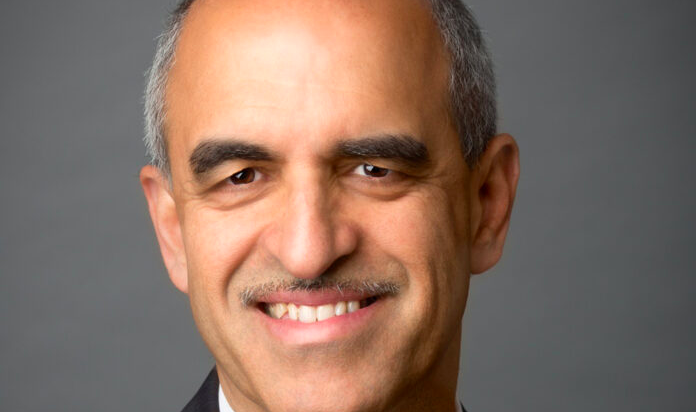
Srikant Datar, who became the 11th dean of Harvard Business School on 1st January 2021 is one of the recipients of the Padma Awards in 2021. He has been bestowed with the Padma Shri, the fourth highest civilian awards in India. Along with him, two other Indian Americans have been awarded the prestigious Padma awards.

Narinder Singh Kapany, known as the ‘father of fiber optics’, will be given the Padma Vibhushan posthumously. He passed away in December 2020 in the US. Ratan Lal, a citizen of US of Indian descent, is professor of soil science at the Ohio State University and has been awarded the Padma Shri.

Datar, during his tenure, has served as Senior Associate Dean for University Affairs (including Faculty Chair of the Harvard Innovation Lab), for Research, for Executive Education, for Faculty Development, and for Faculty Recruiting as per the Harvard profile.

He has graduated from University of Bombay and also received gold medals upon completing his post-graduation from Indian Institute of Management, Ahmedabad and Institute of Cost and Works Accountants of India. He is also a Chartered Accountant and holds two Masters degree and a PhD from Stanford University.

Earlier, former NDTV employee Nidhi Razdan had claimed she was going to be an Associate Professor at Harvard University to teach journalism. However, she later claimed she was a victim of phishing attack and the job offer was not real. Razdan is daughter of former Editor-in-Chief of news agency Press Trust of India (PTI), Maharaj Krishan Razdan. She graduated from Delhi University and did a post-graduation course in mass communication from Indian Institute of Mass Communications, Delhi.

Archaeologist BB Lal who led the excavation revealing existence of a temple at Ram Janmabhoomi site gets Padma Vibhushan

Renowned archaeologist Professor Braj Basi Lal who led a team of archaeologists to the Ramjanmabhoomi site and unearthed the existence of a temple of Lord Ram beneath the Babri structure at Ayodhya has been conferred with the Padma Vibhushan award this year by the government. Professor Lal is among the 7 eminent personalities who have been selected by the government for the second-highest civilian award.

Padma Vibhushan award is conferred by the government for ‘exceptional and distinguished service’. Every year during the ceremonial functions held at Rashtrapati Bhavan in the month of March/April, the President of India presents the Padma awards to recipients. This year 119 people have been selected for the three categories of Padma Awards. This year’s list of Padma awards comprises of 7 Padma Vibhushan, 10 Padma Bhushan awards and 102 Padma Shri award recipients.

Professor Lal had contested the Aryan Invasion Theory

Professor Lal, former director-general of Archaeological Survey of India (ASI), had started his career as a trainee under Sir Mortimer Wheeler in 1943. He had contested the Aryan Invasion Theory put forward by Wheeler. Regarding the excavation of evidence related to Ram Mandir at Ayodhya Professor Lal said, “In my autobiography, I had written that though god’s grace, I had come to realise that I was only a typist and the dictation giver was someone else”. According to Professor Lal, the period around 1950s was the best period for archaeology in India. That was when he started the excavation of sites associated with Mahabharata. Encouraged by the success at excavating Mahabharata sites, he started excavating Ramayana sites in 1970s.

Professor Lal led the project called Archaeology of Ramayana

The veteran archaeologist had led a project named Archaeology of Ramayana between 1975 and 1976 to examine certain sites having reference in Ramayana. There were nine members in the team out of which five archaeologists namely, Professor Lal, Dr. KP Nautiyal, SK Srivastava, RK Chaturvedi and KM Asthana were from Jiwaji University, three members namely, Mahdava N Katii, LM Wahal and MS Mani were from the ASI and one member named Hem Raj was from the Department of Archaeology, Uttar Pradesh.

According to Professor Lal, a five-site excavation project was carried out at Ayodhya, Nandigram, Shringaverapur, Bharadwaj Ashram and Chitrakoot to date the sites associated with Ramayana. He said that while excavating the area immediately south to the Babri structure, he found pillar bases. He wrote a seven-page preliminary report about the discovery of pillar bases near Babri structure. However, following the discovery, all technical facilities were withdrawn from the area and the project was halted. It was not resumed despite repeated requests of Professor Lal and remained suspended for 10-12 years. The final report was never submitted but his preliminary report was published by the Indian Council of Historical Research in 1989 in its volume on Historicity of Ramayana and Mahabharata.

Professor Lal’s excavation of Mahabharata sites

As part of the project on excavation sites associated with Mahabharata, Professor Lal launched the first excavation at Purana Qila site in 1954-55. There he found structures dating back to Gupta, Kushana and Shunga period. He found painted grey wares from an open area between the South of Purana Qila and Humayun’s Tomb. According to Professor Lal, the painted grey wares were the earliest common pottery collecting all Mahabharata sites like Hastinapur, Kuruskshetra, Mathura and Kampilya. The evidence established that the Purana Qila and its southern neighbourhood represented Indraprastha of Mahabharata period.

Barabanki: Family wanted to get rid of mentally disabled girl, so killed her and created the story of rape and murder

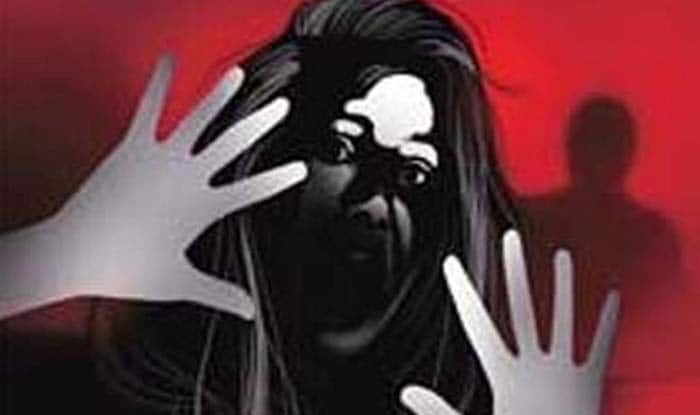
The dead body of a 22-year-old Dalit girl was found in Barabanki on January 17. The case was initially reported as a case of rape and murder based on the complaints filed with the police. The incident took place in mustard farms in Bibipur, Zaidpur, Uttar Pradesh.

As per the police, there were injuries on the private parts of the girl. After learning about the incident, the police quickly initiated the investigation. Five teams were formed, and the administration ordered immediate action.

The incident was reported as ‘rape and murder’

During the investigation, the family told the police that the daughter had gone for defecation on the farm at 9 PM and did not come back. The next day, they found her naked body lying in a dense mustard field in Bibipur village. There were injury marks on her private parts. The Superintendent of Police formed five teams to investigate the matter.

Contradictions in statements and evidence

During the investigation, police noticed that there were many contradictions in the statements made by the family and the facts at the crime scene. The witnesses’ statements painted a different story. Reports suggest that police found slippers near the dead body, which was of number 4, but the victim’s foot size was 7. A villager said in the statement that the victim’s mother had come to his farm between 7:30 PM and 8:30 PM and informed him that the girl was missing. However, in her statement, the mother said that the girl went out to the fields for defecating at 9 PM.

The labourers working near the fields told the police that they saw the victim’s mother going to the same farm on the day of the incident, from where the police recovered a pair of slippers. The police noticed that the sandals were of the same size as the mother.

Post mortem found no evidence of rape

The post mortem examination on the body found no evidence of sexual violence, a fact that deepened the suspicion of the police that the family members might be behind the murder. When they strictly questioned the family members, they confessed to the murder. They told the police that the girl was mentally disabled, so they wanted to get rid of her. They noticed that in the previous rape and murder cases where Dalit girls were killed, the government had paid victims’ families compensation. The family decided to use the victim’s death to get compensation, so they planned the murder.

The mother of the victim took her to the farm late at night. The girl’s brother was already present in the field while the father was keeping an eye on the adjoining road. The mother held the feet of the girl while the brother strangulated her. The brother then hit her private parts with a stick to make it look like rape. They threw away the clothes to make it look like a case of rape and murder. He also tied a scarf on her neck.

The family tried to blame those who had friction with them

The police said that during the investigation, the family tried to blame the murder on those who had quarrels with the family. They subtly named several people who were thoroughly questioned by the police. As per the reports, they questioned around 70 people, including nearby farm owners, a few poultry farmers, labourers and many others.

The police have arrested the mother, father, and brother for the murder of the girl and initiated legal action against them.

Long before Punjab ‘farmers’ threatened Republic Day parade, Muslim bodies gave a call to boycott Republic Day function in 1987

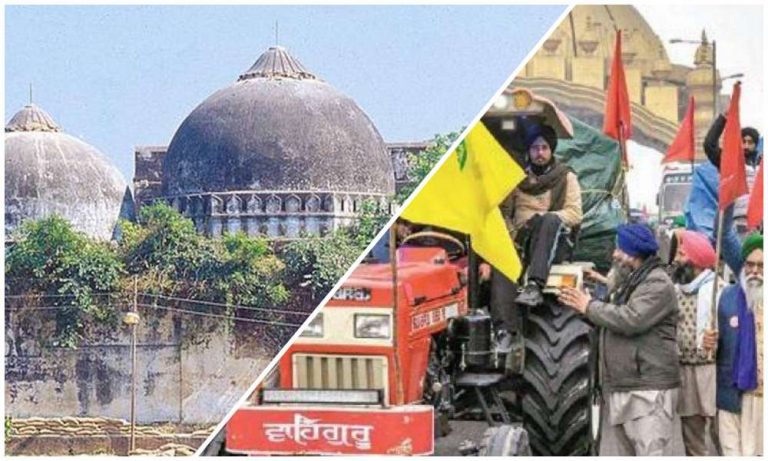
‘Protesting farmers’ from Punjab broke police barricades to enter Delhi ahead of their tractor rally schedule. This is not the first time any group of individuals have threatened to disrupt the Republic Day celebrations. In December 1986, newly formed “All India Babri Masjid Conference (AIBMC)” had given a call to all Muslims to boycott the Republic Day celebrations in 1987.

The call was given on 23rd December by Syed Shahabuddin and later endorsed by the coordination committee. Shahabuddin was supported by Indian Union Muslim League (IUML) President Ibrahim Sulaiman Sait in the boycott call. Shahabuddin had also given a call for a ‘long march’ to Ayodhya.

As per reports, the conference convened by him in December 1986 adopted the Declaration of Delhi and called upon the Muslims not to associate themselves with the official celebration of the Republic Day in 1987. The also threatened to hold a mass rally on Rajpath in Delhi in March 1987. If those two steps failed, the Muslim body had planned to hold a mass Friday prayer in Babri Masjid in October 1987. Over half a million people attended the rally.

Similarity with ‘protesting farmers’

The protesting ‘farmers’ from Punjab, too, have started their tractor rally, parallel to the Republic Day parade in Delhi. The farmers were given permission to enter Delhi upon conclusion of the official parade. However, the ‘farmers’ have broken the barricades and entered Delhi, breaking the agreement with Delhi Police.

Further, the ‘farmers’ have decided to march towards the Parliament for the Budget session on February 1.

Ayodhya: Construction work of Dhannipur mosque to be formally inaugurated with hoisting of the Tricolour on Republic Day

The Sunni Waqf Board will reportedly lay the foundation of the Dhannipur mosque at the 5-acre government-allocated land in Sohaval Tehsil in Ayodhya on the occasion of Republic Day.

As per reports, the event will kickstart with the hoisting of the Indian flag at 8:30 am. Following this, the members of the Indo-Islamic Cultural Foundation (IICF) will also plant tree saplings to commemorate the day. At the same time, a ‘green area’ will be developed to raise awareness about the impact of climate change on the environment. The area will reportedly flaunt plants from across the world, including the Amazon rainforest and Australia.

Athar Hussain, secretary of the Indo-Islamic Cultural Foundation (IICF) earlier said, “The Trust chose January 26, 2021, for laying the foundation stone of the Ayodhya mosque as on this day our constitution came into effect over seven decades ago. Our Constitution is based on pluralism, which is the leitmotif of our mosque project.”

Blueprint of the mosque

In December last year, the Indo-Islamic Cultural Foundation (IICF) Trust released the architectural design of the Dhannipur mosque. The trust informed that the new mosque would not be named after any ruler and that the name was yet to be decided.

IICF had shared computer-generated images of the ‘futuristic’ designs of the mosque, highlighting that the architecture would resemble other contemporary structures across the world. Besides, the mosque, the trust said that a trust office and publication house will also be built for publication and research on Indo-Islamic culture and literature.

Sunni Waqf Board accepts alternate 5-acre land to build the mosque

The Supreme Court had on November 9, 2019, paved the way for the construction of a Ram Temple at the Ram Janmabhoomi site by awarding the title suit in the favour of Ramlalla Virajmaan. The Sunni Waqf Board has been laying claim to the site for decades, unwilling to let Hindus build a temple on a place where Lord Ram is believed to have been born. The court had also ordered the UP government to grant an alternate site of 5 acres to the Sunni Waqf Board to build a mosque.

After months of prolonged drama whether to accept or reject the Supreme Court’s offer of a 5-acre land to build a mosque at an alternative site, the Sunni Waqf Board had finally decided to accept the allotment of 5 acres of land suggested by the top court in the Ram Janmabhoomi and had also decided to build a Mosque on it.

Protesting ‘farmer’ spends Rs 35 lakh to modify his tractor for Republic Day rally

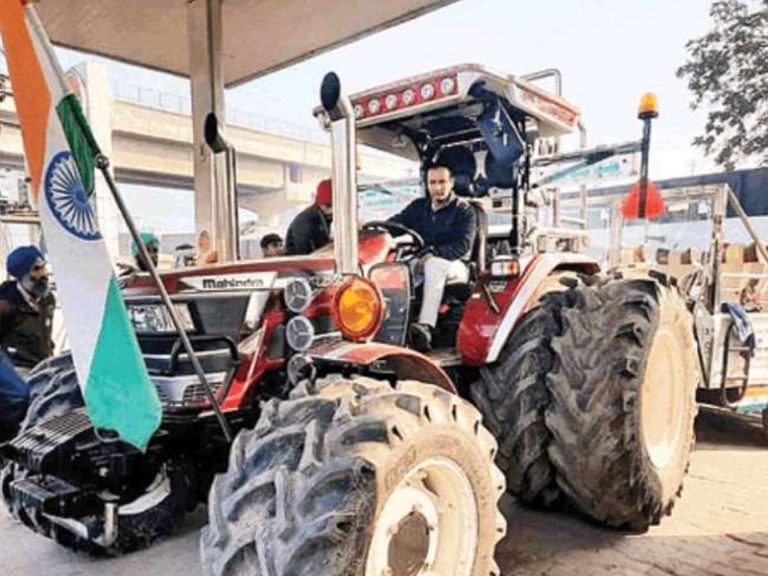
Amidst ongoing farmer protests and the farmer unions’ stubbornness to hold tractor rally on Republic Day, the display of wealth among protesting ‘farmers’ has become a thing. As per the reports, a farmer identified as Sunil Gulia got his tractor modified for the rally and spent an outrageous amount of Rs.35 lakh on the process. It has become a matter of discussion among the farmers lodged at the Tikri border adjacent to Bahadurgarh. Notably, it has been designed to defend against the water cannons that security forces use to disrupt agitated rioters.

Reports suggest that the front and rear wheels of the Mahindra Tractor were changed to add larger ones, and it quite resembles a huge road roller. The trolley attached to the tractor has comfortable sitting arrangements with sofas. It has a high-end music system attached to it to blast high-volume music.

The tractor is said to be modified to withstand heavy rain and even water cannon charge.

Farmers’ protest or obscene display of wealth?

The farmer unions have been alleging that the farmers lodged at the Delhi borders are poor, and they cannot afford any possibility of MSP being withdrawn in the future. They have also alleged they do not get the fair price from private buyers, and new laws will worsen their situation. However, the display of wealth with high-end tractors and luxury cars at the protest sites tells a whole other story. There are speculations that the actual poor farmers have become puppets in the hands of these wealthy landowners.

The reports suggest that many farmers are not happy with the display of wealth at the protest sites as it is harming the movement. Notably, there are reports that considerable funds are being transferred to the organizers to keep these protests running. Alleged NGO Khalsa Aid and similar organizations have set up massage centres and other facilities at the protest sites to keep the poor farmers enticed to these locations. Reports suggest that terror organization Sikhs For Justice is also funding the protests. Free food, free liquor, large screen TVs are just the tip of the iceberg that one can witness at these sites.

Refusing to listen to the government’s request to talk on the Agriculture laws clause-by-clause and denying to be present in front of the committee formed by the Supreme Court, one can only imagine what could be the reason behind stretching the agitation. The farmer unions are sticking to their demand to repeal the laws and have threatened that they will march on foot to disrupt the budget session.

Watch: Punjab farmers break police barricades and enter Delhi, begin their tractor rally ahead of time

Protesting ‘farmers’ from Punjab on Tuesday broke the police barricades at Tikri and Singhu borders ahead of the tractor rally.

The Delhi Police on Sunday granted them permission to carry out the tractor rally in Delhi on condition that they will begin the parade in Delhi only after the official parade at Rajpath on occasion of Republic Day comes to an end. However, the ‘farmers’ seem to have broken the agreement.

As can be seen in above visuals, the ‘protesting farmers’ are breaking barricades and jumping over to enter Delhi.

As per reports, the ‘farmers’ are marching on foot as well as on tractors.

India bans TikTok, WeChat and 57 other Chinese apps permanently

The government of India has permanently banned 59 Chinese apps, including ByteDance’s short video app TikTok, WeChat, Baidu, Alibaba’s UC Browser, Club Factory, BIGO Live and others. In June last year, the government had censored these apps. By the end of 2020, a total of 267 apps originating from China were banned in batches. PUBG, a popular mobile game, was also banned as a Chinese company owned shares in the game though it is owned and developed by PUBG Corporation, a South Korean gaming company.

The original action was initiated by the Ministry of Electronics and Information Technology (MeiTY), Government of India, under Section 69A of the IT Act, stating that these apps are engaging in activities prejudicial to the sovereignty and integrity of India, defence of India, the security of state and public order.

Government not satisfied with the answers

As per the reports, the government was not satisfied with the response given by these companies to the notices issued in June last year. Thus, the government has initiated the process to ban these apps permanently and issued fresh notices.

A spokesperson of TikTok said that the company is evaluating the notice, and they would respond to it as appropriate. “TikTok was among the first companies to comply with the government of India directive issued on June 29, 2020. We continually strive to comply with local laws and regulations and do our best to address any concerns the government may have. Ensuring the privacy and security of all our users remains to be our topmost priority,” the statement further added.

The void filled by Indian apps

After several popular Chinese apps were banned in the Indian Internet space, it gave way to Indian app developers to showcase their potential to the users. For example, the Chinese document scanning app CamScanner was banned by the Indian government that provided a large market for apps like Kaagaz Scanner to fill up the void. Similarly, non-Indian entities like Google, Facebook and others took the opportunity to fill the void for TikTok and launched special features in their apps (YouTube and Instagram) to create short videos just like the banned Chinese app.

A boost to Atmanirbhar Bharat

The government of India is also promoting India-made mobile applications and encouraging developers to develop solutions for Indian markets in several categories, including productivity, games and entertainment. In July 2020, the government had introduced Atmanirbhar Bharat App Innovation Challenge that received close to 7,000 entries from individual developers and companies from across the country.

Congress MP and head of AICC’s legal department appeared in MP HC to demand bail for Munawar Faruqui who insulted Hindu Gods: Details

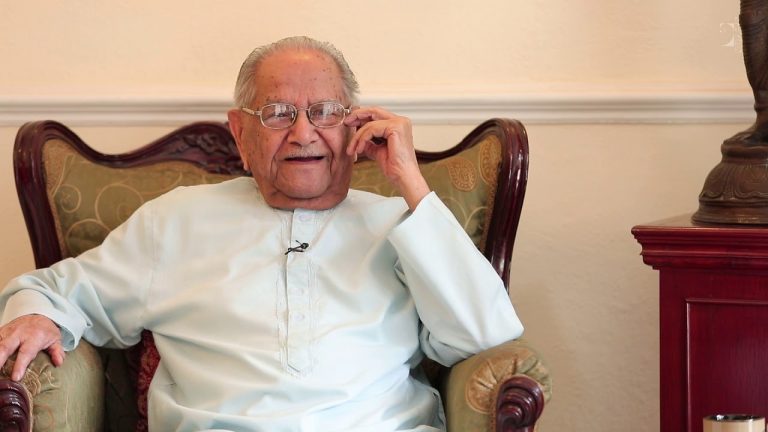
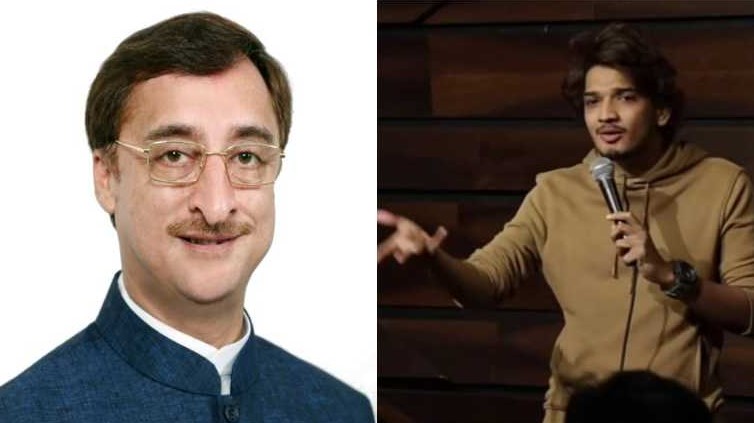
Self-proclaimed comedian Munawar Faruqui was represented at the Madhya Pradesh High Court during the hearing on his bail application by senior advocate Vivek Tankha. The comedian was arrested by the MP Police for making derogatory remarks against Hindu Gods and hurting religious sentiments.

As it so happens, Vivek Tankha is an elected representative to the Upper House of the Parliament from the Congress party. Vivek Tanka was elected to the Rajya Sabha on a Congress ticket in 2016. The previous year, in 2015, he said that he will move the Supreme Court in connection with the Vyapam Scam.

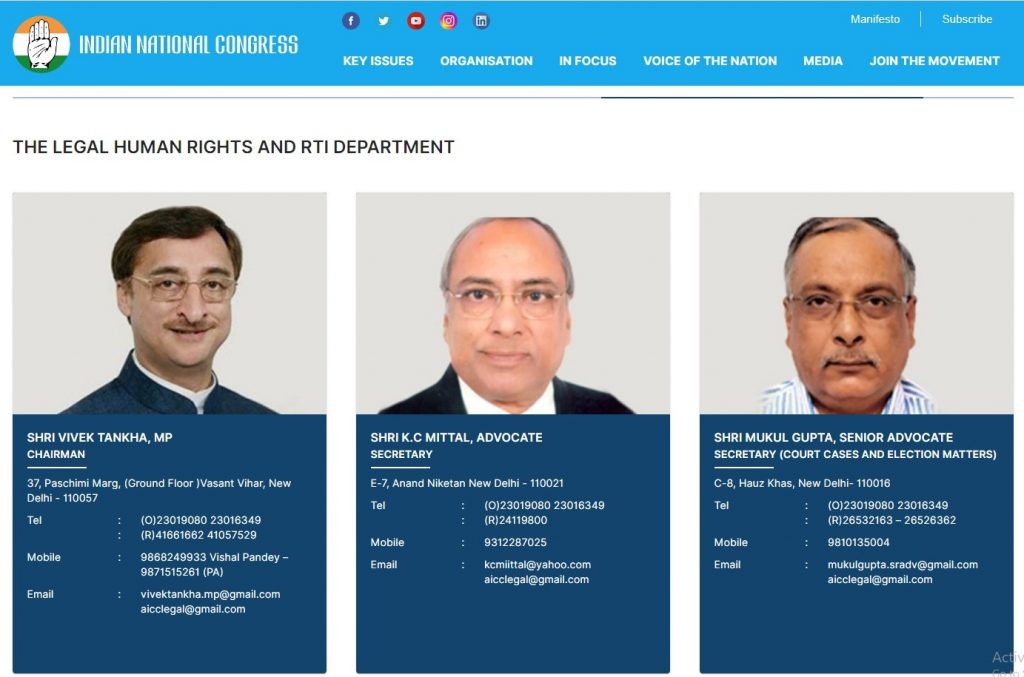
Vivek Tankha is also the Chairman of the All India Congress Committee’s “Legal Human Rights and RTI Department”.

Vivek Tankha is the Chairman of AICC's legal department
Vivek Tankha is the Chairman of AICC’s legal department

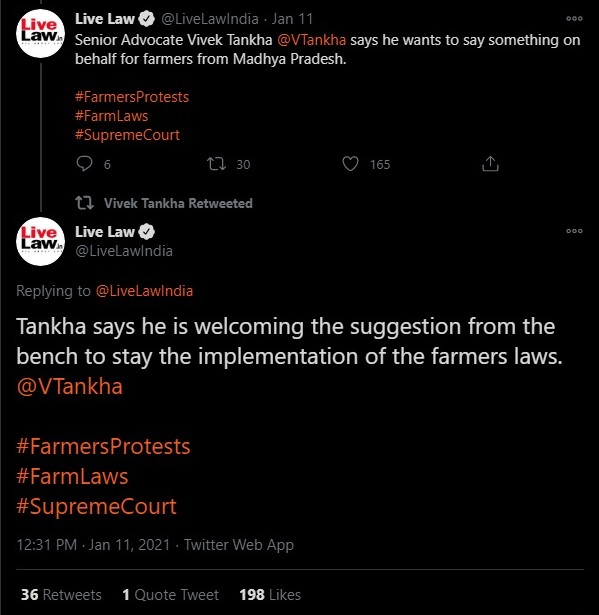
Vivek Tankha had also appeared on behalf of farmers at the Supreme Court and welcomed the decision of the Court to stay the recently passed farm laws.

Vivek Tankha appeared on behalf of farmers at the Supreme Court
Vivek Tankha appeared on behalf of Madhyafarmers at the Supreme Court

Madhya Pradesh High Court reserves order

Reserving the order on the bail application filed by Munawar Faruqui, the judge asked, “But why you take undue advantage of other’s religious sentiments and emotions. What is wrong with your mindset? How can you do this for the purpose of your business?” Senior Advocate Vivek Tankha argued on behalf of Munawar Faruqui, “He has committed no offence in the matter your lordships. Bail should be granted”.

Justice Rohit Arya stated, “Such people must not be spared. I will reserve the order on merits.”

The Munawar Faruqui controversy

Faruqui and four other persons identified as Edwin Anthony, Prakhar Vyas, Priyam Vyas and Nalin Yadav were arrested for allegedly mocking Hindu Gods in a stand-up comedy show in Indore based on the complaint of Eklavya Singh Gaur, an activist and the chief of Hindu Rakshak Sangathan.

They were booked under IPC sections 295-A (outraging religious feelings), 269 (unlawful or negligent act likely to spread the infection of any disease dangerous to life) and other relevant provisions. Section 269 was invoked for allegedly ignoring COVID-19 safety protocol. Faruqui was sent to judicial custody till January 13 which was later extended to January 27. Earlier, his bail application was adjourned to this week.