Home Blog Page 476

Mumbai: Hindu minor assaulted allegedly over Jai Shri Ram chants, police officials transferred after beating Hindu activists trying to file complaint

0

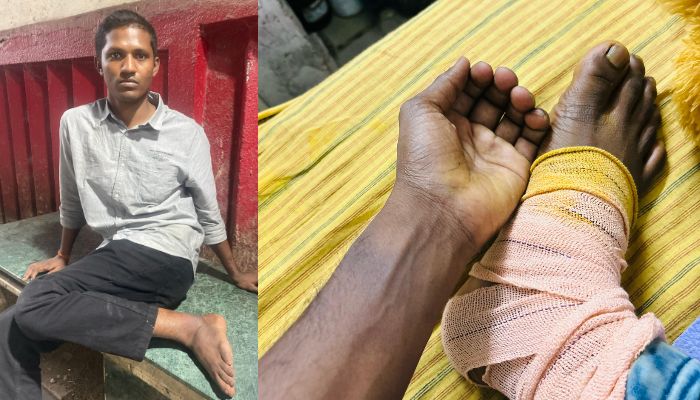
On 16th February a minor Hindu girl was assaulted by a Muslim man Sameer Khan and his wife, Sonali Das over chants of Jai Shri Ram. The minor girl who is associated with the Hindu organisation Durga Vahini was assaulted by Khan and his wife after they got irked by her students singing Bhajans and chanting Jai Shri Ram during the free tuition class that the minor Hindu girl gives to children of the area.

After the assault, when Bajrang Dal activists reached the Vakola police station to assist the minor in lodging an FIR, they were beaten up by police officials. The activists were assaulted a second time after they protested outside the police station. This resulted in the suspension of the police officials involved in the assault.

OpIndia spoke to the Bajrang Dal activists, the victim’s family, and the in-charge of the Vakola Police Station to understand the incident.

Hindu girl assaulted over ‘Jai Shri Ram’ chants

It all began when a Hindu minor girl, who is associated with the sister organisation of Vishva Hindu Parishad (VHP), Durga Vahini, went to call children in her area for free tuition classes on 16th January. Her father is also a Vishva Hindu Parishad activist. Speaking to OpIndia, her father said that every week, the victim organises sessions for Hindu children from poor families in the area to teach them about Dharma and notable historic Hindu personalities. The sessions often include bhajans and chants of ‘Jai Shri Ram’.

The chants and bhajans allegedly did not go well with the family that lives nearby. Her father told OpIndia that an argument erupted between his daughter, Sameer Khan and his wife Sonali Das. He alleged that Sonali often interfered in his daughter’s classes and questioned why she taught the children to chant ‘Jai Shri Ram’. On the day of the incident, they all got into an argument that led to the assault.

Following the argument, the girl returned home and informed her family about the incident. Her father, along with her elder sister, and mother went and confronted the family. This led to another altercation, which reportedly turned violent, with the family allegedly assaulting the minor girl.

FIR filed by Sonali Das

After the incident, Sonali Das and her family approached Vakola Police Station first. They filed an FIR against the minor Hindu girl and her family, alleging that they were attacked during the dispute. The Hindu family also tried to file a complaint. However, they alleged that the police refused to register it immediately.

An FIR was registered on the complaint of Sonali Das’s mother stating that the altercation led to injuries to her family members. The FIR has been registered under Sections 118(1), 115(2), 352, and 3(5) of BNS.

Bajrang Dal activists assaulted inside the police station

After the Hindu family faced delays in filing their complaint, the girl contacted Bajrang Dal activist Jaikishan Prajapati, who rushed to the police station along with other activists. Speaking to OpIndia, Jaikishan alleged that the police delayed filing the complaint as their shift was about to change. He added that the police officials would have had to stay for longer if they had filed the complaint. When Bajrang Dal activists pressed for immediate action, the police allegedly asked them to leave while questioning who they were to tell the police how to work.

The activists went outside the building to discuss the next course of action. A police official allegedly became agitated and slapped one of them. When they questioned the assault, sub-inspectors Shivaji Shinde, Achyut Naikare, and Dnyaneshwar Shinde allegedly dragged them inside and brutally assaulted them for over 30 minutes.

Protests and subsequent transfer of police officials

When they were inside the police station, senior VHP leaders were informed about the incident who quickly contacted senior police officials. The intervention led to the assault being stopped and an inquiry being conducted. Meanwhile, Bajrang Dal and VHP demanded strict action against the accused police officials. Bajrang Dal’s co-convenor Gautam Rawaria has warned that if no action is taken within two days, the entire Hindu community will stage a silent march to the Vakola police station.

Speaking to OpIndia, Jaikishan stated that the senior officials reviewed CCTV footage and found the police personnel guilty of using excessive force. As a result, the concerned officers were immediately transferred from Vakola Police Station.

For now, Bajrang Dal has not filed any official complaint against the police officials involved in the assault.

OpIndia contacted the concerned station in-charge but he refused to comment on the matter.

Former Congress MP Sajjan Kumar sentenced to life for the killing of father and son during the 1984 Anti-Sikh riots

0

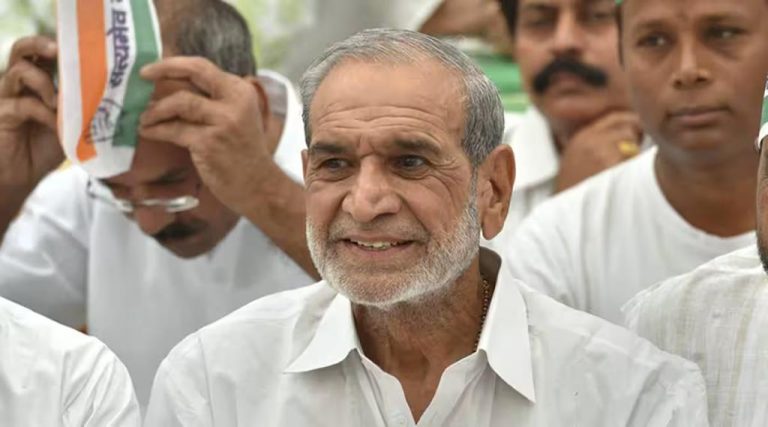
A Delhi Court on Tuesday awarded life sentence to the accused Congress leader Sajjan Kumar in a case related to killing the father-son duo in the Saraswati Vihar area during the 1984 Anti Sikh riots. This comes after the former Congress MP Sajjan Kumar was convicted on February 12 for killing of the father-son duo.

Special judge Kaveri Baweja sentenced Sajjan Kumar for the offence of murder (302) read with unlawful assembly (149) IPC.

He has also been sentenced to life imprisonment for the offence of Destruction of property with fire (436) read with Unlawful Assembly (149) IPC. He has been also sentenced for the other offences he was Convicted for.

The Rouse Avenue court on February 21 reserved order on sentence to be awarded to former Congress MP Sajjan Kumar in 1984 Anti-Sikh Riots case.

Riot victims had sought capital punishment for Sajjan Kumar. Kumar is already serving a life sentence following his 2018 conviction by the Delhi High Court in a separate case related to the anti-Sikh riots.

The senior counsel H S Phoolka appeared online for the 1984 riots victim submitted his written submissions and sought capital punishment.

On February 17, the Prosecution on argued and sought the Death penalty for Sajjan Kumar. Additional Public prosecutor (APP) Manish Rawat had filed written submissions. He pressed for the Death penalty in view of the guidelines in Nirbhaya and other cases.

APP Manish Rawat submitted that this case was a rarest of rare cases. In this case people from a community were targeted without any provocation. It was also submitted that the incident, broke entire fibre of trust and harmony among the communities thereby severely affecting the knitting and assimilation of different religious and social groups.

On January 31, the court had reserved the order after hearing additional submissions by the Public Prosecutor Manish Rawat.

This case is related to the killings of one Jaswant Singh and his son Tarundeep Singh in Saraswati vihar area on November 1, 1984.

Advocate Anil Sharma had submitted that Sajjan Kumar’s name was not there from the very beginning, and that the law of foreign land is not applicable in this case and there was a delay of 16 years in naming Sajjan Kumar by the witness.

It was also submitted that a case in which Sajjan Kumar was Convicted by the Delhi High Court is pending appeal before the Supreme court.

Advocate Anil Sharma had also referred to the case cited by the senior advocate H S Phoolka. He submitted that the law of the land will prevail even in the extraordinary situation and not the international law.

Additional Public Prosecutor Manish Rawat in his rebuttal had submitted that the accused was not known to the victim. When she became aware that who is Sajjan Kumar she named him in her statement. Earlier, Senior advocate H S Phoolka had appeared for riots victims had argued that the police investigations were manipulated in the Sikh riots cases. Police investigation was tardy and to save the accused.
It was argued that during riots situation was extraordinary. Therefore, these cases have to be dealt with in this context.

During the arguments senior advocate H S Phoolka had referred to judgement of Delhi High Court and submitted that It is not an isolated case, it was a part of bigger massacre, it is a part of genocide. It was further argued that as per official figures 2700 Sikhs were killed in Delhi in 1984. It was an ordinary situation.

Senior Advocate Phoolka had referred to the Delhi High Court judgement in 1984 Delhi cantt case wherein the court called the riots Crime against humanity. It was also said that objective of genocide is always targetting of minorities. There is a delay. Supreme court took it seriously that there is delay and a SIT was constituted, he argued.

The senior advocate had also referred to the judgement delivered by foreign courts in the cases of genocide and crime against humanity. He also referred to Geneva Convention.

It was also submitted that a charge sheet was prepared against Sajjan Kumar in 1992 but was not filed in the court. It shows that the police were trying to save Sajjan Kumar. On November 1, 2023, the court had recorded the statement of Sajjan Kumar. He had denied all the charges levelled against him. Initially an FIR was registered in Punjabi Bagh police station. Later on, this case was investigated by the Special Investigation Team constituted on the recommendation of justice G P Mathur committee and filed a charge sheet.

The committee had recommended the reopening of 114 cases. This case was one of them. On December 16, 2021, the court had framed charges against the accused Sajjan Kumar for commission of the offences punishable Under Section 147/148/149 IPC as well as the offences punishable Under section 302/308/ 323/395/397/427/436/440 read with Section 149 IPC.

It has been alleged by the SIT that the accused was leading the said mob and upon his instigation and abetment, the mob had burnt alive the above two persons and had also damaged, destroyed and looted their household articles and other property, burnt their house and also inflicted severe injuries on the person of their family members and relatives residing in their house.

It is claimed that during the course of investigation, material witnesses of the case were traced out, examined and their statements were recorded under section 161 Cr.P.C.

The statements of complainant under the above provision was recorded on 23.11.2016 during the course of this further investigation, in which she again narrated the above incident of looting, arson and murders of her husband and son by the mob armed with deadly weapons and she is also claimed to have deposed therein about the injuries suffered by her and the other victims of the case, including her sister in law who is stated to have subsequently expired.

She had also clarified, interalia, in that statement that the photograph of accused was seen by her in a magazine after around one and half months.

The 1984 riots erupted following the assassination of Prime Minister Indira Gandhi by her Sikh bodyguards on October 31, 1984, leading to the killing of at least 2,800 people in the national capital alone.

(This news report is published from a syndicated feed. Except for the headline, the content has not been written or edited by OpIndia staff)

Licensing violations, lack of transparency, and inadequate quality control: CAG report flags loss of Rs 2,000 crores due to AAP govt’s liquor policy

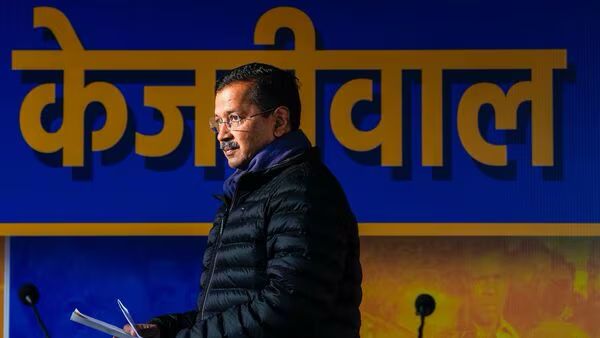
The Aam Aadmi Party government in Delhi caused a loss of Rs 2,026 crores to the public exchequer during the period of 2017 to 2021 by its now-scrapped Liquor Excise Policy through violations in licensing, lack of transparency, and inadequate quality control, according to a Comptroller and Auditor General (CAG) report. 

The audit, tabled by the new Rekha Gupta-led administration, examined the regulation and supply of IMFL and FL liquor in Delhi over four years from 2017-18 to 2020-21 when Arvind Kejriwal’s Aam Aadmi Party was in power. 

Here are the key findings of the CAG report

Licencing violations

The audit identified multiple discrepancies in how the Excise Department monitored and regulated liquor supply in the NCT of Delhi, raising concerns about its effectiveness in fulfilling its responsibilities. The total financial impact of the audit findings is estimated at approximately ₹2,026.91 crore.

The audit revealed lapses in the Department’s licensing process for wholesalers, retailers, hotels, clubs, and restaurants (HCR). It failed to enforce Rule 35 of the Delhi Excise Rules, 2010, allowing related entities to hold multiple license types, leading to common directorship among businesses. 

Additionally, licenses were issued without verifying key requirements such as solvency, financial records, sales data, and criminal background checks. To prevent cartelization and brand favouritism, stricter scrutiny of cross-ownership and proxy ownership is necessary. The inconsistent enforcement of rules underscores procedural non-compliance, warranting accountability for these violations. 

Lack of transparency in pricing

The audit found that discretionary pricing of liquor by L1 licensees (manufacturers and wholesalers) led to revenue losses. The Excise Department allowed them to set Ex-Distillery Prices (EDP) for higher-priced liquor, resulting in price variations across states. This discretion enabled price manipulation, reducing sales and impacting excise revenue. Without requiring cost details, there was a risk of hidden profits within inflated EDP. To ensure transparency and maximize revenue, the Department should clearly define EDP, mandate cost sheet submissions, and regulate pricing based on its effect on sales.

The audit found that the Excise Department’s regulatory efforts were ineffective in preventing liquor smuggling and revenue leakages. Its role was largely limited to recording seizures, while the Excise Intelligence Bureau (EIB) failed to act as a strong deterrent. Poor data management further hindered meaningful analysis and enforcement actions.

Country liquor accounted for 65% of total seizures, with structural issues like supply constraints, limited bottle sizes, and few brand options driving smuggling. FIR analysis revealed smuggling hotspots and a concentration of certain regional brands in illegal trade.

Inadequate quality control

The audit found significant weaknesses in the Excise Department’s enforcement, undermining both penalties for violations and deterrence. Raids were conducted arbitrarily without a Standard Operating Procedure, while poor evidence collection and weak use of ESCIMS data weakened cases. Lapses were noted throughout the enforcement process, from inaccurate inspection reports to flawed show-cause notices.

The audit found major shortcomings in the ESCIMS system, designed for barcode-based liquor tracking and payment authentication. The failure to ensure scanning at the point of sale led to post-sale stock reconciliation (MSR Gap), which was outside the contract’s scope and introduced data inaccuracies, weakened inventory tracking, and increased the risk of Non-Duty Paid Liquor using duplicate barcodes.

Additionally, the Excise Adhesive Labels project, meant to enhance security and traceability, was never implemented, compromising supply chain integrity.

To address these issues, real-time barcode tracking should replace the outdated MSR-Gap method, secure barcode labels must be introduced, and AI-driven data analytics should be deployed for better fraud detection and regulatory oversight.

Issues in the New Excise Policy (2021-22)

The 2021-22 Excise Policy aimed to prevent monopolies, ensure equitable liquor distribution, promote transparency, and curb bootlegging. However, several flaws in its formulation, design, and implementation led to significant revenue losses and regulatory failures.

Flaws in Policy Formation

Key recommendations of the Expert Committee were ignored without justification, including the shift from a state-run wholesale model to private entities and changes in license allocation rules. Major exemptions with revenue implications were granted without Cabinet or Lieutenant Governor approval, violating procedural requirements.

Design and Licensing Issues

The policy’s structure encouraged monopolization and cartel formation by limiting the number of wholesalers and imposing exclusivity arrangements between manufacturers and wholesalers. Retail licensing was also concentrated, reducing competition. Cases of related business entities holding licenses across the supply chain raised concerns about brand favouritism.

Implementation Failures

Retailers surrendering licenses prematurely caused supply disruptions, as the policy lacked provisions for advance notice. The government lost ₹890 crore by not retendering these surrendered licenses and ₹941 crore due to exemptions given to zonal licensees. Despite clear contract terms, a ₹144 crore waiver was granted to licensees citing COVID restrictions, further reducing revenue. Additionally, incorrect security deposit collections led to ₹27 crore in losses.

In total, implementation failures resulted in a revenue loss of ₹2,002 crore. Crucial anti-bootlegging measures, such as liquor testing labs, batch testing, and regulatory oversight, were never executed, undermining the policy’s core objectives.

Amidst rumours of rift with Congress Party, Shashi Tharoor shares selfie with Union Minister Piyush Goyal

0

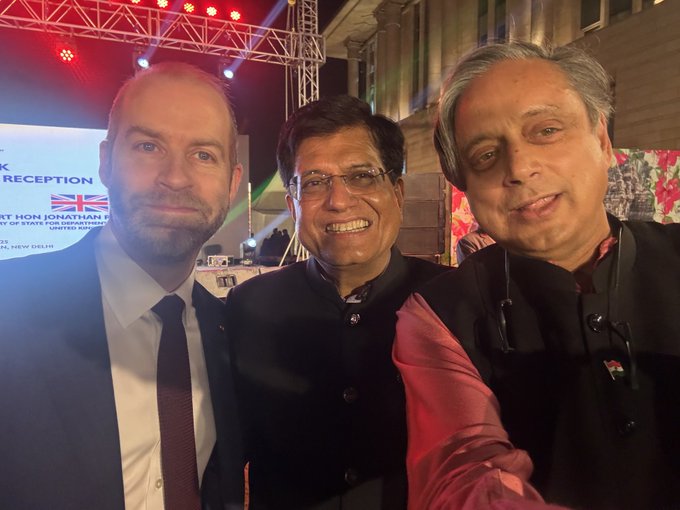
Congress MP Shashi Tharoor welcomed the revival of Free Trade Agreement negotiations between India and the United Kingdom. The Thiruvananthapuram MP shared a selfie of him with Britain’s Secretary of State, Jonathan Reynolds, and Union Commerce and Industry Minister, Piyush Goyal.

Shashi Tharoor wrote on X, “Good to exchange words with Jonathan Reynolds, Britain’s Secretary of State for Business and Trade, in the company of his Indian counterpart, Commerce and Industry Minister @PiyushGoyal. The long-stalled FTA negotiations have been revived, which is most welcome.”

On Monday, India and the United Kingdom resumed negotiations on a trade deal that is “balanced, mutually beneficial and forward-looking.”

The announcement was made by Commerce and Industry Minister Piyush Goyal and Secretary of State for the Department for Business and Trade of the United Kingdom Jonathan Reynolds, who is in the national capital.

Piyush Goyal and Jonathan Reynolds directed the negotiators to work together to resolve the outstanding issues in the agreement to ensure a fair and equitable trade deal for shared success.

Speaking at the joint press conference, Goyal said it will be “a pathbreaking free trade agreement” that will give the businesses and people of both countries huge opportunities to grow the current USD 20 billion bilateral trade in merchandise to probably two to three times in the next ten years.

“Both Jonathan and I have agreed to resume free trade agreement negotiations in a very cordial atmosphere,” he said.

The minister added that both sides have decided to build upon the strong groundwork that 14 previous rounds have developed.

“I would like to call this FTA a forward-looking, transparent, ambitious, equitable, balanced and mutually beneficial agreement, which will be a win-win for both our countries,” he added.

Jonathan Reynolds said the resumption of negotiations for trade negotiations will strengthen close and vibrant partnership between the two countries.

“It’s an excellent place to start from, but both of us want to do more and that’s why I am so pleased to be here today to kick-start these negotiations, to strengthen our close and vibrant relationship and unlock new opportunities for businesses and consumers across both the UK and India, because at the centre of my government is a mission to deliver economic growth, to put pounds back in people’s pockets, to support our businesses, to thrive, to create wealth and jobs and opportunity,” Reynolds said.

Goyal said the two sides will move “quickly without being hurried”.

India-UK FTA negotiations were launched on January 13 2022. Thirteen rounds of negotiations were held till December 2023. The 14th round of negotiations, which began on January 10 2024, was underway when negotiations were paused by the UK side in May 2024 due to their elections.

(This news report is published from a syndicated feed. Except for the headline, the content has not been written or edited by OpIndia staff)

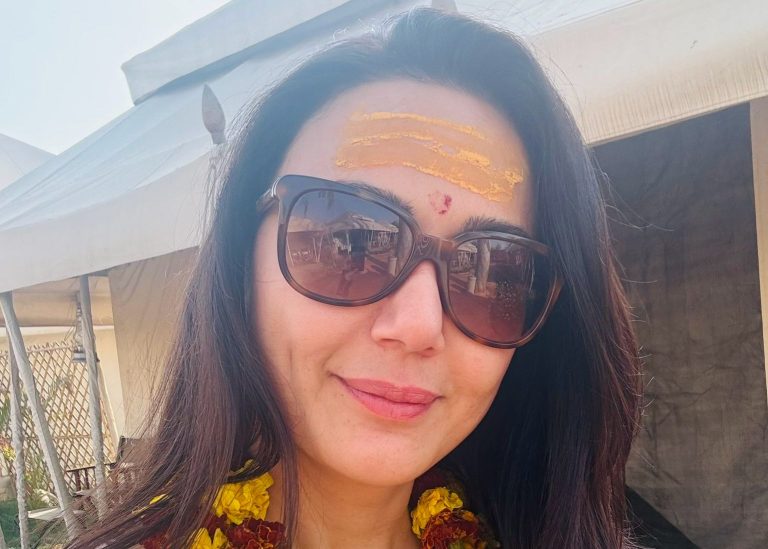
Preity Zinta targeted a day after Maha Kumbh visit, actress calls out Sucheta Dalal and Congress for spreading fake news about her: Details

Bollywood actress and part-owner of Punjab Kings IPL franchise, Preity Zinta, is at the cross-hairs of Leftists, Islamists, and even official Congress party handles. Pretity Zinta’s fault- She went to the Maha Kumbh and shared a photo from there on social media platform X (formerly Twitter).

Preity Zinta posted, “All roads lead to the Maha Kumbh at Prayagraj. सत्यम शिवम् सुंदरम्”, adding her trademark sign off “Ting” at the end.

Incidentally, a report from a few days back by Moneylife media outlet went viral after Preity posted her pic from Prayagraj which alleged that Preity Zinta’s Rs 18 Crore loan was written off by the New India Cooperative Bank Ltd.

Even official Congress party handles amplified these allegations. Congress Kerala handle assumed she has handed over her social media account to Bharatiya Janta Party in return of the write off. They posted, “She gave her social media accounts to BJP and got 18 Cr written off and the bank collapsed last week.”

However, instead of taking the baseless allegations lying down, Preity Zinta decided to come out swinging against the absurd claims made by the Congress party and Moneylife. Preity posted from her X account, “No I operate my social media accounts my self and shame on you for promoting FAKE NEWS ! No one wrote off anything or any loan for me. I’m shocked that a political party or their representative is promoting fake news & indulging in vile gossip & click baits using my name & images. For the record a loan was taken and FULLY PAID BACK – over 10 years ago. Hope this clarifies and helps so there are no misunderstandings in the future.”

Further, addressing Moneylife Managing Editor Sucheta Dalal, Preity Zinta posted, “I’m definitely going to start naming all these journalists that write articles without following up or investigating the stories. If you don’t value my reputation then sorry I don’t value yours @suchetadalal Next time pls call me and find out if the story is true or not before mentioning my name.”

While calling out Sucheta Dalal for the incorrect reporting about her, Preity Zinta posted, “So much misinformation going around but thank god for social media and thank god for X ! All through my career I have seen so many so respected journalists get so many stories completely wrong & never have the decency to correct the story or apologise. I have also gone to court and spent a tonne of money fighting cases that go on & on & on. I think it’s time we start holding them responsible right here so there is some accountability in the future.”

Visiting Maha Kumbh was not the only ‘mistake’ Preity Zinta made to irk the leftists. On February 21, she posted on X questioning the prevalent cynical behaviour on social media. She wrote, “What’s happening to people on social media? Everyone has become so cynical. If one talks about their first chat with an AI Bot then people presume it’s a paid promotion, if you appreciate ur PM then you are a bhakt & god forbid, if you are a proud Hindu or Indian then ur an Andh Bhakt!”

Preity further added that everyone online needs to relax and be happy to communicate with each other online. She further playfully added that don’t ask now why she married her husband Gene Goodenough as she married him for love.

Little did Preity Zinta know that this innocuous post asking people not to be cynical online will invite so much trolling her way. The post triggered Islamists since she mentioned admiring PM Modi in her post.

Islamist Arfa Khanum Sherwani said that this post by Preity mentioning admiration of PM Modi is her attempt to get back to Bollywood. “Someone please sign Preity Zinta for a film. Why no roles for a “proud Hindu” & “PM praiser”? Guess the industry missed her “patriotism” and “loyalty.”, Arfa posted.

Guess someone even posting that the Indian Prime Minister can be appreciated by someone was too much for Arfa to digest. There are hundreds of millions appreciating the current Prime Minister and repeatedly voting for him, guess everyone is trying to get a role in a Bollywood movie as per Arfa.

This development again goes to show how you will be attacked in India by the leftist ecosystem if you proudly display your Hindu faith or God forbid, admire Prime Minister Modi. While many celebrities succumb to this pressure, Preity Zinta has refused to bow down in the face of the attacks on her.

Kerala: Affan murders girlfriend and 4 family members, assaults mother for refusing to pay off his loan

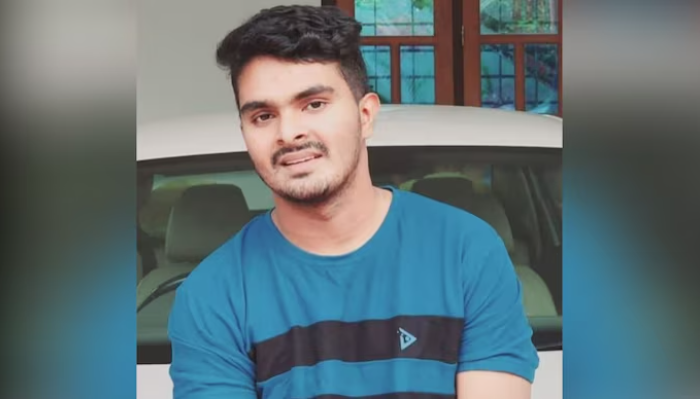
23-year-old Affan stabbed his girlfriend, brother, grandmother, uncle and aunt to death and even tried to kill his mother with a machete and a hammer in three separate locations in a prearranged murder spree. The grisly incident transpired on the evening of 24th February in Venjaramoodu, Thiruvananthapuram of Kerala. He then turned himself in to the authorities after reportedly consuming rat poison after which was taken to Thiruvananthapuram medical college.

However, doctors were unable to verify that his body contained any poison, during the medical examination. The deceased were identified by the police as the accused’s 13-year-old brother Ahasan, paternal uncle Abdul Lateef (58), aunt Shahida Beevi (54), grandmother Salma Beevi (88) and girlfriend Farshana (19). His mother Shemi (47) is a cancer patient is receiving treatment at the Medical College Hospital in Thiruvananthapuram due to her critical condition. Affan informed police that he had murdered them because they were unwilling to pay off the enormous debts he had accrued following business losses in a Gulf nation.

Police are investigating further to find additional information, nevertheless, as they have reservations regarding his account. His cell phone and contact information are also being examined to determine whether or not he has a drug addiction. According to the police, the perpetrator killed his grandmother at around 3 pm in her Pangode residence. He then arrived at his paternal uncle’s home at SN Puram, close to Koonanvenga about 16 kilometers from Pangode and killed him and his spouse.

Afterward, he went back to his house in Perumala which is close to Pullampara, and assaulted his mother, brother and girlfriend. He immediately drove in an autorickshaw to the Venjaramoodu police station after committing the crime and surrendered after leaving the LPG cylinder in his home open. The cops reacted promptly and verified the crime. Weapons utilized in the crime were also discovered at the respective locations.

According to other reports, he informed the police that his NRI father Rahim’s company was experiencing severe financial difficulties. He attempted to raise money, but it was unsuccessful. He therefore made the decision to murder his family members and take his own life. Affan, Ahsan and their mother stayed with their father Rahim in the Gulf. However, they returned to Kerala after his business failed. The culprit even took his brother to a hotel and bought his favourite food before killing him.

Delhi govt led by Rekha Gupta to present 14 CAG reports in assembly today, BJP says Kejriwal kept them hidden

The newly formed Bharatiya Janata Party (BJP)-led government in Delhi, under Chief Minister Rekha Gupta, will present 14 reports by the Comptroller and Auditor General (CAG) in the second day of the legislative assembly of the Delhi on Tuesday.

The reports are expected to highlight financial irregularities during the previous Aam Aadmi Party (AAP) government.

Speaking to ANI, Delhi BJP chief Virendra Sachdeva said, “CAG report is a list of the black deeds of AAP. We had promised the people of Delhi during the elections that whoever has committed corruption will have to answer. Today, we hope that after the speech of LG, when the CAG report will be tabled, all their black deeds will come before the people of Delhi.”

Delhi Minister Manjinder Singh Sirsa also commented on the reports, saying, “Today, the CAG report, which exposed the scams of Arvind Kejriwal’s government, will be tabled in the Delhi Assembly. Arvind Kejriwal had kept it hidden for the last 3 years… 14 such reports will be tabled one by one… Arvind Kejriwal had kept the report hidden all this time because he knew his loot, scams, and corruption would be exposed.”

Delhi Minister Ravinder Indraj Singh added, “… The result of the ‘AAP-da’ government has been disastrous. All its ministers were jailed. A CAG report of all their ministries will be presented… The CAG report will reveal everything.”

The reports are expected to be tabled after the Lieutenant Governor’s address in the Assembly.

Later in the day, the Assembly will open the floor for the motion of thanks on the LG’s address. On February 26, the discussion on the motion of thanks will begin at 11:00 AM, followed by the election of the Deputy Speaker of the Delhi Assembly.

ANI has accessed the list of these reports. Sources familiar with the development say the reports include critical audits and assessments of various government programmes and initiatives. The delay in presenting these reports had raised concerns about the transparency and accountability of the Aam Aadmi Party-led Delhi NCT government.

According to sources, these reports are: 1) State Finances Audit Report for the year ended March 2021, 2) Revenue, Economic, Social and General Sectors and PSUs for the years ended 31 March 2020 and 2021, 3) Performance Audit of Prevention and Mitigation of Vehicular Air Pollution in Delhi for the year ended 31 March 2021, 4) Performance Audit of Children in Need of Care and Protection for the year ended 31 March 2021, 5) State Finances Audit Report for the year ended March 2022.. 6) Performance Audit on Liquor Supply in Delhi, 7) State Finances Audit Report for the year ended March 2023, 8) Performance Audit on Public Health Infrastructure and Management of Health Services, 9) Performance Audit Report of Comptroller & Auditor General of India on “Functioning of Delhi Transport Corporation, and 10) Performance Audit Report of Comptroller & Auditor General of India for the year 31 March 2022. 

Out of 14 of these, four reports are Finance accounts and appropriation Accounts prepared by the Controller of Accounts of the Delhi government from 2021-22 and 2022-23, sources said.


(This news report is published from a syndicated feed. Except for the headline, the content has not been written or edited by OpIndia staff)

Rajasthan: Muslim mob attacks a Dalit family in Alwar over land dispute, 7 injured

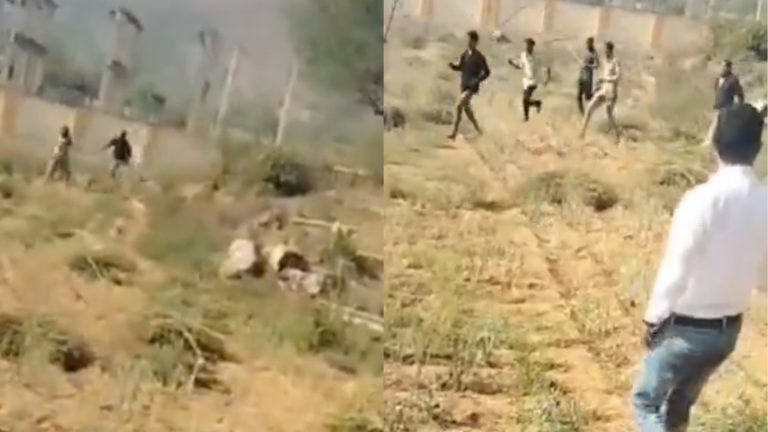
In yet another incident that busts the imaginary construct of Jai Bhim Jai Meem, a Dalit family in Rajasthan’s Alwar district was attacked by a bunch of 20 to 25 Islamists, leaving at least seven injured.

The disturbing visuals of the attack were caught on camera, subsequently going viral on the internet. The police said the attack took place on Sunday in Goha village and the injured were sent to government and private hospitals, with two being referred to higher medical centres on account of sustaining grievous injuries.

According to reports, accused Mushtaq, Sahun, Resham, Ruzdar, Harun, Taufiq, Uddar, and their children used sharp weapons to attack the Dalit family. Videos that are doing the rounds on the internet show children and women attacking the Dalit family while they were harvesting the mustard fields.

A land dispute led to the attack against the Dalit family. The police have registered an FIR into the case and arrested the accused.

It is noteworthy to mention that Rajasthan’s Alwar has been notorious for violence by Muslim mobs. The region, also known for cattle smuggling and related violence, is often in the news for incidents of brutality inflicted on locals by murderous Islamist mobs to drive them out of the region and then lay claim to their lands.

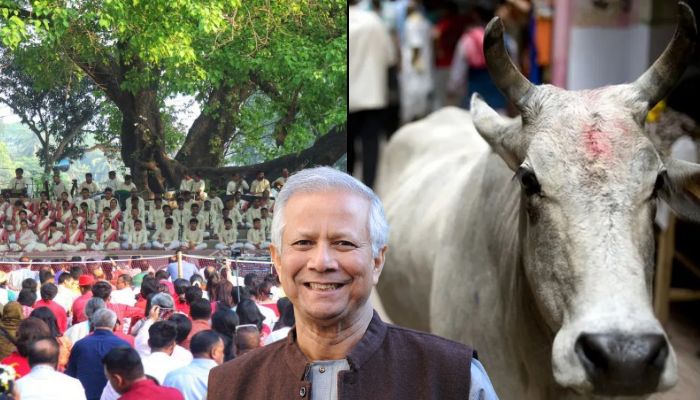
Bengali New Year being converted to Islamic festival in Bangladesh? Extremists issue threats to slaughter 100 cows, Yunus regime brushes it off

Extremists in Bangladesh are threatening to slaughter 100 cows on the occasion of the Bengali New Year (Pohela Boishakh), which is celebrated on the 14th of April each year.

With the annual festival less than 2 months away, full-fledged plans are underway to hurt the sentiments of the Hindu community.Pohela Boishakh marks the arrival of spring and the abundance of the harvest season.

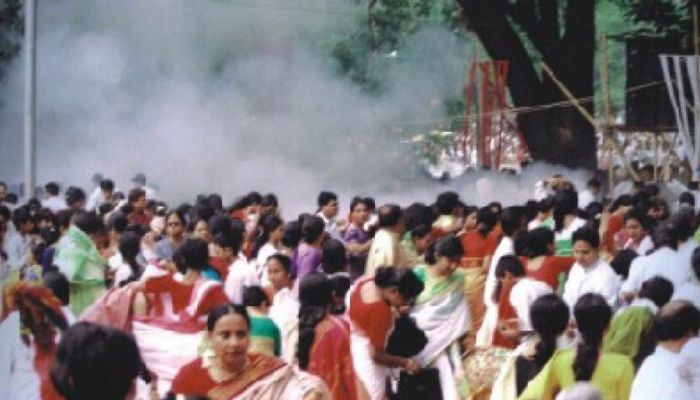
As part of the celebration, a grand event is organised each year under the Ramna Batamul Banyan tree, located inside the Ramna Park in Dhaka.

The organiser of the event is the Chhayanaut Sangeet Vidyatan, which was established in Bangladesh in 1961 to promote Bengali culture and music.

On 18th February, Mostofa Sarwar Farooki was quizzed about the threats issued to slaughter 100 cows on the occasion of Pohela Boishakh at the Ramna Park. He is the adviser to the Ministry of Cultural Affairs in the interim government of Bangladesh.

When a reporter pointed out that the threats originated primarily on social media, Farooki attempted to brush the grave criminal intimation under the carpet.

He claimed, “Many people say many things on social media…We cannot respond to everything said there as government authorities.” The reporter pointed out that threats, which originate on social media, manifest in real-life attacks.

Mostofa Sarwar Farooki continued, “Pohela Boishakh is a big festival. It will be observed in the same manner it has been celebrated all these years. I can say that.”

The development comes amid targeted attacks at events by violent Muslim mobs, operating under the banner of ‘Tawhidi Janata.’

Muhammad Yunus panders to Islamists, Hindus remain concerned

The interim government in Bangladesh, led by Muhammad Yunus, is pandering to Islamists. While Yunus has not directly recommended these Muslim mobs to run rampage, he has strategically remained tight-lipped on their activities.

His regime has released Islamic hardliners and convicted terrorists and tried to downplay attacks on Hindu minorities as ‘fake‘, ‘exaggerated‘ or ‘politically motivated‘.

The threat to slaughter 100 cows at the Ramna Park in Dhaka, particularly in the context of Pohela Baishakh, should be taken seriously.

For context, the Islamic terror outfit ‘Harkat-ul-Jihad-al-Islami’ had executed two deadly bomb blasts at Ramna Park on 14th April 2001. It led to the killing of 9 innocent people and injured at least 50 others.

2001 Ramna Batamul attack, image via The Daily Star

8 terrorists, identified as Mufti Abdul Hannan, Moulana Akbar Hossain, Moulana Mohammad Tajuddin, Hafez Jahangir Alam Badar, Moulana Abu Bakar, Mufti Shafiqur Rahman, Mufti Abdul Hye, and Arif Hasan, were sentenced to death in 2014.

Other Islamic terrorists including Moulana Abu Taher, Moulana Sabbir alias Abdul Hannan, Moulana Yahiya, Moulana Shawkat Osman, Moulana Abdur Rouf and Shahadat Ullah were given life sentences.

Terrorists Tajuddin, Hafez Jahangir, Moulana Abu Bakar, Mufti Shafiqur, and Mufti Hye are on the run from law enforcement authorities, even after 24 years.

With no definitive assurance from the Muhammad Yunus-led-regime against threats on Pohela Baishakh, the Hindu community is threatened ahead of the annual festival.

Attack on Hindus in Bangladesh since the ouster of Sheikh Hasina

OpIndia has been vetting and reporting cases of atrocities on Hindus since the ouster of Sheikh Hasina on 5th August 2024.

There have been at least 205 attacks on Hindu temples, shops and businesses within 3 days of the fall of Dhaka.

We previously exposed how Muslim students have forced as many as 60 Hindu teachers, professors and government officials to resign from their positions.

Human rights activist and exiled Bangladeshi blogger, Asad Noor, has recently revealed that the minority community is now being coerced into joining ‘Jamaat-e-Islami’.

On 6th September, a procession of Hindu devotees carrying the idol of Lord Ganesha came under attack in the Kadam Mubarak area in Chittagong city of Bangladesh.

Ahead of the Durga Puja celebrations, a radical Muslim man named Yasin Mia vandalised the idols of Goddess Durga and other Hindu deities in Gouripur town in the Mymensingh district of Bangladesh on 25th September.

In the latest series of attacks, idols of Goddess Durga and other Hindu deities were vandalised at the Rishipara Barwari Puja Mandap and the Manikadi Palpara Barwari Pujamandap on 28th September and 1st October respectively.

The attacks were carried out in Sujanagar upazila in Pabna district in Rajshahi Division of Bangladesh. While a total of 4 idols were defaced at the Rishipara Barwari Puja Mandap, another 5 Hindu idols were destroyed at the Manikadi Palpara Barwari Pujamandap.

On 3rd October, 7 idols of Hindu deities were destroyed at the Gopinath Jiur Akhara Durga Puja mandap in Kishoreganj, Dhaka Division, Bangladesh.

On 5th November, the Hindu community came under attack from police and law enforcement authorities in Hazari Goli in Chittagong city of Bangladesh.

On 29th November, a violent Muslim mob attacked Hindu minorities and vandalised 3 temples in Patharghata in  Chittagong district of Bangladesh.

The Hindu religious sites that the Muslims targeted included the Shantaneshwari Matri Temple, the Shoni Temple, and Shantaneshwari Kalibari Temple. The attack took place immediately after the conclusion of Jumma Namaz

On 30th November, a prominent Hindu journalist named Munni Saha was arrested by the police from Karwan Bazar in Dhaka city of Bangladesh.

A group of extremists attacked the Mahashmashan Kali Mata Mandir, vandalised 7 idols of deities and stole gold ornaments on 13th December 2024.

On 19th December, a Muslim man identified as Alal Uddin vandalised an idol at the Polashkanda Kali Temple and then attempted to create a fake alibi. The incident occurred in Haluaghat upazila in the Mymensingh district of Bangladesh.

Another 37-year-old Muslim man identified as Azharul vandalised several idols of deities in Haluaghat Upazila in the Mymensingh district of Bangladesh.

The recent arrest of Chinmoy Krishna Das Prabhu and his aides, attempts at banning Hindu organisation ISKCON and stiffling Hindu protests with cases of ‘sedition’ highlight systematic persecution under the interim government of Muhammad Yunus.

There have been multiple instances of attacks on Hindus under the pretext of ‘blasphemy.’ The recent cases of Hridoy PalUtsab MandalPartha Biswas PintuAkash DasPranta Talukder and Utsab Kumar Gian are shining examples of targeted persecution.

Selfless service vs the ‘Mother Teresa syndrome’: As PM Modi highlights Cancer hospital by Bageshwar Dham, how Hindu temples and orgs have been working for people – without harvesting souls

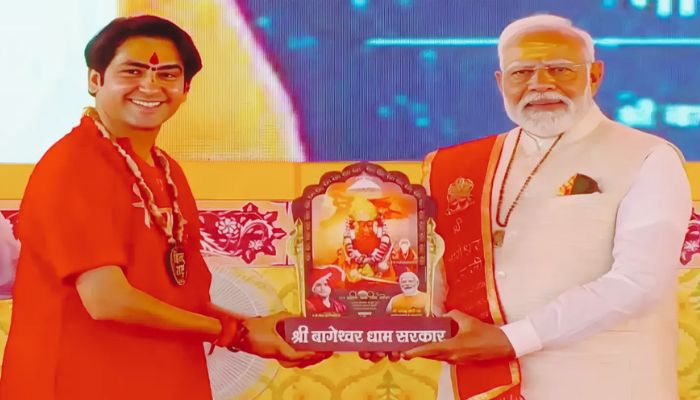
Prime Minister Narendra Modi laid the foundation stone for Shri Bageshwar Dham Medical Science and Research Institute in Madhya Pradesh’s Chattarpur on 23rd February. During the event, Bageshwar Dham Chief Pandit Dheerendra Krishna Shastri, MP Chief Minister Dr Mohan Yadav among other dignitaries were present.

This institute will be established on a 10-acre site, and in its first phase, a 100-bed facility will be completed. The Cancer hospital worth over Rs 200 crore will offer free treatment to underprivileged cancer patients. It will be equipped with state-of-the-art machines and have specialist doctors.

Addressing the crowd, Prime Minister Modi congratulated Dheerendra Shastri for his charity hospital initiative and extended best wishes to the people of Bundelkhand. PM Modi also pointed out that several people including political leaders with a colonial mindset take delight in mocking and deriding Hindu Dharma and foreign powers also back such elements to undermine India’s spiritual foundations.  

“In the present times, we observe a certain section of leaders who mock religion, deride it, and engage in divisive tactics. On numerous occasions, foreign powers also attempt to weaken our nation and its spiritual foundations by lending support to such individuals. Those who harbour animosity towards the Hindu faith have, in some form or another, existed for centuries. Those who remain trapped in a colonial mindset persistently attack our beliefs, our temples, our saints, our culture, and our values. They show utter disrespect towards our festivals, traditions, and customs. They even dare to cast aspersions upon a religion and culture that are inherently progressive. Their agenda is to fragment our society and disrupt its unity,” PM Modi said.

Calling Dheerendra Shastri as his younger brother, PM Modi said that Shastri has long been enlightening people with the “mantra of unity” across the nation, and now he has undertaken the noble initiative of establishing a cancer institute. The Prime Minister asserted that now alongside the boon of spirituality, a gift of healthy life would also be bestowed.

“In these circumstances, my younger brother, Dhirendra Shastri Ji, has long been enlightening people with the mantra of unity across the nation. Now, he has taken yet another noble resolution in the service of society and humanity—he has resolved to establish this cancer institute. Thus, here in Bageshwar Dham, not only will bhajans and prasad be offered, but the gift of a healthy life will also be bestowed,” PM Modi said.

He further highlighted that in addition to being the centres of worship and meditation, Hindu institutions, and temples have also been hubs of scientific inquiry, social thought, and collective consciousness. Emphasising the Hindu belief in selfless service, Prime Minister Modi said that Hindu Dharma has bestowed the world with the science of Ayurveda and the discipline of Yoga.

“Our temples, mutts, and sacred sites have always served as centres of both worship and meditation. At the same time, they have also been hubs of scientific inquiry, social thought, and collective consciousness. It was our sages who bestowed upon us the science of Ayurveda, as well as the discipline of yoga—both of which are now celebrated across the world. Our belief is simple: There is no greater religion than selfless service, my friends. In other words, to serve others, to alleviate their suffering, is the essence of true religion. Hence, it has been our long-standing tradition to serve all living beings with the conviction that divinity resides in every human—Narayan in man, Shiva in every being,” PM Modi said.

Ironically, in a Hindu-majority India, it has been a disturbing trend to mock Hindu beliefs and traditions labelling them ‘regressive’, deride saints, and slander Hindus as intolerant despite their inherent secular ethos and pluralistic character. While the left-liberal cabal has persistently been vilifying Hindu saints, many Hindu organisations led by saints are engaged in selfless service—running hospitals, schools and relief programs.

Hindu institutions have long been serving as centres of both spiritual awakening and social welfare. Across the country, numerous health facilities run by Hindu temples and organisations treatment to millions of underprivileged people, reflecting the “Sanatan” legacy of compassion rooted in the ethos of “Niswarth Seva” (selfless service).

Major Hindu organisations running charity health initiatives

Hindu temples and organisations have a long-standing tradition of contributing towards social welfare through initiatives like hospitals, and cancer care centres alongside other community services reflecting their commitment towards selfless service. As Bageshwar Dham Medical Science and Research Institute joins the long list of Hindu organisations running free healthcare initiatives for underprivileged people, it would be interesting to learn about some of these initiatives.

Ramakrishna Mission: Founded by Swami Vivekanand in 1897, Ramakrishna Mission is a major Hindu organisation renowned for its humanitarian work. The Ramakrishna Mission runs charitable hospitals and dispensaries across the country, providing subsidised or free healthcare. These hospitals have world-class tech and infrastructure. The Ramakrishna Mission Hospital in Kolkata offers specialised care for underprivileged people. Besides, the organisation also runs educational institutions like Ramakrishna Mission Student’s Home, offering free education with food and accommodation.

Shri Chaitanya Saraswat Math: This mutt of Gaudiya Vaishnavs based in West Bengal’s Nabdwip runs significant charitable initiatives providing free healthcare through mobile medical units and by organising camps for giving free check-ups and medicines to poor people.  In addition, the mutt also supports education and sports.

Siddhi Vinayak Temple Trust: Under its Trust, the famous Siddhi Vinayak Temple in Mumbai runs various initiatives to support healthcare. The temple trust runs a dialysis centre in Prabhadevi and a free cancer hospital in Miraj. The temple also runs educational facilities including libraries both online and offline. The temple trust also runs a Book Bank scheme for the economically poor and needy. Under this scheme, textbooks are provided free of cost to students of 11th to  15th standard in Arts, Commerce and Science from all over Maharashtra.

It must be recalled that during the Covid-19 pandemic, Siddhi Vinayak Temple Trust donated Rs 5 crore to the Chief Minister’s Relief Fund. The temple trust had donated Rs 25 crore back in 2013 to CM’s Relief Fund to provide relief to drought-hit regions in Maharashtra.

Kanchi Kamakoti Peetham: This Hindu institution under the guidance of Shankaracharyas, runs the Kanchi Kamakoti CHILDS Trust Hospital in Tamil Nadu’s Chennai providing free pediatric care to poor children.

Gorakhnath Temple: Under the stewardship of Mahant Yogi Adityanath, who is also the Chief Minister of Uttar Pradesh,  the Gorakhnath Math in Gorakhpur runs the Guru Shri Gorakshanath Chikitsalaya, a 300-bed hospital equipped with a 10-bed ICU featuring ventilators providing affordable healthcare to underprivileged people. Under the aegis of Gorakhnath Temple, the Maharana Pratap Siksha Parishad runs over 47 educational and health institutions across eastern UP.  

ISKCON: While the International Society for Krishna Consciousness (ISKCON) has its chapters operating across the world, the Hindu group dedicated to spreading the teachings of Bhagwan Krishna also runs various initiatives to support social welfare. ISKCON runs free health clinics, hospitals and mobile medical units in India. The Hindu organisation runs the Bhaktivedanta Hospital in Mira Road, Mumbai and a satellite center in Varshana providing free medical care. ISKCON is also running free medical carer at the ongoing Maha Kumbh in Uttar Pradesh’s Prayagraj.  

Hindu temples helped India fight the Covid pandemic

While Hindu temples and organisations have helped the people and governments during various disasters, a recent example of their dedication towards helping society beyond religious lines was seen in the Covid pandemic.  

Back in 2021, the Hindu Samaj Temple in Thailand’s Bangkok, mobilised support to help India fight the second wave of Coronavirus. The temple coordinated with the Indian embassy as well as the Royal Thai Air Force (RTAF) to oxygen equipment to India.

Several Hindu temples in the US including Shree Radhey Shyam Temple in Bloomingdale, Georgia, affiliated with SGVP Gurukul USA, raised money directly for medical aid to the SGVP Holistic Hospital in Ahmedabad, India. These temples helped the SGVP Hospital in Ahmedabad acquire a sustainable supply of medical oxygen through on-site liquid oxygen storage and oxygen generation plants in addition to ventilators and oxygen concentrators.

Similarly, the BAPS Swaminarayan Temple in London also raised funds to the tune of 600,000 pounds ($830,000) through a bikeathon to help India battle the Coronavirus pandemic. The BAPS Temple in Abu  Dhabi also came forward to create a supply chain of oxygen tanks and cylinders which will provide upwards of 440 metric tonnes of liquid oxygen.

In April 2021, the BAPS Swaminarayan Temple of Vadodara converted its Yagnapurush Sabhagruh to a Covid-19 facility. The COVID-19 care centre is equipped with 500 beds, oxygen facilities like liquid oxygen tanks and piped oxygen lines, ICU beds and ventilators. 

Puri’s Shree Jagannath Temple Administration decided to convert its Nilachal Bhakta Nivas into a Covid-19 Care Centre with 120 beds.

The Pawandham Temple in Mumbai’s Kandivali converted its four-storey building into a COVID-19 quarantine centre equipped with 100 beds. The Mahavir Temple at Patna provided free oxygen cylinders to the infected. A Jain temple in Mumbai was also converted into a Covid care centre. ‘Sri Ram Janmabhoomi Teerth Kshetra’ had also set up an oxygen plant worth Rs 55 lakh in view of the Corona crisis.

These are just a few examples of how Hindu temples and organisations are tirelessly working for social welfare besides their Dharmic obligations. There are numerous temples which offer free or subsidised education and healthcare including conducting free check-ups and medical camps for not just Hindus but for people of other religious communities as well.

The Niswarth Seva of Hindu temples vs the ‘Mother Teresa Syndrome

Interestingly, while many Hindu temples and organisations offer free services without any ulterior motives including conversion of non-Hindus to Hinduism in exchange for financial inducements, ‘tickets to heaven’, or miraculous solutions to the problems of poor and vulnerable people, there have been ‘saints’ who “harvested souls” of poor Hindus in exchange of minimal health support.

There are frequent reports of Christian missionaries reaching out to poor and vulnerable Hindus including tribals to convert them to Christianity by offering free healthcare, money, jobs and whatnot. OpIndia has reported numerous cases wherein the modus operandi of these elements has been to offer food grains, money, jobs and false ‘miracle cure’ to problems of poor and vulnerable people, denigrate Hinduism to brainwash them and convert them to Christianity. The Hindu temples and organisations, on the contrary, do selfless social service focussing on alleviating suffering and fostering unity without forcing or deceitfully luring non-Hindus into Hinduism.

While the Hindu saints who devoted their lives to promoting the teachings of Hinduism and uniting people have got nothing but contempt and vilification from the ‘secular’ governments and their supportive ecosystem, Mother Teresa who endorsed communist dictators including the Albanian despot Enver Hoxha, and supported the infamous Emergency in India, was awarded Padma Shri, India’s highest civilian honour Bharat Ratna and a Nobel Peace Prize in 1979.

Contrary to the popular narrative that Mother Teresa was some sort of messiah and a friend of the oppressed, she was rather a friend of the oppressors. During her life, she often endorsed brutal dictators and thereby, attempted to give their tyranny the veneer of legitimacy. She had a good relationship with the Duvaliers who ruled Haiti as a police state between 1971-86. During her visit in 1981, she described the regime as a ‘friend’ of the poor, the very same regime whose rulers robbed Haitians of millions of dollars as fled following the uprising of 1986.

Besides supporting the dictators, Mother Teresa, the head of the Missionaries of Charity, used to offer a ‘ticket to heaven’ to patients on deathbeds. She admitted to having found joy in people dying after they were deceitfully made to ‘accept’ the ticket to St. Peters where all their ‘sins’ would be forgiven. Basically, patients were converted to Christianity on the deathbed on the promise of a ‘ticket to heaven. Teresa’s ‘social service’ was not her noble and selfless endeavour to help people beyond religious lines but to lure more and more vulnerable and even dying people into the fold of Christianity.

What’s a charity that comes with a catch of religious conversion? Behind the façade of feeding the poor, and treating the sick, was Mother Teresa’s calculated push to “harvest” poor and ailing souls for Christianity. In his book The Missionary Position: Mother Teresa in Theory and Practice (1995), Christopher Hitchens detailed the morbid saga of how patients were neglected and left to suffer and die at Teresa’s medical facilities in Calcutta. No proper tests and diagnosis were conducted, needles were cleaned with tap water, and patients with treatable conditions were not allowed to be shifted to proper hospitals because Teresa’s disciples would say, “if they do it for one, they had to do it for everybody.”

Susan Shields, who worked as a member of Teresa’s order, revealed that Teresa taught her nuns how to secretly baptise those who were dying. Sisters were to ask each person in danger of death if he wanted a ‘ticket to heaven’. The dying patient’s affirmative response was deemed as consent to baptism. The sisters used to secretly carry out the baptism to prevent the spread of the news that Mother Teresa and her ‘sisters’ were baptising Hindus and Muslims.

Interestingly, the so-called messiah of the poor had so much money in her Vatican Bank account that, according to Susan Shields, if Teresa had withdrawn it, the entire Vatican Bank would have emptied.”

In the past, reports of Teresa’s Missionaries of Charity being involved in baby-selling have also surfaced, indicating that with or without Teresa, the ‘business’ of charity continues.

In India, where Hindu saints, temples and organisations are vilified by the leftist cabal, their unwavering commitment to selfless service continues through free healthcare, education, and other means, but asking nothing in return. Contrast this with Mother Teresa who was adorned with accolades like Padma Shri and Bharat Ratna by the Congress governments, hailed as the messiah, for harvesting souls under the pretext of providing aid and ‘uplifting’ the poor. While Hindu saints and organisations have received neglect under the erstwhile ‘secular’ governments, Prime Minister Modi’s visit to Bageshwar Dham to lay the foundation stone of Bageshwar Dham Medical Science and Research Institute indicates that Hindu saints and temples will no longer be subjected to neglect and their selfless service would receive the deserved recognition and appreciation.