Home Blog Page 4826

UP: Woman given triple talaq for not bringing Rs 20 lakh and a car in dowry

0

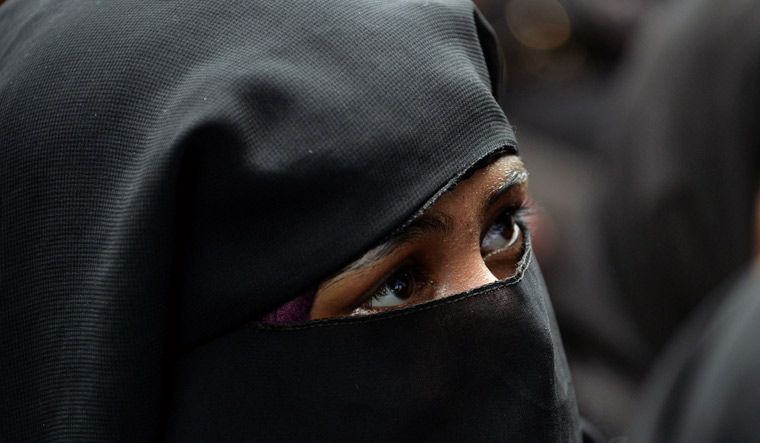
A woman from Rampur, Uttar Pradesh was allegedly given triple talaq by her husband after her parents failed to give her husband a car and Rs 20 lakhs in dowry. The woman has alleged that her husband physically assaulted him and drove her out of his house. A case has been registered by the woman against four people. An investigation has been initiated by police in the matter.

According to reports, the woman named Aneesa Khan, from Rampur’s Guia Talab was married to one Shaheen Mohammad, a resident of Talib Marriage Hall area in Aligarh, a few years ago. The woman’s family had given gifts to the groom as per their capacity. Things went well for some months after her marriage but then her in-laws started demanding dowry.

Aneesa tolerated it all for some time but later she told everything to her family. Both the sides held talks regarding the issue after which her in-laws remained quiet for some time. However, the peace did not last long as her in-laws again started making demands for dowry. The victim has alleged that she was regularly assaulted for not bringing dowry as per their demands.

Later, Aneesa’s husband gave her triple talaq and assaulted her along with his family members. She went back to her parental home and filed a complaint at Ganj police station against four persons including her husband. Ganj Inspector Ramvir Singh informed that the matter was being investigated and all the accused will be arrested soon.

Woman given triple talaq for not giving birth to a son

Recently, another incident of triple talaq had come to light wherein a man gave triple talaq to his wife for not giving birth to a son. Not just that, the man assaulted his wife and drove her out of his house along with their two daughters. A similar incident was reported from Gujarat where a man gave triple talaq to his wife after she developed a vaginal infection.

China comes to defend Pakistan after PM Modi accused the latter of harbouring terrorists

0

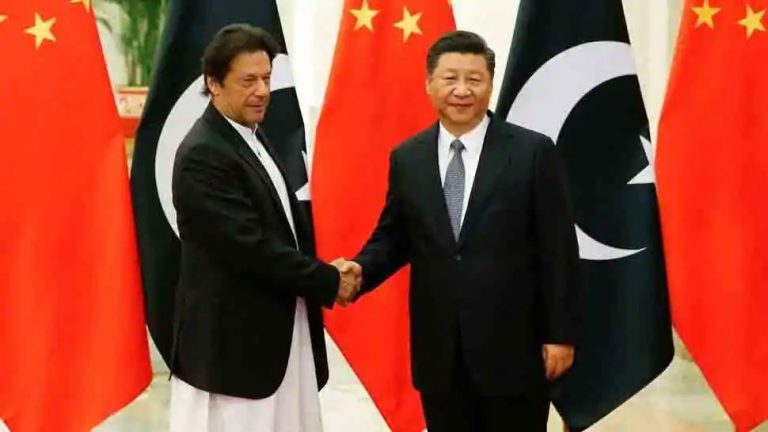
Pakistan’s ‘all-weather friend’ China jumped in to defend the country after Prime Minister Modi tweeted on November 20 about four terrorists belonging to Pakistan-based terrorist group Jaish-e-Mohammed (JeM) that were killed by Indian armed forces.

Apparently, to whitewash Pakistan’s image, China praised it for making a positive contribution to the international counter-terrorism cause. Taking a veiled dig at India, China said that attempts to target the CPEC project between China and Pakistan would not succeed. Chinese spokesperson Lijian Zhao took to Twitter to pour praises on Pakistan saying, “China appreciates the positive contribution by Pakistan to the international counter-terrorism cause, firmly supports Pakistan in cracking down terrorist forces. Attempts that aim to sabotage CPEC are doomed to fail”.

Recently protests were held in Karachi, Pakistan by Pakistani laboures employed in the CPEC project alleging salary disparity between Chinese and Pakistani employees.

Interestingly, Pakistan, that is known to harbour several terrorist organisations, accused India of spreading false narrative against it and conducting false flag operations in the Pakistan-occupied Kashmir (PoK).

Pakistan govt, ironically, accused India of using terrorism as an instrument of state policy and thus violating several international laws.

Pakistan urged United Nations’ counter-terrorism bodies to proceed on the basis of ‘evidence ‘ provided by it against India and urge India to renounce the use of terrorism as an instrument of state policy.

Pakistani link with slain terrorists

The four JeM terrorists killed in the Nagrota were carrying several items that establish that they came from Pakistan. Indian security forces had recovered a digital mobile radio from them, which is made by a Pakistani company with deep ties with the Pakistani military. Apart from this, medicines and other items with Pakistani marking were also found with them. Following the encounter, security forces had also discovered a tunnel used by the terrorists to enter India crossing the LOC. Several bags filled with sand with markings of a Pakistani fertilizer company were also recovered from the spot, proving that Pakistani nationals had dug the tunnel and the used those bags to remove soil from the tunnel.

Pakistan gave a dossier to the UN

Yesterday Pakistan gave a dossier to the Secretary-General of the United Nations Antonio Guterres against India alleging that India was fueling terrorism in the country. This came after India provided a dossier to some UN Security Council members alleging that terrorists from Pakistan attempted to carry out an attack in Jammu and Kashmir. Denying allegation of the alleged attack, Pakistan instead raised finger back at India and alleged that the attacks were meant to divert attention from India’s repression of people of Kashmir.

Last year in May, the UN Security Council had blacklisted the head of Pakistan-based JeM after China did not object to the move.

Cyclone Nivar is fast approaching Tamil Nadu, Puducherry and parts of Andhra: All you need to know

0

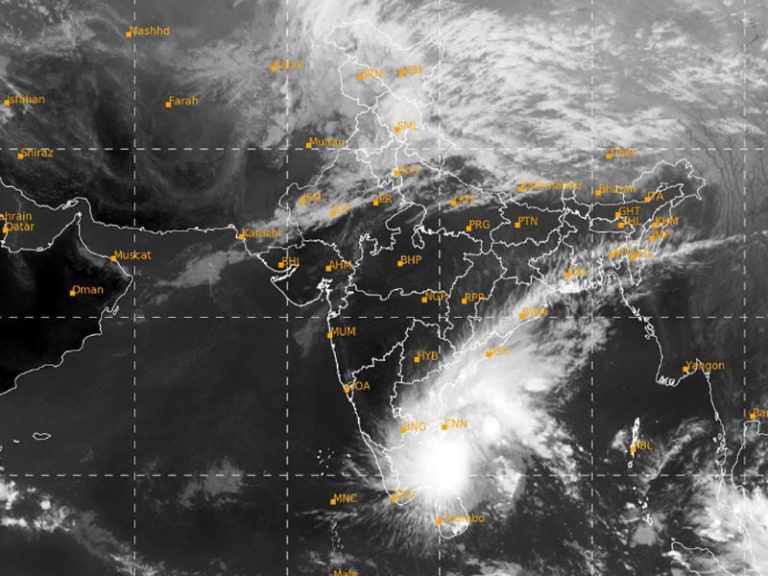
Cyclone Nivar is heading towards India. According to a circular issued by Indian Meteorological Department at 01:45 PM on November 25, 2020, Nivar is currently over southwest Bay of Bengal, heading towards Tamil Nadu and other southeastern states. It is currently travelling at a speed of 11 KM per hour and will intensify in the next six hours.

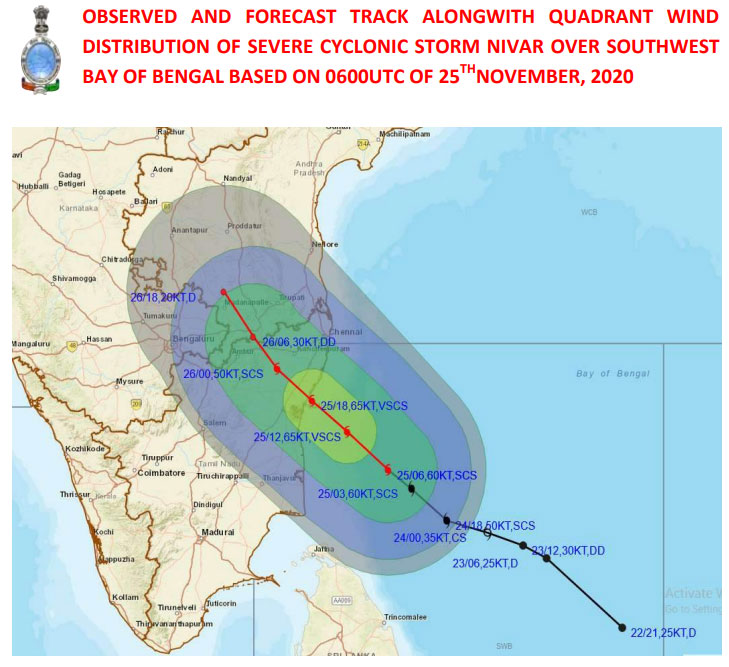
As per the circular, the cyclone will cross Tamil Nadu and Puducherry coasts between Karaikal and Mamallapuram around Puducherry during midnight of the 25th. In the early hours of November 26, several regions may get hit with very severe cyclonic storm with a wind speed of 120-130 kmph gusting to 145 kmph. It read, “It is very likely to move northwestwards and cross Tamil Nadu and Puducherry coasts between Karaikal and Mamallapuram around Puducherry during midnight of 25th and early hours of November 26, 2020, as a very severe cyclonic storm with a wind speed of 120-130 kmph gusting to 145 kmph.”

On November 25, several regions, including Thanjavur, Tiruvarur, Nagapattinam, Cuddalore, Chennai, Kanchipuram, Chengalpattu, Myladuthirai, Ariyalur, Perambalur, Kallakurchi, Villupuram, Tiruvannamalai, Puducherry and Karaikal districts are likely to receive extremely heavy rainfall. On November 26, Ranipet, Tiruvannamalai, Tirupattur, Vellore districts of Tamilnadu; Chittoor, Kurnool, Prakasam and Cuddappa districts of Andhra Pradesh and adjoining southeast Telangana are likely to be hit by the cyclone.

On November 23, SN Pradhan, DG, National Disaster Response Force (NDRF) said that 12 teams have been pre-deployed, while 18 are on standby across Tamil Nadu, Puducherry and Andhra Pradesh, in view of Cyclone Nivar.

Severe damage predicted by the experts

According to the Indian Meteorological Department, Nagapattinam, Myladuthurai, Cuddalore, Villupuram, and Chengalpattu districts of Tamilnadu and Karaikal in Puducherry may face the total destruction of thatched and kutcha houses. The roads are like to get damaged by the cyclone. Railways and power lines are going to be affected severely.

In areas including Tiruvarur, Kanchipuram, Chennai, Tiruvallaur districts of Tamilnadu and adjoining Andhra Pradesh may face the wrath of the cyclone. Experts believe that the power and communication lines may get damaged during the course of the cyclone. Significant damage to banana plants, coastal crops and papaya trees etc is expected in this region.

Warning issued for fishermen

The fishing operations have been completely suspended in the regions expected to get hit by Nivar. People living in the affected areas have been asked to stay in safe places and indoors. The evacuation process in some areas has been started. Motorboats and small ships have been advised not to head to the sea.

Cyclone Nivar is the fourth cyclone to hit North Indian Ocean region in 2020

In 2020, this is going to be the fourth time a cyclone has taken shape in the North Indian Ocean region. Cyclone Gati made landfall in Somalia on November 22, Cyclone Amphan hit eastern India in May, and Cyclone Nisarga hit Maharashtra in June. Since 2018, Nivar will be the second cyclone to hit Tamil Nadu after Cyclone Gaja.

Name of the cyclone

The name Nivar was given to the cyclone based on the guidelines provided by the World Meteorological Organisation (WMO) that suggest the countries in every region are supposed to give names for cyclones. In 2020, 169 cyclones have been named by 13 countries included in the North Indian Ocean Region. India, Bangladesh, Maldives, Myanmar, Oman, Pakistan, Sri Lanka, Thailand, Iran, Qatar, Saudi Arabia, the UAE and Yemen are part of this region. Every country gave 13 names for the year 2020.

The expected path of Cyclone Nivar, image via IMD

Naming the cyclone makes it easier for the media to report the incidents. It helps in increasing the preparedness of the region that may get hit by the cyclone. Nivar was selected from the names suggested by Iran, while Gati was given by India and Nisarga was given by Bangladesh.

The safety measures suggested by the National Disaster Management Authority (NDMA)

When the cyclone starts

  • Keep a check on the warnings on the radio or other channels.
  • Pass the information from authorized sources to others.
  • Do not believe in rumours. Cross-check everything.

When your area is under cyclone warning

  • If your house is securely built on the high ground, take shelter in the safe part of the house. However, if asked to evacuate, do not hesitate to leave the place.
  • Make sure to keep your cell phone etc., charged. Keep plastic bags to store your electronic devices safely.
  • Board up glass windows or put storm shutters in place.
  • Provide strong, suitable support for outside doors.
  • Get extra food, which can be eaten without cooking. Store extra drinking water in suitably covered vessels.
  • Small and loose things, which can fly in strong winds, should be stored safely in a room.
  • Switch off the electrical mains in your house.

When Evacuation is instructed

  • Pack essentials for yourself and your family to last a few days, including food for babies, children and elders, medication etc.
  • Head for the proper shelter or evacuation points indicated for your area.
  • At the shelter, follow the instructions of the person in charge.
  • Remain in the shelter until you are informed that it is safe to leave.

For more detailed guidelines, you can refer to NDMA’s website here.

Memories of ‘Batta Mohalla’: How the exodus of Kashmiri Pandits continues to haunt the survivors even after three decades

0

They say that no one really “survived” the Holocaust, the implication being that horrors that the Nazi Third Reich wreaked upon its ethnic, cultural and sexual minorities were so singularly life altering for everyone that they left an indelible mark upon those who suffered trough them. The physical, emotional and mental abuse visited upon them left them scarred for life; often the tattooed ID numbers were the least reminder of their horrific experiences.

The sheer volume of literature, in as diverse forms as survivor accounts, semi-fictional works, poems, sketches, dramaturgy and even graphic novels produced by the survivors is testimony to the years and decades of continual pain of the survivors, even after the Jewish and other minorities were liberated from concentration camps.

The Holocaust was a seminal event in all of human history, incomparable (one hopes) for all eternity in the uniqueness of its events, the inhumane, methodical and merciless planning that went into it, the scope and depth of the suffering that characterized it. Yet, it remains the paradigm for all other genocides that have plagued the collective human conscience. The aftereffects of genocides, whether the Holocaust, the Armenian, or the Rwandan genocide, continue to reverberate across time and space and impact the lives even today.

My parents are Kashmiri Pandits, who were forced from their home in the Srinagar locality of Habba Kadal. The forced exodus of Kashmiri Hindus following persecution and threats by radical Islamists and militants left us torn from our lands, our temples and our homes, bringing us to various places across the world. The events that unfolded in 1989-90 in Kashmir were neither new nor unique to Kashmir.

The story of Islamic invasions into the Indian subcontinent is one that is particularly blood-soaked, and there is no part of our nation, no caste or community or region that has remained untouched and unagitated by the marauding crowds that trampled the soil of this nation with jihad on their minds and monotheism as their rallying cries.

For today, however, I choose to not delve in a grand, more holistic paradigm. I merely put to words something that happened only a couple of days ago.

The genocide of Kashmiri Hindus is a reality that lurks behind our celebrations, marriages, births and deaths. It creeps upon us when we’re drinking tea in the afternoon, and it plays upon our minds as we plan our days. And while it might be the past for the perpetrators of independent India’s largest communal atrocity, it remains as it did in 1990, to haunt us, stalking our mindspace today as it did 30 years ago.

An elderly relative of mine suffers from adult dementia. He cannot recall small details of his life as it exists today. He forgets where we are right now, and for some reason, he thinks we’re in Jammu, and keeps referring to Talab Tiloo as if it’s right next door. He cannot recall who I am, sometimes. It’s not appropriate to make this about myself, but it distresses me because, like I’ve mentioned previously, my grandmother had Alzhiemer’s for some five years, before she passed away in 2014. Being around someone who is also losing their memory is a painful redux.

The irony of someone losing their memory inducing the memory of someone else is something I’ll leave for more deep diving minds to dig into. But then, I do have to add something. This relative of mine, the one that I’m around these days, casually asked me yesterday where in Kashmir I’m from. It’s a question he’s asked before, many, many times. I smile when he asks, because I am reminded (not painfully) of my grandmother when he does.

“Srinagar”, I say, knowing well his next question.
“Where in Srinagar”, he asks and despite myself, I smile even more broadly.

“Habba Kadal”, that’s where my family is from, where they’ve been for the past 200 years or so. Where our small family temple lies locked, barricaded; Its small Shiva lingam and its Shaligrama now likely coated with dust. But, I digress.

“Habba Kadal?!”, he asked me today, “that used to be a Batta Mohalla”, indicating a residence purely of Kashmiri Hindus.

This is new, he’s never remarked this before, when we’ve had this conversation earlier. He continues even as I fight not to betray my surprise with my face: I want to see where this goes.

“Ohh”, he continues almost nonchalantly, “now there must be no Kashmiri Hindus there, no?”
“They made us leave”, he adds. Who “they” are, how they “made us leave” is not specified.

I nod gingerly, careful not to say anything else. He continues on, “Ohh, when we used to visit Habba Kadal from Ganpathyar temple, it was so much fun”. The excitement in his voice is palpable even underneath his dulcet tones and toothy voice.

He moves onto other topics, but my mind is lost looking at some scene of Habba Kadal from decades, perhaps half a century ago. What the gods of memory choose to leave us with, and what they choose to take away, is capricious in a manner one cannot bear to think. All this, over an evening cup of what we Kashmiris call “Lipton Chai”.

A few years ago, I made a promise to myself, that I will always remember and document the events that brought my parents to Delhi. This is a small effort in that direction.

Note: The article has been authored by Aakash Raj. He tweets under the username @Ateendriyo

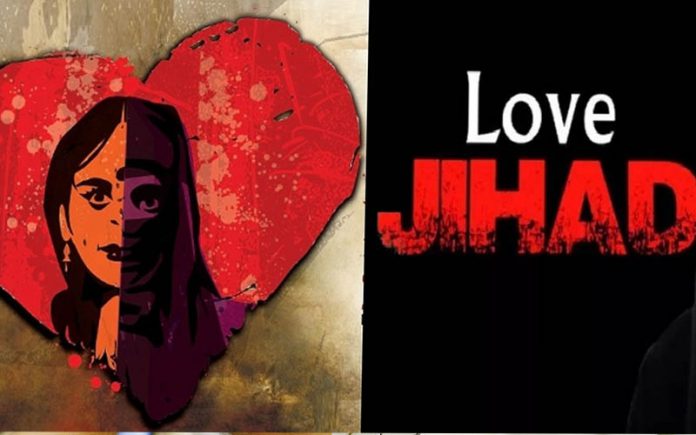
Law against ‘Love Jihad’ does not violate anyone’s fundamental rights: Smashing the ‘liberal’ arguments with truth

The UP government, as promised by CM Yogi Adityanath, brought the 1st draft of the bill which criminalises ‘Love Jihad’ (Grooming Jihad) and other forms of illegal conversions. The bill is titled Uttar Pradesh Vidhi Virudhh Dharm Samparivartan Pratisdhedh Adhyadesh, 2020 or UP Prohibition of Unlawful Religious Conversion Ordinance – 2020.

Ever since UP and MP governments have shown intent to criminalise ‘Love Jihad’ and bring strong laws against it, leftists are on a misinformation overdrive. The draft not only punctures most of their arguments, but it also paves way for other states like Kerala which have been advised by respective High Courts to bring similar laws against this growing menace.

Provisions under the law

Before going into specific provisions, the readers must know that this is not a law against interfaith marriage or any marriage, to begin with. Interfaith marriages are and will be allowed in India. The law is about illegal conversions by deceit and coercion. Read it as an anti-conversion law. That should clear a lot of the things.

  1. The act aims to provide freedom of religion by the prohibition of conversion from one religion to another by misrepresentation, force, undue influence, coercion, allurement or by any fraudulent means or by marriage and for the matters connected therewith.
  2. The punishment for such conversions may range from 1-5 years. It could attract a higher penalty if the person being converted is a minor or belongs to SC/ST.
  3. The one who desires to convert and the one who is doing the conversion process must submit forms in the DM’s office who will then enquire about the real intention, cause and purpose of such conversions.
  4. The converted person must submit a declaration and present himself/herself before DM, in person, to testify claims made in the declaration.
  5. The burden of proof lies on the person who has caused the conversion.
  6. Any person, reconverting to his immediate previous religion, shall not be deemed as a convert under this law.

Does it deny agency to women?

Absolutely not. In fact quite the opposite. It makes it unlawful to forcefully convert women after or during their marriage. It gives them the choice to continue with the religion of their choice. There have been numerous instances of forceful conversion post-marriage, concealing identity while luring the girl or by other undue influence. I am not going to list them all here. However, all such instances have shown that the conversion was done against free will. And it is this free will that the proposed law tries to strengthen, contrary to what our social commentators would like us to believe.

Also noteworthy is, the bill doesn’t outlaw conversion as a whole. It outlaws conversion against free will in limited cases. So cases like Hadiya, where she was groomed to accept Islam out of free will, still won’t come under the purview of this law. Such cases of grooming jihad cannot be dealt with by law as it goes against free will. It needs to be dealt with by a strong family and social structure and the right education.

Does it act against free will?

No, it doesn’t. In fact, it provides freedom of religion by prohibiting conversion against free will.

Conversions for the sole purpose of marriage have been outlawed by courts in the past. This law only codifies such judgements. You can’t convert to a religion just because it allows you to bypass certain civil laws. For example, you can’t convert to Islam because you want to keep multiple wives. Or your family can’t convert to Islam overnight because you want to disinherit your daughters from parental properties. You can convert only out of your own conviction for the tenets of a religion. 

Free will can’t be an alibi for committing religious bigotry and a fraud upon the law as is held by Calcutta HC.

Does it violate Article 25A?

A short reading of article 25, which is a fundamental right, before we commence further. “Subject to public order, morality and health, all persons are equally entitled to practise, profess and propagate their religion”. I guess, Islamists across the board and their handlers in the media are arguing that anti-conversion law prohibits propagation, which is a constitutional guarantee. Good to see Islamist’s faith in the constitution, however, their reading needs to be improved.

They seem to be under the impression, “Either your head or your signature will be on the conversion papers” is the propagation of religion. That is where they and their handlers in media are erring, by overlooking the first part of the article. The condition which sets the term for practising, professing and propagating. “Subject to public order, morality and health”. ‘Propagating’ is me telling someone about Hinduism, our roots, cultures, traditions and values. This is held by the honourable SC. ‘Convert or face beheading’, as practised by the Islamic invaders, is not propagation. That violates public order and health.

Conversion is not a fundamental right under article 25. A little difficult for expansionists to understand this. Laws against conversion do not violate your fundamental rights. This is not the first time such laws are passed. The Orissa Freedom of Religion Act, 1967 was challenged in court and was duly dismissed. The propagandists know this, hence, instead of challenging the proposed law to be enacted in UP, if they really believe it to be anti constitutional, they will only make noise on Twitter. Any such challenge, will be summarily thrown into dustbin under the flagship “Swachh Bharat Abhiyan” and they know this.

What about dowry and domestic violence?

How can our ‘liberals’ discuss anything about religion and society without drawing false equivalence with so-called ‘evil Hindu practises’? This will cause severe Gastroesophageal reflux in liberals. So a narrative is being built with random statistics about how domestic violence and dowry are bigger evils that exist in Indian society.

I remember the first question from Barkha to Ayaan Hirsi Ali in a panel discussion, “There are so many misogynists in so many religions. Why are you picking up only on Islam? Aren’t the orthodoxies in all religions inherently misogynistic? I come from a country that has one of the largest Muslim population and women are not allowed in the mosque. But guess what, so are Hindu women (WHAT ???)” This was when the discussion was titled “Women in Islam”. In fact, the term “Saffron terrorism” was an outcome of such inexplicable urge to draw a false equivalence. Anyways, I will be digressing if I discuss why Sharad Powar had ‘invented’ a fake bomb blast story in a Muslim majority area in 1992 to make the Mumbai bomb blasts more ‘secular’.

The fact of the matter is, dowry and domestic violence are societal evils and they do exist. But what liberals keep forgetting is, there are specific laws, that also exist to check such evils. Section 498A, and the Domestic Violence act address these concerns. Have they been able to eradicate it? No. Do women who face these evils have recourse to the law? Yes. Do women who face conversion post marriage have recourse to law? No. That is what the proposed law addresses. Nobody is claiming it will eradicate love jihad. IPC 302 hasn’t yet stopped murders. 

Conclusion

Will Gauri be able to marry a Shahrukh on the ghats of Prayagraj after this law is promulgated? Of course yes. Subject to the condition that Gauri knows Shahrukh’s name is Shahrukh and not Raj Malhotra. Also, Gauri remains Gauri or converts to Gulnaaz only out of her free will, fully aware of the consequences. This law, in no way, restricts interfaith marriages. Numerous courts have given several judgements on religious conversions. Courts have even passed orders asking state governments to frame laws against this growing menace. The proposed law only codifies the principle laid down by our courts.

India is a country where 4 major religions of the world have originated. It also has the 3rd highest population of Muslims. Hinduism is the oldest religion in the world. Religion is intrinsically part of the lives of every Indian. More importantly, it has legal implications in civil laws including marriage and inheritance. Secularism can be enshrined in the preamble but in practice, in the absence of a uniform civil code, the state does interfere in civil laws which are religion-specific. In such circumstances, laws that protect religious rights should be welcome.

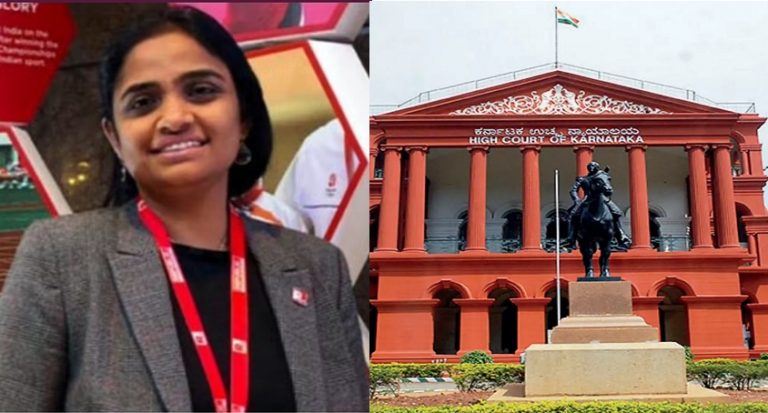
Karnataka HC slams Mumbai Police for following Republic COO Priya Mukherjee to Bengaluru to question her, grants her transit bail

0

In an important development in the TRP manipulation case, the Karnataka High Court today slammed the Mumbai Police for rushing to Bengaluru to question Republic COO Priya Mukherjee. The court made critical statements for Mumbai police while delivering the verdict on Mukherjee’s petition seeking protection from arrest, and granted her 20 days of transit bail. The court also noted that neither Mukherjee nor Republic TV was named in the complaint filed in the TRP manipulation case.

The High Court said Mumbai police failed to explain they had rushed to Bengaluru when Priya Mukherjee had already appeared for questioning in Mumbai earlier, and she had visited Bengaluru for a few days after informing Mumbai police. The court accepted that the petitioner’s argument that there is reasonable apprehension that the Mumbai Police may arrest her, and hence granted her transit bail while directing her to approach an appropriate court for regular anticipatory bail.

The High Court also ordered that in case she is arrested during this period, she will be released on a bond of Rs 2 lakh and two sureties.

The plea was filed by Republic COO Priya Mukherjee after Mumbai police chased her to Bengaluru to question her, saying that she apprehends that she might be arrested. Mukherjee was issued summons by Mumbai police on November 17 and 18, and her statements were taken from 11.30 am to 5.30 pm in Mumbai. On 19th November, she wrote a letter to Mumbai police informing that she was going to Bengaluru as her father was ill, and informed that she will return in a few days and join the investigation.

On 20th November, she went to Bengaluru and sent another letter to Mumbai police informing that she will return to Mumbai by November 24, and will be available for questioning from that date. But on the same day, i.e., November 20, a team of Mumbai police arrived at Bengaluru, and issued her two notices. In the second notice, she was asked to appear for questioning at the Bannerghatta police station on 21st November. Following this development, she filed the plea with the Karnataka High Court seeking relief from arrest by Mumbai police.

Mumbai police opposed the plea in the court, saying that the petitioner was ‘shopping at different courts’. The police alleged that Priya Mukherjee approached Karnataka High Court after she was denied relief by Mumbai High Court. However, the counsel of the Republic COO rejected this claim, saying it was Arnab Goswami who had filed the plea at Mumbai High Court, and she didn’t file any plea there.

The main contention of Mumbai police was that the petition was not maintainable, and there was no apprehension of arrest. But the High Court rejected the claim, and noted that courts can consider an application made under section 438.

Noting the circumstances of the case, the High Court said, ‘there is no dispute on the fact that in the complaint, there is no mention of the Petitioner as well as the Company,’ referring to the complaint filed by Hansa Research in the TRP case which had named India Today, not Republic TV as alleged by Mumbai Police.

The court also noted that Priya Mukherjee had appeared for questioning in Mumbai as per police summons, and left for Bengaluru after informing Mumbai police. The court said that when Mumbai police was asked why they needed to rush to Bengaluru to question her after she sought a short time to visit her father, they had no answer. The High Court further added that the Mumbai Police could not explain why she was summoned to a police station in Bengaluru.

The court also noted that the notice issued to Priya Mukherjee asking her to appear at the Bannerghatta police station didn’t state the reason for the same.

Rejecting the contention of Mumbai police, the court said that when personal liberty of a person is under threat the petition can seek relief from courts. The bench of Justice H P Sandesh said that Mumbai Police was misusing the SC judgement in Arnesh Kumar v State of Bihar case, and the court will have to come to the rescue of citizens on such cases.

“Police are not applying their mind whether a cognizable offence is made out or not. Police should satisfy the Court on why they are arresting a person”, the court said.

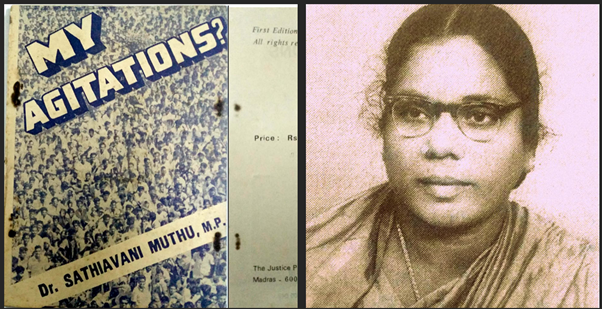
The Life and Travails of Dr Sathiavani Muthu: A window to the experience of Dalits in the Dravidian movement

In an era when upper caste women were beginning to find their feet in public life and participating in politics, a young woman from the Depressed Classes was a pathbreaker and opened the doors for Dalit women in politics. She was Sathiavani Muthu, who participated in electoral politics for 3 decades, from the 50s to the 80s, served as Minister in the Tamil Nadu Government twice and served the country as a Rajya Sabha MP and as a Union Minister.

She has the unique distinction of being probably the first Dalit woman in India to start and lead a new party, Thazhthapattor Munnetra Kazhagam (Depressed Classes Development Front). What should have been a storied life, taught to young Indians as a lesson in self-reliance and leadership remains unknown beyond the unspoken annals of Dravidian history and unsung.

Dr Sathiavani Muthu rose from a background of activism. Her father was part of Ayotheedasa Padithar’s Adi-Dravida Buddhist platform. The Adi Dravida Mahajan Sabha, which was established by Ayotheedasar and led by such stalwarts as M C Rajah eventually was subsumed into EVR’s Self-Respect Movement and its offshoot the Dravidar Kazhagam. Beyond Dalit politics, her family were Buddhists and led workers agitations. Her home turf was the industrial suburb of North Madras, Perambur, from where she stood for Assembly elections 5 times and won thrice.

She was among the cohort of young politicians that joined C N Annadurai in the Dravida Munnetra Kazhagam. When the DMK picketed Chief Minister Rajaji’s house in 1953 during the anti-Hindi agitation, Sathiavani was in the forefront, in spite of advanced pregnancy.

When the DMK came to power in 1967, she was part of Annadurai’s cabinet, holding both Harijan Welfare and Information portfolios. After Annadurai’s passing in 1969, she was again Harijan Welfare Minister in M Karunanidhi’s Cabinet until 1974.

Disillusionment

Her first major disappointment came in 1968, at the time of the Keezhvenmani massacre, when the Dravidian leaders soft pedalled  and tried not to bring too much public attention. The main accused was Gopalakrishna Naidu, a landlord from the same community as many of the Dravidian leaders, and the 43 landless labourers who were burned alive were from the Scheduled Castes.

In spite of Dravidians being in power, she realized that Scheduled Castes were still no better placed in terms of empowerment. She already had faced the bigotry of EV Ramasamy, when he wrote in his periodical Nasthikam of 2 March 1963 – “Pariah women wearing jackets led to increased prices for clothes and Pariah men becoming literate led to increasing unemployment”.

In her autobiography “Enathu Porattam” – My Agitation, she writes:

“Periyar conducted an Untouchability Eradication Conference in which I was invited to speak. I said

You have told us that when we encounter a snake and a Brahmin, the Brahmin must be struck first since he is more dangerous than a snake. You were able to say these words and these Black-Shirted Self-Respect Activists here have risen in life through you. I have to place on record that the situation of our people from the Depressed Classes has not improved in any way.

The Depressed Classes face no trouble from the Brahmins. On the contrary, the information I have is that it is non-Brahmins who are responsible for many of the atrocities against us. The situation today is such that there is a greater need for Shudra and Non-Shudra based politics rather than Brahmin, non-Brahmin polarization.”

Leaving the DMK

In 1974, she made a speech at Integral Coach Factory in a meeting organized by the SC/ST Employee’s Association where she pointed out the skewed nature of family planning policies that targeted Scheduled Castes and may result in their relative diminishing in numbers compared to dominant castes. A man such as M Karunanidhi would never let such an open criticism of his Government’s policies go without retaliation.

When Dr Sathiavani Muthu pushed for a Law University dedicated to Ambedkar, she was told that there were not sufficient funds and the Government would put up half the money. She could raise the remaining money through her own efforts. Though she managed to put up the funds by lobbying on her own behalf, she was smarting from the insult. In 1974, she left the DMK and formed her own party, Thazhthapattor Munnetra Kazhagam.

MGR and the AIADMK

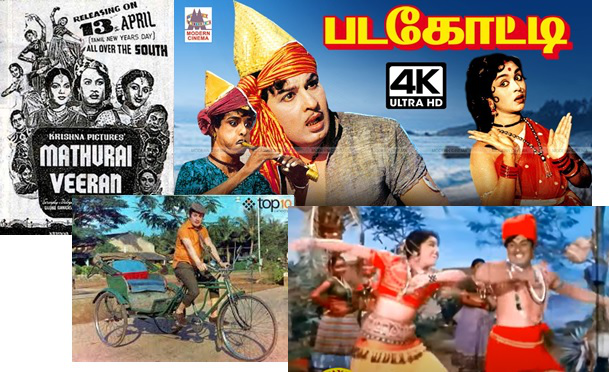
In 1977, MGR won the elections and the AIADMK came to power. The Scheduled Caste vote base had largely shifted to the AIADMK, largely due to MGR’s individual popularity. He had carefully cultivated the Scheduled Castes as a constituency, beginning with ‘Madurai Veeran’ (1956), in which he played a legendary hero from a cobbler background.

Madurai Veeran is the kula deivam for many people from the South of TN and still has a special place in the hearts of Tamil Dalits. ‘Padagotti’ (Boatman, 1964) had him as a fisherman, ‘Rickshawkaran’ (Rickshaw Puller, 1971) was a massive hit among the Dalits who dominated the itinerant working class of the urban slums, Oli Vilakku (Shining Lamp, 1968) was a major hit among the nomadic Narikurava community, as it featured a Narikurava dance by MGR and Jayalalitha.

Dr Sathiavani Muthu was cognizant of the need to use MGR’s popularity as a vehicle for her more activist brand of politics and accepted when MGR reached out to her. The AIADMK only fielded her from Ulunderpet, a rural region in North Tamil Nadu, far away from her home base of Perambur in Chennai. She could not find sufficient traction and lost. MGR nominated her to the Rajya Sabha in 1978, and Dr Sathiavani Muthu served briefly in the Charan Singh Ministry as Minister Of State for Social Welfare.

In 1980, power reverted to Indira Gandhi-led Congress and this time, the DMK was in alliance with the Congress. She fought elections to the Assembly one last time in 1984 in her home turf of Perambur, but the years away from ground-level politics took their toll on her support base. She was ousted by Parithi Ilamvazhuthi, then a rising young star in the DMK who was also from the Scheduled Castes.

Legacy

Dr Sathiavani Muthu’s career serves as a lesson on the importance of self-reliance, especially for Dalits. Despite her background and skills in organization, she was consistently boxed within the Dalit category and could not strike out on major positions.

In the early years of Independence, Dalit leaders like Babu Jagjivan Ram rose to powerful positions. In 1960, Damodaram Sanjeevayya became the first Dalit Chief Minister of an Indian State, in the then unified Andhra Pradesh.

However, regional and caste-centric politics have stymied further growth of Dalits to such positions of leadership.

One wonders what would have been of Dr Sathiavani’s career if the Adi-Dravida Mahajan Sabha had moulded itself into a strong political movement under the leadership of M C Rajah. This trailblazer’s life today remains but a foot note in history, waiting for future generations to carry forward her legacy.

References

  1. Dravida Mayai Part 2 – Subbu
  2. Thi Mu Kavin Thottramamum Valarchiyum (The Rise and Growth of DMK), Sivalai Ilamathy, 1987
  3. https://swarajyamag.com/politics/ten-things-about-periyar-dravidian-parties-dont-want-you-to-know

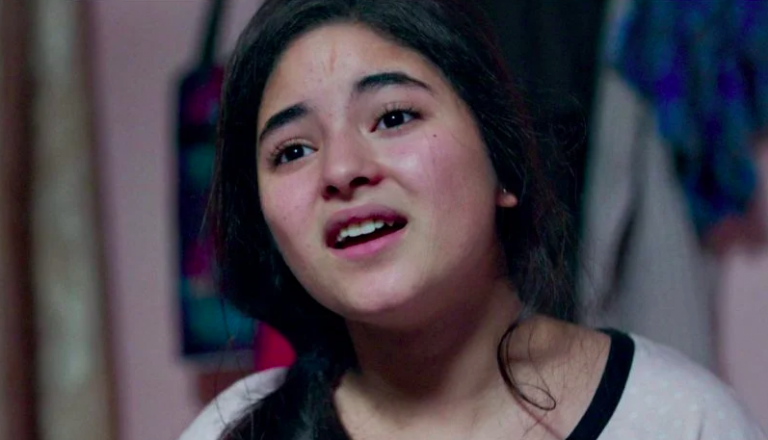
Ex-Bollywood actress Zaira Wasim, who quit showbiz for Allah, asks fans to remove her pics

Former Bollywood actress Zaira Wasim, who quit the film industry to serve Allah, has urged her fans to remove her pictures from the fan pages.

https://www.instagram.com/p/CH12TG1lavU/

Wasim took to Instagram to urge her fans who operate various fan pages in her name to remove her pictures. She also asked them to ask other fan pages to remove her pictures. “I am trying to start a new chapter in my life and I could really benefit from your cooperation-(like a lot!!)” she posted.

Zaira herself has removed all her personal pictures from her social media account. She had earlier asked her fans to stop praising her as it is dangerous for her ‘Iman’.

Wasim quit Bollywood in June 2019 claiming it took her away from Islam.

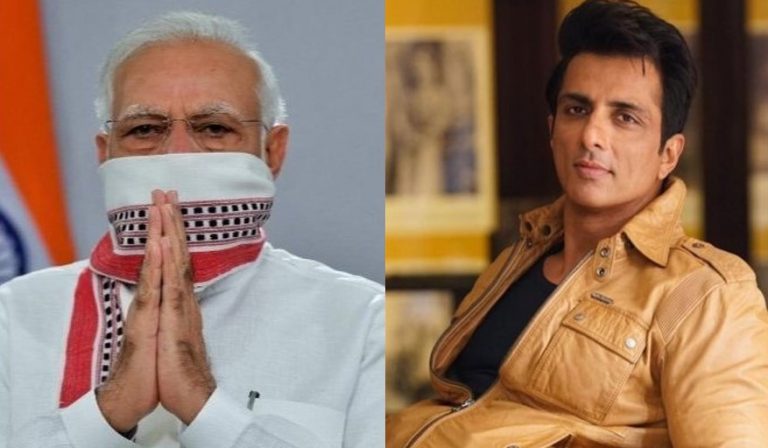
PM Modi tops Twitter engagement in October, Sonu Sood emerges top among Bollywood entertainers: Report

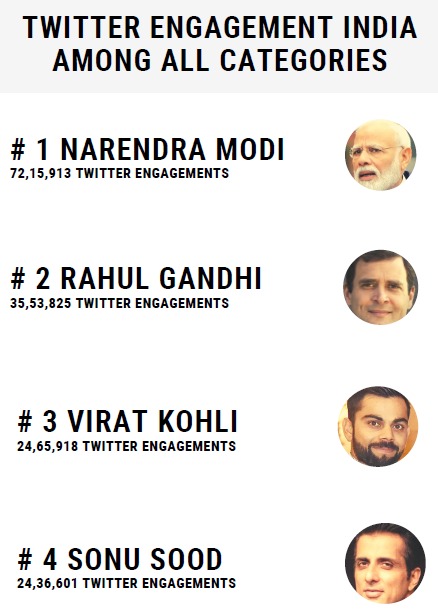
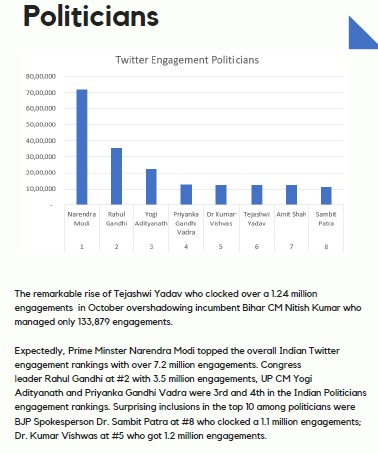
Prime Minister Modi topped the charts for the month of October 2020 in terms of Twitter engagements while Rahul Gandhi comes a distant second with less than half the number of engagements, according to analysis by Twitteet.

Twitteet is an analytics platform that provides ratings and ranks politicians, entertainers, journalists and others based on engagements on the social media platform.

Twitteet ratings

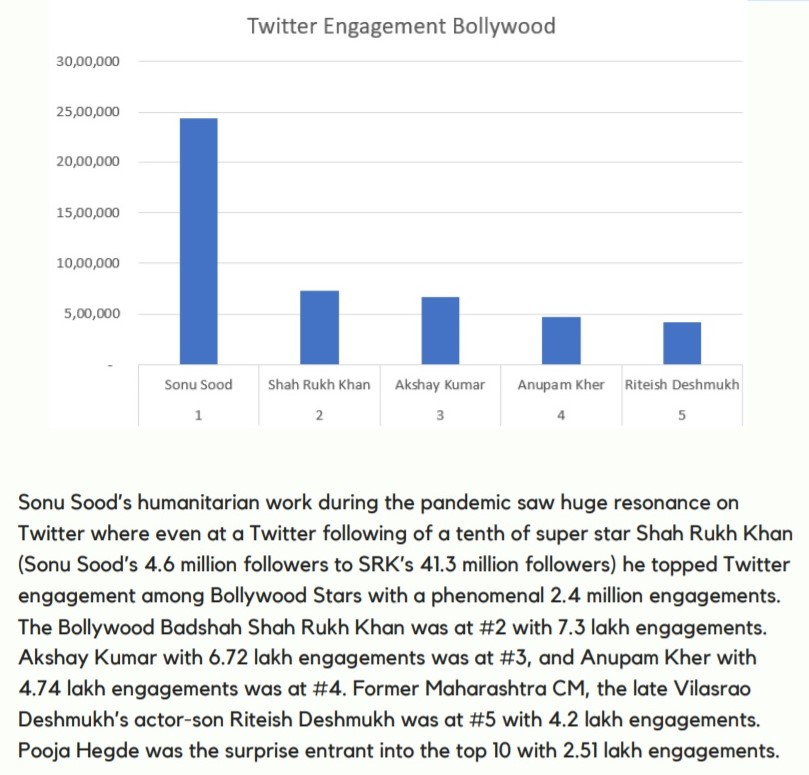
This was, of course, not a surprise as the popularity of Prime Minister Modi is unmatched not only on social media but offline as well. The real surprise, however, was Sonu Sood gained more Twitter engagements than any other entertainer. Sonu Sood garnered more than triple the number of engagements than Shah Rukh Khan, who came second.

Amusingly, however, Sood has only a fraction of the followers that Shah Rukh Khan has. Sood has become somewhat of a meme on social media since the Coronavirus lockdowns began, that perhaps explains the high engagement.

Twitter engagement Bollywood

The circumstances were much less surprising with regard to politicians. Prime Minister Modi topped engagement by a huge margin with Rahul Gandhi a distant second. Chief Minister of Uttar Pradesh, Yogi Adityanath, came in at third while Priyanka Gandhi Vadra was fourth in terms of engagement.

Politician Twitter engagement

As for journalists, Deepak Chaurasia topped the chart in terms of Twitter engagement while Rohit Sardana came second. Swati Goel Sharma of Swarajya Mag broke into the top 5 at 5th while Rana Ayyub was at 6th and Rajdeep Sardesai at 8th for the month of October.

Shiv Sena’s Pratap Sarnaik, who threatened to break Kangana’s mouth, went from being an autorickshaw driver to multimillionaire

The Enforcement Directorate had yesterday carried out multiple raids at the residences and office premises of Shiv Sena MLA Pratap Sarnaik. At least 10 locations spanning across Mumbai and Pune were searched by the ED officials, allegedly in connection with a money laundering case linked to the legislator. 

A senior Enforcement Directorate official said the searches were being carried out at locations in Mumbai and Thane linked to promoters of a private company and some politicians. 

Pratap Sarnaik, the chairman of Vihang Group Of Companies, a major player in the real estate industry in Thane region, represents Ovala-Majiwada in the state assembly. He is also the spokesperson of Shiv Sena in Mira-Bhayander, a city in Thane district.

Pratap Sarnaik drove autorickshaw to make ends meet in the 1980s

However, Sarnaik’s relative affluence and his growing stature in the Shiv Sena party is a recent phenomenon. According to a report published in the Indian Express, back in the 1980s, Sarnaik drove an autorickshaw and was struggling to make ends meet. Subsequently, he made a fortune by the reality sector boom that swept Mumbai and the adjoining regions in recent decades.

Sarnaik’s political journey did not start from Shiv Sena. He was earlier associated with Pawar’s NCP. Sarnaik first hogged the limelight in 2008 when he gifted a diamond-studded cell-phone worth a staggering Rs 15 lakhs in 2008 to his former boss, NCP’s Ajit Pawar. 

Induction into Shiv Sena propelled Sarnaik’s political and personal fortunes

But his association with the NCP came to an end over a perceived insult over the appointment of the leader of opposition in Thane Municipal Corporation. He jumped ship and joined the Shiv Sena in November 2009 and since then his political career took off at an inexorable pace, catapulting him on the path to becoming three-time MLA from Ovla-Majhiwada constituency in Thane.

Interestingly, not just his political fortunes, his personal fortunes also grew at an astounding rapidity after he joined the Shiv Sena. Since becoming an MLA in 2009 when he declared his personal assets at Rs 16 crores, Sarnaik’s assets have increased by nearly 800 per cent in the last decade. In the 2019 Maharashtra Assembly elections, Sarnaik declared his personal assets worth Rs 143 crore. 

With his Vihang Group of Companies, Sarnaik has a strong presence in Thane’s real estate sector and is a major player in the hospitality industry in and around Mumbai and Thane. 

Sarnaik is also known for holding considerable clout in the Thane region and for his long rivalry with NCP’s Jitendra Awhad, who is the currently a cabinet minister in the Thackeray government. However, after Shiv Sena and NCP joined hands to form Maha Vikas Aghadi government in Maharashtra, Sarnaik and Awhad had come together and were recently seen in a joint press conference over a housing scheme launched by the NCP leader.

As his personal affluence grew, so did his standing in the party. Sarnaik was announced as the party spokesperson in September this year. He also played an instrumental role in getting the Independent MLA Geeta Jain to join the Shiv Sena last month. Jain, a former BJP mayor of Mira Bhayander, had rebelled against the BJP candidate and won the Assembly polls last year.

Sarnaik’s younger son Purvesh, a Yuva Sena leader, is married to the daughter of former BJP minister Ranjit Patil.

MLA Pratap Sarnaik had threatened to break Kangana Ranaut’s mouth

In the last few months, Sarnaik has made his presence felt in Maharashtra politics by ratcheting up his criticism against the BJP. Besides, he has also been vehemently demanding re-investigation into the suicide of interior designer Anvay Naik, a case which was used by the Mumbai Police to arrest Republic TV Editor-in-chief Arnab Goswami. Sarnaik had brought in privilege motions against Kangana Ranaut and Arnab Goswami in the previous session of the Assembly.

He had also demanded a drug probe against Kangana Ranaut. He was among the most vocal Shiv Sena leaders who had openly threatened actress Kangana Ranaut. Sarnaik had stated that Sena’s women workers will break Kangana Ranaut’s mouth if she enters Mumbai.