Home Blog Page 5019

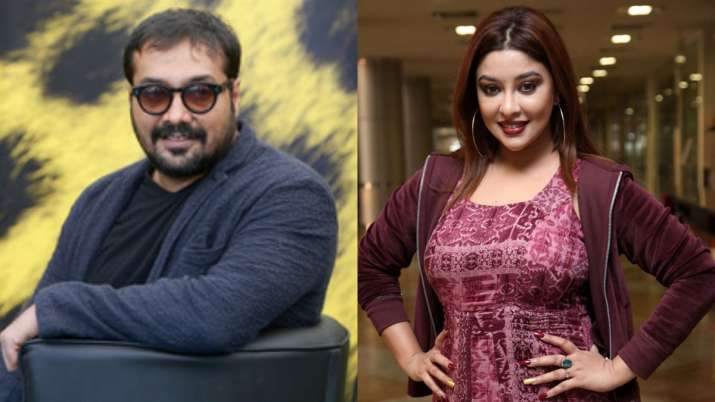
FIR filed against Anurag Kashyap in sexual assault case

On Tuesday evening, actress Payal Ghosh filed a written complaint against director Anurag Kashyap at the Versova police station. The cops lodged a First Information Report (FIR) against the director, based on the charges of sexual assault levelled against him by Payal Ghosh.

Advocate Nitin Satpute, representing the actress in Courts, had tweeted, “Finally FIR has been lodged against Accused for the offence Rape, Wrongful Restrain, Wrongful Confinement and outraging modesty of woman.” He added that Anurag kashyap had been booked under Indian Penal Code (IPC) Sections 341 (wrongful restrain), 342 (wrongful confinement), 354 (sexual assault), 376-1(rape). The advocate further informed that his client had also recorded her statement with the police.

Earlier, she was reportedly made to wait by the Mumbai police at the police station when she went there to file a complaint against Kashyap. As per reports, even after waiting till 2 AM, the police did not file a complaint.

Allegations made by Payal Ghosh

Ghosh had recently accused Kashyap of forcing himself on her and had justified his act by saying that physical relationships between filmmakers and actresses were very common in the film industry. Ghosh had called Kashyap a hypocrite for speaking on the issues of women empowerment and patriarchy and on the other hand allegedly trying to sexually abuse her. The Chief of National Commission for Women (NCW) Rekha Sharma had extended support to Ghosh and had assured her to investigate the matter.

An analysis of the FCRA Amendment Bill and the impact it is likely to have on ‘Civil Society Organisations’

The Rajya Sabha has passed The Foreign Contribution (Regulation) Amendment Bill, 2020 on Wednesday. It was passed by the Lok Sabha a day earlier. The Bill was opposed strongly by the opposition parties and ‘civil society organisations’. However, the Bill has been passed by both houses of the Parliament.

A copy of the bill is available at PRS India’s site. We present a small analysis of the implications of the key changes brought about by this bill.

AmendmentPublic servants as defined in Section 21 of the Indian Penal Code are not allowed to take contributions
First Order ImplicationCourt officers, academics in Government institutions/Universities, people on boards of statutory bodies set up by the Government of India or State Governments will have to relinquish their positions in FCRA NGOs. Many such individuals will lose a good source of alternate income and budgets and grants beyond their official academic capacity.However, there is nothing to prevent public servants from being associated with foreign funded NGOs before and after their tenure. This rule only restricts holding both concurrently.
Second Order ImplicationPositions in statutory bodies and in quasi-Government bodies (say, Women/Child Commission) will lose their attraction. The Government may have to rationalise positions and bodies to account for lower availability of people. Deprived of FCRA income, individuals in such positions may engage in malpractice and utilisation of their position for illegal gratification
WorkaroundsNon-FCRA organisations will have public servants on board. The same organisation will have a representative in a FCRA NGO, i.e, the public servant controls by proxy. FCRA NGOs can be run through benamis (albeit with additional costs/risks)
GotchasLook for individuals of ages above 35 that have never filed a IT return and who are added to boards of FCRA NGOs – it is possible it is a domestic help or car driver of an ousted individual. Look for spouses and children/parents of ousted individuals who are added to the board
Table 1
AmendmentFCRA funds cannot be transferred to other organizations but must be spent directly by the organization involved.
First Order ImplicationOrganisations must build their own delivery capacity and not rely on implementation partners.In 2012, the intra-India transfer magnitude was ~10% of total inflow. With increase in the number of FCRA-NGOs in Delhi (total~4500 Crore),the percentage could have risen to 20% now. i.e., ~Rs. 3500 Crore of transfers to be affected. Many large entities, specifically agencies of the Roman Catholic Church, send large sums to official Catholic bodies, which are further disbursed to more than 700 organisations across India.Fund-raisers, ie, the sales end and implementation specialists, would merge instead of remaining separate. Pure play fund-raisers may be affected, as foreign players will cut out middlemen in favour of working directly with ground level NGOs. Many individuals have multiple FCRA entities in play, with fund flows between them. These will have to be consolidated.
Second Order ImplicationWe foresee a lot of redundancy in positions in larger entities.This will affect some large entities in Delhi, which have been liaising with donors abroad and coordinating the disbursal of funds across India. With this new rule, they will turn into pure administrative cost centers and thus becomes nonviable.
WorkaroundsVarious smaller organisations will be opened as for-profit entities and will operate based on contracts from FCRA NGOs. Larger International NGOs will establish Liaison Offices in Delhi, themselves and will coordinate their activities with the FCRA-NGOs all across the country, sidestepping the big Delhi players
GotchasLook for commonalities between directorships and FCRA NGO functionaries and fund flows between them to identify conflicts of interest and round-tripping of funds.
Table 2
AmendmentAdministrative expenses to be restricted to 20% of inflow
First Order ImplicationMany entities have been supporting individuals for activities such as soft conversions, funding judicial and political and accounting for these expenses under administrative heads. Their operations will be affected. Pay cuts and redundancies across the board are to be expected. Full time positions will be transitioned to contracts. Reduction in rental expenses. More money will be diverted towards purchase of property and towards setting up fixed deposits and line of credit to pay administrative staff
Second Order ImplicationIncrease in travel, conference and research grant expenses is to be expected as an alternate means of income for personnel
WorkaroundsNone
GotchasTravel and conference expenses of more than 20 lakhs per annum are to be reviewed against receiptsUtilization of funds for advancing line of credit and as collateral to open businesses.
Table 3
AmendmentPrimary inflow is to be through a SBI branch in New Delhi
First Order ImplicationAll remittance transactions can be intimated to MHA through the PFMS on a real-time basis. Similarly, all withdrawals can be intimated to MHA on a real-time basis
Second Order ImplicationA dedicated team can be placed at the branch to service FCRA accounts and to help them manage fund flows The centralisation of inflow transactions will also enable tracking of the source of fund flows. It will be possible to trace funds back to source, cross-verify with source organisation’s tax filings to prevent malfeasance.The process of filing FC4-returns can be simplified. An online tool can show the user a list of remittance and withdrawal transactions. The purpose, source and beneficiary needs to be marked by the filer against each transaction for simple consolidation and return filing.
WorkaroundsThe money can be transferred to other utilization accounts for further usage.
GotchasSame entity using multiple accounts for remittances
Table 4
AmendmentSection 12 of FCRA 2010 specifies a list of conditions for grant of certificate of registration. The same conditions shall be applied at the time of renewal of registration also.
First Order ImplicationThe registration is to be renewed every 5 years. Earlier, there was no specific requirement for fresh scrutiny at the time of renewal. Any entity found in violation of FCRA rules can now be restricted from renewal of registration and will have to undergo scrutiny afresh.
Second Order ImplicationRenewals of registration will become as rigorous as initial grant.
WorkaroundsNone
GotchasCreation of a new Trust/Foundation or Section 8 Company for renwal if an entity is found in violation.
Table 5

While listing the gotchas and workarounds for the earlier amendments, we will now begin to appreciate the new requirement to furnish Aadhar of key functionaries in all registered entities. Without this kind of knowledge of persons, none of the amendments can be effective. When KYC norms are applicable, it is equally important to implement a KYB (Know Your Beneficiary) norm.

While it is expected that these regulations will be onerous, here is a background:

  1. Less than 500 organizations hold 50% of cash and 50% of the inflows
  2. 90% of the cash is held by 2500 organizations and 90% of the inflow is covered by 3600 organizations
  3. There are not more than 3000 organizations that receive more than Rs 1 crore in annual inflow

Scrutiny needs to be focused on these organisations. There is a vast number of FCRA organisations – 10,000 odd – which do not receive more than 20 lakhs per annum. Care should be taken that these regulations are not used to harass and extract illegal gratification from these small organisations.

The analysis was co-authored with @by2kaafi.

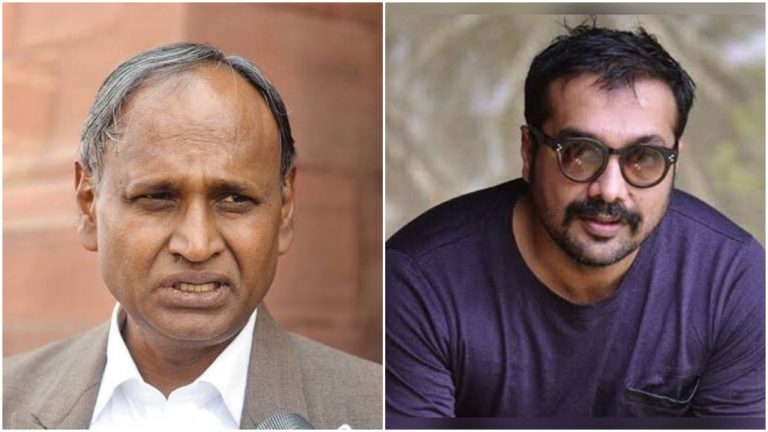
‘Divorced women are bloodthirsty’ Congress leader Udit Raj claims while giving clean chit to ‘gentleman’ Anurag Kashyap

In his attempt to defend the sexual harassment charges against controversial Bollywood director Anurag Kashyap, Congress leader Udit Raj on Wednesday went on to make vile sexist remarks against divorced women claiming that they are bloodthirsty.

Citing the remarks made by the former wives of Bollywood director Anurag Kashyap, the Congress leader claimed that the divorced women were generally ‘bloodthirsty’ however, in this case, the two separated wives of Kashyap have stood in his support. The Congress leader also hailed Anurag Kashyap by calling him a ‘gentleman’.

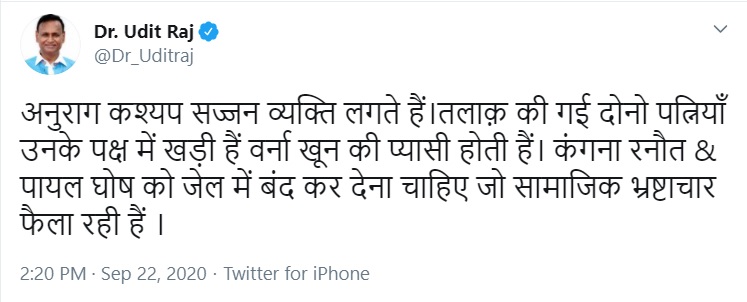
Congress leader Udit Raj’s tweet

Attacking the Bollywood actress Kangana Ranaut and Payal Ghosh, the one who has accused Anurag Kashyap of sexually harassing her, the Congress leader said that both the actresses should be jailed and claimed that the actresses were spreading ‘social corruption’ in the country.

Udit Raj’s support for Anurag Kashyap comes amidst the serious allegations against him made by another actress Payal Ghosh, who had claimed that she was sexually harassed by filmmaker Anurag Kashyap in the past.

Following the allegations, many Bollywood entertainers and actresses, who otherwise preach feminism to others on social media, took to Twitter to support the filmmaker despite serious allegations were made against him.

A few days later, Anurag Kashyap’s wives – Kalki Koechlin and Aarti Bajaj defended the left-wing filmmaker. Actress Kalki Koechlin, who was married to Kashyap from 2011 to 2015, and Aarti Bajaj, Kashyap’s wife from 2003 to 2009, had put out social media posts in support of Anurag Kashyap.

In her post, Kalki Koechlin had written, “Dear Anurag, Don’t let this social media circus get to you. You have fought for the freedom of women in your own scripts, you’ve defended their integrity in your professional space as well as your personal life.”

On Sunday, Anurag Kashyap’s first wife and editor Aarti Bajaj also shared a similar note on Instagram, calling the director a ‘rockstar’. “First wife here… You are a rockstar, Anurag Kashyap. Keep empowering women as you do and the safest place you create for all of them. I see it first hand with our daughter (their daughter Aaliyah Kashyap),” the first wife wrote.

Shockingly, the Congress leader Udit Raj, citing these two personal posts by the former wives of Anurag Kashyap, made sweeping remarks against the separated wives in the country by referring to them as ‘bloodthirsty’.

Sexual assault charges against Anurag Kashyap

Accusing the director of sexual assault, actress Payal Ghosh stated, “I went to meet him and the next day when he took me to the other room, he opened his zip and tried to force his c**k (penis) inside my vagina by opening my Salwar Kameez. He said it was okay and all the actresses who worked with him such as Huma Qureshi, Richa Chadha, Mahi Gill, they are just a call away.”

Apparently, Anurag Kashyap told her, “Whenever I call them, they come running and suck my c**k (penis)”.

The director had also told her that such physical relationships are normal. “The next day he called me again. He said he wanted to discuss something with me. I went to his place, he was drinking whiskey or scotch, whatever I don’t know. It was smelling very bad. It could easily have been charas or ganja, drugs I don’t know, I don’t have any idea about it but I am not stupid,” Payal Ghosh stated while accusing Anurag Kashyap of sexual harassment.

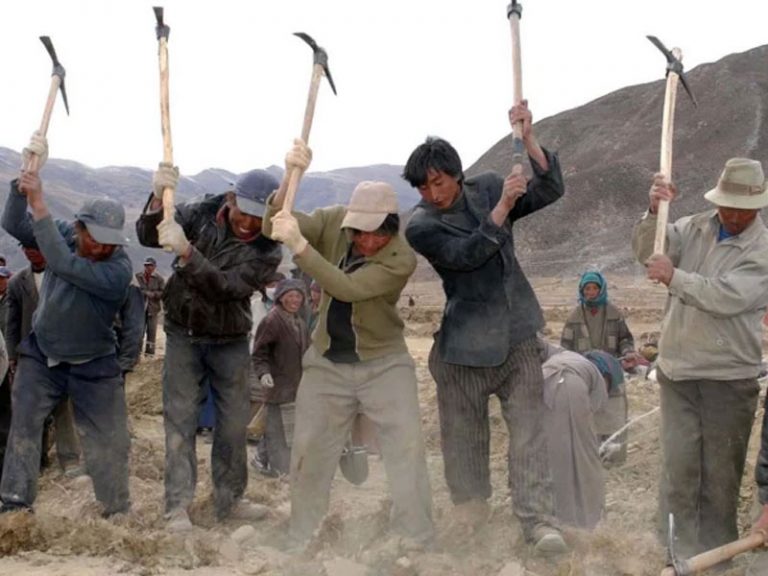
500,000 Tibetans forced into military-style labour camps in just 7 months of 2020, China calls it ‘vocational training’

0

Adrian Zenz, a German anthropologist and Senior Fellow in China Studies at the Jamestown Foundation, has stated in a report that China is pushing over half a million Tibetans into forced labour camps. It is somewhat on the similar lines of the program they have followed in the case of Uighurs in the western Xinjiang region but less coercive. The research has been corrobrated by Reuters.

The Chinese government is calling it a mandatory “vocational training” program. More than 500,000 rural labourers have already been pushed in military-style training centres in the first seven months of 2020.

As per the evidence collected by Zenz, the labour camps are under intrusive surveillance. Those who fail to meet labour transfer quotas have to face harsh punishment. The documents collected during the investigation suggest that the labour transfer policy makes it mandatory for the farmers and pastoralists to get “military-style” vocational training. As per the Chinese government, the training aims to “reform backward thinking” and teach them “work discipline.”

Program progress since its establishment in 2005

According to a report by Zenz, the Chinese government started a “recruitment program” in the Tibet Autonomous Region intending to provide labour training and employment to the surplus manpower. By 2015, the number of surplus labourers to be trained under the program was increased to 65,000. By 2016, 45 such training camps had been established by the Chamdo government.

In March 2019, TAR issued the 2019-2020 Farmer and Pastoralist Training and Labor Transfer Action Plan under which “vigorous promotion of military-style training” was made mandatory, as per reports. The plan aimed to teach labourers to work discipline, Chinese language and work ethics. Zenz wrote that the Chinese government said it would “enhance labourers’ sense of discipline to comply with national laws and regulations and work unit rules and regulations.”

Labour transfer to other provinces

As per the reports, the Communist regime introduced a region-wide labour transfer policy that allows the transfer of labours in other provinces across Tibet and China in 2020. As per the report, 543,000 rural surplus labourers got training in these camps in the first seven months of 2020. Out of these, 49,900 were transferred to other provinces of Tibet and 3,109 in other parts of China.

Global pressure to shift Winter Olympics 2020 from China

Sir Iain Duncan Smith, the founder of a global coalition of MPs, has urged the International Olympic Committee to shift the 2022 Winter Games from China. The politician around the world has shown concerns over the human rights record of China. It is believed that this move will help in forming an alliance between the human rights groups, conservation, and progressive politicians to boycott the Games. The IOC is already under financial pressure amid Covid-19 challenges as it is trying to keep Tokyo Olympics on track for 2021.

Former Australian soccer captain Craig Foster said IOC would be responsible for whitewashing broad-scale abuse of Human Rights in China if it allows the 2022 Games to happen there. He said, “It is near impossible to see how China can stage a mega-sporting event in accordance with these basic human rights since many are antithetical to governmental principles themselves.”

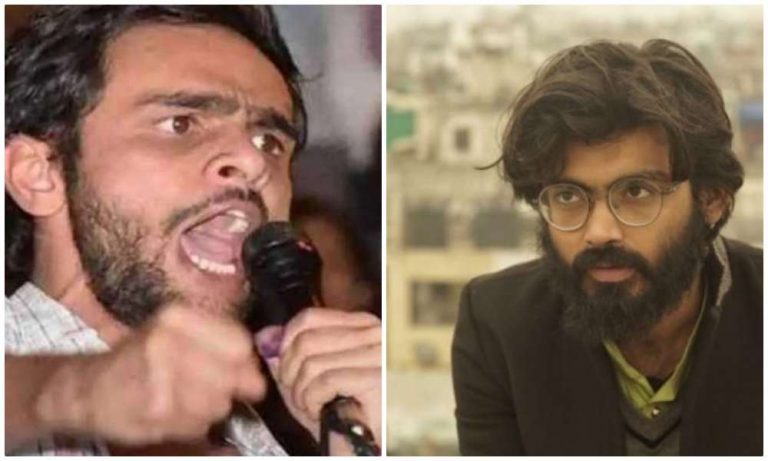
Umar Khalid, Sharjeel Imam used social media to radicalise youth, says Delhi Police in charge sheet

Former JNU students Umar Khalid and Sharjeel Imam used social media to radicalise youth and mobilise them for the ‘chakka jam’ as a means to protest against the Citizenship Amendment Act (CAA), Delhi Police has mentioned in its charge sheet. The CAA fast-tracks Indian citizenship for persecuted religious minorities like Hindus, Sikhs, Jains, Christians from the three neighbouring Islamic countries, Pakistan, Bangladesh and Afghanistan.

In its charge sheet, the Delhi Police has maintained that the protests were never peaceful and the ultimate objective of these protests was large-scale violence against the state. Recently, WhatsApp conversations which date back to February 17, revealed that the Delhi riots were organised and facilitated through provocation and active mobilisation of the masses.

Further, Delhi Police charge sheet mentions Aam Aadmi Party co-founder and former leader Yogendra Yadav. Yadav reportedly met Sharjeel Imam and Umar Khalid at Jantar Mantar in 2019 while protesting against the CAA. The police has alleged that the trio decided to use social media to indoctrinate and mobilise youth for chakka jam. Delhi Police also alleged that Imam was the mastermind behind the Shaheen Bagh protest site.

The charge sheet further reveals that the key conspirators chose NorthEast Delhi for riots because of its unique socio-economic and demographic matrix. This uniqueness provided the conspirators an ideal place for ‘mass scale mobilisation and violence’, the police has alleged. As per the Delhi Police, the conspirators found the people living in these localities ‘dispensable’ and ‘vulnerable’ even as they stayed safe in their homes in upscale South East Delhi.

The Delhi Police has also established inferences between the December 2019 violence and February 2020 riots. “That all the hotspots of December 219 were repeated with varying intensities in February 2020. The modus operandi of the culprits in both the periods under reference is a text book copy of each other that is mobilisation fuelled by incendiary speeches followed by ‘Chakka Jaam’ and violence. Almost every character who gained notoriety in February 2020 had been noticed as being present in the incidents of December 2019,” Delhi Police said in the charge sheet.

Primary target in both the periods were police personnel followed by non-Muslim population. However, there were also two major notable differences. “While Jamia and Shaheen Bagh reported the most severe riots in December 2019, this locality was spared deliberately and avoided by the rioters in February 2020. And women at the forefront (both local and transplanted) were the universal underlying theme of the protest in February 2020 as against the incidents of December 2019,” Delhi Police said.

As per the police, the conspirators learnt their lessons for February 2020 riots from the December 2019 violence.

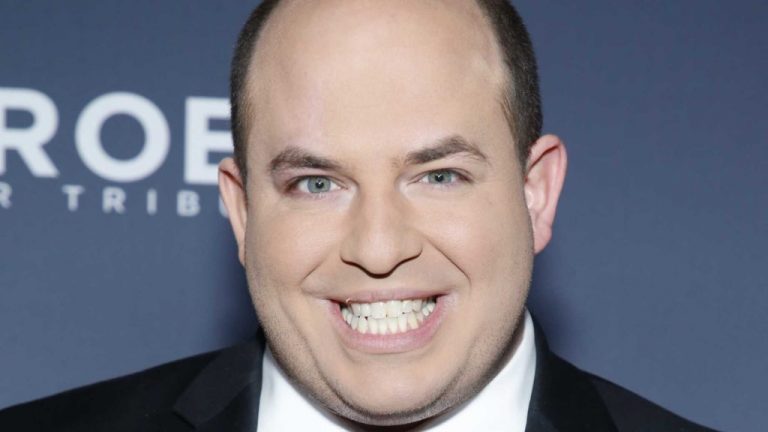
Anchor of unreliable entertainment show ‘Reliable Sources’ tries to downplay Democrat threats over Supreme Court nomination

Anchor of entertainment show Reliable Sources, Brian Stelter, posted a tweet recently downplaying the threats of violence posed by the left liberals and journalists on social media over the expected Supreme Court nomination by US President Donald Trump to fill the vacancy left behind by Associate Justice Ruth Bader Ginsburg. This will be the third nomination by Trump to the Supreme Court after Justice Gorsuch and Justice Kavanaugh.

Stelter shared a Tweet taking a dig at Fox News host Tucker Carlson‘s show on the threats of violence by the Left.

In his tweet, Stelter trivialised the threats of violence by left liberals despite the fact that the country had recently witnessed horrific nationwide riots by Left organisations in the name of protests against the death of George Floyd.

Carlson in his show called out the Left liberals for their extreme and unjustified reactions on the death of Ginsburg and the subsequent announcement by Donald Trump that he would name his nominee for the Supreme Court. Carlson said that the Left liberals were placing an attributing undue significance to her dying wish.

Ginsburg’s dying wish, according to liberals, was that she should not be replaced until the next President is elected. What Carlson was trying to highlight was that even if Ginsburg was the greatest of the judges, her last words or wish cannot substitute a constitutional procedure. The President is constitutionally empowered to make a nomination to fill the vacancy in the Supreme Court.

Carlson also raised questions on the claims that Ginsburg had a last wish about the filling of the vacant Supreme Court seat saying that it was a pathetic wish if it was true at all. He flashed the social media posts of various Left liberals including scholars and journalists who threatened to start a riot or burn the whole country down if President Trump followed the constitutional procedure and made a nomination to fill the Supreme Court seat.

Some of the tweets by Democrats threatened to protest at the house of Senate Majority Leader Mitch McConnell. Some people actually gathered outside McConnell’s house to protest following the tweets. According to Carlson, the protesters then surrounded the house of Senator Lindsey Graham to make their point.

In the immediate aftermath of Ginsburg’s death, liberals had threatened to riot and ‘burn the whole thing down’ if Senate Majority Leader Mitch McConnell and Donald Trump had their way. They had also threatened to ‘shut down’ the country. The threats came on the face of continued riots that have been underway ever since the death of George Floyd. Under such circumstances, Brian Stelter pretending that Tucker Carlson is exaggerating the threat posed by left-wing violence comes across as a desperate attempt to save face for Democrats.

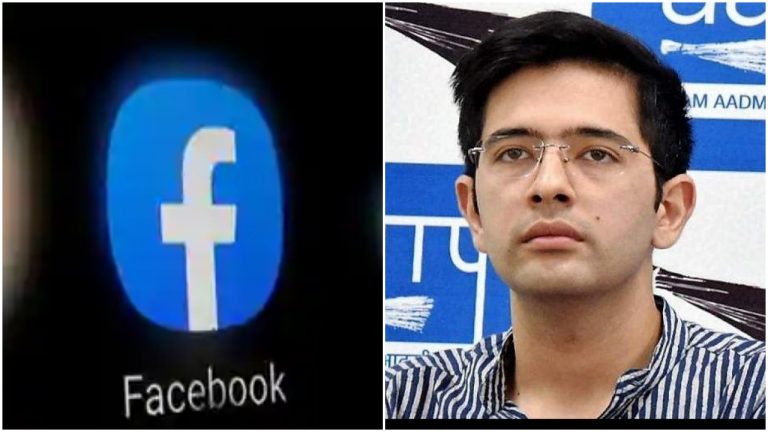
Facebook moves to SC challenging Raghav Chadha’s summons, says they are answerable to Union govt, not a Delhi assembly panel

A week after Facebook India snubbed a Delhi Assembly committee’s summons, the social-media giant Facebook India and its vice president Ajit Mohan have filed a petition in the Supreme Court on Tuesday challenging the summons issued by the Delhi assembly’s Peace and Harmony Committee.

According to the reports, the petition filed by the Facebook in the Supreme Court against the repeated summons issued by Delhi assembly’s ‘Peace and Harmony Committee’ contends that the subject matter under investigation fell within the exclusive domain of the Union government and a state legislative assembly cannot compel witnesses to appear and provide evidence on such subjects.

“The Committee seeks to compel petitioner No. 1 (Ajit Mohan) to provide testimony on subjects within the exclusive domain of the Union of India. Specifically, the Committee is seeking to make a ‘determination of the veracity of allegations levelled against Facebook’ in the Delhi riots, which intrudes into subjects exclusively allocated to the Union of India,” the petition said.

The plea filed in the Supreme Court also said that the summons violates the right of the petitioner to remain silent and his right to privacy, which are fundamental rights. The plead said that the summons issued by the Delhi assembly, targeting Facebook – a platform that allows users to express themselves may create a chilling effect on the free speech rights of users of the Facebook service.

The case will be heard by a three-judge bench headed by justice Sanjay Kishan Kaul on Wednesday.

Facebook snubs Raghav Chadha’s summons

Earlier on September 15, Facebook India had snubbed the summons issued by the Delhi Assembly’s ‘Peace and Harmony Committee’, led by AAP’s Raghav Chadha, asking them to testify before them. The summons was issued to Managing Director and Vice-President Ajit Mohan over complaints of ‘deliberate inaction’ by Facebook against alleged hate speech that ‘culminated in the Delhi riots’.

In its statement, Facebook India had declined to attend the hearing of the committee, citing that they have already testified before a Parliamentary Standing Committee in early September for ‘safeguarding citizen’s rights’.

The AAP member-led committee had was first summoned Mohan on September 10 for its meeting scheduled on September 15 in connection with complaints alleging deliberate omissions and inaction by the social media company in removing hateful content and posts.

The committee had claimed it had prima facie found Facebook India of allegedly being complicit in aggravating the communal violence in north-east Delhi in February that left at least 53 people dead. It is notable here that AAP’s pwn leader Tahir Hussain is one of the main accused in the riots.

Following the snub, AAP MLA Raghav Chadha, the head of the committee, had taken offence and had labelled Facebook’s action as a ‘disregard’ to the ‘privilege’ of the committee. He had informed that summons would be issued to the social media platform yet again. He alleged that Facebook is trying to hide crucial facts in connection to the riots.

Alleged links between AAP and Facebook management

Ankhi Das is the Public Policy Director, Facebook for India, and South & Central Asia. While the left-liberal jamaat has accused her of being a ‘BJP agent’, her old Facebook posts tell a different story. When the Aam Aadmi Party had shared a ‘Jhaadu Dance’ video prior to the Lok Sabha elections, Ankhi Das had dubbed it as a ‘cool campaign’.

Moreover, writing an opinion piece in the Daily-O titled, “The battle for Delhi on Facebook”, she had praised the Facebook campaign of the Aam Aadmi Party. Ankhi wrote, “Much like they did in the December 2013 Delhi elections, the Aam Aadmi Party had a much stronger ground game. Its street power merged seamlessly with its campaign strategies on Facebook.”

While suggesting that the BJP took its voters for granted, she insinuated, “The AAP’s success shows that no party – no matter how popular – can take the electorate or a good online strategy for granted.”


Deepika Padukone to be summoned by NCB as evidence against her piles up: Reports

Bollywood actress Deepika Padukone is likely to be summoned by the Narcotics Control Bureau (NCB) and her manager Karishma Prakash as part of the investigation in drug supply and drug usage probe the agency has undertaken. Other actresses like Sara Ali Khan, Rakulpreet Singh and Simone Khambhatta are expected to be summoned later this week. The names have come up after investigation of Rhea Chakraborty’s chats.

Deepika’s name had emerged in the drug abuse probe earlier this week after her WhatsApp conversations went viral. WhatsApp conversations have reportedly gone viral where the actress is allegedly asking for hash (or hashish, drug made from cannabis plant) from a certain person named ‘K’, who many believe is her manager, Karishma Prakash.

As per reports, a conversation on 28th October 2017 went something like this:

10:03 AM (+91-992——-) ‘D’ (believed to be Deepika): K…Maal you have?

10:05 AM (+91-961——-) ‘K’: I have but at home. I am at Bandra…

10:05, K: I can ask Amit if you want

10:07, Deepika: Yes!! Pllleeeeasssee

10:08, K: Amit has. He’s carrying it

10:12, Deepika: Hash na?

10:12, Deepika: Not weed

10:14, K: What time are you coming to Koko

10:15: Deepika: 1130/12ish

10:15: Deepika: Till what time is Shal there?

K: I think she said 11:30 because she needs to at the other place at 12

The Enforcement Directorate while investigating money laundering charges in the Sushant Singh Rajput case uncovered these chats and sent them to the NCB. At least 20 people including Rhea Chakraborty, Sushant Singh Rajput’s girlfriend, and her brother Showik, have been arrested over investigation in the drug abuse probe.

‘Petitioners against Sudarshan TV want to bypass centre, statements being misrepresented’: Madhu Kishwar seeks intervention in SC

0

On Wednesday, author and activist Madhu Kishwar informed on Twitter that she had filed an intervention petition in the Supreme Court in Sudarshan TV ‘UPSC Jihad’ case.

She claimed that her comments, during the show, were ‘mischievously’ presented as evidence of hate speech. Madhu Kishwar tweeted, “I’ve filed an Intervention petition in SC in Sudarshan TV case since a shoddy translation of small snippets of my comments on ‘UPSC Jihad’ during Sudarshan TV debate have been mischievously presented in SC as evidence of hate speech.”

In her intervention plea, the author argued that her comments with respect to ‘Ghazwa-e-Hind’ and ‘Mughalistan’ were ‘clumsily translated’ and deemed by the petitioner as ‘hate speech.’

Madhu Kishwar accuses petitioner for bypassing available remedies

“That the petitioner has further chosen this petition to ensure that the government which is the final authority to determine free-speech policy and also which is also more equipped to carry out a detailed investigation is bypassed and not given a chance to make a decision,” the intervention application read, as reported by Live Law.

She added that bypassing of the constitutional framework by the petitioner infringed upon her rights. Seeking permission to intervene in the apex Court, Madhu Kishwar urged the Court that she should not be coerced into compromising her fundamental rights.

Slamming the petitioner for bypassing other statutory remedies in a bid to attain ‘extraordinary relief’, she argued, “By choosing to do so, the Petitioners have severely undermined not only the rights of free speech and expression but also the right to free and fair trial, which is the applicant’s right under the Constitution to protect her life and liberty and also her Freedom to research, inquire, speech and expression.”

In her intervention application, Madhu Kishwar argued that several adherents of the Islamic Faith had also filled intervention pleas in support of the Sudarshan News show on UPSC Jihad. She stated that the petitioners, who claimed to be representatives of the entire Muslim community, have not followed the rigors under Order 1 and Rule 8 of the CPC (Code of Civil Procedure).

OpIndia and others move the apex Court

Earlier, OpIndia, Indic Collective, and UpWord had filed an intervention application in the Sudarshan News ‘UPSC Jihad’ case. A report titled “A Study on Contemporary Standards in Religious Reporting by Mass Media”, prepared by OpIndia was submitted in the Court.

J Sai Deepak, representing the petitioners, said that there were three issues that had been submitted. First, whether the Supreme Court had jurisdiction over the matter. The plea contended whether any statute or the Constitution itself permits courts to step into the shoes of the state to restrain the broadcast of such content. Second, the definition of hate speech. And third, the OpIndia report which tracked the contemporary landscape on the standards set by mass media in religious reporting.

The Sudarshan TV case

Hindi news channel Sudarshan News triggered an outrage after it aired a promo for a program which was to be broadcast on 28 August. Sudarshan News chief editor Suresh Chavhanke had informed that the channel is analysing the sudden increase in the number of Muslims selected in various posts in administrative and police services in the country, along with an increase in marks obtained by Muslim candidates as compared with others. However, this triggered Muslim activists and cases were filed to halt the broadcast.

Chavanke’s show had alleged that Zakat Foundation, which helps Muslim students secure UPSC ranks, has been receiving funding from anti-India organisations abroad.

After Delhi High Court stayed the airing of the show, Ministry of Information & Broadcasting gave a nod to broadcast the same. However, Supreme Court later passed an order restraining the telecast of the program.

Goa Police arrests actress Poonam Pandey’s husband Sam Ahmed Bombay for assaulting and molesting her

The Goa Police on Tuesday arrested Sam Ahmed Bombay, who is the husband of the Bollywood actress Poonam Pandey after the actress filed a complaint alleging that her husband molested, threatened and assaulted her.

According to the reports, the incident occurred in Canacona village in south Goa where Pandey is currently shooting for a film. The actress filed a complaint claiming that her husband Sam Ahmed Bombay molested and threatened her with dire consequences on late Monday night.

Based on Pandey’s complaint, the Goa Police arrested Sam Ahmed Pandey on Tuesday. The couple had recently married on September 10. Earlier this year, the couple had announced that they were engaged.

“Pandey filed a complaint late Monday night claiming her husband Sam Bombay had molested her and threatened her with dire consequences after assaulting her. He was arrested,” Inspector Tukaram Chavan of Canacona police station said. The actress was subjected to mandatory medical tests, he added.

Who is Sam Ahmed Bombay

Born and brought up in United Arab Emirates, Sam is an ad-filmmaker and a producer. He had done projects with celebrities like Akshay Kumar, Ranbir Kapoor and Deepika Padukone amongst others. He has reportedly also worked with cricketers like Virat Kohli and Yuvraj Singh. As per reports, he has directed various advertisements for brands like Oppo, Sparx and Amazon.