Home Blog Page 5129

A saga of mistakes: Misadventures and policy fiascos of Congress governments of the past

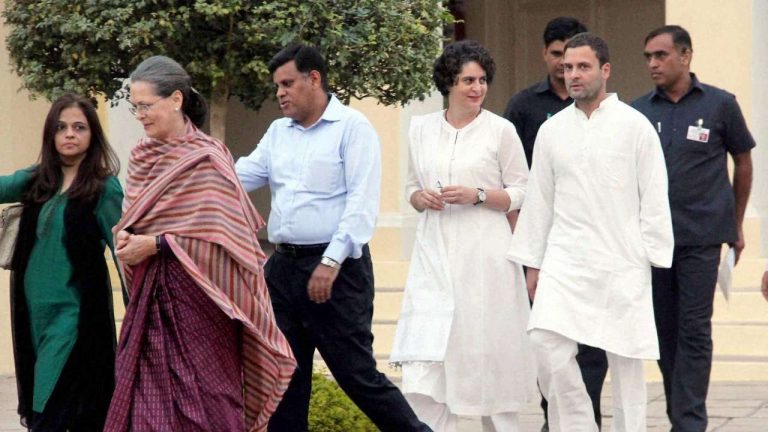
Even as the Indian National Congress (INC) inherited, by default, the reins of power from the British in 1947, it went about making mistake after mistake. The combined weight of these mistakes has resulted in the party ending up in the political doghouse.

The first mistake it committed was allowing Jawaharlal Nehru to become Prime Minister instead of its own choice of Sardar Vallabhbhai Patel. The party acquiesced to the whims of Mohandas Karamchand Gandhi, who backed Nehru. It displayed a lack of political sagacity by failing to keep in its fold patriotic freedom fighters like Subhas Chandra Bose.

In fact, Bose had to resign from the post of the Party President due to the manipulations by MK Gandhi and his coterie in the Congress Working Committee. After that, Boseformed an independent party by the name The Forward Block and fought for India’s freedom from outside the Congress umbrella. This was the second mistake. The third mistake was allowing Nehru’s daughter to succeed him, thereby paving the way for the perpetuation of a family rule. The party has lost all its credibility after being bogged down under far too many scams and scandals. Now, there is no tall leader to steer it clear of the impending disaster. 

Inept and Inefficient Leadership

Be that as it may, during its 55-year long rule, the Congress governments suffered from inept and inefficient leadership. In matters of foreign and defence policies, the Congress leadership was notorious for not taking a nation-centric stance. Nehru was, in particular, given to flights of fancy and romantic visions about India and its neighbours.

He believed in his ability to trade-off magnanimity with peace from neighbouring states. Instead of winning wars with belligerent neighbours and keeping India’s territorial integrity intact, he kept seeking admiration and accolade of the international community with his lofty speeches and platitudes for peace.  

Army in Disarray

He even questioned the need for an Army for a peace-loving nation like India. The Army was neglected, and the leadership of the armed forces denigrated. There was the meddling of political leadership in the armed forces, and sycophancy was promoted. There was no procurement of weapons or equipment. The Army was rocked by corruption scandals. Shockingly, during those days India’s intelligence services were in a shambles. 

Foreign Policy Fiasco

Nehru’s ceaseless espousal of non-alignment had no traction in international politics. With all his talk about peaceful co-existence between nations and the Non-Aligned Movement in a bi-polar world, Nehru wanted to make a mark for himself as a statesman par excellence. In the bargain, India’s foreign policy was left in tatters. He was busy sending members of his family and coterie as Ambassadors abroad more to promote his image than to win friends for India. One of Nehru’s biggest foreign policy blunders was his not insisting on a One-India policy in return for the One-China policy that he readily agreed to.

Pakistan

When the Pakistani marauders invaded Kashmir in 1947, the Indian Army successfully repelled and pushed them back at the request of Maharaja Hari Singh, who was willing to accede his State to India. Instead of insisting on its unequivocal accession, the Nehru government granted the State special status under Article 370 of the Constitution. The grand gesture backfired, and Kashmir became a nest of vipers, where anti-nationals of all hues and shades and terrorists took sanctuary. When the Indian forces were on the verge of a complete victory, Nehru needlessly appealed to the UNSC and went for a ceasefire.

This was both unnecessary and uncalled for. Now, only 55% of Kashmir is with India. To make matters more confounded, Pakistan ceded some territories of the occupied Kashmir to China! Nehru crowned his mistakes with an offer of a plebiscite on Kashmir in the UN. Apart from lack of sound judgment, these actions betray a muddled-up mindset and a lack of imagination and the perils of distancing oneself from the ground reality vis-a-vis a hostile neighbour. The Congress governments, which succeeded the Nehru-led government, never displayed any sign of lessons learnt from past mistakes. 

We have had several wars, conflicts and military stand-offs with Pakistan over the Kashmir issue and cross-border terrorism during the Congress rule without any conclusive resolution of the problems. This was primarily because every time India’s action was in the nature of a knee-jerk reaction, and there was a lack of political will and defence preparedness. Subsequent to the ceasefire at the end of the 1965 war, India and Pakistan signed the Tashkent Agreement. In terms of the Agreement, India returned the Haji Pir Pass, which had been won from Pakistan. All that Pakistan did to reciprocate was to promise an end to the hostilities. It did not even keep this promise. This dealt a heavy blow to our diplomacy.

Similarly, the Simla Agreement that we had with Pakistan at the end of the 1971 war that culminated in the liberation of Bangladesh brought to the fore another bungling at the negotiating table by our political leadership. The Agreement called for, among other things, the exchange of POWs between the two countries. Whereas India returned all the 96,000 Pakistani POWs, Pakistan reneged on its commitment and returned only 617 Indian POWs, holding back 54, who are still languishing in Pakistani jails, if alive. This was an unimaginable fiasco after a splendidly fought war. The sheen of the military victory was lost to the muddle headedness of the political leadership of the day.

China

The India-China war of 1962 was an unmitigated disaster that brought India to its knees. Apart from being caught totally unprepared, our Army was in no shape to fight, with hardly the necessary weapons and equipment available. India had to seek help and aid from other countries. This was the same China in whose favour Nehru had sacrificed Indian candidature for permanent membership of the UN Security Council. India has ever since been unsuccessfully lobbying for the seat, with China vetoing India’s nomination, year after year. All this could have been avoided with a little pragmatism and farsightedness on the part of Nehru. 

In the aftermath of the recent Chinese attack in the Galwan Valley in Tibet, an inter-ministerial probe into a sensational exposure about an alleged nexus between Congress and the Chinese Communist Party has been instituted by the government. The allegations range from the signing of an MoU between the two parties in Beijing in 2008 to the acceptance of large sums of money and favours by Congress from the Chinese government. The veracity of the allegations and the extent of damage caused to our nation will determine the future of Congress Party. 

More Goof-ups

The laundry list of several other goof-ups involving the Congress governments is practically endless, including the numerous terror attacks carried out by Pakistani terror outfits like LeT, JeM, etc in the Indian heartland, and the dastardly attack on the Indian Parliament, to name a few. Here, let us not forget the sensational revelation in 2012 of how the Manmohan Singh-led UPA government had wanted to demilitarise the Siachen glacier and cede the control of the strategic glacier to Pakistan!

The article has been written by Dr Sunil Gupta. He is a Chartered Accountant, author and blogger. He has served as an Independent Director on the Boards of India’s most influential public sector banks.
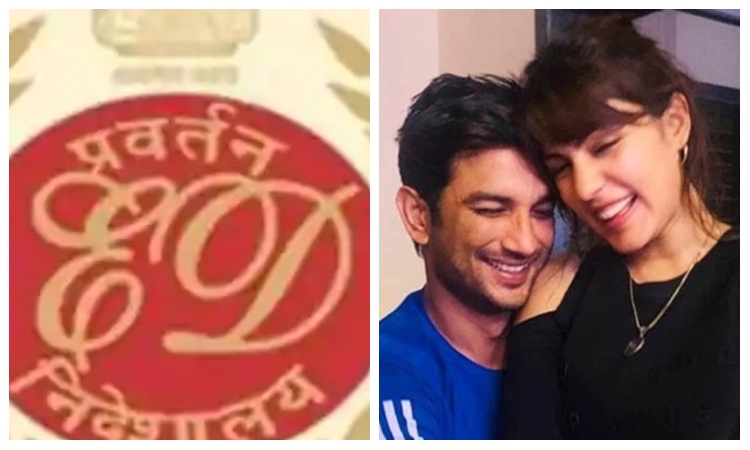
Enforcement Directorate files money laundering case in connection with the death of actor Sushant Singh Rajput

On the basis of a First Information Report (FIR) filed by the Bihar police, the Enforcement Directorate has filed a case in connection with the untimely death of actor Sushant Singh Rajput.

The development comes a few hours after former Maharashtra CM, Devendra Fadnavis, urged ED to register an Enforcement Case Information Report (ECIR) case after the ‘misappropriation and money angle’ had come to the fore. “Now a money laundering aspect too has come to the fore. It has been observed that money was siphoned off from his account. In such a case, the ED has jurisdiction, so, I have demanded the ED should register an ECIR and probe the matter,” he said.

ED sought a copy of the FIR from the Bihar Police which was filed by the father of Sushant Singh Rajput against actress Rhea Chakraborty

Fadnavis’ statement came after the ED sought a copy of the FIR registered against Sushant Singh Rajput’s ex-girlfriend Rhea Chakraborty and some others in connection with the death of the late actor from Bihar police in order to probe a possible money laundering angle.

Sushant Singh Rajput’s father had filed an FIR alleging that his ex-girlfriend, Rhea Chakraborty had stolen Rs 15 crores from the actor. The FIR which was registered against her based on a complaint filed by Rajput’s father KK Singh on Sunday with various sections like 341, 342, 380, 406,420, 306 and 120 (B) of the IPC that include abetment of suicide, alleged that Rhea took money from Sushant.

The FIR mentioned that just a few days before Sushant’s death, Rs 15 crores was withdrawn from his Kotak Mahindra account and transferred into an account that was not associated with Rajput. The late actor’s father has requested the police to check Sushant’s reports and confirm where his money went. He alleged that Rhea had access to his debit and credit cards, and she often exploited him financially. When she felt that Sushant is running out of the money, she took cash, laptop, jewellery and a lot of other belongings from his house and left him, alleged KK Singh.

Based on this complaint, the Enforcement Directorate will now be probing the possible money laudering angle in the case.

National Education Policy 2020: The prospect of research and innovation

The government has announced the National Education Policy (NEP) 2020. The new vision of the government has redefined the trajectory of education by bringing about momentous structural changes in the Education System of India. It has sought to consolidate the foundation of Indian education by revamping both the conceptual and practical aspects of school education. The new policy brings the student at the focus by laying emphasis on recognizing, identifying and fostering the specific capabilities of each student, by sensitizing teachers as well as parents to be instrumental in promoting the holistic development in both academic and non-academic spheres.

It is surely an attempt to initiate the process of cultivating a sound mind at the early stage of learning. However, the maturing of a good mind is reflected in quality research and innovation. This article attempts to have a look at the relevance and prospect of research and innovation reflected in the new vision document. 

In today’s world, research and innovation constitute the neo-quantum of the academic strength of a nation, which translates into both its soft and hard power. A country cannot find a place amongst the leading nations unless it impacts global academia by making remarkable contributions in expanding the frontiers of human intellect. It is not surprising that all the leading nations are the ones who engage and lead in research and innovation. For example, if the United States studies International Relations more, it is primarily because it intends to influence these nations in the direction of fulfilling its own national interests. The same is true about other fields as well. The history teaches us that a nation achieves greatness by incessantly grappling with new challenges, making new scientific advances and opening new paradigms. Francis Bacon’s observation has proved to be true that knowledge is power. Hence, it is imperative to develop a robust system that fosters research and innovation in the ever-evolving landscape of education. 

It is certainly not a new realization of the pressing need to restructure the ‘Indian Education System.’ However, it surely is an awakening that sets in motion the idea for realizing the goal of making India a leading nation in imparting new visions to the world. It is heartening to see that the Government has taken due cognizance and rose to the occasion by formulating the ‘New Education Policy.’ One of the most important features of the new NEP (National Education Policy) is its focus on widening the gamut, structure and quality of research in various fields. 

The new policy proposes to establish ‘New Research Foundation’ to lay emphasis on catalyzing and energizing research and innovation across the country in all academic disciplines. It would be an independent body, set up through an Act of Parliament, to meet the indispensable requirements to pursue the research effectively. It has attempted to remove the unnecessary clutter, which has hitherto been an impediment to efficacious research. It will look into the relevance and quality of the research, financial concerns and build beneficial linkages between researchers, government and industries.

The funding of research in all disciplines will be based on peer-reviewed recommendations and competitiveness. The Foundation will have four divisions, namely Sciences, Technology, Social Sciences, Arts and Humanities in the beginning. It paves the path for building research capacity at academic institutions across the country. Under the aegis of the new Policy, the institutions will enjoy a greater degree of autonomy and academic freedom in order to do away with bureaucratic rigmarole, which often proved to be an irritant in smooth conduction of research.

The policy envisions a holistic education by bringing an integration of sciences, social sciences, arts, humanities and sports to actualize multidisciplinary culture in academia. Conceptual understanding, creativity and critical thinking will be the foundation of research and innovation in the new vision. It is aimed at producing revolutionary research and preventing the reproduction of similar works lacking pioneering prospects. The policy also envisions the transformation of India into an equitable and vibrant knowledge society by providing high-quality education to all. The ‘demographic dividend’ of India can be fully utilized by inspiring and encouraging a considerable number of committed scholars to quality research in various fields. The policy also aims to build a holistic approach to the preparation of professionals by ensuring broad-based competencies, understanding of the social-human context, a strong ethical compass, in addition to the highest quality professional capacities.  

It is evident that the policymakers have made great efforts to keep all the stages of education relevant in its own right. From the ethical point of view, it has sought to fulfil both the utilitarian and deontological purposes of education. Utilitarian because education needs to propel the material wellbeing of the nation and thereby making the lives of people increasingly comfortable. It also serves a deontological purpose because education imparts significance to human life. Though education is important at all stages its final aim is to provide meaning to human existence. Achieving such a fine balance for any policy is an accomplishment in itself. 

The new policy also provides the premise for integrating the individual aspiration and national interest. The alienation of the education from the national objectives can be counterproductive for the future of a nation. It highlights the importance of an eclectic approach but stresses the need to respect the rich and diverse knowledge system and intellectual traditions of India. The new vision includes the role of education to instil a deep sense of pride in Indian values and commitment towards constructive contribution to society. These values are well reflected in constitutional ideals, which are largely considered to be the expression of the ‘general will’ or collective aspiration of Indian peoples. 

Innumerable challenges are staring in the eye of our nation and it needs a force of capable and spirited individuals in order to tide over these barriers. The issues of health, national security and violence in its varying visible and invisible forms should be addressed with a sense of urgency and promptness in order to safeguard the national social health. It is possible only with gradual fruition and capacity building with the help of groundbreaking research and development. India needs to unleash its genius in the service of the nation as well as the world at large. The New Education Policy has laid the ground for the same. 

However, no policy should grow into a monolithic structure and the room for improvement remains an integral part to it. The necessary details of the aspects of research and innovation will be discussed at length and the new ideas will emerge as time progresses. Hence, it is imperative to provide space for incorporating fresh ideas to further improve the utility and efficacy of the new National Education Policy (NEP). 

The New Education Policy approved by the government is a much-awaited vision document, which will touch the lives of every Indian. The government has put the first foot forward in the direction of redefining the ‘Indian Education System’ and now it is incumbent on various stakeholders to make it work and progress in the direction of achieving the national goal of India to emerge at the global stage as “Vishwaguru.”

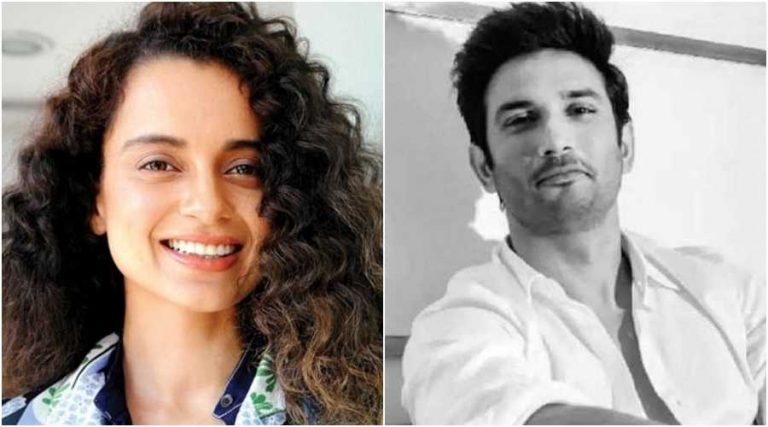
‘If I’m found hanging in my house, please know I did not commit suicide: Kangana Ranaut says hinting at political connections behind Sushant Rajput case

The investigation into the alleged suicide of actor Sushant Singh Rajput is getting more and more complexed. Today, it was reported that a politically-connected person was possibly present at the party, a night before Sushant Singh’s demise. Without taking any names, media houses reported that a politician’s son was present at the late actor’s apartment at the party.

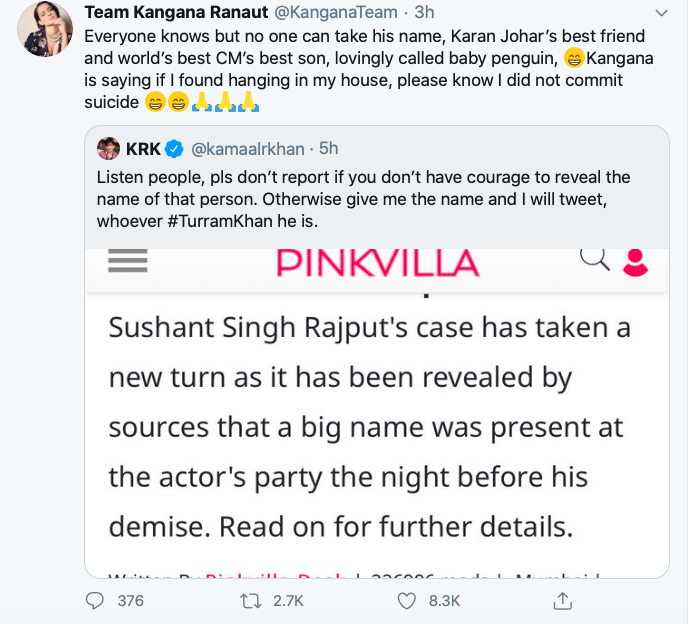
Kangana Ranaut’s team, calling out these media reports, hinted that the politician’s son was no one else but “Karan Johar’s best friend and world’s best CM’s best son, lovingly called baby penguin”.

In the Tweet, the actor’s team also wrote that Kangana has been courageous enough to openly take big names and now if she is found hanging at her house everyone should know that it wouldn’t be a suicide.

“Everyone knows but no one can take his name, Karan Johar’s best friend and world’s best CM’s best son, lovingly called baby penguin, Kangana is saying if I found hanging in my house, please know I did not commit suicide”, said Kangana Ranaut’s ‘team’ on Twitter.

Kangana’s tweet

Kangana has been very vocal about the involvement of various Bollywood big-wigs in the case. She has been claiming that Sushant was being exploited and harassed by a gang of ‘Bollywood mafia’ who promote only nepotism and actively work to keep ‘outsiders’ out. She has also claimed that a very powerful lobby is trying to prevent a detailed investigation into the case.

Reports suggested party hosted by Sushant Singh Rajput was attended by a politician’s son a night before his alleged suicide

According to TimesNow, a politician’s son was present at the late actor’s apartment at the party. As per the report, there was a heated argument between the politician’s son and Sushant Singh Rajput post which the late actor left the place. Curiously, the CCTV has been dysfunctional since then. Sources claim the police officials are trying to conceal the identity of this person. People close to Sushant Singh Rajput have revealed that there was a party at his apartment and the aforesaid personality was also present there along with others.

Meanwhile, in another twist, the late actor Sushant Singh Rajput’s father KK Singh filed an FIR with charges of abetment of suicide, blackmail and financial harassment against Sushant’s girlfriend Rhea Chakraborty. 

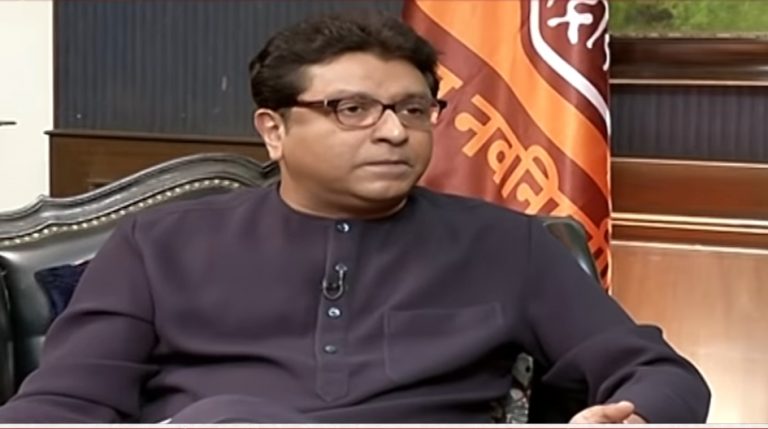
‘I saw Uddhav Thackeray on TV, but not his administration’: MNS chief Raj Thackeray slams Maharashtra govt for mishandling of Coronavirus crisis

Speaking at ABP’s ‘Majha Maharashtra Majha Vision’ on 30 July, MNS chief Raj Thackeray slammed the Maha Vikas Aghadi government for its bungled handling of the coronavirus outbreak in the state. He added that while Uddhav Thackeray was seen on television, his management was conspicuous by its absence.

“I saw Uddhav Thackeray on television but I couldn’t see his management of the COVID-19 crisis,” Thackeray said.

“The prevalence of corona in the state is increasing day by day. So what is the government’s vision of getting rid of this deadly coronavirus? How will the government cope with the consequences of the lockdown caused by the coronavirus? Also, what is the role of the opposition in making the government aware of their work?”  Thackeray questioned.

State government’s responsibility to allay the anxieties surrounding coronavirus

The MNS chief expressed concerns over the deteriorating situation in Maharashtra, stating that the coronavirus-induced lockdown did little to prevent the ominous rise of the infection in the state.

Raising questions over the state government’s response to the pandemic, Thackeray suggested that the government should institute measures to get people out of their mental agony. “Some things need to get started, fear among people needs to be allayed. They should be provided with an environment where they can breathe freely without the fear of being afflicted by the coronavirus,” said Thackeray while adding he doesn’t understand the government’s method of tackling the contagion.

“Government restrictions, news on television and WhatsApp messages have created a climate of fear among the people. It is important to remain cautious but remaining at home out of fear of coronavirus is not right. People should be relieved of their mental distress. Be careful, but don’t shut down and lockdown,” said Raj Thackeray. “Everything should be restarted. I had spoken to Uddhav Thackeray, Sharad Pawar and Ajit Pawar about reopening everything a month ago.”

Raj Thackeray says the Maha Vikas Aghadi government is likely to collapse soon

Thackeray also commented on the alliance between NCP, Congress and Shiv Sena in Maharashtra, forecasting that the association between the ideologically disparate political parties won’t last for long.

Commenting on the political situation in the state, he said that the state government does not think it will last long. He also said that there was no unity among the three parties in the government.

“I don’t know how this government will last long. When there is no unity, it is hard to continue in the government. I don’t think this government will stay here for long,” Thackeray opined.

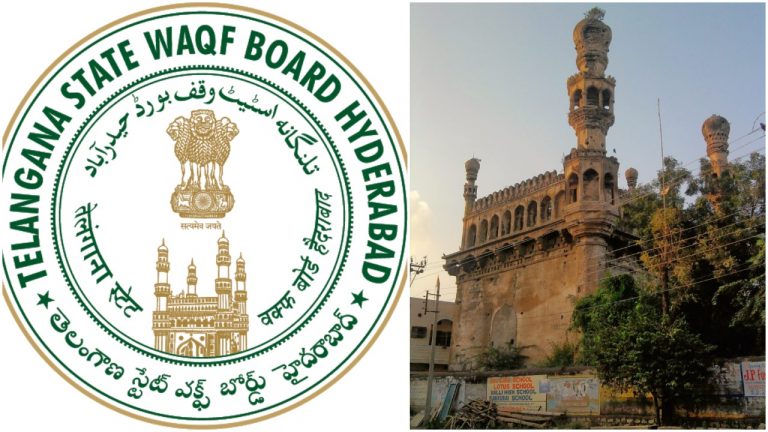
‘Build the road somewhere else’: Telangana Waqf Board outrages after deserted Mosque’s boundary wall was demolished for road construction

Muslim clerics in Telangana have outraged over the demolition of the boundary wall of a deserted mosque in Hyderabad and forced the officials to stop the construction work, reports Siasat.

According to the reports, the Hyderabad Metropolitan Development Authority (HDMA) had demolished the outer wall of an old deserted Mosque – Qutub Shahi Masjid near High Tech city to construct the new road.

However, as soon as the HDMA demolished the old mosque’s boundary, Telangana Waqf Board president Mohammad Saleem reached the spot with other board members and asked the officials to stop the construction work immediately.

The officials at HMDA were reportedly trying to use the area for the construction of a 100 feet road. The Waqf board president, who was present with other Muslim clerics also instructed the maintenance and repair workers to rebuild the Mosque’s demolished wall. He further demanded the HMDA officials to not touch the deserted Mosque and lay the road somewhere else.

Saleem criticised HMDA for not asking the board’s permission and approval for such an act. He further made it clear that the Waqf Board ‘properties’ can not be used for any other purpose. “The mosque will be repaired and soon be used by people to pray”, Saleem added.

AIMIM, Muslim clerics outrage over demolition of Mosques in Telangana

Earlier too, Muslim clerics had outraged against Telangana government over the demolition of two Mosques in the old Secretariat complex. Muslim leaders led by AIMIM president Asaduddin Owaisi threatened to launch a massive protest over the demolition of two mosques in the old Secretariat complex. The Mosque and a temple on the old secretariat premises were demolished to make way for the proposed new secretariat in Telangana.

Demanding that the Mosques be re-constructed at the same place immediately, Owaisi and other Muslim leaders had threatened the government that if the government failed to take steps for reconstruction of the demolished Mosques at the same place without any delay, Muslims would be forced to launch a strong protest.

The Muslim leaders had issued a joint statement which said that since according to the Islamic belief a Mosque remains ‘the property of Almighty Allah’ and its status can never be altered, this move has enraged the Muslims. It furthered that the demolition of two Mosques had shocked the confidence of the Muslim community in Chief Minister K Chandrashekhar Rao, who has been projecting himself as a secular.

Following the protest, Telangana Chief Minister K Chandrashekhar Rao had announced that the government will construct these in the new Secretariat premises at government expense, even if it means spending crores of rupees.

VHP to collect soil from major Dalit temples for Ram Mandir Bhoomi Pujan ceremony

On Thursday, the Vishwa Hindu Parishad (VHP) informed that soil from Dalit temples will be collected for Bhoomi Pujan in Ayodhya on August 5, reported The Economic Times. As per the report, the soil has been sent by Sant Ravidas temple (Kashi), Maharshi Valmiki Ashram (Sitamarhi), Valmiki Ashram (Central Delhi), and Tantya Bhil temple (Madhya Pradesh). Reportedly, the RSS is planning to build a Centre for training priests from all sections of the society in Ayodhya.

Soil for Bhoomi Pujan will also be collected from Mhow, the birthplace of BR Ambedkar, and the Valmiki temple in Nagpur where he had converted to Buddhism. Central Secretary-General (VHP) Milind Parande said that Lord Ram emphasised on the message of social unity and that the Ram Mandir will represent the togetherness of India.

Dalit leaders at the forefront of Ram Janmabhoomi movement

“The SC community is an integral part of the Hindu society… This community has resisted conversions and fought the most to save cows. The Sangh is indebted to them,” conceded VHP spokesperson Vinod Bansal. He said that the foundation stone of Ram Mandir was laid down in 1989 by a Dalit Kar Sevak named Kameshwar Chaupal. During the Ram Janmabhoomi movement, the frontrunners included people from oppressed sections of the society including Kalyan Singh, Uma Bharti, Vinay Katiyar, and Sadhvi Ritambhara.

Soil from 11 places of worship used for Bhoomi Pujan

As preparations are underway for the historic Bhoomi Pujan of the Ram Mandir at Ayodhya, the Vishwa Hindu Parishad (VHP) has sent sacred soils from 11 sacred places to Ayodhya to be used in the foundation of the grand temple. According to the reports, the VHP, which spearheaded the Ram Mandir movement, has despatched water and soil collected from 11 sacred sites collected from Hindu and Jain temples, Sikh Gurudwaras to Ayodhya. These sites include Siddha Kalka Peeth, Ancient Bhairav Mandir, Gurudwara Sheesh Ganj, Gauri Shankar Mandir, Sri Digambar Jain Lal Mandir, Prachin Hanuman Mandir, Prachin Shiv Navagrah Mandir, Prachin Kali Mata Mandir, Sri Lakshmi Narayan (Birla) Mandir, Bhagwan Valmiki Mandir and Badri Bhagat Jhandewalan Mandir, Karol Bagh.

Gujarat High Court directs districts to issue notification banning animal slaughter in public during Bakra-Eid

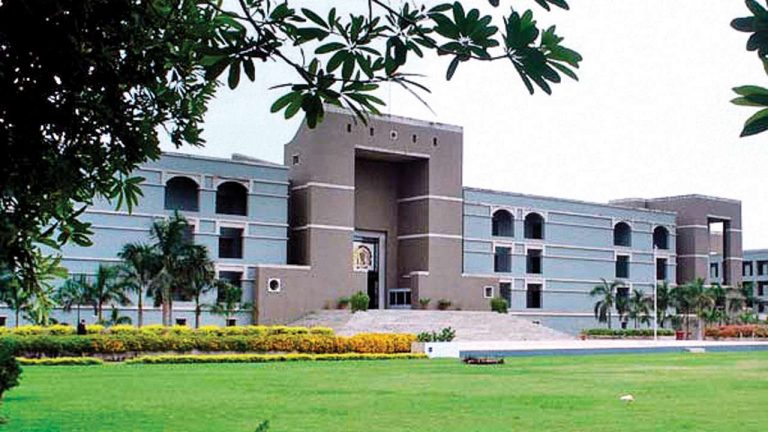
The Gujarat High Court has directed that a notification be passed across the state prohibiting the slaughter of animals in public on the 31st of July and the 1st of August on the occasion of Eid-al-Adha. The Court directed that the notification similar to what has already been passed by Ahmedabad City should be extended state-wide.

The Gujarat High Court issued the order while hearing two PILs, one filed by Yash Shah, a Rajkot-based activist, and the Pranin Foundation. Notifications along the same lines had already been passed by the Police Commissioners of Ahmedabad and Surat. The notifications issued under section 144 of the CrPC “prohibit animal sacrifice on Eid-al-Adha, to be celebrated on August 1, at public places and at private places where it would be visible to the public.”

The notifications also mentioned that public slaughter of an animal on Eid would “hurt sentiments of people of other faiths and it would disrupt communal harmony.” The prohibition on public slaughter was also required in light of the Coronavirus crisis, they added. The Gujarat High Court bench of Chief Justice Vikram Nath and Justice JB Pardiwala directed that notifications along the same lines “shall be issued by all the Police Superintendents of their respective districts across the State of Gujarat.”

The petitioners submitted that “there is a palpable concern amongst billions of Indian Citizens that if Bakri Eid is permitted to be celebrated in regular fashion, then that will be an invitation for the catastrophe to strike…and by not regulating the event of Bakri Eid, with all certainly, (Covid-19) will drastically increase the rampant spread of the pandemic.”

Arundhati Roy’s old speech calling govt’s anti-terror ops in Kashmir as ‘state terrorism’ included in Calicut University syllabus, BJP demands its removal

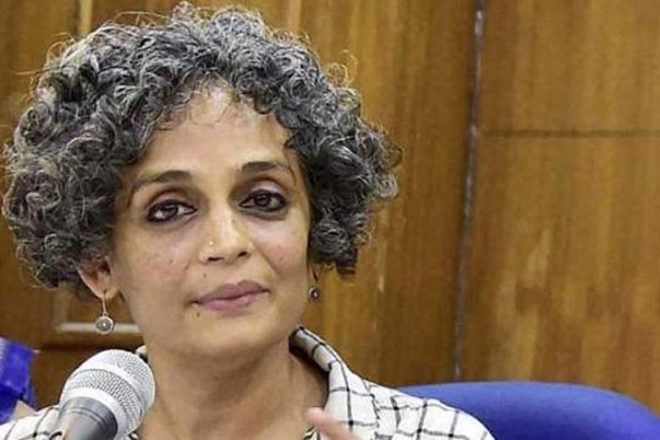
The BJP in Kerala has demanded that the ‘Come September’ speech by Arundhati Roy in 2002, which has been included in the syllabus of the University of Calicut, be removed for questioning the sovereignty and integrity of the country. State BJP president K Surendran made the demand in a letter to Governor Arif Mohammad Khan.

K Surendran wrote in the letter, “Dissent is brewing among academics and the general public against the inclusion of this speech, which is anti-national. Roy has stated that India has unleashed terror on the non-violent struggle for the independence of Kashmir. She was introduced by textbook editors Murugan Babu and Abida Farooqi as the sane voice who spoke against the hanging of Afzal Guru. The hanging was termed as a dark chapter in the history of the country.”

The speech was included in the textbook ‘Appreciating Prose’ for the third semester of BA English Language and Literature. Arundhati Roy delivered that speech on September 18, 2002 at Lannan Foundation in Santa Fe, US. ‘Come September’ focused itself primarily on US foreign policy and its warmongering. During her critique of US hegemony, she also made some ostentatiously false remarks on India.

Arundhati Roy said in her speech, “In India, not hundreds, but millions of us would be ashamed and offended if we were in any way implicated with the present Indian government’s fascist policies which, apart from the perpetration of State terrorism in the valley of Kashmir (in the name of fighting terrorism), have also turned a blind eye to the recent state-supervised pogrom against Muslims in Gujarat. It would be absurd to think that those who criticize the Indian government are “anti-Indian”—although the government itself never hesitates to take that line.”

In the same speech, Arundhati Roy also remarked, “In India, those of us who have expressed views on Nuclear Bombs, Big Dams, Corporate Globalization and the rising threat of communal Hindu fascism—views that are at variance with the Indian Government’s—are branded ’anti-national.’” From her words, it is pretty evident that very little has changed between 2002 and 2020. It was an NDA government at the center then and there is an NDA Government at the center now and intellectuals are still busy beating a dead horse.

Ignores Islamic terrorism, terms anti-terror ops as ‘state terrorism’

Arundhati Roy, quite blatantly, ignores the reality of Islamic terrorism in Kashmir where Hindus have suffered a genocide due to their religion. She accuses the Indian government of ‘state terrorism’ for making attempts to eradicate terrorism from the valley. It is a wildly inaccurate and malicious narrative that she has peddled religiously over the years.

Her critique of US hegemony and warmongering, however, is an opinion that is shared by vast sections of the American population as of 2020. The mood in the United States to the US government’s misadventures around the world has irrevocably shifted public opinion against military interventions abroad. It was one of the factors responsible for the election of Donald Trump as president.

Arundhati Roy in her ‘Come September’ speech, which was made two years before the American invasion of Iraq, a great humanitarian catastrophe, said, “The US, which George Bush has called “the most peaceful nation on earth”, has been at war with one country or another every year for the last fifty. Wars are never fought for altruistic reasons. They’re usually fought for hegemony, for business. And then, of course, there’s the business of war.”

Calicut University says it will examine the issue

Chairperson of the University Board of Studies, Dr. Abida Farooqi, said that the speech was recommended by a 10-member committed in 2019 and was attested by the Academic Council before its inclusion in the syllabus. Calicut University Registrar Dr. CL Joshi said that no decision has been taken regarding the matter as of yet and the Academic Council would take a decision on it after examining the issue. The speech has not yet been taught to the students.

In India, Arundhati Roy is infamous for her subtle apologia for Islamic Terrorism in Kashmir and her resolute defence of ‘Urban Naxals’. She had recently claimed that the central government was using the Coronavirus crisis to target the Muslim community, a claim that is utterly devoid of facts.

The far-left activist had also urged people to lie during the NPR exercise and remarked that people ‘should not give this government four more years’. Her fear-mongering reached a zenith during the debate around the Citizenship Amendment Act and the NRC in recent times where she accused ‘Hindutva fascists’ of persecuting the Muslim minority.

Had it been Pakistan, would have taken her from your house: The full story of what happened when Nazmul kidnapped Dinesh’s daughter at gunpoint

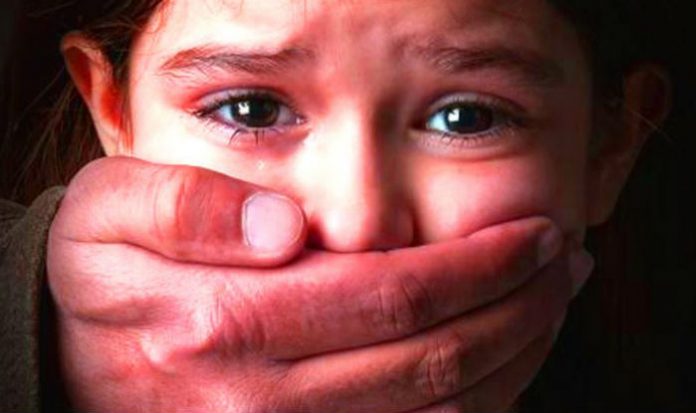
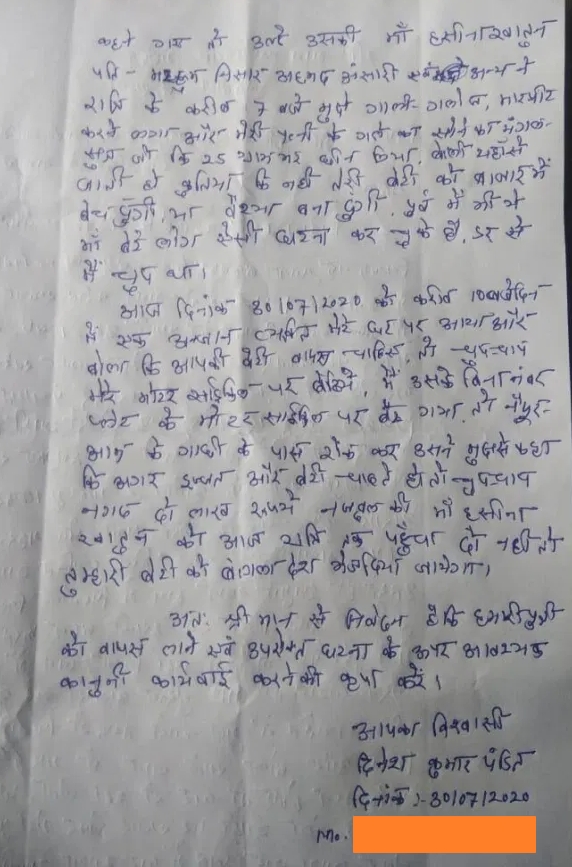
A minor girl was abducted on gunpoint while she was returning from the market with her father. The incident took place on July 26 (Sunday) in Begusarai’s Bhikan Chak village that falls under Bachhwara police station. Dinesh, the father of the minor girl said that around 5 pm, seven people, including a female, approached them in a Bolero car while they were crossing the Panchayat Bhavan in Behrampur in Mansurchak Block in Begusarai district and took away his daughter on gunpoint.

The main accused, Nazmul had allegedly told the girl’s father that had it been Pakistan, they would have taken the girl from the house itself.

Dinesh said that out of the seven accused, he recognised four of them. The main accused, Izmul Khan alias Nazmul alias Aryan and his accomplice, Mohammad Narool Ansari, Mohammad Munaffar Anjum Ansari alias Chand and Farat, whom Dinesh has named in his complaint were from his neighbouring village.

Begusarai’s minor girl abducted on gunpoint while returning from market

According to Dinesh Kumar Pandit, he had gone to the Mansurchak market with his minor daughter to buy stuff for a festival. While they were returning from the market, at around 5 in the evening, a Bolero car, which had no number plate, stopped near them. Seven people, including a woman, got out of the car. While the men held Dinesh tight, the woman pushed his daughter inside the car.

When Dinesh objected, the men pointed their pistols at him and threatened him with dire consequences if they tried to make a noise. Nazmul told him that if it were Pakistan, he would have abducted the girl from the house itself. Warning him against telling anybody about the incident, the group then sped away with his daughter.

Family threatened that their daughter would be sold off in Bangladesh and pushed into prostitution

In his complaint, Dinesh further wrote that after the incident, he along with his wife visited Izmul Khan alias Nazmul alias Aryan’s house where they found his mother Haseena Khatun. When they tried to apprise Haseena Khatun about the incident, she gathered a mob with her screams and began to abuse and beat up the couple. Snatching Dinesh’s wife’s gold mangal sutra, Haseena threatened the couple that she would sell their daughter in Bangladesh and push her into prostitution if they don’t leave immediately. Dinesh recollected how they returned home dejected.

Then on July 30 (Thursday), around 10 am, a stranger visited their house. He had come on a motorcycle which, again, did not have a number plate. The visiter told the couple that he knew about the abduction and if they wanted their daughter to be safe, Dinesh should come with him. He then took the minor girl’s father to an isolated place where he asked him to arrange for Rs 2 lakhs within two days and give it to Haseena Khatun. He threatened Dinesh that his daughter would be sold off in Bangladesh if he failed to give the ransom amount to Hassena Khatun within the stipulated time, said Dinesh.

When OpIndia reached out to Dinesh, he confirmed that while he knew Nazmul and few other abductors, his daughter did not know Nazmul and any of his accomplice. 

Dinesh confirmed that he has received no call since the incident either from his daughter or her abductors.

When OpIndia got in touch with Dinesh for the first time, he had alleged that the police have not been cooperating with him. The troubled father conformed said that the police had not given him any receipt against the complaint he had submitted and had been making excuses in order to avoid him.

However, when we called him up again after a few hours, Dinesh, confirmed, in his sceptical tone, that though an FIR has been lodged against his complaint, he has no news of his daughter yet.

According to a report by Swarjya, the station house officer (SHO) at Bachhwara police station said that a first information report (FIR), numbered- 58/2020, was registered in the case late last night. 

Though the named accused have been booked under IPC sections 366, 323, 341, 379, 384 and 504, for kidnapping and causing hurt, among other offences, the police have not invoked POCSO Act yet as the probe is on, said the SHO.

“We have called the girl’s father for further questioning. He had verbally informed us about the child’s disappearance on 26 July itself. Our teams are already looking for her,” he said.

Shubham Bhardwaj, state co-convener of Bajrang Dal for north Bihar, said that usually, the police hesitate to act in such cases citing communal nature of the crime, but the organisation staged a demonstration outside the police thana on 30 July demanding urgent action in the matter. Terming this incident a case of ”Love Jihad” Bhardwaj said that the Bihar government has been “appeasing” Muslims to the limit that they are brazenly indulging in crimes against Hindus.