Home Blog Page 5315

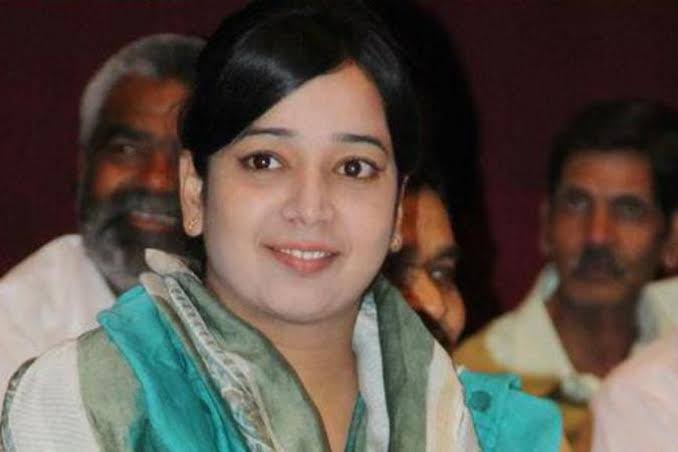
Delhi Anti-CAA riots accused Congress leader Ishrat Jahan granted bail of 10 days for her Nikah

Congress leader and former municipal councillor, Ishrat Jahan, who is charged under the stringent Unlawful Activities (Prevention) Act for instigating anti-Hindu riots in Delhi, has been granted interim bail of ten days for her Nikaah.

According to the reports, Congress leader Ishrat Jahan had moved a Delhi court Thursday seeking interim bail for 30 days to get married.

On Friday, Additional Sessions Judge Parveen Singh had decided to hear her plea on May 30 after the Additional Public Prosecutor had sought more time to verify the facts of her scheduled marriage. The court has now granted her 10 days bail to get married.

Ishrat Jahan arrested for her role in Anti-Hindu riots

Ishrat Jahan was arrested by Delhi police on February 26 for her role in inciting violence during the anti-Hindu riots in the national capital during the last week of February. Soon after her arrest, Jahan was sent as to 14-day police custody.

The court had earlier observed that Ishrat Jahan did not deserve bail at the initial stage of the investigation “despite being a woman”.

Besides accused of inciting people for violence, Jahan is also held responsible for blocking Khureji Khas road along with other anti-CAA protesters on February 23 (Sunday). She has been demonstrating against the Citizenship Amendment Act for the last 50 days in Khureji Khas area.

Jahan has been charged under IPC sections 147 (rioting), 148 (rioting, armed with deadly weapon), 149 (unlawful assembly), 186 (obstructing public servant in discharge of public functions), 353 (assault on public servant), 332 (voluntarily causes hurt to public servant), 307 (attempt to murder), 109 (abetment), and 34 (common intention) of the IPC and relevant sections of the Arms Act.

Arrests made in Anti- Hindu riots case

For their involvement in the Anti-Hindu riots, other than Ishrat Jahan, President of Jamia Alumni Association Shifa-Ur-Rehman, Jamia Coordination Committee members Safoora Zargar, Meeran Haider, Jamia Millia Islamia University students Asif Iqbal Tanha, Gulfisha Khatoon, suspended AAP Councillor Tahir Hussain, former student leader Umar Khalid have also been charged under the anti-terror law in the case.

On Saturday, far-left ‘Pinjra Tod’ activist Natasha Narwal was also booked under the stringent Unlawful Activities Prevention Act (UAPA) for her role in inciting the anti-Hindu communal riots in Northeast Delhi in February that left 53 people dead and more than 400 injured.

Maharashtra: Cop dies hours after he tested Coronavirus negative and was discharged from the hospital, police initiates inquiry

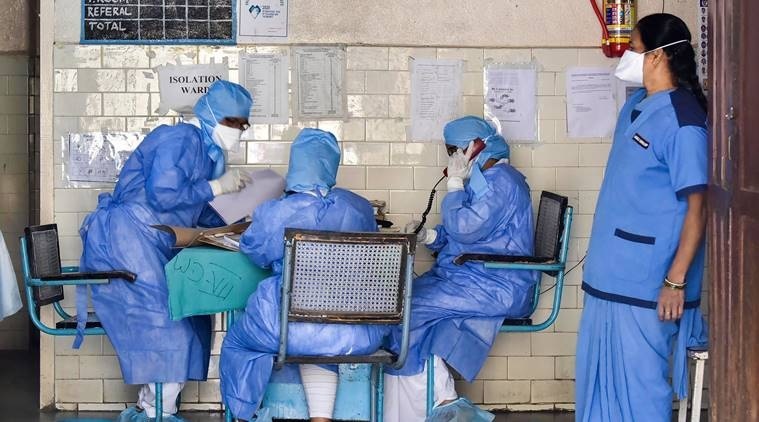
A 53-year old Bandra Police officer succumbed to Coronavirus disease after he was tested negative and discharged from the hospital. The cop was tested positive for coronavirus on May 16. Reportedly, he was admitted to the COVID-19 care unit in a Worli hospital and after he was tested negative on May 28, he was released by the hospital. So far, 25 cops have died due to Coronavirus in Maharashtra.

Reportedly, his health deteriorated within hours of discharge from the hospital. He was again taken to the Nair hospital around 1 am where he was declared dead. Joint Commissioner Navin Bajaj said, “We are conducting an inquiry.”

A video had come to light in which a constable was seen walking towards his home in a fragile state and the residents were applauding him. One of his colleagues even questioned his sudden release. He said, “What was the hurry to discharge him? Also, the ambulance did not drop him till home. He had to walk a long distance to reach home. He was weak and unable to walk.”

The constable is survived by his wife and two children aged 20 and 19.

Another Constable reported dead due to pandemic

Another constable from the Dahisar police station also succumbed to the COVID-19. He was admitted in JJ Hospital but was never tested for Corona virus, as per reports. Hanif Mujawar, senior inspector of Dahisar police station, “The 53-year-old had gone on leave for 10 days. He started suffering from breathing issues and was admitted to JJ hospital. He died on May 26, after which his swab samples were taken. His reports came positive on May 27.”

The Dahisar police station cop was survived by his wife, two daughters and a son.

The death toll in Mumbai police has reached 16 while 25 police personnel from Maharashtra have been reported dead due to the deadly pandemic.

As per reports, 2211 police personnels have been infected of which 970 have been recovered till Friday morning. Of the 2,211, 1,962 personnels are of constable rank.

800 Trains facilitated for the return of 11.5 lakh migrants

A senior Police officer said that till Friday, 800 trains are operated to facilitate the return of 11.5 lakh stranded migrants to their respective state. Only the migrants who belong to West Bengal have been there owing to the cyclone Amphan and will be sent back soon. He added, “Some of the stranded migrants who had registered themselves for Shramik special trains are now backing off and opting to stay back in the city as their employers have assured them a regular supply of food and work. On Thursday, 11 trains were to be run from Mumbai, but as migrants backed off, only three trains were operated.”

Principal Secretary(special) and head of the three-member committee that was formed for stranded migrants said, Amitabh Gupta, said, “The Mantralaya staff (over 1,400 state government employees), who were given the task to assist police force in the registration process of migrants, have been asked to return to their office after May 31, as very few stranded migrants are left.”

28 FIRs lodged against 76 people for violating lockdown norms

Reportedly, a total of 28 FIRs were lodged against 76 people of which 47 were nabbed due to violating lockdown. Seven FIRs were registered for not wearing masks and sic FIRs for gathering in a place. Another 12 FIRs were for different types of violations and three were against shops operating despite being non-essential service. Nine FIRs each were lodged by the south and central region, while six of them were in the west region. Remaining few were in North and 3 FIRs in east region.

Thirteen members of Maharashtra Navnirman Sena were also booked by the Andheri police station for allegedly protesting outside BMC ‘K-east’ ward office complaining against unavailability of beds.

Maharashtra: Annual ‘Palkhi’ pilgrimage to Pandarapur cancelled, Padukas of holy saints may be airlifted for Ashadhi Ekadashi

Amidst the rising scare of Chinese pandemic coronavirus, the Maharashtra government has decided to cancel the much-revered annual “palkhis” (palanquins) of the pre-eminent saints of Maharashtra – Sant Dnyaneshwar and Tukaram Maharaj.

According to the reports, Deputy chief minister Ajit Pawar, in the wake of coronavirus pandemic in Maharashtra, announced that the annual pilgrimage of silver ‘paduka’ of two saints has been called-off, instead, it may be carried by the air from Pune to Pandharpur. The decision was announced after a meeting between Ajit Pawar and the trustees of the temple trusts at Pandharpur, Dehu and Alandi.

Deputy CM Ajit Pawar said that since coronavirus cases are rising in Pune, Satara and Solapur districts, the ‘palkhi’ procession has been called off.

“Even if we allow a handful of warkaris to proceed from Pune, there is a possibility of thousands joining it on the way. In such a situation, it will be difficult to control the crowd and there is a risk of spread of the infection,” Pawar said.

He also added that the precise mode of transport will be decided after taking the weather situation into consideration as the pilgrimage takes place during the monsoons in the month of June.

“If air travel is not suitable then the palkhis would be carried by bus,” he said.

Lakhs of pilgrimage converge at Pandarapur every year

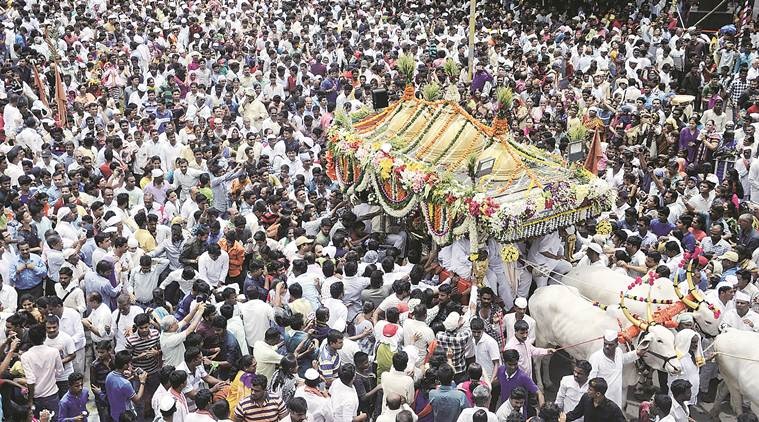
Every year in June, lakhs of ‘warkaris’ (pilgrims) from Maharashtra, Karnataka and Tamil Nadu, participate in the revered “palkhi” procession. The warkaris walk from Pune to Pandharpur, covering a distance of over 200 km, accompanying a rath carrying the ‘padukas’ of the two saints. More than 15 lakh devotees gather at Pandharpur every year after a journey of 19-20 days. 

At the meeting, trustees of Alandi and Dehu Devasthans had urged the government to allow 25 ‘warkaris’ to accompany the ‘padukas’. However, the proposal was rejected.

“Though we are not happy, we will abide by the government decision as we do not want to do anything that will lead to the spread of the infection,” said Manikrao More, president of Dehu Palkhi Solha Samiti.

The trustees said that it was decided that ‘padukas’ of the two saints will proceed to Pandhapur a day before Ashadhi Ekadashi, which falls on July 1.

Why India should be concerned about the growing investments of China in Indian online gaming companies

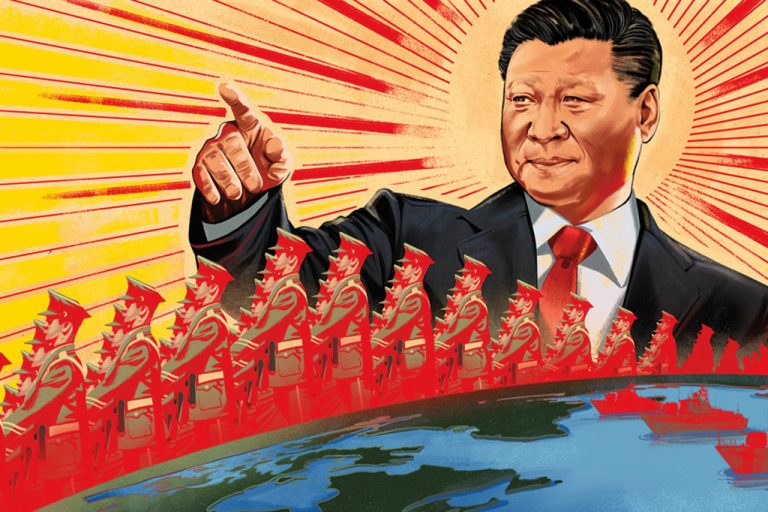
At a time when anti-China sentiments are high across the globe and ‘kick-the-dragon-out’ chorus is getting louder in every nook and corner in the wake of the somewhat mysteriously behaving deadly Novel Coronavirus, tech behemoths from the communist country are seemingly working all-out to somehow dominate the Indian online gaming sector- one of the few businesses which despite the general devastating impact of the pandemic, continues to prosper.

Alibaba and Tencent, two of the largest Chinese tech companies now have big stakes in some of the leading Indian online gaming companies including the Paytm First and the sole unicorn (a company worth over U.S. $1 billion) of the sector in India, Dream 11.

After the restrictions imposed last month by India on Chinese investment in the wake of the COVID-19 scenario, Alibaba backed Paytm First Games, a prominent gaming company in India, recently, joined hands with Pakistan based Daraz, an online marketplace and logistics company which operates in South Asia and Southeast Asia barring India, to launch a gaming platform Daraz First in Bangladesh.

Daraz, founded in 2012 in Pakistan, operates e-commerce platforms and logistics service in Pakistan, Bangladesh, Myanmar, Nepal and Sri Lanka. In 2018, Daraz Group was acquired by Alibaba which also has invested hugely in Paytm. Paytm First Games is a joint venture of Indian mobile wallet Paytm and Alibaba.

Chinese Giants’ Investment Strategy

The tech giants from China have been obviously investing with a policy to cash-in on the thriving Indian mobile commerce market and the related hidden benefits.

The total investment of the Chinese companies (including Tencent and Alibaba) in the Indian tech sector, including gaming industry startups, was a little over US$214 million till 2013 but it has risen almost 40 folds to the US $8 billion by December 2019, according to Bengaluru based start-up tracking firm Tracxn. Though the exact figures of investment by Alibaba and Tencent were not available, the two were believed to be among the largest investing Chinese companies.

Apparently Alibaba looked interested in making a bigger investment in companies like Paytm as an anchor and taking larger ownership, Tencent is seemingly following the policy of smaller ownership in multiple companies.

According to a Quartz India report, ‘Alibaba has invested in Indian companies including Paytm Mall, an online retail place under Paytm, food delivery app Zomato, online grocer Bigbasket, e-commerce platform Snapdeal and logistics firm Xpressbees. Apart from Xpressbees, which does not reveal its valuation, all the other five firms have achieved unicorn status, valued between just over $1 billion (Bigbasket and Snapdeal) to a whopping $16 billion (Paytm). Alibaba is the single largest shareholder of Paytm.’

‘Tencent, meanwhile, has invested in some of the strongest rivals of the firms that have received money from Alibaba. For instance, Tencent has invested in Swiggy, which is engaged in a food delivery fight with Zomato, as well as in Flipkart, the largest e-commerce platform in India, which Walmart bought in 2018 as it competes with Amazon.

The US e-commerce giant exceeds both Snapdeal and Bigbasket in terms of sales in India. Other unicorns Tencent has invested in include messaging app Hike, ride-sharing firm Ola, learning app BYJU’s, fantasy gaming platform Dream11 and B2B trading platform Udaan. It is difficult to calculate the total amount the two have put in Indian startups, as most of the funding rounds included other investors, such as SoftBank,’ the report said.

Other Chinese investors apart from Tencent and Alibaba that have become active in India in recent years include Tik-Tok owner ByteDance, smartphone maker Xiaomi, which has invested in sectors like entertainment and mobile apps, and Chinese conglomerate Fosun, which has invested in more than five Indian startups, including logistics firm Delivery and booking website ixigo,’ it said.

The Online Gaming Sector

The Indian online gaming industry is among one of the few businesses in the country which had not only flourished during the slowdown before the Covid 19 crisis but has also continued to boom even after it. In the nearly two decade old Indian gaming industry, initially games were played on consoles and later on PC’s only. But with the surge in the numbers of smart phones and availability of cheaper internet data, it saw a quick growth in last 5 years or so. Almost 90% of all the gamers now play on mobile phones. It grew by 40% to reach Rs 6500 crore (US$855 million) in annual revenue size last year. It was projected to be almost triple to over Rs 18700 crore (over US$2.5 billion) by 2022, according to a recent joint study of the Industry body FICCI and the professional services provider firm Ernst & Young.

According to another report the gaming industry revenue, including both transaction based and non-transaction games, in India was projected to cross Rs 25000 crore (US$ 3.3 billion) mark by 2024. The number of gamers in this country of 138 crore (1.38 billion) people with a large chunk of young population, has increased exponentially to nearly 38 crore (357 million) last year and was constantly rising.

Even during the pandemic caused lockdown when most of the businesses have either shut shop or taken a big nosedive, gaming sector is still flourishing.  According to the Industry players, there is over 2 fold rise in the number of gamers during the lockdown. Because people with more leisurely time, are now playing such games on mobile phones as a favourite pastime, to keep the Coronavirus anxiety at bay.

The sector has been a hot-favourite of the investors from all quarters but the Chinese players have seemingly left everyone else behind in this regard. And now that the fantasy gaming segment, which had seen the quickest growth of over 118% last year has failed, Alibaba is apparently using other tactics by expanding its wings through players like Paytm First. Its recent tie up with Daraz, the China backed company in Pakistan is also being seen as one of these tactics. Tencent has invested Dream 11- the biggest Fantasy sports platform in India which is now almost completely shut due to unavailability of real sports events as the fantasy gaming depended on such events. In Fantasy sports, participants pay a fee to assemble a virtual team of professional players from any ongoing event and then win cash or prizes based on how those players perform in real-life games.

Dragon’s Interests

A recent report said that more than a third of India’s 1.3 billion people are internet users, and most of them used budget category smartphones with cheaper data-usage plans. The local smartphone market was growing by 10% per year before the Covid crisis.

According to Girish Menon, head of media and entertainment for KPMG in Mumbai, the Indian scenario is attractive to Alibaba and Tencent because their entire ecosystem is developed around mobile phones. The time spent on gaming is far higher in India than any other form of entertainment.

Meanwhile, on the launch of the Daraz First games the Paytm in its statement said, ‘We are thrilled to share that Paytm First Games, has teamed up with Daraz to enter South Asian markets. The company has launched its premium gaming app in Bangladesh, and will soon be bringing its innovative gaming experience to Nepal, Sri Lanka, and Myanmar as part of its international expansion.’

Launched in 2012, Daraz is South Asia’s premier online shopping marketplace with 5 million consumers across the region. The partnership will help Paytm First Games get access to one of the fastest-growing gaming regions in Asia, the statement added without any kind of mention of Daraz’s links with either China or Pakistan.

It quoted Sudhanshu Gupta, COO, Paytm First Games as saying, ‘Mobile gaming has been exploding in South Asia region and we endeavour to partner with players who share the same mission. We are thrilled to partner with Daraz.’ Chief Growth Officer, Daraz Group, Edouard Gheerbrant said, ‘This platform will enable Daraz to capture the fast-growing mobile games market opportunity in South Asia. I’m confident that the collaboration with Paytm First Games will accelerate DFG’s growth in becoming the market leader of the region’s gaming industry.’

Data Security & Other Risks

According to a report by the Gateway House: Indian Council on Global Relations, a reputed foreign policy think-tank, Chinese funding to Indian tech start-ups is making an impact disproportionate to its value, given the deepening penetration of technology across sectors in India.

‘Investments made by Chinese tech companies and funds, led by giants like Alibaba, ByteDance and Tencent have funded 92 Indian start-ups, including unicorns such as Paytm, Byju’s. 18 of the 30 Indian unicorns have a Chinese investor. This means that China is embedded in Indian society, the economy, and the technology ecosystem that influences it. Unlike a port or a railway line, these are invisible assets in small sizes – rarely over $100 million – and made by the private sector, which doesn’t cause immediate alarm,’ the report said.

‘If Alibaba, Tencent and other Chinese tech majors replicate their internet ecosystems in India, this can create a systemic risk. An ecosystem such as this controls access to end-users; it means other companies (retailers, financing firms and media) will have to follow the standards/technologies prescribed to them. Alibaba/Tencent will be in a position like Google – they can decide which firm will succeed or fail by controlling user access, using their own technologies. Imagine: the Indian economy could use Chinese tech for critical applications,’ the report claimed.

‘Chinese companies such as Alibaba and Tencent have their own ecosystems, which include online stores, payment gateways, messaging services, etc. An investment by them can pull the Indian company into this ecosystem, which may mean loss of control over data,’ the report claims adding that the reliance of Indian start-ups on overseas venture capital funding has proved success for China and some of the unicorns like Paytm and Flipkart have been acquired outright by such companies.

Sharp Reactions

To a query about the increasing Chinese investment, Gaming sector expert and founder and MD cum CEO of Ability Games, Kolkata based independent research and game development company, Suraj Chokhani said, ‘Today when the whole world has turned in to a global village, technological collaboration and investment from other countries is required for growth and doing big things. But so far as China is concerned, it should also open its doors for the Indian companies to invest there in the same manner its companies were doing here in India. It would also help in achieving trade balance of sorts. It should not be a one-way affair.’

Well known nationalist activist, writer and founder of Jan Ki Baat, Pradeep Bhandari said that India should see to it that the dragon did not succeed in economic imperialism in the name of investment in India. ‘In the post Covid world, China is facing a global distress. And in that context it is extremely imperative that India does not look at China as a true friend but a competing power that can hamper our strategic interests. India should not have an open door policy with regard to Chinese investment but rather have a restrictive, cautious policy which scrutinizes Chinese investment and prevents economic  imperialism’ in the name of investment,’ he said.

Ahmedabad based online gamer Manoj Dave (name changed) said that he was annoyed to see such developments. ‘At a time when all Chinese investments without government approval are prohibited in India and when Pakistan is increasingly facing economic and social sanctions and boycott from most countries across the world, it is shocking that companies like Paytm, which keep preaching about Make in India and nationalism, are entering into a strategic partnership and JV with a Chinese-backed Pakistani company. I will not use this platform and would also urge my friends to boycott it for this type of behaviour. All those companies running their businesses with Chinese money should be boycotted by the public,’ Dave said.


Massive protests erupt across the United States over the killing of African-American George Floyd by a white police officer

Massive protests erupted in Washington DC over the death of African-American man George Floyd. As a result, the White House had to observe a brief shutdown. People expressed their outrage against the death of George Floyd due to brutality of the police in its custody.

On May 25, a 46-year-old ‘black’ man, George Floyd was allegedly murdered by a white police officer, Derek Chauvin, who knelt on the former’s neck for more than 8 minutes until his body became unresponsive. A shopkeeper had called the cops on Floyd for allegedly trying to pass a ‘potential counterfeit bill’. On being taken to the Hennepin County Medical Center, he was declared dead.

The video which went viral was captured by a pedestrian, who repeatedly objected to the action of Chauvin, shows the cop trying to choke the black man with his knee. Despite the victim complaining about not being able to breathe, coupled with verbal protest from onlookers, the said officer was unmoved.

The incident provoked widespread protests and riots across several parts of the United States of America. The worst-hit was Minneapolis, where the death of George Floyd took place.

Minneapolis imposes curfew

Mayor of Minneapolis Jacob Frey declared a curfew in the night time following the continuous protests in the three nights and violence in the biggest city in the US Midwest state of Minnesota.

The curfew has been imposed in all public places including streets from 8 pm to 6 am local time. The effect began on Friday night and will stay there till Saturday morning. As per reports, those who will indulge in violating the order will be imposed a penalty of US $ 1000 fine or imprisonment up to 90 days.

Riots emerged after the incident came to light

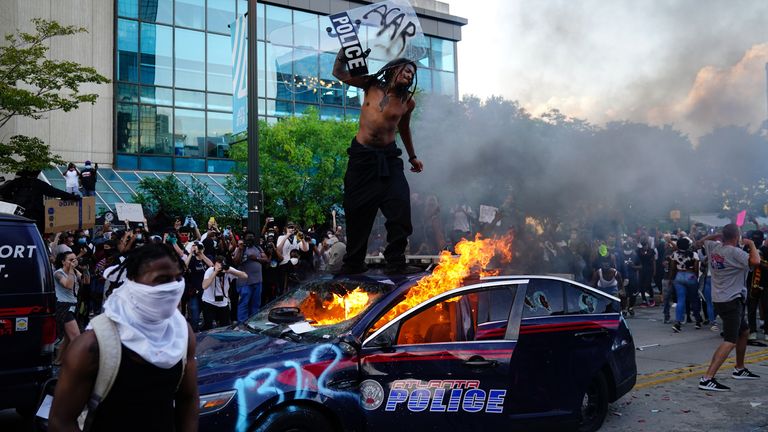
On Tuesday, hundreds of protestors hit the streets to protest against the killing of George Floyd. The demonstration continued outside the nearby police precinct. Soon, the protest took a violent turn. On Wednesday night, Police cars were vandalized and pelted with rocks. To pacify the situation, the cops resorted to firing tear gas and rubber bullets at the frenzied mob.

Windows of unmanned stores were broken. Shops were raided and looted, all in the garb of a peaceful protest. Home goods such as rugs and coffee makers were stolen and stores were set ablaze. Amidst the chaos, a ‘looter’ was also shot dead by the police. The mob also breached the security and reached for the police precinct in the neighborhood where Floyd died. The building was set of fire by the unruly mob, amidst slogans demanding justice for the victim.

Donald Trump condemned violent protests

US President Donald Trump on Friday warned ‘Radical Left’ Mayor Jacob Frey to stop the riots in the city and bring the law and order situation under control. He said, “I cannot stand back and watch this happen to a great American city, Minneapolis. A total lack of leadership”. Reportedly, he termed those involved in protests as ‘thugs’.

Trump had decided to send the National Guard to tame the ‘thugs’ who are dishonoring the memory of the victim. He further assured Governor Tim Waltz that the military is with him. “Any difficulty and we will assume control but, when the looting starts, the shooting starts,” the US President cautioned the rioters.

Buddhist rock carvings vandalised by Islamists in Gilgit-Baltistan, Pakistan flag painted on ancient artwork

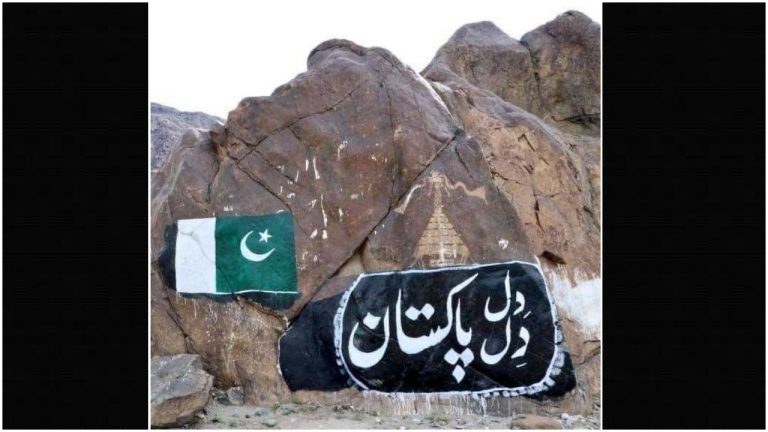
In a shocking incident, the ancient Buddhist rock carvings in the Chilas area of Pakistan-occupied-Kashmir (PoK)’s Gilgit-Baltistan has been desecrated by Islamists, who painted Pakistani flag and slogans on the rock-cut art.

According to the reports, the incident came to light when the locals of Gilgit-Baltistan posted images on social media platforms. The Islamists had vandalised the rock carvings by writing Islamic slogans on the rock-art that belonged to 800 AD.

The Buddhist residents, who found the paintings to be fresh, said that the vandalism by the Islamists was in retaliation to the recent protests against the Diamer Bhasha dam project, a joint Pakistan-China project, which will reportedly destroy this archaeological site.

Earlier, conservationists and activists had expressed apprehension that the artefacts will get submerged in the Diamer Bhasha dam that China and the Pakistan Army are jointly constructing in the area.

Last surviving arts of Buddhist era

According to UNESCO, these carvings, including a 9-ft tall figure of the Buddha, are the last surviving references to three Buddist councils. The other sites – Hunza and Haldekush also have some more of these Buddhist carvings.

Slamming the Pakistan authorities for causing irreparable damage to these historic rocks near Chilas, Araib Ali Baig, an eminent historian of Gilgit Baltistan, tweeted, “Have such slogans and paintings been made on the Gandhara civilization which is located in the Punjab province of Pakistan from the last three thousand years before Christ or is it just to militarize the civilizations of the disputed region of Gilgit-Baltistan?”

Reportedly, rock carvings, which are found in Pakistan-occupied-Kashmir, are also present in areas along the Indus River near Ladakh, but the ancient Buddhist works found in Gilgit-Baltistan stand out for the petroglyphs (rock carvings) in hundreds of thousands. It is estimated that at least 50,000 such petroglyphs are found in Gilgit-Baltistan, especially along Karakoram Highway.

The shocking act of vandalism is reminiscent of the destruction of Buddha’s statues in Bamiyan in Afganistan by the Islamic Taliban terrorists in 2001, which had resulted in a huge uproar across the world.

BJP questions huge single-day jump in recovery of Coronavirus cases in Maharashtra, demands explanation from state government

The BJP in Maharashtra has hit out at the Maha Vikas Aghadi Government for allegedly fudging data related to the Wuhan Coronavirus pandemic. The allegations have to do with the recovery figures for the 29th of May which show that 6191 individuals recovered from the disease in a single day in Mumbai. The BJP claims the records are fudged because the numbers are a marked departure from the figure of the preceding days.

The BJP claims that as per trends in recent days, the minimum recovery in a single day has been 208 and the maximum of 763 on the 28th of May. According to them, the sudden drastic jump requires a strong explanation from the government.

The BJP also said that as per the Medical Education and Drugs Department in Maharashtra, 8650 people had recovered by 9 am on the 29th. However, in less than 12 hours, more than 7,000 people recovered as per the figures of the BMC, the BJP has alleged.

Other concerning information in BMC report

As per the BMC data, 99% of 645 Intensive Care Units (ICUs) are occupied. Besides, there are 373 ventilators in the city, out of which 72% is occupied. Moreover, 65% of a total of 4292 oxygen beds are in use. To add to that, just 6 out of 24 wards reportedly had more than 2,000 Coronavirus cases as of 29th of May. The G-North ward, E-North, F-North, L, H-East, and K-West wards had 2,728, 2,438, 2,377, 2,321, 2,094, and 2,049 cases, respectively as of yesterday.

Patients forced to shared Beds

According to a Guardian report, the coronavirus patients being treated at Mumbai’s Sion hospital emergency ward are now allegedly sharing beds, with two people being allocated to a bed. With a rising shortage in beds, the patients, many with coronavirus symptoms are also sharing a single oxygen tank. The videos of the patients lying almost on top of each other, sleeping on shared stretchers, or just lying on the floor had also gone viral some days back.

Maharashtra Government’s PR Strategy

Amidst allegations of mismanagement, a marketing campaign was launched to show how CM Uddhav Thackeray was the best Chief Minister and was handling the pandemic rather effectively. While the suspicions about the PR campaign for Uddhav Thackeray were just about gaining wind, a tweet by actress and model Urvashi Rautela had given fuel to those speculations. Refuting allegations of plagiarism, she said that it was the “same tweet” which was “provided” to “her and Siddharth Malhotra” by the Mumbai Police and hence, “nobody copied anyone”.

TikTok demonstrates degrading culture and promotes pornography: Odisha High Court calls for a regulation of the Chinese app

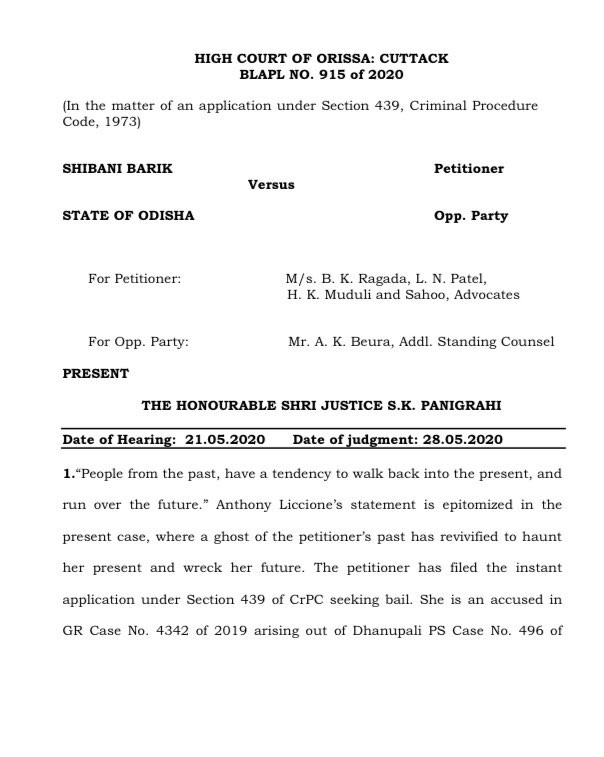
On Thursday, a Bench of Justice S.K. Panigrahi of the Odisha High Court had reportedly slammed TikTok, a Chinese video-sharing social media app, for promoting disturbing content and pornography. He made the observation while hearing a bail petition in a case in which a man committed suicide in Sambalpur district after receiving explicit TikTok videos of his wife with another man.

“It appears that the Tik Tok videos in the instant case have become the cause for the tragic end of innocent life. The app, which often demonstrates a degrading culture and encourages pornography besides causing paedophiles and explicit disturbing content, is required to be properly regulated so as to save the teens from its negative impact,” the Judge ruled.

The Court had called for better regulation of the app, besides highlighting the lack of laws that specifically address crimes such as cyberbullying. The Judge observed that even though the Information Technology Act,2000 imposes obligations on companies to deal with explicit content, yet there was no specialised law to deal with such crimes. Reportedly, the Chinese video-streaming app has over 11.9 crore active users in India.

The Court further noted that police personnel often lack the training to understand the ‘nuances of cybercrimes.’ The Judge emphasised on the need for periodical training and improvement in cyber intelligence, cyber forensics, and cyber prosecution training that will, in turn, help in investigating techno-legal cases.

The Case in Question

The bail petition was filed by the wife of the man who was arrested on January 14, 2020, for abetment of suicide. It was alleged that the woman along with the co-accused had mentally tortured the man, directly and indirectly, to the point that he was forced to end his life. The accused’s husband, who hailed from Dhanupali area in Sambalpur district of Odisha, committed suicide on July 13, 2019, after hanging himself from the fan.

Reportedly, the woman had an affair with the co-accused, prior to her marriage. The deceased and the woman got married last year on February 21. The co-accused had sent explicit videos to the victim and had also streamed them on social media.

She was represented by advocates Bijay Kumar Ragada and LN Patel. They argued that the woman had been languishing in jail since her arrest and thus sought a bail. While granting bail, Justice Panigrahi directed her to stand trial when called upon by the Court.

The High Court Order (Photo Credits: Twitter)

Maneka Gandhi warns TikTok

Earlier, BJP MP from Sultanpur and an animal activist, Maneka Gandhi, took to Twitter to slam the Head of TikTok for refusing to delete videos depicting animal cruelty and handing over details of such video creators to the concerned authorities. She had asked the Head of TikTok India to penalise people involved in sharing videos of ‘gratuitous violence’, besides suspending their accounts permanently.

Gandhi had also directed him to reveal the names and addresses of such users to the law enforcement authorities so that appropriate action can be taken against them. “Are you working for India or China? This is not acceptable. I want a much better and firmer commitment immediately and I need to see it in action,” Maneka Gandhi concluded.

Half of India’s population will test positive for coronavirus by year-end, 30 million Indians will need critical care: Health experts at NIMHANS

The doctors and health experts at the National Institute of Mental Health & Neurosciences (NIMHANS) believe that the coronavirus cases in the country will increase in coming days and induce community transmission.

According to V Ravi, Head of Neurovirology, National Institute of Mental Health & Neuro Sciences (NIMHANS), and nodal officer in the Karnataka Health Task Force for coronavirus, it is estimated that by December 2020, half of the country’s population will be infected by the deadly virus.

He said that about 67 crore Indians will test positive for the Chinese pandemic by this year-end.

However, the experts added that 90 per cent of the affected will not be aware of them being coronavirus positive, because most of the people do not show any symptoms, and only 5 per cent will be seriously affected. The 5 per cent of the 67 crore positive cases in India, who will be in critical condition will itself make 30 million serious cases.

“It’s only 5-10 per cent of cases that will have to be treated with high-flow oxygen and only 5 per cent would require ventilator support,” said Dr Ravi.

He further suggested all the states to invest in the healthcare infrastructure to tackle the rise in cases, especially in those states where intensive medical care and treatment is heavily required.

As per the current level preparedness in the country, there are only 1,30,000 hospital beds available for the treatment of coronavirus patients. There are only 16,613 primary health centres in rural India. Out of these, there are only 6,733 health centres work 24 hours and only 12,760 health centres have 4 or more beds available making the country more vulnerable to pandemic in the future.

As per future estimates, about 3.5 crore people will be seriously affected by coronavirus pandemic by the year-end and out of this 70 lakh will come from rural India. Currently, rural districts account for 21% of the total coronavirus cases in India.

India will hit peak in July: AIIMS chief, experts

Dr Randeep Guleria, the Director of the All India Institute of Medical Sciences (AIIMS) had recently cautioned that the coronavirus cases in the country will likely to reach its peak in June-July.

Dr Guleria added that the cases are continuing to grow at a flat rate and said it was very difficult to predict when the peak will come, but it is likely to peak around June or July, he added.

The AIIMS chief had added that one of the main reasons behind the increasing number of cases was increased testing. The AIIMS Director said that one would need to revisit the containment strategy being employed to craft it as per the evolving situation.

There has been a debate across the country regarding India reaching its peak of the coronavirus outbreak in the coming months, especially by June or July. The peak of any infection arrives when the affected cases reach the highest level and then start decreasing. 

According to some scientists, the country may hit a peak at around the beginning of July. However, the World Health Organisation (WHO) has said that coronavirus cases will start decreasing in the country by late July.

The international rating agency Standard and Poor’s, however, feels that the apex of coronavirus will not arrive before September and this would lead to the decline of the Indian economy by as much as 5% next year.

Far-left Pinjra Tod activist Natasha Narwal booked under UAPA for inciting riots in Delhi

On Friday, the Delhi Police booked ultra-left ‘activist’ Natasha Narwal of the controversial group ‘Pinjra Tod’ under the stringent Unlawful Activities Prevention Act (UAPA) for her role in inciting the anti-Hindu communal riots in Northeast Delhi in February.

Two far-left activists of Pinjra Tod – Natasha Narwal and Devangna Kalita were arrested by the Delhi police recently for their role in stoking communal violence during the anti-Hindu riots in North-east Delhi in February last week this year that claimed 53 people and left more than 400 injured.

According to the reports, the special cell re-arrested Natasha Narwal and Devangana Kalita, a day after a Delhi court sent the two accused to Tihar Jail for 14 days for their involvement in the anti-Hindu riots.

Reportedly, Metropolitan Magistrate Kapil Kumar sent Natasha Narwal and Devangana Kalita to judicial remand after the police said their custody was no longer needed for the probe.

Pinjra Tod behind anti-Hindu riots in Delhi

On May 23, the Special cell of Delhi police had arrested two women named Natasha and Devangna in the North-east Delhi riots case. Both the women are founding members of Pinjra Tod, which was established in 2015.

However, a day later, the two accused were granted bail by the court in the case, but they were arrested soon by the Crime Branch of the Delhi police in a separate case related to the violence. They are currently in judicial custody till June 11.

Earlier, Delhi Police special cell had issued notice to 50 members of the Jamia coordination committee, former office bearers of Congress’ student union, National Student union of India, far left ‘activist’ group Pinjra Tod for their connection with rioting and criminal conspiracy pertaining to anti-Hindu riots in north-east Delhi.

Pinjra Tod has been accused of inciting riots

Some citizens of Seelampur, Jafrabad, and Trans-Yamuna had accused Pinjra Tod and other elite civil society groups of inciting riots in the national capital.

Pinjra Tod claims to be an autonomous collective of women students fighting for a just, accessible, non-discriminatory University and affordable accommodation and has been involved in numerous protests and campaigns of a far-left nature.

Arrests made in Anti-CAA riots case

The Pinjar Tod ‘activist’ Narwal is the seventh person to be booked under UAPA in the case. The suspended Aam Aadmi Party councillor Tahir Hussain and two Jamia students – Meeran Haider and Safoora Zargar, have also been booked under UAPA for inciting anti-Hindu riots in Delhi.  

Recently, Special Cell of Delhi Police has nabbed the Jamia Millia Islamia student Asif Iqbal Tanha under the Unlawful Activities (Prevention) Act for purportedly being a part of a larger conspiracy behind the February riots in northeast Delhi.

Prior to that, Safoora Zargar, a member of the Jamia Coordination Committee, was arrested in connection with her alleged involvement in the anti-CAA riots. Her arrest has led to a barrage of propaganda accusing the Delhi Police of ‘anti-Muslim’ bias. 

Meeran Haider, also a member of the Jamia Coordination Committee, was arrested by Delhi Police. He was arrested on the 2nd of April in connection with rioting and criminal conspiracy pertaining to anti-Hindu riots in north-east Delhi.